On this page
Collagen is one of those words you see everywhere — on coffee creamers, gummies, face creams — and it's easy to tune out. But underneath the buzz there's some genuinely interesting biology, and a few practical things worth knowing before you decide whether it belongs in your routine. This guide keeps it simple: what collagen is, the types you'll actually run into, the real story on collagen benefits, and how to use it without overthinking it.
What collagen actually is
Collagen is the most abundant protein in your body. Think of it as scaffolding — it gives structure to your skin, tendons, ligaments, cartilage, bones, and the walls of your blood vessels. Your body makes its own collagen from amino acids, using building blocks you get from a varied diet.
Supplemental collagen is usually "hydrolyzed," which just means it's been broken down into smaller pieces called peptides so it's easier to mix into liquids and digest. When you take it, your body treats it like any other protein: it breaks the peptides down into amino acids and uses them wherever they're needed. You're essentially giving your body a convenient supply of the raw materials it uses to build and maintain its own connective tissue.
The main types of collagen
There are more than two dozen types of collagen in the human body, but a handful do most of the heavy lifting — and only a few show up in supplements.
Type I
The most common type by far. It's the main structural protein in skin, tendons, bones, and ligaments. When people take collagen with skin, hair, and nails in mind, Type I is usually the star.
Type II
Found mostly in cartilage, the cushioning tissue in your joints. Type II collagen is what you'll typically see in products geared toward joint comfort and mobility.
Type III
Often works alongside Type I in skin and blood vessels, supporting structure and firmness.
Many popular supplements — including those sourced from bovine (cow) or marine (fish) collagen — are rich in Types I and III. There's nothing magic about any single source; what matters more is that you'll actually use it consistently.
Collagen benefits: what the research supports
Here's where we want to be straight with you. Collagen is popular, and some of the research is genuinely encouraging — but it's a supplement, not a shortcut. With that framing, here's what the science generally points to.
- Skin support. Some studies suggest collagen peptides can support skin hydration and elasticity — qualities tied to how skin looks and feels. This is the benefit most people are after, and it's a reasonable, honest expectation to have.
- Hair and nails. Because collagen supplies amino acids your body uses in connective tissue, many people take it to support the overall look of fuller-looking hair and healthy nails. We dig into this more in our guide to supplements for healthy skin, hair, and nails.
- Joint and connective-tissue support. Type II collagen in particular has been studied for supporting joint comfort in active people.
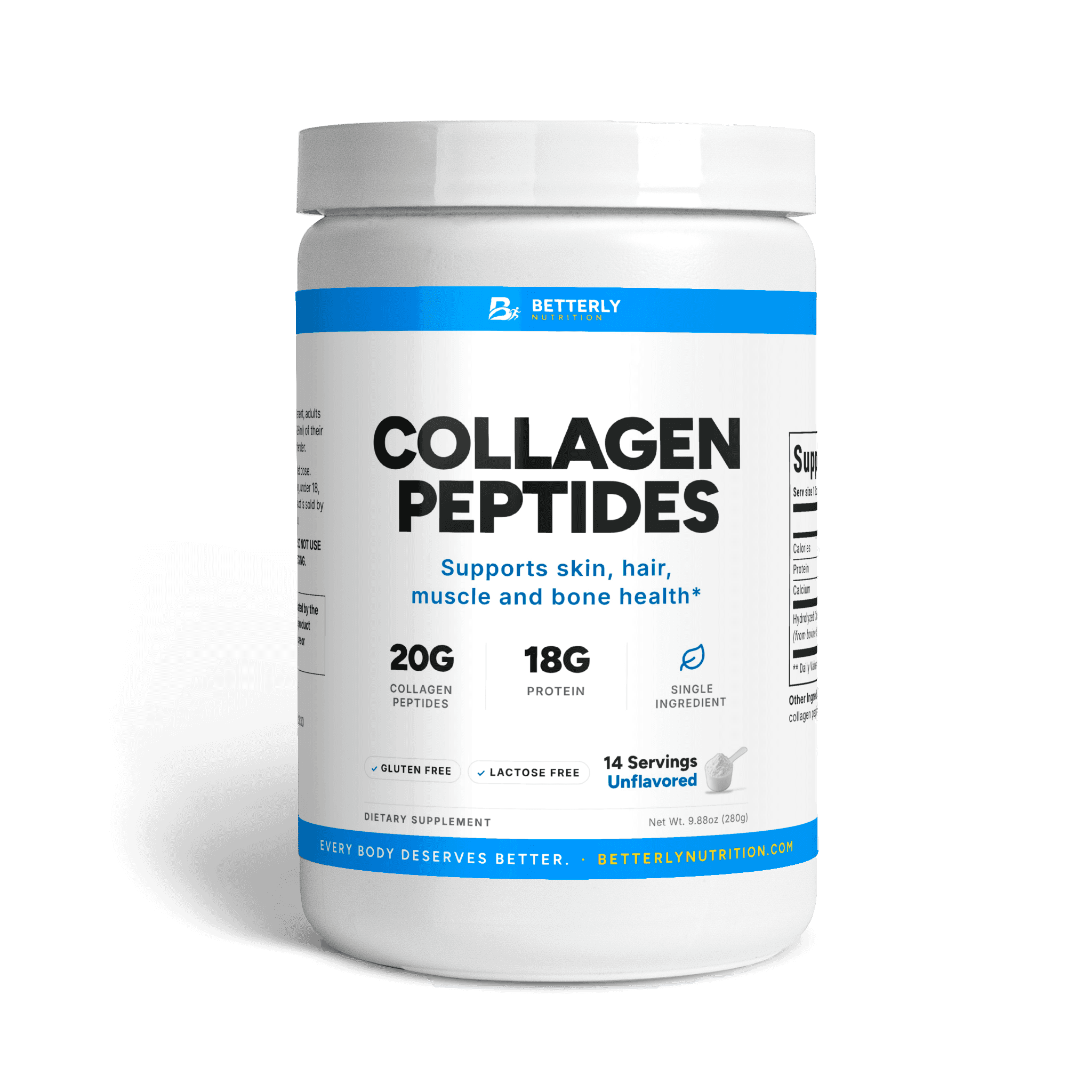
- A protein bonus. Collagen adds protein to your day, which is a real perk if you're working on your overall intake. Our Collagen Peptides Powder (Unflavored) lists 18 g of protein per 1-scoop (20 g) serving on its Supplement Facts panel.
A few honest caveats: individual responses vary, and so do study designs and doses. And collagen isn't a complete protein on its own: it contains essentially no tryptophan, an essential amino acid, so it complements the protein in your diet rather than replacing it.
Why your body's collagen changes over time
Your natural collagen production gently slows as you age — a normal part of getting older that starts in your mid-to-late twenties. Sun exposure, smoking, high sugar intake, and chronic stress can nudge that decline along, too. None of this is cause for alarm; it's just biology. Supplementing is one way some people choose to support their body's building blocks as those natural changes happen, alongside the everyday habits that matter most.
How to use collagen
The good news: collagen is one of the easier supplements to fit into a routine.
How much and how often
Amounts in published research vary, so follow the serving size on your product's label. For our Collagen Peptides Powder (Unflavored), the label's suggested use is for adults to mix one scoop (20 g of hydrolyzed collagen peptides) with 8-10 oz of their favorite beverage. Consistency matters more than any single dose, so daily use tends to make more sense than an occasional scoop.
When to take it
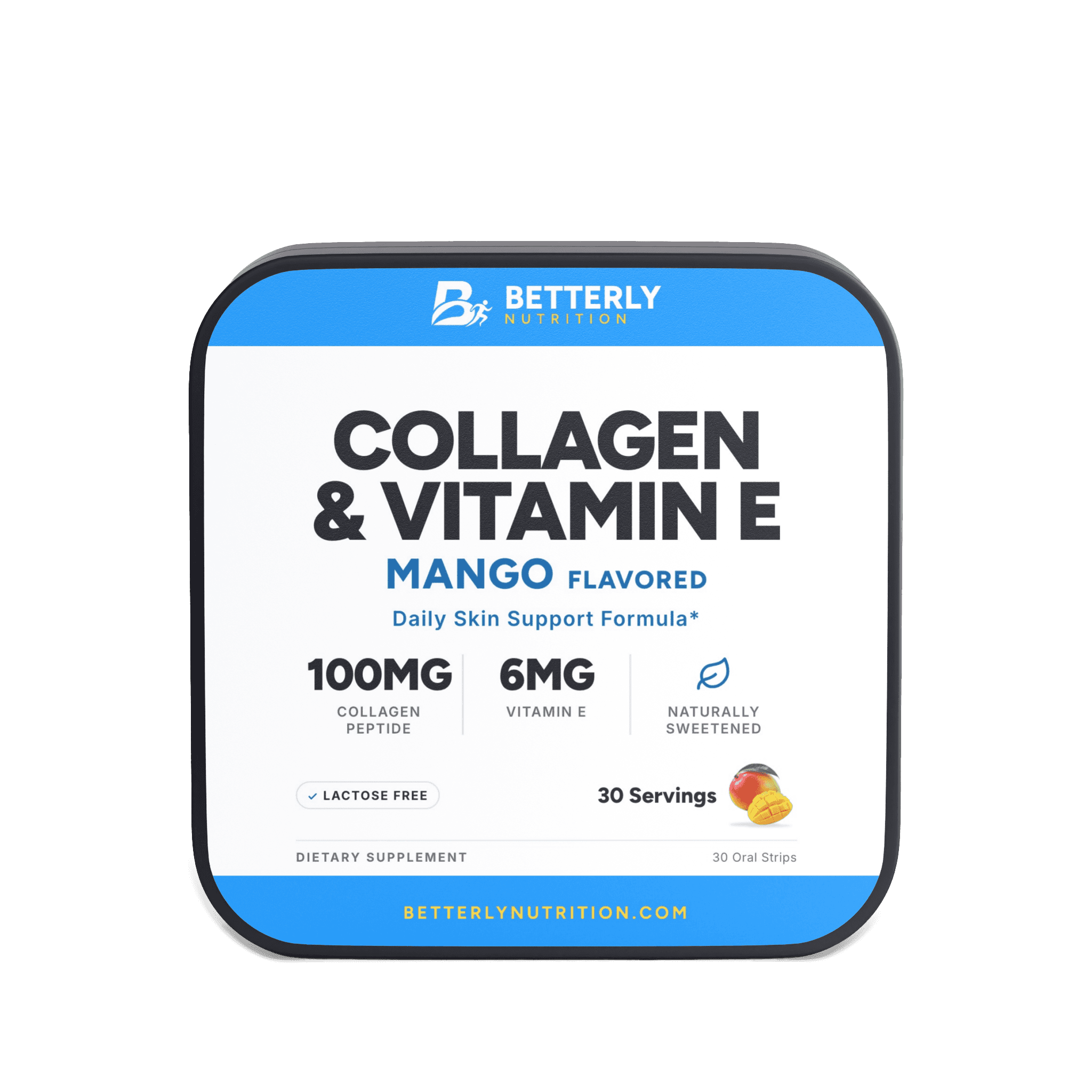
There's no magic window. Morning, night, with a meal, or between — pick whatever helps you remember. Many people stir a powder into coffee, tea, or a smoothie; our Collagen Peptides Powder (Unflavored) has 20 g of hydrolyzed collagen peptides per 1-scoop (20 g) serving. If you'd rather skip the mixing entirely, our Collagen & Vitamin E Strips are pre-portioned, though at 100 mg of collagen peptide per strip they're a much lighter amount than a scoop.
What pairs well
Your body uses vitamin C in its natural collagen-building process, so a diet with plenty of fruits and vegetables — or a product that includes vitamin C — is a sensible companion. Protein-rich foods, adequate water, and a few of the other basics in a daily routine round things out nicely.
Collagen is one part of a bigger picture
We'll always say this, because it's true: no supplement outperforms the fundamentals. The habits that most support your skin, joints, and overall vitality are the unglamorous ones — sleeping enough, eating a varied whole-food diet, moving your body regularly, managing stress, and protecting your skin from too much sun. Collagen can be a helpful, easy addition to that foundation. It just works best as a supporting player, not the whole team.
Key takeaways
- Collagen is structural protein that gives skin, joints, and connective tissue their form; your body makes its own from amino acids.
- Types I and III are common in skin-focused products; Type II, from cartilage, is what you'll typically see in joint-focused products.
- The research is encouraging for supporting skin elasticity and hydration, but collagen is a supportive habit, not a miracle.
- Consistency beats timing. Take your label's suggested serving at whatever time you'll remember.
- It's one piece of the puzzle — best paired with good sleep, food, movement, and stress care.
If you're curious to try it, one scoop of our unflavored collagen peptides mixed into your favorite drink is a simple way to make daily collagen doable — and you can build a fuller routine around it with our Hair, Skin & Nails collection whenever you're ready. No pressure, no hype. Just a small, steady step toward better feeling doable.
If this left you looking for somewhere to start, read unflavored collagen peptides, 20 g per scoop — its amounts per serving are listed on the page. For the practical questions this raises, how dosing, sourcing and subscriptions work is answered in one place.