On this page
- Key takeaways
- Marine collagen vs bovine: which is better?
- Is marine collagen the same as collagen peptides?
- Does marine collagen absorb better than bovine collagen?
- What does a collagen label tell you about its source?
- Can you take marine collagen if you're allergic to fish?
- How much collagen do you actually get per serving?
- How should you take collagen peptides, per the label?
- When is neither marine nor bovine collagen worth buying?
- Who should check with a healthcare provider first?
- FAQ: marine vs bovine collagen
- Sources
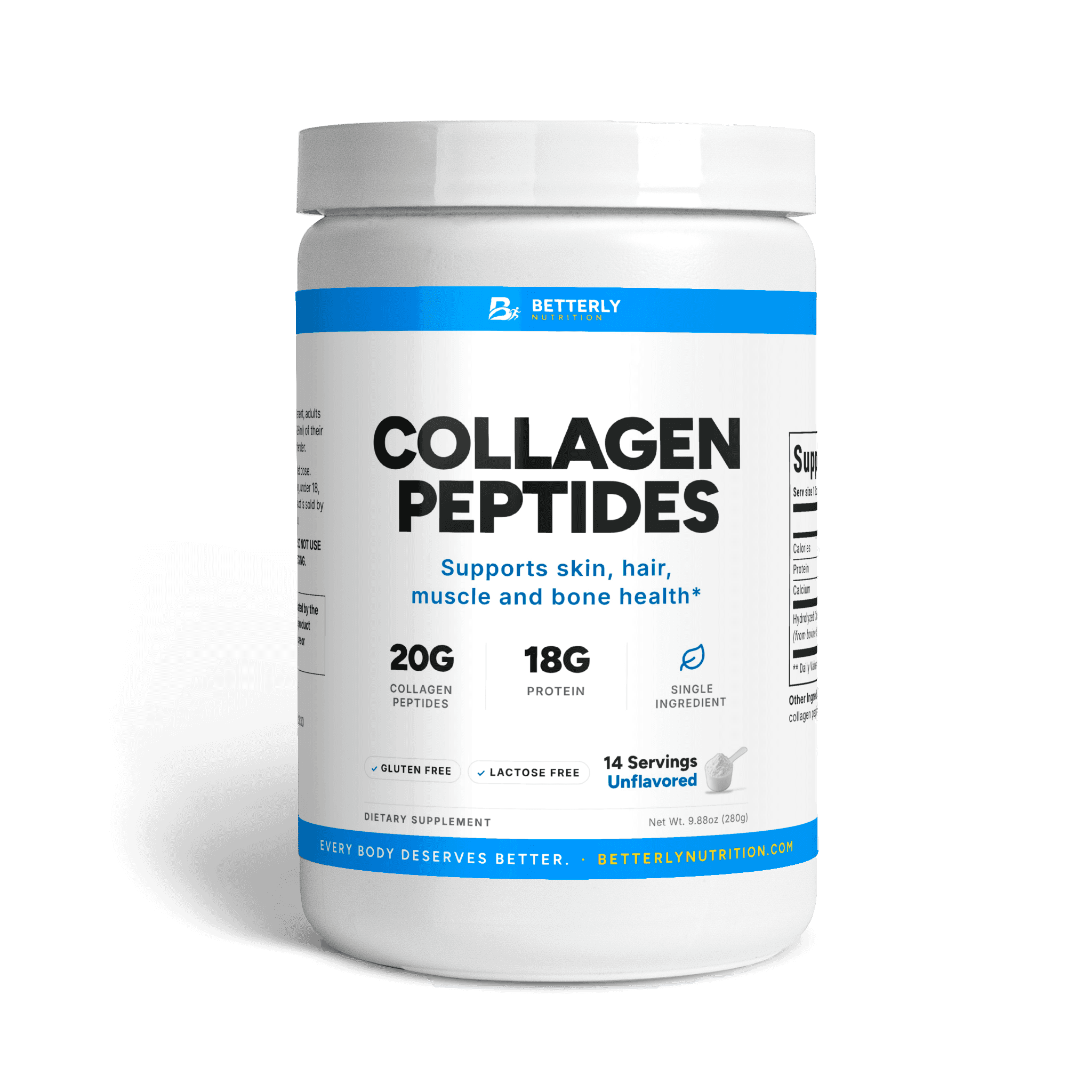
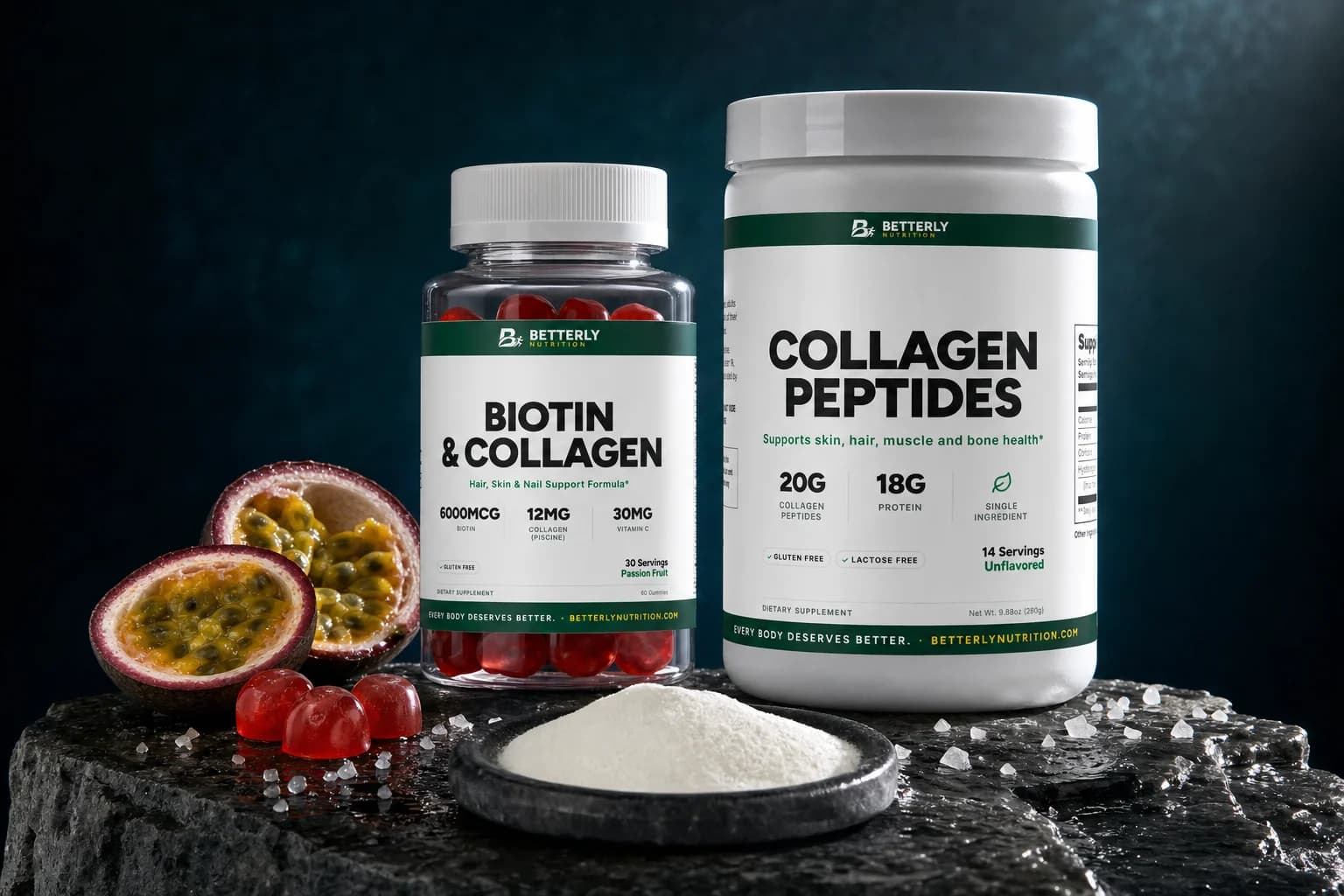
The short answer: Marine collagen vs bovine is mostly a question of source, not strength. Both are sold as hydrolyzed collagen peptides: marine from fish skin and bones, bovine from cattle hides and bones. Nothing we found from a federal health agency ranks one above the other, so pick by what you avoid, grams per serving and price per gram. Our Collagen Peptides Powder (Unflavored) lists 20 g of hydrolyzed collagen peptides from bovine hide per 1 Scoop (20g) serving.
Key takeaways
- Marine and bovine collagen are both animal proteins broken into peptides; the practical difference is the animal they came from.
- Fish is one of the FDA's nine major food allergens, so anyone who avoids fish should skip marine collagen.
- Grams matter more than source: our two Collagen Peptides Powders (Unflavored and Chocolate) list 20 g of collagen per serving, while the only fish collagen on our labels is 12 mg in a biotin gummy.
- Supplement Facts panels aren't required to show peptide size, and none of ours does, so claims that marine collagen absorbs better can't be checked from our labels.
We sell collagen from both sources, though not in matching amounts: three products use bovine hide, one gummy uses fish, and one strip doesn't name a source. Every per-serving number here is copied from a Supplement Facts panel, and totals are our own math from those panels.
Marine collagen vs bovine: which is better?
No federal source we found ranks marine or bovine collagen above the other, so choose by diet, allergens and cost per gram.
A common pitch is "marine for skin, bovine for joints," leaning on type and absorption claims we check below. First, what you can actually check:
| What you're checking | Marine (fish) collagen | Bovine (cattle) collagen |
|---|---|---|
| Usual raw material | Fish skin and bones | Cattle hides and bones |
| On the FDA's major allergen list? | Yes, fish is one of nine | No, beef isn't listed |
| Fits a pescatarian diet? | Yes | No |
| Fits a diet that avoids fish? | No | Yes |
| Vegan? | No | No |
| What Betterly sells | 12 mg per 2-gummy serving | 20 g per Collagen Peptides Powder serving |
The first five rows hold for any brand, and they're about you, not the tub. The last row decides things in our shop: every gram-level option we sell is bovine. If you need fish collagen by the gram, another brand's marine powder will serve you better.
Is marine collagen the same as collagen peptides?
Marine collagen and collagen peptides aren't opposites: "marine" names the source, fish skin and bones, and "peptides" names the processing, which bovine collagen from cattle hides also goes through.
So "marine collagen vs collagen peptides" compares a source with a form. The choice that matters is the animal.
A 2019 USDA report on collagen, gelatin and casings says collagen has traditionally been isolated from the skins (about 95%) and bones (about 5%) of cattle and pigs. As of that report, most collagen was still bovine or porcine (from pigs).
The same report says marine sources "are not well-defined" and can range from skins and bones to heads and viscera, the internal organs. So both sources start as by-products of food processing.
Either raw material can then be broken down into hydrolyzed collagen peptides, so a marine peptide powder and a bovine one share a form and differ in origin. Our guide to putting collagen in your coffee explains hydrolysis and why a hot drink doesn't undo it.
Does marine collagen absorb better than bovine collagen?
Marine collagen is often pitched as better absorbed, but Supplement Facts panels aren't required to show peptide size, and none of our five collagen labels does.
The usual pitch: fish collagen has smaller peptides, so your body takes it up more easily. None of the government pages we read puts a number on that, so we don't either.
The animal alone can't settle it anyway. The USDA report says collagen's amino acid sequence and structure depend on the type and age of the animal, and that the finished product's properties depend on how it's processed. Peptide size comes out of that processing step, so the maker's methods matter, not just the species.
So if a brand leans on absorption, ask for the average peptide size of that exact product and how it was measured. A brand that can't answer is selling a category claim, not a product fact.
What does a collagen label tell you about its source?
A collagen label can name its source in the Supplement Facts panel or the ingredient list, and the FDA lets a source shown in the panel skip the list.
The FDA's Dietary Supplement Labeling Guide says "You may list the source of a dietary ingredient" in the Supplement Facts panel. It adds that a source listed there doesn't have to be repeated in the ingredient statement. So check both places before you decide a tub is silent on its animal. What the panel must show is the amount by weight per serving.
Here's how that plays out on our labels:
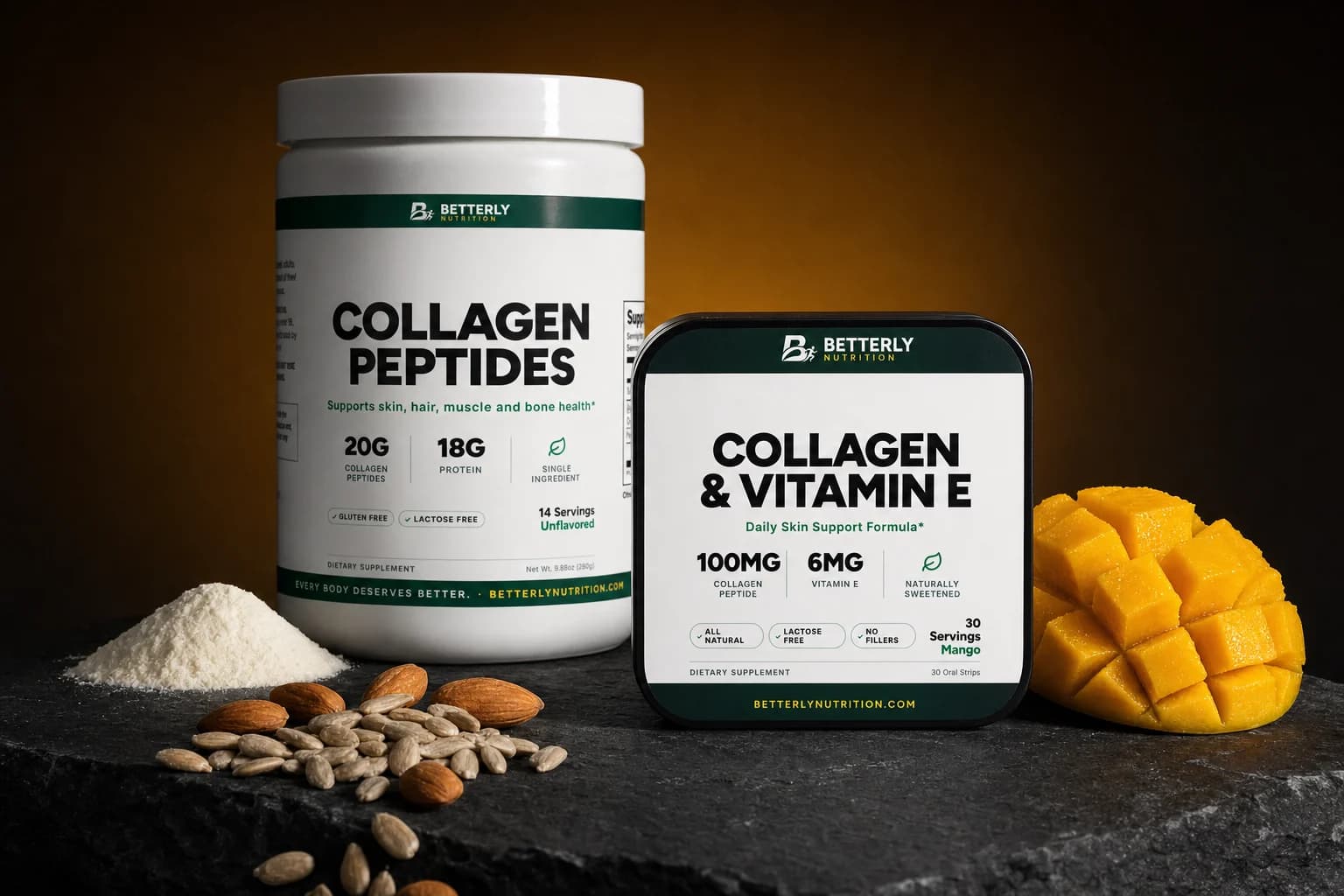
- Collagen Peptides Powder (Unflavored): a 20 g "Hydrolyzed Collagen Peptides" row, with "(from bovine hide)" underneath.
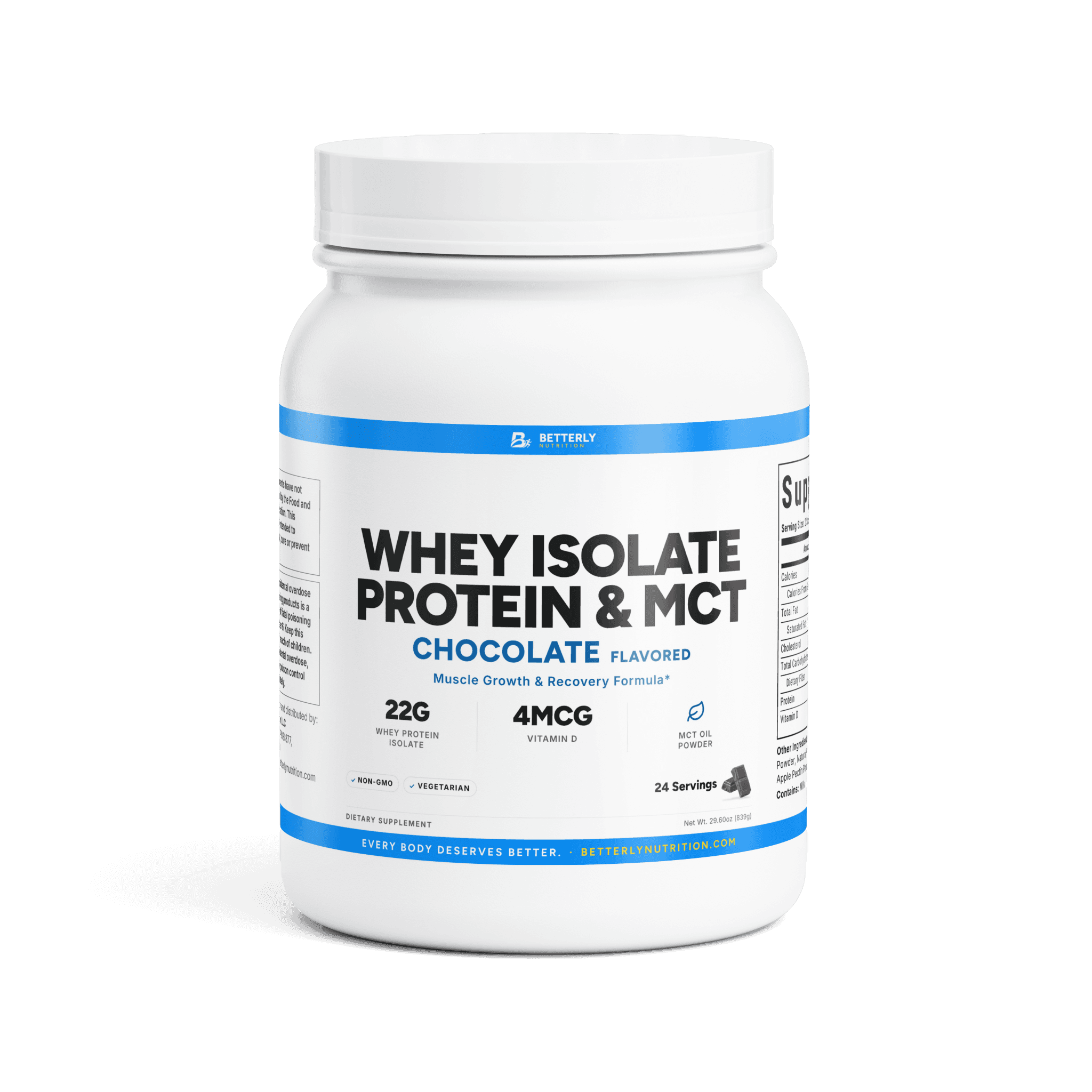
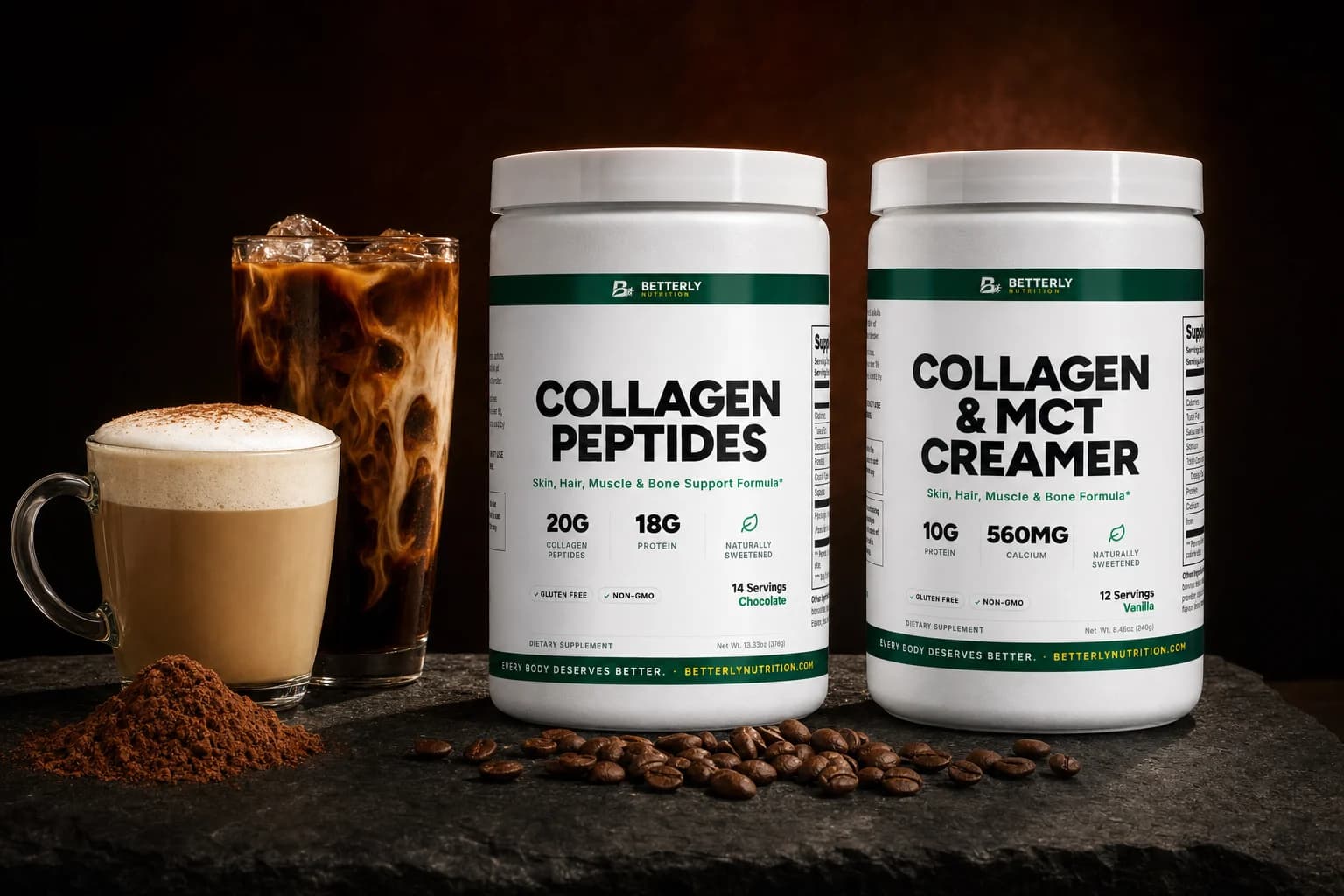
- Collagen Peptides Powder (Chocolate): the same 20 g row and bovine hide line, plus cocoa powder, stevia extract and five other ingredients.
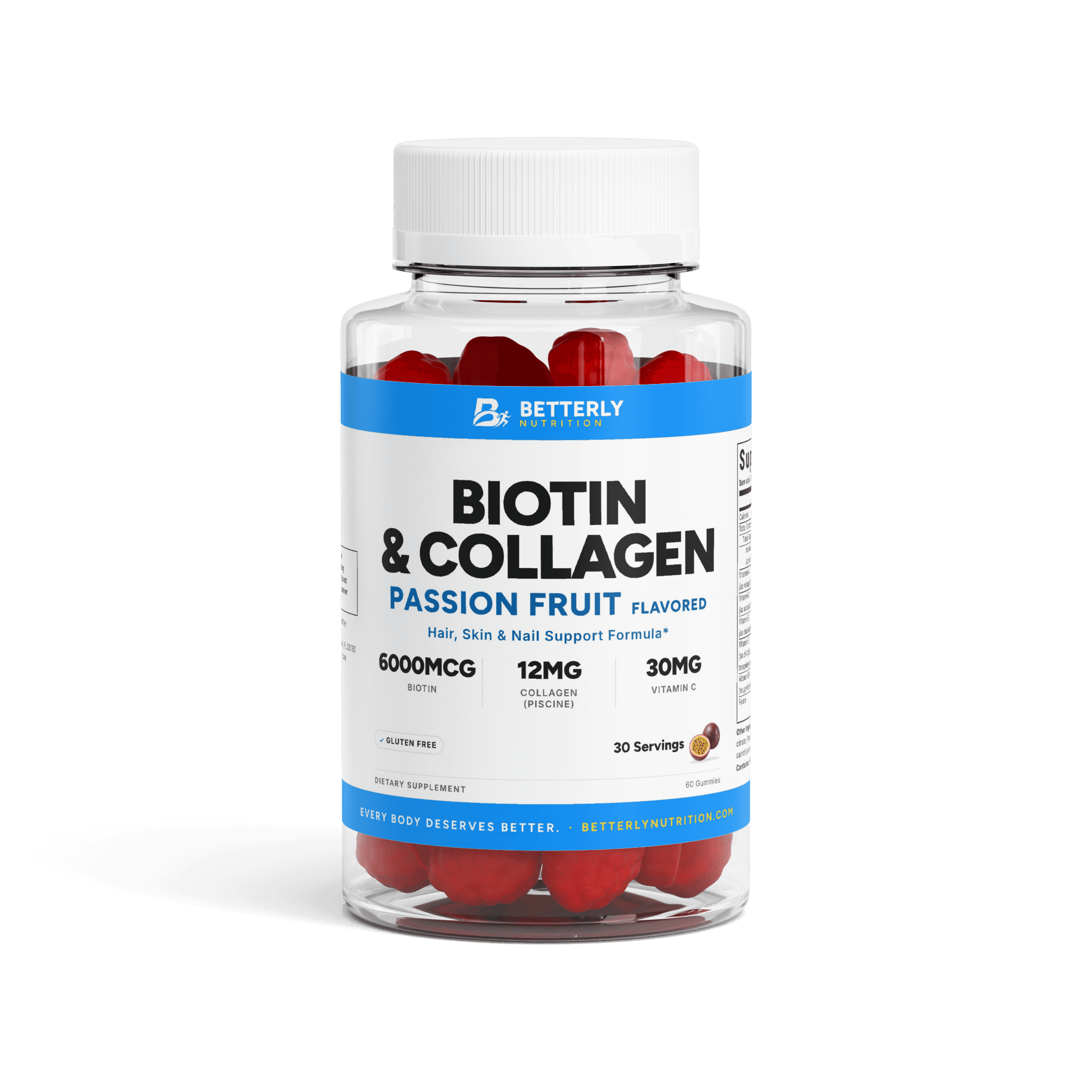
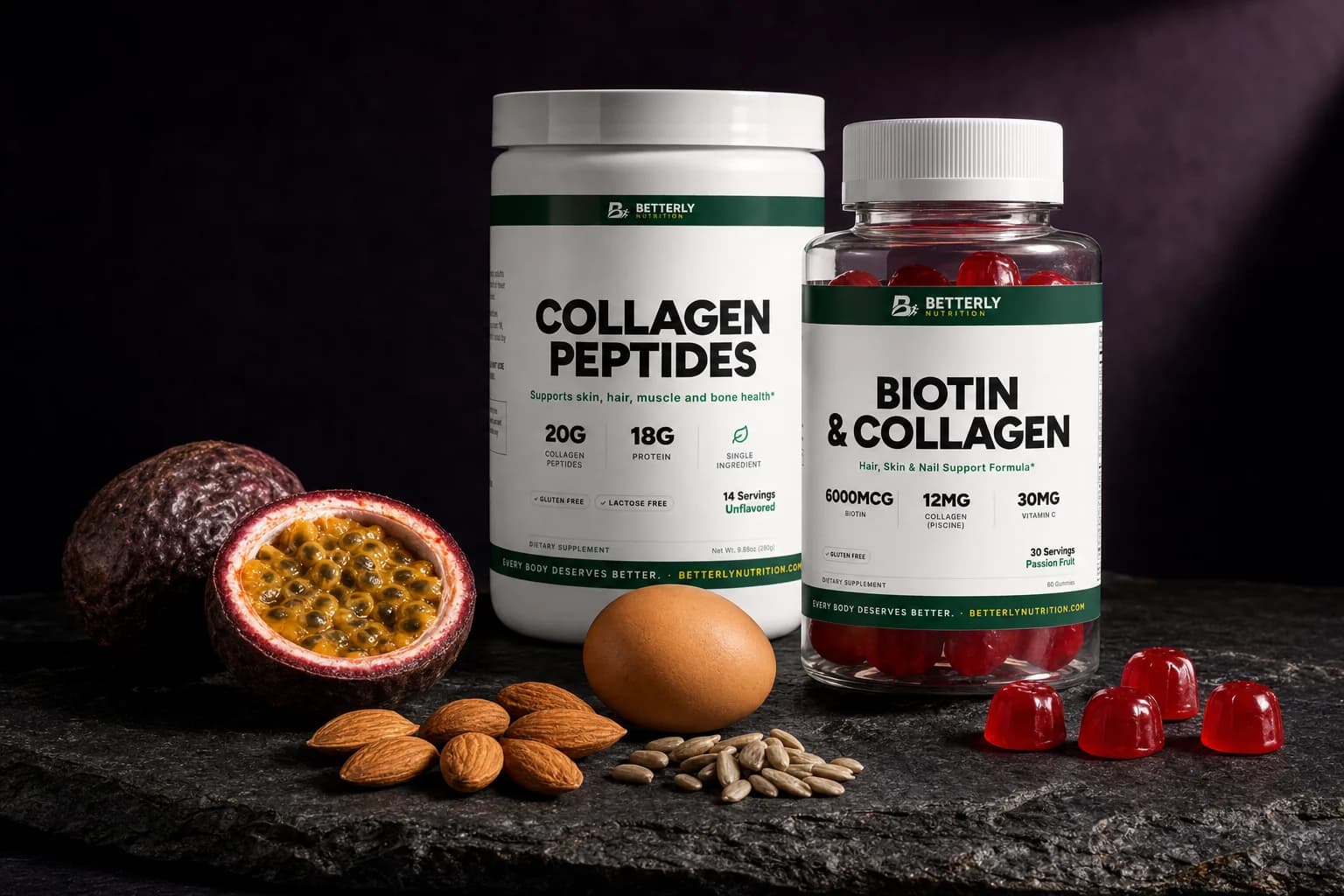
- Biotin & Collagen Gummies: 12 mg of "Collagen (piscine)," meaning from fish, with a Contains line naming the fish.
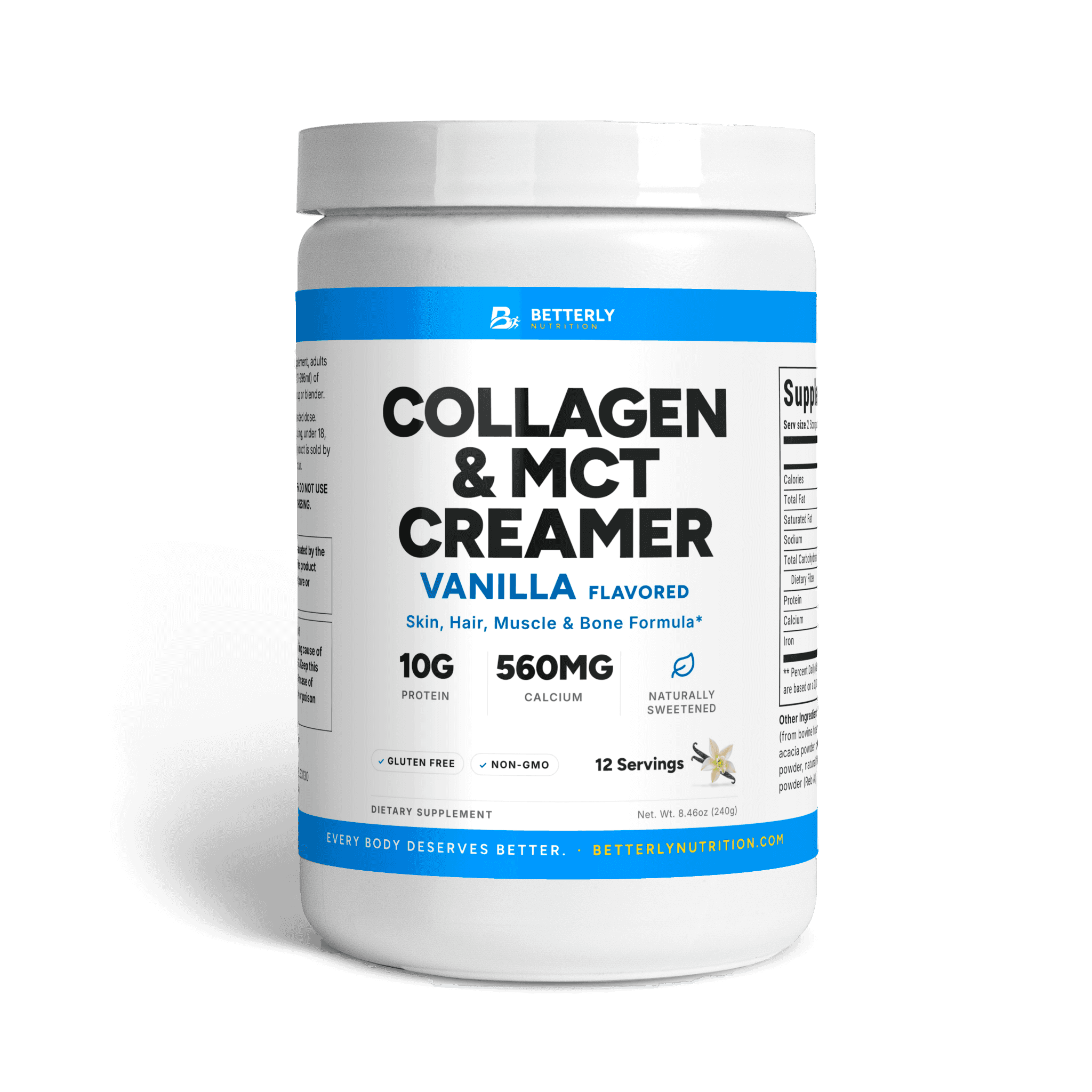
- Collagen Peptides & MCT Creamer (Vanilla): bovine hide in the ingredient list, but no collagen amount on the panel.
- Collagen & Vitamin E Strips: 100 mg of "Collagen Peptide," with no source named (our guide on whether collagen strips work covers that format).
So both powder labels give source and grams in the panel, the gummy gives source and milligrams, the creamer gives its source only in the ingredient list with no amount, and the strip gives milligrams without any source. You need both pieces.
Two phrases common on other tubs appear on neither of our powder labels: "grass-fed" and "Type I & III." We don't claim either. If collagen types are what you're weighing, our Collagen 101 guide explains Types I, II and III.
Comparing two collagen products? Line up collagen per serving, the serving size, the source line, any Contains statement and servings per container.
Can you take marine collagen if you're allergic to fish?
No. If you have to avoid fish, skip marine collagen, because it's made from fish and fish is one of the nine major food allergens the FDA recognizes.
The FDA's consumer page Food Allergies: What You Need to Know lists all nine: milk, eggs, fish, Crustacean shellfish, tree nuts, peanuts, wheat, soybeans and sesame.
For fish, the word "fish" isn't enough. The FDA's answer on declaring tree nuts, fish and shellfish says the species must be declared, with bass, flounder and cod as examples. Our gummy follows that pattern. Its Contains line reads exactly: "Fish (Tilapia), Tree nuts (Coconut)."
Shellfish is a separate allergen, and "marine" on a front label doesn't say which sea animal is behind it, so read the Contains line either way.
Beef isn't among the nine, so a bovine label has no allergen line to print for it, and neither of our powders carries a Contains statement. If you skip beef for any reason, look for "(from bovine hide)."
How much collagen do you actually get per serving?
Betterly's collagen products range from 12 mg to 20 g per serving, so the amount on the panel matters far more than the animal behind it.
Grouped by source, with per-container totals we worked out:
| Source on label | Product | Collagen per serving | Per container |
|---|---|---|---|
| Bovine hide | Unflavored powder | 20 g in 1 scoop | 280 g |
| Bovine hide | Chocolate powder | 20 g in 2 scoops | 280 g |
| Bovine hide | Vanilla creamer | Not listed | Not listed |
| Fish (piscine) | Biotin & Collagen Gummies | 12 mg in 2 gummies | 360 mg |
| Not stated | Collagen & Vitamin E Strips | 100 mg in 1 strip | 3 g |
By our math, one 20 g scoop holds more collagen than 55 full bottles of the gummies.
That's no knock on the gummy, a biotin product with a little fish collagen added; our label-first look at biotin gummies walks through its panel. As for gummy vs powder, format sets the collagen dose more than source does: in our range, the gummy carries milligrams and the scoop carries grams.
How to work out price per gram of collagen
Price per serving hides the gap between a 12 mg serving and a 20 g one. Price per gram doesn't:
- Multiply the collagen per serving by the servings per container.
- Divide the container's price by that total.
Our unflavored tub holds 20 g times 14 servings, or 280 g of collagen, so its price divided by 280 is your cost per gram. The chocolate tub also holds 280 g, inside 378 g of powder, because cocoa and other ingredients share each scoop. Run the same math on any marine tub and you're comparing like with like.
From our shop: Collagen Peptides Powder (Unflavored) — its panel prints the source, bovine hide, on the line under 20 g of collagen per 1 Scoop (20g) serving, and nothing else goes in the tub.
How should you take collagen peptides, per the label?
Betterly's Collagen Peptides Powder labels give one serving per drink: 1 scoop of Unflavored or 2 scoops of Chocolate, mixed into 8-10 oz of a beverage.
Neither powder label names a frequency, and neither does the creamer's. None of the three says when in the day to take it or whether to have it with food.
Only two of our collagen labels' directions use the word "daily." The gummy's direction is "2 gummies daily or as directed by a healthcare professional," and the strip's is "Place 1 oral strip on the tongue daily and allow it to dissolve."
All five labels add "Do not exceed recommended dose," so measure the serving as printed and don't pile extra scoops into one glass. If you're unsure how often a powder fits your routine, ask your healthcare provider rather than guessing.
From our shop: Collagen Peptides Powder (Chocolate) — the same 20 g of bovine hide collagen peptides in a cocoa mix sweetened only with stevia extract, measured as 2 Scoops (27 g) per serving.
When is neither marine nor bovine collagen worth buying?
Neither marine nor bovine collagen is worth buying if you avoid all animal products, mostly want protein, or are paying for a front-label word instead of grams.
- You eat no animal products. Collagen is an animal protein, whatever the source.
- You want fish collagen in grams. We don't sell it, and the gummy's 12 mg can't replace a scoop.
- You mostly want protein. Our unflavored scoop lists 18 g, but if protein is the whole goal, food or a dedicated protein powder may suit you better.
- You're paying for a word. "Marine," "grass-fed" or a type number on the front doesn't change the grams inside.
Still curious? Our Hair, Skin & Nails collection puts every format side by side, so you can compare panels first.
Who should check with a healthcare provider first?
Check with a healthcare provider before taking marine or bovine collagen if you're pregnant, nursing, under 18, on a prescription, managing a medical condition, or avoiding fish.
On our collagen labels, the rows printed beside the collagen are usually what's worth a question:
- The gummy isn't collagen alone. Per 2-gummy serving it also lists 1200 mcg of vitamin A as retinyl acetate (133% DV), 400 mcg of folic acid and 6000 mcg of biotin.
- If bloodwork is coming up, tell whoever orders it about that biotin; our biotin gummies guide explains why.
- The creamer lists 3 mg of iron per 2 Scoops (20 g) serving and carries an iron warning for children under 6, so store it well out of reach.
- On a protein-restricted plan? Each serving of the Unflavored or Chocolate powder adds 18 g of protein, and the creamer adds 10 g per 2 Scoops (20 g) serving.
Each of our five collagen labels carries the same caution, "Consult a physician if pregnant, nursing, under 18, or have a medical condition," so bring the tub, or a photo of its panel, to that appointment.
FAQ: marine vs bovine collagen
Is hydrolyzed collagen the same as collagen peptides?
Yes, hydrolyzed collagen and collagen peptides mean the same thing: collagen broken into short protein pieces during manufacturing. Our powder panels use both terms in one row, "Hydrolyzed Collagen Peptides." Either name can describe fish or cattle collagen, so for the source, look for a line like "from bovine hide" or "piscine."
Is marine collagen vegan?
No, marine collagen isn't vegan, because it's made from fish, and bovine collagen comes from cattle. The USDA describes collagen as an animal protein found in skin, bones and connective tissue. Someone who eats fish but not meat may be fine with marine collagen. If you avoid all animal foods, collagen isn't an option, and none of our collagen products carries a vegan label.
Does marine collagen taste fishy?
Marine collagen can have a fishy note: the 2019 USDA report said marine collagen was rarely used commercially because of its dark color and a persistent fishy odor. Our only fish collagen is 12 mg inside a passion fruit gummy, which isn't a fair taste test.
Is marine collagen better for skin than bovine collagen?
No government source we read shows marine collagen doing more for skin than bovine collagen. Claims that it does usually rest on collagen types or absorption, and neither appears on our Supplement Facts panels. Our own labels use asterisked support wording and promise no result. If skin is why you're buying, compare grams per serving and price per gram, then choose a source that suits your diet.
Can you take marine and bovine collagen together?
Yes, it's possible, though no label gives a reason to take marine and bovine collagen together. None of our labels suggests combining products, and each says not to exceed the recommended dose. If the marine half is our gummy, its 12 mg of collagen isn't the thing to watch. Its vitamins are, including 1200 mcg of vitamin A, so check them against any multivitamin you already take.
Sources
- Technical Evaluation Report: Collagen Gel, Gelatin, and Casings (Handling/Processing), January 28, 2019, USDA Agricultural Marketing Service
- Dietary Supplement Labeling Guide: Chapter IV. Nutrition Labeling, FDA
- Food Allergies: What You Need to Know, FDA
- Do the allergen labeling requirements of the FD&C Act provide specific direction for declaring the presence of ingredients from the three food groups designated as major food allergens?, FDA
If this left you looking for somewhere to start, read collagen peptides from bovine hide, 20 g per scoop — its amounts per serving are listed on the page. For the practical questions this raises, how dosing, sourcing and subscriptions work is answered in one place.