On this page
- Key takeaways
- What are collagen strips? Three products share one name
- Do collagen strips work, or is the dose too small?
- What do collagen strips do, and what's inside one?
- Collagen strips vs powder: how far apart are the doses?
- Do collagen strips dissolve all the way?
- Who is a collagen strip actually for?
- How should you take collagen strips each day?
- When can you skip a collagen strip?
- Who should run collagen strips past a provider first?
- FAQ: collagen strips
- Sources
The short answer: Collagen strips work as a delivery format: you let one dissolve on your tongue instead of mixing a drink. The collagen dose is the catch. It takes 200 of our Collagen & Vitamin E Strips to equal the collagen in one powder serving. So do collagen strips work if you want grams of collagen? Not really. Their stronger contribution is vitamin E, at 40% of the Daily Value in each strip.
Key takeaways
- Three unrelated products get called "collagen strips": oral strips, under-eye cosmetic patches and dental collagen dressings. Only the oral kind is a dietary supplement.
- The Supplement Facts panel on Betterly's Collagen & Vitamin E Strips shows two actives per 1 Oral Strip (265 mg) serving: vitamin E at 6 mg (40% DV) and collagen peptide at 100 mg.
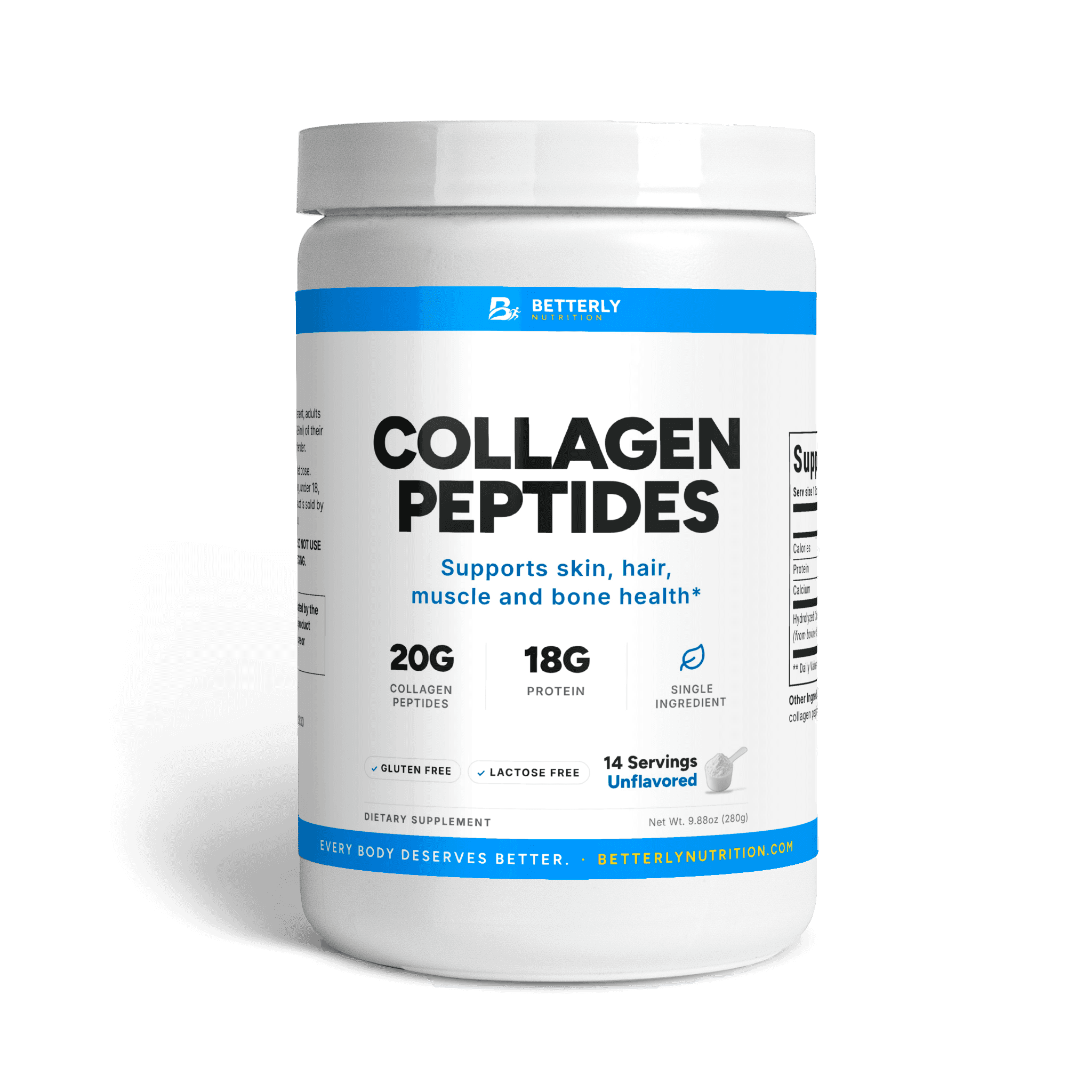
- Both of our Collagen Peptides Powders, the Unflavored and the Chocolate, carry 20 g of collagen in one serving. At one strip a day, matching one powder serving takes 200 days.
- Vitamin E is where the strip carries real weight: each one supplies 6 mg, and the NIH Office of Dietary Supplements gives 15 mg as the adult daily amount.
- The strip's panel says "Collagen Peptide" without naming an animal, while both powder panels name bovine hide.
A note before we start: we sell the strip, and the powders it's measured against. By collagen content the strip is far smaller, and you should know that before buying. Product numbers come from our printed panels; nutrient facts link to their federal source.
What are collagen strips? Three products share one name
"Collagen strips" is a name shared by edible strips that dissolve on your tongue, cosmetic patches pressed under the eyes, and collagen dressings used in dental care.
| Called "collagen strips" | Where it goes | What it is |
|---|---|---|
| Oral strip | Dissolves on your tongue | A dietary supplement with a Supplement Facts panel |
| Under-eye or face patch | Pressed onto skin, then peeled off | A cosmetic you never eat |
| Collagen dressing | Placed by a dental clinician | A medical product |
Only the oral strip is swallowed, and it's the only kind we sell.
Face and eye patches fall under cosmetics rules. The FDA's explainer Is It a Cosmetic, a Drug, or Both? defines cosmetics as products applied to the body "for cleansing, beautifying, promoting attractiveness, or altering the appearance." The same page says a product's intended use decides whether the law treats it as a cosmetic or a drug. We don't make patches, so we won't rate them.
Collagen dressings are medical products that dental clinicians use in the mouth, so questions about one belong with the clinician who placed it. The rest of this page covers the oral strip.
Do collagen strips work, or is the dose too small?
Collagen strips hold a small collagen dose: each Collagen & Vitamin E strip lists 100 mg, and there's no official daily target to judge that amount against.
Whether 100 mg changes anything you'd notice is harder to say. No collagen fact sheet with a daily amount turned up on the NIH Office of Dietary Supplements (ODS), NCCIH or MedlinePlus sites.
The strip's own %DV column shows that gap. Vitamin E reads 40%. The collagen row shows only a dagger (†), pointing to a footnote: "Daily Value (DV) not established." Without that yardstick, nobody can turn 100 mg into a percentage the way the vitamin E row does.
Nobody disputes that your own collagen matters. MedlinePlus Genetics calls collagens a protein family that gives cartilage, bone, tendon, skin and other tissues their strength and support. Of all the types, it says type I is the one your body has the most of. That page covers the collagen your body makes and says nothing about a 100 mg supplement.
Some strip sellers pitch a shortcut: collagen that soaks in through your mouth and skips digestion. Collagen is a protein; our Unflavored powder, whose only ingredient is collagen peptides, shows 18 g of protein on its panel. Nothing in the ODS, NCCIH or MedlinePlus material we opened hints that a tongue film changes how your body handles protein, and the strip's own label makes no such claim.
What do collagen strips do, and what's inside one?
Each 265 mg Collagen & Vitamin E strip holds two actives in a dissolving film: vitamin E (6 mg, as dl-alpha-tocopherol) and collagen peptide (100 mg).
Add the two actives together and you get 106 mg, about 40% of the strip's weight. The rest is the film and its flavor system: pullulan, cellulose, mango flavor, malic acid, pectin, monk fruit extract, lecithin and steviol glycosides. Even if this 265 mg strip were pure collagen, it would still hold less than 2% of what one powder serving lists.
Of the two ingredients, vitamin E is the one with a federal fact sheet. On its consumer vitamin E page, ODS says vitamin E dissolves in fat and works as an antioxidant, helping guard your cells against free radicals, compounds your body forms as it turns food into energy. It lists 15 mg a day for adults. FDA's Daily Value for vitamin E is also 15 mg, which is where the panel's 40% comes from: 6 divided by 15.
The panel also leaves out which animal the collagen comes from, while our powders name bovine hide. If you avoid fish or beef, our marine vs bovine collagen comparison explains why that one line matters.
The front of the pack carries our own wording: the descriptor "Daily Skin Support Formula," plus "lactose free" and "naturally sweetened." Sugar isn't in the ingredient list, yet the pack makes no sugar-free or vegan claim, so we won't make one for it. If you're wondering how vitamin E and collagen fit one routine, read our guide to taking collagen and vitamin E together.
Collagen strips vs powder: how far apart are the doses?
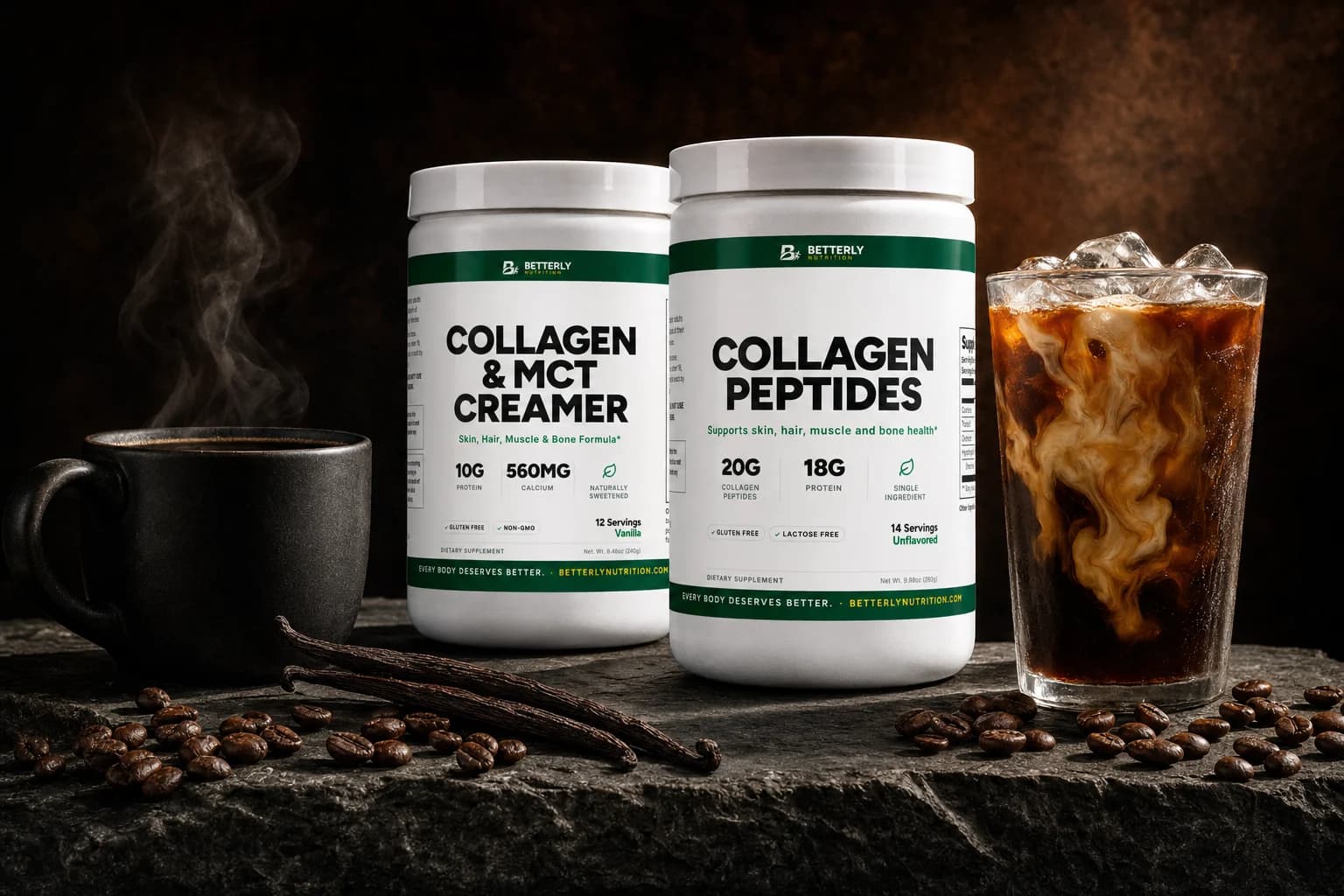
Collagen strips vs powder isn't close on dose: a serving of either of our Collagen Peptides Powders lists 20 g of collagen, against 100 mg in the strip.
Put it on a calendar: one strip a day for 200 days, nearly seven 30-strip packs, equals the collagen in one powder serving. A full pack totals 3 g. Here are the three panels side by side:
| Label detail | Strip | Unflavored powder | Chocolate powder |
|---|---|---|---|
| Serving size | 1 Oral Strip (265 mg) | 1 Scoop (20g) | 2 Scoops (27 g) |
| Collagen per serving | 100 mg | 20 g | 20 g |
| Source named | None | Bovine hide | Bovine hide |
| Vitamin E | 6 mg (40% DV) | Not listed | Not listed |
| Protein | No row | 18 g | 18 g |
| How you take it | Dissolve on tongue | Mix into 8-10 oz | Mix into 8-10 oz |
| Servings | 30 | 14 | 14 |
So the table sorts by goal. The powders carry 200 times the collagen plus 18 g of protein, while the strip is the only one with vitamin E and nothing to mix.
The Collagen Peptides Powder (Unflavored) lists nothing but bovine hide collagen peptides, at 70 calories a scoop. The Collagen Peptides Powder (Chocolate) uses a 2 Scoops (27 g) serving at 90 calories, adding 2 g of fiber, 120 mg of sodium and stevia extract.
From our shop: Collagen Peptides Powder (Unflavored) — one 1 Scoop (20g) serving lists as much collagen as 200 of our strips put together.
Do collagen strips dissolve all the way?
The Collagen & Vitamin E Strips label doesn't say whether a strip dissolves completely; its only direction is "Place 1 oral strip on the tongue daily and allow it to dissolve."
That line gives no dissolve time and never mentions water. So there's no timing we can pass along, and we won't promise zero residue.
What the pack does address is where to keep it: "STORE IN A COOL, DRY PLACE." A film built to melt in your mouth is best kept away from moisture until then, so we'd handle strips with dry hands and reseal the pack.
If your complaint is collagen that won't dissolve, you're probably mixing a powder. Both powder labels direct you to use a shaker cup or a blender with 8-10 oz of a beverage. For clumps in a hot mug, see our collagen in coffee guide.
Who is a collagen strip actually for?
A collagen strip suits someone who wants a mix-free vitamin E habit with a small side of collagen; either collagen powder suits anyone who wants collagen in grams.
- You want vitamin E that fits in a pocket: the strip, at 6 mg each.
- You want grams of collagen plus protein: either Collagen Peptides Powder, each serving listing 20 g of collagen alongside 18 g of protein.
- Pills are hard for you and you'd rather not mix drinks: the strip fits, and our roundup of pill-free vitamin formats covers other options.
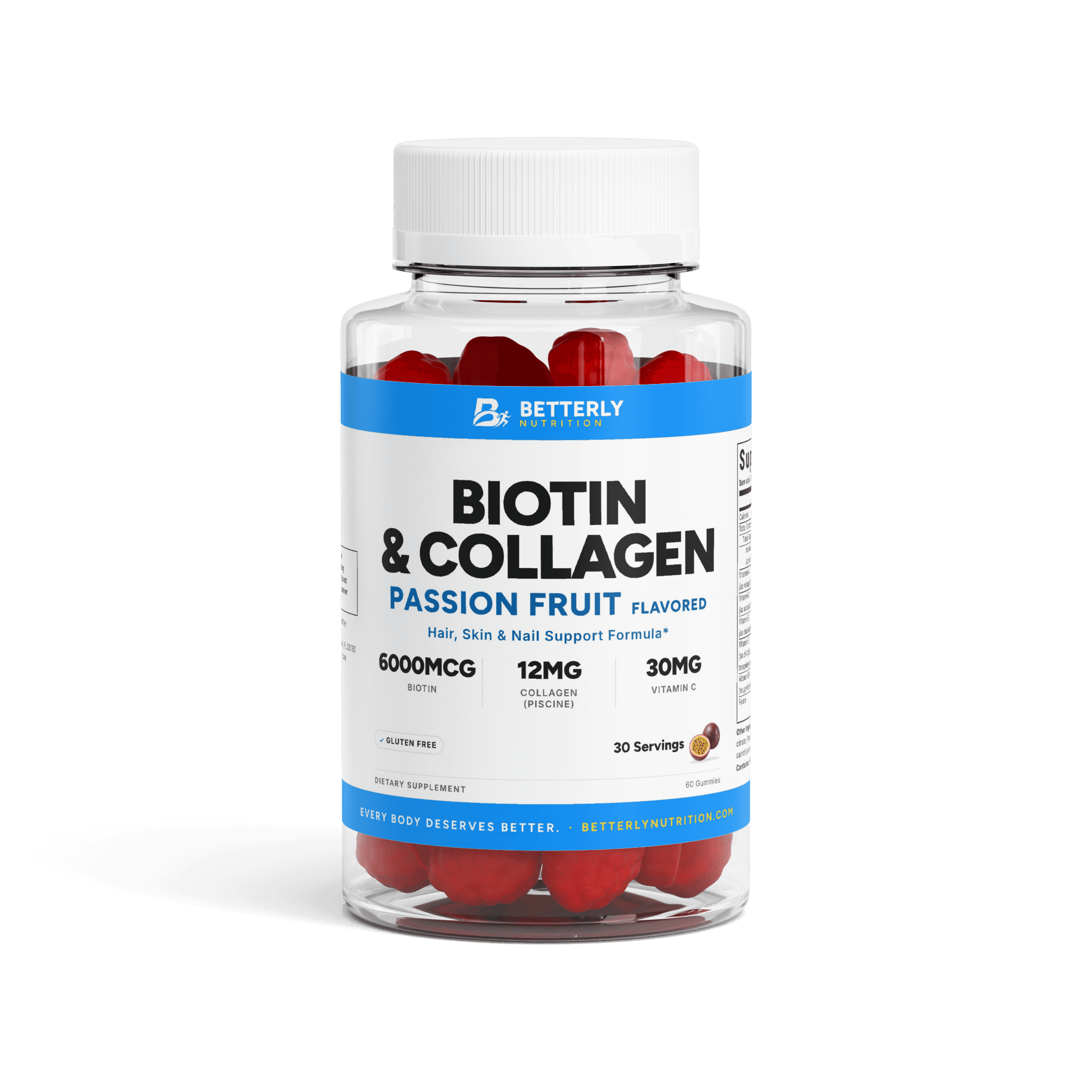
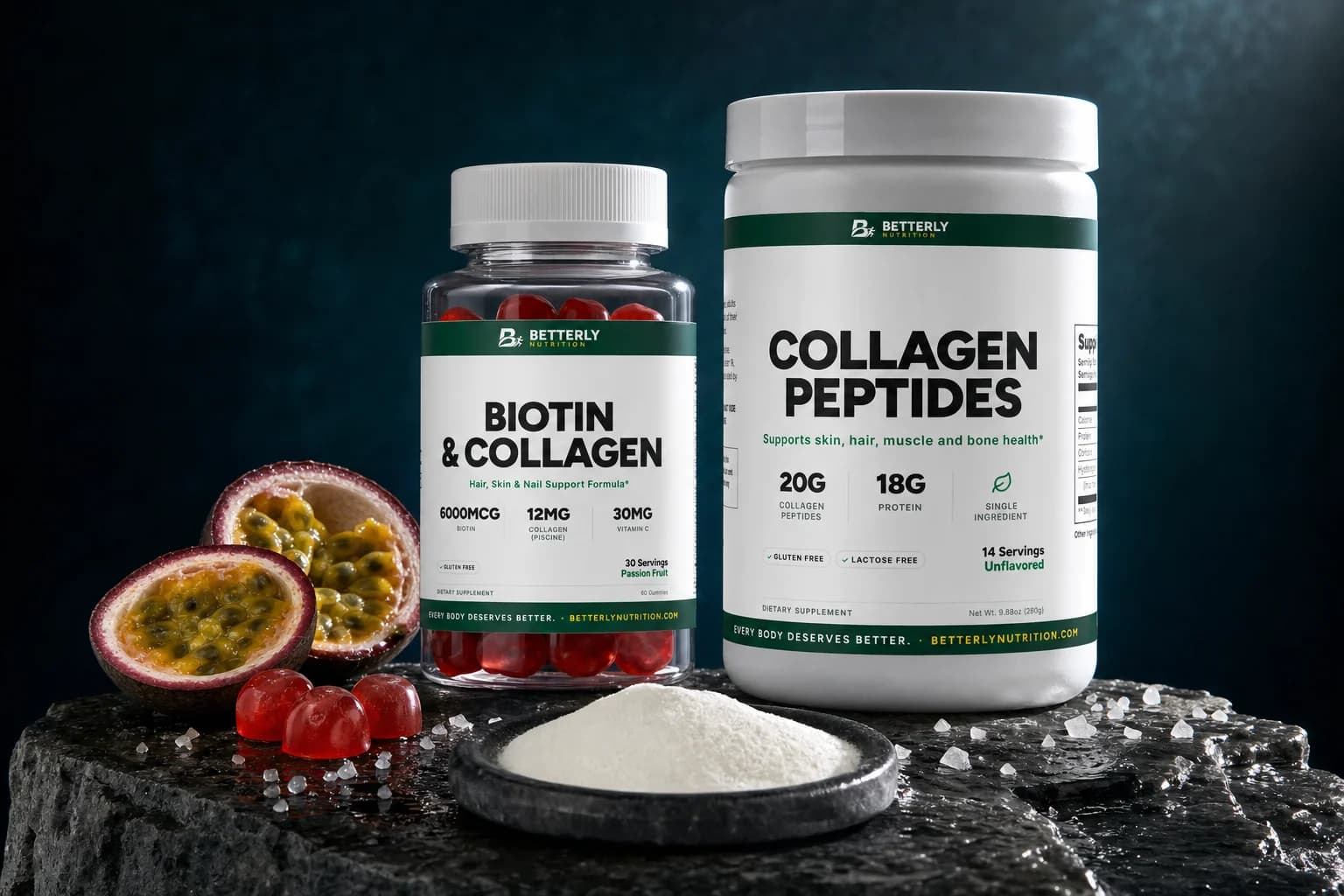
- You'd like biotin in something chewable: the Biotin & Collagen Gummies pair 6000 mcg of biotin with 12 mg of fish collagen, plus 4 g added sugars, per 2 Gummies serving. That's even less collagen than the strip.
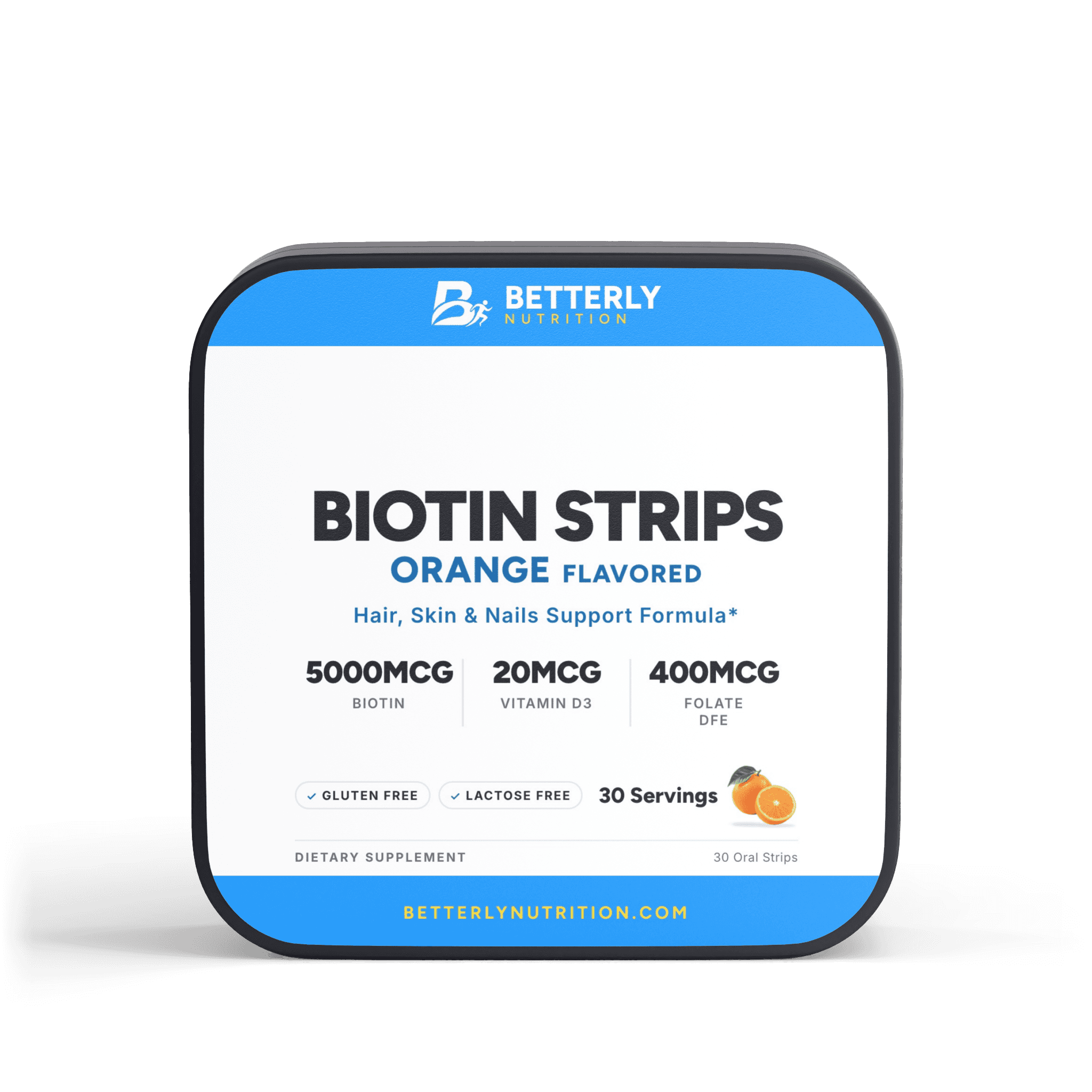
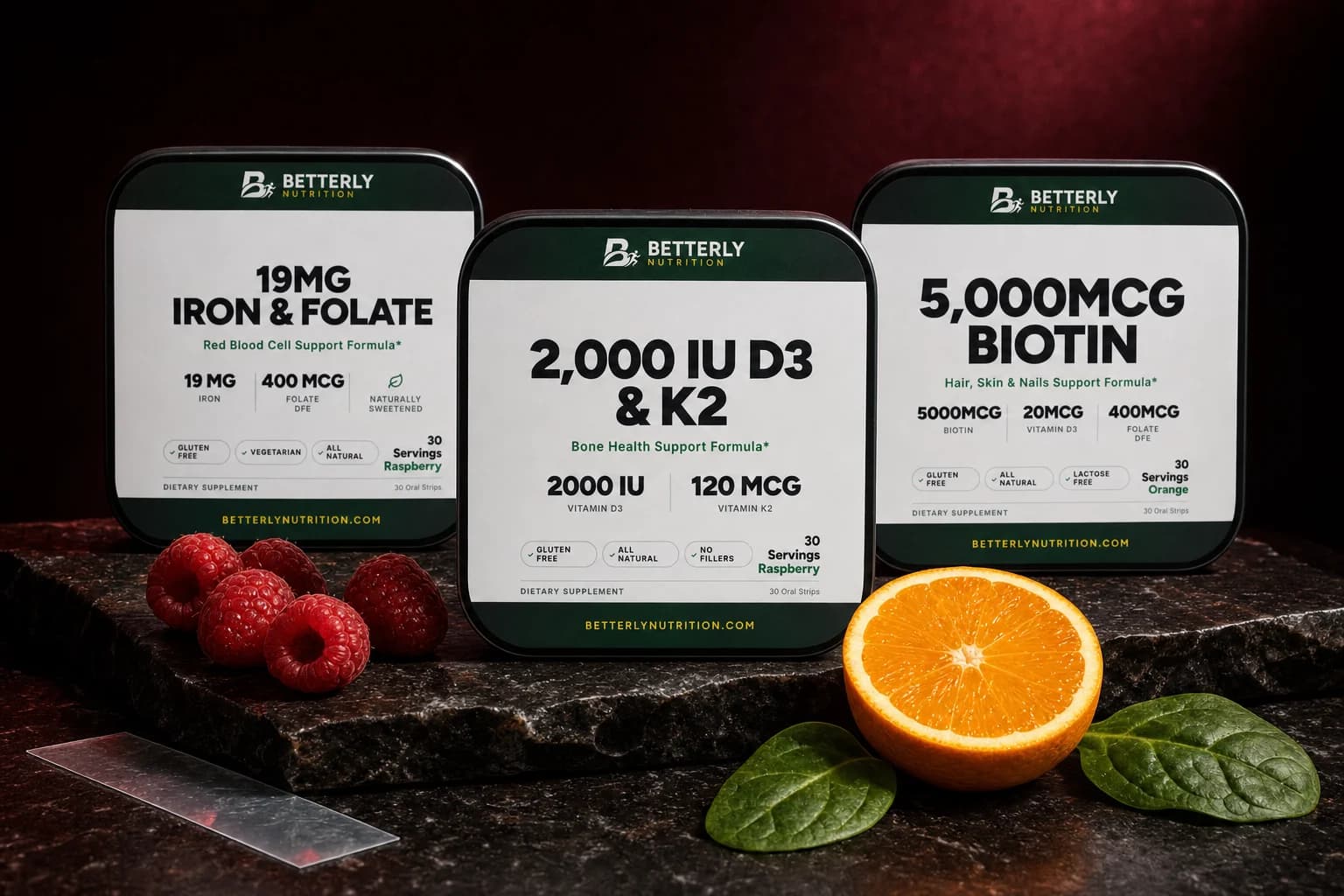
- You already like strips and want biotin in the same format: each 1 Oral Strip (100 mg) serving of the 5,000mcg Biotin Strips provides 5000 mcg of biotin. Both sit on Betterly's hair, skin and nails shelf.
How should you take collagen strips each day?
The label's suggested use is one Collagen & Vitamin E strip a day, placed on your tongue and left there to dissolve.
- Hook it to a routine you already keep. The directions set no time of day, so a strip while the kettle heats works as well as any.
- Keep it to one strip a day. A second would still leave you far short of a scoop's collagen, and it would go against the pack's own warning: "Do not exceed recommended dose."
- Measure powders by their own scoop count: one for Unflavored, two for Chocolate, each in 8-10 oz of a beverage, shaken or blended.
One background fact from ODS: vitamin E needs some fat for the digestive system to absorb it. The strip's label says nothing about meals.
Stacking products? Add up the vitamin E. One strip (6 mg) plus the gummies (18 mg, 120% DV, per 2 Gummies serving) comes to 24 mg a day, a small fraction of the 1,000 mg that ODS names as the adult daily ceiling for vitamin E supplements. ODS also says most once-daily multivitamins supply about 13.5 mg, so count yours too.
From our shop: Collagen & Vitamin E Strips — 30 mango-flavored oral strips, each 1 Oral Strip (265 mg) serving listing vitamin E at 6 mg (40% DV) and collagen peptide at 100 mg.
When can you skip a collagen strip?
You can skip a collagen strip if you already use a collagen powder, your multivitamin covers vitamin E, or you eat nuts, seeds and vegetable oils most days.
- Already scooping collagen? The strip's 100 mg adds half a percent to a powder's 20 g.
- Already taking the Biotin & Collagen Gummies? Their 18 mg of vitamin E per 2 Gummies serving is three times the strip's 6 mg.
- Getting vitamin E from food? ODS lists almonds, sunflower seeds, and wheat germ, sunflower and safflower oils among the best sources.
- Hoping for a visible change? No label here promises one, and this page won't invent one.
Who should run collagen strips past a provider first?
Before your first Collagen & Vitamin E strip, ask a provider if you use prescription medicine, have surgery ahead, are pregnant, breastfeeding or under 18, or have a medical condition.
Printed on the pack: "Do not exceed recommended dose. Consult a physician if pregnant, nursing, under 18, or have a medical condition." Also raise these:
- Blood thinners. ODS warns that vitamin E can raise bleeding risk for people on anticoagulant or antiplatelet medicines, warfarin among them. The strip's 6 mg is modest, but your prescriber should still know about it.
- Blood work. According to the ODS biotin page for consumers, taking more biotin than recommended may skew certain lab tests. If you add the Biotin & Collagen Gummies (6000 mcg) or the 5,000mcg Biotin Strips (5000 mcg), tell whoever orders your tests.
- Food rules. With no animal named on the strip's panel, contact us before ordering if you avoid beef, pork or fish.
- Children. The pack tells you to keep it away from kids, and a mango-flavored film could easily pass for candy in small hands.
FAQ: collagen strips
Do collagen strips work for skin?
We can't promise a skin result from collagen strips, because no federal fact sheet we opened ties 100 mg of collagen to one. The "Daily Skin Support Formula" line on our strip's pack is the product's own structure/function statement, which is why an asterisk ties it to the FDA disclaimer. Separately, ODS calls vitamin E an antioxidant that helps shield cells from free-radical damage.
Do collagen eye strips work like oral strips?
No. Collagen eye strips are cosmetic patches you press under your eyes, while oral collagen strips are supplements you dissolve on your tongue. A patch carries no Supplement Facts panel, and an oral strip isn't made for your skin. We don't sell eye patches, so we can't judge one, but keep the two in separate places so nobody grabs the wrong one.
Is the collagen in collagen strips from cows or fish?
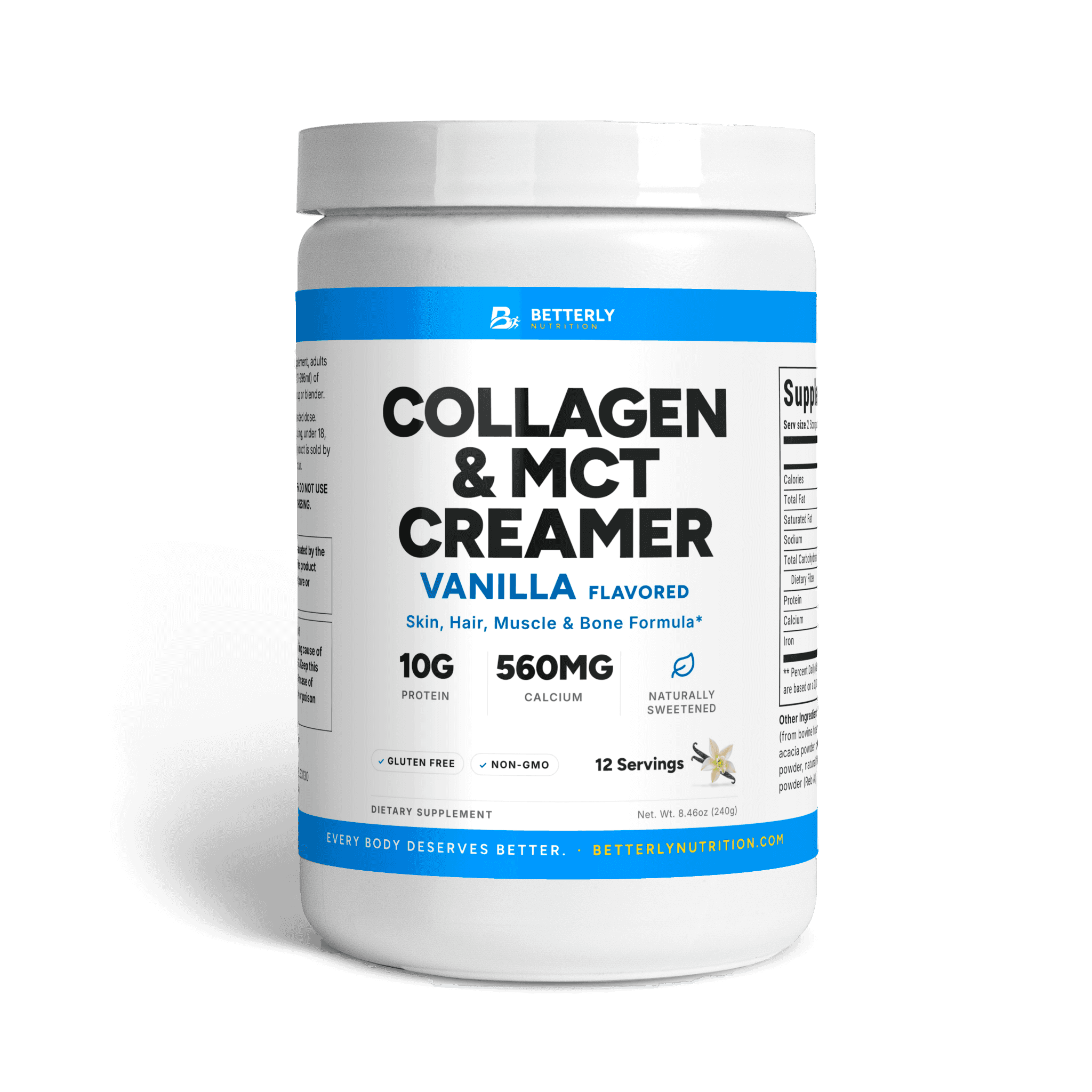
That varies by brand, and not every label tells you. Our Collagen & Vitamin E Strips print "Collagen Peptide" with no animal named. Our two Collagen Peptides Powders and the Collagen Peptides & MCT Creamer (Vanilla) name bovine hide, though the creamer prints no collagen amount. Our Biotin & Collagen Gummies use piscine (fish) collagen, with a Contains line of "Fish (Tilapia), Tree nuts (Coconut)." When a label is silent, contact the brand and ask.
Can you use collagen strips and collagen powder together?
Yes, nothing on either label rules it out. Our powders list no vitamin E, so the strip's 6 mg isn't doubled, and its 100 mg of collagen simply adds to a powder's 20 g. Stick to each label's directions, since each prints "Do not exceed recommended dose." Anyone on a blood thinner should run the strip's vitamin E past their provider first.
How many days does a pack of collagen strips last?
A pack of Betterly's Collagen & Vitamin E Strips lasts 30 days: there are 30 strips inside, and the directions are one strip daily. Our two Collagen Peptides Powders each hold 14 servings per tub, for comparison. Reseal the strip pack after each use and keep it cool and dry, as its storage line asks.
Sources
- Vitamin E: Fact Sheet for Consumers, NIH Office of Dietary Supplements
- Biotin: Fact Sheet for Consumers, NIH Office of Dietary Supplements
- COL1A1 gene, MedlinePlus Genetics
- Is It a Cosmetic, a Drug, or Both? (Or Is It Soap?), FDA
- Daily Value on the Nutrition and Supplement Facts Labels, FDA
If this left you looking for somewhere to start, read dissolvable collagen and vitamin E oral strips — its amounts per serving are listed on the page. For the practical questions this raises, how dosing, sourcing and subscriptions work is answered in one place.