On this page
- Key takeaways
- Is vitamin E good for your skin?
- What can a vitamin E supplement for skin honestly promise?
- Vitamin E oil vs capsule: which one is a supplement?
- Is vitamin E good for your skin topically?
- Can you put a vitamin E capsule on your face?
- Where does a 6 mg vitamin E strip fit in your day?
- How do you take a vitamin E supplement, per the label?
- Who doesn't need a vitamin E supplement for skin?
- Who should check with a healthcare provider first?
- FAQ: vitamin E supplements for skin
- Sources
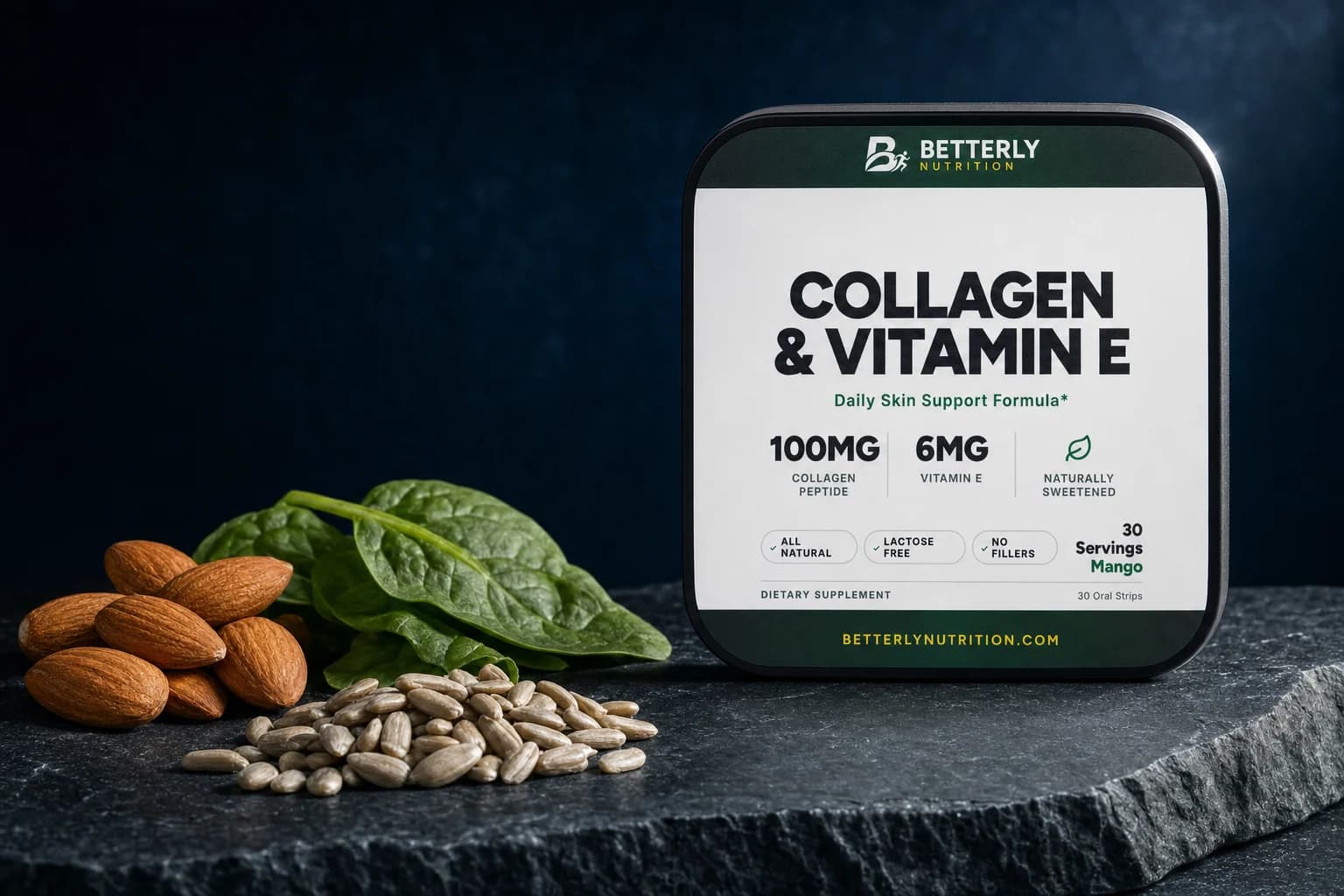
The short answer: A vitamin E supplement for skin is a nutrient you swallow, and your body uses vitamin E as an antioxidant in cells everywhere, skin included. None of the federal pages we read say a supplement changes how skin looks. Vitamin E oil sold for your face is a different product, usually a cosmetic. Our Collagen & Vitamin E Strips print 6 mg (40% DV) per 1 Oral Strip (265 mg) serving.
Key takeaways
- Vitamin E is a fat-soluble nutrient your body uses as an antioxidant against free-radical damage in cells, and no federal page we read ties a vitamin E supplement to how skin looks.
- Under US law, a vitamin E capsule you swallow is a dietary supplement, and a vitamin E oil sold for how skin looks is a cosmetic, unless its claims make it a drug.
- The FDA says moisturizers marketed with sun-protection claims count as both cosmetics and drugs, so a vitamin E cream making that promise has to meet both sets of rules.
- Skin wording on the front doesn't track the vitamin E inside: our strip says "Daily Skin Support Formula" and lists 6 mg per 1 Oral Strip (265 mg) serving, while our multivitamin lists 13.5 mg per 2 Capsules serving.
- Nuts, seeds and vegetable oils supply vitamin E too, and many multivitamins list it, so check what you already get before buying more.
Before we start: Betterly sells the strip, the gummies, the collagen powder and the multivitamin on this page, and we don't sell a vitamin E oil, a skin cream or a vitamin E-only softgel. So we'll stay on the swallowed side, quote our labels as printed, and say where your kitchen already does the work.
Is vitamin E good for your skin?
Vitamin E is good for your cells, skin cells included, because your body uses it as an antioxidant; no federal source we read says a supplement makes skin look different.
The NIH Office of Dietary Supplements (ODS) fact sheet on vitamin E calls it a fat-soluble nutrient whose antioxidant role is protecting cells from harm by free radicals. Your body forms free radicals as it turns food into energy. ODS also names three outside sources: cigarette smoke, air pollution and ultraviolet light from the sun.
It's tempting to read that sunlight mention as a skin promise. But no page we cite says that swallowing vitamin E protects your skin from the sun, so don't count a supplement as sun protection.
The MedlinePlus article on vitamin E fills in the job description. Its list runs from normal immune function to red blood cell formation and the body's use of vitamin K. Skin appearance isn't on the list.
What can a vitamin E supplement for skin honestly promise?
A vitamin E supplement for skin can honestly promise one thing: a stated amount of an antioxidant nutrient that supports normal cell function, skin cells among them.
Our strip's label calls it a "Daily Skin Support Formula*," and that asterisk points to a printed line: "This statement has not been evaluated by the Food and Drug Administration."
The FDA's Questions and Answers on Dietary Supplements explains where that line comes from. A claim about how a product affects the body's structure or function has to carry that disclaimer, and the maker must be able to back the claim up. So the skin wording is our description of the formula, not an FDA finding, and no before-and-after sits behind it.
What the strip can show you is its panel. Each 1 Oral Strip (265 mg) serving lists 6 mg of vitamin E (40% DV) and 100 mg of collagen peptide. The vitamin E row names its form as DL-alpha-Tocopherol.
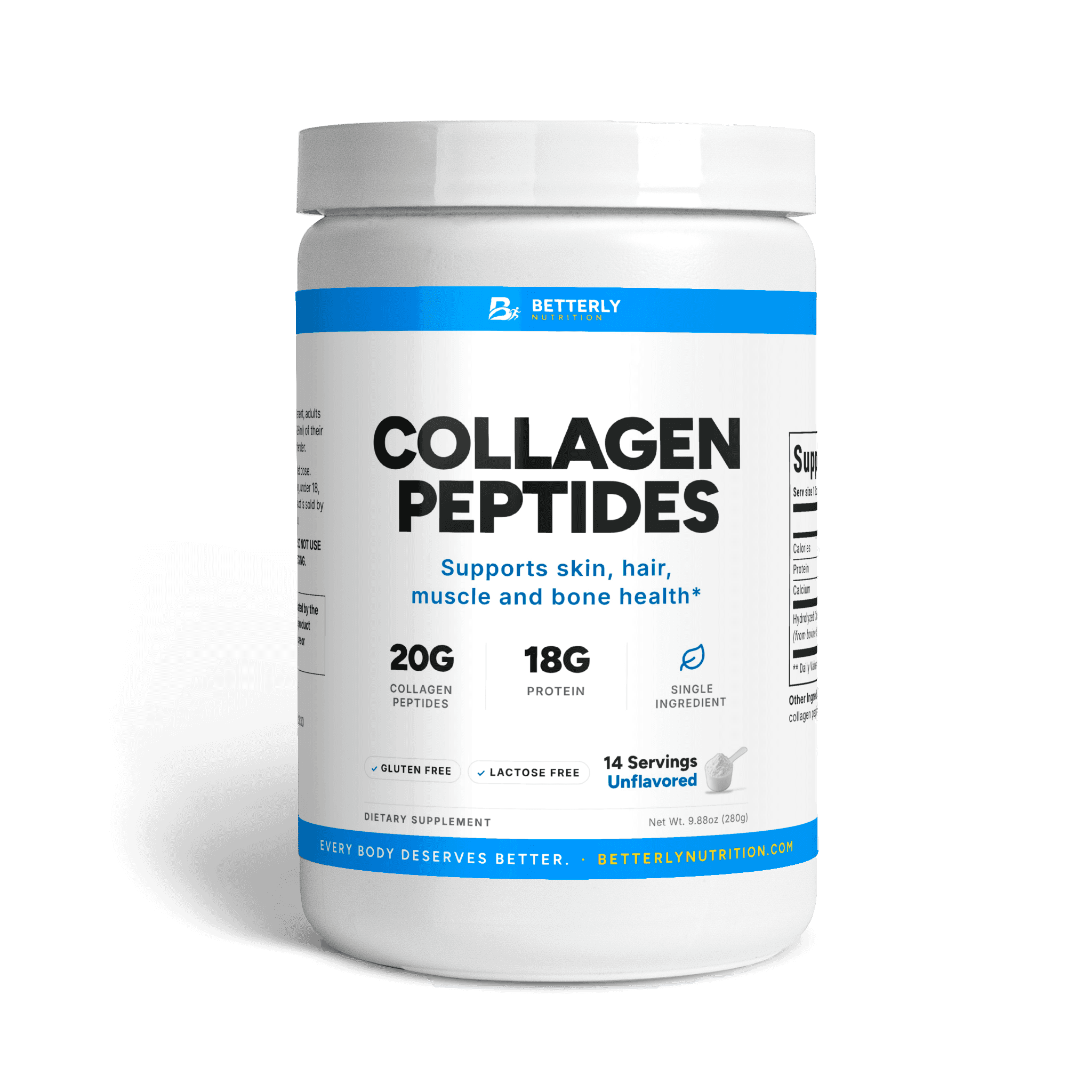
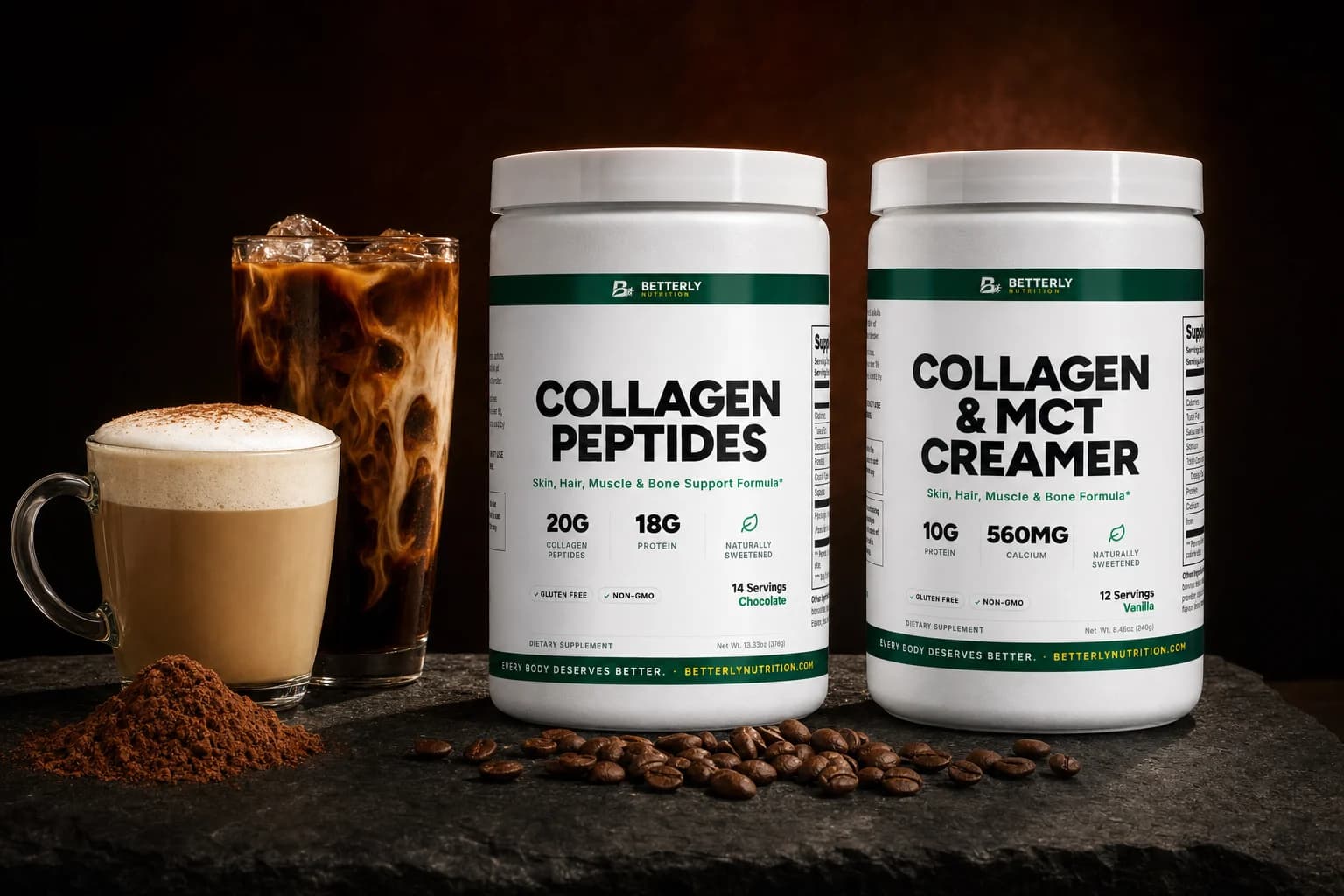
For collagen measured in grams, look at our Collagen Peptides Powder (Unflavored): its 1 Scoop (20g) serving is 20 g of hydrolyzed collagen peptides, and its panel carries no vitamin E.
Vitamin E oil vs capsule: which one is a supplement?
A vitamin E capsule you swallow is a dietary supplement, and vitamin E oil made for skin is usually a cosmetic, because US law sorts products by intended use.
The FDA's supplement Q&A says dietary supplements must be swallowed, so topical products, the kind you put on skin, aren't supplements. The same page says supplement labels carry a Supplement Facts panel, which is where you'll find the vitamin E amount.
Here's how the two sides compare for vitamin E:
| Check | Vitamin E you swallow | Vitamin E you spread on skin |
|---|---|---|
| How the amount shows | Supplement Facts (our strip: 6 mg, 40% DV) | Not covered by the federal pages we cite |
| Whose directions apply | The supplement label (ours: 1 strip daily) | That product's own label |
| Federal yardstick | 15 mg a day for adults (ODS) | None on the pages we cite |
| What happens next | Needs some fat to be absorbed; stored in fatty tissue and liver | Not covered by the federal pages we cite |
Three of the four right-hand cells come up empty, because the pages we cite only describe vitamin E you swallow. For a skin-care step, judge that product by its own label.
Is vitamin E good for your skin topically?
Vitamin E on skin isn't rated by any federal page we cite, but the FDA does set what a vitamin E oil or cream is allowed to claim.
The FDA explainer Is It a Cosmetic, a Drug, or Both? sorts products by what they're for. Cosmetics are meant to clean the body or make it look more attractive, and skin moisturizers are one of the named examples. A vitamin E oil sold to soften or beautify skin fits that description.
Claims can push a product into drug territory. The same page says a product meant to affect the body's structure or function is a drug, even when it's sold like a cosmetic. Its examples include claims that a product will regenerate cells or raise or lower the skin's melanin (pigment) production.
Sun protection is the claim to watch. FDA says moisturizers and makeup marketed with sun-protection claims are cosmetic/drug products, so they must meet the rules for both.
The page adds that cosmetics, apart from color additives, don't need FDA approval before they're sold. And the FDA says "cosmeceutical," a term you may see in skin-care marketing, "has no meaning under the law."
So does a vitamin E oil do your skin any good? The pages we cite don't say either way, and we don't make one, so we won't guess. Ask a dermatologist what suits your skin.
Can you put a vitamin E capsule on your face?
Piercing a vitamin E capsule for your face uses a product sold for swallowing in a way its label never describes, so its directions can't guide you.
The appeal makes sense, since a softgel looks like a tiny jar of oil. But a supplement label was written for your mouth and gut. It tells you how many to swallow, not how much to spread or how often.
Our strip doesn't suit this use at all. It's a thin film you place on your tongue, not a softgel you can pierce.
Where does a 6 mg vitamin E strip fit in your day?
One Collagen & Vitamin E strip lists 6 mg of vitamin E (40% DV), less than half the 15 mg adult daily amount that ODS gives.
At the high end, ODS caps vitamin E from supplements at 1,000 mg a day for adults. It also flags possible harm well under that line, in men who took 180 mg of synthetic vitamin E daily for several years. Our guide to natural and synthetic vitamin E does the full per-day math.
Skin wording on the front of a pack and the vitamin E row on the back don't rise and fall together. Three of our own labels show it:
| Our product, per serving | Front-of-pack line | Vitamin E on the panel |
|---|---|---|
| Collagen & Vitamin E Strips, 1 Oral Strip (265 mg) | Daily Skin Support Formula* | 6 mg (40% DV) |
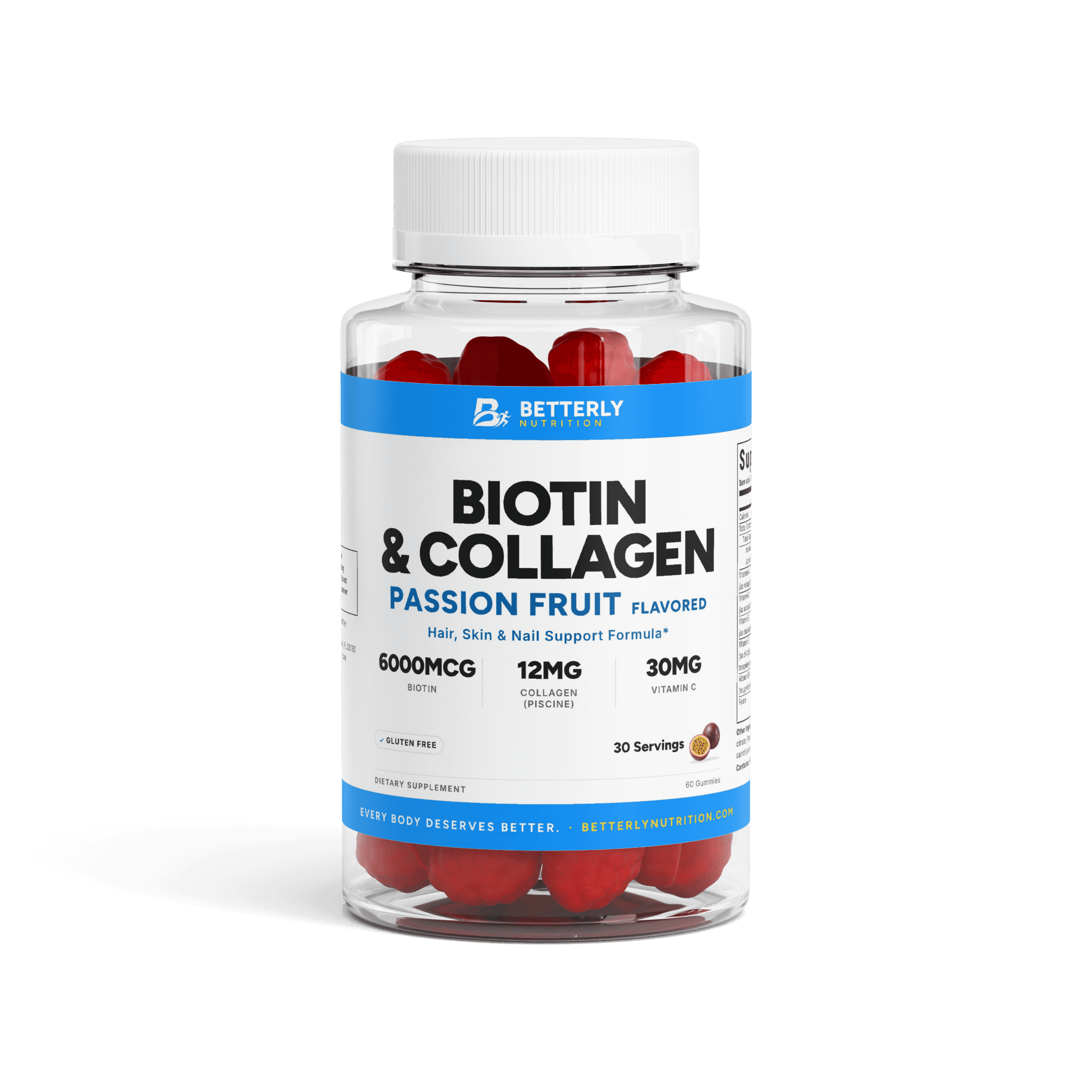
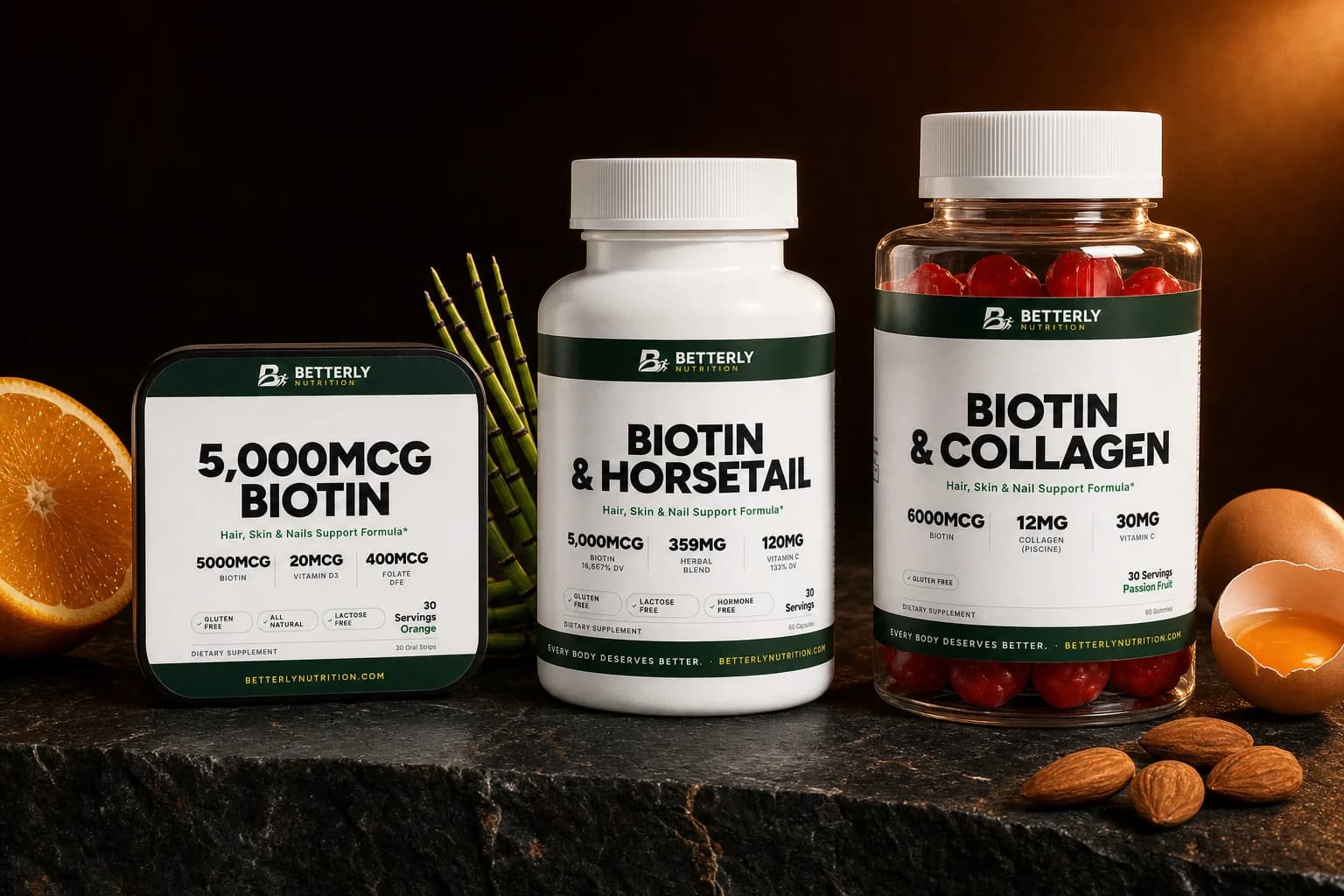
| Biotin & Collagen Gummies, 2 Gummies | Hair, Skin & Nail Support Formula* | 18 mg (120% DV) |
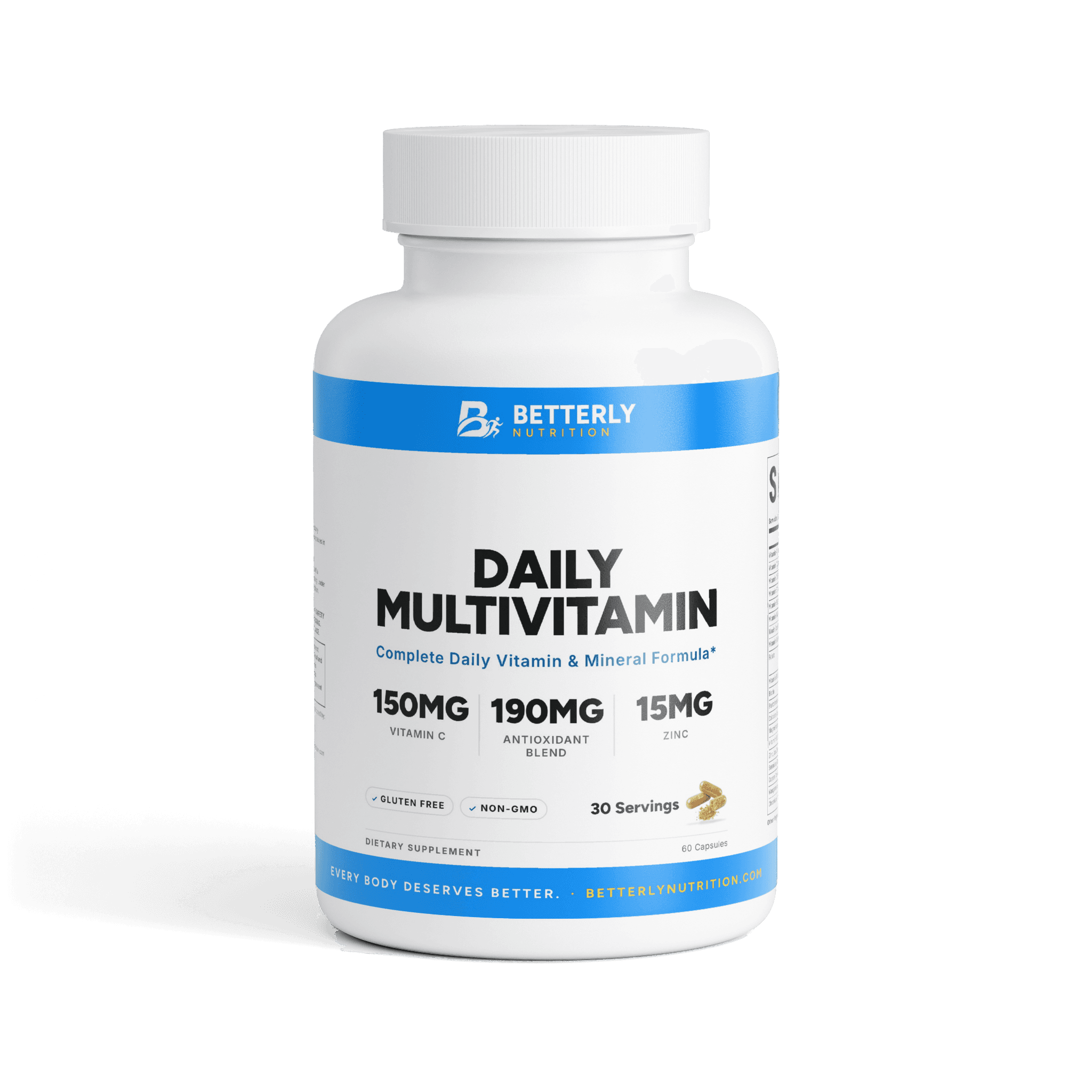
| Daily Multivitamin Capsules, 2 Capsules | Complete Daily Vitamin & Mineral Formula* | 13.5 mg (90% DV) |
The strip's front line is all about skin, yet it lists the least vitamin E of the three. The multivitamin never mentions skin and lists more than twice as much. Trust the panel row, not the headline.
Beyond our shelf, ODS says vitamin E-only supplements commonly contain 67 mg or more, several times the daily amount. A big number on a softgel sold for skin doesn't make it a better skin product, and it's worth a word with your provider first.
Before you buy any vitamin E product that talks about skin, run three quick checks:
- The heading on the back. "Supplement Facts" marks a product made to be swallowed, whatever the front says about your face.
- The asterisk. On skin wording, it usually points to the FDA disclaimer, a sign the FDA hasn't evaluated that line.
- The vitamin E row. Add its milligrams to every other label you take that lists vitamin E, your multivitamin included.
From our shop: Collagen & Vitamin E Strips — 6 mg of vitamin E (40% DV) and 100 mg of collagen peptide in each mango-flavored 1 Oral Strip (265 mg) serving, 30 strips per pack.
How do you take a vitamin E supplement, per the label?
Take a vitamin E supplement exactly as its label says; for our strip, that means one strip on your tongue once a day, left to dissolve.
Our strip's suggested use is "Place 1 oral strip on the tongue daily and allow it to dissolve." One strip is the full day's serving. If you choose the Biotin & Collagen Gummies instead, their label says "2 gummies daily or as directed by a healthcare professional."
The strip pack's storage line reads "KEEP OUT OF REACH OF CHILDREN. STORE IN A COOL, DRY PLACE."
There's no skin reason to go past one strip. No federal page we cite ties extra vitamin E to how skin looks, and the strip's caution begins "Do not exceed recommended dose."
From our shop: Biotin & Collagen Gummies — each 2 Gummies serving lists 18 mg of vitamin E (120% DV), 6000 mcg of biotin and 30 mg of vitamin C in a passion fruit gummy, with 4 g of added sugars.
Who doesn't need a vitamin E supplement for skin?
People who want a skin-care step, or whose meals and current products already bring vitamin E, can skip a vitamin E supplement for skin.
- You want something to smooth on your face. A supplement label only covers swallowing, so shop for a product labeled for skin.
- You planned to pierce softgels for the oil inside. That's a skin-care plan, not a supplement one.
- Your plate and your multivitamin already carry it. Wheat germ oil, sunflower oil, almonds and sunflower seeds all make the ODS list of top sources.
For the other nutrients people link with skin, our roundup of hair, skin and nails supplements covers each one, and the hair, skin and nails shelf lets you compare panels.
Who should check with a healthcare provider first?
A vitamin E supplement is worth a provider's review first if the label's caution applies to you, you take blood-thinning medicine, or something about your skin is bothering you.
The caution printed on both the strip and the gummies reads: "Do not exceed recommended dose. Consult a physician if pregnant, nursing, under 18, or have a medical condition."
ODS also flags medicine interactions: vitamin E can raise the chance of bleeding for people on anticoagulant or antiplatelet drugs such as warfarin. ODS asks you to tell your doctor, pharmacist and other providers about every supplement you use. If you have surgery coming up, tell that team too. Our collagen and vitamin E pairing guide runs through the other interactions ODS names.
If something about your skin worries you, book a dermatologist before you buy either format. A capsule or an oil is no substitute for having it looked at.
Picking the gummies? Their label lists fish (tilapia) and tree nuts (coconut).
FAQ: vitamin E supplements for skin
Is it OK to take a vitamin E supplement every day?
Yes, if it's a low-dose vitamin E supplement like our 6 mg strip, taken one strip a day as the label directs. ODS sets the adult upper limit for vitamin E from supplements at 1,000 mg a day, but it also notes possible harm below that line: men who took 400 IU (180 mg) of synthetic vitamin E daily for several years. Count every product that lists vitamin E, and ask a provider before a high-dose one.
Is vitamin E good for hair?
Vitamin E isn't linked to hair by any federal page we cite. MedlinePlus lists jobs such as antioxidant protection, immune function, red blood cell formation and helping the body use vitamin K, and hair isn't among them. On the topical side, the FDA counts a promise to restore hair growth as a drug claim, even on a product sold like a cosmetic.
Can you take vitamin E while pregnant?
Vitamin E is still needed during pregnancy, but whether to add a supplement is your provider's call. ODS lists 15 mg a day for pregnant women and 19 mg while breastfeeding. Both our strip and gummy labels say to consult a physician if pregnant or nursing. A prenatal vitamin may already list vitamin E, so bring every panel to that visit.
Can a vitamin E capsule replace a moisturizer?
No, a vitamin E capsule isn't made to stand in for a moisturizer. The FDA names skin moisturizers as an example of cosmetics, products applied to beautify the body or change how it looks. A capsule is a supplement labeled for swallowing, and its directions don't mention skin. If your skin feels dry, a moisturizer labeled for your face is the product built for that job.
Can you get too much vitamin E from food?
No, vitamin E from food isn't something the federal pages we cite ask you to limit. MedlinePlus says eating vitamin E in foods is not risky or harmful, and its bleeding warning is about high doses of vitamin E supplements. So almonds as a snack don't need tracking the way a softgel does. If you take more than one supplement, those labels are where the milligrams add up.
Sources
- Vitamin E: Fact Sheet for Consumers, NIH Office of Dietary Supplements
- Vitamin E, MedlinePlus Medical Encyclopedia
- Questions and Answers on Dietary Supplements, U.S. Food and Drug Administration
- Is It a Cosmetic, a Drug, or Both? (Or Is It Soap?), U.S. Food and Drug Administration
If this left you looking for somewhere to start, read 6 mg vitamin E oral strips with collagen — its amounts per serving are listed on the page. For the practical questions this raises, how dosing, sourcing and subscriptions work is answered in one place.