On this page
- Key takeaways
- Which collagen latte recipe should you make?
- How do you make a hot vanilla latte with collagen creamer?
- How do you make an iced collagen latte that stays smooth?
- How do you make a collagen mocha at home?
- How do you make cold brew coffee with collagen?
- How can you use collagen creamer beyond a latte?
- Does your milk or sweetener change what's in the cup?
- When isn't a collagen latte recipe worth making?
- Who should check with a healthcare provider first?
- FAQ: collagen lattes
- Sources
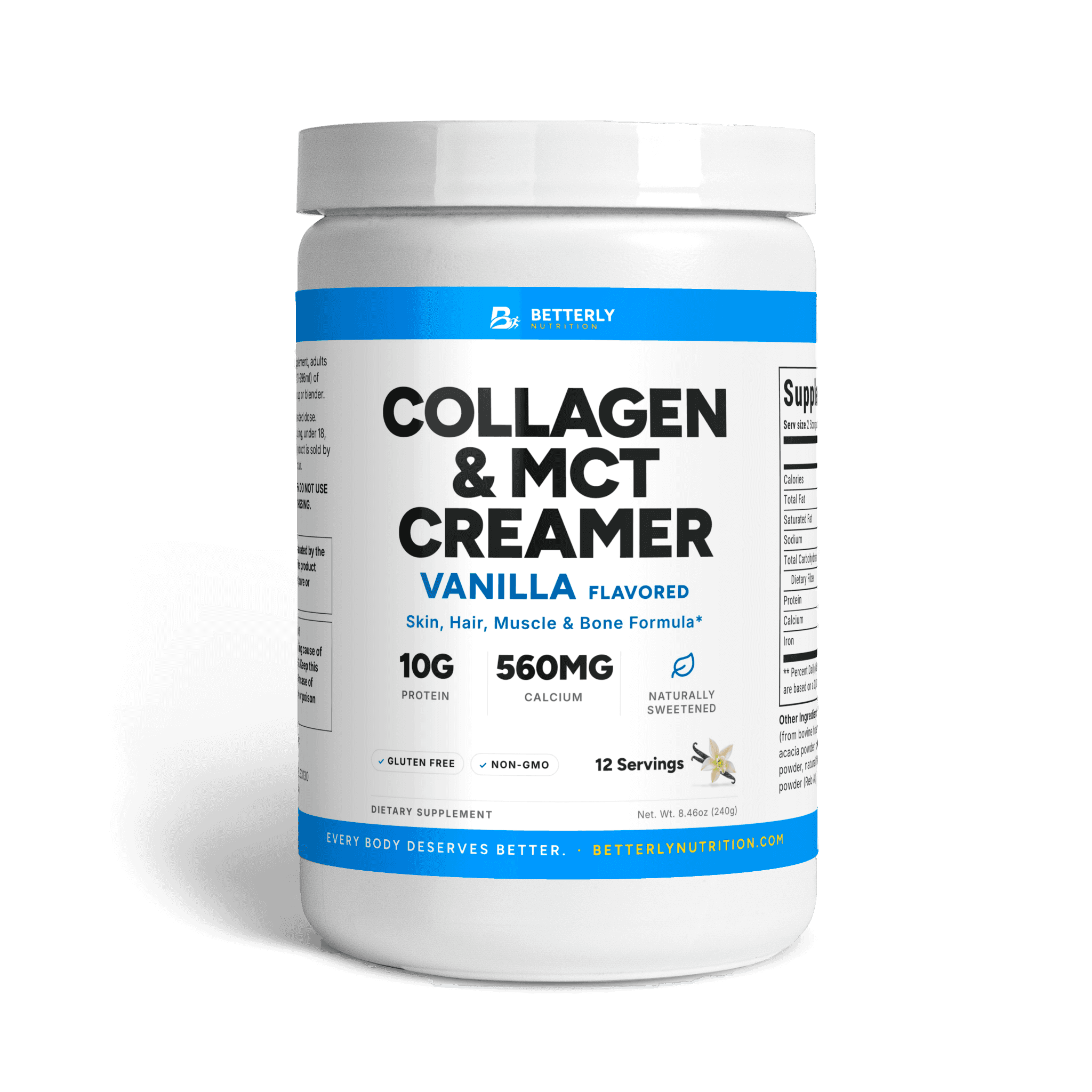
The short answer: A collagen latte recipe works best with one label serving of collagen in 8 to 10 oz of liquid, the pairing printed on all three of our collagen tubs. For a hot vanilla latte, froth 2 scoops (20 g) of our vanilla collagen creamer into 6 to 8 oz of warm milk, then pour it over a 2 oz double espresso. The creamer lists 70 calories and 10 g of protein per serving, and your milk adds its own.
Key takeaways
- Each drink here uses one label serving of collagen in 8 to 10 oz of total liquid, as our collagen labels direct.
- Our vanilla creamer adds 70 calories and 10 g of protein per 2 Scoops (20 g) serving, but its panel gives no collagen amount.
- For an iced milk latte, stir the scoop into the hot espresso first, while plain cold brew mixes fine in a sealed shaker.
- Our chocolate powder makes a mocha with 20 g of hydrolyzed collagen peptides per 2 Scoops (27 g) serving.
- A homemade collagen creamer is 1 scoop (20 g) of our unflavored powder whisked into warm milk with a drop of vanilla extract.
We sell the creamer and both powders in these recipes. Product numbers come from their Supplement Facts panels, and other facts from the MedlinePlus, NIH and FDA pages named below.
Which collagen latte recipe should you make?
Pick the collagen latte recipe by the tub you own: our vanilla creamer makes hot or iced vanilla lattes, the chocolate powder a mocha, the unflavored powder cold brew.
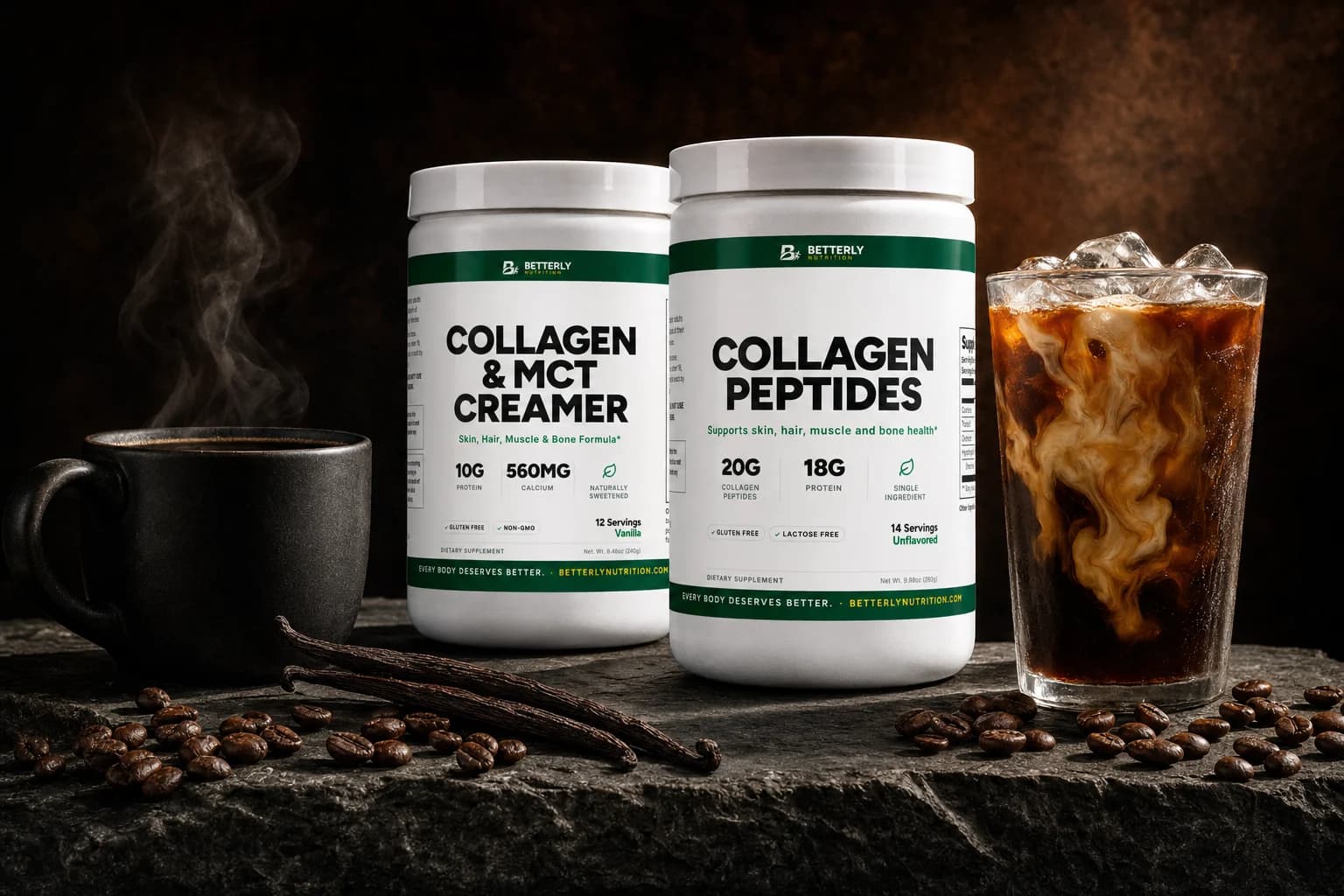
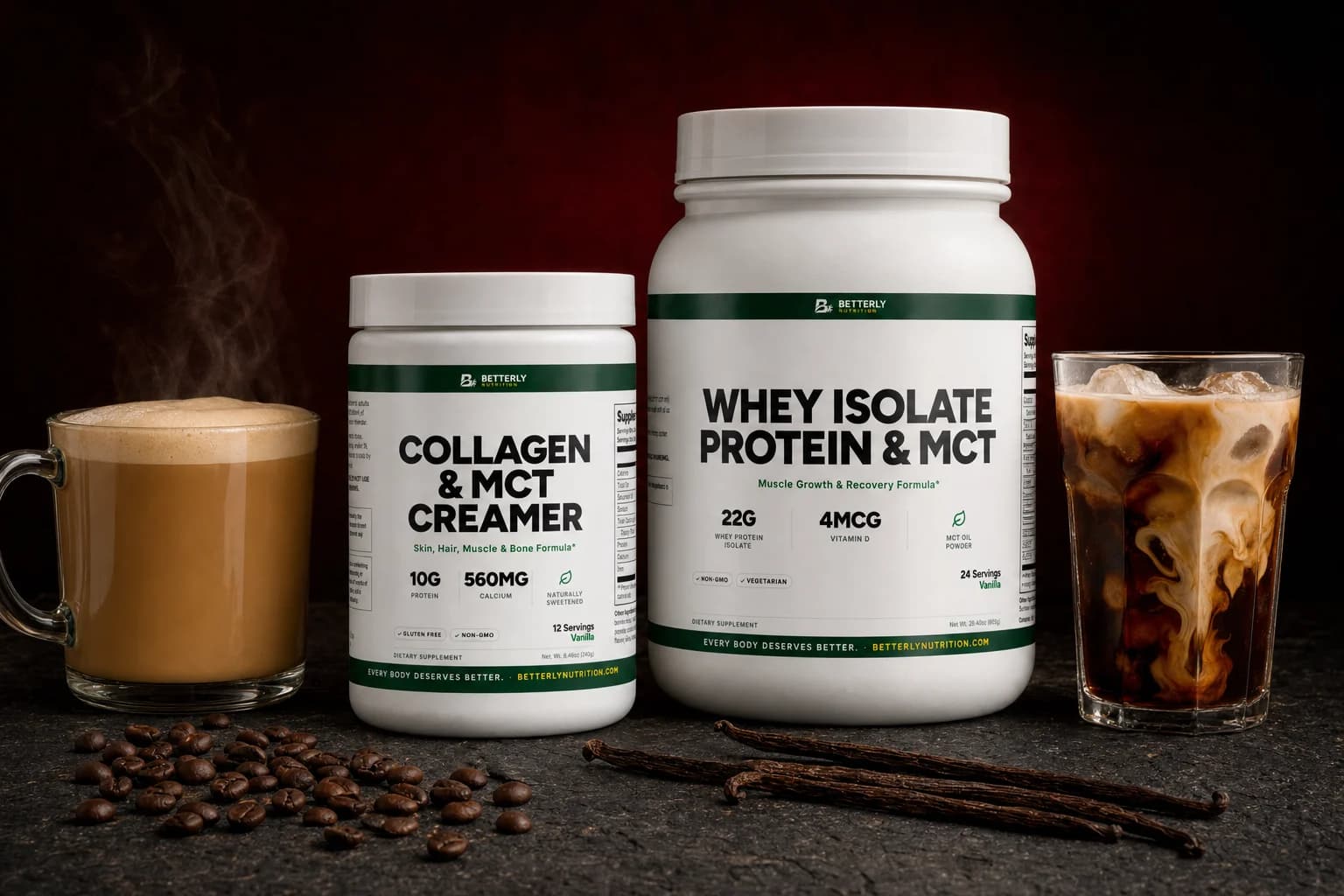
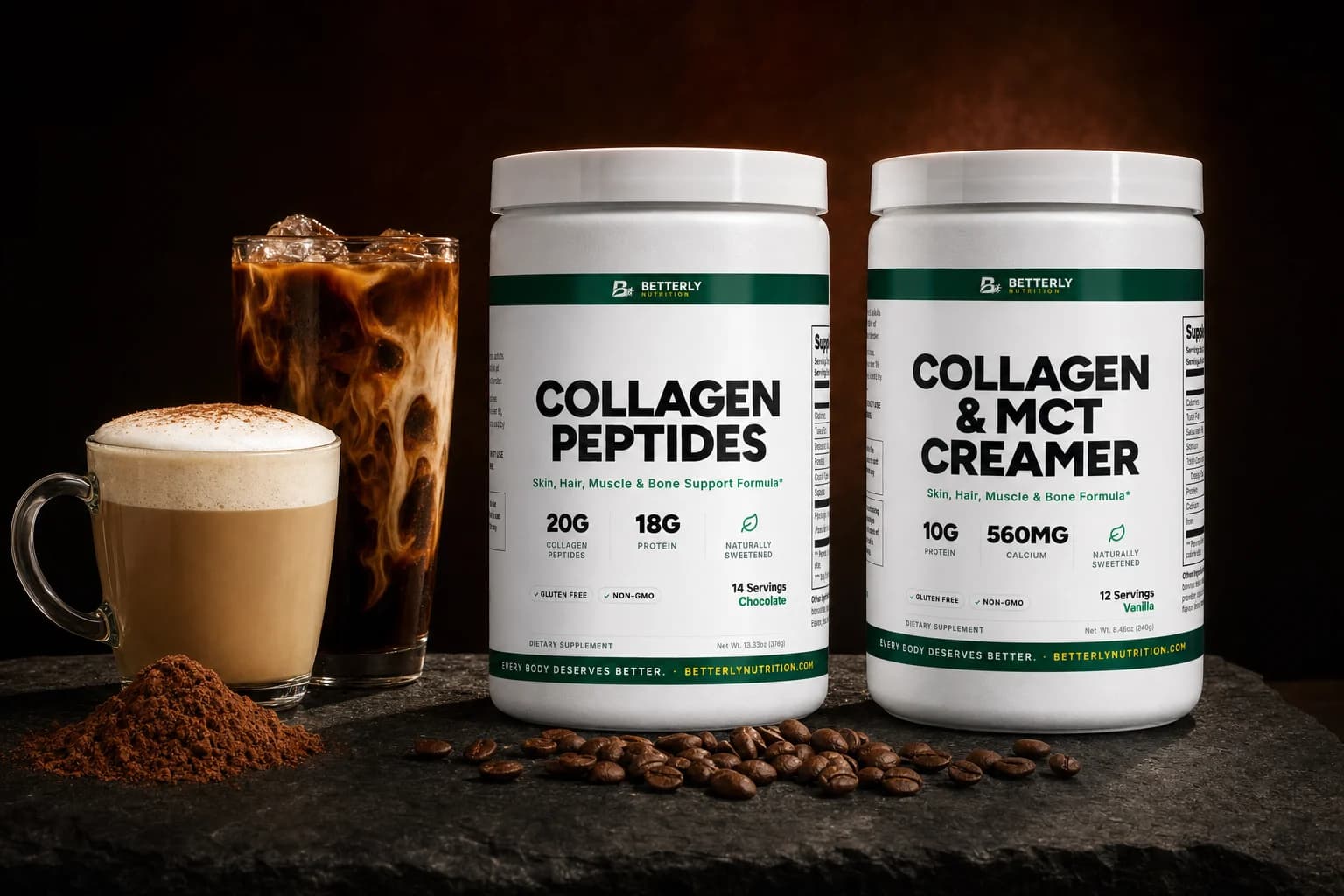
The tubs are our Collagen Peptides & MCT Creamer (Vanilla), Collagen Peptides Powder (Chocolate) and Collagen Peptides Powder (Unflavored). Each label pairs one serving with "8-10 oz (237-296ml) of their favorite beverage," and a double shot plus a short pour of milk lands right in that window.
| Drink | Tub and serving | Liquid in the cup | Label numbers per serving |
|---|---|---|---|
| Hot vanilla latte | Creamer, 2 Scoops (20 g) | 2 oz espresso + 6 to 8 oz milk | 70 calories, 10 g protein |
| Iced vanilla latte | Creamer, 2 Scoops (20 g) | 2 oz espresso + 6 to 8 oz cold milk | 70 calories, 10 g protein |
| Collagen mocha | Chocolate powder, 2 Scoops (27 g) | 2 oz espresso + 6 to 8 oz milk | 90 calories, 18 g protein, 20 g collagen peptides |
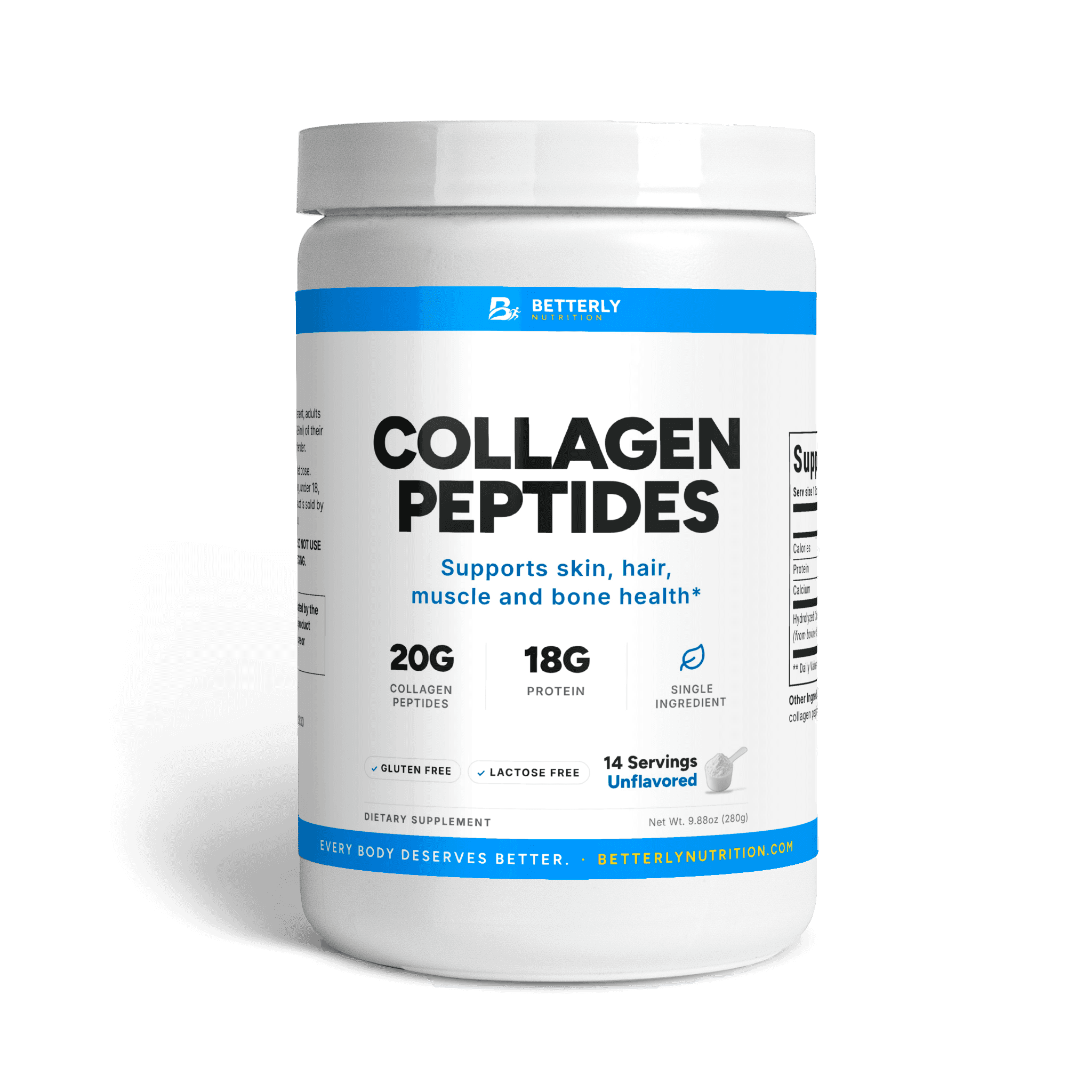
| Collagen cold brew | Unflavored powder, 1 Scoop (20g) | 8 oz cold brew, or 6 oz plus 2 oz milk | 70 calories, 18 g protein, 20 g collagen peptides |
Read down the last column and one gap stands out: only the powders print a collagen amount, while the creamer lists collagen peptides with no gram figure. If a stated collagen number matters to you, make the mocha or the cold brew. Our side-by-side of collagen creamer and powder goes deeper on that choice.
How do you make a hot vanilla latte with collagen creamer?
Make a hot vanilla collagen latte by frothing 2 scoops (20 g) of our vanilla creamer into 6 to 8 oz of warm milk and adding a double espresso.
- Pull a double shot (about 2 oz) of espresso into a 12-ounce mug.
- Warm 6 to 8 oz of milk until it steams, without letting it boil.
- Add 2 level scoops of creamer to the milk, not the shot, and froth until foam forms.
- Pour the milk into the espresso, then spoon the foam on top.
Per 2 Scoops (20 g) serving, the creamer adds 70 calories, 2 g of total fat (2 g saturated), 3 g of total carbohydrate with 1 g of dietary fiber, 100 mg of sodium, 10 g of protein, 560 mg of calcium (43% DV) and 3 mg of iron (17% DV).
The espresso brings the caffeine. MedlinePlus's page on caffeine in the diet puts espresso at 40 mg per 1-ounce shot, so a double is roughly 80 mg. Worried heat harms collagen? Our guide to putting collagen in hot coffee covers that.
How do you make an iced collagen latte that stays smooth?
For an iced collagen latte, stir the 2 scoops of vanilla creamer into hot espresso first, then shake it with cold milk and pour it over ice.
Powder dropped onto cold milk tends to float as a dry raft, while a small amount of hot liquid stirs smooth.
- Pull 2 oz of espresso into a shaker cup or lidded jar, lid off.
- Add 2 scoops of creamer and stir until the mix looks smooth and glossy.
- Pour in 6 to 8 oz of cold milk. The drink is cool now, so seal the lid and shake for about 10 seconds.
- Fill a glass with ice and pour.
Hot liquid and a closed shaker don't mix, which is why the cold milk goes in before the lid does.
The same warm start works for iced coffee with collagen powder: stir 1 scoop of unflavored or 2 scoops of chocolate into the hot shot, or 2 oz of warm water, before the cold coffee goes in.
From our shop: Collagen Peptides & MCT Creamer (Vanilla) — the stevia-sweetened vanilla base for both creamer lattes on this page, with 70 calories and 10 g of protein per 2 Scoops (20 g) serving.
How do you make a collagen mocha at home?
A collagen mocha starts with 2 scoops (27 g) of our chocolate collagen peptides whisked into a double espresso, then topped with 6 to 8 oz of steamed milk.
The powder brings its own cocoa, so skip the chocolate sauce. Besides collagen peptides, its label lists cocoa powder, acacia powder, natural flavor, sodium chloride, xanthan gum, stevia extract powder (Reb A) and silica.
- Pull a double espresso into your mug.
- Add 2 scoops of chocolate powder and whisk into a paste. Xanthan gum is a common thickener, so the paste starts out dense.
- Pour in 6 to 8 oz of warm milk slowly while you whisk.
- Dust on a pinch of unsweetened cocoa. For an iced mocha, add cold milk to the paste instead, shake and pour over ice.
Per 2 Scoops (27 g) serving, the panel lists 90 calories, 3 g of total carbohydrates, 2 g of dietary fiber, 18 g of protein, 26 mg of calcium (2% DV), 120 mg of sodium (5% DV) and 20 g of hydrolyzed collagen peptides. MedlinePlus lists cocoa beans among natural caffeine sources, and the panel has no caffeine row, so your mocha holds the espresso's caffeine plus an unprinted amount from the cocoa.
From our shop: Collagen Peptides Powder (Chocolate) — a cocoa-based powder that turns a latte into a mocha, listing 20 g of hydrolyzed collagen peptides per 2 Scoops (27 g) serving.
How do you make cold brew coffee with collagen?
Make cold brew coffee with collagen by shaking 1 scoop (20 g) of our unflavored powder with 8 oz of cold brew, then pouring it over ice.
It's the only drink in the table made with a single scoop, since the unflavored serving is 1 Scoop (20g).
- Pour 8 oz of cold brew into a shaker cup, or 6 oz of cold brew topped with 2 oz of milk.
- Add 1 scoop of unflavored powder, seal and shake until no specks remain.
- Pour over ice.
Using concentrate? Dilute it as its bottle says, then measure your 8 to 10 oz.
Per 1 Scoop (20g) serving, the panel lists 70 calories, 18 g of protein, 26 mg of calcium (2% DV) and 20 g of hydrolyzed collagen peptides. The only ingredient is bovine hide collagen peptides, and the label says gluten free and lactose free. Nothing in it adds flavor, so cinnamon or vanilla extract is your call. MedlinePlus doesn't list cold brew, so check your bottle for caffeine.
How can you use collagen creamer beyond a latte?
Our vanilla collagen creamer also works in drip coffee or a milky tea, as long as the 2 scoops go into 8 to 10 oz of liquid.
Drip or pour-over coffee
Pour 6 oz of brewed coffee into a mug, add the 2 scoops and run a handheld frother until no powder shows. Then top it up with 2 to 4 oz of warm milk. Caffeine lands near the double shot's: MedlinePlus lists 75 to 100 mg per 6-ounce cup of coffee.
Chai or a London fog
Steep a chai or Earl Grey bag in 4 oz of just-boiled water as its box directs, then remove it. Froth in the 2 scoops and add 4 to 6 oz of steamed milk. Vanilla suits the cinnamon and cardamom in chai, and vanilla with Earl Grey and milk is what a café calls a London fog. Black tea brings its own caffeine, which MedlinePlus puts at 60 to 100 mg per 16-ounce cup of black or green tea.
Whichever cup you pick, the labels give one serving and say "Do not exceed recommended dose," so stop at one. Our look at whether protein creamer is good for you works through the creamer's full Supplement Facts panel, down to the sugars row it leaves out.
Does your milk or sweetener change what's in the cup?
Yes, your milk and any syrup add their own numbers to a collagen latte, and our panels only count what's in the scoop.
Milk matters most for calcium. The NIH Office of Dietary Supplements' calcium fact sheet names milk, yogurt and cheese as the main food sources of calcium in the US, and notes that many soy and almond beverages have calcium added. The same sheet says calcium is absorbed best in amounts of 500 mg or less at a time, and the creamer's 560 mg clears that mark by itself, before the milk adds whatever its carton lists.
Sweetness is the other thing to watch. The creamer and chocolate powder both list stevia extract powder (Reb A), and the FDA's page on aspartame and other sweeteners in food says steviol glycosides are reported to be 200 to 400 times sweeter than table sugar. So taste before adding syrup, which brings sugar our panels don't show.
When isn't a collagen latte recipe worth making?
A collagen latte recipe isn't worth making when the stevia, the milk or the espresso is the very part of the drink you'd rather leave out.
- You'd rather not have stevia. The creamer and the chocolate powder both list stevia extract powder (Reb A). The unflavored powder lists only collagen peptides, so you can sweeten that cup yourself and count any sugar on your own.
- You drink your coffee black. Every latte here pours in 6 to 8 oz of milk, and its calories come on top of the scoop's. The all-coffee version of the cold brew recipe skips milk entirely.
- You want something warm late in the day with no caffeine. Leave out the espresso: 2 scoops of creamer or 1 scoop of unflavored powder whisked into 8 to 10 oz of warm milk makes a steamer with no coffee, tea or cocoa in it.
Our Hair, Skin & Nails collection groups the tubs from these recipes with the gummies, strips and capsules we sell for the same goal.
Who should check with a healthcare provider first?
Talk to a healthcare provider before making collagen lattes a habit if you're pregnant or nursing, under 18, on prescription medication, facing surgery, or managing a medical condition.
All three labels say: "Consult a physician if pregnant, nursing, under 18, or have a medical condition." MedlinePlus calls about 400 mg of caffeine a day an average or moderate amount for most people, and advises staying under 200 mg a day during pregnancy. By its espresso figure, each double shot here is about 80 mg.
The creamer is the only tub of the three with iron, and its label warns that "Accidental overdose of iron-containing products is a leading cause of fatal poisoning in children under 6." The NIH iron fact sheet credits child-proof packaging and warning labels with greatly reducing accidental iron poisonings in children, so close the lid and store the tub up high.
If you take any medicine, mention the creamer's calcium to your pharmacist. The ODS calcium sheet lists several medicines that calcium supplements can interfere with.
FAQ: collagen lattes
What is a collagen latte?
A collagen latte is a regular latte, espresso and steamed milk, with one serving of collagen blended in. The collagen can come from a collagen creamer, which also flavors and sweetens the drink, or from a collagen peptides powder. Café and bottled versions differ, so check how many grams of collagen each lists. Our two powders list 20 g per serving; our creamer lists none.
Can you make a collagen latte without an espresso machine?
Yes, you can make a collagen latte without an espresso machine. Swap the 2 oz double shot for about 4 oz of strong coffee from a moka pot, French press or drip machine, and use 4 to 6 oz of milk so the cup stays within the label's 8 to 10 oz. A French press can froth the warm milk too: pump the plunger until it foams.
Can you make a collagen matcha latte?
Yes, our unflavored collagen peptides work in a matcha latte, since the label allows any favorite beverage. Whisk the matcha with a little hot water, stir in 1 scoop (20 g) of powder, then add warm or cold milk to reach 8 to 10 oz in total. Matcha is a green tea, and MedlinePlus lists tea leaves as a natural source of caffeine, so count it.
Can you make your own collagen creamer?
Yes, a basic homemade collagen creamer takes two ingredients plus flavor. Whisk 1 scoop (20 g) of our unflavored collagen peptides into 2 to 4 oz of warm milk with a drop of vanilla extract, then pour in coffee until the cup holds 8 to 10 oz. Per 1 Scoop (20g) serving, the powder lists 70 calories and 18 g of protein. Mix it fresh for each cup instead of batching a jar, since the label pairs one scoop with one 8 to 10 oz drink.
Can you make a collagen latte ahead of time?
You can prep parts of a collagen latte ahead, but we'd mix in the scoop when you're ready to drink it. Our labels don't say how long a mixed drink keeps, and milk-based drinks belong in the fridge. Brew your cold brew or chill a shot of espresso the night before, then shake in the collagen and cold milk in the morning.
Sources
- Caffeine in the diet, MedlinePlus
- Calcium: Fact Sheet for Consumers, NIH Office of Dietary Supplements
- Iron: Fact Sheet for Consumers, NIH Office of Dietary Supplements
- Aspartame and Other Sweeteners in Food, FDA
If this left you looking for somewhere to start, read vanilla collagen creamer for lattes — its amounts per serving are listed on the page. For the practical questions this raises, how dosing, sourcing and subscriptions work is answered in one place.