On this page
- Key takeaways
- Is protein creamer good for you, or is that just marketing?
- Where does the protein in a protein coffee creamer come from?
- What does the %DV next to protein tell you?
- What should the sugar, fat and sodium rows show?
- Why do calcium and iron show up on a creamer's panel?
- Does a creamer's serving size match a real pour?
- How should you use a collagen creamer, going by the label?
- When don't you need a protein creamer?
- Who should check with a healthcare provider first?
- FAQ: protein creamer
- Sources
The short answer: Is protein creamer good for you? That depends on its panel's protein, sugar, saturated fat and sodium rows, not on the front of the tub. Betterly's vanilla collagen creamer lists 10 g of protein per 2 Scoops (20 g) serving, sweetened only with stevia. Its 2 g of saturated fat is 10% DV, moderate rather than low, and the label never says how much of the protein is collagen.
Key takeaways
- On food labels, "healthy" is a claim the FDA regulates, with caps on added sugars, saturated fat and sodium, so check those rows on any protein creamer.
- A blended protein creamer often prints one protein total unless the maker adds a row per source, and ours doesn't split its collagen from its pea protein.
- The %DV beside protein is based on quality-corrected grams, so our creamer's 15% DV for 10 g of protein works out to about 7.5 g of corrected protein.
- One serving of our creamer is 20 g of powder, ten times the 2 g reference amount FDA sets for an ordinary powdered creamer.
- Our creamer lists 560 mg of calcium and 3 mg of iron per 2 Scoops (20 g) serving, yet its ingredient list names no iron compound.
Betterly sells a collagen protein creamer, which makes us an interested party here. Our own tub is the worked example below, including the two spots where its label leaves you guessing.
Is protein creamer good for you, or is that just marketing?
A protein creamer is good for you only as far as its Supplement Facts or Nutrition Facts panel shows, so read the panel before any word on the front.
Some front-of-pack words do carry rules. The FDA regulates "healthy" as a nutrient content claim. According to the FDA's page on the updated "healthy" claim, a food that uses the word needs a minimum amount from at least one food group, such as vegetables or protein foods. It also has to stay under limits for added sugars, saturated fat and sodium. The FDA announced the updated rule on December 19, 2024.
Our creamer's label doesn't call it healthy, and we won't either. What we can do is read its panel for those three nutrients, plus the protein. That gives you four checks: the protein's source, its %DV, what rides along with it, and whether the serving matches your pour. We'll run each one on the panel of our Collagen Peptides & MCT Creamer (Vanilla).
Where does the protein in a protein coffee creamer come from?
The protein in a protein coffee creamer can come from collagen peptides, a milk protein such as whey, a plant protein such as pea, or a mix of them.
The ingredient list tells you which, and each source leaves its own question open:
| Protein source | How it shows up in the ingredients | What to check |
|---|---|---|
| Collagen | Collagen peptides or hydrolyzed collagen, sometimes with the animal source | Whether collagen gets its own gram amount |
| Milk protein | Whey, casein, or milk protein concentrate or isolate | Whether you're avoiding dairy |
| Plant protein | Pea, soy or another plant protein | Which plant, if you avoid one |
| A blend | Two or more protein ingredients | Whether the protein row is split by source |
The takeaway: a single-source creamer tells you where every gram of protein came from. A blend only gives you the total, unless the maker adds a separate row for each source.
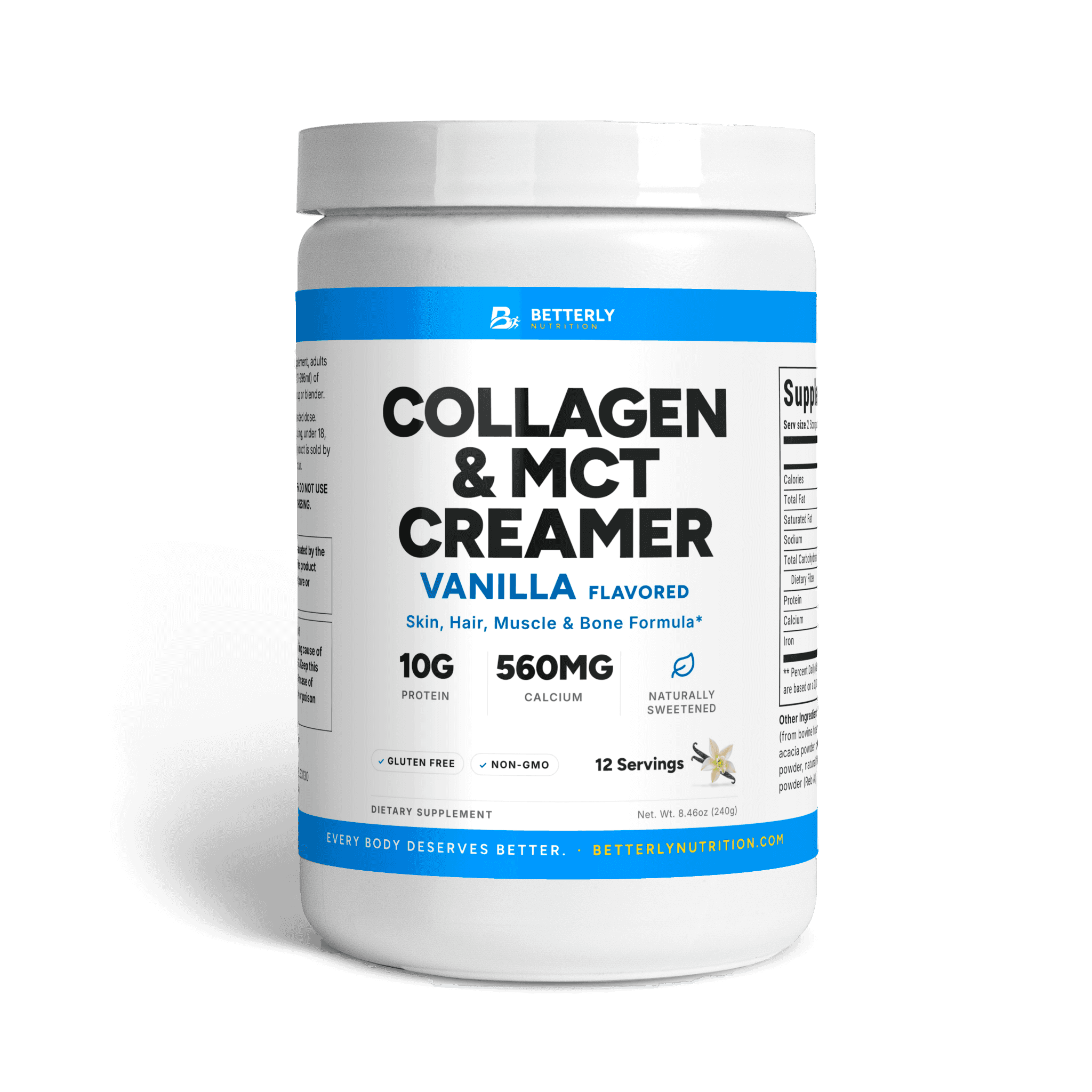
Ours is a blend. The ingredient list names hydrolyzed collagen peptides (from bovine hide) and pea protein powder, and the panel reports them together as 10 g of protein per 2 Scoops (20 g) serving. With no collagen row, the label can't tell you whether that 10 g is mostly collagen or mostly pea, and we won't guess.
That gap is also the honest answer to "is collagen creamer good for you?" A panel can vouch for the protein it prints, not for a collagen amount it leaves out. Our other collagen products sit in the Hair, Skin & Nails collection.
What does the %DV next to protein tell you?
The %DV printed beside protein hints at protein quality, because FDA labeling rules calculate it from grams adjusted by a quality score, not from raw grams.
FDA's nutrition labeling rule, 21 CFR 101.9, defines a "corrected amount of protein." It's the grams of protein multiplied by a protein-quality score called the protein digestibility-corrected amino acid score, or PDCAAS. The score is capped at 1.00. The same rule sets the Daily Value for protein at 50 g for adults and children 4 and older.
The Supplement Facts rule, 21 CFR 101.36, says a supplement's protein %DV, when it's shown, must use that corrected amount. So you can work backward from the label. A protein with the top score of 1.00 would show 20% DV for 10 g, since 10 g is 20% of 50 g.
Our creamer's panel reads 10 g of protein at 15% DV. Fifteen percent of 50 g is 7.5 g. By FDA's formula, then, the creamer's 10 g counts as about 7.5 g of corrected protein, a score of roughly 0.75. Both printed numbers are rounded, so treat that as an estimate. It's our own math on the supplier's panel, and we can't see the lab work behind it.
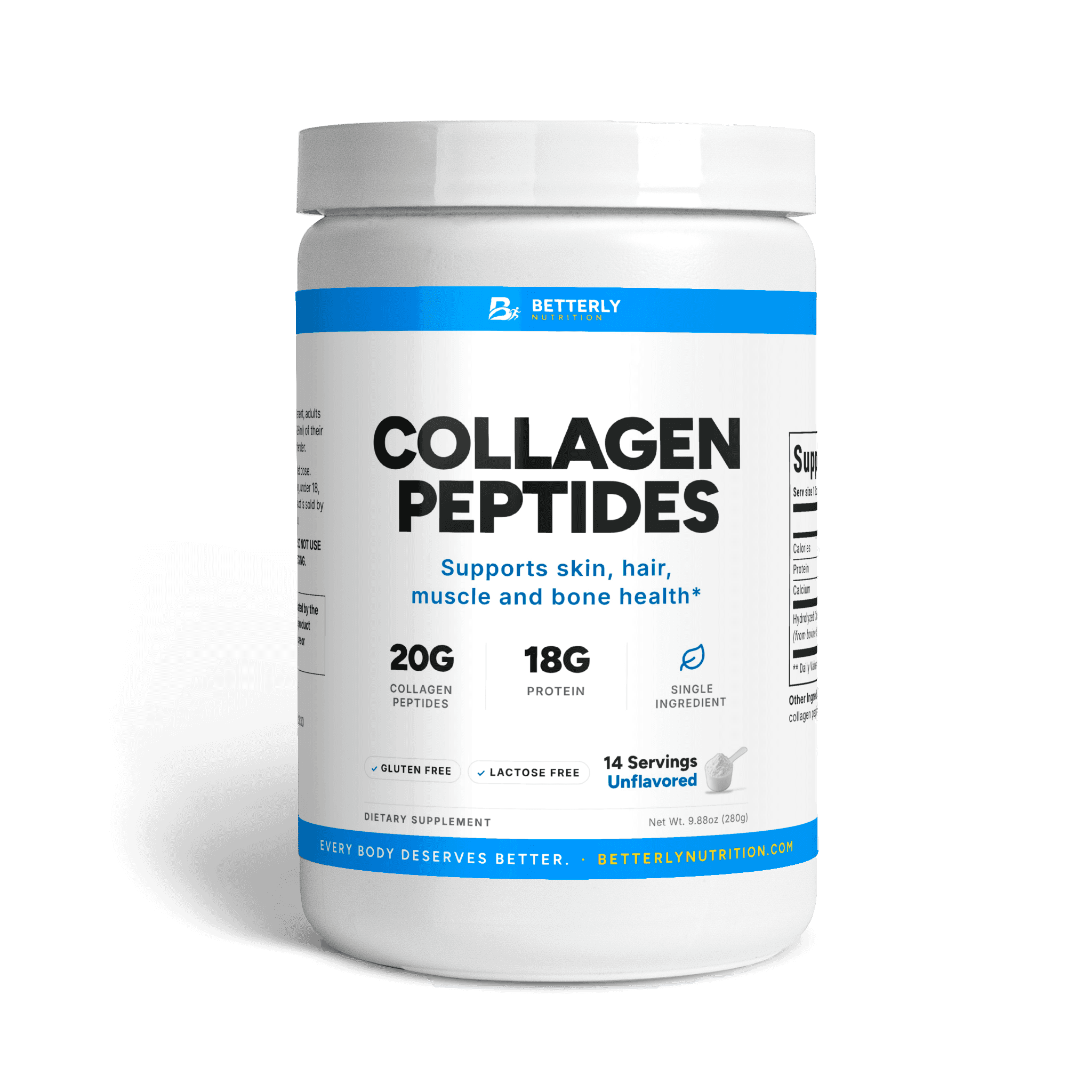
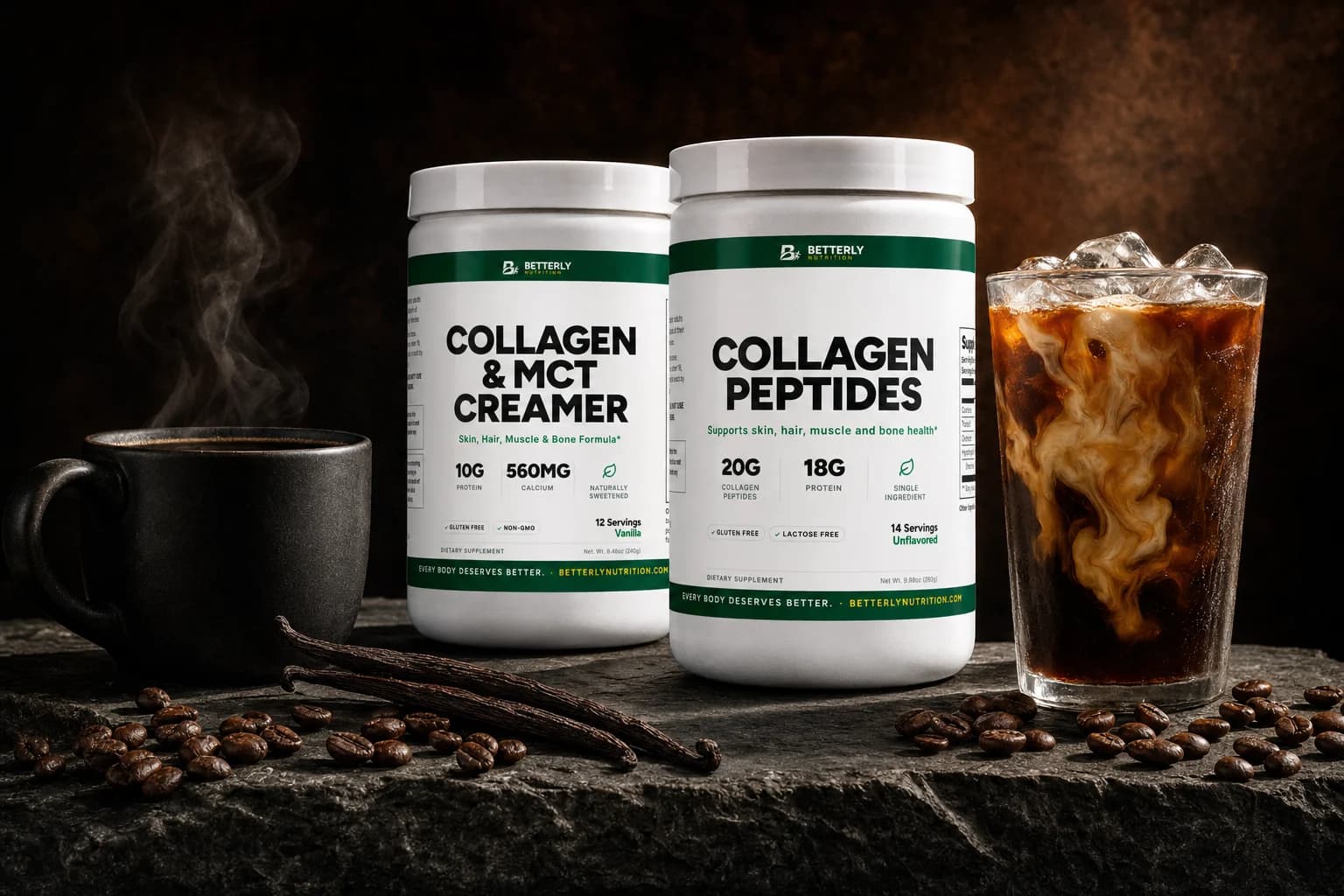
The lesson for any brand: grams alone don't show how much a protein counts toward the Daily Value, and a blank %DV hides this clue. Our two collagen peptide powders, the Collagen Peptides Powder (Chocolate) among them, each print 18 g of protein with no %DV, so the check can't be run on those labels.
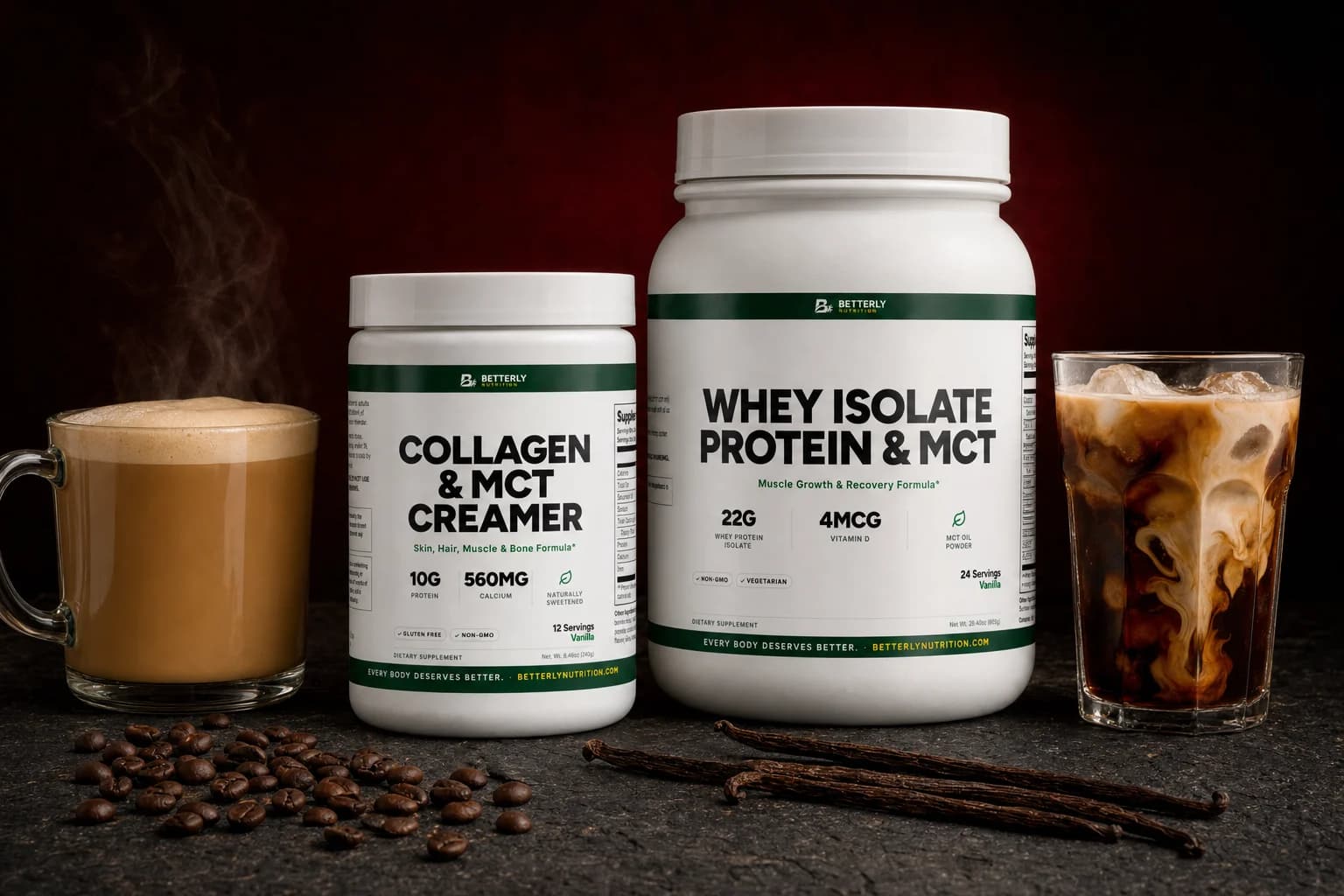
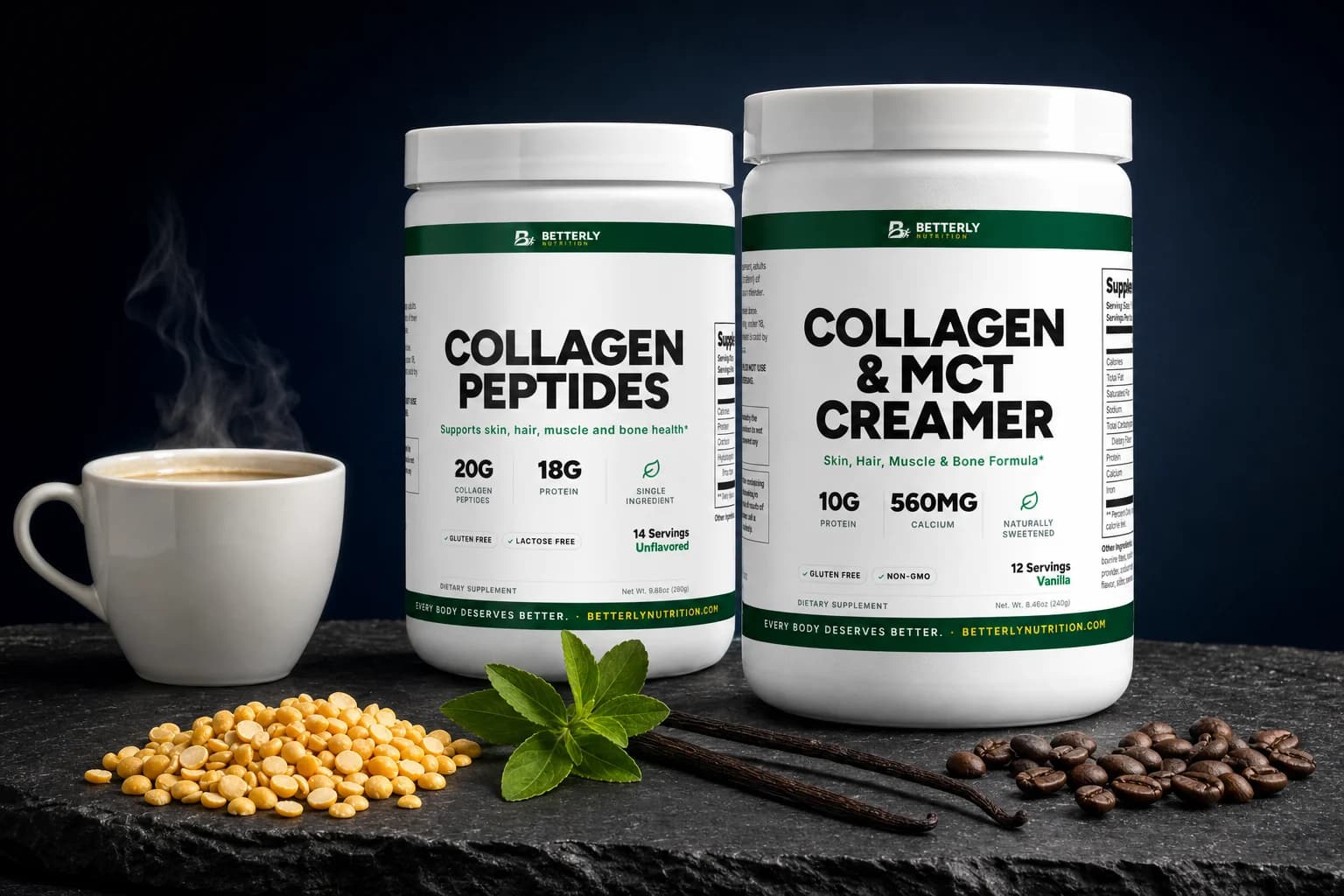
From our shop: Collagen Peptides & MCT Creamer (Vanilla) — a vanilla powdered creamer with 10 g of protein (15% DV) from collagen peptides and pea protein per 2 Scoops (20 g) serving, and its label also says gluten free and non-GMO.
What should the sugar, fat and sodium rows show?
A protein creamer's sugar, saturated fat and sodium rows should read low, since those are the three nutrients the FDA caps for foods that claim to be healthy.
Start with sugar. Our creamer's panel has no sugars row, and that absence tells you something. Under 21 CFR 101.36, total and added sugars must be listed whenever a serving holds more than an amount that can be declared as zero. Rule 101.9 puts that amount at less than 0.5 g for sugars.
So under the rule, a missing sugars row means the amount per serving is small enough to be declared as zero. The only sweetener in our creamer's ingredient list is stevia extract powder (Reb A). Its label makes no sugar-free claim, though, so we don't make one either.
Saturated fat is next. The panel lists 2 g of total fat and 2 g of saturated fat (10% DV), so it counts all of its fat as saturated. Medium chain triglycerides, or MCTs, are the second ingredient listed, and our guide to what MCTs add to a creamer looks at them closely. That 10% DV in one cup is a moderate share of saturated fat, not a low one.
Sodium comes in at 100 mg (4% DV) per serving.
Three more rows round out the panel: 70 calories, 3 g of total carbohydrate and 1 g of dietary fiber. When you compare creamers, read the sugar, fat and sodium rows before the protein number, since a tub with more protein can still lose on those.
Why do calcium and iron show up on a creamer's panel?
A protein creamer sold as a supplement has to list calcium and iron once a serving holds 2% or more of their Daily Values. Ours lists 560 mg of calcium (43% DV) and 3 mg of iron (17% DV) per 2 Scoops (20 g) serving.
That requirement comes from 21 CFR 101.36, and it turns the panel into a check on the ingredient list. Calcium carbonate is listed in our creamer's ingredients, which fits the calcium row. No iron compound is listed, so the label doesn't say which ingredient supplies the 3 mg of iron.
Mineral rows sit below the protein line, where they're easy to skim past, yet 43% DV is close to half a day's calcium Daily Value in one cup.
Because the panel lists iron, the tub also prints this caution, word for word: "WARNING: Accidental overdose of iron-containing products is a leading cause of fatal poisoning in children under 6. Keep this product out of reach of children. In case of accidental overdose, call a doctor or poison control center immediately."
Does a creamer's serving size match a real pour?
Not necessarily: our creamer's serving is 2 Scoops (20 g), ten times FDA's 2 g reference amount for an ordinary powdered creamer.
FDA's serving-size rule, 21 CFR 101.12, sets reference amounts that food serving sizes are built on. For cream and cream substitutes, it's 2 g for powders and 1 tablespoon (15 mL) for liquids. Supplements get their own row in that table, which ties the serving to the largest amount the label recommends for one eating occasion.
Our label's suggested use is two scoops, so the panel describes two scoops, all 20 g of them. A regular powdered creamer's panel is built on 2 g and a liquid's on a tablespoon, so our creamer's numbers and theirs don't line up. Compare creamers by what you'd really stir in.
How should you use a collagen creamer, going by the label?
Use the vanilla creamer the way its label says: two scoops mixed into 8 to 10 oz of your favorite drink, in a shaker cup or blender.
The label's suggested use reads: "As a dietary supplement, adults mix two (2) scoops with 8-10 oz (237-296ml) of their favorite beverage in a shaker cup or blender." In practice:
- Measure two scoops into 8 to 10 oz of whatever you're drinking.
- Mix in a shaker cup or blender, as the label directs; that works best for a cold drink. With a hot mug, stir or froth it in instead, since hot liquid sealed in a shaker can build pressure and spray. Blending something hot? Take off the lid's center cap so steam escapes.
- Stop at one serving. The caution line says "Do not exceed recommended dose."
- Keep collagen powders out of the same cup, since neither label says to combine them.
- Put the tub back up high, away from children.
Nothing on the label ties it to a time of day, so any cup where you'd normally reach for creamer works.
From our shop: Collagen Peptides Powder (Unflavored) — 20 g of hydrolyzed collagen peptides and 18 g of protein per 1 Scoop (20g) serving, from a one-line ingredient list: bovine hide collagen peptides.
When don't you need a protein creamer?
You can pass on a protein creamer when its panel adds saturated fat, a sweetener or a protein blend you'd rather avoid, or when its serving dwarfs your usual pour.
- You're keeping saturated fat low. Ours lists 2 g (10% DV) per serving, which adds to any cream or whole milk in the mug.
- You'd rather not have stevia. It's the only sweetener in our creamer.
- You want each protein source counted. A blended row like our 10 g of collagen peptides and pea protein won't show how much came from each.
- Your usual pour is a teaspoon. Our 2 Scoops (20 g) serving suits a bigger habit, and the panel's numbers apply only at that serving.
- You want a lot of protein per cup. Ten grams is modest, and stirring a scoop of protein powder into your coffee gets you more.
Who should check with a healthcare provider first?
Talk to a healthcare provider before your first cup of a protein creamer if you're pregnant, nursing, under 18, managing a medical condition or taking prescription medicine.
Our creamer's caution line reads: "Consult a physician if pregnant, nursing, under 18, or have a medical condition." The most useful thing to take to that appointment is the panel itself, so your provider can read its rows against your own diet. If you fill prescriptions, a pharmacist can look at the 560 mg of calcium and 3 mg of iron per serving and tell you whether they sit well with your medicines.
FAQ: protein creamer
Is collagen creamer worth it?
Collagen creamer is worth it only if its label prints the numbers you'd be paying for. On any brand, look for a collagen line, a protein %DV and a saturated fat row. Ours shows 15% DV for protein and 2 g of saturated fat (10% DV) per serving, but no collagen line, so you can judge its protein and not its collagen. Our creamer-versus-powder breakdown covers the format choice.
Can you put protein creamer in hot coffee?
Yes, our vanilla creamer can go into hot coffee if you stir or froth it in rather than shaking it, since a sealed shaker of hot coffee can spray. Leave room in the mug for 20 g of powder. Our guide on whether heat changes collagen in coffee goes further into hot mugs and clump-free mixing.
Can a protein creamer replace a protein shake?
No, our vanilla creamer isn't built to replace a protein shake. It gives 10 g of protein per serving, while each of our collagen peptide powders gives 18 g. The creamer is meant to flavor a cup, with MCTs, stevia and minerals sharing the scoop. Adding scoops to match a shake would go past the label's suggested use of one two-scoop serving.
Is protein creamer safe for kids?
Our vanilla creamer is labeled for adults, so don't give it to a child or teen without a physician's OK. Its caution line covers everyone under 18, and its directions say "adults mix two (2) scoops." Because the creamer contains iron, its label also warns about accidental overdose in children under 6, so the tub belongs out of their reach.
Is a protein coffee creamer powder better than liquid creamer?
A protein coffee creamer powder isn't better than liquid by default, and the panels don't make that easy to see. FDA's reference amount is 2 g for powdered creamer and 1 tablespoon for liquid, while our creamer's serving is 20 g. Line up protein, saturated fat, sodium and sugars for the amount you'd really pour of each.
Sources
- Use of the "Healthy" Claim on Food Labeling, U.S. Food and Drug Administration
- 21 CFR 101.9: Nutrition labeling of food, Electronic Code of Federal Regulations
- 21 CFR 101.36: Nutrition labeling of dietary supplements, Electronic Code of Federal Regulations
- 21 CFR 101.12: Reference amounts customarily consumed per eating occasion, Electronic Code of Federal Regulations
If this left you looking for somewhere to start, read stevia-sweetened protein coffee creamer powder, 70 calories per serving — its amounts per serving are listed on the page. For the practical questions this raises, how dosing, sourcing and subscriptions work is answered in one place.