On this page
- Key takeaways
- Can you put collagen in hot coffee?
- Does heat destroy collagen powder?
- How much collagen powder should you put in your coffee?
- How do you mix collagen into hot or iced coffee without clumps?
- Does collagen in coffee break a fast?
- Collagen powder or a collagen creamer: which fits your mug?
- When and how should you take collagen in coffee?
- When don't you need collagen in your coffee?
- Who should check with a healthcare provider before adding collagen?
- FAQ: collagen in coffee
- Sources
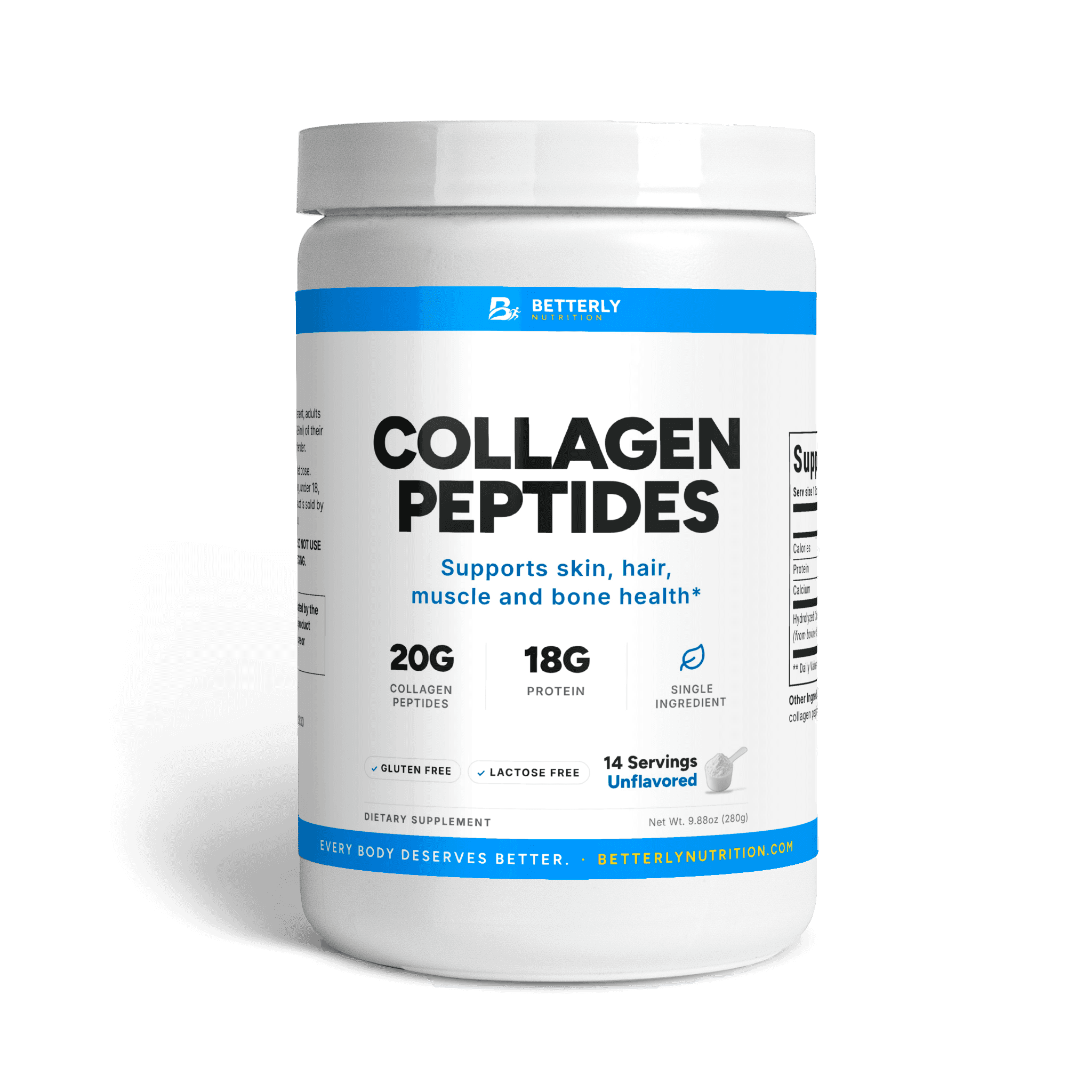
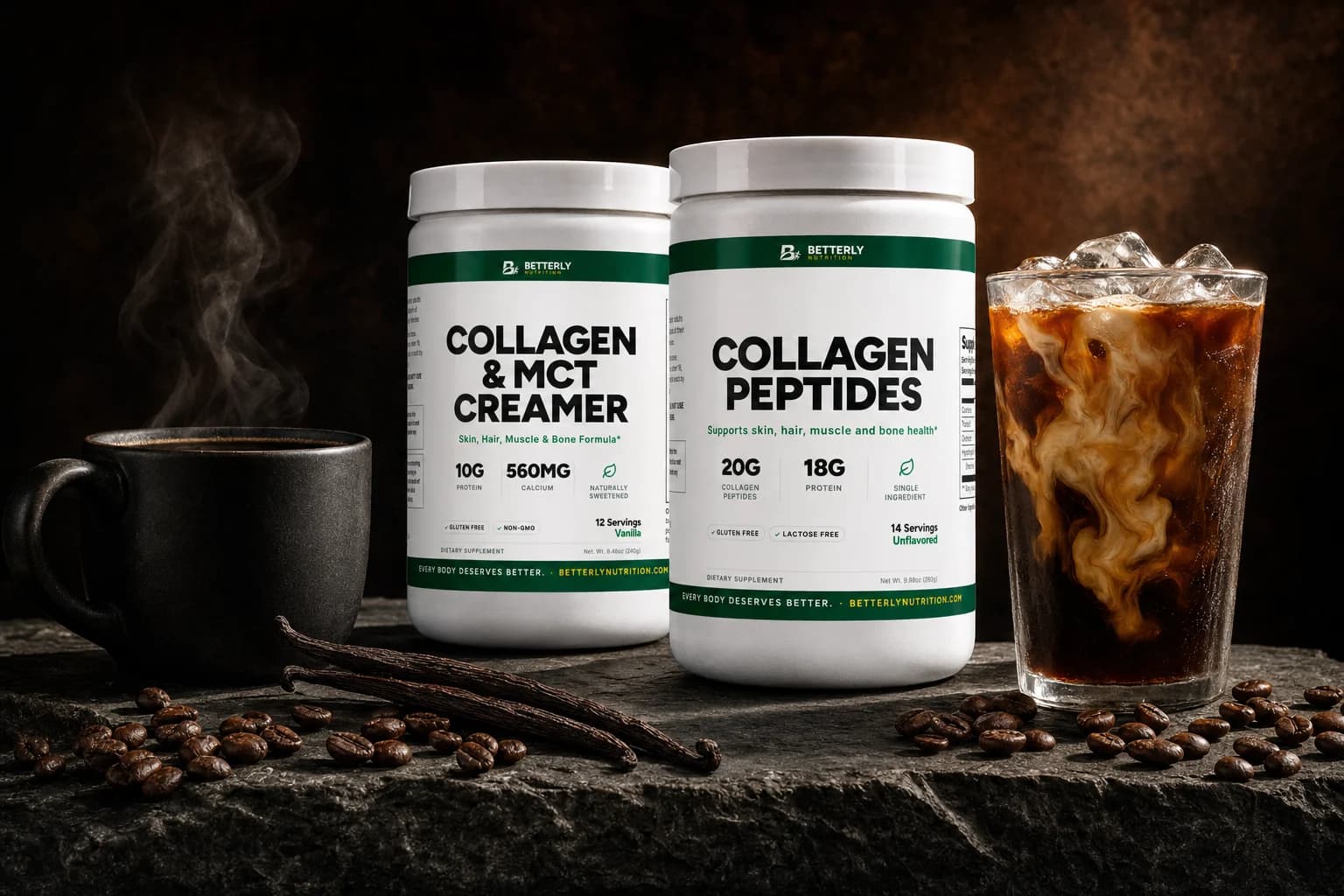
The short answer: Yes, you can put collagen in coffee, hot or iced. Collagen peptides are made by breaking collagen down on purpose with enzymes, heat or acid, so the structure heat would change is gone before the powder reaches your mug. Measure by grams, not scoops: our unflavored powder gives 20 g of collagen peptides in 1 scoop, while the chocolate takes 2 scoops to reach the same 20 g.
Key takeaways
- Hot coffee is fine for collagen peptides, because "hydrolyzed" on a label means the collagen was already cut into short pieces during manufacturing.
- Digestion breaks the protein in collagen into amino acids whether your drink is hot or cold, so the grams in your mug matter more than its temperature.
- One scoop of our unflavored powder holds 20 g of collagen peptides, the chocolate needs 2 scoops for the same 20 g, and the vanilla creamer lists no collagen amount.
- A serving of any of our three coffee mix-ins adds 70 to 90 calories, so it ends any fast that allows zero calories.
Four products on this page are ours to sell: the unflavored and chocolate collagen peptide powders, the vanilla collagen creamer and the collagen and vitamin E oral strip. Product amounts are taken from their labels. Facts about caffeine, digestion and collagen processing come from the FDA, MedlinePlus and USDA pages named in the text.
Can you put collagen in hot coffee?
Yes, collagen peptides can go straight into hot coffee, because the powder was broken down from whole collagen into short protein fragments before it reached your kitchen.
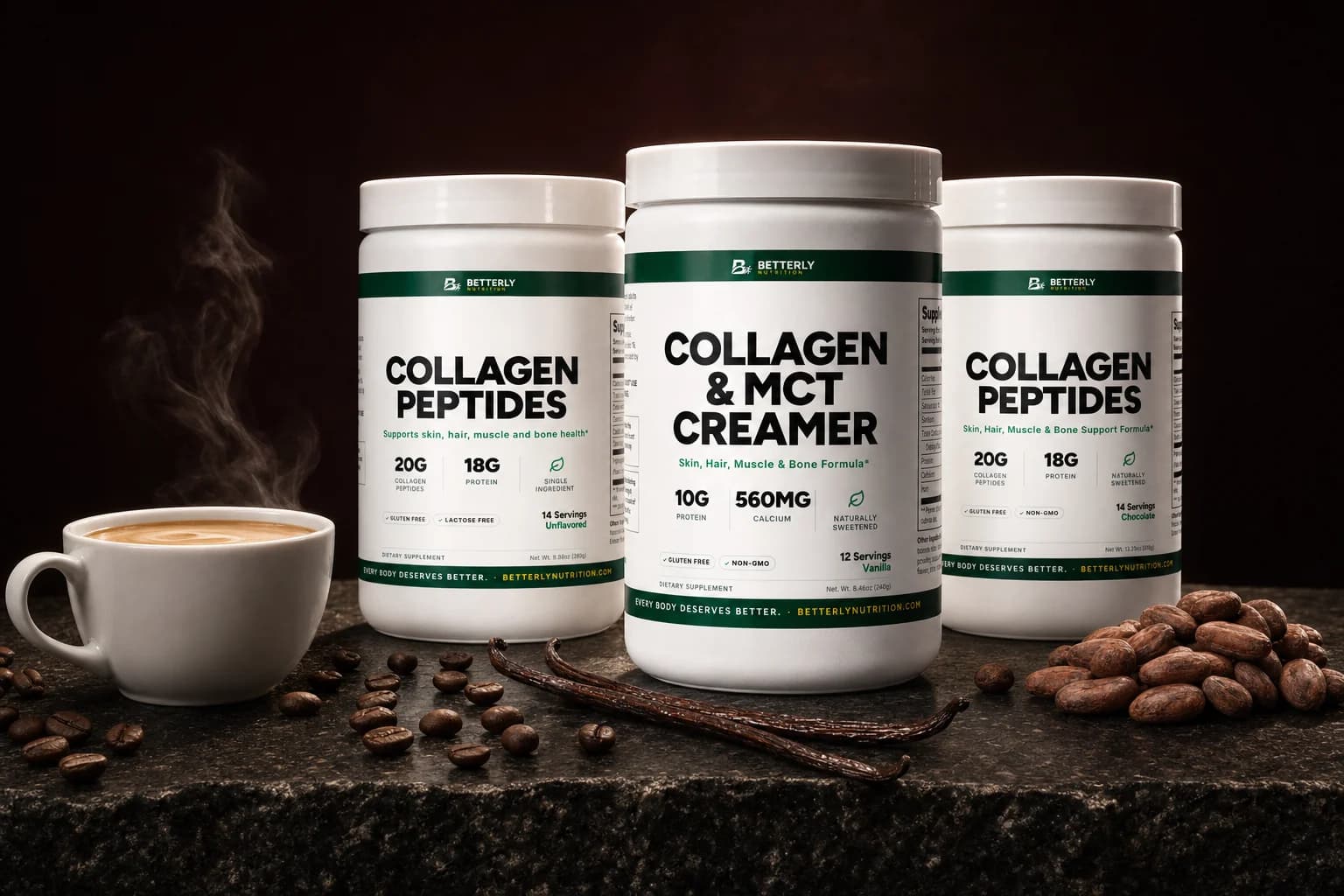
That's what "hydrolyzed" is telling you. Hydrolysis splits a large protein into smaller pieces. Our Collagen Peptides Powder (Unflavored) lists a single ingredient, bovine hide collagen peptides, with 20 g of hydrolyzed collagen peptides per 1 Scoop (20g) serving.
The collagen in your own skin and tendons is built very differently. MedlinePlus, the National Library of Medicine's consumer health site, explains on its COL1A1 gene page that collagens start out as rope-like molecules made of three chains, which it calls triple-stranded.
A scoop of peptides is that rope already cut into short lengths. So when someone asks whether coffee "ruins" collagen, the fair follow-up is: what's left in the powder for the heat to ruin? For collagen types and sources, see our Collagen 101 guide.
Does heat destroy collagen powder?
Heat does change intact collagen, but hydrolyzed collagen peptides have already been through that change, so a cup of coffee isn't wrecking a structure the powder no longer has.
The worry has a real origin. In 2019, a collagen scientist wrote an article, republished on Texas A&M University's news site, arguing that heat unwinds collagen's triple helix and turns it into gelatin. She suggested cold drinks instead. Her description of heat is accurate for whole, intact collagen. The same article concedes that collagen peptides have already been melted and resemble other protein powders.
A 2019 USDA technical evaluation report on collagen and gelatin describes the same change: gelatin forms when heat or a change in acidity unwinds collagen's triple helix. It also says animal collagen is "partially hydrolyzed through enzymatic, thermal, or acid treatment" in processing. That report covers collagen gel, gelatin and casings, not supplement powders. Carrying that over to your tub is our reasoning, not the report's: the "Hydrolyzed Collagen Peptides" row on our powder labels means collagen broken down before packing.
The article's second point, that heated collagen stops being worth taking, is harder to square with digestion. The MedlinePlus guide to protein in your diet says protein in food is broken down into amino acids when you digest it. That's true of collagen from a hot latte and from a cold smoothie alike.
There's one thing this page won't give you: a "safe" coffee temperature. None of the USDA, MedlinePlus or FDA pages cited here measured what a hot mug does to peptides, so any cutoff we printed would be a guess.
How much collagen powder should you put in your coffee?
Put one label serving of collagen powder in your coffee: 1 scoop of our unflavored powder or 2 scoops of the chocolate, each giving 20 g of hydrolyzed collagen peptides.
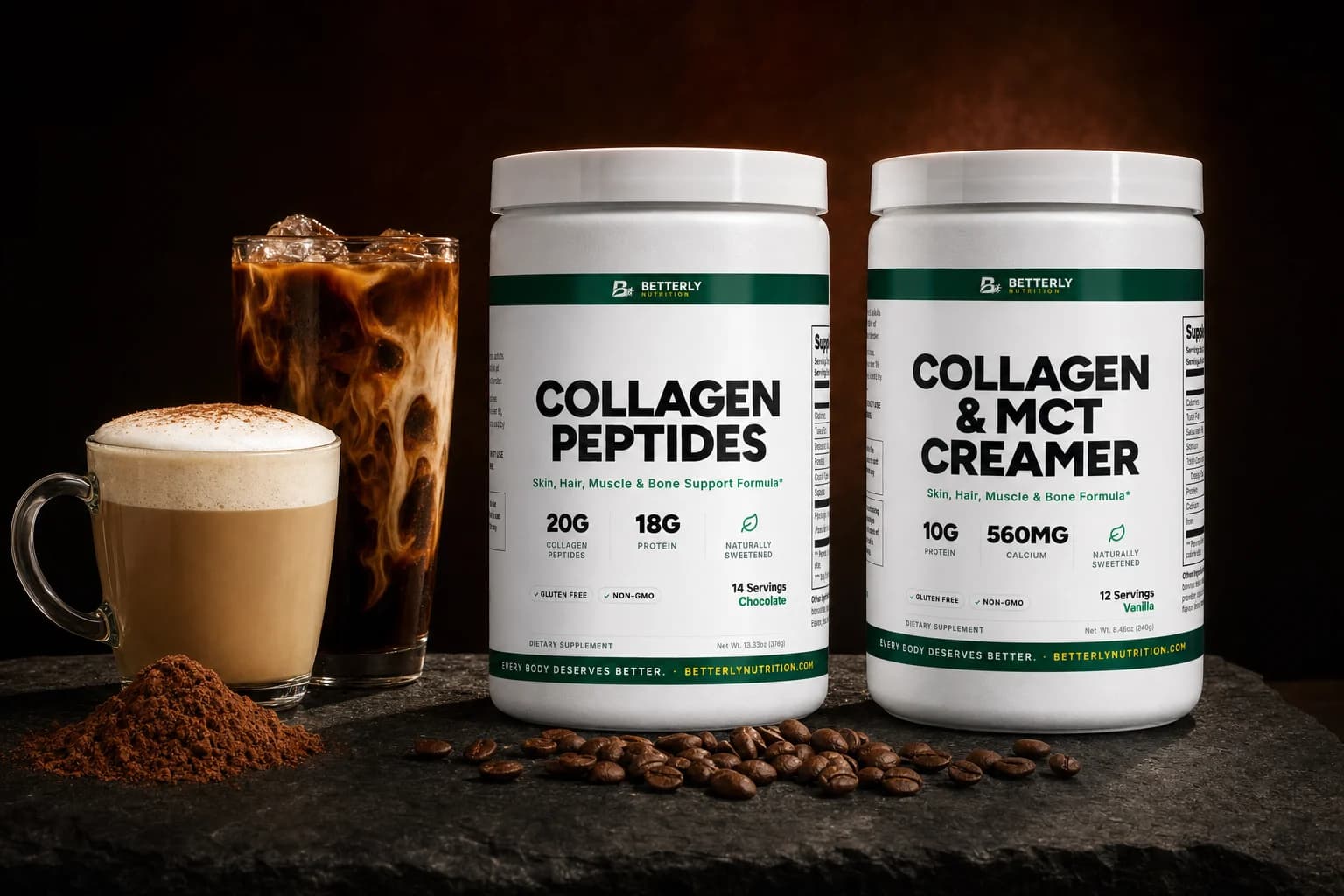
A scoop isn't a unit of measure, but a gram is. Here's how our coffee-friendly products compare, straight from their panels, with our oral strip added for scale:
| Product | Label serving | Collagen peptides | Calories |
|---|---|---|---|
| Collagen Peptides Powder (Unflavored) | 1 Scoop (20g) | 20 g | 70 |
| Collagen Peptides Powder (Chocolate) | 2 Scoops (27 g) | 20 g | 90 |
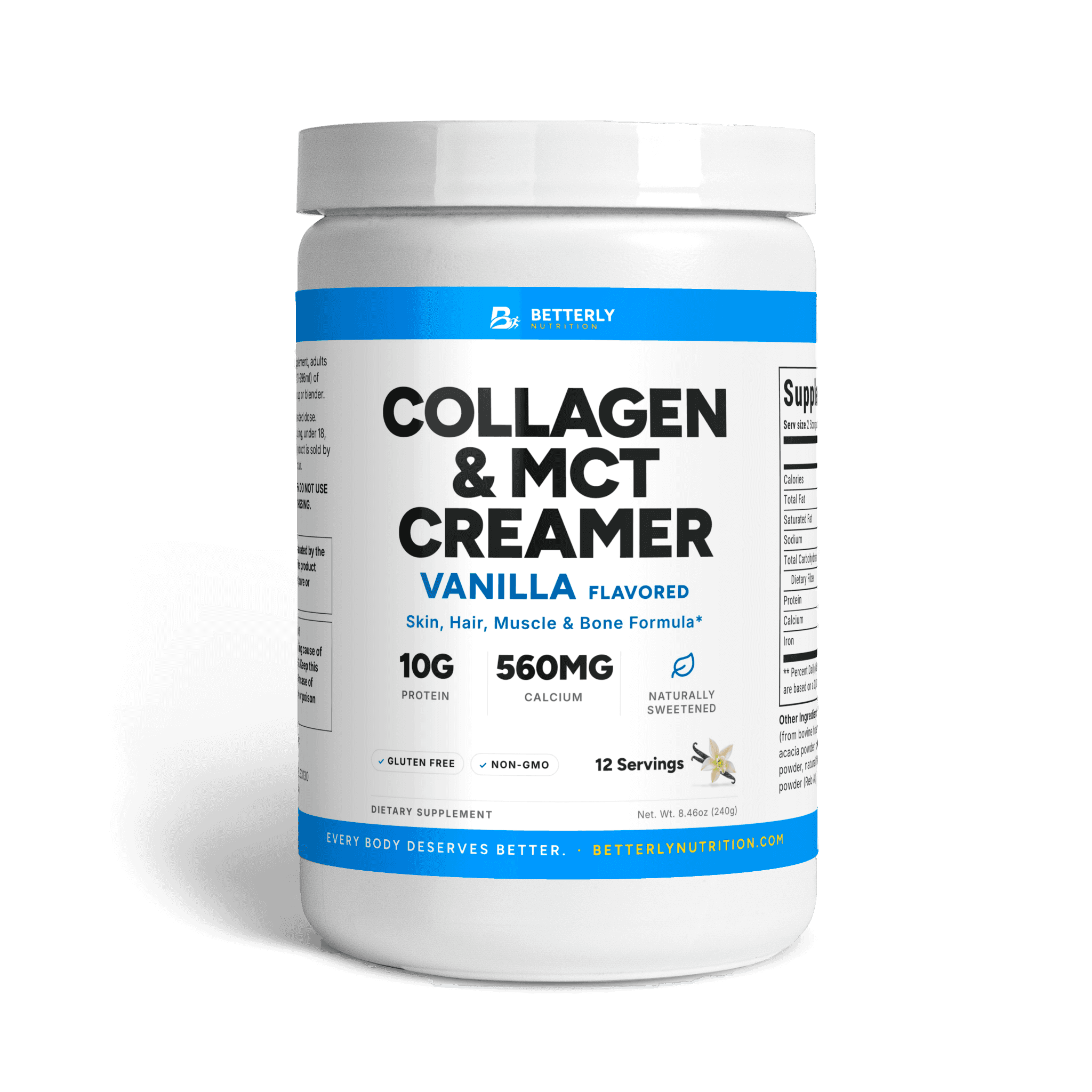
| Collagen Peptides & MCT Creamer (Vanilla) | 2 Scoops (20 g) | Not listed | 70 |
| Collagen & Vitamin E Strips | 1 Oral Strip (265 mg) | 100 mg | No calorie row |
Both powders land on the same 20 g of collagen peptides. The Collagen Peptides Powder (Chocolate) needs more powder to get there because cocoa, acacia, salt, stevia extract and a few other ingredients share its scoop. The creamer lists collagen peptides with no amount. The strip's 100 mg is one two-hundredth of a powder serving.
Both powder labels also say the product "is sold by weight, not volume" and that settling may occur, so a packed scoop and a fluffy one can differ. With a kitchen scale, 20 g of the unflavored powder or 27 g of the chocolate is one serving. And a serving doesn't grow with your mug: the labels pair it with 8-10 oz of liquid, but a 16-ounce coffee still gets one serving.
From our shop: Collagen Peptides Powder (Unflavored) — 20 g of hydrolyzed collagen peptides from bovine hide and 18 g of protein per 1 Scoop (20g) serving, labeled gluten free and lactose free.
How do you mix collagen into hot or iced coffee without clumps?
Collagen mixes most smoothly when the powder meets a little liquid first and gets stirred into a paste before the rest of the coffee goes in.
Clumps form when too much powder hits the liquid at once. Our powder labels suggest a shaker cup or blender, which suits cold drinks well. Hot coffee needs a slightly different routine.
In a hot mug
- Add one serving of powder to the empty mug.
- Pour in about an inch of hot coffee and stir until no dry spots remain.
- Fill the mug and stir again.
A handheld milk frother does the same job in seconds. Skip the sealed shaker cup with hot coffee, since trapped steam can force the lid off. If you use a blender, vent the lid and start on low.
Collagen peptides in iced coffee
Collagen peptides mix into iced coffee too, as long as they go into the liquid before the ice. Powder that lands on cold cubes tends to cling to them in wet clumps.
- Shake one serving with chilled coffee or cold brew in a sealed shaker cup, then pour it over ice.
- Or stir the powder into a splash of warm coffee or water, then add the cold coffee and ice.
Our collagen latte recipes cover drinks with milk, foam and flavor.
Does collagen in coffee break a fast?
Collagen in coffee adds calories: 70 per serving of our unflavored powder and 90 for the chocolate, so it ends any fast that allows zero calories.
Whether it breaks your fast depends on your fasting rules, not on the collagen. Here's what each serving adds, per the labels:
- Unflavored powder, 1 Scoop (20g): 70 calories and 18 g of protein.
- Chocolate powder, 2 Scoops (27 g): 90 calories, 18 g of protein, 3 g of total carbohydrates and 2 g of dietary fiber.
- Vanilla creamer, 2 Scoops (20 g): 70 calories, 2 g of fat, 3 g of total carbohydrate and 10 g of protein.
If your plan allows only water, black coffee and plain tea, any of these ends the fasted stretch. If you eat within a daily window, have your collagen coffee inside it.
Collagen powder or a collagen creamer: which fits your mug?
Choose a collagen peptides powder when you want a known collagen amount, and our vanilla creamer when you want a flavored cup with no collagen figure on its label.
Our Collagen Peptides & MCT Creamer (Vanilla) lists hydrolyzed collagen peptides from bovine hide among its ingredients, along with medium chain triglycerides (MCTs), acacia, calcium carbonate and pea protein powder. Its panel shows 10 g of protein, 560 mg of calcium (43% DV) and 3 mg of iron (17% DV) per 2 Scoops (20 g) serving. With pea protein in the mix, that 10 g isn't a collagen count, and we won't guess one.
The iron matters in homes with small children. The creamer's WARNING reads: "Accidental overdose of iron-containing products is a leading cause of fatal poisoning in children under 6." After an accidental overdose, the label says to call a doctor or poison control center immediately. Once your coffee's made, put the tub back in a cabinet a child can't open. Our collagen creamer vs collagen powder breakdown weighs the two formats against each other.
From our shop: Collagen Peptides Powder (Chocolate) — 20 g of hydrolyzed collagen peptides per 2 Scoops (27 g) serving, with stevia extract as the only sweetener and labeled gluten free and non-GMO.
When and how should you take collagen in coffee?
Take collagen in coffee whenever you already drink coffee, because our powder labels name no time of day, only one serving stirred into 8-10 oz of a drink.
The unflavored label's suggested use reads: "adults mix one (1) scoop with 8-10 oz (237-296ml) of their favorite beverage in a shaker cup or blender." The chocolate and the creamer give the same direction with two scoops. Each label also says "Do not exceed recommended dose" and lists no second serving, so we read that as one serving a day.
- Brew your coffee as usual.
- Measure one serving: 1 scoop (20 g) of unflavored or 2 scoops (27 g) of chocolate.
- Mix it in with the paste or shaker method above.
- Stop there, even on days you pour a second cup.
Collagen peptides carry no caffeine, so how much you're getting is a coffee question. For most adults, the FDA's consumer update on how much caffeine is too much gives 400 mg a day, roughly two to three 12-ounce cups, as a level the agency doesn't generally connect with negative effects. L-theanine is another add-in people ask about, and we cover L-theanine alongside coffee in a separate post.
When don't you need collagen in your coffee?
You don't need collagen in your coffee if you'd rather drink it in something else, you already get plenty of protein from food, or you avoid ingredients made from cattle.
- Coffee is optional. The labels say "favorite beverage," so tea, milk or a smoothie does the same job.
- Your protein is covered. A serving's 18 g of protein is a convenience. MedlinePlus lists meat, milk, fish, eggs, soy, beans and nut butters among sources of amino acids.
- You skip cattle products. Both powders and the creamer list bovine hide as the collagen source.
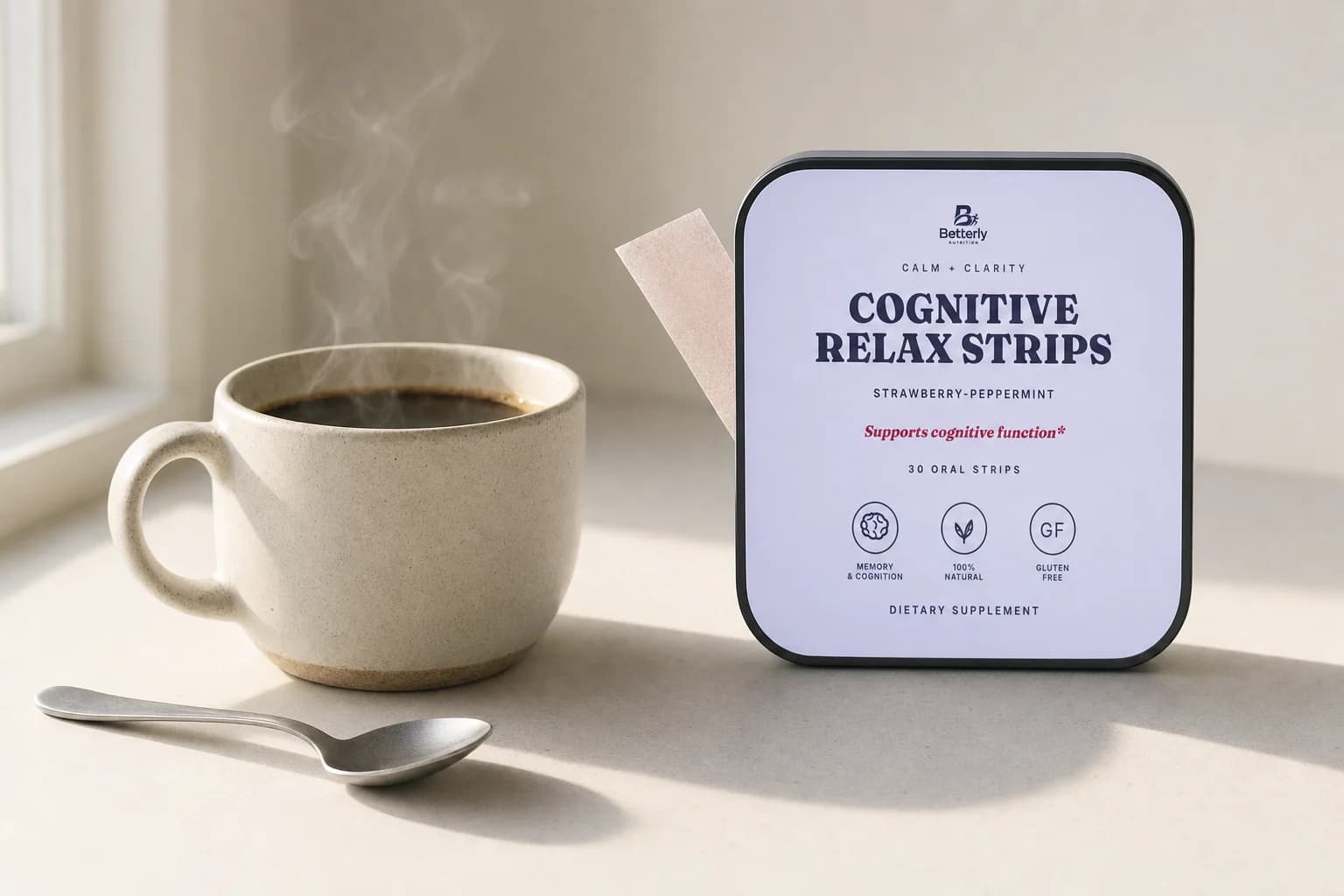
- You don't want to mix anything. Our Collagen & Vitamin E Strips hold 100 mg of collagen peptide and 6 mg of vitamin E (40% DV) per strip, dissolved on your tongue. That's a far smaller collagen amount, so it's a different product, not a swap.
You can compare every format in our Hair, Skin & Nails collection.
Who should check with a healthcare provider before adding collagen?
Check with a healthcare provider before adding collagen to your coffee if you're pregnant or nursing, under 18, on a prescription medication or under care for a medical condition.
All of our collagen labels carry the same caution: "Consult a physician if pregnant, nursing, under 18, or have a medical condition." The coffee raises its own question. The FDA recommends that anyone pregnant, trying to become pregnant or breastfeeding ask a health care provider whether to limit caffeine.
Bring the label along if a clinician has given you a daily target for protein, sodium, calcium or iron. Both powders add 18 g of protein and 26 mg of calcium (2% DV) per serving, and the chocolate's 2 Scoops (27 g) add 120 mg of sodium (5% DV). The creamer adds 100 mg of sodium (4% DV), 560 mg of calcium (43% DV) and 3 mg of iron (17% DV) per 2 Scoops (20 g) serving.
FAQ: collagen in coffee
Can you put collagen in tea instead of coffee?
Yes, collagen peptides mix into tea the same way they mix into coffee. Our powder labels call for 8-10 oz of your "favorite beverage" and don't single out coffee. Stir one serving into a small splash of tea first, then top up the cup. Black and green teas bring their own caffeine, and the collagen doesn't change how much.
Does collagen powder change the taste of coffee?
Usually not much, if the collagen powder is unflavored: ours has nothing added for taste, and its label lists bovine hide collagen peptides as the only ingredient. A light roast leaves it less to hide behind, so a bolder brew or a splash of milk helps if you're picky. The chocolate powder is different, since its label adds cocoa powder, natural flavor, salt and stevia extract.
Does collagen in coffee have side effects?
Collagen in coffee can bring side effects for some people, and in a mug it's hard to tell whether the scoop or the caffeine is behind them. If a strong cup already leaves you jittery, adding collagen won't change that. If you feel unwell after starting, set the tub aside and call your doctor or pharmacist. Our labels add a physician check for anyone pregnant, nursing, under 18 or with a medical condition.
How long does collagen in coffee take to work?
Collagen in coffee comes with no timeline we can honestly promise, and our labels don't print one either. What you control is consistency: one serving, in a cup that's already part of your day, taken the way the label directs. Putting it in coffee instead of water or a smoothie doesn't change that, since the mug is just a convenient place to take it.
Can you put collagen in coffee with milk or creamer?
Yes, collagen peptides mix into coffee with milk or creamer. Stir the powder into the coffee before the milk goes in, so it meets the warmest liquid first. If your creamer is our vanilla collagen creamer, skip the extra scoop: you'd be combining two collagen products, and neither label directs you to do that.
Sources
- Technical Evaluation Report: Collagen Gel, Gelatin, and Casings (Handling/Processing), January 28, 2019, USDA Agricultural Marketing Service
- COL1A1 gene, MedlinePlus Genetics
- Protein in diet, MedlinePlus
- Spilling the Beans: How Much Caffeine is Too Much?, FDA
If this left you looking for somewhere to start, read unflavored collagen peptides for coffee, 20 g per scoop — its amounts per serving are listed on the page. For the practical questions this raises, how dosing, sourcing and subscriptions work is answered in one place.