
Omega-3 Fish Oil Softgels
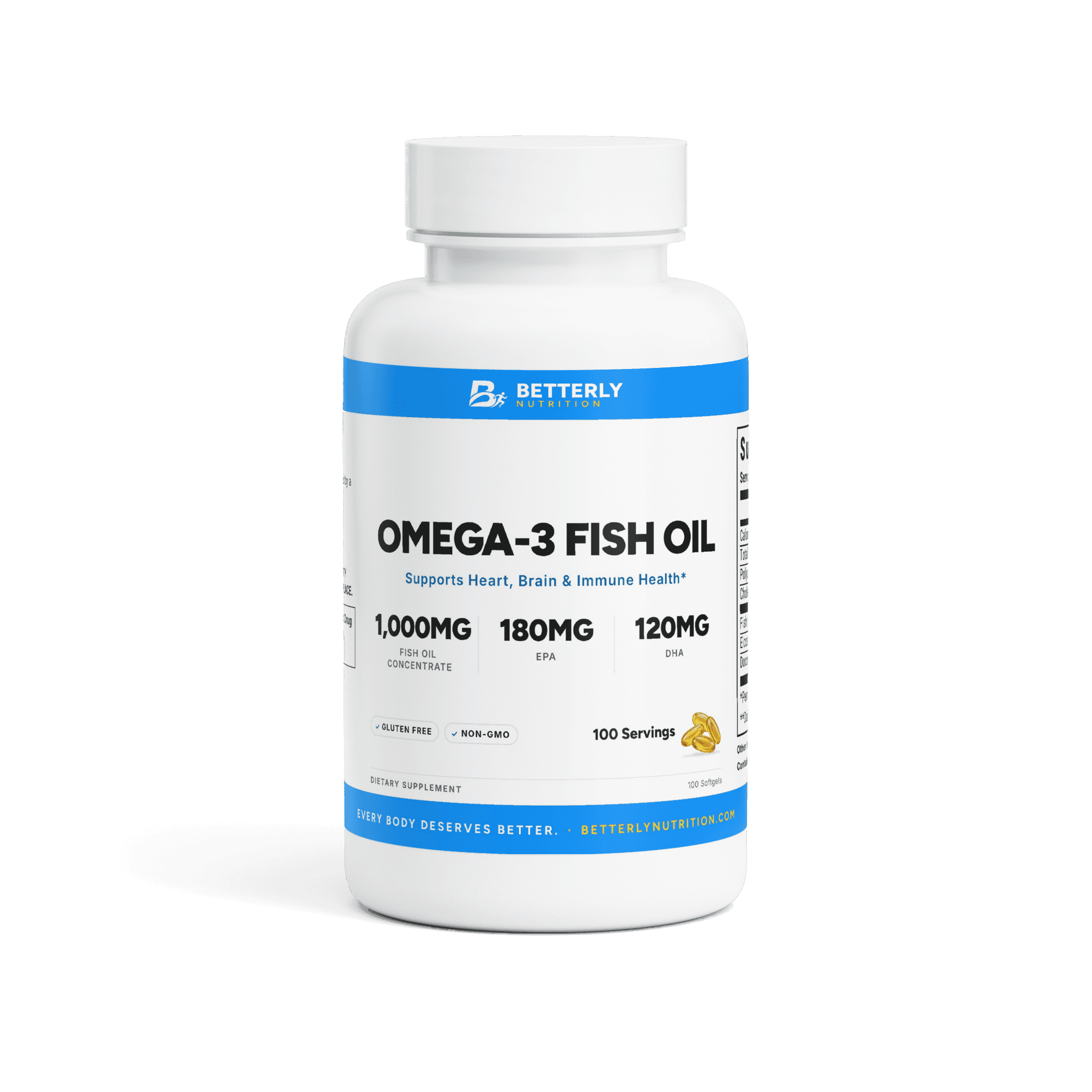
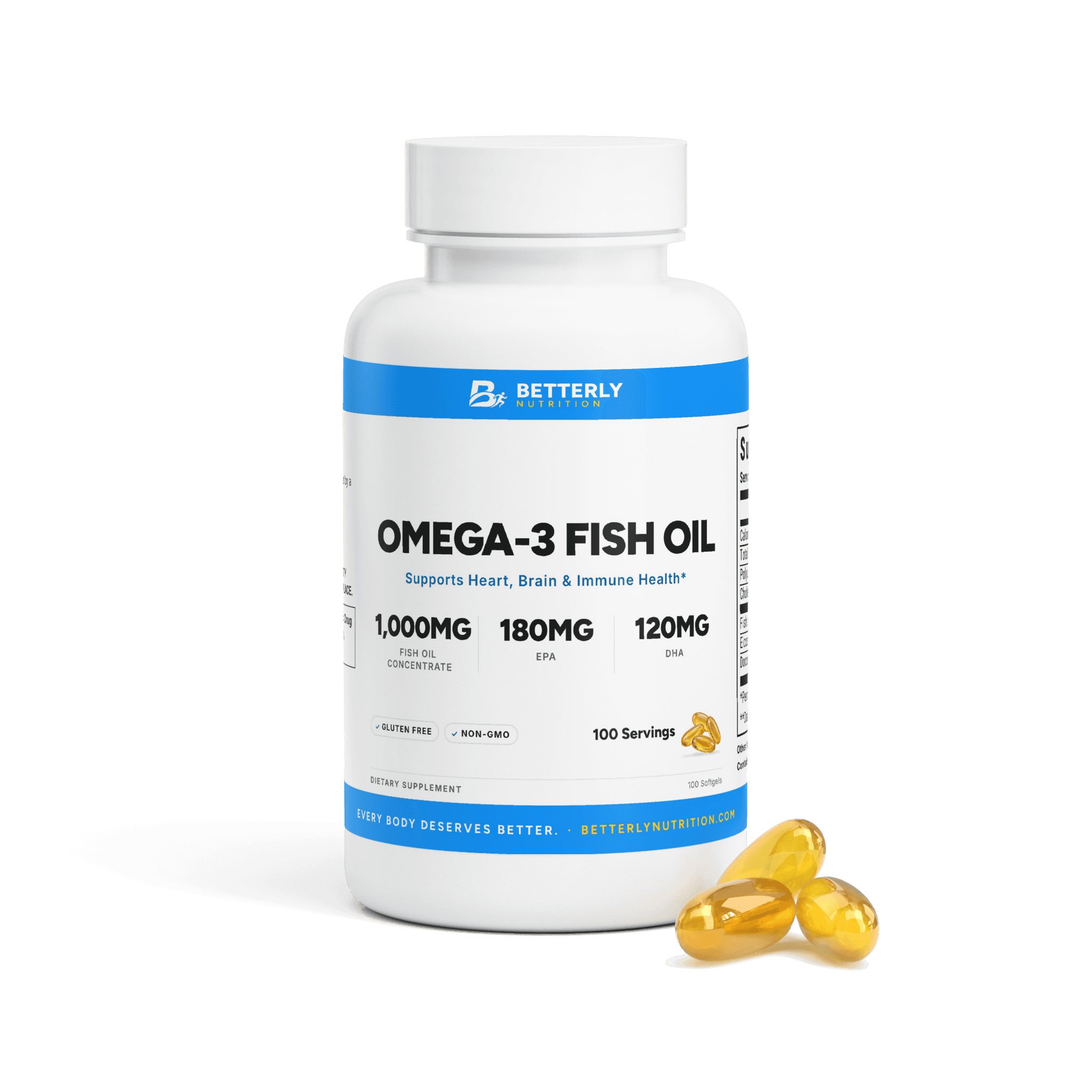
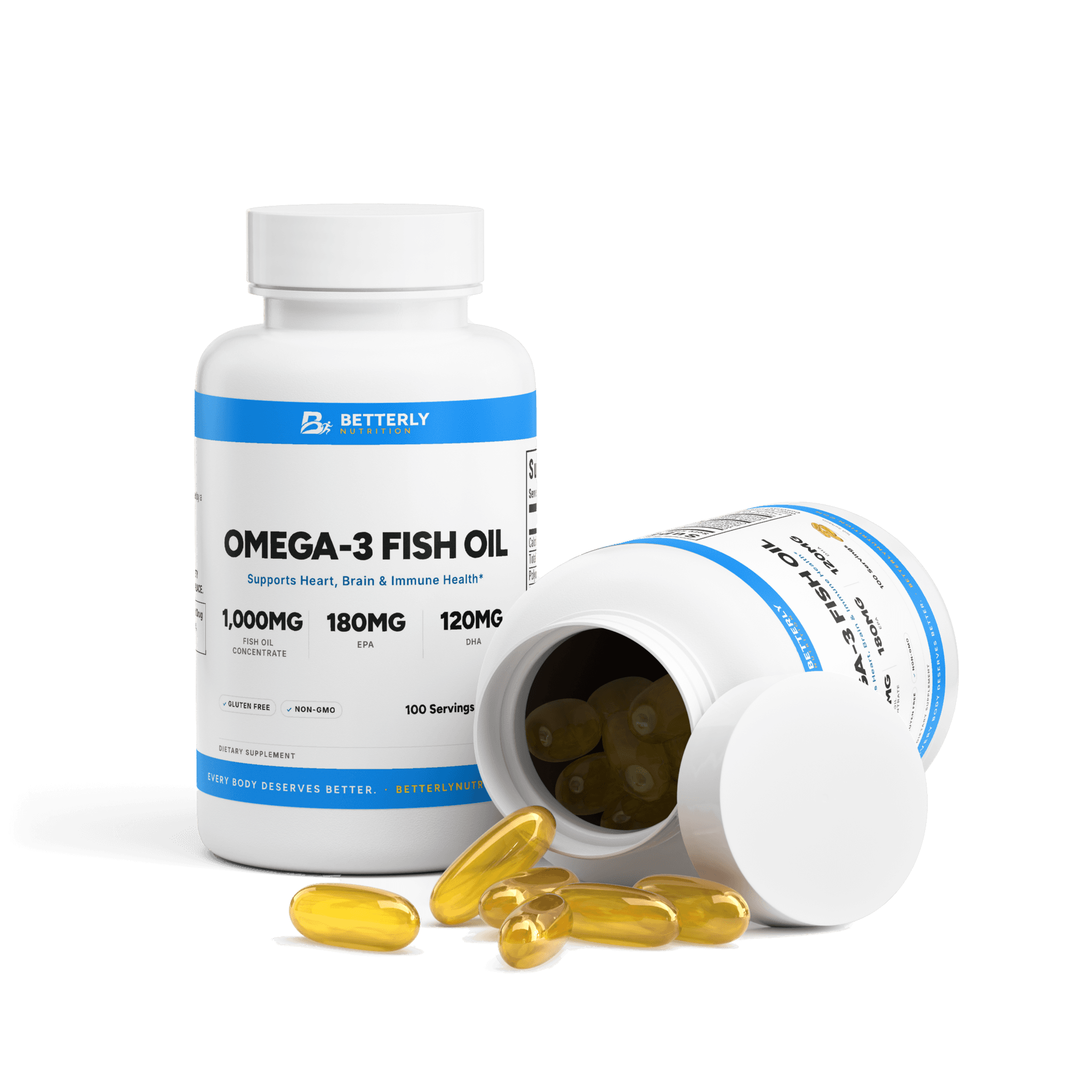
Omega-3 Fish Oil Softgels carry 1,000 mg of fish oil concentrate per softgel, and the panel breaks that number down: 180 mg EPA and 120 mg DHA, printed as their own rows. A hundred softgels, a hundred servings, and an allergen line that names the fish — sardines and anchovies. The label's own descriptor: Supports Heart, Brain & Immune Health.*
- Gluten-Free
- Non-GMO
- Lactose-Free
$17.90
* These statements have not been evaluated by the Food and Drug Administration. This product is not intended to diagnose, treat, cure, or prevent any disease.
What you get in every softgel
- 1,000 mg fish oil concentrate
- 180 mg EPA (eicosapentaenoic acid)
- 120 mg DHA (docosahexaenoic acid)
- 10 calories, 1 g total fat (1% DV) and 0.5 g polyunsaturated fat
- 10 mg cholesterol (3% DV)
- No Daily Value percentage printed on the fish oil, EPA, DHA or polyunsaturated fat rows
- Gluten free, non-GMO and lactose free
- 100 softgels, 100 servings, one softgel per serving
What EPA and DHA actually are
Omega-3 is a family, not a single substance, and the members of it aren't interchangeable — which is why the two acronyms on this panel are worth learning.
EPA, eicosapentaenoic acid, and DHA, docosahexaenoic acid, are the long-chain omega-3 fatty acids found in oily fish. They're the reason fish oil exists as a category. ALA, the third omega-3 most people have heard of, is the short-chain one that comes from plants — a different molecule, and not what a fish oil supplement is made of.
"Concentrate" is the other word doing work here. Plain fish body oil arrives with a modest share of EPA and DHA in it; a concentrate has been processed to raise that share. This panel gives EPA and DHA their own rows at 180 mg and 120 mg rather than quoting the total oil and leaving you to guess.
Where the oil comes from
Sardines and anchovies — the allergen line says so outright, rather than leaving "fish oil" to stand for anything that swims. Both are small, short-lived schooling fish, and both are long-standing sources for this category.
The softgel around the oil is gelatin, glycerin and water, so this is an animal-derived shell rather than a vegetarian one. Vitamin E is listed with the other ingredients rather than on the nutrition rows, so the panel doesn't quantify it.
How it's taken
One softgel, twice a day, with meals — which is both what the directions say and the practical way to take an oil capsule. Every figure on the panel is per softgel, and the panel counts one softgel as a serving, so a 100-count bottle is 100 servings, or fifty days at the suggested two a day.
Who it's for
Anyone who doesn't eat much oily fish and wants the omega-3s in a form they can keep up with. It's a straightforward, single-purpose fish oil — no krill, no algae, no blend of a dozen other oils, and no proprietary mix hiding how much EPA and DHA you're getting. Gluten free, non-GMO and lactose free. Not for you if you avoid fish or gelatin.
How to use it
As a dietary supplement, adults take one (1) softgel, two (2) times daily with meals, or as directed by a health care professional.
Other ingredients
Softgel (gelatin, glycerin and water) and Vitamin E.
Contains: Fish (Sardines, Anchovies).
100 Softgels · 100 Servings · Serving size 1 Softgel
Caution: Do not exceed recommended dose. Consult a physician if pregnant, nursing, under 18, or have a medical condition. KEEP OUT OF REACH OF CHILDREN. DO NOT USE IF SAFETY SEAL IS DAMAGED OR MISSING. STORE IN A COOL, DRY PLACE.
*This statement has not been evaluated by the Food and Drug Administration. This product is not intended to diagnose, treat, cure or prevent any disease.
Guides for Omega-3 Fish Oil Softgels
Tried it? Tell people how it went.
Honest words only — we publish reviews after a quick check and never edit them for sentiment.
Goes great together