On this page
- Key takeaways
- When should you take fish oil?
- Is fish oil better in the morning or at night?
- Should you take fish oil with food or on an empty stomach?
- How do you take fish oil softgels across two meals?
- When should you take fish oil and vitamin D?
- What's the best time to take fish oil with other supplements?
- How do you remember to take fish oil twice a day?
- When isn't a twice-daily fish oil routine worth it?
- Who should get a provider's okay before starting fish oil?
- FAQ: when to take fish oil
- Sources
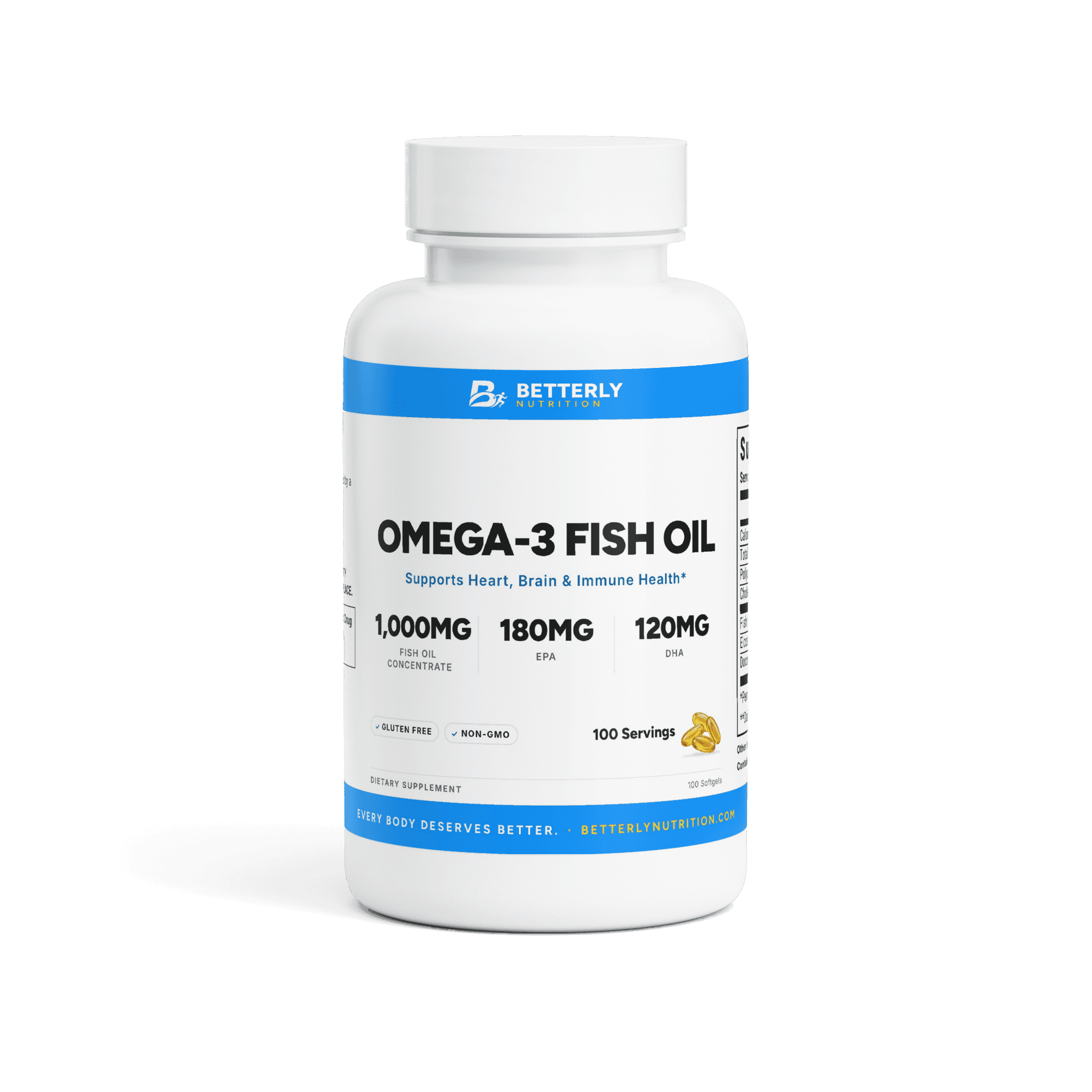
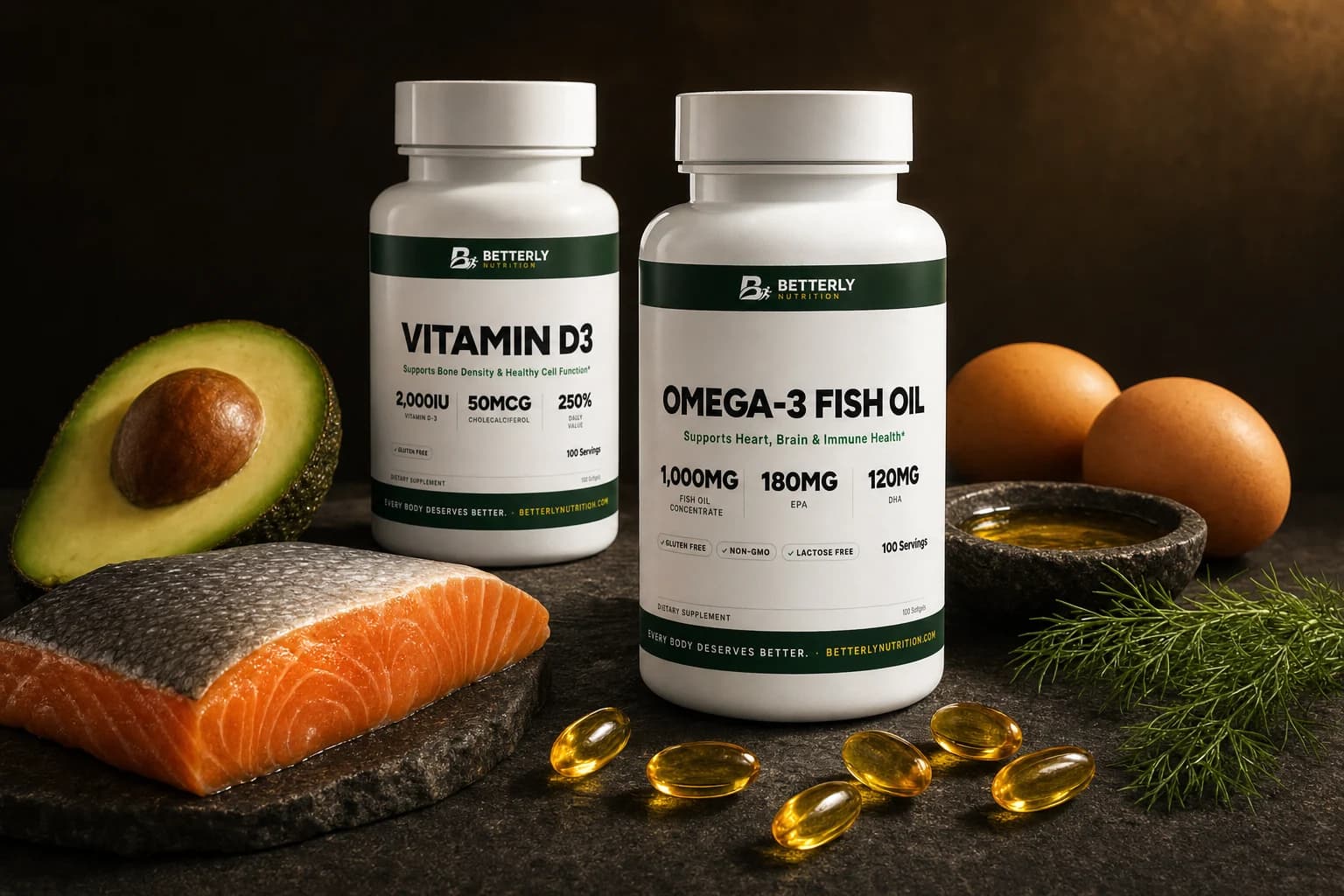
The short answer: The simplest rule for when to take fish oil is one softgel at each of two meals you rarely skip. That mirrors the Omega-3 Fish Oil Softgels label, which says to take a softgel two times a day with meals. Each 1-softgel serving lists 180 mg of EPA and 120 mg of DHA, so your two meals carry 600 mg of the pair combined.
Key takeaways
- Betterly's Omega-3 Fish Oil Softgels label calls for a softgel with each of two daily meals; across the day, that's 360 mg of EPA and 240 mg of DHA.
- Neither the label nor the federal pages we checked name a best hour, so the two meals you eat most reliably are the right slots.
- Vitamin D3 can share a meal with fish oil, since the NIH Office of Dietary Supplements notes vitamin D is fat soluble and absorbs best alongside food containing some fat.
- A multivitamin or CoQ10 label sets its own timing, and you can line it up around your two fish oil meals.
- Anyone on a blood thinner, facing surgery, pregnant, nursing, under 18 or allergic to fish should get a healthcare provider's input first.
A quick word on where we stand: Betterly sells the fish oil and vitamin D3 softgels this guide leans on, so every timing tip starts from their printed directions. Hold any other brand's bottle to the same test. Both products sit in our targeted support collection.
When should you take fish oil?
Take fish oil with meals, because that's what the Omega-3 Fish Oil Softgels label asks for: one softgel, two times daily, each time with food.
The phrase doing the work on that label is "two (2) times daily with meals." It sets a frequency and a condition, and it never mentions an hour. There's no morning, no bedtime and no minimum gap. So the real question is which two meals. Choose the ones you almost never skip.
Fish oil is a fat, and the panel shows it: 10 calories and 1 g of total fat per 1-softgel serving. We looked for a federal page measuring how much a meal changes the way your body takes up fish oil and didn't find one. So you won't see a percentage here, even though some sites quote one. The label asks for meals, and that's reason enough.
Is fish oil better in the morning or at night?
No source we checked says fish oil works better at one time of day, and the label asks for two meals without naming an hour for either.
The NIH Office of Dietary Supplements (ODS) omega-3 fact sheet for consumers covers foods, safety and interactions, but it doesn't recommend a time of day. Neither does the National Center for Complementary and Integrative Health (NCCIH) in its guide to omega-3 supplements.
Morning works if breakfast is a real meal for you. If it's a coffee in the car, your first softgel should wait for lunch. Evening is often the steadiest slot, because dinner tends to happen even on chaotic days.
Bedtime is where people drift off the label. A softgel on an empty stomach right before sleep isn't what "with meals" describes. If you eat dinner at 7 and go to bed at 11, the softgel belongs at 7.
Should you take fish oil with food or on an empty stomach?
Take fish oil with food. The Omega-3 Fish Oil Softgels label says "with meals," and nothing on the bottle suggests taking a softgel on an empty stomach.
The label doesn't say how big the meal has to be. A fair reading is your normal breakfast, lunch or dinner, not a black coffee or a few crackers.
If you skip breakfast or eat within a set window each day, don't take the first softgel alone just to get it in early. Move it to your first real meal, even if that's noon, and the second to your last one.
NCCIH lists heartburn, nausea and diarrhea among the usually mild side effects of omega-3 supplements. It doesn't say whether food changes them, so we won't claim it does. Either way, the label has already answered the empty-stomach question, and the answer is no.
Fishy burps are a separate topic, and they get their own guide to fish oil burps.
How do you take fish oil softgels across two meals?
Give each of the label's two softgels its own meal, and choose the two meals you eat most consistently, whatever time of day they happen to fall.
Here's how the same direction plays out across different schedules:
| Your usual day | Softgel 1 | Softgel 2 |
|---|---|---|
| Breakfast, lunch and dinner | Breakfast | Dinner |
| You skip breakfast | Lunch | Dinner |
| Night shift | First meal after waking | Meal during your shift |
| Late lunch, late dinner | Lunch | Dinner |
| One meal a day | Ask your provider first | Ask your provider first |
Whatever the schedule, each softgel travels with a meal, and the daily total never goes past two.
The last row is the tricky one: don't improvise. The label's own escape clause is "or as directed by a health care professional," and the NIH's consumer primer on dietary supplements makes the same point in plainer terms: a manufacturer picks the serving size, and your own provider can set another amount that fits you.
From our shop: Omega-3 Fish Oil Softgels — a 100-softgel bottle listing 180 mg of EPA plus 120 mg of DHA per 1-softgel serving, labeled for twice-daily use at mealtimes.
When should you take fish oil and vitamin D?
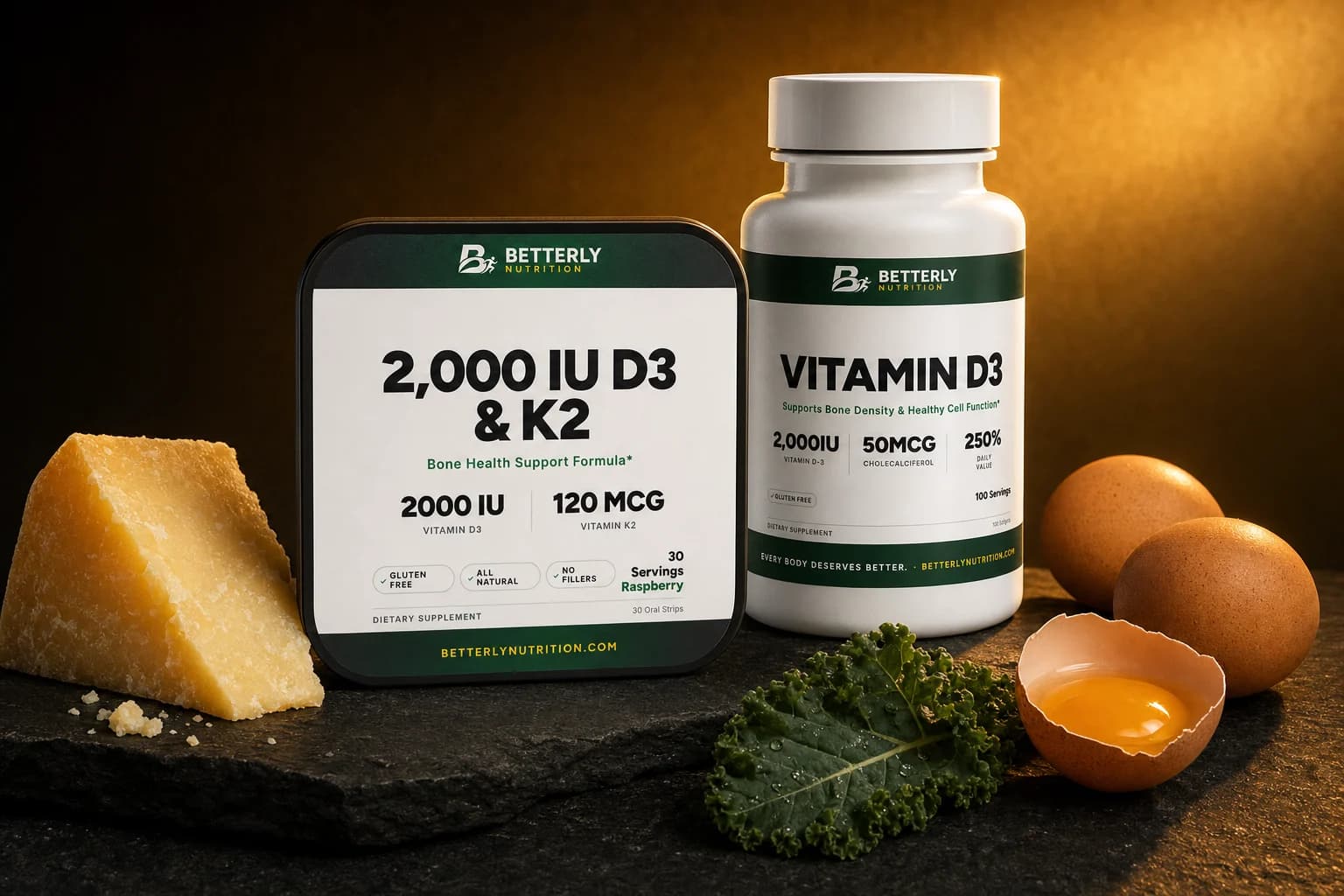
You can take vitamin D3 with either fish oil meal, because vitamin D is fat soluble, and ODS says it absorbs best alongside food containing some fat.
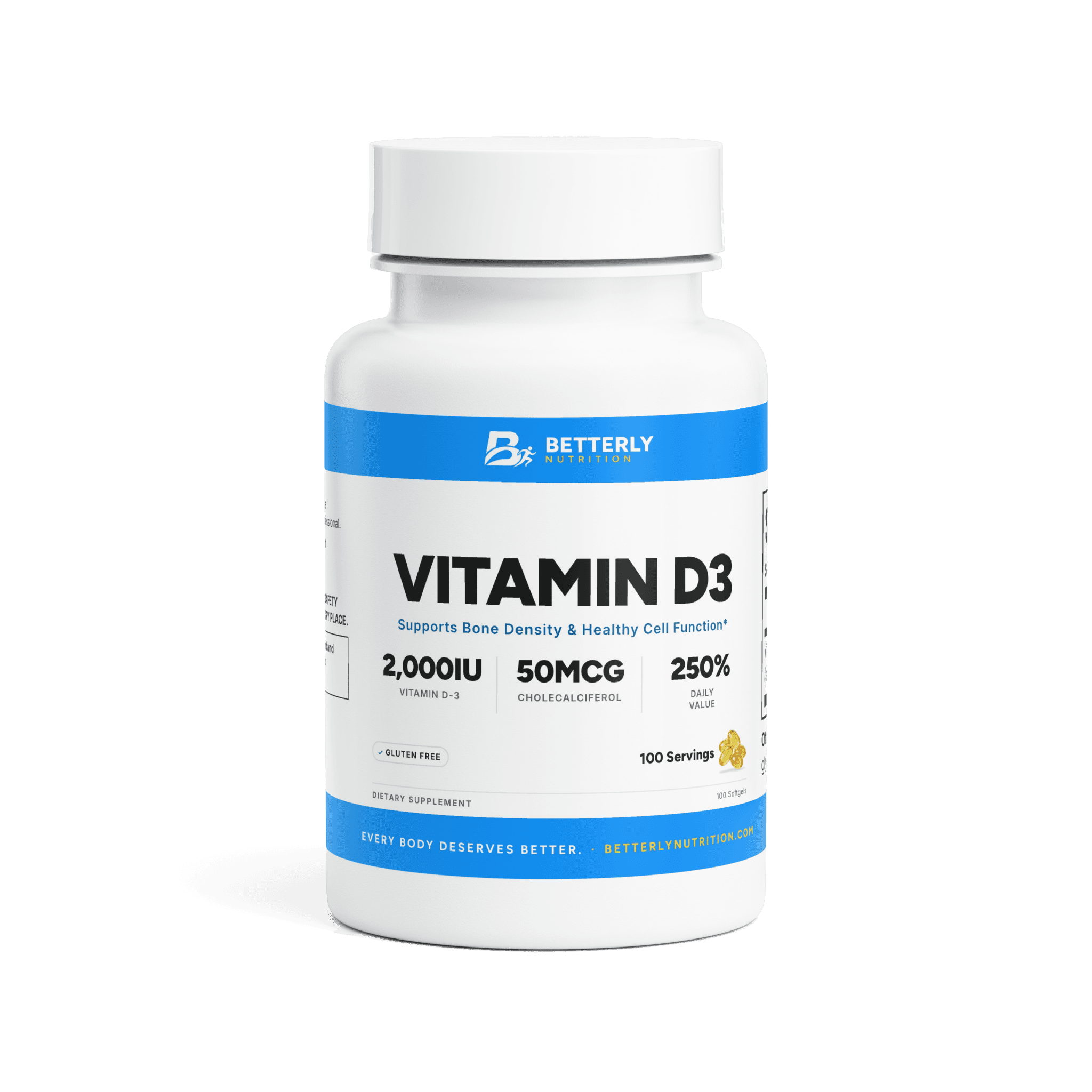
The ODS vitamin D fact sheet for consumers puts it plainly: "Because vitamin D is fat soluble, it is best absorbed when taken with a meal or snack that includes some fat." Our Vitamin D3 Softgels list 50 mcg (2,000 IU) of vitamin D3 per 1-softgel serving, with a suggested use of one softgel daily and no time or meal named. So any meal with some fat in it works, and the sample day below puts it at breakfast.
Can you take fish oil and vitamin D together? As far as both labels go, yes. Neither warns against the other, and one meal means one habit.
Two checks keep this pairing tidy:
- Know which oil you have. Our fish oil panel lists no vitamin D, but NCCIH points out that fish liver oils such as cod liver oil also carry vitamins A and D, the amounts differ from one product to the next, and too much of either can be harmful.
- Add up your vitamin D. ODS caps adults at 100 mcg (4,000 IU) a day from food, drinks and supplements combined. The D3 softgel's 50 mcg plus the 10 mcg in a 2-capsule serving of our multivitamin comes to 60 mcg, so a third vitamin D product would eat into the room fast.
Wondering whether D3 needs K2 alongside? Our comparison of plain D3 and D3 with K2 takes that on.
From our shop: Vitamin D3 Softgels — a once-daily softgel holding 2,000 IU (50 mcg) of vitamin D3 per 1-softgel serving, simple to add to a fish oil meal.
What's the best time to take fish oil with other supplements?
The best time to take fish oil with other supplements depends on each product's own label, so line their directions up around your two fish oil meals.
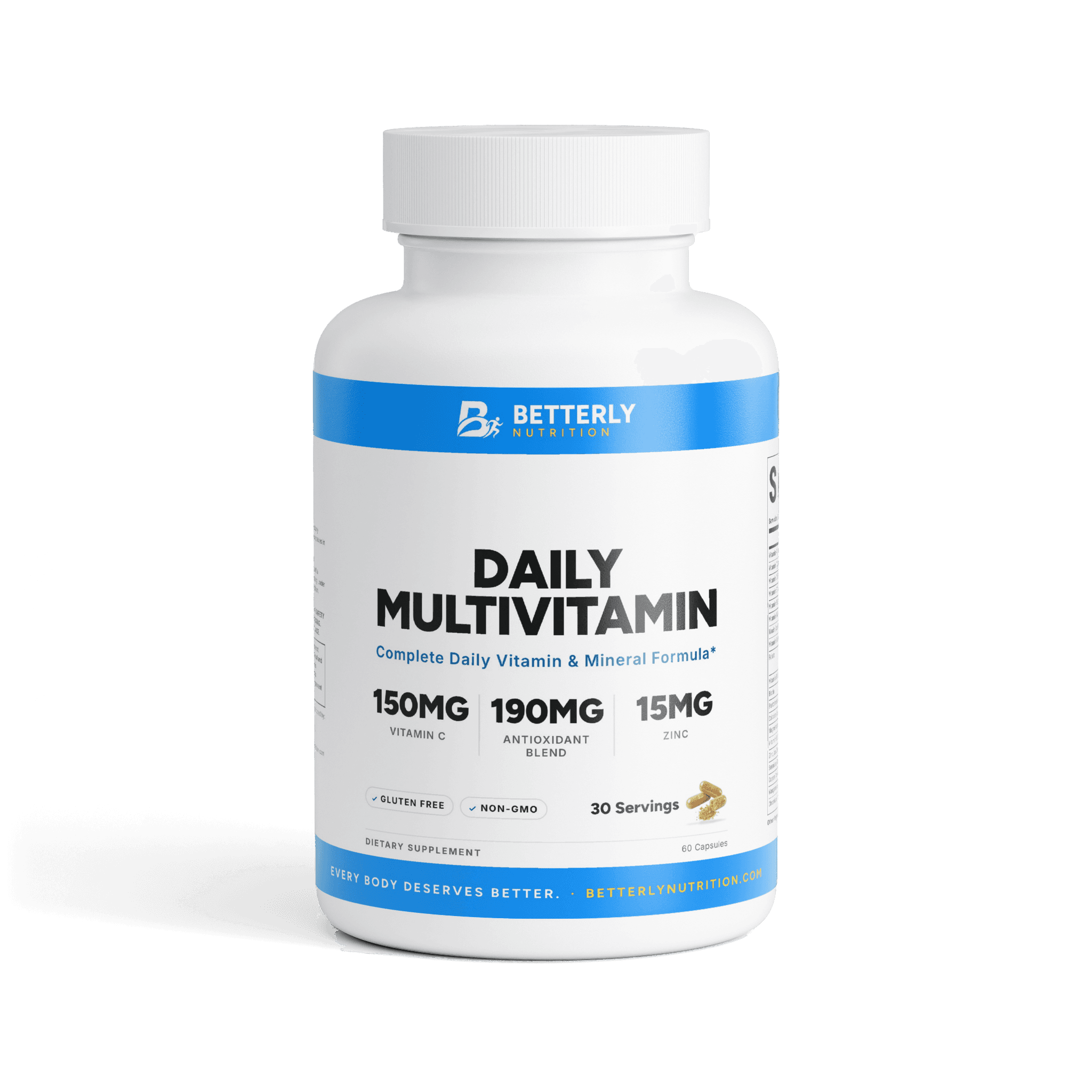
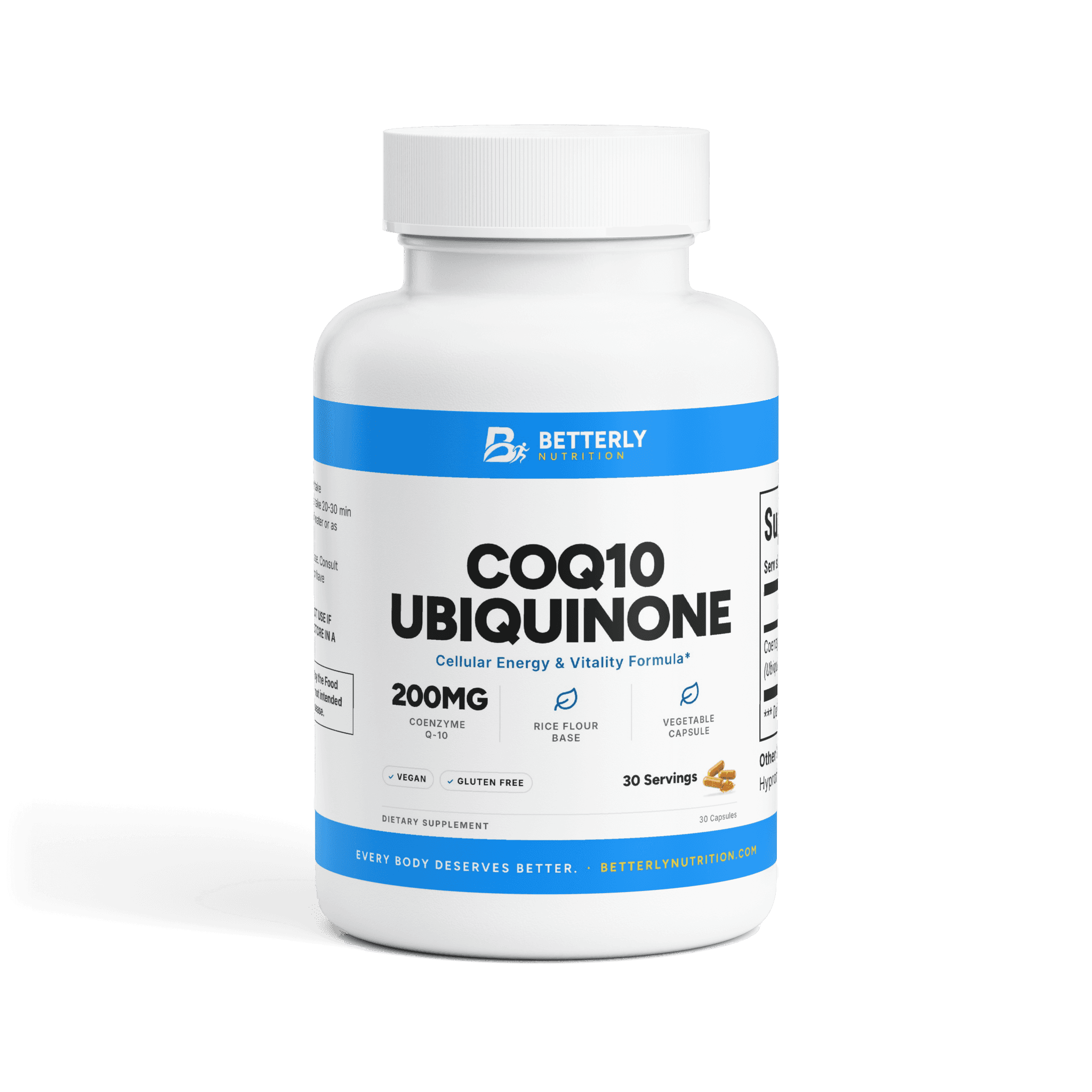
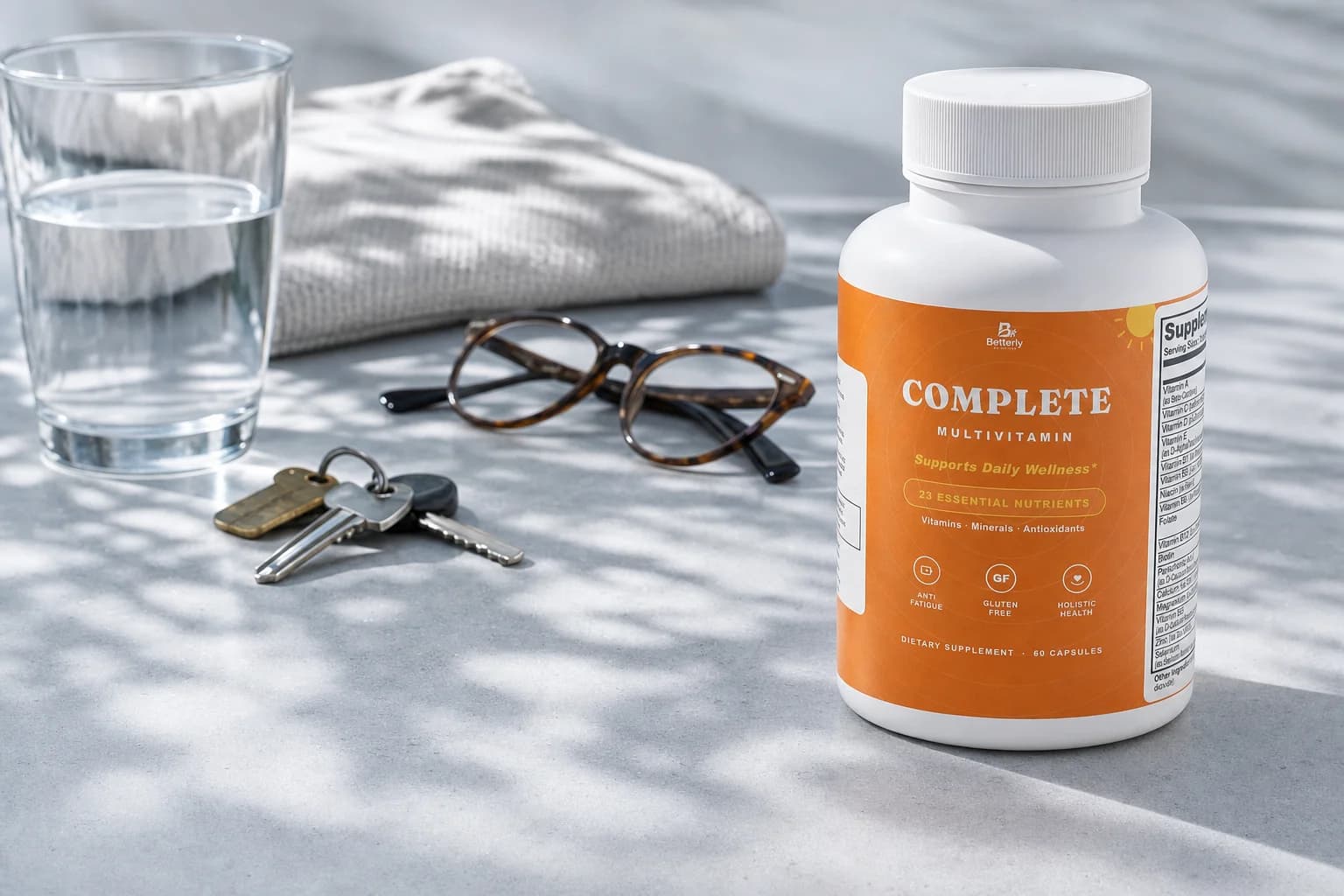
Our multivitamin is the easiest partner. The Daily Multivitamin Capsules label ties its 2-capsule serving to a morning meal, so breakfast can hold that and your first softgel at once. CoQ10 Ubiquinone Capsules take a different route, which the table shows.
| Label | Its timing direction | Where it lands |
|---|---|---|
| Omega-3 Fish Oil Softgels | 1 softgel at each of 2 meals | Your two steadiest meals |
| Daily Multivitamin Capsules | 2 capsules, morning, with a meal | Breakfast, next to softgel 1 |
| Vitamin D3 Softgels | 1 softgel daily, no time named | Either fish oil meal |
| CoQ10 Ubiquinone Capsules | 1 capsule, 20-30 min before a meal | Just ahead of a meal |
The pattern is simple: fish oil sets two anchors, the multivitamin claims breakfast, and CoQ10 is the one label here that asks to go before a meal rather than with it. Our CoQ10 timing guide covers that one in full.
A day built from these labels could look like this:
- Breakfast: 2 multivitamin capsules, 1 fish oil softgel and 1 vitamin D3 softgel.
- Dinner: your second fish oil softgel, with CoQ10 taken 20-30 minutes ahead if it's part of your routine.
You don't need all four. Our guide to setting up a supplement routine you'll actually keep helps you decide which products, if any, earn a spot.
How do you remember to take fish oil twice a day?
The easiest way to remember fish oil twice a day is to tie each softgel to a meal you already eat, so the plate becomes your reminder.
A few habits help the second softgel stick:
- Store it near your plates, not your stove. The label says to keep the bottle in a cool, dry place, so a cupboard by the dishes beats a shelf above the burners.
- Use a two-row organizer. A weekly box with morning and evening rows shows at a glance whether dinner's softgel happened.
- Plan the refill. Two softgels a day empties a 100-count bottle around day 50, so a reorder note on your calendar near day 40 keeps you from a gap.
- Check the seal. Don't open a bottle whose safety seal looks damaged or is gone, as the label directs.
When isn't a twice-daily fish oil routine worth it?
A twice-daily fish oil routine may not be worth starting if you can't tie a softgel to two meals most days or your provider has other plans.
Sometimes the schedule itself is the signal to rethink it:
- You eat one real meal a day. The label asks for two, and squeezing both softgels into that one sitting isn't what it describes, so talk to your provider before adapting it.
- Your meals shift so much that neither softgel would have a steady home. A half-used bottle does you no good.
- Your provider has already set a different omega-3 plan for you. Follow theirs; the label itself makes room for that.
- Fatty fish is a regular dinner for you. Whether that already covers you is a question for your provider, and our breakdown of the EPA and DHA in a 1,000 mg softgel gives you the numbers to bring.
Who should get a provider's okay before starting fish oil?
Get a doctor's or pharmacist's input before fish oil if you take prescriptions, have surgery booked or a fish allergy, or fall into the groups the label names.
Those groups come from the softgel's own caution: anyone pregnant, nursing, younger than 18, or with a medical condition. The same line tells you not to go past the recommended dose.
Medicines are where timing and safety meet. This softgel is tied to meals, and some prescriptions come with their own food instructions, such as taking them on an empty stomach. ODS suggests keeping a written record of the supplements and medicines you take and sharing it with your doctor and pharmacist. Bring that record, along with a few questions:
- Do any of my medicines need to be taken away from food, and do my fish oil meals get in the way?
- Which two meals would you pick for the softgels?
- Should anything I take be spaced apart from fish oil or vitamin D?
Anticoagulants call for a bigger conversation. The ODS omega-3 sheet warns that taking high doses alongside warfarin or another anticoagulant may lead to bleeding problems. So your prescriber should decide whether fish oil fits at all before you plan any meals around it.
A procedure on the calendar? Mention fish oil at your first planning visit, not the morning of; the FAQ explains why.
A fish allergy comes before any timing plan. The allergen line reads "Fish (Sardines, Anchovies)," and the shell is gelatin, so talk to your allergist before trying any fish oil.
FAQ: when to take fish oil
Can you take both fish oil softgels at once?
Not according to Betterly's Omega-3 Fish Oil Softgels label, which says one softgel two times daily with meals, not two together. Both at one meal would match the daily total but not the schedule. If two separate meals are hard for you, ask your healthcare provider, since the label also defers to a professional's directions.
What if you forget a fish oil softgel?
If you miss a fish oil softgel, skip it and take your next one with your next fish oil meal as usual. Don't add an extra softgel to catch up. Our label warns against exceeding the recommended dose of one softgel twice a day, and one missed softgel just means a lighter day.
How far apart should you take fish oil softgels?
Betterly's Omega-3 Fish Oil Softgels label sets no gap between the two softgels. It asks only that each one goes with a meal, two times a day. So lunch and dinner fit its wording as well as breakfast and dinner do. What the label doesn't describe is both softgels at one sitting. If you'd like firmer spacing because of other medicines, your pharmacist can suggest it.
Can you take fish oil and magnesium together?
Yes, as far as the labels go: neither Betterly's fish oil nor our Magnesium Glycinate Capsules warns against the other. The magnesium label's directions are three capsules once daily, with no time or meal given, so it can sit at either fish oil meal. Each 3-capsule serving lists 275 mg of magnesium. On a prescription? Your pharmacist can tell you whether magnesium needs spacing from it.
Should you stop taking fish oil before surgery?
Possibly, so tell your surgical team about your fish oil well before the date and follow their timing. The NIH Office of Dietary Supplements notes that some supplements can increase the risk of bleeding or, if taken before surgery, change your response to anesthesia. Hand the team your written supplement record, and let them set the stop and restart dates.
Sources
- Omega-3 Fatty Acids: Fact Sheet for Consumers, NIH Office of Dietary Supplements
- Vitamin D: Fact Sheet for Consumers, NIH Office of Dietary Supplements
- Dietary Supplements: What You Need to Know, NIH Office of Dietary Supplements
- Omega-3 Supplements: What You Need To Know, National Center for Complementary and Integrative Health
If this left you looking for somewhere to start, read fish oil softgels taken twice daily with meals — its amounts per serving are listed on the page. For the practical questions this raises, how dosing, sourcing and subscriptions work is answered in one place.