On this page
- Key takeaways
- What are the benefits of beetroot and hibiscus together?
- What does beetroot add to the pairing?
- What does hibiscus powder add, beyond the tart taste?
- Beetroot and hibiscus tea, juice or powder: what ends up in the glass?
- Beetroot or hibiscus: which is better for what you want?
- What does our tub's label declare, and what does it leave out?
- How do you take the powder by the label?
- When can you skip a beet and hibiscus scoop?
- Who should check with a healthcare provider first?
- FAQ: beetroot and hibiscus
- Sources
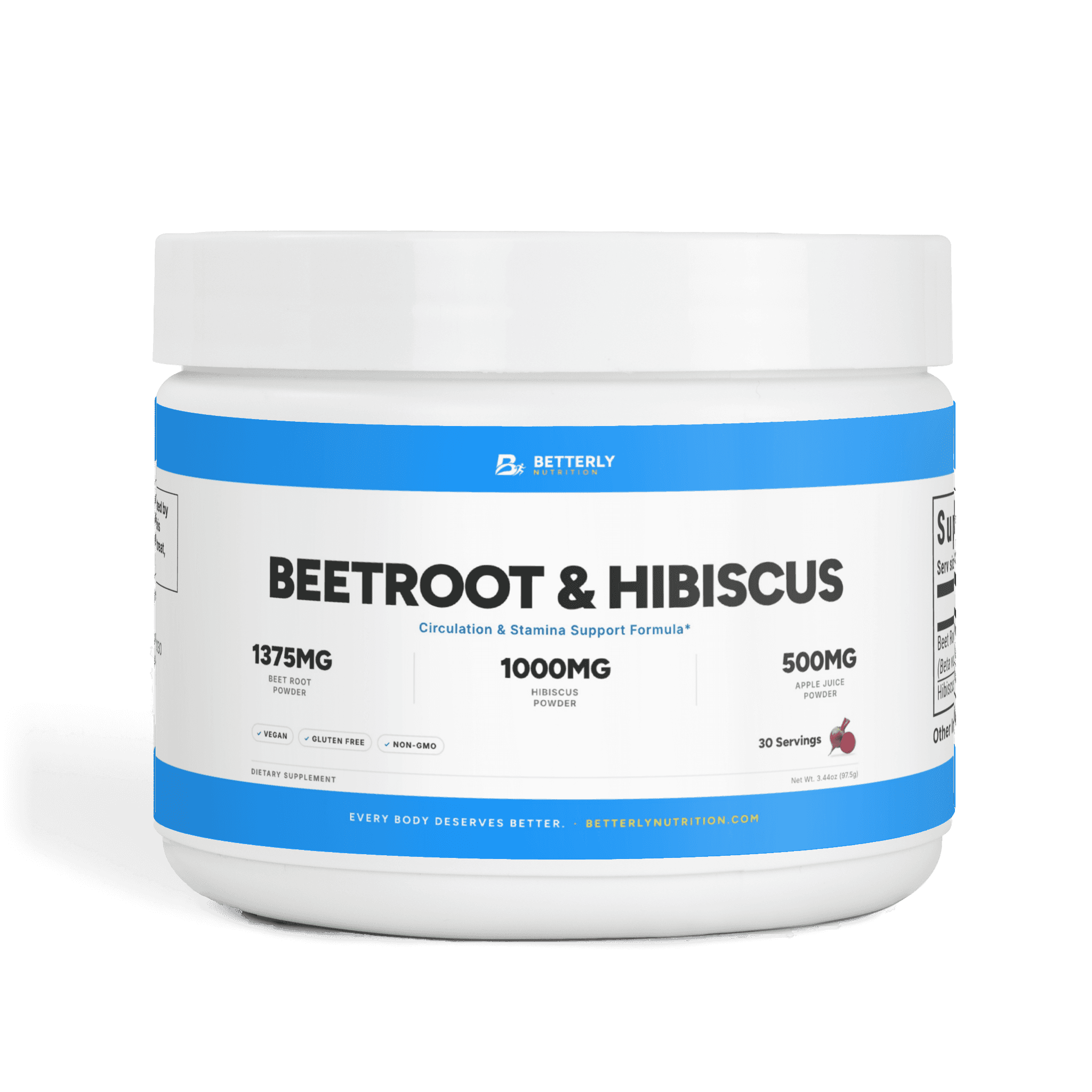
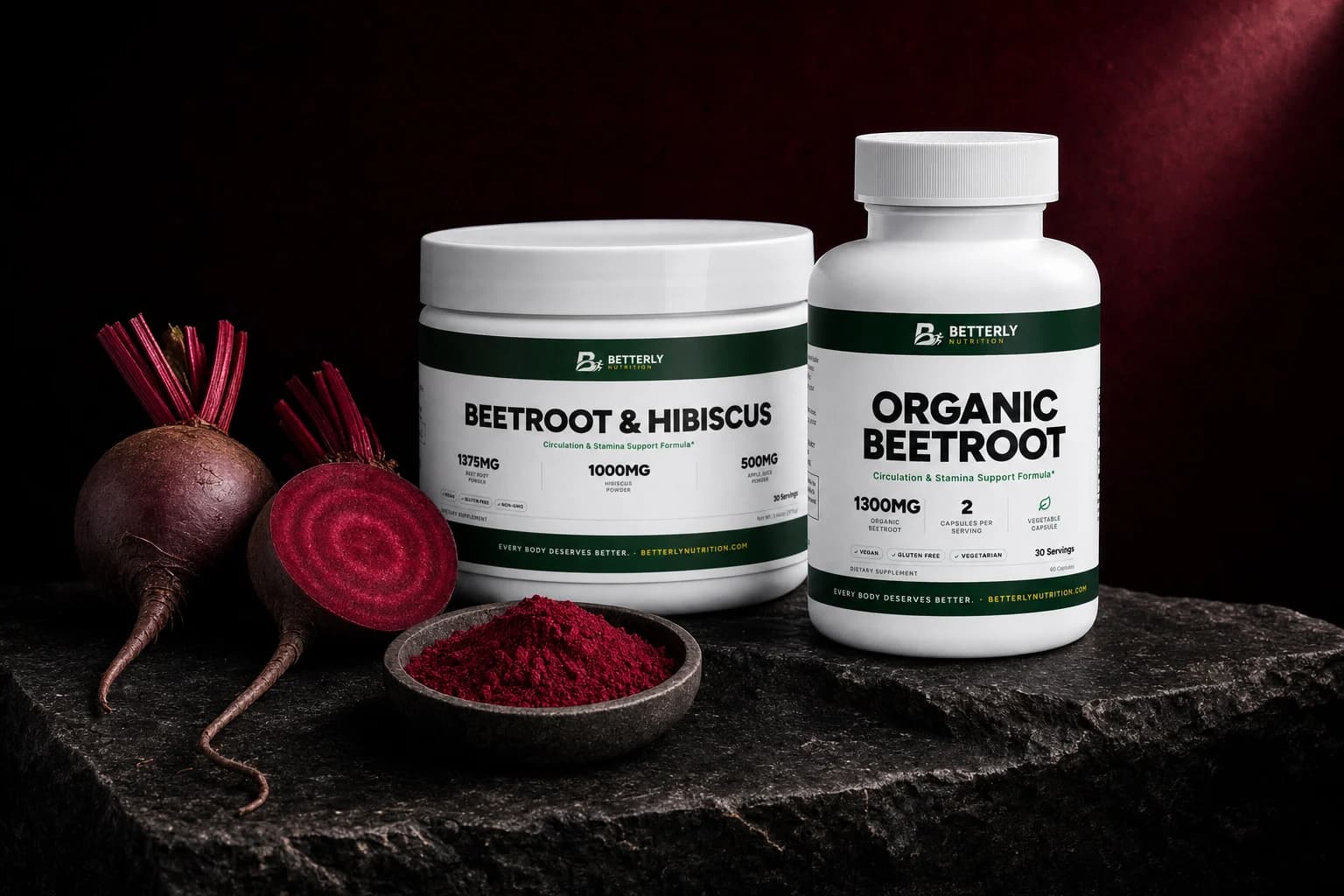
The short answer: Beetroot and hibiscus benefits come from two plants doing different jobs in one glass. Beet is rich in dietary nitrate, the compound behind the beet juice research the NIH describes. Hibiscus brings a tart, cranberry-like taste and red plant pigments called anthocyanins. Per 1-scoop (3.25 g) serving, our Beetroot & Hibiscus Powder pairs 1,000 mg of hibiscus powder with 1,375 mg of beet root powder, and its panel gives no nitrate figure.
Key takeaways
- Beet supplies the nitrate that beet juice research centers on, while hibiscus mostly adds sourness, deep red color and its own plant compounds.
- The NIH's exercise fact sheet draws on beet juice studies, and it leaves open whether beetroot powder in a scoop or capsule acts the same way.
- LactMed, an NIH database, lists anthocyanins, proanthocyanidins and flavonols in hibiscus flowers, though our label doesn't measure any of them.
- Each 1-scoop (3.25 g) serving of Betterly's Beetroot & Hibiscus Powder lists 1,375 mg beet root powder, 1,000 mg hibiscus powder and 500 mg apple juice powder, with no nitrate row.
Full disclosure: we sell the tub this guide is built around, plus the capsules and the reds and greens powders it compares. So every product number below comes off a panel, and we flag each place the research stops short of a scoop.
What are the benefits of beetroot and hibiscus together?
Beetroot and hibiscus benefits are best read one ingredient at a time, since we found no federal source that studies the two as a pair.
Beet carries the nitrate story and the red-violet root pigments called betalains, the ones that stain your cutting board magenta. Hibiscus carries a bright, sour flavor and a different family of red pigments, the anthocyanins.
Sweet, earthy beet and sharp hibiscus balance each other in a glass, which is a flavor reason to pair them, not a health one.
Plenty of pages promise more than the evidence on a scoop supports, so we'll stay with what each plant contains and what our label declares.
What does beetroot add to the pairing?
Beetroot brings the pairing its nitrate, and beet is the only one of the two plants that the NIH's exercise fact sheet covers.
That research was done with a drink you pour, not a scoop you stir. The NIH Office of Dietary Supplements (ODS) describes it in its exercise and athletic performance fact sheet. In the usual study setup, participants had 2 cups of beet juice roughly 2.5 to 3 hours ahead of exercising. Many of those studies, though not all, found the juice can improve performance and endurance in aerobic activities, running and cycling among them.
In ODS's account of why the juice might help, the body turns part of its nitrate into nitric oxide. ODS says nitric oxide expands blood vessels, so more oxygen and nutrients reach exercising muscle.
Our tub's beet row reads 1,375 mg of beet root powder per 1-scoop (3.25 g) serving: dried, ground root, weighed as a whole, with no nitrate figure. ODS's bottom line stops short of powder: it says no one knows whether beetroot powder supplements have the same effects as the juice.
A blank where nitrate would go is normal for a plant powder. The ODS background sheet on botanical supplements explains that U.S. law doesn't require supplements to be standardized, meaning a chosen marker compound is measured and held steady from batch to batch.
Hibiscus has no part in that research. The ODS exercise sheet never mentions it, so nothing there tells you what adding it to beet does or doesn't change. Our breakdown of beet powder, juice and capsules works out how far one scoop sits from 2 cups of juice.
What does hibiscus powder add, beyond the tart taste?
Hibiscus powder adds a sour, cranberry-like flavor and plant compounds that LactMed, an NIH database, lists as anthocyanins, proanthocyanidins and flavonols.
The hibiscus used in drinks is usually roselle, Hibiscus sabdariffa. Its thick red calyces, the cup of sepals around the seed pod, are the part that gets dried and steeped. The NIH's LactMed entry on hibiscus says the flowers also contain various pigments, oils and acids. It adds that the FDA considers hibiscus generally recognized as safe (GRAS) as a food.
Our panel prints only "Hibiscus Powder (flower)." So when this guide says roselle, it means the plant usually brewed for drinks, not a species our tub confirms.
Anthocyanins are the pigment family behind the color of blueberries, and proanthocyanidins and flavonols sit in the wider polyphenol group that our guide to polyphenol supplements unpacks.
A list of compounds isn't a list of proven jobs, though. The ODS botanical sheet notes that for most botanicals, no one knows which constituents are responsible for their effects. The NCCIH page on antioxidant supplements adds that the good track record of eating antioxidant-rich fruits and vegetables hasn't been matched by antioxidant supplements in research. It also warns that large amounts of antioxidants may interfere with normal cell functions, including cell signaling.
Beetroot and hibiscus tea, juice or powder: what ends up in the glass?
A homemade beet and hibiscus tea gives you what steeps out of the plants, juice gives you pressed liquid, and a powder gives you the whole ground plant.
The ODS botanical sheet describes tea as boiling water poured over fresh or dried plant parts and left to steep. It also explains that preparations differ in strength: the plant in a whole cup of tea might fit in a few spoonfuls of tincture, or in less extract still.
Steep dried hibiscus and beet slices and the strained solids go in the bin. With a powder, the 3.25 g you scoop is the 3.25 g you swallow.
| Form | What you drink | What the amount tells you | Best fit |
|---|---|---|---|
| Homemade beet and hibiscus tea | What steeps out | Nothing exact | A hot or iced drink you tweak |
| Beet juice mixed with hibiscus tea | Pressed beet liquid plus tea | Cups of juice | Staying close to the studied form |
| Beetroot & Hibiscus Powder | Whole ground root and flower | 1,375 mg beet, 1,000 mg hibiscus | A measured daily glass |
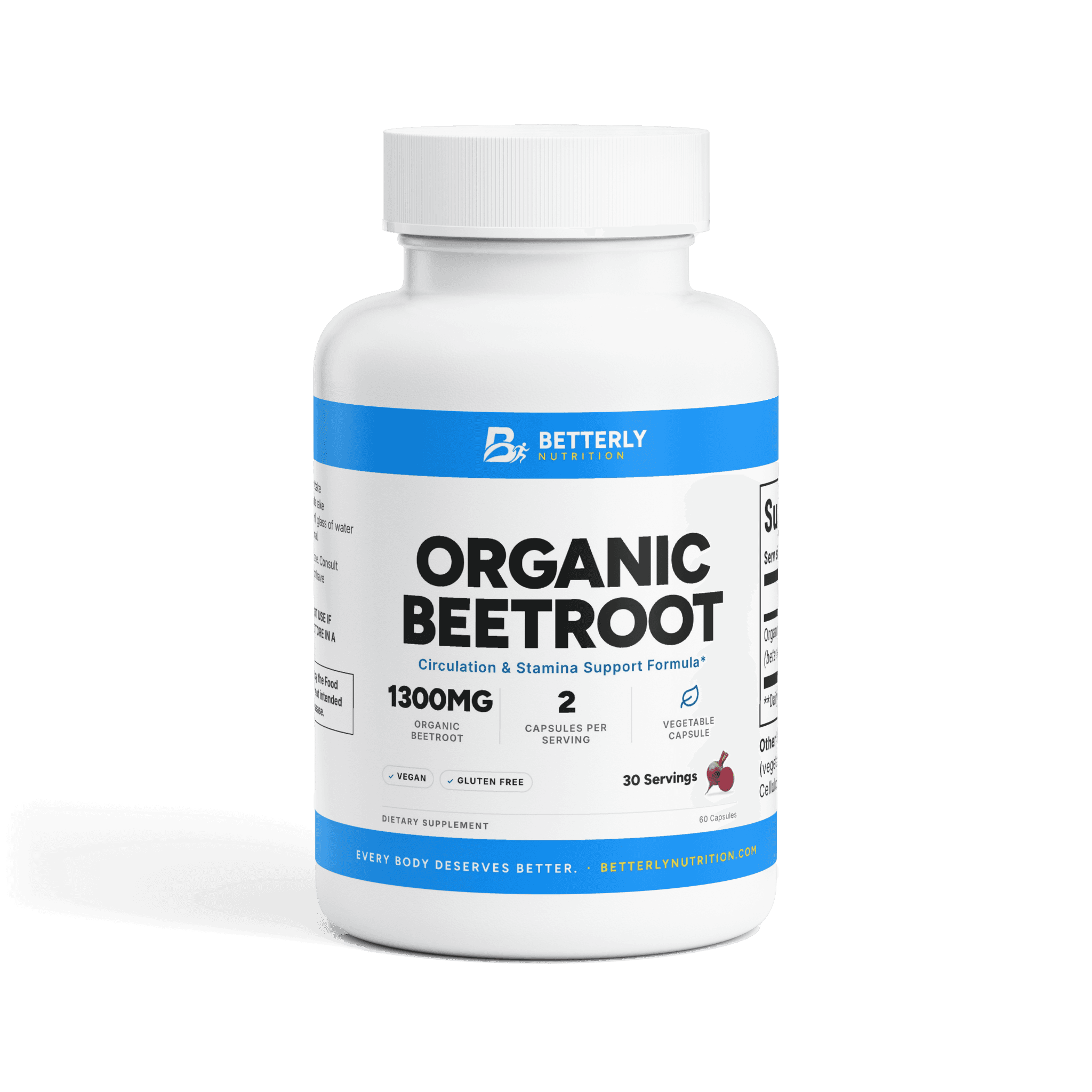
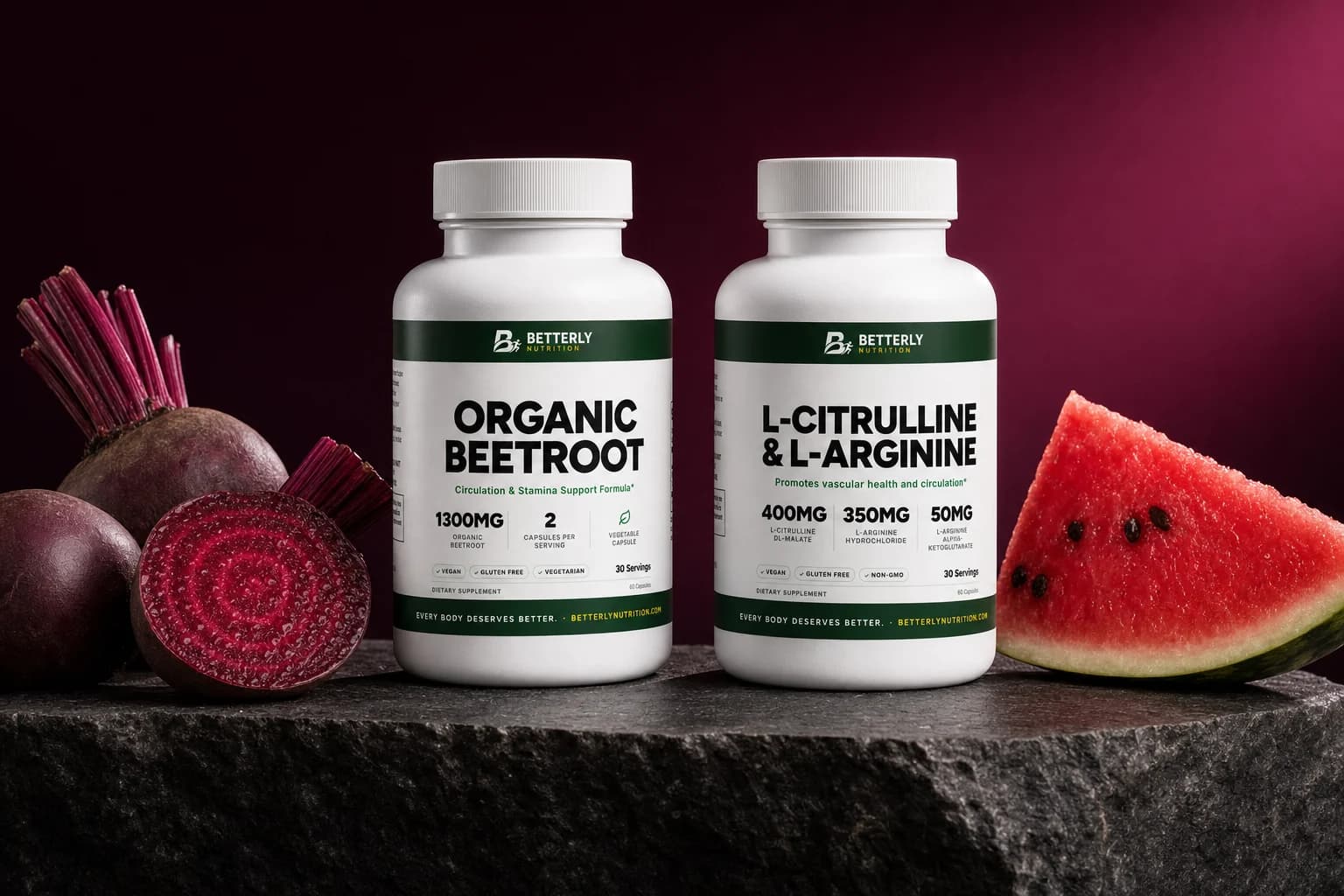
| Organic Beetroot Capsules | Beet powder, no hibiscus | 1,300 mg per 2 capsules | Beet without a drink |
If matching the research is your aim, juice is the closest form. If you want set amounts on paper, a powder with a printed panel wins, and a homemade tea is the hardest to measure.
Beetroot or hibiscus: which is better for what you want?
Neither beetroot nor hibiscus is better overall: beetroot fits if nitrate and aerobic training interest you, while hibiscus fits if you mainly want a tart red drink.
The choice comes down to why you're drinking:
- You're curious about beet for aerobic training. Beet is the ingredient the ODS research covers; hibiscus on its own isn't part of it.
- You mostly want something to sip. Hibiscus is steeped on its own as an everyday drink in many countries, hot or iced, so it works without any beet.
- You want both in one step. That's what the pairing is for: tart and earthy in one glass.
- You don't like tart drinks at all. Skip the hibiscus and take beet as a capsule.
From our shop: Organic Beetroot Capsules — beet without the flower or a sweetener, at 1,300 mg of organic beetroot powder per 2-capsule serving.
What does our tub's label declare, and what does it leave out?
The Beetroot & Hibiscus Powder label declares three ingredient amounts and two other ingredients, but it doesn't declare nitrate, anthocyanins, a hibiscus species or sugars.
Per 1-scoop (3.25 g) serving, with 30 servings per tub, beet root powder (Beta vulgaris, root) comes in at 1,375 mg, hibiscus powder (flower) at 1,000 mg and apple juice powder (fruit) at 500 mg. None of the three rows shows a % Daily Value, and a footnote explains that none has been established. The other ingredients are maltodextrin and stevia extract (leaf), and the label lists vegan, gluten-free and non-GMO.
By weight, the hibiscus comes to about 73% of the beet, and apple juice powder and stevia extract share the scoop with both.
Nothing on the panel measures nitrate, anthocyanins, betalains or any other compound, because each milligram figure weighs a whole powder. The same goes for the line on the front of the tub, "Circulation & Stamina Support Formula*": no row puts a number behind it, and its asterisk ties it to the label's disclaimer that the FDA hasn't evaluated the statement.
Calories and sugars don't get rows either, though apple juice powder is the third ingredient.
LactMed adds a general caution: results from testing one supplement product may not apply to another, so even a strong hibiscus study wouldn't automatically describe our scoop.
How do you take the powder by the label?
The Beetroot & Hibiscus Powder label's suggested use is one daily scoop, mixed into 6-8 oz (177-237 ml) of cold water or a favorite beverage and drunk within 10 minutes.
Its caution starts with "Do not exceed recommended dose." A few notes drawn from the label:
- One scoop is the whole day. The label doesn't split the serving or suggest a second glass before exercise.
- Training days don't change the directions. Our label gives no pre-workout timing, and the juice timing in the ODS summary isn't a direction for powder.
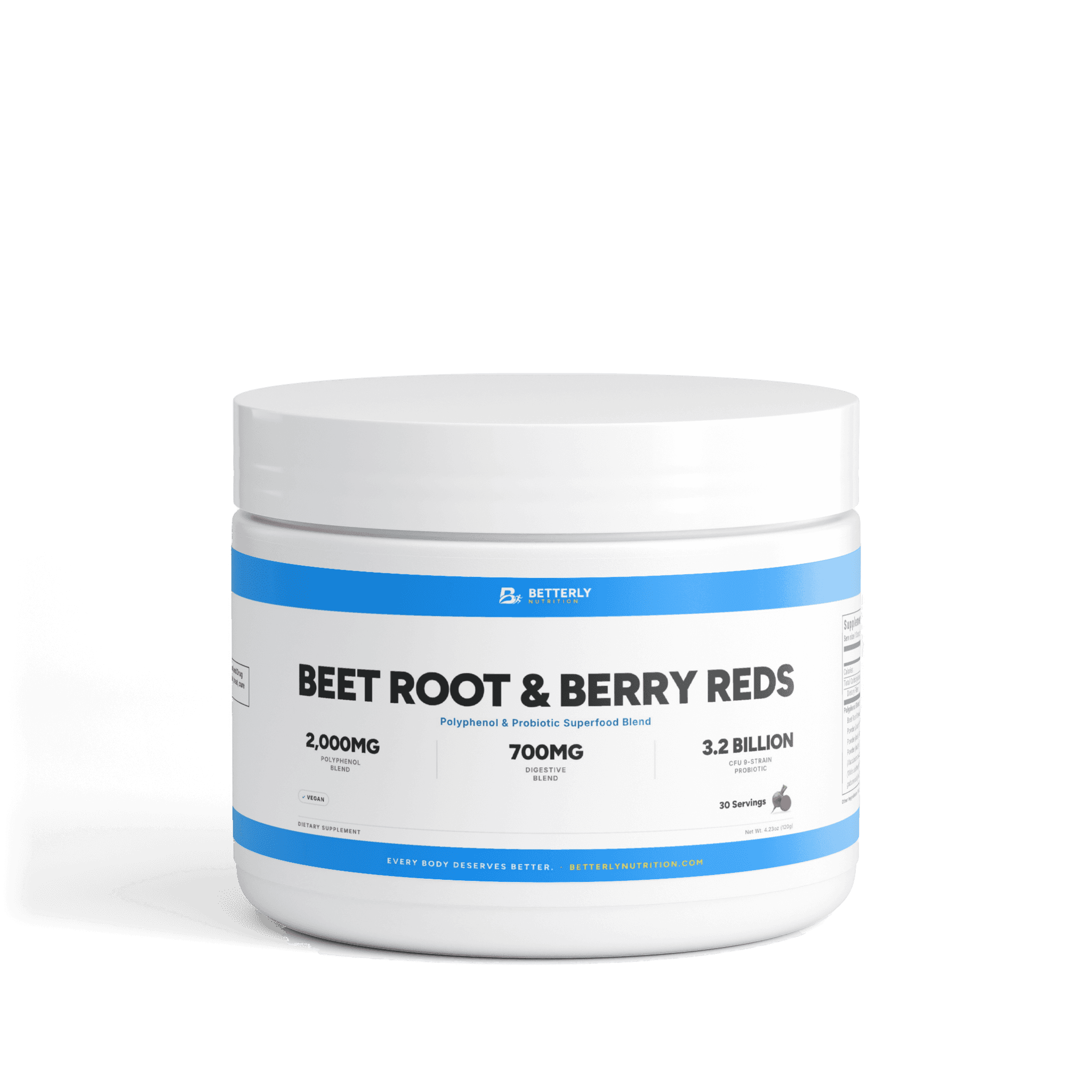
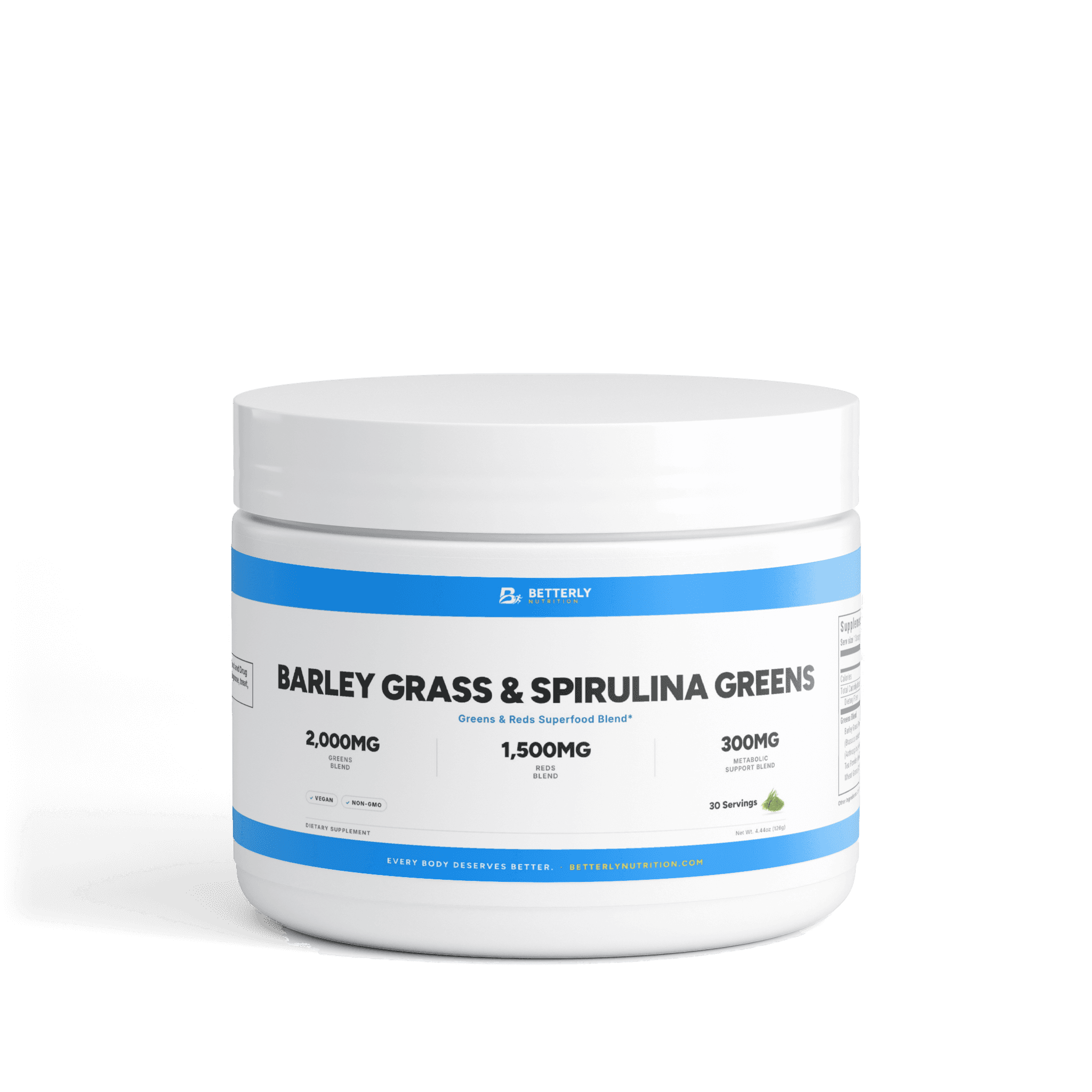
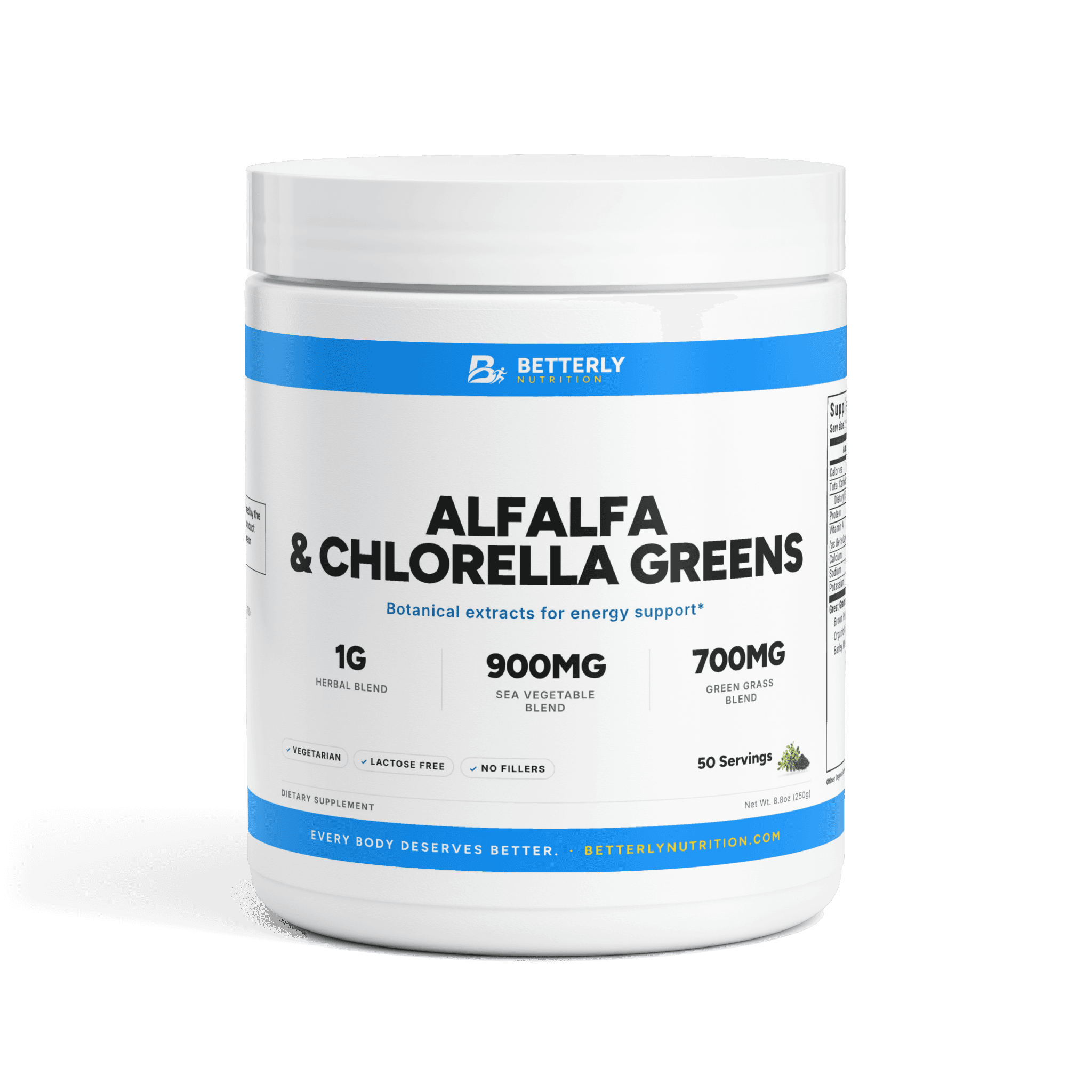
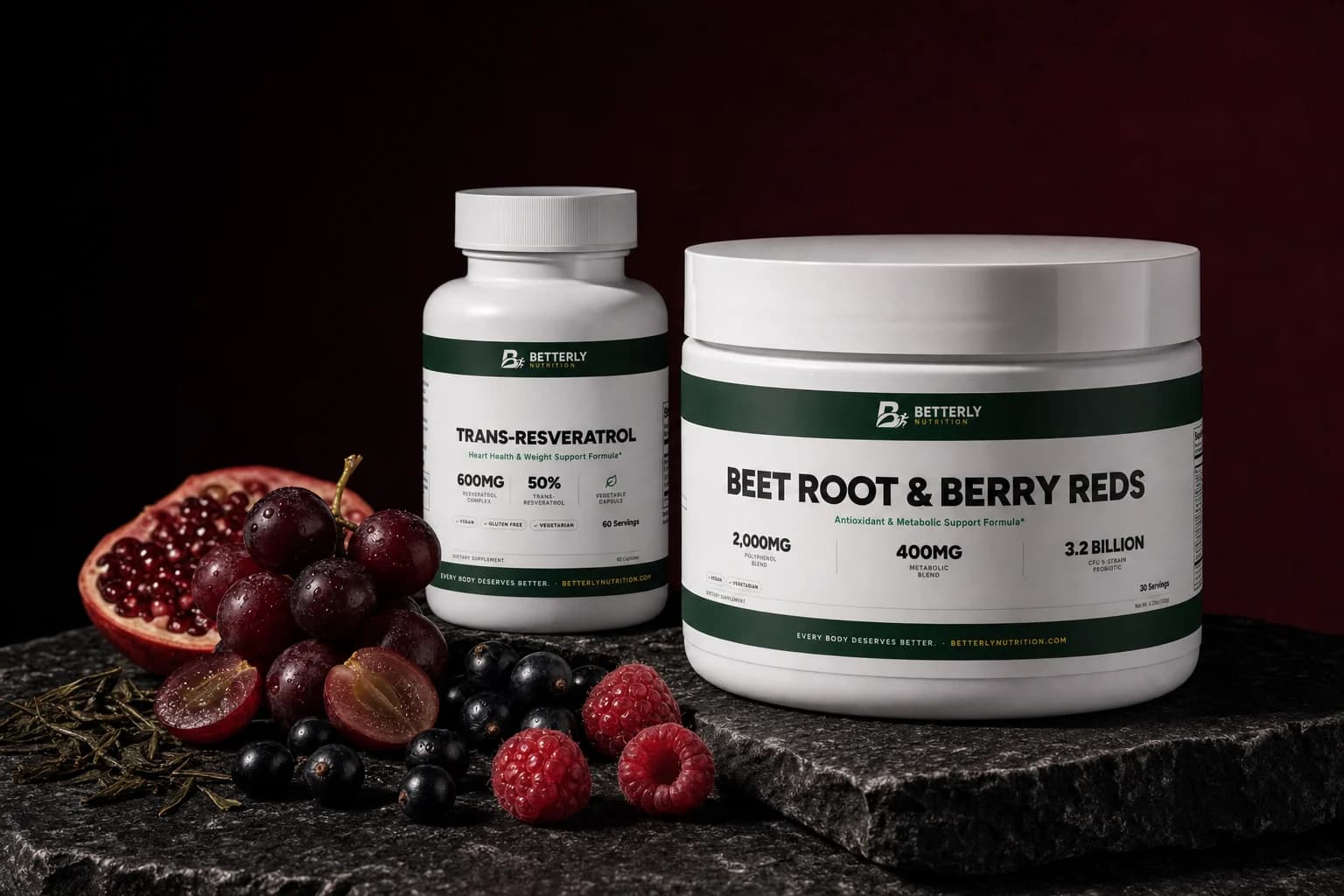
- Don't double up across tubs. Our Beet Root & Berry Reds Powder lists beet root powder first and hibiscus powder third in the 2,000 mg Polyphenol Blend of each 1-scoop (4 g) serving. Our Barley Grass & Spirulina Greens Powder puts both at the top of the 1,500 mg Reds Blend in its 1-scoop (4.2 g) serving. Our Alfalfa & Chlorella Greens Powder lists beet juice powder in its 265 mg Vegetable Blend, but no hibiscus. Pick one tub for the day.
Our Greens & Superfoods collection lists all four tubs together.
From our shop: Beetroot & Hibiscus Powder — the flower and the root in one daily scoop, measured at 1,000 mg of hibiscus powder and 1,375 mg of beet root powder per 1-scoop (3.25 g) serving, 30 servings per tub.
When can you skip a beet and hibiscus scoop?
You can skip our Beetroot & Hibiscus Powder if you already brew the pairing at home, want a known nitrate amount, or eat beets regularly.
- You already make the drink yourself. A pitcher of hibiscus tea stirred into beet juice covers the flavor pairing, and juice is closer to the studied form than any powder.
- You want to know your nitrate intake. That takes a product that prints a nitrate figure, and none of our beet labels does.
- Beets are already a regular part of your meals. Whole beets give you the same plant with its fiber intact, and the NCCIH page points to eating fruits and vegetables, not antioxidant supplements, as the pattern that holds up.
- You were hoping for a medical fix. A scoop can't stand in for care from your provider.
Who should check with a healthcare provider first?
Check with a healthcare provider before starting Beetroot & Hibiscus Powder if you're under 18, pregnant or nursing, on any prescription, facing surgery or managing a medical condition.
The label's own caution covers part of that list: "Consult a physician if pregnant, nursing, under 18, or have a medical condition." LactMed adds detail on the nursing part. It found no published information on hibiscus reaching breast milk or affecting nursing infants, so there's no data pointing either way.
LactMed also raises one thing the label doesn't mention: allergy. Our rundown of hibiscus side effects covers that, along with the related plants LactMed names.
The ODS botanical sheet pushes back on the idea that natural means safe. A plant's safety, it explains, hinges on its chemistry, its actions in the body, the way it's prepared and the dose. ODS also suggests raising every botanical you take, or plan to, with your healthcare provider.
Bring the panel, and mention any reds or greens powder you take, since our Beet Root & Berry Reds and Barley Grass & Spirulina Greens powders list beet and hibiscus too, and our Alfalfa & Chlorella Greens lists beet juice powder.
FAQ: beetroot and hibiscus
Is hibiscus powder the same as hibiscus tea?
No, hibiscus powder and hibiscus tea aren't the same. Powder is the dried flower ground fine, and you drink all of it. Tea is dried hibiscus steeped in hot water and strained, so you drink only what the water pulls out. The NIH Office of Dietary Supplements notes that different preparations of one plant can vary a lot in strength. Our powder's panel lists 1,000 mg of hibiscus powder per scoop, while a cup of tea depends on the steep.
Does beet and hibiscus powder count as a vegetable serving?
No, Betterly's Beetroot & Hibiscus Powder isn't a vegetable serving, and its label doesn't suggest it is. One scoop holds 1,375 mg of beet root powder, which is under 1.5 g of dried beet. Whole beets bring volume and fiber that a 3.25 g scoop can't. Think of the drink as a tart add-on to meals that already include produce, not a replacement for them.
When is the best time to drink hibiscus powder?
No time of day is best for Betterly's Beetroot & Hibiscus Powder, because its directions give a count, one scoop a day, rather than a clock time. Morning, lunch or late afternoon all fit, as long as you finish the glass within 10 minutes of mixing. The 2.5-to-3-hour lead time you may have read about describes how juice was used in the studies the NIH summarizes, and our label doesn't repeat it.
Is Beetroot & Hibiscus Powder vegan and gluten-free?
Yes, Betterly's Beetroot & Hibiscus Powder label lists vegan, gluten-free and non-GMO among its claims. Beet root powder, hibiscus powder and apple juice powder are the three measured ingredients, and maltodextrin and stevia extract are the only others. If you avoid a particular sweetener, stevia is the one to note. The panel lists no added flavors or colors.
Can you take hibiscus powder with prescription medication?
Ask your pharmacist before adding Beetroot & Hibiscus Powder to any prescription routine. None of the sources behind this guide gives a medicine-by-medicine interaction list for beet or hibiscus, and a missing list isn't the same as a clean one. Take the tub along so your pharmacist sees both plants and their milligrams, not just a product name.
Sources
- NIH Office of Dietary Supplements: Dietary Supplements for Exercise and Athletic Performance, Fact Sheet for Consumers
- NIH Office of Dietary Supplements: Botanical Dietary Supplements: Background Information, Fact Sheet for Consumers
- National Library of Medicine, Drugs and Lactation Database (LactMed): Hibiscus
- National Center for Complementary and Integrative Health: Antioxidant Supplements: What You Need To Know
If this left you looking for somewhere to start, read beetroot and hibiscus powder with 1,375 mg beet root — its amounts per serving are listed on the page. For the practical questions this raises, how dosing, sourcing and subscriptions work is answered in one place.