On this page
- Key takeaways
- What are the side effects of beetroot capsules?
- Why do beet pills turn urine or stool pink or red?
- When does pink or red color after beets need a call?
- Do beetroot capsules cause diarrhea or an upset stomach?
- Do beetroot capsules have oxalates?
- Do beet pills and beet powders have different side effects?
- Who should not take beetroot supplements without a provider's OK?
- How should you take beetroot capsules to keep side effects easy to spot?
- Is a beet capsule worth it if the side effects would bother you?
- FAQ: beetroot capsule safety
- Sources
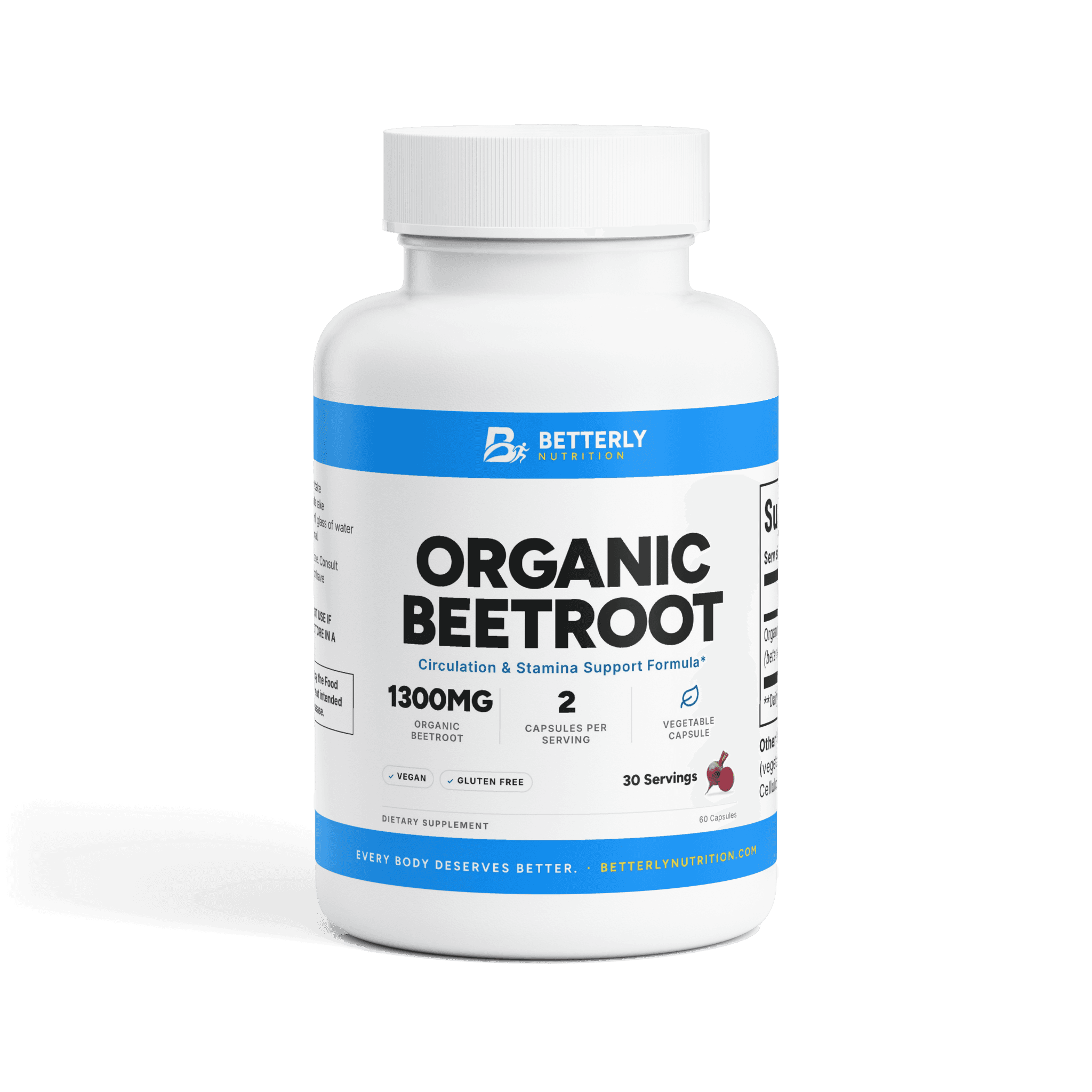
The short answer: The main beetroot capsules side effects to expect come from beet itself: the NIH says beet juice can turn urine pink or red, and MedlinePlus says beets can redden urine or stool. Beets also contain oxalate, which matters if a clinician has told you to limit it. Betterly's Organic Beetroot Capsules provide 1,300 mg of organic beetroot powder per 2-capsule serving.
Key takeaways
- Moderate amounts of beet juice are safe but can turn your urine pink or red, according to the NIH Office of Dietary Supplements.
- Pink or red urine that isn't due to a food or medicine, or blood in your urine even once, is a reason to see a health care provider, per MedlinePlus.
- MedlinePlus says to contact a provider right away if you notice changes in the color of your stool, and notes beets can make stool look reddish. Don't skip that check just because you took beets.
- Beets are one of the foods the USDA lists as containing oxalate, and our capsule label prints no oxalate figure.
- Betterly's Organic Beetroot Capsules list one active row, 1,300 mg of organic beetroot powder per 2-capsule serving, which makes a reaction easier to trace.
We sell Organic Beetroot Capsules, and beet shows up on plenty of our other labels too: two beet drink powders, two greens powders, two capsule blends, and a handful of flavored powders and a gummy that use it for color. That gives us a reason to play down anything unwelcome, so product details below come from printed labels and health statements from named federal pages.
What are the side effects of beetroot capsules?
The side effects federal health pages tie to beets are color changes, pink or red urine and reddish stools, and a beetroot capsule is still beet.
The NIH Office of Dietary Supplements covers beets in its fact sheet on exercise and athletic performance supplements. Its safety line is short: "Drinking moderate amounts of beet juice is safe, but it can turn your urine pink or red."
That line describes juice, and a capsule holds dried, ground root. The fact sheet also says it isn't known whether beetroot powder supplements have the same effects as beet juice, though it's talking about exercise there.
None of the federal pages behind this guide tracks how often beet capsules cause the color change, so nobody can tell you your odds.
People also search for diarrhea, stomach pain, constipation and headaches after beet pills. Those same pages are silent on all four for beet capsules, and silence isn't proof they never happen. If something new starts after the bottle does, stopping is a sensible first move.
Why do beet pills turn urine or stool pink or red?
Beet pills can tint urine or stool pink or red for the same reason a bowl of beets can: the root's red color can show up in what you pass.
The urine version even has a nickname, beeturia. MedlinePlus, run by the National Library of Medicine, lists "beets, blackberries, or certain food colorings" as causes of pink, red or lighter brown urine in its encyclopedia page on abnormal urine color.
That MedlinePlus page never calls the color harmless. It lists food as one cause among several, and some of the others need a doctor. The word safe comes from the NIH line, which describes moderate amounts of juice.
Stool follows the same pattern. MedlinePlus's page on black or tarry stools says beets and foods with red coloring can sometimes make stools look reddish. It also says a provider can test the stool with a chemical to check for blood.
None of these pages gives a threshold for how much beet it takes. Our capsules' 1,300 mg of dried root per 2-capsule serving is small next to fresh beets, as our beet powder vs beet juice comparison shows.
When does pink or red color after beets need a call?
Beets can explain a pink or red tint, but MedlinePlus says any stool color change, blood, or urine color not from a food or medicine means calling a provider.
MedlinePlus says to see a provider if you have abnormal urine color that can't be explained and doesn't go away, blood in your urine even once, clear dark-brown urine, or pink, red or smoky-brown urine that isn't due to a food or medicine. Its stool page adds: contact your provider right away if you notice blood or changes in the color of your stool.
| What you notice | Could beets explain it? | What to do |
|---|---|---|
| Pink or red urine after a beet product | Yes, per NIH and MedlinePlus | Note it; call if it doesn't go away |
| Pink or red urine with no beets or food dye | No | Call a health care provider |
| Reddish stool after a beet product | Possibly, per MedlinePlus | Contact a provider, who can test for blood |
| Black or tar-like stool | Not the beet color MedlinePlus describes | Call a provider right away |
| Clear, dark-brown urine | No | Call a health care provider |
Pink urine after beets that fades on its own fits what the NIH and MedlinePlus describe. Stool is different: any color change is on MedlinePlus's call-right-away list, and a provider can test it for blood, so don't try to settle it by eye.
Do beetroot capsules cause diarrhea or an upset stomach?
We found no federal source linking beetroot capsules to diarrhea or stomach upset, so we can't give you odds, and we won't promise it never happens.
Here's everything in the bottle. Besides the 1,300 mg of organic beetroot powder, our panel lists only hypromellose (the vegetable capsule), microcrystalline cellulose and magnesium stearate. It shows no fiber, sugar or calorie row.
The label's directions say to take the capsules 20-30 minutes before a meal, and they end with "or as directed by your healthcare professional." If the before-meal timing doesn't sit well with you, that's the person to ask about changing it.
If you started beet capsules, a new protein powder and a different coffee in the same week, a queasy stomach could belong to any of them. The NIH exercise fact sheet notes that most combinations of performance ingredients haven't been studied for safety.
If you get diarrhea that's severe or won't stop, real belly pain, or any sign of blood, stop the capsules and contact a health care provider.
Do beetroot capsules have oxalates?
Beetroot capsules almost certainly carry some oxalate, because beets do, but our label prints no oxalate amount.
The USDA's Agricultural Research Service lists beets alongside tea, rhubarb, strawberries, spinach and chocolate as foods with oxalate, in its AgLab explainer on oxalate. The same page says oxalate can react with calcium, iron and other minerals and get in the way of their absorption.
Since the label is silent on the amount, plan as if a beetroot capsule adds some to your day. If a clinician has told you to limit oxalates, ask them before you add one.
Your total matters more than one product. Here's every other label of ours with beet on the Supplement Facts panel:
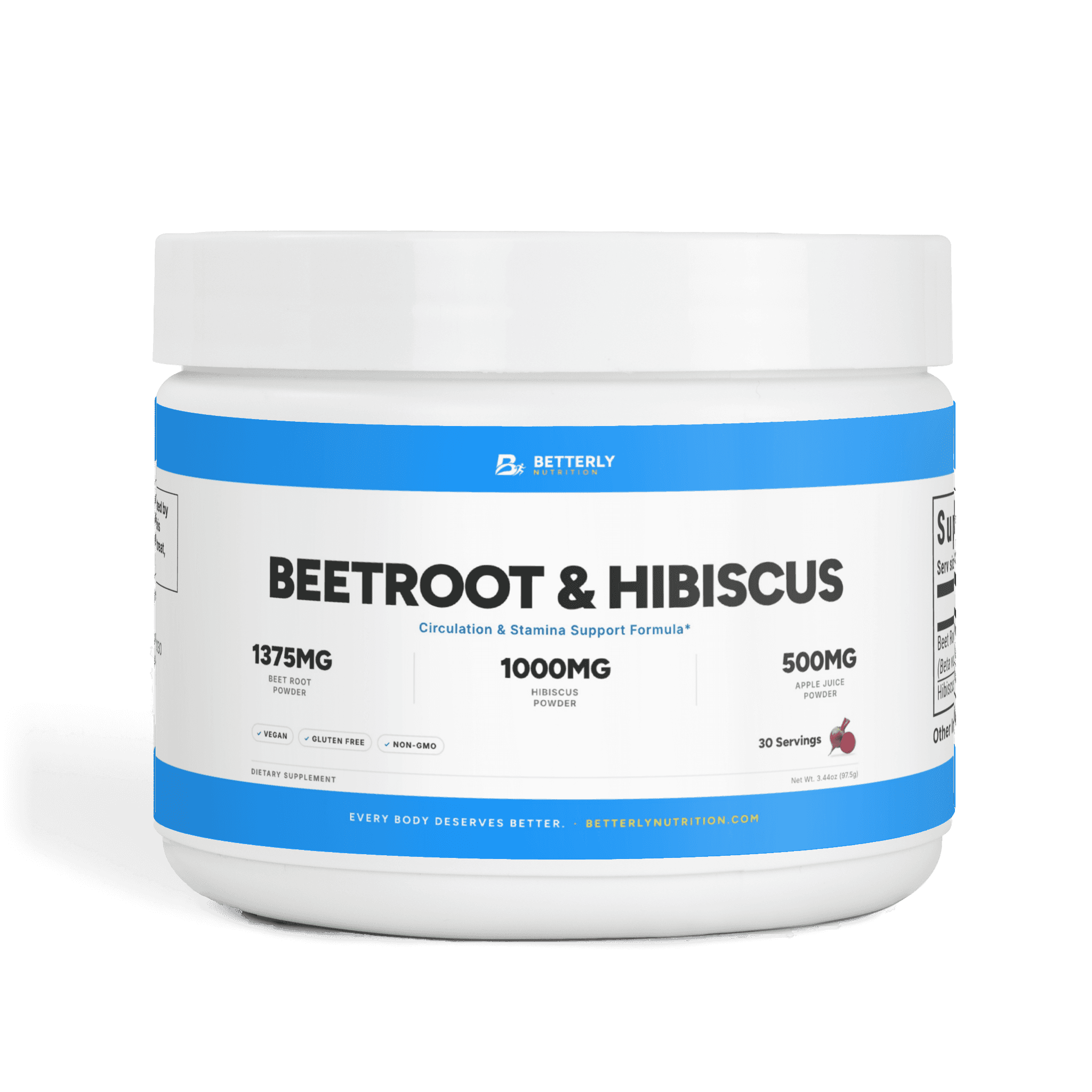
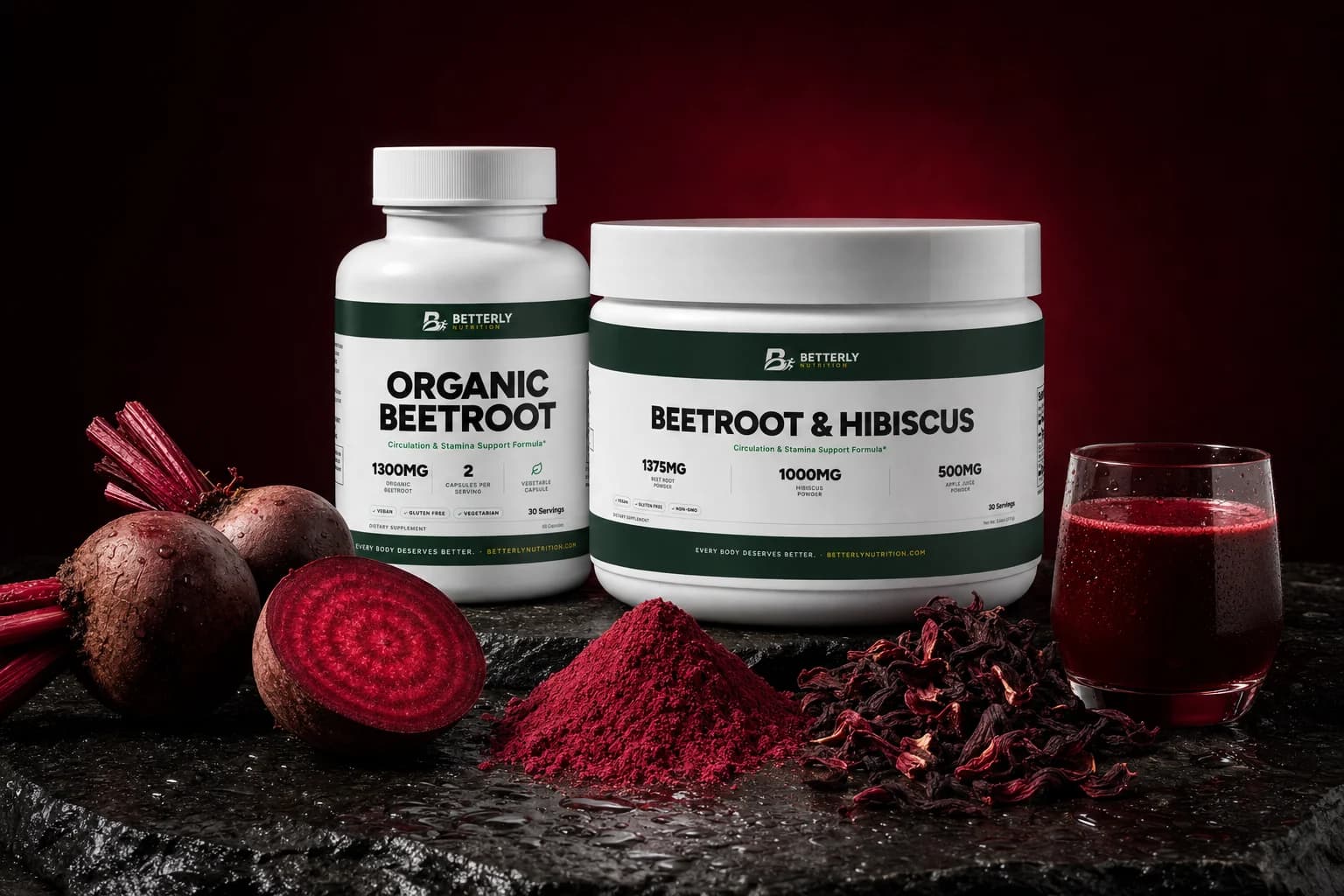
- Beetroot & Hibiscus Powder: 1,375 mg of beet root powder per 1-scoop (3.25 g) serving.
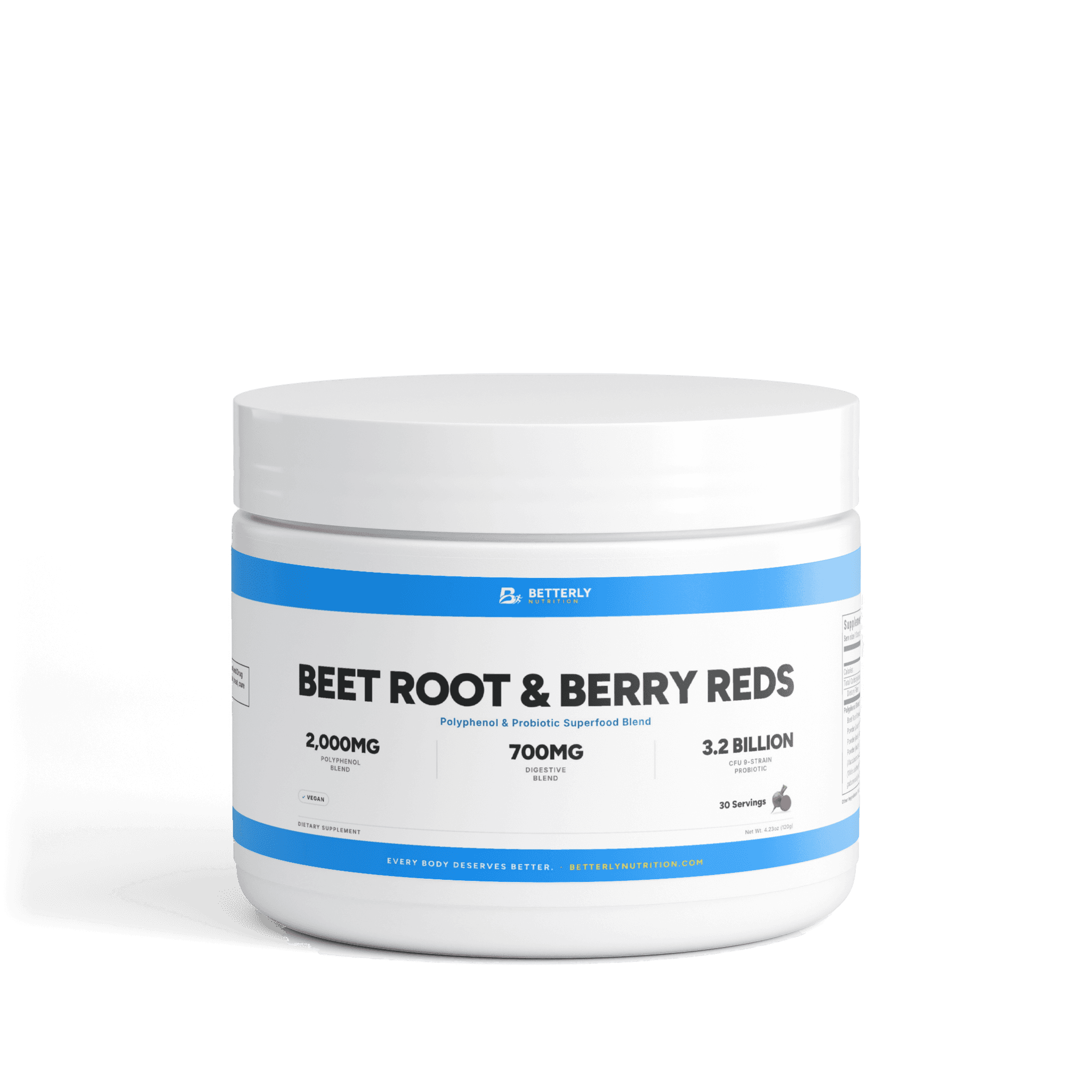
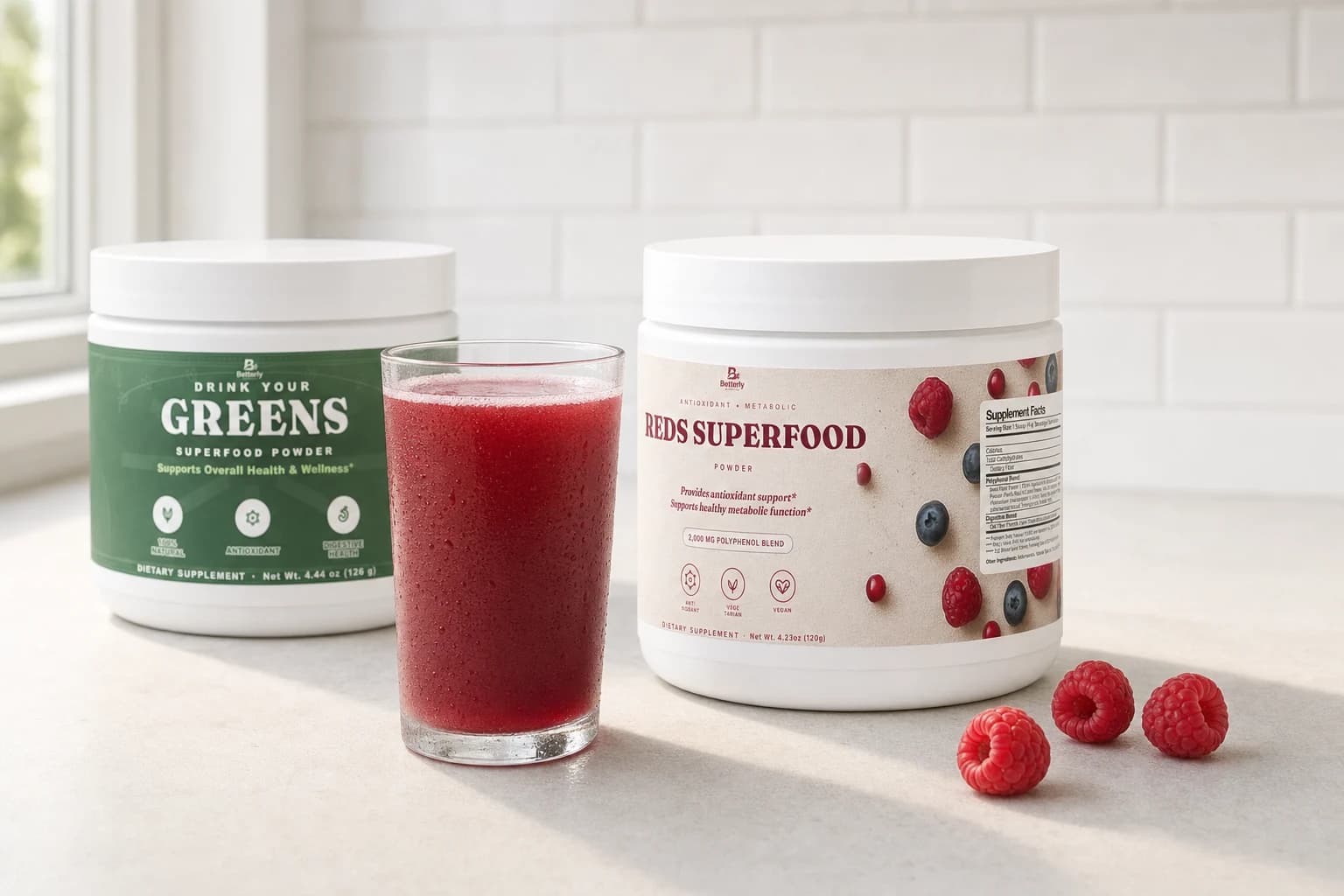
- Beet Root & Berry Reds Powder: beet root powder listed first in a 2,000 mg Polyphenol Blend per 1-scoop (4 g) serving, share not stated.
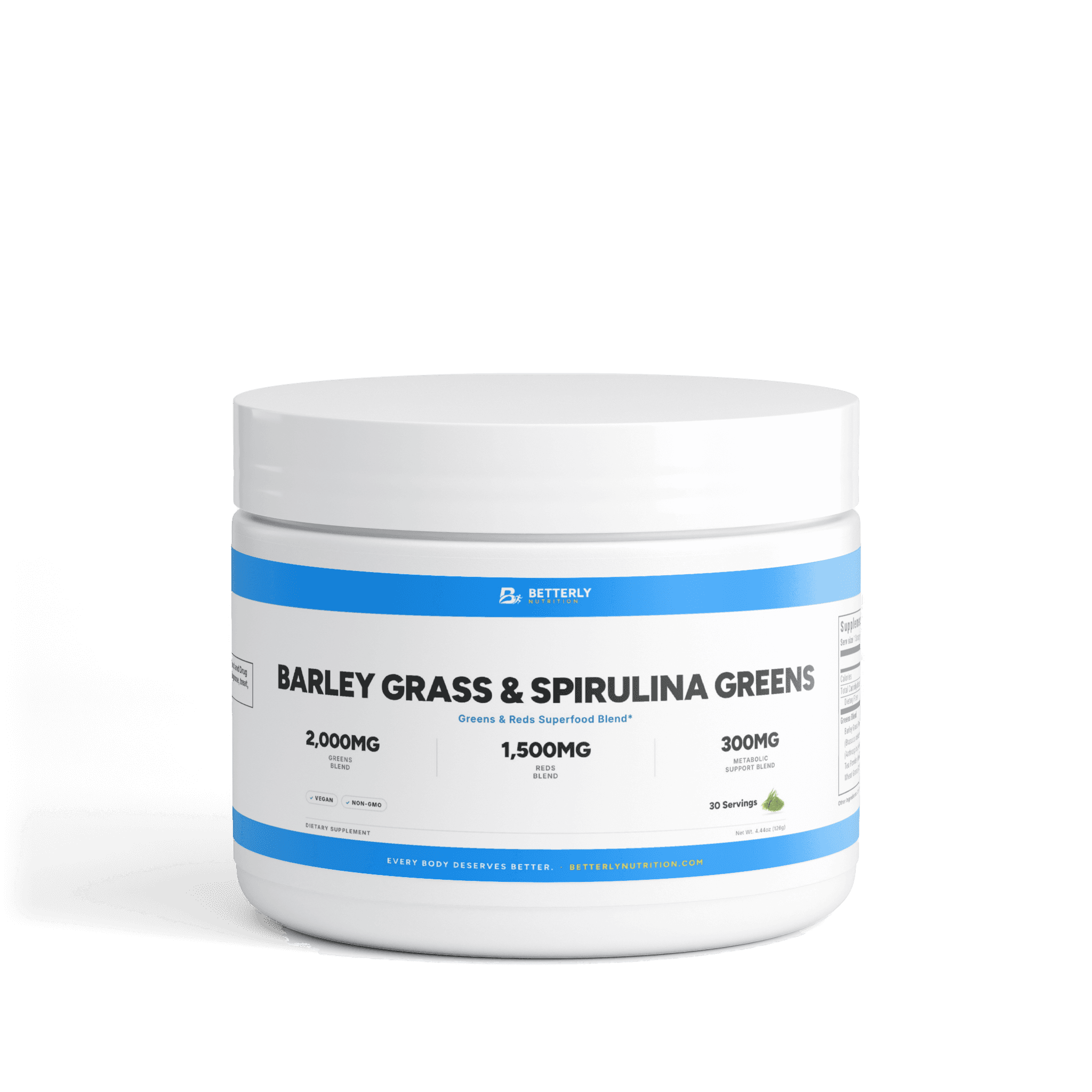
- Barley Grass & Spirulina Greens Powder: beet root powder listed first in a 1,500 mg Reds Blend per 1-scoop (4.2 g) serving, share not stated.
- Alfalfa & Chlorella Greens Powder: beet juice powder listed first in a 265 mg Vegetable Blend per 2-teaspoon (about 5 g) serving, share not stated. The same blend lists spinach powder and rhubarb juice powder, both also on the USDA's oxalate list.
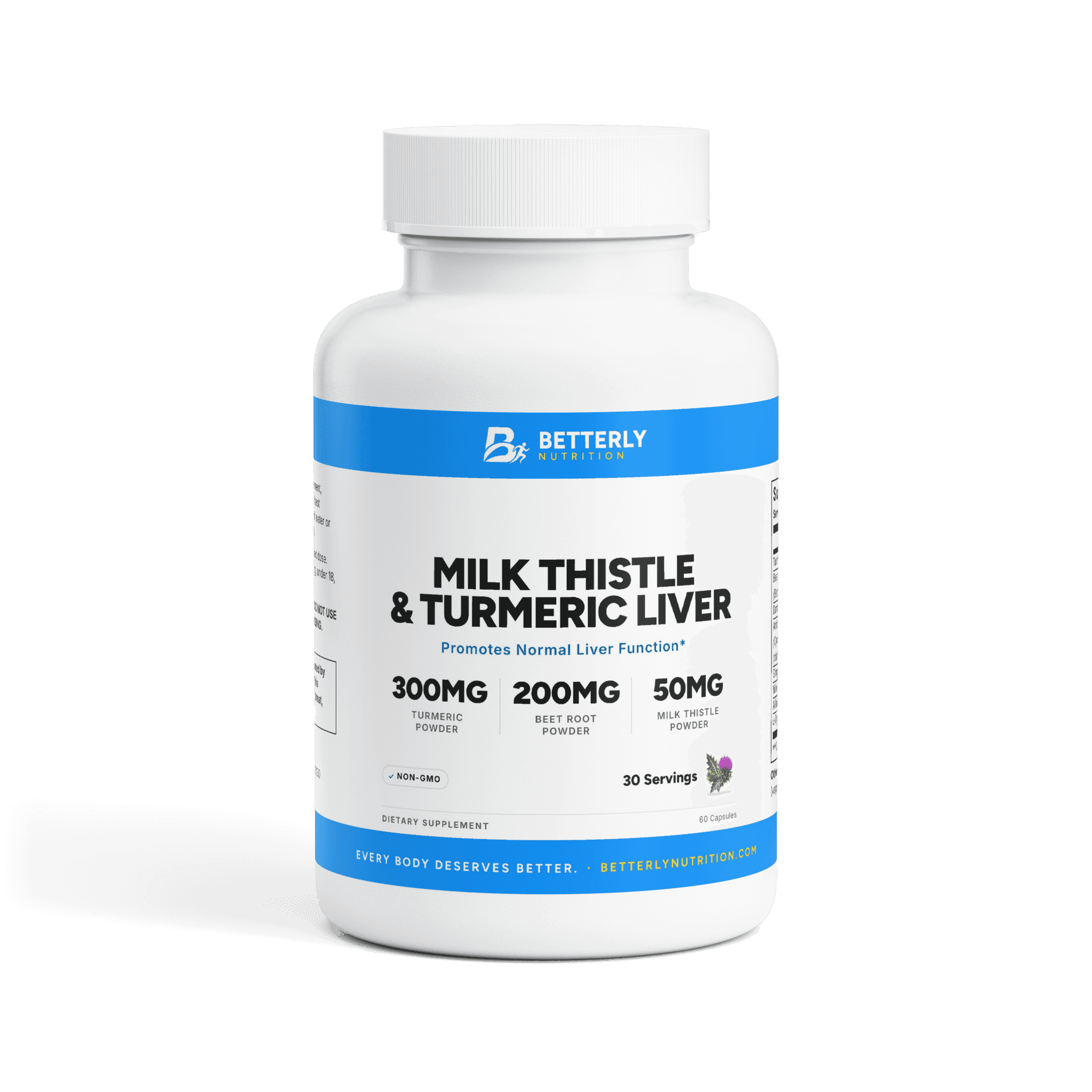
- Milk Thistle & Turmeric Liver Capsules: 200 mg of beet root powder per 2-capsule serving.
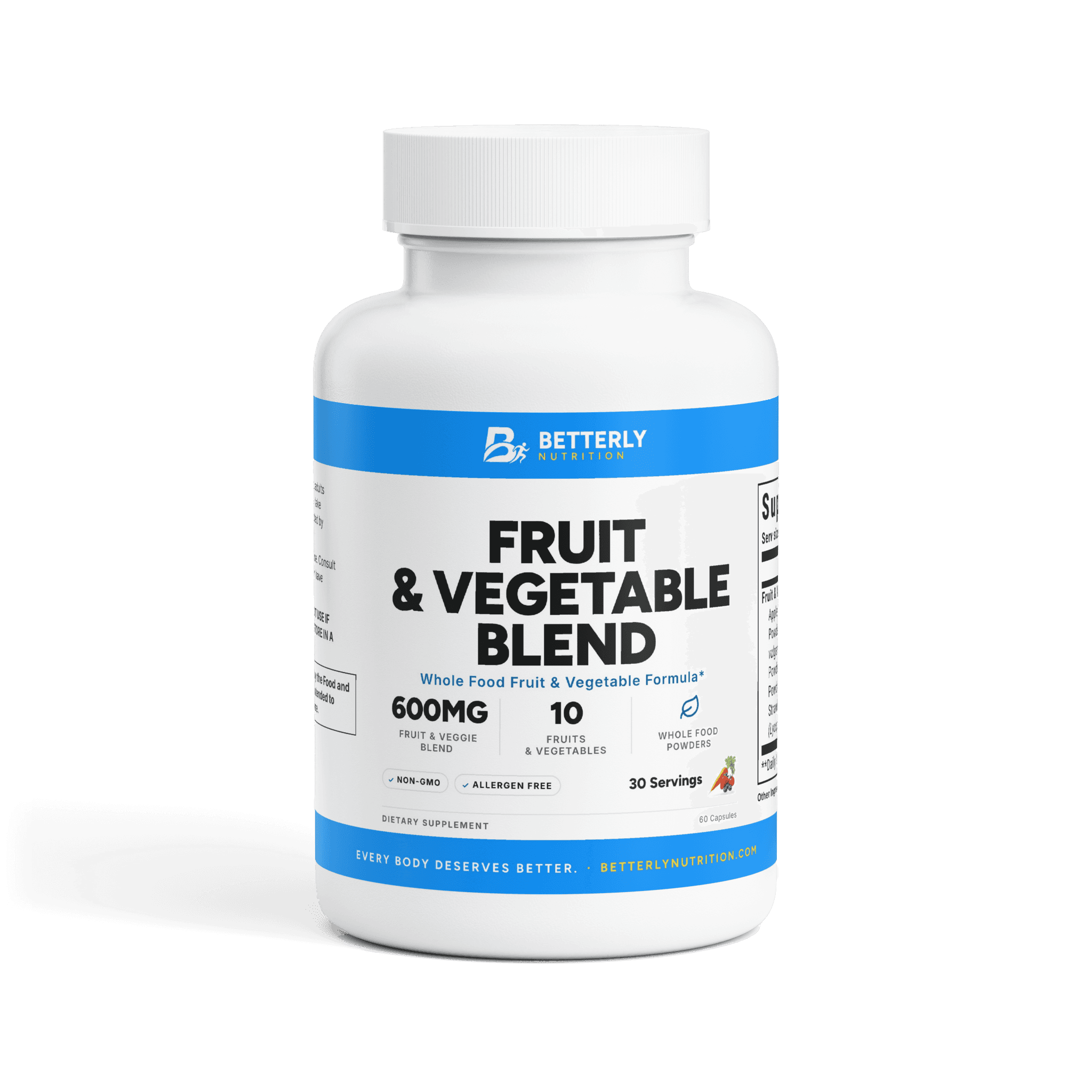
- Fruit & Vegetable Blend Capsules: beet root powder inside a 600 mg Fruit & Veggie Blend per 2-capsule serving, share not stated.
A few of our flavored powders and one gummy also list beet as a coloring among their other ingredients, with no amount given.
Do beet pills and beet powders have different side effects?
Beet pills and beet powders carry the same beet cautions, but powders add other ingredients, so a reaction to a powder is harder to pin on the beet.
| Product | Beet per serving | Other rows that could explain a reaction |
|---|---|---|
| Organic Beetroot Capsules | 1,300 mg per 2-capsule serving | None; just the capsule and two inactive ingredients |
| Beetroot & Hibiscus Powder | 1,375 mg per 1-scoop (3.25 g) serving | 1,000 mg hibiscus, 500 mg apple juice powder, stevia |
| Beet Root & Berry Reds Powder | Part of a 2,000 mg blend, share not listed | Oat fiber and inulin, a 9-strain probiotic, green tea, shilajit, bitter melon |
The capsule is the easiest of the three to troubleshoot, because beet is the only active ingredient on its panel.
The hibiscus drink mix pairs its beet with hibiscus and apple juice powder, plus maltodextrin and stevia extract. Hibiscus brings its own safety questions, which our guide to hibiscus side effects covers.
If your stomach objects to the reds scoop, the beet has company as a suspect. Its panel adds oat fiber and inulin (the 700 mg Digestive Blend) and a 9-strain probiotic, none of which the capsule has. Our comparison of reds and greens powders walks through the rest of that label.
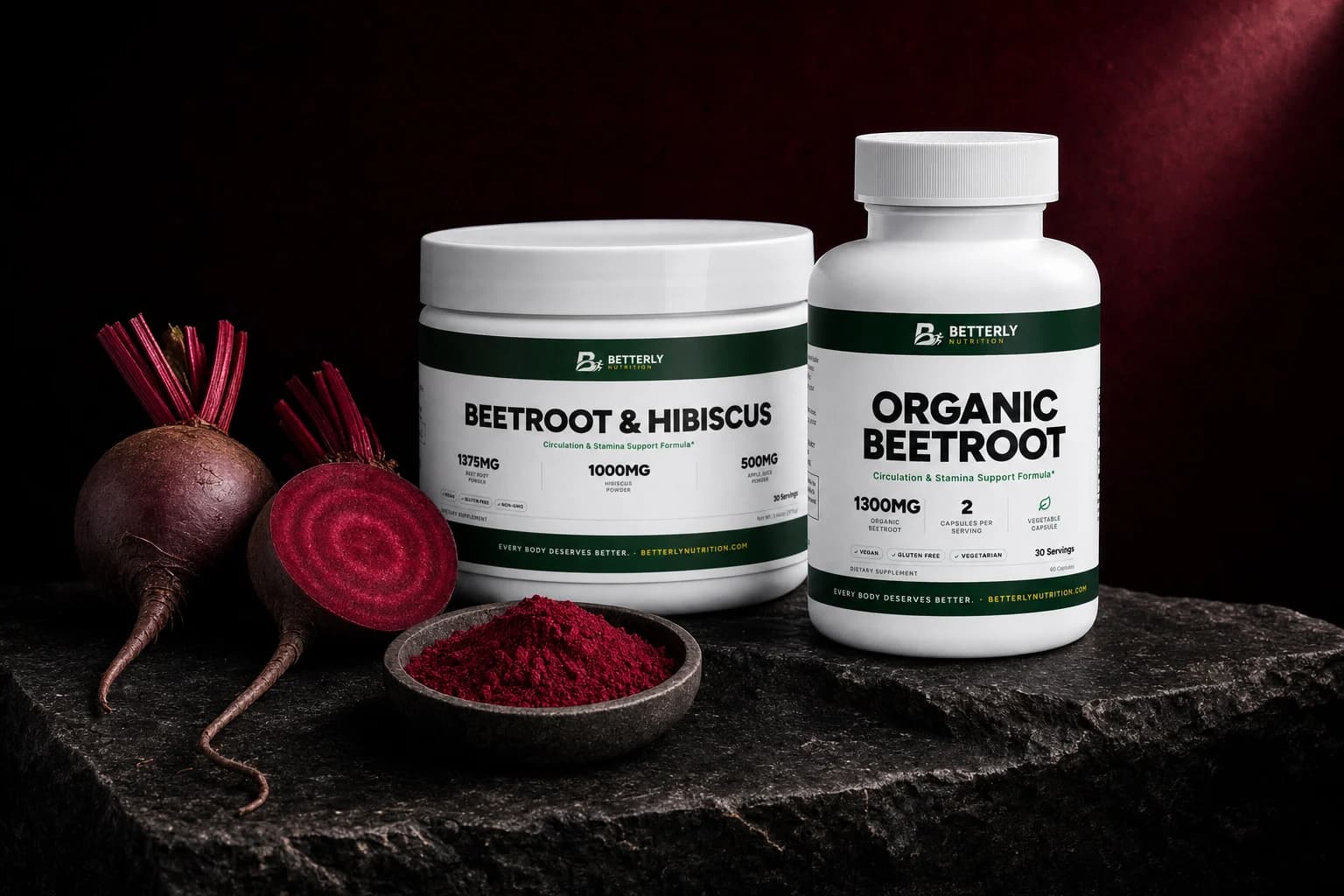
From our shop: Organic Beetroot Capsules — 1,300 mg of organic beetroot powder per 2-capsule serving in a vegetable capsule, with no other active ingredient on the panel.
Who should not take beetroot supplements without a provider's OK?
Check with a health care provider before taking beetroot supplements if you're pregnant, nursing, under 18 or have a medical condition, as our capsule label spells out.
The label's caution reads: "Consult a physician if pregnant, nursing, under 18, or have a medical condition." Every label we sell with beet on its Supplement Facts panel carries it.
A few more situations call for the same check:
- Prescription medication. Ask your clinician first. The FAQ below covers what our sources do and don't say about interactions.
- An oxalate limit. Beets contain oxalate, as the USDA notes, and the label gives no amount.
- Upcoming surgery. Tell your surgical team about every supplement you take, this one included.
- A past reaction to beets. A capsule is still beet, so a past reaction to the food is worth mentioning.
Whatever the reason, bring the bottle, so your provider reads the whole panel instead of a product name.
How should you take beetroot capsules to keep side effects easy to spot?
Take beetroot capsules as the label says: two capsules once a day, 20-30 minutes before a meal, with an 8 oz (237 ml) glass of water.
The label also says "Do not exceed recommended dose."
A few habits make any side effect easier to read:
- Start the capsules on their own, not in the same week as other new products.
- Write the start date down, so a pink surprise has an obvious suspect.
- Skip the bottle if its safety seal is damaged or missing, as the label says.
- Store it in a cool, dry place, out of reach of children.
Our case for a short, repeatable supplement lineup explains why fewer products help, and timing gets its own page: when to take beetroot capsules.
You can compare beetroot capsules with their neighbors in our Energy Support collection.
From our shop: Beetroot & Hibiscus Powder — 1,375 mg of beet root powder with 1,000 mg of hibiscus powder and 500 mg of apple juice powder per 1-scoop (3.25 g) serving, for people who'd rather drink their beet.
Is a beet capsule worth it if the side effects would bother you?
A beet capsule probably isn't worth it if pink urine would worry you, if beet already sits on another label you take, or if an oxalate limit is tight.
Reasons to pass on it:
- The color change would worry you. If pink urine would send you searching symptoms every morning, the capsule isn't worth the stress.
- You eat beets often and already know how they sit with you. A capsule adds one more beet source to keep track of, not a new ingredient.
- Beet is already in a blend you take, like a reds or greens powder, so a capsule would double up and blur which product caused what.
- A clinician has told you to limit oxalates, and you'd rather leave room in that limit for foods you eat anyway. Let them decide whether a beet capsule fits.
FAQ: beetroot capsule safety
Is it safe to take beetroot capsules every day?
Beetroot capsules are labeled for daily use, two capsules once a day, but we found no federal page on daily or long-term use of beet capsules specifically. The NIH's safety line covers moderate amounts of beet juice, which isn't the same thing. Stick to the label's amount, and if something new shows up that you can't explain, stop and talk with a health care provider.
Can you take beetroot capsules while pregnant or breastfeeding?
Beetroot capsules carry a clear label instruction here: consult a physician if you're pregnant or nursing. We don't offer guidance beyond that line, because a provider who knows your health history is the right person to weigh it. Our two beet drink powders carry the same caution, so the answer doesn't change if you'd rather drink your beet.
Can beetroot capsules interact with medication?
Beetroot capsule interactions aren't covered in the federal sources behind this guide, and that means unknown, not safe. If you take any prescription medication, ask your clinician first. The NIH says it's important to find out whether your medications might interact with a supplement you're considering. Please ask before you start, not after.
What happens if you take too many beetroot capsules?
Taking more beetroot capsules than the label suggests isn't described by any source we could check, so we can't tell you what to expect. The label is plain: do not exceed the recommended dose. If someone took far more than two capsules and feels unwell, contact a health care provider, and if a child got into the bottle, call Poison Control.
Do beetroot capsules have iron or fiber?
Our beetroot capsules list neither iron nor fiber on the Supplement Facts panel. The only row is 1,300 mg of organic beetroot powder per 2-capsule serving, with a note that no Daily Value is set. So don't count these capsules toward your iron or fiber for the day.
Sources
- NIH Office of Dietary Supplements: Dietary Supplements for Exercise and Athletic Performance, Fact Sheet for Consumers
- MedlinePlus Medical Encyclopedia: Urine - abnormal color
- MedlinePlus Medical Encyclopedia: Black or tarry stools
- USDA Agricultural Research Service, AgLab: Taking the Ouch Out of Oxalate
If this left you looking for somewhere to start, read organic beetroot capsules — its amounts per serving are listed on the page. For the practical questions this raises, how dosing, sourcing and subscriptions work is answered in one place.