On this page
- Key takeaways
- Do beetroot capsules work?
- How does beetroot work in the body?
- What are the benefits of beetroot capsules for the gym?
- Who is most likely to notice a difference from beetroot?
- Why doesn't a beetroot capsule label list nitrate?
- What are beetroot capsules used for?
- How do you take beetroot capsules, per the label?
- When don't you need beetroot capsules?
- Who should check with a healthcare provider first?
- FAQ: do beetroot capsules work
- Sources
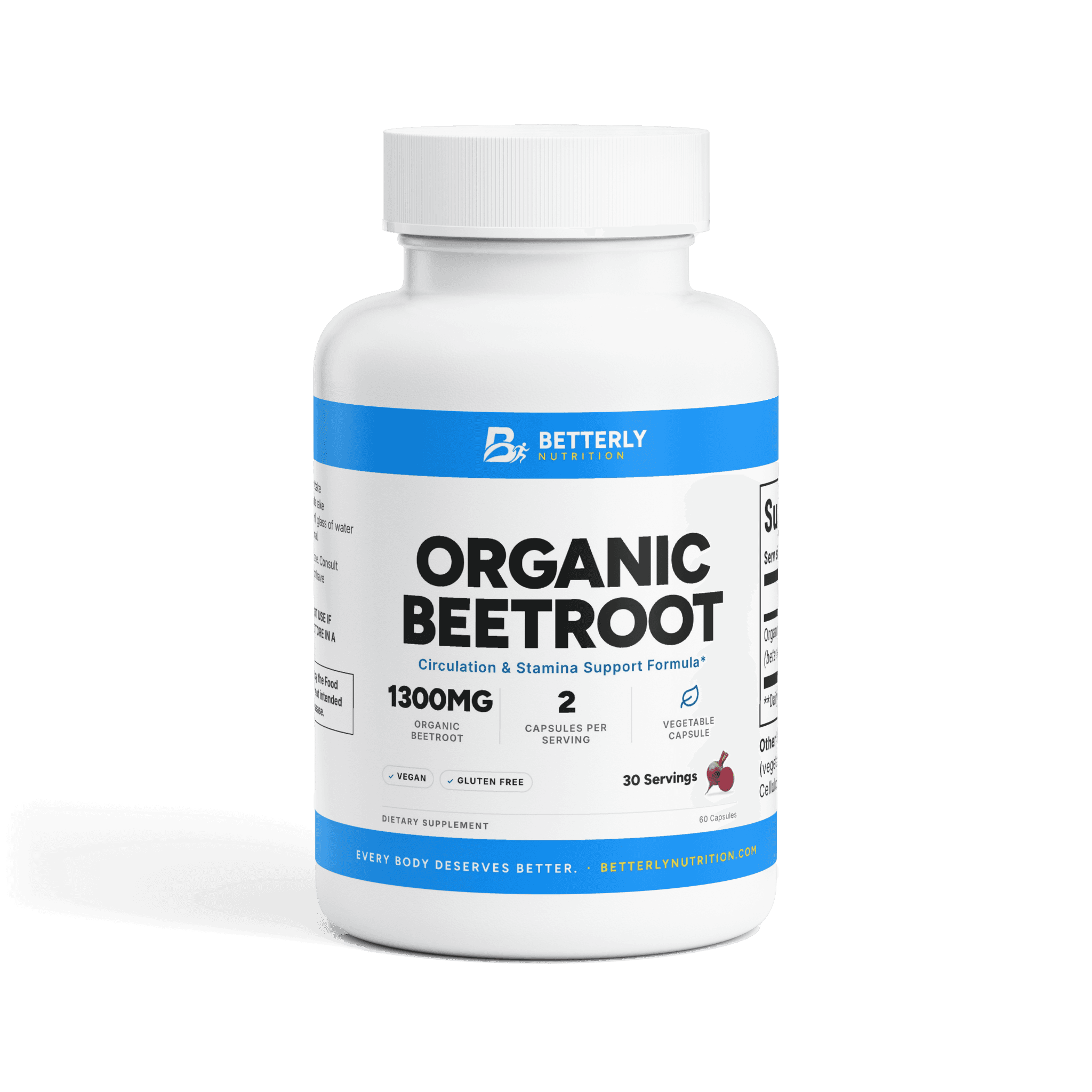
The short answer: Do beetroot capsules work? For now, that's an open question. Beets rank among the best food sources of nitrate, which your body partly converts to nitric oxide. The NIH says beet juice might help recreational exercisers in aerobic sports. Whether beetroot powder supplements do too, it says, isn't known. Betterly's Organic Beetroot Capsules hold 1,300 mg of organic beetroot powder per 2-capsule serving, and the label gives no nitrate figure.
Key takeaways
- The NIH Office of Dietary Supplements says beet juice might help aerobic performance in recreationally active people, and it calls the effect of beetroot powder supplements unknown.
- Nitrate is the part of beet that the exercise research explanation rests on, and FDA labeling rules let a maker leave its amount off the panel, as Betterly's capsule label does.
- The juice evidence fits recreational exercisers doing cardio best; it's weaker for highly trained athletes and missing for strength training.
- The practical use of Betterly's Organic Beetroot Capsules is a fixed 1,300 mg of organic beetroot powder per 2-capsule serving with no prep, and their ingredient list has no sweetener, flavor or caffeine source.
We sell Organic Beetroot Capsules, along with beet drink mixes and a citrulline-and-arginine capsule, so a flat "yes, they work" would suit us nicely. The evidence doesn't support a flat yes for any beet capsule, ours included, and the sections below show exactly where it runs out.
Do beetroot capsules work?
Beetroot capsules get beet into your day with no prep, but the NIH says no one knows whether they do what beet juice did in exercise studies.
That verdict comes from the NIH Office of Dietary Supplements (ODS) fact sheet on exercise and athletic performance supplements. Its beetroot bottom line has two parts. Beet juice might help your aerobic performance if you're recreationally active. Whether beetroot powder supplements have the same effects isn't known.
So does beetroot really work? As juice, for cardio, ODS gives a qualified maybe. It says the usual approach in studies was 2 cups of beet juice before exercise, which is a lot more beet than two capsules of dried root. Our comparison of beet powder, beet juice and capsules does the raw-beet math for each format.
For a capsule, "does it work?" splits into two smaller questions you can check:
- Does the ingredient have a plausible job? Yes. Beets carry nitrate, and research on nitrate-rich juice is the strongest thing beet has going for it.
- Does this particular capsule deliver enough of it? That one needs a number, and the label section below covers where it would be printed.
How does beetroot work in the body?
Beetroot works through dietary nitrate: ODS calls beets and beet juice among the best food sources of nitrate, and the body changes some of it into nitric oxide.
According to the same fact sheet, nitric oxide widens blood vessels, which helps deliver oxygen and nutrients to working muscle. That chain, from nitrate to nitric oxide to muscle, is why beet turns up in sports nutrition. Beet's red color plays no part in that explanation. The nitrate does.
Beets hold other compounds too. ODS lists beets as a food source of betaine, but it finds little scientific evidence that betaine supplements improve performance for people who eat a nutritious diet.
At most, then, a beet product can support the body's normal nitric oxide production by supplying nitrate. How much that matters depends on how much nitrate you actually get.
What are the benefits of beetroot capsules for the gym?
The gym benefits people expect from beetroot capsules come from beet juice studies on aerobic exercise, and for strength training, ODS says the effect isn't known.
ODS reports that many, but not all, studies found beet juice can improve performance and endurance in running, swimming, cycling and rowing. Lifting is a different story: whether beet helps with strengthening or bodybuilding exercise hasn't been established.
| Your training | What ODS says about beet juice | What that means for a capsule |
|---|---|---|
| Running, cycling, swimming, rowing | Many, not all, studies found better performance | The best fit, still unproven for powder |
| Weights, bodybuilding | Unknown whether it helps | No evidence to lean on either way |
| Recreational level | More likely to benefit | Juice evidence fits you best; capsule still unknown |
| Highly trained athlete | Less likely to benefit | Expect less, even from juice |
The pattern runs one way. The more your training looks like steady cardio done for fitness, the better the juice evidence fits you. If lifting is your main thing, beet has no track record yet, in juice or capsule form.
ODS adds a general caveat: performance studies often involve small groups over a few days, weeks or months, and a result in one sport might not carry over to yours.
Who is most likely to notice a difference from beetroot?
Recreational exercisers doing aerobic activity are the likeliest to notice anything from beetroot, since ODS says beet juice tends to help them more than highly trained athletes.
People often search for beetroot capsule benefits for women or for men. ODS doesn't describe separate benefits for either, and its note on who gets studied explains why. Much of the performance supplement research, it notes, involves young, healthy men. Women, middle-aged and older adults and teenagers get far less attention.
So if you're a 45-year-old woman who jogs three mornings a week, most of the evidence wasn't built on people like you. That doesn't mean beet won't help. It means nobody has measured it well.
ODS frames the juice findings as changes in performance and endurance, the kind a stopwatch picks up rather than a feeling that arrives with each dose.
Why doesn't a beetroot capsule label list nitrate?
A beetroot capsule label can leave nitrate off because FDA rules require the ingredient's weight but not its constituents, so our panel shows milligrams of beetroot powder only.
The FDA's Dietary Supplement Labeling Guide, Chapter IV spells this out. An ingredient with no Daily Value must be listed by its common name, with its amount by weight per serving. The guide says a maker may also list that ingredient's constituents, indented underneath with their own amounts. May, not must.
Our panel lists the beet by weight and stops. It shows one row, Organic Beetroot Powder (beta vulgaris), at 1,300 mg per 2-capsule serving, and nothing indented beneath it. We don't have a nitrate figure for these capsules, and we won't estimate one.
Does beetroot powder contain nitrates? It's made from a food ODS names among the best nitrate sources. The amount in any one bottle, though, is only knowable if the maker measures it and prints it.
Comparing brands for the nitrate itself? Look on the Supplement Facts panel for a nitrate line indented under the beet ingredient, and check whether its milligrams are per capsule or per serving.
From our shop: Organic Beetroot Capsules — beet sold by weight, not by nitrate: a single active row reading 1,300 mg of organic beetroot powder per 2-capsule serving.
What are beetroot capsules used for?
Beetroot capsules are used as a no-prep way to add a fixed daily amount of dried beet, while the NIH's beet evidence centers on juice and aerobic exercise.
The front of our bottle carries one descriptor line: "Circulation & Stamina Support Formula*." That asterisk leads to the FDA statement printed on the label, and this guide sticks to what the Supplement Facts panel itself measures.
Here's what that panel and the ingredient list give you:
- A fixed amount: 1,300 mg of organic beetroot powder per 2-capsule serving, the same every day.
- Ground beetroot, named as beetroot powder, not an extract or a juice powder.
- Nothing to taste or stir. The other ingredients are hypromellose (the vegetable capsule), microcrystalline cellulose and magnesium stearate.
- Vegan and gluten free claims, with 60 capsules, or 30 servings, per bottle.
What no line on that bottle can do is connect the capsule to the juice studies.
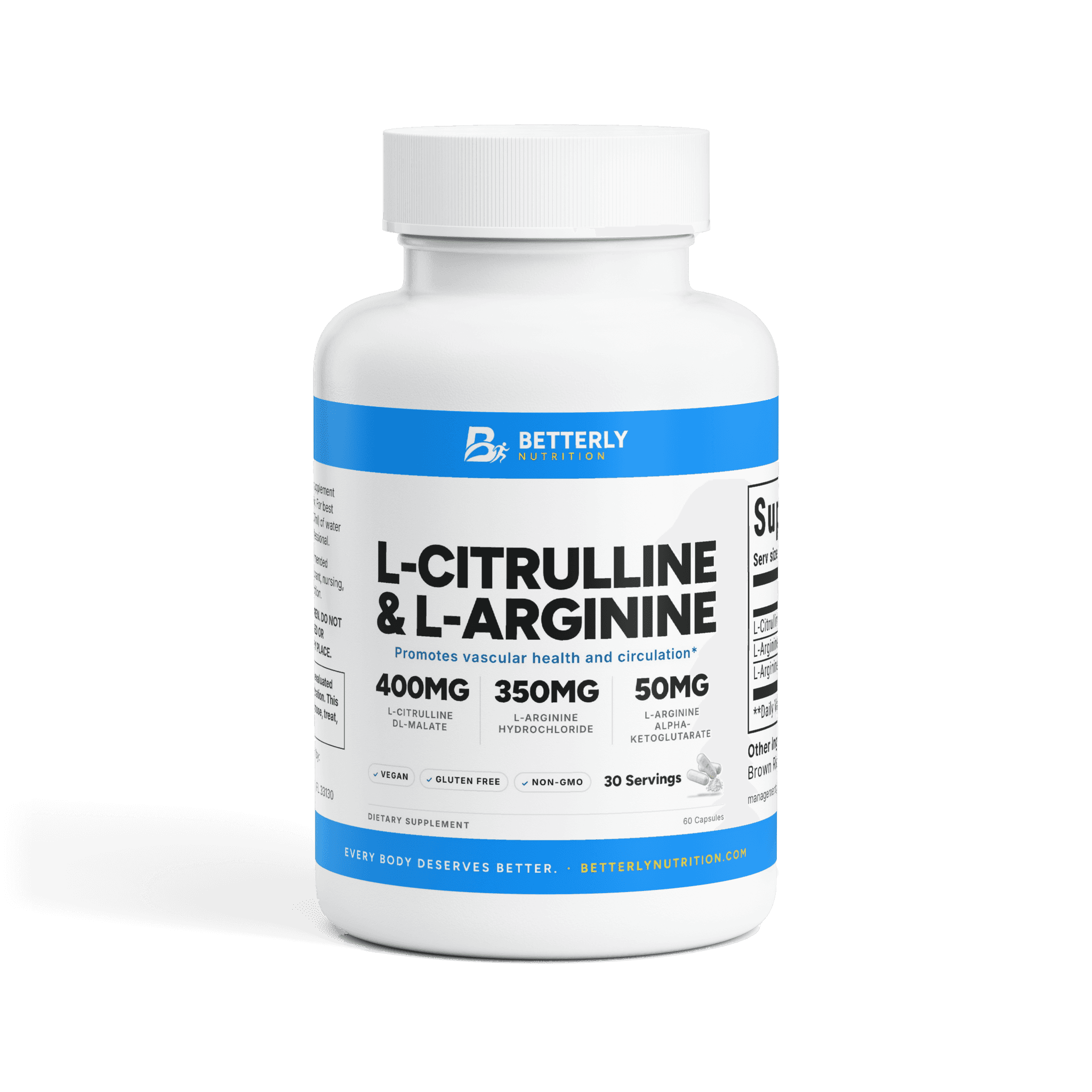
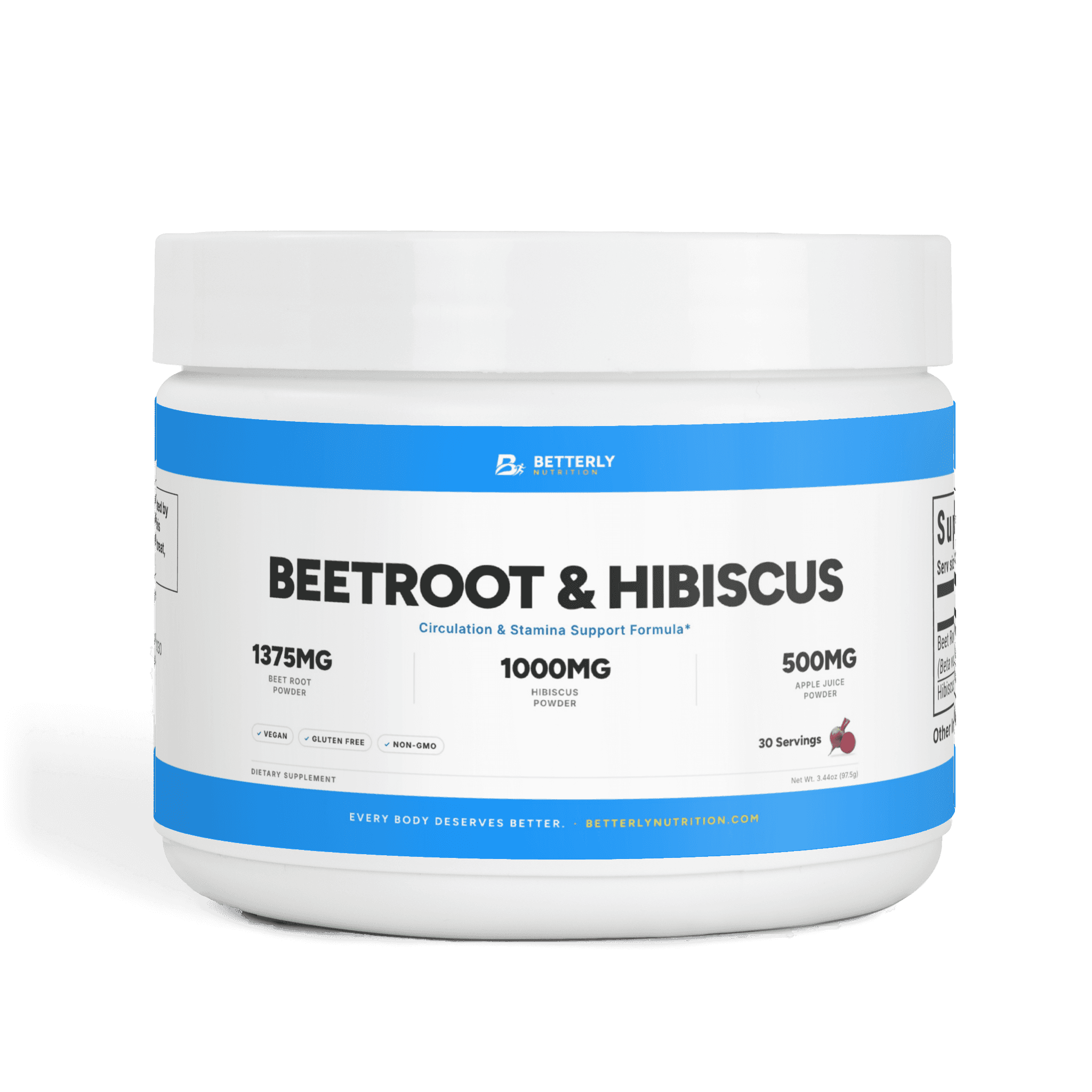
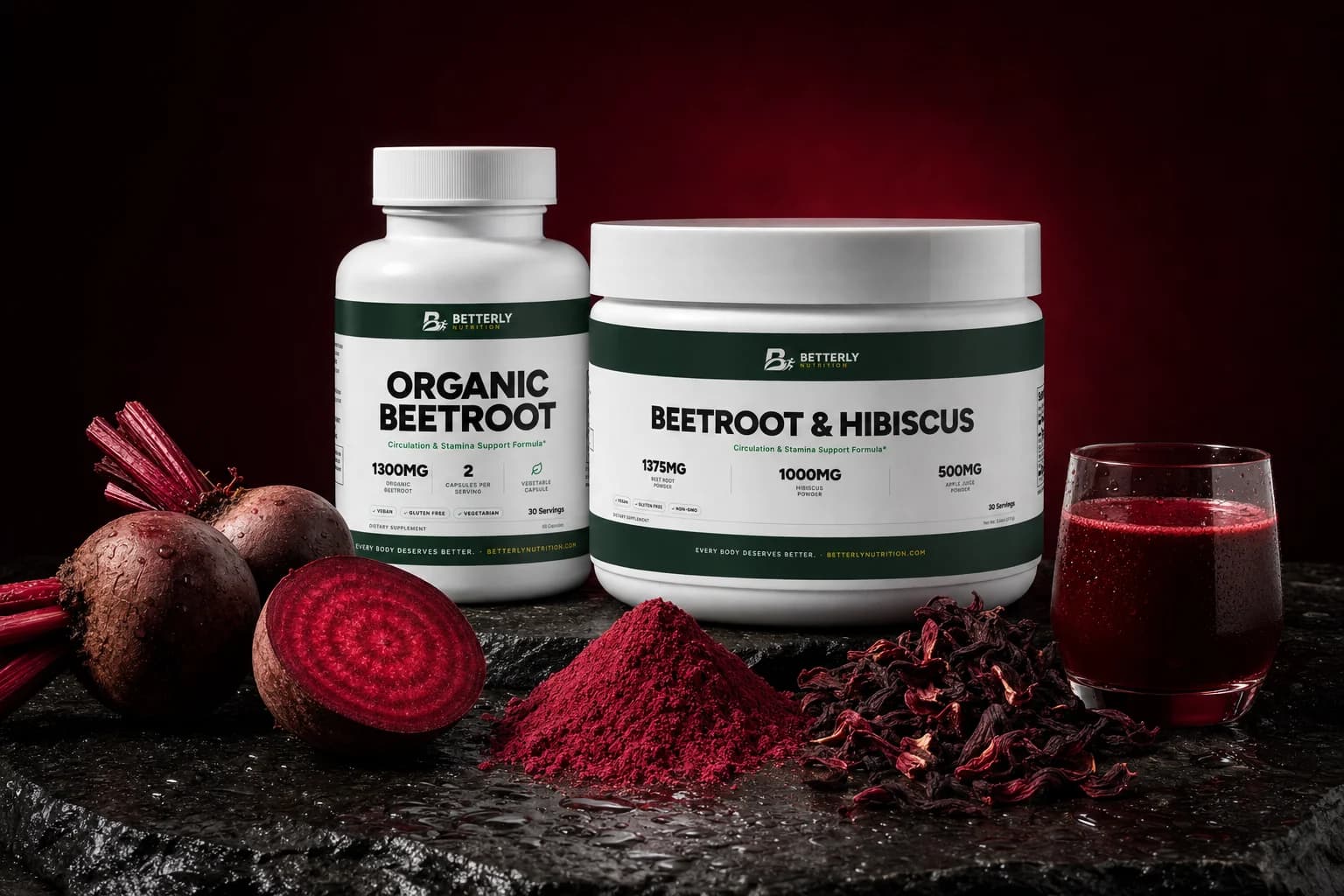
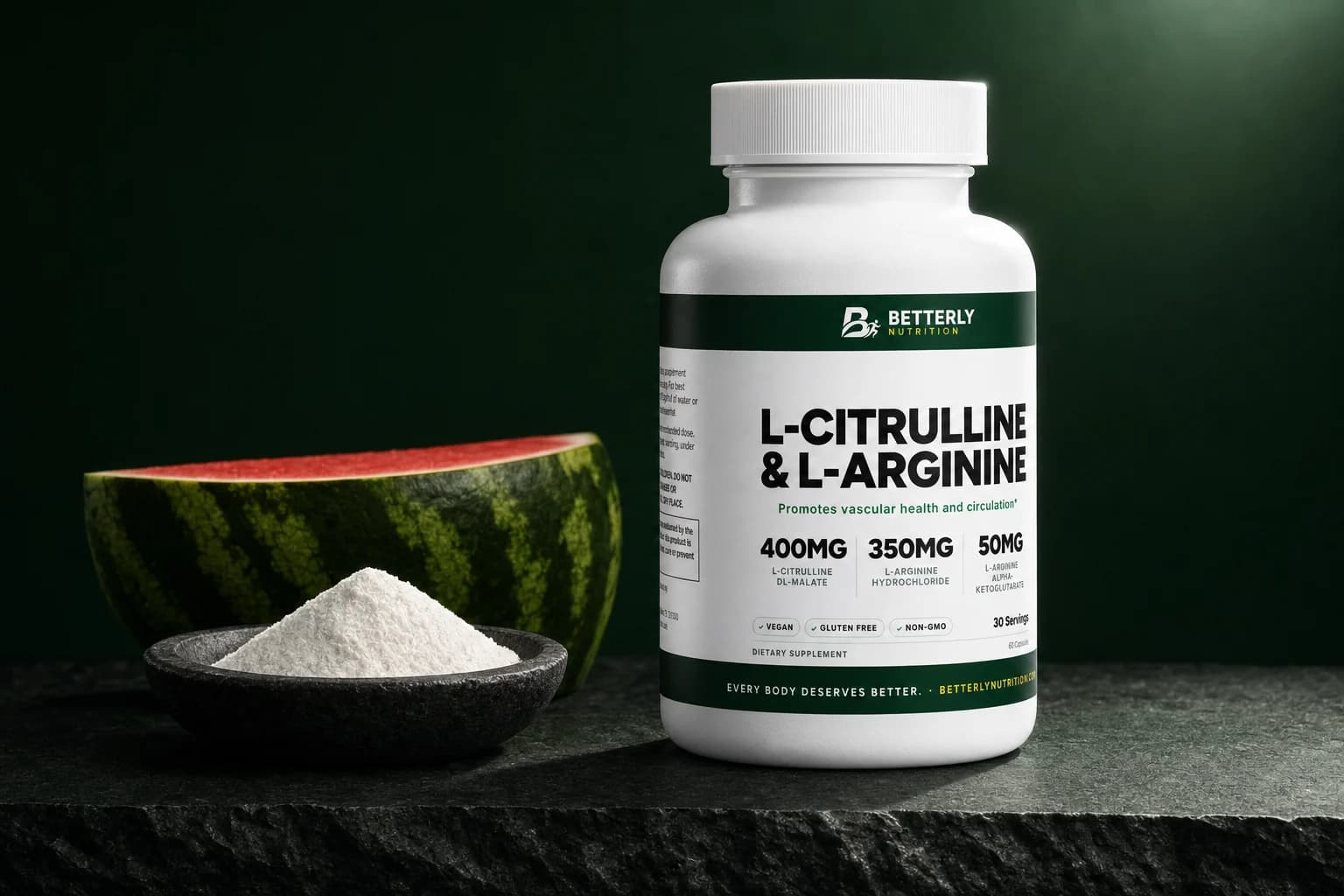
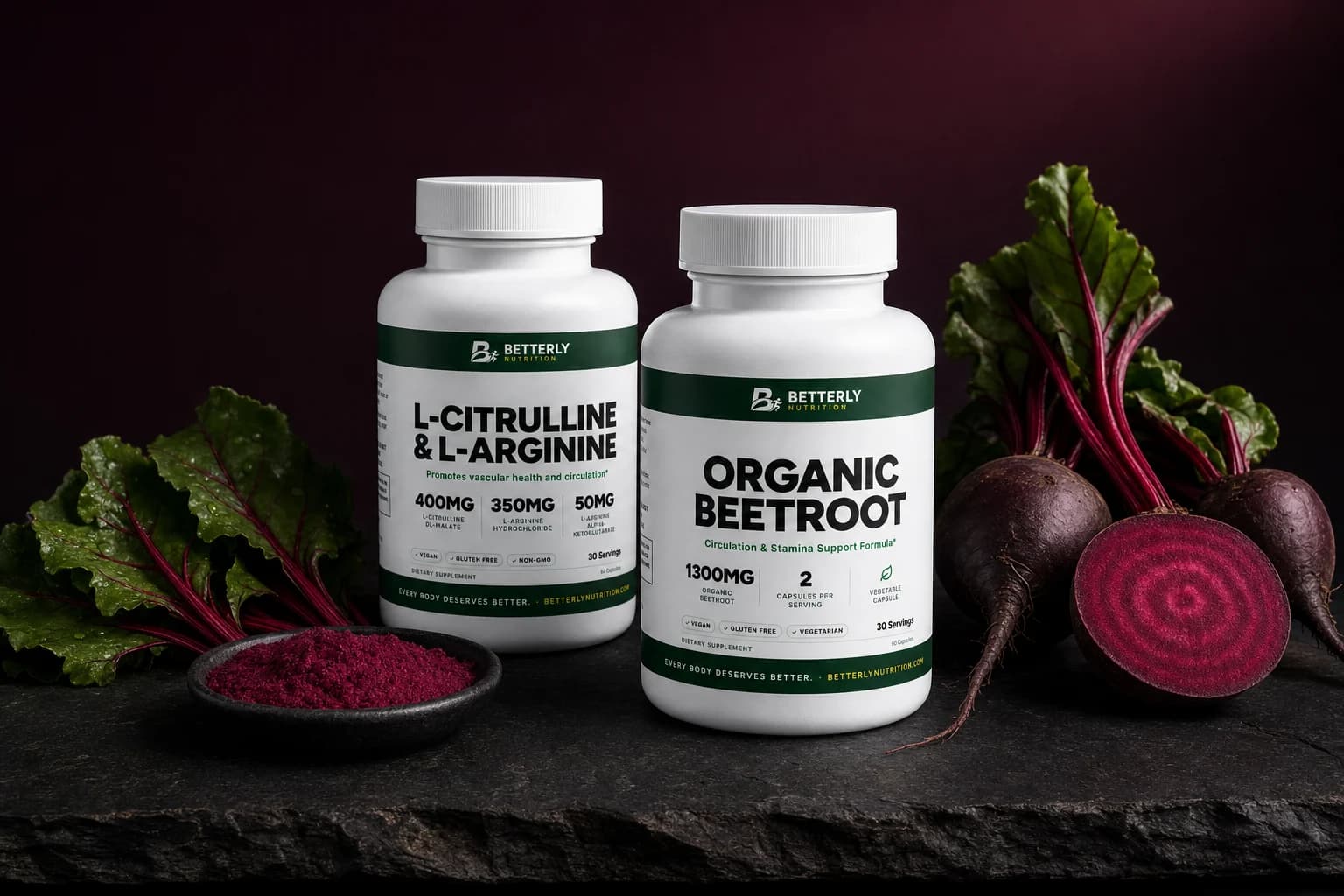
We also sell L-Citrulline & L-Arginine Capsules, which use amino acids the body can turn into nitric oxide, and the Beetroot & Hibiscus Powder drink mix. Here's how the three line up:
| Product | Per serving | What ODS says |
|---|---|---|
| Organic Beetroot Capsules | 1,300 mg beetroot powder (2 capsules) | Juice might help cardio; powder unknown |
| Beetroot & Hibiscus Powder | 1,375 mg beet root powder (1 scoop, 3.25 g) | Same beet caveat |
| L-Citrulline & L-Arginine Capsules | 400 mg L-Citrulline DL-Malate, 350 mg L-Arginine Hydrochloride, 50 mg L-Arginine Alpha-Ketoglutarate (2 capsules) | Little evidence for arginine, not much for citrulline |
Between our beet capsule and our Beetroot & Hibiscus Powder, the beet amounts are close, and the powder adds 1,000 mg of hibiscus powder and 500 mg of apple juice powder per scoop. The citrulline row is the weakest on evidence. The studies ODS describes used grams of arginine and citrulline, while our label lists milligrams. How the two routes fit together is the subject of our guide to beetroot and citrulline together.
From our shop: Beetroot & Hibiscus Powder — a stirred option whose 1,375 mg of beet root powder per 1-scoop (3.25 g) serving edges past the capsules' 1,300 mg.
How do you take beetroot capsules, per the label?
The label's suggested use for Betterly's Organic Beetroot Capsules is two capsules once a day, 20-30 minutes before a meal, with an 8 oz (237 ml) glass of water.
The caution adds, "Do not exceed recommended dose." Two capsules is the whole day's serving, however far that sits from a glass of juice, and the 60-capsule bottle covers 30 days at that rate.
Fitting that meal around a workout is a timing question, and our beetroot capsule timing guide works through it.
If beet is one of several ideas you're weighing, the rest of our energy supplement lineup sits in one place.
When don't you need beetroot capsules?
Beetroot capsules add little if your training is mostly lifting, if beet juice is already part of your cardio, or if aerobic exercise isn't part of your week.
- Strength is your goal. ODS says it isn't known whether beet helps with strengthening or bodybuilding exercise.
- You already drink beet juice before long runs or rides. Juice is the usual form in the studies ODS describes, so a capsule on top adds beet without adding evidence.
- Cardio isn't part of your routine. The beet findings ODS reports are about aerobic exercise, so they don't speak to beet's use outside training.
Who should check with a healthcare provider first?
The caution on our Organic Beetroot Capsules label names four groups who should consult a physician first: anyone pregnant, nursing, under 18 or living with a medical condition.
A few other situations call for the same conversation:
- You take prescription medication. ODS says it's important to find out whether your medicines might interact with a performance supplement you're considering.
- You're a teen athlete. The ODS sheet reserves performance supplements for adults in most cases, and it stresses talking with an expert if you're a teenager.
- Surgery is on your calendar. According to the NIH primer Dietary Supplements: What You Need to Know, some supplements taken beforehand can change how you respond to anesthesia.
Beet's own quirks, such as pink urine and oxalate, get a full treatment in our beetroot capsule side effects guide.
FAQ: do beetroot capsules work
Do beetroot capsules give you energy?
Beetroot capsules don't give you energy in the caffeine sense. Betterly's panel lists beetroot powder as the only active ingredient, with no caffeine source. The interest in beet for exercise is about nitrate and endurance in juice research, not alertness. If you mostly want to feel more awake, beet is the wrong tool. As a stimulant-free addition to a cardio routine, it's reasonable but unproven in capsule form.
What does "Daily Value not established" mean on a beetroot label?
"Daily Value not established" on a beetroot label means the FDA has set no Daily Value for beetroot powder, so the panel can't show a percentage for it. The FDA's labeling guide says ingredients like this get a symbol in the % Daily Value column that points to that footnote. On our capsules, it's the double asterisk beside 1,300 mg. When you compare beet products, compare milligrams per serving instead of percentages.
Can beetroot capsules replace eating beets?
No, beetroot capsules aren't a stand-in for the vegetable. The NIH's general supplement fact sheet is clear that supplements can't replace the range of foods a healthy eating routine is built on. A 2-capsule serving holds 1,300 mg of dried beetroot powder. If you like beets, keep eating them. A capsule is a convenience for the days you won't cook, not an upgrade.
Should athletes in drug-tested sports use beetroot capsules?
Athletes in tested sports should talk with their team's medical staff before using any supplement, beetroot capsules included. ODS relays an FDA warning that some performance products might contain unlabeled stimulants, steroids or drugs. The same fact sheet lists NSF's Certified for Sport program among the services that check products for banned substances. Our beetroot capsules don't carry any such certification.
Sources
- NIH Office of Dietary Supplements: Dietary Supplements for Exercise and Athletic Performance, Fact Sheet for Consumers
- NIH Office of Dietary Supplements: Dietary Supplements: What You Need to Know
- U.S. Food and Drug Administration: Dietary Supplement Labeling Guide: Chapter IV. Nutrition Labeling
If this left you looking for somewhere to start, read 1,300 mg organic beetroot capsules — its amounts per serving are listed on the page. For the practical questions this raises, how dosing, sourcing and subscriptions work is answered in one place.