
Shop Vitamins & Minerals
6 products
Sort: Featured



The short version
Form, amount, limit: how to read a vitamin shelf
Vitamins and minerals are the plainest shelf in the store, and the one most routines are quietly standing on: the nutrients a body needs every day in small, steady amounts. Each has a job the NIH Office of Dietary Supplements describes in a line — vitamin D helps the body absorb calcium, magnesium takes part in normal muscle and nerve function, and the body uses iron to make hemoglobin, the protein in red blood cells that carries oxygen. None of that turns a capsule into a stand-in for the food those nutrients come from. A capsule is a top-up for the days meals leave a gap, and this collection is stocked on exactly that basis: one broad multivitamin, and single nutrients for people who already know which one they are shopping for.
A row on a vitamin panel can carry three things worth reading — the form, the amount and the percentage of the Daily Value — and the useful labels print all three. Vitamin D3 Softgels name the form in the row itself: cholecalciferol, the D3 form, at 2,000 IU (50 mcg) in one small softgel. 2,000 IU Vitamin D3 & K2 Strips carry that same D3 amount beside 120 mcg of vitamin K2 as menaquinone, on a raspberry strip that dissolves on the tongue. Minerals are where the amount trips people up: Magnesium Glycinate Capsules print 2,500 mg of magnesium glycinate and 275 mg of magnesium in the same row, because the first figure is the whole compound and the second is the mineral inside it — the one the 65% Daily Value is worked out from.
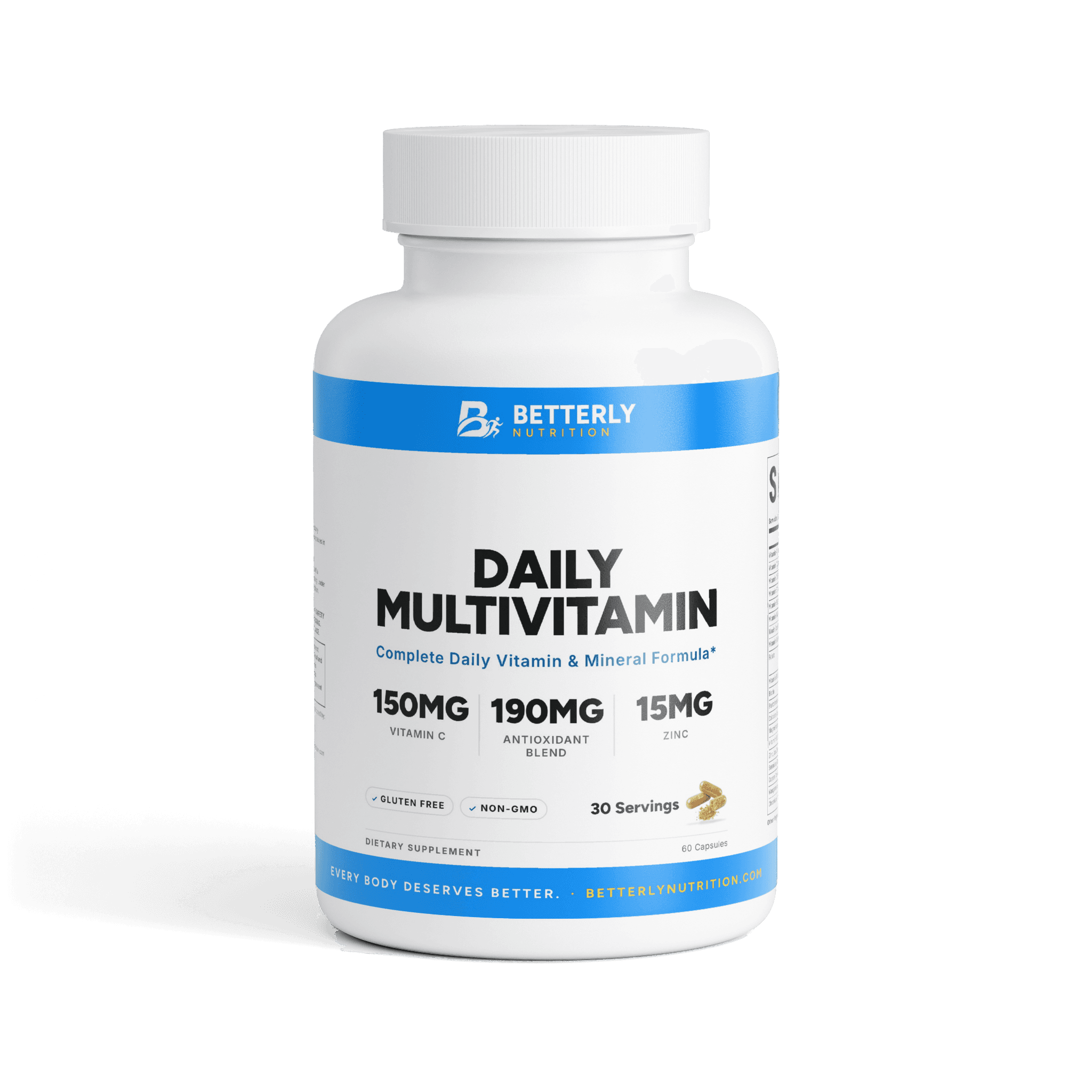
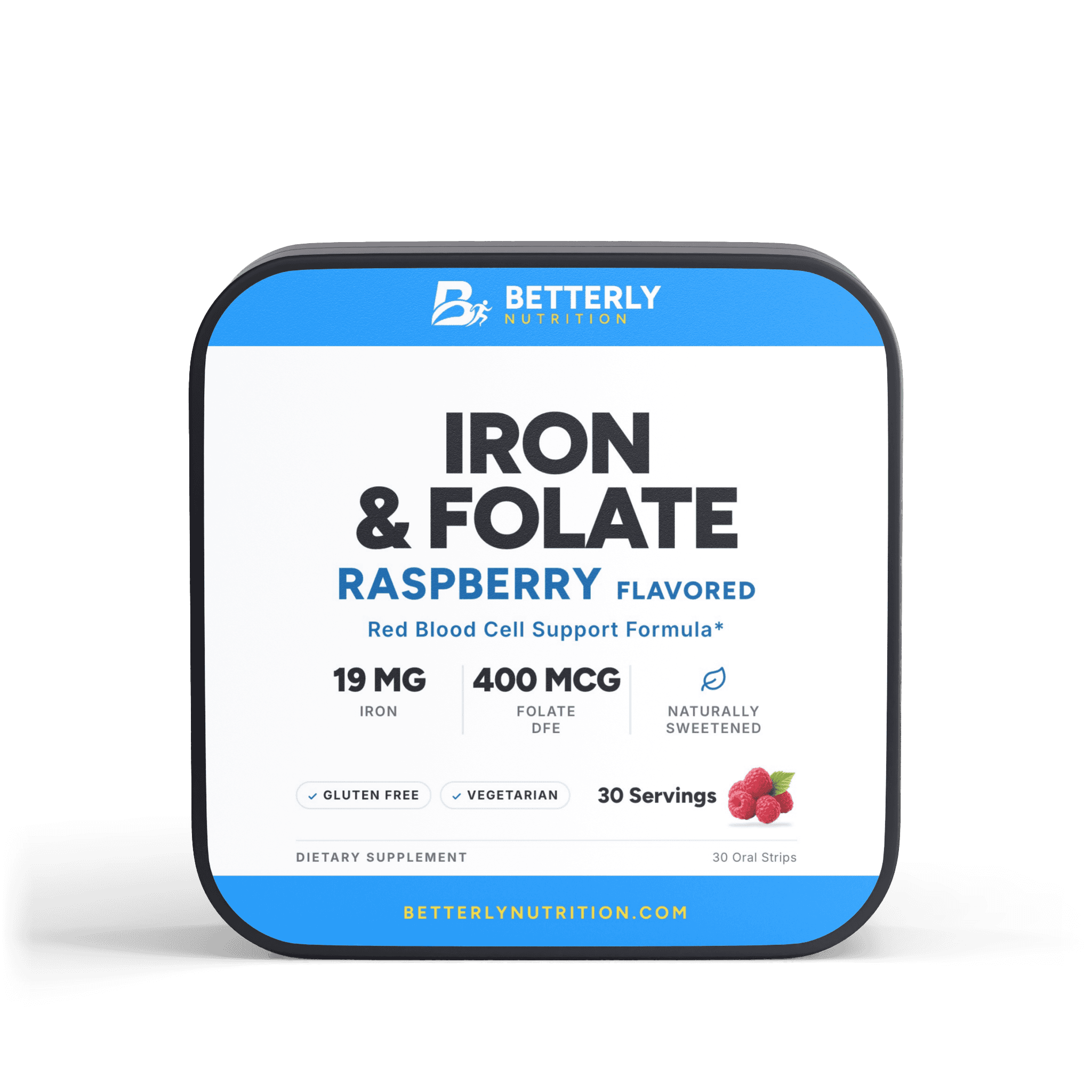
19mg Iron & Folate Strips keep the panel to two rows, 19 mg of iron in a named ferric form and 400 mcg DFE of folate. And Daily Multivitamin Capsules is the wide net — twenty vitamin and mineral rows in a two-capsule serving, plus three botanical blends printed as blend totals — with one absence worth knowing: there is no iron on its panel, and the strips are the only iron in this collection.
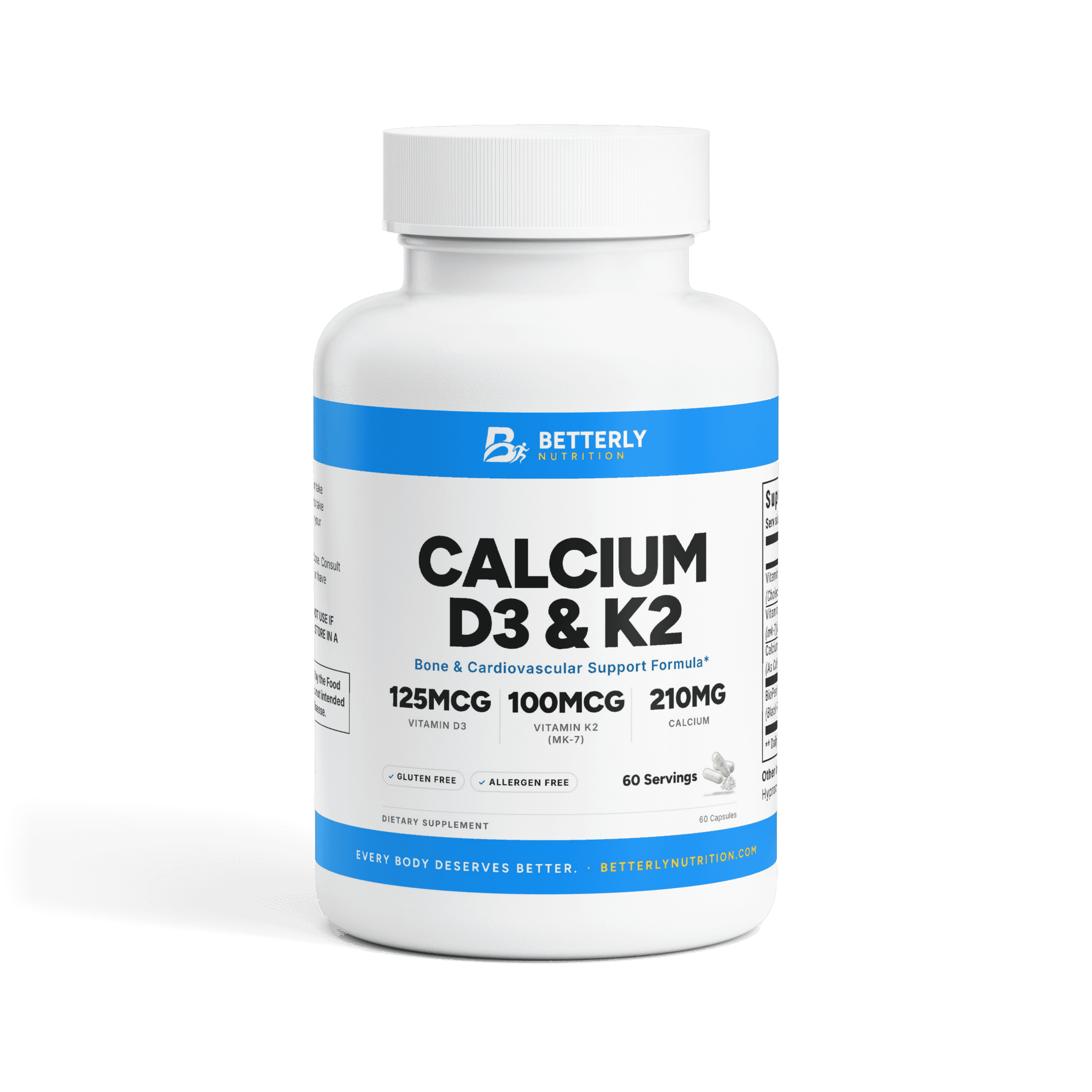
The percentage is not a ceiling, though, and the ceiling is the number no panel prints. The NIH Office of Dietary Supplements puts the adult upper limit at 100 mcg (4,000 IU) a day for vitamin D and 45 mg for iron, counting food, drinks and supplements together, and at 350 mg for magnesium from supplements and medications. A limit is not a target, so add up every bottle you already take before you add another. The two D3 products here each carry 2,000 IU, which makes them an either-or, not a pair. One product in this collection needs saying plainly: at its label directions, Calcium, Vitamin D3 & K2 Capsules supply 250 mcg (10,000 IU) of vitamin D a day, two and a half times the adult limit, so it is one to clear with a healthcare provider rather than one we suggest.
Beyond that, keep it simple: one product at a time, taken as the label directs, on a monthly Subscribe & Save at 10% off that you can cancel from your account. Magnesium glycinate also works an evening shift in the wind-down collection, and every form and figure on these product pages comes from the supplier's written specification — the rule we hold every listing to.
Read first
Guides for Vitamins & Minerals
Half the confusion on this shelf is units: our vitamin D IU-to-mcg conversion chart lines up IU, micrograms and % Daily Value side by side, and marks exactly where the adult upper limit sits.
Do You Need K2 with D3? Plain D3 vs Combos
Do you need K2 with D3? We run the label math on plain D3, a D3 and K2 strip and a calcium combo against the 4,000 IU adult limit for vitamin D.
Vitamin D3 vs D2: Which Form to Choose
Vitamin D3 vs D2, side by side: where each form comes from, how labels name them, and why the NIH says D3 may keep blood levels up longer.
Magnesium Glycinate vs Citrate
Magnesium glycinate vs citrate, explained in plain English. Learn how each form differs so you can pick the one that fits your goals and routine.
How Much Iron Per Day? Needs by Age & Sex
How much iron per day can you stack? The adult limit is 45 mg from food and supplements, and we total a 19 mg strip, a multivitamin and cereal.
Do You Actually Need a Multivitamin?
A multivitamin isn't magic and it isn't for everyone. Here's an honest, plain-English look at who it may help and how to decide.
Zinc, calcium, K2 and the rest of the nutrient alphabet each get their own read in the full explainer library.
Before you buy
Vitamins & Minerals questions, answered
- How much vitamin D is too much?
- For adults, the NIH Office of Dietary Supplements puts the upper limit at 100 mcg (4,000 IU) a day from food, drinks and supplements combined. The D3 softgels and the D3 & K2 strips in this collection each supply 50 mcg (2,000 IU), half that limit, so taking both would reach it before food or the multivitamin's 10 mcg is counted. Choose one. The exception on this shelf is Calcium, Vitamin D3 & K2 Capsules: its label directions total 250 mcg (10,000 IU) a day, and even one capsule, at 125 mcg (5,000 IU), is over the limit, so ask a healthcare provider before taking it.
- Vitamin D3 softgels or D3 & K2 strips: which should I choose?
- Both carry 2,000 IU (50 mcg) of vitamin D3 as cholecalciferol, so the choice is format and one extra row. Vitamin D3 Softgels has a single-row panel, one softgel a day and a hundred to the bottle, with a gelatin shell and soybean oil inside — both printed on the label. 2,000 IU Vitamin D3 & K2 Strips add 120 mcg of vitamin K2 on a raspberry strip that needs no water. Most people get enough vitamin K from food, so the K2 is a convenience rather than a requirement, and anyone taking a blood thinner such as warfarin should talk to their prescriber before adding vitamin K.
- Why does the magnesium label show both 2,500 mg and 275 mg?
- They measure different things. The 2,500 mg is the weight of the magnesium glycinate — magnesium bound to the amino acid glycine — and the 275 mg is the magnesium inside it, the elemental figure the 65% Daily Value is calculated from, and the one to compare between bottles. It is also the number that counts toward the 350 mg adult upper limit the NIH lists for magnesium from supplements, so tally it with any other magnesium you take: the multivitamin in this collection carries 50 mg of its own. The full panel for Magnesium Glycinate Capsules is on its product page.
- Is 19 mg of iron a day too much?
- It depends on who is taking it. The NIH Office of Dietary Supplements puts daily needs at 18 mg for women 19 to 50 and 8 mg for men and for adults 51 and older, with an adult upper limit of 45 mg a day from food and supplements combined. A single strip of 19mg Iron & Folate Strips sits under that limit but supplies more than twice the 8 mg figure before any food is counted, so ask a healthcare provider whether supplemental iron suits you before you start. The pack carries the standard iron warning too: keep it out of reach of children.
Shop by goal
The rest of the range
The basics sit underneath every other goal in the range. The rest of what we carry, one collection per goal:
Prefer to see everything at once? Browse all 104 Betterly supplements and filter by format, price or dietary preference.
Ordering
Shipping, returns and support
A bottle of softgels and a pack of strips barely register on a USPS scale, but the delivery facts are still worth a look before checkout:
- At-cost USPS rates and tracking
Weight-based USPS rates, charged at cost with no markup — a single bottle usually ships for $4.50. Follow any order at /track. Lower 48 only.
- Refunds for damaged, wrong or lost orders
Damaged, wrong, or never arrived? Tell us within 30 days for a refund or replacement — nothing to ship back.
- Our full customer FAQ
Subscribe & Save, pricing (no separate handling fee), ingredients and label questions — all in one place.
- Where is my order?
Your order reference and the email you ordered with is all it takes. No account needed.
- Questions about a formula? Get in touch
Ingredient questions and order changes go straight to our support team.