On this page
- Key takeaways
- How much iron do you need at each age?
- How much iron per day for a woman?
- How much iron does a man or a woman over 50 need?
- Do vegetarians need more iron?
- How much iron per day is too much?
- How do you add up iron from food, a multivitamin and a strip?
- How should you take a 19 mg iron strip?
- When don't you need an iron supplement?
- Who should check with a healthcare provider before taking iron?
- FAQ: daily iron needs
- Sources
The short answer: How much iron per day you need depends on your age and sex. The NIH Office of Dietary Supplements puts men at 8 mg, women 19 to 50 at 18 mg, and all adults 51 and older at 8 mg. The adult upper limit is 45 mg a day, and that ceiling counts iron from food, drinks and supplements added together.
Key takeaways
- Women aged 19 to 50 need 18 mg of iron a day, while men and every adult over 50 need 8 mg, according to the NIH.
- The 45 mg adult upper limit applies to your total, so a supplement's iron stacks on top of the iron already in your meals.
- People who skip meat, poultry and seafood need almost twice the listed amounts, because the body absorbs plant iron less easily.
- Accidental iron overdose is a leading cause of fatal poisoning in children under 6, so every iron product belongs out of their reach.
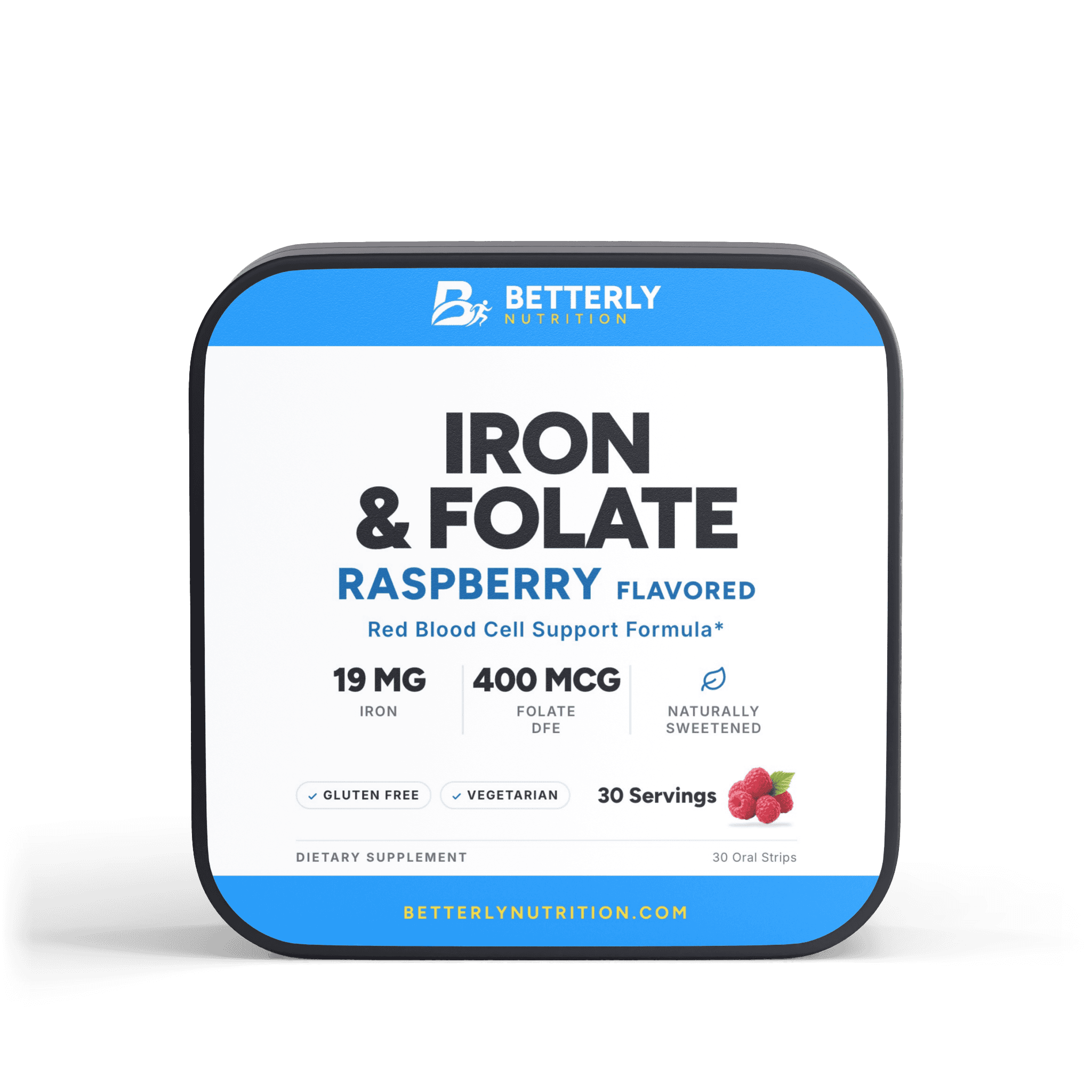
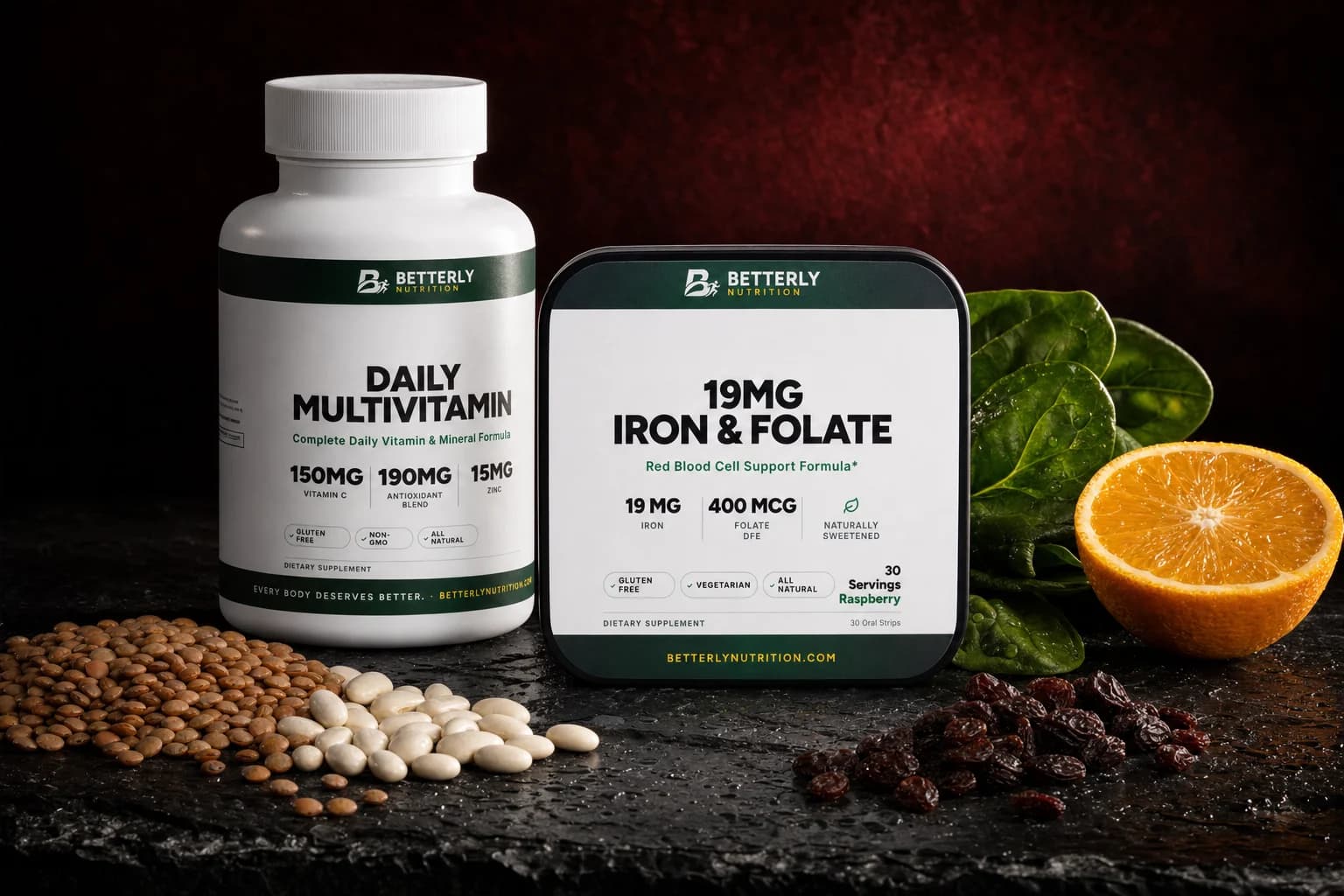
Full disclosure: we sell 19mg Iron & Folate Strips. So this guide puts the federal numbers next to our own label, and it's blunt about who doesn't need the extra iron.
How much iron do you need at each age?
Most adults need either 8 mg or 18 mg of iron a day, depending on sex and age, according to the NIH Office of Dietary Supplements (ODS).
Iron goes into hemoglobin, the oxygen-carrying protein inside red blood cells, and into myoglobin, which delivers oxygen to muscles. The ODS iron fact sheet for consumers lists a daily amount for each life stage. We've added a column comparing one 19 mg strip.
| Who | Iron per day (ODS) | One 19 mg strip vs. that need |
|---|---|---|
| Men 19 to 50 | 8 mg | About 2.4 times the need |
| Women 19 to 50 | 18 mg | 1 mg more than the need |
| Adults 51 and older | 8 mg | About 2.4 times the need |
| Teens 14 to 18 | 11 mg (boys), 15 mg (girls) | Label: under 18, ask a physician |
| Pregnant women | 27 mg | Label: if pregnant, ask a physician |
| Breastfeeding women | 9 mg | Label: if nursing, ask a physician |
Only one adult group, women 19 to 50 who aren't pregnant or breastfeeding, has a daily need that a single strip matches. For men and anyone past 50, one strip supplies more than double the day's iron on its own. That's still under the 45 mg ceiling.
For children, ODS lists 7 mg a day at ages 1 to 3, 10 mg at 4 to 8 and 8 mg at 9 to 13.
How much iron per day for a woman?
A woman aged 19 to 50 needs 18 mg of iron per day, ODS says, compared with 15 mg for teen girls and 8 mg from age 51 on.
The FDA's Daily Value reference for Nutrition and Supplement Facts labels sets iron's Daily Value at 18 mg, so on a standard label 100% DV for iron means 18 mg, and our strip's 19 mg prints as 106%.
ODS names teen girls and women with heavy periods among the groups more likely to have trouble getting enough iron. Frequent blood donors are on that list too.
Pregnancy and breastfeeding change the figures: ODS lists 27 mg a day during pregnancy and 9 mg while breastfeeding. It also says pregnant women should talk with their health care provider and take an iron supplement if one is recommended. Our strip's caution covers pregnancy and nursing too.
One honest limit on the folate side. Our strip lists 400 mcg DFE of folate, made from 240 mcg of folic acid. The ODS folate fact sheet advises 400 mcg of folic acid daily for women who could become pregnant, so the strip alone falls short of that number.
How much iron does a man or a woman over 50 need?
Men 19 and older and women 51 and older both need 8 mg of iron per day, according to ODS, less than half of what women 19 to 50 need.
So is a 19 mg strip too much for a man? It's more than twice his daily need, though still under the 45 mg upper limit. The better question is whether he needs it at all. Apart from frequent blood donors and people with certain medical conditions, adult men aren't among the groups ODS lists as likely to fall short.
For women, turning 51 brings the biggest drop in any adult's iron number, from 18 mg to 8 mg. If you've taken iron for years, ask your provider whether the habit still fits.
Multivitamins follow the same shift. The ODS multivitamin/mineral fact sheet says formulas for older adults usually provide less iron than those for younger adults. It also warns that a multivitamin can raise the chance of getting too much iron.
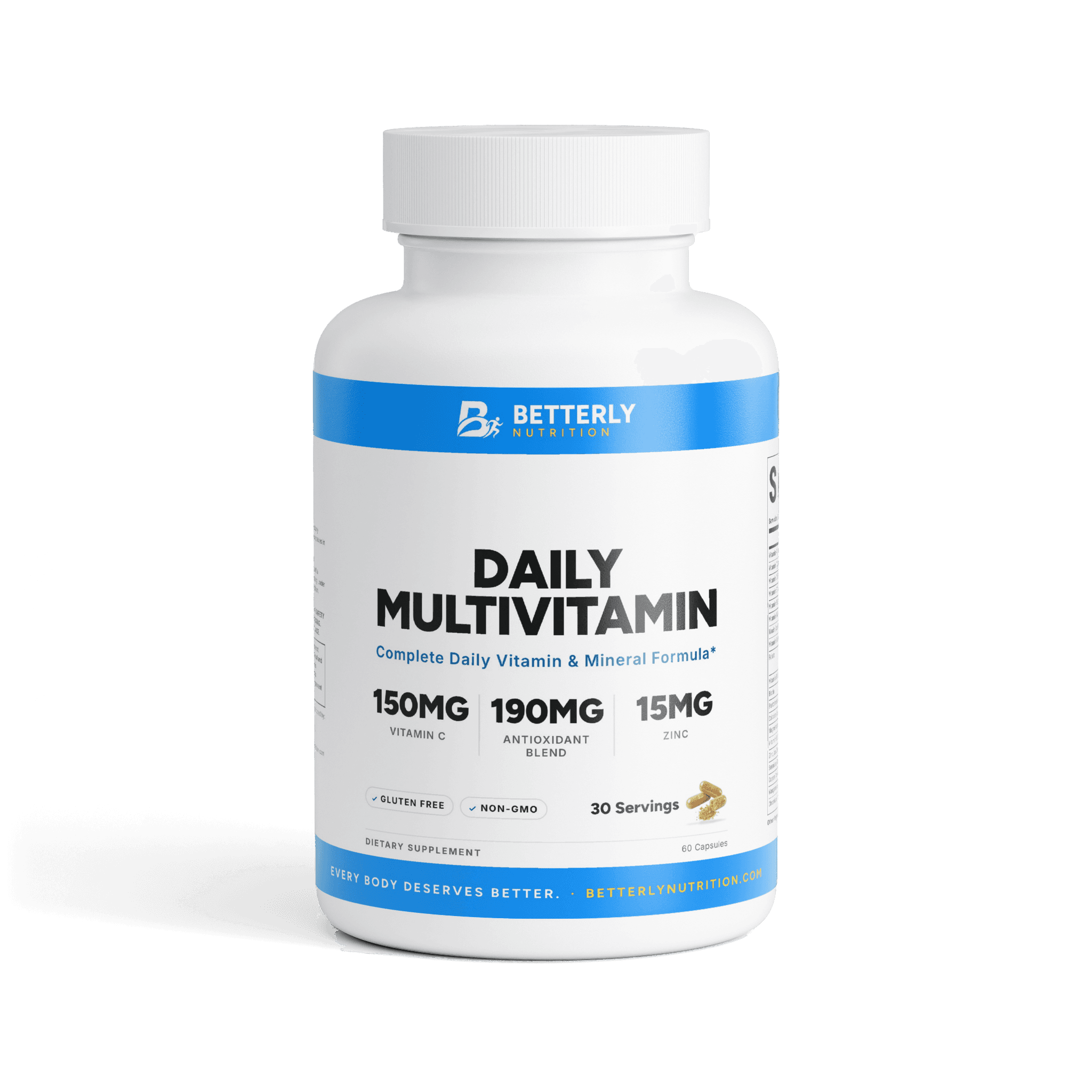
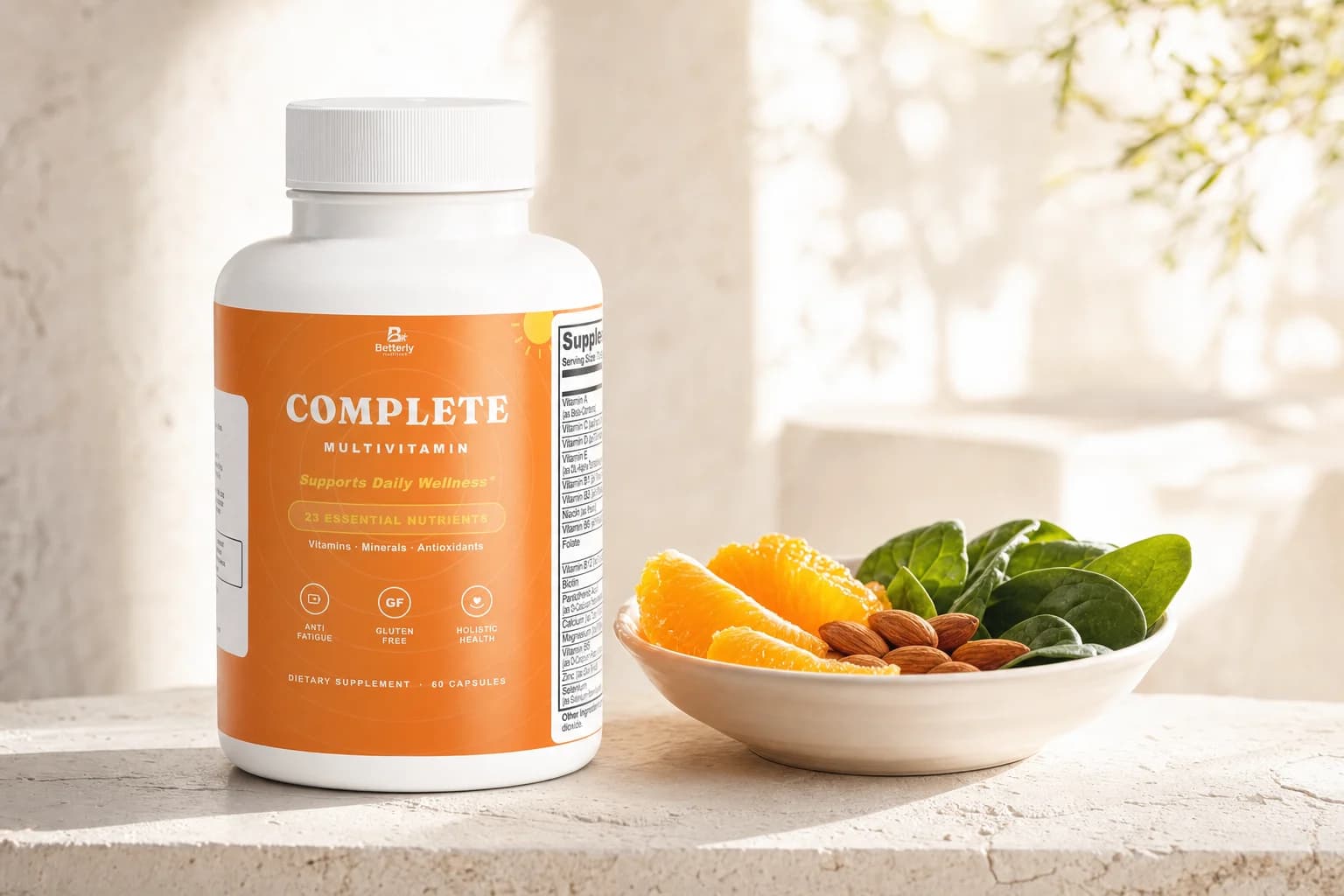
Our Daily Multivitamin Capsules list no iron at all. That doesn't make them a 50-plus formula; it simply means they add zero to your iron total. Still deciding whether a multi earns a spot? Our look at whether most adults need a multivitamin weighs it up.
Do vegetarians need more iron?
Yes. Vegetarians who don't eat meat, poultry or seafood need almost twice the listed iron amounts, ODS says, because plant iron isn't absorbed as well.
Heme iron comes from animal foods, which also carry some nonheme iron. Plants and fortified foods supply only nonheme iron, the kind your body takes up less efficiently. ODS doesn't publish a separate vegetarian figure, but a plant-based woman aged 19 to 50 is aiming well above 18 mg.
ODS lists white beans, kidney beans, lentils, peas, spinach, nuts, raisins and iron-fortified cereals and breads as good choices. You'll absorb plant iron better alongside vitamin C foods such as citrus, strawberries, sweet peppers, tomatoes and broccoli.
Our strip's label lists it as vegetarian and gluten-free. Those words describe the formula. Whether your body needs extra iron is a separate question, and a food log or a blood test answers it.
How much iron per day is too much?
For adults and teens 14 and older, more than 45 mg of iron per day from all sources is too much, ODS says. Children 13 and under have a 40 mg limit.
The iron upper limit counts food, beverages and supplements together. It's the most you should get in a day from everything combined, and there's no reason to aim for it.
In healthy people, ODS says high doses of iron supplements can cause an upset stomach, nausea, stomach pain and vomiting, especially on an empty stomach. High doses can also lower how much zinc you absorb. At extremes, in the hundreds or thousands of milligrams, iron can be fatal.
ODS notes that a doctor might prescribe more than the upper limit for a while to people who need higher doses. Those doses come with a doctor's supervision. Without that, our label says plainly: "Do not exceed recommended dose."
Children face the biggest danger. Our strip's label carries a child warning, as ODS says iron supplements do: "Accidental overdose of iron-containing products is a leading cause of fatal poisoning in children under 6." In case of accidental overdose, the label says to call a doctor or poison control center immediately.
How do you add up iron from food, a multivitamin and a strip?
Add the milligrams of iron on each supplement label, convert fortified foods' % Daily Value to milligrams using 18 mg, and compare the total with 45 mg.
The ODS multivitamin sheet asks for exactly this check: if you eat fortified foods or take other supplements, make sure your multivitamin doesn't push any nutrient over its upper limit.
On a standard food label, like most cereal boxes, iron's percentage is based on that 18 mg Daily Value. A cereal labeled 50% DV gives about 9 mg per serving, and one labeled 100% DV gives 18 mg.
Here's the worksheet filled in with our own labels and a cereal labeled 100% DV:
| What you take | Iron per serving | Running total |
|---|---|---|
| 19mg Iron & Folate Strips, 1 strip | 19 mg | 19 mg |
| Daily Multivitamin Capsules, 2 capsules | None listed | 19 mg |
| Cereal labeled 100% DV, 1 serving | 18 mg | 37 mg |
| Biotin & Horsetail Hair Capsules, 2 capsules | 14.5 mg | 51.5 mg |
The first three lines reach 37 mg before lunch, leaving little room under 45 mg once meat, beans and bread join in. Add the hair capsule and you're at 51.5 mg.
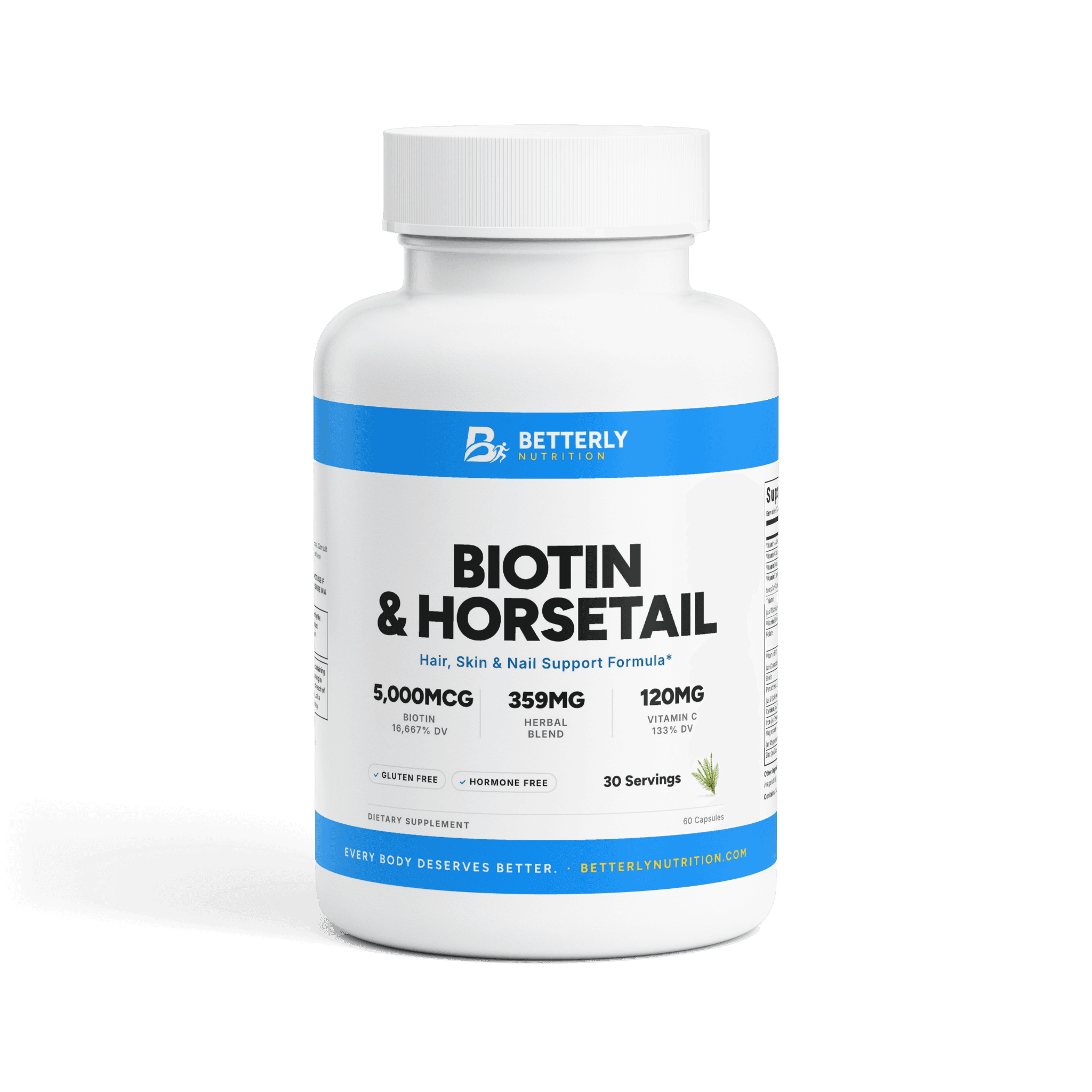
That fourth line catches people out. Our Biotin & Horsetail Hair Capsules are sold for hair, yet the panel lists 14.5 mg of iron (81% DV) per 2-capsule serving. If you take them, you likely don't need the strip too, and the two shouldn't be combined without a provider's okay.
Run the same sum for folic acid. ODS sets the adult upper limit for folate from supplements and fortified foods at 1,000 mcg a day. The strip holds 240 mcg of folic acid, the multivitamin 400 mcg per 2 capsules and the hair capsules 880 mcg per 2 capsules. Strip plus multivitamin is 640 mcg. Strip plus hair capsules is 1,120 mcg, already over, before the folic acid ODS notes is added to U.S. enriched bread, pasta and rice.
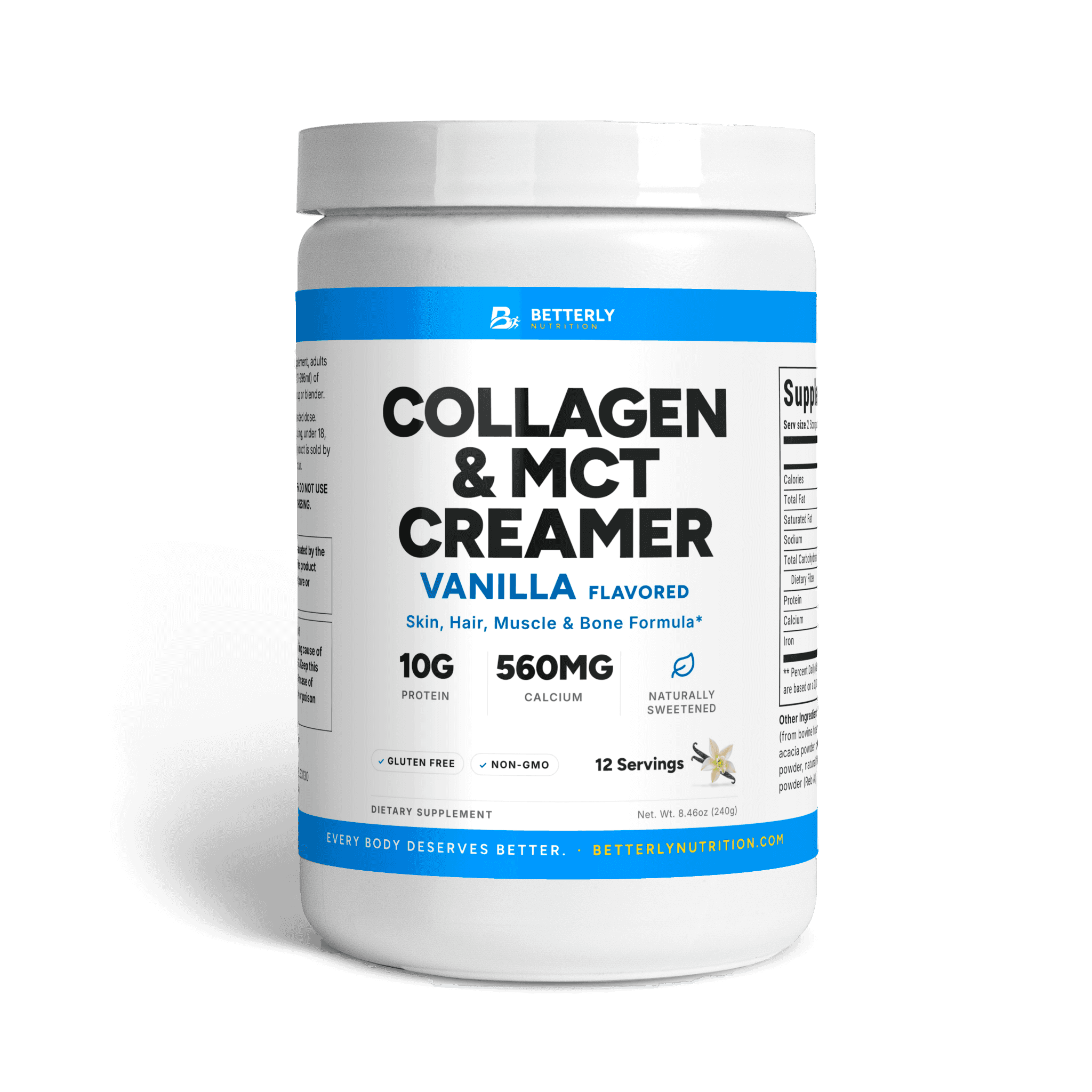
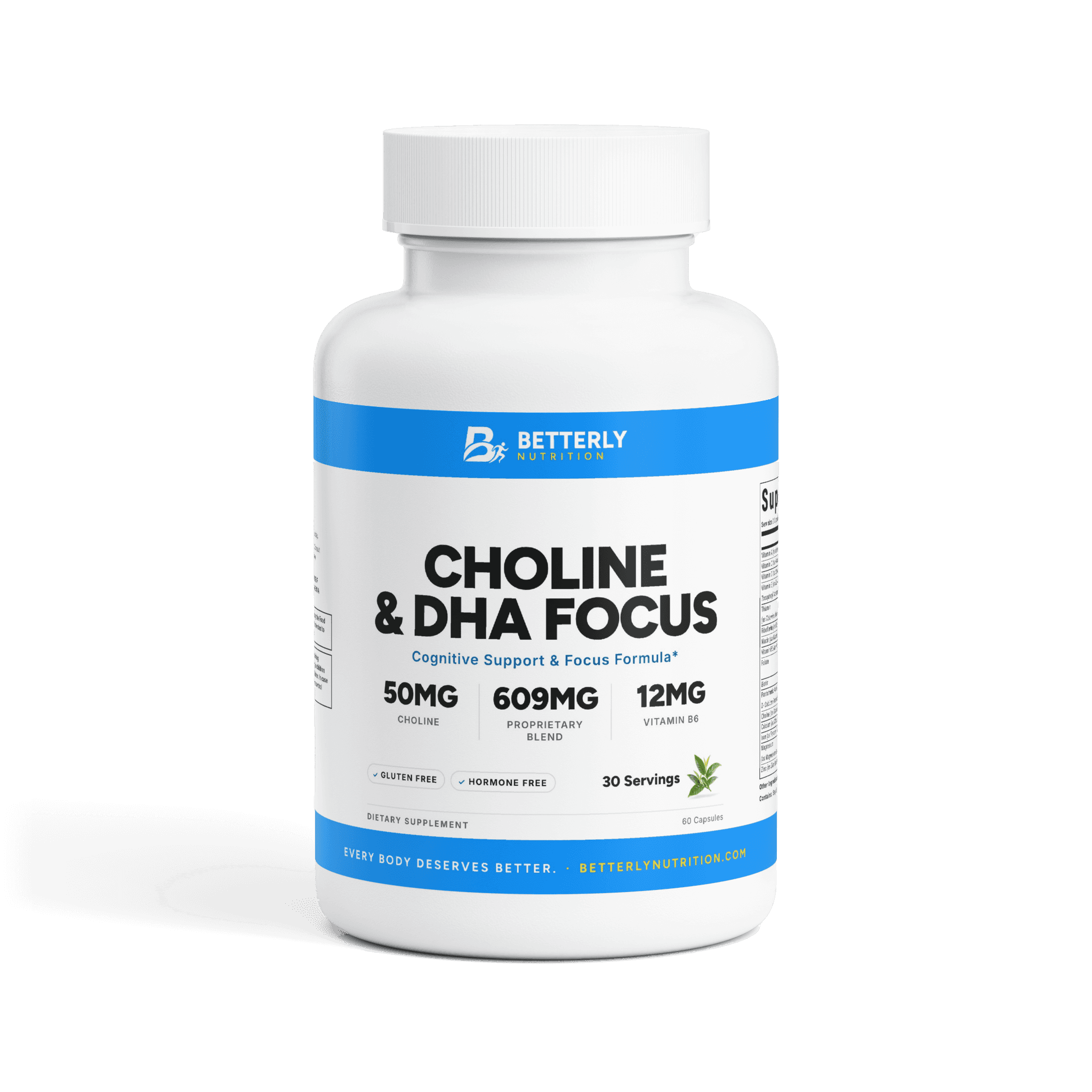
Our Choline & DHA Focus Capsules list 2.6 mg of iron and 400 mcg of folic acid per 2-capsule serving, so they belong on both sums. With the strip and the multivitamin, that's 1,040 mcg of folic acid, over the limit. Collagen Peptides & MCT Creamer (Vanilla) adds 3 mg of iron per 2-scoop serving. Neither tips your iron over alone, but both go on the worksheet.
From our shop: 19mg Iron & Folate Strips — each 1-strip serving lists 19 mg of iron (106% DV), just above the 18 mg ODS gives for women aged 19 to 50.
How should you take a 19 mg iron strip?
The label's suggested use for 19mg Iron & Folate Strips is one strip on the tongue once a day, left to dissolve, with a caution not to exceed that dose.
Each strip is one 200 mg serving, and a pack holds 30. The panel's iron row reads 19 mg at 106% DV, supplied as ferric saccharate, and the folate row reads 400 mcg DFE (100% DV) from 240 mcg of folic acid. Comparing iron forms across brands? Our ferrous vs ferric iron decoder explains the names on panels.
The label names no time of day, so pick one you'll remember. If you also take our multivitamin, keep one ODS note in mind: calcium might interfere with iron absorption, and taking the two at different times of day might help. The multivitamin's directions put its two capsules at a morning meal, and its panel lists 50 mg of calcium, so the strip can go at another point in your day.
For coffee, tea and the empty-stomach question, see our guide to timing iron so more of it absorbs.
When don't you need an iron supplement?
Men and adults over 50 who eat a varied diet usually don't need an iron supplement, since ODS finds that most people in the U.S. get enough iron.
You can probably skip it if:
- Your meals already cover it with meat, seafood, poultry, beans, lentils or fortified cereal.
- Another product already lists iron, like the hair capsule above.
- A recent blood test came back fine, and your diet, blood donations or cycle haven't changed.
- You're hoping for more pep. Iron isn't a stimulant, and ODS says a short stretch of low intake doesn't cause obvious symptoms, so how you feel is a poor guide.
If tiredness sent you searching, our guide to steady, all-day energy habits is a better first stop.
From our shop: Daily Multivitamin Capsules — a 2-capsule serving lists 15 mg of zinc and 680 mcg DFE of folate but no iron, so it leaves your iron total unchanged.
Who should check with a healthcare provider before taking iron?
Check with a healthcare provider before starting iron if you're pregnant, nursing, under 18 or have a medical condition, as our label says, or if you take any medicine.
That last part is ODS advice: tell your doctor, pharmacist and other providers about any supplements and prescription or over-the-counter medicines you take. A few groups deserve a closer look:
- People on certain medicines. ODS says iron can reduce how much levodopa your body absorbs and can make levothyroxine less effective. Proton pump inhibitors such as omeprazole might lower how much nonheme iron you absorb from food.
- People whose bodies store too much iron. ODS says some people inherit a tendency to build up excess iron, and they should avoid iron and vitamin C supplements.
- Anyone on a provider's iron plan, or with surgery coming up. Tell your care team before adding a strip.
The strip sits in our targeted support collection, next to the vitamin D3 strips and softgels.
FAQ: daily iron needs
Is 18 mg of iron a day too much?
No, 18 mg of iron a day is exactly what women aged 19 to 50 who aren't pregnant or breastfeeding need, according to ODS, and it's the Daily Value on standard labels. For men and adults over 50, it's more than twice their 8 mg need, though still under the 45 mg upper limit. Your total from food and every supplement is what counts.
How much iron do you need during pregnancy?
Pregnant women and teens need 27 mg of iron a day, according to ODS. ODS says pregnant women should talk with their health care provider and take an iron supplement if one is recommended. The product and amount are your provider's call, and the strip's own caution tells pregnant users to consult a physician.
Can children take a 19 mg iron strip?
No, not without a physician's guidance. The strip's label asks that anyone under 18 consult a physician before use. Children 1 to 13 need 7 to 10 mg of iron a day and have a 40 mg upper limit, per ODS. Iron overdose is a leading cause of fatal poisoning in children under 6, so keep the pack somewhere a child can't get to.
How long does a pack of iron strips last?
A pack of 19mg Iron & Folate Strips covers 30 days: 30 oral strips, taken one per day on the tongue as the label directs. If you forget one, take the next strip as usual rather than two at once, because the label's own caution rules out going over the recommended dose.
Sources
- Iron: Fact Sheet for Consumers, NIH Office of Dietary Supplements
- Folate: Fact Sheet for Consumers, NIH Office of Dietary Supplements
- Multivitamin/mineral Supplements: Fact Sheet for Consumers, NIH Office of Dietary Supplements
- Daily Value on the Nutrition and Supplement Facts Labels, U.S. Food and Drug Administration
If this left you looking for somewhere to start, read 19 mg iron and folate strips — its amounts per serving are listed on the page. For the practical questions this raises, how dosing, sourcing and subscriptions work is answered in one place.