On this page
- Why iron is fussier than your other supplements
- First: check with your provider (we mean it this time)
- Morning or night? When to take iron supplements
- The empty-stomach question, honestly
- Iron and vitamin C together: helpful, but not magic
- What not to take with iron supplements
- Every day or every other day?
- If iron bothers your stomach: gentler ways to take it
- A simple iron routine you can actually keep
- FAQ: taking iron supplements
- Sources
Iron is the fussiest supplement most people will ever own. With most capsules you swallow them when you remember and move on — but how to take iron supplements genuinely matters: the time of day, what's in your mug, and what else is on your plate can change how much iron your body actually absorbs. This guide covers the timing, the pairings that help, and the surprisingly long list of everyday things that get in the way — in plain English, with no miracle promises.
Why iron is fussier than your other supplements
Two reasons, mainly.
Your body only absorbs a fraction of any dose. Even under ideal conditions, much of the iron in a supplement passes through unabsorbed. That's normal — but it means conditions matter more for iron than for most nutrients.
Iron has competitors. According to MedlinePlus, milk, calcium, high-fiber foods and caffeinated drinks like coffee and tea shouldn't be taken at the same time as iron supplements. The NIH Office of Dietary Supplements adds that calcium might interfere with iron absorption. Few supplements have this many ordinary foods and drinks working against them.
None of this makes iron hard to take. It just means that how to take iron supplements — the timing, the spacing, the pairings — pays off more here than it does for almost anything else on your shelf.
First: check with your provider (we mean it this time)
Every supplement guide tells you to talk to a professional. With iron, we mean it more than usual, for two honest reasons.
First, running low on iron looks like a dozen other things. Dragging through the afternoon, feeling cold when nobody else is, workouts that suddenly feel harder — that could be low iron, or it could be sleep, stress, or something else entirely. The only way to actually know is blood work. Ask your provider to check your iron levels before you supplement, not after.
Second, your body has no quick way to get rid of extra iron. More is not better here, and iron you don't need isn't a harmless insurance policy. This is the one aisle where the "might as well" instinct is the wrong one.
The label on our 19mg Iron & Folate Strips says not to exceed the recommended dose, and to consult a physician first if you're pregnant, nursing, under 18, or have a medical condition. The NIH Office of Dietary Supplements also notes that people with an inherited condition that makes the body store too much iron should avoid iron supplements and vitamin C supplements.
That said, some people do run low more often than others. People who menstruate — especially with heavy cycles — lose iron every month. Plant-forward eaters get mostly non-heme iron, which the NIH Office of Dietary Supplements says the body doesn't absorb as well as the heme iron in animal foods. It also lists frequent blood donors among the groups more likely to have trouble getting enough iron. If one of those describes you, the conversation is worth having. And if your levels come back fine but you're still tired, our guide to supporting all-day natural energy covers the rest of that picture.
One rule with no exceptions: keep any iron supplement well out of reach of small children. Iron products are a known hazard for kids, even in small amounts.
Morning or night? When to take iron supplements
The classic advice is morning, on an empty stomach, and MedlinePlus backs the empty-stomach half of it: iron is best absorbed on an empty stomach.
Here's the more useful answer: the best time to take iron is the time you'll actually repeat.
If your stomach handles it well, first thing in the morning — before coffee, before breakfast — is a fine default. If morning iron makes you queasy, or your mornings revolve around a latte (more on why that matters below), bedtime works too: take it a couple of hours after your last meal and let the dose do its work overnight. MedlinePlus suggests asking your provider how much iron to take and when, so bring the slot you prefer to that conversation.
Consistency beats optimization. A slightly-less-perfect time you hit every day — or every other day, keep reading — will do more for you than a perfect time you manage twice a week.
The empty-stomach question, honestly
The standard rule: take iron about one hour before or two hours after eating. An iron supplement on an empty stomach absorbs better — that part of the folklore is well supported.
It's also exactly why iron has a rough reputation. Concentrated iron hitting an empty stomach makes a fair number of people feel queasy, and that's the moment most abandoned iron bottles got abandoned.
So here's the honest compromise: if empty-stomach dosing turns your stomach, take your iron with a small snack — a few crackers, a piece of fruit — rather than a full meal. You give up some absorption and keep your routine, and that's the better trade. A dose you actually take beats a technically perfect dose that stays in the cabinet.
Iron and vitamin C together: helpful, but not magic
Vitamin C can help your iron absorb, but it's an optional extra, not a rule.
According to MedlinePlus, some providers suggest taking a vitamin C supplement or drinking orange juice with your iron, because it can help the iron absorb. That's where the classic "take your iron with orange juice" advice comes from, and it's a perfectly pleasant habit.
So the honest read is this: taking iron and vitamin C together may help, and it isn't something to stress over. Have the orange juice if you enjoy it. Don't buy anything special just for this.
The same logic applies on your plate. If you eat mostly plants, pairing iron-rich foods — beans, lentils, tofu, leafy greens — with colorful vitamin-C-rich produce at the same meal is a sensible habit. The NIH Office of Dietary Supplements says your body absorbs iron from plant sources better when you eat it with foods that contain vitamin C. (And if you're curious about the leafy-green side of your routine, we wrote an honest guide to what moringa is actually good for.)
What not to take with iron supplements
This list matters more than the vitamin C question. A few everyday things can get in the way of your iron:
- Coffee and tea. MedlinePlus lists foods and drinks with caffeine among the things not to take at the same time as your iron. This is the one that catches people, because the classic "take iron first thing" advice collides head-on with the actual first thing most of us do. Leave about a two-hour gap — or take your iron at night and keep your morning coffee untouched.
- Calcium and dairy. Calcium might interfere with iron absorption, according to the NIH Office of Dietary Supplements. Keep milk, yogurt, cheese, and any calcium supplement about two hours away from your iron.
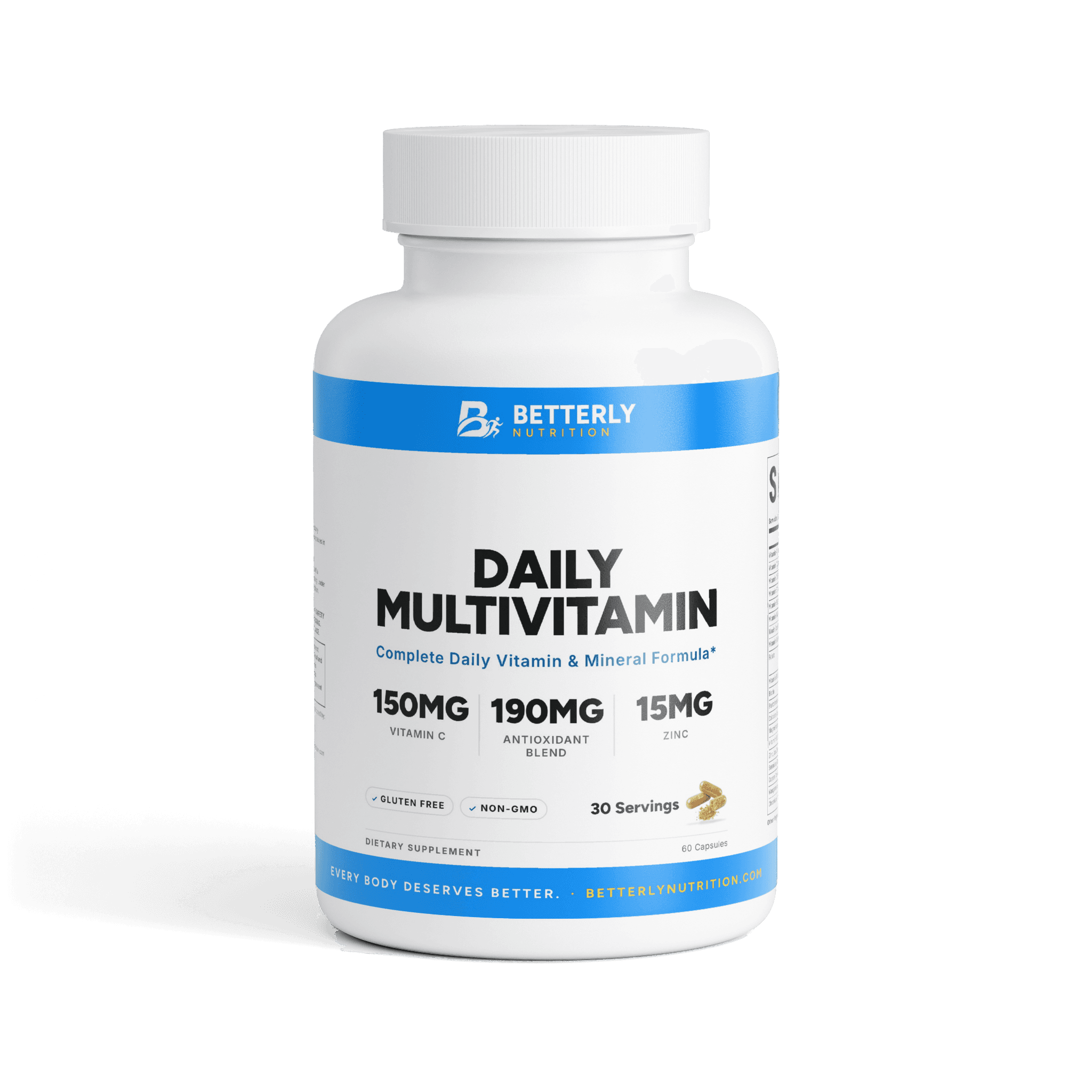
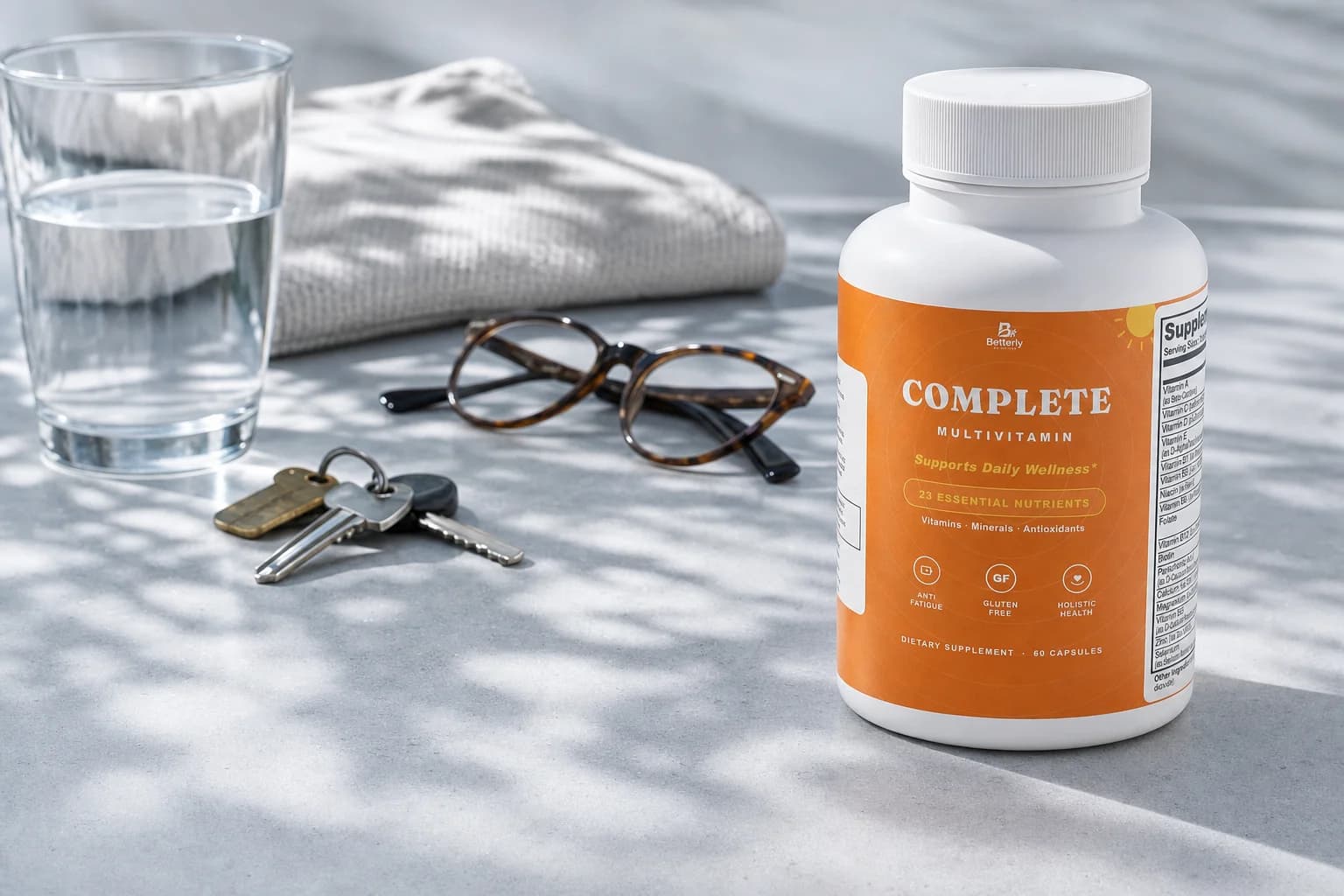
- Your multivitamin. Many multis include calcium, zinc, and other minerals that compete with iron for absorption. Check your label, and put your multi and your iron at opposite ends of the day. If Daily Multivitamin Capsules are your daily foundation, that's an easy fix: the label's suggested use is 2 capsules in the morning with a meal, so take them with breakfast and your iron before bed.
- Some medications. Iron can interact with certain prescriptions in both directions. Your pharmacist can tell you in thirty seconds whether yours are affected — ask.
None of this requires a spreadsheet. One buffer habit — nothing but water or orange juice within two hours of my iron — covers nearly all of it.
Every day or every other day?
Your provider should set how often you take iron. MedlinePlus advises asking your provider how many doses to take each day and when, so if daily iron bothers your stomach, ask whether a different schedule suits you.
If your provider has already set you a specific schedule, follow it. Total iron over time matters, and they may have good reasons for daily dosing.
If iron bothers your stomach: gentler ways to take it
If you're searching for a gentle iron supplement, you have more levers than you might think — and most of them are free:
- Add a small snack. The crackers compromise from above.
- Move it to bedtime. Sleep through the window when it's most likely to bother you.
- Go every-other-day. With your provider's blessing.
- Rethink the format. If swallowing pills is the problem, a different delivery format can be the difference between a routine you keep and a bottle you quietly retire.
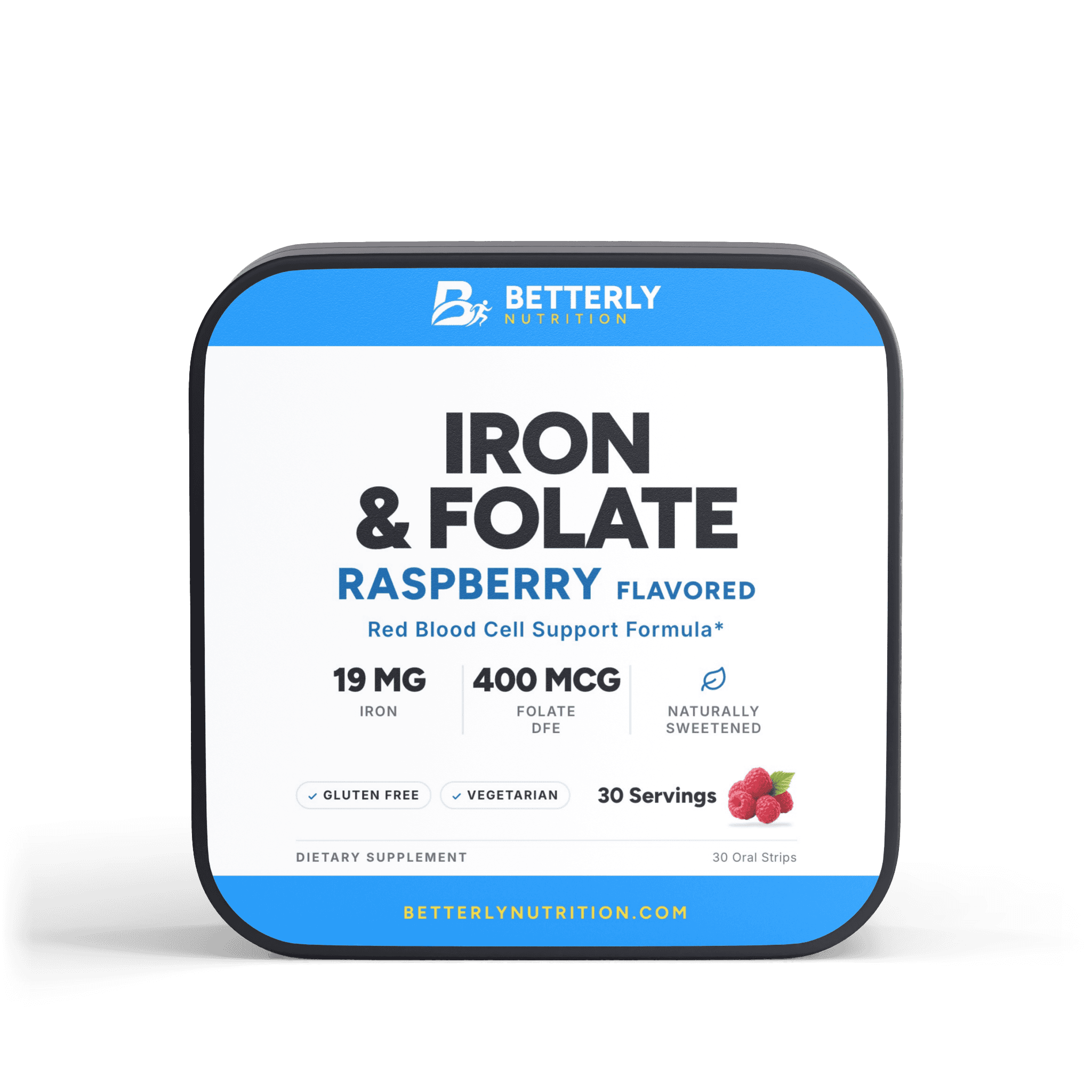
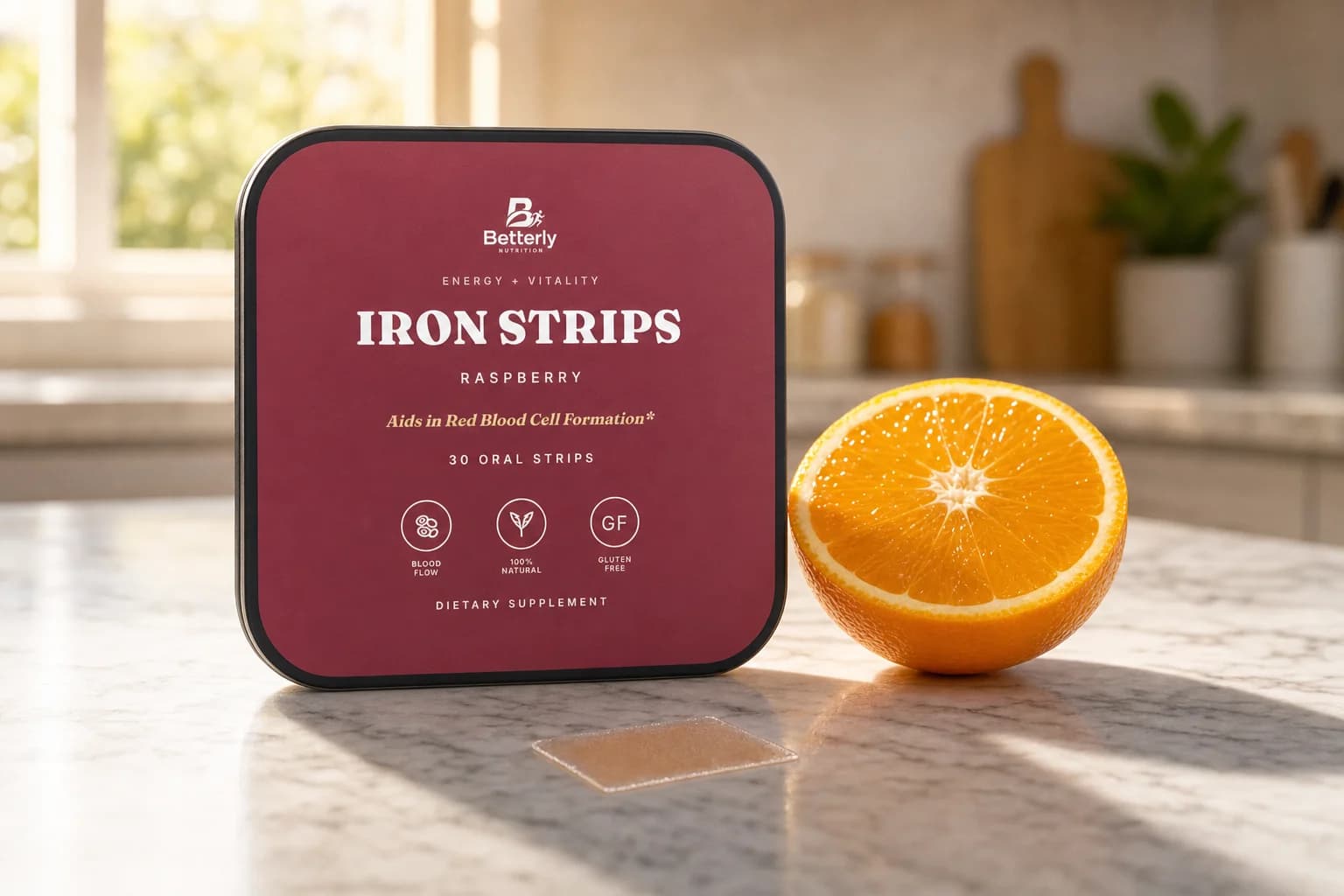
That last lever is why we sell 19mg Iron & Folate Strips: 19 mg of iron and 400 mcg DFE of folate per 1-oral-strip serving, in a strip you place on your tongue to dissolve. No pill to swallow, no glass of water required, 30 strips per pack, made for red blood cell support — the job iron is best known for. And its product page lists the amounts per serving and shows the Supplement Facts panel, so you and your provider can see exactly what you'd be taking before you spend a dollar.
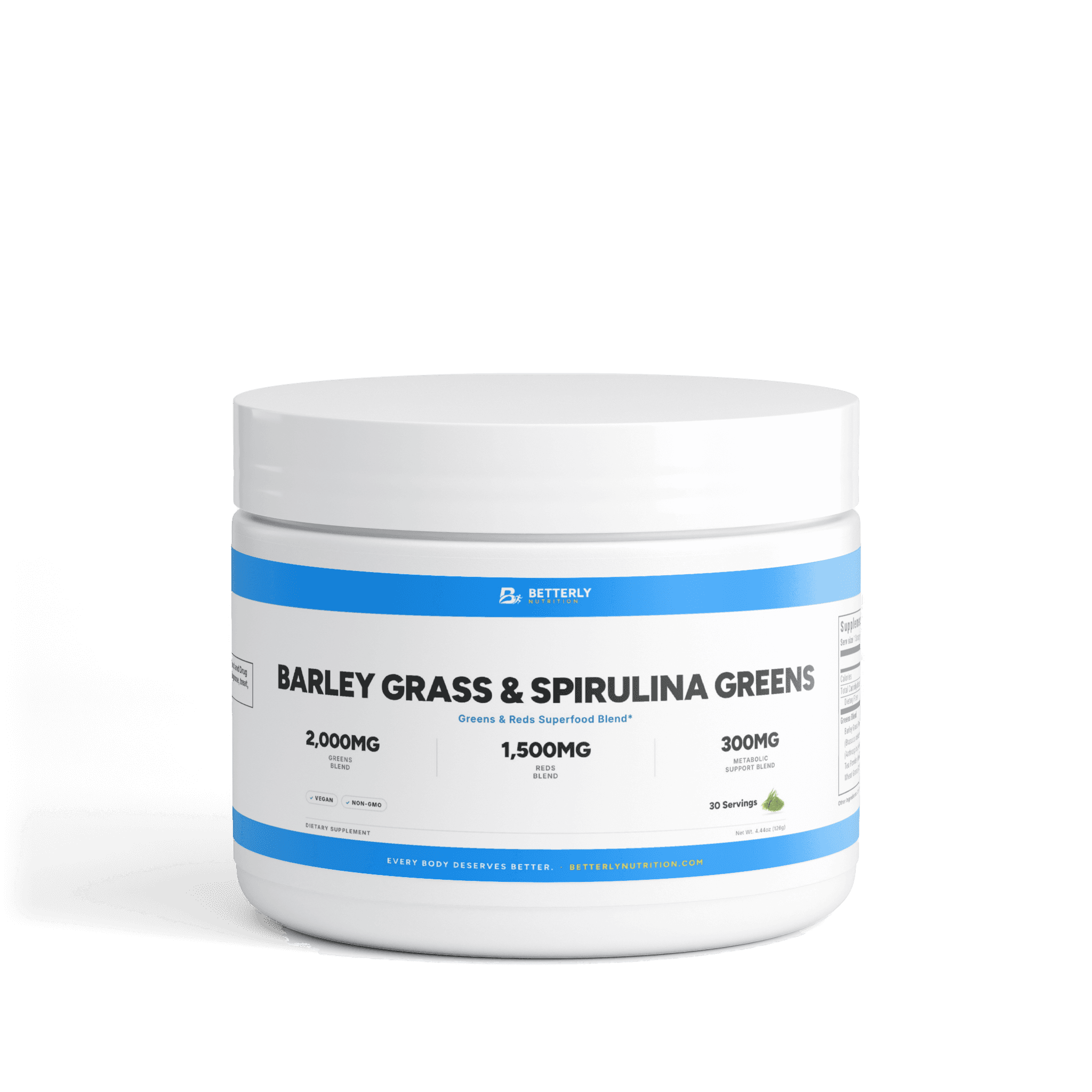
One honest aside while we're here: a scoop of greens is not an iron plan. We sell Barley Grass & Spirulina Greens Powder and like it for what it is — spirulina, barley grass, and 20-plus plant ingredients for everyday nutrition — but if blood work says your iron is low, the plan your provider sets for you is the right tool for that job. (Curious how reds and greens powders actually differ? We compared them honestly.)
A simple iron routine you can actually keep
Everything above, condensed into a routine that runs on habit instead of willpower:
- Get your levels checked first. Blood work, read by a provider. No guessing.
- Pick one repeatable slot. Mid-morning (coffee finished, breakfast two hours behind you) or bedtime (two hours after dinner) are the two easiest.
- Take it with water or orange juice — not a latte, not alongside your yogurt.
- Hold a two-hour buffer from coffee, tea, dairy, calcium, and your multivitamin.
- Ask about every-other-day dosing if daily iron bothers your stomach.
- Recheck when your provider suggests. A follow-up check with your provider beats reading tea leaves about how you feel day to day.
If you're slotting iron into a bigger stack, our guide to building a simple daily supplement routine shows how to arrange everything so the buffer rules don't collide. And you'll find our iron and folate strips alongside the rest of our targeted support range.
FAQ: taking iron supplements
Should I take iron supplements in the morning or at night?
Either time can work for iron supplements. MedlinePlus notes iron is best absorbed on an empty stomach, which is why mornings before breakfast are the classic slot. Bedtime, two hours after your last meal, keeps your iron away from morning coffee. Ask your provider which suits you, then pick the one you'll repeat and stay consistent.
Can I take an iron supplement on an empty stomach?
Ideally, yes — about one hour before or two hours after eating is the standard rule, and absorption is better that way. If it makes you queasy, a small snack like crackers or fruit is a fair trade. A full meal, especially one with dairy or coffee, is where absorption really drops.
What should you not take with iron supplements?
Keep coffee, tea, milk and dairy, calcium supplements, and mineral-heavy multivitamins about two hours away from your iron. MedlinePlus says to wait at least 2 hours after milk, calcium or antacids before taking your iron supplement. And ask your pharmacist about your medications, since some interact with iron in one direction or the other.
Do I need to take vitamin C with iron?
No, vitamin C with iron is optional. According to MedlinePlus, some providers suggest taking a vitamin C supplement or drinking orange juice with your iron, because it can help the iron absorb. A glass of orange juice with your dose is a pleasant maybe-boost, not a requirement.
Can I take iron with my multivitamin?
Take them at opposite ends of the day — many multivitamins contain calcium and zinc, which compete with iron for absorption. And if you're not sure you need a multi at all, our honest take on whether you actually need a multivitamin is a good place to start.
When should I recheck my iron levels?
Your provider should set when to recheck your iron levels. How you feel day to day isn't a reliable guide to your iron status, so rely on blood work your provider reads. MedlinePlus also advises asking your provider how much iron to take each day and when, so bring both questions to the same visit.
Sources
- Iron: Fact Sheet for Consumers, NIH Office of Dietary Supplements
- Iron: Fact Sheet for Health Professionals, NIH Office of Dietary Supplements
- Taking iron supplements, MedlinePlus
If this left you looking for somewhere to start, read dissolvable iron strips with folate — its amounts per serving are listed on the page. For the practical questions this raises, how dosing, sourcing and subscriptions work is answered in one place.