On this page
- Key takeaways
- Iron strips vs pills: how much iron does each format hold?
- Why does a 325 mg iron tablet only list 65 mg of iron?
- Do iron strips absorb better than iron pills?
- Is liquid iron better than pills?
- Iron pills vs iron gummies: what's the trade?
- What does each iron format cost per day?
- How do you take an iron strip, according to the label?
- When is an iron strip not worth switching to?
- Who should check with a healthcare provider first?
- FAQ: iron strips vs pills
- Sources
The short answer: Iron strips vs pills comes down to routine versus strength. Our 19mg Iron & Folate Strips hold 19 mg of iron in each 1-strip serving and dissolve on your tongue with no water. A 325 mg ferrous sulfate tablet label on the government's DailyMed database lists 65 mg of iron, more than three times as much. Strips suit people who'd rather not swallow a tablet. Tablets suit a larger amount your provider has asked for.
Key takeaways
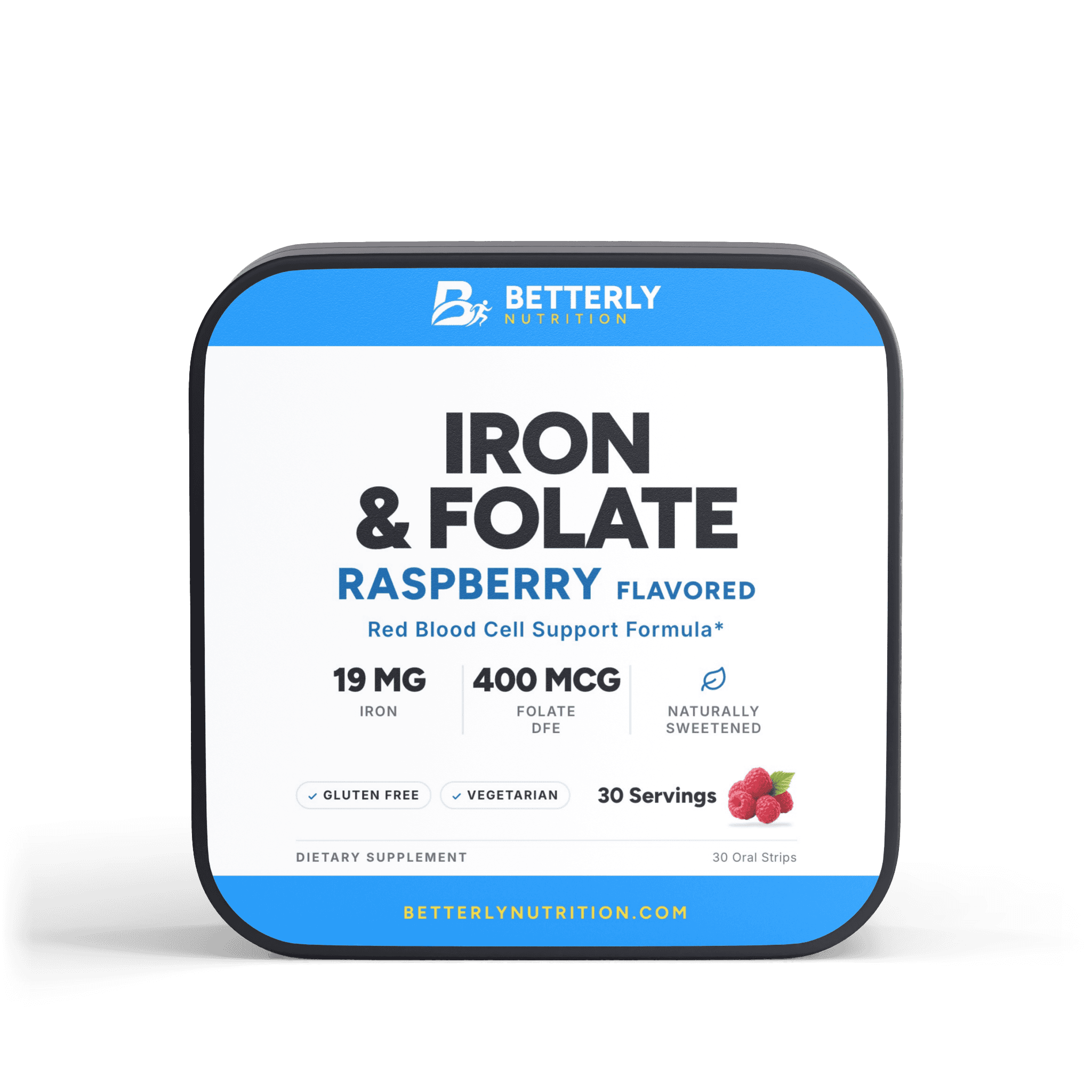
- Each 1-strip (200 mg) serving of Betterly's 19mg Iron & Folate Strips carries 19 mg of iron, printed as 106% of the Daily Value.
- A "325 mg" ferrous sulfate tablet holds 65 mg of iron, because 325 mg is the weight of the whole iron compound, not the iron.
- Neither the NIH iron fact sheet nor MedlinePlus says iron from a strip, liquid or gummy gets into your body better than iron from a tablet.
- A 19 mg strip and a 65 mg tablet on the same day add up to 84 mg, well past the NIH's 45 mg adult upper limit for iron.
- Flavored and chewable iron formats carry the same child-poisoning warning as a plain tablet.
We sell the iron strip in this comparison, and we don't sell a stand-alone iron tablet, liquid or gummy. So the tablet numbers come from a public label, and we've kept every spot where our strip comes out behind.
Iron strips vs pills: how much iron does each format hold?
An iron strip holds less iron per dose than the tablet we compared: our strip lists 19 mg, while the 325 mg ferrous sulfate tablet lists 65 mg.
Our whole strip weighs 200 mg, film and flavor included. The tablet's label says it holds 202 mg of dried ferrous sulfate, so its iron compound alone outweighs our entire strip.
| Format | Iron per serving (example) | How you take it | Main trade-off |
|---|---|---|---|
| Oral strip (ours) | 19 mg per 1 strip | Dissolves on the tongue | Smaller dose, one strip a day |
| Tablet (DailyMed label) | 65 mg per 1 tablet | Swallowed whole | Above the 45 mg adult limit |
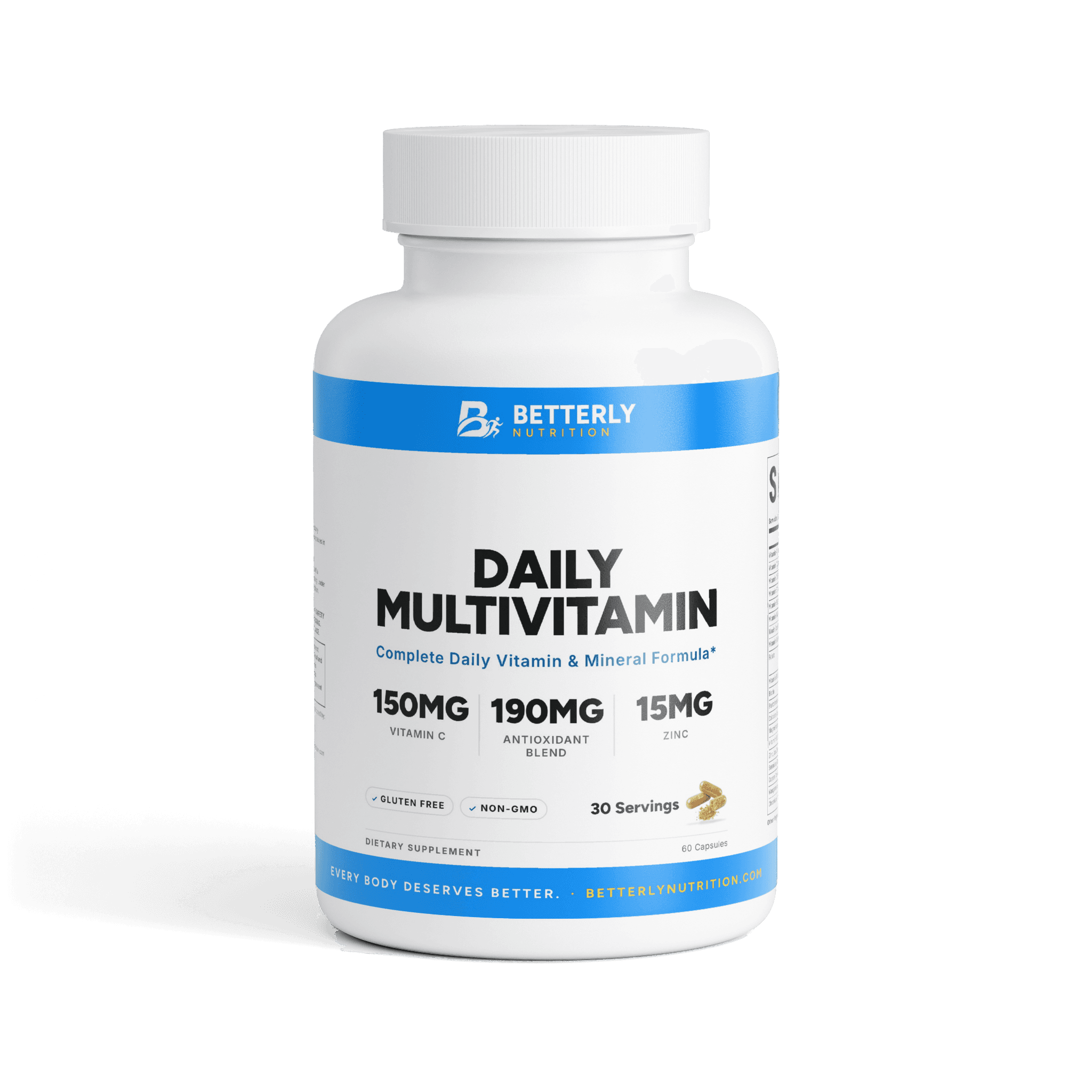
| Capsule (ours, a hair formula) | 14.5 mg per 2 capsules | Swallowed | Iron comes bundled with biotin and herbs |
| Liquid drops or elixir | Varies by brand | Measured, often mixed | Can stain teeth |
| Gummy | Varies by brand | Chewed | Looks like candy |
Down the iron column, the tablet fits the most iron into one piece. Every format that skips the swallow holds less, or leaves the amount up to each brand.
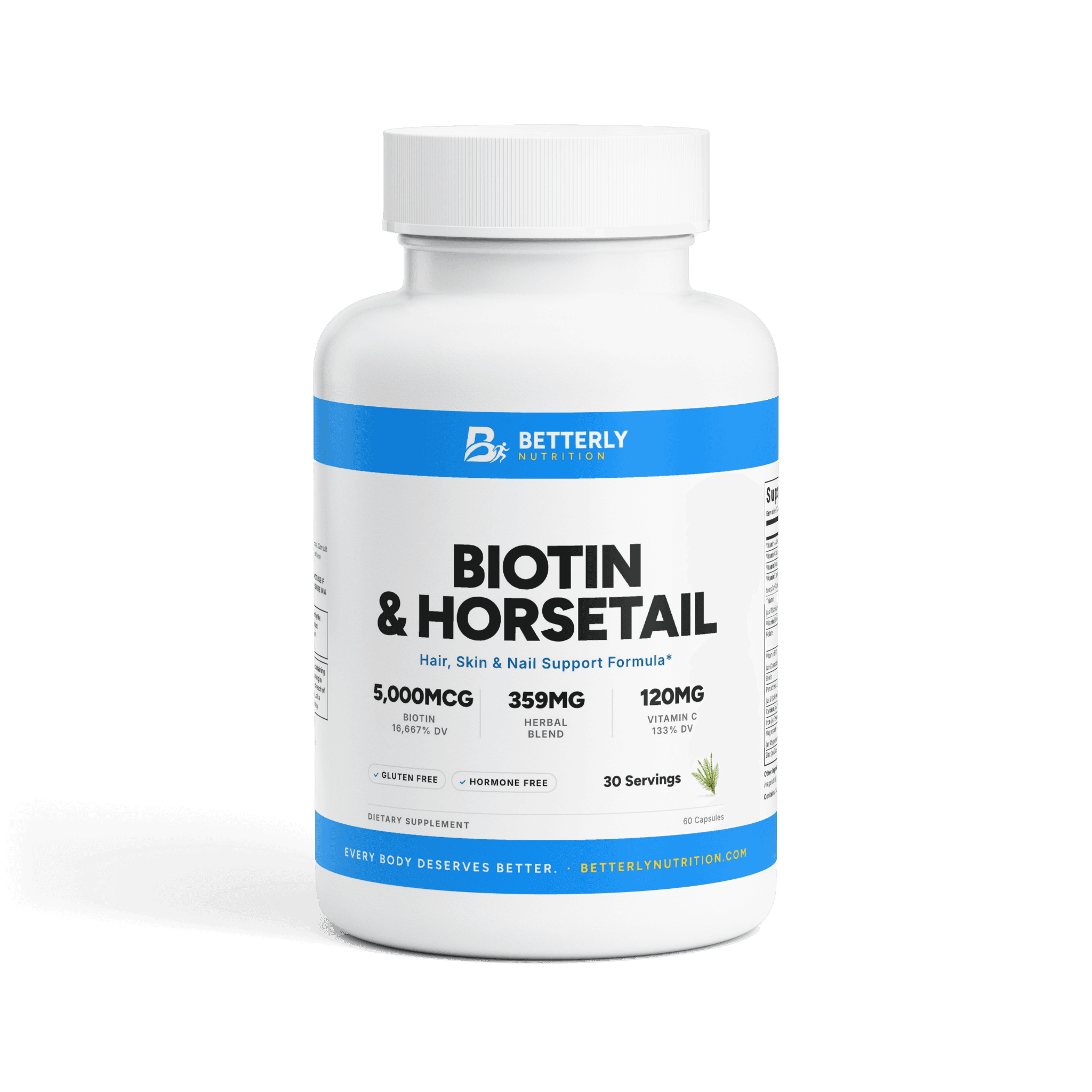
Our Biotin & Horsetail Hair Capsules aren't an iron pill, but they list 14.5 mg of iron as ferrous fumarate per 2-capsule serving. Their 880 mcg of folic acid plus the strip's 240 mcg comes to 1,120 mcg, above the 1,000 mcg adult upper limit the ODS folate fact sheet sets for folate from supplements and fortified foods. So don't combine them without a provider's okay. Our worksheet for totaling iron and folic acid runs both sums.
Why does a 325 mg iron tablet only list 65 mg of iron?
A 325 mg iron tablet lists 65 mg of iron because 325 mg weighs the whole ferrous sulfate compound, while the panel counts only the iron.
The FDA's Dietary Supplement Labeling Guide spells out the rule using calcium: the panel must show the calcium's own weight, not the weight of the calcium carbonate it comes from. Iron works the same way.
The ferrous sulfate tablet label on DailyMed, run by the National Library of Medicine, shows it plainly. It describes 202 mg of dried ferrous sulfate, equivalent to 325 mg of ferrous sulfate, supplying 65 mg of elemental iron. Its panel prints that as 65 mg and 361% of the Daily Value.
Our strip's 200 mg is the same kind of number: it's the weight of the whole strip. Its iron row reads 19 mg, supplied as ferric saccharate, which our panel spells "Ferric Sacharate."
Does the iron form matter when you compare?
The form tells you which compound supplies the iron, but the milligrams on the iron row are already converted to iron itself. The NIH Office of Dietary Supplements (ODS) says supplements often use ferrous sulfate, ferrous gluconate, ferric citrate or ferric sulfate. Ferric saccharate isn't on that list, and we don't claim it absorbs better or worse than any of them. Our explainer on how ferrous and ferric iron differ digs into the naming.
Do iron strips absorb better than iron pills?
No federal source we found says iron strips absorb better than iron pills. Our strip's label makes no absorption claim, and we don't make one.
You may see claims that iron from a strip absorbs through the lining of your mouth. The ODS iron fact sheet for consumers doesn't discuss absorption through the mouth, and neither does the MedlinePlus iron supplements page.
ODS does describe what gets in iron's way. Calcium might interfere, so ODS suggests putting calcium and iron supplements in different parts of your day. Acid-reducing proton pump inhibitors may also cut the nonheme iron you take up from meals.
Maybe iron pills upset your stomach, and that's what sent you looking at strips. ODS ties high doses of iron supplements, especially when taken on an empty stomach, to upset stomach, constipation and nausea. We don't claim a strip is easier on your stomach, since that would take evidence we don't have. Coffee, tea and meal timing are covered in our iron timing walkthrough.
Is liquid iron better than pills?
Liquid iron's main edge over pills is that there's nothing to swallow whole, and MedlinePlus gives the liquid forms a few extra handling steps.
The MedlinePlus page Iron Supplements lists the liquid forms as drops and elixir, alongside regular, film-coated and extended-release tablets and capsules. For the elixir, it says to mix it with water or fruit juice to avoid possible teeth staining, and not to mix it with milk. Drops come with their own dropper for measuring.
The same page says to swallow iron tablets whole and not to split, chew or crush them. Compare liquids by the iron per milliliter or per dropperful.
Iron pills vs iron gummies: what's the trade?
Iron gummies swap the swallow for chewing and often a sweetener, and their iron per serving varies, so the Supplement Facts panel tells you more than the format.
On a gummy's panel, the iron row covers the whole serving, and a serving is often more than one gummy. If the label counts 2 gummies as a serving and you chew 1, you get half the listed iron. While you're on that panel, look for an added sugars line.
The bigger issue is how a gummy looks. ODS says accidental overdose of iron-containing products is a leading cause of fatal poisoning in children under 6. A fruit-flavored gummy, or a raspberry strip, belongs on the same high shelf as a plain tablet.
We don't sell an iron gummy. Our strip gets its raspberry taste from flavoring, with monk fruit extract and steviol glycosides as the sweeteners. Its label claims gluten free and vegetarian. Sugar-free isn't one of those printed claims, and we stick to what's printed.
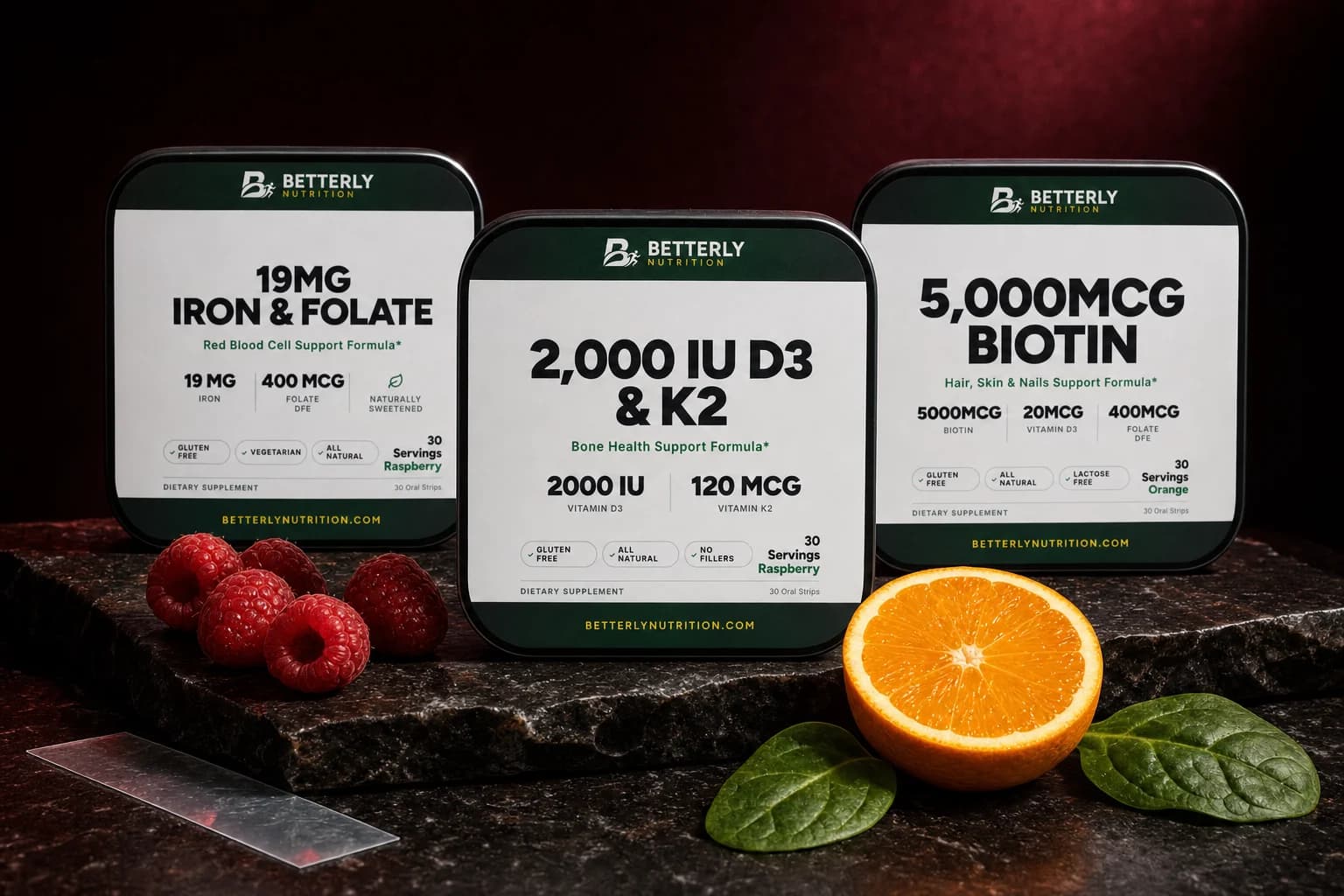
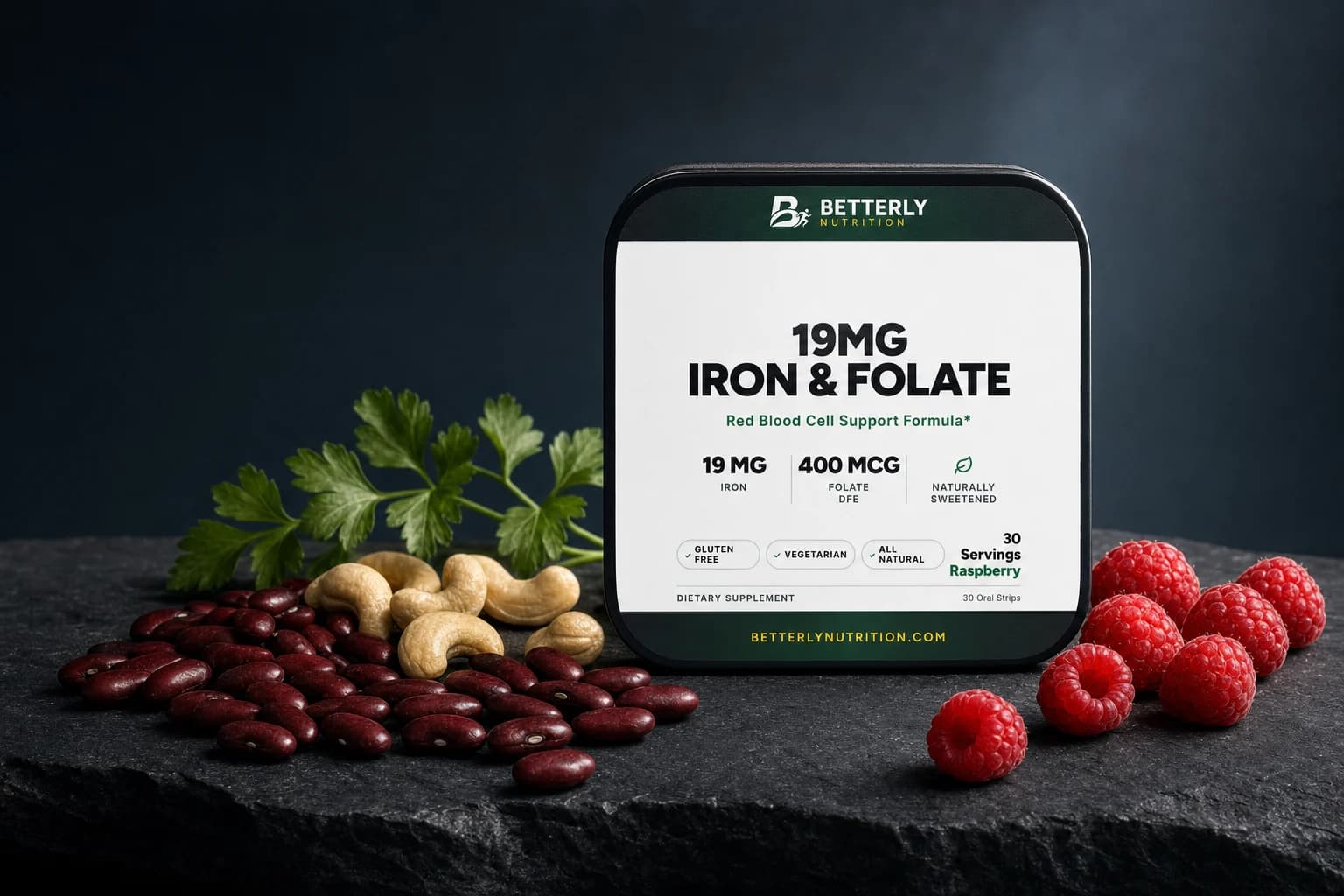
From our shop: 19mg Iron & Folate Strips — ferric saccharate supplies the 19 mg of iron in each 1-strip (200 mg) serving, alongside 400 mcg DFE of folate, with 30 strips to a pack.
What does each iron format cost per day?
Per day, you pay for one iron strip holding 19 mg or one 325 mg ferrous sulfate tablet holding 65 mg, since each label calls for one piece daily.
So the tablet puts about 3.4 times as much iron into a single piece. To compare any two products, divide each pack's price by its servings for the cost per day. Then divide that by the milligrams of iron in one serving for the cost per milligram.
A strip isn't the low-cost route to iron milligrams. What you pay extra for is the format: nothing to swallow and no glass of water.
Milligrams are only worth buying up to what you need, though. ODS lists 18 mg a day for women 19 to 50 and 8 mg for adult men and for everyone 51 and older. That tablet's own direction, 1 tablet daily, puts you at 65 mg, above the 45 mg adult upper limit for food, drinks and supplements combined.
ODS does say a doctor may prescribe more than the upper limit for a limited time when someone needs a higher dose. That's a supervised plan, not something to pick on price.
How do you take an iron strip, according to the label?
The label on Betterly's 19mg Iron & Folate Strips says to place 1 oral strip on the tongue daily and allow it to dissolve.
Each strip is a 1-strip (200 mg) serving with 19 mg of iron (106% DV). Folate comes to 400 mcg DFE (100% DV), which the panel shows as 240 mcg of folic acid. The directions mention no water and no time of day.
One strip is the most the label allows. Its caution reads "Do not exceed recommended dose," and it gives no directions for halving a strip or taking two. Give the strip its own time of day, away from any calcium supplement, per the ODS note above. The pack's storage line asks for somewhere cool and dry that children can't reach.
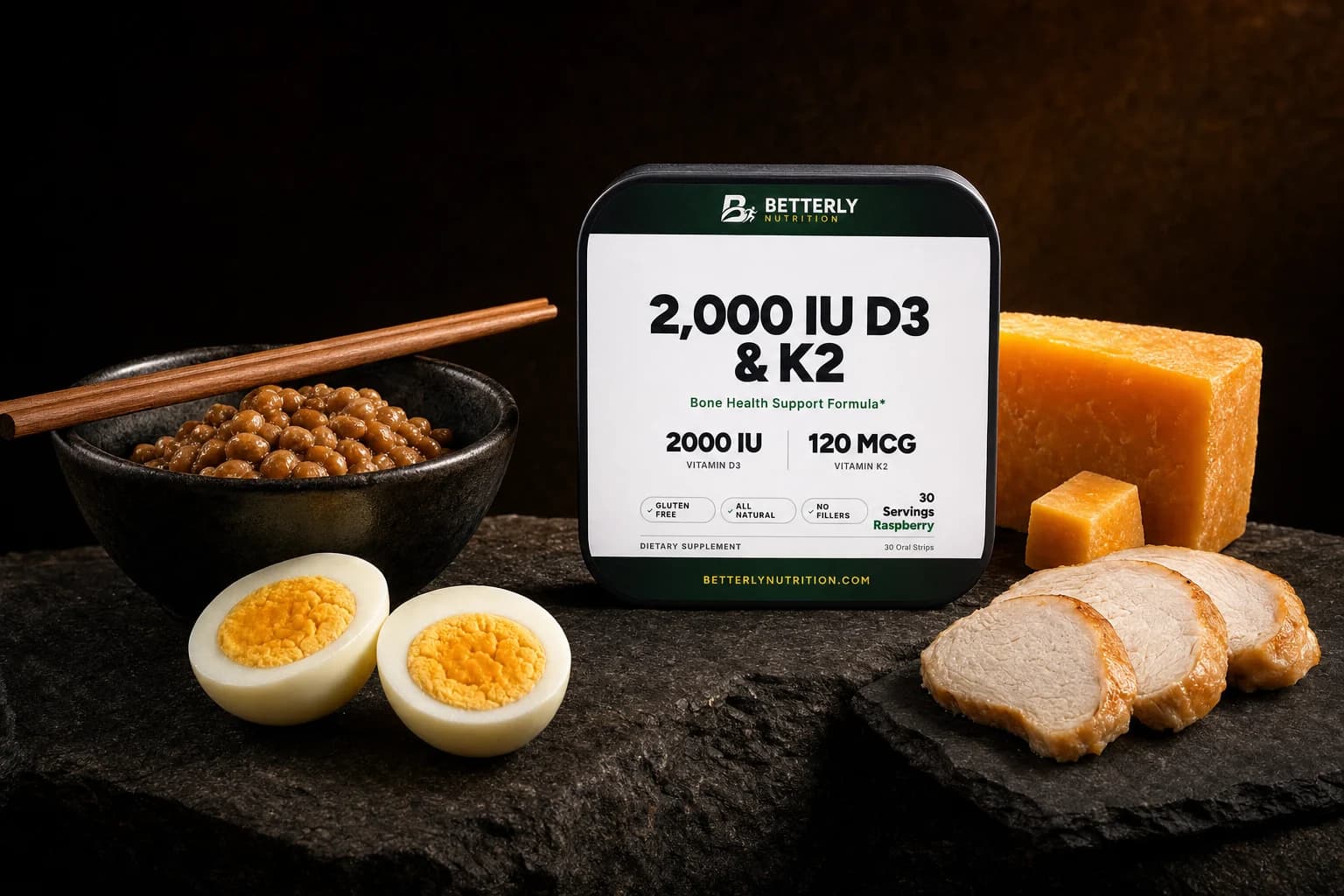
Our 2,000 IU Vitamin D3 & K2 Strips carry the same one-a-day directions, so using both means two separate strips. The ODS vitamin K fact sheet says vitamin K can interact with some blood thinners, particularly warfarin, so if you take one, ask your prescriber about the D3 & K2 strip first.
From our shop: 2,000 IU Vitamin D3 & K2 Strips — the same one-strip-a-day raspberry format, pairing 2000 IU vitamin D3 with 120 mcg vitamin K2 per 1-strip (100 mg) serving.
When is an iron strip not worth switching to?
Skip the switch to an iron strip if tablets already go down easily, your provider set a larger amount, or another product already supplies your iron.
A once-daily tablet that goes down fine and sits well gives you little reason to trade. You'd pay more per milligram for a convenience you don't need.
When a provider chose your tablet and amount, one strip may land short of it. Our strip holds 19 mg against that tablet's 65 mg, and the strip's label rules out doubling up. Swapping on your own would change your dose without anyone deciding it should.
Check your other labels, too. If a multivitamin or a hair formula, like our capsule above, already lists iron, a separate iron product in any format may be one too many.
If iron is one of several nutrients you'd rather take without swallowing, our pill-free vitamin comparison covers the other strips, gummies and powders. The iron strip and the D3 & K2 strip are both on our targeted support shelf.
Who should check with a healthcare provider first?
Anyone already on an iron plan from a provider should ask before swapping formats, and our iron strip's label adds pregnancy, nursing, being under 18 and any medical condition.
The strip's printed caution is "Consult a physician if pregnant, nursing, under 18, or have a medical condition." Children need extra care with any format, and MedlinePlus says not to give iron products made for adults to children.
A format change can also move the hour you take iron, which matters with some antibiotics. MedlinePlus says to take doxycycline, minocycline or tetracycline 2 hours before or 2 hours after iron supplements. A tablet you took with breakfast and a strip you let dissolve mid-afternoon could fall on different sides of that window, so mention the change to whoever prescribed the antibiotic.
ODS adds that iron can lower how much levodopa you absorb and can make levothyroxine work less well, so let a pharmacist see the strip's label if either is on your list. ODS also advises people who inherit a tendency to store too much iron to avoid both iron supplements and vitamin C supplements, in any format, and that includes the vitamin C products on our shelf. If surgery is coming up, list the strip for your surgical team along with everything else you take.
FAQ: iron strips vs pills
Can you take an iron strip and an iron pill on the same day?
No, don't add an iron strip to an iron tablet without your provider's okay. Our 19 mg iron strip plus a 65 mg ferrous sulfate tablet comes to 84 mg of iron, well past the 45 mg adult upper limit ODS lists for food and supplements combined. If you already take an iron tablet, ask your provider whether one strip a day could replace it.
Do iron strips need water?
No, iron strips don't need water. The 19mg Iron & Folate Strips label says to place 1 oral strip on the tongue daily and allow it to dissolve. A tablet works differently: MedlinePlus says to swallow iron tablets whole, and the 325 mg tablet label on DailyMed suggests taking it with a meal. Since the strip's directions leave the hour open, any consistent daily slot fits them.
What can I take instead of iron pills?
Instead of iron pills, you can get iron from food, dissolving strips, liquid drops or elixirs, and gummies. ODS lists lean meat, seafood, poultry, beans, lentils, spinach and fortified cereals as iron sources. Food also counts toward the same 45 mg adult daily limit, so include it when you add things up.
Are dissolvable iron supplements the same as iron strips?
Dissolvable iron supplements aren't always strips. Some are thin films that melt on your tongue, like ours, and others are tablets made to dissolve in a glass of water first. Either way, the iron row on the Supplement Facts panel gives you the dose per serving, and the child-poisoning warning applies to any product that contains iron.
Is an iron spray better than an iron tablet?
An iron spray isn't a format either of our federal sources covers: MedlinePlus lists iron as tablets, capsules, drops and elixir, and the ODS iron fact sheet doesn't mention sprays. We don't sell one. If you're weighing one, find the iron per spray and the sprays per serving, then keep your daily total under the 45 mg adult limit.
Sources
- Iron: Fact Sheet for Consumers, NIH Office of Dietary Supplements
- Folate: Fact Sheet for Consumers, NIH Office of Dietary Supplements
- Vitamin K: Fact Sheet for Consumers, NIH Office of Dietary Supplements
- Iron Supplements, MedlinePlus, U.S. National Library of Medicine
- Ferrous sulfate 325 mg film-coated tablet label, DailyMed, U.S. National Library of Medicine
- Dietary Supplement Labeling Guide: Chapter IV. Nutrition Labeling, U.S. Food and Drug Administration
If this left you looking for somewhere to start, read dissolvable iron strips — its amounts per serving are listed on the page. For the practical questions this raises, how dosing, sourcing and subscriptions work is answered in one place.