On this page
- Key takeaways
- Can you take calcium and magnesium together?
- Do calcium and magnesium compete for absorption?
- Should you take calcium and magnesium together or separately?
- What are the benefits of pairing calcium with magnesium?
- Is it okay to take calcium and magnesium at night?
- How do you add up calcium and magnesium from food and labels?
- How should you take our calcium capsule and magnesium glycinate?
- When don't you need calcium or magnesium supplements?
- Who should check with a healthcare provider first?
- FAQ: calcium and magnesium together
- Sources
The short answer: Yes, you can take calcium and magnesium together. The NIH and MedlinePlus pages we checked set no waiting time and no ratio between them. MedlinePlus does warn that too much calcium can keep your body from absorbing magnesium, though it doesn't define "too much." Separately, these pages limit amounts, not hours: no more than 500 mg of calcium at one time, and for adults, a 350 mg daily cap on magnesium from supplements.
Key takeaways
- NIH and MedlinePlus fact sheets give no waiting time and no ratio for calcium and magnesium.
- Per MedlinePlus, too much calcium can keep your body from absorbing magnesium, though it doesn't define "too much." Separately, ODS and MedlinePlus both advise 500 mg of calcium or less at one time.
- The adult calcium limit counts food and supplements together, while the 350 mg magnesium limit counts only supplements and medicines.
- At its printed directions, our calcium capsule supplies 250 mcg (10,000 IU) of vitamin D3 daily. That's 2.5 times the adult upper limit, so we won't endorse that dose.
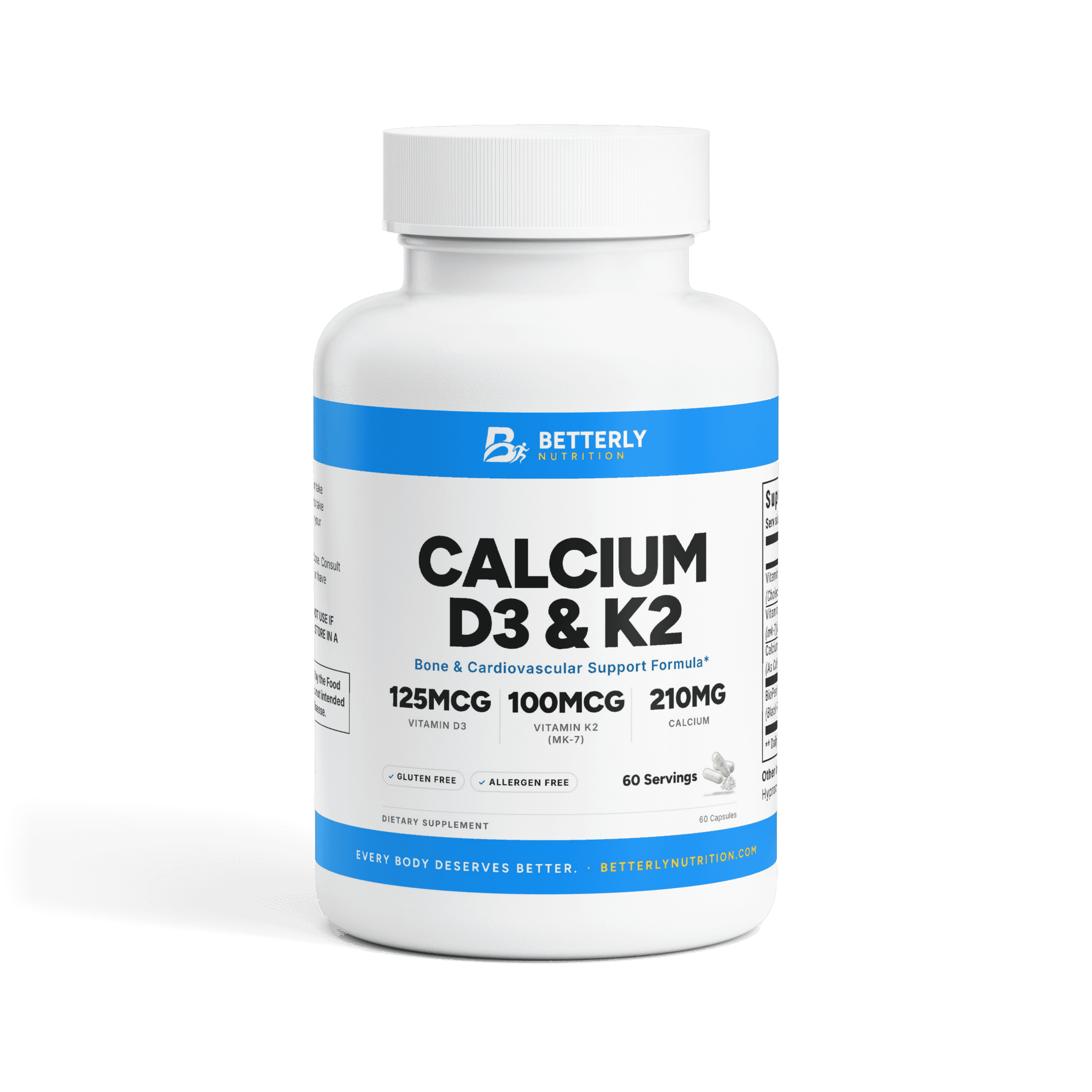
We sell both halves of this pairing: the Calcium, Vitamin D3 & K2 Capsules and the Magnesium Glycinate Capsules. That gives us a reason to oversell the combination, so every product amount and safety limit here comes from a printed panel or a federal fact sheet, including the one that counts against our own label. "Federal sources" here means the four NIH and MedlinePlus pages listed at the end.
Can you take calcium and magnesium together?
Yes, calcium and magnesium can be taken together, and many supplements already combine them; the firm guardrails in federal sources are each mineral's own limits.
The NIH Office of Dietary Supplements (ODS) calcium fact sheet for consumers says calcium is found in many multivitamin/mineral supplements and in products that mix it with other nutrients, and the ODS magnesium fact sheet for consumers says the same of magnesium in multivitamin/mineral supplements.
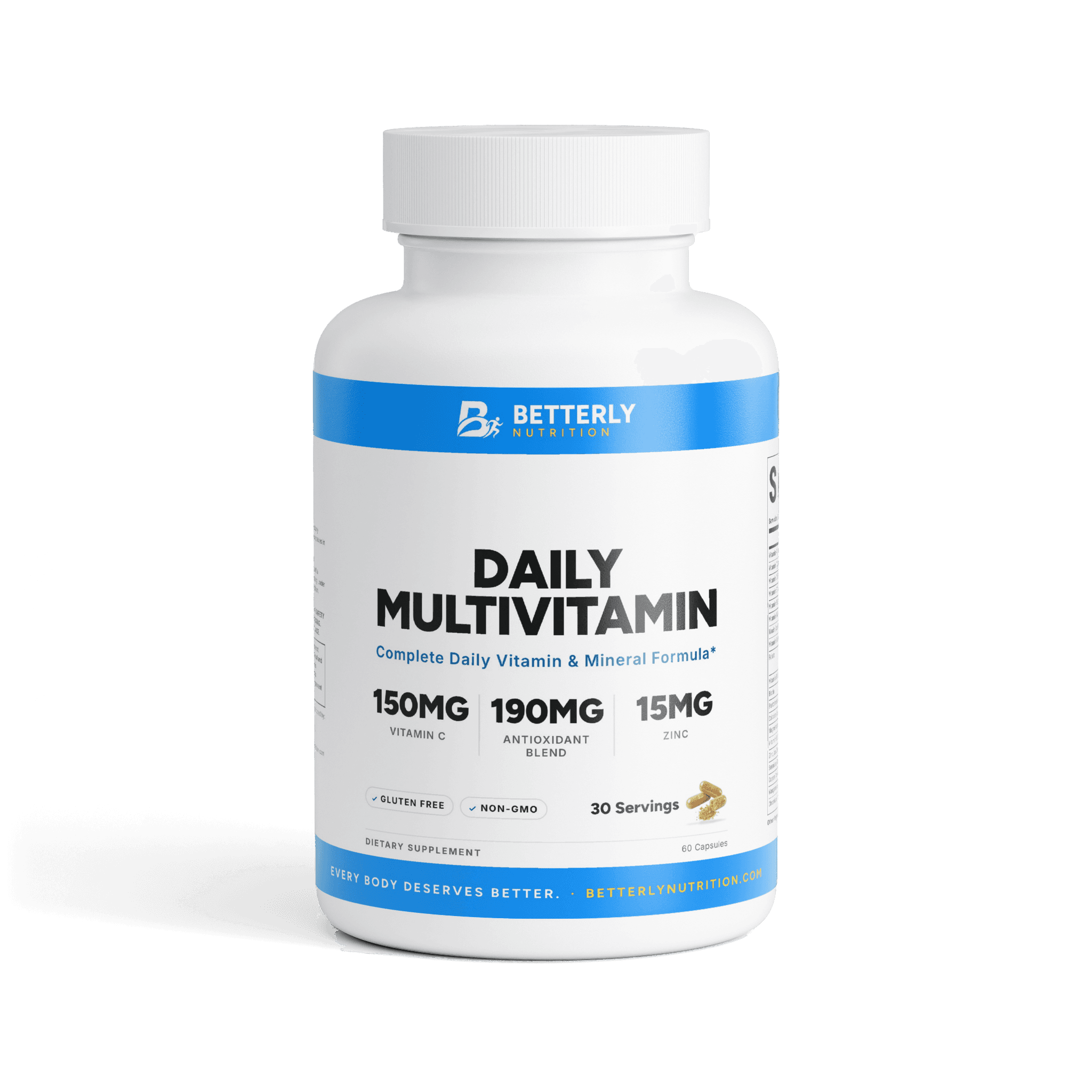
Our Daily Multivitamin Capsules are one example. Each 2-capsule serving lists 50 mg of calcium (as calcium carbonate) and 50 mg of magnesium (as magnesium oxide), and the label calls for both capsules with a morning meal.
Do calcium and magnesium compete for absorption?
MedlinePlus says too much calcium can hinder magnesium absorption, but neither it nor ODS turns that into a spacing rule for the pair.
The MedlinePlus page on calcium supplements lists magnesium alongside iron, zinc and phosphorus as minerals that too much calcium can keep the body from absorbing. It doesn't define "too much" or give hours to wait. Neither mineral's ODS page lists the other as an interaction.
Here's how common online advice compares:
| What you'll often read | What the federal pages say | Your takeaway |
|---|---|---|
| Space them 2 to 4 hours apart | No gap given for this pair | Spacing is optional |
| Split them once each tops 250 mg | No 250 mg rule; calcium's cutoff is 500 mg at once | Watch the calcium dose |
| Keep a 2:1 calcium-to-magnesium ratio | No ratio; separate daily targets | Meet each target on its own |
| Calcium by day, magnesium at bedtime | No time of day named | Labels and meals decide |
So the lever you control is each calcium dose: ODS and MedlinePlus both point to 500 mg or less.
Should you take calcium and magnesium together or separately?
Calcium and magnesium can go together or apart, since federal sources set no gap; split them when calcium tops 500 mg at once, a medicine needs spacing, or digestion complains.
Split them in these cases:
- A big calcium dose. Past 500 mg in one sitting, ODS says smaller doses absorb better, so move part to another meal.
- A prescription with timing rules. ODS says levothyroxine, a thyroid hormone medicine, absorbs poorly if taken less than 4 hours from calcium carbonate, and quinolone antibiotics within 2 hours of calcium. Its magnesium page flags some antibiotics and bisphosphonates, a class of bone medicines, taken too close to magnesium.
- A form that needs food. ODS says calcium carbonate absorbs best with food, while calcium citrate absorbs well with or without food. Our guide to calcium carbonate vs citrate weighs the two forms.
- An unhappy stomach. Calcium supplements can bring gas, bloating or constipation for some people, and ODS suggests smaller doses spread across the day, pairing it with meals, or a different form.
Otherwise, one sitting is simpler; see when to take calcium supplements for meal-by-meal planning.
What are the benefits of pairing calcium with magnesium?
Calcium and magnesium each play roles in bones, muscles and nerves, according to ODS, which doesn't credit them with an extra benefit for sharing one dose.
ODS says almost all the body's calcium is stored in bones and teeth, giving them structure and hardness, and that muscles need calcium to move and nerves need it to carry messages. Magnesium helps regulate muscle and nerve function and is used to make protein, bone and DNA. ODS also calls magnesium important for healthy bones.
The honest upside is practical. One routine covers two minerals that many diets run short on, per ODS.
What about the 2:1 ratio? ODS never frames these minerals as a ratio. For adults 19 to 50, it lists 1,000 mg of calcium a day, and 400 to 420 mg of magnesium for men or 310 to 320 mg for women. Divide one by the other and you get roughly 2.4 to 3.2 parts calcium per part magnesium.
That's our arithmetic, not an ODS target.
Is it okay to take calcium and magnesium at night?
Yes, calcium and magnesium can be taken at night if your labels allow it; ODS and MedlinePlus name no best hour for either, though calcium carbonate still wants food.
Magnesium's evening reputation is about winding down, but ODS says only that it helps regulate muscle and nerve function, so we make no promise about your nights. Our glycinate label names no time of day.
Calcium is the tricky half. ODS and MedlinePlus both tie carbonate to food or meals, so a carbonate capsule on an empty stomach at bedtime doesn't fit. Citrate absorbs well either way, which makes it the easier late dose.
For carbonate products, dinner is the source-friendly night slot; citrate can wait until bedtime, with magnesium beside either. Our own carbonate capsule's label says before meals instead (more on that below). Our look at glycinate and citrate forms of magnesium explains why many people save glycinate for the evening.
How do you add up calcium and magnesium from food and labels?
Count calcium from food and every supplement against one daily limit, but count magnesium only from supplements and medicines, because ODS scores the two limits differently.
For calcium, ODS caps adults at 2,500 mg a day for ages 19 to 50 and 2,000 mg after that, food included. The adult magnesium limit is 350 mg a day from supplements and medications only, since ODS says magnesium naturally in food isn't harmful and doesn't need limiting.
Try this tally:
- Pull every panel and use the Calcium and Magnesium rows, which give the mineral itself. The Magnesium row on our glycinate reads 275 mg; the 2,500 mg beside it also weighs the glycine that magnesium is bound to.
- Add calcium from food. ODS names milk, yogurt and cheese as most Americans' main sources, plus canned fish with bones, kale, broccoli and fortified foods. Count calcium carbonate antacids too.
- Leave food magnesium out, since nuts, seeds, legumes, whole grains and leafy greens don't count toward 350 mg. Magnesium in some laxatives and stomach products does.
Here's how our three relevant labels add up:
| Daily, at label directions | Calcium | Supplement magnesium | Vitamin D3 |
|---|---|---|---|
| Calcium capsule (2) | 420 mg | 0 mg | 250 mcg (10,000 IU) |
| Magnesium glycinate (3) | 0 mg | 275 mg | 0 mcg |
| Both of the above | 420 mg | 275 mg | 250 mcg (10,000 IU) |
| Multivitamin (2) plus glycinate (3) | 50 mg | 325 mg | 10 mcg |
| Adult upper limit | 2,000 to 2,500 mg | 350 mg | 100 mcg (4,000 IU) |
Every row stays under the magnesium cap and leaves room for food calcium. The trouble is the last column, where any row with the calcium capsule lands at 2.5 times the vitamin D limit. The multivitamin-plus-glycinate row sits just 25 mg under the magnesium cap, so a magnesium antacid or laxative that day could tip it over.
From our shop: Magnesium Glycinate Capsules — a vegan, gluten-free capsule with 275 mg of magnesium per 3-capsule serving, 75 mg below the 350 mg adult supplement limit.
How should you take our calcium capsule and magnesium glycinate?
Magnesium Glycinate Capsules follow a simple once-daily label, but our calcium capsule's twice-daily directions push vitamin D3 past the adult upper limit, which rules that dose out for us.
The glycinate label's suggested use is three capsules once daily, unless your healthcare professional directs otherwise. That serving gives 275 mg of magnesium (65% DV), and each bottle holds 30 servings. One honest limit: ODS lists magnesium aspartate, citrate, lactate and chloride among the forms the body absorbs more easily. Glycinate isn't on that list, though ODS doesn't rank it lower either.
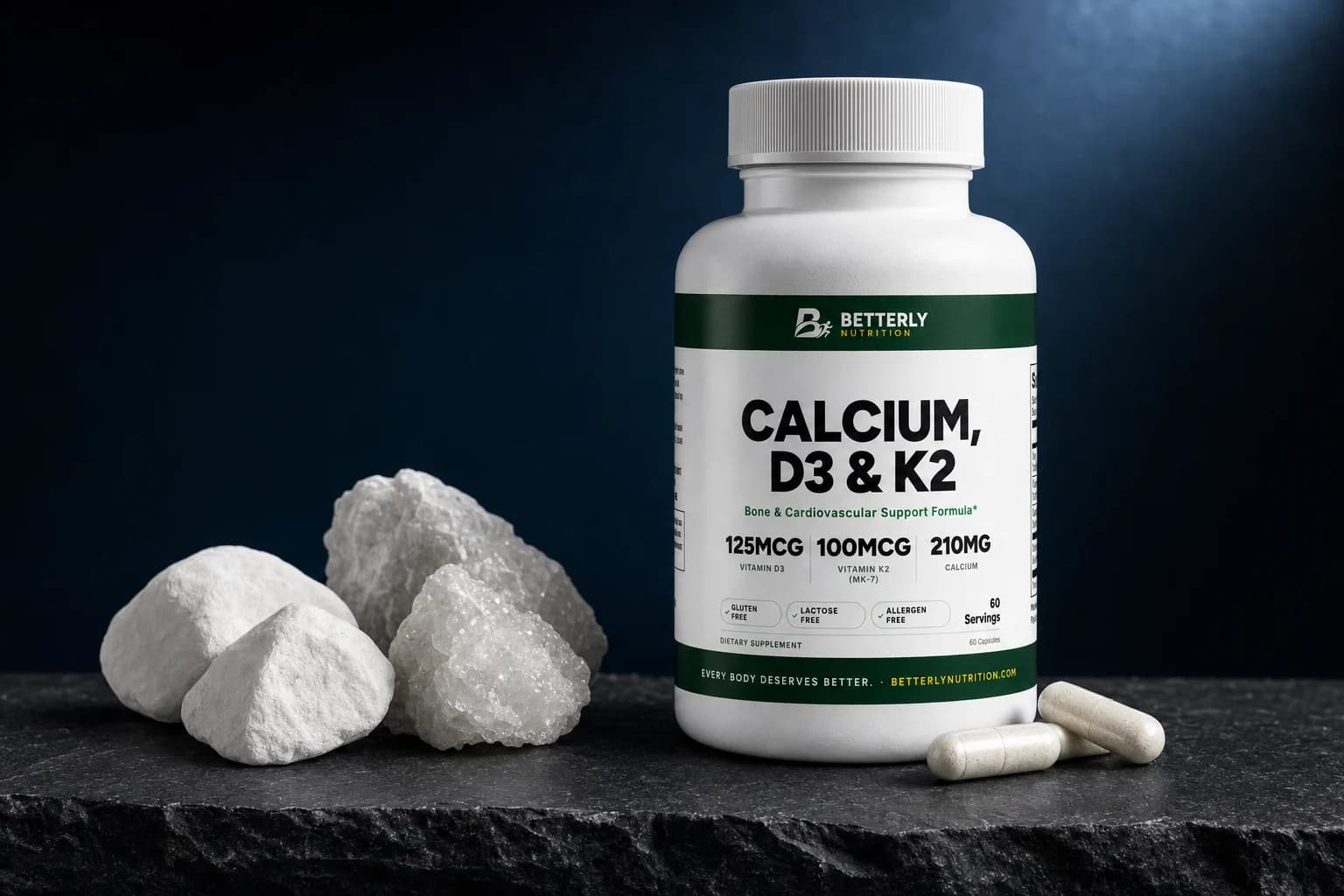
Per 1 Veggie Capsule serving, the calcium capsule's panel prints:
- Calcium (as calcium carbonate): 210 mg, 16% DV
- Vitamin D3 (cholecalciferol): 125 mcg, 625% DV
- Vitamin K2 (MK-7, as menaquinone): 100 mcg, no DV set
- BioPerine®, a black pepper fruit extract: 5 mg, no DV set
By our conversion, 125 mcg equals 5,000 IU. The label's suggested use is one capsule twice a day, for best results 20-30 minutes before a meal. That's 420 mg of calcium in doses well under 500 mg, plus 250 mcg (10,000 IU) of vitamin D3 daily. For adults, the ODS vitamin D fact sheet for consumers puts the ceiling at 100 mcg (4,000 IU) a day, counting every source, so a single capsule's 125 mcg is already past it.
That puts the labeled dose out of bounds for us to endorse, and even one capsule a day deserves a healthcare provider's okay first. The timing clashes, too. ODS ties carbonate to food and says vitamin D absorbs best alongside food containing some fat, while this label points to the minutes before eating. Ask your pharmacist to help square the two.
If your provider clears it, neither ODS nor MedlinePlus says it must stay apart from the glycinate. Its label claims are gluten free and allergen free. It sits in our targeted support collection next to our lower-dose vitamin D products.
From our shop: Calcium, Vitamin D3 & K2 Capsules — each 1 Veggie Capsule serving pairs 210 mg of calcium (as calcium carbonate) with 125 mcg (5,000 IU) of vitamin D3, which is over the adult upper limit, so get your provider's okay before using it.
When don't you need calcium or magnesium supplements?
You may not need either supplement if food already covers you: ODS lists 1,000 to 1,200 mg of calcium and 310 to 420 mg of magnesium a day for adults.
For calcium, the 1,200 mg figure applies to women from 51 and everyone 71 and older. If dairy, canned fish with bones and fortified foods already fill most of your target, a capsule adds little.
For magnesium, ODS says many American diets provide less than the recommended amount, and it flags men older than 70 and teenagers as most likely to run low. If nuts, seeds, legumes, whole grains and leafy greens already get you to 310 to 420 mg a day, a supplement adds little.
You may not need a separate pair if your multivitamin lists both minerals and meals fill the rest.
Who should check with a healthcare provider first?
Get a healthcare provider's okay for calcium, magnesium or both if you're pregnant or nursing, under 18 or on prescription medicine, or have a medical condition or upcoming surgery.
The calcium and magnesium labels share one caution: "Do not exceed recommended dose. Consult a physician if pregnant, nursing, under 18, or have a medical condition." Also talk to someone first if:
- You take a diuretic. ODS says diuretics can raise or lower magnesium loss in urine, and that thiazide diuretics could push blood calcium too high alongside vitamin D supplements.
- You take a blood thinner. Each calcium capsule lists 100 mcg of vitamin K2, and vitamin K can interact with warfarin, as our guide to choosing between plain D3 and D3 with K2 explains.
- You already take vitamin D. Our calcium capsule alone supplies 250 mcg (10,000 IU) a day at label directions.
FAQ: calcium and magnesium together
Can you take calcium and magnesium glycinate at the same time?
Yes, calcium and magnesium glycinate can share a sitting, since neither ODS nor MedlinePlus sets a gap between them. Our Magnesium Glycinate Capsules' label gives 275 mg of magnesium per 3-capsule serving and no time of day, so they can join whichever meal your calcium does. Keep each calcium dose at or under 500 mg, and keep supplement magnesium at 350 mg a day or less.
What are the side effects of taking calcium and magnesium together?
Calcium and magnesium have different side effects, and ODS describes no new ones from the pair. ODS lists gas, bloating and constipation for some people taking calcium supplements. It links high magnesium intakes from supplements to diarrhea, nausea and abdominal cramping. For magnesium, the guardrail ODS gives is the 350 mg supplement limit.
Does magnesium help your body absorb calcium?
The federal pages we read don't say so. ODS gives that job to vitamin D, saying it helps your body absorb calcium, and it doesn't name magnesium as an absorption partner. If you're adding vitamin D for calcium's sake, total it first. Our calcium capsule already supplies 250 mcg (10,000 IU) a day at its directions, above the 100 mcg (4,000 IU) adult limit.
Do calcium and magnesium interact with medications?
Yes, calcium and magnesium both interact with some medicines. MedlinePlus says calcium supplements may change how your body absorbs certain antibiotics and iron pills, and ODS says dolutegravir should go 2 hours ahead of calcium or 6 hours after it. On the magnesium side, ODS warns that some antibiotics and bisphosphonates may not absorb well if taken near it. Give your pharmacist your full list, supplements included.
Is a calcium-magnesium combo better than two separate supplements?
Neither a combo nor two separate bottles comes out ahead in ODS's fact sheets. A combo is one step, but you can't adjust one mineral without the other. Separate products let you split calcium into doses of 500 mg or less and time magnesium to its own label. Either way, total the Calcium and Magnesium rows against each mineral's limit.
Sources
- Calcium: Fact Sheet for Consumers, NIH Office of Dietary Supplements
- Magnesium: Fact Sheet for Consumers, NIH Office of Dietary Supplements
- Vitamin D: Fact Sheet for Consumers, NIH Office of Dietary Supplements
- Calcium supplements, MedlinePlus Medical Encyclopedia
If this left you looking for somewhere to start, read 210 mg calcium capsules with D3 and K2 — its amounts per serving are listed on the page. For the practical questions this raises, how dosing, sourcing and subscriptions work is answered in one place.