On this page
- Key takeaways
- When should you take calcium supplements?
- Does calcium work better in the morning or at night?
- Do you need to take a calcium supplement with food?
- How many calcium pills can you take at one time?
- When should you take calcium and vitamin D3?
- How does our calcium capsule's label fit the 500 mg rule?
- How far apart should calcium be from iron and magnesium?
- When don't you need a calcium supplement?
- Who should check with a healthcare provider first?
- FAQ: when to take calcium
- Sources
The short answer: When to take calcium supplements depends more on dose size than on the clock. According to the NIH, supplement calcium is absorbed best when a single dose stays at or under 500 mg, and MedlinePlus ties calcium carbonate to mealtimes. Neither names a best hour. So split larger amounts across the day, pair carbonate with food, and give iron and certain medicines their own time slots.
Key takeaways
- Federal health sources don't pick morning or night for calcium, so the best slot is one that fits your meals and your other pills.
- Your body absorbs calcium best at 500 mg or less per sitting, which means a bigger daily amount works better as two or more smaller doses.
- Calcium carbonate absorbs best with a meal, but calcium citrate works whether your stomach is empty or full.
- Calcium may get in the way of iron and can interfere with a few prescription medicines, so plan those first and fit calcium around them.
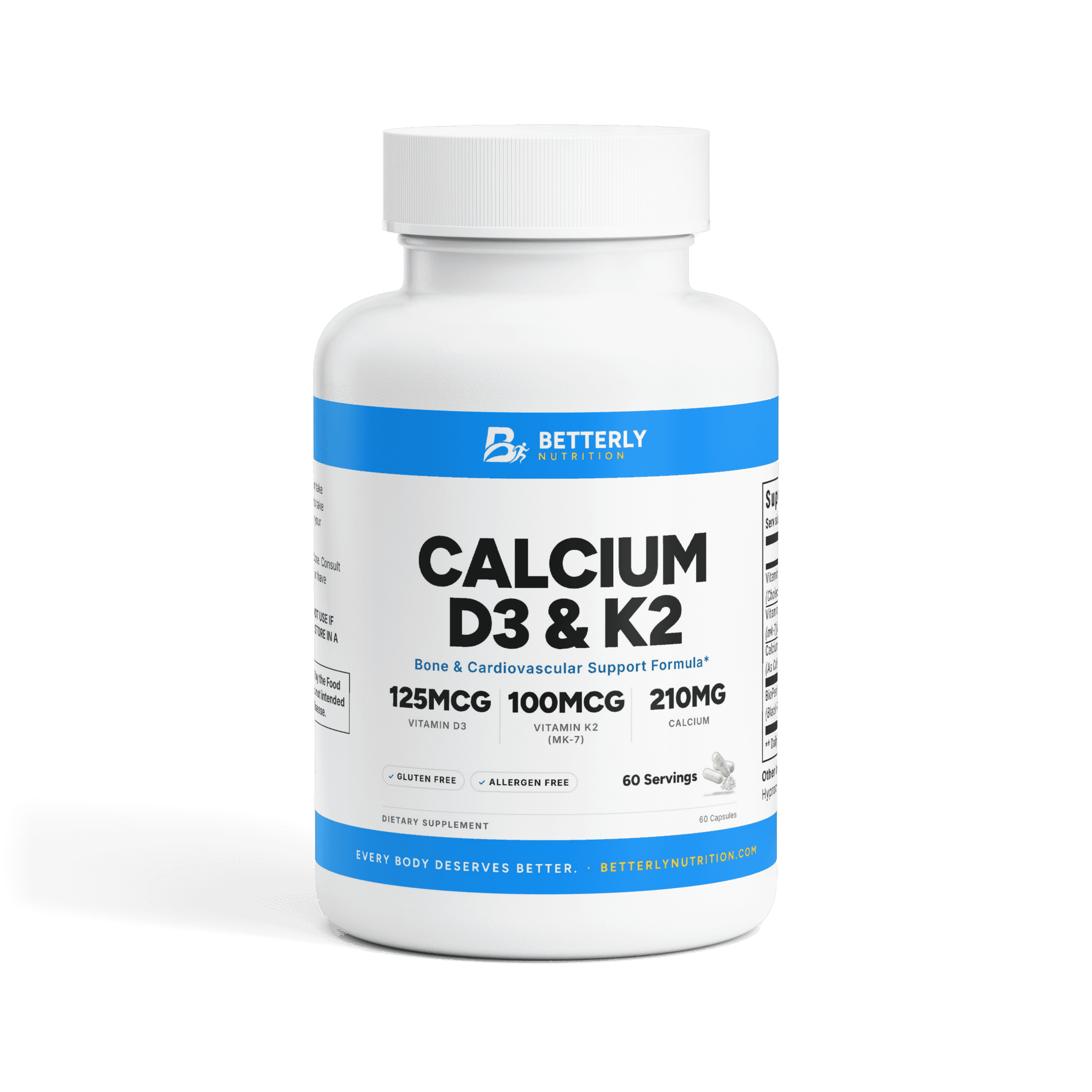
- Each of our calcium capsules carries 125 mcg (5,000 IU) of vitamin D3, already past the 100 mcg (4,000 IU) adult daily upper limit, and its label says two a day, so we can't recommend the labeled dose.
The only calcium product on our shelf is the Calcium, Vitamin D3 & K2 Capsules, and its label parts ways with the federal advice here in two places. We'll point out both as we reach them, so you can judge any brand's timing, ours included.
When should you take calcium supplements?
Calcium supplements are best taken in doses of 500 mg or less, spread across the day, with calcium carbonate taken alongside a meal.
The NIH Office of Dietary Supplements (ODS) consumer fact sheet on calcium gives a worked example. If you get 1,000 mg a day from supplements, it says a smaller dose twice a day beats taking the whole amount at once.
MedlinePlus is even more direct: keep each dose to 500 mg or less. Its page on calcium supplements lists two payoffs for spreading calcium through the day. More of it gets absorbed, and you're less likely to deal with gas, bloating or constipation.
Neither page gives a clock time, which leaves room to fit calcium around your day.
Does calcium work better in the morning or at night?
Calcium doesn't come with a better hour: ODS and MedlinePlus name no preferred time, so your meals, medicines and other supplements decide where it goes.
You'll find firm answers both ways online, but not on these federal pages.
What really shapes the answer is everything else on your schedule:
| If your day includes | Where calcium could go | Based on |
|---|---|---|
| An iron supplement | A different time of day from the iron | ODS iron fact sheet |
| Levothyroxine, a thyroid hormone medicine | At least 4 hours apart, if your calcium is carbonate | ODS calcium fact sheet |
| A quinolone antibiotic | At least 2 hours apart | ODS calcium fact sheet |
| More than 500 mg of supplemental calcium | Two or more separate doses | ODS and MedlinePlus |
| Calcium carbonate and a meal you rarely skip | With that meal | MedlinePlus |
Calcium is usually the flexible item, while iron and some prescriptions have stricter needs. Give those their slots first, then place calcium in the gaps.
Do you need to take a calcium supplement with food?
You need food with calcium carbonate, which ODS says absorbs best alongside a meal, while calcium citrate absorbs well whether or not you've eaten.
That makes the form on your label the first thing to check. Look at the Calcium line of the Supplement Facts panel, where the form usually sits in parentheses, such as "(as Calcium Carbonate)." If it names citrate, you can take it whenever it's easiest to remember. If it names carbonate, the federal advice ties each dose to eating.
ODS and MedlinePlus both say people with low stomach acid absorb citrate more easily than carbonate, and MedlinePlus notes that's more common after age 50.
Our calcium carbonate vs citrate comparison covers the other trade-offs between the two, such as calcium per gram and price.
How many calcium pills can you take at one time?
Calcium pills taken together should add up to 500 mg of calcium or less per sitting, and that count includes every product you swallow at that moment.
Calcium also shows up on labels you might not think of as calcium products. Here's how three of our own panels add up when taken together:
| Taken together | Calcium in that sitting | 500 mg or less? |
|---|---|---|
| 1 calcium capsule | 210 mg | Yes |
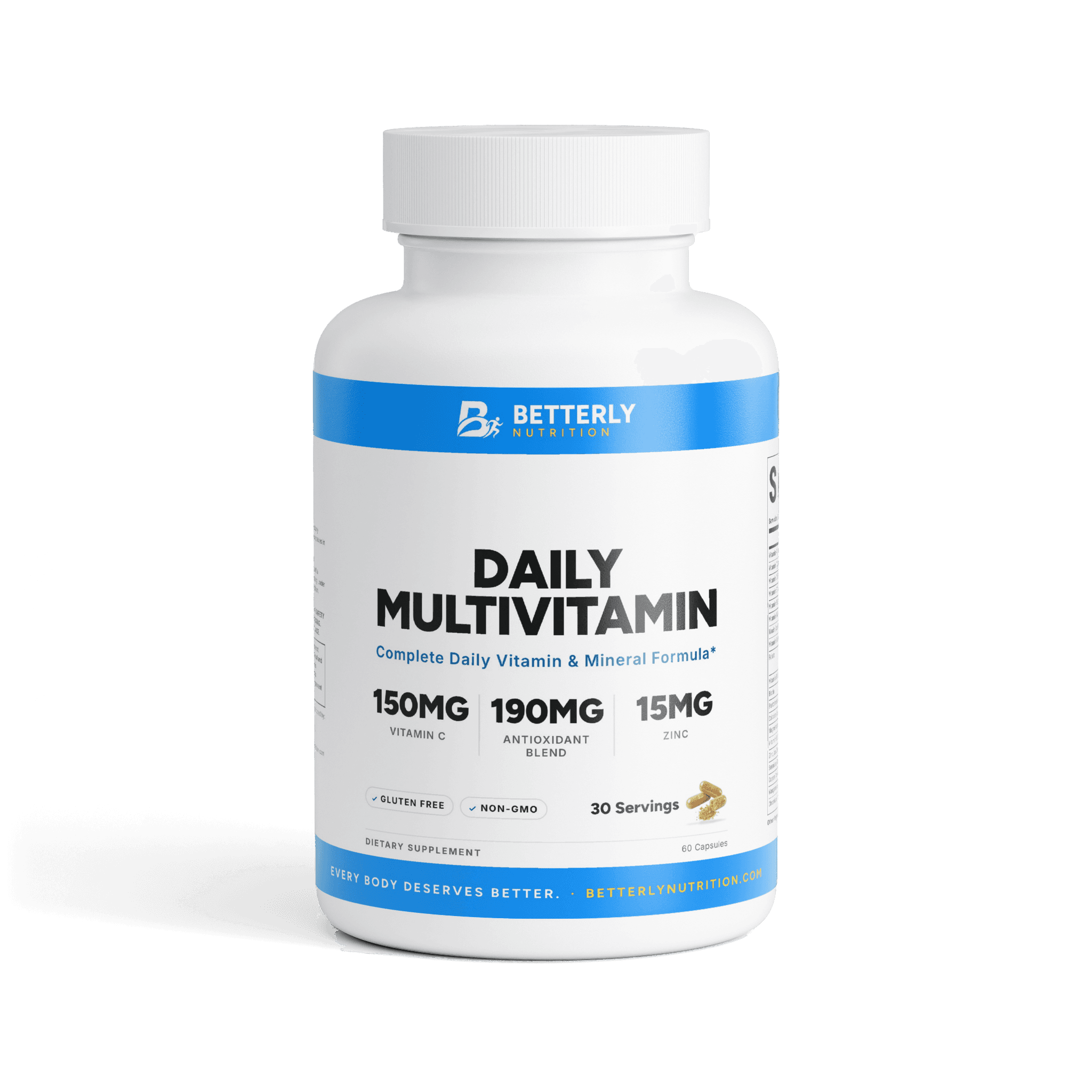
| 1 calcium capsule + one multivitamin serving | 260 mg | Yes |
| 1 calcium capsule + one 5-HTP serving | 660 mg | No |
These rows check calcium only. Each includes our capsule, which alone tops the 100 mcg vitamin D limit, and the multivitamin adds 10 mcg more.
The surprise is the 5-HTP Capsules. They list 450 mg of calcium, as calcium carbonate, per 2-capsule serving. That tops the 420 mg a whole day of our calcium capsules supplies, so a serving of each together lands well past 500 mg.
The Daily Multivitamin Capsules are gentler here, at 50 mg of calcium per 2-capsule serving. Their label places both capsules at a morning meal.
So before you settle on a slot, read the Calcium line on everything you take together. If the total tops 500 mg, move one product to another part of the day. For a carbonate product, the two federal rules together point to one dose at each of two meals, unless its label says otherwise.
When should you take calcium and vitamin D3?
Calcium and vitamin D3 can share a meal: ODS says vitamin D aids calcium absorption and itself absorbs best alongside food that has some fat in it.
Neither ODS page says the two have to be swallowed at the same minute, though. A separate D3 product can go with whichever meal you're most likely to remember.
The number to watch is the D3 total, not the timing. ODS's consumer fact sheet on vitamin D lists 100 mcg (4,000 IU) as the daily upper limit for adults, a ceiling that includes vitamin D from food and drinks, not just pills.
That's exactly the issue with our own capsule, covered next. For the timing of D3 and K2 themselves, see our look at whether D3 needs to come with K2.
How does our calcium capsule's label fit the 500 mg rule?
Our Calcium, Vitamin D3 & K2 Capsules pass the 500 mg test at 210 mg per dose, but two daily doses put vitamin D3 far over its upper limit.
The label's suggested use reads: "As a dietary supplement take one (1) capsule twice a day. For best results take 20-30 min before a meal or as directed by your healthcare professional."
Start with the clock. Picture a noon lunch: the label's window lands between 11:30 and 11:40, while ODS and MedlinePlus would have calcium carbonate go down with the lunch itself. We don't swap a label's schedule for ours, so let a pharmacist who knows your other pills weigh in on that gap.
Then the count. Here's the twice-daily schedule as a day, per 1 Veggie Capsule serving:
| Per the label | Dose 1 | Dose 2 | Day total |
|---|---|---|---|
| Calcium (as calcium carbonate) | 210 mg | 210 mg | 420 mg |
| Vitamin D3 | 125 mcg (5,000 IU) | 125 mcg (5,000 IU) | 250 mcg (10,000 IU) |
The calcium row is the easy part: at 210 mg (16% DV), each dose sits well under the 500 mg-per-sitting guidance.
The vitamin D3 row is where the schedule breaks down. Against the 100 mcg (4,000 IU) adult daily limit, Dose 1 alone runs 25 mcg (1,000 IU) over, and after Dose 2 the day sits 150 mcg (6,000 IU) past it. No choice of hour fixes that, so we can't recommend this capsule at its labeled dose. If you're still considering it, let a healthcare provider see the label before you open the bottle.
If the D3 math rules this capsule out, our Targeted Support collection has two vitamin D products at 2,000 IU per serving, neither with calcium on its panel.
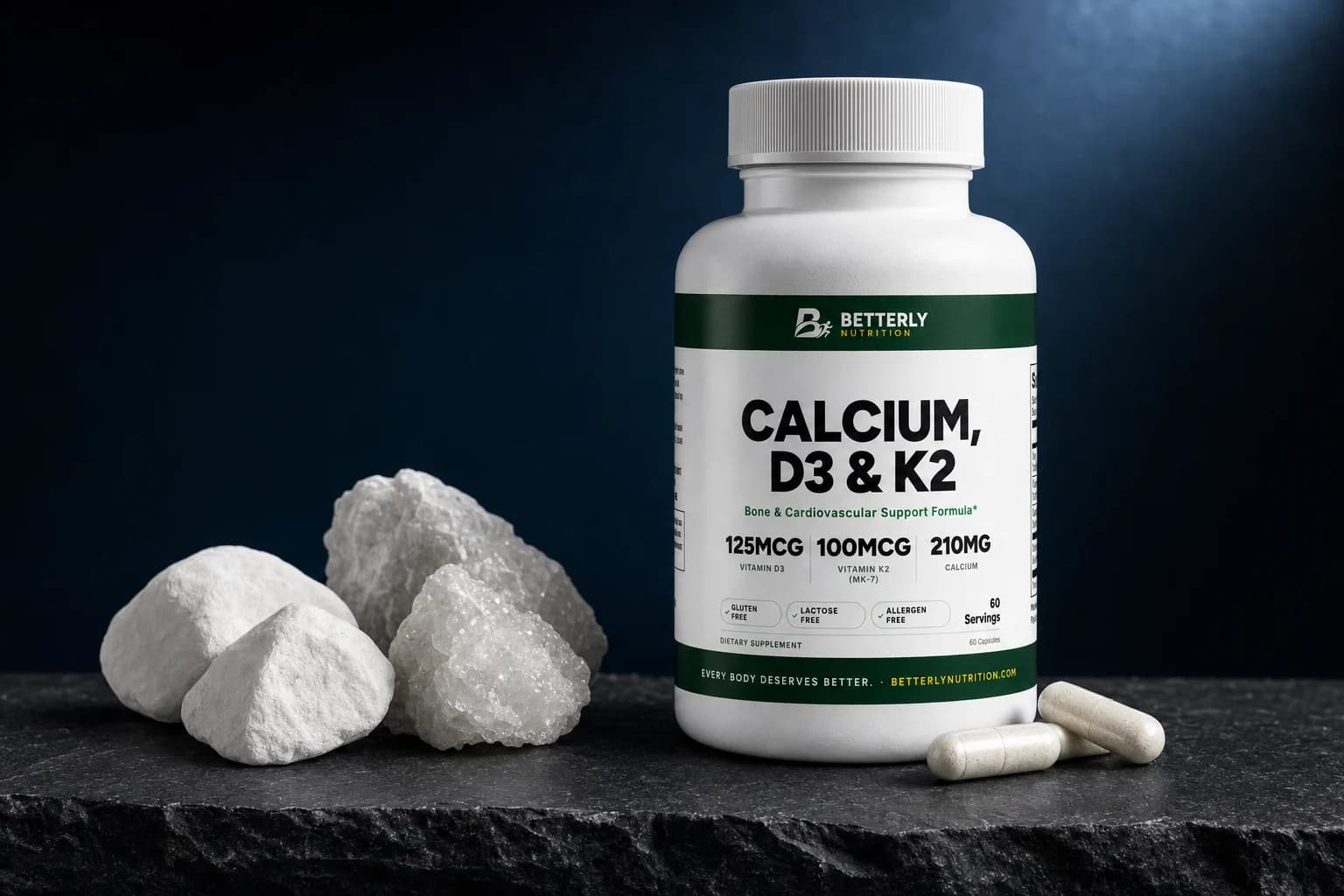
From our shop: Calcium, Vitamin D3 & K2 Capsules — 210 mg of calcium per 1 Veggie Capsule serving fits the 500 mg-per-sitting guidance, but the 125 mcg (5,000 IU) of vitamin D3 in each capsule means a provider's okay comes first.
How far apart should calcium be from iron and magnesium?
ODS suggests keeping calcium and iron supplements at separate times of day, while none of our federal sources sets a fixed gap between calcium and magnesium.
Start with iron. The ODS iron fact sheet for consumers says calcium might interfere with iron absorption, and that taking the two supplements at different times of day might keep that from happening. MedlinePlus names iron pills, along with certain antibiotics, among the medicines whose absorption a calcium supplement may change. Our guide on how to take iron supplements covers the iron side of that plan.
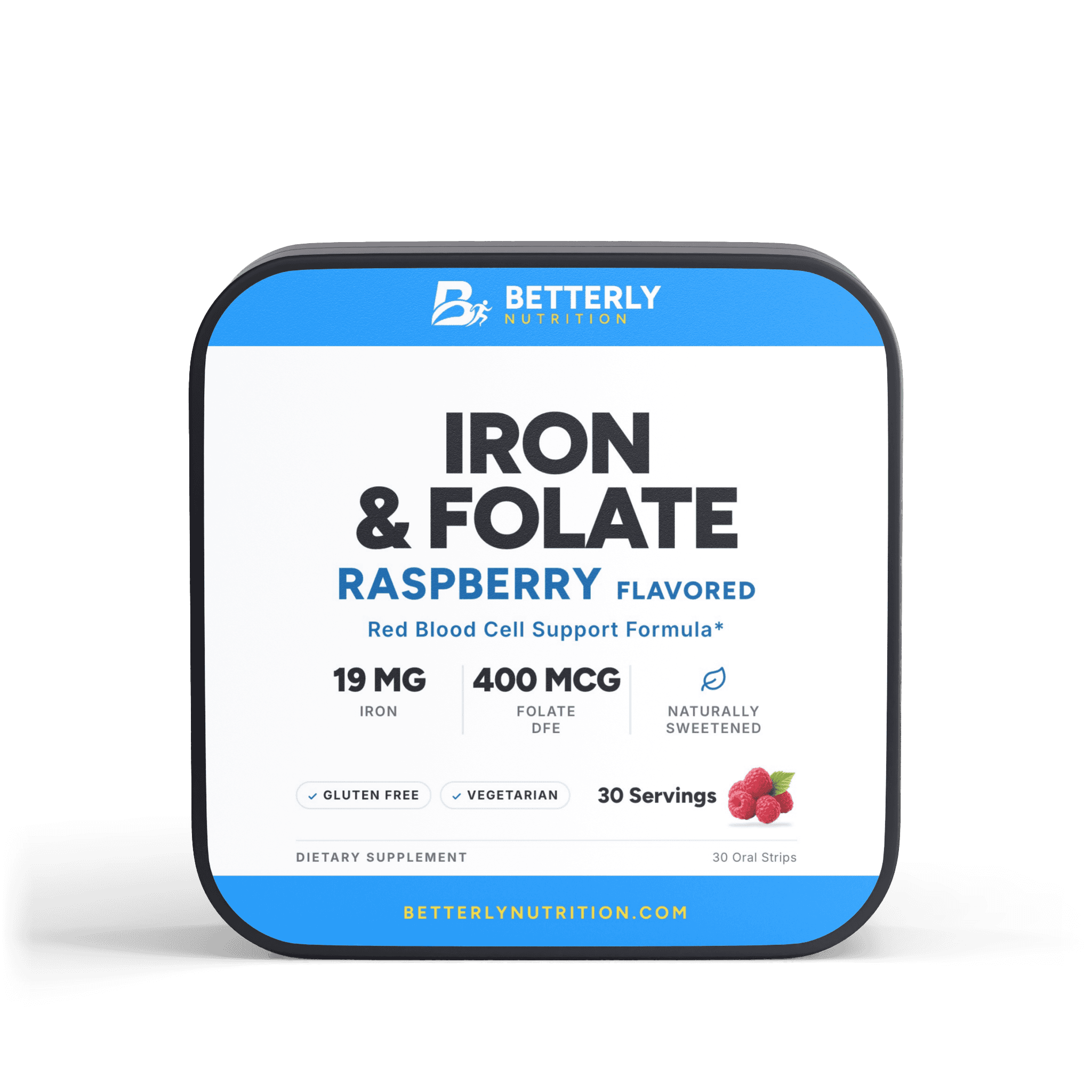
Our 19mg Iron & Folate Strips show how the split can work. Each 1 Oral Strip (200 mg) serving has 19 mg of iron and 400 mcg DFE of folate, and the label says only to let 1 strip dissolve on the tongue each day. With no set time, the strip can go at the opposite end of your day from calcium. Store the pack where children can't get to it, as its iron warning urges.
Magnesium is a looser case. MedlinePlus warns that excess calcium can block the body's uptake of iron, zinc, magnesium and phosphorus. That's a caution about large amounts, not a timing window.
From our shop: Magnesium Glycinate Capsules — 275 mg of magnesium (from 2,500 mg magnesium glycinate) per 3-capsule serving, and a once-daily label that doesn't tie it to any hour.
Because that label names no hour, the magnesium can take a slot of its own if you'd rather keep the two minerals apart. Our guide to taking calcium and magnesium together goes deeper.
When don't you need a calcium supplement?
A calcium supplement has no slot to fill when meals already reach your daily target: 1,000 mg for most adults and 1,200 mg for some older adults, per ODS.
The 1,200 mg figure covers women 51 to 70 and everyone 71 and older. If your usual meals get you there, the whole timing puzzle in this guide goes away. There's no dose to split, no meal to pair it with and nothing to keep clear of your iron.
A partial gap is a different story. If food leaves you a few hundred milligrams short, that gap may fit in one sitting of 500 mg or less, so splitting never comes up.
Every sitting you add also counts toward a daily ceiling that takes in everything you eat, drink and swallow. For adults, ODS sets that calcium ceiling at 2,500 mg daily between 19 and 50, dropping to 2,000 mg daily at 51 and older. MedlinePlus asks for your provider's approval before you go beyond the recommended amount.
Who should check with a healthcare provider first?
A healthcare provider should weigh in before you add calcium if your day already holds prescription doses, you're under 18, pregnant or nursing, or you manage a medical condition.
Each of those groups appears in the caution on our capsule's label: "Do not exceed recommended dose. Consult a physician if pregnant, nursing, under 18, or have a medical condition." ODS sets the same 100 mcg (4,000 IU) vitamin D limit for ages 9 to 18 and during pregnancy and breastfeeding, so one capsule tops it for them too.
Most of the planning comes down to spacing, so bring these to your pharmacist or provider:
- Levothyroxine or a quinolone antibiotic on your list. The ODS gaps are 4 hours between levothyroxine and a calcium carbonate supplement, and 2 hours between a quinolone and any calcium supplement.
- An iron supplement in the mix. Give iron its slot first, at a different time of day from calcium, then build the rest around it.
- Vitamin D on more than one label. Add up the mcg on every panel you take in a day, since the ODS limit is a daily total rather than a per-sitting one. Spreading D3 across the day doesn't lower that total.
- A blood thinner such as warfarin. The ODS vitamin K fact sheet for consumers says people taking one should keep their vitamin K intake about even from day to day. Our capsule's panel lists vitamin K2 (MK-7) at 100 mcg per capsule, so starting it, stopping it or skipping doses would shift that amount.
MedlinePlus says to always tell your provider and pharmacist when you're taking extra calcium. Before any procedure, give your surgical team that same list.
FAQ: when to take calcium
How far apart should you space calcium doses?
Calcium doses don't come with a set number of hours between them in our sources. MedlinePlus simply asks you to spread extra calcium over the day. What counts is that each sitting stays at 500 mg or under, not the hours in between. Don't go past your label's number of doses, and place any iron or spaced medicine first.
Can you take calcium, magnesium and zinc at the same time?
Calcium, magnesium and zinc can share a sitting as far as our sources go, since none of them sets a required gap between the three. Our Daily Multivitamin Capsules combine all three, at 50 mg of calcium, 50 mg of magnesium and 15 mg of zinc per 2-capsule serving. MedlinePlus does caution that excess calcium can interfere with how you absorb zinc and magnesium, which is one more reason not to go past a label's suggested use.
Should you take calcium at the same time every day?
Calcium doesn't need the same clock time every day, as far as ODS and MedlinePlus go. They tie calcium to dose size and, for carbonate, food. A steady routine still helps in practical ways: it's easier to remember, and it keeps any gap from iron or a spaced medicine the same each day.
What should you do if calcium upsets your stomach?
If a calcium supplement gives you gas, bloating or constipation, ODS suggests spreading the dose through the day, taking it with meals or switching to another form of calcium. MedlinePlus adds drinking more fluids and eating high-fiber foods, and it suggests switching forms if those changes don't help. It also says to raise a calcium dose slowly. If it doesn't settle, pause the supplement and check in with your provider.
Sources
- Calcium: Fact Sheet for Consumers, NIH Office of Dietary Supplements
- Calcium supplements, MedlinePlus Medical Encyclopedia
- Vitamin D: Fact Sheet for Consumers, NIH Office of Dietary Supplements
- Iron: Fact Sheet for Consumers, NIH Office of Dietary Supplements
- Vitamin K: Fact Sheet for Consumers, NIH Office of Dietary Supplements
If this left you looking for somewhere to start, read calcium carbonate capsules with D3 and K2 — its amounts per serving are listed on the page. For the practical questions this raises, how dosing, sourcing and subscriptions work is answered in one place.