On this page
- Key takeaways
- Calcium carbonate vs citrate: what's the difference?
- What does "elemental calcium" mean on a label?
- Which form does your body absorb better?
- Calcium carbonate vs citrate: which is better for you?
- How do gluconate, lactate and other calcium forms compare?
- Which Betterly labels use carbonate, and which use citrate?
- What do our calcium capsule's label directions add up to?
- When does the carbonate-or-citrate choice stop mattering?
- Who should check with a healthcare provider first?
- FAQ: calcium carbonate vs citrate
- Sources
The short answer: Calcium carbonate vs citrate is a trade between strength and flexibility. The NIH says carbonate is 40% calcium by weight and citrate is 21%, so carbonate packs about twice the calcium into each gram. MedlinePlus says to take carbonate with meals, while citrate is absorbed well on an empty or full stomach. Carbonate usually costs less, and citrate often suits people with low stomach acid.
Key takeaways
- Calcium carbonate is 40% calcium by weight and calcium citrate is 21%, so the same dose of calcium takes roughly twice as much citrate.
- MedlinePlus says calcium carbonate should be taken with meals, while calcium citrate is absorbed well with or without food.
- The milligrams on a Supplement Facts panel's Calcium line are elemental calcium, so two labels compare directly whatever form they use.
- Whatever the form, the NIH says your body absorbs calcium best in amounts of 500 mg or less at one time.
- Our calcium capsule uses carbonate, and its label directions also add up to 10,000 IU of vitamin D3 a day, well past the adult upper limit.
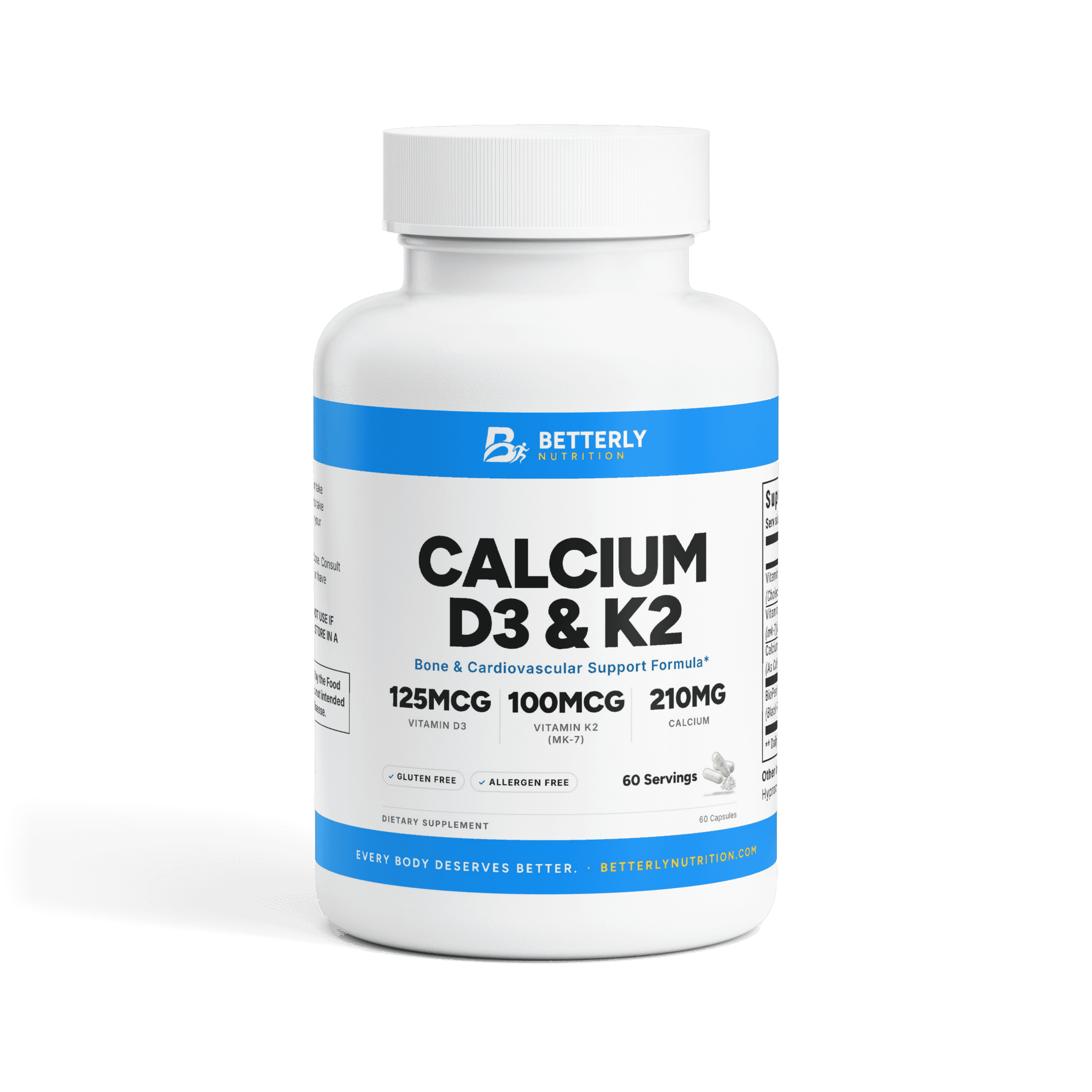
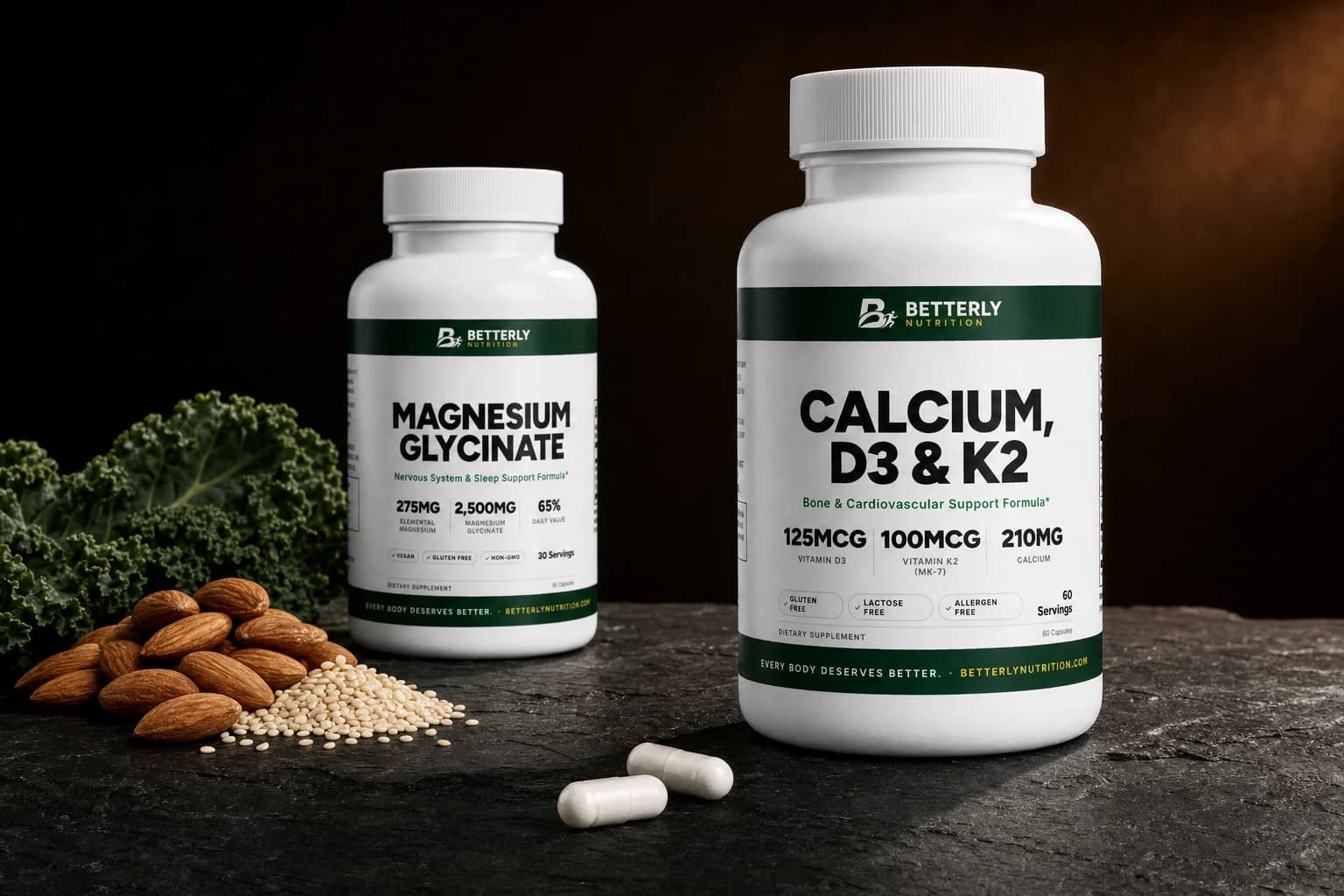
Betterly sells one calcium supplement, our Calcium, Vitamin D3 & K2 Capsules, and it's made with calcium carbonate. We don't sell a stand-alone calcium citrate product. That could tilt us toward carbonate, so every number below comes from a federal source or a printed panel, including the ones where our capsule falls short.
Calcium carbonate vs citrate: what's the difference?
Calcium carbonate and calcium citrate are the two most common calcium forms in supplements, and they differ in calcium per gram, food timing and price.
Both are calcium salts: calcium bonded to carbonate in one, and calcium bonded to citrate, which is made from citric acid, in the other. The NIH Office of Dietary Supplements (ODS) calcium fact sheet for health professionals names these two as the forms you'll see most.
| Calcium carbonate | Calcium citrate | |
|---|---|---|
| Calcium by weight (ODS) | 40% | 21% |
| Food timing (MedlinePlus) | Take with meals | Empty or full stomach |
| Price (MedlinePlus) | Doesn't cost much | More expensive |
| If stomach acid is low | Absorbed less easily | Absorbed better |
Read the table as a swap. Carbonate gives you more calcium in less material and at a lower price, as long as it goes down with food. Citrate needs about twice the material but frees you from planning around meals.
That last row matters for many older adults, since MedlinePlus notes that low stomach acid is more common in people over 50.
What does "elemental calcium" mean on a label?
Elemental calcium is the mineral share of a calcium compound, and a Supplement Facts panel prints that share, not the full compound weight, on its Calcium line.
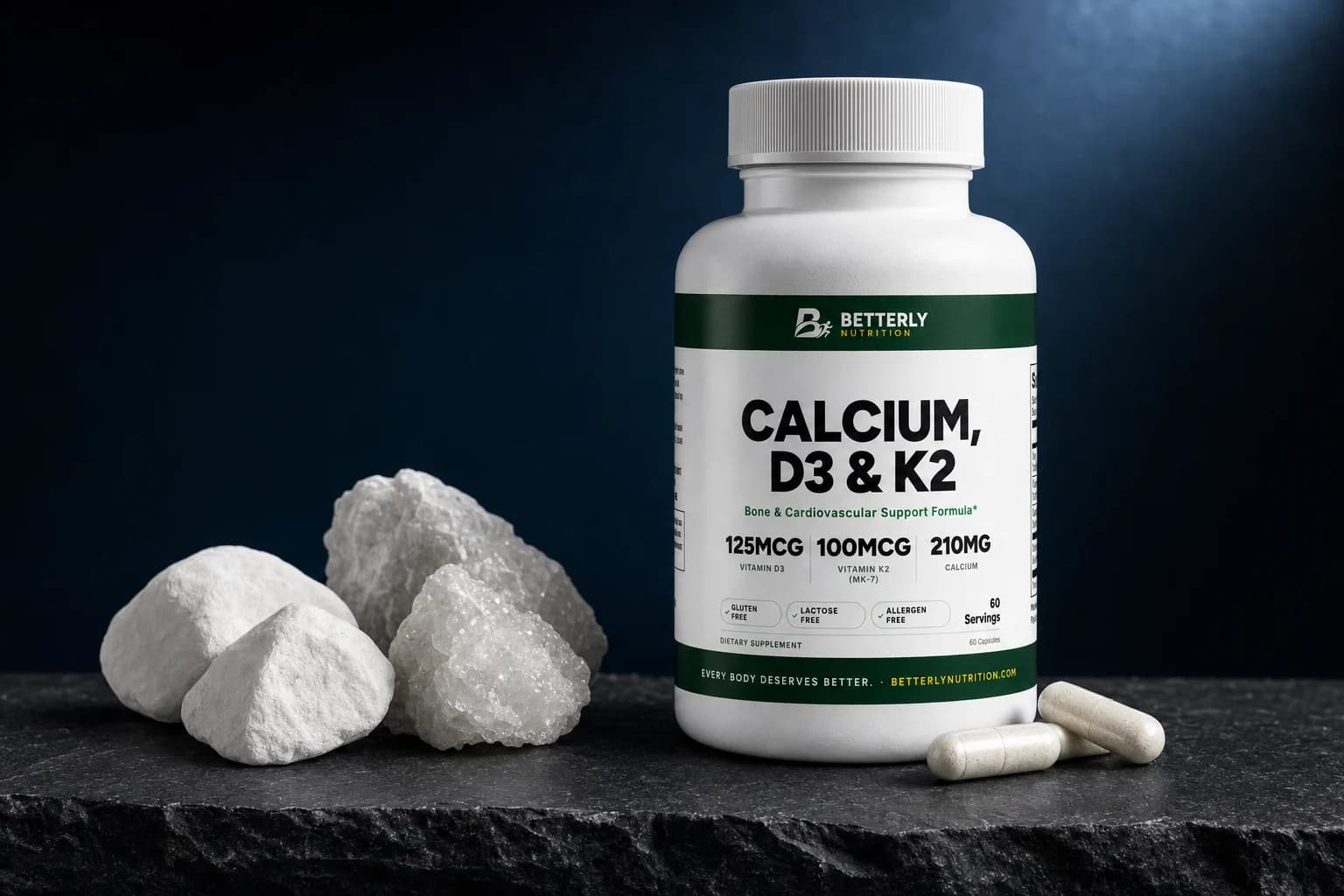
Our own capsule shows the gap. Its Calcium line reads 210 mg "(As Calcium Carbonate)" per 1 Veggie Capsule serving. Since carbonate is 40% calcium, the compound behind that 210 mg weighs roughly 525 mg.
The ratio shifts with the form. A gram of calcium carbonate carries about 400 mg of calcium, and a gram of calcium citrate carries about 210 mg. Matching our 210 mg with citrate would take about 1,000 mg of calcium citrate, nearly twice the material.
ODS notes that labels report the calcium itself rather than the whole compound. The percentages help when an ad or ingredient list quotes only a compound weight, such as 1,000 mg of calcium citrate. Convert that before you compare: it's about 210 mg of calcium.
Which form does your body absorb better?
Calcium citrate absorbs well with or without food, while calcium carbonate absorbs best when you take it with a meal, according to ODS and MedlinePlus.
The reason is stomach acid. ODS explains that carbonate dissolves less readily when stomach acid is low, which could cut how much calcium you absorb unless you take it with a meal. Citrate leans on stomach acid less, so it can be taken without food.
A meal helps either form, though. ODS says calcium supplements are generally absorbed better with food, even when stomach acid is low.
The size of each dose makes a difference. ODS reports that the body absorbs about 36% of a 300 mg calcium dose but only about 28% of a 1,000 mg dose. Absorption is highest at 500 mg or less. The MedlinePlus page on calcium supplements puts it simply: don't take more than 500 mg at a time. Our guide on when to take calcium supplements covers splitting a day's amount.
Comfort is the other split between the two forms. Some people get gas, bloating or constipation from calcium supplements, according to ODS. Carbonate appears to cause more of these effects than citrate, especially in older adults with lower stomach acid.
Calcium carbonate vs citrate: which is better for you?
Neither form is better for everyone: calcium carbonate suits people who can pair it with regular meals, and calcium citrate suits people who need timing freedom or a gentler option.
| If this sounds like you | Form to consider | Why, per federal sources |
|---|---|---|
| You eat regular meals and can pair calcium with one | Carbonate | More calcium per gram, lower cost |
| You'd rather take calcium between meals | Citrate | Absorbed well on an empty or full stomach |
| Your stomach acid runs low (more common after 50) | Citrate | Relies less on stomach acid |
| Carbonate left you gassy or bloated | Citrate, or smaller doses | ODS suggests switching forms or splitting doses |
| You want the fewest pills for your calcium | Carbonate | 40% calcium vs 21% |
Carbonate wins on concentration and price, and citrate wins on timing and comfort. If none of the middle rows apply to you, the form matters less than two numbers: the milligrams per dose, and your total for the day.
How do gluconate, lactate and other calcium forms compare?
Calcium gluconate, lactate and phosphate mostly carry less calcium than carbonate or citrate and offer no advantage over them, according to MedlinePlus.
ODS lists more forms you might spot: calcium sulfate, ascorbate, microcrystalline hydroxyapatite, gluconate, lactate and phosphate. Firm tofu made with calcium sulfate, for example, provides 253 mg of calcium per half cup. ODS also calls calcium citrate malate a well-absorbed form used in some fortified juices.
MedlinePlus adds a buying tip that applies to any form. Look for the word "purified" or the United States Pharmacopeia (USP) symbol on the label. It suggests avoiding products made from unrefined oyster shell, bone meal or dolomite that lack the USP symbol, since they may carry high levels of lead or other metals.
Our panel names calcium carbonate but prints no USP symbol and no source for the carbonate, so we claim neither.
Which Betterly labels use carbonate, and which use citrate?
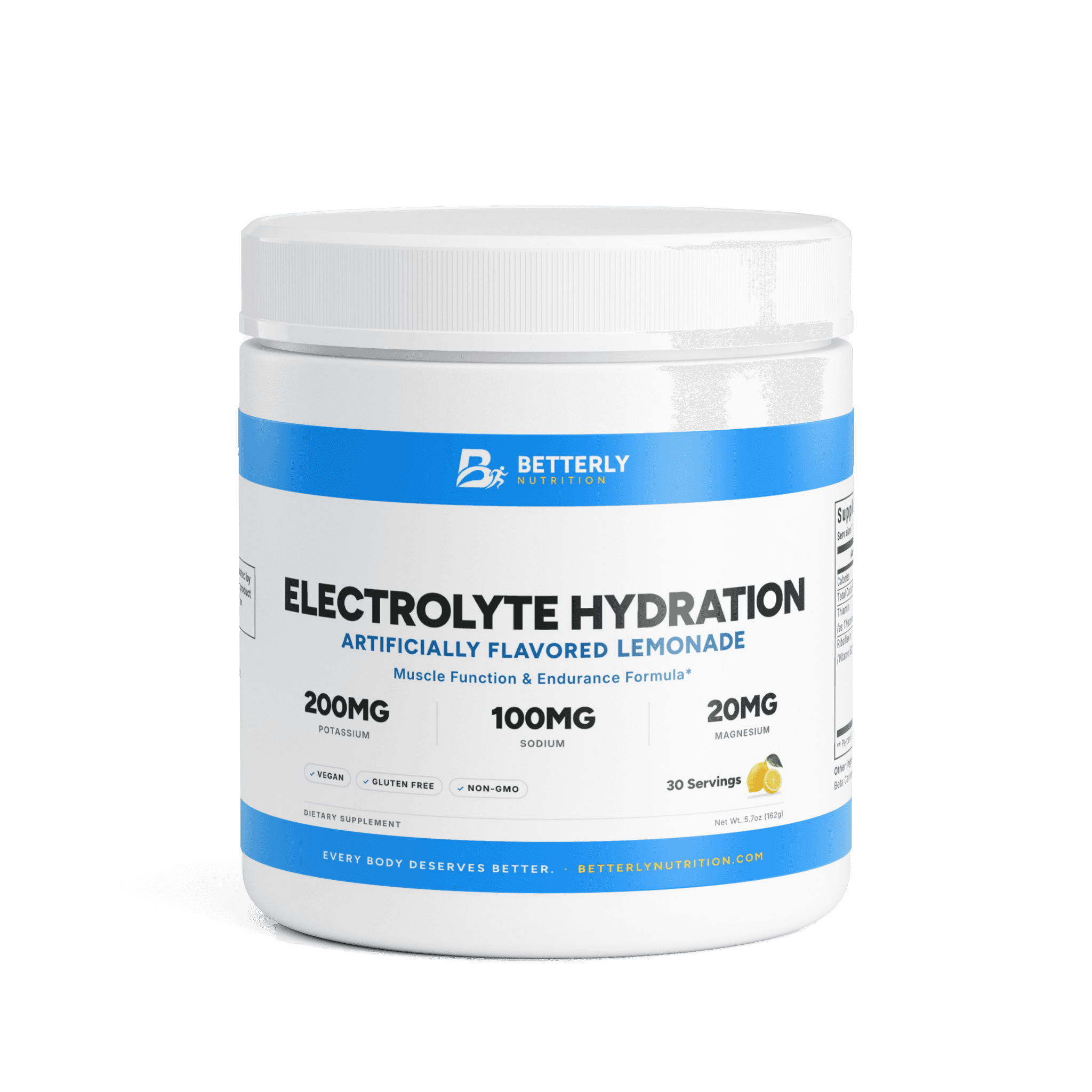
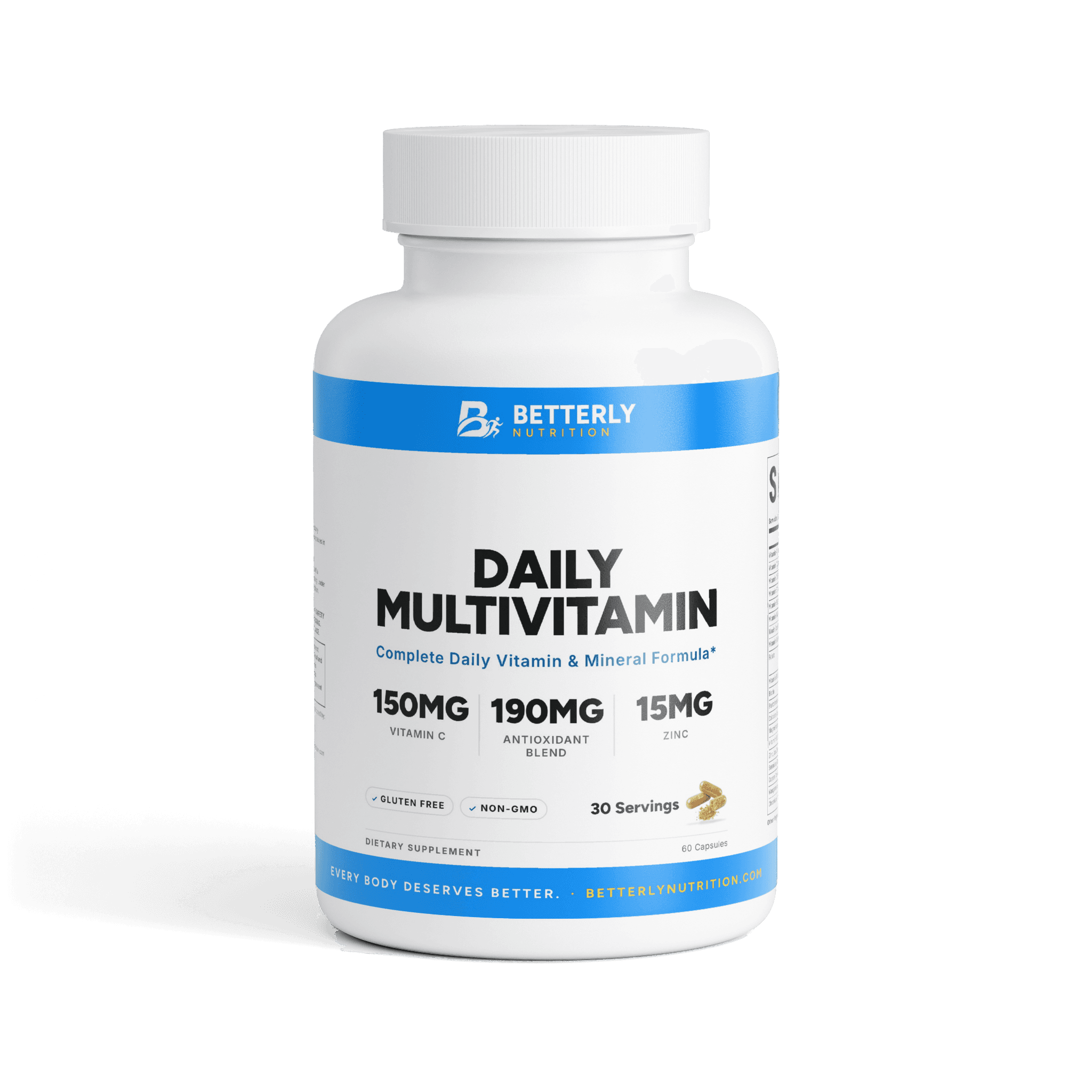
Our own shelf has both forms: the calcium capsule and our multivitamin list calcium carbonate, and our electrolyte powder lists calcium citrate in a small amount.
Here's how the calcium capsule, our Daily Multivitamin Capsules and our Electrolyte Hydration Powder (Lemonade) compare.
| Product | Calcium per serving | Form on the panel | Label directions |
|---|---|---|---|
| Calcium, Vitamin D3 & K2 Capsules | 210 mg (16% DV) per 1 Veggie Capsule | Calcium carbonate | 1 capsule twice a day, 20-30 min before a meal; D3 then totals 10,000 IU a day, over the upper limit |
| Daily Multivitamin Capsules | 50 mg (4% DV) per 2 Capsules | Calcium carbonate | 2 capsules in the morning with a meal |
| Electrolyte Hydration Powder (Lemonade) | 40 mg (3% DV) per 1 Scoop (5.4 g) | Calcium citrate | 1 scoop in 14–20 fl oz of water |
Of these three, only the capsule is a meaningful calcium source, but the small amounts still count toward your day. The % DV figures rest on 1,300 mg, which ODS lists as the calcium Daily Value for adults and children 4 and older.
Plenty of our other formulas list calcium as well, and a few carry more per serving than the calcium capsule does, so add up every panel you take. You can compare the calcium capsule with our vitamin D options in the targeted support collection.
What do our calcium capsule's label directions add up to?
The label for our Calcium, Vitamin D3 & K2 Capsules directs one capsule twice a day, which totals 10,000 IU of vitamin D3, 2.5 times the adult upper limit.
The label's suggested use also says to take each capsule 20 to 30 minutes before a meal. Here's what that schedule delivers:
- Calcium: 210 mg per capsule, so 420 mg a day in two doses. Each dose stays below the 500 mg-at-a-time ceiling MedlinePlus gives.
- Vitamin D3: 125 mcg (5,000 IU) per capsule at 625% DV, so 250 mcg (10,000 IU) a day.
- Vitamin K2: 100 mcg as MK-7 per capsule, so 200 mcg a day.
- Supply: 60 capsules, which lasts 30 days at two a day.
For adults, the daily upper limit for vitamin D is 100 mcg (4,000 IU), counting food, drinks and supplements together, according to the ODS vitamin D fact sheet for consumers. One capsule's 125 mcg already tops that, and the label's two capsules land at 2.5 times the limit.
So we can't recommend taking this capsule the way its label directs, and we'd ask you to get a healthcare provider's okay before you use it at all. Our vitamin D IU and mcg conversion chart shows how those numbers line up.
Our label and the federal sources also disagree on timing. MedlinePlus and ODS both tie calcium carbonate to food, while our label points to the window before a meal. We won't tell you to take it differently from its label, so ask your provider or pharmacist how that timing fits your day.
The panel also lists 5 mg of BioPerine® (black pepper fruit extract), and the label calls the capsule gluten free and allergen free.
From our shop: Calcium, Vitamin D3 & K2 Capsules — a carbonate-based capsule with 210 mg of calcium and 125 mcg of vitamin D3 per 1 Veggie Capsule serving, best cleared with your healthcare provider before you start.
When does the carbonate-or-citrate choice stop mattering?
Calcium form stops mattering when food already covers your needs, which ODS puts at 1,000 to 1,200 mg a day for adults, depending on age and sex.
MedlinePlus notes that many people get enough calcium from their normal diet. Using ODS figures, 8 ounces of plain low-fat yogurt has 415 mg, a cup of calcium-fortified soymilk has 299 mg, and 3 ounces of canned sardines with bones has 325 mg. That's 1,039 mg from three foods.
More isn't better, either. The ODS calcium fact sheet for consumers caps total daily calcium at 2,500 mg between ages 19 and 50 and at 2,000 mg from 51 on, with food, drinks and supplements all counted. For a fuller food tally, see our guide on whether you need a calcium supplement.
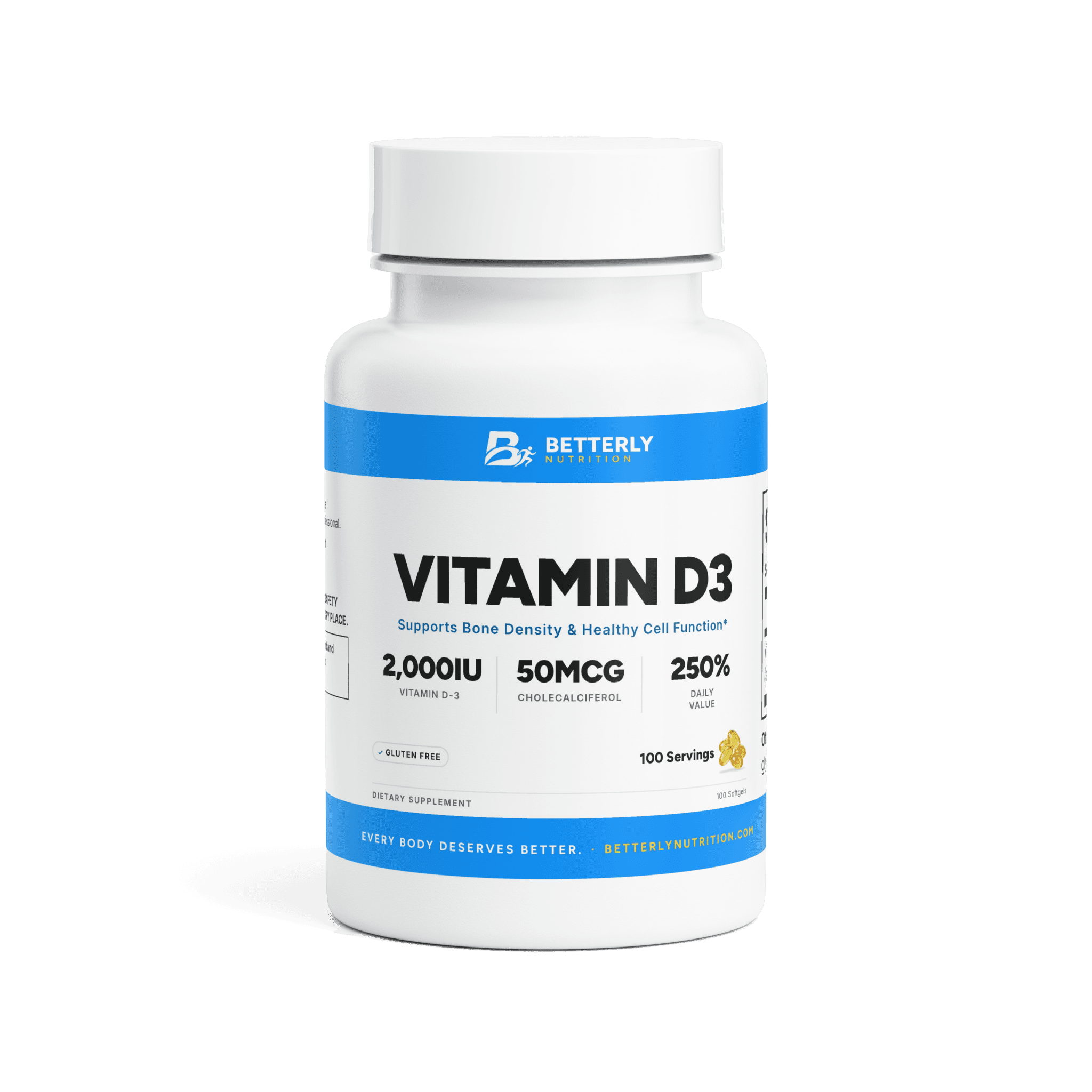
If food covers your calcium and you're mainly after vitamin D, which ODS says helps your body absorb calcium, a lower-dose D product may fit better than our calcium capsule.
From our shop: Vitamin D3 Softgels — 50 mcg (2,000 IU) of vitamin D3 per 1 Softgel Capsule serving and no calcium on the panel, for people whose calcium already comes from food.
Who should check with a healthcare provider first?
Talk to a healthcare provider before starting calcium in either form if you're pregnant, nursing or under 18, take any prescription medicine, or manage a medical condition.
Our capsule's label says: "Do not exceed recommended dose. Consult a physician if pregnant, nursing, under 18, or have a medical condition." A few more groups should check in, too:
- People taking levothyroxine. ODS says a calcium carbonate supplement taken within 4 hours of this thyroid medicine can keep the medicine from being absorbed well.
- People taking certain antibiotics. ODS says quinolone antibiotics absorb poorly if taken within 2 hours of a calcium supplement, and MedlinePlus adds that calcium can change how you absorb iron pills. Our guide to spacing iron away from calcium covers the iron side.
- People on a blood thinner. Our capsule has 100 mcg of vitamin K2 per capsule, and our look at pairing K2 with D3 explains why that matters with warfarin.
- Anyone already taking vitamin D. Our capsule's directions alone supply 250 mcg (10,000 IU) a day.
- Anyone scheduled for surgery. Tell your surgical team about every supplement, including this one.
FAQ: calcium carbonate vs citrate
How much elemental calcium is in 1,000 mg of calcium carbonate?
1,000 mg of calcium carbonate holds about 400 mg of elemental calcium. That's because ODS puts carbonate at 40% calcium by weight. The same 1,000 mg of calcium citrate, at 21%, holds about 210 mg. On a Supplement Facts panel, the Calcium row already shows the converted figure, so you can compare that row directly from one product to the next.
Can you take calcium carbonate on an empty stomach?
You can, but calcium carbonate is absorbed best with food, according to ODS, and MedlinePlus says to take it with meals. Calcium citrate is the form both describe as fine on an empty stomach. Some labels give other timing, including ours, whose directions say 20 to 30 minutes before a meal. If a label and these sources disagree, ask your pharmacist, and don't go past the label's amount or an NIH upper limit, whichever is lower.
Which calcium form is easier on your stomach?
Calcium citrate tends to be the gentler choice. ODS says calcium carbonate appears to cause more stomach side effects, such as gas and bloating, than calcium citrate, especially in older adults with lower stomach acid. Its suggestions include smaller doses spread through the day or a switch to another form. If the discomfort keeps up, stop and talk with your provider.
Is an antacid chew the same as a calcium carbonate supplement?
An antacid chew isn't quite the same as a calcium carbonate supplement, even when both use carbonate. Some antacid chews are made with calcium carbonate and supply about 270 to 400 mg of calcium each, depending on strength, according to ODS. But MedlinePlus notes that antacids also contain other ingredients, such as sodium, aluminum and sugar, and suggests asking your provider whether they're OK to use as a calcium source. Either way, count any antacid calcium toward your daily total.
Is calcium citrate malate the same as calcium citrate?
No, calcium citrate malate is a separate form. ODS describes it as a well-absorbed form of calcium used in some fortified juices. Our sources don't compare it head to head with plain citrate or carbonate, so we won't rank it. As with any form, check the milligrams on the panel's Calcium line.
Sources
- Calcium: Fact Sheet for Health Professionals, NIH Office of Dietary Supplements
- Calcium: Fact Sheet for Consumers, NIH Office of Dietary Supplements
- Calcium supplements, MedlinePlus Medical Encyclopedia
- Vitamin D: Fact Sheet for Consumers, NIH Office of Dietary Supplements
If this left you looking for somewhere to start, read calcium carbonate capsules with D3 and K2 — its amounts per serving are listed on the page. For the practical questions this raises, how dosing, sourcing and subscriptions work is answered in one place.