On this page
- Key takeaways
- How do you convert vitamin D IU to mcg?
- Vitamin D IU to mcg chart: what do common doses equal?
- Why do vitamin D labels list mcg instead of IU now?
- How many mcg is 2,000 IU of vitamin D3 per day?
- How do Betterly's three vitamin D3 products convert?
- How do you total vitamin D across all your products?
- How should you take a vitamin D3 softgel or strip?
- When don't you need a vitamin D supplement?
- Who should ask a healthcare provider before taking vitamin D?
- FAQ: vitamin D IU and mcg
- Sources
The short answer: To convert vitamin D IU to mcg, divide the IU number by 40. That makes 400 IU equal to 10 mcg, 1,000 IU equal to 25 mcg, 2,000 IU equal to 50 mcg and 5,000 IU equal to 125 mcg. To go from mcg back to IU, multiply by 40. The FDA uses this same factor for vitamin D2 and D3, so the form named on your label doesn't change the math.
Key takeaways
- One microgram (mcg) of vitamin D equals 40 international units (IU), so 2,000 IU of vitamin D3 is 50 mcg.
- The Daily Value for vitamin D on current labels is 20 mcg (800 IU), which is why a 50 mcg serving prints as 250%.
- The NIH lists 100 mcg (4,000 IU) a day as the adult upper limit, counting food, drinks and supplements together.
- The divide-by-40 rule only works for vitamin D, because vitamins A and E convert from IU in other ways.
We sell three products with vitamin D3 in the name, all in our targeted support collection. So we'll run the math on their real panels, including one we can't recommend at its label dose and one that prints IU only.
How do you convert vitamin D IU to mcg?
You convert vitamin D IU to mcg by dividing the IU figure by 40, or by multiplying it by 0.025, the factor the FDA gives label makers.
Both routes land on the same number. For a 1,000 IU label, 1,000 ÷ 40 = 25, and 1,000 × 0.025 = 25. The reverse is just as quick: multiply mcg by 40, so a 20 mcg serving is 800 IU.
The FDA's guidance for industry on converting units of measure states the rule as 1 mcg of cholecalciferol equaling 40 IU of vitamin D. It also says the agency considers vitamin D2 (ergocalciferol) and D3 (cholecalciferol) equal for this conversion, so one chart covers both forms.
Why two units? An IU was defined by biological activity in animal lab tests, while a microgram is simply a weight. For vitamin D the two line up at a fixed 40 to 1, but that doesn't carry over to other vitamins. The same guidance converts vitamin E at 0.67 mg per IU for the natural form and 0.45 mg for the synthetic form, and vitamin A has no single factor at all. Never divide a vitamin A or E number by 40.
Vitamin D IU to mcg chart: what do common doses equal?
This vitamin D IU to mcg chart covers the label amounts you'll see most, from 400 IU (10 mcg) to 10,000 IU (250 mcg), with each one's Daily Value percentage.
The %DV column uses the FDA's current Daily Value of 20 mcg. The last column compares each amount with the NIH Office of Dietary Supplements (ODS) vitamin D fact sheet for consumers. According to that sheet, vitamin D helps you absorb calcium, and your muscles and nerves rely on it too.
| IU | mcg | % Daily Value | Where it sits (ODS) |
|---|---|---|---|
| 400 IU | 10 mcg | 50% | Recommended, birth to 12 months |
| 600 IU | 15 mcg | 75% | Recommended, ages 1 to 70 |
| 800 IU | 20 mcg | 100% | Recommended, ages 71 and up |
| 1,000 IU | 25 mcg | 125% | Under the adult upper limit |
| 2,000 IU | 50 mcg | 250% | Half the adult upper limit |
| 4,000 IU | 100 mcg | 500% | The adult upper limit |
| 5,000 IU | 125 mcg | 625% | 1.25 times the adult limit |
| 10,000 IU | 250 mcg | 1,250% | 2.5 times the adult limit |
The takeaway: anything up to 4,000 IU (100 mcg) a day sits at or under the adult upper limit, while the common 5,000 IU and 10,000 IU labels both go past it. ODS counts all sources toward that limit.
One quirk: ODS rounds a couple of pairs, listing 1,500 IU as 38 mcg and 2,500 IU as 63 mcg instead of 37.5 and 62.5. One is the limit for infants 7 to 12 months and the other for children 1 to 3.
Why do vitamin D labels list mcg instead of IU now?
Vitamin D labels list mcg because FDA labeling rules make micrograms the unit a brand must declare, with IU allowed as an optional extra in parentheses.
That shift came with the FDA's 2016 update to Nutrition Facts and Supplement Facts labels. Because the IU figure is voluntary, some labels show both units and others show mcg alone.
The same update changed the Daily Value itself. It used to be 400 IU, and today it's 20 mcg, which is 800 IU. That's why a 1,000 IU dose that once printed as 250% DV on an older bottle now prints as 125%.
Why 20 mcg when ODS lists 15 mcg (600 IU) for most adults? The FDA's guidance says the new Daily Values are based on recommended amounts for adults and children 4 and older, using the highest adult figure. For vitamin D, that's the 20 mcg set for people 71 and up.
The FDA's Daily Value page adds a quick rule: 5% DV or less per serving is low, and 20% or more is high. Every dose in our chart counts as high.
How many mcg is 2,000 IU of vitamin D3 per day?
A daily 2,000 IU of vitamin D3 is 50 mcg, or 0.05 mg, and it prints as 250% of the Daily Value on a current label.
Here's how that compares with the ODS figures:
- It's a little over 3 times the 15 mcg (600 IU) listed for adults 19 to 70.
- It's 2.5 times the 20 mcg (800 IU) listed for adults 71 and older.
- It's half the 100 mcg (4,000 IU) adult upper limit, leaving 50 mcg of room for food and other products.
If a 2,000 IU daily habit appeals to you, our guide on whether you need K2 with D3 weighs plain D3 against the combination labels.
How do Betterly's three vitamin D3 products convert?
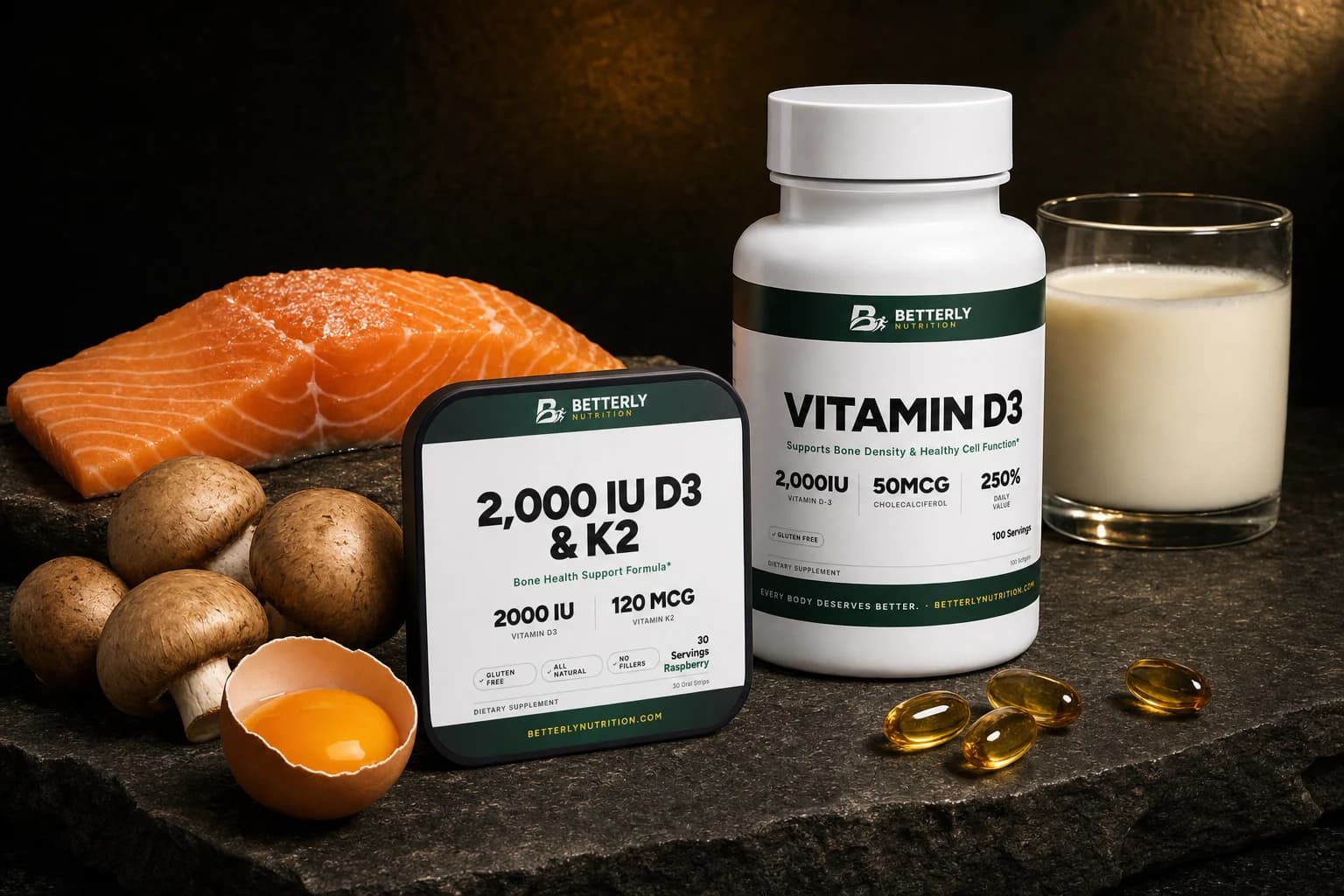
Betterly's softgel and strip both come to 50 mcg (2,000 IU) of vitamin D3 per serving, while the calcium capsule holds 125 mcg (5,000 IU) per capsule.
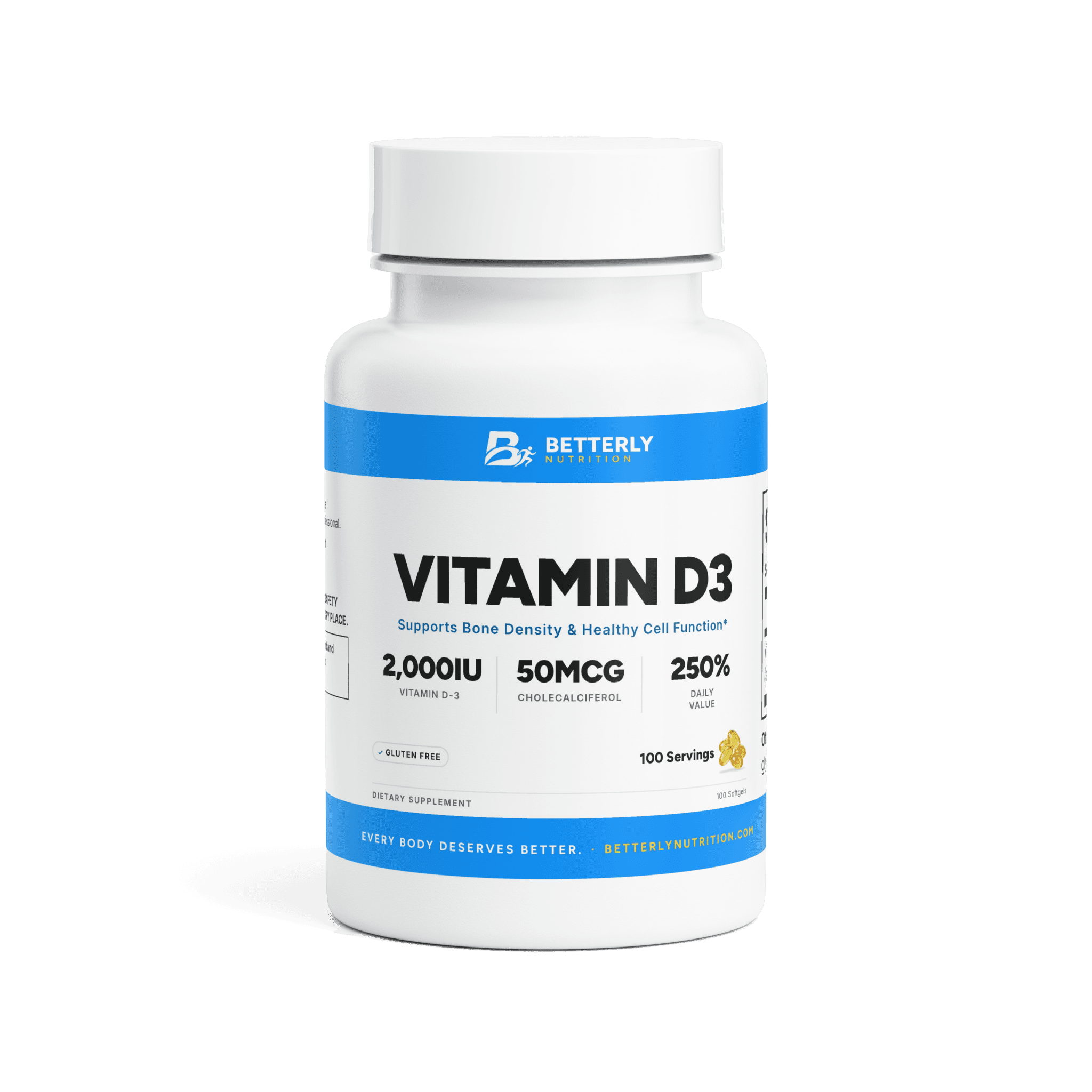
- Vitamin D3 Softgels. The panel prints "50 mcg (2,000 IU)" of vitamin D3 (as cholecalciferol) per 1-softgel serving, at 250% DV. Both units are there, so there's nothing to convert.
- 2,000 IU Vitamin D3 & K2 Strips. The panel prints "2000 IU" of vitamin D3 per 1-strip (100 mg) serving, at 250% DV. Current FDA rules call for mcg on the label, and this panel shows IU only, so you have to convert it yourself: 2,000 ÷ 40 = 50 mcg. It also lists 120 mcg of vitamin K2 (menaquinone).
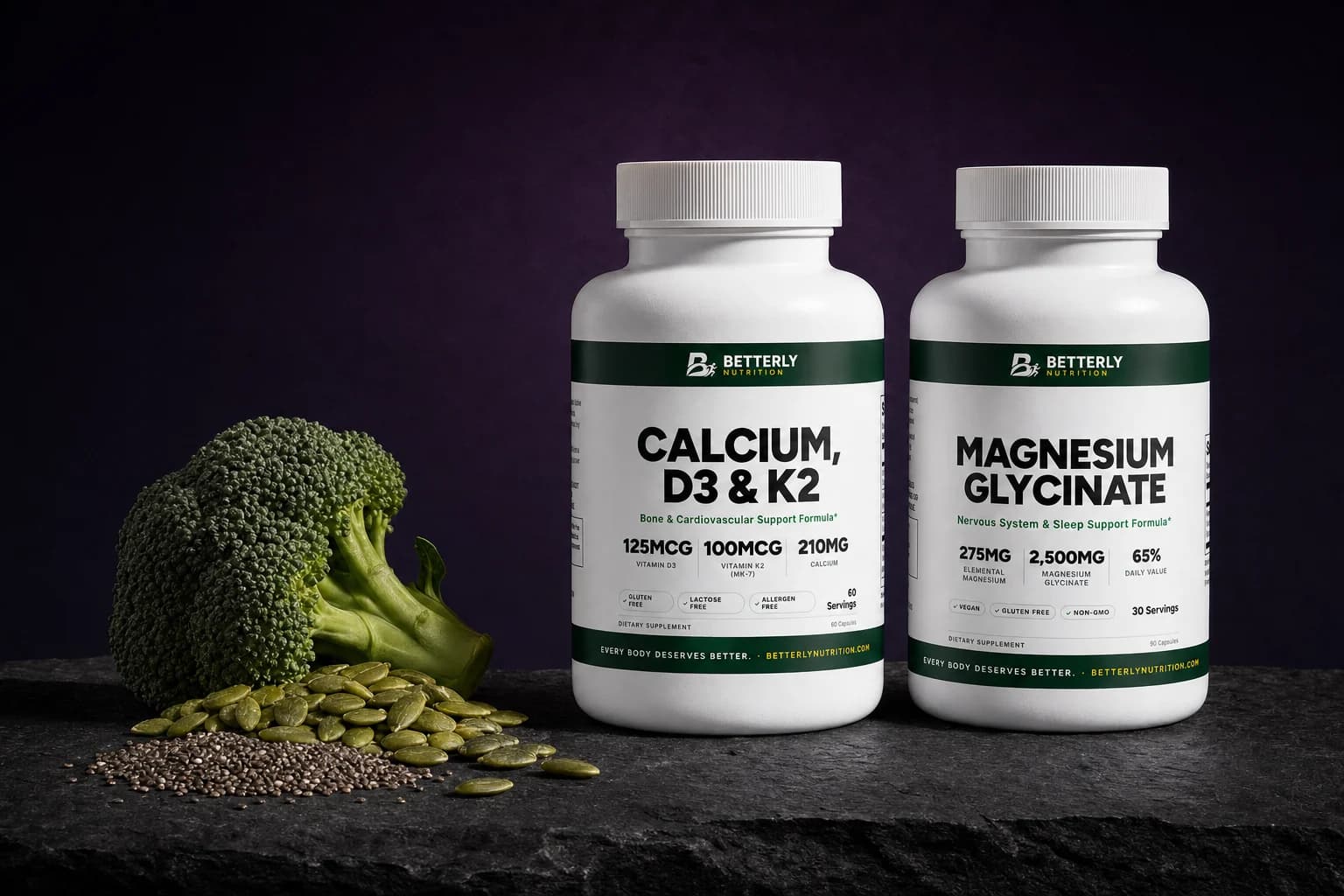
- Calcium, Vitamin D3 & K2 Capsules. The panel prints "125 mcg" of vitamin D3 per 1-capsule serving, at 625% DV, with no IU figure. Multiply by 40 and you get 5,000 IU. It also lists 100 mcg of vitamin K2 (MK-7) and 210 mg of calcium.
Is 125 mcg of vitamin D too much? One capsule's 5,000 IU already sits 1,000 IU over the 4,000 IU (100 mcg) adult upper limit ODS lists. The label's suggested use is one capsule twice a day: 2 × 125 mcg = 250 mcg, and 250 × 40 = 10,000 IU. That's why we can't recommend this capsule at its label dose. If it interests you, ask a healthcare provider first.
From our shop: Vitamin D3 Softgels — the panel lists vitamin D3 in both units, 50 mcg and 2,000 IU per 1-softgel serving, with 100 softgels in each bottle.
How do you total vitamin D across all your products?
To total your vitamin D, convert every source to mcg, multiply by the servings you take per day, add food, and compare the sum with 100 mcg.
This four-step check works for any pile of labels:
- Find the vitamin D line on every panel you take, including multis and beauty formulas.
- Convert anything listed in IU to mcg by dividing by 40.
- Multiply each amount by the servings per day in that label's directions.
- Add food. ODS says almost all US milk is fortified with about 3 mcg (120 IU) per cup.
Here's a worked day built from our own labels:
- Vitamin D3 Softgels, 1 softgel: 50 mcg
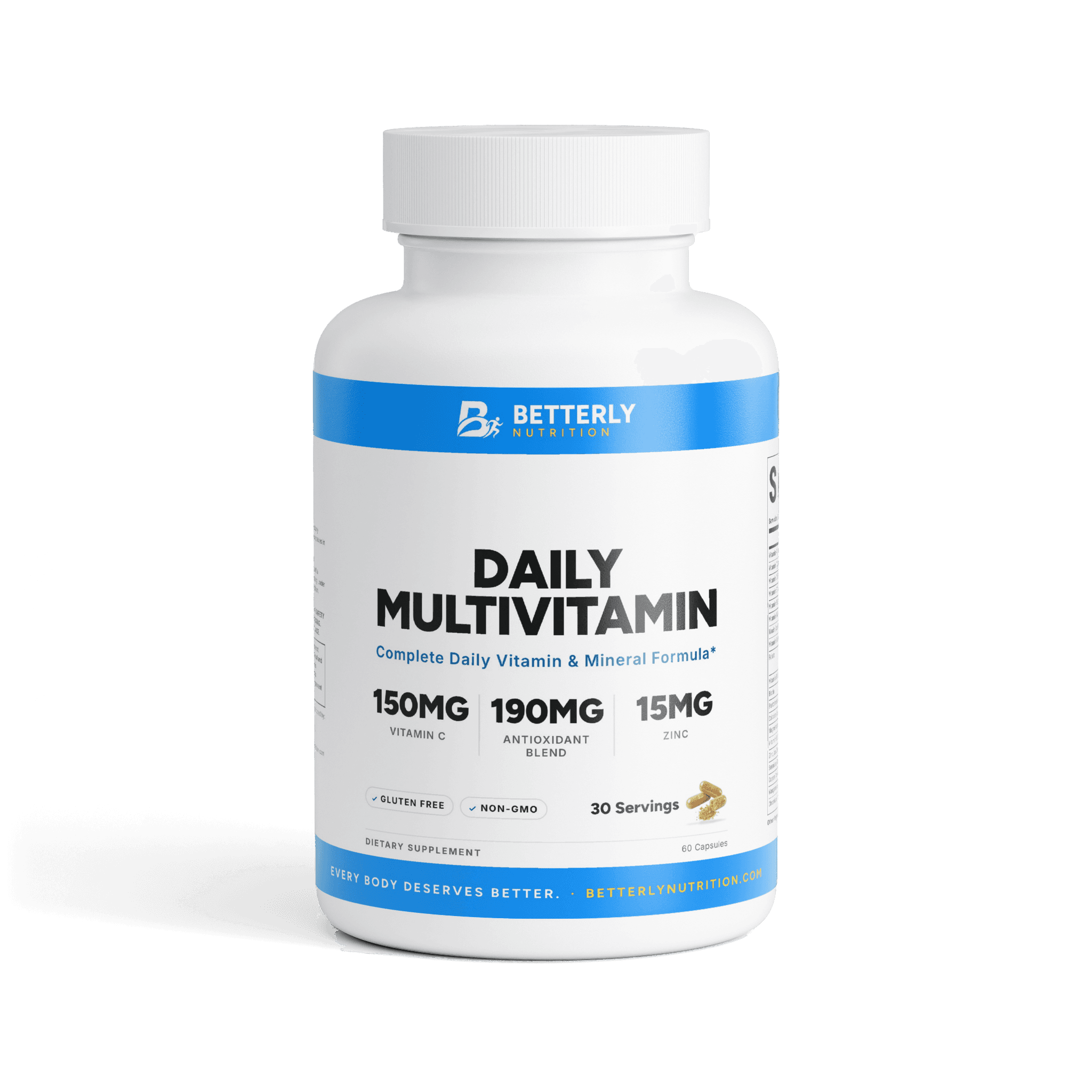
- Daily Multivitamin Capsules, 2 capsules: 10 mcg
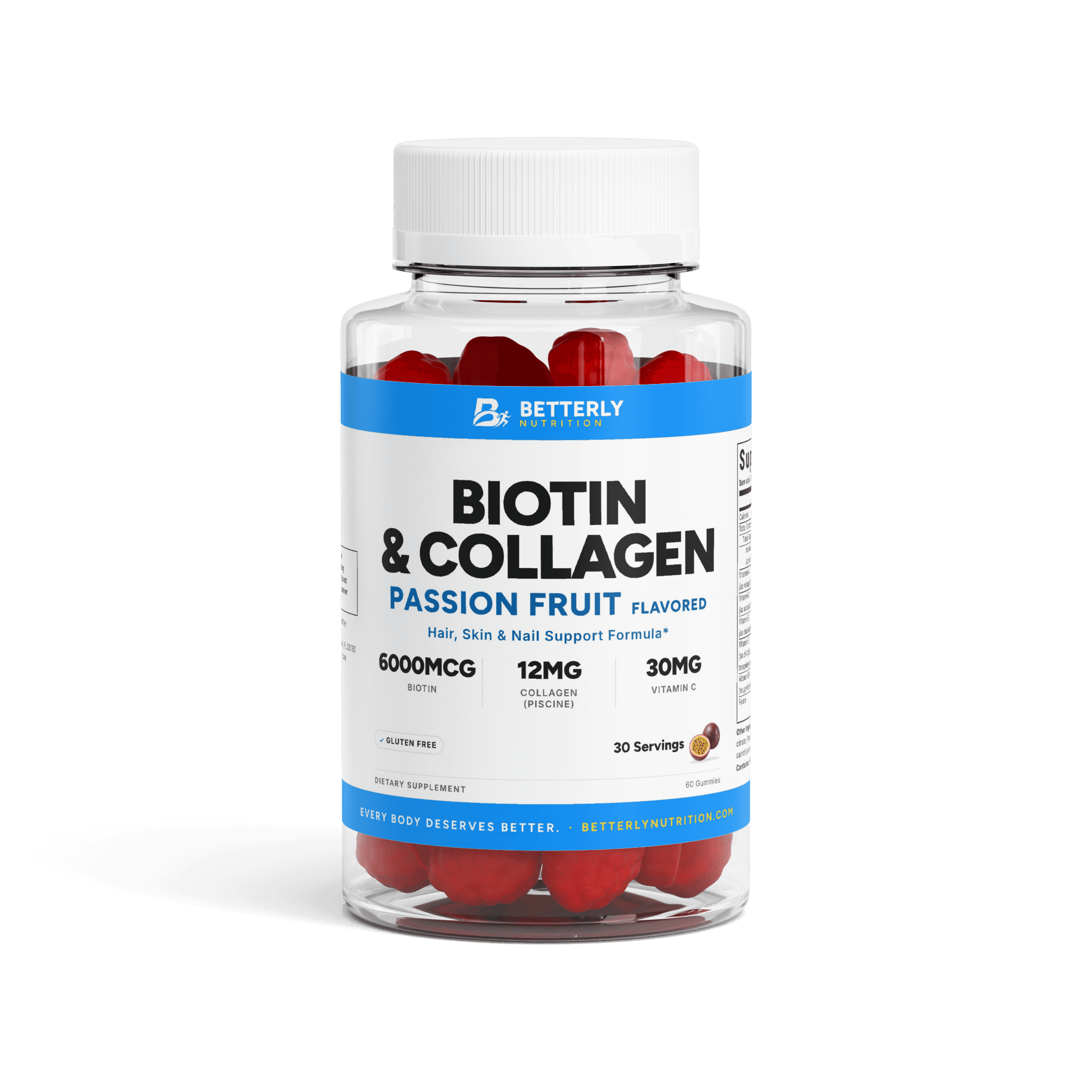
- Biotin & Collagen Gummies, 2 gummies: 10 mcg
- 2 cups of fortified milk: about 6 mcg
That's about 76 mcg, or roughly 3,040 IU, with 24 mcg (960 IU) to spare under the limit. Now swap the softgel for the calcium capsule at its label directions. The same day jumps to about 276 mcg, over 11,000 IU and nearly 3 times the limit.
Sunlight stays off the tally, because ODS says your skin limits how much vitamin D it makes. Every bottle you add is one more vitamin D line to convert and track, which is a good reason for keeping your supplement list short.
How should you take a vitamin D3 softgel or strip?
The label's suggested use for Betterly's Vitamin D3 Softgels is one softgel daily for adults, and for the D3 & K2 strips one strip daily. Don't go past either.
The softgel label reads: "As a dietary supplement, adults take one (1) softgel daily or as directed by a healthcare professional." The strip label says: "Place 1 oral strip on the tongue daily and allow it to dissolve."
ODS notes that vitamin D is fat soluble, so it's absorbed best alongside food that contains some fat. The strip's label doesn't mention food, so follow it as written.
Both products hold the same 50 mcg of vitamin D3, so think of them as either-or, not a pair.
From our shop: 2,000 IU Vitamin D3 & K2 Strips — each 1-strip serving dissolves on the tongue and lists 2000 IU of vitamin D3, which converts to 50 mcg, alongside 120 mcg of K2.
When don't you need a vitamin D supplement?
You may not need a vitamin D supplement if food, fortified milk and a multivitamin already give you the 15 to 20 mcg (600 to 800 IU) ODS recommends.
ODS reports that most Americans have adequate blood levels of vitamin D, while close to a quarter have levels that are too low or not quite enough. Convert first, and a standalone product may prove unnecessary:
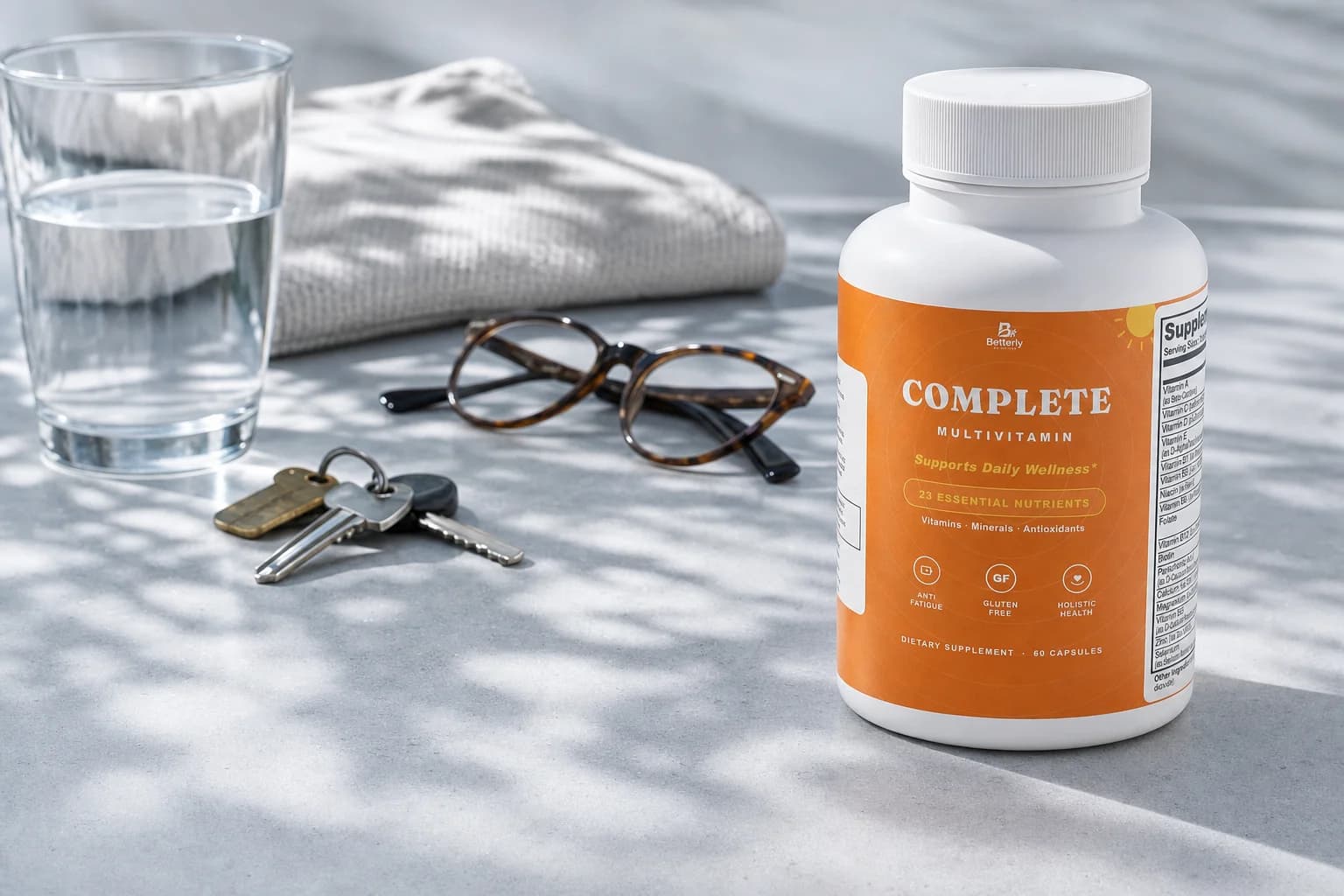
- Your multi and milk already clear 15 mcg. Our multivitamin, for example, lists 10 mcg per 2-capsule serving, which works out to 400 IU. Two cups of fortified milk bring that to about 640 IU.
- You were comparing an IU label with an mcg label. A 1,000 IU bottle and a 25 mcg bottle hold the same dose, so the one you own may already match the one you're eyeing.
- You were reaching for a bigger number because it looked stronger. The most ODS recommends for any age is 20 mcg (800 IU), and a 5,000 IU label converts to 125 mcg, over the adult limit.
Leaning on a multi only works if a multi suits you. Our guide to who tends to get the most from a daily multivitamin can help you decide.
Who should ask a healthcare provider before taking vitamin D?
Check with a healthcare provider before taking vitamin D if you're pregnant, nursing, under 18, taking any medicine, managing a medical condition or planning surgery.
That list starts with the caution on all three of our labels: "Consult a physician if pregnant, nursing, under 18, or have a medical condition." A few groups should take extra care:
- People on prescription medicines. ODS gives four examples of medicines that may interact with vitamin D supplements: orlistat, statins, steroids like prednisone, and thiazide diuretics. Bring your labels to your pharmacist.
- Parents shopping for kids. ODS lists lower upper limits for children: 63 mcg (2,500 IU) for ages 1 to 3 and 75 mcg (3,000 IU) for ages 4 to 8. Our softgel's directions are written for adults.
- Anyone looking at an above-limit dose. Any amount over 100 mcg (4,000 IU) a day, including the calcium capsule's directions, is a conversation for your provider first.
- Anyone with surgery coming up. Give your care team the full list of supplements you take, with amounts.
FAQ: vitamin D IU and mcg
Is 2,000 IU of vitamin D the same as 2,000 mg?
No, 2,000 IU of vitamin D is not 2,000 mg. It's 50 mcg, which is 0.05 mg, because 1 mg equals 1,000 mcg. A 2,000 mg serving would hold 40,000 times more vitamin D than a 2,000 IU label. If you ever see a vitamin D amount listed in mg, reread the panel carefully before you take it.
Is 5,000 IU of vitamin D3 too much for adults?
Yes, 5,000 IU (125 mcg) of vitamin D3 is above the 4,000 IU (100 mcg) adult daily upper limit ODS lists. ODS says very high blood levels (over 150 ng/mL), almost always caused by too much vitamin D from supplements, can cause problems such as loss of appetite, dehydration, and excess thirst and urination. A provider may sometimes advise more for a limited time, but that's their call, not a chart's.
Does the IU to mcg conversion change for vitamin D2?
No, the vitamin D IU to mcg conversion is the same for D2 and D3. The FDA's guidance counts ergocalciferol (D2) and cholecalciferol (D3) as equal when converting units, so 1 mcg equals 40 IU for either form. ODS does note that D3 may lift blood levels more, and keep them up longer, than D2, but that's about how your body responds, not the label math.
How do you convert vitamin D blood test results from nmol/L to ng/mL?
To convert a vitamin D blood test result from nmol/L to ng/mL, multiply by 0.4, since ODS says 1 nmol/L equals 0.4 ng/mL. So 50 nmol/L is 20 ng/mL, and ODS calls that level or higher adequate for most people. These are blood units, not dose units, so a test result can't be turned into IU or mcg of a supplement.
How much vitamin D is in a cup of milk in IU and mcg?
A cup of fortified US milk has about 3 mcg (120 IU) of vitamin D, according to ODS. Many soy, almond and oat milks are fortified at similar levels, but cheese and ice cream usually aren't. Two cups a day adds about 6 mcg (240 IU), which is worth counting when you total your vitamin D against the 100 mcg adult limit.
Sources
- Vitamin D: Fact Sheet for Consumers, NIH Office of Dietary Supplements
- Converting Units of Measure for Folate, Niacin, and Vitamins A, D, and E on the Nutrition and Supplement Facts Labels: Guidance for Industry, U.S. Food and Drug Administration
- Daily Value on the Nutrition and Supplement Facts Labels, U.S. Food and Drug Administration
If this left you looking for somewhere to start, read 2,000 IU (50 mcg) vitamin D3 softgels — its amounts per serving are listed on the page. For the practical questions this raises, how dosing, sourcing and subscriptions work is answered in one place.