On this page
- Key takeaways
- Can you get enough vitamin D from the sun alone?
- How does your skin turn sunlight into vitamin D?
- Can you get enough vitamin D from the sun in winter?
- Can you get vitamin D through a window?
- What else changes how much vitamin D your skin makes?
- Is vitamin D from the sun better than supplements?
- When does a 2,000 IU vitamin D3 softgel make sense?
- Who can skip a vitamin D supplement this winter?
- Who should check with a healthcare provider first?
- FAQ: vitamin D and sunlight
- Sources
The short answer: You can get enough vitamin D from the sun some of the time, but not reliably. Your skin makes vitamin D3 when bare skin meets the sun's UVB rays, and the NIH says sunshine alone can't give you too much, because skin caps its own output. Supplements have no such brake. The adult upper limit is 4,000 IU (100 mcg) a day, and it counts food and drinks too.
Key takeaways
- Your skin makes vitamin D3 from the sun's UVB rays, but the amount varies widely from one person to the next.
- Winter sun sits lower, and UV is weaker farther from the equator, so the cold months usually bring less vitamin D from sunlight.
- Skin makes no vitamin D from sunlight that passes through a window.
- Sunscreen limits vitamin D production, yet health experts still advise SPF 15 or higher, so let food and supplements cover the gap instead of skipping it.
We sell Vitamin D3 Softgels and a D3 and K2 strip, both in our targeted support collection, so we have a stake in this answer. Every health fact below comes from the NIH, MedlinePlus or the FDA, and our product numbers match the Supplement Facts panels printed on our packaging.
Can you get enough vitamin D from the sun alone?
Some people get enough vitamin D from the sun alone for part of the year, but the amount is unpredictable and hard to judge without a blood test.
The NIH Office of Dietary Supplements (ODS) says in its vitamin D fact sheet for consumers that your body makes vitamin D when bare skin is exposed to the sun, and most people get at least some this way. The catch is the word "some."
The MedlinePlus encyclopedia entry on vitamin D says the amount made from sunlight "can vary greatly from person to person."
ODS gives the national picture, too. Most people in the U.S. have adequate blood levels, yet almost 1 in 4 fall too low or short of adequate for bone and overall health.
How does your skin turn sunlight into vitamin D?
Your skin makes vitamin D3 when ultraviolet B (UVB) rays from the sun reach its outer layer, according to the FDA.
The FDA's page on ultraviolet radiation explains that UVB's short wavelength reaches the epidermis, your skin's top layer. That exposure helps the skin produce vitamin D3, which works with calcium in bone and muscle health.
ODS says vitamin D helps your body absorb calcium, one of the main building blocks of bone, and your muscles and nerves need it too.
Sunlight has one built-in safety valve: according to ODS, your skin puts a ceiling on its own vitamin D output. That doesn't make long afternoons in the sun a smart plan. The FDA calls sunburn a sign of short-term overexposure and links prolonged UV exposure to premature skin aging.
Can you get enough vitamin D from the sun in winter?
Winter sun sits lower in the sky and delivers less UV to the ground, so most people make less vitamin D from sunlight in winter than in summer.
The FDA says summer sun strikes at a more direct angle, which means more UV. It also says UV peaks at noon, when the sun is highest and its rays cross the least atmosphere. Winter works against both, since even the midday sun stays low.
Where you live stacks on top of the season. UV exposure is lower farther from the equator, per the FDA, so a January afternoon in Minneapolis or Toronto gives your skin less to work with than one in Miami.
Then there's how people live in the cold. Coats and scarves cover most of your skin, and more of the day happens indoors.
MedlinePlus adds that people who don't live in sunny places may not make enough vitamin D within a limited time outdoors. If your winters are long and gray, assume the sun covers less of your needs from late fall into early spring, and plan food around that stretch.
Can you get vitamin D through a window?
No. Your skin doesn't make vitamin D from sunlight that comes through a window, according to ODS.
That rules out the bright desk by the office window, the sunny commute behind a windshield and the glassed-in porch. In winter, you can see plenty of sun through glass and make little from it.
What about an open window, or one with only a screen? None of our sources measure that, so we can't tell you.
What else changes how much vitamin D your skin makes?
Sunscreen, darker skin, older age, clouds, smog and shade all cut how much vitamin D your skin makes, according to ODS and MedlinePlus.
Here are the main factors our sources name, and which source names each:
| Factor | Effect on vitamin D from sun | Source |
|---|---|---|
| Season | Summer sun is more direct, so more UV | FDA |
| Distance from the equator | Less UV the farther you are | FDA |
| Time of day | UV peaks around noon | FDA |
| Altitude | More UV at higher elevations | FDA |
| Window glass | Skin makes none through a window | ODS |
| Clothing, covered skin | Less bare skin, less made | FDA, ODS |
| Sunscreen | Limits production | ODS |
| Darker skin | Less made from the same sun | ODS |
| Older age | Skin's ability to make it declines | ODS |
| Clouds, smog, shade | Less made | ODS, MedlinePlus |
Put together, no single factor decides it. A young person with light skin in a sunny city in July starts from a very different place than an older adult with darker skin in a northern city in January.
ODS says sunscreen limits vitamin D production, yet health experts still recommend SPF 15 or higher when you're in the sun for more than a few minutes. Don't skip sunscreen to chase vitamin D, because food and supplements can fill the gap without the UV.
Is vitamin D from the sun better than supplements?
Vitamin D from the sun isn't clearly better than supplements. Skin-made D3 carries no overdose risk but costs UV exposure, while a supplement gives a known amount you must keep within limits.
Both routes can land on the same form. The FDA says sunlight helps skin make D3, and ODS says supplements come as D2 (ergocalciferol) or D3 (cholecalciferol). Both raise vitamin D in your blood, but ODS says D3 might raise it higher and for longer.
The real split is predictability versus risk:
| Source | How much you get | Can you get too much? | Main catch |
|---|---|---|---|
| Sunlight | Varies by person, place and season | No, skin limits it | UV harms skin |
| Food | Small, except fortified foods and fatty fish | Counts toward the limit | Few foods have it naturally |
| Supplement | The exact amount on the label | Yes, past the upper limit | You must add up every source |
In short, sunlight is free but impossible to measure, while a supplement is precise but only as safe as your daily total. ODS says very high blood levels nearly always trace back to supplements.
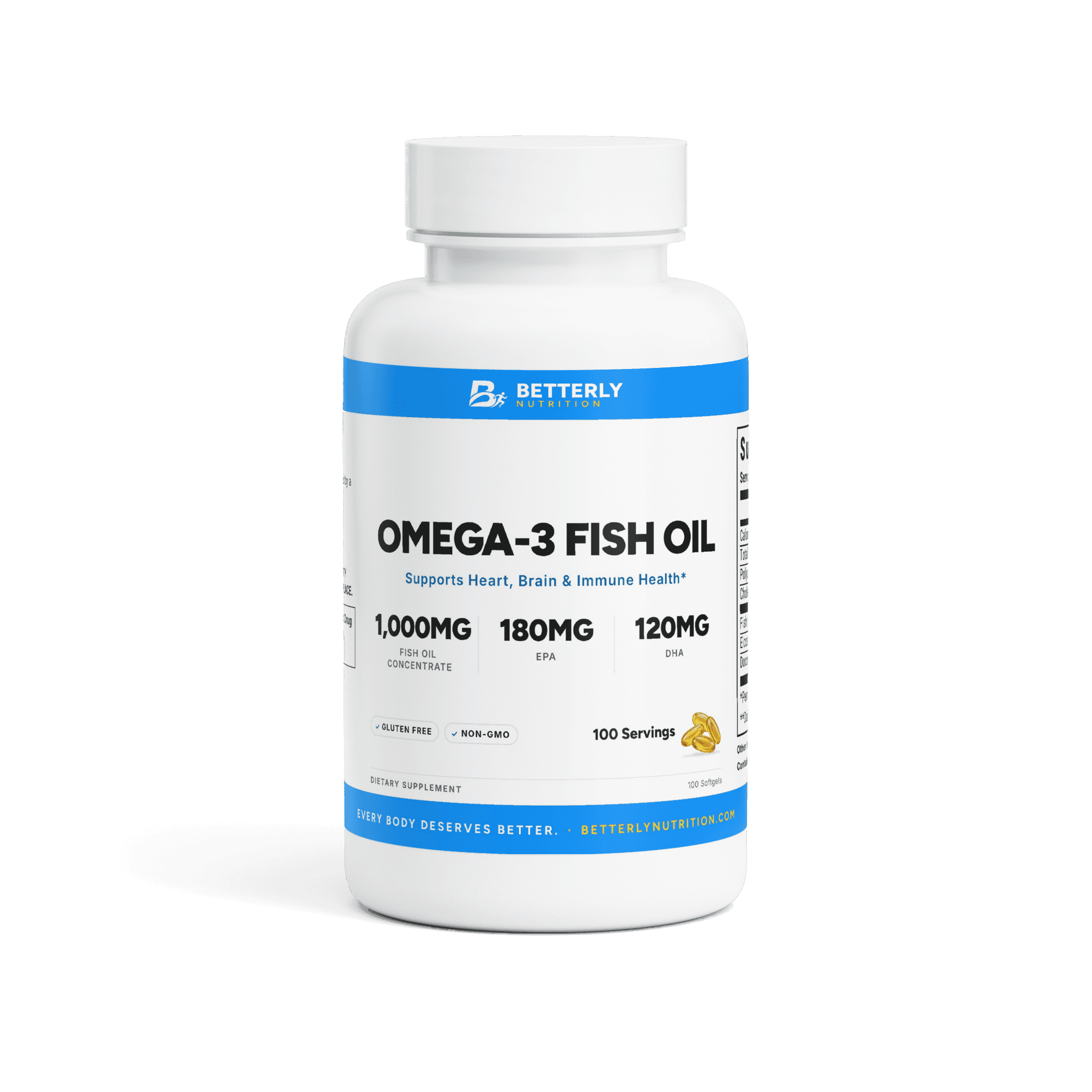
Food sits in the middle. ODS says almost all U.S. milk is fortified with about 3 mcg (120 IU) per cup, and fatty fish like trout, salmon and mackerel are among the best natural sources. MedlinePlus notes it can be hard to get enough from food alone. And don't count a fish oil capsule as a vitamin D source unless its panel lists some: our Omega-3 Fish Oil Softgels print EPA and DHA amounts but no vitamin D line.
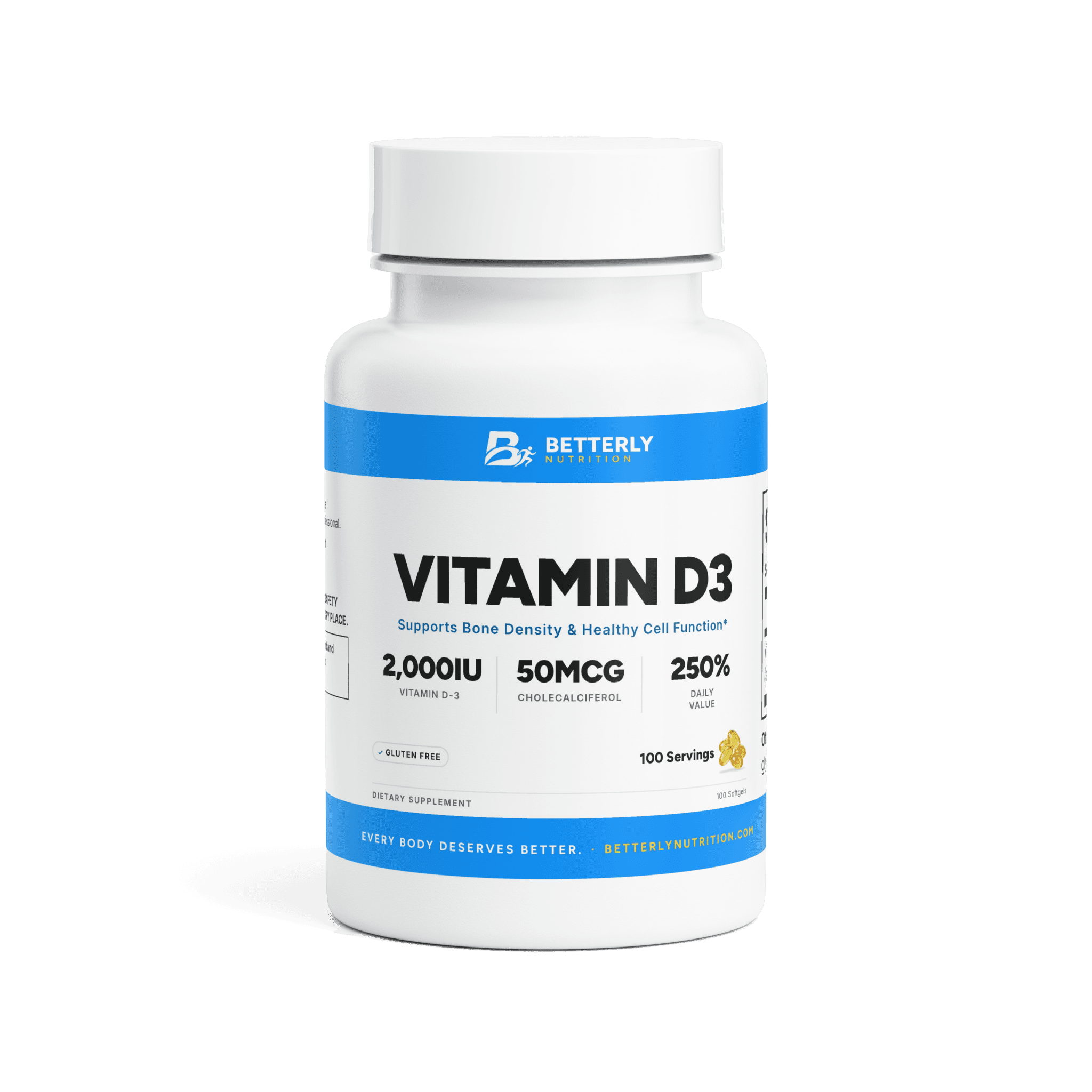
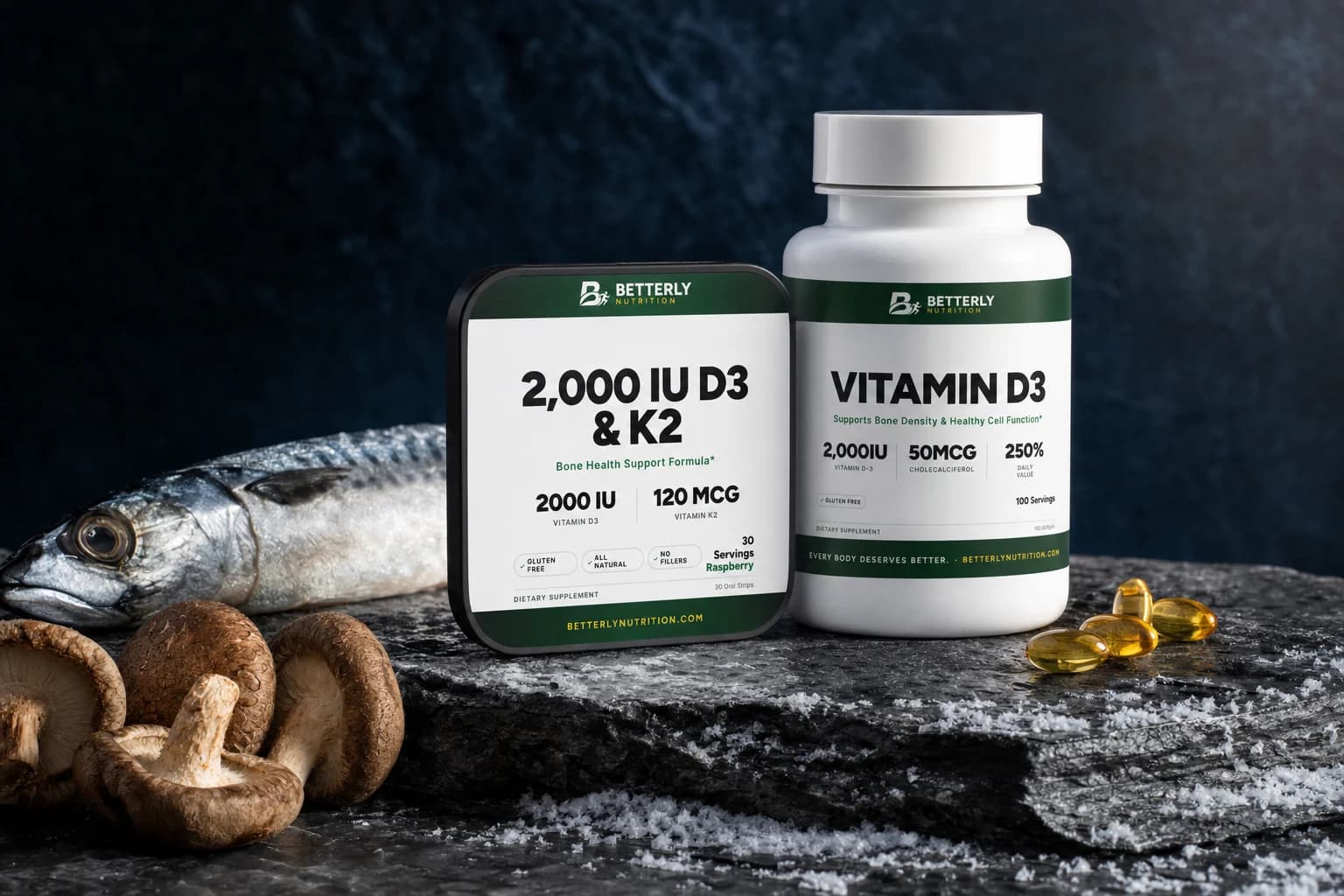
From our shop: Vitamin D3 Softgels — the label's suggested use is one softgel a day, giving 50 mcg (2,000 IU) of vitamin D3 as cholecalciferol, carried in soybean and corn oil.
When does a 2,000 IU vitamin D3 softgel make sense?
A 2,000 IU vitamin D3 softgel makes sense when sun and food are likely falling short, as in winter, and your total from all sources stays under 4,000 IU.
ODS sets the frame: adults 19 to 70 need 600 IU (15 mcg) a day, and the adult upper limit is 4,000 IU (100 mcg) from food, drinks and supplements combined. Our Vitamin D3 Softgels provide 50 mcg (2,000 IU) per 1-softgel serving, which is 250% of the Daily Value and half the upper limit.
Whose sun and food tend to fall short? ODS points to older adults, people with darker skin, and anyone who rarely bares skin to daylight, whether they stay indoors or stay covered. MedlinePlus adds people in less sunny places. If one of those fits your winter, a daily softgel is a reasonable habit.
Winter doesn't change the label, which reads, "As a dietary supplement, adults take one (1) softgel daily or as directed by a healthcare professional." A gray week is no reason to take two. ODS describes going past the upper limit only as something a health care provider might recommend temporarily, so it's never a do-it-yourself move.
Vitamin D dissolves in fat, not water, and ODS says taking it alongside food with a little fat helps your body absorb it. Eggs at breakfast or salmon at dinner would do. One honest limit: the shell is gelatin, so it won't suit anyone who avoids animal products. The label does list it as gluten free.
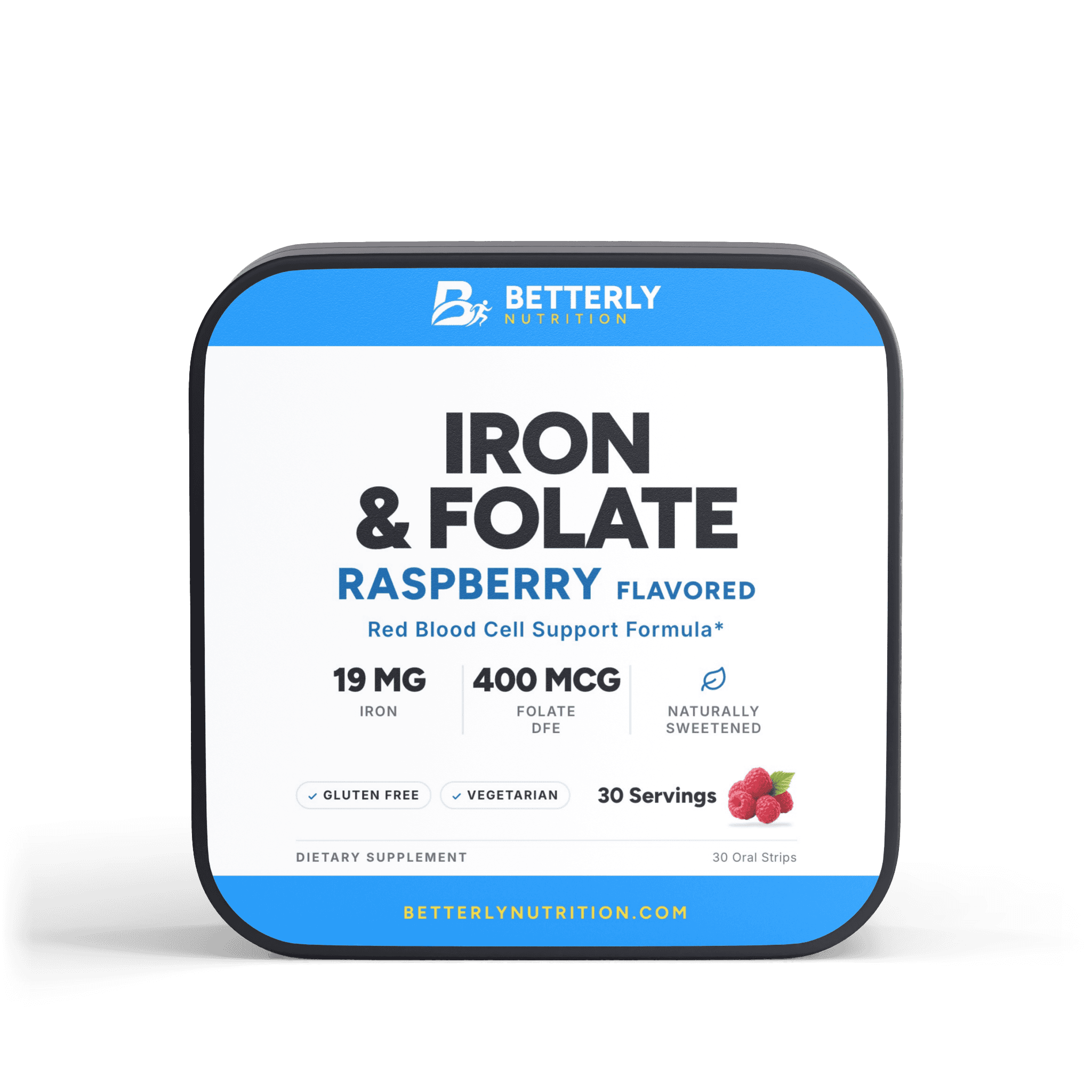
Rather not swallow a softgel? Our 2,000 IU Vitamin D3 & K2 Strips provide 2000 IU of vitamin D3 and 120 mcg of vitamin K2 (menaquinone) per 1-strip (100 mg) serving. The label says to place one strip on the tongue daily and let it dissolve. Whether you need the K2 is its own question, and our guide on pairing K2 with plain D3 takes it on.
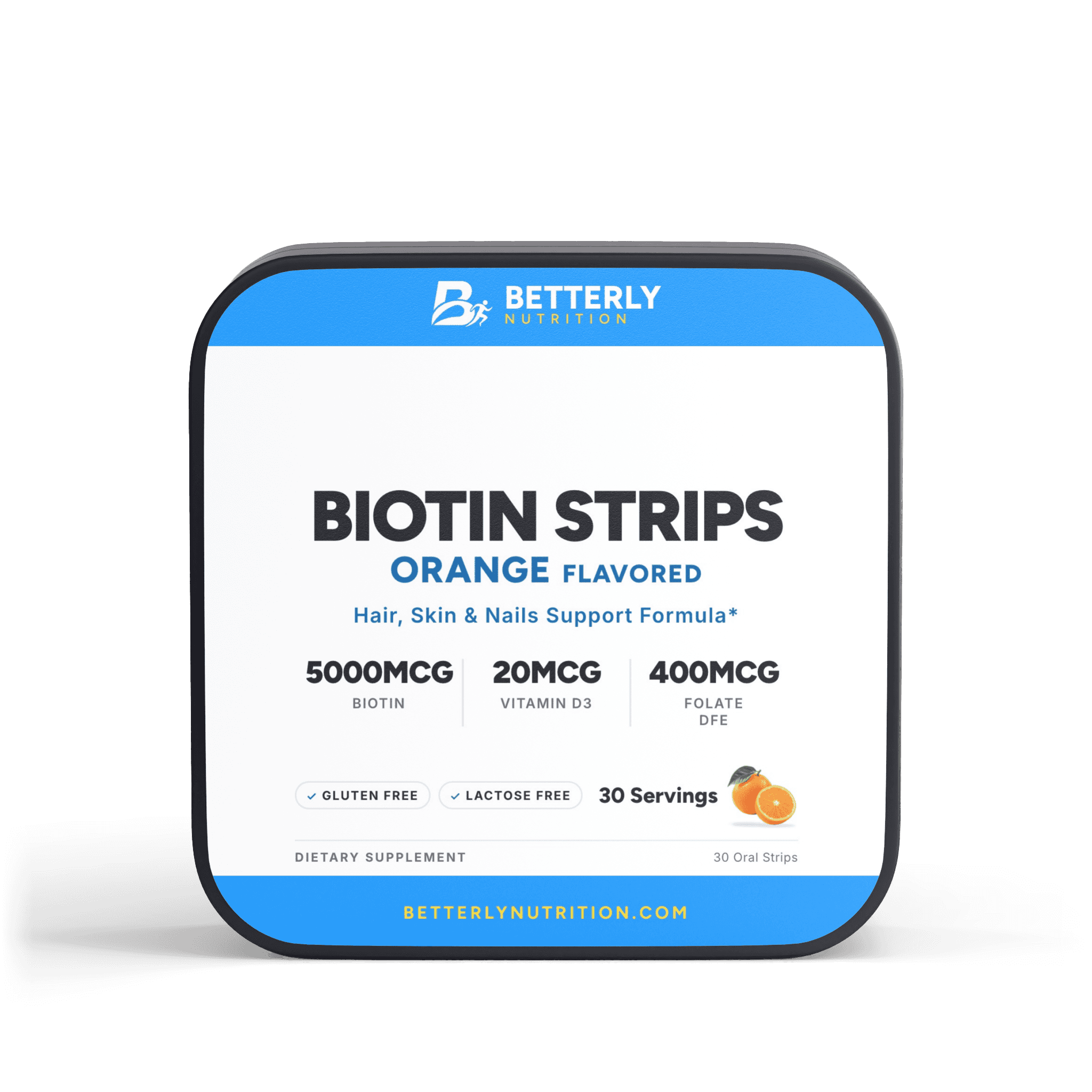
Pick one or the other, since each already delivers 2,000 IU. Several of our other formulas list vitamin D as well, the 5,000mcg Biotin Strips among them at 20 mcg per 1-strip serving, so read every panel you own and total them with our vitamin D IU to mcg chart.
From our shop: 2,000 IU Vitamin D3 & K2 Strips — a raspberry-flavored oral strip with 2000 IU of D3 and 120 mcg of K2 per 1-strip serving, 30 strips to a pack.
Who can skip a vitamin D supplement this winter?
You can likely skip a vitamin D supplement this winter if your meals already supply the 600 IU (15 mcg) ODS lists for adults 19 to 70.
That bar is higher than it looks. At about 120 IU a cup, fortified milk alone would take five cups a day. Regular fatty fish plus fortified milk, plant milk or cereal gives you the best shot.
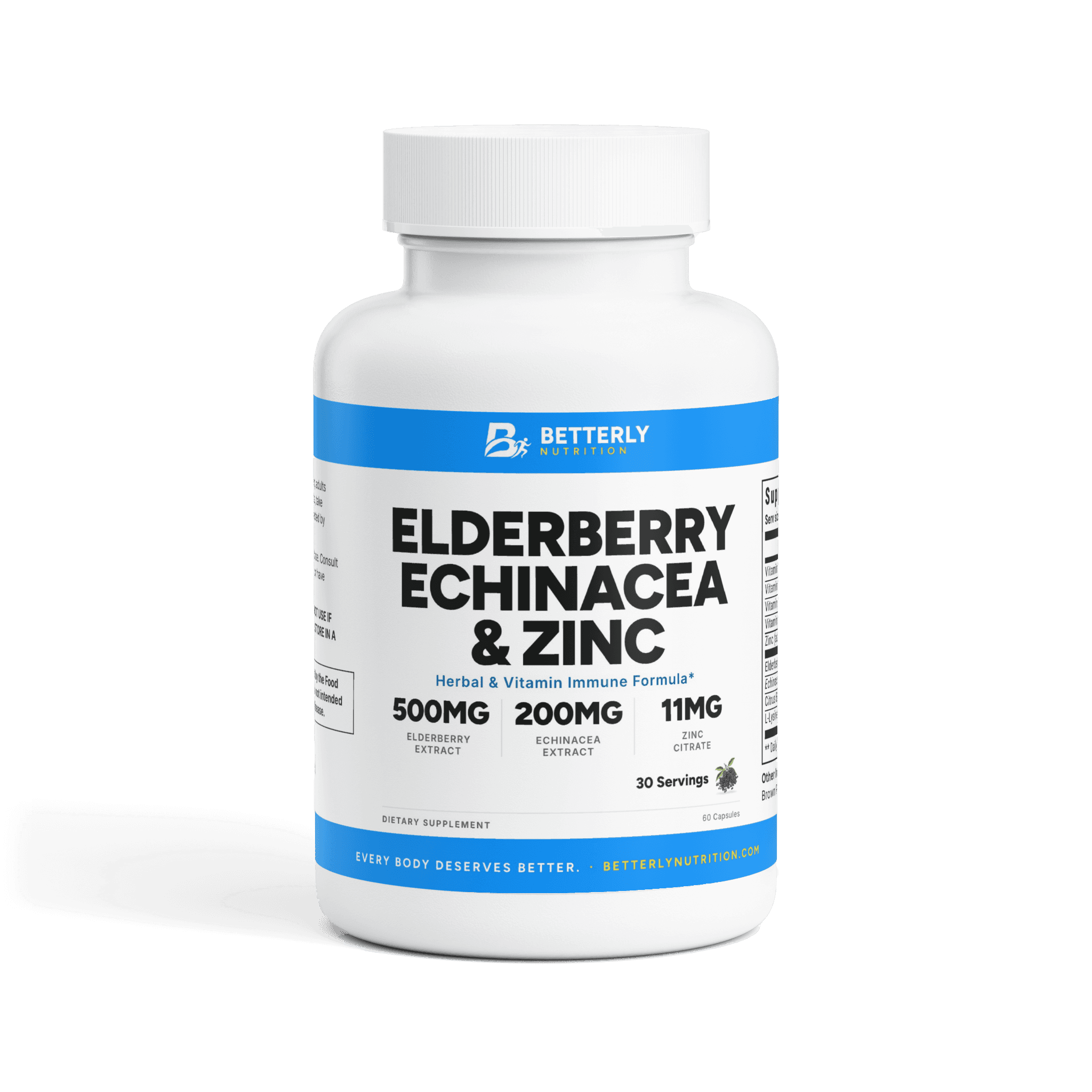
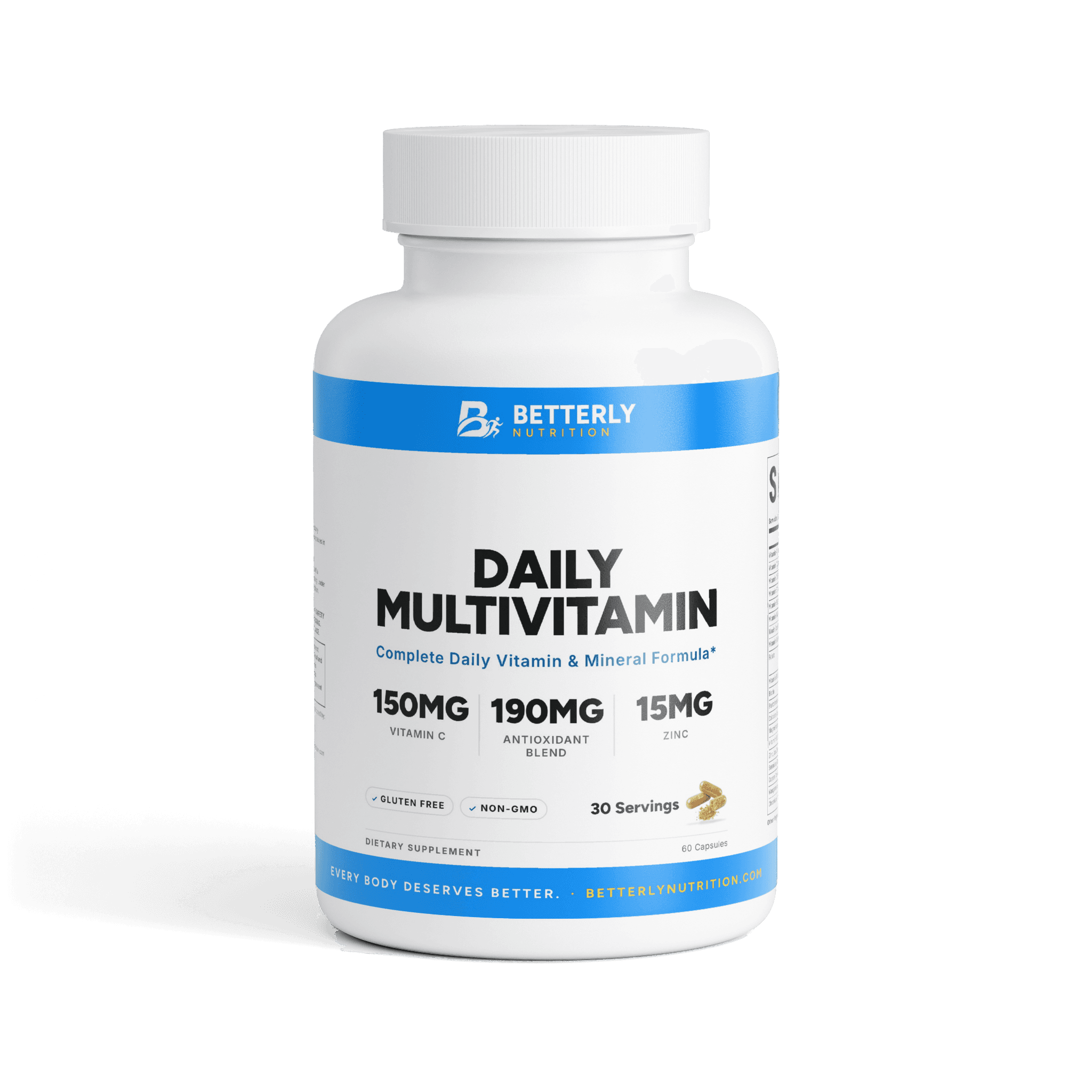
Your current products may clear it, too. Our Elderberry, Echinacea & Zinc Capsules list 40 mcg of vitamin D3 per 2-capsule serving, more than twice that 15 mcg, so a softgel on top would double up rather than fill a gap. Our Daily Multivitamin Capsules are different. Their 10 mcg per 2-capsule serving counts toward your total but leaves 5 mcg for food to supply.
Sunshine by itself is the shakiest reason to skip. If you live in the far South and spend much of your winter daylight outside, your skin has more UV to work with, since the FDA says UV is strongest near the equator. The one check ODS describes is a blood test, so talk to your provider before making the sun your whole plan.
Who should check with a healthcare provider first?
Talk to a healthcare provider before leaning on sun or a vitamin D supplement if your medicines make skin sun-sensitive, or you're pregnant, nursing or under 18.
Our softgel and strip print identical cautions: "Do not exceed recommended dose. Consult a physician if pregnant, nursing, under 18, or have a medical condition." Beyond the label:
- Sun-sensitizing products. The FDA says some oral and topical medicines, such as antibiotics, birth control pills and benzoyl peroxide products, plus some cosmetics, can make skin and eyes more sensitive to UV. If you use one, relying on the sun carries extra risk.
- Medicines that interact with vitamin D. ODS says prednisone and similar steroids can lower your blood vitamin D, and it also flags orlistat, statins and thiazide diuretics.
- Blood thinners. The strip contains vitamin K2, and the ODS vitamin K fact sheet tells anyone on warfarin (Coumadin) to keep their vitamin K intake about the same every day, so ask your prescriber first.
- Kids and teens. ODS sets lower daily ceilings for young children, 2,500 IU (63 mcg) at ages 1 to 3 and 3,000 IU (75 mcg) at ages 4 to 8, and both our labels send anyone under 18 to a physician first.
- Trouble absorbing fat. ODS says vitamin D is absorbed in the gut along with fat, so anything that limits fat absorption limits vitamin D, too.
- A procedure coming up. ODS asks you to tell every provider, pharmacist included, about each supplement you take, and a pre-surgery visit is a good time to do it.
FAQ: vitamin D and sunlight
Can you get vitamin D on a cloudy day?
You can still make some vitamin D on a cloudy day, but less of it. ODS names clouds and smog, and MedlinePlus names cloudy days and shade, as things that reduce what your skin makes. The FDA adds that UV can still damage your skin and eyes under cloud cover. A gray sky is no reason to skip sun protection.
Does a tanning bed give you vitamin D?
A tanning bed is not an approved way to get vitamin D. The FDA says it has not cleared or approved any indoor tanning device for producing vitamin D. If vitamin D is the goal, fortified food, fatty fish and a supplement at its label dose give you a measured amount without the extra UV.
How long do you need to be in the sun for vitamin D?
There's no amount of sun time for vitamin D that works for everyone, so we won't suggest one. MedlinePlus says the amount made varies greatly from person to person. The FDA lists skin color, sunscreen, clothing, latitude, altitude, time of day and time of year as factors. MedlinePlus also says more than a few minutes of sun without sunscreen is not recommended. A blood test tells you far more than a stopwatch.
Does vitamin D from food count toward the upper limit?
Yes, vitamin D from food counts toward the upper limit. ODS says the daily limits cover intake from all sources: food, beverages and supplements. For adults, that's 4,000 IU (100 mcg) a day. So count fortified milk, cereal and any multivitamin before adding a supplement on top.
Sources
- Vitamin D: Fact Sheet for Consumers, NIH Office of Dietary Supplements
- Vitamin K: Fact Sheet for Consumers, NIH Office of Dietary Supplements
- Vitamin D, MedlinePlus Medical Encyclopedia
- Ultraviolet (UV) Radiation, U.S. Food and Drug Administration
If this left you looking for somewhere to start, read 2,000 IU vitamin D3 softgels, one a day — its amounts per serving are listed on the page. For the practical questions this raises, how dosing, sourcing and subscriptions work is answered in one place.