On this page
- Key takeaways
- Do I need a calcium supplement, or can food cover it?
- How much calcium per day do women and men need?
- How do you add up the calcium in a normal day of food?
- Do I need a calcium supplement if I don't eat dairy?
- Do men need a calcium supplement?
- Is calcium from food better than calcium from supplements?
- What would our calcium capsule add to your day?
- Is there a lower-vitamin D option?
- How should you take a calcium supplement, going by the label?
- Who can skip a calcium supplement?
- Who should check with a healthcare provider first?
- FAQ: calcium supplements and food
- Sources
The short answer: Maybe not. Adults need 1,000 to 1,200 mg of calcium a day, depending on age and sex, and MedlinePlus counts about 300 mg in an 8-ounce glass of nonfat milk, 6 ounces of yogurt or 1.5 ounces of cheese. Whether you need a calcium supplement comes down to your plate. Add up a normal day of food first, and let a pill cover only the gap you find.
Key takeaways
- Most adults need 1,000 mg of calcium a day, while women from 51 and everyone from 71 need 1,200 mg, according to the NIH.
- A day with dairy at each meal, or with fortified soymilk, calcium-set tofu and fortified juice, lands near 1,000 mg without pills.
- The NIH flags people who skip dairy as more likely to come up short, and a sample day with no dairy and nothing fortified comes in about 700 mg under 1,000 mg.
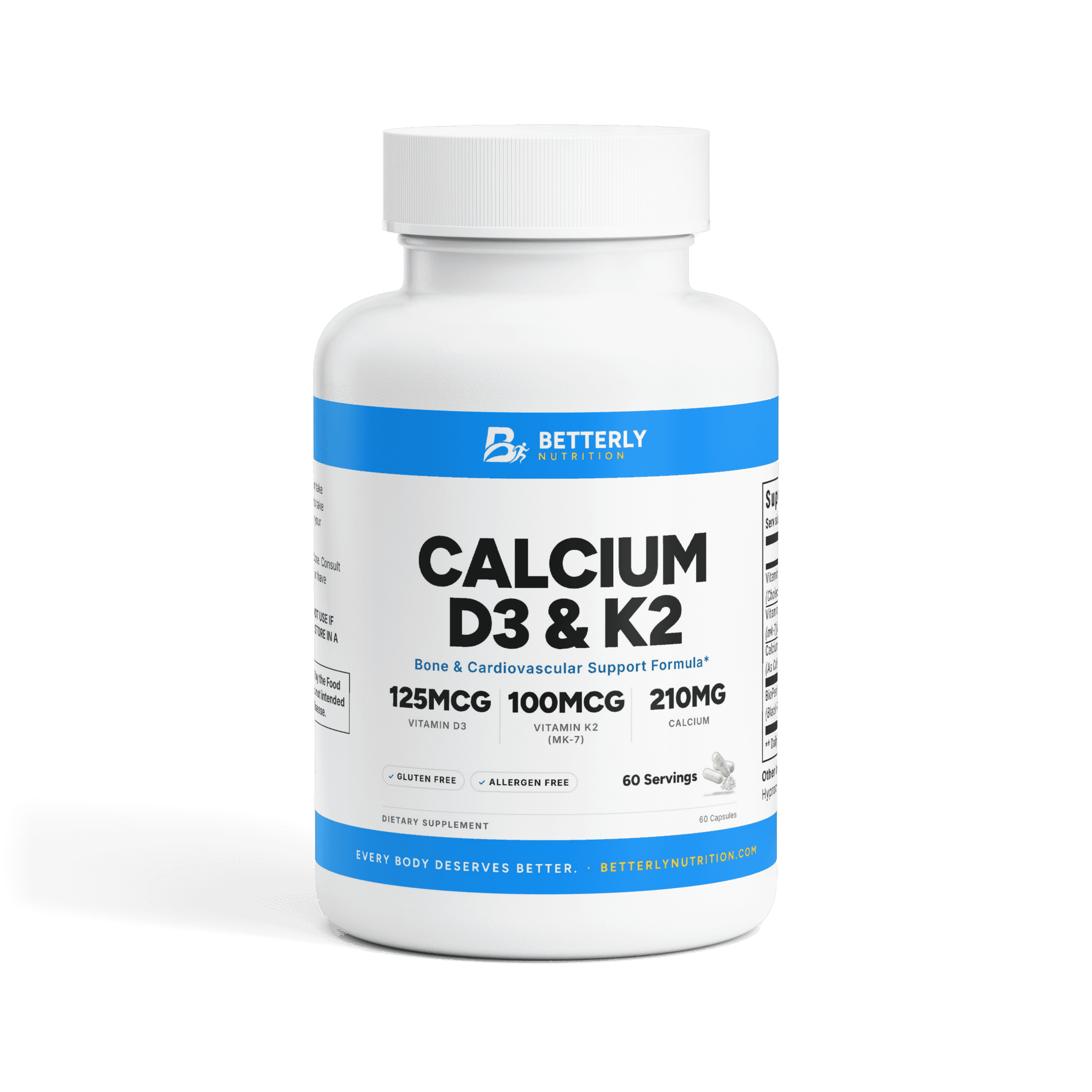
- Our calcium capsule adds 210 mg of calcium per 1 Veggie Capsule serving, but that serving's 125 mcg of vitamin D3 is over the 100 mcg adult upper limit.
We sell a calcium product, the Calcium, Vitamin D3 & K2 Capsules, and we'd still send you to your grocery list first.
Do I need a calcium supplement, or can food cover it?
Many people can cover their calcium needs with food, and MedlinePlus calls calcium-rich foods the preferred source.
The MedlinePlus page on calcium in the diet also says some people will need a supplement. The NIH Office of Dietary Supplements (ODS) cites federal guidance to get most nutrients from food.
Falling short is common, though. ODS says many people in the United States get less calcium than recommended from food and supplements. People who don't drink milk or eat other dairy are one group it flags as having a harder time getting enough.
How much calcium per day do women and men need?
Adults need 1,000 mg of calcium a day from 19 to 50, and men stay there until 70. Women from 51 and everyone from 71 need 1,200 mg.
ODS and MedlinePlus agree:
- Women 19 to 50: 1,000 mg a day
- Women 51 and older: 1,200 mg a day
- Men 19 to 70: 1,000 mg a day
- Men 71 and older: 1,200 mg a day
- Teens 14 to 18: 1,300 mg a day
There's a ceiling, too. The ODS calcium fact sheet for consumers sets the upper limit at 2,500 mg a day from age 19 to 50 and 2,000 mg from 51 on. Food, drinks and supplements all count toward it.
How do you add up the calcium in a normal day of food?
To tally calcium, multiply a packaged food's calcium % DV by 13 to get milligrams, then look up unlabeled foods like fresh produce in a federal food table.
The trick works because a label's % DV for calcium is based on 1,300 mg, the Daily Value (DV), so each 1% equals 13 mg. That figure is for comparing foods, not your personal target. A cereal showing 10% DV gives you about 130 mg. The ODS calcium fact sheet for health professionals counts any food at 20% DV or more as a high source. Here are four sample days built from its food table:
| Sample day | What's on the plate | Calcium | Against 1,000 mg |
|---|---|---|---|
| Dairy at each meal | 1 cup nonfat milk, 8 oz fruit yogurt, 1.5 oz part-skim mozzarella | 976 mg | Just under |
| Plant-based, fortified | 1 cup fortified soymilk, ½ cup calcium-set firm tofu, 1 cup fortified orange juice, 1 cup cooked kale | 995 mg | Just under |
| Fish, no dairy | 3 oz canned sardines with bones, ½ cup cooked soybeans, 1 serving fortified cereal, 1 tbsp chia seeds | 662 mg | About 340 mg short |
| No dairy, nothing fortified | 2 corn tortillas, ½ cup pinto beans, 1 cup raw bok choy, 2 slices whole wheat bread, ½ cup raw broccoli | 301 mg | About 700 mg short |
The dairy and fortified plant days each come within 25 mg of 1,000 mg. On a 1,200 mg target, the dairy day is 224 mg short, and a cup of 1% cottage cheese (138 mg) plus a serving of fortified cereal (130 mg) takes it to 1,244 mg. The plant day is 205 mg short, and ½ cup of cooked soybeans (131 mg) with a tablespoon of chia seeds (76 mg) brings it to 1,202 mg.
The last row is where a real gap opens. ODS says grains such as bread aren't high in calcium but add up because people eat them often. Here, the tortillas and bread supply 152 of the day's 301 mg.
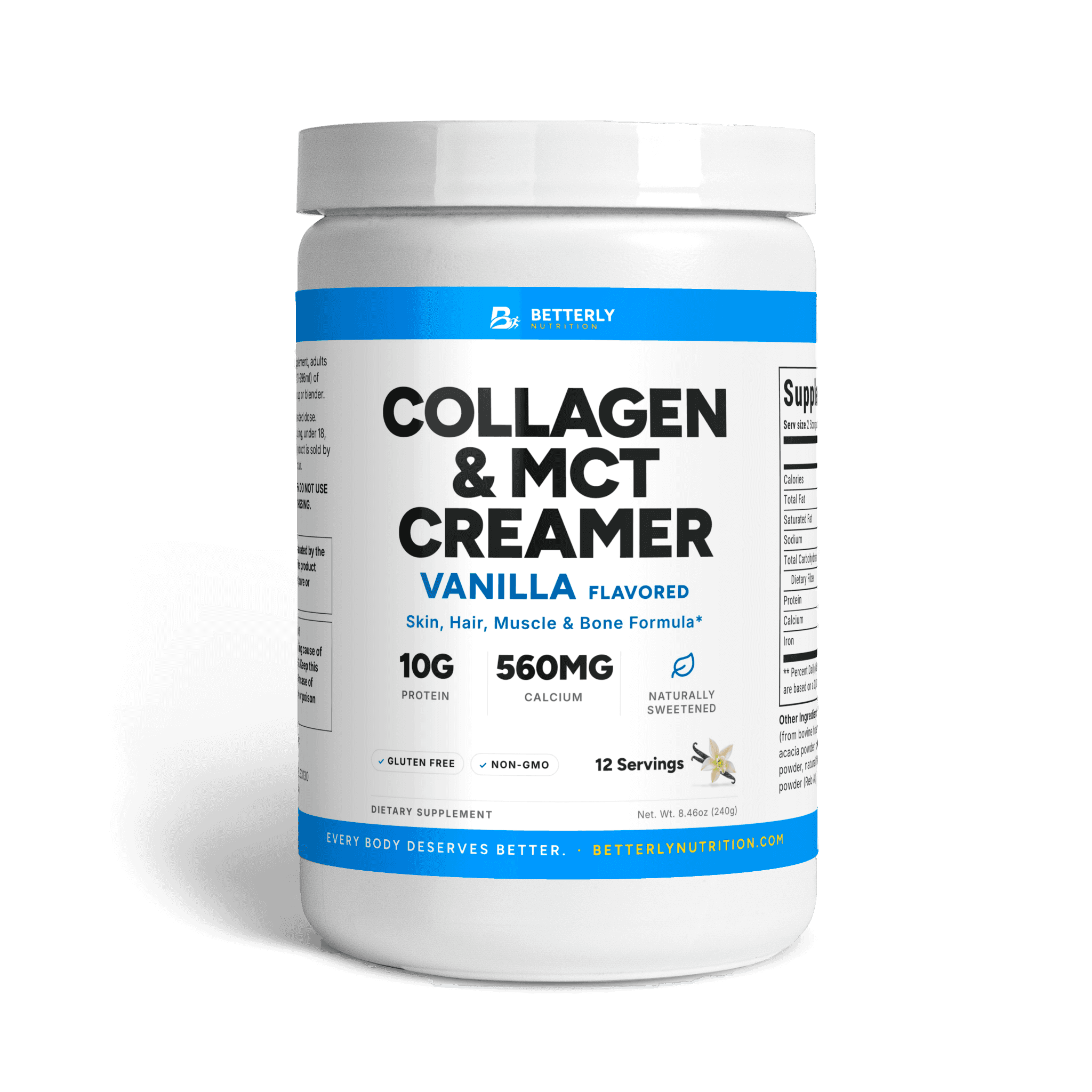
Add any powders or pills you already use to the tally. Our Collagen Peptides & MCT Creamer (Vanilla) lists 560 mg of calcium per 2-scoop (20 g) serving, more than a full day of our calcium capsules at their label directions.
Do I need a calcium supplement if I don't eat dairy?
Skipping dairy doesn't automatically mean you need a calcium supplement, as long as several fortified or calcium-set foods show up every day.
About 72% of US calcium intake comes from dairy products and foods with added dairy ingredients, per ODS. ODS suggests lactose-free dairy, canned sardines and salmon with bones, kale, broccoli, bok choy, and fortified juices, plant milks, tofu and cereals. Canned fish helps, but the fish day in our table shows one serving won't close the gap alone.
First catch: not every carton or block has calcium added. ODS says to check labels, and tofu made without a calcium salt, such as calcium sulfate, doesn't provide much.
Second catch: absorption varies. ODS says your body absorbs only about 5% of the calcium in spinach, compared with 27% for milk, because compounds like oxalic acid bind to it. Kale, broccoli and bok choy don't share that problem, though they carry less calcium per serving. So enjoy spinach, but don't count on it for calcium.
If milk upsets your stomach, you may not need to drop dairy entirely. MedlinePlus says most people whose trouble digesting lactose isn't severe can still digest hard cheeses and yogurt.
Do men need a calcium supplement?
Many men who eat dairy or fortified foods at most meals can skip a calcium supplement, since men need 1,000 mg daily through 70 and 1,200 mg from 71.
Men 51 to 70 stay at 1,000 mg, which our dairy and fortified plant days nearly reach without pills. Men's bodies, like women's, need calcium to build and maintain strong bones, ODS notes, and food can supply it.
Is calcium from food better than calcium from supplements?
Federal guidance puts calcium from food first, but calcium supplements are a workable backup, and ODS says they're absorbed best in doses of 500 mg or less.
ODS puts absorption from dairy and fortified foods at about 30%. A bigger single dose is absorbed less efficiently, not wasted: ODS says the body takes in about 28% of 1,000 mg at once. Some people also get gas, bloating or constipation from calcium pills, ODS says. Our breakdown of calcium carbonate vs citrate compares the two main forms if you end up needing one.
ODS says calcium-only and calcium-plus-D supplements commonly hold 500 or 600 mg.
What would our calcium capsule add to your day?
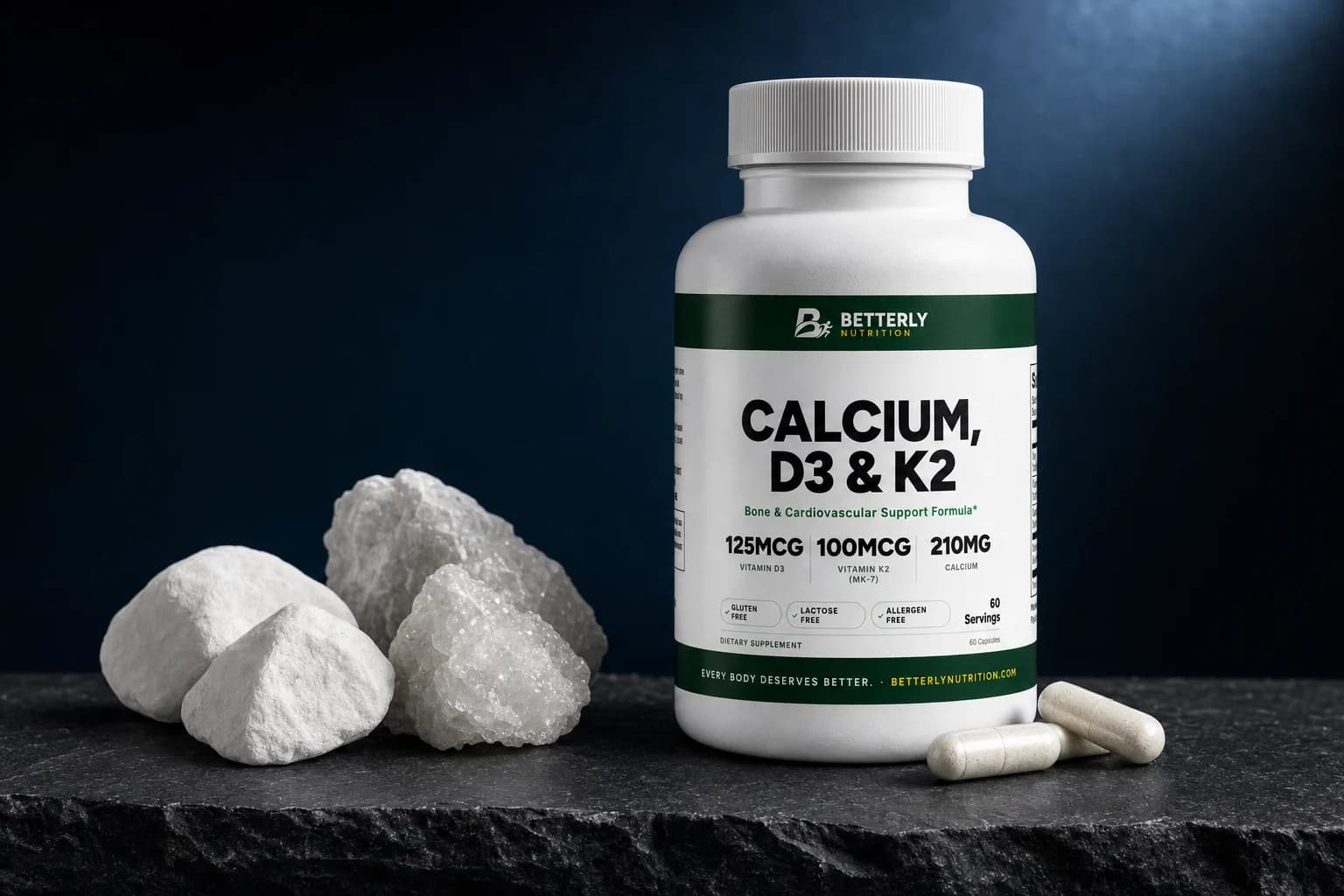
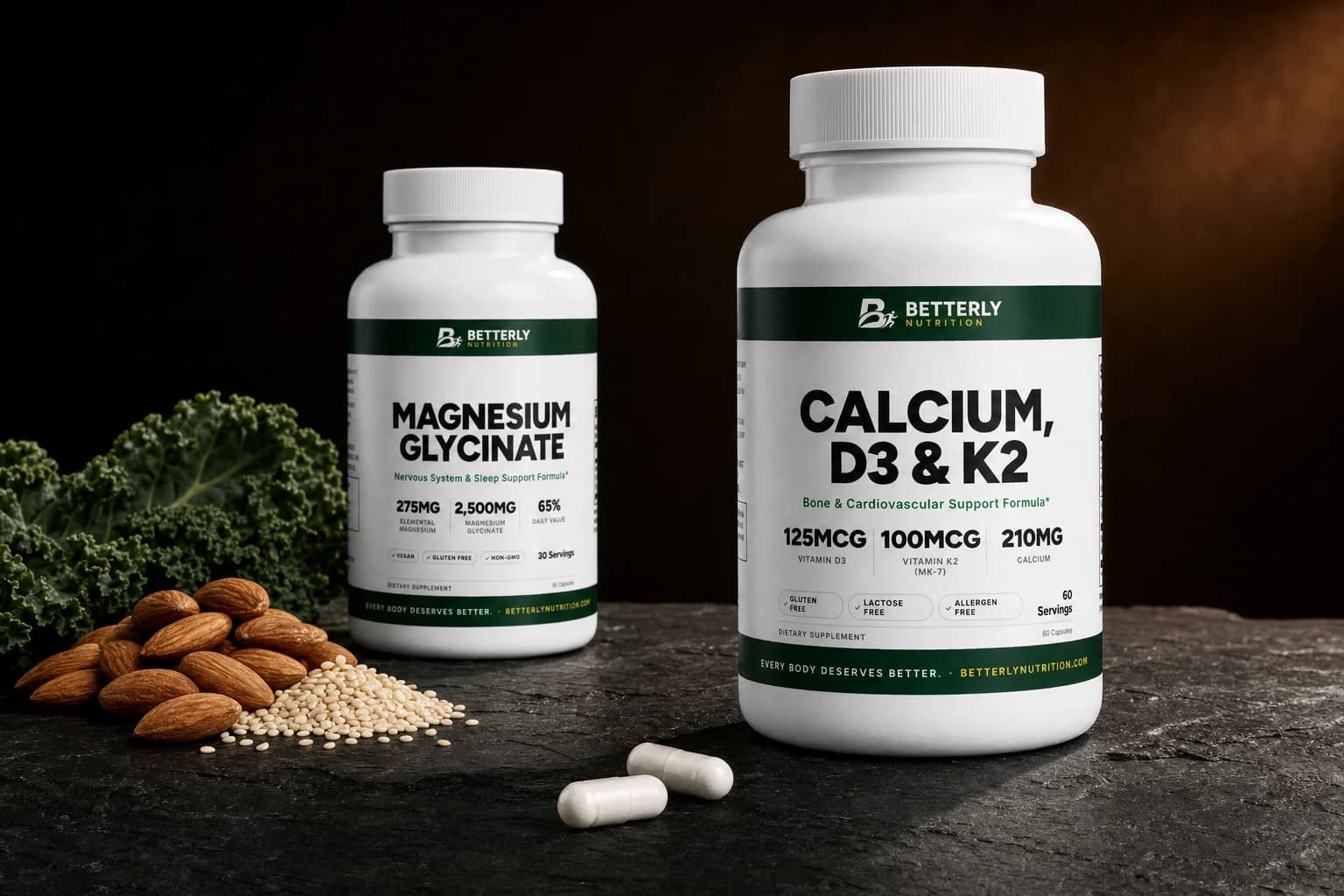
Betterly's Calcium, Vitamin D3 & K2 Capsules add 210 mg of calcium per 1 Veggie Capsule serving, but each capsule's 125 mcg of vitamin D3 exceeds the adult upper limit.
Each capsule also carries 100 mcg of vitamin K2 as MK-7 and 5 mg of BioPerine® (black pepper fruit extract). The label carries gluten free and allergen free claims. Its suggested use is one capsule twice a day, 20 to 30 minutes before a meal. That schedule supplies 420 mg of calcium a day, which would lift our "fish, no dairy" day from 662 mg to 1,082 mg.
Those two capsules also deliver 250 mcg (10,000 IU) of vitamin D3. According to the ODS vitamin D fact sheet for consumers, the daily upper limit for adults is 100 mcg (4,000 IU), and it counts food, drinks and supplements together. Using the capsule to fill the fish day's gap would put your vitamin D at 2.5 times that limit or more, and a single capsule already runs 25 mcg past it.
We won't suggest this capsule as a home fix for a calcium gap. Show its label to a healthcare provider before you take any. ODS adds that a provider might temporarily recommend more vitamin D than the upper limit.
From our shop: Calcium, Vitamin D3 & K2 Capsules — each 1 Veggie Capsule serving holds 210 mg of calcium plus 125 mcg (5,000 IU) of vitamin D3, which is above the 100 mcg adult upper limit, so clear it with your healthcare provider first.
Is there a lower-vitamin D option?
Betterly's Vitamin D3 Softgels and Daily Multivitamin Capsules stay under the adult vitamin D limit, but neither carries much calcium, so they suit people whose meals cover calcium.
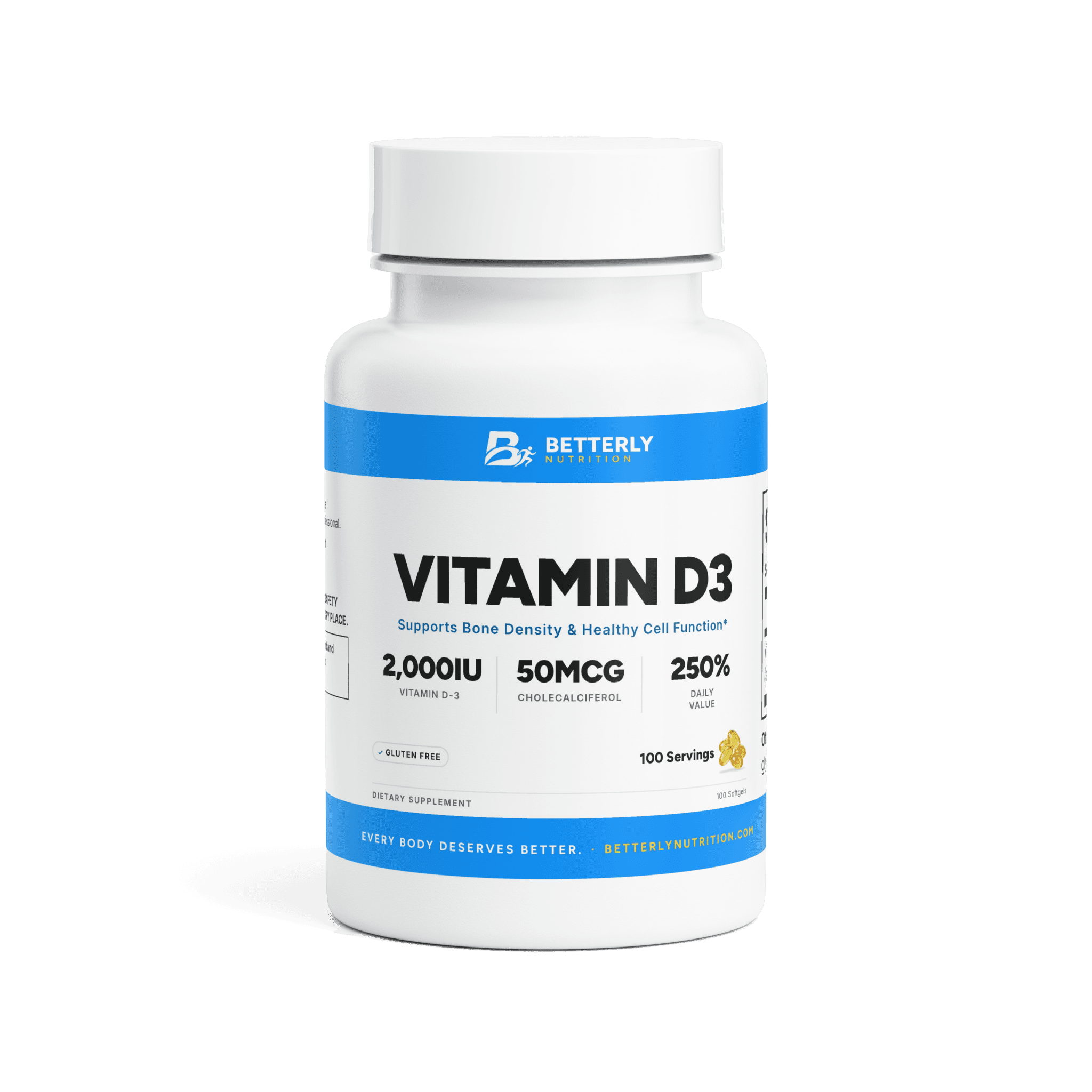
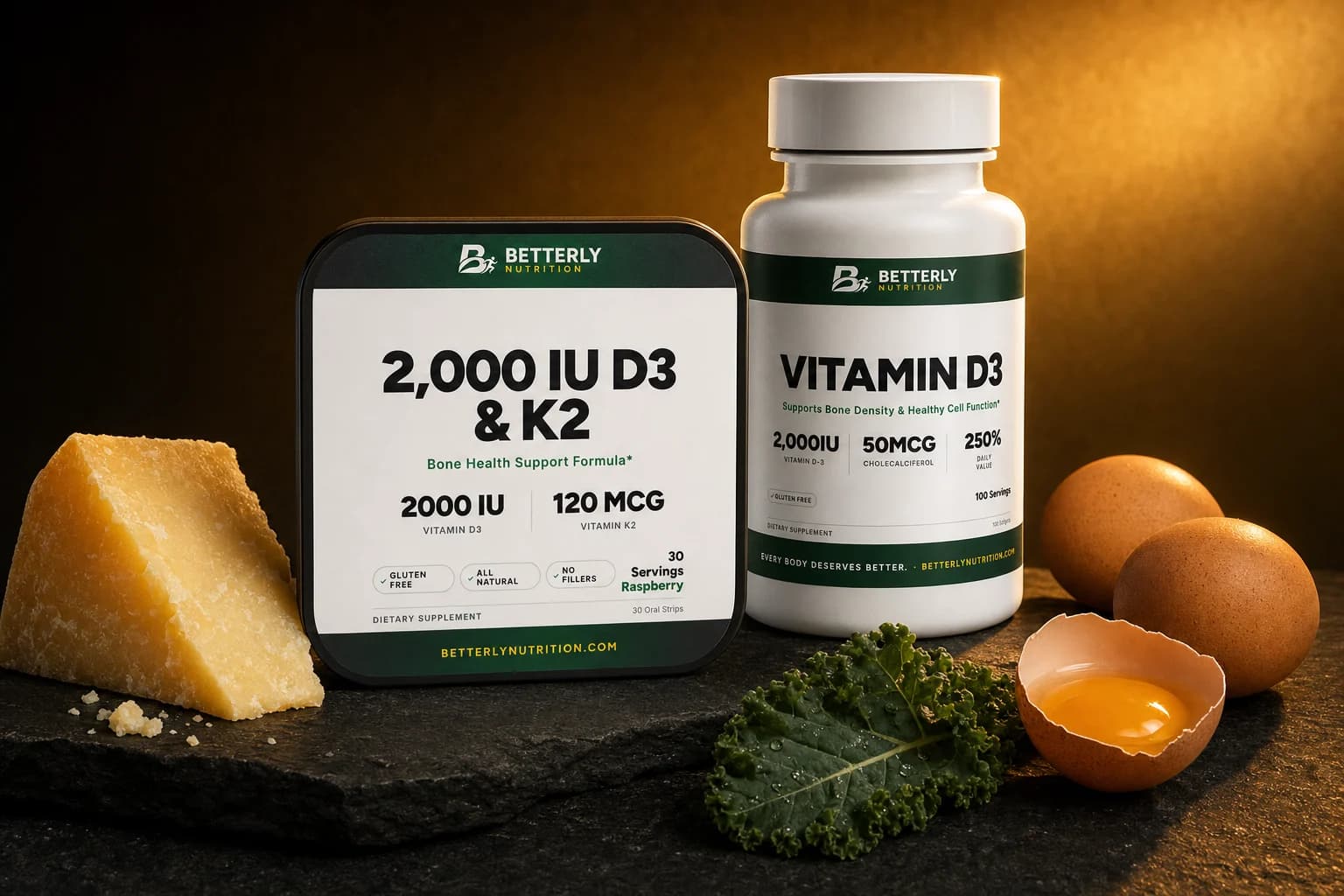
Our Vitamin D3 Softgels carry 50 mcg (2,000 IU) of vitamin D3 per 1 Softgel Capsule serving, and the label's suggested use is one softgel daily for adults. There's no calcium on its panel. Our targeted support collection holds another vitamin D format.
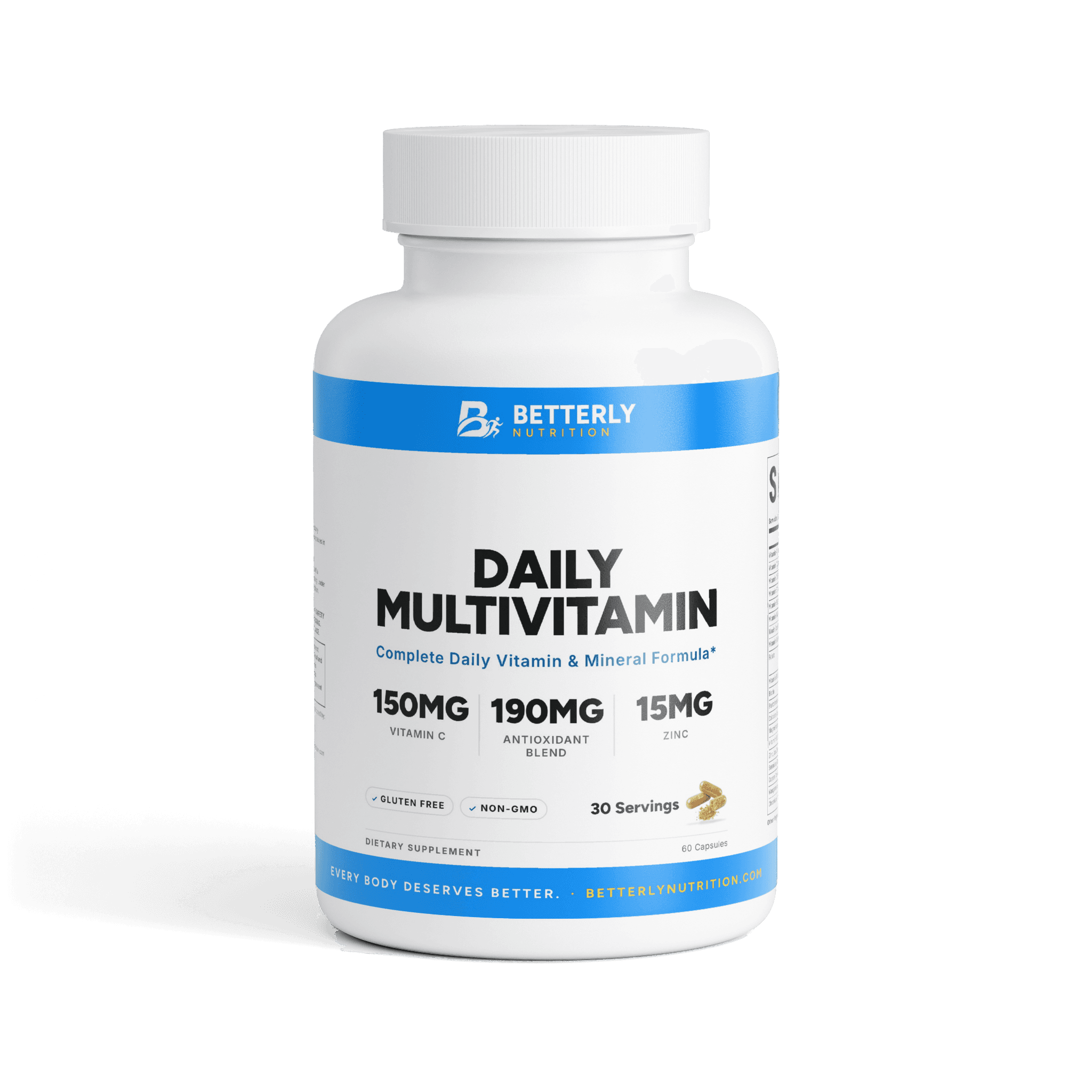
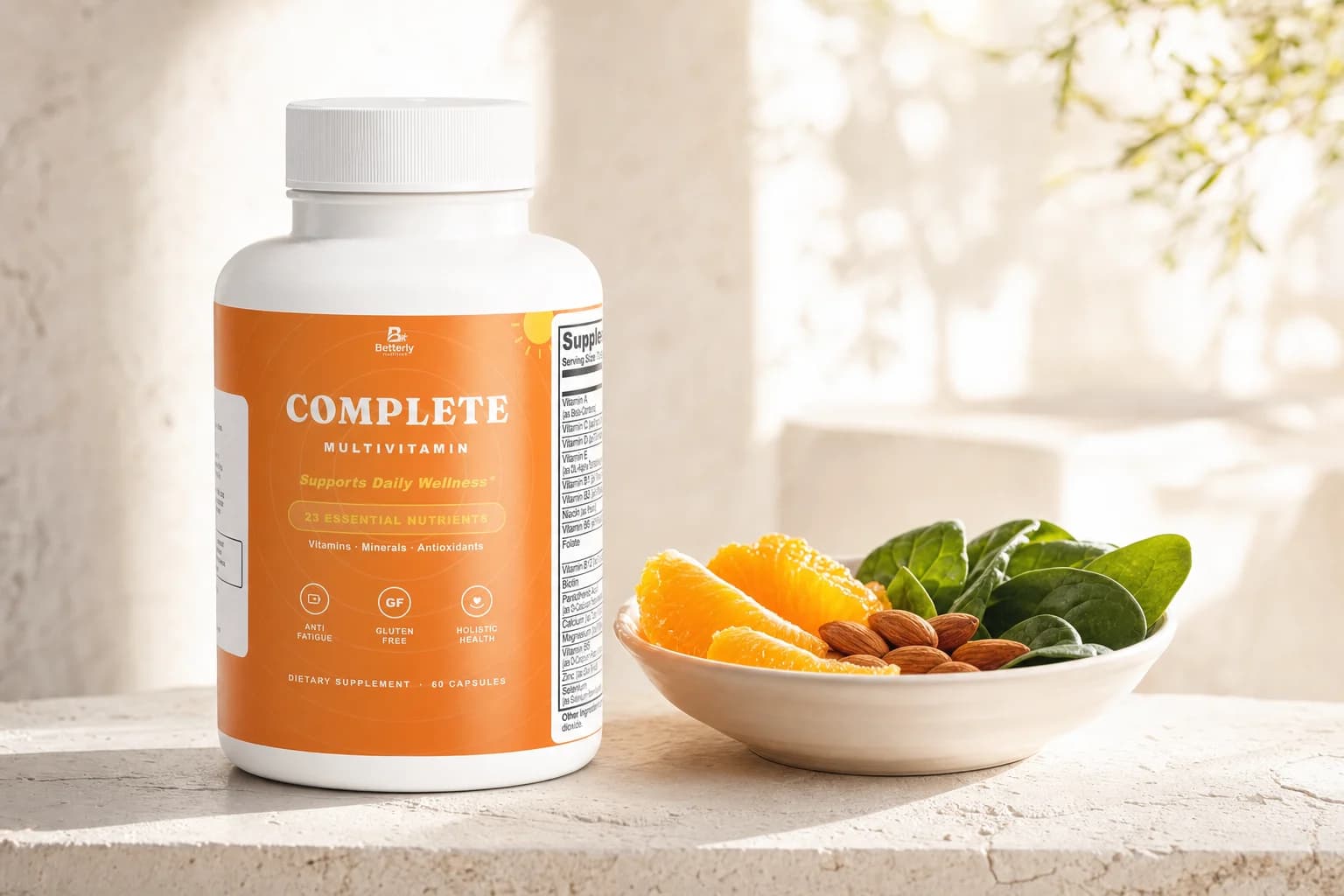
Our Daily Multivitamin Capsules list 50 mg of calcium (4% DV) and 10 mcg of vitamin D (50% DV) per 2-capsule serving, taken in the morning with a meal. Its herbal blends, including green tea extract and saw palmetto, are worth mentioning to your provider if you take any medicine. Our multivitamin decision guide helps you weigh a broad formula.
The honest limit of our shelf: we don't sell a calcium-focused product whose vitamin D stays under the limit. If your tally shows a real gap, start with food swaps, and ask your provider or pharmacist about a calcium product that fits.
From our shop: Vitamin D3 Softgels — one softgel a day by the label, which supplies 50 mcg (2,000 IU) of vitamin D3, half the adult upper limit, for people whose meals already handle calcium.
How should you take a calcium supplement, going by the label?
Take no more of a calcium supplement than its label directs, stay within NIH upper limits for every nutrient in it, and keep each dose at 500 mg or less.
- Read the Calcium line. ODS says Supplement Facts panels list elemental calcium, so you don't need to convert anything.
- Never go past the suggested use. For our capsule, get your provider's okay first because of its vitamin D.
- Keep each sitting at 500 mg or less, counting every product you take at once.
- Check the food timing. ODS says calcium carbonate is absorbed best with food, while our label says before a meal, so ask your pharmacist. Our calcium timing guide goes further.
- Add up your vitamin D and stay at or under 100 mcg (4,000 IU) a day unless your provider says otherwise.
Who can skip a calcium supplement?
You can likely skip a calcium supplement if your food tally hits your target most days, or if food plus products you already take, like a creamer, reach it.
Leave the calcium bottle on the shelf when:
- Your meals reach 1,000 or 1,200 mg most days.
- You'd be stacking it on a dairy-heavy diet near the upper limit.
- You're assuming more calcium always means better bones. ODS says studies on calcium supplements and bone density in older adults are mixed.
Who should check with a healthcare provider first?
Check with a healthcare provider before starting a calcium supplement if you're pregnant, nursing or under 18, take prescription medicine, have a medical condition, or are scheduled for surgery.
The caution printed on our capsule reads: "Do not exceed recommended dose. Consult a physician if pregnant, nursing, under 18, or have a medical condition." Beyond that, ODS's calcium sheet names medicines that don't mix well with calcium supplements:
- Levothyroxine absorbs poorly when taken within 4 hours of a calcium carbonate supplement.
- Quinolone antibiotics, such as ciprofloxacin, absorb poorly when taken within 2 hours of a calcium supplement.
- Dolutegravir should be taken 2 hours before or 6 hours after calcium supplements.
- Lithium alongside calcium supplements can push blood calcium too high.
The ODS vitamin D fact sheet flags thiazide diuretics too, since taking them with vitamin D supplements could raise blood calcium too high. If you take warfarin, our capsule's vitamin K2 is one more reason to ask first, and our K2 and D3 pairing guide explains why.
FAQ: calcium supplements and food
Can you get too much calcium?
Yes, you can get too much calcium, for example when supplements are stacked on a calcium-rich diet. Picture an adult 51 or older, whose limit ODS sets at 2,000 mg a day. Our dairy sample day (976 mg), one 2-scoop serving of our collagen creamer (560 mg) and a typical 500 mg calcium tablet total 2,036 mg. That's over the limit before any other food counts.
Do you need calcium with vitamin D?
Pairing the two makes sense, since vitamin D helps your body absorb calcium, according to ODS, and MedlinePlus suggests a calcium supplement that also contains vitamin D. Adults 19 to 70 need 15 mcg (600 IU) of vitamin D a day, the upper limit is 100 mcg (4,000 IU), and our calcium capsule's 125 mcg goes over it by itself.
Does a multivitamin give you enough calcium?
A multivitamin rarely gives you enough calcium on its own. ODS says multivitamin-mineral supplements commonly contain about 200 to 300 mg, a fraction of what adults need, and our Daily Multivitamin Capsules carry 50 mg per 2-capsule serving. Treat that as a small addition to your food tally.
How much calcium is in a glass of milk?
A glass of milk holds about 300 mg of calcium. MedlinePlus puts an 8-ounce glass of nonfat milk at 300 mg, and the ODS food table lists 299 mg per cup of nonfat milk and 276 mg for whole milk. ODS notes that calcium dips slightly as a dairy food's fat content rises. One glass covers 25% to 30% of an adult's daily target.
Is almond milk a good source of calcium?
Almond milk can be a good calcium source if it's fortified. ODS lists soy and almond beverages among the milk substitutes that may have calcium added, and says to check the label. Fortified soymilk carries 299 mg per cup in the ODS food table, the same as nonfat milk.
Sources
- Calcium: Fact Sheet for Consumers, NIH Office of Dietary Supplements
- Calcium: Fact Sheet for Health Professionals, NIH Office of Dietary Supplements
- Calcium in diet, MedlinePlus Medical Encyclopedia
- Vitamin D: Fact Sheet for Consumers, NIH Office of Dietary Supplements
If this left you looking for somewhere to start, read calcium supplement with vitamin D3 and K2 — its amounts per serving are listed on the page. For the practical questions this raises, how dosing, sourcing and subscriptions work is answered in one place.