On this page
- Key takeaways
- Do you need K2 with D3, or is plain D3 enough?
- Why take K2 with D3, and what does each vitamin do?
- MK-7 vs MK-4: does the K2 form on a label matter?
- How much vitamin D3 and K2 do adults need each day?
- Vitamin D3 vs D3 + K2 vs a calcium combo: which label fits?
- What's the best time to take vitamin D3 and K2?
- Can you take D3 and K2 together with magnesium, omega-3 or calcium?
- When don't you need a D3 or K2 supplement?
- Who should check with a healthcare provider before taking D3 and K2?
- FAQ: vitamin D3 and K2
- Sources
The short answer: Most adults don't need K2 with D3. The NIH says vitamin D helps your body absorb calcium, and its fact sheet never says D3 needs K2 to do that. Most people also get enough vitamin K from food, so a combo is a convenience, not a requirement. What matters more is the adult upper limit for vitamin D: 4,000 IU (100 mcg) a day from all sources.
Key takeaways
- Plain vitamin D3 at a normal label amount is a complete choice, and the NIH's supplement fact sheets don't say it has to come with K2.
- Vitamin K helps your body make proteins for healthy bones and normal blood clotting, and most people get enough from food.
- Adults shouldn't go over 4,000 IU (100 mcg) of vitamin D a day from all sources combined unless a provider directs it.
- If you take warfarin, talk to your prescriber before adding any vitamin K.
We sell three products built around vitamin D3: a plain softgel, a D3 and K2 strip, and a calcium, D3 and K2 capsule. Our honest view is that the simplest one is enough for a lot of people, so here's how to judge any label, ours included.
Do you need K2 with D3, or is plain D3 enough?
Plain vitamin D3 is enough for most adults taking a normal amount, and the NIH Office of Dietary Supplements (ODS) doesn't say it needs to be paired with K2.
So can you take vitamin D3 without K2? Yes. The risks ODS describes come from getting too much vitamin D, and skipping K2 isn't one of them. Is K2 necessary for D3 absorption? ODS doesn't say so; its tip is to take D3 with some fat.
The ODS vitamin D fact sheet for consumers covers amounts, forms, interactions and safety limits without a word about K2. The ODS vitamin K fact sheet says most people in the United States get enough vitamin K from food, and bacteria in your colon make some, too.
Still, the pairing has a sensible logic (next section), and a combo can make sense if:
- You rarely eat leafy greens (the main source of K1) or fermented and animal foods, where K2 is found.
- You'd rather take one daily product than two.
- Pills are a chore for you, and a dissolving strip sounds easier.
If none of those fit, plain D3 does the job. Compare our three D3-focused options in our targeted support collection.
Why take K2 with D3, and what does each vitamin do?
People take K2 with D3 because vitamin D helps your body absorb calcium and vitamin K helps make proteins that healthy bones rely on.
That's how ODS and MedlinePlus's vitamin K page describe the two vitamins. Vitamin K also helps make proteins for normal blood clotting. Vitamin D has other jobs, too: your muscles need it to move, your nerves need it to carry messages, and your immune system needs it to work normally.
Few foods contain vitamin D naturally. Fatty fish are among the best sources, and fortified foods such as milk supply most of the vitamin D Americans get. Your skin also makes it in sunlight.
ODS says more research is needed on vitamin K and bones. More vitamin K from food has been linked with stronger bones in some research, but supplement trials haven't been consistent. A combo rests on real biology, not on proof that you need both at once.
MK-7 vs MK-4: does the K2 form on a label matter?
ODS lists MK-4 and MK-7 as common K2 supplement forms but doesn't compare them, so the useful check is whether a label names its form.
Vitamin K comes in two natural types. K1 (phylloquinone) comes mostly from leafy vegetables like spinach and kale. K2 (menaquinone) is found in fermented foods and foods that come from animals. Supplements can also carry K1, listed as phylloquinone or phytonadione.
For vitamin D, ODS says D3 (cholecalciferol), the form in all three products in our table below, might raise blood levels higher and for longer than D2 (ergocalciferol).
How to read the K2 line on any panel:
- Look for an MK number after "Vitamin K2." Our Calcium, Vitamin D3 & K2 Capsules print "Vitamin K2 (mk-7)(as Menaquinone)."
- If it says only "Menaquinone," the form isn't named. Our 2,000 IU Vitamin D3 & K2 Strips print "Vitamin K2 (Menaquinone)." That's the honest limit of our strip, and we won't claim a form the panel doesn't state.
- Check the amount in mcg and whether a % Daily Value sits beside it.
How much vitamin D3 and K2 do adults need each day?
Adults 19 to 70 need 600 IU (15 mcg) of vitamin D a day, and adults 71 and older need 800 IU (20 mcg), according to ODS. Vitamin K's adequate intake is 120 mcg for men and 90 mcg for women.
There's no official D3-to-K2 ratio, because ODS sets a separate amount for each vitamin. A few more numbers to know:
- The vitamin D amount stays at 600 IU during pregnancy and breastfeeding.
- 1 mcg of vitamin D equals 40 IU. That's how ODS's paired numbers work out, so 50 mcg is 2,000 IU and 125 mcg is 5,000 IU.
- The adult upper limit for vitamin D is 4,000 IU (100 mcg) a day. It counts food, drinks and supplements, though ODS notes a provider may recommend more for a period of time.
Add up your vitamin D before you buy anything
Vitamin D hides in lots of products, and the limit applies to your total. Here's how our own labels add up:
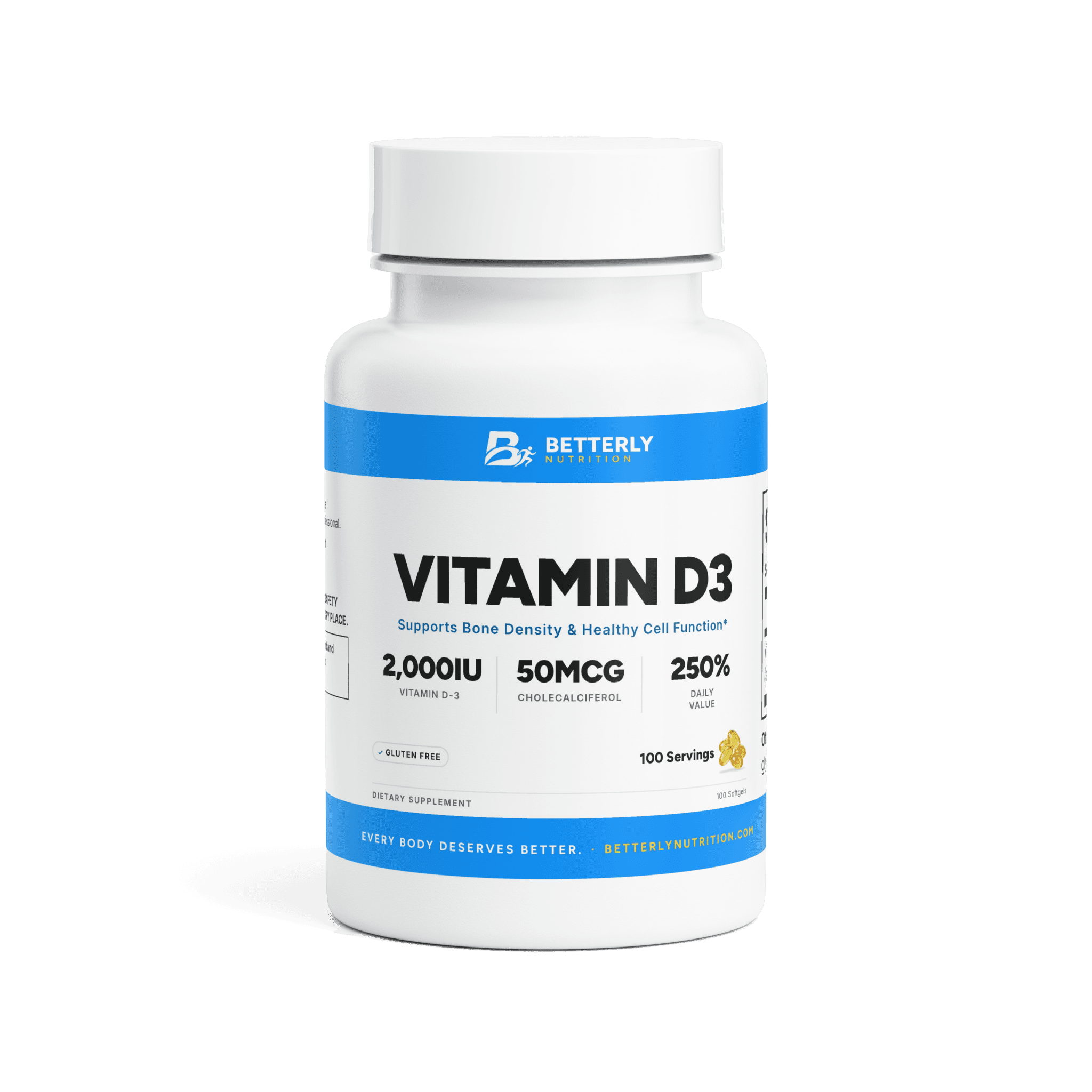
- Vitamin D3 Softgels: 50 mcg (2,000 IU) per 1-softgel serving
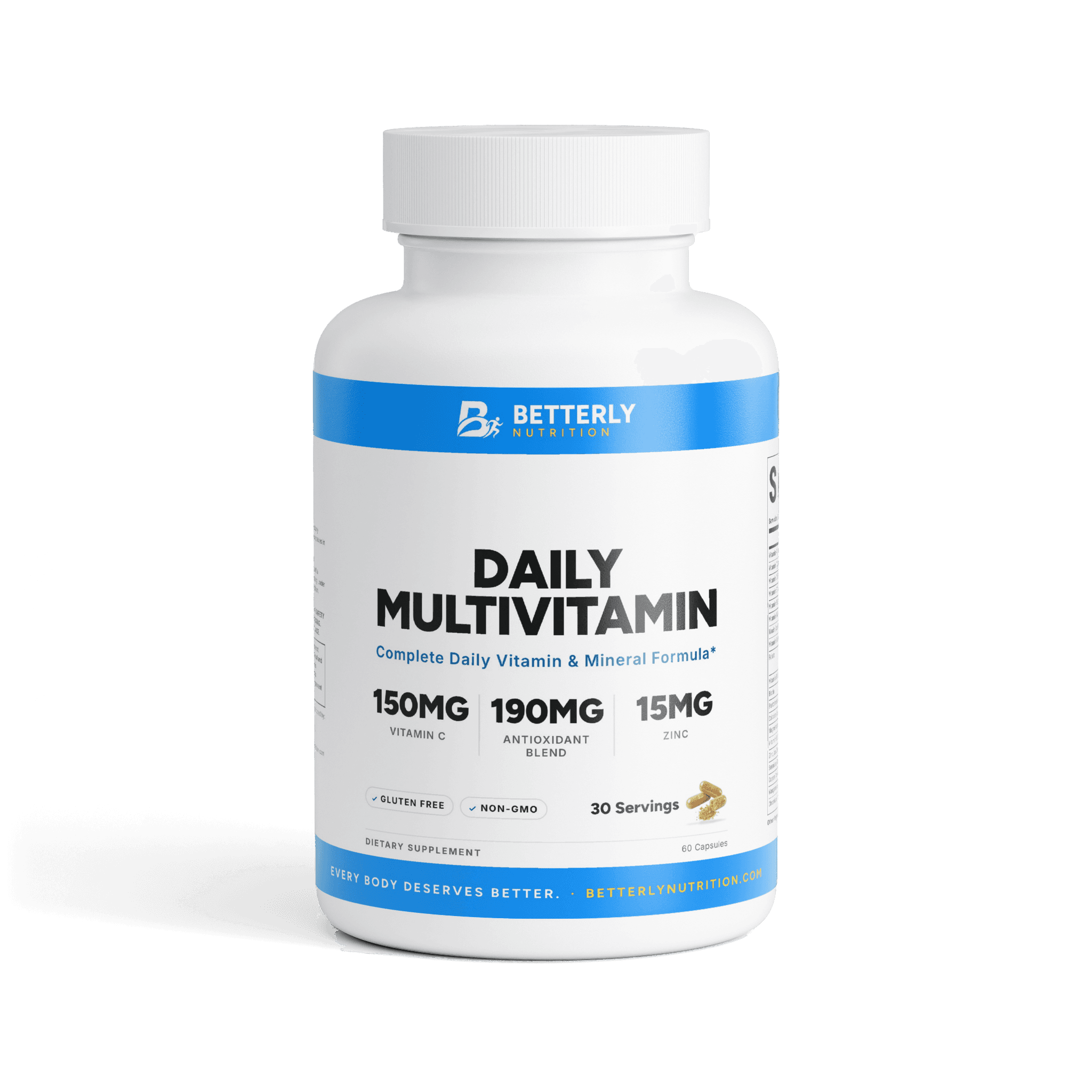
- Daily Multivitamin Capsules: 10 mcg per 2-capsule serving, with no vitamin K
- Elderberry, Echinacea & Zinc Capsules: 40 mcg per 2-capsule serving
Take all three at each label's suggested use and you're at 100 mcg, right at the upper limit before a glass of fortified milk.
Other Betterly formulas list vitamin D too, including our 5,000mcg Biotin Strips (20 mcg per 1-strip serving) and Ashwagandha, Maca & Ginseng Capsules (20 mcg per 2-capsule serving), so check every panel.
Switching products can do it too: start the strip without stopping the softgel and you're at 100 mcg a day. Our guide to laying out a simple supplement routine walks you through lining up labels so overlaps jump out.
Vitamin D3 vs D3 + K2 vs a calcium combo: which label fits?
Betterly's Vitamin D3 Softgels suit most people, the D3 & K2 Strips suit anyone wanting both in one step, and the calcium capsule's directions go over the vitamin D limit.
| Label | Per serving | Daily, at label directions | Best fit |
|---|---|---|---|
| Vitamin D3 Softgels | 50 mcg (2,000 IU) D3, no K2 | 1 softgel: 2,000 IU D3 | Adults who want D alone |
| 2,000 IU Vitamin D3 & K2 Strips | 2,000 IU (50 mcg) D3, 120 mcg K2 | 1 strip: 2,000 IU D3 | One step, dissolves on tongue |
| Calcium, Vitamin D3 & K2 Capsules | 125 mcg (5,000 IU) D3, 100 mcg K2 (MK-7), 210 mg calcium | 2 capsules: 250 mcg (10,000 IU) D3 | Ask a provider first |
The takeaway: the softgel and the strip give you the same 2,000 IU of D3 a day. The real choice is whether you want K2 added, and whether you'd rather dissolve a raspberry strip than swallow a gelatin softgel.
Now the calcium capsule. The label's suggested use is one capsule twice a day. That's 250 mcg (10,000 IU) of vitamin D3 daily, 2.5 times the adult upper limit, and even one capsule's 125 mcg is over it. So we don't suggest it as an everyday vitamin. Talk with your healthcare provider before taking it.
From our shop: 2,000 IU Vitamin D3 & K2 Strips — 2,000 IU of vitamin D3 and 120 mcg of vitamin K2 per 1-strip (100 mg) serving, in a raspberry strip that dissolves on your tongue.
What's the best time to take vitamin D3 and K2?
Vitamin D3 is best absorbed with a meal or snack that includes some fat, according to ODS, but follow your product's label first.
ODS gives that tip for vitamin D only, and it doesn't pick morning or night. The softgel label's suggested use is one softgel daily, so pairing it with a meal you never skip makes it easy to remember.
The strip's label says: "Place 1 oral strip on the tongue daily and allow it to dissolve." It names no time, so pick whatever daily moment you'll remember.
Can you take D3 and K2 together with magnesium, omega-3 or calcium?
For most people, yes: D3 and K2 can share a routine with magnesium, fish oil or calcium, but only calcium has a documented link to vitamin D in our sources.
You'll often read that vitamin D needs magnesium to work, but the federal pages we cite don't make that claim, so think of magnesium as a separate choice. Our Magnesium Glycinate Capsules provide 275 mg of magnesium per 3-capsule serving and list no vitamin D or K. Still choosing a form? Our glycinate vs citrate comparison covers it.
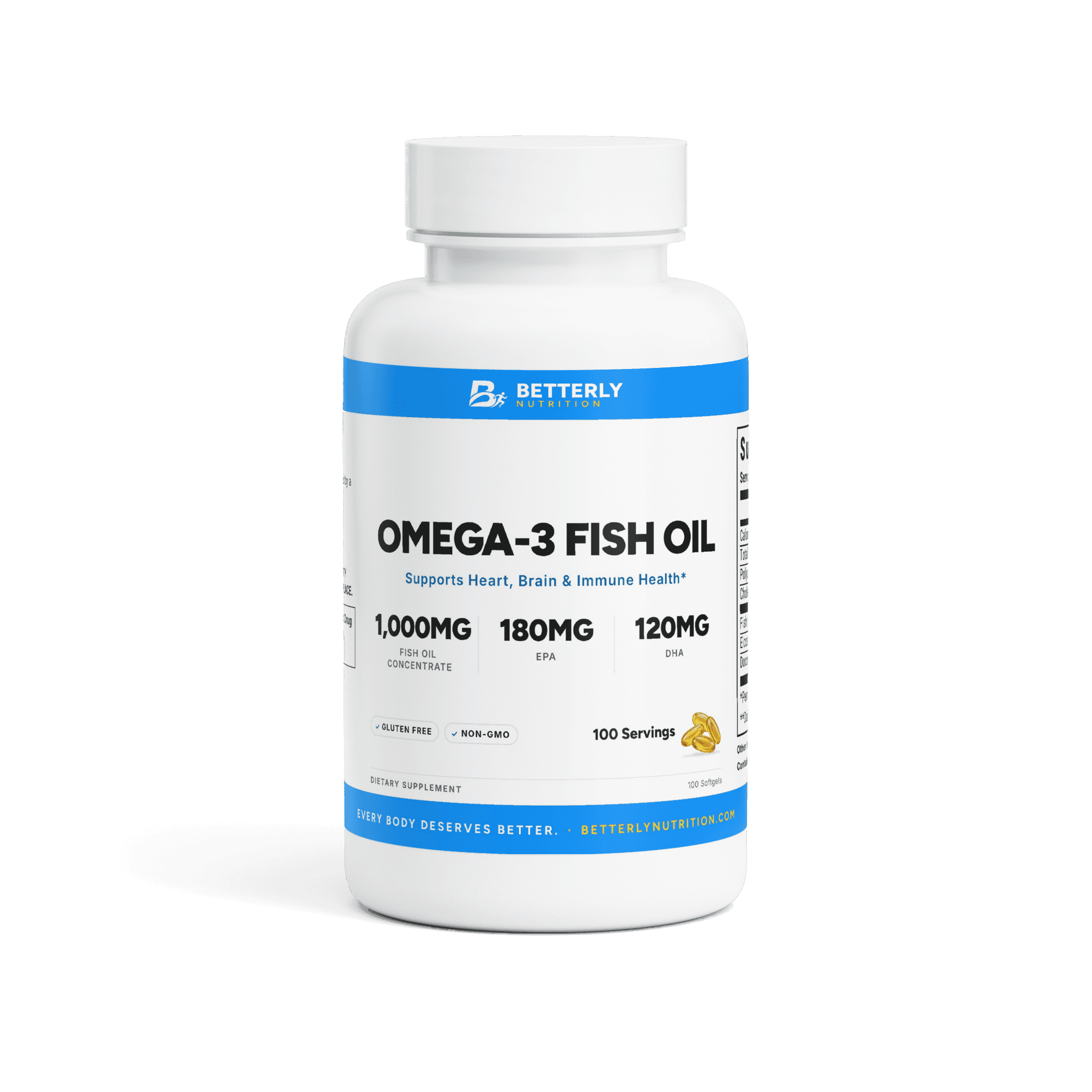
Our Omega-3 Fish Oil Softgels provide 180 mg of EPA and 120 mg of DHA per 1-softgel serving. The label's suggested use is one softgel two times daily with meals. Its panel lists no vitamin D, but fish liver oils can carry it, so add a cod liver oil's D to your total. If you take warfarin or another blood thinner, check with your prescriber before adding fish oil, too.
For calcium, MedlinePlus on calcium in the diet says vitamin D is needed to help your body use calcium. It adds that calcium carbonate is absorbed better with food, and absorption is best at no more than 500 mg at a time. Our calcium capsule holds 210 mg of calcium, as calcium carbonate, per 1-capsule serving, yet its label says to take it 20-30 minutes before a meal. Ask your provider or pharmacist how that fits your routine.
When don't you need a D3 or K2 supplement?
You may not need vitamin D3 if a blood test shows a healthy level, or extra vitamin K if you eat leafy greens, eggs, cheese or fermented foods.
ODS says one way to know your level is a 25-hydroxyvitamin D blood test, with 50 nmol/L (20 ng/mL) or more adequate for most people. Most people in the United States have adequate levels, though almost one in four fall short. Ask your provider whether a test makes sense for you.
Skip or rethink the supplement if:
- Your level came back fine, and you get fortified milk, fatty fish or regular sun.
- Your multivitamin and other products already add up to a solid amount of D.
- You're buying K2 only because you read that D3 is unsafe without it.
ODS lists older adults, people who seldom get sun and people with darker skin among those more likely to fall short. If that's you, plain D3 is a simple start after a talk with your provider. Our take on whether you need a multivitamin helps you choose between one nutrient and a broad formula.
From our shop: Vitamin D3 Softgels — 50 mcg (2,000 IU) of vitamin D3 per 1-softgel serving with no added K2, for anyone who wants D on its own.
Who should check with a healthcare provider before taking D3 and K2?
Anyone taking warfarin should talk to their prescriber before starting K2. So should anyone pregnant, nursing, under 18, on prescription medicine or managing a medical condition.
Warfarin. If you take the blood thinner warfarin (Coumadin), ODS says to keep the vitamin K you get from food and supplements about the same every day. A sudden change can alter how the medicine works. Don't start or stop a K2 product, or fish oil, on your own; bring the labels to your prescriber. Our strip has 120 mcg of K2 per 1-strip serving, the calcium capsule has 100 mcg per 1-capsule serving, and the softgel lists none.
Other medicines. ODS notes that vitamin D can interact with orlistat, statins, steroids such as prednisone, and thiazide diuretics. Long antibiotic courses, bile acid sequestrants and orlistat can affect vitamin K.
Everyone else. All three labels in our table say: "Do not exceed recommended dose. Consult a physician if pregnant, nursing, under 18, or have a medical condition." Add upcoming surgery to that list.
FAQ: vitamin D3 and K2
Is it OK to take vitamin D3 and K2 together every day?
Yes, if your total vitamin D stays within the 4,000 IU (100 mcg) adult upper limit from ODS. The label's suggested use for our strip is one strip daily, which gives 2,000 IU of D3. If you take warfarin, keep your vitamin K about the same each day and check with your prescriber first.
Is 2,000 IU of vitamin D3 a day too much?
For most healthy adults, no: 2,000 IU (50 mcg) of vitamin D3 a day is under the adult upper limit of 4,000 IU (100 mcg), according to ODS. It's more than the 600 to 800 IU most adults need, but still inside the limit. Stacking is how you'd go over: one 2,000 IU product plus a multivitamin, an immune formula and fortified drinks. If you take a prescription medicine, ask your provider first.
Can you get enough vitamin K2 from food?
There's no separate K2 target, but ODS says most people in the US get enough vitamin K overall from food. K2 is found in fermented foods and foods from animals, and K1 in leafy greens. The adequate intake covers all vitamin K: 120 mcg for men and 90 mcg for women.
What are the side effects of vitamin D3 and K2?
Too much vitamin D is the main side-effect risk of a D3 and K2 supplement, not the K2. According to ODS, very high blood levels of vitamin D can cause nausea, vomiting, muscle weakness and confusion, and they almost always come from supplements, not sun. ODS says vitamin K has not been shown to cause harm, but it can change how warfarin works, so anyone on that medicine needs a prescriber's okay before adding K2.
How long does a pack of D3 and K2 strips last?
A pack of our 2,000 IU Vitamin D3 & K2 Strips lasts 30 days, because it holds 30 strips and the label's suggested use is one strip daily. Our Vitamin D3 Softgels bottle holds 100 softgels at one a day, so it lasts 100 days. Both labels say to store the product in a cool, dry place.
Sources
- Vitamin D: Fact Sheet for Consumers, NIH Office of Dietary Supplements
- Vitamin K: Fact Sheet for Consumers, NIH Office of Dietary Supplements
- Vitamin K, MedlinePlus
- Calcium in diet, MedlinePlus Medical Encyclopedia
If this left you looking for somewhere to start, read plain 2,000 IU vitamin D3 softgels — its amounts per serving are listed on the page. For the practical questions this raises, how dosing, sourcing and subscriptions work is answered in one place.