On this page
- Key takeaways
- What's the difference between vitamin D3 and D2?
- Is D3 better than D2 for raising vitamin D levels?
- Do vitamin D3 and D2 have the same benefits?
- How can you tell D3 from D2 on a supplement label?
- Which form fits a plant-based diet?
- How do you switch from a D2 product to a D3 one?
- Can you take vitamin D2 and D3 together?
- When is switching vitamin D forms not worth it?
- Who should check with a healthcare provider first?
- FAQ: vitamin D3 vs D2
- Sources
The short answer: Vitamin D3 vs D2 comes down to staying power and source. Both forms raise blood levels of vitamin D, but the NIH says D3 (cholecalciferol) might push them higher and hold them up longer than D2 (ergocalciferol). D3 is the form your skin makes in sunlight, while D2 is made from yeast and other fungi. That makes D3 the easy default and D2 a fair pick if you avoid animal products.
Key takeaways
- Vitamin D2 (ergocalciferol) and vitamin D3 (cholecalciferol) are the two forms of vitamin D sold in supplements, and both raise blood levels.
- The NIH Office of Dietary Supplements says D3 might lift blood levels further than D2 and hold them up for longer.
- The NIH describes one set of jobs for vitamin D, such as helping you absorb calcium, and doesn't split them between the two forms.
- A Supplement Facts row that says only "vitamin D" could hold D2, D3 or both, so look for the chemical name in parentheses.
- D2 and D3 share one adult upper limit of 4,000 IU (100 mcg) a day from all sources, so changing forms should mean swapping products, not adding one.
We sell several products with vitamin D3, including a softgel and a dissolving strip in our targeted support range, and none of our labels lists D2. That gives us a stake in this answer, so we'll show you where D2 comes out ahead and where our own products fall short for plant-based eaters.
What's the difference between vitamin D3 and D2?
Vitamin D3 and D2 differ mainly in origin: D3 (cholecalciferol) is the form your skin makes in sunlight, while D2 (ergocalciferol) is made from yeast and other fungi.
The FDA regulation that covers vitamin D as a food ingredient, 21 CFR 184.1950, lays out how each form is produced. D2 comes from shining ultraviolet light on a compound taken from yeast and related fungi. D3 is either isolated from fish liver oils or made by irradiating a compound produced from cholesterol. The same rule names D3 as the form human skin produces in sunlight.
How much your skin makes is hard to predict, as our guide to getting vitamin D from sunlight explains. Our D3 panels name the form, cholecalciferol, but not its source.
| Vitamin D3 | Vitamin D2 | |
|---|---|---|
| Chemical name | Cholecalciferol | Ergocalciferol |
| Made from (FDA rule) | Fish liver oils or cholesterol | Yeast and related fungi |
| Made in your skin? | Yes, in sunlight | No |
| Blood levels (ODS) | Might rise higher, last longer | Rise too, possibly less |
| Animal-free? | Only with a vegan claim | Usually, but check the shell |
D3 may have the edge on blood levels, according to the vitamin D fact sheet for consumers from the NIH Office of Dietary Supplements (ODS), and D2 has the edge for anyone who avoids animal products. On the label itself, an IU of D2 counts for as much as an IU of D3.
Is D3 better than D2 for raising vitamin D levels?
Vitamin D3 may be the better pick for raising vitamin D levels, because ODS says it might lift them higher and for longer, though D2 raises them too.
ODS says both forms increase the vitamin D in your blood. It hedges the D3 advantage with "might" and doesn't put a size on the gap.
The FDA takes another angle. Its guidance on converting units for vitamins A, D and E says the two forms "have been reported to exhibit identical responses in the body." For labeling, then, the agency counts 1 mcg of either form as 40 IU.
The two agencies are answering different questions. The FDA needed one conversion factor for labels, while ODS describes how blood levels respond over time.
In practice, D3 is the sensible default if you have a free choice. If D2 suits your diet better, it's still real vitamin D. Your healthcare provider can check where your own level sits.
Do vitamin D3 and D2 have the same benefits?
Vitamin D3 and D2 have the same benefits as far as ODS describes them. Its fact sheet lists one set of jobs for vitamin D and doesn't assign any of them to a single form.
Vitamin D helps you absorb calcium, a mineral your bones are built from. It's also needed for muscle movement and for the nerve signals that pass between your brain and body. And it supports normal immune function.
So the gap between the forms lives in the blood-level finding above, not in what vitamin D does. If a chart online hands D3 a list of extra perks, look for a source. ODS notes that scientists are still studying how vitamin D affects health.
How can you tell D3 from D2 on a supplement label?
A supplement label names the vitamin D form in parentheses after the nutrient: "as cholecalciferol" means D3, and "as ergocalciferol" means D2. A plain "vitamin D" doesn't tell you which.
The FDA's page on vitamin D for milk and milk alternatives explains that vitamin D written without a subscript can mean D2, D3 or both.
Four checks work on any panel, and our own labels show each one:
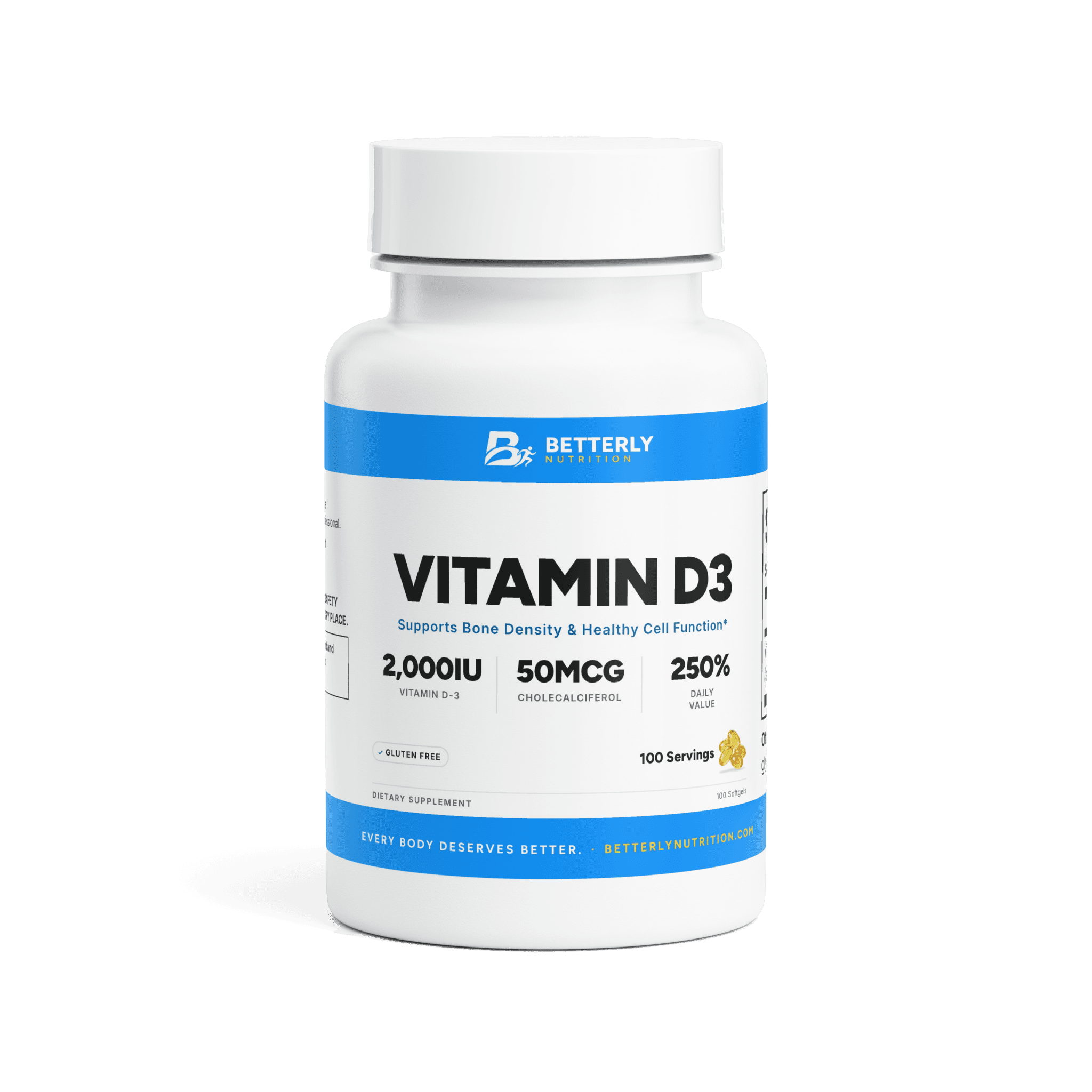
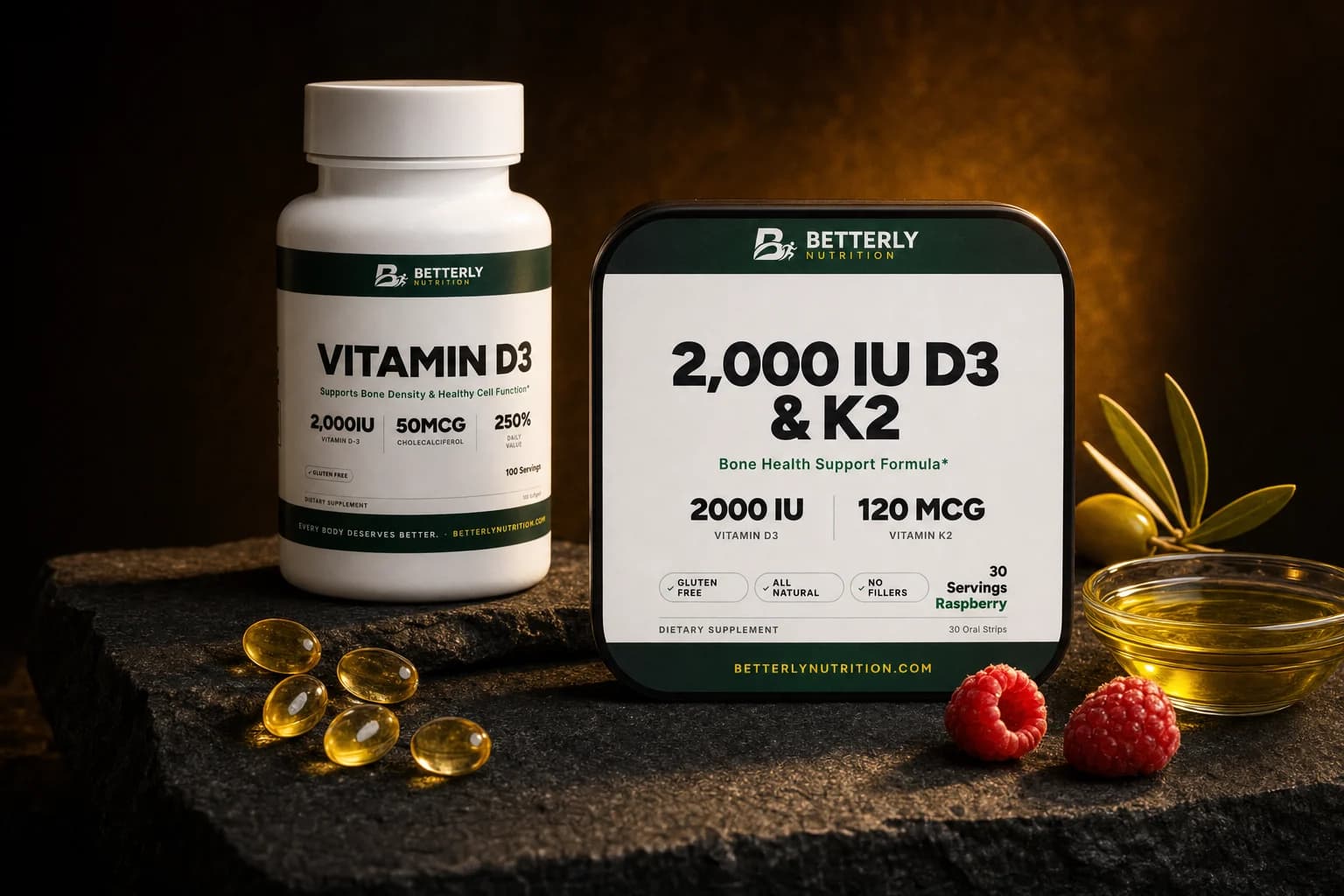
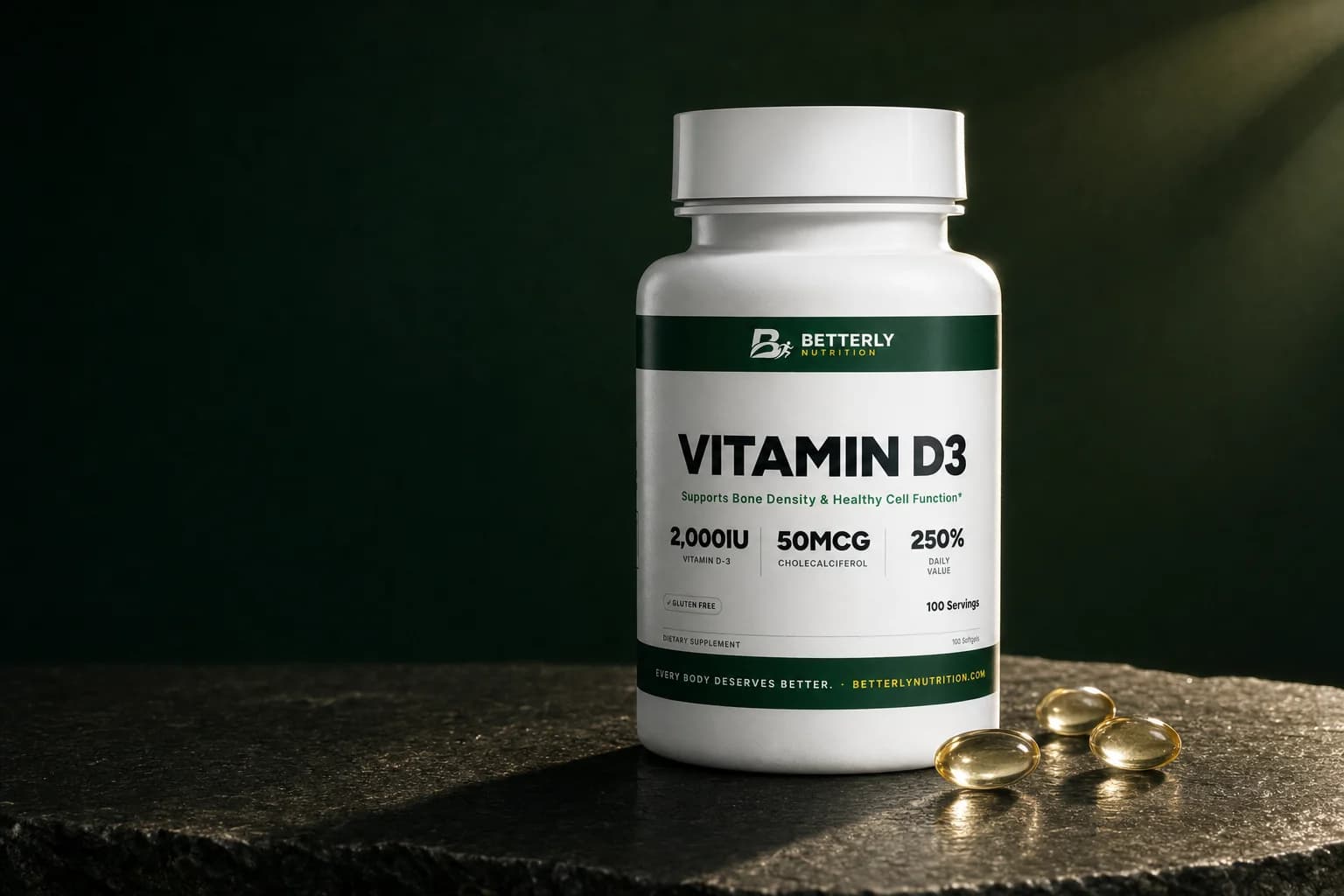
- Read the parentheses. Our Vitamin D3 Softgels print "Vitamin D-3 (as cholecalciferol)" at 50 mcg (2,000 IU) per 1-softgel serving, with 250% in the Daily Value column.
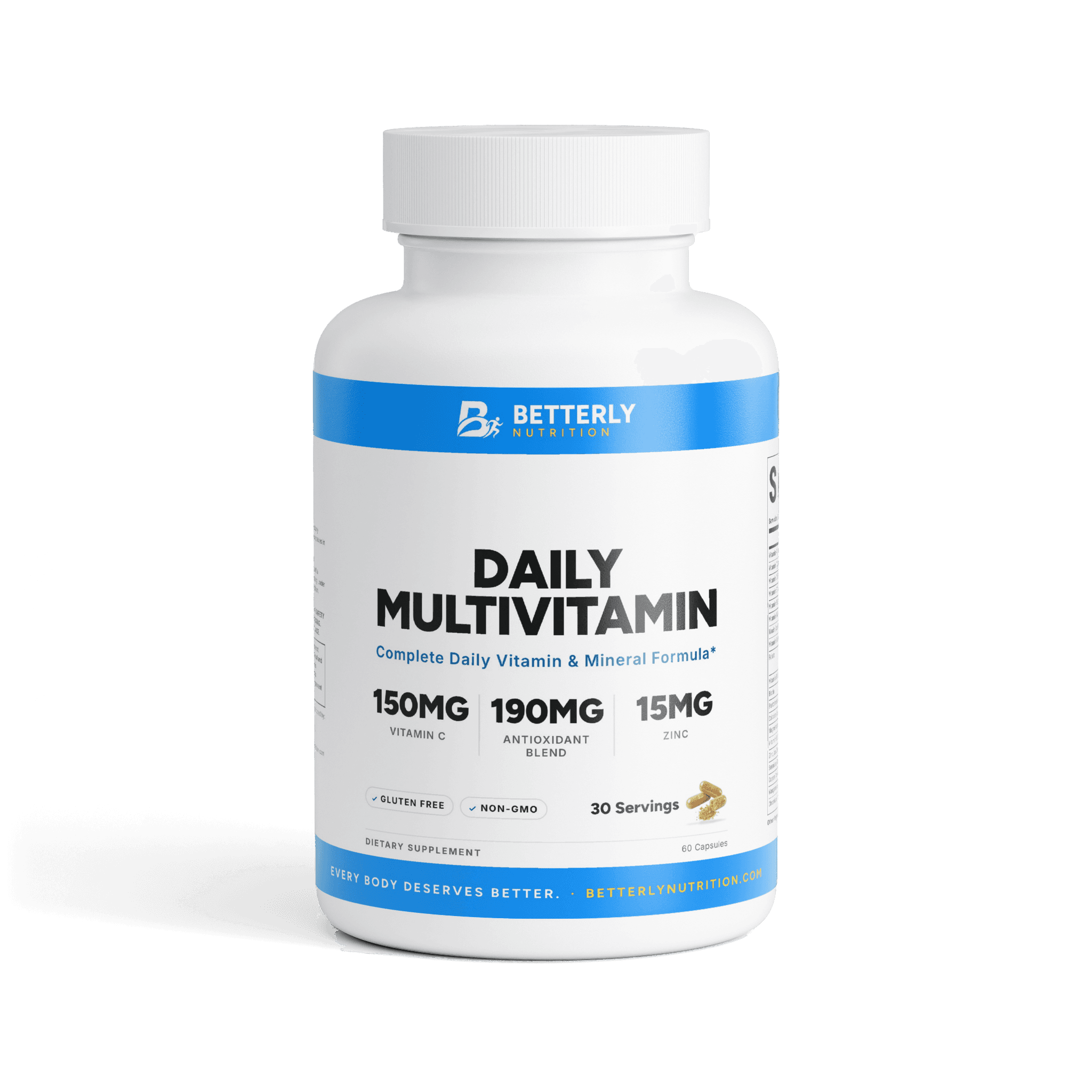
- Look past the row name. Our Daily Multivitamin Capsules print "Vitamin D (as Cholecalciferol)" at 10 mcg per 2-capsule serving. The row says "Vitamin D," but the parentheses show it's D3.
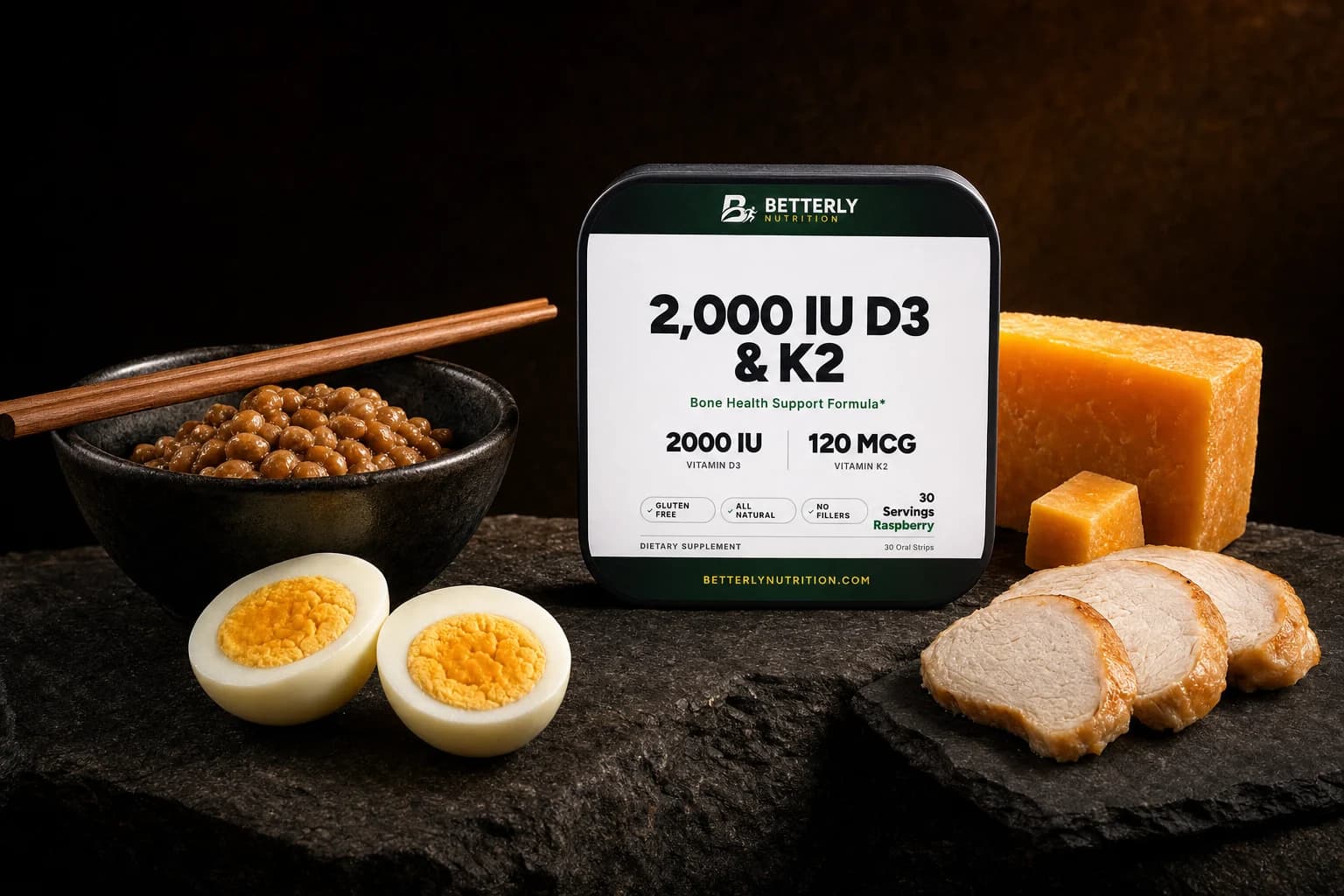
- Convert when the units differ. Our 2,000 IU Vitamin D3 & K2 Strips list "Vitamin D3 (Cholecalciferol)" at 2000 IU per 1-strip (100 mg) serving. Divide by 40 and you get 50 mcg, the same amount as the softgel.
- Assume nothing when no form appears. Without a chemical name, the label alone can't tell you whether it's D2 or D3.
From our shop: Vitamin D3 Softgels — a gelatin softgel whose panel names its vitamin D as cholecalciferol (D3), at 50 mcg (2,000 IU) per 1-softgel serving and 100 softgels to a bottle.
Which form fits a plant-based diet?
If you avoid animal products, pick vitamin D2 or a D3 with a vegan claim, and check the capsule or softgel shell as well as the vitamin.
Shells are where our own lineup falls short:
- Our Vitamin D3 Softgels list "Softgel (gelatin, glycerin, water), soybean oil, corn oil" as other ingredients. The gelatin rules them out for vegetarians and vegans.
- The D3 & K2 strip is built from pullulan, cellulose and pectin, with no gelatin listed. Still, its label makes no vegan claim and doesn't say where its D3 comes from, so we won't call it vegan.
- The multivitamin uses a hypromellose shell, listed as a vegetable capsule, but it carries no vegan claim either.
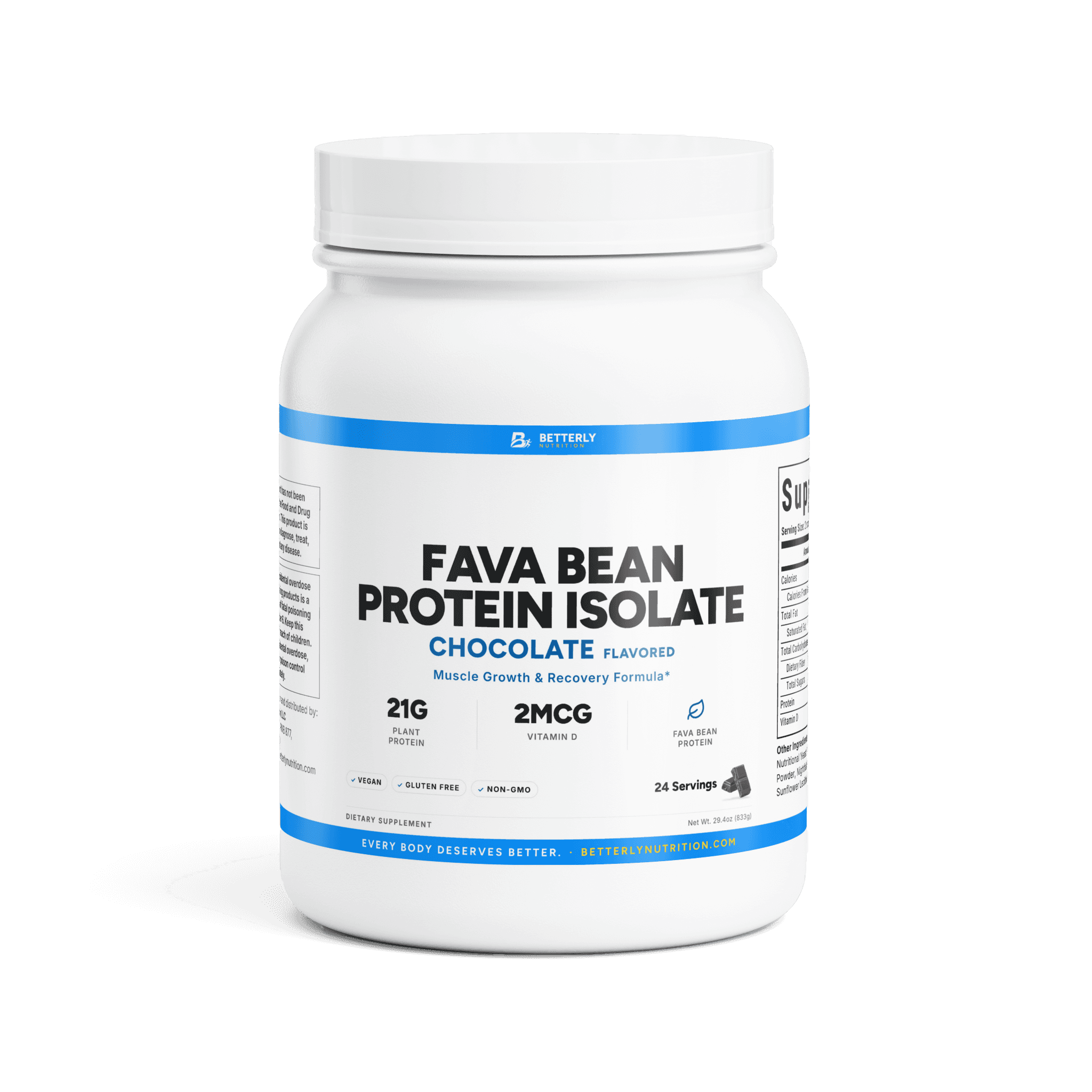
- Fava Bean Protein Isolate Powder (Chocolate) is the only product we sell that lists vitamin D and carries a VEGAN claim. It has 2 mcg of vitamin D per 2-scoop (34.7g) serving, 11% of the Daily Value, with no form named. It's a protein powder, not a vitamin D supplement.
So we don't sell a standalone vegan vitamin D right now. If that's what you need, look for "ergocalciferol" or a D3 made from lichen (a partnership of algae and fungi), plus a vegan claim and a plant-based shell such as hypromellose or pullulan.
How do you switch from a D2 product to a D3 one?
To switch from vitamin D2 to D3, match the amounts on both labels, then replace the D2 product with the D3 one instead of taking both.
Put the two bottles side by side:
- Find the vitamin D amount on your D2 label, in mcg, IU or both. If its units don't match the D3 label, our vitamin D IU to mcg guide walks through the math.
- Compare it with the D3 label. Our softgel gives 50 mcg (2,000 IU) per 1-softgel serving, and our strip gives 2000 IU per 1-strip serving. If the numbers line up, the only thing changing is the form.
- Set the D2 bottle aside when you open the D3 one. Keeping both going isn't a switch.
- Go by the new label's suggested use, not the old one's.
Our two D3 labels word their directions differently. The softgel's suggested use is "As a dietary supplement, adults take one (1) softgel daily or as directed by a healthcare professional." The strip's is "Place 1 oral strip on the tongue daily and allow it to dissolve." If you're weighing the strip's 120 mcg of K2, our breakdown of plain D3 versus D3 with K2 covers that choice.
Trading D3 for D2 after going plant-based works the same way: match the number, then swap.
Vitamin D2 is also available by prescription. If a provider prescribed it for you, follow their directions, and don't swap it for a store-bought D3 bottle on your own.
From our shop: 2,000 IU Vitamin D3 & K2 Strips — D3 listed as cholecalciferol in a dissolving raspberry strip, 2000 IU per 1-strip serving plus 120 mcg of K2, for anyone who'd rather not swallow a softgel.
Can you take vitamin D2 and D3 together?
You can take vitamin D2 and D3 on the same day, but you seldom gain anything by it, and both count toward one 4,000 IU (100 mcg) adult upper limit.
ODS says its upper limits cover vitamin D from food, beverages and supplements combined. It sets no separate ceiling for each form, and none of our sources describes pairing D2 with D3 as a strategy.
You may already be mixing them without trying. The same FDA page on milk alternatives says manufacturers may add D3 to milk, and D2 to plant-based beverages made from soy, almond and coconut, as well as to plant-based yogurt alternatives. A fortified soy latte and a D3 softgel put both forms into one morning and one total.
Two products of the same form stack the same way. Our softgel and strip each list 2,000 IU of D3, so taking both would use up the whole 4,000 IU adult limit before food counts. Pick one or the other, not both.
When is switching vitamin D forms not worth it?
Switching from vitamin D2 to D3 often isn't worth it when your D2 suits your diet, or when "switching" would really mean adding D3 on top.
The "might" in the ODS finding is a modest reason to change, and these situations outweigh it:
- You chose D2 because you avoid animal products. Moving to our softgel would trade a possible edge in blood levels for a gelatin shell you'd rather skip.
- You're content with your D2 product, and your provider hasn't raised any concerns about it. ODS says D2 raises blood levels too.
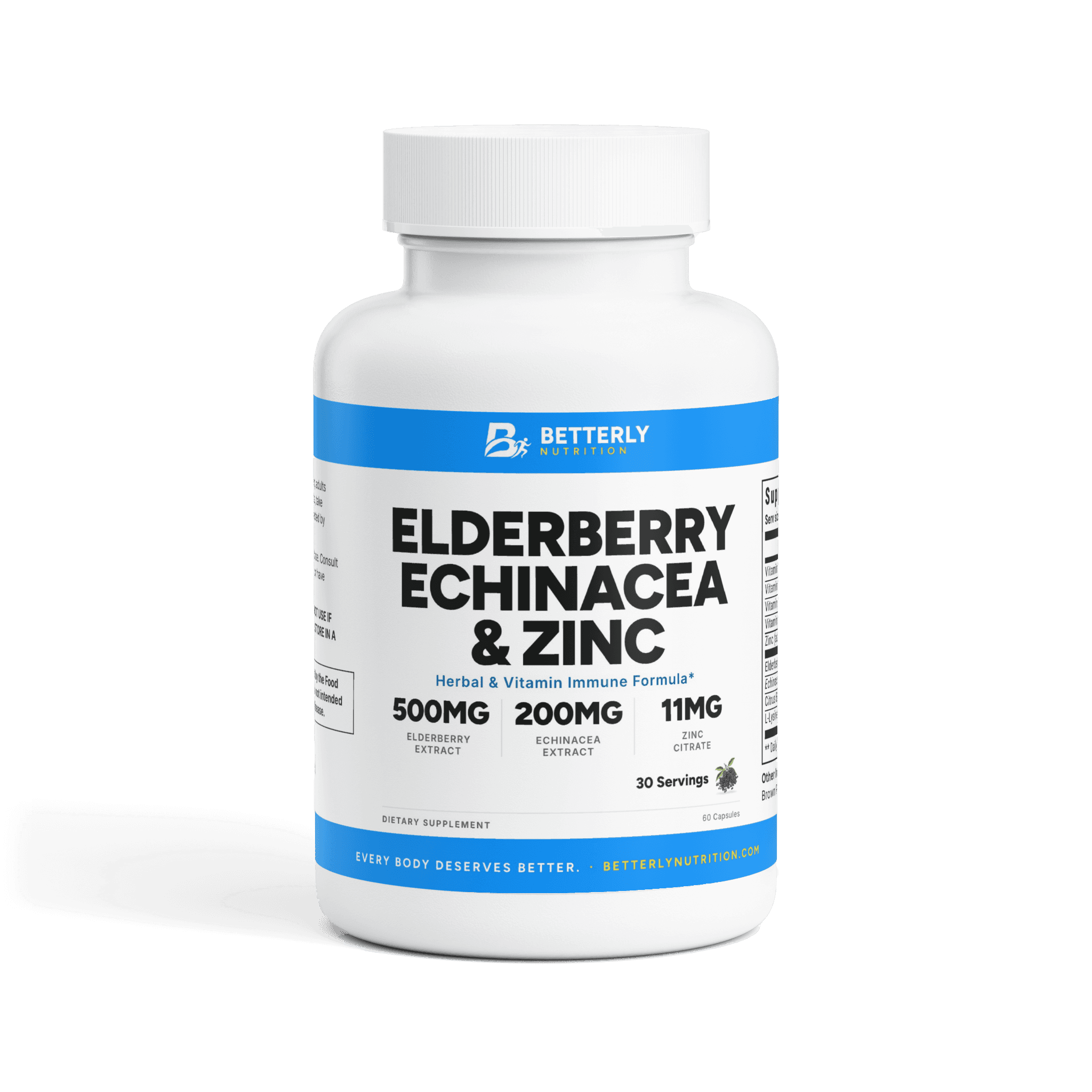
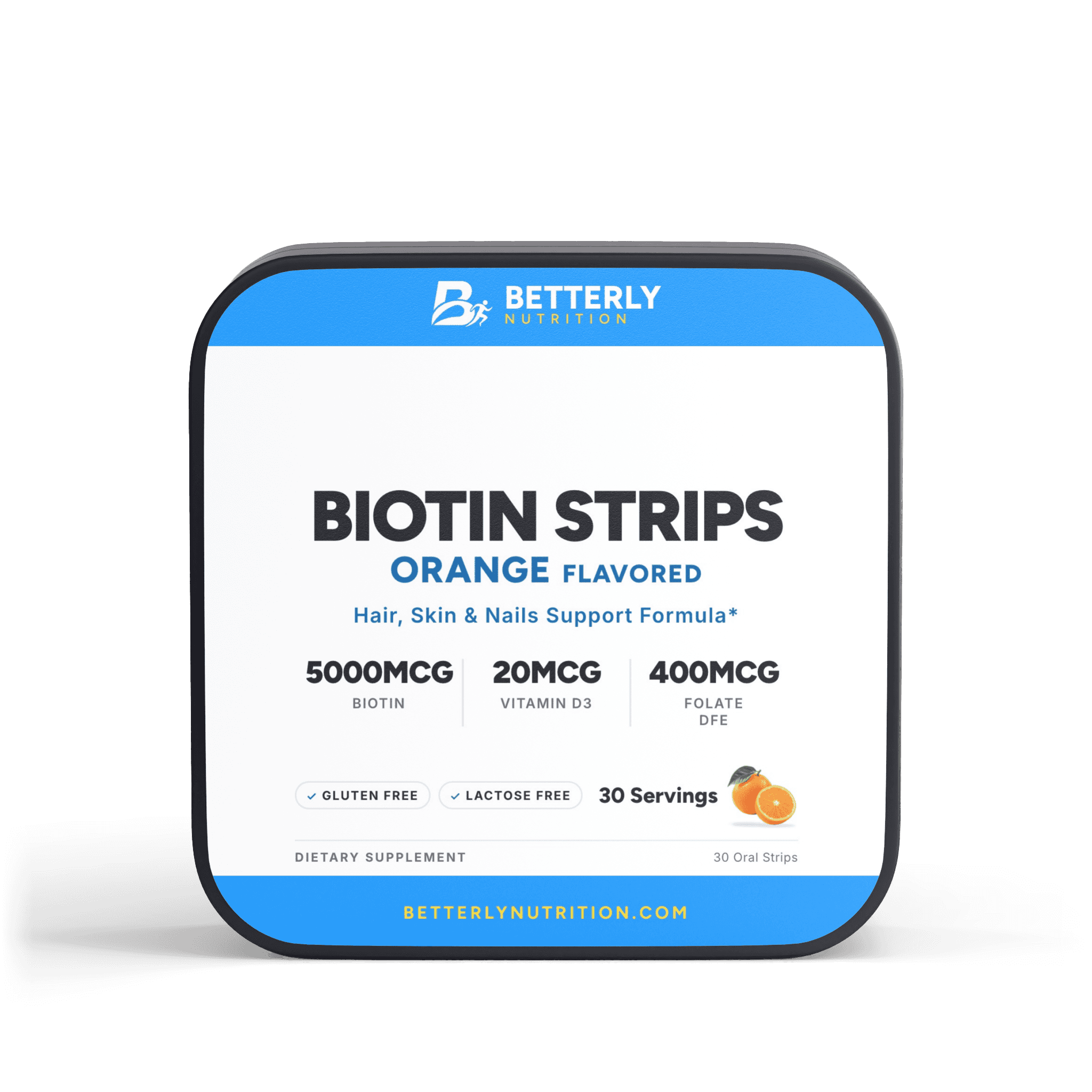
- Other products you take already carry D3. Our Elderberry, Echinacea & Zinc Capsules print 40 mcg of vitamin D3 (as cholecalciferol) per 2-capsule serving, and our 5,000mcg Biotin Strips print 20 mcg per 1-strip serving. Add the softgel's 50 mcg and the three reach 110 mcg (4,400 IU) a day. That's over the 100 mcg adult limit, so don't combine all three at their label directions.
- You'd keep the D2 bottle "just in case." That turns a switch into a stack.
Who should check with a healthcare provider first?
If you take prescription vitamin D2, ask your prescriber before adding or switching to any D3 product. The same goes if you're pregnant, nursing, under 18 or managing a medical condition.
A prescribed D2 amount was chosen for you, and ODS notes that a provider might recommend doses above the upper limit for a period of time. Adding store-bought D3 on top would raise your total without your prescriber knowing.
Each of our labels named in this post prints the same caution: "Do not exceed recommended dose. Consult a physician if pregnant, nursing, under 18, or have a medical condition."
Medicines matter whichever form you take. ODS gives thiazide diuretics, statins, orlistat and steroids such as prednisone as examples of medicines that vitamin D supplements can interact with, so ask a pharmacist to check your list. If you have surgery scheduled, bring that list, forms and amounts included, to your pre-op visit.
FAQ: vitamin D3 vs D2
Is vitamin D3 vegan?
Vitamin D3 usually isn't vegan. Supplement D3 is most often made from a cholesterol compound taken from lanolin, the waxy grease in sheep's wool; the FDA's rule also lists fish liver oils. Vegan D3 does exist, typically made from lichen, but only a vegan claim on the label confirms it. Check that the capsule or softgel shell is plant-based too.
Is ergocalciferol the same as vitamin D2?
Yes, ergocalciferol is the chemical name for vitamin D2, and cholecalciferol is the name for D3. The names hint at their origins. The FDA's rule for vitamin D says D2 is made by irradiating ergosterol from yeast and related fungi, while D3 can be made from 7-dehydrocholesterol, which is produced from cholesterol. The FDA's unit-conversion guidance groups both under calciferol, another name for vitamin D.
Do mushrooms have vitamin D2 or D3?
Mushrooms carry vitamin D2, because they're fungi, the same group of organisms D2 is made from. ODS says mushrooms provide a little vitamin D, and some are exposed to ultraviolet light on purpose to raise the amount. Check the Nutrition Facts label on the package to see how much, and count it toward your daily total.
Should you take vitamin D3 or D2 with food?
Yes, taking vitamin D3 or D2 with food is a good habit, because ODS describes vitamin D as fat soluble, absorbed best when some dietary fat comes along with it. That holds for both forms. Neither of our D3 labels mentions meals or a time of day, so a daily softgel or strip taken with a meal fits the directions.
Can you take too much vitamin D2 or D3?
Yes, you can take too much of either form. ODS sets a single adult upper limit of 4,000 IU (100 mcg) a day for vitamin D from all sources. It says very high blood levels almost always come from supplements and can cause problems such as nausea, dehydration and confusion. Sunlight can't push your vitamin D too high, because your skin limits how much it makes.
Sources
- Vitamin D: Fact Sheet for Consumers, NIH Office of Dietary Supplements
- Converting Units of Measure for Folate, Niacin, and Vitamins A, D, and E on the Nutrition and Supplement Facts Labels: Guidance for Industry, U.S. Food and Drug Administration
- Vitamin D for Milk and Milk Alternatives, U.S. Food and Drug Administration
- 21 CFR 184.1950: Vitamin D, U.S. Food and Drug Administration regulation, Electronic Code of Federal Regulations
If this left you looking for somewhere to start, read vitamin D3 (cholecalciferol) softgels, 2,000 IU — its amounts per serving are listed on the page. For the practical questions this raises, how dosing, sourcing and subscriptions work is answered in one place.