On this page
- Key takeaways
- Vitamin K2 foods list: which foods have it, and how much?
- Which food has the highest vitamin K2?
- Why are K2 numbers for cheese, eggs and butter so uncertain?
- How much vitamin K2 do you need a day?
- Can vegetarians and vegans get vitamin K2 from food?
- How does a K2 strip compare with a day of K2 foods?
- How do you take a K2 strip alongside K2 foods?
- Can food alone cover your vitamin K?
- Who should check with a healthcare provider first?
- FAQ: vitamin K2 foods
- Sources
The short answer: Vitamin K2 foods are mostly fermented or animal foods, and one stands far above the rest. Natto, a Japanese dish of fermented soybeans, has 850 mcg of K2 in a 3-ounce serving, according to the NIH. Chicken, beef, cheese, eggs and milk carry much less, from 13 mcg down to 1 mcg per serving. Whatever K2 these foods supply adds to your overall vitamin K, which ODS puts at 120 mcg a day for men and 90 mcg for women.
Key takeaways
- Natto is the richest vitamin K2 food in the NIH's food table, with 850 mcg per 3-ounce serving, about seven times the 120 mcg Daily Value.
- Everyday animal foods add K2 in small steps, such as 13 mcg in 3 ounces of rotisserie chicken breast and 4 mcg in a hard-boiled egg.
- National survey data from 2011 to 2012 put U.S. adults' average vitamin K from food at 122 mcg a day for women and 138 mcg for men, though food databases mostly track the plant form, K1.
- K2 figures for cheese and meat are uncertain, because they shift with the bacteria in a cheese and with what poultry and pigs were fed.
This guide comes from a company with two K2 products on its shelves: the 2,000 IU Vitamin D3 & K2 Strips and the Calcium, Vitamin D3 & K2 Capsules. A seller has every reason to make K2 sound hard to get from food, so every food number below comes from the NIH.
Vitamin K2 foods list: which foods have it, and how much?
Vitamin K2 foods fall into two groups: fermented foods such as natto and cheese, and animal foods such as chicken, beef, eggs and milk.
Chemists call vitamin K2 menaquinones, a family of related compounds. The NIH Office of Dietary Supplements (ODS) health professional fact sheet on vitamin K says most menaquinones are made by bacteria, which is why fermented foods carry them. Meat, dairy foods and eggs hold modest amounts too.
Most rows in the ODS food table are vitamin K1, the plant form. These are the rows it marks as K2:
| Food | Serving | Vitamin K2 | % Daily Value |
|---|---|---|---|
| Natto | 3 ounces | 850 mcg | 708% |
| Chicken breast, rotisserie | 3 ounces | 13 mcg | 11% |
| Ground beef, broiled | 3 ounces | 6 mcg | 5% |
| Chicken liver, braised | 3 ounces | 6 mcg | 5% |
| Ham, roasted or pan broiled | 3 ounces | 4 mcg | 3% |
| Cheddar cheese | 1½ ounces | 4 mcg | 3% |
| Egg, hard boiled | 1 large | 4 mcg | 3% |
| Mozzarella cheese | 1½ ounces | 2 mcg | 2% |
| Milk, 2% | 1 cup | 1 mcg | 1% |
| Salmon, sockeye, cooked | 3 ounces | 0.3 mcg | 0% |
| Shrimp, cooked | 3 ounces | 0.3 mcg | 0% |
The takeaway: natto has about 65 times the K2 of rotisserie chicken, the next food down, and no other K2 row reaches even 12% of the Daily Value per serving.
New to the plant and bacterial forms? Our explainer on how K1 and K2 differ on food and supplement labels starts there.
Which food has the highest vitamin K2?
Natto has the highest vitamin K2 of any food in the NIH's table, with 850 mcg in a 3-ounce serving, or 708% of the Daily Value.
ODS describes natto as a traditional Japanese food made from fermented soybeans. It has a sticky texture and a strong flavor.
Natto isn't among the most common vitamin K sources in the U.S. diet, though. ODS names those as spinach, broccoli, iceberg lettuce, and fats and oils, especially soybean and canola oil.
A single 3-ounce serving holds about seven times the Daily Value on the day you eat it. If you take warfarin, read the provider section below before adding natto.
Why are K2 numbers for cheese, eggs and butter so uncertain?
K2 figures for cheese, eggs and butter are uncertain because ODS says menaquinone data are limited; cheese varies with its bacteria, and poultry and pork with their feed.
Cheese. ODS says cheese contains menaquinones, but "the forms and amounts of vitamin K in these foods likely vary" with the bacterial strains and fermentation conditions. The federal table lists only cheddar (4 mcg) and mozzarella (2 mcg). You may see aged cheeses such as gouda credited with far more elsewhere, but the NIH table doesn't list them, so we don't either.
Eggs. One large hard-boiled egg has 4 mcg of K2. The ODS table lists the whole egg, not the yolk alone, and gives no yolk figure, so we won't guess one.
Chicken and pork. ODS explains that animals make one form of K2 from menadione, a synthetic vitamin K that can be added to poultry and swine feed, so the K2 in chicken or pork depends on that feed.
Butter. ODS says dairy foods hold modest amounts of menaquinones, but it gives no figure for butter. Claims that grass-fed butter carries more come from outside the federal data we use.
How much vitamin K2 do you need a day?
Vitamin K2 has no daily amount of its own; food K2 counts toward the ODS vitamin K target for adults: 90 mcg for women, 120 mcg for men.
That target is an adequate intake, and its roots are in the kitchen. ODS says the data were too thin to set an average requirement, so the Food and Nutrition Board based the figure on what healthy groups of people were already eating.
Here's the catch for K2. ODS notes that food composition databases mostly record phylloquinone, the plant form. Menaquinones from food, and those made by gut bacteria, likely add to your vitamin K status without showing up in those counts. So any vitamin K tally built on those databases may leave some K2 out.
Can vegetarians and vegans get vitamin K2 from food?
Vegetarians can get vitamin K2 from cheese, eggs, milk and natto, but natto is the only vegan food with a K2 amount in the NIH's table.
For vegetarians, two hard-boiled eggs and 1½ ounces of cheddar come to 12 mcg of K2: small amounts, but real ones.
Vegans have a shorter list. Sauerkraut, kimchi and tempeh are fermented, but ODS gives no K2 figures for them, so we can't point you to a trustworthy number.
Plants make up the difference with K1, which the adequate intake counts just as it counts K2. ODS also notes that your body makes one form of K2 from the K1 in plants, without help from bacteria.
What about supplements? Our strip's label carries no vegan claim and doesn't state where its K2 comes from, so it's not one we'd suggest for a vegan diet.
How does a K2 strip compare with a day of K2 foods?
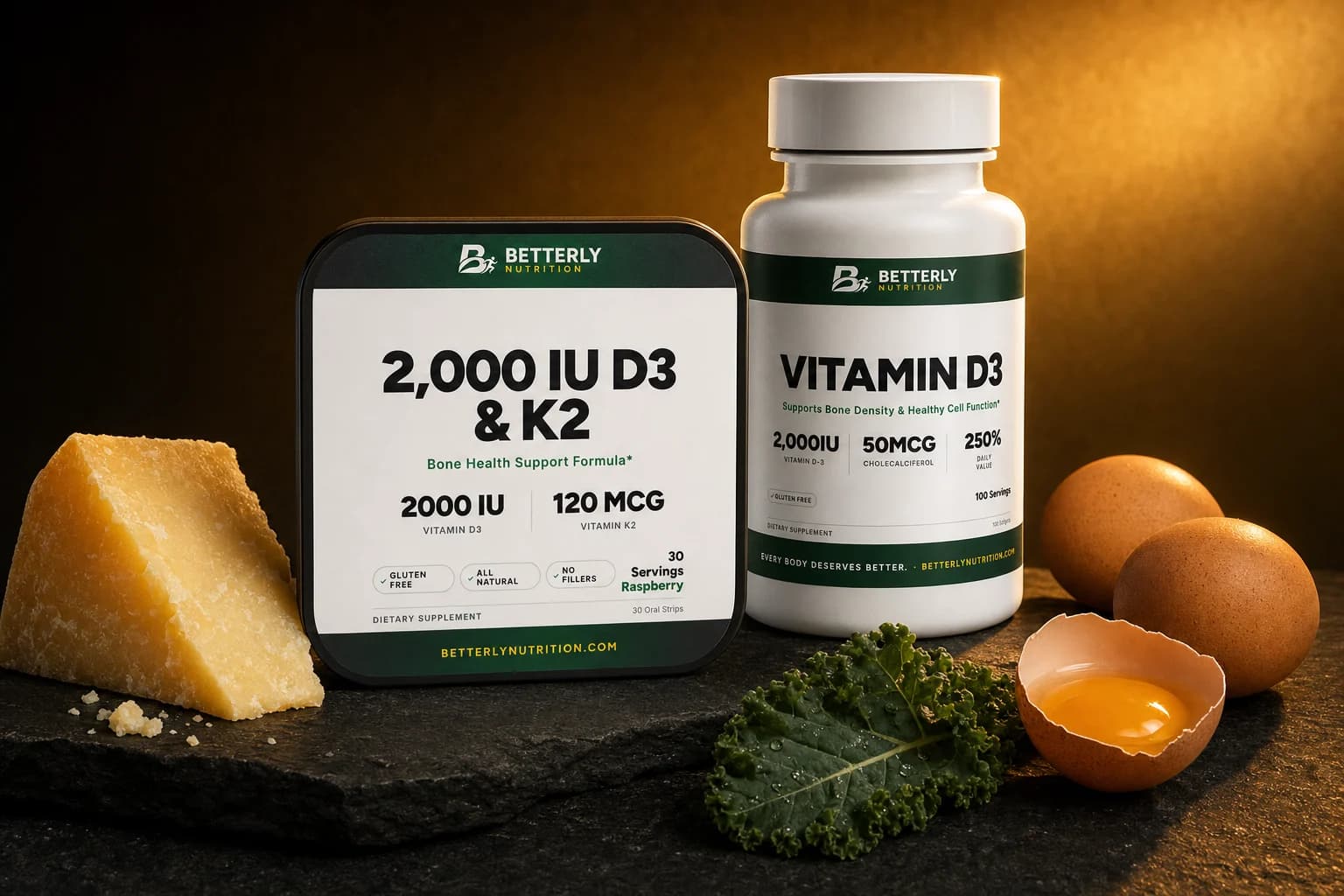
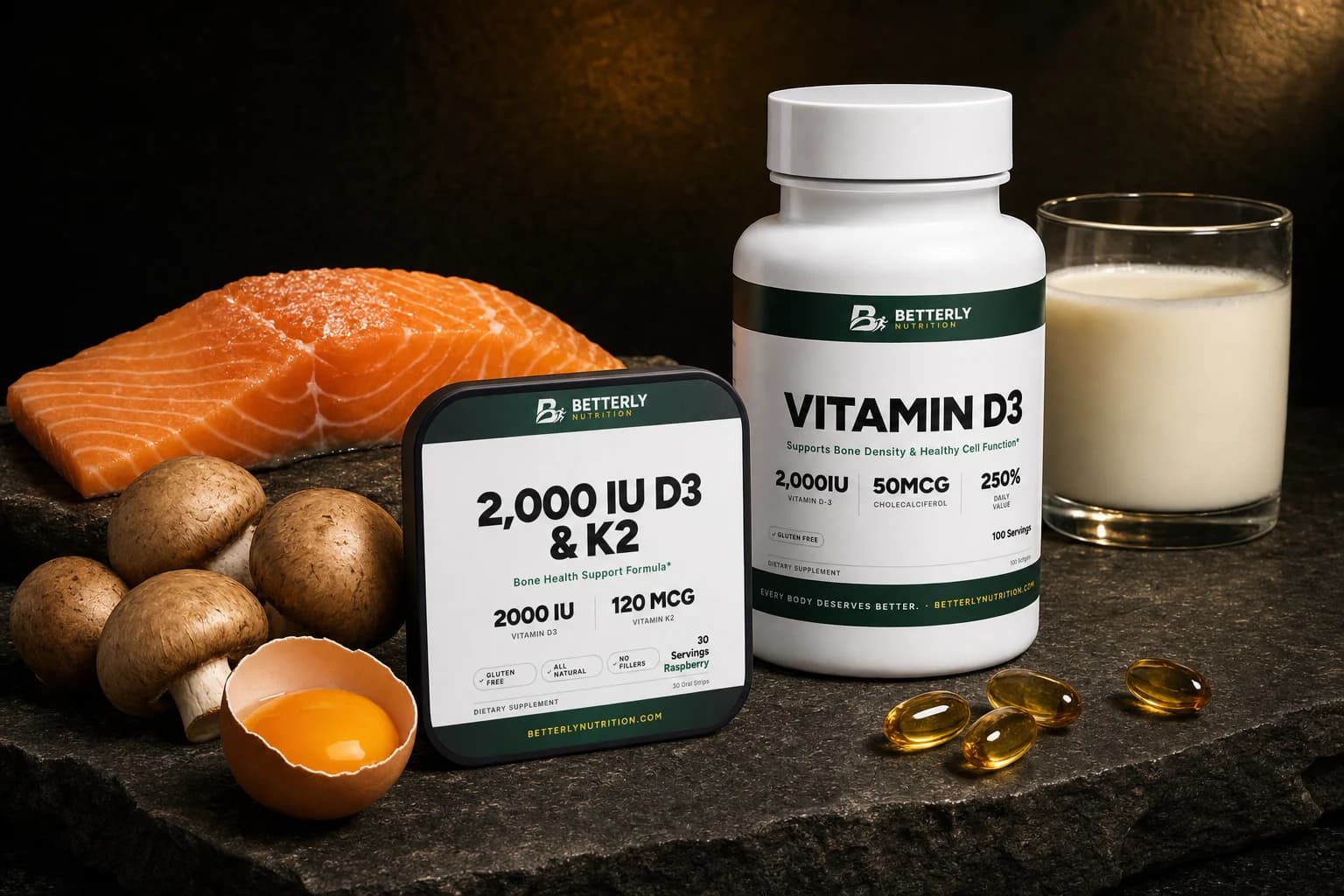
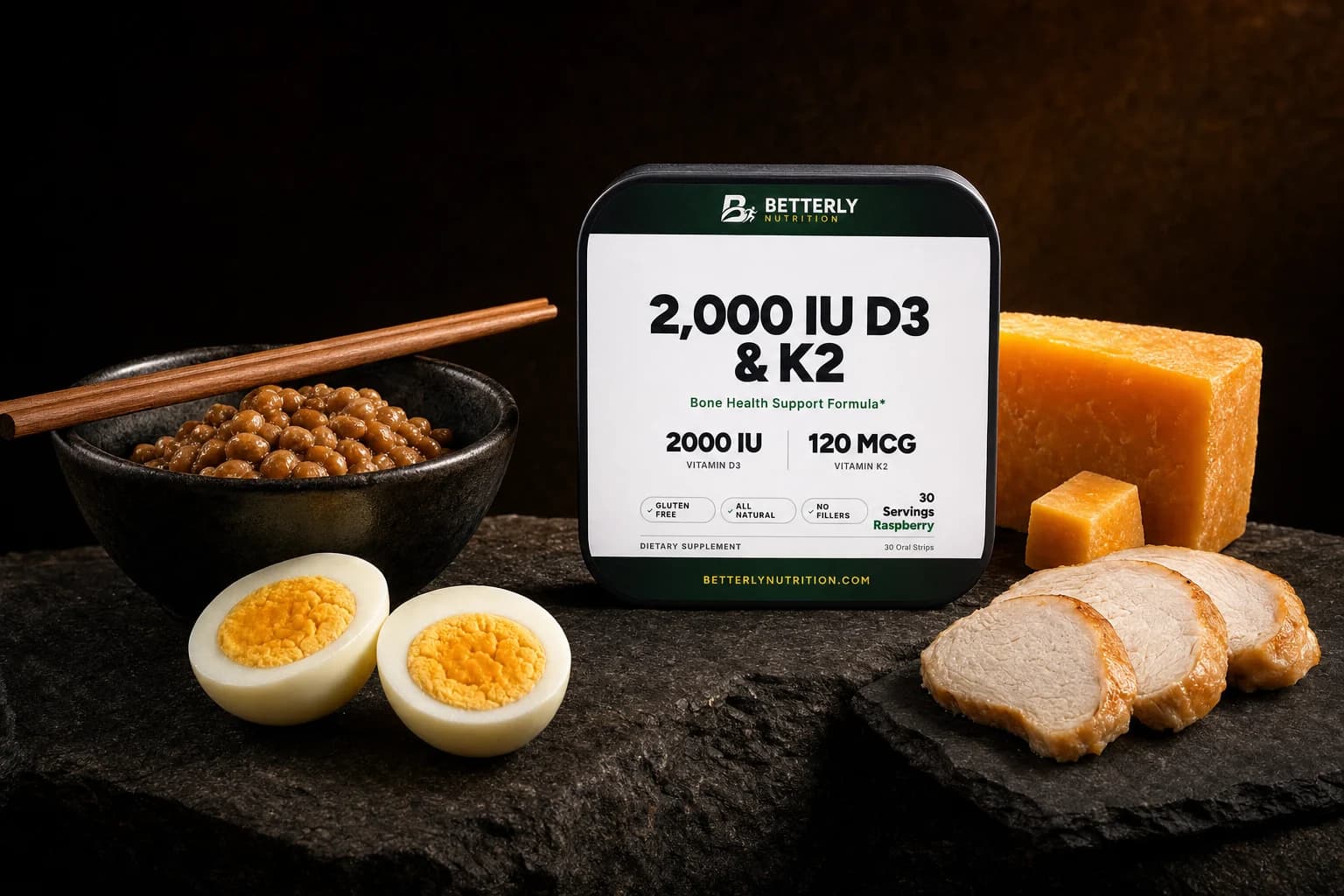
The 2,000 IU Vitamin D3 & K2 Strips list 120 mcg of K2 per 1 oral strip (100 mg) serving, more than egg, cheddar and chicken servings combined.
Here's how some combinations from the NIH table compare:
| K2 foods eaten in a day (NIH servings) | K2 total | Compared with one strip's 120 mcg |
|---|---|---|
| 1 egg, 1½ oz cheddar, 1½ oz mozzarella, 1 cup 2% milk | 11 mcg | About 9% |
| 3 oz rotisserie chicken, 3 oz ground beef, 1 egg, 1½ oz cheddar | 27 mcg | About 23% |
| 3 oz sockeye salmon, 3 oz shrimp | 0.6 mcg | Under 1% |
| 3 oz natto | 850 mcg | About 7 strips' worth |
The takeaway: natto is the only food that outdoes a strip's K2, while the meat, egg and dairy combinations reach about a quarter of it at most.
Keep that yardstick in proportion. Nobody has set a K2 target, and the vitamin K adequate intake also takes in the K1 from vegetables and oils.
So when does the strip make sense? Every strip also carries 2000 IU of vitamin D3, so it's really a vitamin D product with K2 added. That makes it a poor pick if K2 is all you're after, and a reasonable one only if a daily 2,000 IU of D3 fits your routine without pushing your total past the adult limit covered below. Our targeted support range lists the strip and a plain D3 softgel side by side.
From our shop: 2,000 IU Vitamin D3 & K2 Strips — 120 mcg of vitamin K2 (100% DV) rides along with 2000 IU of vitamin D3 in each 1 oral strip (100 mg) serving, 30 strips per container.
How do you take a K2 strip alongside K2 foods?
The 2,000 IU Vitamin D3 & K2 Strips are a once-a-day product: the label's suggested use is 1 oral strip on the tongue daily, left to dissolve.
In food terms, one strip's 120 mcg of K2 equals the K2 in roughly 9 servings of rotisserie chicken breast or 30 hard-boiled eggs from the NIH table.
Food doesn't change the directions. The label says, "Do not exceed recommended dose," so it's one strip whether dinner was natto or plain pasta.
Each strip's 2000 IU (50 mcg) uses up half of the 100 mcg (4,000 IU) daily ceiling that the ODS vitamin D fact sheet lists for adults, and that ceiling includes vitamin D from meals and drinks. Our guide to D3 and K2 combos works through the full math across products.
Our Calcium, Vitamin D3 & K2 Capsules are a different story. Each 1 veggie capsule serving lists 125 mcg (5,000 IU) of vitamin D3, next to 100 mcg of K2 and 210 mg of calcium. Its directions call for a capsule twice a day, and at that pace the D3 reaches 250 mcg (10,000 IU), a daily total two and a half times the adult upper limit.
Even one capsule's D3 sits 25 mcg above the limit before any food counts. We don't suggest this product at one capsule a day or two, and a healthcare provider should sign off before you take any.
Can food alone cover your vitamin K?
Food alone covers vitamin K in most U.S. diets, ODS says, and survey data put adults' average daily food intake at 122 mcg for women and 138 mcg for men.
Those averages come from the 2011 to 2012 National Health and Nutrition Examination Survey, and each sits above the adequate intake for that sex. Counting supplements, they rise to 164 mcg and 182 mcg.
Not every survey looks that rosy. Analyses of 2003 to 2010 data found only about one in three people took in more than the adequate intake. ODS calls the meaning of that unclear: the adequate intake is only an estimate of need, the body makes some vitamin K itself, and reports of deficiency in adults are very rare.
The NIH table shows which everyday habits bring in the most vitamin K:
- Natto most days: 850 mcg of K2 per 3-ounce serving, on each day you eat it.
- Cooked dark greens: 530 mcg of K1 in ½ cup of boiled frozen collards, 426 mcg in the same amount of turnip greens.
- Salads and broccoli: 145 mcg in a cup of raw spinach, 113 mcg in a cup of raw kale, 110 mcg in ½ cup of boiled broccoli.
- Cooking with soybean or canola oil: 25 mcg or 10 mcg per tablespoon.
Meals built mostly on meat, eggs and dairy are the slow lane: one serving each of rotisserie chicken, cheddar and a hard-boiled egg totals just 21 mcg of K2.
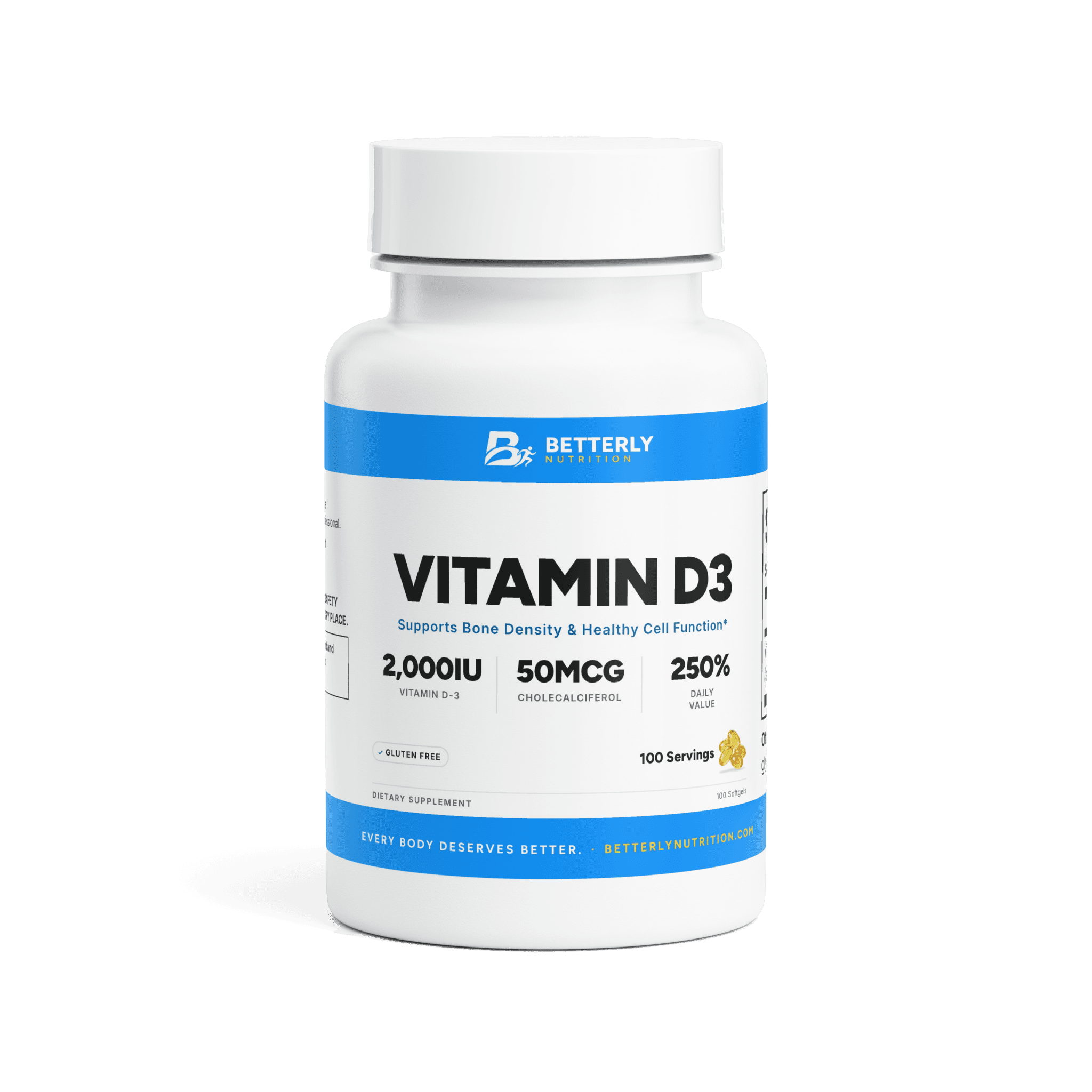
From our shop: Vitamin D3 Softgels — 50 mcg (2,000 IU) of vitamin D3 per 1 softgel capsule serving, 100 softgels per container, and no vitamin K anywhere on the panel.
Who should check with a healthcare provider first?
People on warfarin (Coumadin) should check with their prescriber before adding natto or K2, since one natto serving moves daily vitamin K far more than a 120 mcg strip.
The ODS consumer fact sheet on vitamin K asks anyone on warfarin to take in roughly the same amount of vitamin K each day, from meals and supplements alike, and it warns that a sudden change in either direction can be dangerous. One 3-ounce natto serving holds about seven strips' worth of K2, so a new natto habit, or quitting one, is news your prescriber needs to hear.
A full plate doesn't guarantee a full supply for everyone. ODS says people who've had bariatric surgery, or who have a digestive problem that limits absorption, may have trouble getting enough vitamin K. Orlistat and bile acid sequestrants can cut how much you absorb, and antibiotics taken for more than a few weeks may shrink the amount your gut bacteria make.
ODS ends its vitamin K advice by asking you to tell your doctor, pharmacist and other providers about every supplement and medicine you use. An upcoming operation puts your surgical team on that list too. Our two K2 products also contain vitamin D3, and the ODS vitamin D sheet names several medicines that vitamin D supplements may interact with. The caution printed on both labels adds four more reasons to ask a physician first: pregnancy, nursing, being under 18 or having a medical condition.
FAQ: vitamin K2 foods
Can you get too much vitamin K2 from food?
No, food isn't a known source of too much vitamin K2, and ODS reports no upper limit for vitamin K. The Food and Nutrition Board skipped one because vitamin K has a low potential for toxicity, ODS says, and no adverse effects from vitamin K in food or supplements have been reported. Warfarin is the exception, since the goal there is a steady daily intake.
Is sauerkraut a good source of vitamin K2?
Sauerkraut may contain some vitamin K2, but the NIH's vitamin K food table gives no figure for it. Its food table includes natto but not sauerkraut, kimchi or tempeh. Enjoy them for their own sake, and don't count on them for a known amount of K2.
Do kids need vitamin K2 foods?
No, kids have no separate vitamin K2 target. ODS lists adequate intakes for all vitamin K by age: 30 mcg for ages 1 to 3, 55 mcg for 4 to 8, 60 mcg for 9 to 13 and 75 mcg for 14 to 18. Survey data show kids and teens ages 2 to 19 average 66 mcg a day from food. Our strip's label tells anyone under 18 to check with a physician before use.
How much natto should you eat for vitamin K2?
There's no set amount of natto to aim for, because no K2 target exists. The NIH lists 850 mcg of K2 in a 3-ounce serving. The adequate intake is a daily figure, so a natto meal counts toward that day's total, while greens, oils and other foods carry the days you skip it. On warfarin? Clear natto with your prescriber first.
Sources
- Vitamin K: Fact Sheet for Health Professionals, NIH Office of Dietary Supplements
- Vitamin K: Fact Sheet for Consumers, NIH Office of Dietary Supplements
- Vitamin D: Fact Sheet for Consumers, NIH Office of Dietary Supplements
If this left you looking for somewhere to start, read D3 and K2 strips with 120 mcg of K2 — its amounts per serving are listed on the page. For the practical questions this raises, how dosing, sourcing and subscriptions work is answered in one place.