On this page
- Greens and reds powders, defined in one minute
- What's in a greens powder (and who it's for)
- What's in a reds powder (and who it's for)
- The honest taste comparison
- Reds vs greens powder: how to decide
- Do you need both? Stacking without redundancy
- What neither powder replaces
- Who should check with a healthcare provider first
- Key takeaways
- FAQ: reds and greens powders
Greens powders get most of the shelf space, but walk a little further down the aisle and you'll find their fruitier cousin: the reds powder. If you're weighing reds vs greens powder — what's actually different, which one fits the way you eat, and whether anyone truly needs both — this guide is for you. We sell both, so we have no reason to talk you out of either one, and every reason to be straight with you about what each actually does.
One honest note before we compare anything: neither powder is a shortcut past real food. Both are concentrated plants in a scoop — genuinely useful for filling gaps, never a stand-in for the produce drawer. Hold onto that, and the rest of the decision gets a lot simpler.
Greens and reds powders, defined in one minute
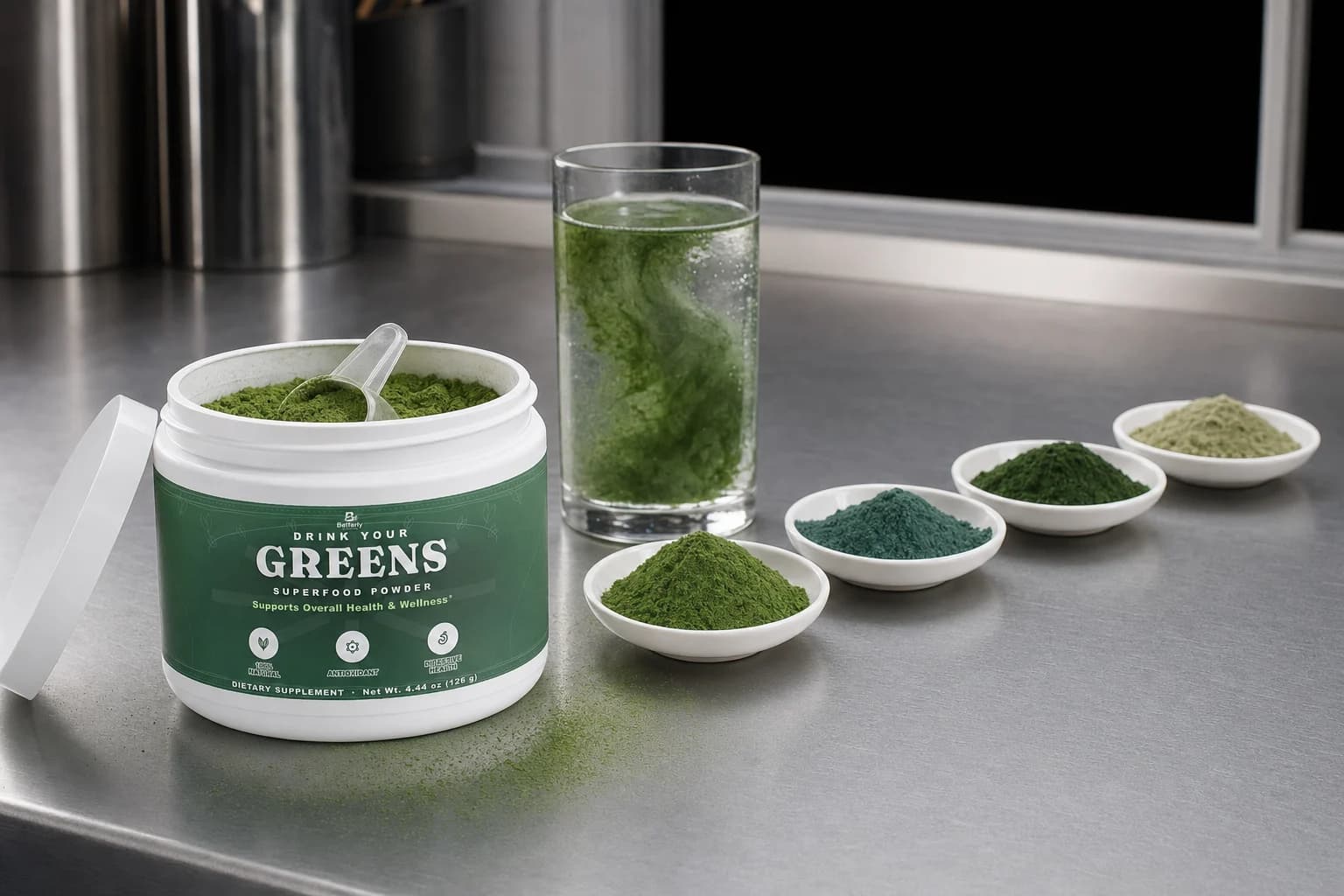
A greens powder is a blend of dried, powdered green plants: algae like spirulina, cereal grasses like barley grass, leafy vegetables, and usually a supporting cast of herbs, fruits, or probiotics. The pitch is breadth — a wide sweep of everyday plant nutrition in one scoop.
A reds powder runs the same play with red, purple, and blue plants: berries, beetroot, pomegranate, tart cherry. The colors aren't decoration. They come from plant pigments — anthocyanins in berries, betalains in beetroot — that researchers have been studying for their antioxidant activity.
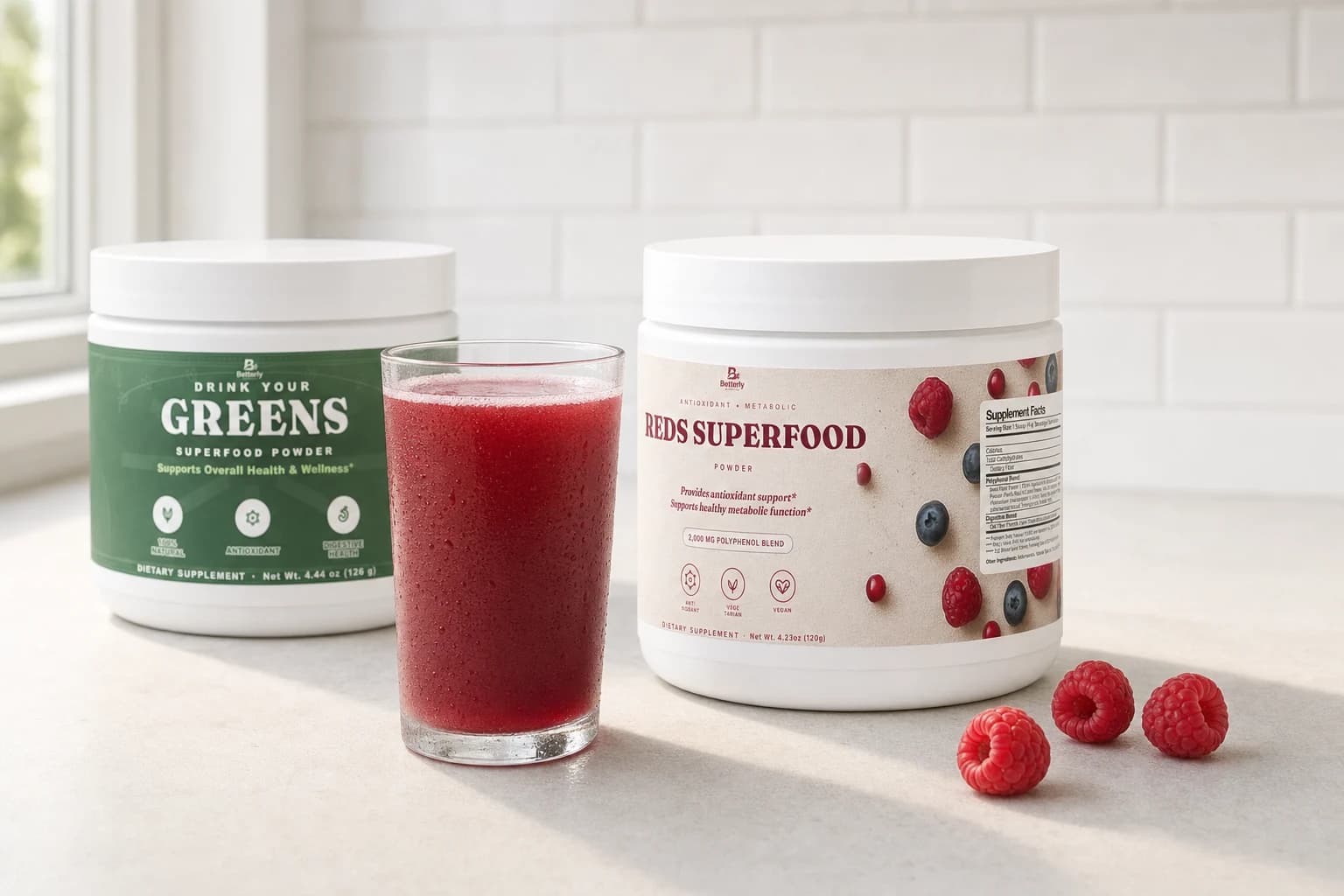
That's the core difference between reds and greens powder in one line: greens go broad and vegetal, reds go fruit-forward and pigment-focused. Nearly everything else — taste, use case, who each one suits — follows from that split.
One more definition while we're here, since the word is printed on our greens label ("Greens & Reds Superfood Blend") and all over this aisle: "superfood" is a marketing term, not a scientific category. It signals nutrient-dense plants and nothing more. We use it because it's the word people actually search for — not because any powder has earned a cape.
What's in a greens powder (and who it's for)
Open a typical greens tub and you'll find some mix of:
- Algae — spirulina and chlorella, two staples of the category
- Cereal grasses — barley grass, wheatgrass, oat grass
- Leafy and cruciferous vegetables — spinach, kale, broccoli
- Extras — herbs, enzymes, or probiotics, depending on the brand
The evidence deserves a plain-English summary. Individual ingredients have a real, if modest, research base: spirulina, for example, has been looked at in small studies for antioxidant activity and exercise performance. The multi-ingredient blends themselves are studied far less. And a lot of brands bury their formulas in blends that tell you nothing about what's inside — a genuine problem, because the research that does exist depends on the dose. It's why each product page lists the amounts per serving from its label — blend totals included — so you know what's in it before you buy.
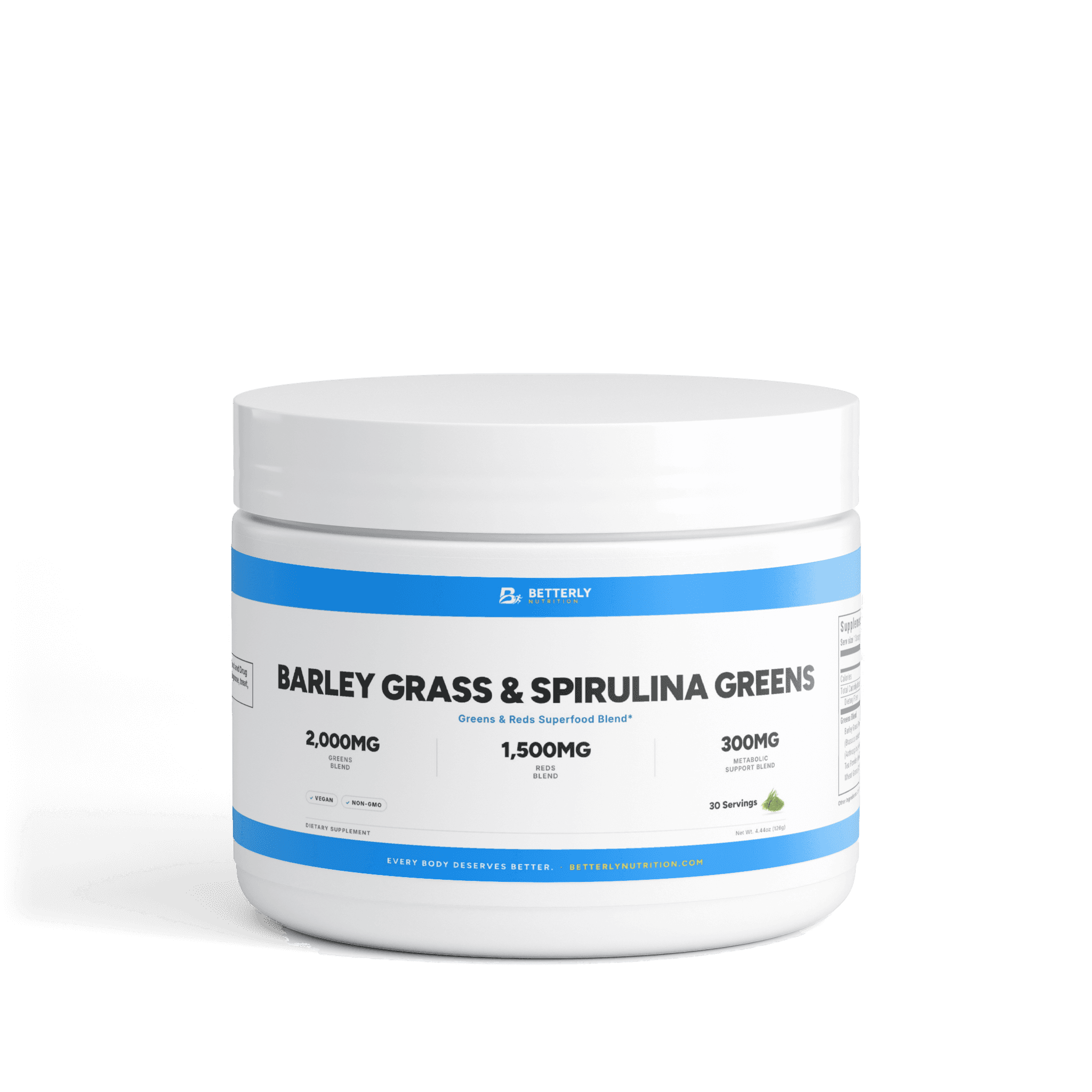
Here's what that label says about ours, and why we lead with it. Our Barley Grass & Spirulina Greens Powder packs four blends into one 4.2 g scoop and prints the amount of each: a full 2,000 mg Greens Blend (barley grass, broccoli, spirulina, green tea, alfalfa, wheatgrass), a 1,500 mg Reds Blend (beetroot, hibiscus, strawberry, cranberry, acai, blueberry, pomegranate), a 300 mg Metabolic Support Blend built on cinnamon, turmeric, ginseng, and ashwagandha, and 200 mg of Digestive Support led by inulin and ginger. That's more than 20 plant ingredients, 2 g of fiber, and 30 scoops a tub — at 10 calories a serving. In a category where "greens" usually means greens and nothing else, ours is closer to the whole produce aisle with the vegetal side turned up, and that breadth-per-calorie is the honest reason to buy it.
Who tends to reach for greens: people who know their vegetable intake is spotty, frequent travelers, and anyone who wants a plant habit that takes thirty seconds. If you're sizing up the big all-in-one drinks in this category, we wrote a candid breakdown in AG1 Alternatives: An Honest Comparison.
And if a single, simple plant appeals more than a twenty-ingredient blend, leaf powders like moringa are worth a look — we cover one in What Is Moringa Good For?.
What's in a reds powder (and who it's for)
A reds powder swaps the grasses and algae for fruit:
- Berries — strawberry, raspberry, blueberry, acai, elderberry
- Beetroot — the deep-crimson root behind most of the category's color
- Other red and purple plants — pomegranate, tart cherry, hibiscus
- Extras — frequently digestive ones, like probiotics or enzymes
Most of the advertised red superfood powder benefits trace back to the pigment. Anthocyanins — the compounds that make berries red, purple, and blue — have been linked to antioxidant activity in small studies. Beetroot's betalains have drawn similar research interest, and beetroot itself has been studied mostly in sports-nutrition settings. The honest framing, same as with greens: encouraging, early, and studied ingredient-by-ingredient rather than as finished blends.
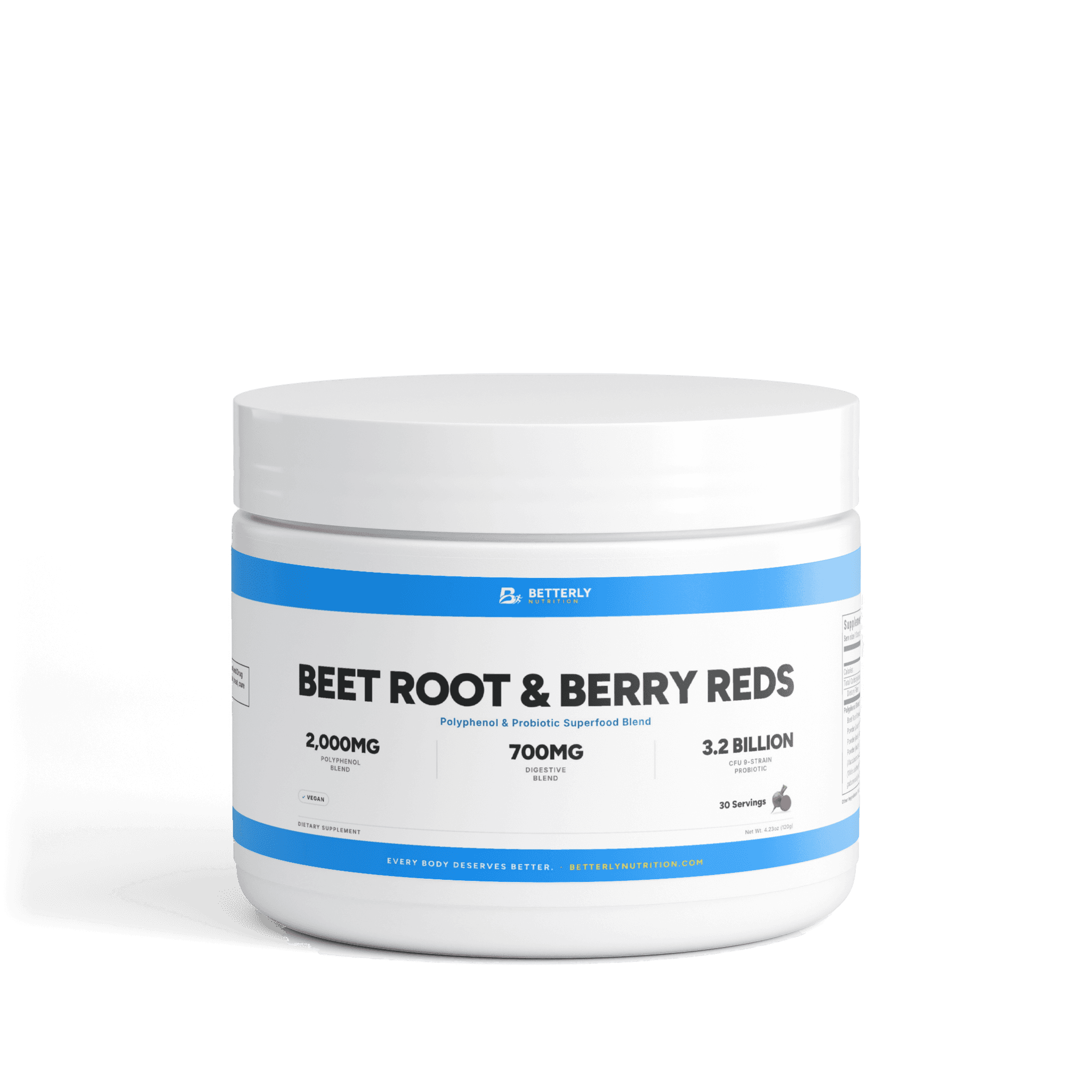
This is exactly the game our Beet Root & Berry Reds Powder is built to play. Its core is a 2,000 mg Polyphenol Blend spanning eleven polyphenol-rich plants — beetroot, strawberry, hibiscus, raspberry, black currant, acai, blueberry, cranberry, grape seed, African mango, and pomegranate. That gathers the pigments researchers actually study — anthocyanins from the berries, betalains from the beet — alongside grape seed and pomegranate, two familiar polyphenol sources. Around that core sit 700 mg of oat fiber and inulin, a 100 mg 9-strain probiotic delivering 3.2 billion CFU at the time of manufacture, and a 400 mg metabolic blend with green tea and ginger — all at the same 10 calories and 2 g of fiber per scoop as our greens. One plain scale note: the NIH Office of Dietary Supplements says sports studies usually have people drink 2 cups of beet juice about 2.5 to 3 hours before exercise, and that it isn't known whether beetroot powder supplements have the same effects. Read this scoop as what it is — a wide daily fruit-pigment habit with real digestive support built in — and it earns its place.
If probiotics are new territory, Gut Health Basics: What Actually Helps covers them without the jargon.
Who tends to reach for reds: people whose plates are lighter on fruit than vegetables, anyone drawn to the antioxidant side of the story, and — no judgment here — people who bought a greens powder once and quietly never finished it.
The honest taste comparison
Supplement brands dance around this, so we won't.
Greens powders taste green. Grassy, earthy, faintly like the smell of a mown lawn. Good ones soften it with mint or a little fruit; none erase it. Some people come to enjoy the ritual bitterness, the way people come to enjoy black coffee. Plenty never do.
Reds powders taste like fruit. Berry-forward and a little tart — closer to a juice than a vegetable drink. In the greens powder vs reds powder taste contest, reds win for most people, and that's exactly why the category exists.
Why taste earns its own section in a buying guide: a powder only does anything if you drink it most days for a long stretch. If you already suspect the greens tub will stall out in week two, the "less impressive" powder you'll actually finish beats the impressive one you won't. And smoothies are the great equalizer — a banana and a handful of frozen berries can hide nearly any greens blend.
Reds vs greens powder: how to decide
We'll make this as decisive as an honest brand can.
Choosing exactly one? Choose greens. A dedicated reds powder covers one side of the produce aisle; our Barley Grass & Spirulina Greens Powder covers both. Its built-in 1,500 mg Reds Blend is three-quarters the size of the Reds powder's entire 2,000 mg Polyphenol Blend, and it sits alongside the full 2,000 mg of greens. One scoop, both categories, 10 calories. That's a default you can act on, not a shrug.
Choose reds instead in two specific cases:
- Digestion is a primary goal. This is a real difference on the labels, not a coin flip: our Beet Root & Berry Reds Powder prints a 700 mg Digestive Blend (oat fiber, inulin) and a 100 mg 9-strain probiotic (3.2 billion CFU at the time of manufacture), where our Barley Grass & Spirulina Greens Powder prints a 200 mg Digestive Support blend and no probiotic. Both labels list 2 g of fiber per scoop, so the probiotic is what separates them. If gut support is the reason you're standing in this aisle, reds wins, plainly.
- You already know grassy flavors will end the habit. A powder only works if you drink it, and reds is the one people finish. Be honest with yourself here — the tub can't help you from the cupboard.
Fruit the only gap you care about? Also reds — its 2,000 mg Polyphenol Blend outweighs the 1,500 mg reds blend built into our greens.
Whichever way you land, run the first tub as a month-long experiment — 30 scoops, 30 days — then decide, honestly, whether you'd buy it again.
Do you need both? Stacking without redundancy
Short answer: no. Pick one — and for most people that's greens, for the reason above. Nobody is behind for owning neither.
Here's the specific reason we say it that flatly: the two labels share thirteen blend ingredients. Every ingredient in the built-in Reds Blend of our Barley Grass & Spirulina Greens Powder — beetroot, hibiscus, strawberry, cranberry, acai, blueberry, pomegranate — appears in the Polyphenol Blend of our Beet Root & Berry Reds Powder too. Six more — green tea, cinnamon, turmeric, ginger, black pepper, and inulin — appear on both labels (green tea sits in the main Greens Blend of our greens and in the Metabolic Blend of our reds).
Running both still means one scoop of each, once daily, as each label directs, and both labels carry the same caution: "Do not exceed recommended dose. Consult a physician if pregnant, nursing, under 18, or have a medical condition." "Both" buys you an upgrade in degree, not a second category.
There is one honest case for both: you want the full 2,000 mg polyphenol dose and the probiotic on top of complete greens coverage, and you'll genuinely drink both. That's a real routine — it's just the deluxe version of one idea, not two separate ideas.
If you do run both, three practical notes:
- Same glass is fine. Reds sweeten greens considerably; it's a popular combination for exactly that reason.
- Read both labels once. Stacked blends can quietly double herbs across brands — both of ours carry green tea, for example. This is where printed blend amounts earn their keep.
- Keep expectations calibrated. Two scoops of concentrated plants is still just concentrated plants. Anything marketed as dramatically more than that is being oversold.
And if budget forces a choice, the math is simple: one tub you use every day beats two tubs you use sometimes. Pick the one you'll finish, and let the second wait until the habit is real.
What neither powder replaces
This is the section a brand that sells both powders is supposed to skip. Here it is anyway.
- Actual fruits and vegetables. A scoop of either of our powders lists 2 g of fiber (6% of the Daily Value, as both labels print it), with none of the chew or the slow, filling way whole food works. The research on eating produce is research on eating produce — you can't scoop your way to it.
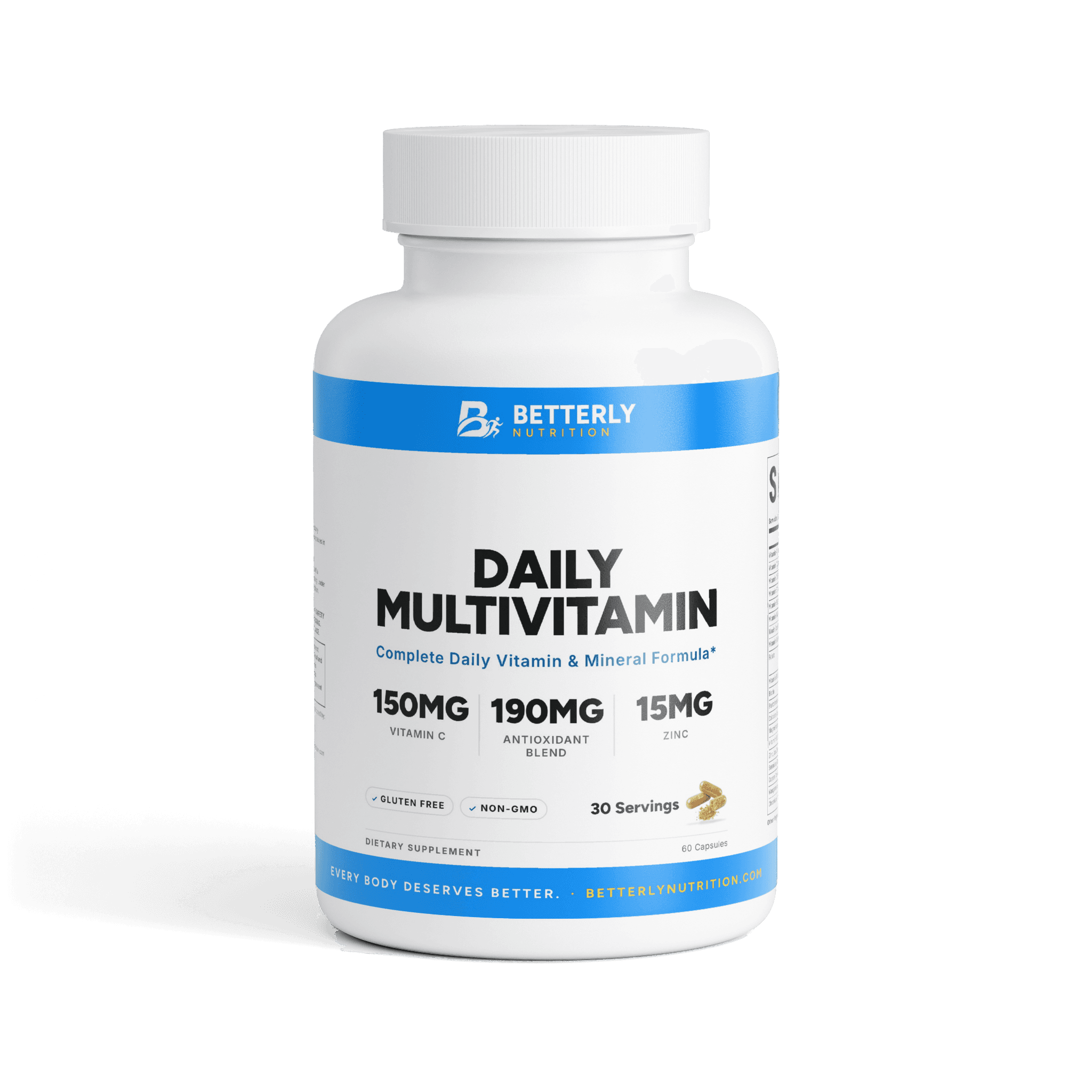
- A multivitamin, if you need one. Neither category is designed for complete micronutrient coverage; plant blends are uneven by nature. Our Daily Multivitamin Capsules list 20 vitamins and minerals with the amount of each printed per 2-capsule serving, which is a different job — and whether you need one at all is a fair question we take seriously in Do You Actually Need a Multivitamin?.
- Targeted nutrients. If bloodwork shows you're low on something specific — iron is a common example — a supplement matched to that gap will do more than any scoop of mixed plants. We cover the details in How to Take Iron Supplements.
- The unglamorous basics. Sleep, movement, water, and a reasonable diet do the heavy lifting. Powders polish the edges.
If you're building a simple daily lineup around either powder, our Greens & Superfoods collection is where the everyday plant staples live.
Who should check with a healthcare provider first
Our Barley Grass & Spirulina Greens Powder and Beet Root & Berry Reds Powder carry the same label caution quoted above: don't exceed the recommended dose, and consult a physician if you're pregnant, nursing, under 18, or have a medical condition. The NIH Office of Dietary Supplements also advises getting your healthcare provider's approval before combining supplements with prescribed medicines, and talking with them about any supplements you take if you have surgery scheduled. That goes for one powder or both.
Key takeaways
- Greens = breadth. Ours stacks four printed blends — 2,000 mg of greens, a 1,500 mg reds blend, metabolic herbs, and digestive support — into a 10-calorie scoop, which is why it's our default recommendation.
- Reds = pigments plus digestion. A 2,000 mg polyphenol blend across eleven plants, plus a 700 mg Digestive Blend and a 100 mg 9-strain probiotic — the pick when gut support or taste decides.
- Decide by your gap, then actually decide. Greens by default; reds when digestion or taste says otherwise.
- The overlap is real. Thirteen blend ingredients appear on both of our labels, so "both" is the deluxe version of one idea — fine if you want it, required for no one.
- Neither replaces produce or a multivitamin. These are gap-fillers with modest, early evidence, and they work best when you use them exactly that way.
FAQ: reds and greens powders
What is a reds powder, exactly?
A reds powder is a drink mix made from dried red, purple, and blue plants — berries, beetroot, pomegranate, and similar — chosen for their pigments, which research has linked to antioxidant activity in small studies. Many, including our Beet Root & Berry Reds Powder, add probiotics for digestive support; ours pairs a 2,000 mg polyphenol blend with a 9-strain probiotic.
Is a reds powder better than a greens powder?
Neither is better across the board; they're different tools. Greens cover the vegetal side, reds concentrate fruit pigments. Forced to pick one, pick a greens powder that carries its own reds blend — ours includes 1,500 mg of one — because it covers more ground per scoop. Reds is the better pick when digestive support or taste is the deciding factor.
Can I mix reds and greens powder in the same drink?
Yes. They combine well, and the fruitiness of reds does a lot to soften a grassy greens blend. Just read both labels once before stacking — ours share thirteen blend ingredients, including green tea — so you know exactly what you're doubling.
When should I drink a reds or greens powder?
Whenever you'll actually remember it — consistency beats timing. Morning with breakfast is popular purely because it's easy to make routine. Neither category depends on precise timing the way some supplements do.
Do I still need a multivitamin if I take a greens powder?
Maybe — they solve different problems. Greens blends are plants, with naturally uneven nutrient levels, while a multivitamin is built for consistent coverage; ours lists 20 vitamins and minerals at printed per-serving doses. Some people use one, some the other, some both. Our multivitamin guide can help you decide.
If this left you looking for somewhere to start, read reds superfood powder with beetroot, berries and 9 probiotic strains — its amounts per serving are listed on the page. For the practical questions this raises, how dosing, sourcing and subscriptions work is answered in one place.