On this page
- Key takeaways
- What are polyphenol supplements, and what goes into them?
- Polyphenols vs flavonoids: what's the difference?
- Are polyphenols antioxidants, and what are they good for?
- What does a "2,000 mg Polyphenol Blend" actually measure?
- How is a standardized extract like trans-resveratrol different?
- Do polyphenol supplements have side effects?
- How do you take a polyphenol powder or capsule, per the label?
- When is a polyphenol product not worth buying?
- Who should check with a healthcare provider first?
- FAQ: polyphenol supplements
- Sources
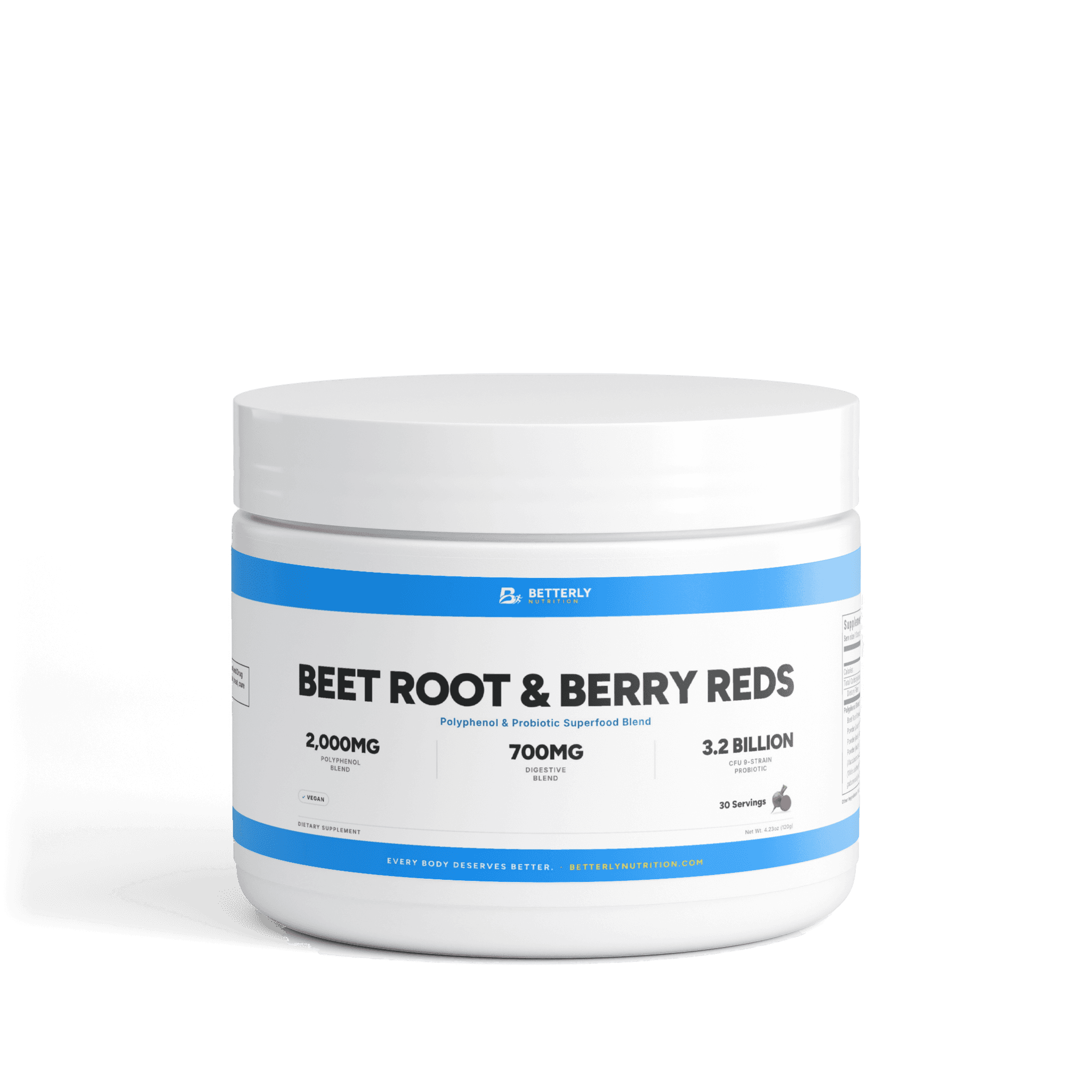
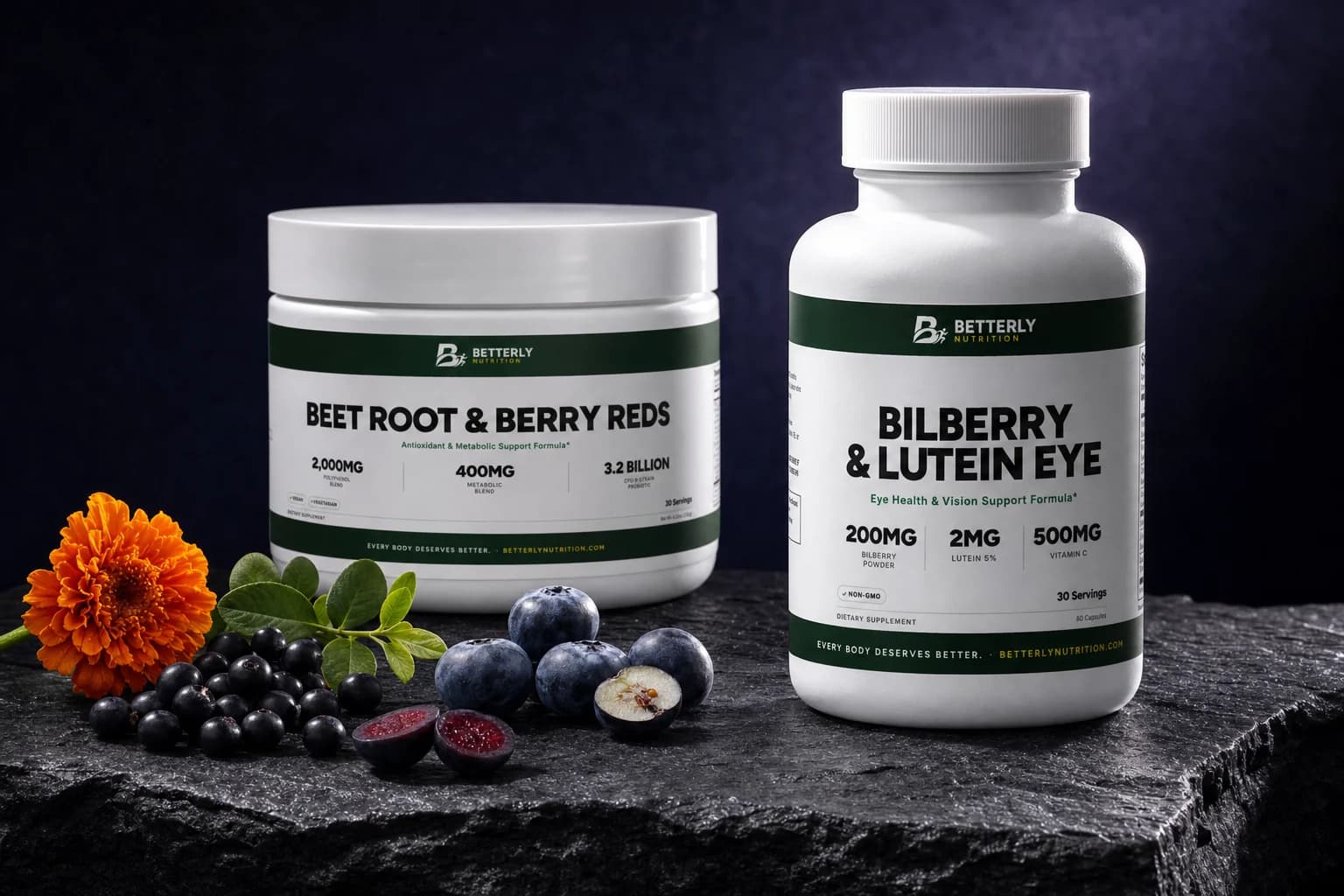
The short answer: Polyphenol supplements are powders or capsules made from polyphenol-rich plants, and food is still where most of these compounds come from. Labels differ a lot in what they actually measure. Our Beet Root & Berry Reds Powder prints a 2,000 mg Polyphenol Blend per 1-scoop (4 g) serving. That figure is the weight of 11 plant powders and extracts, not 2,000 mg of measured polyphenols.
Key takeaways
- Polyphenols are a large family of plant compounds, and flavonoids are one branch of it that USDA scientists sort into five subclasses.
- A "Polyphenol Blend" number is the weight of the plant ingredients in that blend, and none of the three Betterly powders in this guide prints a measured polyphenol total.
- A standardized extract states a share instead: our Trans-Resveratrol Capsules list 600 mg of a root complex containing 50% trans-resveratrol, about 300 mg per capsule by our math.
- NCCIH says antioxidants taken as purified chemicals might act differently than those in food, so a supplement sits on top of a varied diet, not in place of it.
- LiverTox lists mild side effects for resveratrol and possible interactions with estrogens and blood thinners, so anyone on medication should ask first.
We sell all four products this guide measures. That's why we wrote it as a label lesson: wherever our own panels leave a number out, we'll point to the blank.
What are polyphenol supplements, and what goes into them?
Polyphenol supplements are products built from plants rich in polyphenols, sold either as whole-plant powders and blends or as extracts concentrated toward one named compound.
You'll mostly meet three shapes on the shelf:
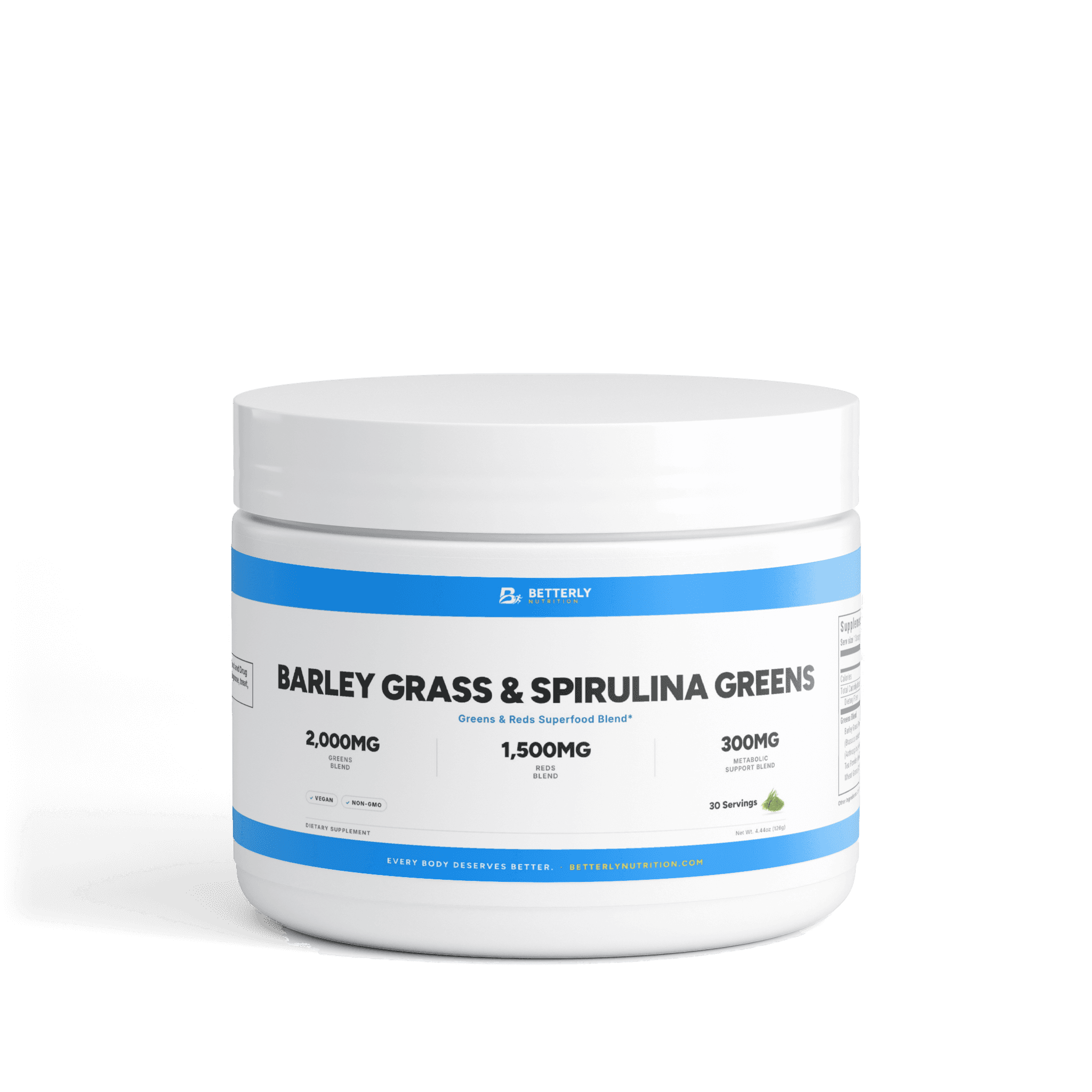
- Blends. Dried fruits, roots and flowers under one combined weight. Our Reds powder is one, and so is the 1,500 mg Reds Blend inside our Barley Grass & Spirulina Greens Powder.
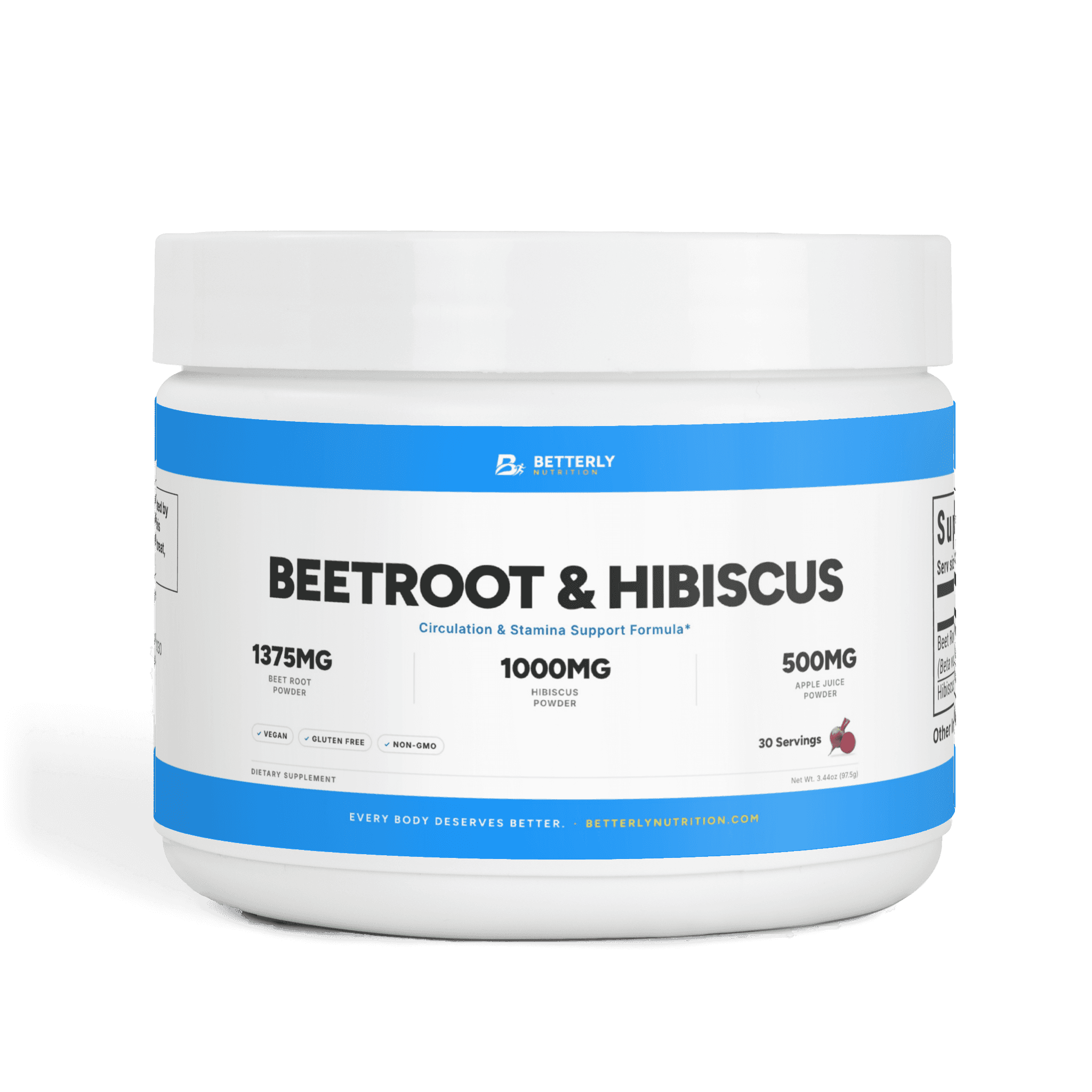
- Short, fully listed panels. Our Beetroot & Hibiscus Powder prints 1,375 mg of beet root, 1,000 mg of hibiscus and 500 mg of apple juice powder per 1-scoop (3.25 g) serving. Its label makes no polyphenol claim; we include it because it weighs all three active ingredients.
- Standardized extracts. A plant extract adjusted to a stated percentage of one marker compound, like the 50% trans-resveratrol in our capsules.
Polyphenols have no Daily Value, so the Polyphenol Blend row on our Reds panel is marked "Daily Value (DV) not established."
Polyphenols vs flavonoids: what's the difference?
Flavonoids are one group inside the polyphenol family, so every flavonoid is a polyphenol, while polyphenols also include non-flavonoids such as resveratrol.
In a USDA analysis of flavonoids in U.S. fruits, vegetables and nuts, Agricultural Research Service scientists describe flavonoids as polyphenolic compounds. They split them into five categories: flavones, flavonols, flavanones, flavan-3-ols (the catechins) and anthocyanidins.
The one-letter gap between flavonols and flavanols (USDA's flavan-3-ols) trips people up. Quercetin belongs to the first group, and tea catechins such as EGCG belong to the second. Here's where four subclasses turn up in the USDA Database for the Flavonoid Content of Selected Foods.
| Flavonoid subclass | Compounds USDA tracks | Foods with measured values |
|---|---|---|
| Anthocyanidins | Cyanidin, delphinidin, malvidin | Black currants, blueberries, raspberries, red grapes |
| Flavan-3-ols | Catechin, epicatechin, EGCG | Brewed green and black tea, unsweetened cocoa, grape seeds |
| Flavonols | Quercetin, kaempferol | Onions, kale |
| Flavanones | Hesperetin, naringenin | Grapefruit, orange juice |
The pattern to notice: berries lean on anthocyanidins, while tea and cocoa lean on flavan-3-ols. Two products can share the polyphenol label and hold different compounds.
Resveratrol sits outside that table because it isn't a flavonoid. LiverTox, the National Library of Medicine's liver-safety reference, calls it a natural plant polyphenol and gives its chemical name, 3,5,4'-trihydroxystilbene. That "stilbene" ending marks a separate branch of the family.
Are polyphenols antioxidants, and what are they good for?
Some polyphenols act as antioxidants; LiverTox says resveratrol has direct antioxidant effects. But antioxidants in supplement form may not behave the way they do inside whole foods.
In Antioxidant Supplements: What You Need To Know, the National Center for Complementary and Integrative Health explains that your body runs its own defenses against reactive oxygen-containing substances. Antioxidant enzymes are the main part of that system, with plant phytochemicals possibly playing a supporting role.
NCCIH also writes that "antioxidants consumed as purified chemicals might act differently than those consumed in foods, which contain complex mixtures of substances."
So what are polyphenols good for? People who eat plenty of fruit and vegetables tend to have better long-term health. NCCIH notes that could come from other substances in those foods or the habits that go with them. Trials of antioxidant supplements haven't shown the same payoff.
What does a "2,000 mg Polyphenol Blend" actually measure?
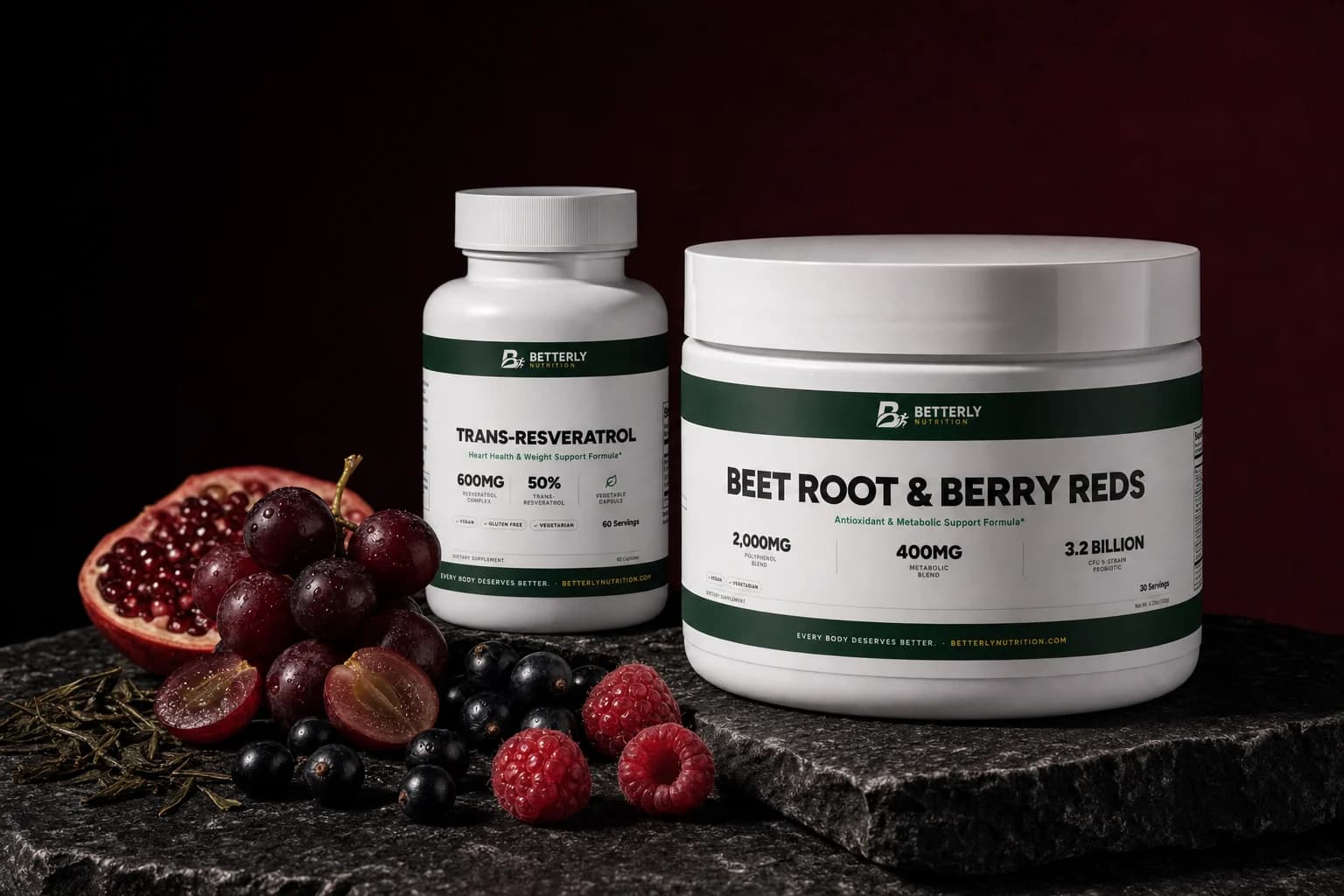
On our Beet Root & Berry Reds Powder, the 2,000 mg Polyphenol Blend is the combined weight of 11 plant ingredients, not the amount of polyphenols inside them.
The panel lists them in this order: beet root powder, strawberry juice powder, hibiscus powder, raspberry powder, black currant powder, acai juice powder, blueberry extract, cranberry powder, grape seed extract, African mango extract and pomegranate powder. Together they make up half of every 4 g scoop by weight.
There's no polyphenol percentage and no weight for any single ingredient. The order still tells you a little. Blend ingredients run heaviest first, so beet root weighs at least about 182 mg, and grape seed extract, ninth of 11, can't top about 222 mg. Our guide to reading the ingredient order inside a proprietary blend shows the math.
Two facts from USDA's tables explain why nobody can turn that 2,000 mg into a polyphenol count:
- The heaviest ingredient isn't a flavonoid heavyweight. USDA lists raw beets at under half a milligram per 100 g for each flavonoid it measured. The database counts only flavonoids, but it's a reminder that "first on the list" doesn't mean "richest in polyphenols."
- Fruit itself swings widely. Across 55 samples, raw highbush blueberries ranged from about 3 mg to 187 mg of delphinidin per 100 g. USDA's documentation ties that spread to cultivar, growing location, farming practices, processing, storage and preparation.
Still, seven fruits in our blend (strawberry, raspberry, black currant, acai, blueberry, cranberry and pomegranate) appear in the USDA database with measured anthocyanidins. Most entries are fresh, frozen or juiced fruit rather than our exact powders, and pomegranate's anthocyanidin figures come from bottled juice. So those fruits do carry polyphenols. The label just can't say how many reach your glass, and the same goes for the Reds Blend in our greens powder.
How is a standardized extract like trans-resveratrol different?
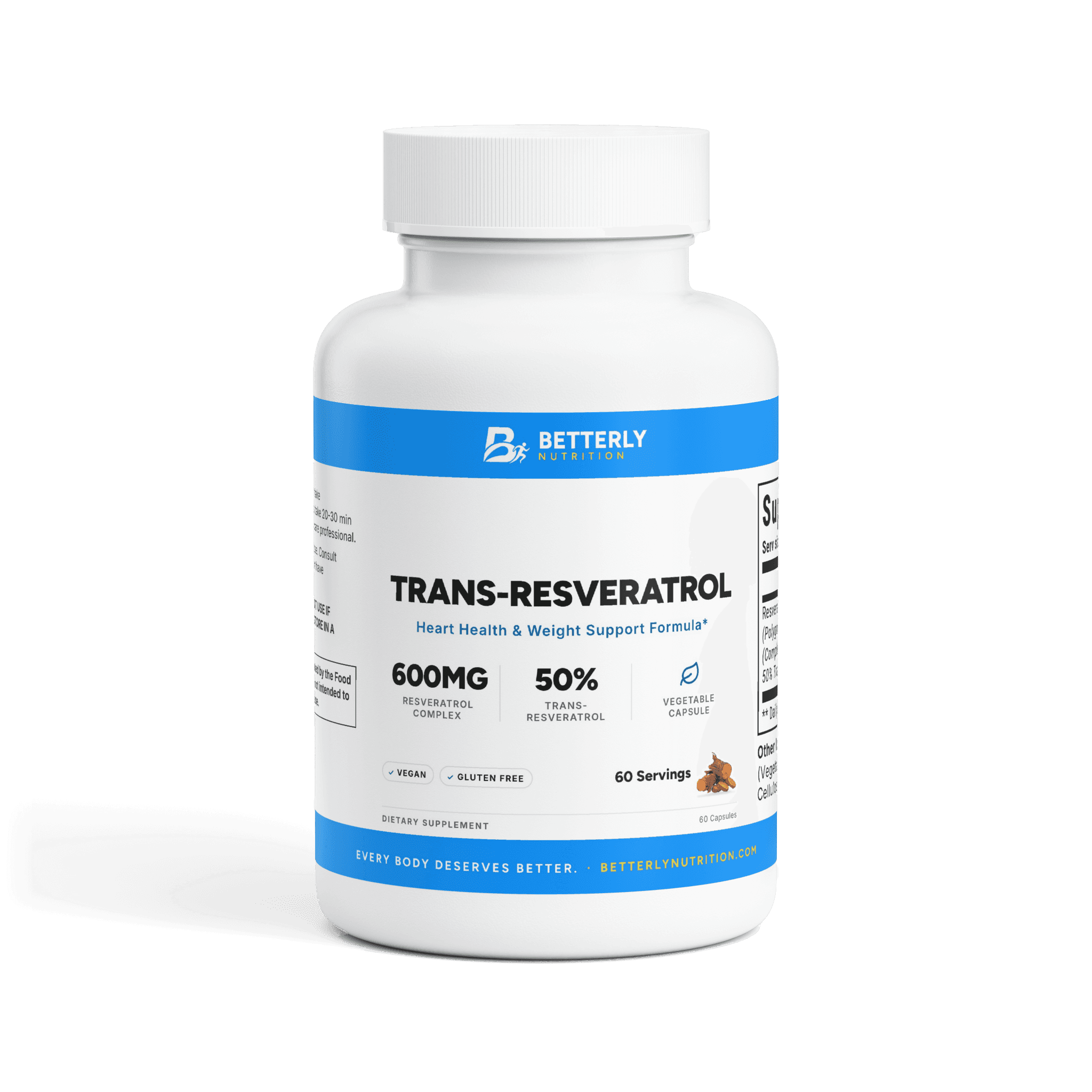
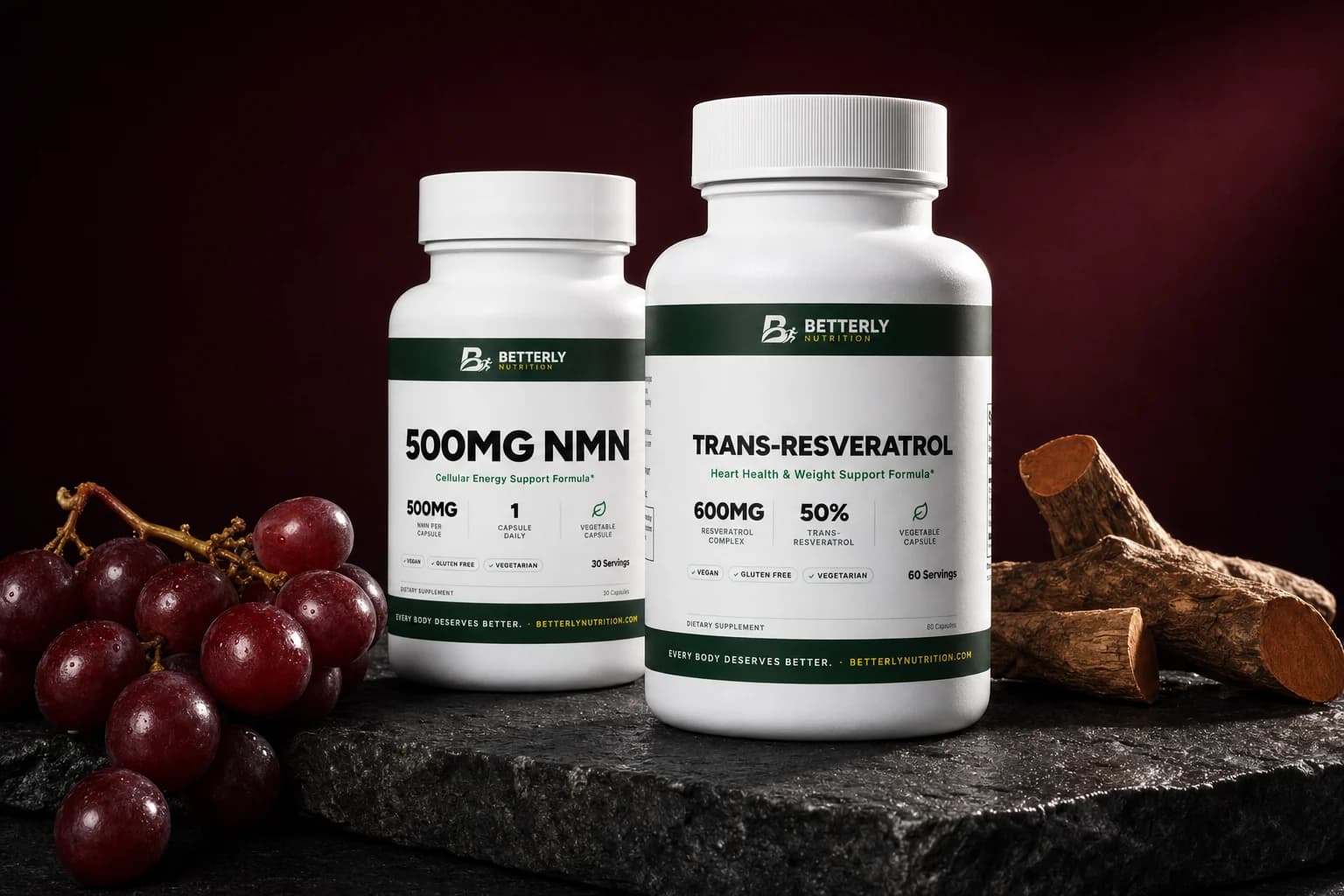
A standardized extract states how much of one marker compound it carries: our Trans-Resveratrol Capsules list 600 mg of Polygonum cuspidatum root complex containing 50% trans-resveratrol per capsule.
Half of 600 mg is about 300 mg of trans-resveratrol per 1-capsule serving. The label's suggested use is one capsule twice a day, so that's 1,200 mg of complex and roughly 600 mg of trans-resveratrol daily by our math. Polygonum cuspidatum is Japanese knotweed.
A precise figure is a better starting point, not proof of an effect. LiverTox points out two gaps: resveratrol comes in trans and cis forms, and the purity of commercial products is rarely well defined. It also rates resveratrol's oral bioavailability as poor and says the major form in plasma is a sulfate or glucuronide conjugate, not free resveratrol. Our label also doesn't say what makes up the other half of the complex. If you're weighing resveratrol together with NMN, that guide runs the capsule count for the pair.
How our four labels compare:
| Product (serving) | What the panel lists | Polyphenol number? | Suits you if |
|---|---|---|---|
| Beet Root & Berry Reds (1 scoop, 4 g) | 2,000 mg blend of 11 plants | No | You want beet and seven fruits in one scoop |
| Barley Grass & Spirulina Greens (1 scoop, 4.2 g) | 1,500 mg Reds Blend beside 2,000 mg Greens Blend | No | You want one scoop covering both |
| Beetroot & Hibiscus (1 scoop, 3.25 g) | 1,375 mg beet, 1,000 mg hibiscus, 500 mg apple juice powder | No, and no polyphenol claim | You want each active ingredient weighed |
| Trans-Resveratrol (1 capsule) | 600 mg complex, 50% trans-resveratrol | Yes, as a share: 50% of 600 mg (about 300 mg by our math) | You want one compound at a set amount |
Only the capsule states a polyphenol share, and only for one compound. The powders trade that precision for breadth.
From our shop: Beet Root & Berry Reds Powder — 11 plant ingredients share one 2,000 mg Polyphenol Blend per 1-scoop (4 g) serving, labeled for once a day in 6-8 oz of cold water or a favorite drink.
Do polyphenol supplements have side effects?
Polyphenol supplement side effects depend on the ingredient and the dose; for resveratrol, LiverTox's list runs to minor gastrointestinal upset, nausea, headache and fatigue.
LiverTox also flags possible interactions between resveratrol and estrogens or anticoagulants (blood thinners). It notes that studies using 1.5 to 3 grams of resveratrol a day saw small rises in liver enzyme readings that returned to normal after stopping. Our label's suggested use is two capsules a day, and we don't suggest going past it.
The powders raise different questions:
- Our Reds lists green tea powder in its Metabolic Blend, and our greens powder lists it in its Greens Blend. NCCIH's green tea page says green tea does contain caffeine, yet neither of our panels prints a caffeine amount.
- Taking the reds and greens powders together repeats several plants, and our comparison of reds and greens powders counts the overlap.
- A bigger serving isn't a better one, since NCCIH says antioxidants can have harmful effects when taken at high doses.
How do you take a polyphenol powder or capsule, per the label?
Follow each product's own label: our three powders call for one scoop once daily in 6-8 oz of liquid, and our resveratrol label for one capsule twice daily.
- Powders. The powder labels tell adults to mix one scoop into 6-8 ounces (177-237 ml) of cold water or a favorite drink once a day and finish it within 10 minutes. Each tub holds 30 servings.
- Capsules. One capsule twice a day, for best results 20-30 minutes before a meal, or as your healthcare professional directs. The 60-capsule bottle lasts 30 days at that rate.
- Amount. All four labels say "Do not exceed recommended dose." A second scoop doubles the whole blend, not just the polyphenols.
From our shop: Trans-Resveratrol Capsules — 600 mg of knotweed root complex containing 50% trans-resveratrol per 1-capsule serving, with a vegetable capsule and vegan and gluten-free marks on the label.
When is a polyphenol product not worth buying?
A polyphenol product isn't worth buying if you already eat berries, vegetables, tea or cocoa most days, or if you expect a blend to give you a measured polyphenol dose.
- Your meals already include the everyday foods in the USDA table above.
- You want a stated polyphenol share, which only a standardized extract prints.
- You're mainly paying for an antioxidant promise, and NCCIH's account of the trials argues for modest expectations.
- You already take a greens or reds powder, so a second blend would mostly repeat the first.
If you'd still like a scoop in your routine, our greens and superfoods collection keeps the powders side by side.
Who should check with a healthcare provider first?
A polyphenol product deserves a pharmacist's or doctor's review first if you're pregnant or nursing, under 18, taking any medication, facing surgery or managing a medical condition.
Each of the four panels prints this caution word for word: "Do not exceed recommended dose. Consult a physician if pregnant, nursing, under 18, or have a medical condition." If you take estrogen or a blood thinner, show your prescriber the resveratrol panel before your first capsule.
Bring the full back panel of any blend. Our greens powder lists ashwagandha and Panax ginseng in its Metabolic Support Blend. Our Reds lists shilajit, bitter melon, turmeric and green tea in its Metabolic Blend.
FAQ: polyphenol supplements
What foods are high in polyphenols?
Foods high in polyphenols include berries, red grapes, tea, cocoa, onions and kale, going by USDA's flavonoid tables. Black currants, blueberries and raspberries carry anthocyanidins, tea and unsweetened cocoa carry flavan-3-ols, and onions and kale carry flavonols such as quercetin. LiverTox names red grape skins as the richest source of resveratrol. Amounts vary widely between batches, so a mix across the week beats hunting for one "best" food.
Is olive oil a better polyphenol source than a supplement?
Olive oil and a polyphenol powder or capsule do different jobs, so neither wins outright. Olive oil is a cooking fat you'd use anyway, and it's far more calorie-dense than a 10-calorie scoop of our Reds. USDA's flavonoid database lists salad or cooking olive oil with only traces of flavonoids, though that database leaves out any non-flavonoid polyphenols an oil may carry. If olive oil already fits your meals, keep it; a powder is an add-on.
Do polyphenol supplements work?
Polyphenol supplements haven't shown clear benefits in people so far. NCCIH reports that trials of antioxidant supplements haven't matched the results linked with diets rich in fruits and vegetables. LiverTox lands in a similar place for resveratrol, saying there's no conclusive evidence yet of beneficial effects in humans. It adds a detail worth knowing before you buy: the component responsible for resveratrol's activity still isn't known.
When is the best time to take a polyphenol supplement?
The best time to take any polyphenol product is whatever its own label says. Our Trans-Resveratrol Capsules are labeled for one capsule twice a day, 20-30 minutes before a meal. Our three powders name no time of day, only one scoop daily in 6-8 oz of liquid, finished within 10 minutes of mixing. Choose a slot you'll remember, such as breakfast.
Is it safe to take a polyphenol supplement every day?
A daily polyphenol supplement can fit a healthy adult's routine at the label's suggested use, but daily use hasn't been shown safe for everyone. Our powders are labeled for one scoop a day and our resveratrol for two capsules a day. If you're pregnant, nursing, under 18, on medication or managing a medical condition, get a healthcare provider's okay first, as the labels themselves advise. NCCIH notes that antioxidants can cause harm at high doses, so don't stack products or raise the serving.
Sources
- Flavonoid Content of U.S. Fruits, Vegetables, and Nuts, USDA Agricultural Research Service
- USDA Database for the Flavonoid Content of Selected Foods, Release 3.3, USDA Agricultural Research Service
- Resveratrol, LiverTox, National Library of Medicine, National Institutes of Health
- Antioxidant Supplements: What You Need To Know, National Center for Complementary and Integrative Health
- Green Tea: Usefulness and Safety, National Center for Complementary and Integrative Health
If this left you looking for somewhere to start, read beet root and berry reds powder with a polyphenol blend — its amounts per serving are listed on the page. For the practical questions this raises, how dosing, sourcing and subscriptions work is answered in one place.