On this page
- Key takeaways
- What does "proprietary blend" mean on a supplement label?
- Which ingredients can go inside a blend, and which must stand alone?
- What can the order of ingredients inside a blend tell you?
- Is a proprietary blend bad, or is it safe?
- What is a non-proprietary blend?
- How do you audit any proprietary blend before you buy?
- How do you take the four blends in this guide, per the label?
- When is a proprietary blend the wrong buy?
- Who should check with a healthcare provider first?
- FAQ: proprietary blends
- Sources
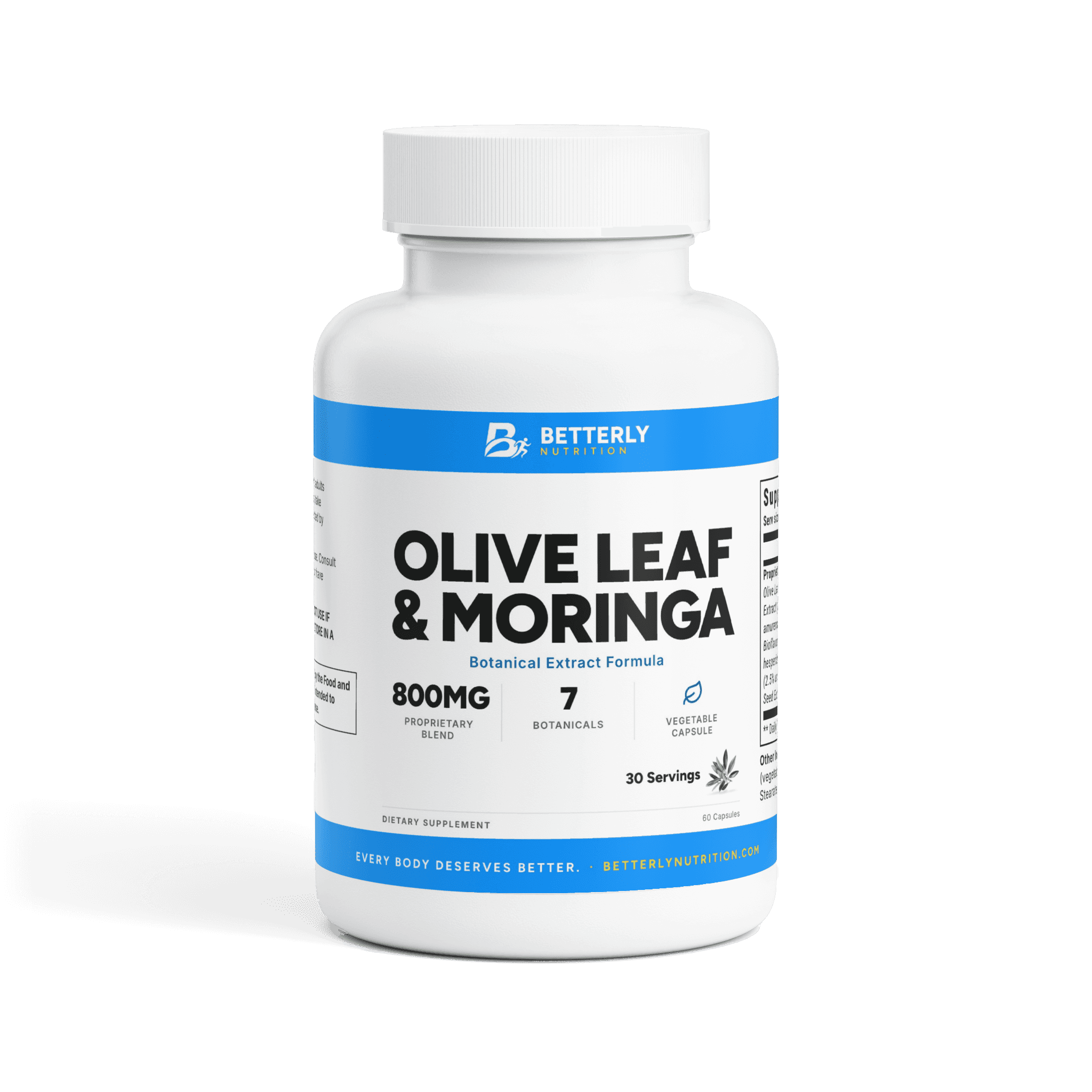
The short answer: A proprietary blend in supplements is a group of ingredients printed under one name with one combined weight. The label has to name every ingredient inside, heaviest first, but not how much of each. Our Olive Leaf, Moringa & Holy Basil Capsules are a plain example: seven botanical extracts share one 800 mg total per 2-capsule serving, and none of them gets its own number.
Key takeaways
- Every proprietary blend prints a single combined weight, then names its ingredients from heaviest to lightest without giving any one of them an amount.
- Vitamins and minerals with a Daily Value can't hide inside a blend, so blends mostly hold herbs, mushrooms and amino acids.
- An ingredient's place in the list caps its weight: whatever sits third is at most a third of the blend, and whatever sits fifth is at most a fifth.
- A blend isn't unsafe by default, but you can't match its ingredients to researched amounts or add them up across products.
Betterly sells every product on this page, and nearly all of them print a blend total, so we're explaining a format our own shelf depends on.
What does "proprietary blend" mean on a supplement label?
On a supplement label, "proprietary blend" means several dietary ingredients are grouped under one name, and a single combined weight stands in for their individual amounts.
Every ingredient inside a blend row is still named, but the weight beside it belongs to the whole group. You can see what's in it, just not how the milligrams split.
The FDA's Dietary Supplement Labeling Guide sets the shape. The blend's name and total weight share one line, and its ingredients sit indented underneath, heaviest first. A symbol points to a footnote saying no Daily Value is established. On all four panels in this guide, that symbol sits beside the blend's total, not beside each ingredient.
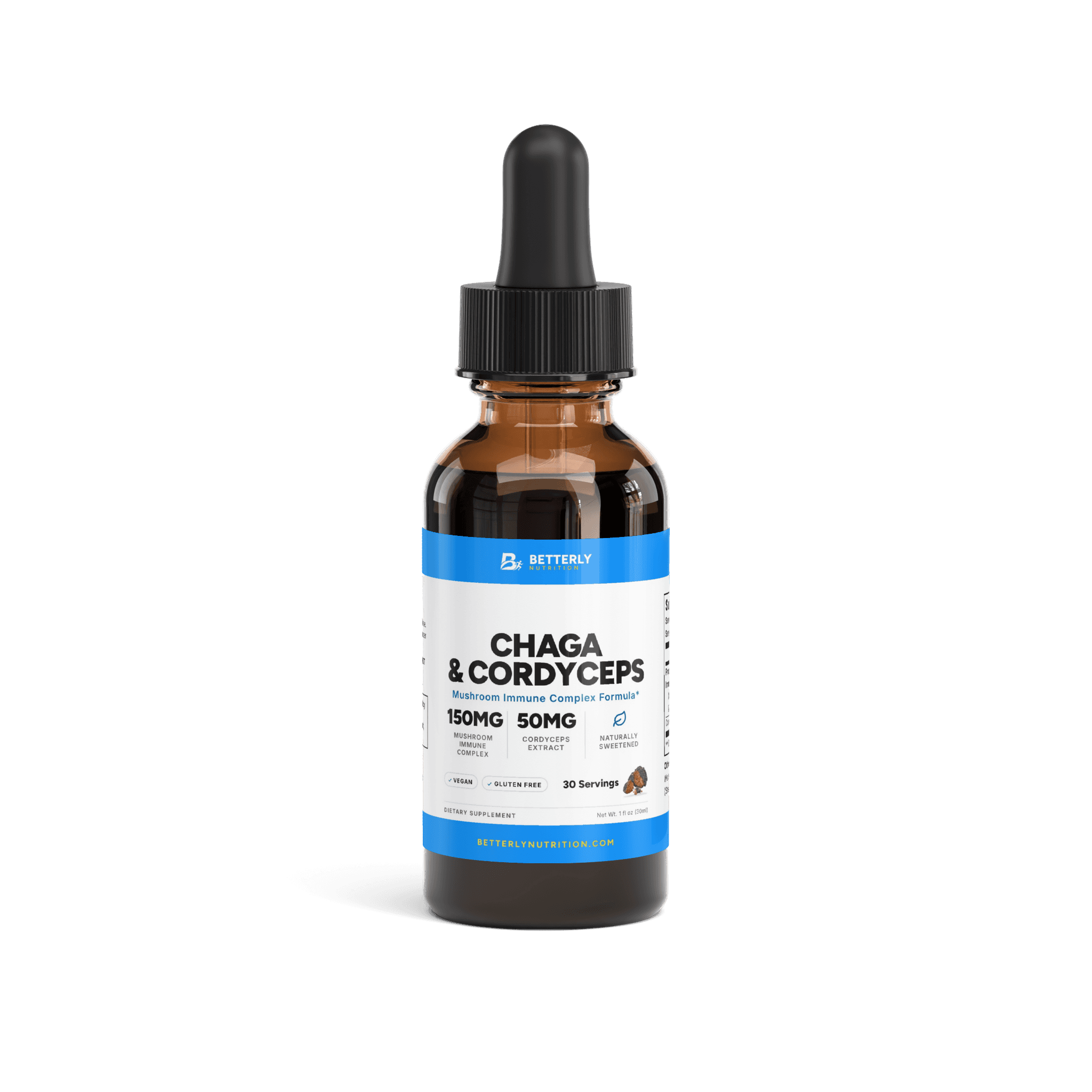
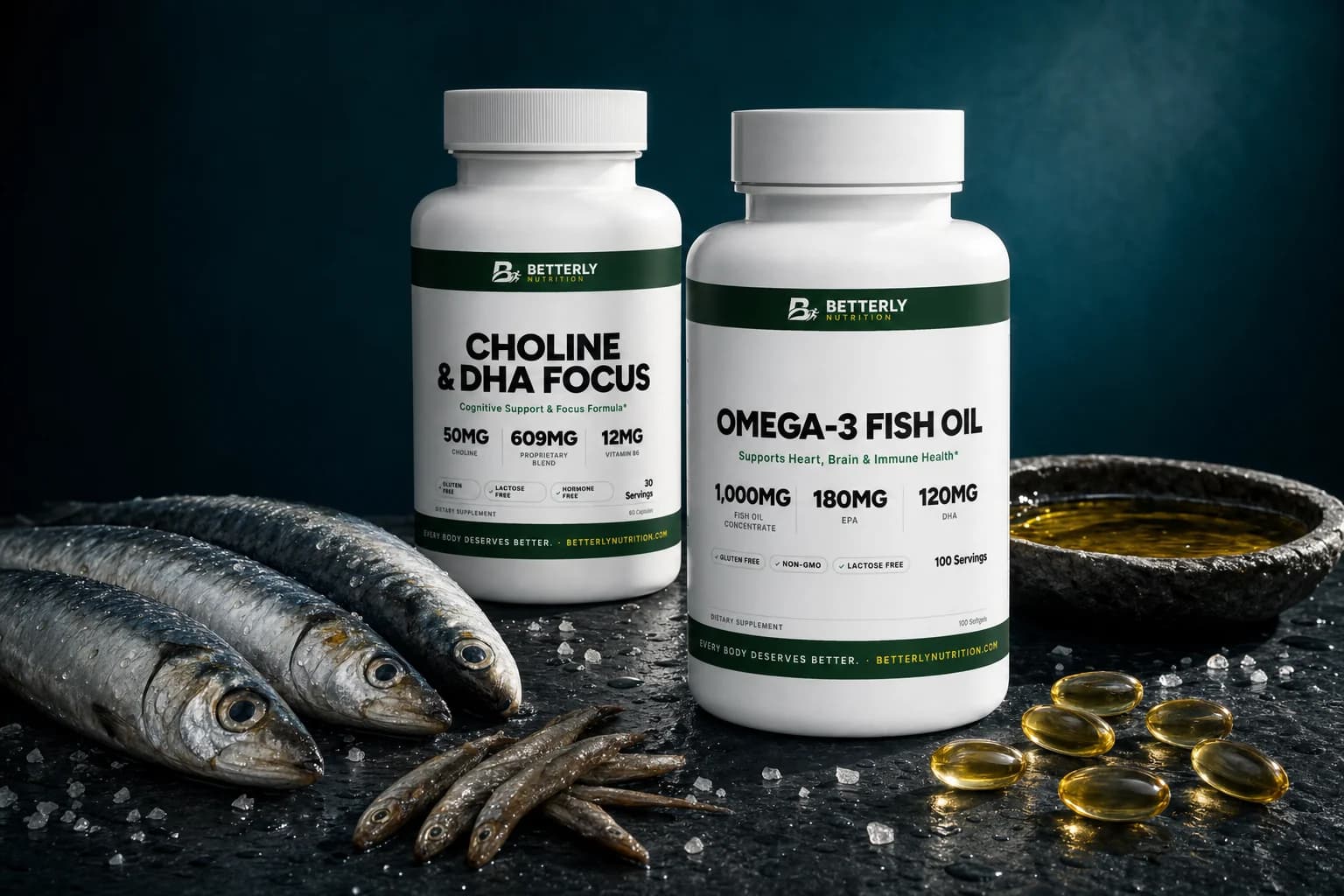
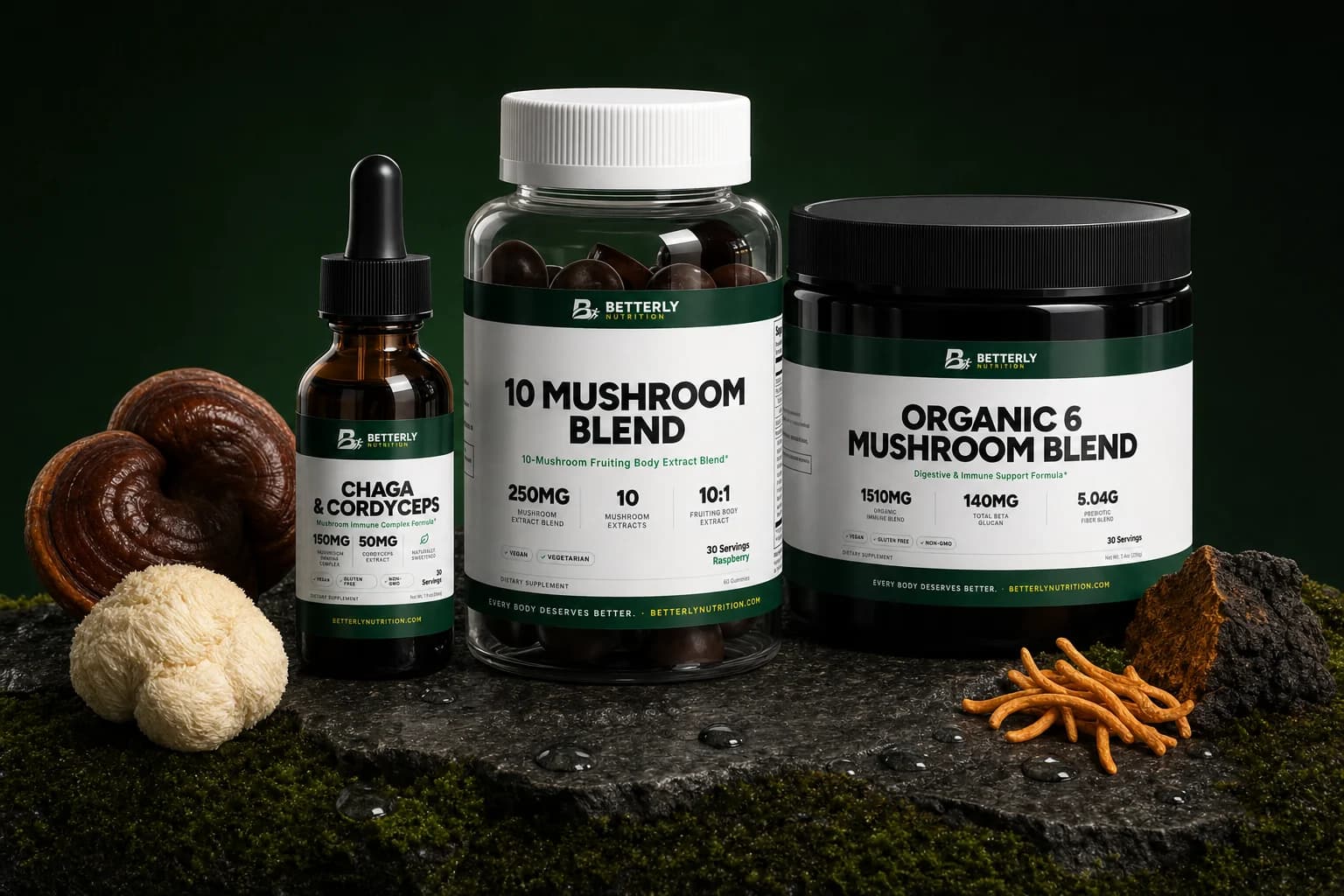
The name is flexible, too. The same guide allows "Proprietary Blend" or a descriptive or fanciful name, so a complex or a matrix can follow the same rules. Our Chaga & Cordyceps Mushroom Drops call their five-mushroom row a complex.
A proprietary herbal blend is one made only of botanicals, like the seven plant extracts in our Olive Leaf capsules. Our Choline & DHA Focus Capsules don't qualify, since their blend also holds minerals, amino acids and DHA.
Which ingredients can go inside a blend, and which must stand alone?
Only ingredients without a Daily Value can go inside a blend. The FDA guide says any nutrient that has one must be listed separately, with its own weight.
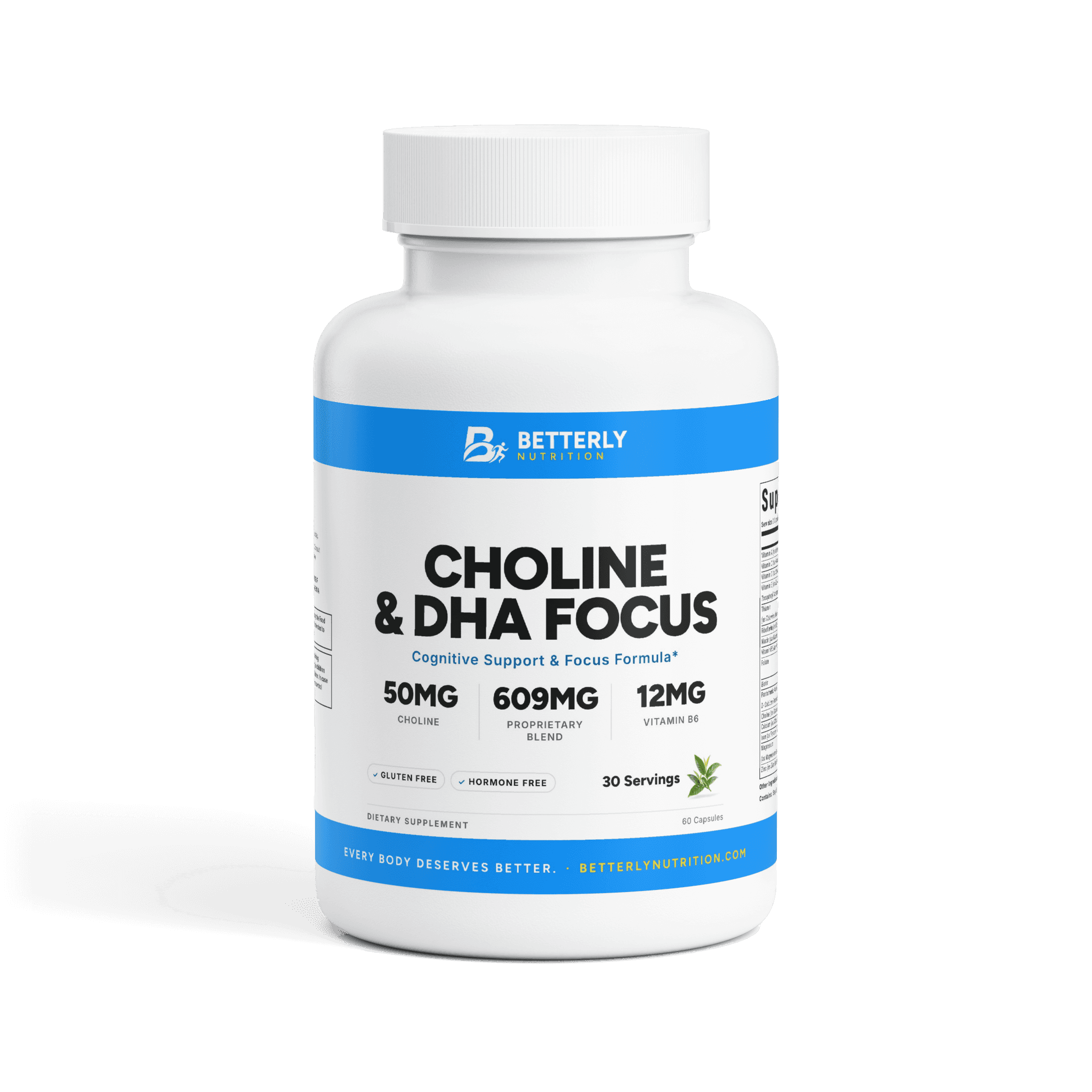
The dividing line is the Daily Value, not the type of ingredient. Boron and vanadium are both minerals, yet neither has a Daily Value, so both may sit unquantified inside a blend. The Choline & DHA capsules put them there, 14th and 16th in a list of 18.
Above that panel's blend line, 22 nutrient rows each carry their own amount, from vitamin A down to potassium. Below it, 18 ingredients share one 609 mg figure per 2-capsule serving, and not one of them gets a number.
That split is why a proprietary blend of nootropics is so common. Focus formulas lean on compounds like DMAE, GABA and huperzine A, and none of them has a Daily Value. If DHA is what you're after, our guide to how much omega-3 is in 1,000 mg fish oil reads this label from that angle.
What can the order of ingredients inside a blend tell you?
The order inside a blend sets hard limits. The first ingredient is at least the blend's average share, and the ingredient in position N can't exceed the total divided by N.
If holy basil sits fifth in a list sorted heaviest first, four ingredients each weigh at least as much as it does. Five shares that size must fit inside the total, so holy basil can't be more than a fifth of it. The first ingredient is the biggest share, so it can't be smaller than the average.
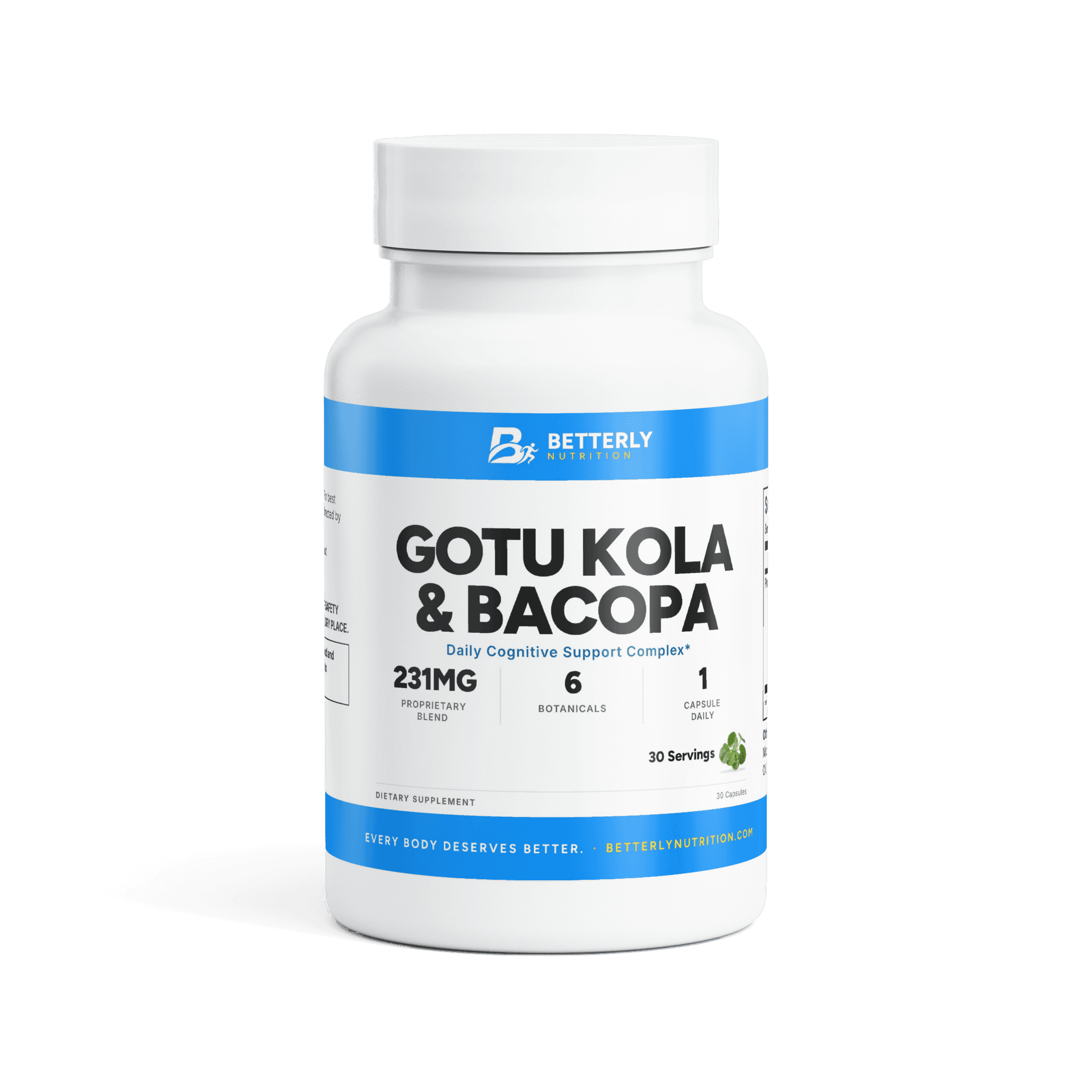
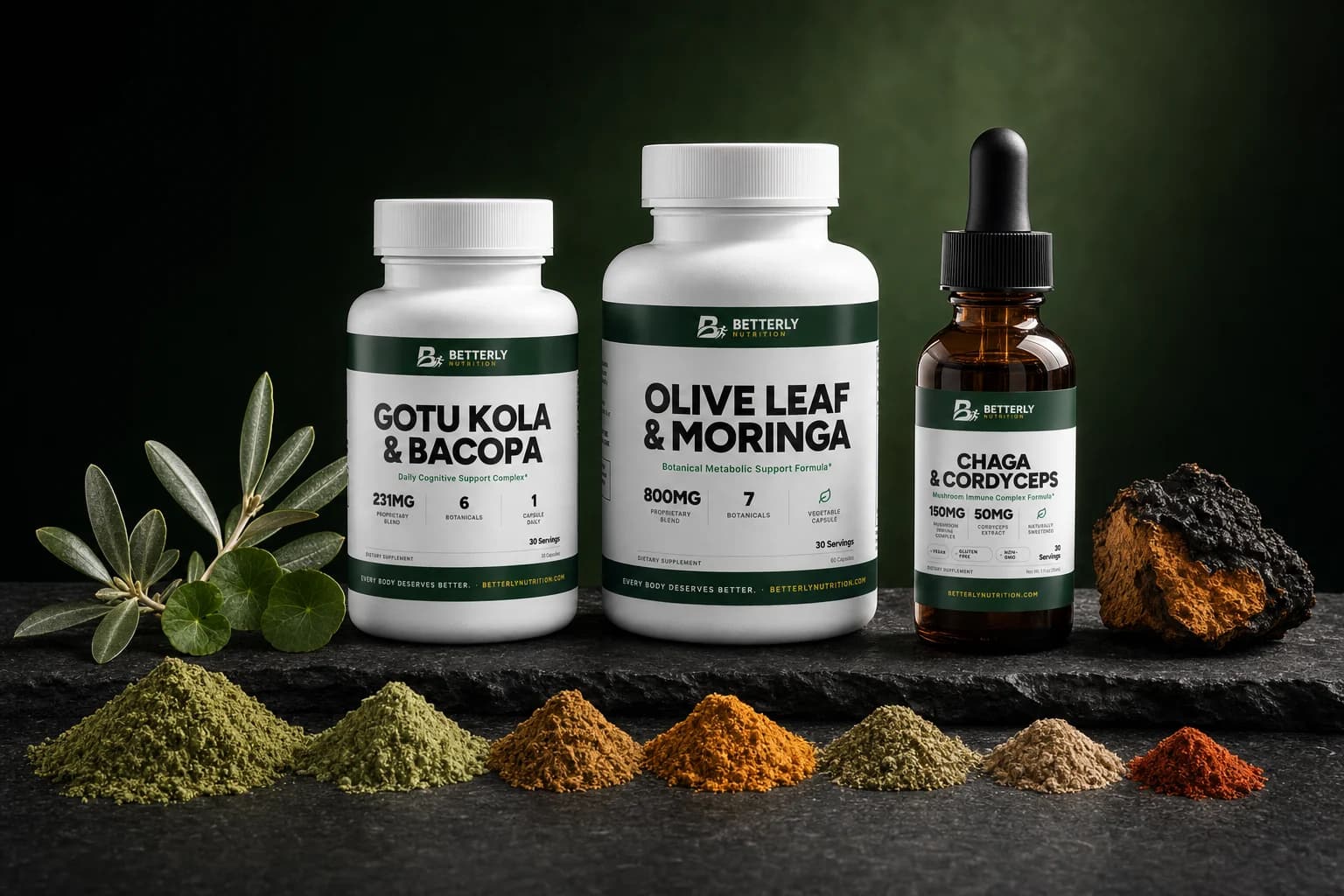
Here are the four blends this guide decodes, a handful of the many Betterly products built on one. The newcomer is our Gotu Kola & Bacopa Capsules, a second herbal blend.
| Product (serving) | Blend total | Ingredients inside | Also disclosed |
|---|---|---|---|
| Olive Leaf, Moringa & Holy Basil (2 capsules) | 800 mg | 7 extracts | Nothing else |
| Choline & DHA Focus (2 capsules) | 609 mg | 18 | 22 nutrient rows |
| Chaga & Cordyceps drops (1 ml) | 150 mg | 5 mushrooms | 50 mg cordyceps extract |
| Gotu Kola & Bacopa (1 capsule) | 231 mg | 6 botanicals | Nothing else |
Blend size runs more than fivefold, from 150 mg in the drops to 800 mg in the Olive Leaf capsules. Only the Choline & DHA panel pairs its blend with a long run of disclosed nutrients.
Now the order rule, applied to ingredients a shopper might look for.
| Ingredient (blend total) | Place in list | What the order proves |
|---|---|---|
| Olive leaf extract (800 mg) | 1st of 7 | At least about 114 mg |
| Holy basil extract (800 mg) | 5th of 7 | No more than 160 mg |
| Bacopa powder (231 mg) | 3rd of 6 | No more than 77 mg |
| DHA ingredient (609 mg) | 15th of 18 | No more than about 41 mg |
| Chaga (150 mg) | 1st of 5 | At least 30 mg |
Order gives you boundaries, not amounts. Holy basil is in the Olive Leaf product's name, yet this proprietary herbal blend can only promise it's somewhere under 160 mg per serving. The real figure could sit far below that ceiling, and the limits hold only if a panel follows the ordering rule.
Is a proprietary blend bad, or is it safe?
A proprietary blend isn't bad or unsafe by default. It does take away three checks: matching an ingredient to a researched amount, comparing brands, and totaling an ingredient across products.
Why do supplement companies use proprietary blends?
The usual reason given is protecting a recipe, since a formula with every milligram printed is easier to copy. The same rule also lets a long ingredient list ride on a small total, and from outside you can't tell which you're looking at.
Our reason is plainer. Betterly doesn't manufacture anything, and our labels reproduce our manufacturing partner's specification unchanged, as our quality page explains. For these four products, that specification gives each blend as one total, so the label does too.
What does a blend make harder to judge?
A blend makes it hard to judge whether an ingredient shows up in a meaningful amount.
The NIH Office of Dietary Supplements makes a wider point in its botanical supplement background sheet: "Determining the quality of a botanical dietary supplement product from its label is difficult." It adds that a term like "standardized" doesn't necessarily mean a product is high quality.
Overlap is the practical safety gap. Bacopa turns up in three Betterly blends, two of them in this guide, and olive leaf in two. None of those labels gives a number you could add up.
A blend doesn't hide identity, though. Every ingredient is named, and the Choline & DHA label adds "Contains: Soy & Fish (Tuna Fish)."
What is a non-proprietary blend?
A non-proprietary blend, sometimes called a fully disclosed formula, lists every ingredient with its own amount, so you can see exactly how the serving divides.
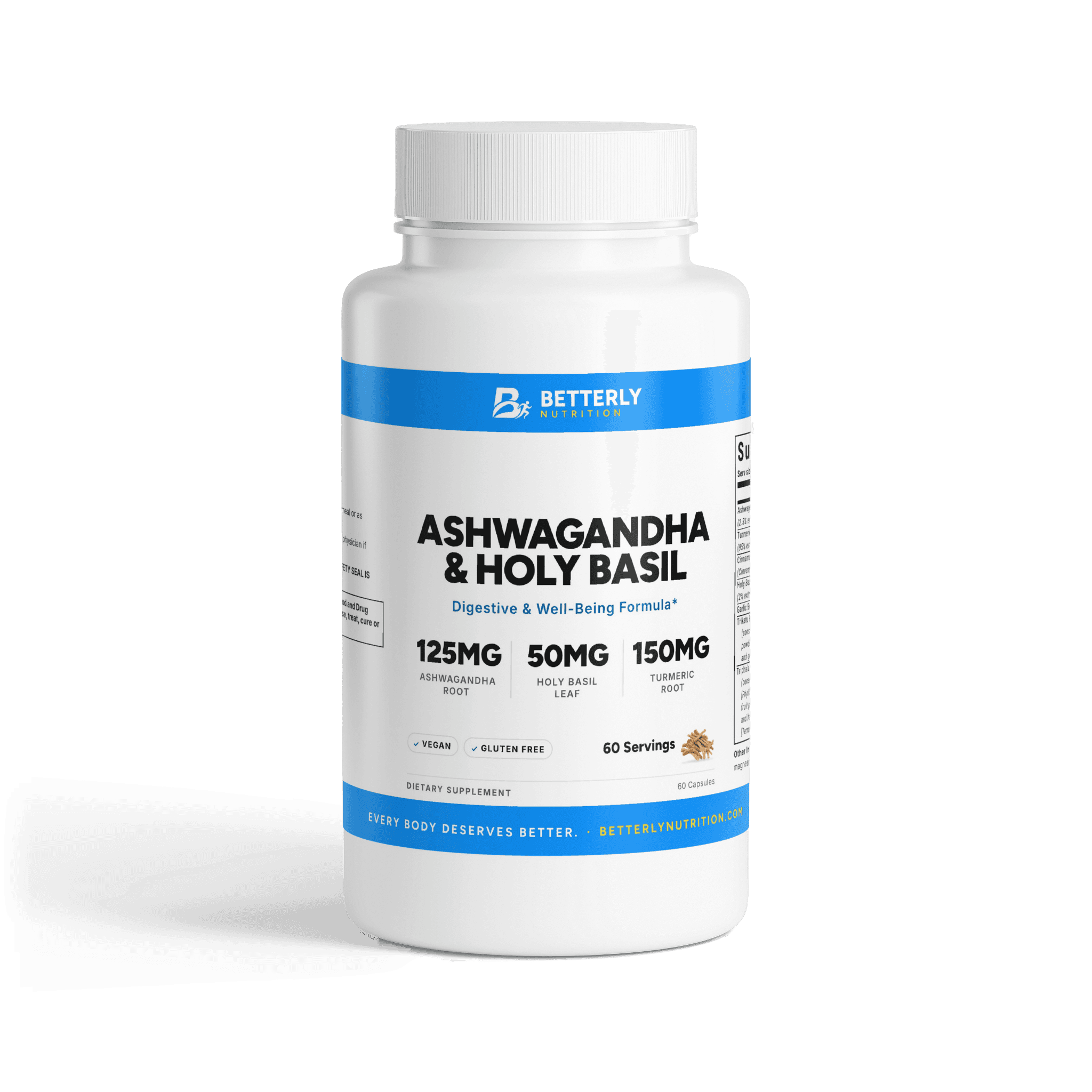
Our Ashwagandha & Holy Basil Ayurvedic Capsules show the difference. Their 1-capsule serving prints 17 ingredient lines, each with its own milligrams. Holy basil leaf (2% extract) gets 50 mg. Brahmi leaves (20% extract), which the label identifies as Bacopa monnieri, get 75 mg. Even this panel keeps two small groups, Trikatu and Triphala, each a three-part powder with one amount.
Holy basil in that capsule is a known 50 mg. In the Olive Leaf blend, it's only "no more than 160 mg." One panel answers the question, and the other only narrows it.
Plenty of labels sit in between. The Chaga & Cordyceps drops disclose 50 mg of cordyceps mushroom extract beside the 150 mg five-mushroom complex, per 1 ml (30-drop) serving. You know the cordyceps exactly and the other five only as a group.
Our Mushroom Capsules split the same way: cordyceps, reishi, shiitake and lion's mane get 266 mg lines, and six more species share one 266 mg blend, per 2-capsule serving. The Mushroom Gummies don't split at all. Their ten extracts sit in one 250 mg blend per 2-gummy serving, so no species has a known amount. Our comparison of mushroom gummies, drops and capsules sets those formats side by side.
How do you audit any proprietary blend before you buy?
Audit a proprietary blend in five moves: divide the total by the ingredient count, check what's listed first, find your ingredient's ceiling, read the fine print, and ask the seller.
- Divide for scale. The average slice is about 114 mg across the Olive Leaf blend's seven extracts, but only about 34 mg across the Choline & DHA blend's 18.
- Compare the first ingredient with the front label. Olive leaf leads the Olive Leaf blend and chaga leads the mushroom complex. The Choline & DHA blend opens with DMAE bitartrate, and its DHA sits 15th.
- Find your ingredient's ceiling. Divide the total by its position. Bacopa's ceiling is 77 mg in the Gotu Kola & Bacopa blend and about 122 mg in the Choline & DHA blend.
- Read Other Ingredients and any Contains line. The Gotu Kola & Bacopa capsule is gelatin, which matters if you avoid animal products.
- Ask the seller for the amount of the one ingredient you care about and what any percentage refers to.
Ask us, too. For these four, the honest answer is the single total already printed on each panel. Percentages like "20% oleuropein" describe the extract, not how much of it you get, and our guide to what a standardized extract means unpacks them.
From our shop: Olive Leaf, Moringa & Holy Basil Capsules — seven extracts share one 800 mg total per 2-capsule serving, with olive leaf (20% oleuropein) listed first, in a vegetable capsule.
How do you take the four blends in this guide, per the label?
Each of the four blends in this guide is labeled for one daily serving, and all four labels say "Do not exceed recommended dose."
- Olive Leaf, Moringa & Holy Basil Capsules: "adults take two (2) capsules daily," with 6-8 oz of water for best results. 30 servings.
- Choline & DHA Focus Capsules: "Take two (2) capsules once a day." 30 servings.
- Chaga & Cordyceps Mushroom Drops: "Shake well. Take 1 ml (30 drops) daily." 30 servings in a glycerin and water base.
- Gotu Kola & Bacopa Capsules: "Adults take one (1) capsule daily," with 6-8 oz of water for best results. 30 servings.
A blend's total is fixed per serving, so going past the label's serving raises every ingredient inside at once, including the ones you can't see.
The Choline & DHA label also warns about accidental iron overdose in children under 6, since each serving has 2.6 mg of iron. Keep all four out of children's reach.
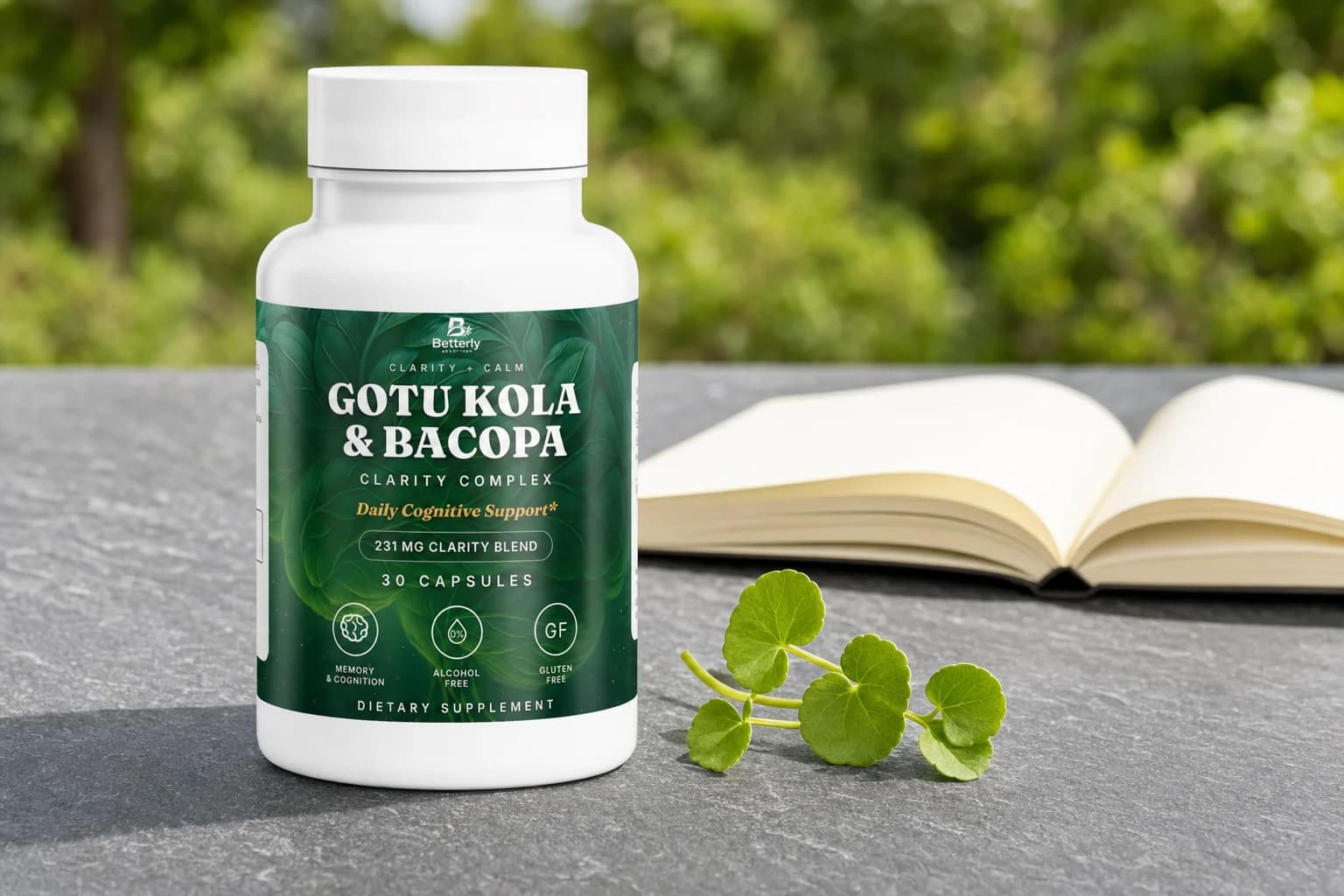
From our shop: Gotu Kola & Bacopa Capsules — a 231 mg blend of six botanicals per 1-capsule serving, with gotu kola powder listed first and one capsule daily on the label.
When is a proprietary blend the wrong buy?
A proprietary blend is the wrong buy when you need a set amount of one ingredient, already take something that overlaps, or want to know which ingredient suits you.
If a healthcare provider has suggested a specific amount of something, a blend can't confirm you're getting it, so pick a single-ingredient or fully disclosed product.
When seven extracts arrive together, you can't tell which one agrees with you. If that matters, start with single ingredients. Our bacopa guide walks through single-herb, standardized and blended forms of one herb.
Already happy with a multi-herb formula? Check both back panels for repeats before adding a second. Blended and fully disclosed options sit side by side in our adaptogens collection.
Who should check with a healthcare provider first?
Check with a healthcare provider before starting any proprietary blend if you're pregnant or nursing, under 18, on prescription medication, facing surgery, or living with a medical condition.
All four of these labels say: "Consult a physician if pregnant, nursing, under 18, or have a medical condition." The NIH Office of Dietary Supplements adds more in Dietary Supplements: What You Need to Know. Some supplements can raise the risk of bleeding or change your response to anesthesia if taken before surgery, and some interact with medicines.
Blends make that conversation harder, because your provider can't see the amounts either. Bring a photo of the full panel, not just the front. On these four, easy-to-miss names include Phellodendron amurense bark extract (std. to 8% berberine), licorice root, green tea extract, huperzine A and Panax ginseng.
FAQ: proprietary blends
Does a proprietary blend mean the ingredients are secret?
No, a proprietary blend keeps the amounts private, not the ingredients. Every ingredient inside has to be named on the panel, in order from heaviest to lightest. So you can always check whether a blend contains something you avoid, even when you can't check how much of it there is.
Can a proprietary blend contain caffeine?
Yes, a proprietary blend can hold caffeine without printing its amount, because caffeine has no Daily Value. Our GABA, L-Tyrosine & Caffeine Capsules list caffeine third of eight ingredients in a 255 mg blend per 1-capsule serving. The order math caps it at 85 mg, and the real figure could be lower. Green tea extract, which can also carry caffeine, sits fourth in our Choline & DHA blend.
Can you take two proprietary blend supplements together?
You can, but two blends make it impossible to total any ingredient they share, so ask a healthcare provider first if you take medication or manage a medical condition. Our Choline & DHA and Gotu Kola & Bacopa blends both contain bacopa, and neither prints its amount. Follow each label's suggested use, and don't raise either serving to make up for the gap.
When should you take a proprietary blend supplement?
Take a proprietary blend supplement when its own label says to, since timing comes from the product, not the blend format. None of the four blend labels in this guide names a time of day. Two of them, the Olive Leaf and Gotu Kola & Bacopa capsules, suggest 6-8 oz of water with each serving.
Sources
- Dietary Supplement Labeling Guide: Chapter IV. Nutrition Labeling, U.S. Food and Drug Administration
- Dietary Supplements: What You Need to Know, Fact Sheet for Consumers, NIH Office of Dietary Supplements
- Botanical Dietary Supplements: Background Information, Fact Sheet for Consumers, NIH Office of Dietary Supplements
If this left you looking for somewhere to start, read olive leaf capsules with an 800 mg seven-extract blend — its amounts per serving are listed on the page. For the practical questions this raises, how dosing, sourcing and subscriptions work is answered in one place.