On this page
- Key takeaways
- Olive leaf extract side effects: what does the research show?
- Which extracts in our olive leaf capsules matter most for side effects?
- Can olive leaf extract upset your stomach?
- Can you take olive leaf extract with berberine or other supplements?
- Is the Citrus aurantium in this blend a stimulant?
- When is the best time to take olive leaf extract?
- Can you take olive leaf extract on an empty stomach?
- Who can skip our olive leaf blend?
- Who should check with a healthcare provider first?
- FAQ: olive leaf extract side effects and timing
- Sources
The short answer: Olive leaf extract side effects barely register in the research: in a 2022 review of 12 small human trials, none reported adverse effects tied to the extract. Our capsule isn't olive leaf alone, though. It shares an 800 mg blend per 2-capsule serving with six other extracts, including Phellodendron bark standardized to 8% berberine and cayenne pepper, and those carry the clearer stomach-related notes. Anyone on prescription medication should check with a provider first.
Key takeaways
- A 2022 review of 12 olive leaf extract trials, lasting 6 to 48 weeks, reported no adverse effects linked to the extract, though none of the 12 studied healthy volunteers.
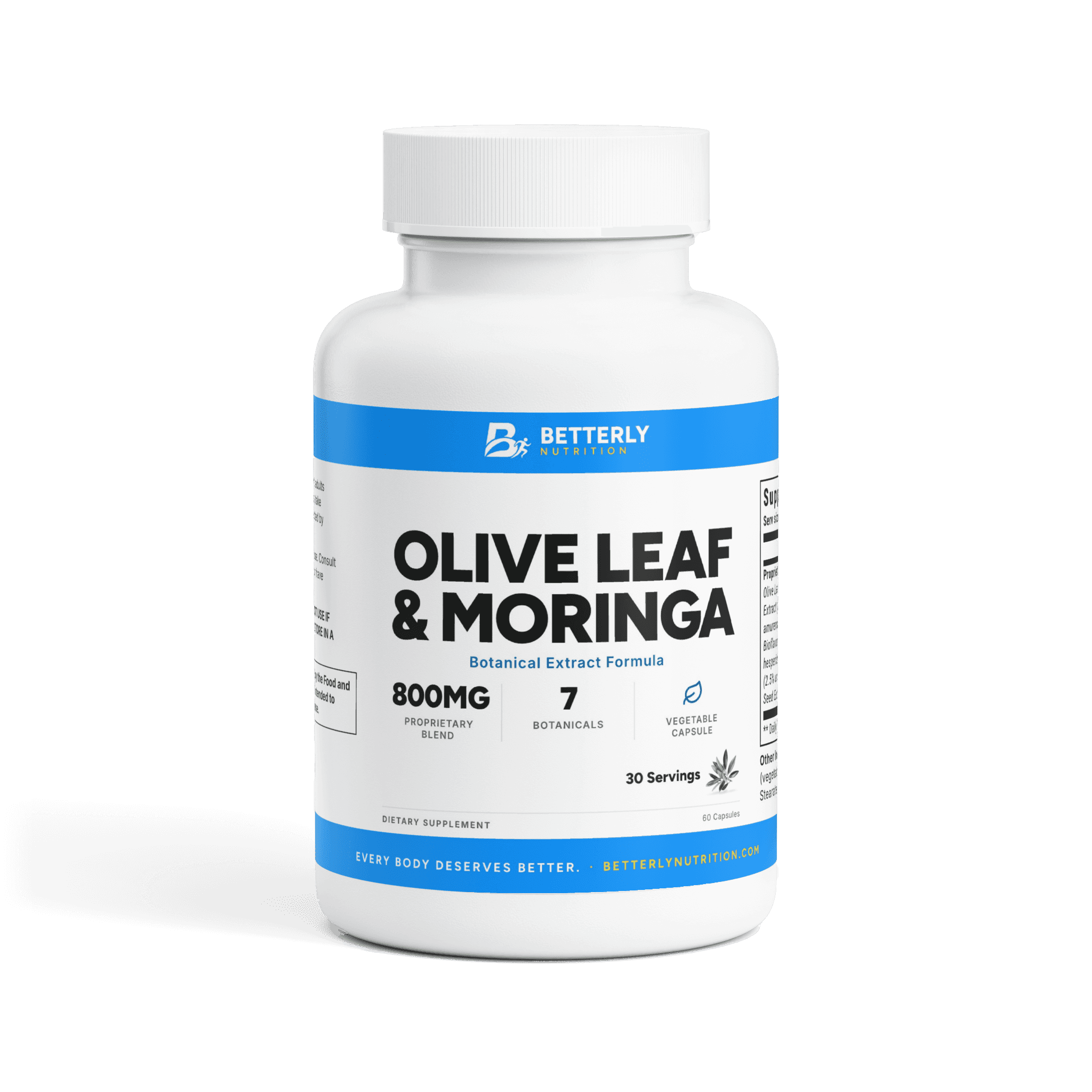
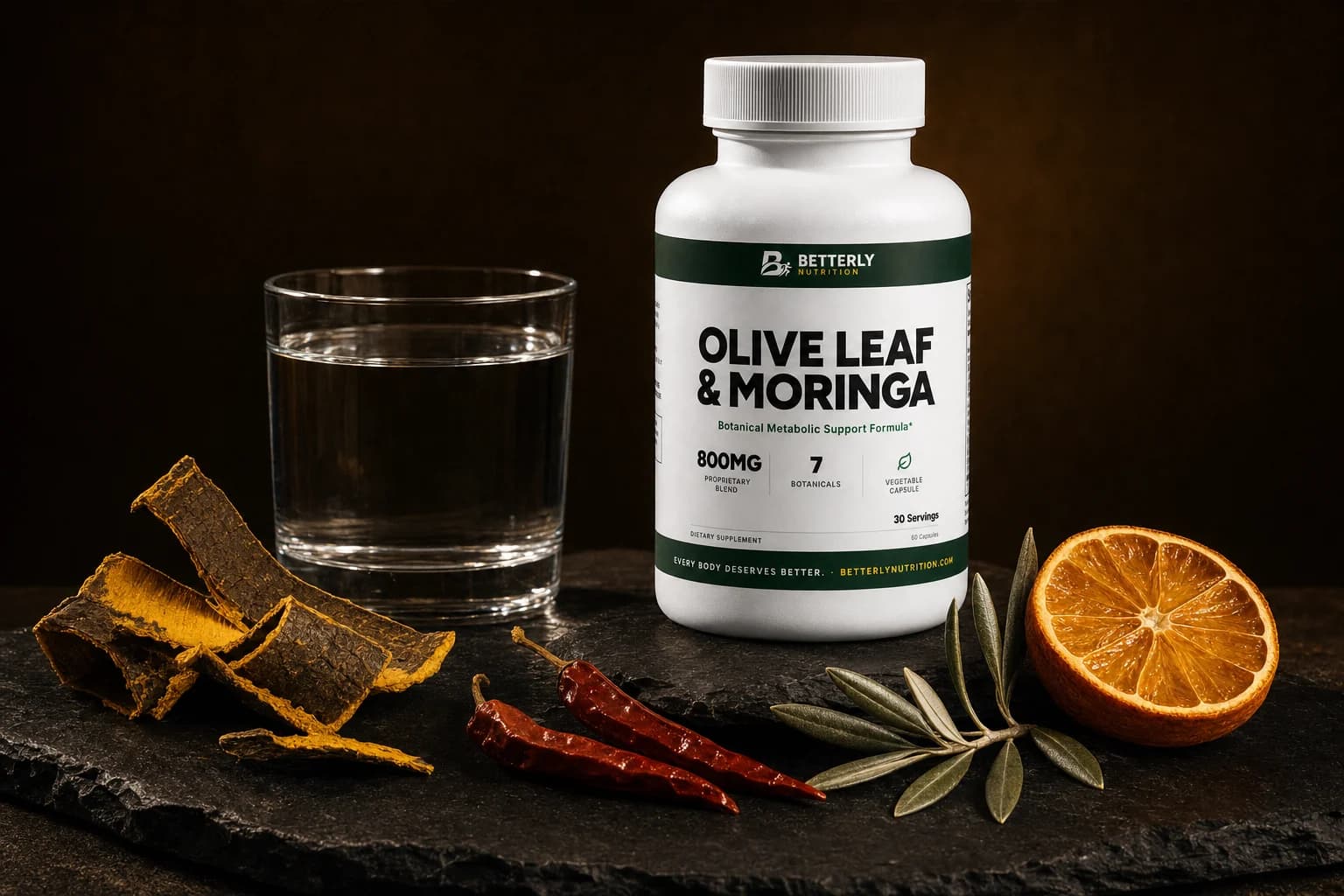
- Alongside olive leaf, our Olive Leaf, Moringa & Holy Basil Capsules list Phellodendron bark extract standardized to 8% berberine, so don't add a separate berberine product without a provider's okay.
- For this blend, stomach upset is the side effect with the most support: NCCIH lists nausea and bloating for berberine, and ODS lists stomach pain and nausea for capsaicin.
- The label's suggested use is 2 capsules daily with 6-8 oz of water, and it's silent on the time of day and on meals.
- Talk to a healthcare provider before your first capsule if you're pregnant, nursing, younger than 18, on prescription medication or managing a medical condition.
Where we stand: we sell a capsule that prints olive leaf first on its panel. Most of that capsule's cautions sit with the other six extracts, though, so that's where much of this guide goes. If you came for the upside instead, see our look at olive leaf extract benefits and what's still unproven.
Olive leaf extract side effects: what does the research show?
Olive leaf extract has no well-documented side effects: a 2022 review of 12 human trials reported none related to the extract, but the research base is small.
That 2022 systematic review, free to read on PubMed Central, pooled 819 adults on daily doses of 500 mg to 5 g for 6 to 48 weeks. Three of the trials also tracked the liver enzymes AST and ALT, and three tracked creatinine, a routine kidney marker. None of those showed a significant change, though the reviewers graded the evidence for those liver and kidney markers as low quality.
That's reassuring as far as it goes, but note what the review left out:
- Blends. It excluded trials that paired olive leaf with other ingredients, so it can't speak to a seven-extract formula like ours.
- Pregnancy, nursing and under-18s. None of those groups was included.
- Long stretches. No trial ran past 48 weeks.
Each trial also drew its volunteers from people with an existing health issue, so healthy adults weren't studied.
One pooled result did surprise the authors. HDL cholesterol fell across the 2 trials that enrolled only men, and they called it a possible adverse effect to keep watching. If something seems off once you've started, stop and tell your provider.
Which extracts in our olive leaf capsules matter most for side effects?
In Olive Leaf, Moringa & Holy Basil Capsules, the Phellodendron bark (berberine), cayenne, African mango and Citrus aurantium extracts carry clearer safety notes than the olive leaf does.
The panel gives a single weight, 800 mg of Proprietary Blend in each 2-capsule serving, split among seven extracts with no individual numbers. Our proprietary blend explainer covers what ingredient order can and can't reveal. Here's each extract as printed, next to the safety note we could source:
| Extract on our panel | Standardized to | Safety note we found |
|---|---|---|
| Olive leaf | 20% oleuropein | 2022 review: no related adverse effects |
| Moringa leaf | 30% saponins | No federal consumer page found |
| Phellodendron amurense bark | 8% berberine | NCCIH: mainly digestive effects |
| Citrus bioflavonoids (Citrus aurantium) | 50% hesperidin | NCCIH: serious concerns raised about bitter orange supplements |
| Holy basil leaf | 2.5% ursolic acid | No federal consumer page found |
| African mango seed | Not stated | ODS: headache, sleeping problems, gas |
| Cayenne pepper fruit | 4:1 extract | ODS (capsaicin): stomach pain, nausea |
Of the seven rows, olive leaf's note is the mildest. The stomach notes gather around berberine and capsaicin, and African mango holds the only sleep-related one. The strongest federal wording belongs to bitter orange.
The African mango and capsaicin notes come from the NIH Office of Dietary Supplements (ODS) fact sheet reviewing ingredients in weight-loss products. We don't sell this blend for weight loss, but that sheet's safety column applies to anyone who swallows those ingredients. ODS adds that African mango's safety hasn't been well studied. It calls capsaicin safe at up to 33 mg a day for 4 weeks, or 4 mg a day for 12 weeks, but our panel doesn't list capsaicin, so there's no way to compare.
Can olive leaf extract upset your stomach?
Olive leaf extract wasn't linked to stomach trouble in the 2022 review, but the berberine and cayenne in our blend both have documented digestive effects.
The National Center for Complementary and Integrative Health (NCCIH) consumer page on berberine says the side effects seen in studies were mainly digestive: nausea, abdominal pain, bloating, constipation or diarrhea. For capsaicin, the compound that makes chili peppers hot, ODS lists stomach pain, burning sensations, nausea and bloating. It lists flatulence and gas for African mango.
If a serving unsettles your stomach, the olive leaf may not be the reason. A few checks from the label:
- Make sure you're taking 2 capsules, not more. The label's warning line reads, "Do not exceed recommended dose."
- Drink the full 6-8 oz (177-237 ml) of water the directions suggest.
- If it keeps happening, stop taking the capsules and let your provider or pharmacist know.
Can you take olive leaf extract with berberine or other supplements?
Our olive leaf blend already supplies berberine from Phellodendron bark, so adding a separate berberine product stacks two sources you can't add up.
Berberine gets its own full treatment in our guide to berberine benefits, dosage and side effects, including why anyone on prescription medication should talk with their physician first. For this blend, choose one berberine source, or get a provider's okay for both.
Berberine isn't the only overlap. Several other Betterly labels share an ingredient with this blend:
| If you also take | Shared ingredient | What that label states |
|---|---|---|
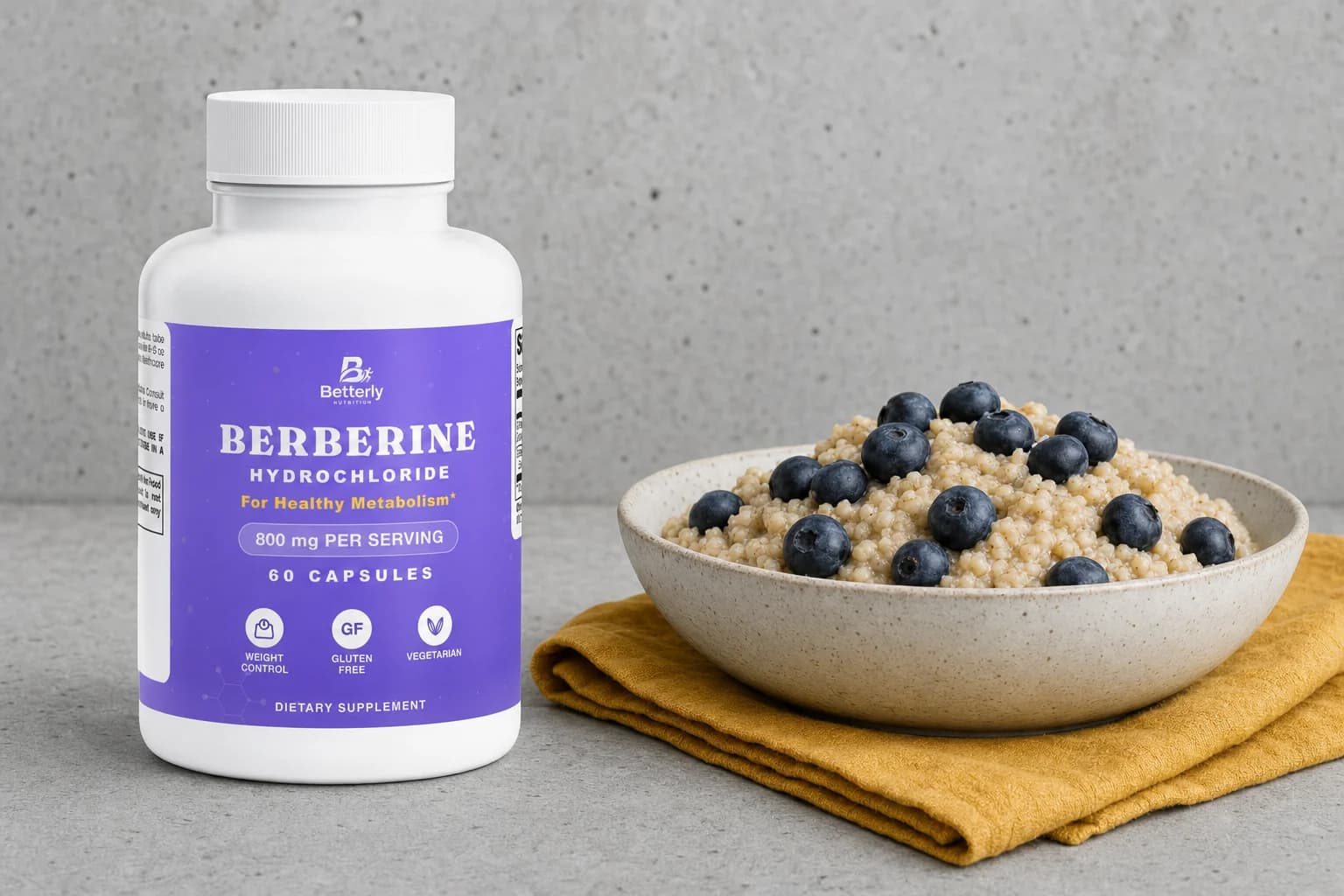
| Berberine HCl Capsules | Berberine | 790 mg of 8% extract plus 10 mg of 97% extract per 2 capsules |
| Choline & DHA Focus Capsules | Olive leaf | Inside a 609 mg blend per 2 capsules |
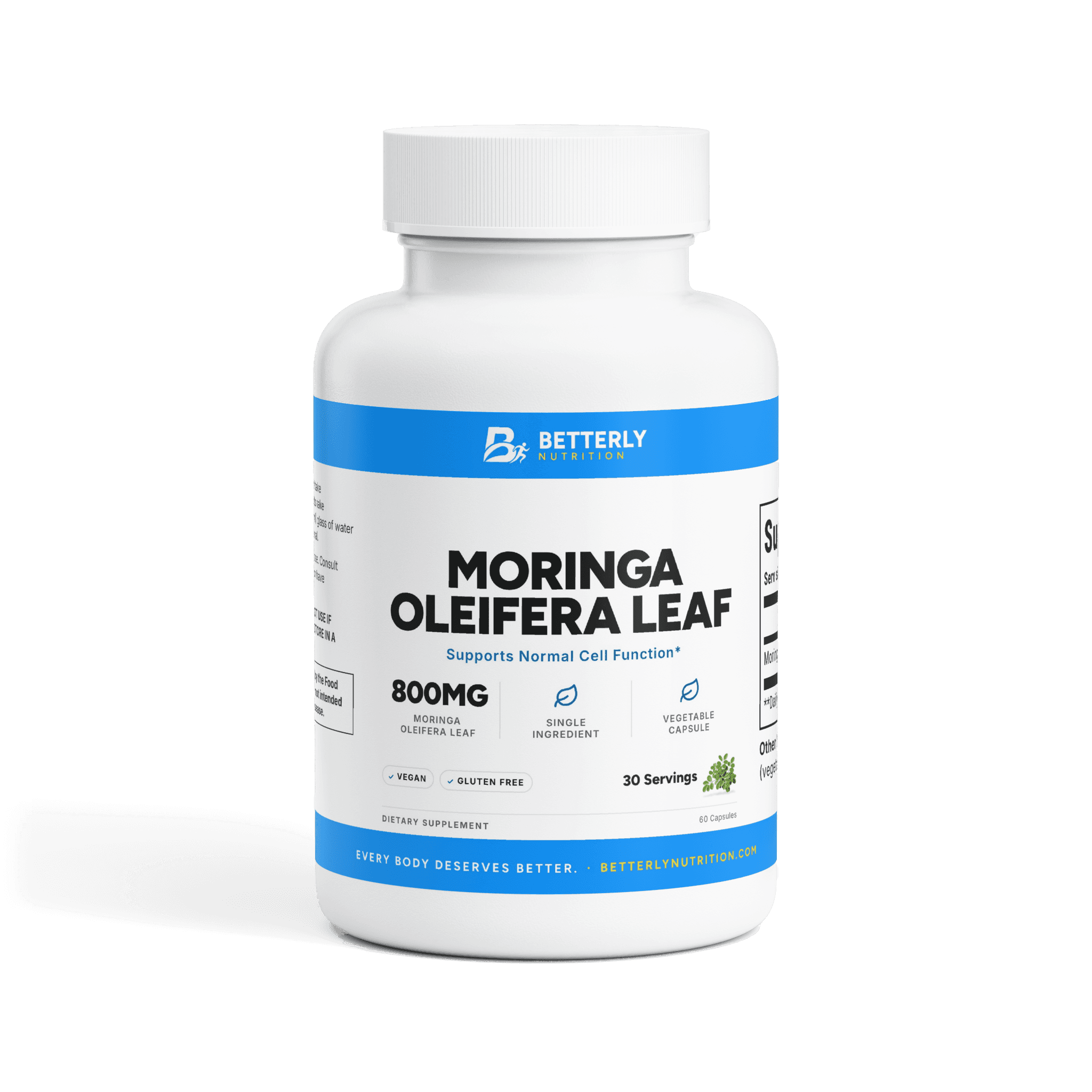
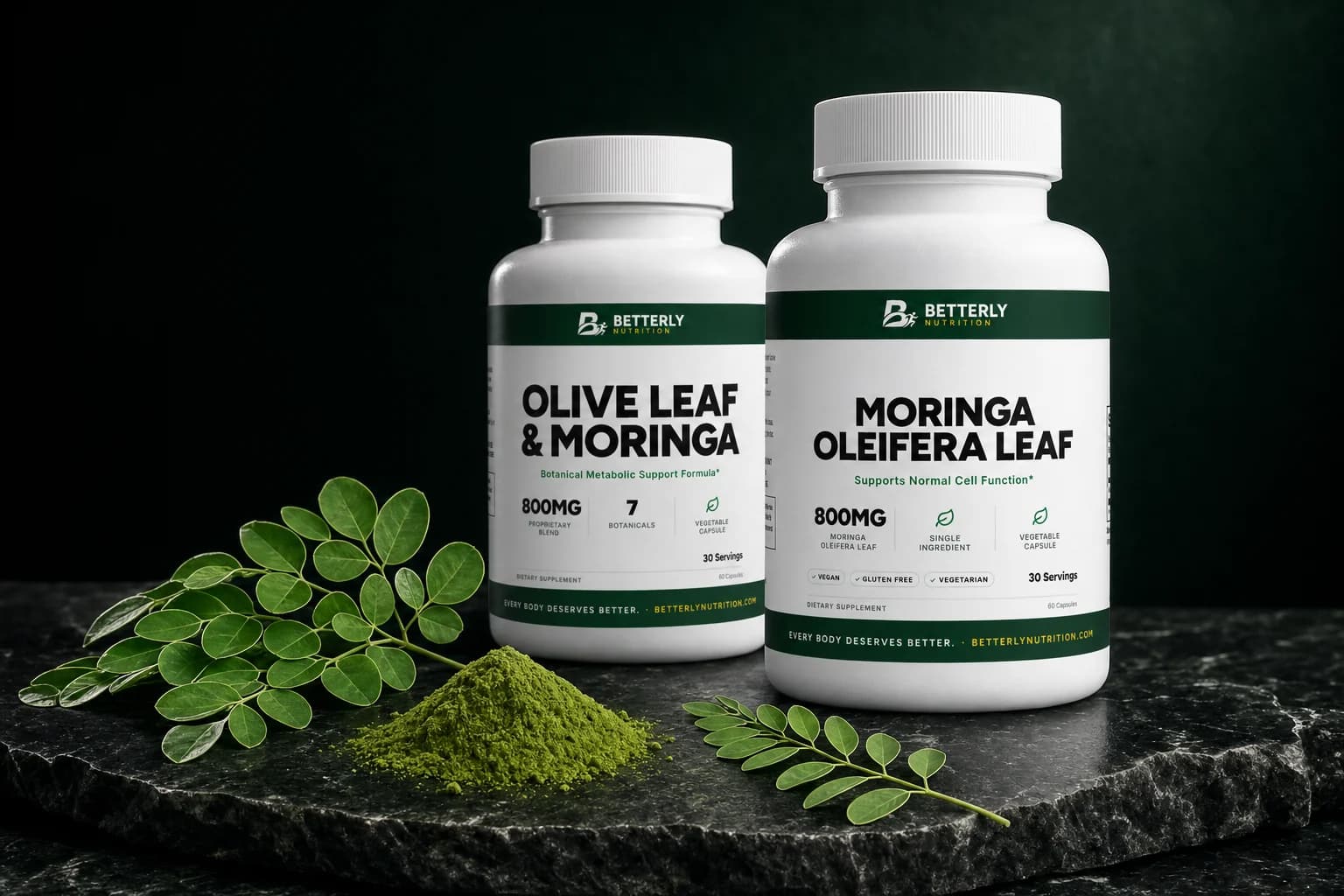
| Moringa Oleifera Leaf Capsules | Moringa | 800 mg moringa leaf per 2 capsules |
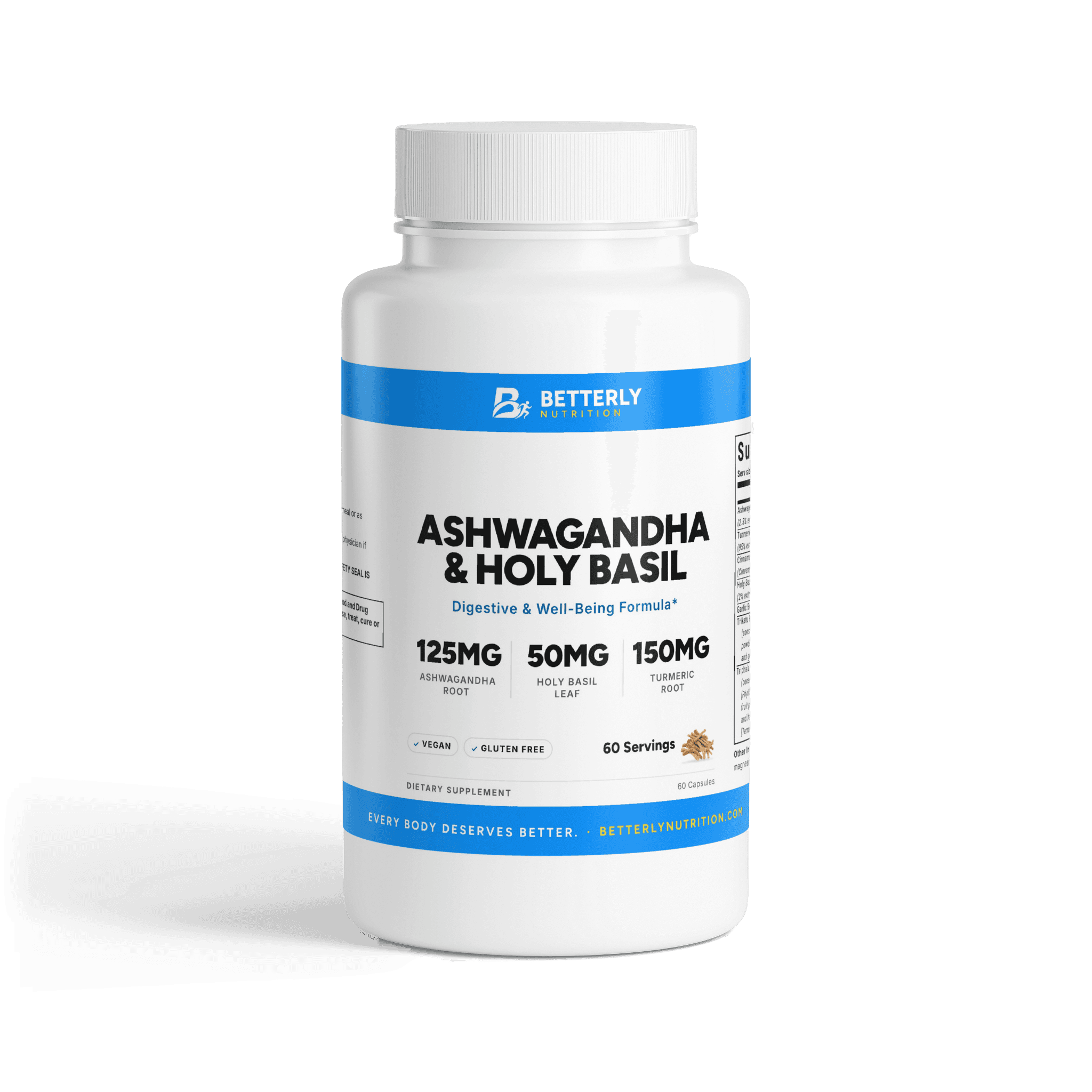
| Ashwagandha & Holy Basil Ayurvedic Capsules | Holy basil | 50 mg holy basil leaf (2% extract) per capsule |
| Beet Root & Berry Reds Powder | African mango | Inside a 2,000 mg Polyphenol Blend per 4 g scoop |
| Chromium, Gymnema & Cinnamon Capsules | Cayenne | Inside a 620 mg blend per 2 capsules |
| Tongkat Ali, Maca & Ginseng Capsules | Cayenne | Inside a 745 mg Proprietary Blend per 2 tablets |
| Elderberry, Echinacea & Zinc Capsules | Citrus bioflavonoids | 100 mg (50%) per 2 capsules, citrus source not named |
The berberine row is the one to clear with a provider, because it pairs a stated dose with an ingredient NCCIH says may interact with medicines. The two cayenne rows matter because capsaicin is behind ODS's stomach notes, and none of the three blends that list cayenne gives it an amount. The Tongkat Ali tablets also list 50 mg of zinc per 2-tablet serving, above the 40 mg adult upper limit in the ODS zinc fact sheet, so ask a provider before taking them. For the other rows, you can't total what you're taking.
From our shop: Olive Leaf, Moringa & Holy Basil Capsules — its panel names every extract in the 800 mg blend per 2-capsule serving, down to the 8% berberine standard, so you can check each one against your routine.
Is the Citrus aurantium in this blend a stimulant?
The label can't settle it: our Citrus aurantium extract is standardized to 50% hesperidin, and the panel neither lists nor rules out synephrine.
NCCIH's bitter orange page lists Citrus aurantium as the Latin name for bitter orange, also called Seville or sour orange, and says the fruit contains p-synephrine. It calls bitter orange likely safe in the amounts found in foods but says serious concerns have been raised about supplements containing it. ODS describes synephrine as a stimulant, and NCCIH notes that the NCAA lists "synephrine (bitter orange)" as a banned stimulant.
A hesperidin standard pins down that one citrus flavonoid and says nothing about what else the extract holds. The panel lists no caffeine, either. If you're tested for banned substances, show this panel to your team physician or your league's anti-doping contact before you take it.
When is the best time to take olive leaf extract?
Olive Leaf, Moringa & Holy Basil Capsules have no best time on the label: the directions give 2 capsules daily with 6-8 oz of water but no hour.
Pick an hour you'll remember, and note the rest of what the bottle says:
- The directions close with "or as directed by healthcare professional," so a provider's plan comes first.
- A 60-capsule bottle runs 30 days at 2 a day.
- The shell is hypromellose, listed as a vegetable capsule, and brown rice flour, magnesium stearate, olive oil and silicon dioxide round out the fill.
- Keep it cool, dry and away from children, and don't open one with a broken or missing seal.
Can you take olive leaf extract on an empty stomach?
Nothing on the Olive Leaf, Moringa & Holy Basil Capsules label requires an empty stomach or a full one, so either choice fits the directions.
What the label does ask for is water. No federal source we checked covers whether food changes how olive leaf, or this blend, is handled, so we won't claim one timing works better. If an empty stomach and these capsules don't get along for you, taking them with breakfast still follows the label. If that doesn't settle things, stop and check with your provider.
Who can skip our olive leaf blend?
You can skip Olive Leaf, Moringa & Holy Basil Capsules if you want one plant at a known dose, because the panel gives only the blend's 800 mg total.
It's also the wrong pick in these cases:
- A berberine product is already in your routine, and no provider has cleared a second source.
- Spicy food tends to disagree with you. Cayenne sits in the blend, and ODS links capsaicin to stomach pain and burning sensations.
- You compete under a banned-substance list and haven't cleared the Citrus aurantium line.
To compare other herbal formulas side by side, browse our adaptogens collection.
From our shop: Moringa Oleifera Leaf Capsules — if the berberine, cayenne and citrus extracts give you pause, this vegan, gluten-free capsule holds moringa leaf alone, at 800 mg per 2-capsule serving.
Who should check with a healthcare provider first?
This olive leaf blend needs a provider's okay first if you're pregnant, nursing, under 18, on prescription medication or managing a medical condition, or if surgery is coming up.
The printed caution covers pregnancy, nursing, under-18s and medical conditions, and the federal pages behind this guide back up the first two. NCCIH says berberine may be unsafe during pregnancy or breastfeeding and is likely unsafe for infants. Its bitter orange page says that fruit may not be safe then either. And the 2022 olive leaf review didn't include pregnant or breastfeeding women at all.
Prescription medication is the group we'd flag hardest. Both NCCIH pages speak to it: berberine may interact with medicines, and anyone on any type of medicine should talk with a provider before using bitter orange. A pharmacist screening for interactions needs the berberine and bitter orange on your list, not only the product name.
Surgery isn't on the label, so this is our own advice: if a procedure is booked, tell your surgical team about this blend well ahead of the day.
FAQ: olive leaf extract side effects and timing
Can you take olive leaf extract at night?
Yes, night is fine for olive leaf extract under our label, which asks for 2 capsules daily with water and sets no hour. One ingredient in our blend is worth watching, though. ODS lists sleeping problems among the reported effects of African mango, which shares the 800 mg blend. If your nights change after you start, a morning serving still follows the label, and it's worth mentioning to your provider.
Should you take olive leaf extract every day?
Yes, the Olive Leaf, Moringa & Holy Basil Capsules label is written for daily use: 2 capsules a day, with no cycle or stopping point. What the research can't tell you is how years of it play out, since the 2022 review's trials stopped at 48 weeks or sooner. For open-ended daily use, bring it up at your regular checkups.
Can you take too much olive leaf extract?
Yes, you can go past what an olive leaf extract label supports, and ours says plainly, "Do not exceed recommended dose." The 2022 review's trials used 500 mg to 5 g a day of olive leaf alone, but that range doesn't license extra capsules of a blend. With ours, every extra capsule also adds berberine, cayenne and African mango. Stay at 2 capsules daily unless your provider says otherwise.
Is olive leaf extract safe for your kidneys?
Olive leaf extract didn't shift creatinine, a routine kidney marker, in the three trials of the 2022 review that measured it, 285 people in all. The review scored that evidence as low quality, so read it as an early signal rather than a guarantee. Our bottle's caution reads, "Consult a physician if pregnant, nursing, under 18, or have a medical condition." Unsure whether your kidney bloodwork puts you in that last group? Ask the physician who orders it.
Can olive leaf extract cause headaches?
Olive leaf extract hasn't been tied to headaches in the research we found, since the 2022 review reported no adverse effects related to it. Our blend adds other variables, though. ODS lists headache among the reported effects of African mango seed extract, and the same sheet lists it for supplements with bitter orange (Citrus aurantium). Both share the 800 mg blend at amounts the panel doesn't give. If headaches show up once you're taking the capsules, stop and tell your provider which extracts you've been taking.
Sources
- The effects of olive leaf extract on cardiovascular risk factors in the general adult population: a systematic review and meta-analysis of randomized controlled trials (2022), via PubMed Central
- Berberine and Weight Loss: What You Need To Know, National Center for Complementary and Integrative Health
- Bitter Orange: Usefulness and Safety, National Center for Complementary and Integrative Health
- Dietary Supplements for Weight Loss: Fact Sheet for Consumers, NIH Office of Dietary Supplements
- Zinc: Fact Sheet for Consumers, NIH Office of Dietary Supplements
If this left you looking for somewhere to start, read olive leaf and moringa capsules with an 800 mg blend — its amounts per serving are listed on the page. For the practical questions this raises, how dosing, sourcing and subscriptions work is answered in one place.