On this page
- Key takeaways
- What moringa side effects are actually documented?
- Who should not take moringa, or ask a provider first?
- Is moringa safe? Start with which part of the tree
- What does a moringa capsule label actually tell you?
- Can you take two moringa products at once?
- Can moringa supplements be contaminated?
- How do you take moringa capsules by the label?
- When don't you need moringa?
- Who should check with a healthcare provider before taking moringa?
- FAQ: moringa safety
- Sources
The short answer: Moringa side effects are thinly documented, but NIH's LiverTox database describes moringa as well tolerated and not linked to raised liver enzymes. It also notes one recent case of liver injury. Our capsule holds 800 mg of moringa leaf per 2-capsule serving, and its label says to consult a physician if you're pregnant, nursing, under 18 or have a medical condition.
Key takeaways
- NCCIH and MedlinePlus don't publish a moringa page, but NIH's LiverTox database calls moringa well tolerated and records one recent case of liver injury.
- Check with a healthcare provider before taking moringa if you're pregnant, nursing, under 18, on prescription medicine, managing a medical condition or scheduled for surgery.
- Moringa leaf powder, leaf extract, root, bark and seed are different materials, and safety information about one doesn't carry over to the others.
- An FDA outbreak investigation traced Salmonella to moringa leaf powder sold in several brands' powders and capsules, so checking recalls is worth doing.
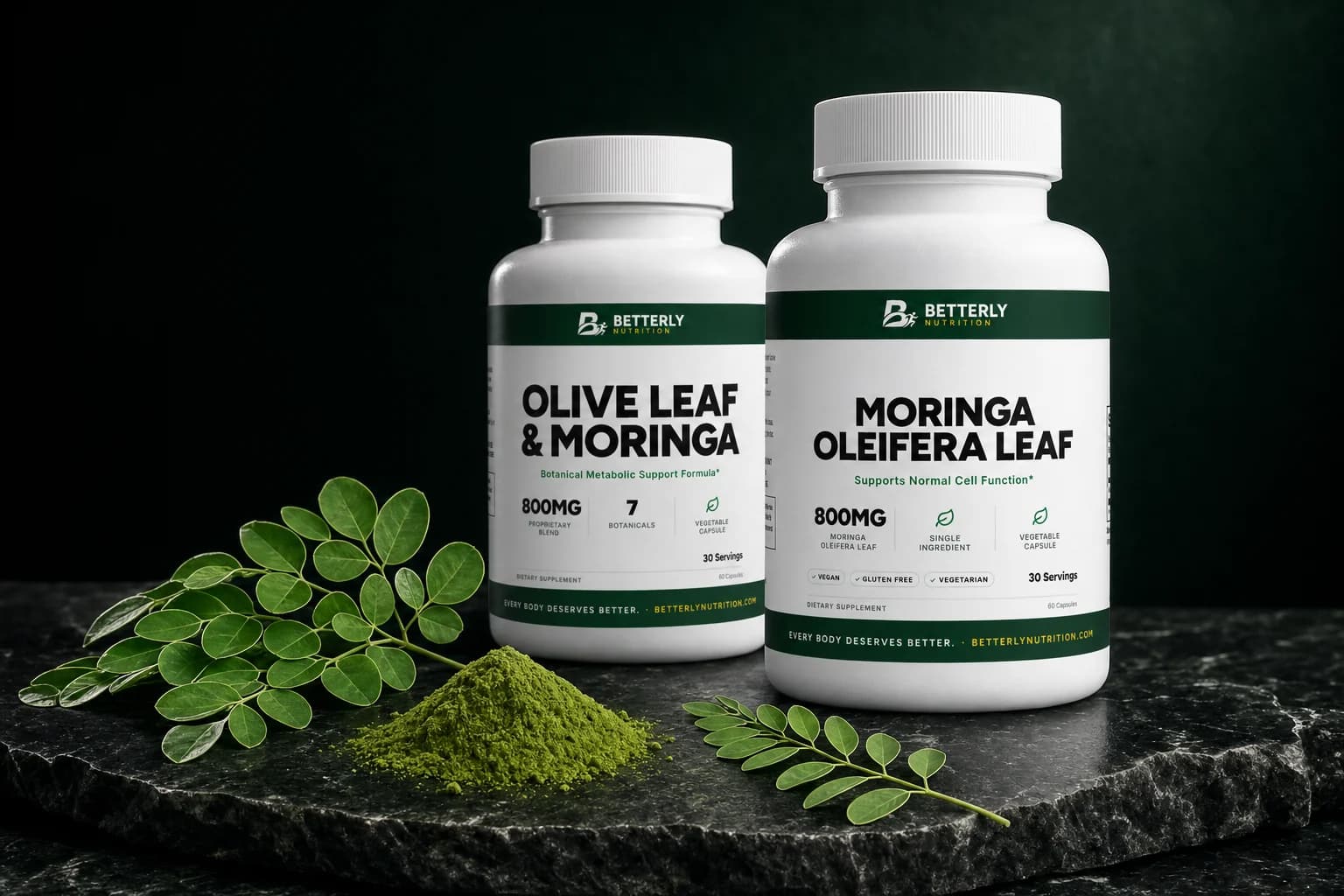
We sell two products with moringa on the label, a single-ingredient leaf capsule and a botanical blend, so we have a stake in this answer. For the benefits side, see our guide to what moringa leaf is good for. This one is about safety.
What moringa side effects are actually documented?
NIH's LiverTox database describes moringa as well tolerated and says it hasn't been linked to raised liver enzyme levels, though one recent case of liver injury was reported.
The LiverTox entry on moringa is an NIH reference on how drugs and supplements affect the liver. That's a narrow lens. It doesn't give an everyday side-effect list, and neither NCCIH nor MedlinePlus publishes a moringa page. Plenty of symptom lists online repeat each other, and we won't pass along one we can't trace to a source you can check.
The NIH Office of Dietary Supplements (ODS) guide Dietary Supplements: What You Need to Know says side effects are most likely when you take high doses, take a supplement instead of a prescribed medicine, or take many different supplements. Each maps onto moringa:
- High doses. Our label says, "Do not exceed recommended dose."
- Instead of medicine. Moringa isn't a stand-in for anything a provider prescribed.
- Many supplements. Moringa turns up inside blends, which makes doubling up easy.
People also search "does moringa make you poop" or "does moringa make you nauseous." None of the federal pages we read describes how moringa affects digestion, so we won't guess. If a new supplement sits badly with you, stop taking it and talk with your provider. ODS says you can report a reaction to the FDA at 800-FDA-1088 or online, and to the company on the label.
Who should not take moringa, or ask a provider first?
Don't take a moringa product if its label doesn't name the plant part, your lot matches a recall or you've reacted to moringa before. Ask first if a medicine you take affects blood clotting.
| Check this first | If yes | Because |
|---|---|---|
| Label doesn't name the plant part | Skip that product | Leaf information may not apply |
| You already take another moringa product | Pick one | Blends may omit moringa's mg |
| Your lot matches a recall notice | Don't use it | FDA traced Salmonella to moringa powder |
| Safety seal damaged or missing | Don't use it | Our label says the same |
| You take a medicine that affects clotting | Ask your prescriber first | NIH notes moringa may stimulate clotting |
| You've reacted to moringa before | Skip it | Don't retest on your own |
Every row here turns on the bottle in your hand, your medicine cabinet or your own history. The ask-first groups that apply to most supplements, like pregnancy, age and surgery, have their own section below.
Is moringa safe? Start with which part of the tree
Whether moringa is safe for you starts with the plant part and preparation, because ODS says a botanical's safety depends on its chemical makeup, preparation and amount.
The ODS botanical supplements background fact sheet adds that how a botanical works in the body matters too. It also notes that preparations differ in strength: the same amount of plant can come in a cup of tea, a few teaspoons of tincture or an even smaller amount of extract.
LiverTox says moringa's leaves, seeds, bark, roots, sap and flowers are all eaten as food or used in traditional medicine. Most moringa supplements use the leaf, and what holds for leaf doesn't automatically cover a root or bark product. None of the federal pages we read separates the parts' safety, so we won't make claims about them.
| Form on the label | What it is | What to check |
|---|---|---|
| Leaf powder (capsule or loose) | Dried, ground leaf | "Leaf" and mg per serving |
| Leaf extract | Leaf soaked in a liquid to draw out compounds, sometimes dried | Marker % and whether mg is listed |
| Leaf tea | Leaf steeped in hot water | Strength varies; same cautions |
| Root, bark or seed | Other parts of the tree | Don't assume leaf info applies |
The row to remember is the last one. A root, bark or seed product is a different material from a leaf capsule, so ask before starting it.
What does a moringa capsule label actually tell you?
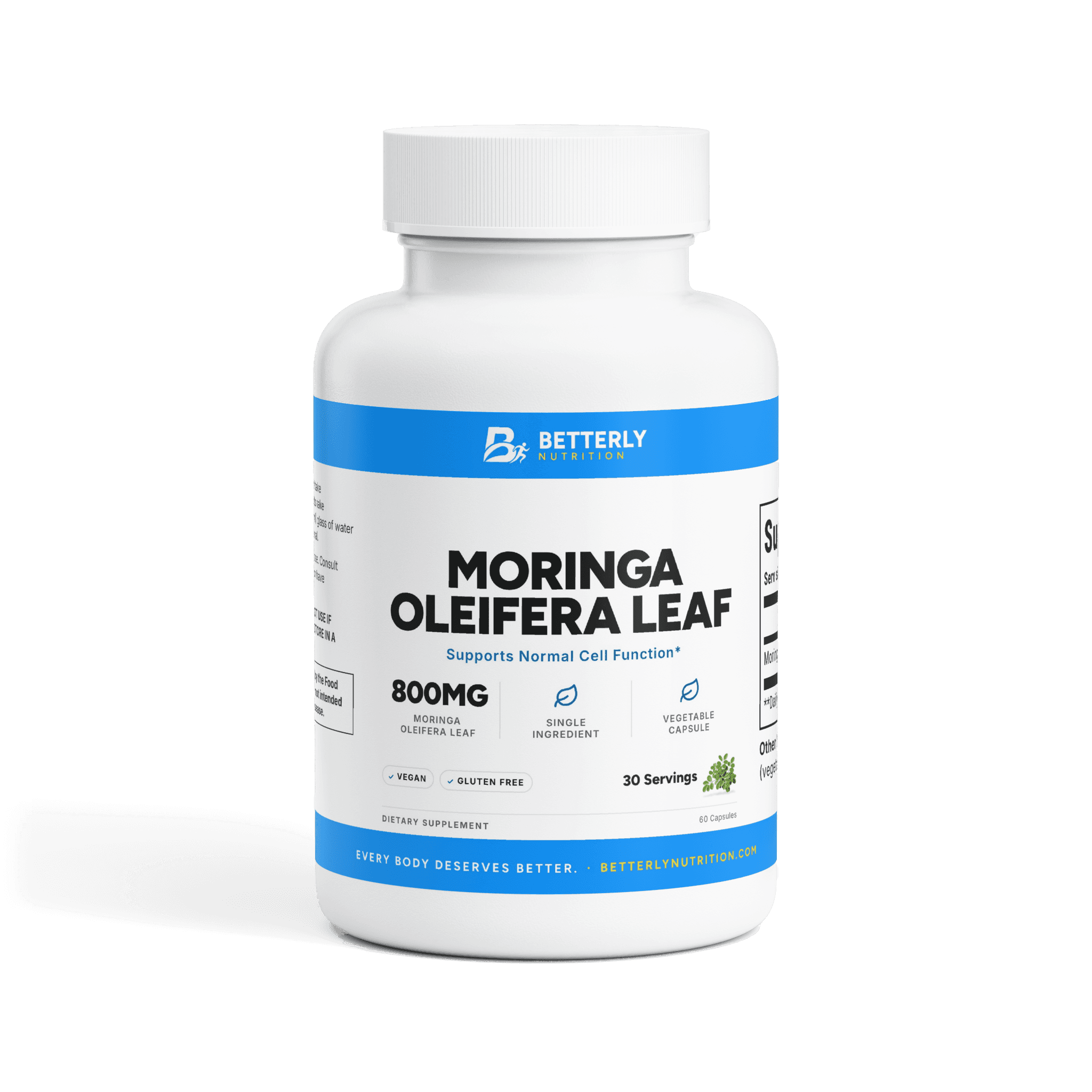
The Moringa Oleifera Leaf Capsules label lists one ingredient, 800 mg of Moringa Oleifera (leaf) per 2-capsule serving, with a vegetable capsule as the only other ingredient.
Searches for moringa capsules side effects tend to skip the one page written for your exact product: the bottle. Here's our panel in plain terms:
- Serving size: 2 capsules, with 30 servings in a 60-capsule bottle.
- Active ingredient: Moringa Oleifera (leaf), 800 mg. The "**" in the Daily Value column means none has been set.
- Other ingredients: Hypromellose (vegetable capsule).
- Label claims: vegan and gluten free.
- Caution: "Do not exceed recommended dose. Consult a physician if pregnant, nursing, under 18, or have a medical condition."
The honest limit of our capsule: the panel gives moringa leaf in mg and nothing more. It lists no vitamins or minerals, so we can't tell you how much of any nutrient a serving provides.
On any moringa label, ours included, find the plant part in parentheses, look for an mg amount for moringa itself rather than a blend total, and check whether it's an extract.
Can you take two moringa products at once?
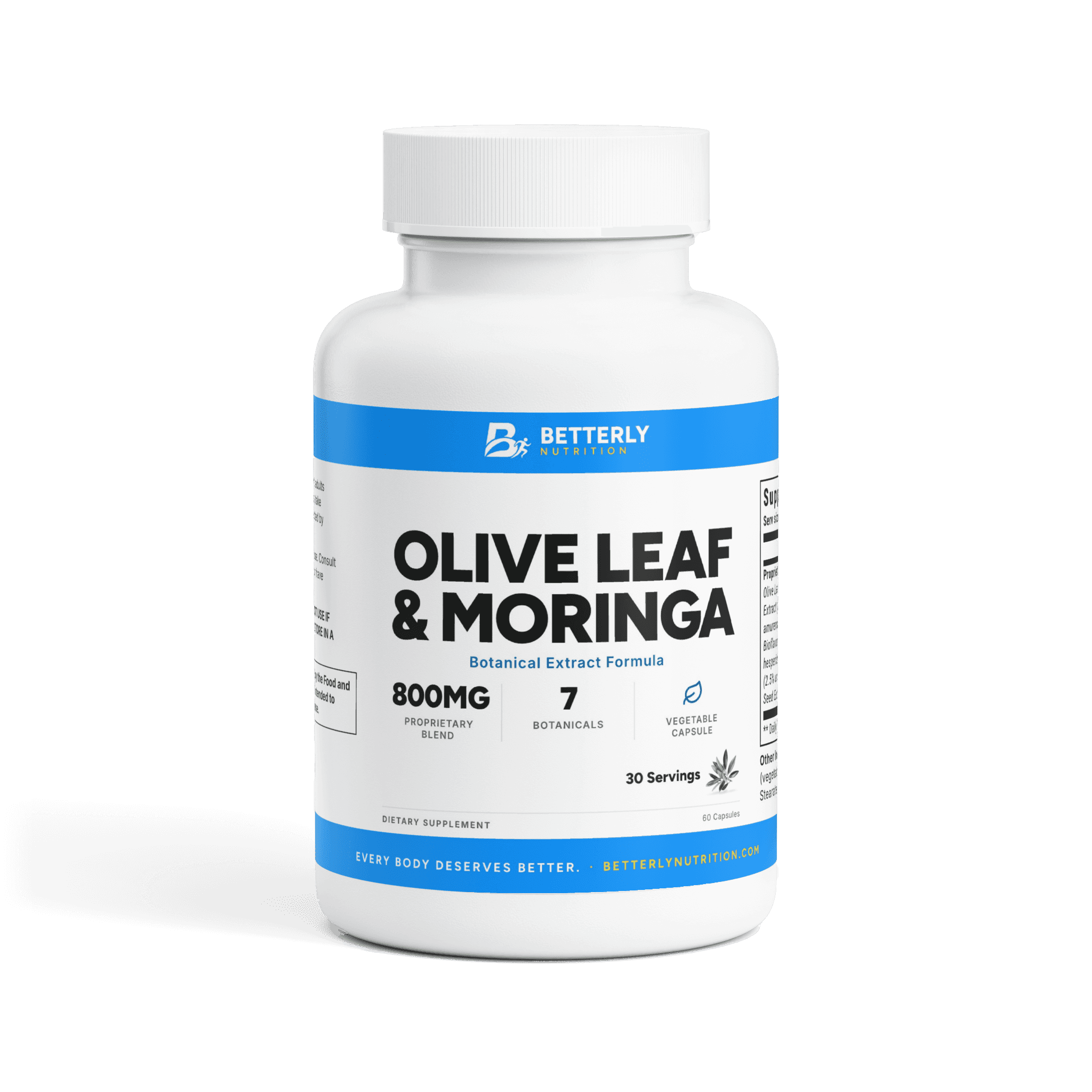
Taking both of our moringa products doubles up on moringa, and the Olive Leaf, Moringa & Holy Basil Capsules label doesn't say how much moringa it holds.
The blend's panel lists an 800 mg Proprietary Blend per 2-capsule serving. Moringa sits inside it as Moringa oleifera Extract (leaf), standardized to 30% saponins, sharing that 800 mg with olive leaf, Phellodendron amurense bark, citrus bioflavonoids, holy basil, African mango seed and cayenne pepper extracts.
"Standardized" means the maker adjusts each batch to a set level of a marker compound, as ODS explains. So the blend holds a standardized leaf extract, not the plain dried leaf in our single-ingredient capsule.
Now the math. Take both at their label directions and you're at 4 capsules a day: 800 mg of moringa leaf plus an 800 mg blend with an unlisted share of moringa extract. You can't add that up, and taking many supplements is one of the situations ODS links to side effects.
The blend also lists Phellodendron amurense (bark) Extract, standardized to 8% berberine. If you take prescription medicine, our berberine guide explains why we ask you to talk with your physician before taking berberine.
Our advice: pick one. If you want both, show both labels to a pharmacist or provider first.
From our shop: Moringa Oleifera Leaf Capsules — 800 mg of moringa leaf per 2-capsule serving, with a vegetable capsule as the only other ingredient, so you always know how much moringa you're taking.
Can moringa supplements be contaminated?
Yes, moringa supplements can be contaminated: FDA traced a Salmonella outbreak to moringa leaf powder used in several brands' powders and capsules.
The FDA page on its January 2026 moringa leaf powder outbreak investigation reports 131 people sickened in 38 states. It says the recalled supplements contained moringa leaf powder imported from India. The investigation has closed, and FDA says it has increased screening of imported moringa powder from India for Salmonella.
That's a sourcing problem, not a side effect of the plant, but it still matters. To check any moringa product, ours included:
- Search the brand on FDA's Recalls, Market Withdrawals, & Safety Alerts page, which you can filter to dietary supplements.
- Match the lot number and expiration date on your bottle against any notice.
- Don't use a bottle whose safety seal is damaged or missing, as our label also says.
One limit: FDA's page says, "Not all recalls have press releases or are posted on this page."
And ours: Betterly doesn't manufacture its products, and we don't publish batch test documents yet. Our quality page explains what we can and can't show you. The FDA investigation page doesn't name a Betterly product.
How do you take moringa capsules by the label?
The Moringa Oleifera Leaf Capsules label's suggested use is two capsules once a day, 20 to 30 minutes before a meal, with an 8 oz (237 ml) glass of water.
It adds "or as directed by your healthcare professional," which is the only reason to change it. A few label-based notes:
- One bottle holds 60 capsules, or 30 servings, so it lasts 30 days at the suggested use.
- The label gives no starter dose, and we won't invent one. If you'd like to begin with less, ask your provider.
- Store it in a cool, dry place, out of reach of children, as the label directs.
The blend has its own directions: adults take two capsules daily with 6-8 oz (177-237 ml) of water, with no mention of meals. If you choose the blend instead, follow that label.
When don't you need moringa?
You don't need moringa as a replacement for vegetables: ODS says supplements can't take the place of a varied diet, and our capsule lists no vitamins or minerals.
Skip it, or at least wait, if:
- You're buying it because of a big promise in an ad or on a label.
- You'd be taking it instead of something a provider prescribed.
- You're in an ask-first group and haven't had that conversation yet.
Comparing supplement labels? Browse our greens and superfoods collection. Of the labels we sell, only the two in this guide list moringa, but read every panel before adding a second product.
From our shop: Olive Leaf, Moringa & Holy Basil Capsules — an 800 mg Proprietary Blend per 2-capsule serving with moringa leaf extract among its listed extracts, for anyone who'd rather take moringa inside a blend than on its own.
Who should check with a healthcare provider before taking moringa?
Anyone pregnant, nursing, under 18, on prescription medicine, managing a medical condition or facing surgery should check with a healthcare provider before taking moringa.
Pregnant or nursing. ODS advises caution with supplements beyond a standard prenatal during pregnancy or nursing, and says many haven't been well tested for safety then. Our label says to consult a physician.
Children and teens. ODS says to be careful giving a child supplements unless their provider recommends it. Our label lists "under 18" in its caution.
Prescription medicine. ODS says to get your provider's approval before taking a supplement in place of, or along with, prescribed medicine. NIH's LactMed entry on moringa notes that moringa may stimulate blood clotting. So if any medicine you take affects clotting, ask your prescriber before your first capsule. Whatever your prescription is for, bring the bottle to your pharmacist.
Surgery. ODS notes that some supplements can raise the risk of bleeding or change your response to anesthesia. Tell your surgical team about moringa, and any blend containing it, and follow their timing.
A medical condition. This label line is broad. If a provider is keeping an eye on any part of your health, mention moringa first.
ODS also suggests keeping a written record of every supplement and medicine you take, with the name, dose, how often and why. Our guide to setting up a simple daily supplement routine shows how to line up labels so overlaps stand out.
FAQ: moringa safety
Are moringa side effects different for women and men?
Moringa label cautions are the same for women and men: don't exceed the recommended dose, and consult a physician if you're pregnant, nursing, under 18 or have a medical condition. The real difference is that pregnancy and nursing apply to some readers, and ODS asks for extra care then. None of the federal pages we read says moringa affects women and men differently otherwise.
Can moringa upset your stomach?
Moringa, like any new supplement, might not agree with every stomach, but none of the federal pages we read puts a number on how often that happens. ODS says to stay alert for a bad reaction when you start something new. The label directs two capsules once a day, 20 to 30 minutes before a meal with water. If your stomach objects, stop and ask your provider.
Is moringa hard on the liver?
Moringa doesn't appear to be, according to NIH's LiverTox database, which calls it well tolerated and says it hasn't been linked to raised liver enzymes during use. LiverTox also describes one recent case of liver injury tied to moringa, so the risk isn't zero. If a provider already watches your liver test results, that falls under our label's "medical condition" line, so ask before you start. Everyone else should stick to the label's suggested use.
How long does a bottle of moringa capsules last?
A bottle of Moringa Oleifera Leaf Capsules lasts 30 days at the label's suggested use. It holds 60 capsules, or 30 servings of 2 capsules, taken once a day. Our Olive Leaf, Moringa & Holy Basil Capsules also hold 60 capsules for 30 servings at two a day. Both labels say to store the bottle in a cool, dry place.
Is moringa tea safer than moringa capsules?
Moringa tea isn't automatically safer than capsules. It's a different preparation of the same leaf, and ODS notes that teas, tinctures and extracts have different strengths from one another. The same people who should ask before taking capsules, including anyone pregnant, nursing or on prescription medicine, should ask before drinking moringa tea regularly.
Sources
- Dietary Supplements: What You Need to Know, NIH Office of Dietary Supplements
- Botanical Dietary Supplements: Background Information, NIH Office of Dietary Supplements
- Outbreak Investigation of Salmonella: Moringa Leaf Powder (January 2026), U.S. Food and Drug Administration
- Recalls, Market Withdrawals, & Safety Alerts, U.S. Food and Drug Administration
- Moringa, LiverTox (NCBI Bookshelf), National Institutes of Health
- Moringa, LactMed (NCBI Bookshelf), National Institutes of Health
If this left you looking for somewhere to start, read leaf-only moringa capsules with 800 mg per serving — its amounts per serving are listed on the page. For the practical questions this raises, how dosing, sourcing and subscriptions work is answered in one place.