On this page
- Key takeaways
- Sea moss gummies vs capsules: which should you pick?
- What do the big milligram numbers on sea moss gummies mean?
- What else is in a sea moss gummy besides sea moss?
- Are sea moss gummies as effective as capsules?
- Do sea moss gummies have side effects that capsules don't?
- How do you take our sea moss capsules?
- Who can skip sea moss gummies and capsules alike?
- Who should check with a healthcare provider first?
- FAQ: sea moss gummies and capsules
- Sources
The short answer: Bucklebury's sea moss gummy label prints 1,750 mg of Irish sea moss per 2 gummies, made "From 87.5mg of 20:1 Extract." That gap is the heart of sea moss gummies vs capsules. Our capsules hold 1,400 mg of whole seaweed and burdock root per 2-capsule serving, with no sugars listed. The gummy labels we checked carry 132.5 mg and 175 mg of extracts, plus 3 g or 4 g of added sugars.
Key takeaways
- Bucklebury's sea moss gummy panel adds up to 3,000 mg of plants per 2-gummy serving, but the extracts actually in those gummies weigh 132.5 mg.
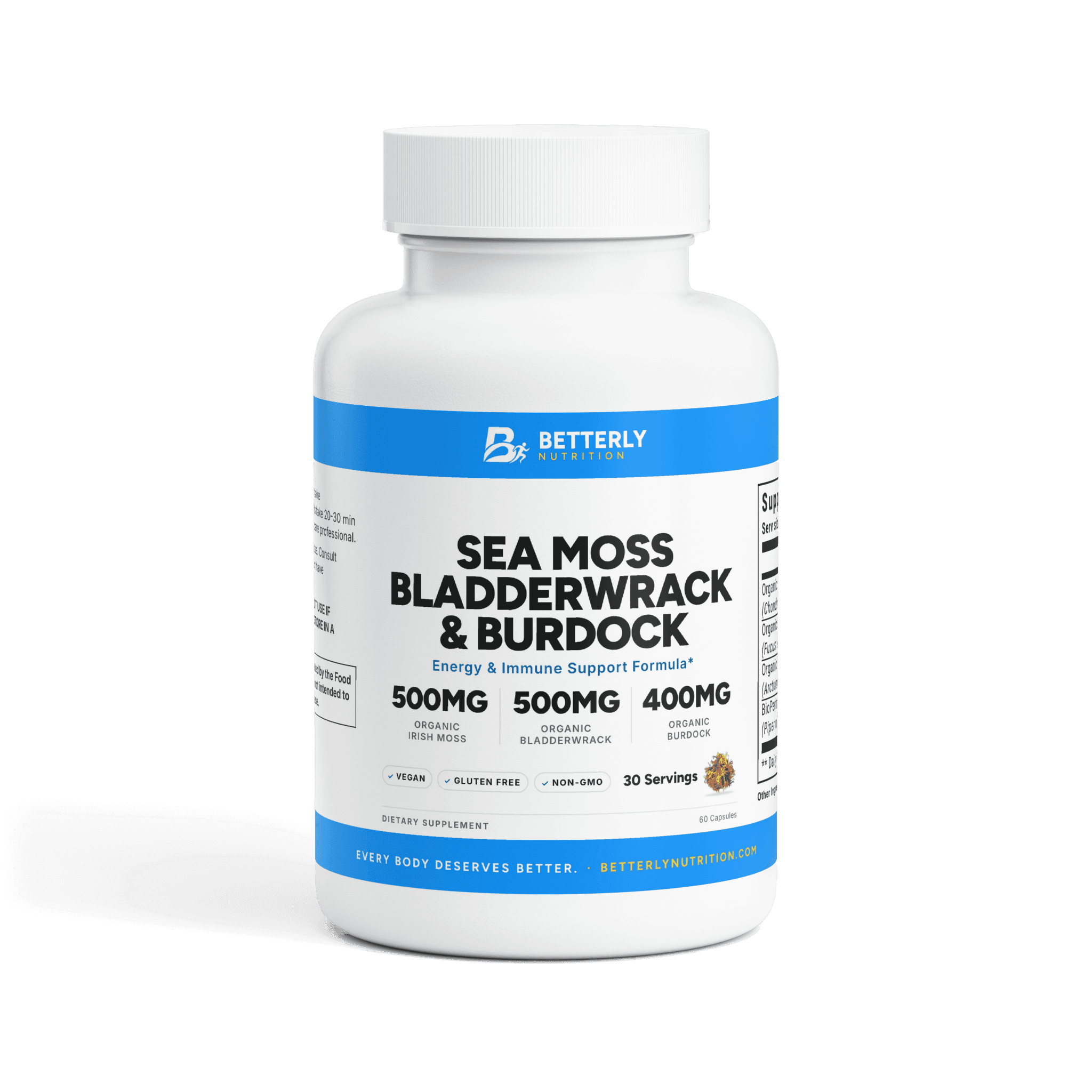
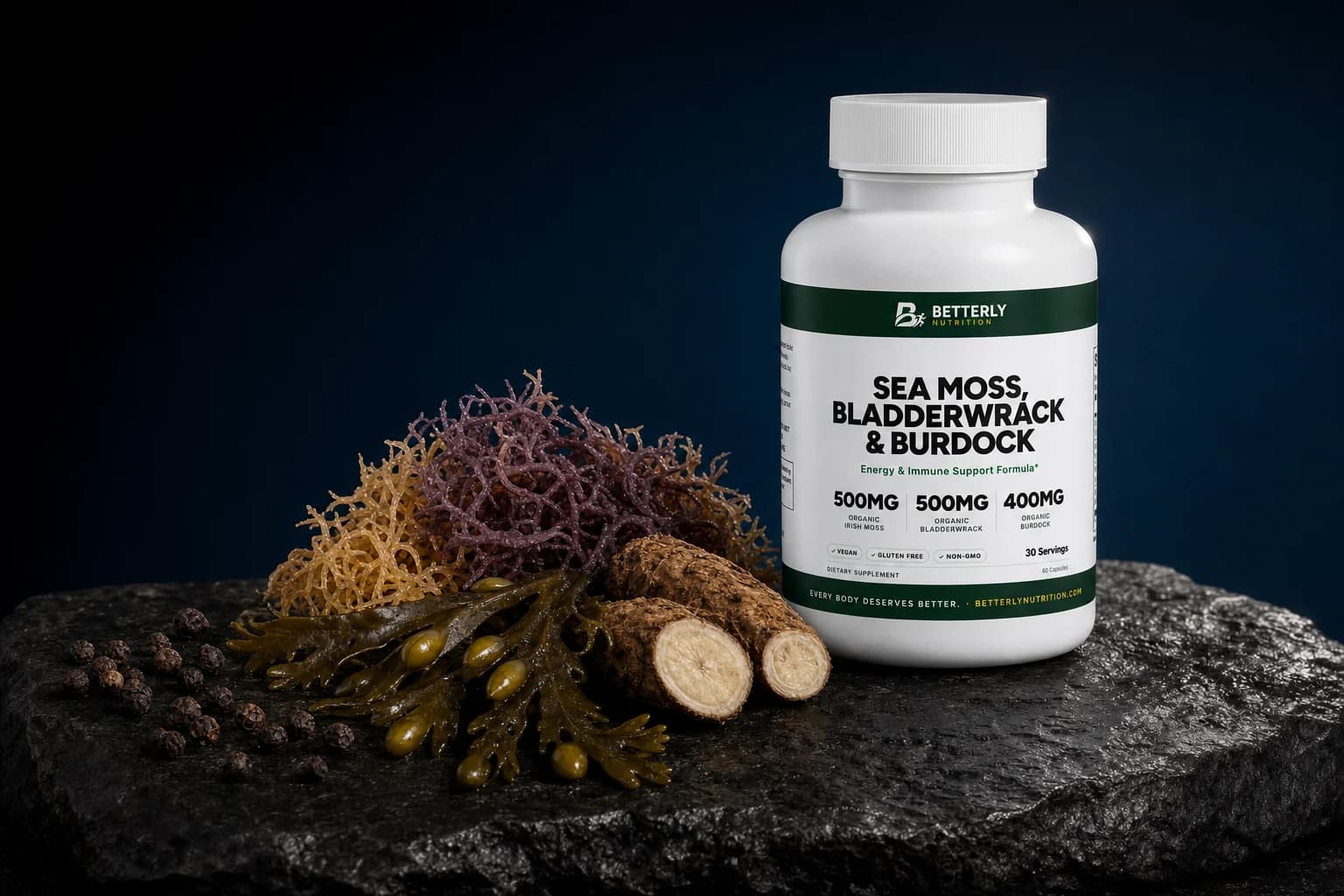
- Betterly's Sea Moss, Bladderwrack & Burdock Capsules list 1,000 mg of whole-plant seaweed, 400 mg of burdock root and 5 mg of BioPerine® per 2-capsule serving, and the label lists no sweetener.
- The Bucklebury and Country Farms gummy labels list 3 g and 4 g of added sugars per 2-gummy serving, which outweighs their combined plant extracts by more than 20 to 1.
- None of the three sea moss labels compared here, ours included, prints an iodine amount, so none of them lets you check a serving against the adult upper limit of 1,100 mcg a day.
A conflict to flag up front: we sell the Sea Moss, Bladderwrack & Burdock Capsules compared here and don't make a sea moss gummy. So check our math. Every figure below names the label it came from, and both gummy panels are linked for you to open.
Sea moss gummies vs capsules: which should you pick?
Pick a whole-plant sea moss capsule for more seaweed by weight and usually nothing sweet; pick a sea moss gummy if a fruit-flavored chew keeps you taking it.
The capsule's advantages show up on the panel. Per 2-capsule serving, ours lists Irish moss (Chondrus crispus) and bladderwrack (Fucus vesiculosus) at 500 mg each, 400 mg of burdock root and 5 mg of BioPerine®, a black pepper fruit extract. The only other ingredient is the pullulan shell, so there's no syrup or flavoring.
A quick way to sort yourself:
- Gummies suit you if a chew is the one form you'll take every day. If swallowing is the snag, our guide to vitamins when pills won't go down lines gummies up against strips, liquids and powders.
- Capsules suit you if you're trimming added sugar, or if you want the plant weight printed on the label to be the plant weight inside the capsule.
- Hold off on both if you already take another product with seaweed in it.
What do the big milligram numbers on sea moss gummies mean?
On both sea moss gummy labels we opened, the big milligram figure is the plant weight an extract was made from, not the extract's own weight.
Bladderwrack on Bucklebury's Wild Crafted Irish Sea Moss Gummies shows it most starkly: 1,000 mg on the panel, delivered as 20 mg of a 50:1 whole-plant extract. ODS, the NIH's Office of Dietary Supplements, says in its background sheet on botanicals that such a ratio compares dried plant weight with the finished product. So 20 times 50 gives the 1,000 mg headline, and a serving holds the 20 mg.
Bucklebury's other rows work the same way. Irish sea moss reads 1,750 mg from 87.5 mg of a 20:1 extract, and burdock root reads 250 mg from 25 mg of a 10:1 extract. The rows total 3,000 mg of plants; the extracts total 132.5 mg.
Country Farms' Irish Sea Moss Gummies use 20:1 for all three plants: 100 mg of Irish sea moss extract (listed as 2,000 mg), 50 mg of burdock root extract (1,000 mg) and 25 mg of bladderwrack extract (500 mg). That's 3,500 mg across the rows and 175 mg in the gummies.
Both panels are on file in the NIH's Dietary Supplement Label Database, in Bucklebury's gummy record and the Country Farms record, each with a copy of the printed label.
An extract isn't simply dried-down seaweed, either. The same ODS sheet explains that extracts come from steeping a plant in water, alcohol or a similar liquid to pull out chosen compounds, and that preparations differ in how much of those compounds they carry. So 87.5 mg of extract isn't a shrunken copy of 1,750 mg of seaweed.
Per 2-piece serving, the three panels line up like this:
| Product | Plant total on the panel | Weight in the serving | Added sugars |
|---|---|---|---|
| Our capsules | 1,400 mg, plus 5 mg BioPerine® | 1,400 mg of whole seaweed and root | None listed |
| Bucklebury gummies | 3,000 mg | 132.5 mg of extracts | 3 g |
| Country Farms gummies | 3,500 mg | 175 mg of extracts | 4 g |
Which one "has more" depends on the column you read. By plant totals, the gummies claim more than twice our 1,400 mg. By weight, our capsules hold at least 8 times more plant material (1,400 mg vs 175 mg), though weight isn't potency: whole seaweed and an extract aren't the same material. No column here measures iodine or any other compound.
From our shop: Sea Moss, Bladderwrack & Burdock Capsules — 30 servings per bottle, each 2-capsule serving holding 1,000 mg of organic whole-plant seaweed, 400 mg of organic burdock root and 5 mg of BioPerine®, with no sweetener listed.
What else is in a sea moss gummy besides sea moss?
Besides sea moss, both gummies we checked open their other-ingredients line with glucose syrup and sugar, then add pectin, citric acid, flavors and either color or wax.
Country Farms lists glucose syrup, sugar, water, pectin, citric acid, natural flavors and natural color. Two of its gummies come to 15 calories and 5 g of carbohydrate, and 4 g of that is added sugar, 8% of the Daily Value.
Bucklebury's list runs longer: glucose syrup, sugar, dextrose, pectin, citric acid, sodium citrate, spinach powder, natural strawberry, blueberry and raspberry flavors, vegetable oil and carnauba wax. Its panel shows 15 calories, 4 g of carbohydrate and 3 g of added sugars, or 6% of the Daily Value.
Four grams is 4,000 mg, so a Country Farms serving carries about 23 times more added sugar than plant extract. Bucklebury's ratio is almost identical.
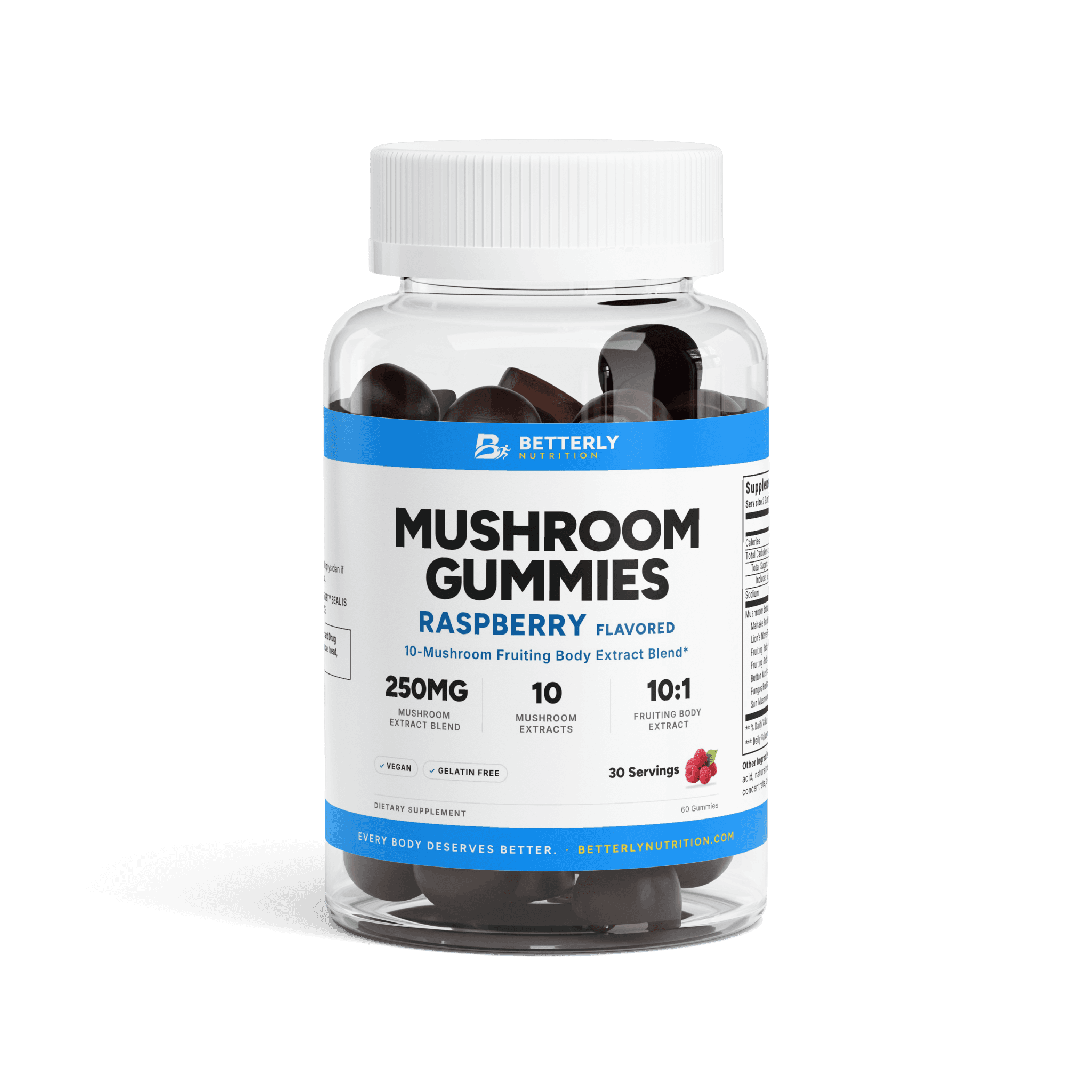
That isn't a sea moss quirk. Our own Mushroom Gummies start their other-ingredients line with the same four Bucklebury opens with: glucose syrup, sugar, dextrose and pectin. It's a common gummy base.
To their credit, both sea moss gummies set with pectin, a gelling fiber from fruit, rather than gelatin. Country Farms labels its gummies vegan, and Bucklebury calls its "vegan friendly."
Are sea moss gummies as effective as capsules?
Sea moss gummies and capsules haven't been compared head to head in any federal source we checked, and none of these three labels lists seaweed's best-known nutrient, iodine.
Of everything said about sea moss, iodine is the piece the ODS fact sheets actually address. The ODS iodine fact sheet for consumers says iodine is what your body uses to build thyroid hormones, and it names seaweed among the foods generally rich in it. Adults shouldn't go past 1,100 mcg a day, per the same sheet, and that ceiling includes iodine from meals and supplements alike.
So any verdict on "effective" needs a number none of these three labels prints. ODS notes that seaweed's natural iodine usually doesn't show on a Nutrition Facts label, and these panels follow suit. You can't tell how much iodine sits in 500 mg of whole Irish moss or in 87.5 mg of extract. If a sea moss label does print iodine in mcg, add that figure to what you get from salt, food and other supplements.
Front-label claims differ from brand to brand, and the format doesn't change which plants are in the serving. For what each plant in the trio does and doesn't have behind it, see our plant-by-plant breakdown of the sea moss trio.
Do sea moss gummies have side effects that capsules don't?
Sea moss gummies share the capsule's seaweed unknowns, iodine and heavy metals, and add two of their own: daily added sugar and a candy look that tempts kids.
Heavy metals are the less familiar unknown. The NIH's LactMed database, in its entry on sea moss, says the seaweed can contain arsenic, lead, cadmium and mercury taken up from the water where it grew. None of the three panels here reports a heavy-metal level, in either format.
At two gummies a day, a 60-gummy bottle of Country Farms adds 120 g of added sugar over 30 days, and Bucklebury's adds 90 g.
Children are the bigger concern, since a fruit gummy looks like candy. The ODS iodine sheet lists far lower upper limits for kids: 200 mcg a day for ages 1 to 3 and 300 mcg for ages 4 to 8. Neither gummy states its iodine, so a latched cabinet beats a countertop.
How do you take our sea moss capsules?
Our Sea Moss, Bladderwrack & Burdock Capsules label sets one 2-capsule serving a day, suggests taking it 20-30 minutes before a meal, and warns against going higher.
Each 60-capsule bottle is 30 servings, or one month at the labeled dose. The directions also defer to a provider's plan, ending with "or as directed by your healthcare professional."
What the label itself settles:
- Two capsules make one dose, taken together once a day rather than split up.
- The pre-meal timing is written "for best results," so a meal works as a cue, not a rule.
- Nothing goes past two. Its first caution line reads "Do not exceed recommended dose," so a third capsule isn't on the label.
Can't manage capsules at all? Our Alfalfa & Chlorella Greens Powder gets stirred into a glass instead. Its label names apple juice or any "other favorite liquid," so water works. Its Herbal Blend also lists stevia leaf extract and two bee products, pollen and royal jelly, worth knowing if you react to either.
From our shop: Alfalfa & Chlorella Greens Powder — a drink-mix powder whose 900 mg Sea Vegetable Blend per 2-teaspoon (about 5 g) serving includes one brown seaweed, Sea Whistle (Ascophyllum nodosum), but no Irish moss.
Who can skip sea moss gummies and capsules alike?
Plenty of people can skip both sea moss formats since, per the ODS iodine sheet, most people in this country already get enough iodine from foods and beverages.
You can leave sea moss out of your routine when:
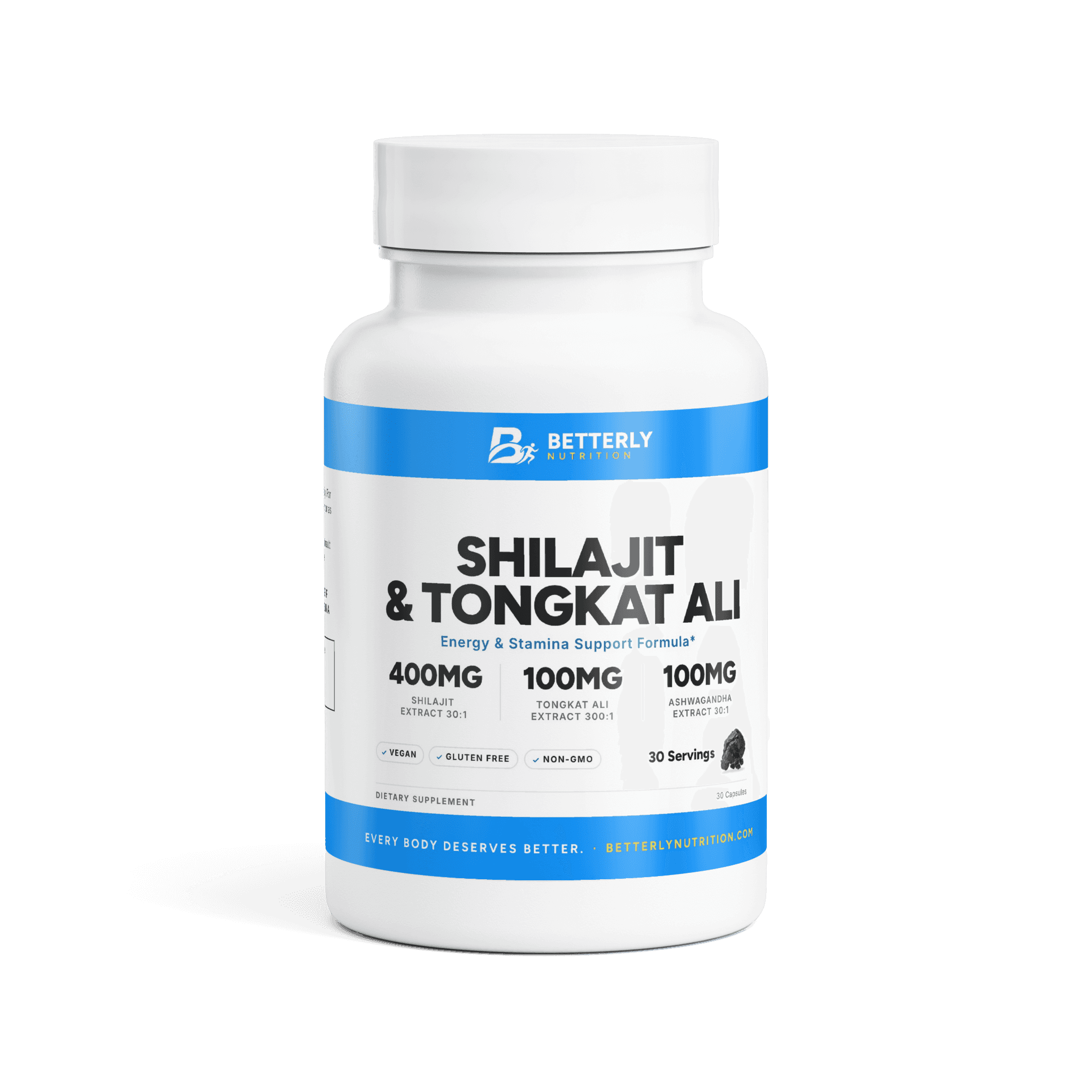
- You already take another seaweed product. Kelp tablets, a greens powder with a seaweed blend, or our Shilajit & Tongkat Ali Capsules, with 100 mg of 20:1 sea moss extract per 1-capsule serving, all add seaweed to your day.
- You want an iodine number you can add up. Many multivitamin/mineral supplements contain iodine, according to ODS, and a panel with an iodine row gives you micrograms to count.
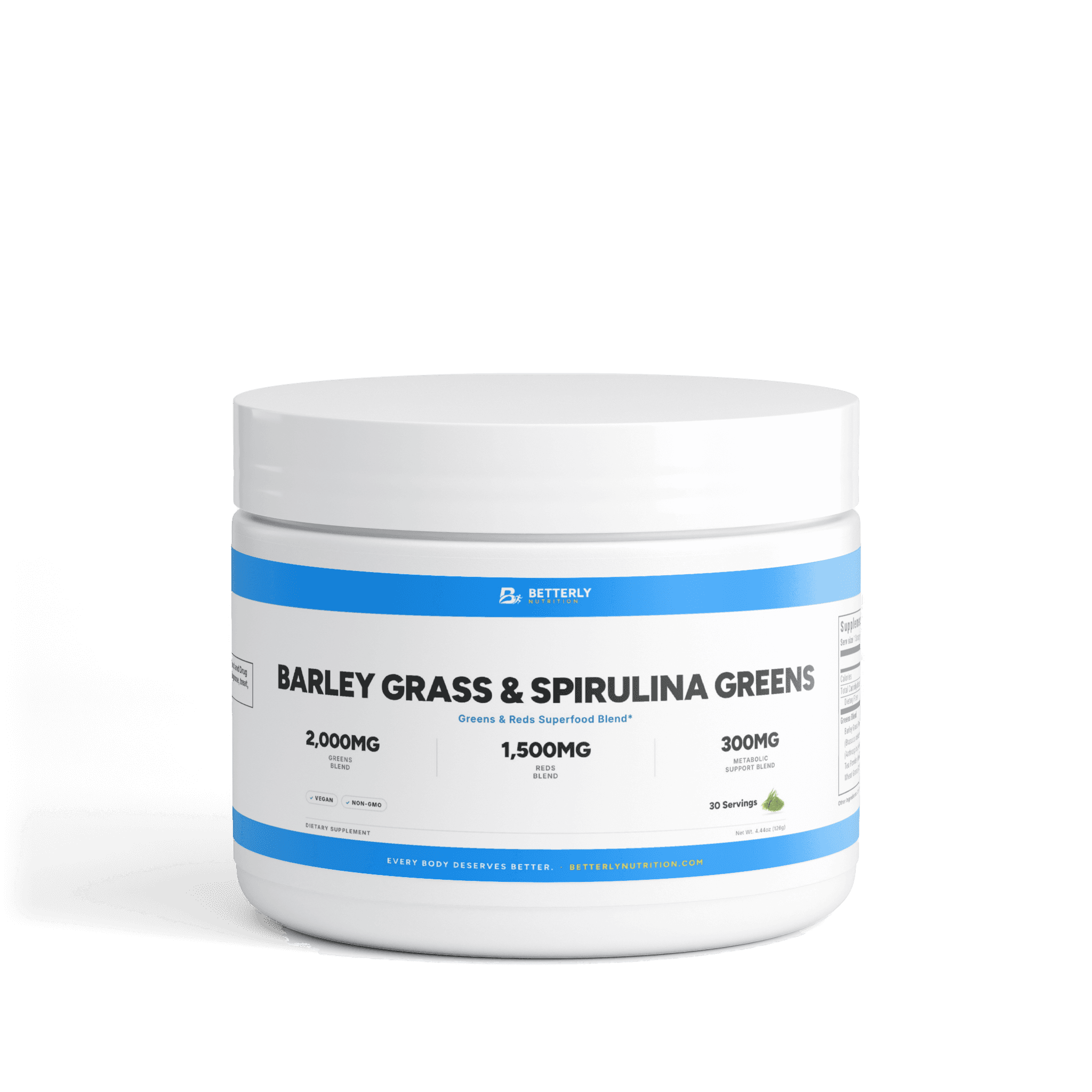
- Seaweed was never the point. For a broader mix of greens, our greens and superfoods shelf also carries powders and capsules built mostly on grasses, algae, leaves and fruit.
Who should check with a healthcare provider first?
Get a provider's go-ahead before either sea moss format if you're pregnant, under 18, due for surgery, taking a prescription or managing a medical condition; skip both while breastfeeding.
The caution on our bottle is short: "Do not exceed recommended dose. Consult a physician if pregnant, nursing, under 18, or have a medical condition." Bucklebury sets a firmer age rule than ours in a separate warning: "Intended for use by adults 18 years of age and over."
Some cases need a direct conversation:
- Antithyroid medicine. The ODS iodine sheet warns that high doses of iodine alongside antithyroid medicine could leave your body making too little thyroid hormone. Clear any seaweed product with your prescriber first.
- Pregnancy. The ODS sheet lists a daily iodine recommendation of 220 mcg in pregnancy, and none of these labels shows what a serving adds.
- Breastfeeding. LactMed's sea moss entry says it "should be avoided during breastfeeding unless the levels of iodine and heavy metals have been shown to be low enough to be safe." None of the three labels here reports either level, so we don't recommend either format while you're breastfeeding.
- A scheduled operation. Your surgeon's team should get your full supplement list, gummies included.
FAQ: sea moss gummies and capsules
How many sea moss gummies should you take a day?
Two is the serving on both sea moss gummy labels in this comparison: Country Farms says two daily, and Bucklebury says two per day or as your healthcare professional directs. Other brands can set a different count, so the serving size on your own bottle is the number to follow. A fruit chew is easy to reach for a second time, so count that one serving as your total for the day.
Are sea moss gummies as good as the gel?
Sea moss gummies and gel can't be lined up on one scale, because gel is whole seaweed soaked and blended with water, while the gummies here hold small extracts. A batch you make at home comes with no panel at all, so there's no milligram or iodine figure to set against a gummy's rows. Plain gel does skip the syrup. Our longer sea moss guide weighs gel against capsules.
Are sugar-free sea moss gummies a better choice?
A sugar-free sea moss gummy drops the added sugars, but the sea moss inside may still be a small extract under a big headline number. Before you buy one, find the extract weight printed beside or below that headline figure, then look for an iodine row in mcg. If neither is there, the sugar-free version answers only one of the questions that matter for sea moss.
Can you take sea moss gummies and capsules together?
Taking sea moss gummies and capsules together adds seaweed on top of seaweed, and none of these labels states its iodine, so we'd choose one. Our capsule label says not to exceed its two-capsule serving, and both gummy labels set a 2-gummy serving. Adding our Shilajit & Tongkat Ali Capsules stacks on more, since each holds 100 mg of 20:1 sea moss extract.
Do sea moss gummies taste like seaweed?
The two sea moss gummies we checked are flavored like fruit: Country Farms' is green apple, and Bucklebury lists natural strawberry, blueberry and raspberry flavors. Their plant extracts weigh 132.5 mg to 175 mg per serving, a sliver beside the 3,000 mg to 4,000 mg of added sugar.
Sources
- Iodine: Fact Sheet for Consumers (NIH Office of Dietary Supplements)
- Botanical Dietary Supplements: Background Information for Consumers (NIH Office of Dietary Supplements)
- Sea Moss, Drugs and Lactation Database (LactMed, National Library of Medicine, NIH)
- Wild Crafted Irish Sea Moss Gummies, Bucklebury (NIH Dietary Supplement Label Database)
- Irish Sea Moss Green Apple Flavor, Country Farms (NIH Dietary Supplement Label Database)
If this left you looking for somewhere to start, read sea moss and bladderwrack capsules, 1,000 mg of whole seaweed per serving — its amounts per serving are listed on the page. For the practical questions this raises, how dosing, sourcing and subscriptions work is answered in one place.