On this page
- Key takeaways
- Can you take sea moss and ashwagandha together?
- Why is the thyroid the overlap to watch?
- What are the benefits of sea moss and ashwagandha?
- What do the two labels add up to in a day?
- When is the best time to take sea moss and ashwagandha?
- What are the side effects of sea moss and ashwagandha?
- Should you take both, just one, or a combined capsule?
- When don't you need sea moss or ashwagandha?
- Who should check with a healthcare provider first?
- FAQ: sea moss and ashwagandha
- Sources
The short answer: Yes, you can take sea moss and ashwagandha together, and your thyroid is where the two overlap. Seaweed carries iodine, which your thyroid uses to make hormones, and NCCIH lists thyroid hormone medication among ashwagandha's possible interactions. By our labels, the pair comes to 2 sea moss capsules once a day plus 1 ashwagandha capsule twice a day, each 20-30 minutes before a meal.
Key takeaways
- Sea moss is a red seaweed and ashwagandha is a shrub's root, so neither duplicates the other.
- The thyroid is where they meet: seaweed is generally rich in iodine, and ODS says ashwagandha might affect thyroid function.
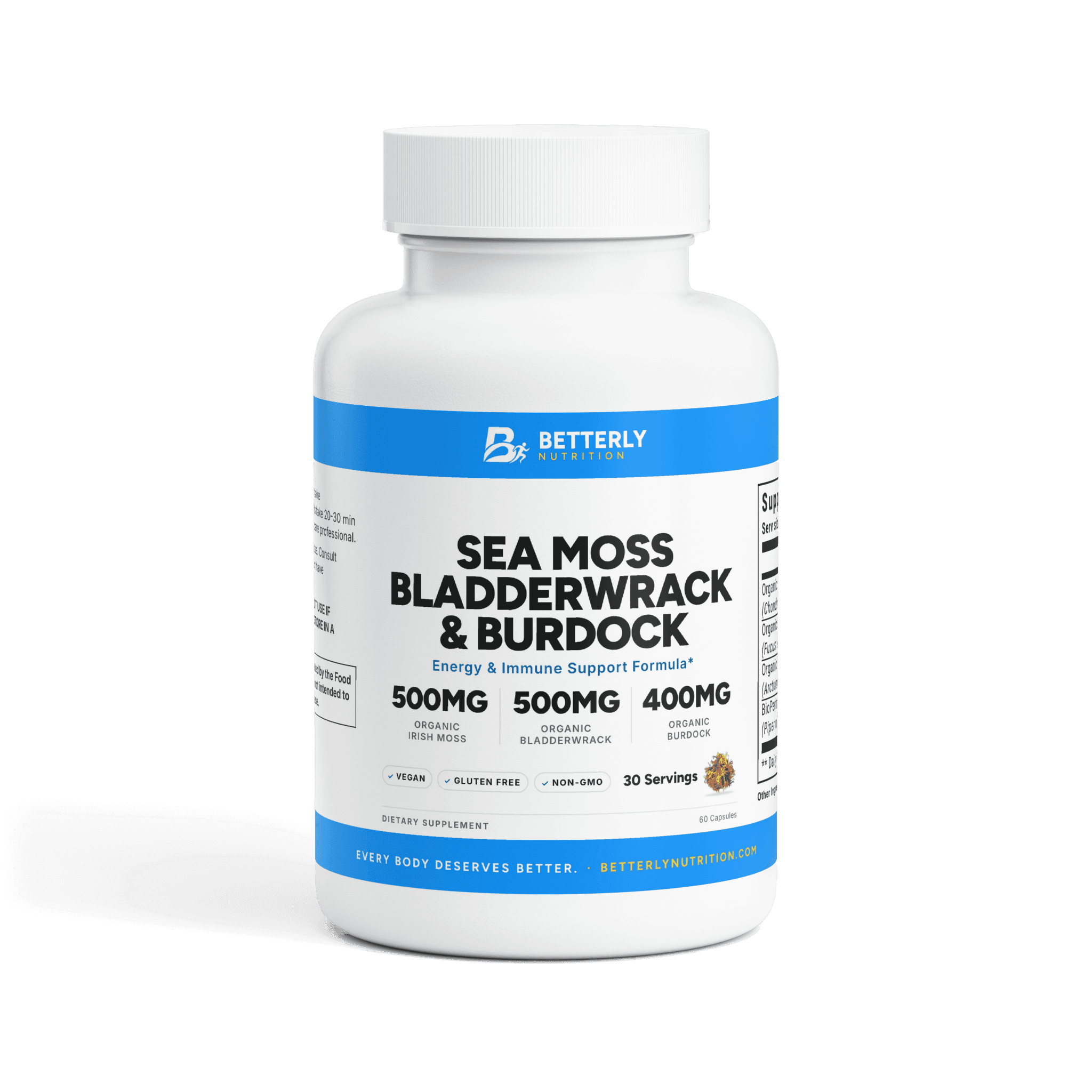
- Our sea moss panel lists two seaweeds at 500 mg each per 2-capsule serving but no iodine figure.
- Both of our labels name the same window: 20-30 minutes before a meal.
- NCCIH says to avoid ashwagandha in pregnancy, while breastfeeding and before surgery, and we don't suggest our sea moss while nursing. Anyone on thyroid or other prescription medicine needs a provider's OK first.
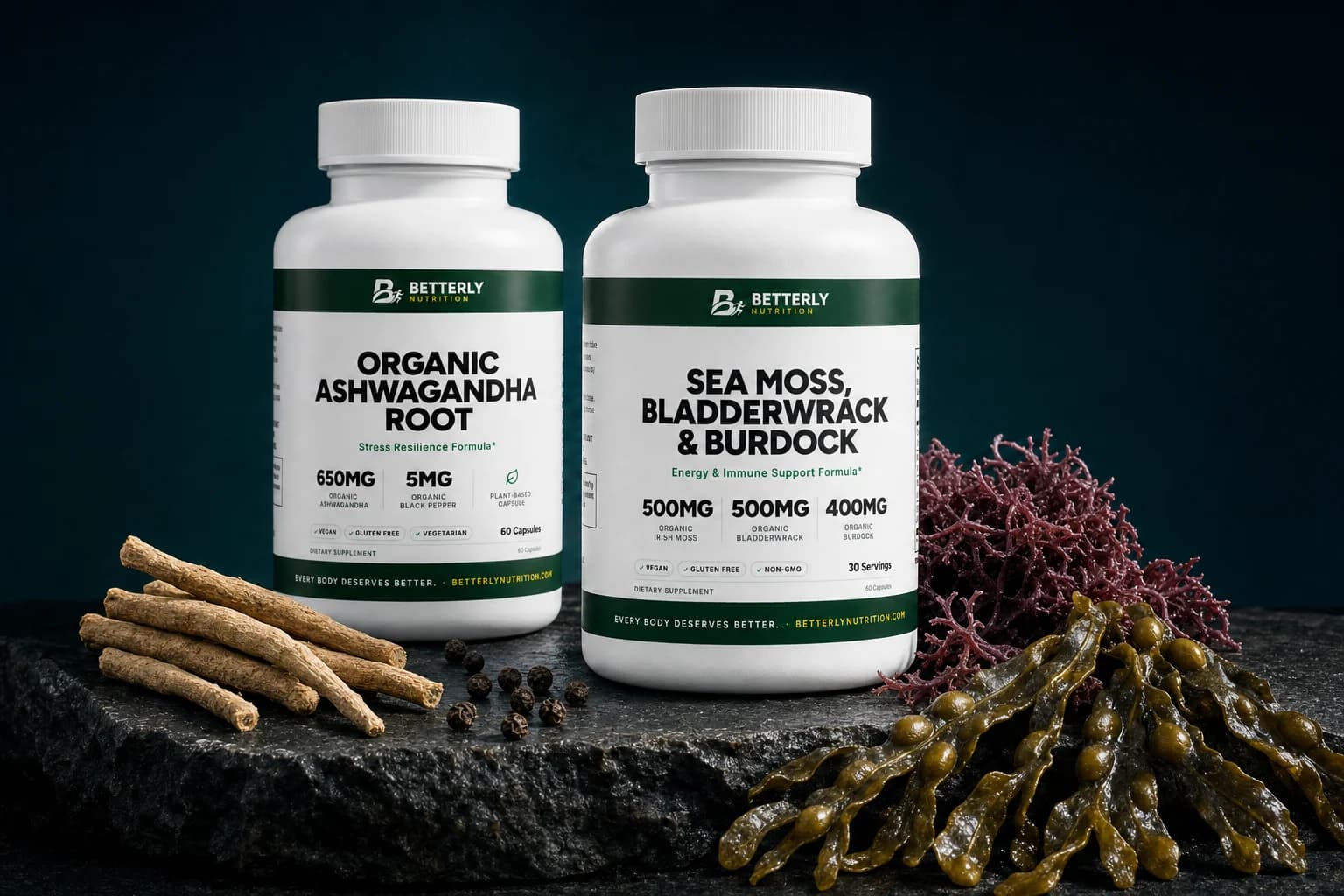
We sell both halves of this routine: the Sea Moss, Bladderwrack & Burdock Capsules and the Organic Ashwagandha Root Capsules. A shop selling both has every reason to call them a perfect match, so we'll stick to what the labels print and flag where they go quiet.
Can you take sea moss and ashwagandha together?
Yes, sea moss and ashwagandha can share one daily routine, as long as neither ingredient's cautions apply to you and you stay within each label's directions.
They're unrelated plants. Sea moss is the everyday name for Irish moss (Chondrus crispus), a frilly red seaweed. Our capsule pairs it with bladderwrack (Fucus vesiculosus), a brown seaweed, and burdock (Arctium lappa) root. Ashwagandha (Withania somnifera) grows as a small evergreen bush, and traditional Indian medicine has long used its root as an adaptogen. That's an umbrella word for herbs believed to help the body handle strain of many kinds.
We didn't find a study that tests these two as a pair, and neither NCCIH nor ODS discusses them together. Sellers often call the combo a "stack" that works better together; we don't.
Why is the thyroid the overlap to watch?
The thyroid is the overlap because sea moss and bladderwrack supply iodine, which your thyroid needs to make hormones, and ashwagandha appears in federal thyroid cautions too.
Start with the seaweed. The NIH Office of Dietary Supplements (ODS) iodine fact sheet says your body uses iodine to build thyroid hormones, which help run your metabolism. It names seaweed as a food group that's generally rich in iodine. Adults need 150 mcg a day, and 1,100 mcg a day is the most adults should get from all sources combined. More isn't safer: ODS warns that too much iodine can bring on problems that mirror getting too little.
Now the root. The ODS ashwagandha fact sheet for health professionals says some research suggests ashwagandha might affect thyroid function and might interact with thyroid hormone medications. The NCCIH page on ashwagandha's usefulness and safety lists thyroid hormone medications among its possible interactions as well.
Neither agency says the two react with each other; each simply carries its own thyroid note. If a provider already watches your thyroid, talk before the first capsule.
What are the benefits of sea moss and ashwagandha?
The benefits of sea moss and ashwagandha are each ingredient's own, since no research we found measures what the two do as a pair.
The seaweeds. Seaweeds are known mainly as iodine sources, but our panel doesn't state how much a serving holds. ODS also says most Americans get enough iodine from their usual meals and drinks. The burdock, at 400 mg per 2-capsule serving, is the minor player, and we found no federal fact sheet on it.
Ashwagandha. NCCIH says research shows some ashwagandha preparations may help with everyday stress and occasional sleeplessness. ODS adds a catch: the trials used so many different preparations and doses that firm recommendations are hard to write.
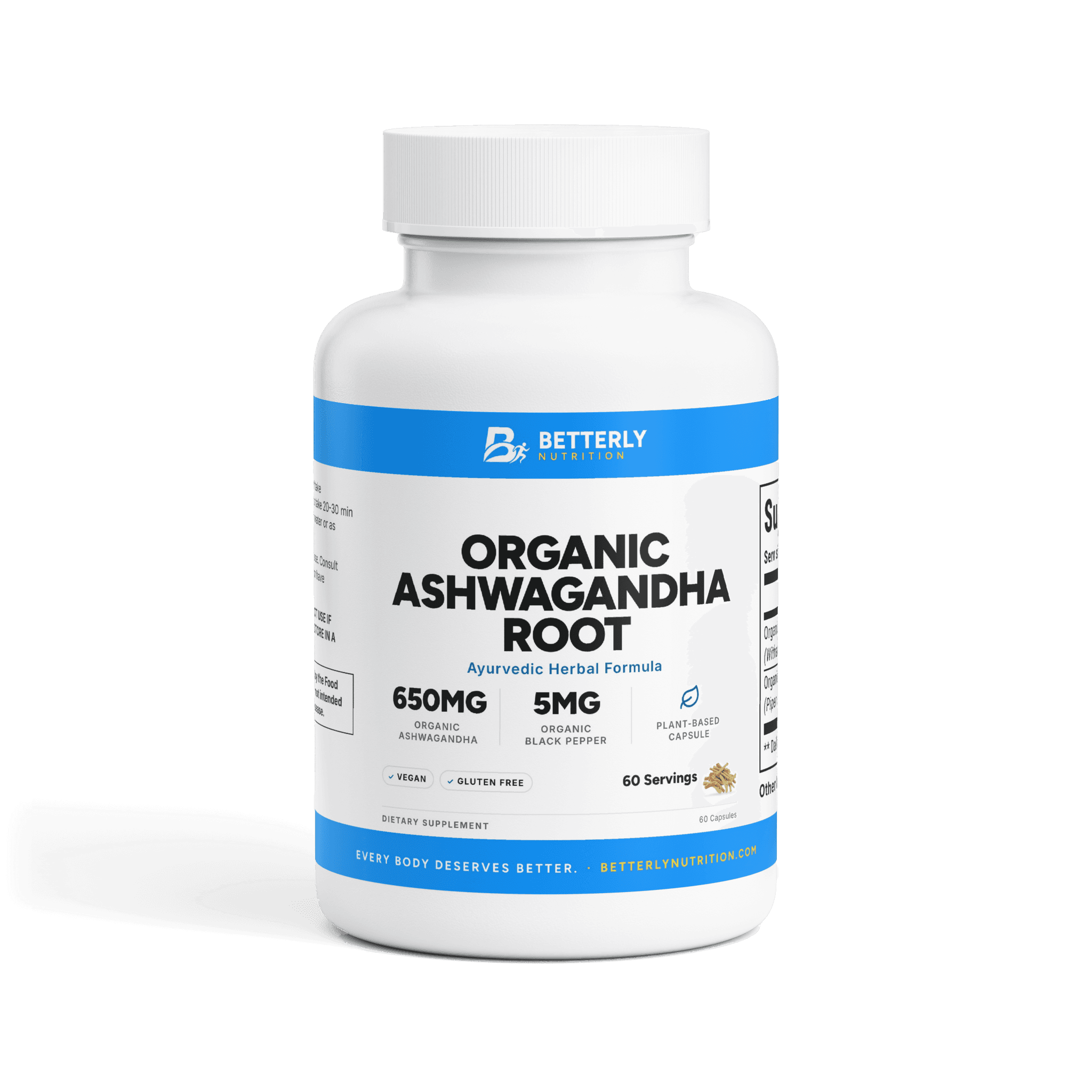
That catch applies to our bottle. It holds plain organic ashwagandha root, 650 mg per 1-capsule serving, not a standardized extract. Most trials ODS describes used extracts, so their results don't map neatly onto a root powder.
What do the two labels add up to in a day?
At label directions, sea moss and ashwagandha together come to 4 capsules a day: one 2-capsule sea moss serving plus two separate 1-capsule ashwagandha servings.
| Label detail | Sea Moss, Bladderwrack & Burdock | Organic Ashwagandha Root |
|---|---|---|
| Serving size | 2 capsules | 1 capsule |
| Per serving | 500 mg Irish moss, 500 mg bladderwrack, 400 mg burdock root, 5 mg BioPerine® | 650 mg ashwagandha root, 5 mg black pepper |
| Servings a day | 1 | 2 |
| Per day at label use | Same as one serving | 1,300 mg root, 10 mg black pepper |
| When | Before a meal | Before a meal, with 8 oz water |
| Bottle | 60 capsules, 30 days | 60 capsules, 30 days |
| Iodine listed | No | No |
The takeaway: the panels share no main ingredient, and only the ashwagandha total doubles across the day, because its label asks for two servings.
One small overlap is black pepper, listed in two forms: BioPerine®, a branded black pepper extract, on the sea moss panel, and organic black pepper fruit on the ashwagandha panel. If you take prescription medicine, hand your pharmacist both labels to look over. Both capsules are pullulan, a plant-based shell.
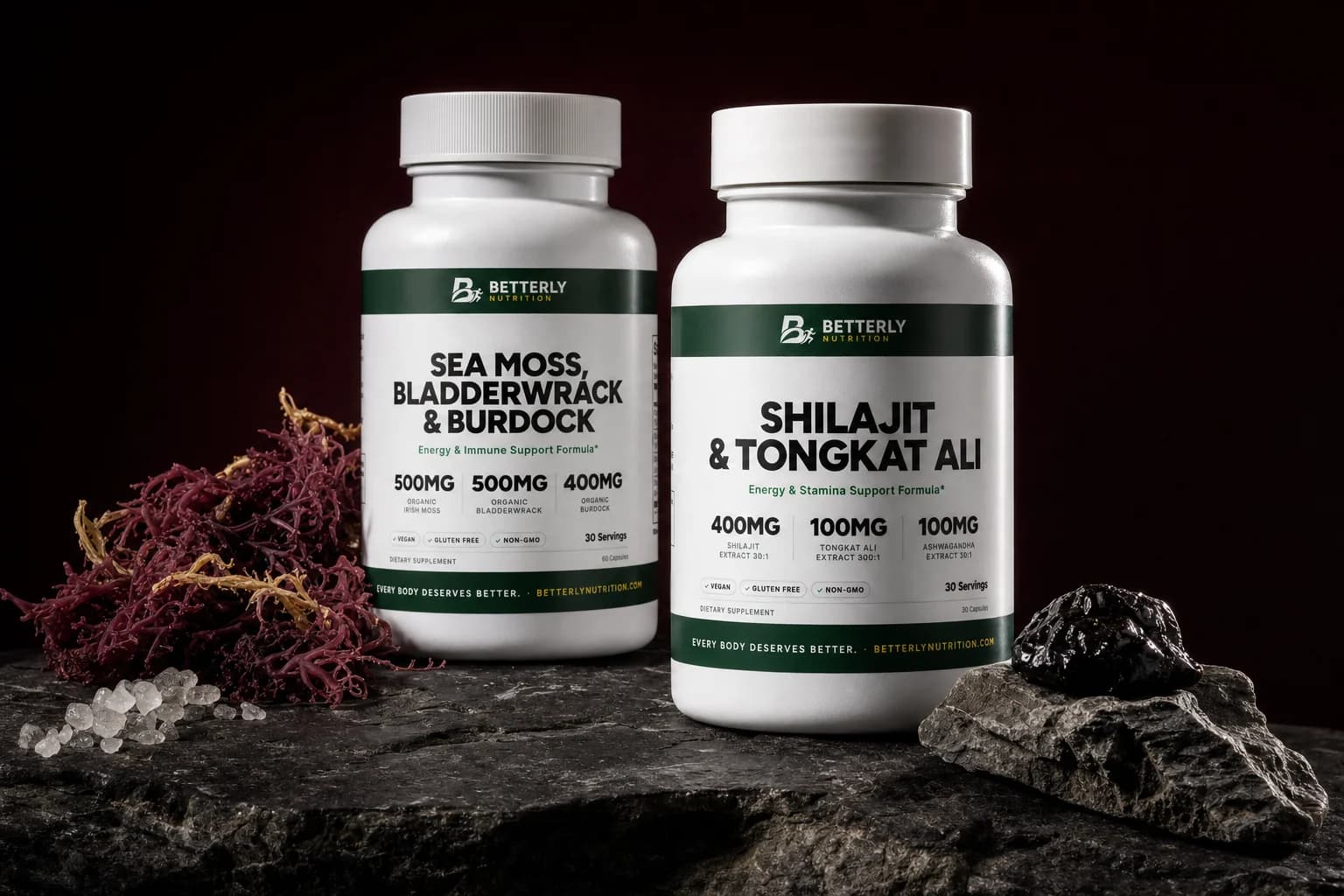
From our shop: Sea Moss, Bladderwrack & Burdock Capsules — one 2-capsule serving a day holds 500 mg organic Irish moss, 500 mg organic bladderwrack and 400 mg organic burdock root.
When is the best time to take sea moss and ashwagandha?
The best time to take sea moss and ashwagandha, by our labels, is 20-30 minutes before a meal, because both suggested-use lines name that exact window.
The sea moss label's suggested use is two capsules once a day, 20-30 minutes before a meal. The ashwagandha label's is one capsule twice a day, same window, with an 8 oz (237 ml) glass of water. Pick meals you rarely skip. One way to fit both:
- Before your first meal: 2 sea moss capsules and 1 ashwagandha capsule, with a glass of water.
- Before a later meal: the second ashwagandha capsule, with another glass.
The sea moss label doesn't name a meal, so lunch or dinner works too.
Let a missed serving go, since both caution panels say "Do not exceed recommended dose." And scan your other panels for repeats: blends can tuck ashwagandha (Withania somnifera) or seaweed (Chondrus crispus, Fucus vesiculosus or kelp) into a long ingredient list.
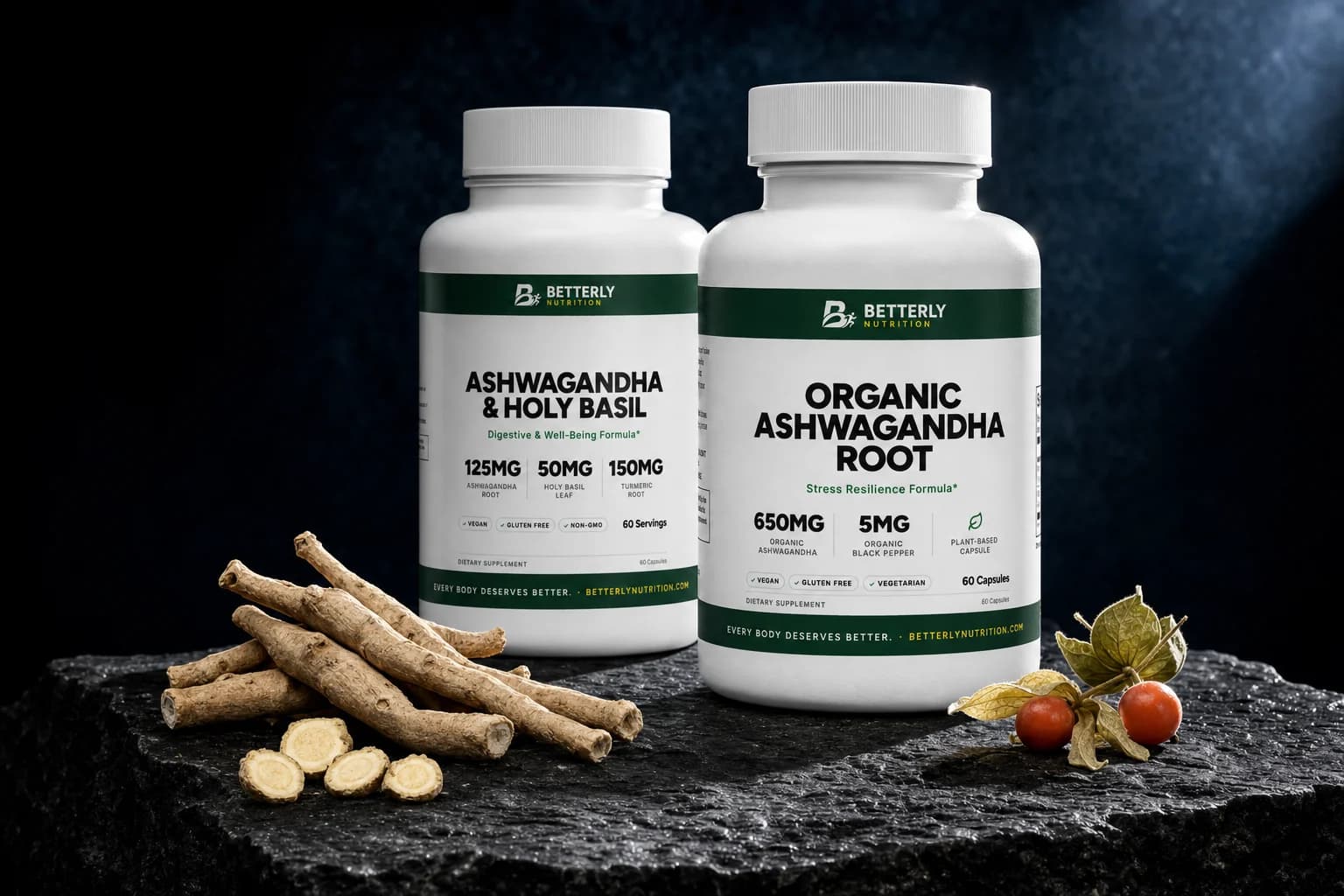
From our shop: Organic Ashwagandha Root Capsules — two vegan capsules a day, each a 1-capsule serving of 650 mg organic ashwagandha root and 5 mg organic black pepper.
What are the side effects of sea moss and ashwagandha?
Sea moss and ashwagandha side effects come from each ingredient on its own: iodine and seaweed purity on one side, stomach upset or drowsiness on the other.
For ashwagandha, NCCIH says some people get drowsiness, stomach upset, diarrhea or vomiting. ODS calls the common ones usually mild.
The rarer, serious concern is the liver. NCCIH notes cases in which liver injury has been tied to ashwagandha products. In the cases ODS describes, signs included yellowing skin or eyes, itching, nausea and low energy. If any show up, stop the capsules and call your doctor.
For the seaweed, the open questions are what the label can't show: our panel lists no iodine amount and no heavy-metal levels.
Pairing adds one wrinkle: start both on the same morning and a queasy stomach could belong to either. Open one bottle first and add the other later.
Should you take both, just one, or a combined capsule?
Take sea moss and ashwagandha together only if each earns its place on its own; otherwise one bottle, or a formula that already combines them, may suit you better.
Search this pairing and you'll find all-in-one capsules that pack sea moss, bladderwrack, burdock root and ashwagandha together, sometimes with black seed oil. Check whether the panel prints each amount or only one blend total, which tells you the recipe but not the dose of each herb.
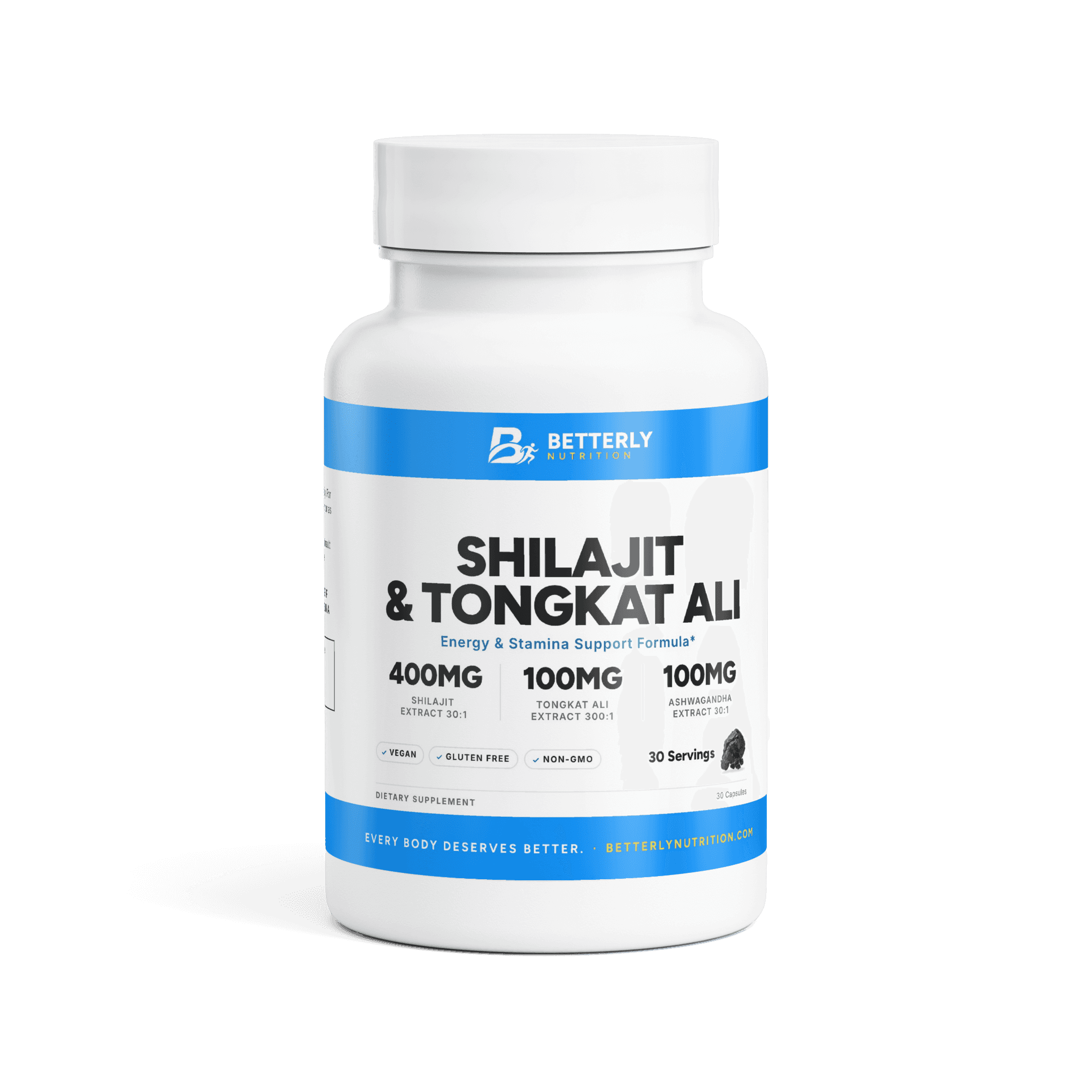
We sell one combined option. Each 1-capsule serving of our Shilajit & Tongkat Ali Capsules holds 100 mg of ashwagandha root extract and 100 mg of sea moss extract, alongside 400 mg of shilajit extract and 100 mg of tongkat ali root extract. The ashwagandha and sea moss extracts are labeled 30:1 and 20:1, so their milligrams can't be matched against plain root or whole seaweed.
| Your situation | Route to consider | Why |
|---|---|---|
| You want both, and no caution applies | The two bottles, per label | 4 capsules a day, before meals |
| Seafood, dairy, eggs or iodized salt are regulars | Ashwagandha alone, if you want it | ODS lists these as iodine sources |
| You'd rather take one capsule a day | Shilajit & Tongkat Ali Capsules | Adds shilajit and tongkat ali, which bring cautions of their own; no bladderwrack or burdock |
| You take thyroid medication | A provider's OK first | Both carry thyroid notes |
| Pregnant or surgery soon | Skip ashwagandha; provider's OK for the seaweed | NCCIH advises against ashwagandha in both |
| Breastfeeding | Skip both | NCCIH covers ashwagandha; LactMed covers sea moss |
The pair only makes sense when both halves pass their own test. If one fails, drop it.
When don't you need sea moss or ashwagandha?
You likely don't need the seaweed if iodine already comes easily from your plate, and ashwagandha fills no nutrient gap, since no Daily Value exists for it.
ODS says people more likely to run low on iodine include those who skip iodized salt and those who eat few or no dairy products, seafood or eggs. If neither describes you, a seaweed capsule isn't covering an obvious shortfall. If one does, ask a provider whether a product that states its iodine in micrograms would serve you better, since ours doesn't.
Leaving ashwagandha out doesn't create a gap either. If stress rarely tips your days over and you wake up rested, there's no reason to add it.
Want more plants in your day? Our Greens & Superfoods collection holds broader powders and capsules, each with its full panel online.
Who should check with a healthcare provider first?
Anyone on a prescription, under 18 or managing a medical condition should ask a provider before sea moss and ashwagandha, and pregnancy, nursing or upcoming surgery means skipping ashwagandha.
The caution printed on both bottles covers four groups: pregnant, nursing, under 18, or living with a medical condition. The NIH pages add detail:
- Thyroid medication. Both halves of the pair carry thyroid notes. Keep your prescription exactly as written, and let your prescriber decide whether the capsules fit.
- Other prescriptions. NCCIH names sedatives and immunosuppressants (drugs that dial down immune activity) among several types ashwagandha might interact with. ODS says iodine supplements can interact with some medicines too.
- Pregnancy and breastfeeding. NCCIH says ashwagandha should be avoided in pregnancy and not used while breastfeeding. For the seaweed, NIH LactMed's sea moss entry advises avoiding sea moss while nursing unless its iodine and heavy-metal levels are shown to be low, and our deeper look at the sea moss, bladderwrack and burdock formula explains why. Our label lists neither, so we don't suggest our sea moss while you're breastfeeding. In pregnancy, let your provider decide on the seaweed.
- Surgery. NCCIH advises against ashwagandha when an operation is coming up, so tell your surgical team about both bottles.
An FDA consumer update, Mixing Medications and Dietary Supplements Can Endanger Your Health, tells you to bring a list of every supplement and medication to each visit, with the doses and how many times a day you take them. For this pair, that list would read: Sea Moss, Bladderwrack & Burdock Capsules, 2 capsules once a day; Organic Ashwagandha Root Capsules, 1 capsule twice a day. Our guide to who should not take ashwagandha sums up the NIH cautions on the herb.
FAQ: sea moss and ashwagandha
Should you take sea moss and ashwagandha in the morning or at night?
Either can work, because neither our sea moss label nor our ashwagandha label names a time of day. Both link the dose to mealtime instead. Since the ashwagandha label asks for two servings, one capsule tends to land early in the day and the other before a later meal. NCCIH lists drowsiness among ashwagandha's possible side effects, so see how it sits with you before taking a dose ahead of a long drive.
What happens when you take sea moss and ashwagandha together?
Nothing special is known to happen when you take sea moss and ashwagandha together, because no study we found looks at the pair. You get each ingredient's own effects and cautions, such as the drowsiness or stomach upset NCCIH lists for ashwagandha, plus iodine in an amount our seaweed label doesn't state. We won't promise a result or a timeline.
Can you take sea moss, ashwagandha and shilajit together?
No NIH page we found covers sea moss, ashwagandha and shilajit as a trio, and we found no ODS or NCCIH fact sheet on shilajit, so ask a provider before combining them. Our Shilajit & Tongkat Ali Capsules list 400 mg shilajit extract, 100 mg ashwagandha root extract, 100 mg sea moss extract and 100 mg tongkat ali root extract per 1-capsule serving. Adding our separate sea moss and ashwagandha bottles would double up on both. Our comparison of shilajit vs sea moss covers that capsule.
Are sea moss and ashwagandha gummies different from capsules?
Sea moss and ashwagandha gummies carry the same cautions as capsules, because the cautions follow the ingredients, not the format. What changes is the amount per serving and whatever else goes into the recipe. Check each herb's amount, look for an iodine line, and read the other ingredients. Our guide to sea moss gummies vs capsules compares the two formats.
How long can you take sea moss and ashwagandha?
Ashwagandha comes with a 3-month marker, while sea moss capsules come with none. NCCIH says ashwagandha may be safe for up to 3 months, and that the evidence can't yet settle whether longer use is safe. For seaweed capsules, we found no federal page that sets any time frame at all. If you'd like to keep the ashwagandha going past about 3 months, bring it up with your provider first.
Sources
- Ashwagandha: Usefulness and Safety, National Center for Complementary and Integrative Health
- Iodine: Fact Sheet for Consumers, NIH Office of Dietary Supplements
- Ashwagandha: Fact Sheet for Health Professionals, NIH Office of Dietary Supplements
- Mixing Medications and Dietary Supplements Can Endanger Your Health, US Food and Drug Administration
- Sea Moss, Drugs and Lactation Database (LactMed), National Library of Medicine/NIH
If this left you looking for somewhere to start, read sea moss capsules with bladderwrack and burdock — its amounts per serving are listed on the page. For the practical questions this raises, how dosing, sourcing and subscriptions work is answered in one place.