On this page
- Key takeaways
- Who should not take ashwagandha, according to NIH?
- Why should pregnant and breastfeeding women skip ashwagandha?
- Should you stop taking ashwagandha before surgery?
- What if you have a thyroid or immune-related condition, or take medication?
- What are the common ashwagandha side effects, and what about the liver?
- Do the same cautions apply to KSM-66, gummies and blends?
- How do you take ashwagandha by the label once you're cleared?
- When don't you need ashwagandha?
- Who should check with a healthcare provider before taking ashwagandha?
- FAQ: who should not take ashwagandha
- Sources
The short answer: Who should not take ashwagandha? The National Center for Complementary and Integrative Health (NCCIH) says to avoid it if you're pregnant or breastfeeding, about to have surgery, or living with a thyroid, immune-related or hormone-sensitive prostate condition. Ashwagandha may also interact with several prescription medicines, and rare cases of liver injury have been reported. NCCIH calls it possibly safe for up to 3 months, but nobody knows yet how safe it is over years.
Key takeaways
- NCCIH says to skip ashwagandha if you're pregnant or breastfeeding, have surgery coming up, have a thyroid or immune-related condition, or have a hormone-sensitive prostate condition.
- Ashwagandha may interact with sedatives, thyroid hormone medicines and medicines that dampen the immune system, so ask a pharmacist first if you take any prescription.
- NIH pages list drowsiness, stomach upset, loose stools, nausea and vomiting as possible side effects, and ODS says the common ones are usually mild. Liver injury is rare but documented.
- These cautions follow the herb, not the brand, so they apply to KSM-66, root powder, gummies and blends alike.
- Four of our products print an ashwagandha amount per serving, and others list it inside a blend with no amount given, so read every panel.
Full disclosure: several of our products carry ashwagandha, among them our Organic Ashwagandha Root Capsules. A seller has every commercial reason to keep this list short, and it isn't short. The cautions below are drawn from NIH pages we link as we go, and the milligrams are read straight off our labels.
Who should not take ashwagandha, according to NIH?
Ashwagandha isn't for people who are pregnant, breastfeeding, facing surgery or living with a thyroid, immune-related or hormone-sensitive prostate condition, NCCIH says. People taking certain medicines should also ask first.
That list comes from NCCIH's ashwagandha safety page. The NIH Office of Dietary Supplements (ODS) adds more detail in its ashwagandha fact sheet for health professionals, the source of the liver and thyroid reports below.
Here's how NIH's list lines up with the caution on our ashwagandha labels, which all read: "Consult a physician if pregnant, nursing, under 18, or have a medical condition."
| Your situation | What NIH pages say | Named on our label caution? |
|---|---|---|
| Pregnant | NCCIH: avoid it | Yes |
| Breastfeeding | NCCIH: don't use it | Yes, as "nursing" |
| Surgery coming up | NCCIH: not recommended | No |
| Thyroid or immune-related condition | NCCIH: not recommended | Only as "medical condition" |
| Taking prescription medicine | NCCIH: may interact | No |
| Under 18 | ODS: be careful with supplements for children | Yes |
| Hormone-sensitive prostate condition | NCCIH: avoid it | Only as "medical condition" |
The takeaway: our label names four groups outright, but NIH adds two it leaves out. Surgery and prescription medicines aren't printed on the bottle, so the label alone isn't the whole list.
Why should pregnant and breastfeeding women skip ashwagandha?
NCCIH says ashwagandha should be avoided during pregnancy and not used while breastfeeding. It's the plainest line on the agency's safety page.
The ODS fact sheet explains the worry. Some reports have suggested ashwagandha could raise the chance of losing a pregnancy. The evidence is disputed: the American Herbal Pharmacopoeia, one of the sources behind that concern, has said its report was misrepresented. But disputed isn't the same as cleared, and NIH's advice stays the same.
ODS also notes that France's food-safety agency advised against ashwagandha in 2024 for pregnant and breastfeeding women and for people with hormone-related conditions.
Trying to get pregnant? The NIH pages don't cover that stage directly, so ask your provider rather than guess.
Should you stop taking ashwagandha before surgery?
Yes. NCCIH says ashwagandha isn't recommended for people who are about to have surgery, so tell your surgical team you take it well before the date.
The ODS guide Dietary Supplements: What You Need to Know explains why supplements come up at all before an operation. Some can change your response to anesthesia, and some affect bleeding.
NCCIH's ashwagandha page doesn't say how many days ahead to stop, and we won't invent a number. Ask your surgeon or anesthesiologist. Give them every product you take, including any sleep capsule or greens powder that lists ashwagandha in a blend, plus how many servings you take a day. The same goes for dental surgery and other planned procedures.
What if you have a thyroid or immune-related condition, or take medication?
NCCIH doesn't recommend ashwagandha for people with thyroid or immune-related conditions. It also lists possible interactions with several prescription medicines, including thyroid hormone medicines.
The thyroid concern has some data behind it. ODS describes one study in which three men who took 500 mg a day of an ashwagandha root and leaf extract for 8 weeks had small rises in the thyroid hormone T4. It also describes three case reports of women whose thyroid hormone levels climbed too high while taking ashwagandha extract. Each one resolved after they stopped.
For medicines, NCCIH's list includes sedatives, thyroid hormone medicines and drugs that turn down the immune response, plus a few other common prescription types. If you take any prescription, show your pharmacist the label before your first capsule.
Two firm rules. Never stop or change a prescribed medicine to make room for a supplement. And don't read our label's short caution as clearance, since it can't see your medicine cabinet.
What are the common ashwagandha side effects, and what about the liver?
NCCIH says ashwagandha may cause drowsiness, stomach upset, diarrhea and vomiting in some people. ODS calls stomach upset, loose stools, nausea and drowsiness the common ones, usually mild.
Liver injury is rare but serious. NCCIH says a number of cases have linked liver injury to ashwagandha supplements. ODS describes five of them in more detail. Those people took 450 to 1,350 mg of ashwagandha a day, for anywhere from 1 week to 4 months.
Here's the honest part for us. Two of our labels fall inside that range at their suggested use: 1,300 mg of root a day and 600 mg of KSM-66 extract a day. The reports didn't name the plant part, and some products weren't checked for contents, so the numbers can't be matched exactly. Still, the liver caution isn't only about huge doses.
Stop taking ashwagandha and call your doctor if you notice any of the signs ODS lists from those cases:
- Skin or eyes turning yellow
- Itching you can't explain
- Nausea, unusual tiredness or belly discomfort
In the reported cases, people got better over time after they stopped, some with medical care. For any serious reaction, the FDA's page on how to report a problem with dietary supplements says to stop the product and file a report through its Safety Reporting Portal. The ODS consumer guide adds that the maker should hear about it as well, through the contact information printed on the product.
Do the same cautions apply to KSM-66, gummies and blends?
Yes. The NIH cautions are about the ashwagandha plant itself, so they apply to KSM-66, plain root powder, gummies, teas and blends. The form changes the amount, not the list.
KSM-66 is simply a branded root extract. Here are our four labels that print a stated amount:
| Product (serving) | Ashwagandha per serving | Label's suggested use | Per day at label use |
|---|---|---|---|
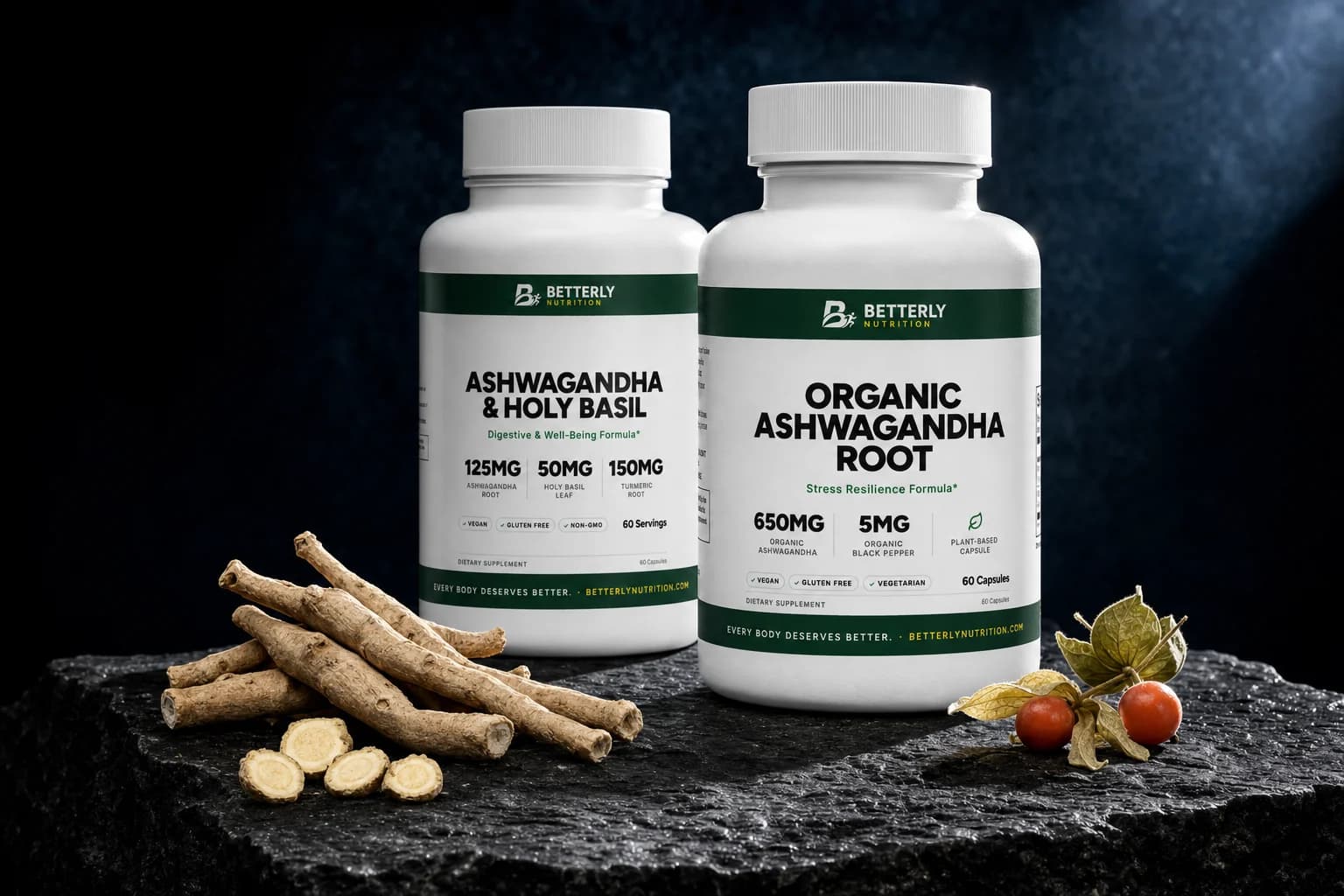
| Organic Ashwagandha Root Capsules (1 capsule) | 650 mg root | 1 capsule twice a day | 1,300 mg |
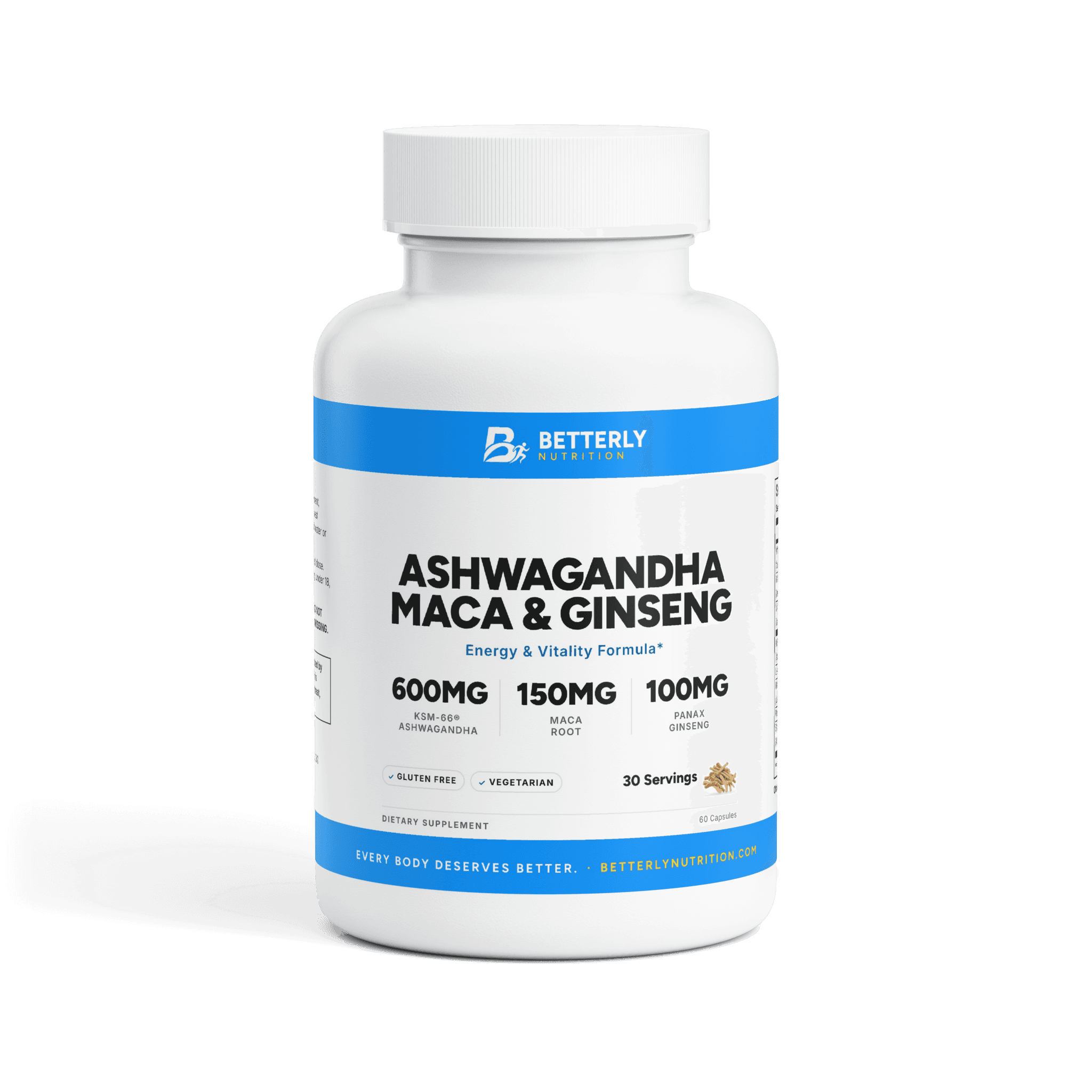
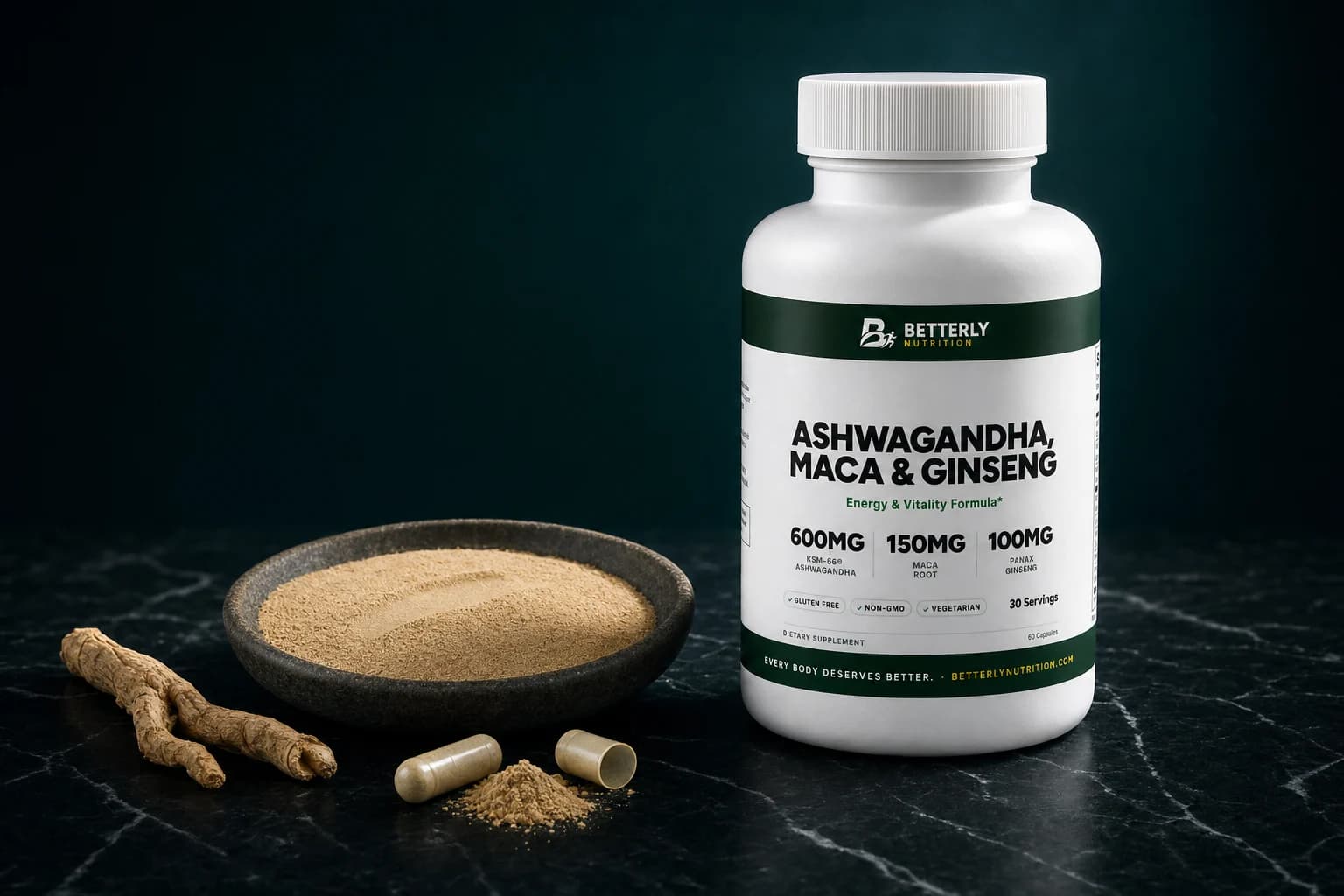
| Ashwagandha, Maca & Ginseng Capsules (2 capsules) | 600 mg KSM-66® extract | 2 capsules daily | 600 mg |
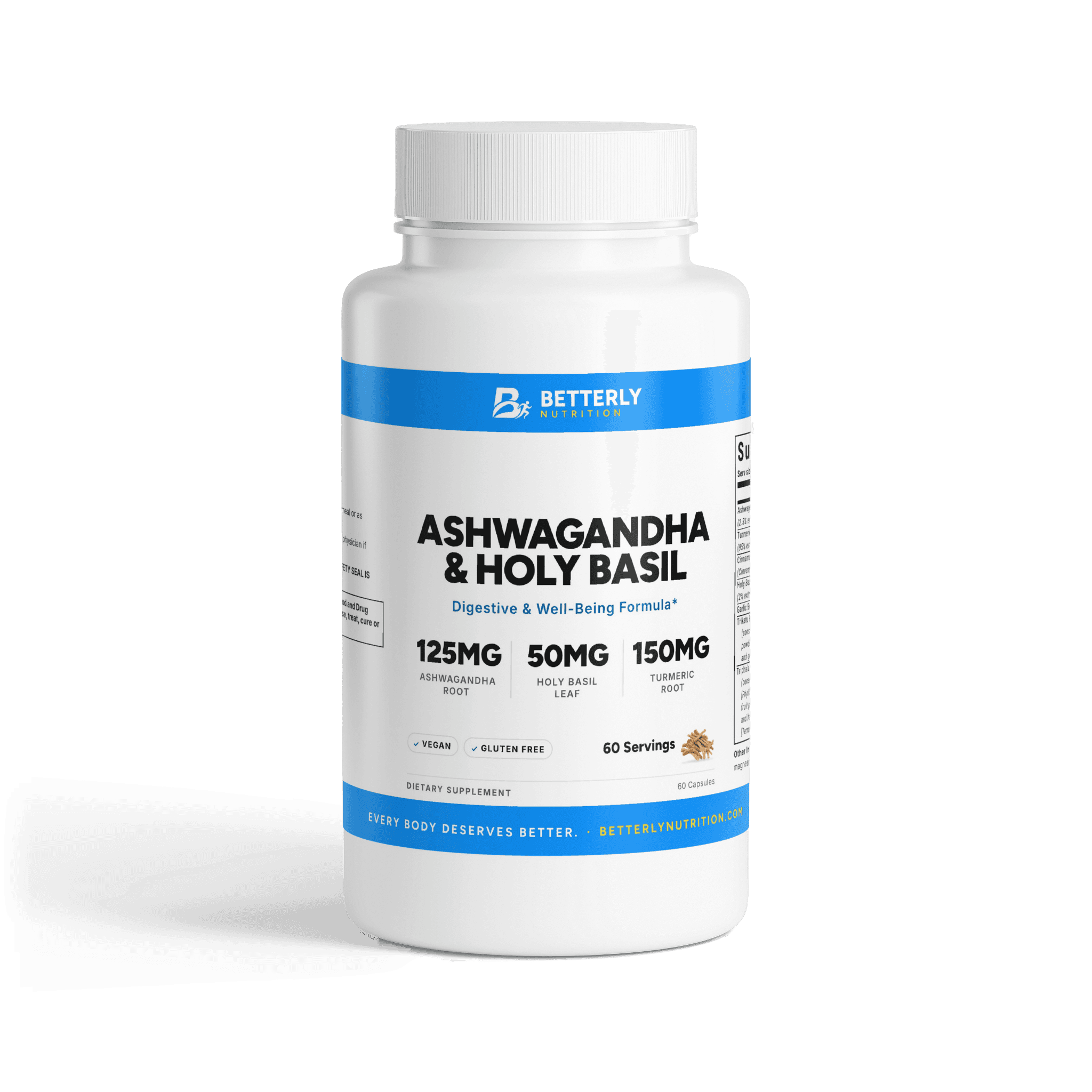
| Ashwagandha & Holy Basil Ayurvedic Capsules (1 capsule) | 125 mg root, 2.5% extract | 1 capsule daily | 125 mg |
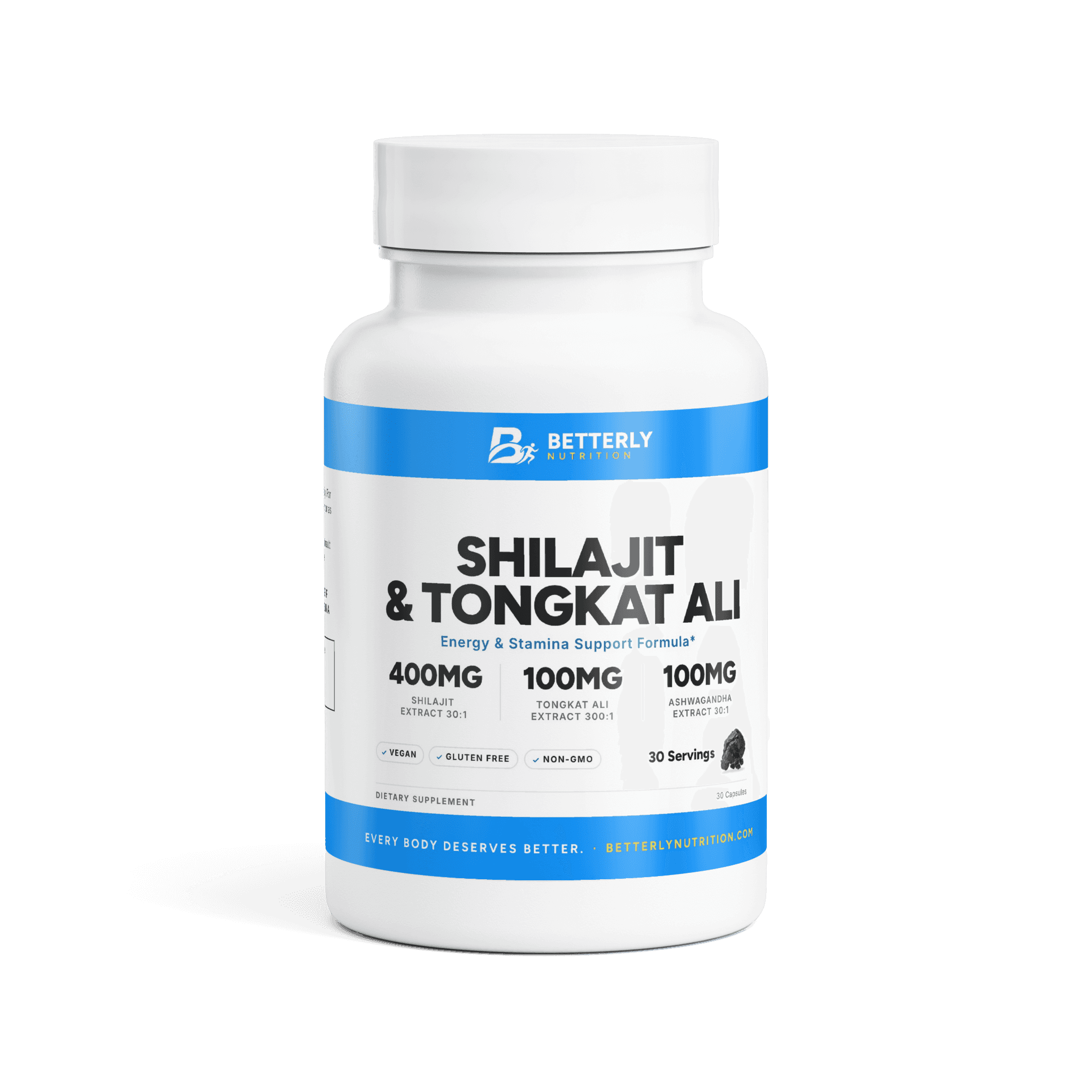
| Shilajit & Tongkat Ali Capsules (1 capsule) | 100 mg root extract, 30:1 | 1 capsule daily | 100 mg |
Don't rank these by milligrams. A plain root, a standardized extract and a 30:1 concentrate measure different things, which our guide to KSM-66 vs ashwagandha root powder unpacks. For safety, all four are ashwagandha and all four carry the full list above.
The blends bring other ingredients, too. The Ashwagandha, Maca & Ginseng Capsules list 300 mg of L-arginine and three vitamins per 2-capsule serving. The Ashwagandha & Holy Basil Ayurvedic Capsules list 17 ingredient rows, including licorice root. The Shilajit & Tongkat Ali Capsules add 400 mg of shilajit extract. More ingredients means more for your pharmacist to check.
Then there are panels where ashwagandha is easy to miss. Here are three that list it inside a blend that prints only the blend's total, so the label doesn't show how much ashwagandha is there:
- 10mg Melatonin Sleep Capsules: ashwagandha root is one of 14 ingredients in a 905 mg blend per 2-capsule serving.
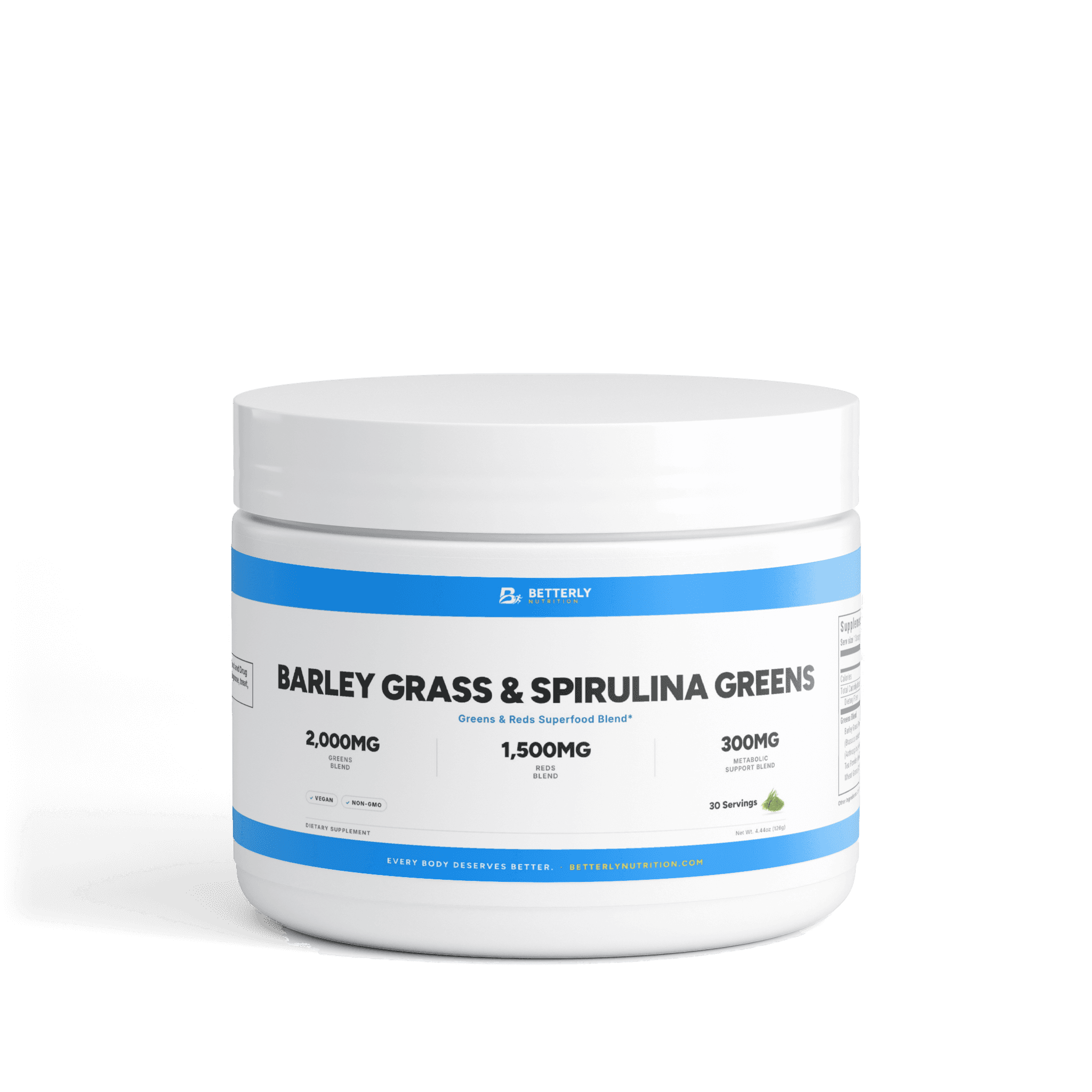
- Barley Grass & Spirulina Greens Powder: ashwagandha powder sits in a 300 mg Metabolic Support Blend per 1-scoop (4.2 g) serving.
- Tribulus & Ginseng Women's Libido Capsules: ashwagandha extract is one of 14 ingredients in an 802 mg blend per 2-capsule serving.
If you're in one of the skip groups, these count too. Check every panel for "Withania somnifera," not just the front label.
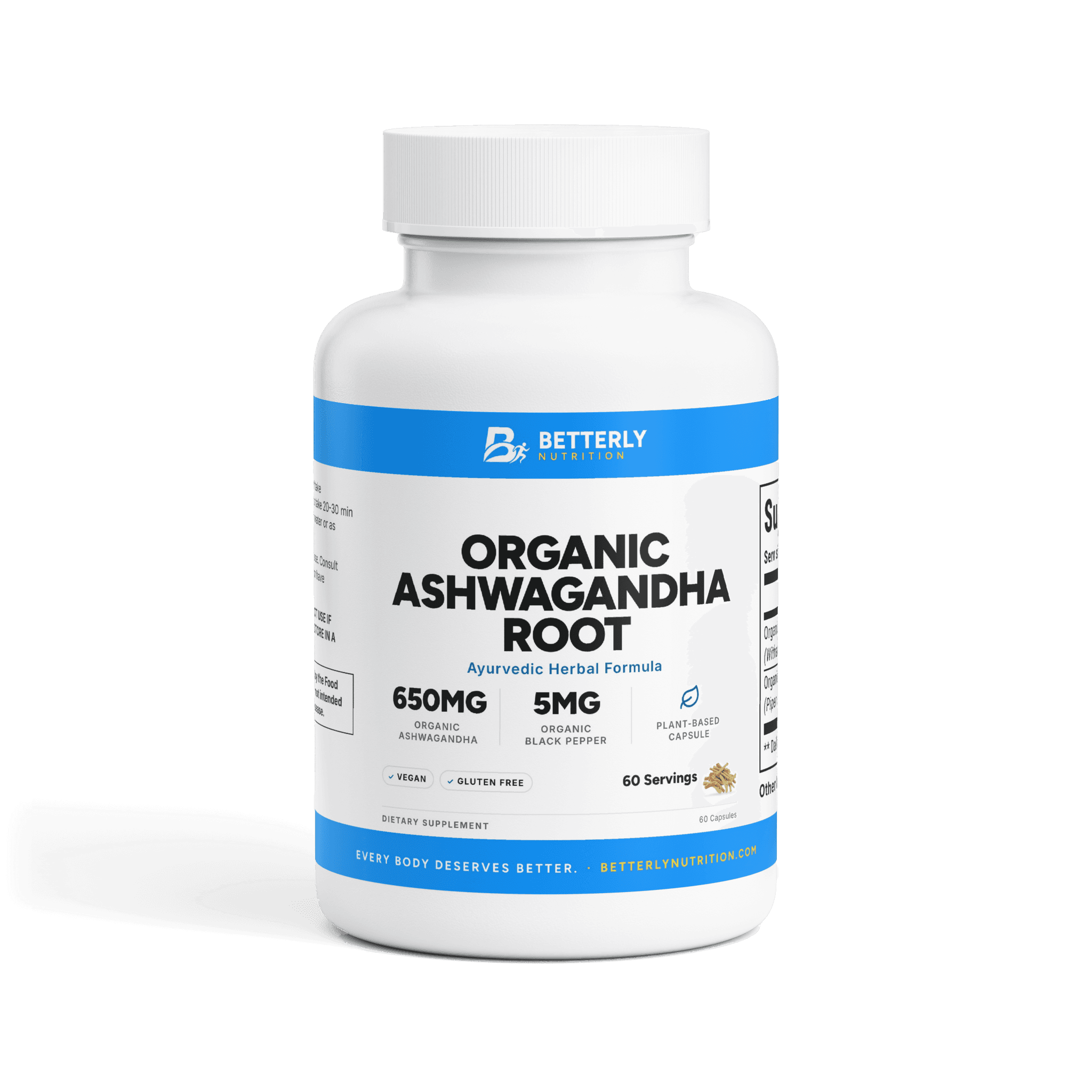
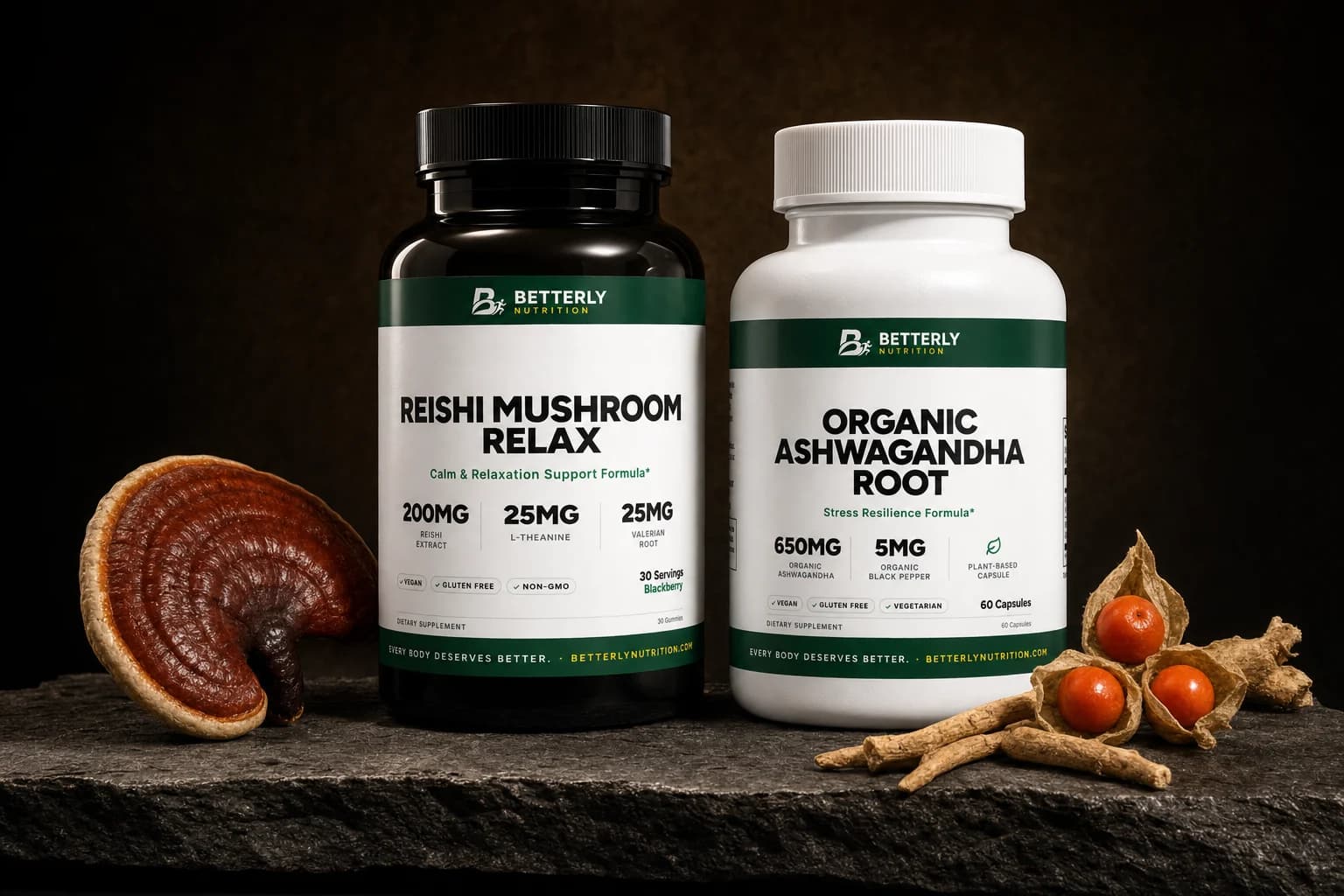
From our shop: Organic Ashwagandha Root Capsules — each 1-capsule serving lists 650 mg of organic ashwagandha root, with 5 mg of organic black pepper as the only other botanical, so at twice a day your daily total is simple to tell a pharmacist.
How do you take ashwagandha by the label once you're cleared?
For our Organic Ashwagandha Root Capsules, the label's suggested use is one capsule twice a day, 20 to 30 minutes before a meal with an 8 oz glass of water.
Each blend has its own directions. The Ashwagandha, Maca & Ginseng label says adults take two capsules daily with 6 to 8 oz of water. The Ashwagandha & Holy Basil label says one capsule daily, preferably with a meal. All four print the same line: "Do not exceed recommended dose."
A few habits keep things simple:
- Pick one ashwagandha product, not a plain root capsule plus a blend.
- Take your first doses on a day when drowsiness won't matter, and skip driving until you know how you react.
- Mark a check-in around the 3-month mark, where NIH's short-term safety window ends.
Still deciding whether it's worth trying? Our guide to ashwagandha benefits and how to take it covers what people use it for.
From our shop: Ashwagandha & Holy Basil Ayurvedic Capsules — 125 mg of 2.5% ashwagandha root extract and 50 mg of holy basil leaf extract per 1-capsule serving, taken once daily, with vegan and gluten free printed on the label.
When don't you need ashwagandha?
You don't need ashwagandha if you're in an NIH skip group, already get it from another product, or hope it will replace sleep, meals or medical care.
Being in a skip group is a firm stop. A lower amount, a gummy or a "gentle" blend doesn't get around it, because the caution is about the plant.
It's also fine to leave it out if your days feel manageable and your sleep is steady. Ashwagandha is an optional extra with no Daily Value, not a missing nutrient.
If your real aim is a calmer evening routine, you have other routes. Our guide to magnesium and ashwagandha together explains why magnesium is a mineral with a different job, and our comparison of reishi vs ashwagandha looks at a mushroom option. Several formulas in our adaptogens collection contain no ashwagandha, but read each panel, and run any new herb past your provider if you're in a skip group.
Who should check with a healthcare provider before taking ashwagandha?
Check with a healthcare provider before ashwagandha if you're under 18, use any medicine at all, manage a medical condition, or plan to take it beyond 3 months.
A few situations aren't on NIH's avoid list but still deserve a quick conversation:
- You've had liver trouble before, or your provider watches your liver numbers.
- You already take another supplement with ashwagandha in it, even inside a blend.
- You felt drowsy, queasy or "off" on an earlier ashwagandha product.
Show whoever you ask the actual Supplement Facts panel. A pharmacist needs the amount per serving and the form, whether root, KSM-66 or a 30:1 extract.
FAQ: who should not take ashwagandha
Is it safe to take ashwagandha every day?
Ashwagandha may be safe for daily use in the short term, up to 3 months, NCCIH says, but nobody has shown it's safe over years. ODS agrees: trial participants tolerated it for about 3 months, and data on longer use is lacking. None of our bottles says when to stop. Before your fourth month, ask your provider whether continuing makes sense for you.
Are there ashwagandha side effects specific to women?
NIH's ashwagandha pages don't list different everyday side effects for women and men; drowsiness and stomach upset are listed for everyone. What differs is who should avoid it. NCCIH says women shouldn't use it while pregnant or breastfeeding, and ODS describes three case reports of thyroid problems in women taking the extract. For men, NCCIH says anyone with a hormone-sensitive prostate condition should avoid it, because ashwagandha may affect hormone levels.
Can teenagers take ashwagandha?
Ashwagandha isn't something to give a teenager without a doctor's OK. Each of our ashwagandha labels asks anyone under 18 to consult a physician, and the Ashwagandha, Maca & Ginseng directions are addressed to adults. The ODS consumer guide goes further, urging caution with any supplement for kids unless a provider suggests it, because safety testing in children is thin for many products.
Why did Denmark ban ashwagandha?
Denmark banned ashwagandha in 2023, following a 2020 risk assessment from the Technical University of Denmark, according to ODS. That assessment raised possible effects on pregnancy and on thyroid and sex hormones. Ashwagandha is still sold as a dietary supplement in the US, where NCCIH says to skip it in pregnancy, while breastfeeding, before surgery, with a thyroid or immune-related condition or a hormone-sensitive prostate condition, and to ask first about any prescription medicine.
Can you take ashwagandha if a sleep or greens blend already has it?
Taking two ashwagandha products at once isn't a good idea without asking your provider. Our 10mg Melatonin Sleep Capsules, for example, list ashwagandha inside a proprietary blend with no amount, so you can't add up your daily total. Choose one source. If you're in a skip group, a blend with ashwagandha anywhere on its panel is off the table too.
Sources
- Ashwagandha: Usefulness and Safety, National Center for Complementary and Integrative Health
- Ashwagandha: Fact Sheet for Health Professionals, NIH Office of Dietary Supplements
- Dietary Supplements: What You Need to Know, NIH Office of Dietary Supplements
- How to Report a Problem with Dietary Supplements, US Food and Drug Administration
If this left you looking for somewhere to start, read ashwagandha root capsules with 650 mg per capsule — its amounts per serving are listed on the page. For the practical questions this raises, how dosing, sourcing and subscriptions work is answered in one place.