On this page
- Key takeaways
- KSM-66 vs ashwagandha root powder: what's the real difference?
- What is KSM-66 ashwagandha?
- What does "standardized to 5% withanolides" mean?
- Why don't milligrams tell you which ashwagandha is stronger?
- KSM-66 vs Sensoril vs Shoden: does the plant part matter?
- Should you choose a standardized extract or plain root powder?
- How do you take KSM-66 or root powder capsules, per the label?
- When don't you need a KSM-66 or root powder supplement?
- Who should check with a healthcare provider first?
- FAQ: KSM-66 and ashwagandha root powder
- Sources
The short answer: KSM-66 vs ashwagandha root powder is a measured extract versus the plain ground root. KSM-66 is a branded extract made from ashwagandha root and standardized to a set share of withanolides, the compounds extract makers measure. At 5%, a 600 mg serving holds 30 mg of withanolides. Root powder is the dried root itself. When its label prints no percentage, as ours doesn't, there's nothing to calculate.
Key takeaways
- KSM-66 is an extract made from ashwagandha root alone, according to the NIH Office of Dietary Supplements.
- A withanolide percentage becomes an amount with one multiplication: 600 mg of a 5% extract carries 30 mg of withanolides.
- Milligrams only compare like with like, because FDA labeling rules list a dried extract by its own weight, not the weight of root it came from.
- Sensoril and Shoden use root and leaf, which differ chemically, so their percentages don't line up neatly with KSM-66's.
- A standardized extract isn't automatically better or safer, and the NIH cautions on ashwagandha apply to every form.
Where we stand: Betterly sells all four label styles covered below, so every example is one of our own bottles, gaps included. We'd read a competitor's panel exactly the same way.
KSM-66 vs ashwagandha root powder: what's the real difference?
KSM-66 is a concentrated root extract with a stated withanolide percentage, while ashwagandha root powder is the whole dried root, milled, with nothing concentrated or measured.
Ashwagandha (Withania somnifera) is an evergreen shrub whose root has a long history in India's Ayurvedic and Unani traditions, according to the NIH Office of Dietary Supplements (ODS). ODS describes the plant as rich in phytochemicals, including a family of compounds called withanolides.
An extract adds a step. The ODS botanical background sheet explains that the plant is soaked in a liquid such as water or alcohol to pull out the compounds wanted, and the liquid can be evaporated to leave a dry extract for capsules.
Root powder skips all of that. You get the root as it grew, dried and ground, with its compounds in whatever proportions that harvest had.
What is KSM-66 ashwagandha?
KSM-66 is a branded ashwagandha root extract. The ® printed beside the name marks a registered trademark, not a different plant or species.
When ODS describes the trials in one 2021 review, it sorts the extracts by plant part. KSM-66 sits with the root-only extracts, while Sensoril and Shoden sit with the root-and-leaf ones. So any KSM-66 percentage you read describes a root extract, never a leaf one.
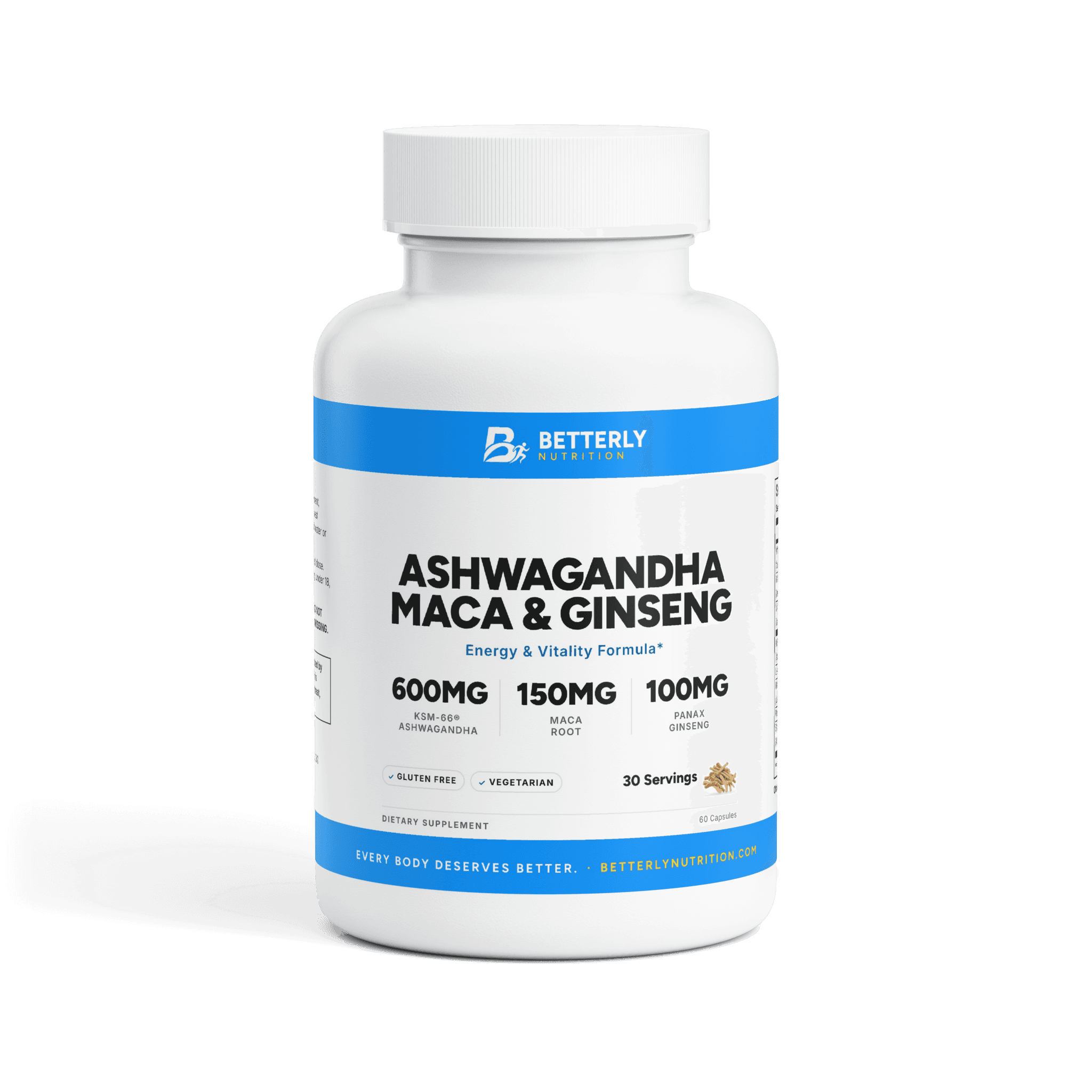
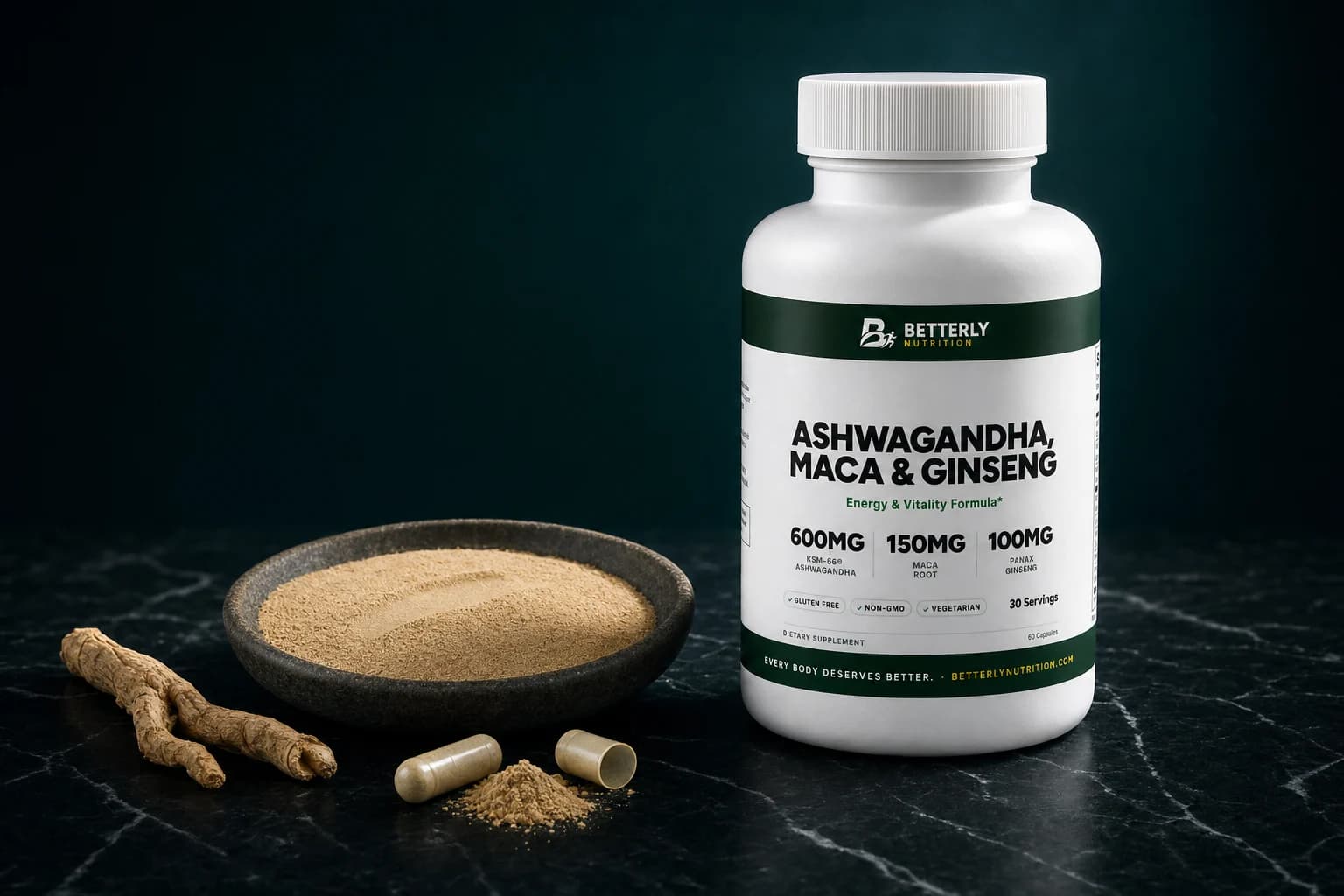
Our Ashwagandha, Maca & Ginseng Capsules list "KSM-66® Ashwagandha Extract (standardized to 5% Withanolides)" at 600 mg per 2-capsule serving, alongside L-arginine, maca root, Panax ginseng, shatavari and three vitamins.
You'll find plenty of brand marketing about how KSM-66 is made. We couldn't confirm those process details on a federal page, so we're sticking to the label and ODS.
What does "standardized to 5% withanolides" mean?
"Standardized to 5% withanolides" means the maker measures withanolides in each batch and adjusts the extract so they make up 5% of its weight.
The ODS botanical sheet defines standardization as choosing marker compounds, measuring them and adjusting batches so each comes out similar. For our KSM-66 row, the arithmetic is 600 mg × 0.05 = 30 mg of withanolides in each 2-capsule serving. The label prints the percentage, not the 30 mg, so that figure is our math.
Two points from ODS keep the percentage in perspective:
- Markers are ideally the compounds doing the work, but for most botanicals nobody knows which those are. For ashwagandha, withanolides are believed to account for many proposed effects, while lab research hints that other compounds may play a part.
- "Standardized" has no legal or regulatory definition in the U.S., and the word alone doesn't signal a high-quality product.
So read a percentage as a consistency target for one family of compounds, useful for comparing extracts of the same plant part. It isn't a quality grade. Turmeric labels raise the same puzzle, and our turmeric vs curcumin breakdown works through its 95% figure.
Why don't milligrams tell you which ashwagandha is stronger?
Milligrams can't rank strength, because an ashwagandha row may weigh plain root, a standardized extract or a concentrate with no marker printed at all.
The FDA's Dietary Supplement Labeling Guide says a dried extract is listed by the weight of the extract, and the panel must name the plant part. Companies may also list a constituent, like withanolides, on its own indented line with a weight. That line is optional, and none of our four panels uses it.
Here's one herb written four ways, on our own panels:
| Our product (serving) | Ashwagandha row on the panel | What you can work out |
|---|---|---|
| Ashwagandha, Maca & Ginseng Capsules (2 capsules) | KSM-66® Ashwagandha Extract (standardized to 5% Withanolides), 600 mg | 30 mg of withanolides |
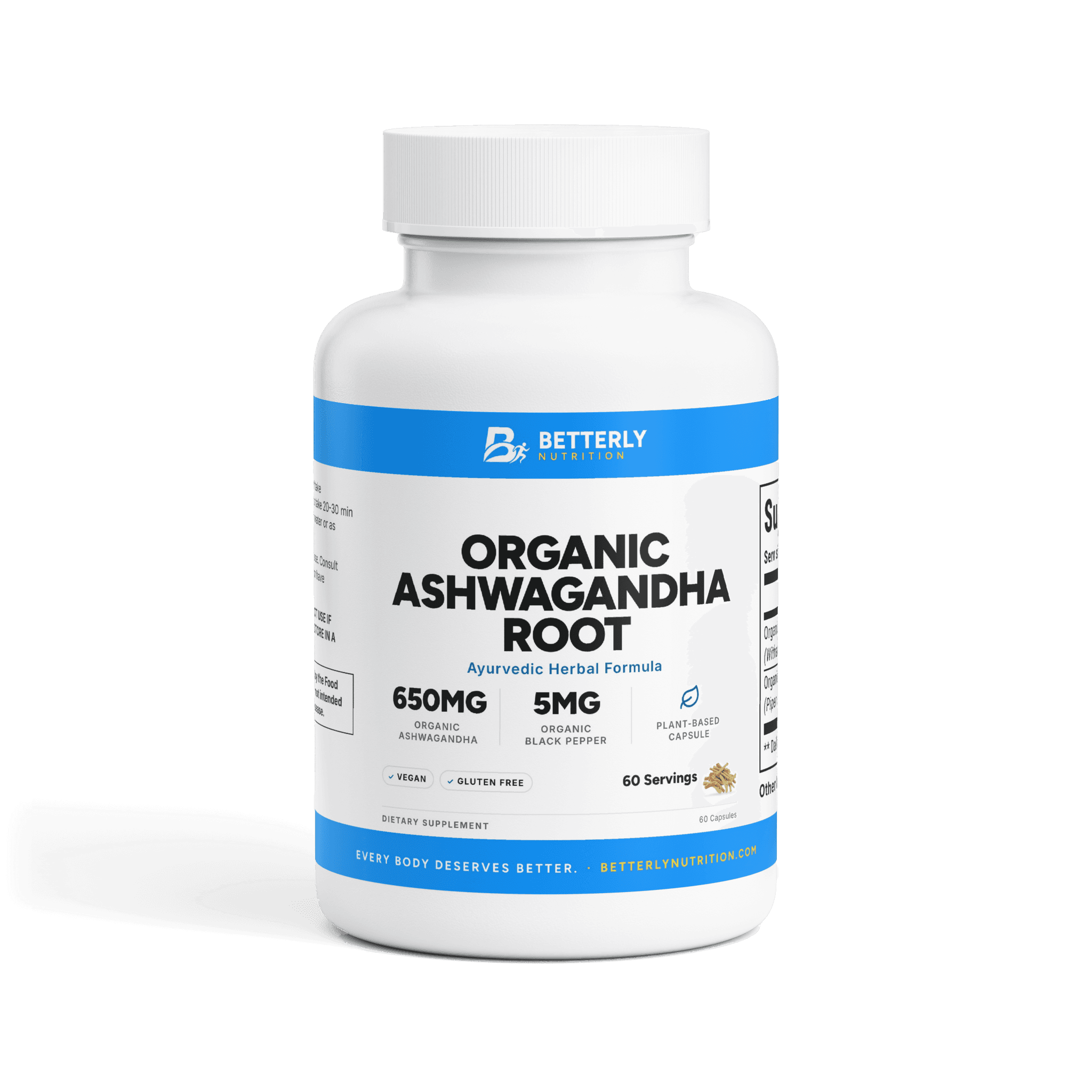
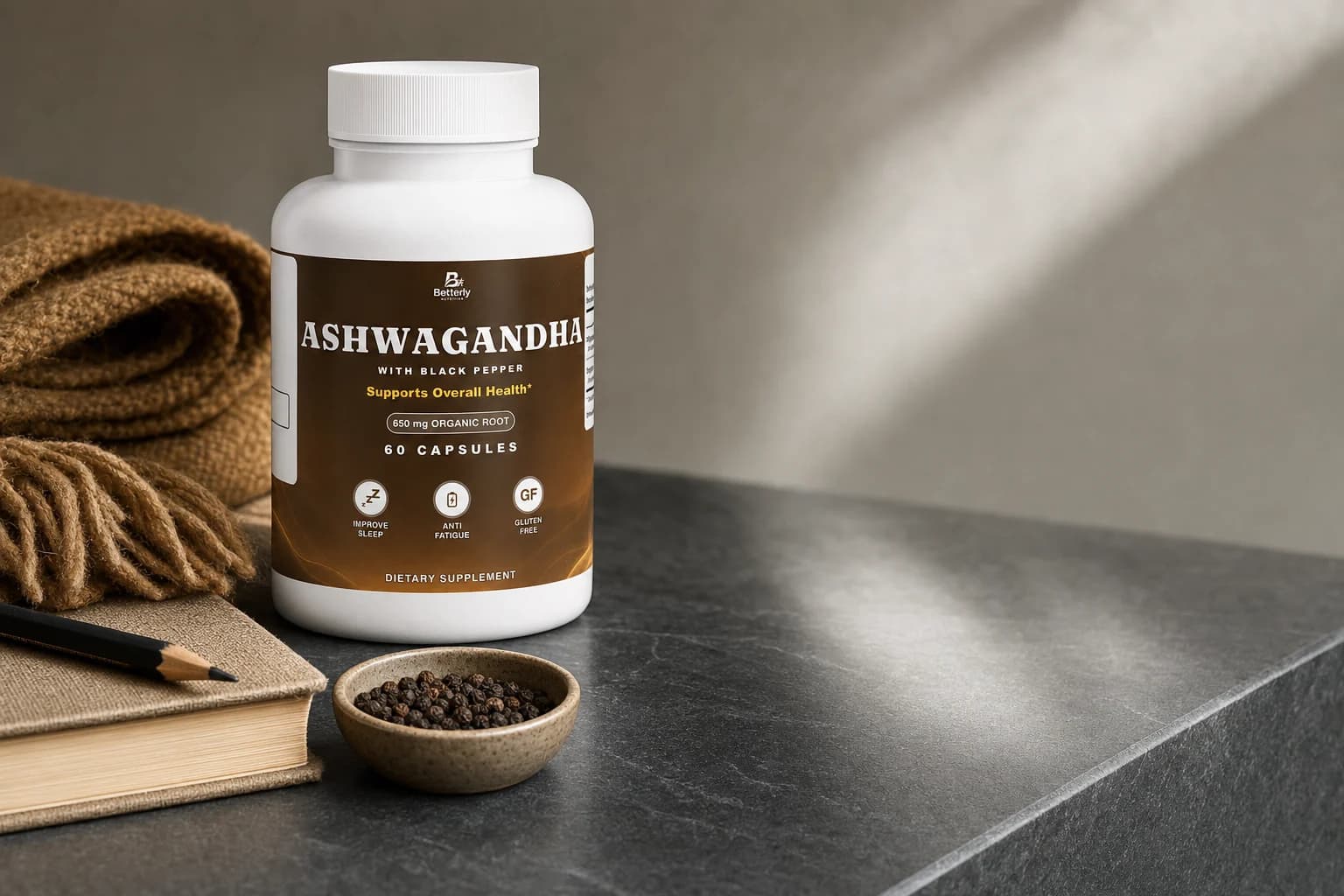
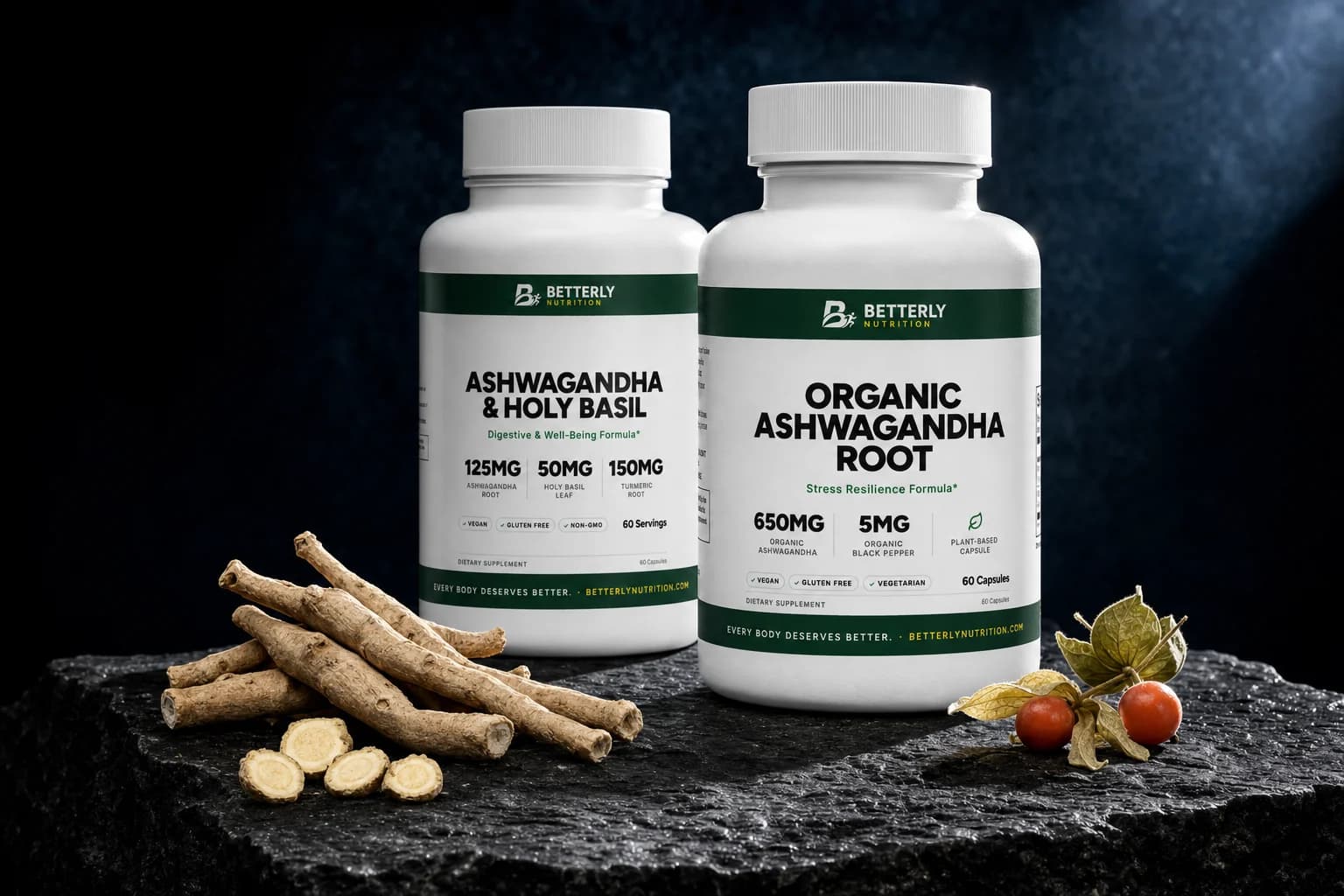
| Organic Ashwagandha Root Capsules (1 capsule) | Organic Ashwagandha (root), 650 mg | Root weight only |
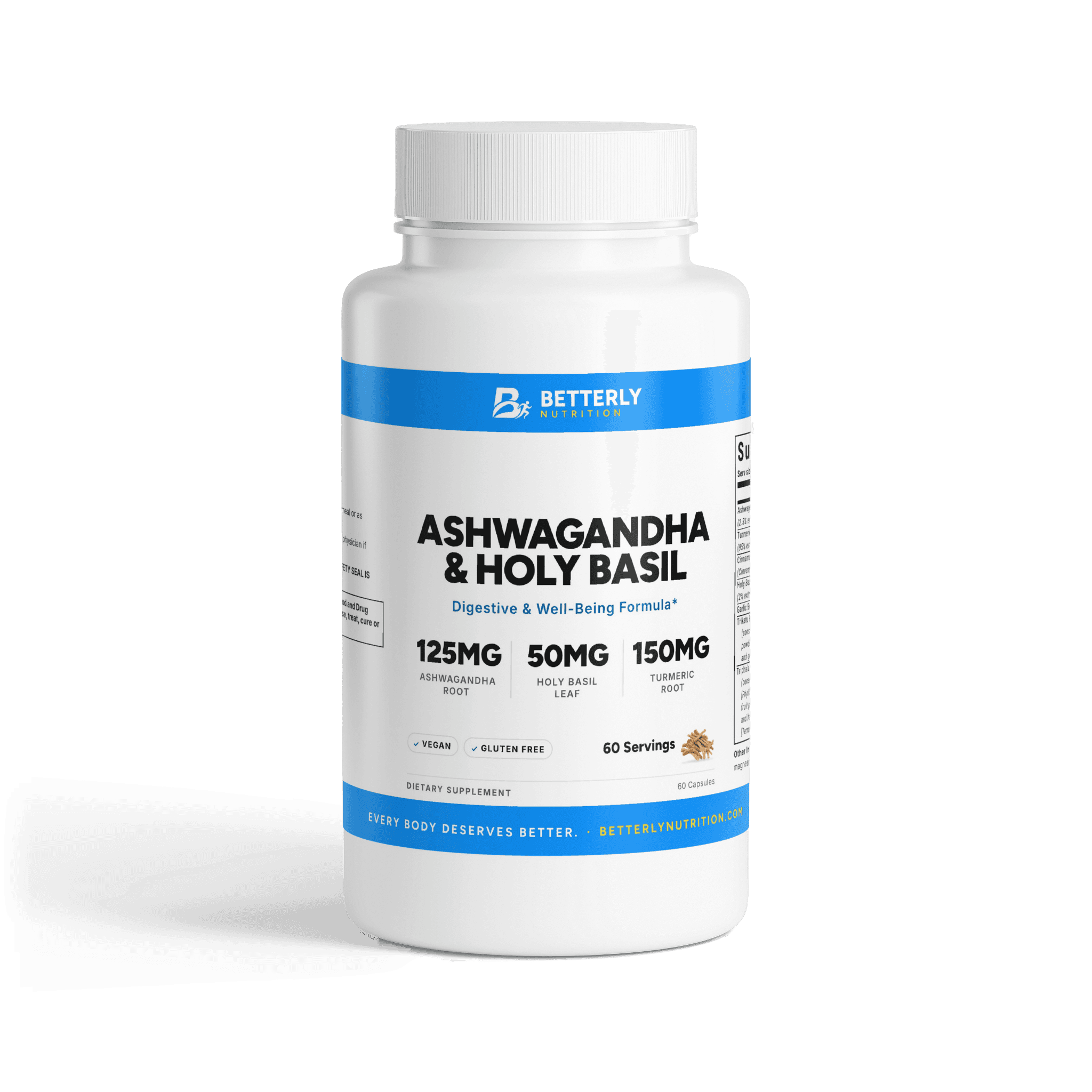
| Ashwagandha & Holy Basil Ayurvedic Capsules (1 capsule) | Ashwagandha Root (2.5% extract), 125 mg | About 3 mg, if 2.5% means withanolides |
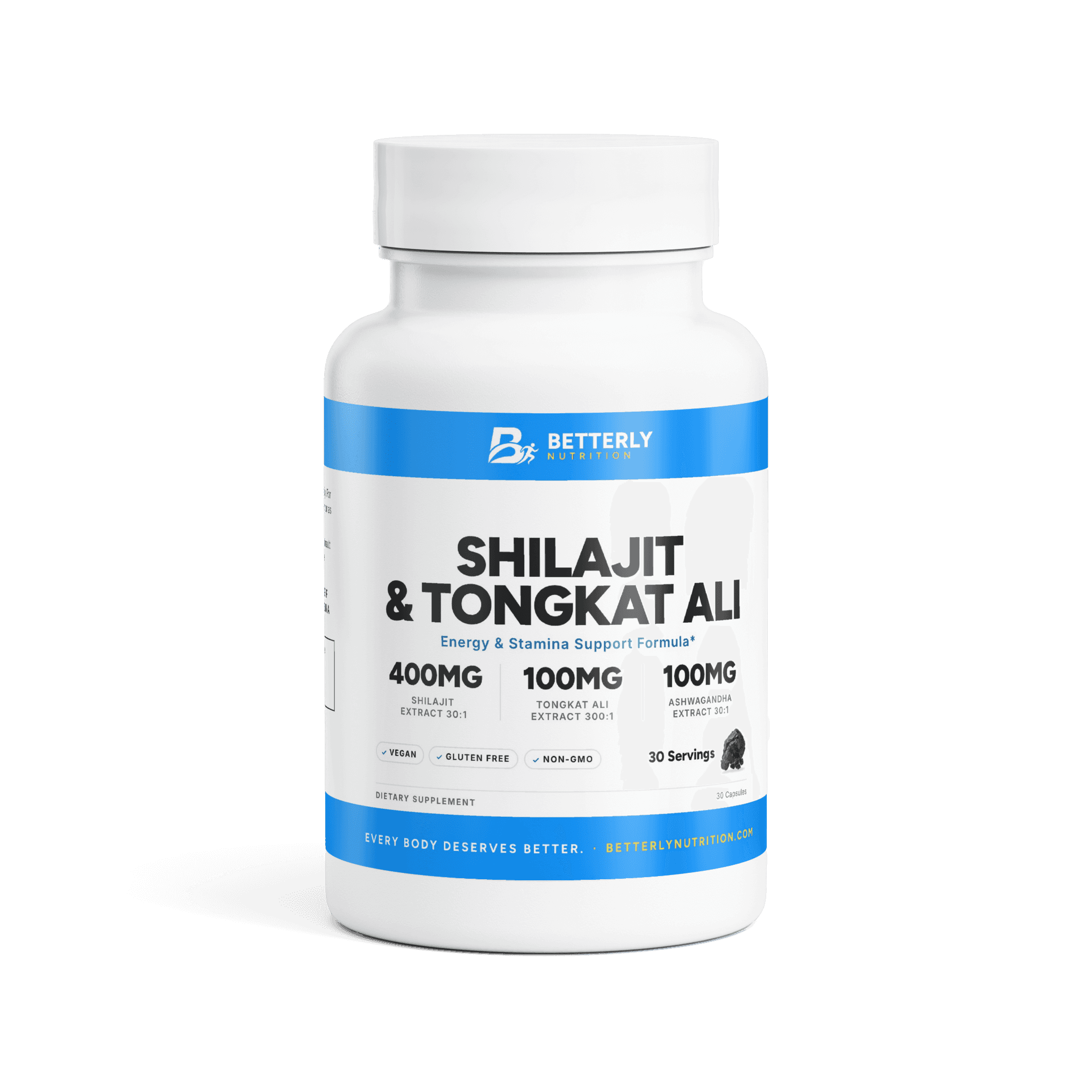
| Shilajit & Tongkat Ali Capsules (1 capsule) | Ashwagandha Root Extract 30:1, 100 mg | Starting root, not withanolides |
Only one row gives a withanolide amount with no guesswork. The biggest number in the table, 650 mg, is the one that tells you the least.
The Ashwagandha & Holy Basil Ayurvedic Capsules show why a named marker matters. The row reads "Ashwagandha Root (2.5% extract)" and never says 2.5% of what. Every standardization marker the ODS fact sheet names for ashwagandha is withanolides or their glycosides, and it describes one root extract standardized to 2.5% withanolides, so that's the likely meaning, or about 3 mg per capsule. That's our reading, not the panel's words, and with 16 other ingredients, it's a blend first.
What does a 30:1 ashwagandha extract mean?
A 30:1 ratio means roughly 30 parts of dried root went into each part of finished extract, so 100 mg of extract started as about 3,000 mg of root.
In its section on tinctures, ODS describes strength ratios as the weight of the dried botanical compared with the finished product. A ratio shows how much the starting material was concentrated, not which compounds survived. ODS notes that different preparations carry different amounts of a plant's constituents.
Our Shilajit & Tongkat Ali Capsules list "Ashwagandha Root Extract 30:1" at 100 mg per 1-capsule serving, beside 400 mg of shilajit extract. With no marker printed, "3,000 mg of root" describes what went in, not what reached the capsule.
KSM-66 vs Sensoril vs Shoden: does the plant part matter?
The plant part matters, because ODS says ashwagandha root and leaf differ in chemical makeup, and Sensoril and Shoden use both while KSM-66 uses root alone.
The National Center for Complementary and Integrative Health (NCCIH) says on its ashwagandha page that supplements typically contain root, leaf or root-and-leaf extracts. ODS adds that most commercial products use the root.
Percentages get slippery once the part changes. In a study ODS describes, Shoden capsules held 21 mg of withanolide glycosides per 60 mg capsule, or 35%. That counts glycosides, a related group, in a root-and-leaf extract, so 35% against KSM-66's 5% isn't a clean ranking. ODS doesn't list Sensoril's percentage, so read it off that product's own panel.
ODS admits the bigger problem: with so many preparations and doses studied, "it is difficult to identify specific extracts or recommended amounts." Settle the plant part first, then compare percentages only within that part.
Should you choose a standardized extract or plain root powder?
Choose a standardized extract if you want a withanolide figure you can check, and plain root powder if you'd rather have the whole root with a short ingredient list.
| If you want | Look for | On our shelf |
|---|---|---|
| A withanolide amount you can calculate | An extract with a named marker and a % | Ashwagandha, Maca & Ginseng Capsules |
| Ashwagandha and very little else | Root, one or two rows, no blend | Organic Ashwagandha Root Capsules |
| A traditional multi-herb formula | A blend giving each herb its own mg | Ashwagandha & Holy Basil Ayurvedic Capsules |
| Ashwagandha as a minor extra | A small extract row in a larger formula | Shilajit & Tongkat Ali Capsules |
The two forms answer different questions. The extract tells you how much of one marker you're getting. The root label tells you the plant part and its weight, and nothing about markers.
Research used them at very different scales, too. In a 2021 review ODS summarizes, six trials gave extracts at 240 to 1,250 mg a day. The seventh used dried root granules, at an amount ODS equates to 6,000 mg of root powder a day. Our root capsule's suggested use adds up to 1,300 mg a day, so don't assume it lines up with an extract trial.
Here's the honest limit of our lineup. Our root capsule is the closest we come to ashwagandha on its own, with 650 mg of organic root plus 5 mg of organic black pepper per 1-capsule serving, and it prints no withanolide percentage. Our one extract with a withanolide amount you can calculate comes inside a blend. If you want KSM-66 alone in one bottle, we don't make that.
From our shop: Ashwagandha, Maca & Ginseng Capsules — the one bottle on our shelf where you can do the withanolide math yourself: 600 mg of KSM-66® extract at 5%, which works out to 30 mg of withanolides in two capsules.
How do you take KSM-66 or root powder capsules, per the label?
Take each product exactly as its label says: two capsules daily for our KSM-66 blend, and one capsule twice a day for our Organic Ashwagandha Root Capsules.
- Ashwagandha, Maca & Ginseng Capsules: two capsules a day for adults, with 6-8 oz (177-237 ml) of water. That's 600 mg of KSM-66® daily across 30 servings.
- Organic Ashwagandha Root Capsules: a capsule twice a day, taken 20-30 minutes before a meal with a glass of water (8 oz, or 237 ml). That comes to 1,300 mg of root daily, so 60 capsules last 30 days.
- Ashwagandha & Holy Basil Ayurvedic Capsules: one capsule daily, preferably with a meal.
- Shilajit & Tongkat Ali Capsules: adults take one capsule daily with 6-8 oz (177-237 ml) of water.
All four labels say "Do not exceed recommended dose." None calls for loading, cycling or doubling up. If you take more than one product containing ashwagandha, add up the rows and run the total past a pharmacist.
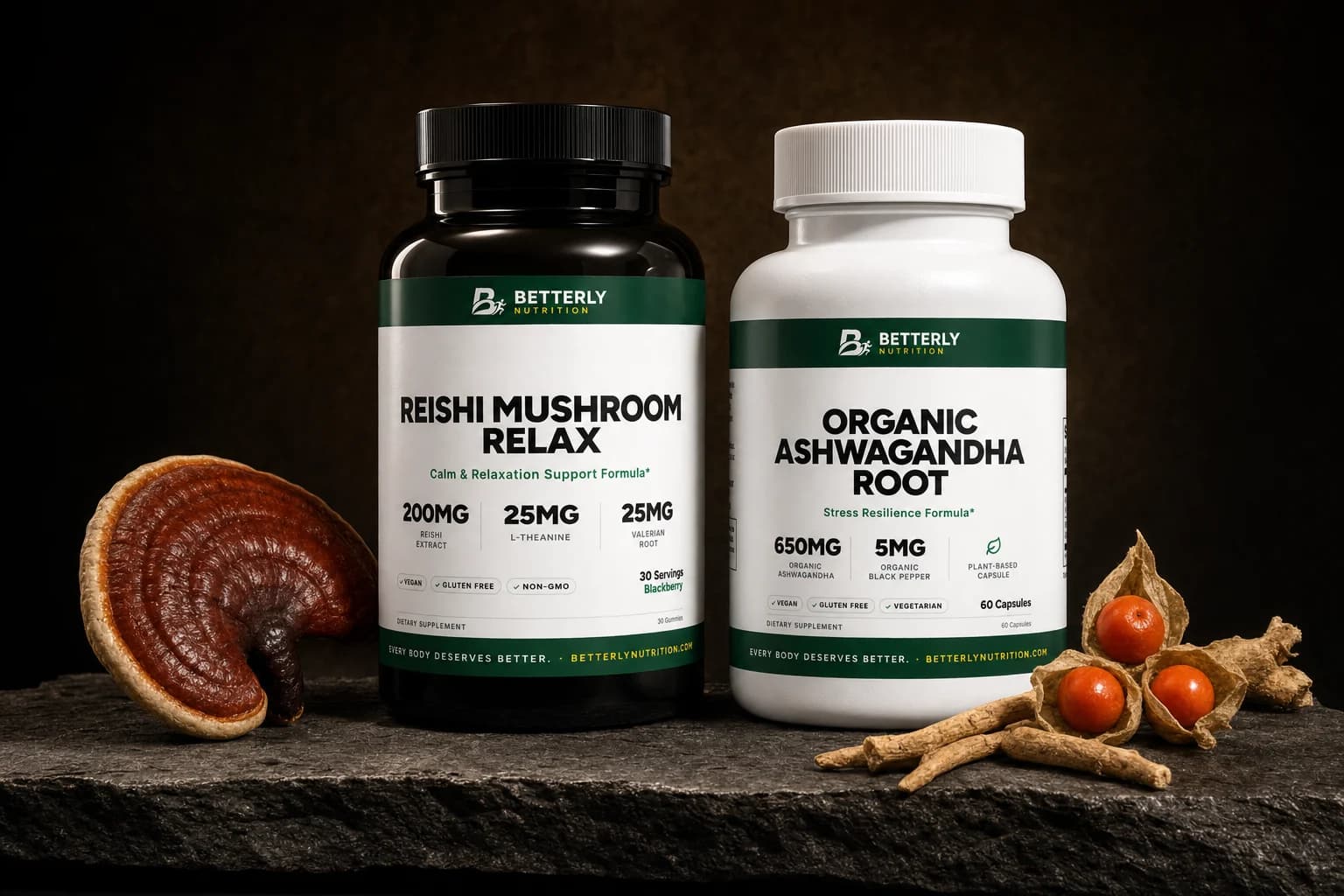
From our shop: Organic Ashwagandha Root Capsules — 650 mg of organic ashwagandha root per 1-capsule serving, listed as root rather than an extract, plus 5 mg of organic black pepper, labeled vegan and gluten free, with no withanolide percentage printed.
When don't you need a KSM-66 or root powder supplement?
You don't need either form if you can't name why you'd take ashwagandha, if something you already take contains it, or if a bigger percentage is the only draw.
- It's already in your cabinet. Some of our blends list ashwagandha inside a blend total with no amount of its own, so search your panels for "ashwagandha" or "Withania somnifera."
- You want to feel something today. None of our ashwagandha labels promises a noticeable effect, and we won't either.
- You're undecided about the herb itself. Our plain-English ashwagandha basics are a better first stop.
If ashwagandha isn't for you, our adaptogens collection holds other roots and herbs, and each panel there reads the same way.
Who should check with a healthcare provider first?
Ask a healthcare provider before any form of ashwagandha if you're expecting or breastfeeding, younger than 18, heading into surgery, on prescription drugs or managing a health condition.
Whatever the form, every label in this guide says to consult a physician if you're pregnant, nursing, under 18 or have a medical condition. NCCIH and ODS add specifics:
- Pregnancy and breastfeeding: NCCIH lists both as times to avoid ashwagandha.
- Surgery: NCCIH doesn't recommend it for people about to have surgery.
- Medicines: NCCIH names sedatives, thyroid hormone medicines and immune-suppressing drugs among possible interactions, and its list is longer than that.
- Thyroid: ODS says ashwagandha might affect thyroid function.
- Liver: NCCIH notes rare cases linking liver injury to ashwagandha supplements. ODS lists yellowing skin, itching, nausea and unusual tiredness among the signs reported.
- Hormone-sensitive conditions: ODS says experts consider it possibly unsafe for men with certain hormone-sensitive conditions.
Our guide on who should skip ashwagandha walks through every group on this list.
FAQ: KSM-66 and ashwagandha root powder
Is KSM-66 better than regular ashwagandha?
No, KSM-66 isn't automatically better than regular ashwagandha root powder. What it adds is a measured withanolide percentage, so you can work out an amount, while a plain root label usually prints none. The NIH Office of Dietary Supplements says the word "standardized" doesn't by itself signal a high-quality product. If you do compare percentages, keep to the same plant part, since KSM-66 is a root-only extract.
Does ashwagandha root powder contain withanolides?
Yes, ashwagandha root powder contains withanolides naturally, since they're part of the root itself. NCCIH lists withanolides among the plant's bioactive compounds. What a plain root label can't tell you is how much. Without a printed percentage, the amount isn't stated. Our Organic Ashwagandha Root Capsules list 650 mg of root per 1-capsule serving and no withanolide figure.
Is 600 mg of KSM-66 a day too much?
No NIH page we read sets an upper limit for ashwagandha, but that isn't the same as a clearance. For our blend, 600 mg of KSM-66 is the label's full suggested use, two capsules daily, so stay there. ODS says common side effects are usually mild. It also describes a few liver-injury reports in people taking supplements with 450 to 1,350 mg of ashwagandha a day, so stop and call your provider if you notice yellowing skin or unusual tiredness.
How long can you take KSM-66 or root powder?
The NIH Office of Dietary Supplements says ashwagandha seems to be well tolerated for roughly 3 months of use, and that nobody knows its safety over longer stretches. NCCIH likewise says it may be safe short term, up to 3 months. That applies to KSM-66, plain root and blends alike. If you'd like to keep taking it past that point, raise it with your provider.
Sources
- Ashwagandha: Fact Sheet for Health Professionals (NIH Office of Dietary Supplements)
- Botanical Dietary Supplements: Background Information for Consumers (NIH Office of Dietary Supplements)
- Ashwagandha: Usefulness and Safety (NCCIH)
- Dietary Supplement Labeling Guide: Chapter IV. Nutrition Labeling (U.S. Food and Drug Administration)
If this left you looking for somewhere to start, read 600 mg KSM-66 ashwagandha capsules — its amounts per serving are listed on the page. For the practical questions this raises, how dosing, sourcing and subscriptions work is answered in one place.