On this page
- Key takeaways
- Turmeric vs curcumin: what's the difference?
- What are curcuminoids, and are they the same as curcumin?
- What does "curcumin 95 percent" mean on a label?
- Is curcumin better than turmeric?
- Why do turmeric supplements add black pepper extract?
- How do our turmeric and curcumin supplements compare?
- How should you take a turmeric or curcumin supplement?
- When don't you need turmeric or curcumin supplements?
- Who should check with a provider before trying turmeric or curcumin?
- FAQ: turmeric vs curcumin
- Sources
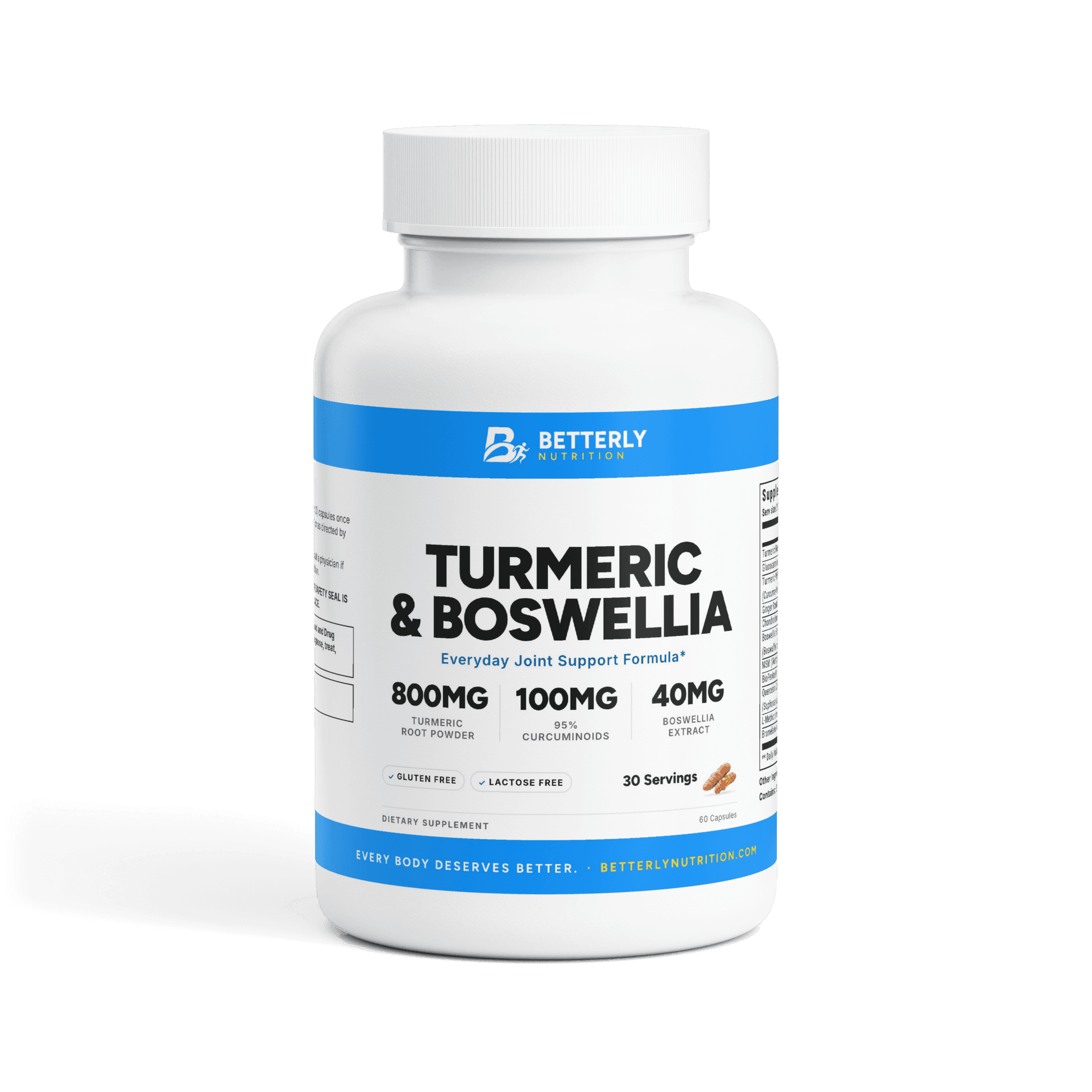
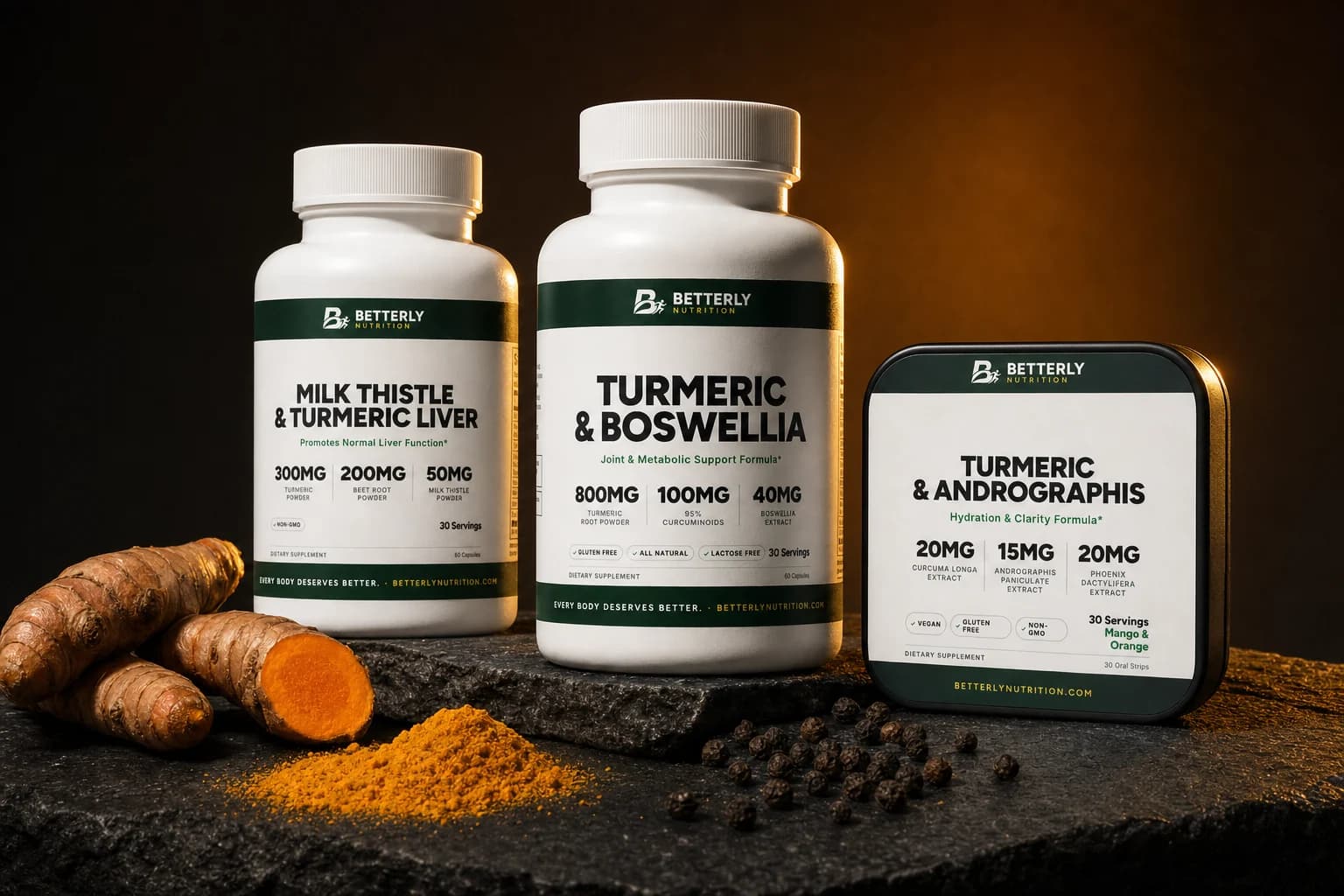
The short answer: Turmeric vs curcumin is whole root versus concentrate. Turmeric is the dried root of Curcuma longa, and curcumin is the main yellow compound inside it. A "95% curcuminoids" extract has been concentrated so curcumin and its close relatives make up 95% of its weight. Our capsule lists both: 800 mg of turmeric root powder and 100 mg of 95% curcuminoids per 2-capsule serving, or about 95 mg of curcuminoids from the extract.
Full disclosure: turmeric turns up on several of our labels, so this is a seller walking you through its own panels. We read them the way we'd read any brand's, gaps included.
Key takeaways
- Curcumin is one compound in turmeric root, and "curcuminoids" is the family name for curcumin and its close chemical relatives.
- A 95% figure describes the extract, not the capsule, so 100 mg of a 95% curcuminoid extract holds about 95 mg of curcuminoids.
- Plain turmeric root powder usually isn't standardized, so its label can't tell you how much curcumin you're getting.
- Some turmeric formulas, ours included, add black pepper extract (piperine), which the NIH's NCCIH names as one way to raise curcumin's bioavailability. NCCIH also warns highly bioavailable curcumin may harm the liver.
- If you simply enjoy turmeric in food, you don't need a supplement to keep doing that.
Turmeric vs curcumin: what's the difference?
Turmeric is the whole root of Curcuma longa, while curcumin is the main yellow compound inside that root.
According to the National Center for Complementary and Integrative Health (NCCIH), turmeric is a plant in the ginger family, grown commercially in Southeast Asia and India. The part people use is the rhizome, an underground stem most of us just call the root. NCCIH says curcumin, a major component of turmeric, gives the spice its yellow color.
| At a glance | Turmeric root powder | 95% curcuminoid extract |
|---|---|---|
| What it is | The whole dried root, ground | A concentrate made from the root |
| What the label gives you | Weight of root (mg) | Weight of extract plus a % |
| Curcuminoids you can work out | Not stated | Extract weight × 95% |
| What else comes along | The rest of the plant | Very little else |
The third row matters most. Root powder tells you how much turmeric you're getting, while a standardized extract lets you work out the curcumin.
What are curcuminoids, and are they the same as curcumin?
Curcuminoids are the family of yellow compounds in turmeric, and curcumin is the best known of them. All curcumin is a curcuminoid, but not every curcuminoid is curcumin.
NCCIH notes that turmeric's health activities are commonly attributed to curcuminoids, which include curcumin. The family's other members, such as demethoxycurcumin and bisdemethoxycurcumin, rarely get named on a label, because most extracts report one total.
"95% curcuminoids" counts the whole family together. Strictly, "95% curcumin" would mean curcumin alone, but some labels use it for the curcuminoid total, so check which one is printed. Our capsule's row reads "Turmeric 95% Curcuminoids," so it's reporting the family total.
What does "curcumin 95 percent" mean on a label?
A curcumin 95 percent label means the extract is standardized so one marker, either total curcuminoids or curcumin alone, makes up 95% of its weight. A good label names which one. Either way, the figure describes the extract, not the whole capsule or the whole plant.
Our Turmeric Curcumin & Boswellia Capsules make a handy worked example. Per 2-capsule serving, the panel lists "Turmeric 95% Curcuminoids" at 100mg. The usual reading is 100 mg of extract standardized to 95%, which gives about 95 mg of curcuminoids. The row's wording is compact, so 95 mg is our reading of it, not a printed figure.
Treat that 95% as the extract maker's own target, not an outside grade. The NIH Office of Dietary Supplements (ODS) points out that seeing "standardized" on a label isn't proof of high quality, and no U.S. law makes standardization mandatory.
Always ask "95% of what?"
On our own shelf, 95% means three different things:
- Turmeric Curcumin & Boswellia Capsules: 95% curcuminoids, with the marker named.
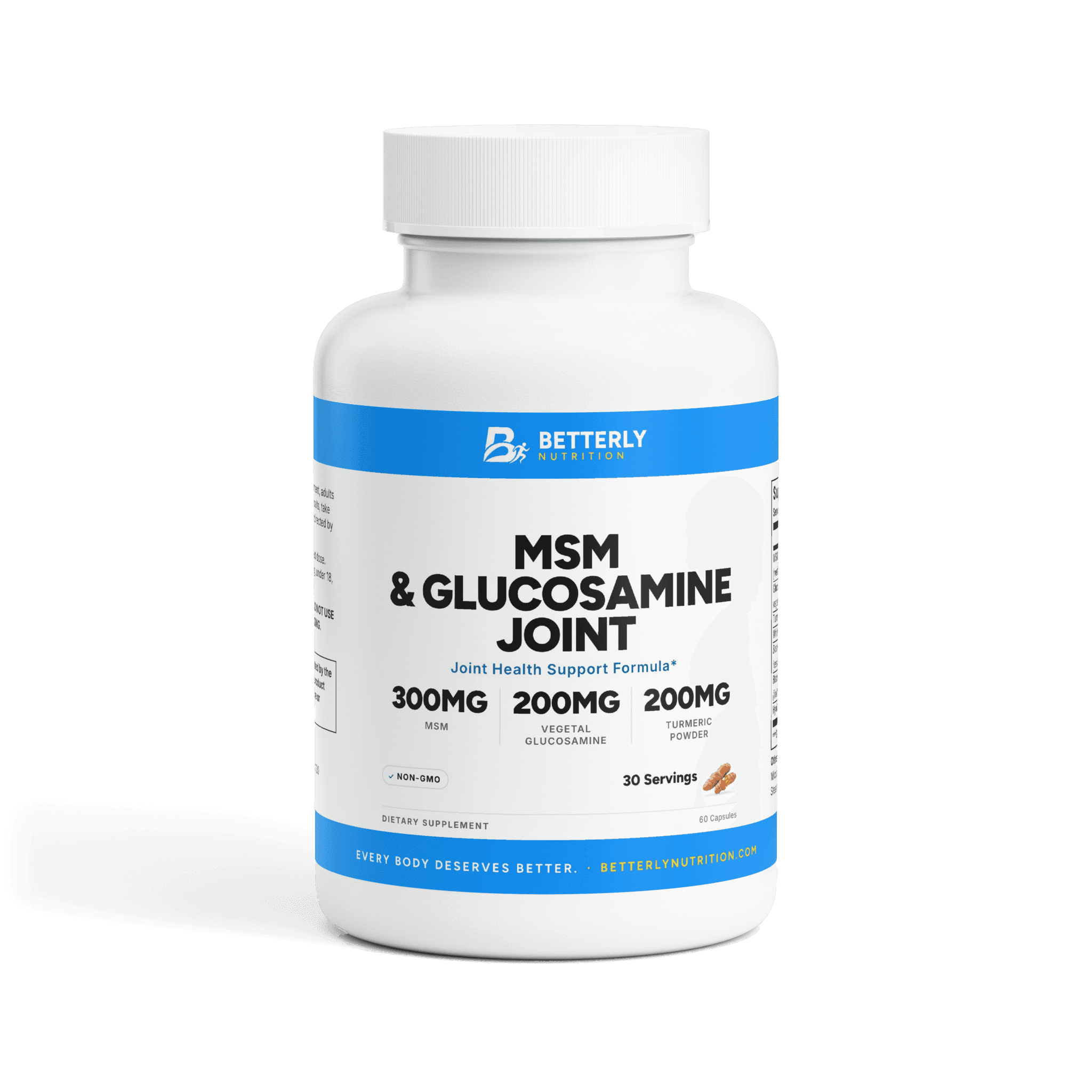
- MSM & Glucosamine Joint Capsules: 10 mg of black pepper extract "std. to 95% piperine" per 2-capsule serving. That 95% is piperine, not curcumin.
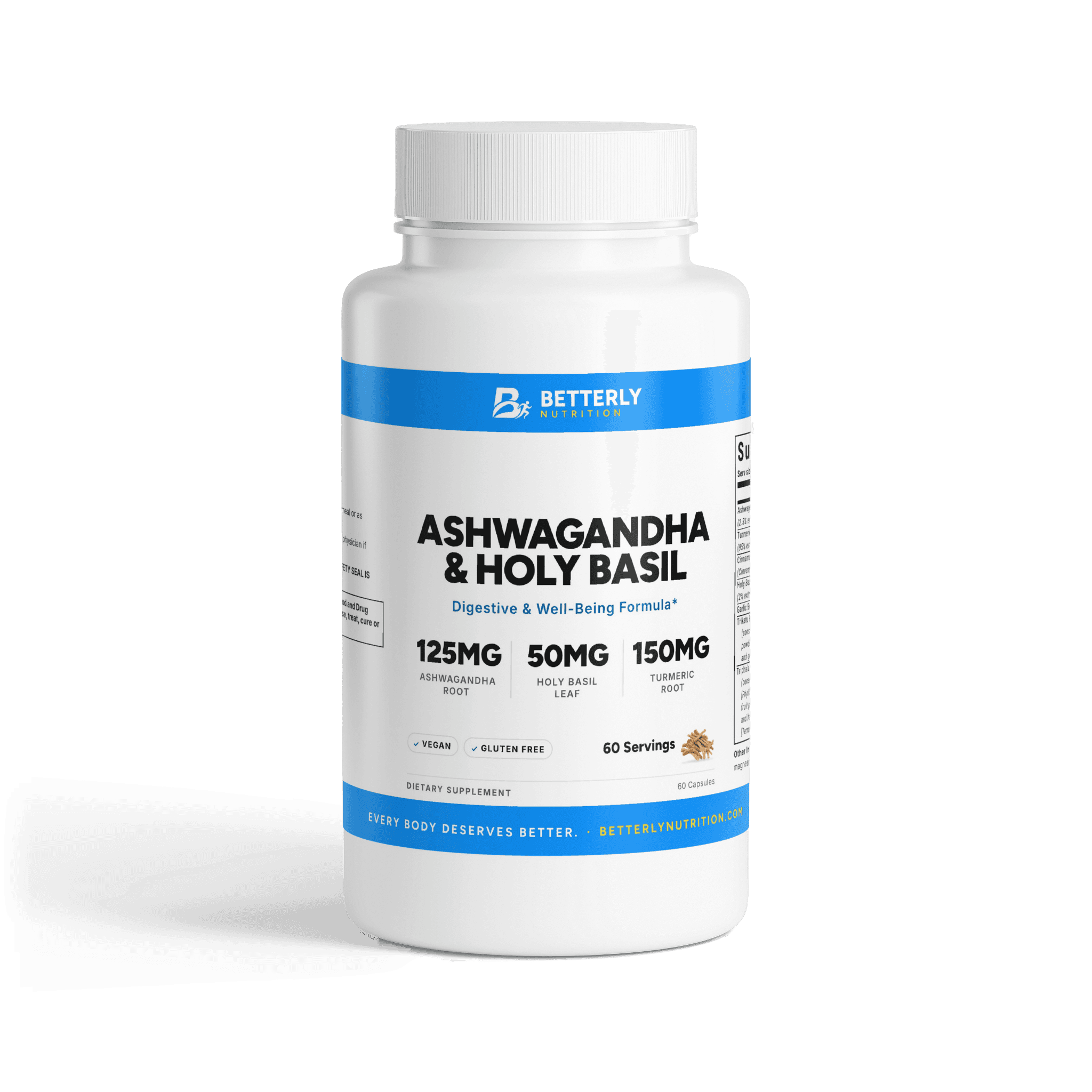
- Ashwagandha & Holy Basil Ayurvedic Capsules: "Turmeric Root (95% extract)" at 150 mg per 1 capsule serving. The label doesn't say 95% of what, so you can't work out a curcuminoid figure from it.
A percentage only helps you when the marker is printed right beside it.
Is curcumin better than turmeric?
Curcumin isn't simply better than turmeric. A curcumin extract gives you a known, concentrated amount, while turmeric root powder gives you the whole plant with an unknown curcumin share.
NCCIH says researchers don't know enough to definitively conclude whether turmeric or curcumin is beneficial for any health purpose. It adds that oral curcumin products vary in how much curcumin they actually contain, which makes studies hard to compare. So "better" here means easier to measure, not proven to do more.
If you're choosing a turmeric vs curcumin supplement, the trade-off sorts out like this:
- Pick a standardized extract if you want a curcuminoid number you can compare across brands.
- Pick root powder if you'd rather stay close to the spice and don't mind an unknown curcumin figure.
- Pick a formula with both, like our capsule, if you want a known extract amount plus whole root.
- Skip both for now if you're pregnant (more on that below).
From our shop: Turmeric Curcumin & Boswellia Capsules — 800 mg of turmeric root powder and 100 mg of 95% curcuminoids per 2-capsule serving, with 10 mg of BioPerine®, and not for anyone allergic to shellfish.
Why do turmeric supplements add black pepper extract?
Turmeric supplements add black pepper extract because piperine, a compound from black pepper, is one way to improve curcumin's bioavailability, according to NCCIH.
Bioavailability means how much of what you swallow your body can absorb and use. Our turmeric capsule lists BioPerine®, a branded black pepper extract, at 10mg per 2-capsule serving. The joint capsules list 10 mg of black pepper extract, standardized to 95% piperine, per 2-capsule serving. The Ayurvedic capsules list black pepper fruit powder, not an extract, inside 25 mg of Trikatu Powder per 1-capsule serving. Our Milk Thistle & Turmeric Liver Capsules and Turmeric & Andrographis Strips list no black pepper at all.
NCCIH also warns that highly bioavailable formulations of curcumin "may harm your liver," and it says liver harm has been reported in some people who took them. Since NCCIH names piperine as one way to raise bioavailability, we won't pretend our pepper-paired capsule sits outside that warning. NCCIH says that if you notice fatigue, nausea, poor appetite, dark urine or yellowing of your skin or eyes, you should stop turmeric or curcumin products right away and talk with your healthcare provider.
What about phytosome and liposomal curcumin?
Some brands sell phytosome or liposomal curcumin to raise absorption. NCCIH's liver caution is worded for highly bioavailable formulations in general, so we read it as covering those too. We don't sell either form.
How do our turmeric and curcumin supplements compare?
Betterly's Turmeric Curcumin & Boswellia Capsules are the only one of our labels listing both turmeric root powder and a named 95% curcuminoid extract in one serving. Several other labels of ours list turmeric too. The four closest comparisons sit side by side below.
| Product (serving) | Turmeric as printed | Black pepper listed |
|---|---|---|
| Turmeric Curcumin & Boswellia Capsules (2 capsules) | 800mg root powder + 100mg 95% curcuminoids | BioPerine® (black pepper extract) 10mg |
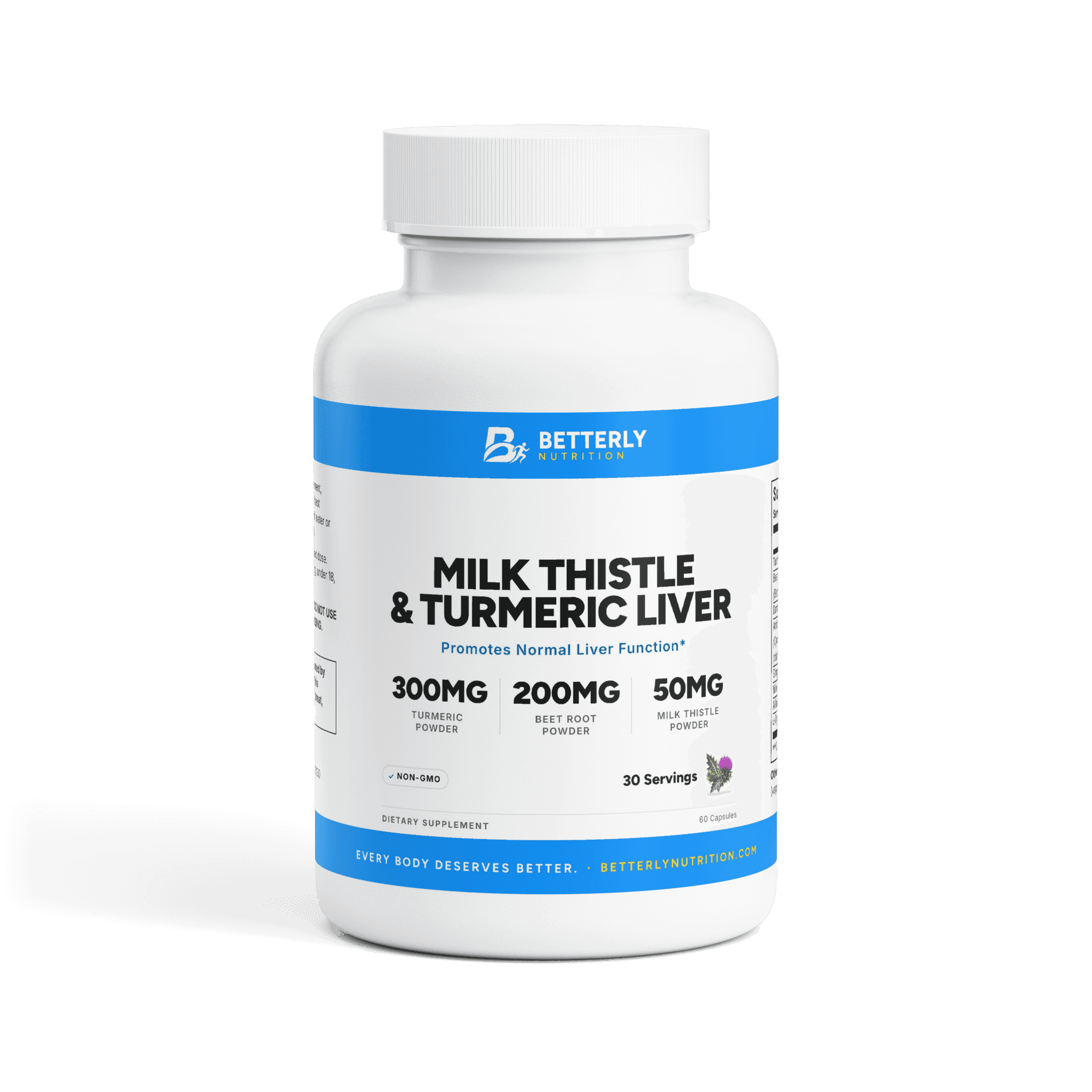
| Milk Thistle & Turmeric Liver Capsules (2 capsules) | 300 mg turmeric powder (root) | None |
| MSM & Glucosamine Joint Capsules (2 capsules) | 200 mg turmeric powder (root) | Black pepper extract 10 mg, std. to 95% piperine |
| Ashwagandha & Holy Basil Ayurvedic Capsules (1 capsule) | 150 mg turmeric root (95% extract) | Black pepper fruit powder, within 25 mg Trikatu Powder |
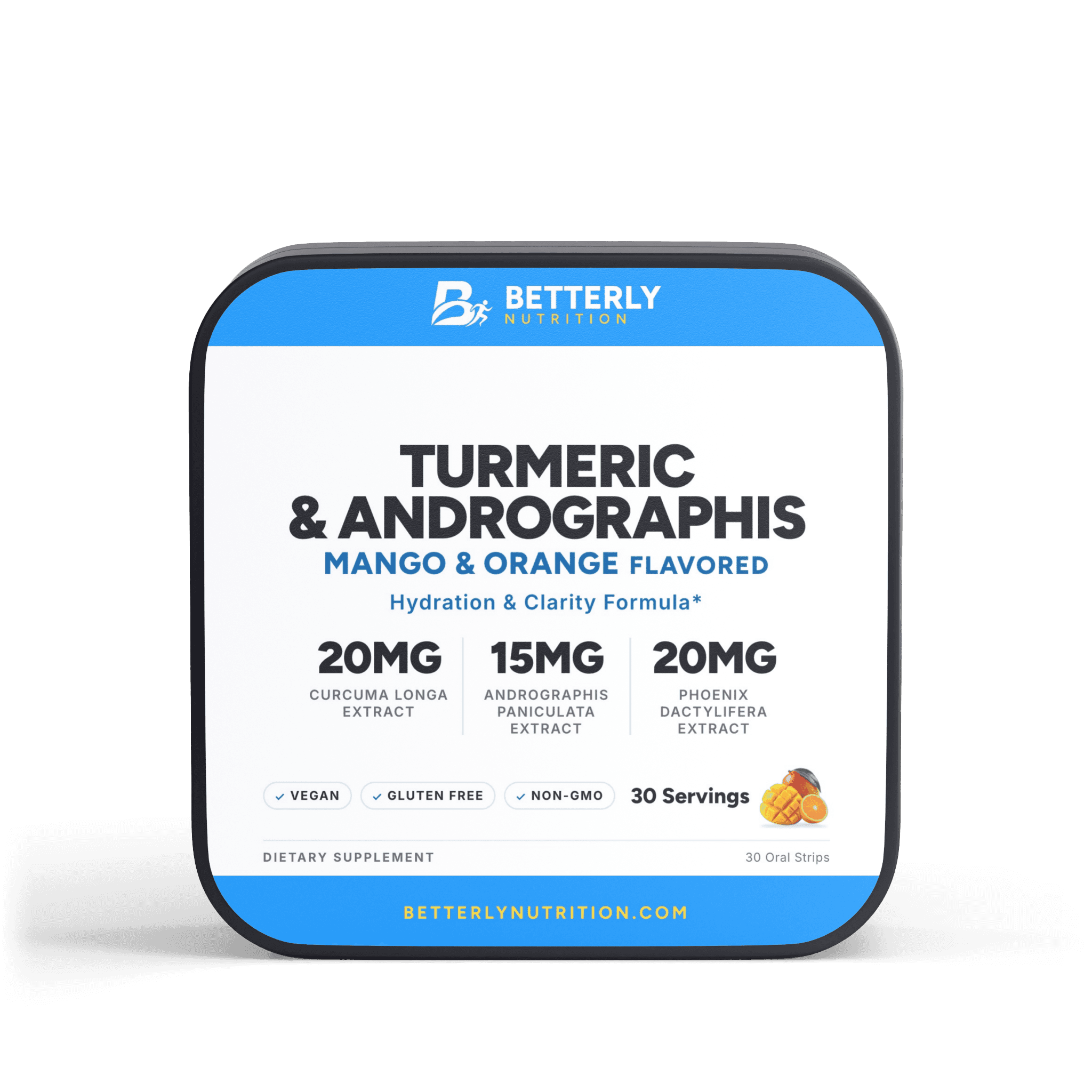
| Turmeric & Andrographis Strips (1 strip) | 20 mg Curcuma longa extract | None |
Only the first row gives you a curcuminoid figure you can calculate. The others give turmeric weight, not curcumin.
Per 2-capsule serving, the turmeric capsule's panel also lists glucosamine sulfate 2KCl (200mg), ginger root extract (100mg), chondroitin sulfate (50mg), boswellia extract (40mg) and MSM (10mg). It adds 8mg each of quercetin dihydrate, L-methionine and bromelain.
Now the honest limits. The Boswellia carteri row names no standardization, unlike the joint capsules' Boswellia serrata extract "std. to 65% boswellic acids." And this capsule isn't for everyone. Its allergen line reads "Contains: Shellfish (Crab, Lobster and Crawfish)," and the label carries this warning: "WARNING: People allergic to shellfish should not consume this product." Our turmeric capsule and the joint capsules both sit in our targeted support collection.
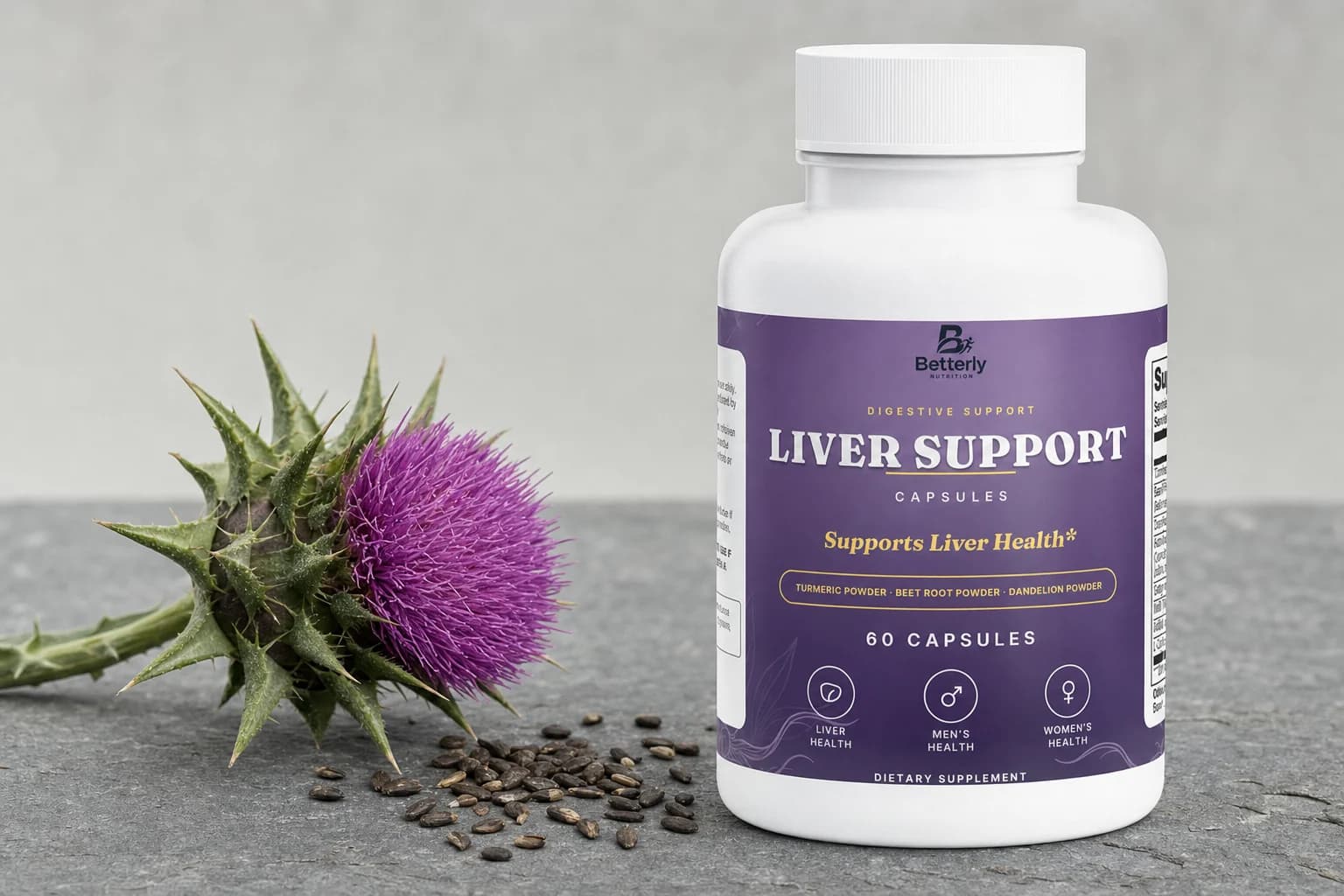
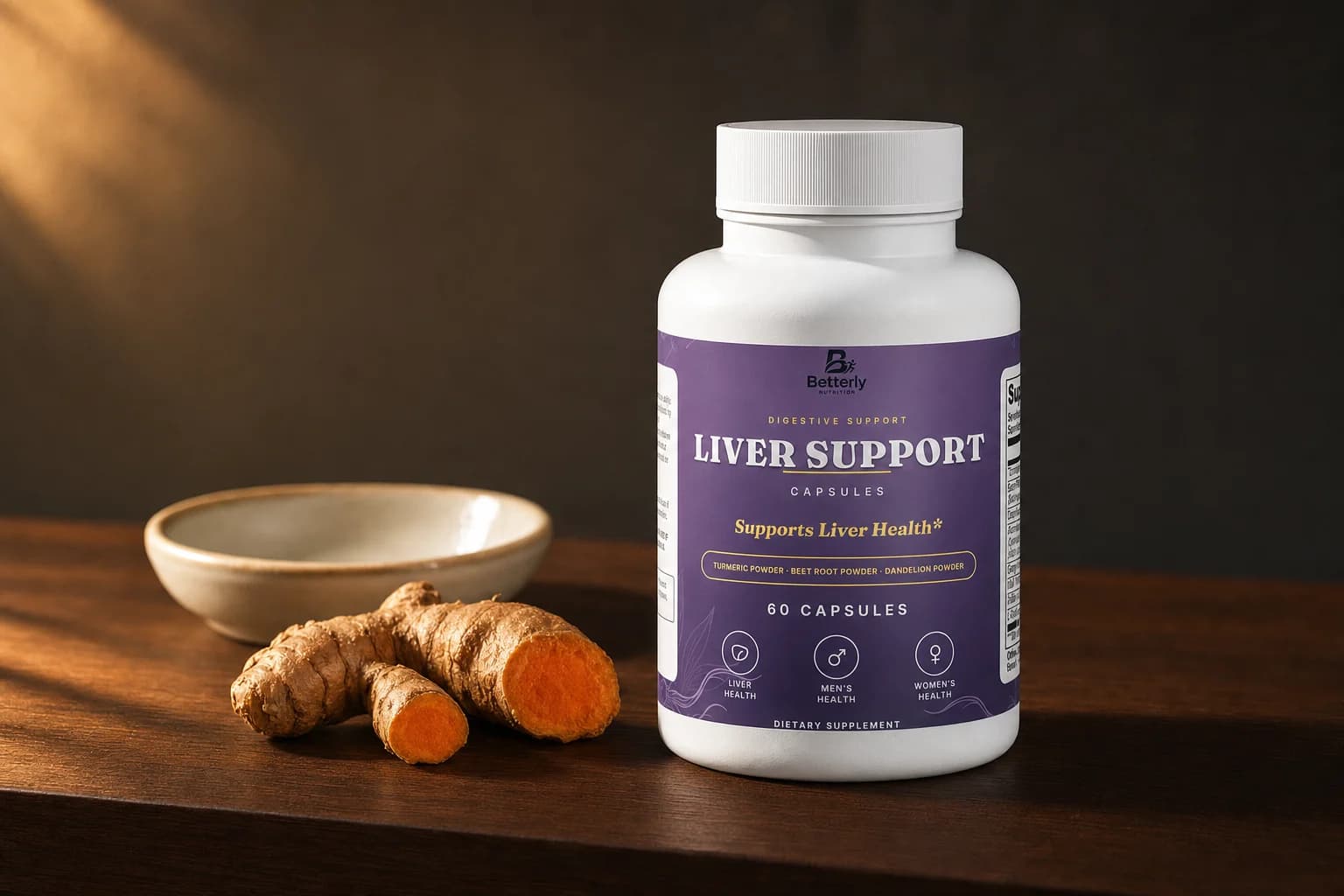
If you avoid shellfish, our Milk Thistle & Turmeric Liver Capsules carry no shellfish allergen line. They combine 300 mg of turmeric root powder per 2-capsule serving with beet root, dandelion leaf, artichoke extract, milk thistle powder and a few other ingredients. Our milk thistle guide explains why milk thistle and turmeric so often share a bottle.
The Turmeric & Andrographis Strips hold 20 mg of Curcuma longa extract per 1 Oral Strip (165 mg) serving, with no percentage listed.
From our shop: Milk Thistle & Turmeric Liver Capsules — 300 mg of plain turmeric root powder per 2-capsule serving, with no shellfish allergen line and no black pepper listed.
How should you take a turmeric or curcumin supplement?
Take a turmeric or curcumin supplement exactly as its label directs. For our Turmeric Curcumin & Boswellia Capsules, the label's suggested use is two capsules once a day.
That label adds, "For best results take 20-30 min before a meal or as directed by your healthcare professional." The other four labels read differently, but all five print "Do not exceed recommended dose."
- Milk Thistle & Turmeric Liver Capsules and MSM & Glucosamine Joint Capsules: adults take two capsules daily with 6-8 oz (177-237ml) of water.
- Ashwagandha & Holy Basil Ayurvedic Capsules: 1 capsule daily, preferably with a meal.
- Turmeric & Andrographis Strips: 1 oral strip a day, left on the tongue to dissolve.
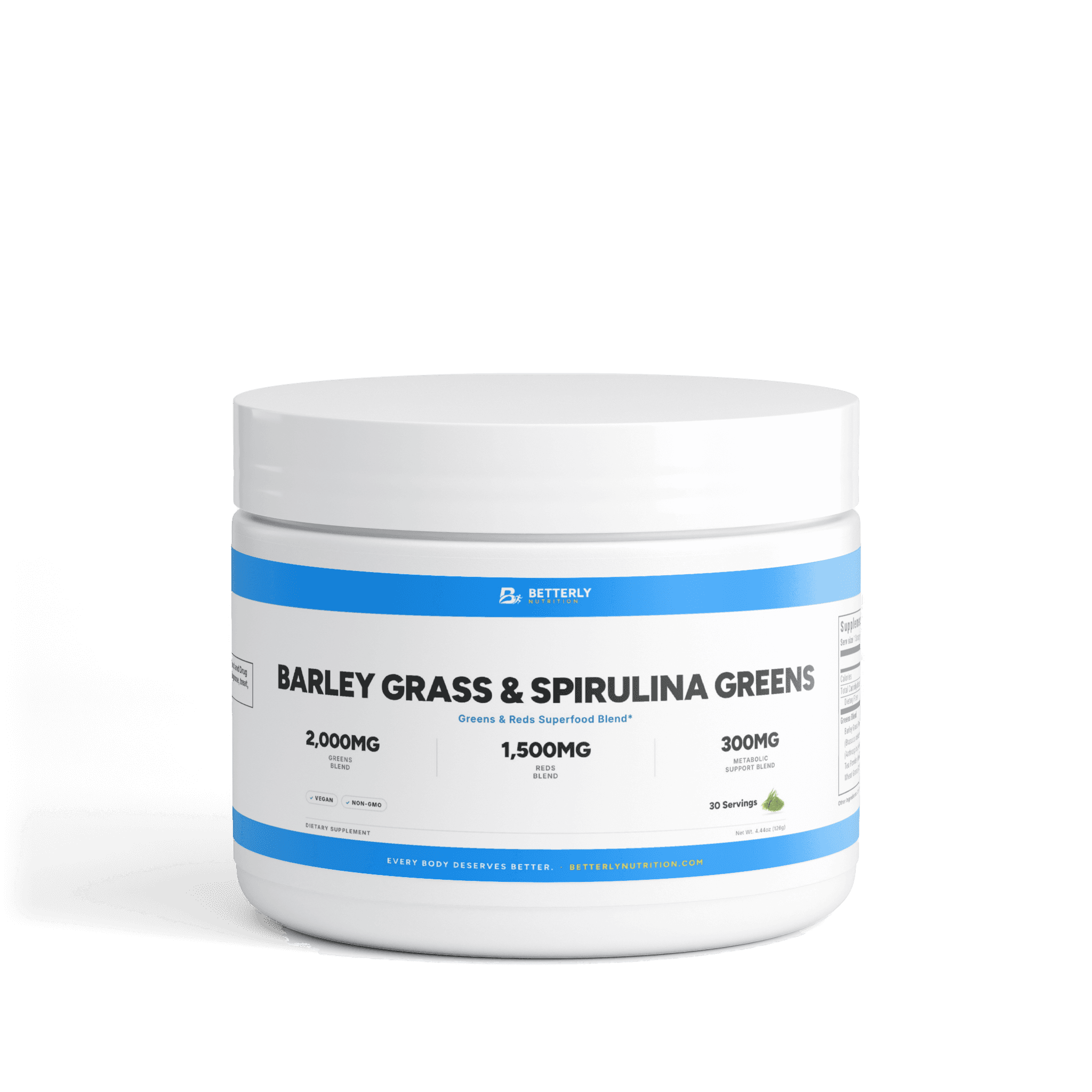
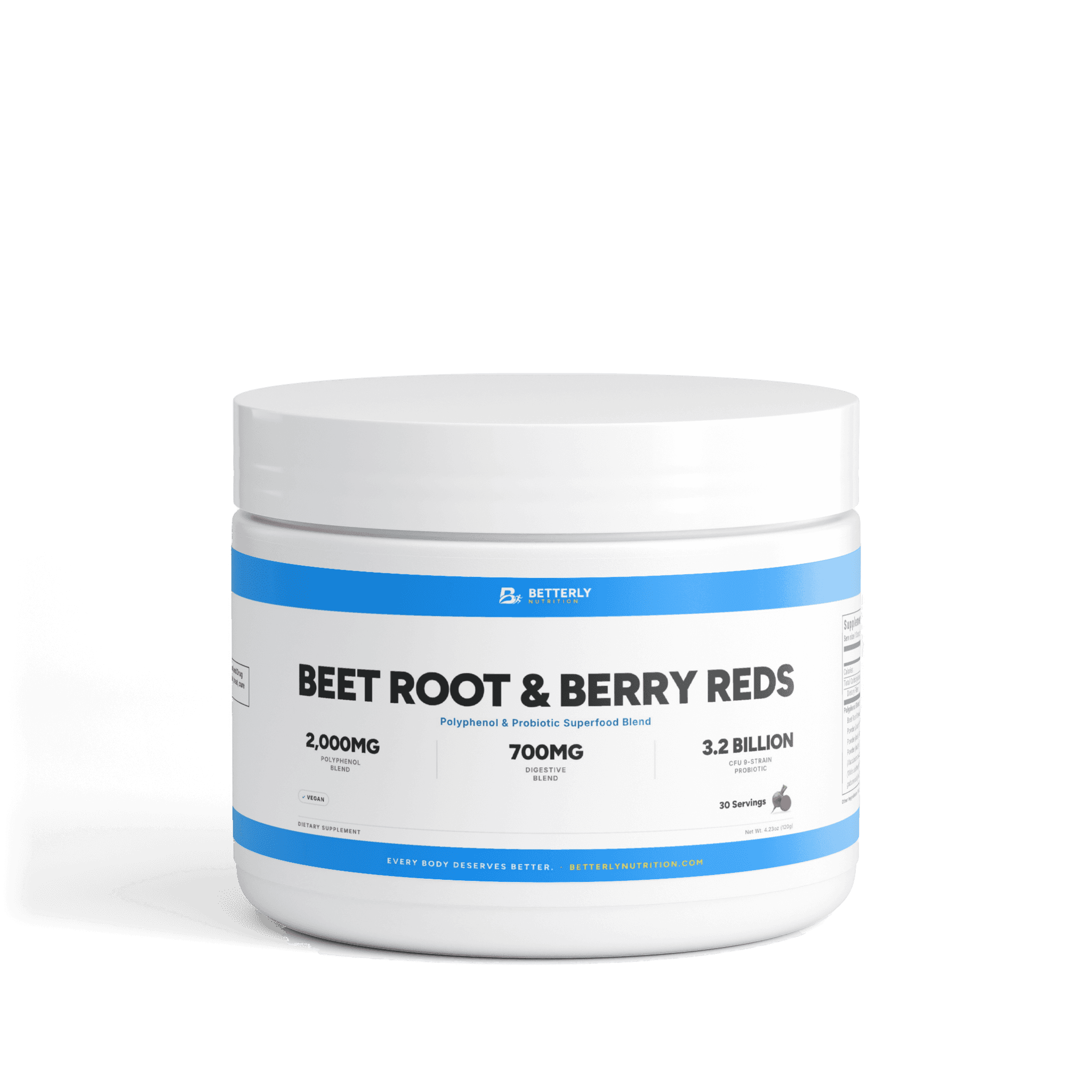
Our turmeric capsule and the joint capsules both list a black pepper extract, so taking both puts two in your day. Our Barley Grass & Spirulina Greens Powder and Beet Root & Berry Reds Powder also list turmeric and black pepper extract inside a blend. Given NCCIH's liver caution on highly bioavailable curcumin, show your provider every panel before combining them.
ODS makes a related point in Dietary Supplements: What You Need to Know: side effects become more likely with high doses, or with many different supplements taken together. Our supplement routine walkthrough makes the case for keeping your list short.
When don't you need turmeric or curcumin supplements?
You don't need a turmeric or curcumin supplement to keep enjoying turmeric as a spice. A supplement is optional, and no label can promise you a result.
- If you're pregnant or nursing, hold off on turmeric supplements and ask your provider. NCCIH's cautions for both are worded around supplements and amounts above what's common in food.
- If you already take a blend, check its panel first, since turmeric turns up in greens, liver and joint formulas.
- If you're allergic to shellfish, skip our Turmeric Curcumin & Boswellia Capsules entirely.
- If you're hoping for a noticeable change, remember NCCIH's bottom line from above: the evidence isn't conclusive.
Weighing a liver formula instead? Our honest look at whether liver support supplements work covers what they can and can't do.
Who should check with a provider before trying turmeric or curcumin?
Check with a healthcare provider before trying turmeric or curcumin if you're pregnant or nursing, under 18, on any medication, or managing a health condition. Our turmeric labels' cautions name pregnancy, nursing, being under 18 and having a medical condition. The medication advice comes from NCCIH, below.
- Pregnant or nursing: NCCIH says turmeric supplements during pregnancy may be unsafe, and little is known about amounts above food levels while breastfeeding.
- Taking any medicine: NCCIH advises talking with your provider before using any herbal product, because some herbs and medicines interact in harmful ways.
- Scheduled for surgery: ODS notes that some supplements can affect bleeding, or change your response to anesthesia if taken before surgery.
- Managing any health condition, especially one involving your liver, given NCCIH's note on high-absorption curcumin.
- Allergic to shellfish: our turmeric capsule's label says not to take it.
NCCIH also lists nausea, vomiting, stomach upset, diarrhea and constipation among possible side effects of oral turmeric. If any of them show up, tell your provider which turmeric products you take.
FAQ: turmeric vs curcumin
Is curcumin the same as cumin?
No, curcumin and cumin are unrelated despite the similar names. Curcumin is a yellow compound found in turmeric, a plant in the ginger family. Cumin is a separate spice made from the seeds of a different plant, and it isn't where curcumin comes from.
Can you take turmeric and curcumin together?
Yes, turmeric and curcumin can be taken together, and many formulas already combine them in one serving. Our Turmeric Curcumin & Boswellia Capsules pair both in each 2-capsule serving. The catch is adding a second turmeric product on top. Check with a provider first, since stacking labels also stacks any pepper extract they contain.
Is it safe to take turmeric every day?
Turmeric can be taken daily for a limited stretch, with conditions. NCCIH says conventionally formulated turmeric or curcumin, meaning not modified to enhance absorption, is likely safe in recommended amounts for up to 2 or 3 months. Our turmeric capsule includes BioPerine®, a black pepper extract, so we don't claim that note covers it. If you're pregnant, take any medication or manage a health condition, ask a provider before daily use.
How much curcumin is in turmeric powder?
A turmeric powder label usually can't tell you, since plain root powder isn't typically standardized to a curcumin figure. Our Milk Thistle & Turmeric Liver Capsules list 300 mg of turmeric root powder per 2-capsule serving, and our MSM & Glucosamine Joint Capsules list 200 mg per 2-capsule serving. Neither panel prints a curcumin number, so we won't guess at one. If you want a number you can check, choose an extract that names its marker.
Does cooking with turmeric give you curcumin?
Yes, cooking with turmeric gives you some curcumin, because NCCIH describes curcumin as a major component of the spice. What you can't know is how much, since kitchen turmeric isn't standardized. NCCIH's safety notes also separate supplements from food amounts. Enjoying turmeric in food is a different decision from taking a concentrated extract.
Sources
- Turmeric: Usefulness and Safety (NCCIH)
- Botanical Dietary Supplements: Background Information (NIH Office of Dietary Supplements)
- Dietary Supplements: What You Need to Know (NIH Office of Dietary Supplements)
If this left you looking for somewhere to start, read turmeric root powder and 95% curcuminoid capsules — its amounts per serving are listed on the page. For the practical questions this raises, how dosing, sourcing and subscriptions work is answered in one place.