On this page
- What your liver actually does all day
- Can a supplement "flush" your liver? The overnight-reset problem
- The proprietary blend problem: the question nobody asks
- What does milk thistle do? An honest read of the research
- Turmeric and the rest of the usual suspects
- Our Milk Thistle & Turmeric Liver Capsules, amount by amount
- Do you need a liver supplement? A quick checklist
- What matters more than any capsule
- How to choose well, whatever you end up buying
- FAQ: liver support supplements
- Sources
Do liver support supplements work? It's a fair question, because the answers you'll find are strangely split: supplement labels promise a "flush," most medical sites say save your money, and neither camp explains much. The honest answer lives in the middle — your liver is already very good at its job, no capsule resets it overnight, and the best-known ingredients in this aisle carry modest, genuinely mixed research. But there's a second question underneath, and almost nobody asks it: even where an ingredient has research behind it, does the bottle in your hand tell you how much of it you're actually getting? In this category, many bottles don't. Here's the whole picture — the biology, the evidence, and the label-reading habit that separates honest products from the rest.
What your liver actually does all day
Your liver is a processing plant, not a filter that clogs. Almost everything you eat, drink, or swallow is absorbed in your gut and routed to the liver first. There it gets sorted: nutrients packaged and sent where they're needed, byproducts converted into forms your body can move along, leftovers out through bile or your kidneys.
It does this around the clock, without being asked. Along the way it stores certain vitamins, makes bile so you can digest fats, helps steady your energy supply between meals, and builds proteins the rest of your body runs on. It is, by a wide margin, the hardest-working organ you never think about.
Here's the part that matters for this article: a normally functioning liver doesn't accumulate sludge. There's no drawer of stored waste waiting for a tea, a kit, or a ten-day protocol to sweep it out. Whatever a supplement can or can't do for you, emptying out your liver isn't on the list — because that's simply not how the organ works.
Can a supplement "flush" your liver? The overnight-reset problem
Liver marketing leans hard on one image: gunk building up inside you, and a product that flushes it away fast. It sells because it's vivid. It also isn't how anything in your body operates.
No supplement flushes your liver overnight. Your liver processes what you consume continuously — it never stops and waits for a product to arrive. And the evidence behind commercial flush-and-reset programs is thin. The NIH's National Center for Complementary and Integrative Health (NCCIH) notes that a 2015 review found no compelling research supporting flush-style diets for clearing unwanted substances out of the body.
So if a label promises to "reset your liver in three days," you've just learned something useful — not about your liver, but about the company. Walk on.
What can a liver supplement honestly be, then? A handful of plant ingredients with interesting — and genuinely mixed — research behind them, taken as a small supporting player alongside the habits that do the real work. That's a far less exciting sentence than "flush it all out fast." It's also the true one.
The proprietary blend problem: the question nobody asks
Before we get to whether the ingredients work, here's the problem that makes much of this category impossible to evaluate at all.
Pick up five liver supplements and read the backs. On many of them you'll find something like "Liver Health Complex — 1,200 mg," followed by eight or twelve plant names in parentheses. That's a proprietary blend: one number for the whole mixture, no number for any single ingredient. The milk thistle in there could be 500 mg or 5 mg. Legally, the company doesn't have to tell you — and commercially, blends are attractive for exactly that reason: an impressive-sounding ingredient list can be built mostly from the cheapest item on it.
This matters more in the liver aisle than almost anywhere else. The entire case for these products rests on research into specific ingredients at specific amounts. If the label won't tell you the amounts, you can't connect the bottle to any of that research. A blend doesn't just hide the recipe; it disconnects the capsule from the only evidence that could justify buying it.
So make this your first filter, before any ingredient question: can I see a number next to every name? If not, nothing else on the label deserves your attention.
What does milk thistle do? An honest read of the research
Now the ingredients — starting with the most famous one, because it's where liver marketing most often outruns the data.
Milk thistle seeds contain silymarin, a group of compounds people have turned to for liver support for centuries — and that researchers have now studied for decades, mostly in people with ongoing liver concerns who were under medical care. The fair summary of that research:
- The research is mixed. According to NCCIH, clinical-trial results for milk thistle have been conflicting or too limited to allow conclusions, and two NCCIH-funded trials of the extract silymarin did not show benefits.
- There isn't enough high-quality evidence to be sure. That's NCCIH's own summary. It could mean a modest effect, an effect only some people see, or no effect at all. Anyone who claims to know which is overselling the data.
- It's been gentle in studies. Short-term use was generally well tolerated, with mild digestive grumbles the most commonly noted complaint. It can interact with several medications, though, so check with your provider if you take any.
- Healthy people are the least-studied group. If your liver is doing fine, there's very little research on what milk thistle does for you — which is exactly why an honest label sticks to "supports normal liver function" and nothing grander.
Note the detail many labels leave out: those studies used extracts, processed to concentrate silymarin. A powder of the whole ground seed is a different, milder ingredient. Hold that thought — it matters in a minute. And if milk thistle is specifically what you're shopping for, our guide to milk thistle benefits and how to choose covers the herb — and how to compare extract strengths — in full.
Turmeric and the rest of the usual suspects
After milk thistle, turmeric is the name you'll meet most often. Its most-studied compound is curcumin, which researchers find interesting largely for its antioxidant activity. NCCIH describes the research on turmeric or curcumin and liver measures as early and says it's unclear which measures consistently change. Curcumin is also famously hard to absorb, one reason results vary between studies. The honest translation: plausible support, nothing proven.
The rest of a typical liver formula comes from the traditional bitter-herb cabinet:
- Dandelion and artichoke — classic bitters with centuries of use and thin modern evidence. Artichoke extracts are usually standardized to cynarin, the compound researchers track.
- Beet root and ginger — familiar food plants; beet gets attention for its natural pigments and nitrates, ginger for digestive comfort.
- L-cysteine — an amino acid your body uses to build glutathione, one of its own in-house antioxidants.
None of these is a dramatic ingredient. They're plants with long traditions, early-stage research, and gentle profiles — supporting players by nature.
Our Milk Thistle & Turmeric Liver Capsules, amount by amount
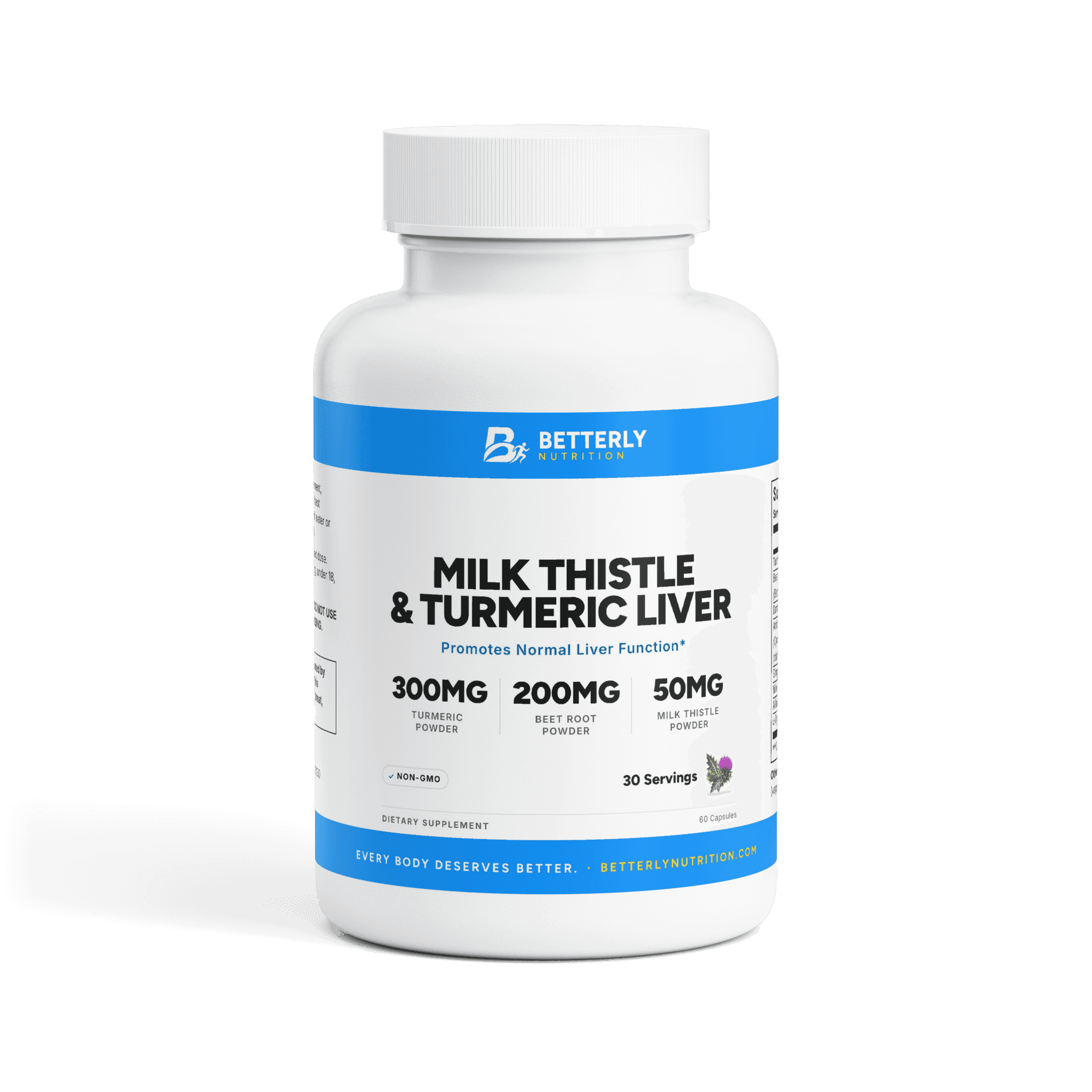
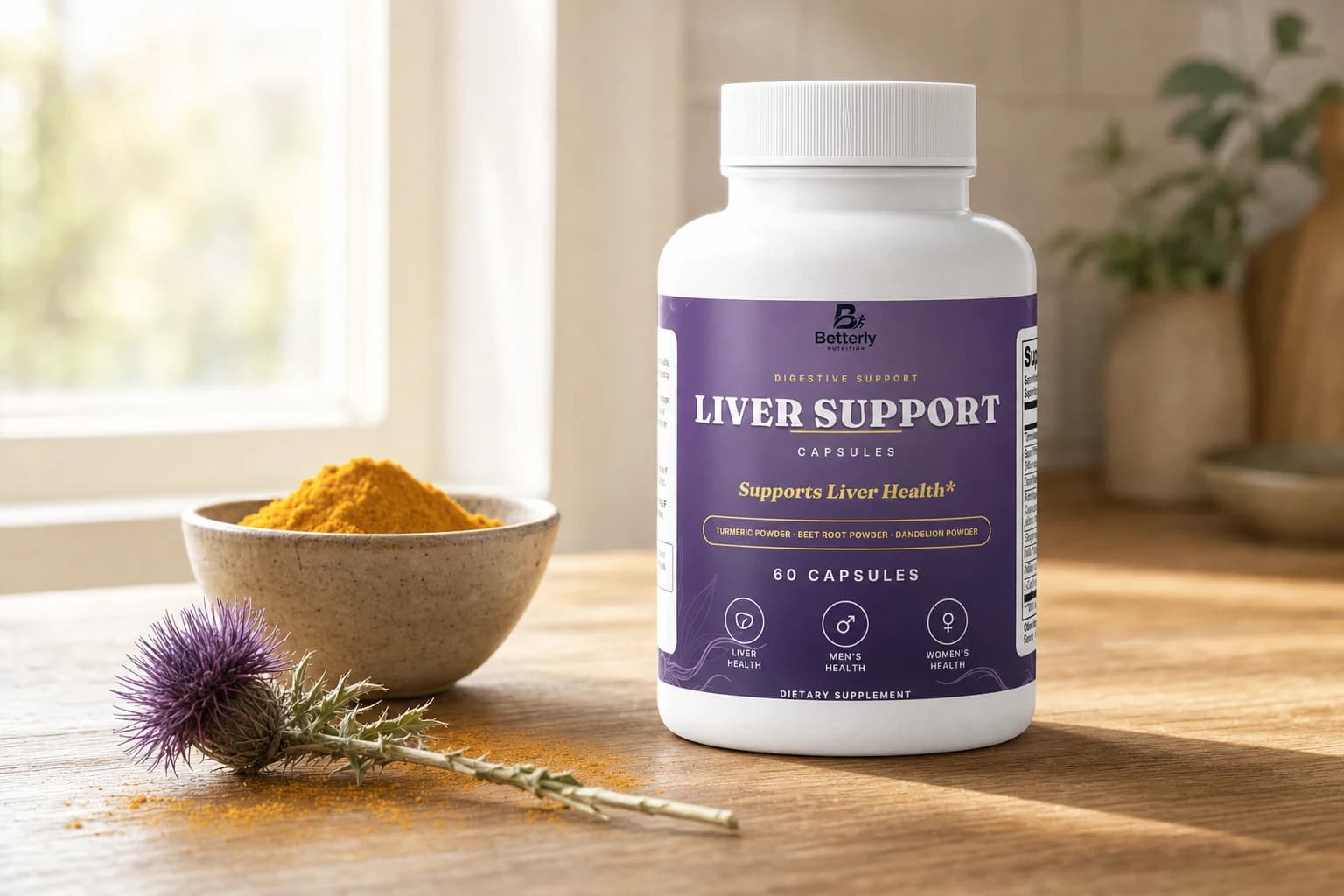
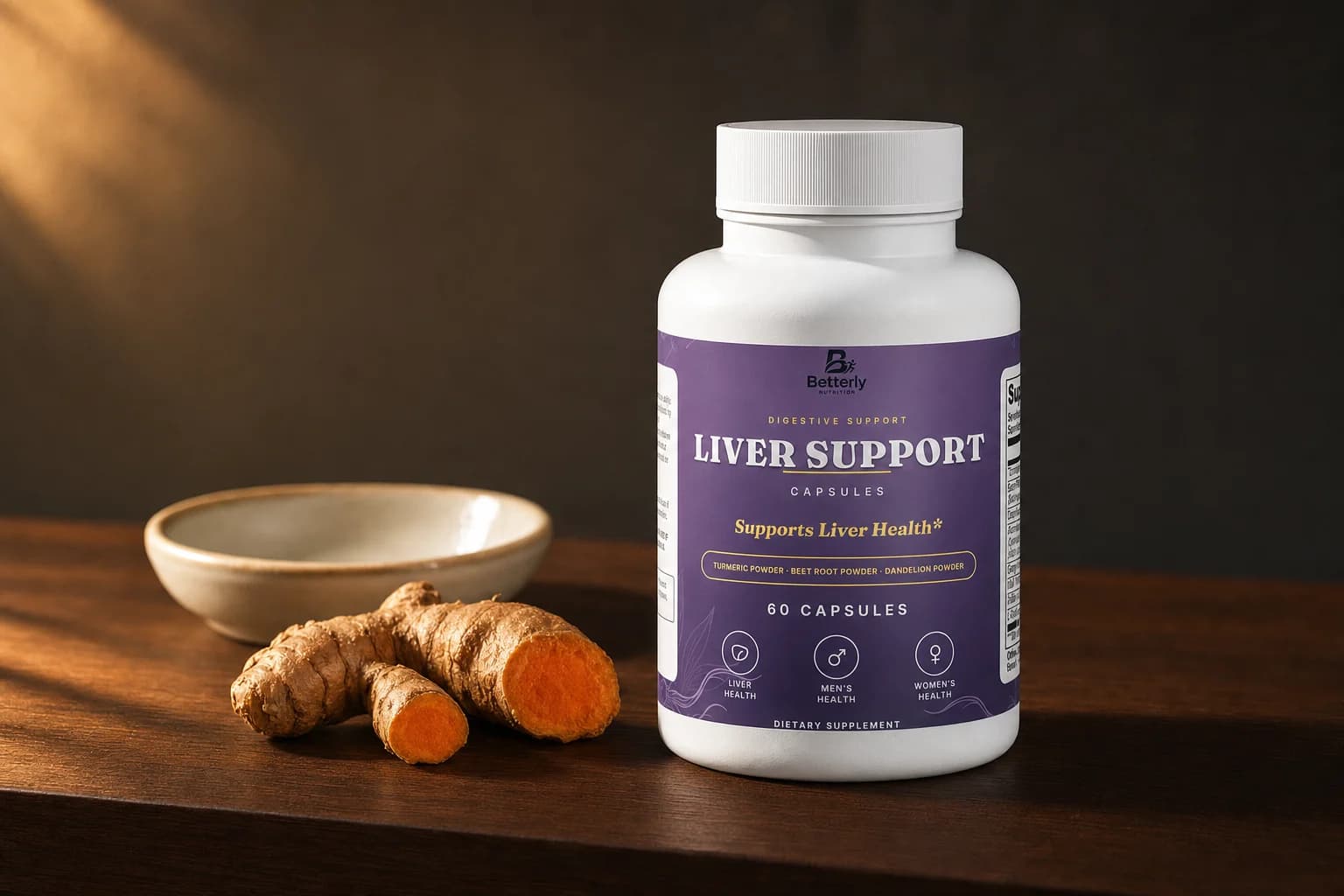
Time to practice what the blend section preached. Here is the entire formula of our Milk Thistle & Turmeric Liver Capsules, per 2-capsule serving — each bottle holds 60 capsules, a 30-serving month:
- Turmeric root powder — 300 mg. The lead ingredient, by design and by number.
- Beet root powder — 200 mg.
- Dandelion leaf powder — 100 mg.
- Artichoke extract — 50 mg, standardized to 5% cynarin.
- Ginger root powder — 50 mg.
- Milk thistle powder — 50 mg.
- Alfalfa leaf powder — 20 mg.
- L-cysteine hydrochloride — 10 mg.
Eight named ingredients. Eight printed numbers. No blend.
In a category where hiding the recipe is common, that's the genuine case for this product, and we'll make it plainly: you can weigh every single ingredient before you spend a dollar, which a proprietary-blend label doesn't let you do. It's also a turmeric-led formula rather than a milk-thistle-led one — the 300 mg up top is a real 300 mg of turmeric root, not a blend total doing an impression of a dose.
And because every number is public, we can be equally plain about the modest one: the milk thistle here is 50 mg of plain milk thistle powder — a supporting player, not the silymarin extract used in the trials above. If a high-strength silymarin extract is specifically what you want, this isn't that product, and our milk thistle guide will help you pick one honestly. What this formula is: broad, gentle, whole-plant support for normal liver function, led by a real amount of turmeric, with the whole label shown before you buy. Its product page carries the full Supplement Facts panel.
That's the trade, stated out loud. We'd rather sell you eight visible numbers than one impressive-sounding secret.
Do you need a liver supplement? A quick checklist
The real question isn't "do liver support supplements work" in the abstract — it's whether one makes sense for you, specifically.
Skip it (or wait) if:
- You're hoping to undo a heavy weekend. No capsule does that, and any product implying otherwise just told you who they are.
- You'd be taking it instead of changing a habit you already know needs changing.
- A healthcare provider is keeping an eye on your liver. Follow their plan — and tell them before adding any supplement, milk thistle included, because interactions are real.
- You're pregnant or nursing, under 18, or managing a medical condition. Our label itself says to consult a physician first, and not to exceed the recommended dose of 2 capsules daily.
Adding one is a reasonable "yes" if:
- The basics are mostly in place, and you're comfortable with what the honest version offers: a gentle, fully disclosed herbal formula that supports normal liver function — not a fix for anything.
- You'll add it carefully — one new product at a time, the label's suggested use, realistic expectations. Our guide to building a simple supplement routine shows how to do that without muddying the picture.
What matters more than any capsule
This is the least clickable section of the article, and the most important one.
- What you drink. If alcohol is a regular guest, easing back does more for your liver than anything sold in a bottle. There is no supplement footnote to this one.
- What you eat, on average. Everyday patterns — more plants, more fiber, fewer ultra-processed foods — are the real long game. What happens in your gut arrives at your liver first, which is why this topic and gut health basics are more connected than the supplement aisle suggests. If regularity is your actual sticking point, our guide to choosing a fiber supplement will serve you better than any flush kit.
- Movement and sleep. Unglamorous. Unbeatable.
- A shorter pill list. An uncomfortable truth for a supplement company to type: your liver processes most of what you swallow, so a longer stack of capsules isn't automatically kinder to it. Take what serves a clear purpose; skip the rest.
And if your bigger goal is digestion-first support rather than one targeted formula, browse the rest of our Gut Health collection.
How to choose well, whatever you end up buying
- Numbers next to every name. The blend test from earlier is most of the game. If the amounts are hidden, walk.
- Honest label language. "Supports normal liver function" is what a truthful liver product can say. "Flushes," "purges," "resets," and countdown timers are your cue to leave.
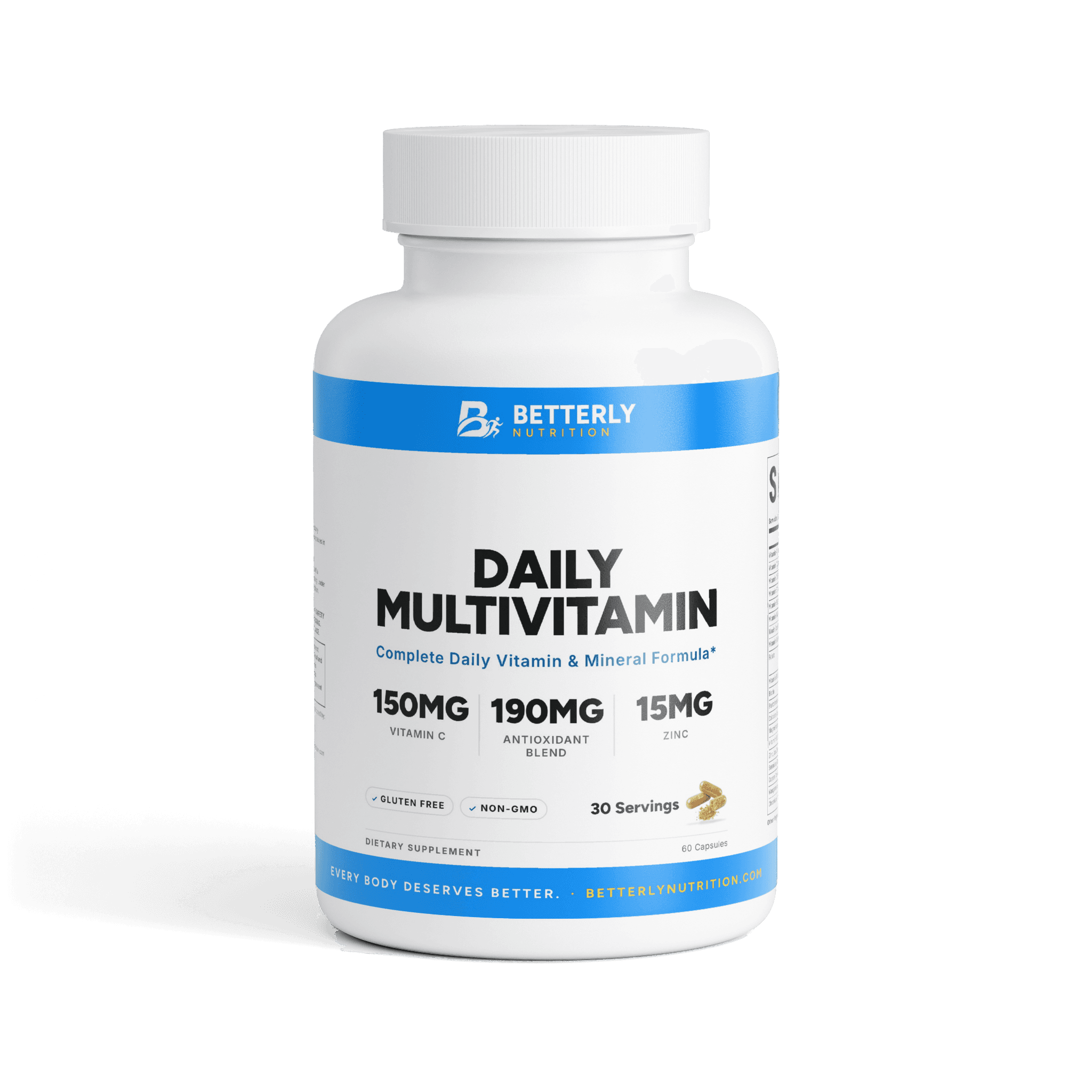
- Mind the overlap. If you already take a multivitamin (ours is Daily Multivitamin Capsules) or a greens powder, check what's duplicated before stacking more — our take on whether you actually need a multivitamin walks through the same keep-it-lean logic.
- Tell your provider. Especially if you take any prescription — milk thistle and turmeric both have known interactions. NCCIH also notes that liver damage has been reported in some people taking high-absorption curcumin products; per our label, the turmeric in ours is plain turmeric root powder. NCCIH's advice: stop taking turmeric products and talk with a provider if you notice fatigue, nausea, poor appetite, dark urine, or yellowing of the skin or eyes.
FAQ: liver support supplements
Do liver support supplements actually work?
It depends on what "work" means. In the flush-and-reset sense — no; that part is marketing. What research suggests is more modest: ingredients like milk thistle and turmeric have mixed, limited research behind them, mostly in people already under a doctor's care, and very little in healthy adults. The reasonable framing: a small support for good habits, never a substitute for them — and only worth buying from a label that prints its amounts.
Do liver flushes and resets work?
No. Your liver processes what you consume continuously and doesn't store sludge that needs flushing, and there's no good evidence that flush-style products remove anything (NCCIH notes a 2015 review found no compelling research supporting flush-style diets). A product promising a flush in days is selling a feeling, not a function.
What does milk thistle do, in plain terms?
Its seeds contain silymarin, compounds researchers have studied for decades. Research on milk thistle is mixed: NCCIH describes the clinical-trial results as conflicting or too limited to allow conclusions. Expect gentle and modest, not dramatic, check whether your product is an extract or a whole-seed powder, and loop in your provider if you take medications.
What's actually in Betterly's Milk Thistle & Turmeric Liver Capsules?
Betterly's Milk Thistle & Turmeric Liver Capsules list eight ingredients, each with its own printed amount per 2-capsule serving: 300 mg turmeric root, 200 mg beet root, 100 mg dandelion leaf, 50 mg artichoke extract (standardized to 5% cynarin), 50 mg ginger root, 50 mg milk thistle, 20 mg alfalfa leaf, and 10 mg L-cysteine hydrochloride. Sixty capsules per bottle — a 30-serving month — and no proprietary blend anywhere on the label.
Will I notice anything from a liver supplement?
Probably not. A liver supplement usually gives you nothing to feel: supporting normal liver function isn't something you sense day to day, so be wary of any product promising noticeable results. If you try one, add one new product at a time, keep the rest of your routine steady, and stick to the label's suggested use (for ours, 2 capsules daily). And if what you were actually shopping for is digestive regularity, that's a different job entirely — our guide to choosing a fiber supplement covers that lane honestly.
Sources
- Milk Thistle: Usefulness and Safety (NCCIH)
- Turmeric: Usefulness and Safety (NCCIH)
- NCCIH fact sheet on popular flush-and-reset programs
If this left you looking for somewhere to start, read the amount-by-amount label on our liver capsules — its amounts per serving are listed on the page. For the practical questions this raises, how dosing, sourcing and subscriptions work is answered in one place.