On this page
- Key takeaways
- What are the main kinds of digestive support supplements?
- What is psyllium husk, and how does fiber support regularity?
- Fiber vs digestive enzymes: what does each one do?
- Where do ox bile and artichoke fit in?
- Do you need a probiotic for digestive support?
- How do you choose a digestive support supplement?
- How do you take these supplements, going by the labels?
- When don't you need a digestive supplement?
- Who should check with a healthcare provider first?
- FAQ: digestive support supplements
- Sources
The short answer: To pick among digestive support supplements, name the job first. Soluble fiber such as psyllium, digestive enzymes, ox bile blends and probiotics each work on a different step of digestion, so they aren't interchangeable. Then read the panel for named amounts. Our Psyllium Fiber & Digestive Enzyme Powder, for example, lists 3000mg of psyllium husk seed powder per 1 Sachet serving. Plenty of people need none of them.
Betterly sells a product in each of these groups, so we have a stake in what you pick. Our own labels are the worked examples below, weak spots included.
Key takeaways
- Fiber, enzymes, ox bile and probiotics aren't swaps for one another, so decide what you want help with before you compare brands.
- Psyllium husk is a soluble fiber, and MedlinePlus wants each dose paired with 8 ounces (240 mL) of liquid or more.
- Enzymes and ox bile act on the food from a meal, while probiotics are live microbes judged by strain and CFU count.
- If you eat plenty of plant foods, drink enough fluids and meals sit well, you may not need any of these.
What are the main kinds of digestive support supplements?
The main kinds of digestive support supplements are soluble fiber (usually psyllium), digestive enzymes, ox bile blends and probiotics, and each one targets a different step of digestion.
| Kind | What it is | What it acts on | Example from our shelf |
|---|---|---|---|
| Soluble fiber | Plantago ovata seed husk | Water, which it turns to gel | Psyllium sachet: 3000mg psyllium per 1 Sachet |
| Digestive enzymes | Proteins that split food | Protein, fat and carbs in a meal | Enzyme capsules: 6 enzymes in one 2500 HUT/400mg blend per capsule |
| Ox bile | Dried cattle bile | Fat in a meal | Ox bile capsules: 125 mg per 2 Capsules |
| Probiotics | Live bacteria or yeasts | Mainly the digestive tract | Enzyme capsules: 3 species, no CFU listed |
Each kind does its own job: a fiber can't do an enzyme's work, and neither one stands in for a probiotic.
What is psyllium husk, and how does fiber support regularity?
Psyllium husk is the outer coating of Plantago ovata seeds, sold as a soluble fiber that supports regularity by holding water in your gut.
MedlinePlus's page on fiber says soluble fiber "attracts water and turns to gel during digestion," while insoluble fiber, the kind in wheat bran, adds bulk.
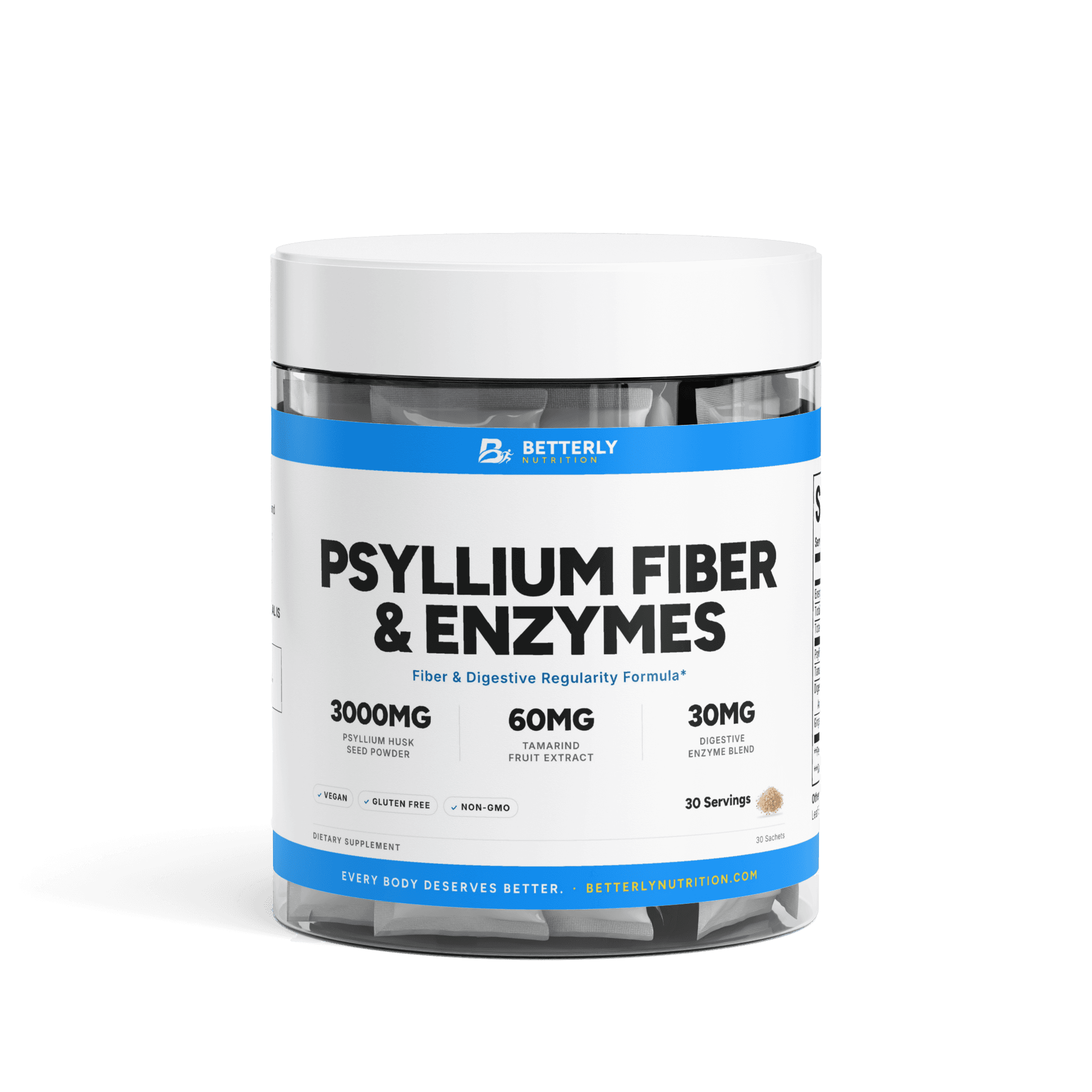
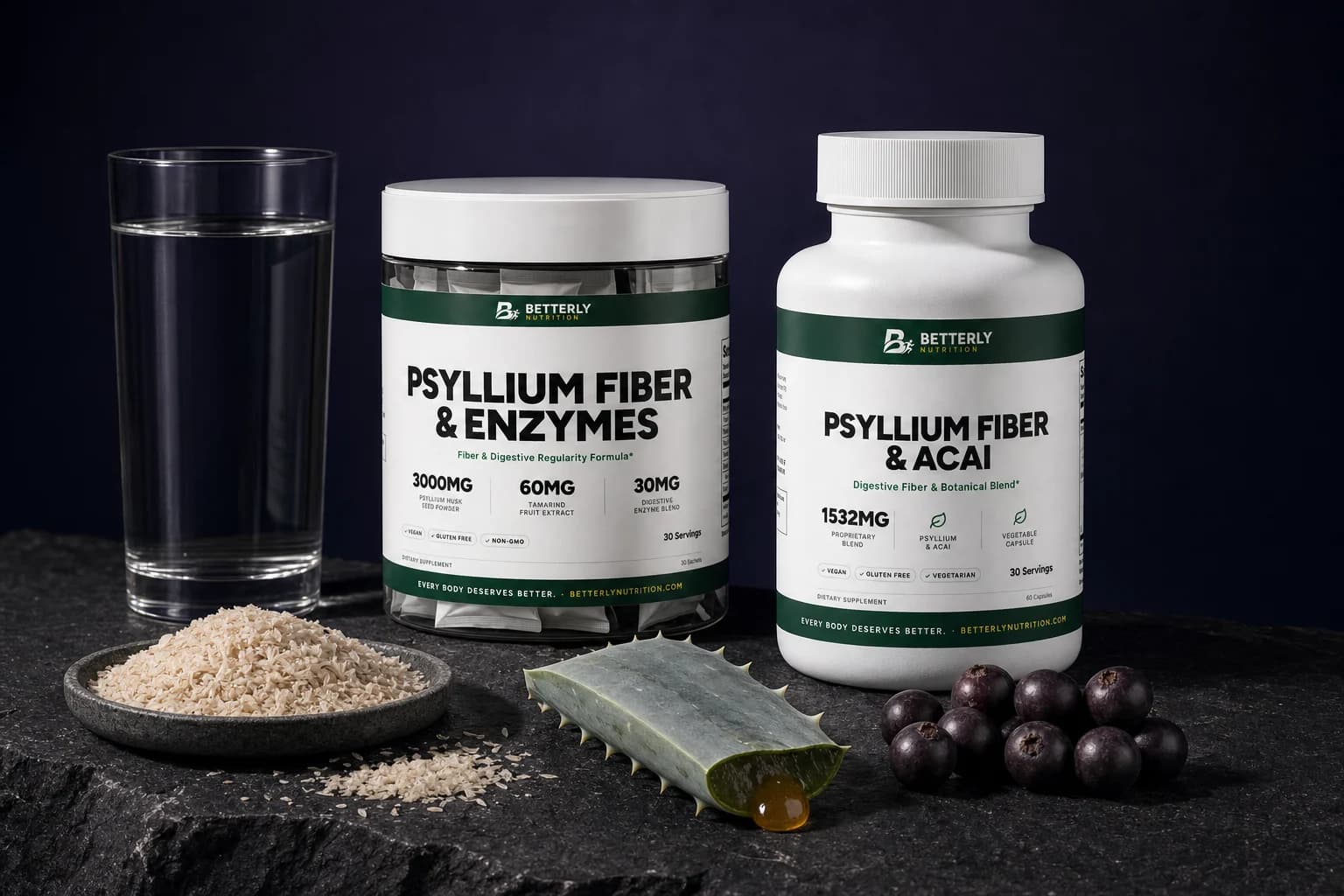
Per 1 Sachet serving, Psyllium Fiber & Digestive Enzyme Powder lists:
- 3000mg of psyllium husk seed powder (Plantago ovata)
- 60mg of tamarind fruit extract (Tamarindus indica)
- 30mg of a Digestive Enzyme Blend (from Fermented Cereals): amylase, lactase, lipase and cellulase
- 15mg of ginger root extract (Zingiber officinale Roscoe)
The label claims vegan, gluten free and non-GMO.
One limit: the panel has no dietary fiber line in grams, so 3000mg is the husk powder's weight, not a fiber count.
Fiber vs digestive enzymes: what does each one do?
Fiber and digestive enzymes do different jobs: psyllium soaks up water and swells, while digestive enzymes are proteins that break down the fat, protein and carbohydrates in a meal.
Your body already makes its own digestive enzymes, and bile too. Our ox bile vs digestive enzymes guide traces, with National Institutes of Health sources, how your pancreas supplies enzymes for all three and how bile from your liver readies fat for lipase, the enzyme that splits it. No federal page behind that guide or this one shows enzyme or ox bile supplements changing digestion in healthy adults.
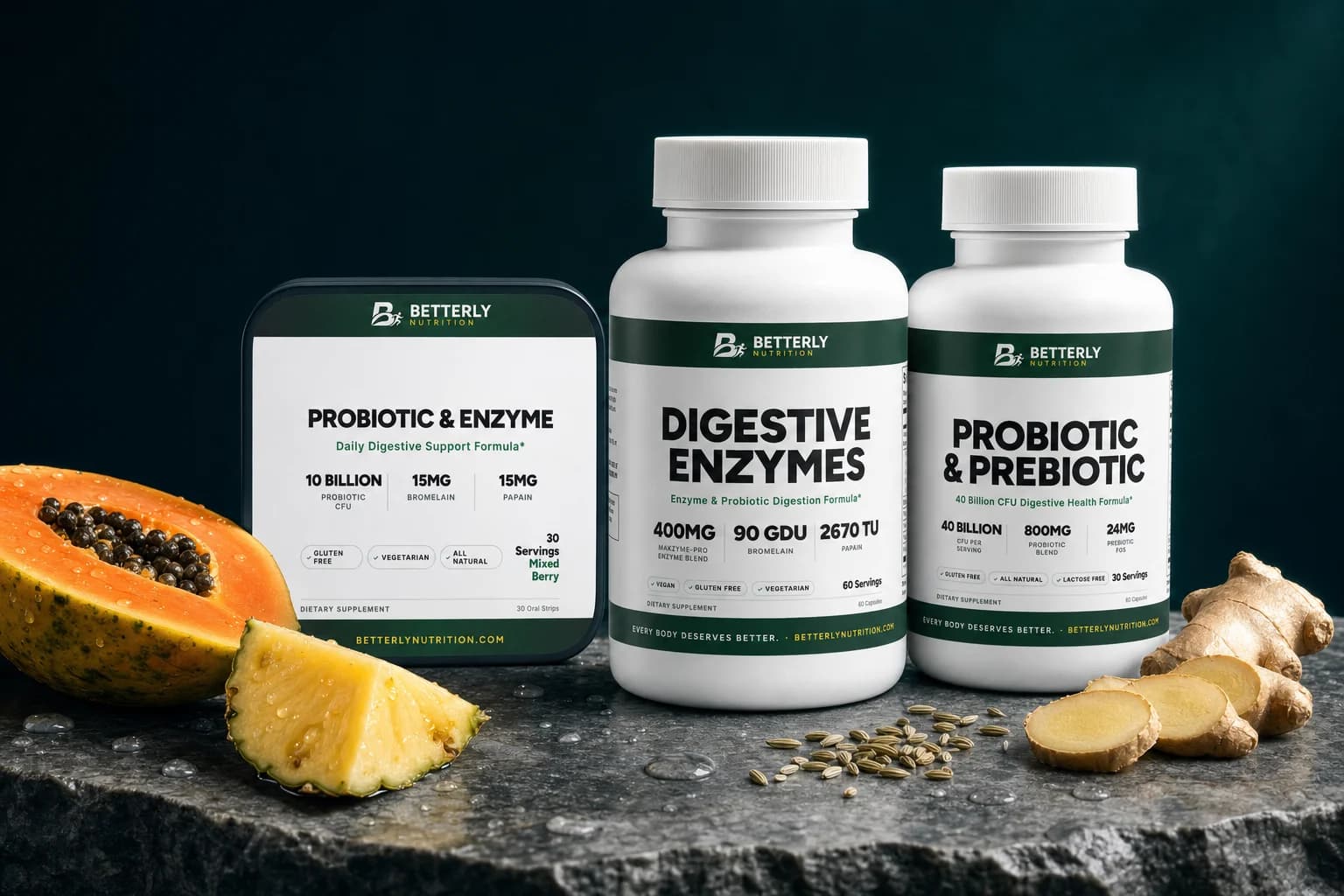
Digestive Enzyme & Probiotic Capsules list six enzymes in one Makzyme-Pro™ Enzyme Blend per 1 Veggie Capsule serving: fungal protease, bromelain, papain, fungal lipase, fungal lactase and alpha galactosidase, with three probiotic species and 2500 HUT/400mg for the whole blend. None of them gets an amount of its own.
HUT is an activity unit, not a weight, so it won't line up with another brand's milligrams. Lipase is the enzyme aimed at fat, and a long list doesn't help if nothing on it matches your plate.
Where do ox bile and artichoke fit in?
Ox bile and artichoke fit in a group of their own: a daily bile-and-herb blend that isn't a fiber, an enzyme-first product or a probiotic.
Ox bile is dried cattle bile, and artichoke leaf extract comes from the globe artichoke plant.
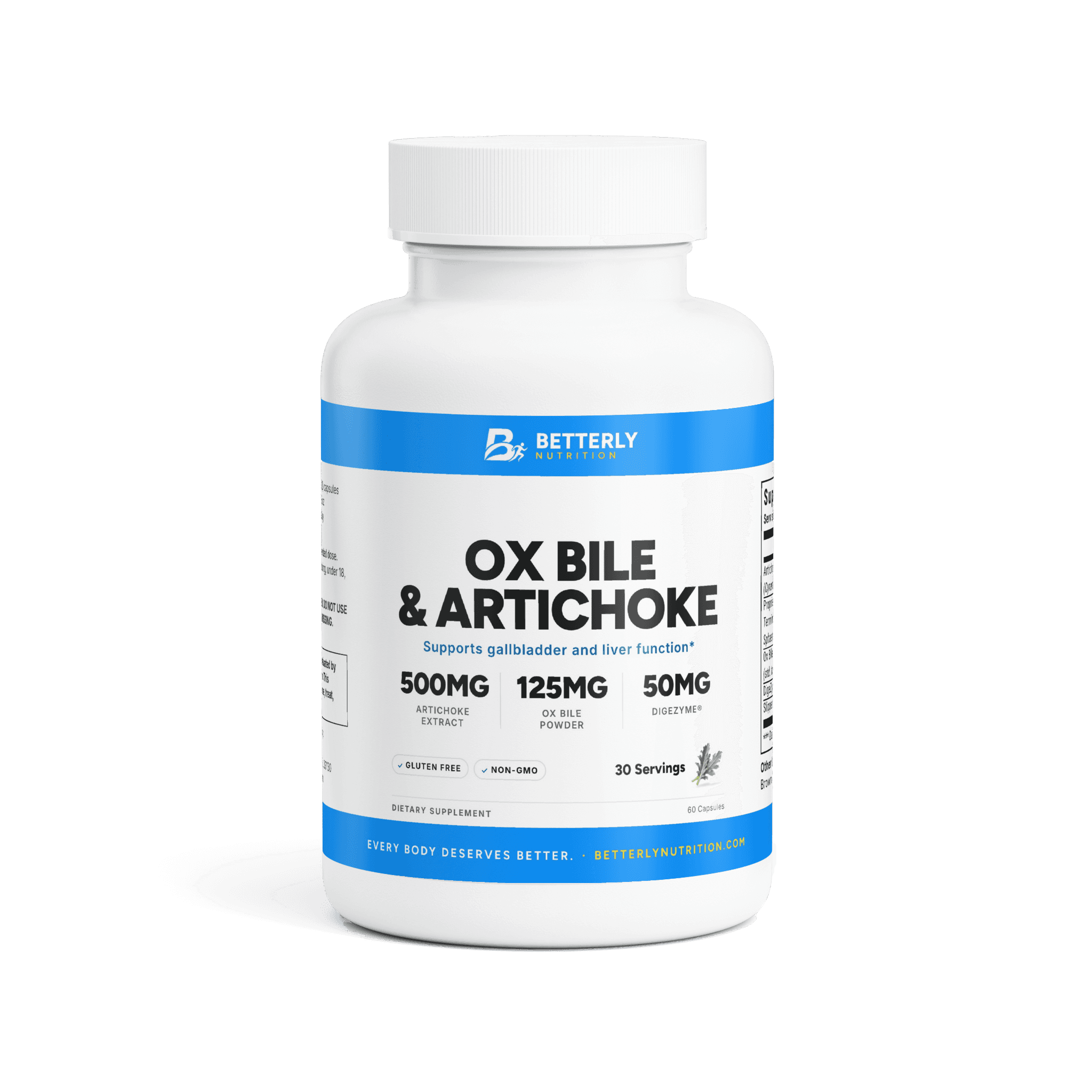
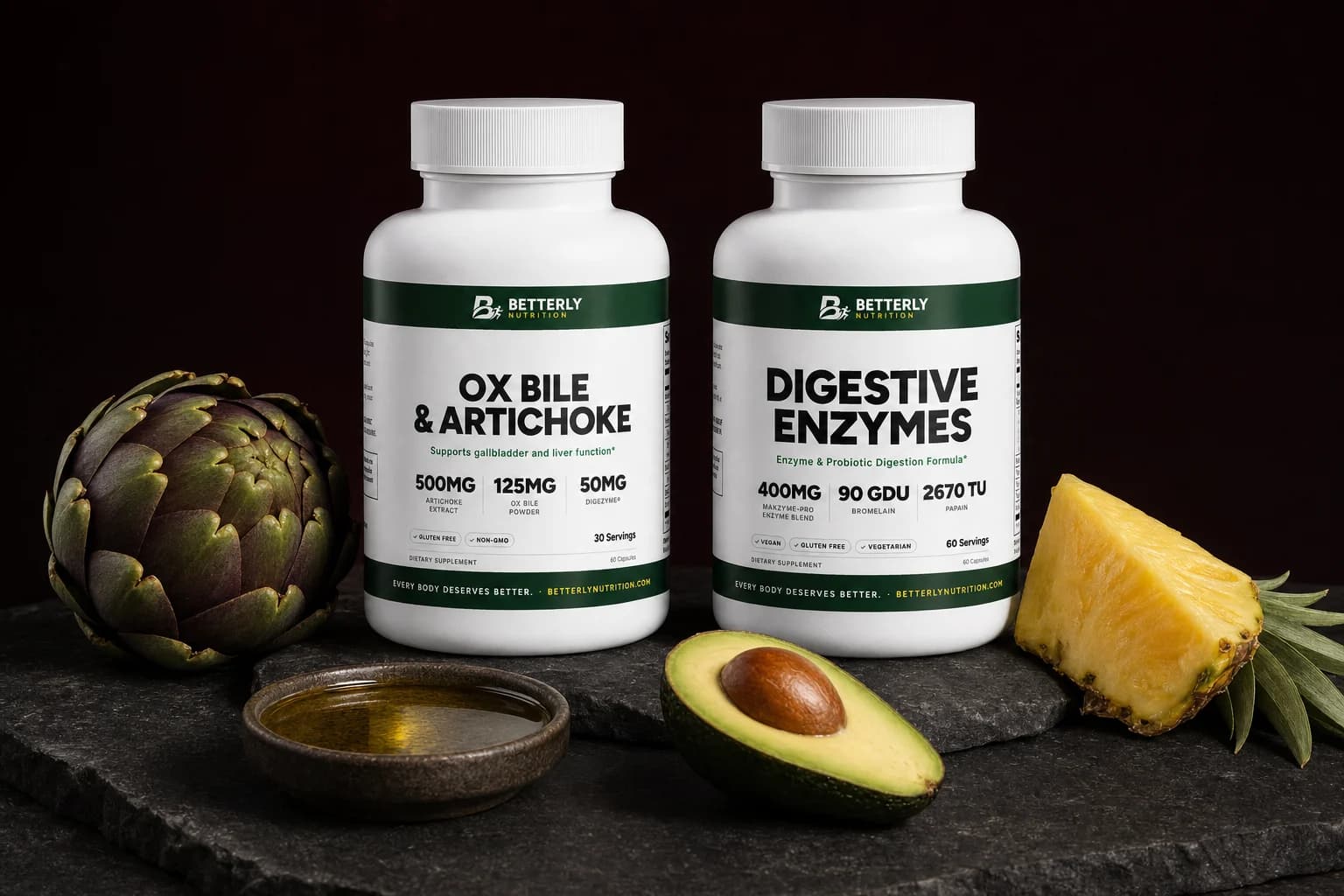
Per 2-capsule serving, Ox Bile & Artichoke Capsules list 500 mg of artichoke leaf extract (Cynara scolymus) and 125 mg of ox bile powder, standardized to 40% cholic acid. The panel also lists 50 mg of DigeZyme®, 40 mg of slippery elm bark extract and a 300 mg proprietary blend of Terminalia chebula fruit and Sphaeranthus indicus flower extracts.
Worth knowing before you buy:
- The 300 mg blend gives one number for two herbs, so neither one's share is visible.
- The capsule is gelatin. With the ox bile, that means it isn't vegan, and its label claims only gluten free and non-GMO.
- Artichoke leaf is the largest row, yet none of the federal pages we used here covers it, so we aren't making a case for it.
Do you need a probiotic for digestive support?
A probiotic is optional if you're healthy, since the NIH Office of Dietary Supplements (ODS) says no official advice exists on whether healthy people should take one.
Probiotics are live microorganisms, and ODS's probiotics page for consumers says they act mainly in the digestive tract. It also warns against shopping by the biggest number: any benefit comes down to which strains a product holds and its CFU (colony-forming unit) count.
That's where our Digestive Enzyme & Probiotic Capsules fall short as a probiotic. The panel lists Lactobacillus acidophilus, L. casei and L. plantarum inside the enzyme blend, with no strain codes and no CFU count. Read it as an enzyme product first.
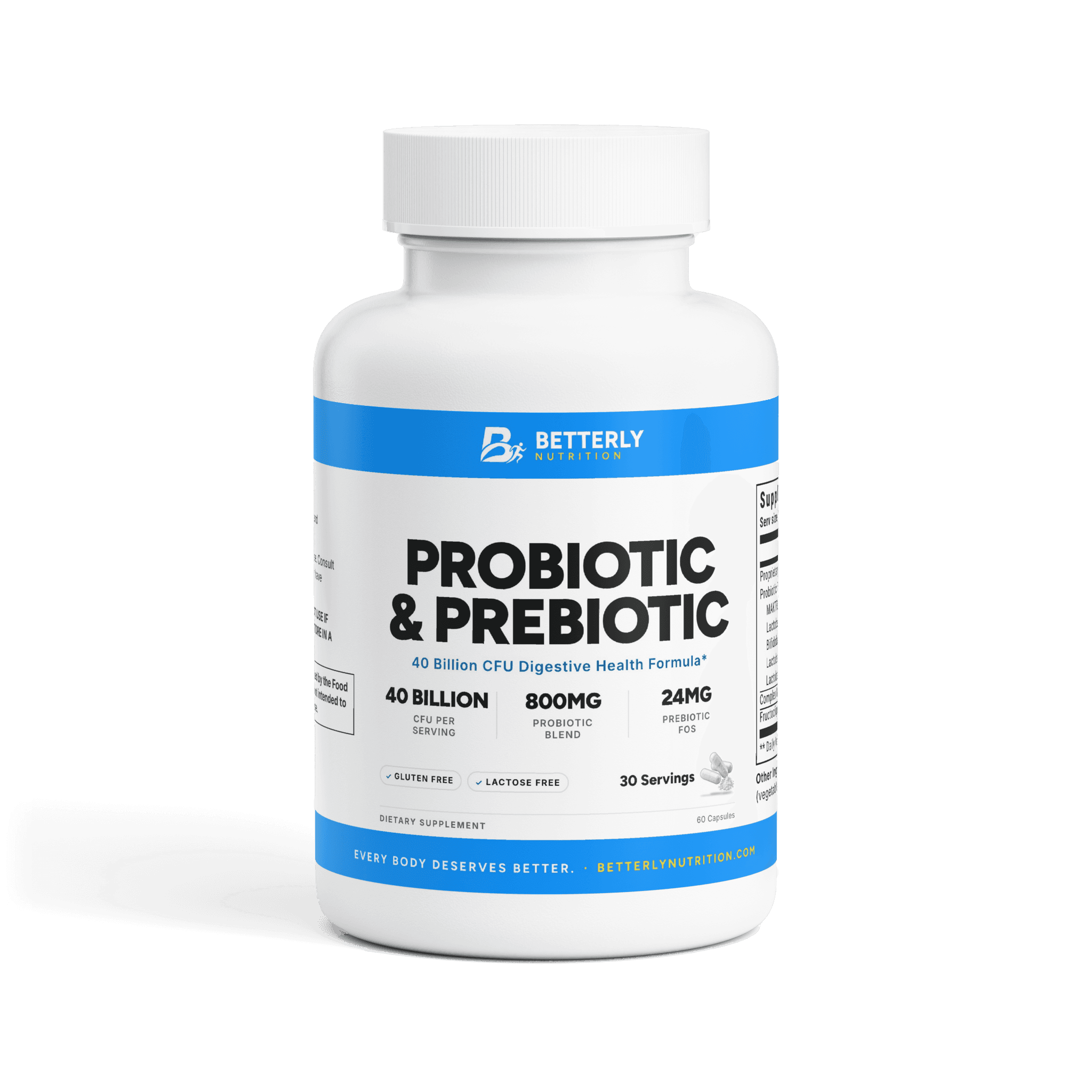
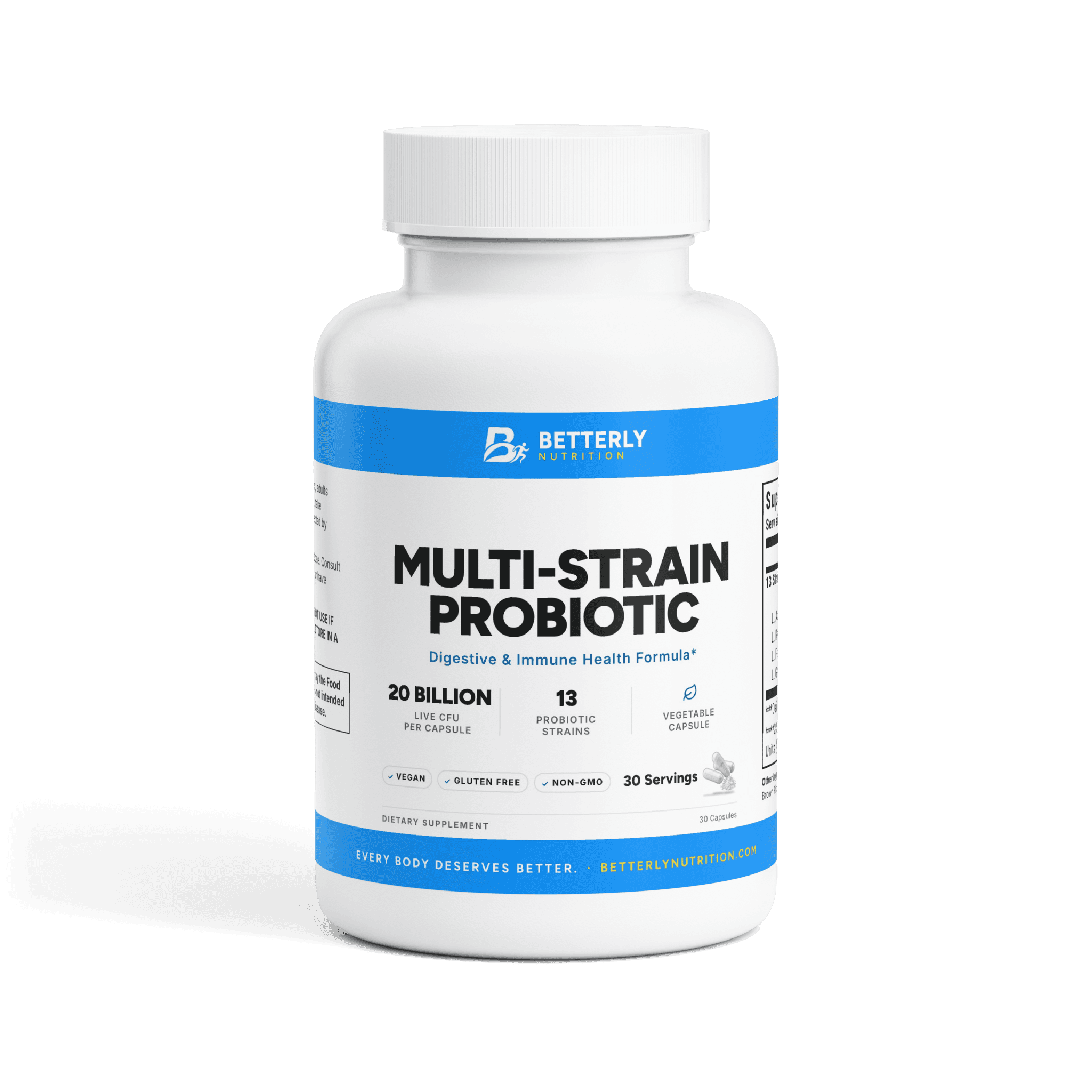
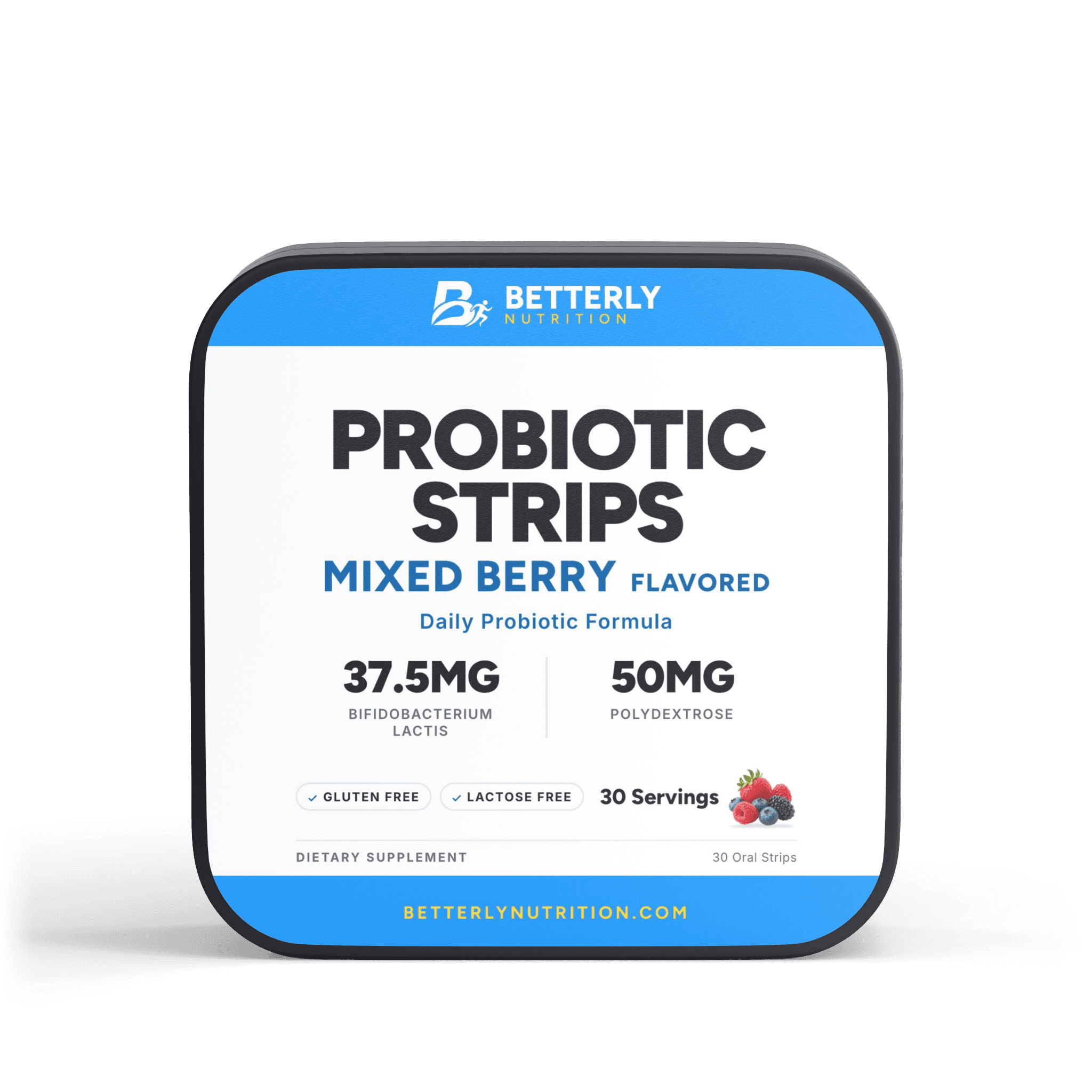
If you want a probiotic, ODS points you to the genus, species and strain, plus the use-by date and storage directions. Since counts can fall, some experts prefer a CFU figure stated through the expiration date. Our dedicated probiotics are in the gut health and digestion collection.
How do you choose a digestive support supplement?
Choose a digestive support supplement by naming the job first, then checking that the label gives every active ingredient its own amount and clear directions.
| If this is your goal | Start with | Check on the panel |
|---|---|---|
| Support regularity when your plate is light on plants | Psyllium fiber | Psyllium amount, water instruction |
| Help one food group break down at meals | A digestive enzyme | The matching enzyme and its unit |
| Fat digestion is your main interest | Enzyme and ox bile labels, side by side | Lipase units (FIP), or bile mg and standardization |
| A daily live-microbe routine | A probiotic | Strains, CFU and when it was counted |
| Meals already sit well | Nothing new | Your plate and your water glass |
A product that fits your goal but hides its amounts still leaves you guessing, so the last column matters as much as the middle one.
The fat row names no winner, since no federal source we used ranks ox bile against enzymes. Our panel-by-panel look at ox bile and enzyme labels lines the two up and says when you can skip both.
Read past the first ingredient
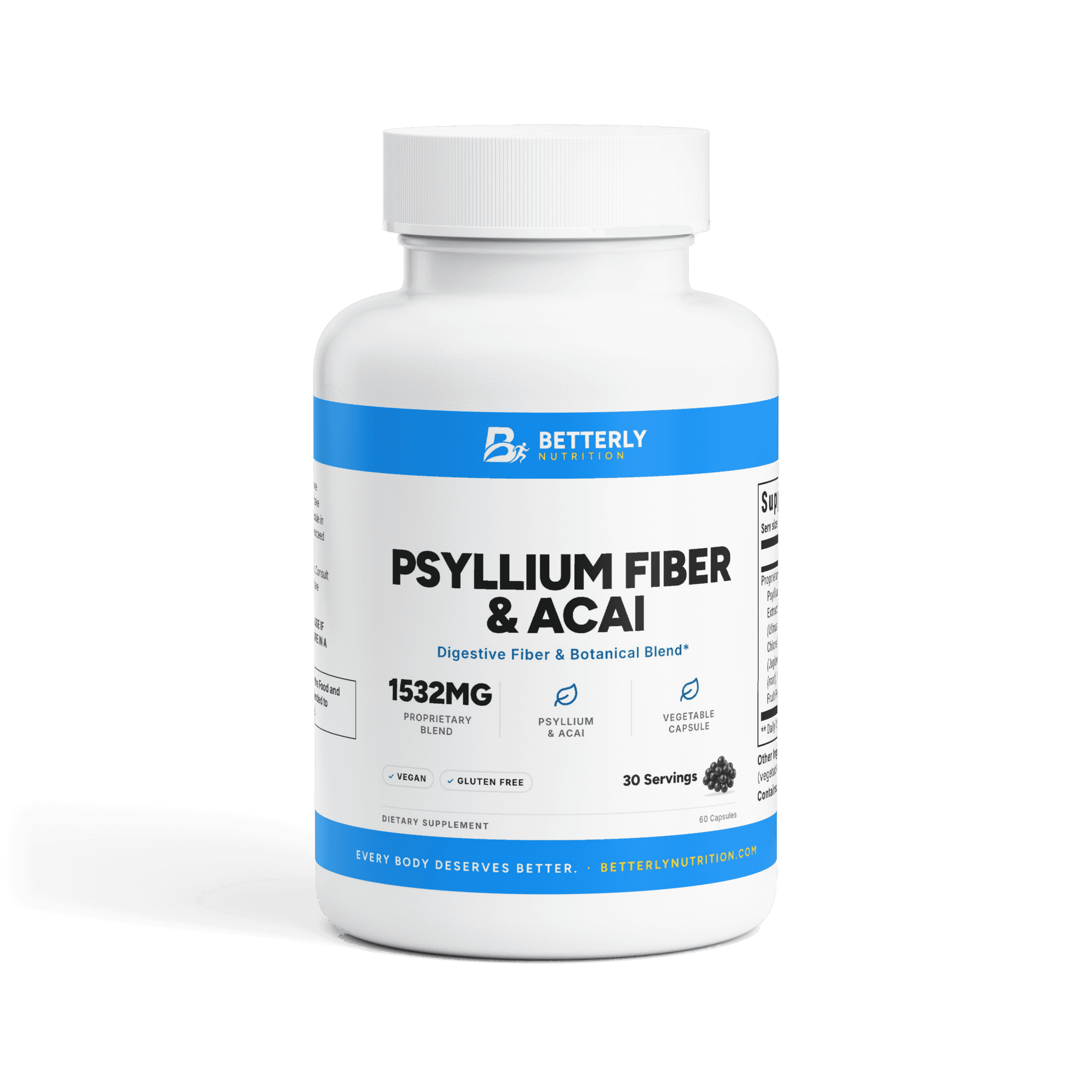
Psyllium Fiber & Acai Capsules show why. Per 2-capsule serving, the label lists one 1,532 mg proprietary blend of 11 ingredients, led by psyllium husk and acai berry extract. There's no separate psyllium amount to compare with the sachet's 3000mg.
Further down sit slippery elm, chlorella, black walnut hull and Aloe ferox leaf powder, among others. The panel prints the aloe as "Alion 18%," which we read as 18% aloin, and it declares tree nuts.
Aloe ferox, or Cape aloe, is a stimulant laxative herb, not a fiber. NCCIH's page on aloe vera, a related species, says the FDA required aloe latex to be removed from over-the-counter laxative products in 2002 for lack of safety data. Swallowing aloe latex, the same page notes, can bring on cramps, belly pain and diarrhea. Check with a healthcare provider before you try this capsule, and see our guide to fiber capsule side effects for more on the aloe row.
From our shop: Psyllium Fiber & Digestive Enzyme Powder — 30 single-serve sachets, each listing 3000mg of psyllium husk seed powder beside a 30mg enzyme blend, raspberry-flavored and sweetened with stevia leaf extract.
How do you take these supplements, going by the labels?
Take each digestive product exactly as its label says: these four labels give four different schedules, and every one says not to exceed the recommended dose.
The sachet label's suggested use is one sachet mixed with 6.8 fl oz (200 mL) of water and drunk at once, up to twice a day, away from meals. MedlinePlus's psyllium page sets a floor of 8 ounces (240 mL) of liquid per dose, a bit more than the mixing volume, so follow the sachet with extra water. It also warns against breathing in the powder as you mix.
Psyllium Fiber & Acai Capsules: two a day, one during the day and one in the evening, never more than two. Psyllium leads that blend, so the liquid rule applies there too.
Digestive Enzyme & Probiotic Capsules: one capsule twice a day, and the label adds, "For best results take 20-30 min before a meal." Ox Bile & Artichoke Capsules: adults take two capsules daily with 6-8 oz (177-237ml) of water.
A few practical notes:
- The sachet's label says to take it at least 2 hours apart from medication, and to consult a physician first. MedlinePlus sets a 3-hour gap between psyllium and three named medicines, aspirin among them, so ask your pharmacist too.
- MedlinePlus suggests building fiber up over a few weeks, and one sachet a day is a gentler start than the label's upper limit of two.
- Psyllium and ginger are in both the sachet and the acai capsule, and slippery elm is in both the acai and ox bile capsules, so count the overlaps.
From our shop: Digestive Enzyme & Probiotic Capsules — 60 vegan capsules, each holding one 2500 HUT/400mg blend of six enzymes and three probiotic species, with a suggested use of one capsule twice a day before meals.
When don't you need a digestive supplement?
You probably don't need a digestive supplement if your meals sit comfortably, you eat a range of plant foods and you drink enough fluids through the day.
Food comes first. For adults, teens and older children, MedlinePlus sets a daily fiber target of 21 to 38 grams, drawn from cereals, beans, peas, fruits, vegetables and whole grains. Oat bran, barley, nuts and seeds supply the soluble type. It also suggests about 8 glasses of water or other noncaloric fluid a day.
A supplement is also a poor fit when:
- You'd be buying a blend for one ingredient whose amount isn't printed.
- You already take something with the same ingredients.
- You want a bottle to explain a digestive change that's new or won't settle. That's a job for a healthcare provider.
Still want a fiber top-up? Our fiber-for-regularity buying guide weighs psyllium against other fibers.
Who should check with a healthcare provider first?
Clear fiber, enzyme, bile or probiotic products with a healthcare provider first if you're expecting or nursing, taking medication, under 18, facing surgery or managing an ongoing medical condition.
- Our enzyme, ox bile and acai capsule labels all ask for a physician's advice first during pregnancy or nursing, under age 18, or with a medical condition.
- The sachet's label goes further. Its caution reads, "Consult a physician before use or if taking medication; take at least 2 hours apart," so that check applies to every user. The label also says the sachet isn't meant for children under 12.
- Ask first before the acai capsule, whoever you are. NCCIH says oral aloe may be unsafe during pregnancy and breastfeeding, and the black walnut hull rules it out with a tree nut allergy.
- MedlinePlus asks you to let your doctor know about any past trouble swallowing before you start psyllium. Call right away, it adds, if you get trouble breathing, stomach pain, difficulty swallowing, a rash, itching, nausea or vomiting.
- ODS cautions that probiotics can cause problems for anyone who is already seriously ill or has a weak immune system.
MedlinePlus puts a 1-week cap on psyllium without a doctor's go-ahead, while our sachet and acai capsule labels are written for daily use. Talk to your provider before any longer stretch.
FAQ: digestive support supplements
Do digestive support supplements work?
Some digestive support supplements have a clear job, and psyllium is the clearest. MedlinePlus says psyllium absorbs liquid and swells in the intestines, which is how it supports regularity. For enzymes and ox bile, none of the federal pages we used shows a benefit in healthy adults. For probiotics, any benefit depends on the exact strains and the CFU count, according to the NIH Office of Dietary Supplements.
Can you take fiber and digestive enzymes together?
Neither of our labels addresses combining fiber and digestive enzymes, so ask a provider first. Our psyllium sachet's label already calls for a physician's advice before use. The two labels also time things differently: the sachet goes away from meals, while our Digestive Enzyme & Probiotic Capsules point to 20-30 minutes before a meal. The sachet already holds a 30mg enzyme blend, so check for overlap.
Can digestive supplements cause gas or bloating?
Yes, fiber and probiotics can both cause gas. MedlinePlus says eating a lot of fiber quickly can bring gas, bloating and cramps, so it advises adding fiber gradually. The NIH Office of Dietary Supplements lists gas as a possible effect of probiotics, even in healthy people. If a new product keeps bothering you, stop it and check with a provider.
Can you take a digestive supplement every day?
Each of the four labels here is written for daily use within its suggested use, but that isn't a federal green light. MedlinePlus caps psyllium use at 1 week unless a doctor advises longer, and psyllium is in both the sachet and the acai capsule. That capsule also carries Aloe ferox, so ask a provider before taking it daily. The sachet label says to consult a physician before use, too.
Are digestive supplements vegan?
Some digestive supplements are vegan and some aren't, so check the claims and the capsule shell. Our psyllium sachet, Digestive Enzyme & Probiotic Capsules and Psyllium Fiber & Acai Capsules all carry a vegan claim. Ox Bile & Artichoke Capsules don't, because the panel lists ox bile powder and a gelatin capsule. Check allergens too: the acai capsule declares tree nuts.
Sources
- Fiber (MedlinePlus Medical Encyclopedia)
- Psyllium (MedlinePlus Drug Information)
- Probiotics: Fact Sheet for Consumers (NIH Office of Dietary Supplements)
- Aloe Vera: Usefulness and Safety (NCCIH)
If this left you looking for somewhere to start, read psyllium fiber powder with digestive enzymes — its amounts per serving are listed on the page. For the practical questions this raises, how dosing, sourcing and subscriptions work is answered in one place.