On this page
- Key takeaways
- What's the difference between digestive enzymes and probiotics?
- What do digestive enzymes do, and doesn't your body make them already?
- What do probiotics do, and how are prebiotics different?
- Can you take digestive enzymes and probiotics together?
- Digestive enzymes vs probiotics: which fits your routine?
- How do you read a digestive enzyme or probiotic label?
- Digestive enzymes vs fiber and ox bile: where do they fit?
- When can you skip digestive enzymes and probiotics?
- Who should check with a provider before trying enzymes or probiotics?
- FAQ: digestive enzymes and probiotics
- Sources
The short answer: Digestive enzymes vs probiotics isn't an either-or choice. The two do different jobs, so they can share a routine if you follow each label. Enzymes are proteins that break down the food in a meal. Probiotics are live microbes taken daily, and their effects depend on the strain. Many healthy people need neither, since your pancreas already makes enzymes for carbs, fats and proteins, and the NIH says no official recommendations cover probiotics for healthy people.
We sell both kinds, plus combination products, so we have a stake in the answer. We use seven of our own gut labels as worked examples and point out what each one doesn't tell you.
Key takeaways
- Digestive enzymes act on the food in a meal, so many enzyme labels tie them to mealtimes.
- You don't have to pick one: two of our products put digestive enzymes and probiotics in a single serving.
- Some gas is a normal part of digestion, even for healthy people.
- A useful enzyme label names each enzyme with its unit, and a useful probiotic label names its strains and says when the CFU was counted.
What's the difference between digestive enzymes and probiotics?
Digestive enzymes are proteins that break food into smaller pieces, while probiotics are live microorganisms, like bacteria and yeasts. One works on your dinner. The other works alongside the microbes already living in your gut.
| At a glance | Digestive enzymes | Probiotics |
|---|---|---|
| What it is | Proteins that break down food | Live bacteria or yeasts |
| What it works on | The meal you just ate | Mainly your digestive tract |
| When labels say to take it | Often around meals (check yours) | Daily, on a set schedule |
| What the label counts | Activity units or mg | CFU and strain names |
| Does your body have its own? | Yes, it makes them | Yes, your gut hosts microbes |
The row to remember is timing: an enzyme needs food to act on, though not every one of our labels ties it to meals.
What do digestive enzymes do, and doesn't your body make them already?
Digestive enzymes cut large food molecules into pieces small enough to absorb, and a healthy body makes its own.
According to NIDDK, part of the National Institutes of Health, saliva has an enzyme that starts breaking down starches, and glands in your stomach lining make enzymes too. Your pancreas makes a digestive juice with enzymes that break down carbohydrates, fats and proteins.
Here's what each enzyme on our labels works on:
- Protease, bromelain and papain work on protein.
- Amylase works on starches, and lipase works on fats.
- Lactase works on lactose, the natural sugar in milk.
- Alpha galactosidase works on some of the complex carbohydrates in beans.
- Cellulase works on cellulose, the tough fiber in plant cell walls.
The National Center for Complementary and Integrative Health (NCCIH) describes bromelain as a group of enzymes that break down proteins, found in the stem and fruit of the pineapple plant.
Our labels don't promise any specific effect from lactase or alpha galactosidase, and your own digestion may already handle dairy and beans fine.
What do probiotics do, and how are prebiotics different?
Probiotics are live microbes that act mainly in your digestive tract, while prebiotics are food for your gut microbes rather than microbes themselves.
The NIH Office of Dietary Supplements (ODS) defines probiotics as live microorganisms "that provide health benefits when they are taken in sufficient amounts." ODS adds that benefits depend on the specific strains as well as the amount, shown as CFU (colony-forming units). A higher count alone doesn't necessarily mean a bigger benefit.
Our guide to choosing a probiotic goes deeper on strains and counts.
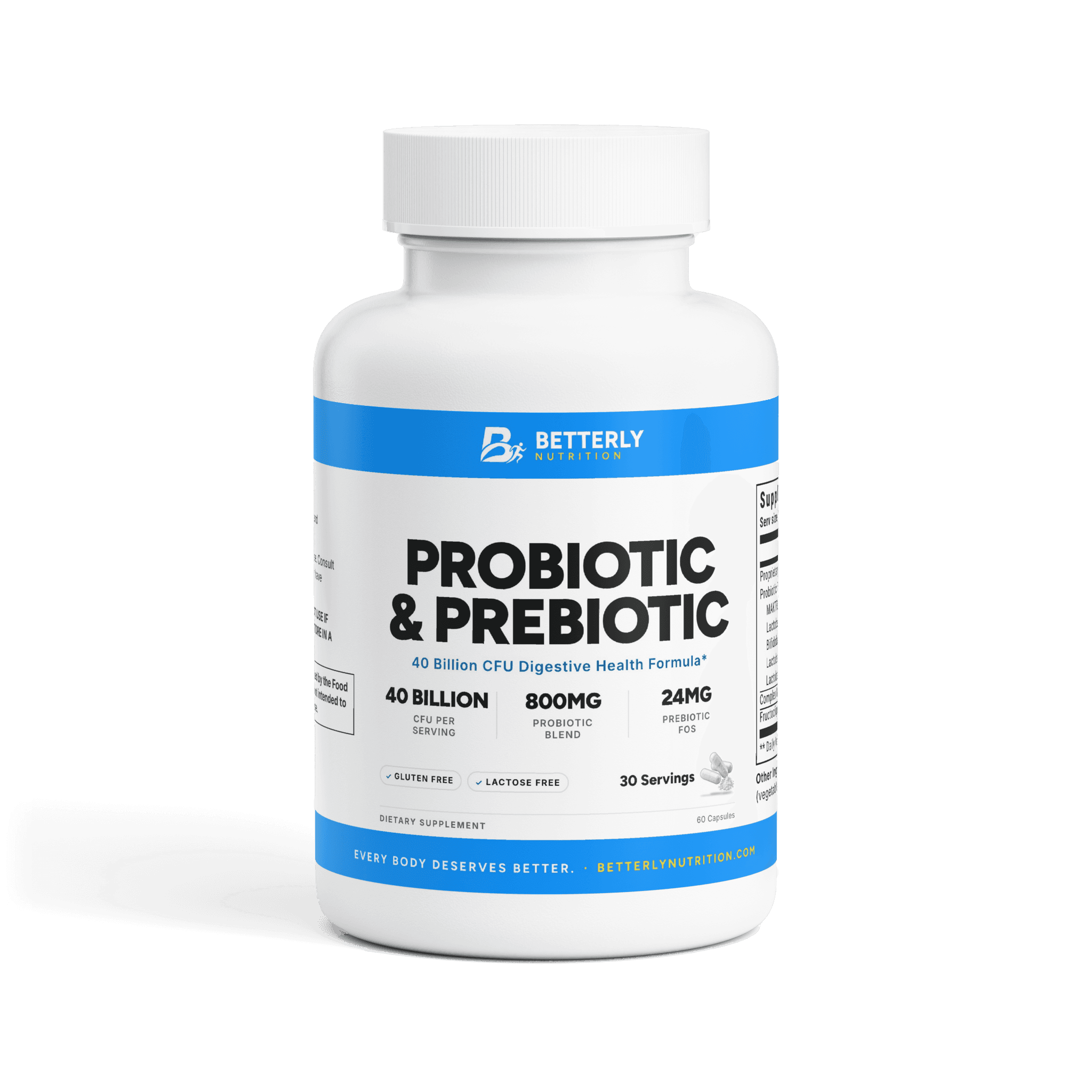
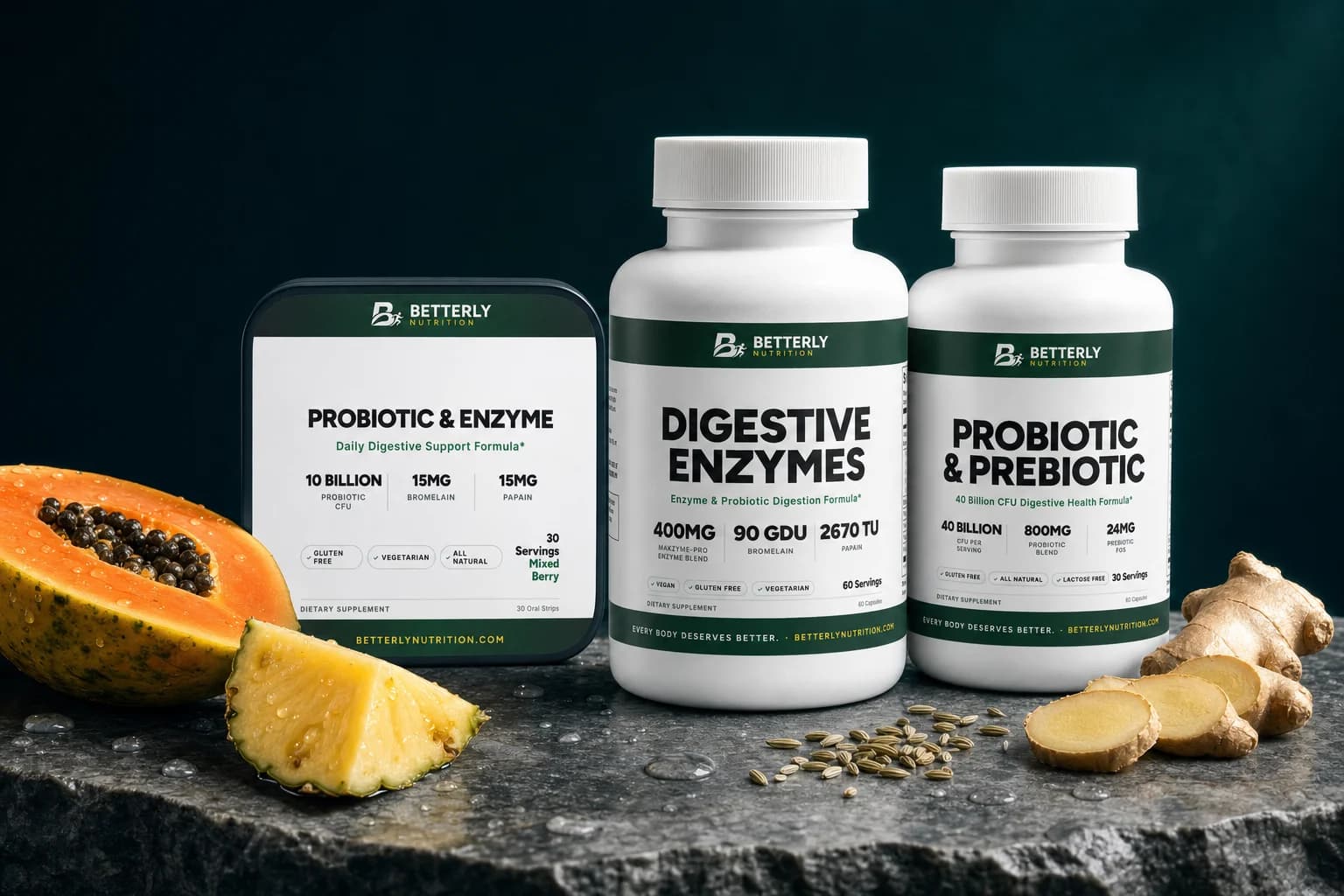
Prebiotics are fibers and carbohydrates your gut microbes use as food. Probiotic & Prebiotic Capsules pair the two. Per 2-capsule serving, the label lists an 800 mg probiotic blend (40 Billion CFU), 60 mg of complex marine polysaccharide and 24 mg of fructooligosaccharide (FOS), a carbohydrate often sold as a prebiotic.
Can you take digestive enzymes and probiotics together?
Yes, digestive enzymes and probiotics can share a routine, and two of our own products combine them in one serving. Follow each label and its cautions.
Digestive Enzyme & Probiotic Capsules are enzyme-first. Per 1 Veggie Capsule serving, the panel lists the Makzyme-Pro™ Enzyme Blend (2500 HUT/400mg), with fungal protease and three Lactobacillus species (acidophilus, casei and plantarum) listed inside it. The same blend also lists bromelain, papain, fungal lipase, fungal lactase and alpha galactosidase, with no separate amount for any of them.
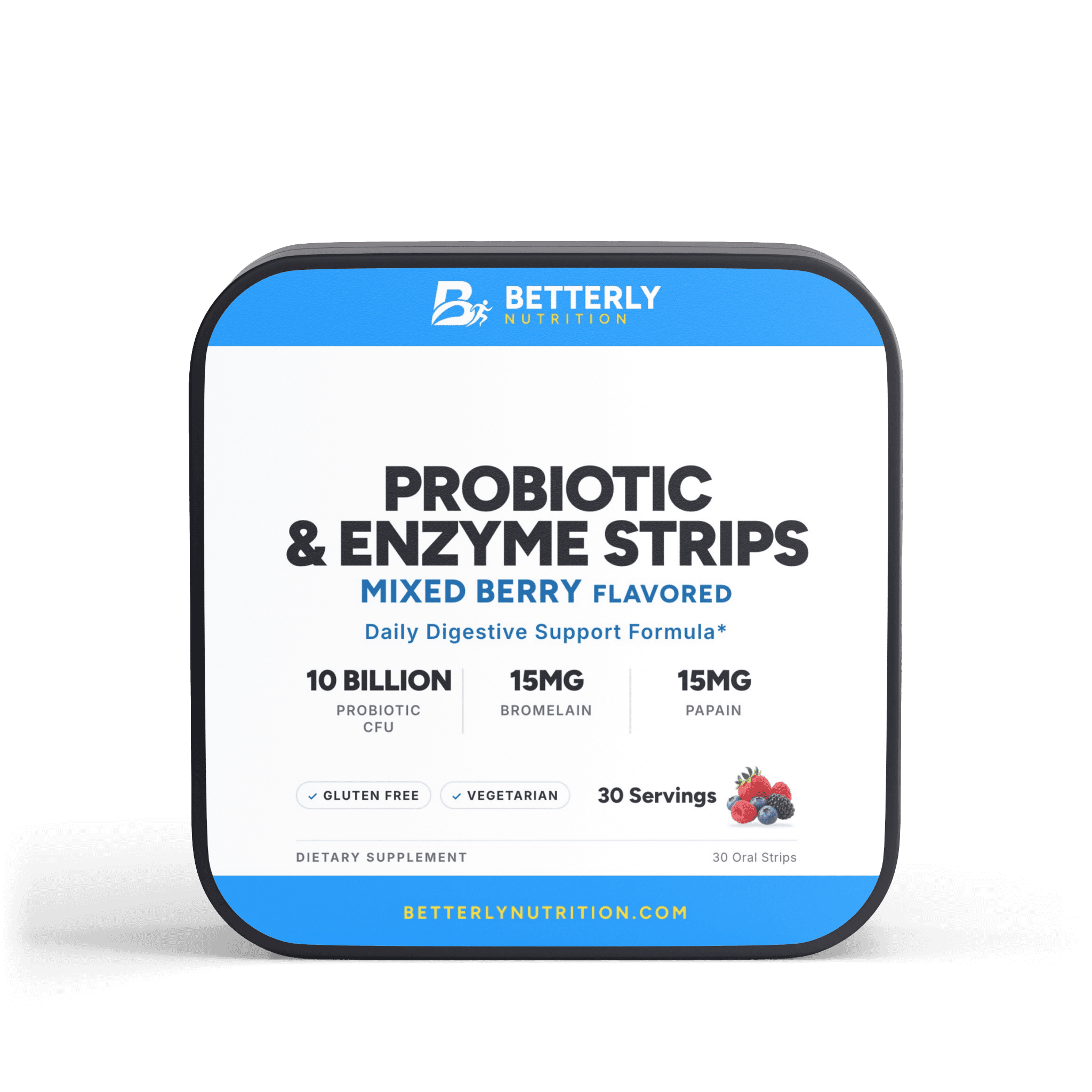
Probiotic & Digestive Enzyme Strips are probiotic-first. Per 1 Oral Strip (210 mg) serving, the label lists Bacillus coagulans at 50 mg (10 Billion CFU), plus protease (10 mg), papain (15 mg) and bromelain (15 mg).
When should you take digestive enzymes and probiotics?
When to take digestive enzymes and probiotics depends on the label: our combo capsule says 20-30 min before a meal, while both of our strips simply say daily.
- Digestive Enzyme & Probiotic Capsules: the label's suggested use is one capsule twice a day. It adds, "For best results take 20-30 min before a meal or as directed by your healthcare professional."
- Probiotic & Digestive Enzyme Strips and 10 Billion CFU Probiotic Strips: both labels say "Place 1 oral strip on the tongue daily and allow it to dissolve." Neither mentions water or meals.
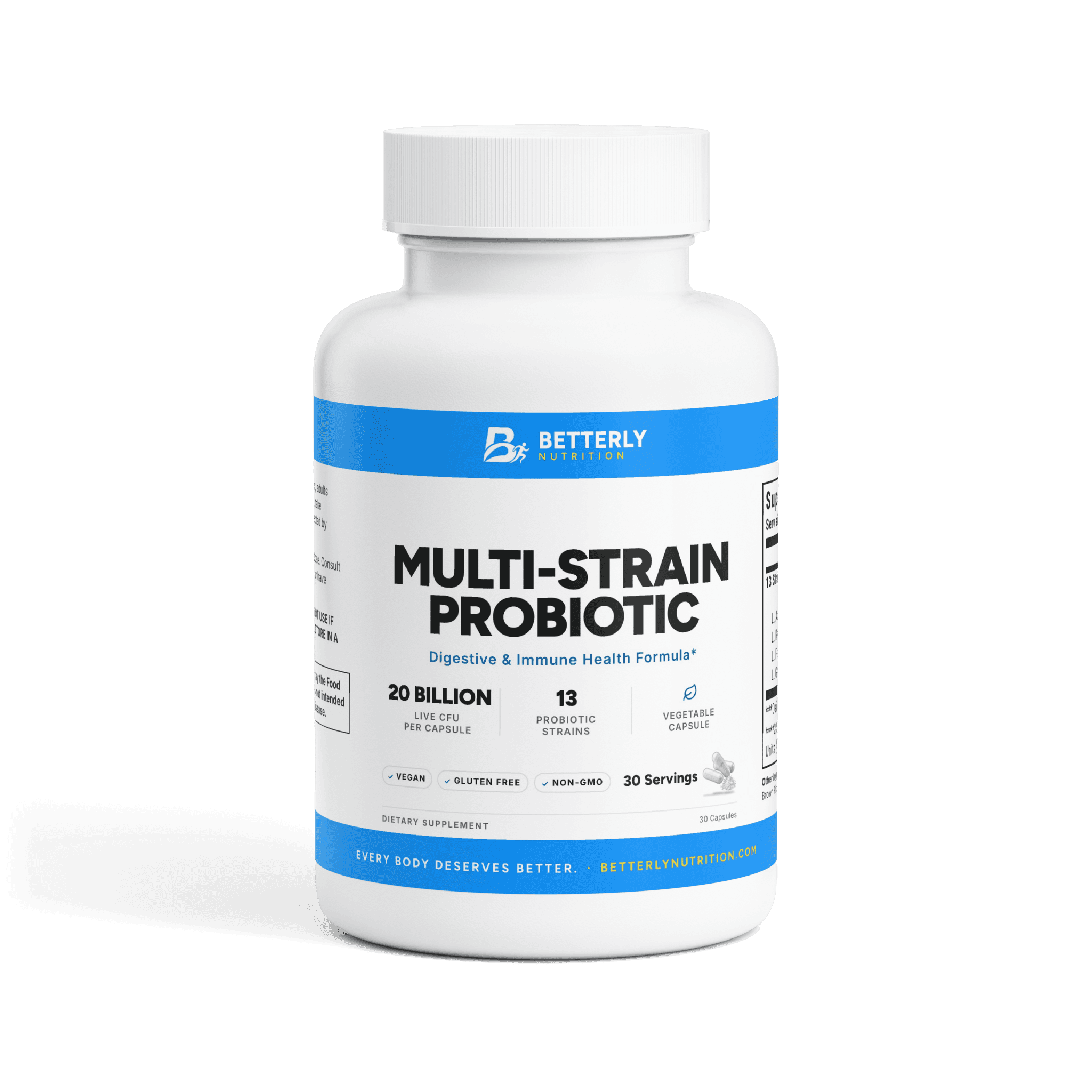
- Multi-Strain Probiotic Capsules: adults take one capsule daily, with 6-8 oz (177-237ml) of water.
- Probiotic & Prebiotic Capsules: two capsules once daily. The label adds, "For best results, take one (1) capsule during the day and one (1) capsule in the evening."
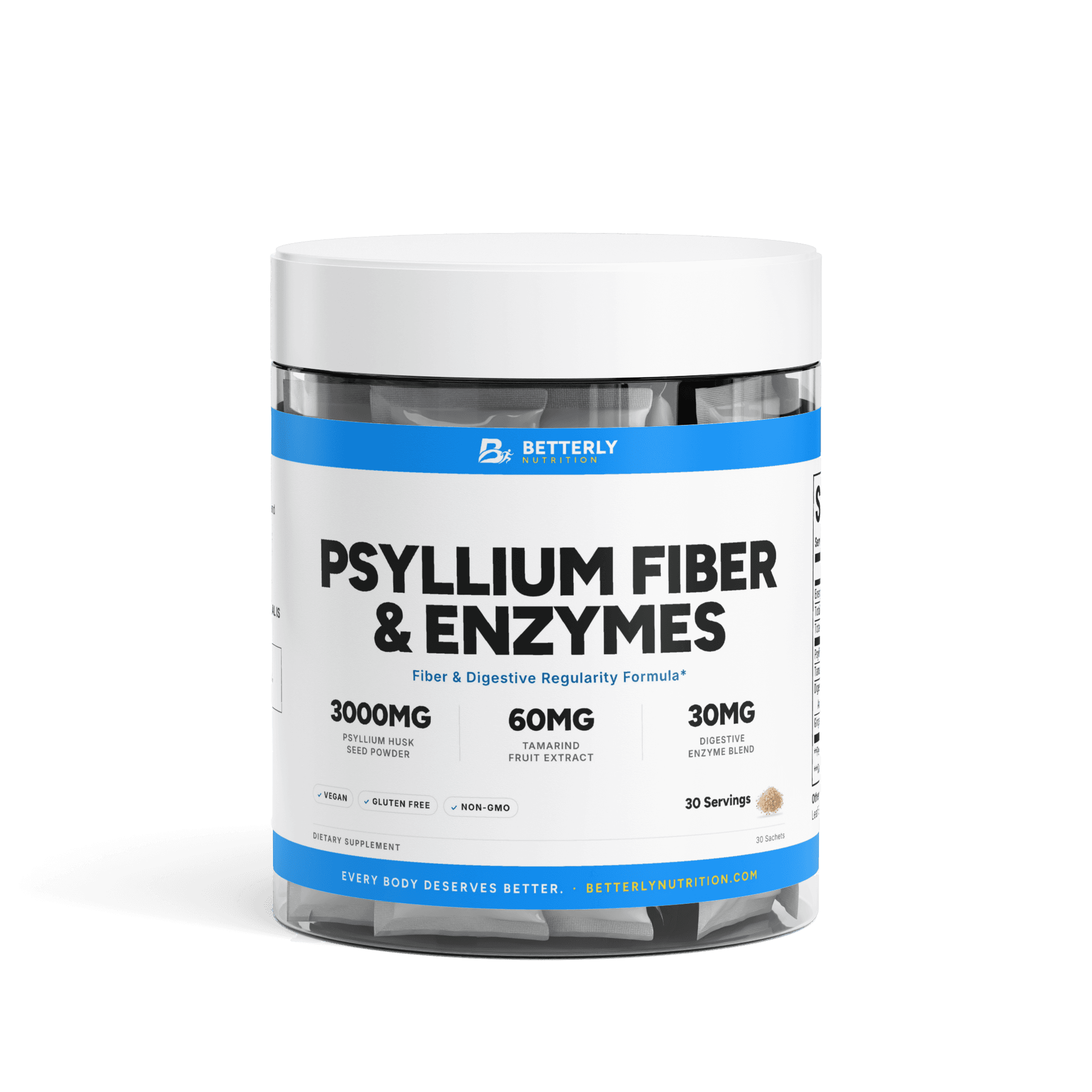
- Psyllium Fiber & Digestive Enzyme Powder: one sachet in 6.8 fl oz (200 mL) of water, 1–2 times daily, away from meals.
Every one of these labels says not to exceed the recommended dose, so don't double up after a missed day. Our combo capsule and enzyme strips both contain bromelain and papain, so ask a healthcare provider before taking them together.
Digestive enzymes vs probiotics: which fits your routine?
Digestive enzymes vs probiotics often comes down to timing and format: our enzyme-first capsule is labeled for before meals, and our probiotics come as daily capsules or strips. If digestion already feels fine, you don't need either.
| If this sounds like you | Closer fit | Why |
|---|---|---|
| You want something timed to meals | An enzyme labeled for before meals | Enzymes work on the food itself |
| You want a steady daily gut routine | A daily probiotic | Our probiotic labels are written for daily use |
| You're traveling or dislike capsules | A strip | Dissolves on the tongue, no water |
| You're trying a probiotic for the first time | One probiotic on its own | One change at a time is easier to judge |
| Certain meals often leave you uncomfortable | A talk with a healthcare provider | Our labels make no claim for this |
| Meals already sit comfortably | Neither | Your body makes its own enzymes |
From our shop: Digestive Enzyme & Probiotic Capsules — six named enzymes and three Lactobacillus species in one 2500 HUT/400mg blend per 1 Veggie Capsule serving.
How do you read a digestive enzyme or probiotic label?
You read a digestive enzyme label for named enzymes and how each is measured, and a probiotic label for strain names, CFU wording and dates.
Enzyme label checklist
- Match the enzyme to the food. A long list only helps if it includes the one your meal calls for.
- Check the unit. Milligrams tell you weight. Activity units, like HUT, FIP or LACU, describe how active an enzyme is. The two don't convert, so you can't compare a milligram label with a units label.
- Watch for blends. A blend may give one total for several enzymes, so you won't know each one's share.
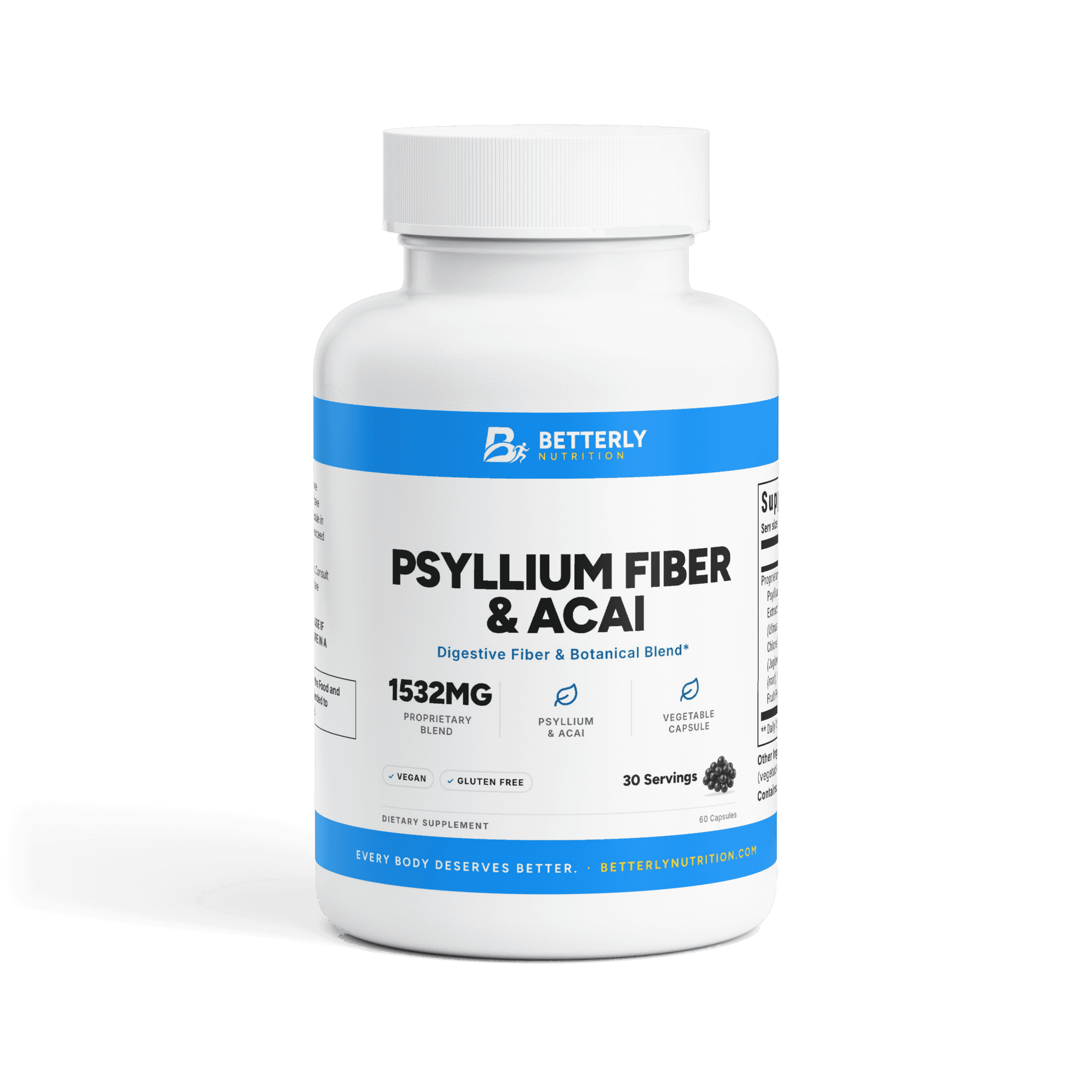
Our shelf shows all three styles. The combo capsule prints one activity figure, 2500 HUT, for a blend of six named enzymes. The strips list theirs in milligrams. And the psyllium powder gives one 30mg total per 1 Sachet serving for a Digestive Enzyme Blend (from Fermented Cereals) of amylase, lactase, lipase and cellulase.
What our probiotic labels do and don't tell you
ODS suggests checking the genus, species and strain, the expiration date and the storage directions, since some probiotics need refrigeration. It adds that CFU counts can decline, so some experts prefer labels that list CFUs through the expiration date. A strain code, like Bl-04, tells you more than a species name alone.
Here's how four of our probiotic labels measure up:
- Probiotic & Prebiotic Capsules name four strain codes: La-14, Bl-04, Lp-115 and Lpc-37. The label doesn't say whether its 40 Billion CFU is counted at manufacture or through expiry.
- Multi-Strain Probiotic Capsules name 13 probiotics by genus and species only, with no strain codes. The label says the 20 Billion CFU per 1 Capsule serving is "at the time of manufacture."
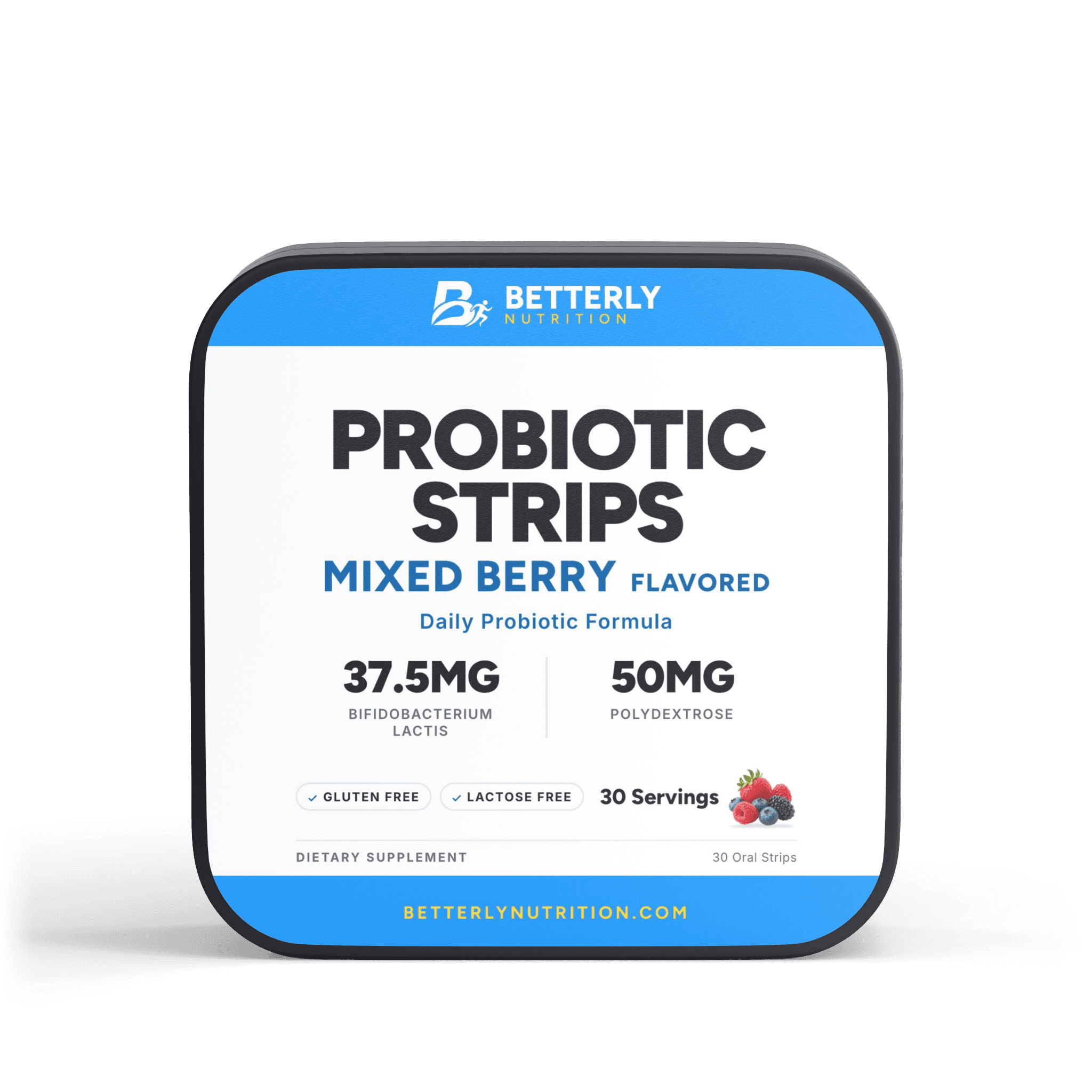
- 10 Billion CFU Probiotic Strips list one species, Bifidobacterium lactis at 37.5mg (10 Billion CFU) per 1 Oral Strip (180 mg) serving, with no timing for the count.
- Digestive Enzyme & Probiotic Capsules list three Lactobacillus species but state no CFU count at all. If a CFU number matters to you, judge a different product on it.
Digestive enzymes vs fiber and ox bile: where do they fit?
Psyllium is a fiber and ox bile is bile from cattle, so neither is an enzyme or a probiotic, though both sit on the digestion shelf.
Per 1 Sachet serving, the psyllium powder label lists 3000mg of psyllium husk seed powder (Plantago ovata) alongside the 30mg enzyme blend. Because that label says to take it away from meals, it isn't timed like the combo capsule. If you're new to psyllium, choosing a fiber supplement for regularity explains how to ease in without a rough first week.
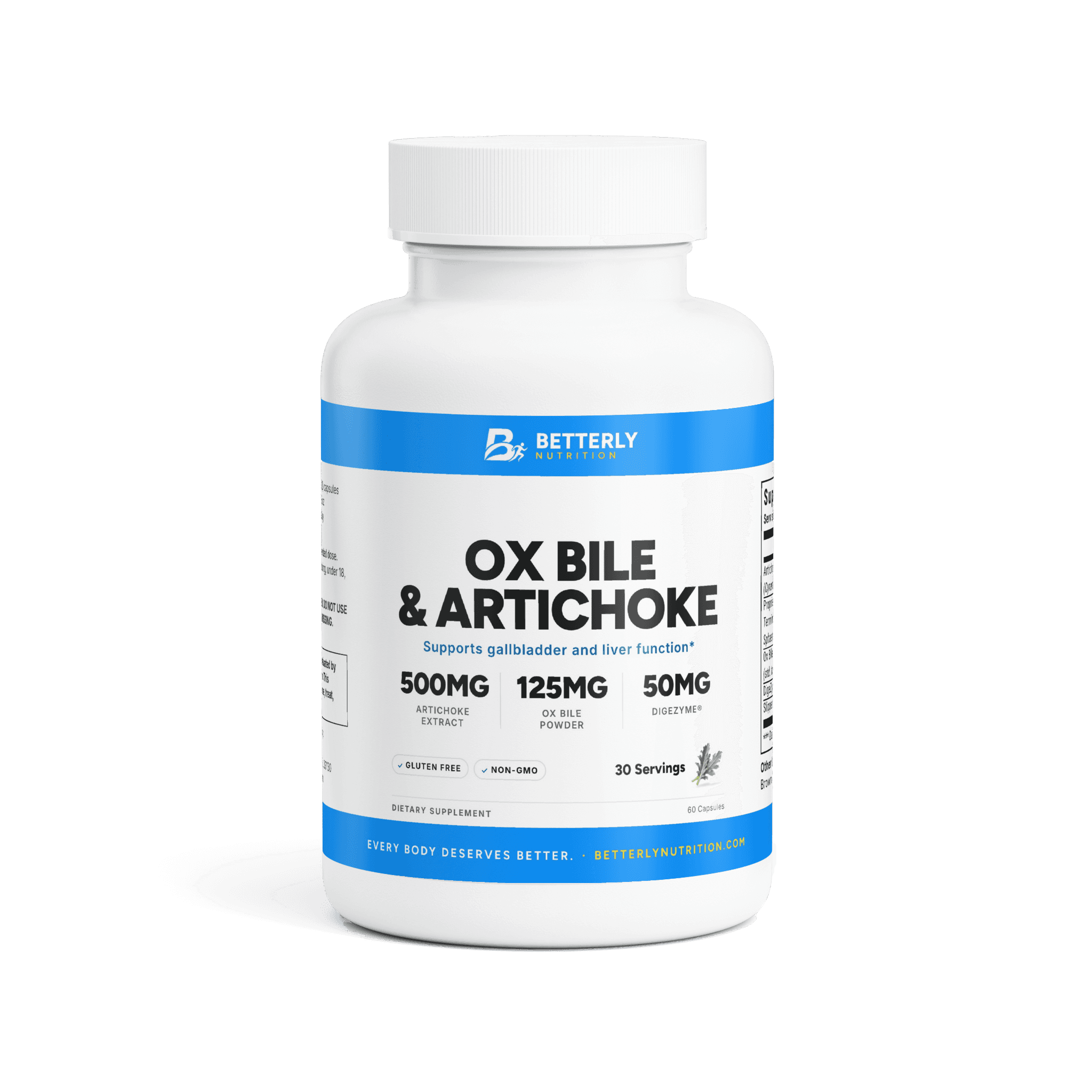
NIDDK explains that your liver makes bile to help digest fats and some vitamins. Per 2-capsule serving, Ox Bile & Artichoke Capsules list 125 mg of ox bile powder (std. to 40% cholic acid) and 500 mg of artichoke leaf extract. The panel also lists DigeZyme® (50 mg), slippery elm bark extract (40 mg) and a 300 mg proprietary blend. Its label makes no fat-digestion claim.
The label's suggested use is two capsules daily for adults, with 6-8 oz of water. With ox bile and a gelatin capsule, it isn't vegan.
You can compare these labels side by side in our gut health and digestion collection.
From our shop: Probiotic & Prebiotic Capsules — an 800 mg probiotic blend (40 Billion CFU) with four named strains, plus 24 mg of FOS, per 2-capsule serving.
When can you skip digestive enzymes and probiotics?
You can usually skip digestive enzymes and probiotics if your meals sit comfortably and your digestion feels normal to you.
Some gas is simply part of digestion. MedlinePlus explains that gas comes from two sources: air you swallow, and bacteria in your large intestine breaking down undigested food. It also says, "Everyone has gas." One rough meal doesn't mean you're short on anything.
ODS adds that there are no official recommendations covering probiotic use by healthy people.
Try the free fixes first. MedlinePlus suggests eating more slowly, so you swallow less air, and choosing water and other non-fizzy drinks. It also notes that foods that cause gas in one person may not in another, so notice which meals bother you. If you add fiber, go gradually. Those free fixes, plus the food habits in what actually helps gut health, do most of the work.
Who should check with a provider before trying enzymes or probiotics?
Check with a healthcare provider before taking digestive enzymes or probiotics if you're pregnant, nursing, under 18, on any medication, or living with a medical condition. Between them, our seven labels' cautions name every one of these groups.
- ODS says probiotics might not be safe for people who are seriously ill or have a weakened immune system.
- NCCIH says little is known about bromelain's safety during pregnancy or breastfeeding, and advises talking with your provider first if you take any medicine. Our combo capsule and enzyme strips both contain bromelain.
- The psyllium powder label says it's not intended for children under 12, and adds, "Consult a physician before use or if taking medication; take at least 2 hours apart."
- If you have surgery scheduled, tell your care team about every supplement you take.
If digestive symptoms are new, severe, changing suddenly or getting worse, or come with pain or weight changes you can't explain, see a healthcare provider promptly. For gas, MedlinePlus says to see your provider if symptoms still bother you.
FAQ: digestive enzymes and probiotics
Can you take digestive enzymes on an empty stomach?
It depends on the label, since digestive enzyme products don't all share one rule. Our Digestive Enzyme & Probiotic Capsules label points to 20-30 minutes before a meal, which is shortly before food rather than an empty stomach. That fits how enzymes work, because they act on the food you eat. If your label gives no timing, ask a pharmacist before settling on one.
Can you take digestive enzymes every day?
Yes, digestive enzymes can be taken every day when the label is written for daily use, as ours are. The Digestive Enzyme & Probiotic Capsules label's suggested use is one capsule twice a day. Never go past the suggested use, and check with a provider first if the label's cautions apply to you.
Do digestive enzymes have side effects?
Yes, digestive enzymes can cause side effects in some people. NCCIH says bromelain, an enzyme in our combo capsule and strips, seems to be well tolerated when taken by mouth. Stomach upset is among its most commonly reported side effects. If a new enzyme doesn't sit well, stop taking it and talk with a healthcare provider, especially if you take any medicine.
Can probiotics cause gas?
Probiotics can cause gas in some people. The NIH Office of Dietary Supplements says that in healthy people, probiotics may cause gas but rarely cause other health problems. If you're seriously ill or your immune system is weakened, ask a provider first. Starting one product at a time makes any change easier to trace.
How do you know if you need digestive enzymes?
Many healthy people don't need digestive enzymes, and no quiz or label can tell you that you do. If one kind of meal, like a dairy-heavy or bean-heavy dinner, keeps bothering you, bring that pattern to a healthcare provider. Our enzyme labels list their enzymes, but none makes a claim for that situation. Do the same if discomfort is frequent, severe or hard to explain.
Sources
- Probiotics: Fact Sheet for Consumers (NIH Office of Dietary Supplements)
- Your Digestive System & How it Works (NIDDK)
- Gas (MedlinePlus)
- Bromelain: Usefulness and Safety (NCCIH)
If this left you looking for somewhere to start, read digestive enzymes and probiotics in one capsule — its amounts per serving are listed on the page. For the practical questions this raises, how dosing, sourcing and subscriptions work is answered in one place.