On this page
- Key takeaways
- Do digestive enzymes help with bloating, or is that just marketing?
- Why do certain meals leave you bloated?
- Which digestive enzyme matches which food?
- Do digestive enzymes help with bloating and gas after eating?
- What does our enzyme label list, and what doesn't it tell you?
- How do you take a digestive enzyme capsule, going by the label?
- Can digestive enzymes make bloating worse?
- When don't you need a digestive enzyme at all?
- Who should check with a healthcare provider first?
- FAQ: digestive enzymes and bloating
- Sources
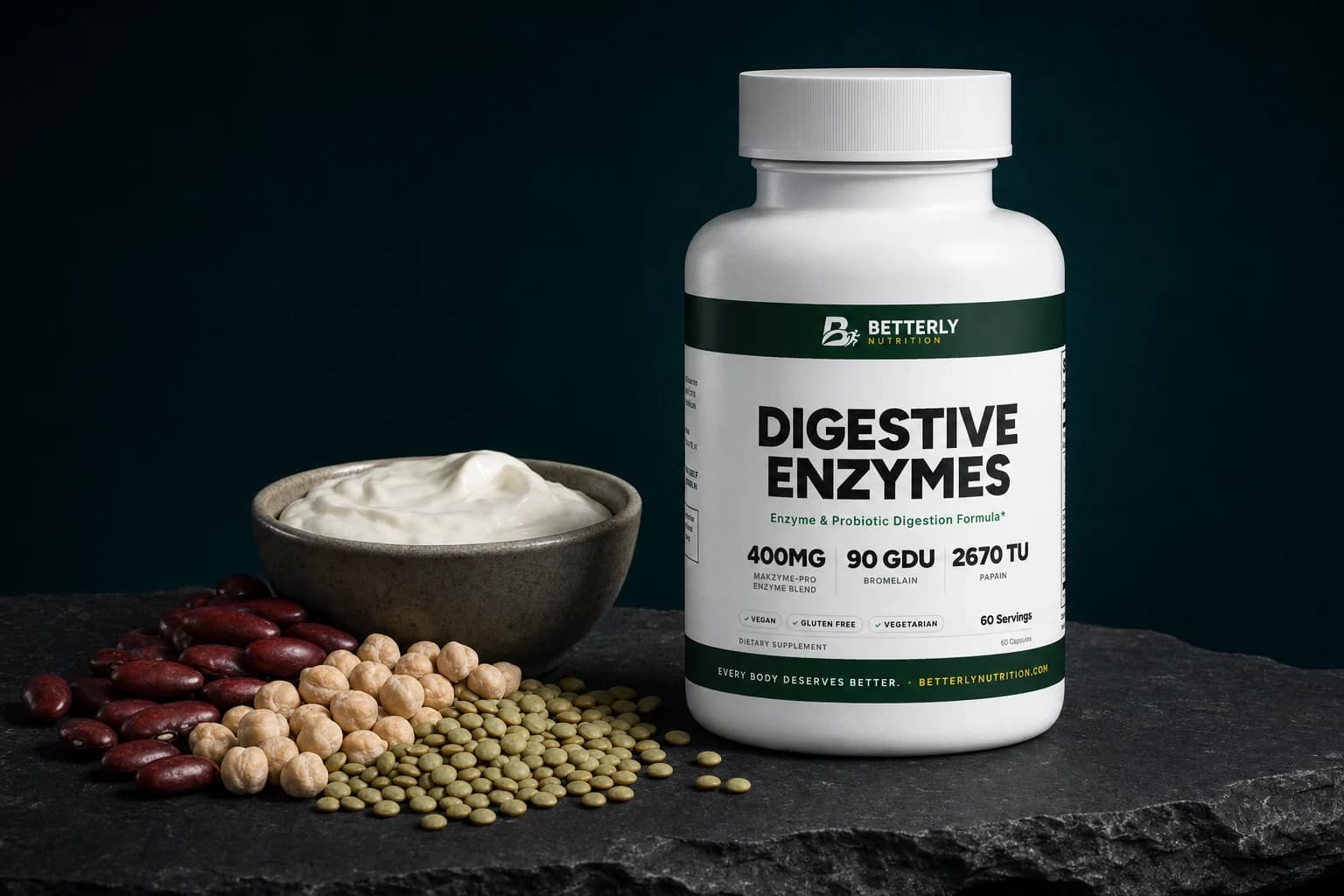
The short answer: Do digestive enzymes help with bloating? Not as a general fix. Each enzyme acts on one kind of food molecule, so it's only relevant when your occasional bloating follows a food it breaks down. Our Digestive Enzyme & Probiotic Capsules list lactase, which targets the lactose in ice cream or a milky latte, and alpha galactosidase, which targets some carbohydrates in bean chili or hummus, inside one 400mg enzyme blend per 1 Veggie Capsule serving, with no separate amount for either.
Key takeaways
- An enzyme can only be relevant to occasional bloating that follows the food it breaks down, and it does nothing about swallowed air.
- Lactase and alpha-galactosidase target carbohydrates in dairy and legumes, two food groups NIDDK lists among those that may lead to extra gas.
- Our enzyme capsule's label makes no bloating claim, and it doesn't say how much dairy or how many beans one capsule is meant to cover.
- Bloating that shows up most days, keeps getting worse or comes with pain is a reason to see a healthcare provider, not to buy a supplement.
A heads-up before we start: the enzyme capsule this guide keeps coming back to is ours, and so are the strips, powder and probiotic we hold it up against. Every amount below comes from those products' own Supplement Facts panels, gaps included.
Do digestive enzymes help with bloating, or is that just marketing?
Digestive enzymes can only matter for occasional bloating in a narrow case: the bloating follows a specific food, and the label lists the enzyme that breaks that food down.
Digestive enzymes are proteins that split big food molecules into smaller pieces, and each one is choosy about its target. Lactase splits lactose. It won't touch the protein in a burger or the fat in a bag of chips.
The federal record here is thin. NIDDK's page on reducing gas symptoms, from the National Institutes of Health, lists lactase products only among the supplements a doctor may recommend, and says that choice depends on which gas symptoms you have and whether a health condition is causing them. So if gas and bloating keep following dairy, raise that pattern with a provider.
No federal source we read says an alpha-galactosidase supplement reduces bloating, so this guide sticks to what each enzyme acts on.
Why do certain meals leave you bloated?
Certain meals leave you bloated because gas builds up two ways: from air you swallow, and from gut bacteria breaking down carbohydrates your small intestine didn't fully digest.
NIDDK's guide to the symptoms and causes of gas describes bloating as a feeling of fullness or swelling in your belly, and it traces gas to two routes.
You swallow a little air whenever you eat and drink, and more when you chew gum, drink fizzy drinks or eat too fast. Meanwhile, some sugars, starches and fibers leave your small intestine not fully digested. Bacteria in your large intestine then feed on them, releasing gas as they do.
An enzyme could only ever reach that second route. If lactose is broken down before it leaves your small intestine, less of it may be left for the bacteria downstream to ferment. Swallowed air is out of any enzyme's reach.
Which digestive enzyme matches which food?
Each digestive enzyme matches one kind of food molecule: lactase matches milk sugar, alpha-galactosidase matches certain bean carbohydrates, lipase matches fat, and protease matches protein.
NIDDK's eating and diet page for gas lists foods and drinks that may lead to extra gas in some people. Here's how that list lines up with enzyme rows:
- Dairy such as milk, ice cream and yogurt: lactase is the row that goes after the lactose they carry.
- Legumes such as beans, peas and lentils: alpha-galactosidase is the row pointed at certain carbohydrates in dishes like chili, hummus and lentil soup.
- High-fat foods: NIDDK says these can increase bloating. Lipase breaks down fat, though NIDDK doesn't mention lipase supplements.
- Apples, pears, fruit juice and drinks with high-fructose corn syrup: no enzyme on our capsule's label is aimed at fruit sugars.
- Sugar-free candy and gum with sweeteners ending in "-ol," like sorbitol: no enzyme on our label acts on these either.
So count matches, not names. A six-enzyme capsule is only as relevant to you as the one enzyme that fits the meal that bothers you.
Do digestive enzymes help with bloating and gas after eating?
Digestive enzymes are only relevant to occasional bloating and gas after eating when you can tie it to a food they target, like a milkshake or refried beans.
Before you buy anything, spend a couple of weeks jotting down what you ate and whether bloating followed. Then read your notes against this table:
| When bloating shows up | What's in play | Enzyme that targets it | Other step |
|---|---|---|---|
| After milk, ice cream or a creamy sauce | Lactose | Lactase | Raise a repeat pattern with a provider |
| After chili, hummus or lentil soup | Legume carbohydrates | Alpha-galactosidase | Raise a repeat pattern with a provider |
| After a large, rich meal | Portion size and fat | Lipase, for the fat only | Smaller, more frequent meals |
| After soda, gum or eating on the run | Swallowed air | None | Slow down, skip the straw |
| After sugar-free candy or gum | "-ol" sweeteners | None on our label | Cut back |
| Most days, whatever you eat, or with pain | Not a food pattern | Not an enzyme question | See a healthcare provider |
Only the top two rows pair a named enzyme with a named food, and that pairing is all the table shows. Everywhere else, the lever is how and what you eat, or a provider.
From our shop: Digestive Enzyme & Probiotic Capsules — fungal lactase and alpha galactosidase inside a 2500 HUT/400mg enzyme blend per 1 Veggie Capsule serving, beside four more enzymes, in a vegan capsule.
What does our enzyme label list, and what doesn't it tell you?
Our Digestive Enzyme & Probiotic Capsules list six enzymes in one blend per 1 Veggie Capsule serving, and fungal lactase and alpha galactosidase are the two that correspond to dairy and legumes.
The Makzyme-Pro™ Enzyme Blend is printed as 2500 HUT/400mg, so it gives both an activity figure and a weight. That is the panel's only figure: HUT, an activity unit, measures protease, and the lactase, alpha galactosidase and other enzymes inside the blend get no amount of their own. The enzyme label checklist in our enzymes-vs-probiotics guide covers why those units can't be lined up against milligrams.
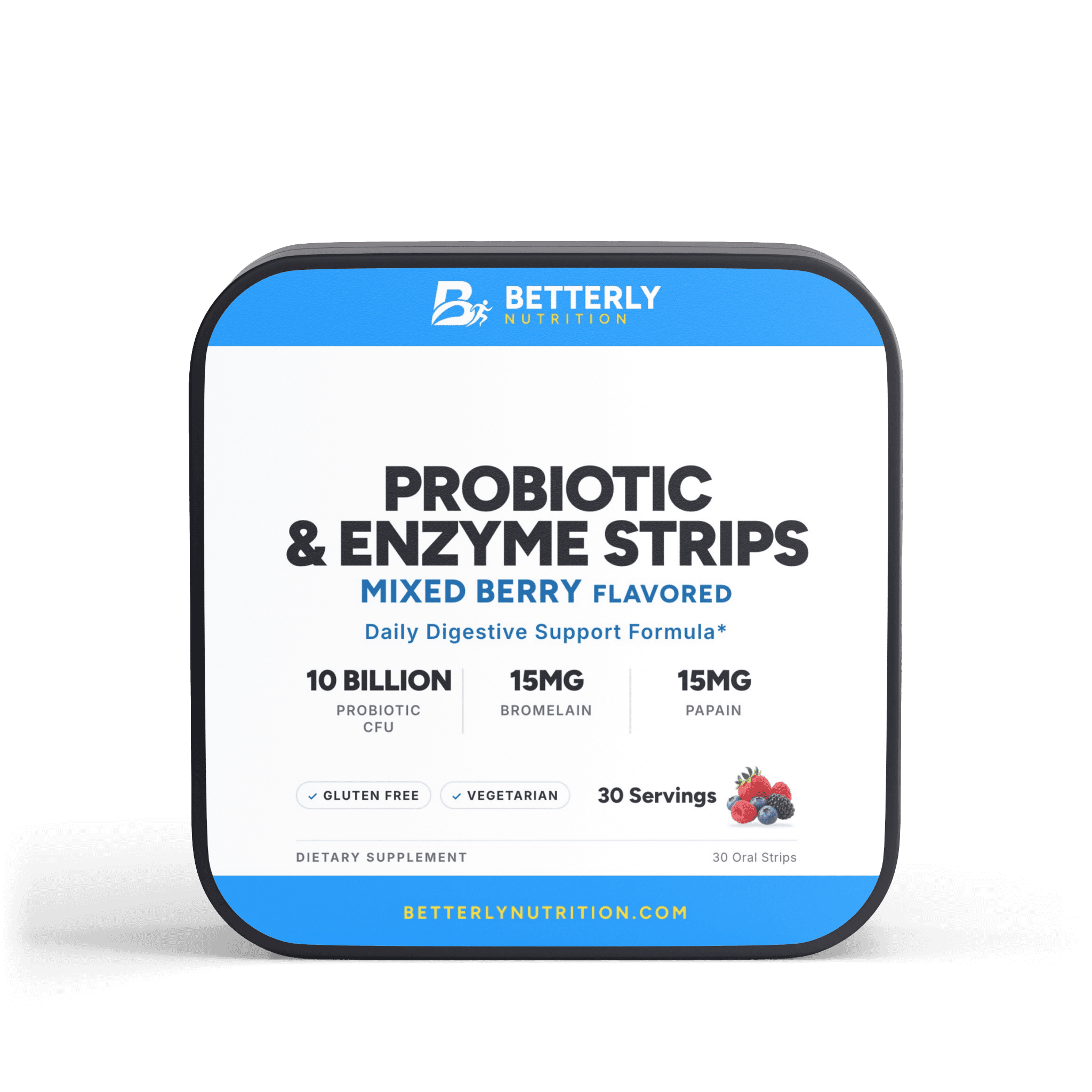
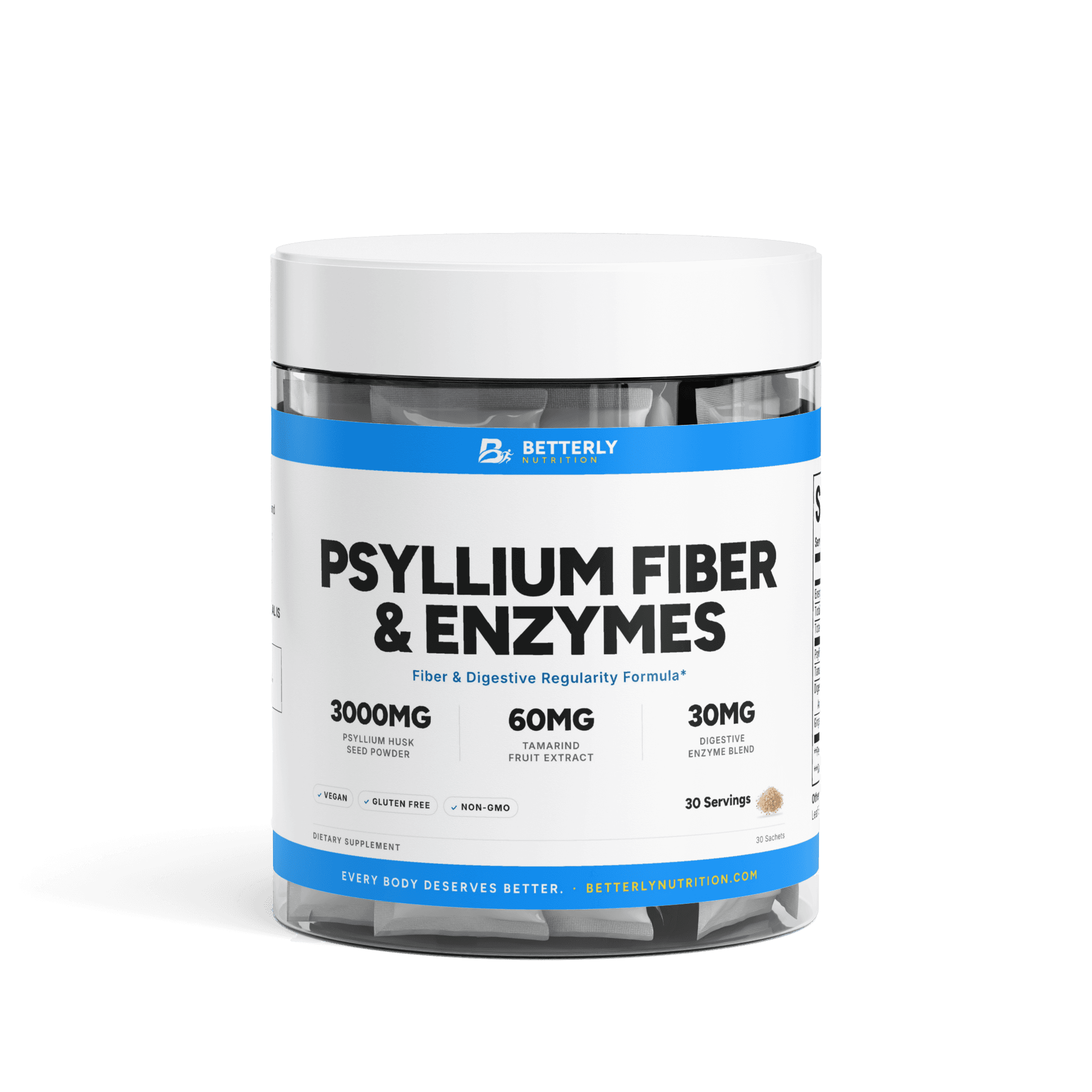
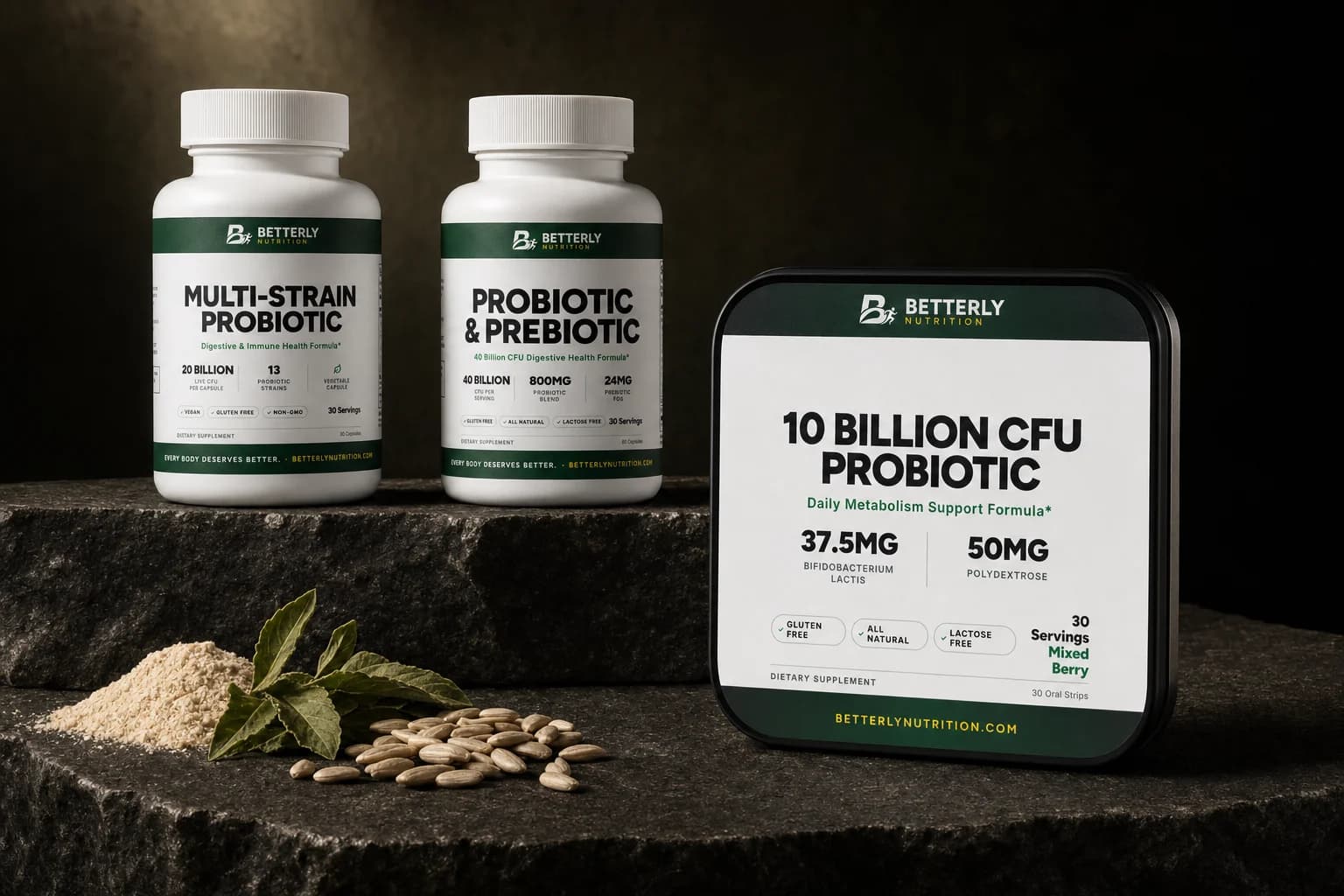
Neither the dairy nor the legume enzyme shows up on the Probiotic & Digestive Enzyme Strips. Per 1 Oral Strip (210 mg) serving, their enzyme rows are papain and bromelain at 15 mg each plus 10 mg of protease, beside a 50 mg (10 Billion CFU) Bacillus coagulans row. The Psyllium Fiber & Digestive Enzyme Powder names lactase inside a 30mg Digestive Enzyme Blend per 1 Sachet serving. The Multi-Strain Probiotic Capsules carry no enzymes.
| Our product (serving) | Lactase | Alpha-galactosidase | Foods its enzymes act on |
|---|---|---|---|
| Enzyme capsule (1 Veggie Capsule) | In a 400mg blend, no own amount | In the same blend, no own amount | Milk sugar, legume carbs, protein, fat |
| Enzyme strip (1 Oral Strip) | Not listed | Not listed | Protein only |
| Psyllium powder (1 Sachet) | In a 30mg blend, no own amount | Not listed | Starch, milk sugar, fat, plant fiber |
| Multi-strain probiotic (1 Capsule) | Not listed | Not listed | None; no enzymes listed |
The takeaway: only the capsule lists both the dairy enzyme and the legume enzyme, though neither gets an amount of its own: they share one 400mg blend with four more enzymes and three cultures. The powder's lactase shares one 30mg weight with amylase, lipase and cellulase, and the strip's three enzyme rows all act on protein. On any brand's label, ours included, look for a named enzyme that matches a food showing up in your notes, with its own amount printed beside it.
Where the capsule's label goes quiet:
- It calls the product an "Enzyme & Probiotic Digestion Formula" and makes no claim about bloating, gas, dairy or beans.
- It gives its lactase and alpha galactosidase no amounts and doesn't say how much milk or how many beans one capsule is meant to handle, and we won't guess.
- The three Lactobacillus species inside the Makzyme-Pro™ blend come with no CFU count.
How do you take a digestive enzyme capsule, going by the label?
Our Digestive Enzyme & Probiotic Capsules are labeled for one capsule twice a day, taken 20-30 minutes before a meal for best results, and no more than that.
The label also leaves room for a healthcare professional's own directions, and its caution line rules out going over the recommended dose. So there's no third capsule for a third meal or a late snack.
Two capsules mean two meals, so let your food notes decide which ones. If occasional bloating tends to trail a lunch with a milky latte or a dinner of black bean tacos, those are the meals the label's before-meal window can line up with. Keep the notes going once you start, and mark which meals had a capsule ahead of them.
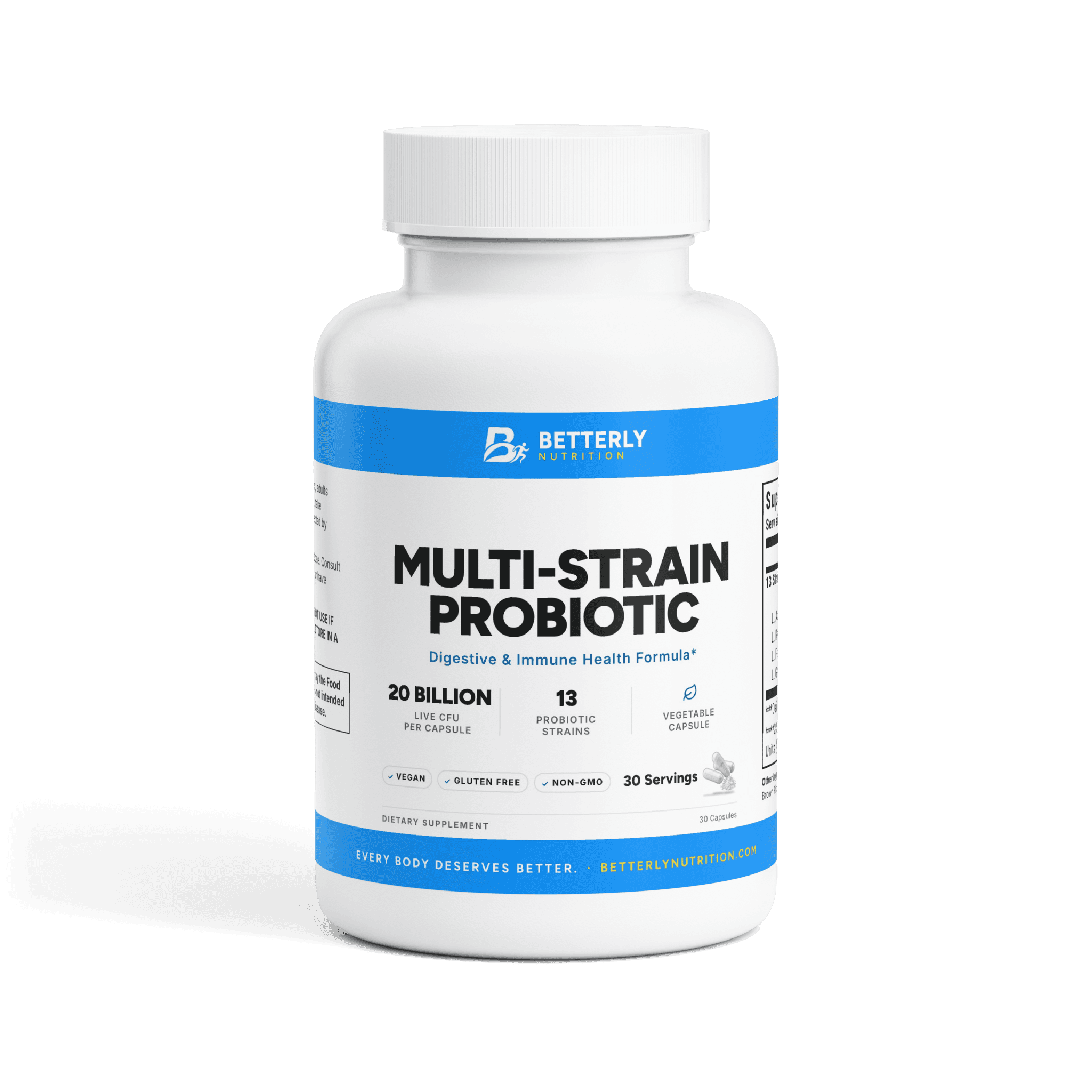
From our shop: Multi-Strain Probiotic Capsules — no enzyme rows, just 317 mg of a 13 Strain Probiotic per 1 Capsule serving (20 Billion CFU at the time of manufacture), for someone who'd rather have one daily capsule than a mealtime one.
Can digestive enzymes make bloating worse?
Some digestive enzyme ingredients can upset your stomach: NCCIH names stomach upset and diarrhea as the most commonly reported side effects of bromelain taken by mouth.
The National Center for Complementary and Integrative Health (NCCIH) also says oral bromelain seems to be well tolerated. Our capsule lists bromelain inside its enzyme blend, with no separate amount, per 1 Veggie Capsule serving, and our strip lists it at 15 mg per 1 Oral Strip (210 mg) serving.
Three other lines on our labels are worth a look if your stomach is touchy:
- The capsule's Makzyme-Pro™ blend lists three Lactobacillus species. Gas is the probiotic side effect our guide to probiotic side effects spends the most time on.
- The strip's other ingredients include mannitol, one of the "-ol" sweeteners NIDDK says may lead to extra gas. The panel doesn't give the amount, though the whole strip weighs 210 mg.
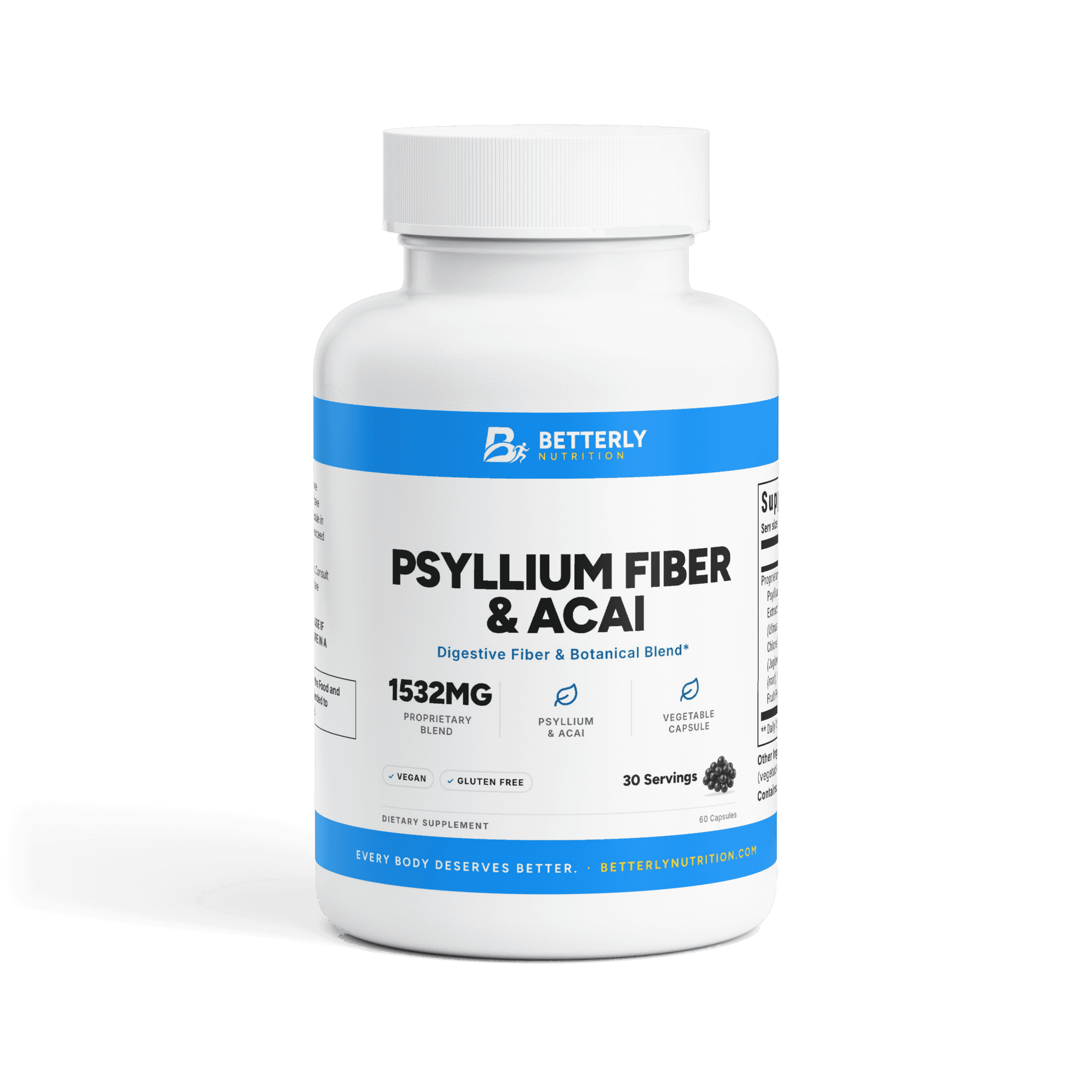
- The psyllium powder holds 3000mg of psyllium husk seed powder per 1 Sachet serving, and NIDDK notes that some people have more gas symptoms when they take in too much fiber.
If bloating gets worse after you start any enzyme product, stop and talk it over with a healthcare provider. Taking more to push through isn't the answer.
When don't you need a digestive enzyme at all?
You don't need a digestive enzyme when bloating is occasional and passes, when it follows swallowed air or big meals, or when your meals already sit comfortably.
Most of what helps costs nothing. NIDDK suggests eating more slowly, sitting down to eat, eating smaller and more frequent meals, and not talking while you eat. It also suggests cutting back on gum, hard candy, fizzy drinks and straws.
You can also leave the enzyme on the shelf if:
- Your notes show no link between bloating and any particular food.
- Dairy and beans already sit fine with you, so lactase or alpha-galactosidase has nothing to add.
Browse our gut health and digestion collection only after you've ruled those out.
Who should check with a healthcare provider first?
Check with a healthcare provider before adding a digestive enzyme if you're pregnant, nursing, under 18, taking any medicine, managing a medical condition, or if bloating won't settle.
- Our capsule's caution says to consult a physician if you're pregnant, nursing, under 18 or have a medical condition.
- NCCIH wants anyone on any type of medicine to speak with a provider before using bromelain. It adds that there's little information on whether bromelain is safe during pregnancy or while breastfeeding.
- NIDDK says to talk with your doctor before using supplements or probiotics, for safety reasons.
- If you take any prescription product for digestion, ask your provider before adding a supplement.
- Scheduled for surgery? Let the surgical team know about any supplement you're taking, this one included.
Some signs mean you shouldn't troubleshoot alone. NIDDK says to talk with your doctor if gas symptoms bother you, change suddenly, or come with belly pain, constipation, diarrhea or weight loss. We'd add bloating that shows up most days, no matter what you eat.
FAQ: digestive enzymes and bloating
Is it normal to feel bloated after eating?
Yes, feeling a bit bloated after eating is normal, and it doesn't by itself mean you need a digestive enzyme. NIDDK says having some gas symptoms is normal, especially during or after meals. It says they may be a problem when they happen often, bother you or affect your daily activities. If your bloating fits that description, or the pattern has changed, talk with a healthcare provider before reaching for a supplement.
Are digestive enzymes or probiotics better for bloating?
Neither digestive enzymes nor probiotics is a sure answer for occasional bloating, because they do different jobs. An enzyme acts on the food in one meal, so it only fits occasional bloating tied to a food it breaks down. A probiotic is taken daily on its label's schedule, not timed to one meal.
How can you tell if a digestive enzyme is doing anything?
You can judge a digestive enzyme only against your own notes, since no home test measures it. Compare similar meals from before you started with similar meals since, such as two creamy pasta dinners, and note how you felt afterward. If you can't see a difference, the enzyme may not be the missing piece, and you can stop. Never raise the dose to find out.
Can you take digestive enzymes with other supplements?
Maybe, but ask a healthcare provider before pairing a digestive enzyme with other supplements, and always if you also take medicine. Our enzyme capsule and our enzyme strips both list bromelain and papain, so using the two together doubles up on both. NCCIH's bromelain page gives harmful herb-and-medicine interactions as its reason to ask first. Bring the labels to that conversation, and never go past any label's suggested use.
Do digestive enzymes help with bloating and occasional constipation?
Digestive enzymes aren't built for regularity, and nothing on our enzyme capsule's label addresses it. NIDDK lists constipation alongside gas symptoms as a reason to talk with your doctor, so if bloating and occasional constipation keep turning up together, start with a provider. If fiber comes up in that conversation, our side-by-side of fiber supplements compares the options.
Sources
- Symptoms & Causes of Gas in the Digestive Tract (NIDDK)
- Eating, Diet, & Nutrition for Gas in the Digestive Tract (NIDDK)
- Treatment for Gas in the Digestive Tract (NIDDK)
- Bromelain: Usefulness and Safety (NCCIH)
If this left you looking for somewhere to start, read digestive enzymes with lactase and alpha-galactosidase — its amounts per serving are listed on the page. For the practical questions this raises, how dosing, sourcing and subscriptions work is answered in one place.