On this page
- Key takeaways
- Which probiotic side effects are normal, and which aren't?
- Why do probiotics make you gassy or bloated when you start?
- Can probiotics make you feel worse before you feel better?
- Which label ingredients can add to probiotic gas and bloating?
- Who should skip probiotics or ask a provider before starting?
- When should you stop taking a probiotic?
- How do you start a probiotic by the label?
- Do you need a probiotic at all if one gives you gas?
- FAQ: probiotic side effects
- Sources
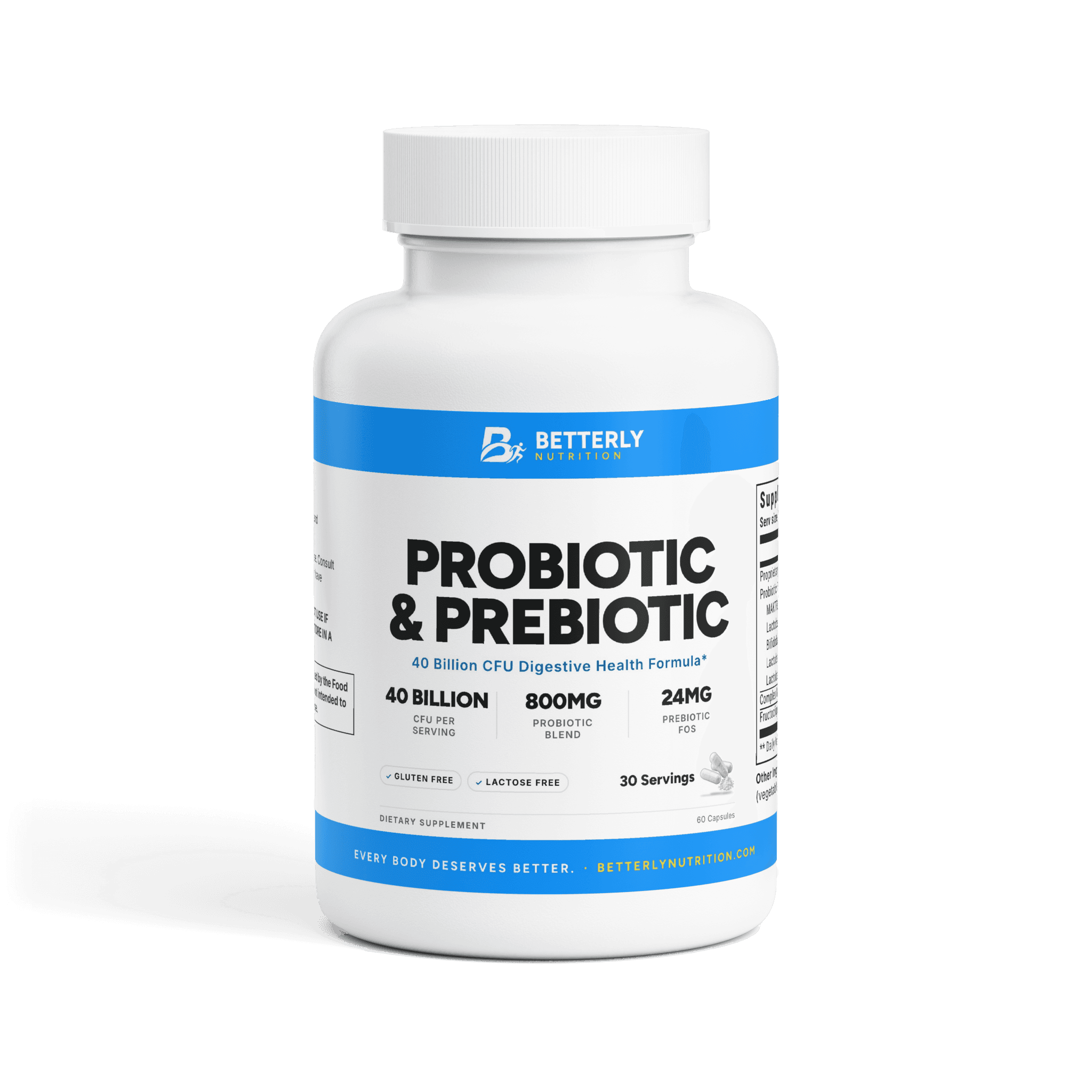
The short answer: Among probiotic side effects, gas is the one the NIH Office of Dietary Supplements names for healthy people, and it calls other problems rare in that group. The risk of harm runs higher for people who are seriously ill or have a weak immune system. Some labels add fermentable extras too, like the 24 mg of fructooligosaccharide (FOS) in each 2-capsule serving of our Probiotic & Prebiotic Capsules.
Full disclosure: every probiotic in this guide is one we sell. So we'll point out the lines on our own labels that might add to gas when you first start, and we'll tell you when stopping is the smarter move.
Key takeaways
- Gas is the side effect the NIH names for healthy people who take probiotics, and some people notice that extra gas as a bloated, full belly.
- NCCIH says there's little solid information on how often probiotic side effects happen or how severe they get.
- Prebiotic fibers and sugar alcohols on a probiotic label can mean more gas for some people, apart from the microbes themselves.
- Anyone with a weakened immune system or a serious illness should get a provider's OK before starting any probiotic.
- Feeling worse isn't proof a probiotic is working, so stop and call a provider if symptoms are severe or keep building.
Which probiotic side effects are normal, and which aren't?
Gas is the one probiotic side effect NIH describes for healthy people, and some people notice that extra gas as bloating, a tight, full feeling in the belly.
The NIH Office of Dietary Supplements (ODS) probiotics fact sheet is brief and direct here. It says probiotics "may cause gas" in healthy people but rarely cause infections or other health problems. It also says probiotics might not be safe for everyone, and it names people who are already seriously ill or who have weak immune systems.
What ODS doesn't give you is a number, and neither does NCCIH. The National Center for Complementary and Integrative Health (NCCIH) says probiotics have a long history of apparently safe use, particularly in healthy people. It also admits few studies have examined their safety in detail. So there's no solid data on how often side effects happen or how strong they get.
In practice, some extra gas while you otherwise feel fine matches what ODS describes. Real belly pain, or symptoms that grow stronger day after day, isn't. And if you read a precise percentage somewhere, ask where it came from.
Why do probiotics make you gassy or bloated when you start?
Probiotics may leave you gassy because gut bacteria make gas as they break down carbohydrates, though the NIH pages we read don't pin down one exact cause.
Here's the documented part. NIDDK, part of the National Institutes of Health, explains that your stomach and small intestine don't fully break down certain carbohydrates. Once those carbohydrates reach the large intestine, the bacteria living there break them down, and gas is a by-product.
ODS defines probiotics as live microorganisms, such as bacteria and yeasts, that act mainly in the digestive tract. So adding billions of them to a system where bacteria already make gas could plausibly change how much gas you notice. That's our reasoning from two federal pages, not a finding either one states.
Two more things make your experience personal:
- Strains differ. NCCIH says different types of probiotics may have different effects, so a friend's easy start on one product predicts little about yours.
- Your plate counts. NIDDK lists beans, whole wheat, dairy and vegetables such as broccoli and cauliflower among foods that can bring more gas. Start a probiotic the same week you add more of those, and the capsule may take the blame for dinner.
Can probiotics make you feel worse before you feel better?
A probiotic may leave you gassier when you first start, but none of the NIH pages we read describes feeling worse as a sign that the product is working.
Search this question and you'll find brand blogs calling a rough start good news. ODS and NCCIH don't say that. ODS lists gas as a possible side effect in healthy people, and neither page describes feeling worse as a sign a probiotic is working, so don't let the idea talk you into pushing through pain or symptoms that keep climbing.
A simpler rule: if you're uncomfortable enough to wonder whether to quit, quitting is a reasonable answer. None of our labels asks you to taper off, so stopping just means skipping the next serving.
Which label ingredients can add to probiotic gas and bloating?
Beyond the microbes, check a probiotic label for added fibers and sugar alcohols. On the labels in this guide, those extras are FOS, inulin, polydextrose, mannitol, erythritol and xylitol.
NCCIH describes prebiotics as nondigestible food components that encourage the growth or activity of helpful microbes. The FDA's dietary fiber questions and answers name polydextrose among the non-digestible carbohydrates it intends to count as dietary fiber. NIDDK lists mannitol, erythritol and xylitol among the "-ol" sweeteners that can mean more gas for some people, and it adds that too much fiber can do the same.
Here's what four of our probiotic-first labels list per serving:
| Product | Probiotic per serving | Extras that may add gas | Worth knowing |
|---|---|---|---|
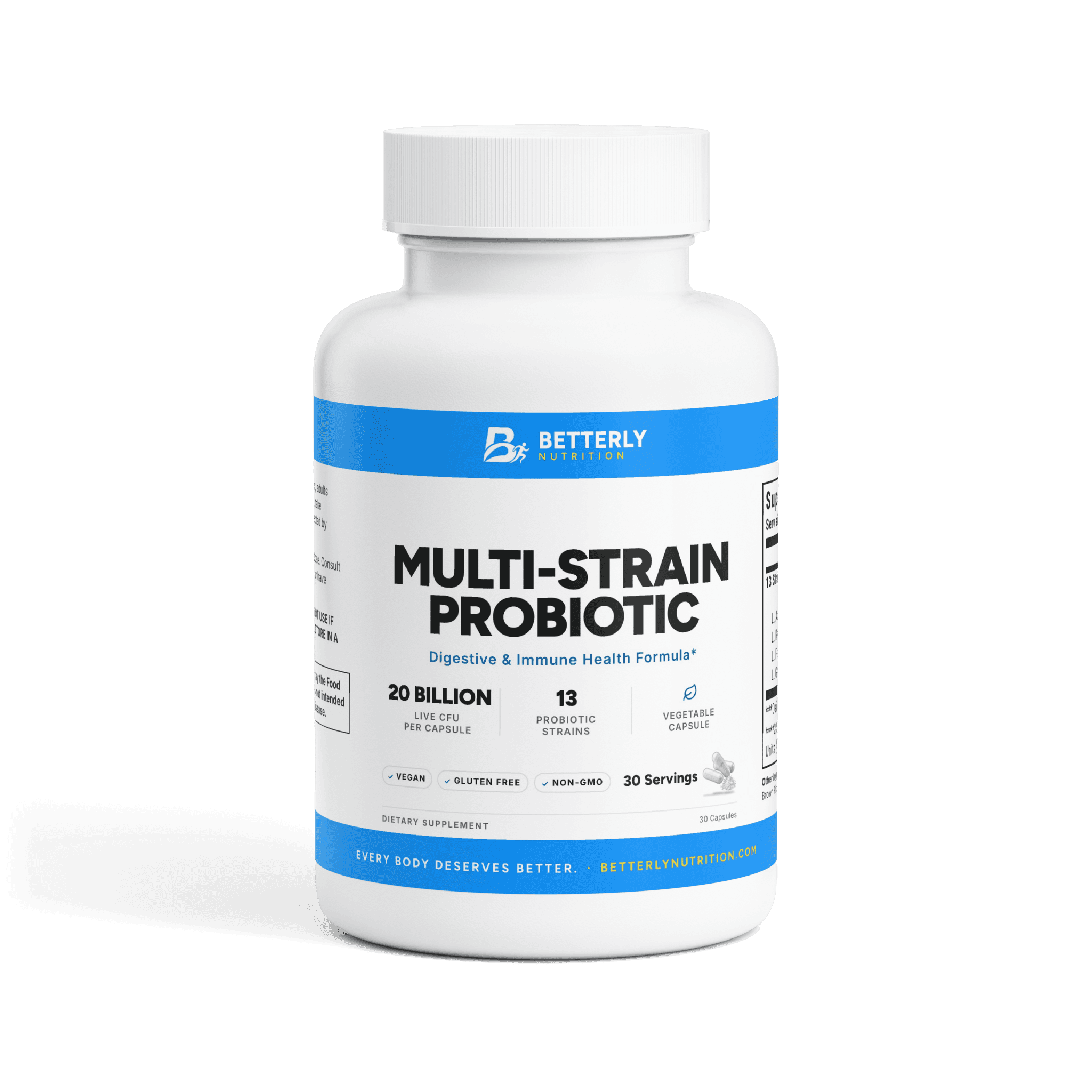
| Multi-Strain Probiotic Capsules | 20 Billion CFU (317 mg), 1 capsule | No prebiotic or sweetener listed | Other ingredients: capsule, brown rice flour |
| Probiotic & Prebiotic Capsules | 40 Billion CFU (800 mg), 2 capsules | 24 mg FOS | Plus 60 mg complex marine polysaccharide |
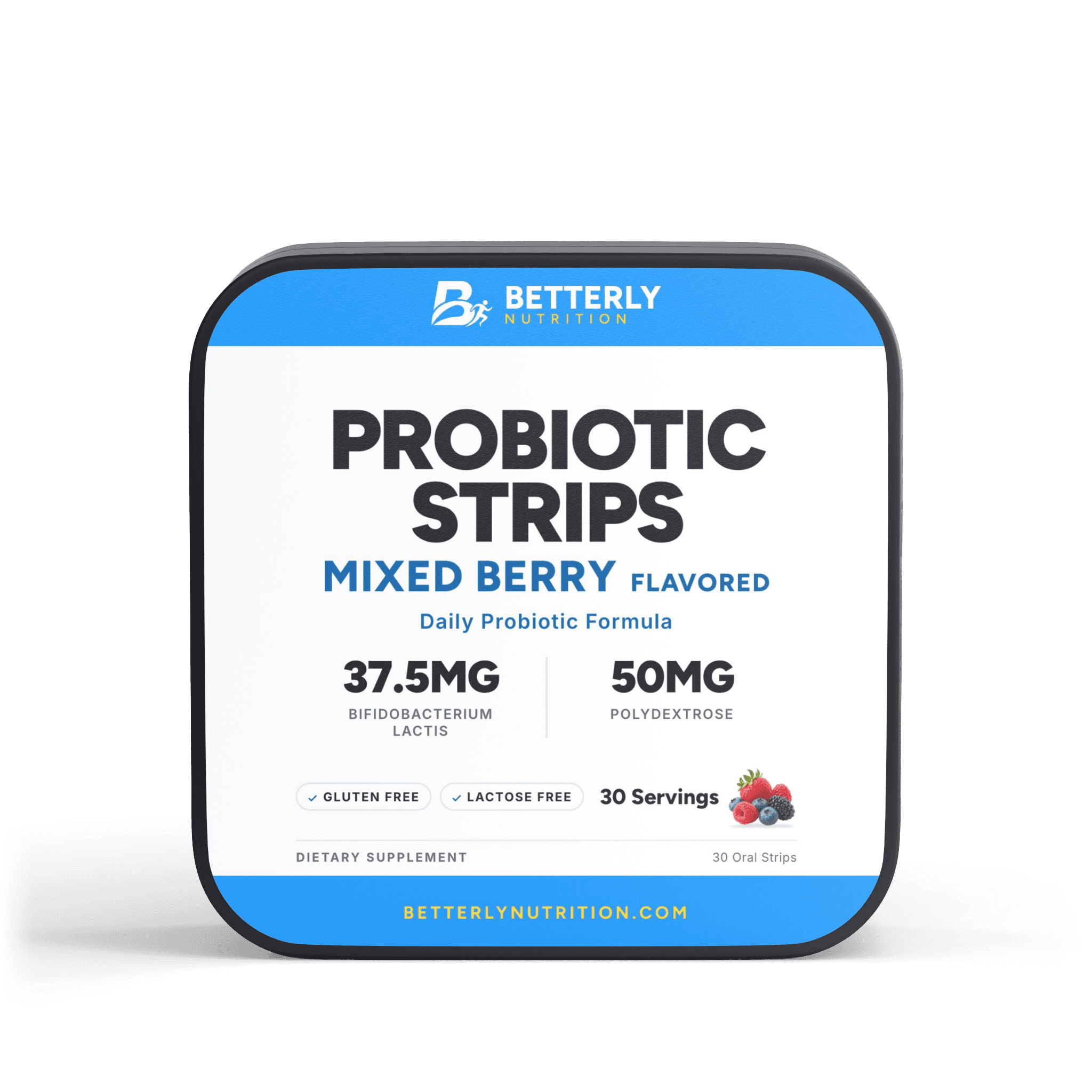
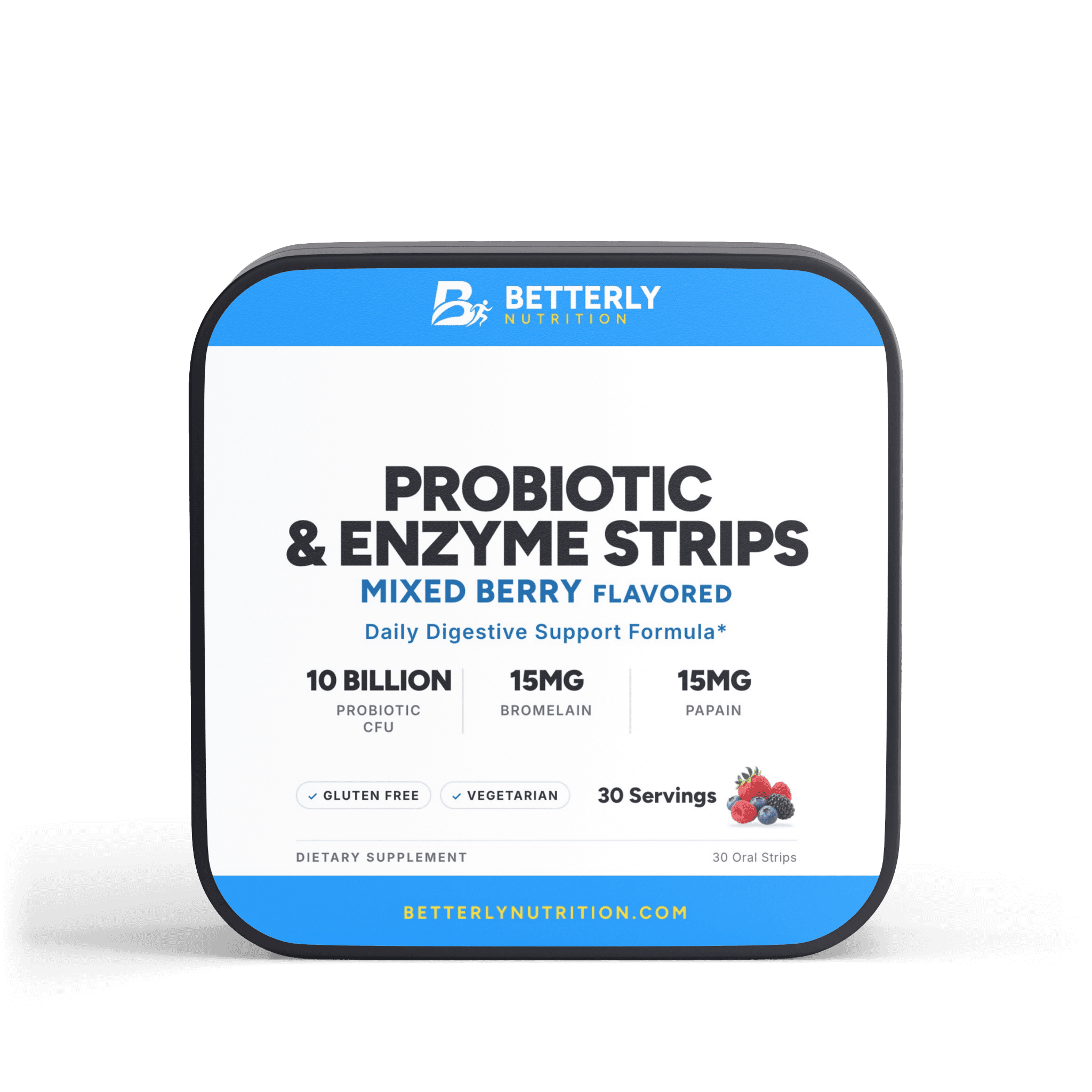
| 10 Billion CFU Probiotic Strips | 10 Billion CFU (37.5mg), 1 strip | 50 mg polydextrose, mannitol, erythritol | Sweetener amounts aren't listed |
| Probiotic & Digestive Enzyme Strips | 10 Billion CFU (50 mg), 1 strip | Mannitol | Plus 40 mg of three enzymes |
The takeaway: Multi-Strain has the plainest panel of the four, with nothing on it but the probiotic blend. That's a label fact, not a promise it'll sit better with you.
Now the scale. Each 10 Billion CFU strip weighs 180 mg. Take away the 50 mg of polydextrose and the 37.5mg of Bifidobacterium lactis, and 92.5 mg is left for all ten other ingredients combined, sweeteners included. On the enzyme strip, 210 mg minus 90 mg of listed actives leaves 120 mg for its seven other ingredients.
Neither label gives each sweetener's share, and NIDDK names no amount at which "-ol" sweeteners start to matter, so we can't tell you whether these small amounts will bother you. The same goes for the 24 mg of FOS. The 60 mg of complex marine polysaccharide is an open question too, since the panel names no source for it.
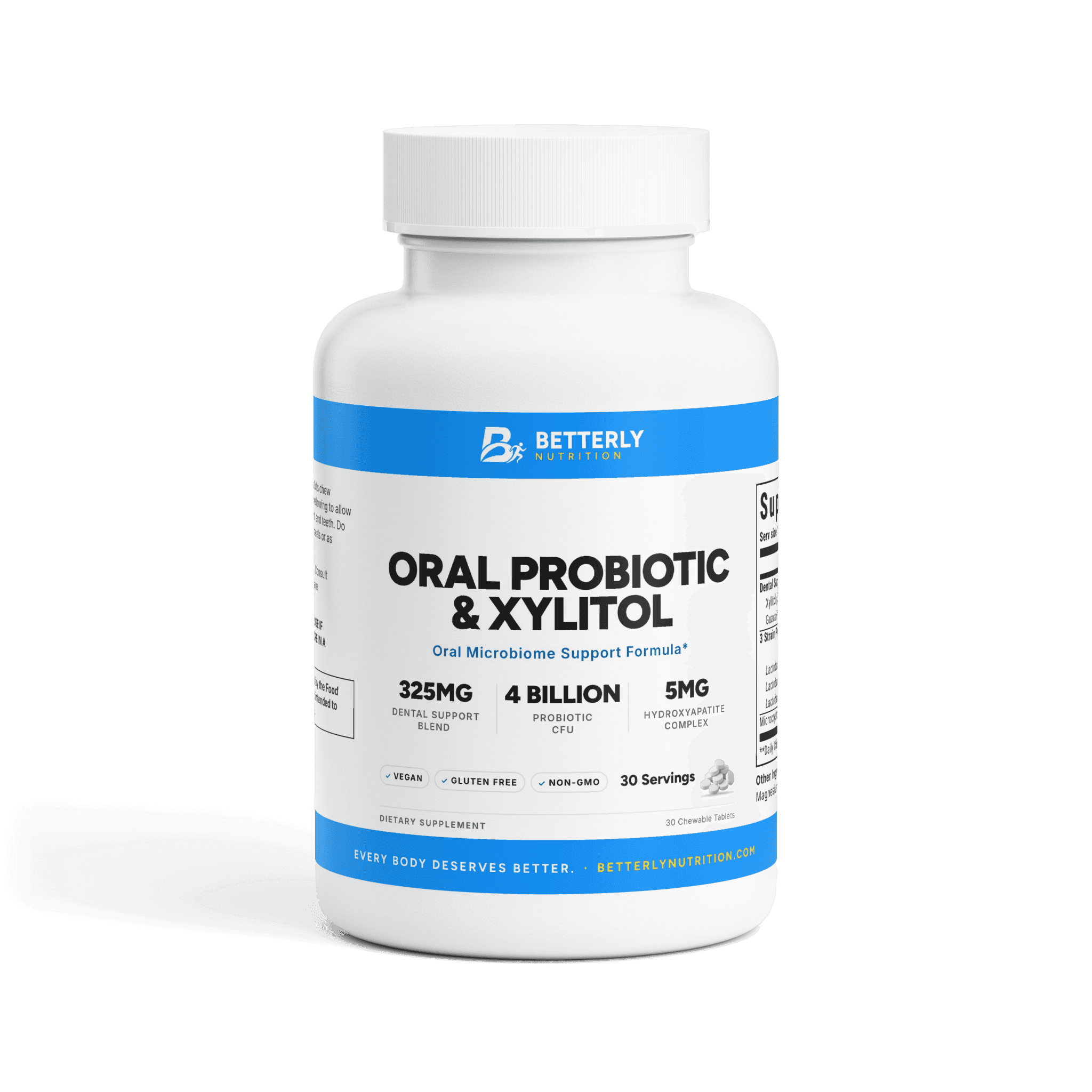
One more "-ol" sits outside the table. Our Oral Probiotic & Xylitol Chewables list xylitol inside a 325 mg Dental Support Blend per 1 Chewable Tablet, and the label doesn't give the xylitol amount on its own.
From our shop: Multi-Strain Probiotic Capsules — a 13 Strain Probiotic blend at 317 mg (20 Billion CFU at manufacture) per 1 Capsule serving, with no prebiotic or sweetener on the panel.
Who should skip probiotics or ask a provider before starting?
People who are seriously ill or have a weakened immune system should ask a healthcare provider before taking any probiotic. Our labels also name pregnancy, nursing, under 18 and medical conditions.
The caution reads word for word the same on every probiotic product named in this guide: "Do not exceed recommended dose. Consult a physician if pregnant, nursing, under 18, or have a medical condition." Here's how that line matches up with the NIH pages:
| Who | What our labels say | What NIH pages add | Your next step |
|---|---|---|---|
| Weakened immune system or serious illness | Falls under "have a medical condition" | ODS: may not be safe; NCCIH: greater risk of harm | Get your provider's OK first |
| Pregnant or nursing | Consult a physician | No pregnancy safety rule | Ask before your first dose |
| Under 18 | Consult a physician; Multi-Strain's directions are written for adults | Nothing specific for teens | Ask a physician before giving any of these to someone under 18 |
| Any health condition | Consult a physician | NCCIH: talk to a provider first | Bring the label along |
| Taking prescription medicine | Not mentioned | NCCIH: ask a provider before any probiotic supplement | Ask your pharmacist too |
The first row matters most. NCCIH says anyone with a serious underlying health condition should be monitored closely while taking probiotics, so for that group, asking comes before the first capsule. If you have surgery coming up, tell your care team about every supplement you take.
When should you stop taking a probiotic?
Stop taking a probiotic and contact a healthcare provider if symptoms are severe, keep getting worse, or feel different from ordinary gas.
Mild gas you simply don't like is a fine reason to stop, too. Call sooner if you're in a higher-risk group from the table above, if belly pain is more than mild, or if you're vomiting.
NCCIH puts the bigger principle well: "Don't use probiotics as a reason to postpone seeing your health care provider about any health problem."
NCCIH also notes that some probiotic products have been reported to contain microorganisms not listed on the label, and in some instances those may pose serious health risks. No Supplement Facts panel can show you that, ours included, so a reaction that feels out of proportion deserves a call, not more doses.
Walk in with notes. NIDDK says your doctor may ask you to keep a diary of what you eat and drink and your gas symptoms. Add a photo of the product's label.
How do you start a probiotic by the label?
Start a probiotic by following its label as written: Multi-Strain is 1 capsule daily with water, Probiotic & Prebiotic is 2 capsules daily, and each strip is 1 a day.
Here's each label's suggested use:
- Multi-Strain Probiotic Capsules: "adults take one (1) capsule daily." For best results, the label says to take it with 6-8 oz (177-237ml) of water.
- Probiotic & Prebiotic Capsules: two capsules once daily. For best results, the label suggests one during the day and one in the evening.
- Both strips: "Place 1 oral strip on the tongue daily and allow it to dissolve."
You'll see advice online to start with half a serving and work up. These are capsules and strips, not a powder you can measure out by the half scoop, and the directions on each label are the only amount we can point you to. Take the serving as written, and if it doesn't agree with you, stop and ask a provider. For morning-or-night questions, our guide on when to take probiotics compares each label's timing.
Two habits make any side effect easier to read, without touching the dose:
- Add one new product at a time. If a probiotic and a fiber powder start the same week, you won't know which one caused the gas.
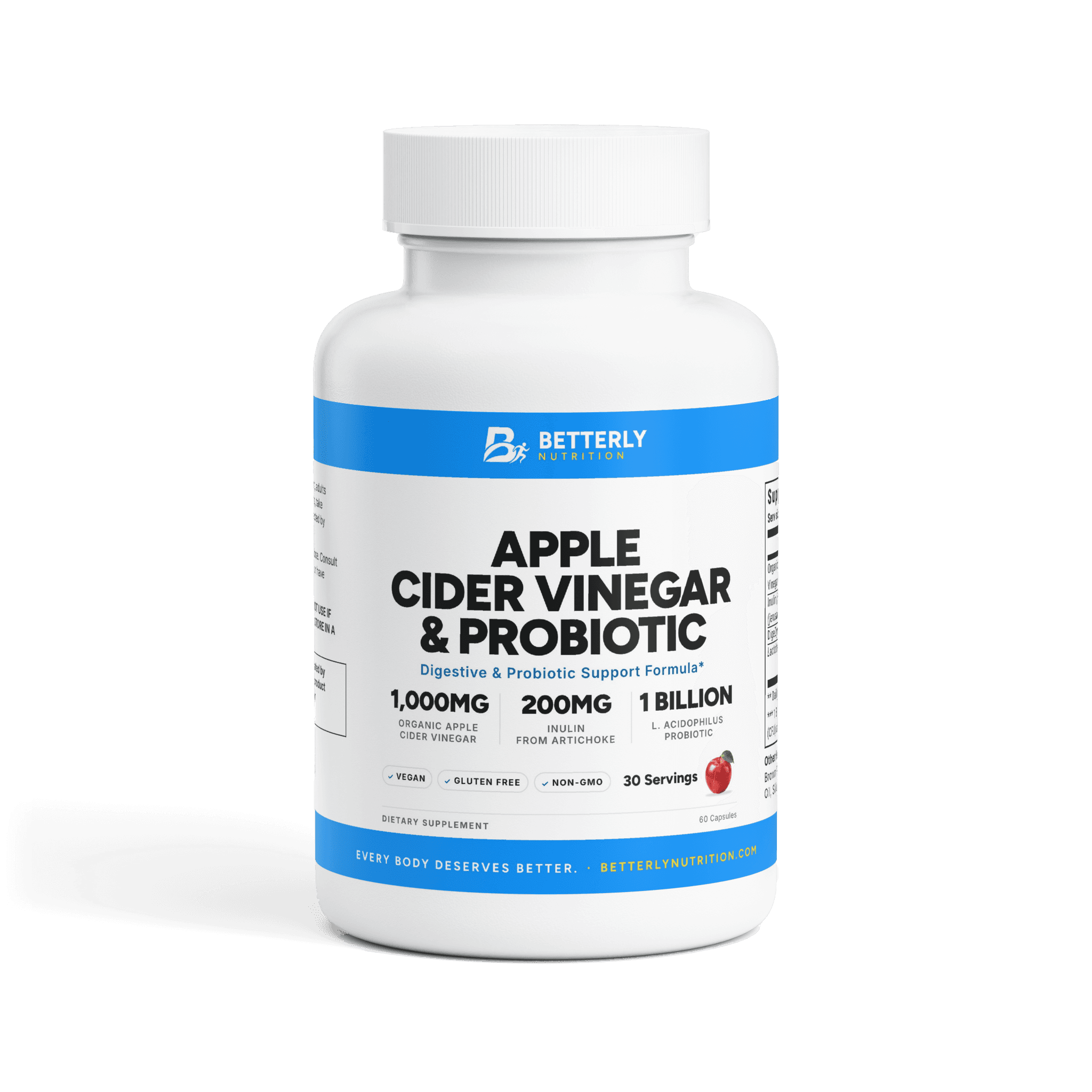
- Check your routine for overlap. Our Apple Cider Vinegar & Probiotic Capsules list 1 Billion CFU of Lactobacillus acidophilus LA85 plus 200 mg of inulin per 2-capsule serving, and the FDA's intended fiber list includes inulin. Our Digestive Enzyme & Probiotic Capsules list three Lactobacillus species in their enzyme blend. If you already take one of these, ask a provider before adding a second probiotic product.
From our shop: 10 Billion CFU Probiotic Strips — a single species, Bifidobacterium lactis, at 37.5mg (10 Billion CFU) per 1 Oral Strip (180 mg) serving, placed on the tongue to dissolve.
Do you need a probiotic at all if one gives you gas?
You may not need a probiotic at all, since ODS says there are no official recommendations covering probiotic use by healthy people.
A probiotic isn't a vitamin or mineral with a daily requirement. If you started one just to see, and it's giving you more gas than you'd like, stopping doesn't leave a gap your body is counting on.
Prefer food? ODS lists fermented foods such as kimchi, sauerkraut and miso, though it cautions that not every fermented food contains probiotics with proven health benefits. If you're adding fiber at the same time, our guide to picking a fiber supplement for regularity covers easing in so the two changes don't pile up.
Want to try a different probiotic later? Our explainer on reading a probiotic label shows what strain names and CFU wording tell you, and you can compare the amounts per serving across our Gut Health & Digestion collection.
FAQ: probiotic side effects
How long do probiotic side effects last?
There's no official timeline for how long probiotic side effects last. NCCIH says solid information on how often they happen and how severe they get is lacking, and the NIH pages we read give no number of days. So judge by direction instead of the calendar. If gas stays mild, decide whether the product is worth it. If it grows stronger or comes with pain, stop and call a healthcare provider.
Can probiotics make you feel sick or tired?
Feeling sick or tired isn't a side effect the NIH pages we read list for probiotics in healthy people. The NIH Office of Dietary Supplements names gas and says other health problems are rare in that group. Feeling unwell after starting one still deserves attention, so stop the product and ask a provider instead of waiting it out.
Does a higher CFU count mean more side effects?
No source we read links a higher CFU count to more gas or bloating. The NIH Office of Dietary Supplements says a higher count alone doesn't necessarily mean greater health benefits, because the specific strains matter too. The four labels in our table run from 10 Billion CFU per strip to 40 Billion CFU per 2-capsule serving, and we can't tell you one will sit better than another.
Are probiotic strips gentler on your stomach than capsules?
Probiotic strips aren't shown to be gentler than capsules, and no source we read compares the two for side effects. What differs is the ingredient list. Our 10 Billion CFU Probiotic Strips add 50 mg of polydextrose plus mannitol and erythritol, while Multi-Strain Probiotic Capsules list no prebiotic or sweetener. If sugar-free candy tends to give you gas, that difference is worth weighing before you choose.
Can you take probiotics while pregnant or breastfeeding?
Check with a healthcare provider before taking probiotics while pregnant or breastfeeding. Every probiotic label named in this guide says to consult a physician if you're pregnant or nursing, and the NIH pages we cite don't give a pregnancy rule we can pass along. Bring the actual label with you, since strains, counts and extras differ by product.
Sources
- Probiotics: Fact Sheet for Consumers (NIH Office of Dietary Supplements)
- Probiotics: Usefulness and Safety (NCCIH)
- Eating, Diet, & Nutrition for Gas in the Digestive Tract (NIDDK)
- Questions and Answers on Dietary Fiber (U.S. Food and Drug Administration)
If this left you looking for somewhere to start, read a 20 billion CFU probiotic with no prebiotic or sweetener — its amounts per serving are listed on the page. For the practical questions this raises, how dosing, sourcing and subscriptions work is answered in one place.