On this page
- Key takeaways
- Do all probiotics need to be refrigerated?
- Do probiotics need to be refrigerated to work?
- What do our probiotic labels say about storage?
- Why do probiotic labels say to store them in a cool, dry place?
- Do probiotics need to be refrigerated after opening?
- How do you store probiotics while traveling?
- How do you take and store our probiotics, per the label?
- When don't you need a probiotic at all?
- Who should check with a healthcare provider first?
- FAQ: probiotic storage
- Sources
The short answer: Probiotics need to be refrigerated only when their label says so. Some are made to live in the fridge, while many dried capsules and strips are made for room temperature. Every probiotic label in our shop says "store in a cool, dry place," and none asks for a fridge. Whichever kind you buy, the storage line and the CFU wording on its label tell you more than the aisle it sat in.
Every probiotic in our Gut Health & Digestion shop is made for the cabinet, not the fridge, which puts us on one side of this question. Check our answer against the four labels quoted below.
Key takeaways
- Whether a probiotic needs refrigeration depends on the product, and the storage line on its label is the rule to follow.
- A refrigerated probiotic isn't automatically stronger than a shelf-stable one, because any benefit depends on the strains and the count.
- "At the time of manufacture" means the count was taken at the factory, not on the day you take your serving.
- On a trip, keep probiotics in their original container, in the bag that stays with you, and out of hot cars.
Do all probiotics need to be refrigerated?
No, not all probiotics need to be refrigerated. Some labels say to keep them cold, and many others say room temperature or a cool, dry place is fine.
The NIH Office of Dietary Supplements (ODS) puts it plainly in its consumer fact sheet: some probiotics need to be kept in the refrigerator, and others can be stored at room temperature. ODS also lists storage instructions among the things you can find on a probiotic label, next to the strain names and the expiration or use-by date.
Which camp a product lands in is the manufacturer's call, and the label is where it tells you. That's why two probiotics on the same shelf can carry opposite instructions, and why your own label beats any general rule.
Do probiotics need to be refrigerated to work?
Probiotics don't need a fridge to work unless their label calls for one, because each product is made for the storage its label names.
Refrigeration is a storage decision, not a quality grade. ODS says a probiotic's benefits, if any, come from the specific microorganisms it contains and the number of CFUs (colony-forming units). It also notes that the CFU count can decline over time, and that's why the storage line matters: it's the maker's instruction for keeping the product, and it's the part you control. A fridge probiotic left on a warm counter and a shelf-stable one kept in a steamy bathroom share the same problem: neither is being stored as labeled.
| Question | Refrigerated probiotic | Shelf-stable probiotic |
|---|---|---|
| Where the label says to keep it | The fridge | Room temperature or a cool, dry place |
| What you need at home | Fridge space | A cabinet or drawer |
| On a trip | Needs a plan | Goes in your bag |
| Stronger by default? | No | No |
| What to check first | Strains, CFU wording, date | Strains, CFU wording, date |
Shelf-stable probiotics vs refrigerated isn't a contest one side wins. The better questions are what the label counts, when it counted, and whether you'll really store it the way it asks.
What do our probiotic labels say about storage?
Every one of our probiotic labels says "store in a cool, dry place," and none says to refrigerate. Of the four below, only one says when its CFU count was measured.
| Our product | Count per serving | Storage line | CFU counted when? |
|---|---|---|---|
| Probiotic & Digestive Enzyme Strips | 10 Billion CFU per strip | Cool, dry place | Not stated |
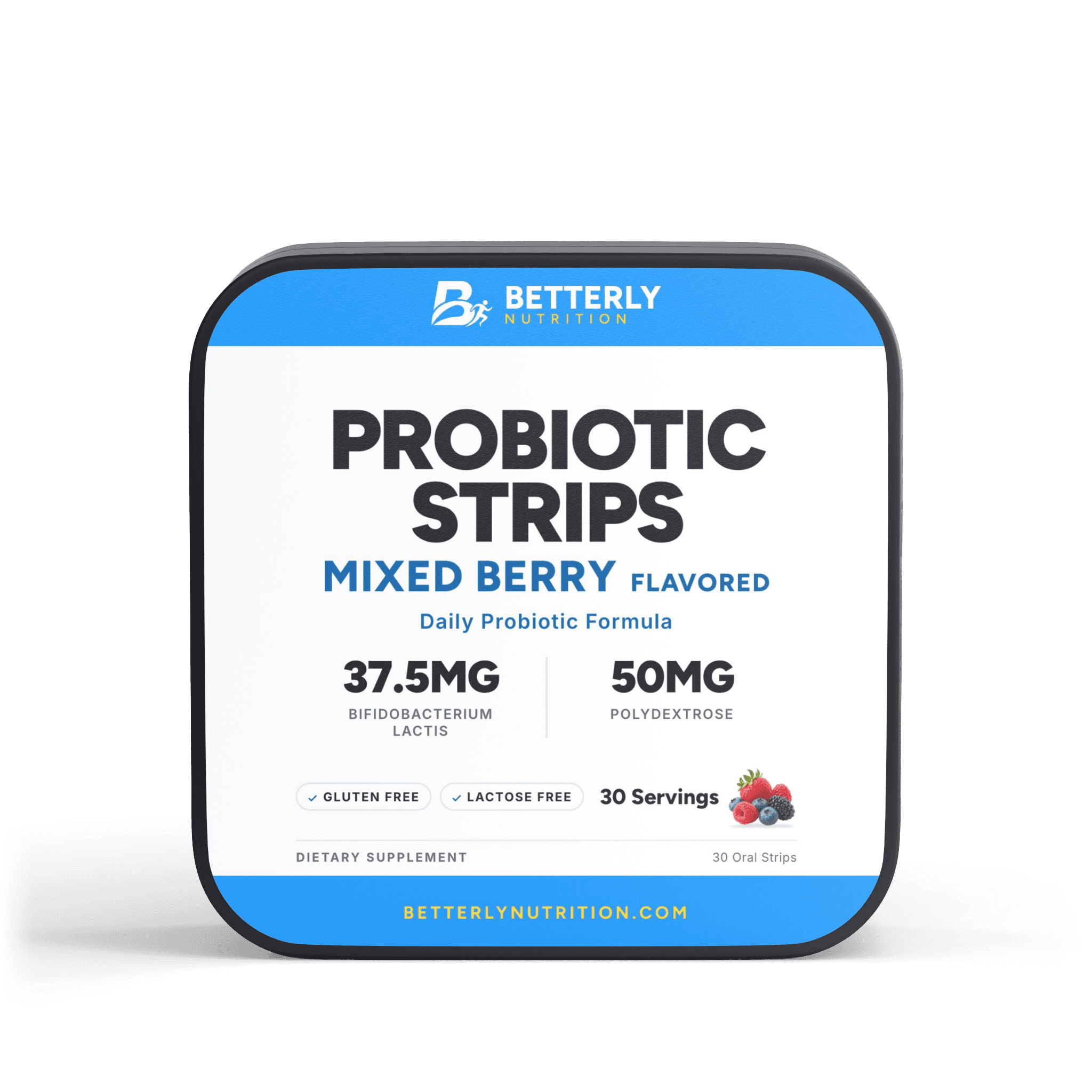
| 10 Billion CFU Probiotic Strips | 10 Billion CFU per strip | Cool, dry place | Not stated |
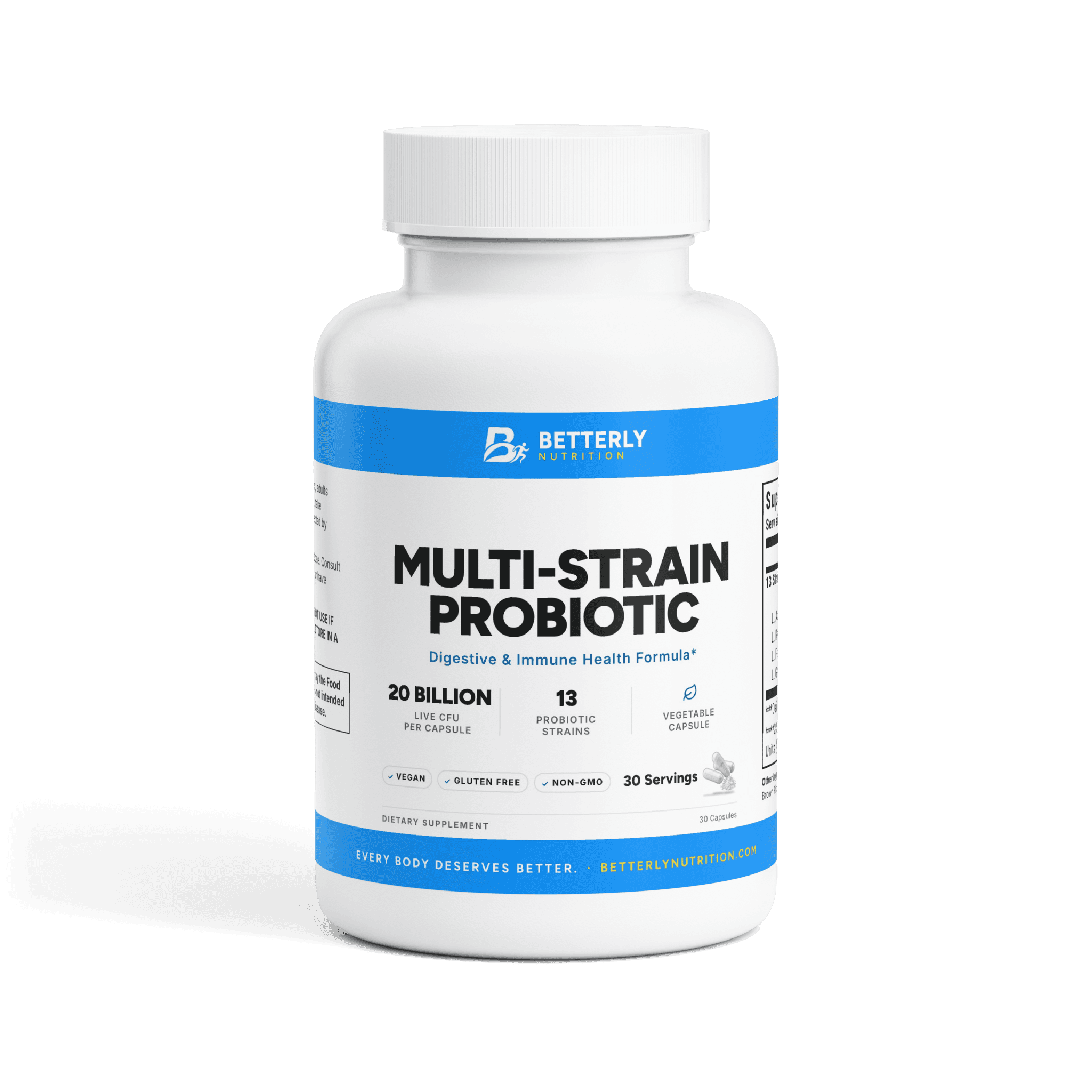
| Multi-Strain Probiotic Capsules | 20 Billion CFU per capsule | Cool, dry place | At manufacture |
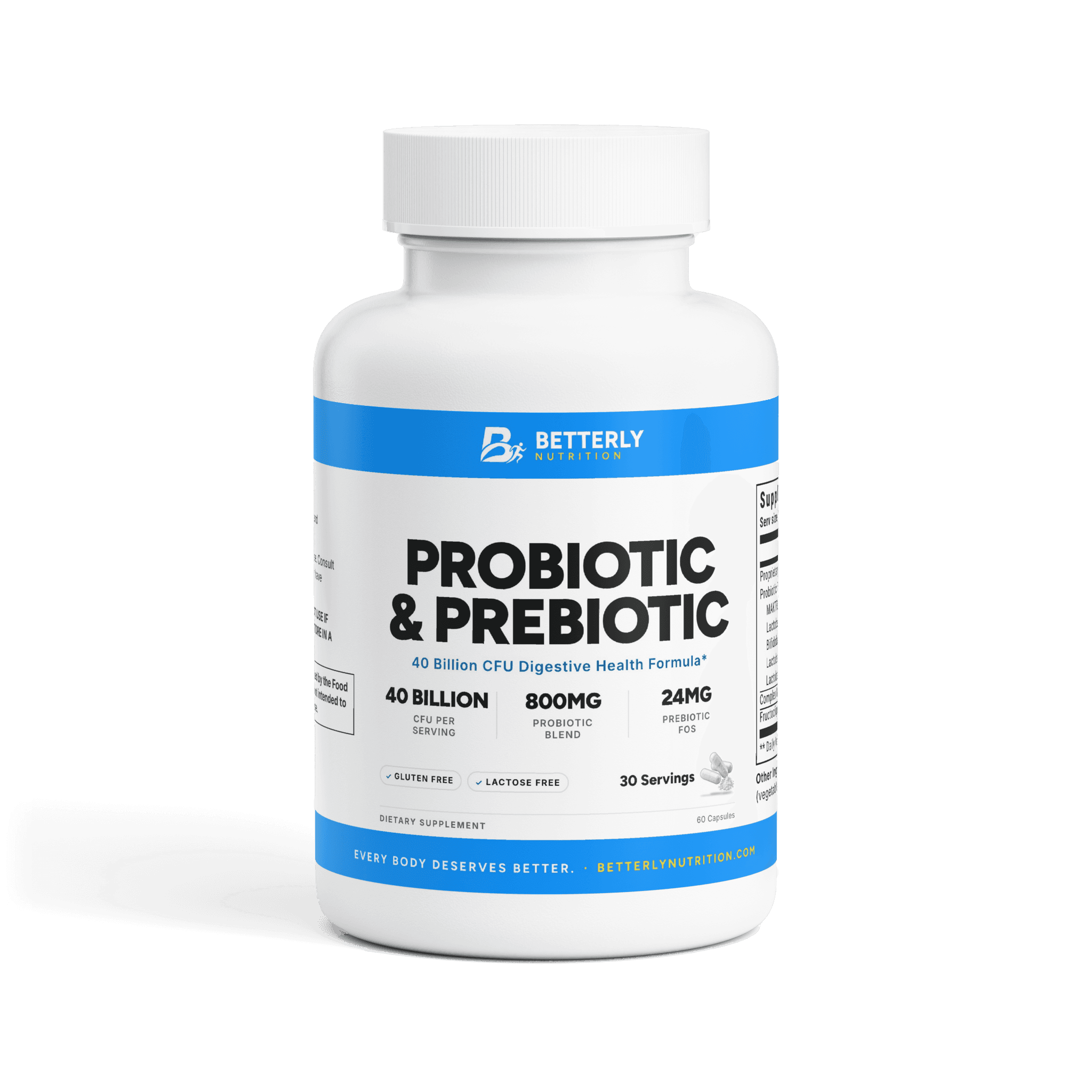
| Probiotic & Prebiotic Capsules | 40 Billion CFU per 2 capsules | Cool, dry place | Not stated |
So every one of these can live in a kitchen cabinet, and three of the four leave you guessing about when the count was taken.
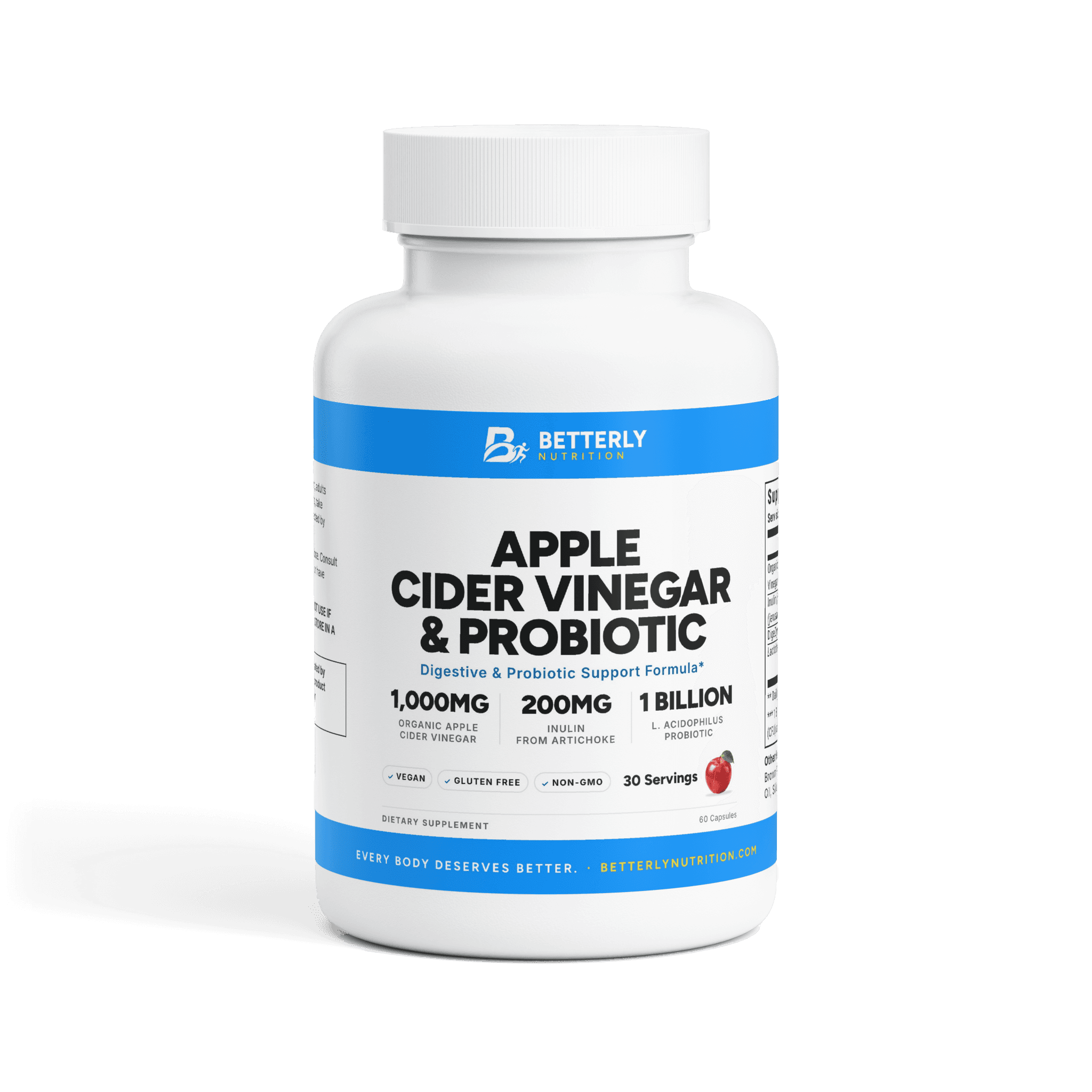
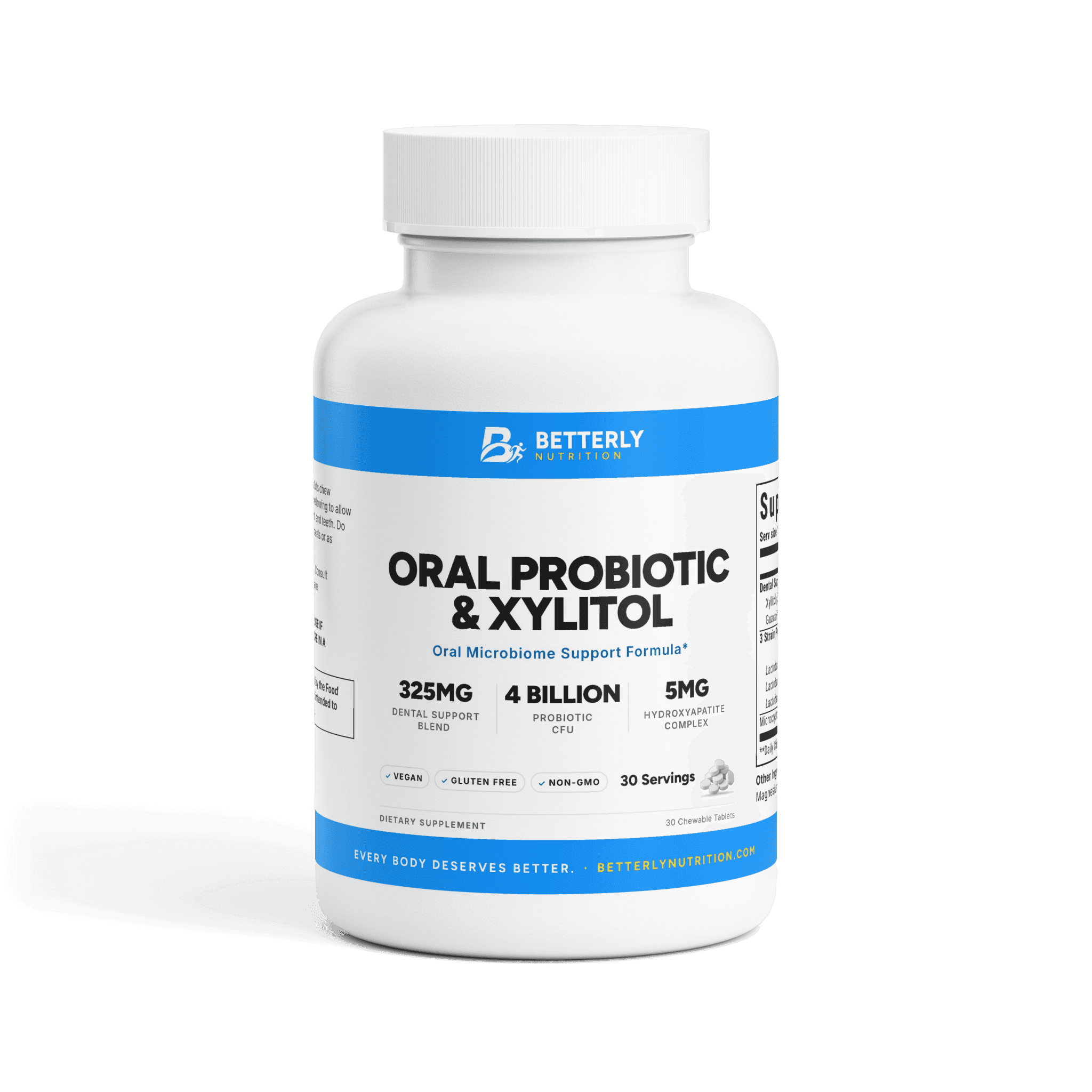
Three more of our labels pair a probiotic with other main ingredients: Digestive Enzyme & Probiotic Capsules, Apple Cider Vinegar & Probiotic Capsules and Oral Probiotic & Xylitol Chewables. They carry the same cool, dry storage line.
The enzyme strips pair Bacillus coagulans at 50 mg (10 Billion CFU) with protease (10 mg), papain (15 mg) and bromelain (15 mg), per 1 Oral Strip (210 mg) serving. Their label asks for a cool, dry place like the others and makes no promise about heat, so we won't make one either. For the enzyme half of that strip, see our digestive enzymes vs probiotics comparison.
The 10 Billion CFU strips carry a single species: Bifidobacterium lactis, 37.5mg (10 Billion CFU) per 1 Oral Strip (180 mg). The multi-strain capsules hold a 317 mg blend the label calls "13 Strain Probiotic" (20 Billion CFU) per 1 Capsule serving. The prebiotic capsules carry 40 Billion CFU in an 800 mg blend per 2-capsule serving, with 24 mg of fructooligosaccharide (FOS).
From our shop: Probiotic & Digestive Enzyme Strips — 10 Billion CFU of Bacillus coagulans plus three enzymes per 1 Oral Strip (210 mg), labeled for a cool, dry place.
Why do probiotic labels say to store them in a cool, dry place?
Probiotic labels say "cool, dry place" because that's the storage condition each maker set for its product, and ODS notes a probiotic's CFU count can decline over time.
A CFU count estimates how many microbes in a serving are alive and able to multiply. ODS adds that the count a product held when it was made doesn't necessarily reflect what it holds when you buy or use it.
Your part in that story is storage. Capsules and strips are dry products, and keeping them dry is the whole job of the word "dry" on the label. These spots fail the cool, dry test:
- A bathroom cabinet that fills with steam during showers
- The counter beside the stove, kettle or coffee maker
- A sunny windowsill
- A parked car, a glove box, or a gym bag left in the trunk
- A mailbox or porch on a hot afternoon
Here's the honest limit. None of our labels says how its count holds up after a hot afternoon in a car, and we haven't seen data that would let us say. So we won't claim our strips or capsules keep their full count through heat.
What does "at the time of manufacture" mean?
"At the time of manufacture" means the CFU count on a label was measured when the product was made. It isn't a promise about the day you take it.
Our Multi-Strain Probiotic Capsules footnote reads: "20 Billion Live Colony Forming Units (CFU) at the time of manufacture." ODS explains that some labels list the count at manufacture, while others list it through the expiration or use-by date, and that some experts prefer the second kind. The other three in our table don't say either way, so read their numbers as counts without a stated time.
A factory count is a starting point, and shipping, time on a store shelf and your own cabinet all come after it.
Who vouches for that count? The company selling it. FDA 101: Dietary Supplements says supplement companies are responsible for meeting safety standards and the law, and the FDA's role mostly begins after products reach the market. For strain names and dates, see how to choose a probiotic.
Do probiotics need to be refrigerated after opening?
A probiotic needs to be refrigerated after opening only if its label says so. A shelf-stable probiotic's storage rule stays the same after opening unless its label says otherwise, and every one of ours keeps the same cool, dry instruction.
If a label gives different instructions for before and after opening, follow both.
Opening does change one thing: air and moisture get in each time you reach for a serving. A few habits help:
- Close the lid right after each serving.
- Keep the product in its original container, so the label and date stay with it.
- Check a capsule bottle's seal before first use. Our probiotic capsule labels say not to use the product if the safety seal is damaged or missing.
How do you store probiotics while traveling?
To store probiotics while traveling, keep them in their original container in the bag that stays with you, and keep them out of hot cars and direct sun.
Shelf-stable probiotics for travel are the easy case, because a label that says "cool, dry place" doesn't call for a cooler. A refrigerated product needs more planning. Before you pack one, ask the brand how long it can go without the fridge.
A travel routine that fits any "cool, dry place" label:
- Pack them in your personal bag, not luggage that bakes in a trunk.
- Keep them away from wet toiletries, like a shower kit or a leaky sunscreen bottle.
- In a hotel, a drawer beats the bathroom counter.
- Use a rule of thumb (ours, not a lab's): if a spot is too hot for you to sit in, it's too hot for the bottle.
Strips are the simplest format to carry. Both of our probiotic strip labels say to place one strip on the tongue daily and let it dissolve, and their directions don't call for water.
From our shop: 10 Billion CFU Probiotic Strips — Bifidobacterium lactis at 10 Billion CFU per 1 Oral Strip (180 mg), a flat format whose label asks only for a cool, dry place.
How do you take and store our probiotics, per the label?
Each of the four probiotics in our table has a label that sets one daily serving, never to be exceeded, and asks for a cool, dry place.
- Probiotic & Digestive Enzyme Strips: the label's suggested use is one oral strip placed on the tongue daily, left to dissolve.
- 10 Billion CFU Probiotic Strips: the same directions, one strip on the tongue each day.
- Multi-Strain Probiotic Capsules: one capsule a day for adults, with 6-8 oz (177-237ml) of water suggested for best results.
- Probiotic & Prebiotic Capsules: two capsules once daily. For best results, the label says to take one during the day and one in the evening.
Pick one home for the container and tie it to a habit you already have, like your morning coffee. Just don't store it right beside the coffee maker, where heat and steam collect. If you miss a day, go back to the normal serving the next day, because each of these labels warns against going over the recommended dose.
When don't you need a probiotic at all?
Healthy people can go without a probiotic, and ODS notes that no official guidance tells them to take one.
Storage gives you a reason of its own to wait. If the next few months mean a bottle will ride in a hot truck cab or sit in a damp gym locker, you can't give it the conditions on its label. It's fine to hold off until your days include a cool, dry spot for it.
Leaning toward one anyway? ODS encourages you to talk with a health care provider, such as a doctor, registered dietitian or pharmacist, about any supplement you're weighing. And if you're still sorting out what belongs in your day at all, our guide to building a daily supplement routine that sticks starts with that question.
Who should check with a healthcare provider first?
Check with a healthcare provider before starting a probiotic if you're pregnant, nursing, under 18, taking any medication, have surgery scheduled, or are managing a medical condition.
Each of our probiotic labels says to consult a physician if you're pregnant, nursing, under 18 or have a medical condition. Federal sources add more reasons to ask first:
- The National Center for Complementary and Integrative Health (NCCIH) says on its probiotics safety page that the risk of harmful effects is greater in people with severe illnesses or compromised immune systems.
- NCCIH also notes that some probiotic products have been reported to contain microorganisms other than those listed on the label. Tell your provider exactly which product you take.
- The NIH Office of Dietary Supplements' consumer guide Dietary Supplements: What You Need to Know says some supplements taken before surgery can change your response to anesthesia. Tell your care team about every supplement you use, probiotics included.
FAQ: probiotic storage
Can probiotics be left out of the fridge overnight?
A shelf-stable probiotic can be left out overnight, because it's meant to live outside the fridge; a refrigerated one depends on its label. Any of our probiotics belongs in a cool, dry place, so a night in a cool kitchen is exactly where it should be. For a refrigerated product, put it back in the fridge and check with the brand, because that call belongs to the manufacturer and its label.
What should you do if probiotics arrive hot?
Move probiotics that arrive hot to a cool, dry spot right away, and check the package before you use it. Our probiotic capsule labels say not to use the product if the safety seal is damaged or missing. None of our labels promises how the count holds up after heat, so if a delivery sat somewhere very hot for a long time, contact the seller.
Do probiotic strips need to be refrigerated?
Probiotic strips need refrigeration only if their label asks for it, and neither of our two probiotic strip labels does. The Probiotic & Digestive Enzyme Strips and the 10 Billion CFU Probiotic Strips both say to store them in a cool, dry place. Each strip is meant to dissolve on your tongue, so keep the pack closed between servings, keep it away from steam, and reach in with dry fingers.
Do probiotics expire?
Yes, probiotics carry an expiration or use-by date, and ODS says their CFU count can decline over time. Check the date printed on the package before you buy and again before you open it. At the label's suggested use, each of our probiotic containers holds 30 days of servings, so an opened one gets used up within about a month.
Can you put shelf-stable probiotics in the fridge?
You can, but a shelf-stable probiotic doesn't need it when its label says cool and dry, as every one of ours does. A cold container opened in a warm kitchen can collect condensation, and moisture is what "dry" warns against. If you still prefer the fridge, keep the lid tight, open it briefly and put it straight back.
Sources
- Probiotics: Fact Sheet for Consumers (NIH Office of Dietary Supplements)
- Probiotics: Usefulness and Safety (NCCIH)
- FDA 101: Dietary Supplements (U.S. Food and Drug Administration)
- Dietary Supplements: What You Need to Know (NIH Office of Dietary Supplements)
If this left you looking for somewhere to start, read probiotic strips labeled for a cool, dry place — its amounts per serving are listed on the page. For the practical questions this raises, how dosing, sourcing and subscriptions work is answered in one place.