On this page
- Key takeaways
- What are spore probiotics?
- Spore probiotics vs regular probiotics: what's actually different?
- Are spore-based probiotics better than regular probiotics?
- Which spore probiotic claims can you check on a label?
- How do our spore strip and three non-spore probiotics compare?
- How do you choose between a spore probiotic and a regular one?
- How do you take a spore probiotic, per the label?
- When don't you need a spore probiotic?
- Who should check with a healthcare provider first?
- FAQ: spore probiotics
- Sources
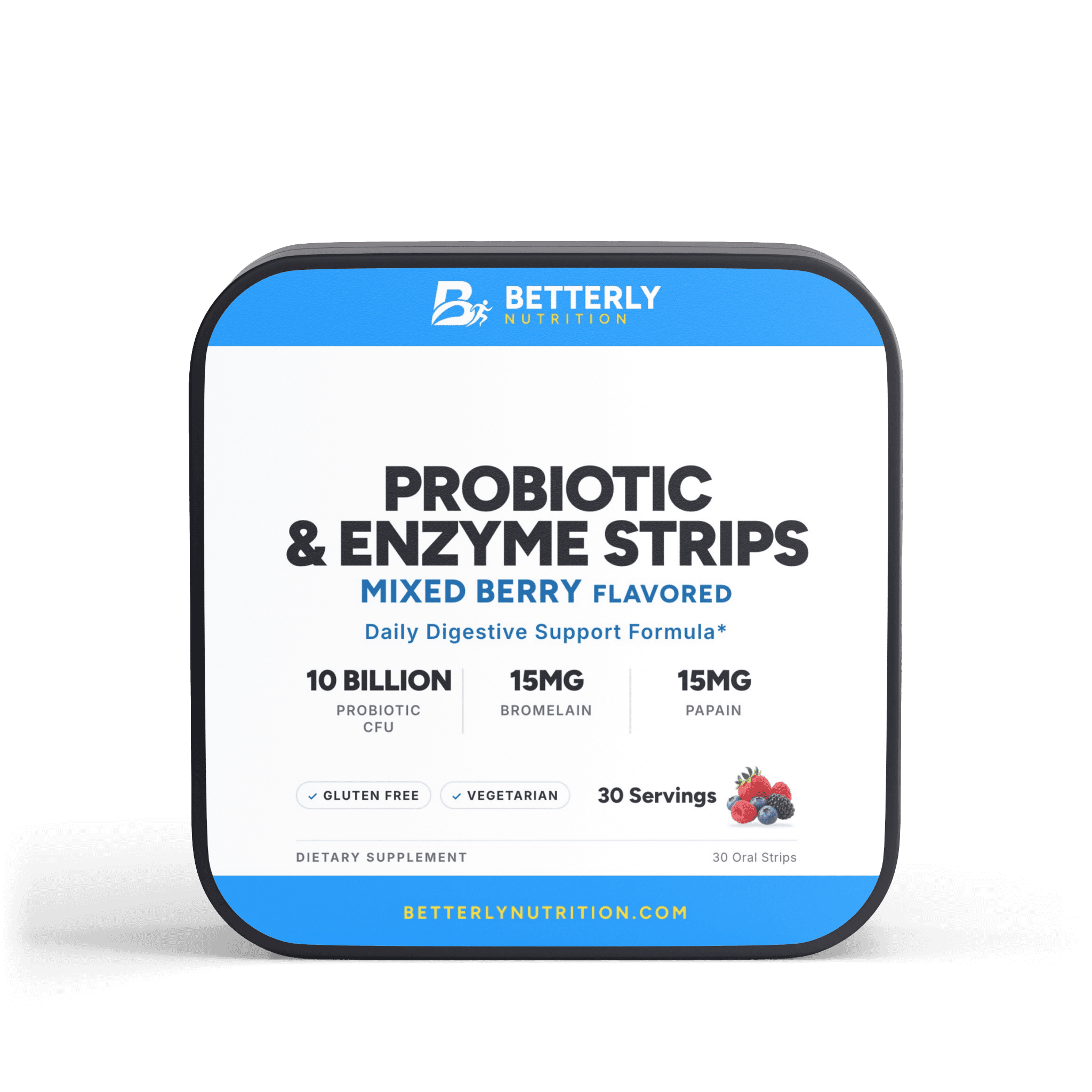
The short answer: Spore probiotics vs regular probiotics comes down to one trait. Spore-formers, mostly Bacillus species, can go dormant inside a tough spore; the Lactobacillus and Bifidobacterium on most labels can't. That's a real difference in the microbe, but it doesn't make a product do more for you, and storage still depends on each label. Our Probiotic & Digestive Enzyme Strips list 50 mg (10 Billion CFU) of Bacillus coagulans per 1 Oral Strip (210 mg) serving.
We sell all four probiotics compared here, one spore-former and three that aren't, so this is a seller's comparison, and you should know that up front. Other products in our shop carry probiotic cultures too, but this page sticks to these four. Every number below comes from the real Supplement Facts panels, and so do the gaps we point out.
Key takeaways
- A spore probiotic uses bacteria, usually Bacillus species, that can form a dormant, hard-coated spore; Lactobacillus and Bifidobacterium can't.
- The NIH Office of Dietary Supplements ties any probiotic benefit to the specific strain and its CFU count, so "spore" alone doesn't make a product better.
- A storage line and a CFU count can be checked on a label, but "survives stomach acid" and "colonizes your gut" rest on the brand's word.
- Of the four probiotics we compare here, only the Probiotic & Digestive Enzyme Strips carry a spore-former, and only they add digestive enzymes.
What are spore probiotics?
Spore probiotics are supplements made with bacteria that can form endospores, most often Bacillus species such as Bacillus coagulans and Bacillus subtilis.
Some bacteria respond to harsh conditions by building a spore: a compact, dried-out package of the cell's genetic material inside tough protective layers. A spore doesn't grow or divide. When conditions improve, it can germinate and become an active cell again.
FDA's response letter to GRAS Notice No. GRN 000601 describes B. coagulans as "spore-forming, rod-shaped, lactic acid producing." That last trait is one it shares with Lactobacillus, so the two groups overlap more than the "spore vs regular" framing suggests.
Spore products are counted in CFU (colony-forming units), like any other probiotic. The same FDA letter covers one company's B. coagulans strain as an ingredient in everyday foods, at up to about 2 billion CFU per serving. That's a use level for one strain in foods, not a limit or a recommended amount for supplements.
Spore probiotics vs regular probiotics: what's actually different?
Spore-forming probiotics differ from regular probiotics in one built-in trait: Bacillus species can go dormant inside a protective coat, and the Lactobacillus and Bifidobacterium in most products can't.
"Regular" isn't an official term. It's shorthand for the bacteria that the National Center for Complementary and Integrative Health (NCCIH) names as the most common probiotics, the Lactobacillus and Bifidobacterium groups. NCCIH adds that other bacteria can be used too, and so can yeasts such as Saccharomyces boulardii.
| Trait | Spore probiotics | Regular probiotics |
|---|---|---|
| Typical microbes | Bacillus coagulans, Bacillus subtilis | Lactobacillus and Bifidobacterium species |
| Can form a dormant spore | Yes | No |
| How common | Less common | The most common, per NCCIH |
| How the dose is counted | CFU | CFU |
| What decides any benefit | The strain and the count | The strain and the count |
| Where to keep it | Wherever its label says | Wherever its label says |
The spore row is the only real biological split. Dose, benefit and storage get settled product by product, on the label.
Are spore-based probiotics better than regular probiotics?
Spore-based probiotics aren't better by default: the NIH Office of Dietary Supplements (ODS) ties a probiotic's benefits to its specific strains and CFU count, and says nothing that favors spore-formers.
The ODS consumer fact sheet on probiotics says a product's health benefits, if any, depend on both the specific microorganisms it contains and its number of CFUs. It adds that piling on CFUs doesn't necessarily add benefit. The sheet never brings up spores at all, so nothing in it gives spore-formers a head start, or holds them back.
What about the benefits of spore probiotics? They come down to the same questions as any probiotic's: which strain, how many CFU, and for what. Our strip's label calls it a Daily Digestive Support Formula, and that's as far as we'll take it.
Our verdict is different, not better. If a spore product's label and format suit you, it's a fair pick. If a Lactobacillus or Bifidobacterium product suits you better, you haven't settled for less.
Which spore probiotic claims can you check on a label?
A spore probiotic's species, CFU count, storage line and count timing can be checked on its label, but survival and gut-residence claims can't.
NCCIH notes that many probiotics are sold as dietary supplements, "which don't require FDA approval before they are marketed." So a front-of-pack promise is the seller's statement, ours included.
| Claim you'll see | Can the label show it? | What to look for |
|---|---|---|
| "No refrigeration needed" | Yes | The storage line, such as "cool, dry place" |
| "Potent through expiration" | Yes, if printed | A CFU count stated through the use-by date |
| "Survives stomach acid" | No | A strain code you can ask the maker about |
| "Soil-based" or "ancestral" | No | Species and strain names instead |
| "Colonizes your gut" | No | Read it as the brand's claim |
The pattern: anything about the bottle can be printed and checked, and anything about what happens inside you can't. ODS backs the second row, noting that some labels list CFUs at the time of manufacture and others through the expiration date.
Take shelf life. In the FDA response letter for GRN 001131, the company behind one Bacillus subtilis strain reported stability for 18 months at 25°C and at 30°C. That's one strain and the seller's own data, and FDA's food ingredient office says it didn't evaluate labeling claims, so it tells you nothing certain about other spores, ours included.
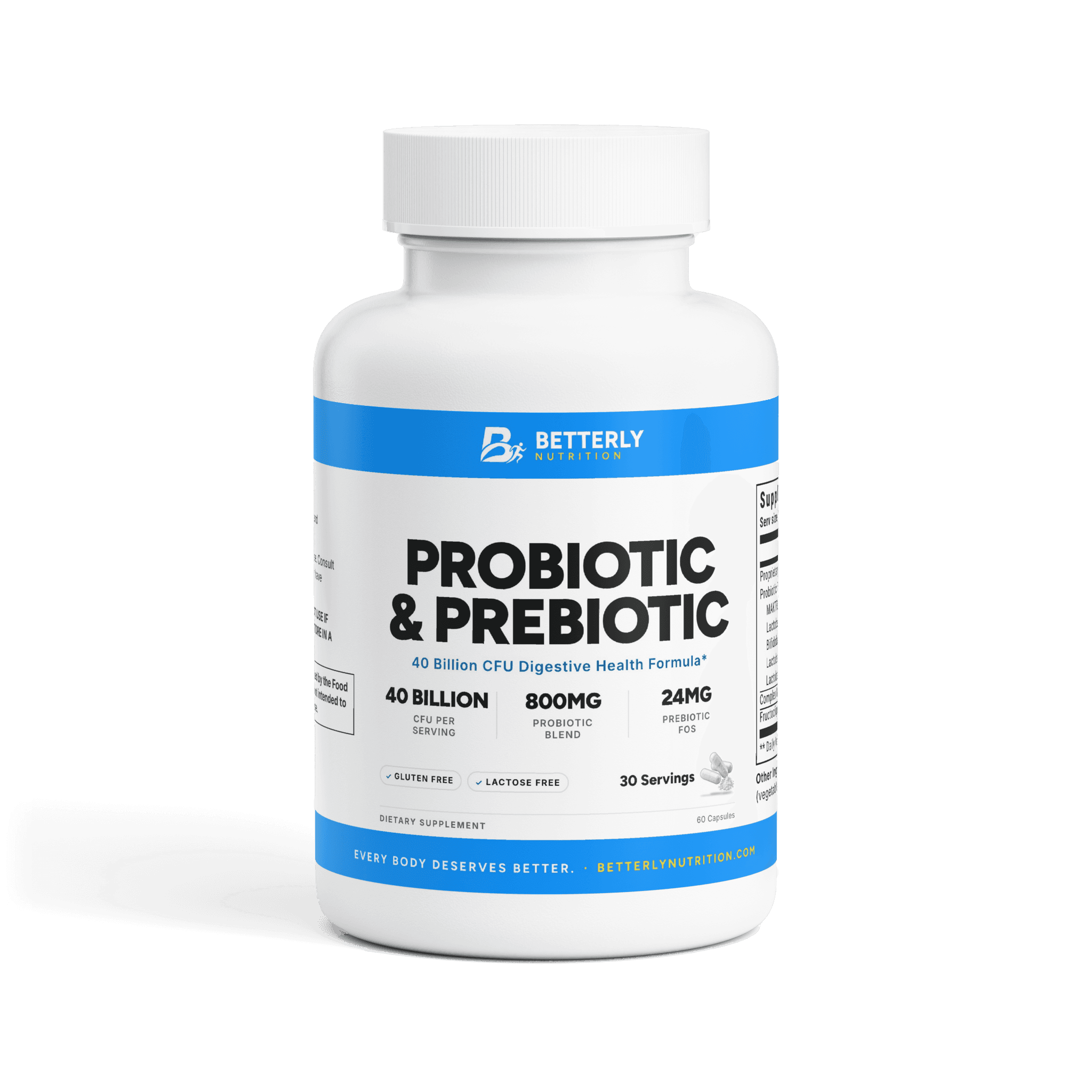
The stomach acid pitch rests on the spore's coat. Our strip's label doesn't make it, and none of the government sources we used measures survival for any product, so we won't either. Non-spore products have their own version of the pitch. Our Probiotic & Prebiotic Capsules list MAKTREK® (Bi-Pass Technology) in their blend without saying what it does, so read that name as a brand term, not a promise.
How do our spore strip and three non-spore probiotics compare?
Our Probiotic & Digestive Enzyme Strips are the spore-former in this comparison, with Bacillus coagulans, while the other three we compare here list Lactobacillus and Bifidobacterium species.
| Our product | Serving | Genus on the panel | Also in each serving |
|---|---|---|---|
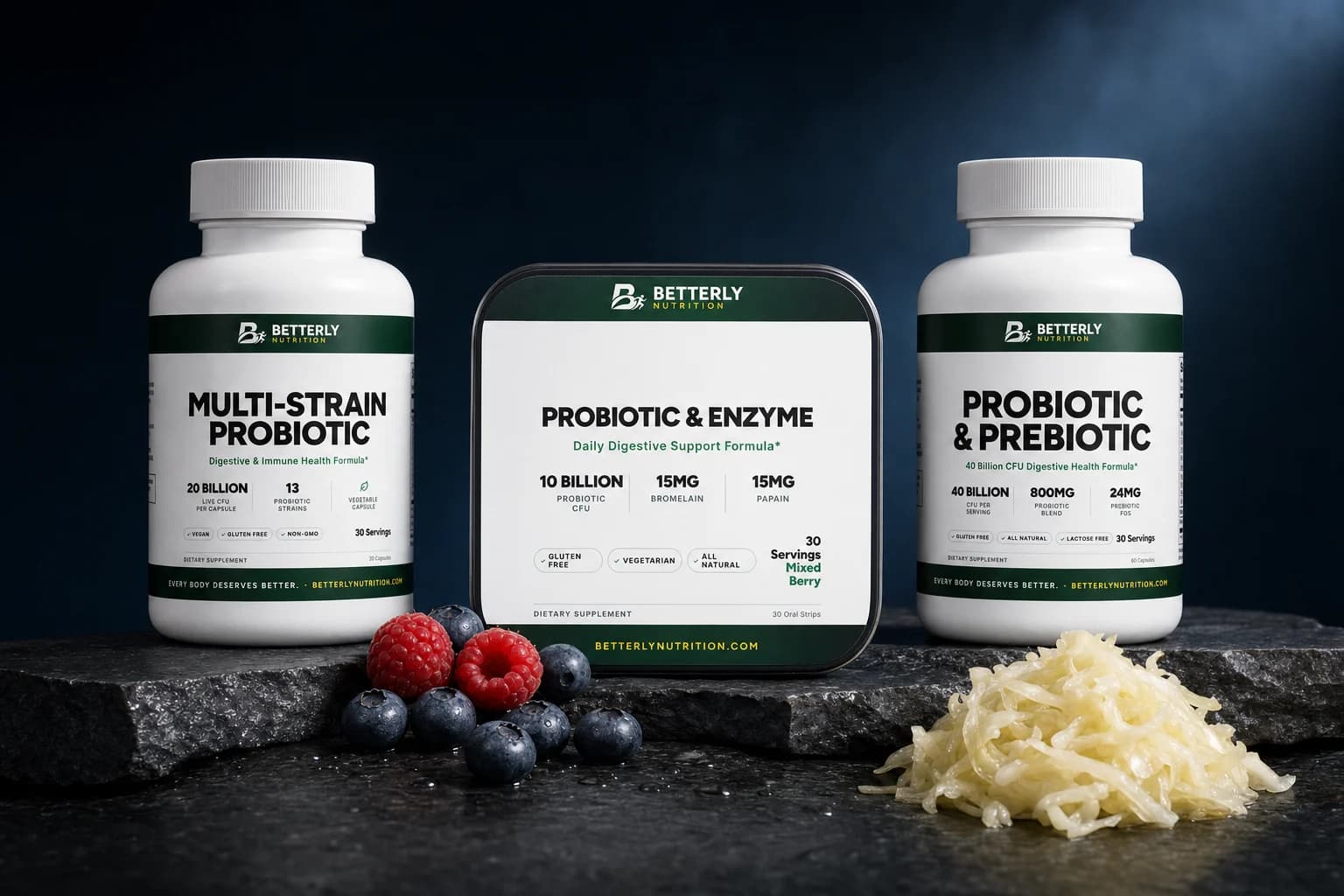
| Probiotic & Digestive Enzyme Strips | 1 Oral Strip (210 mg) | Bacillus, a spore-former | 10 mg protease, 15 mg papain, 15 mg bromelain |
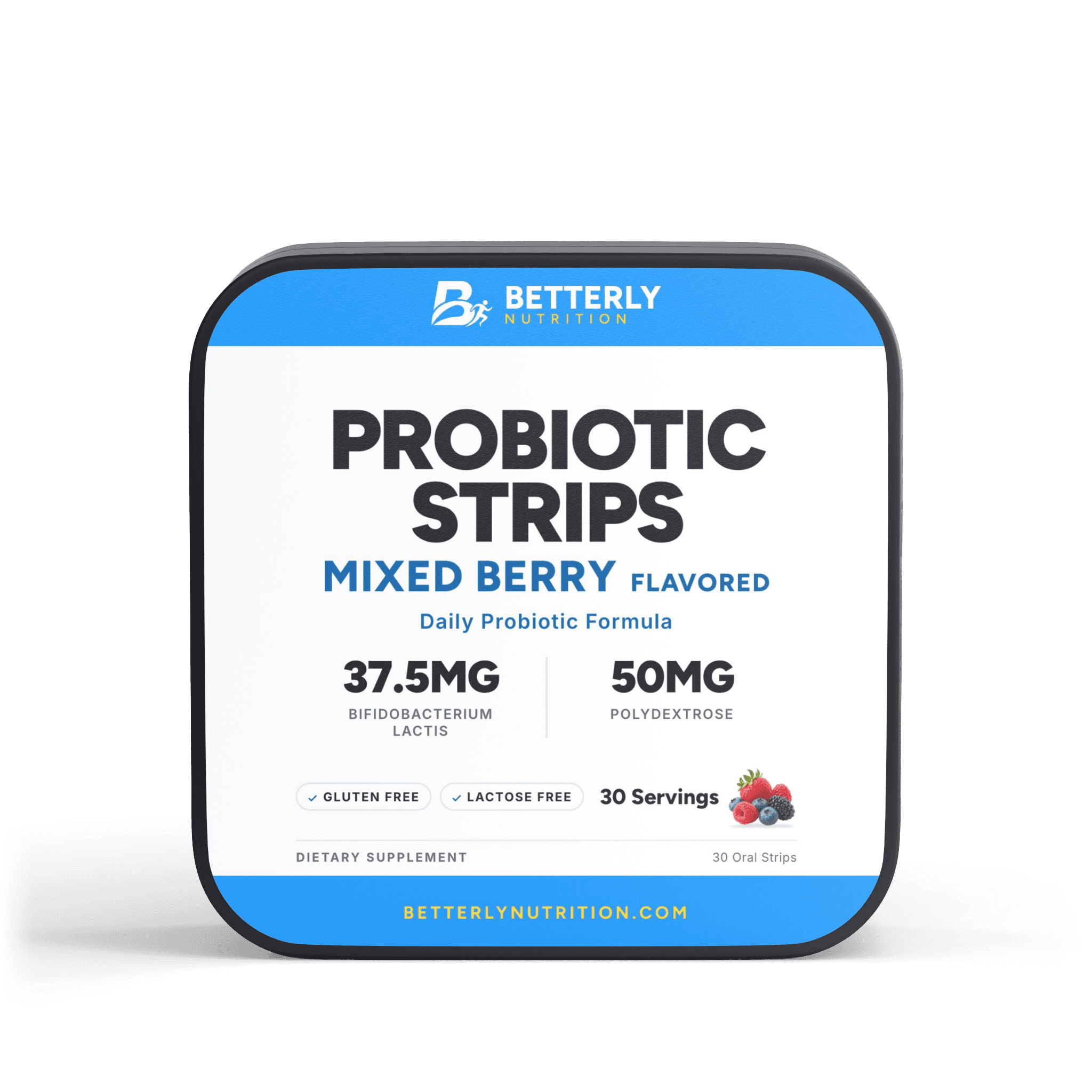
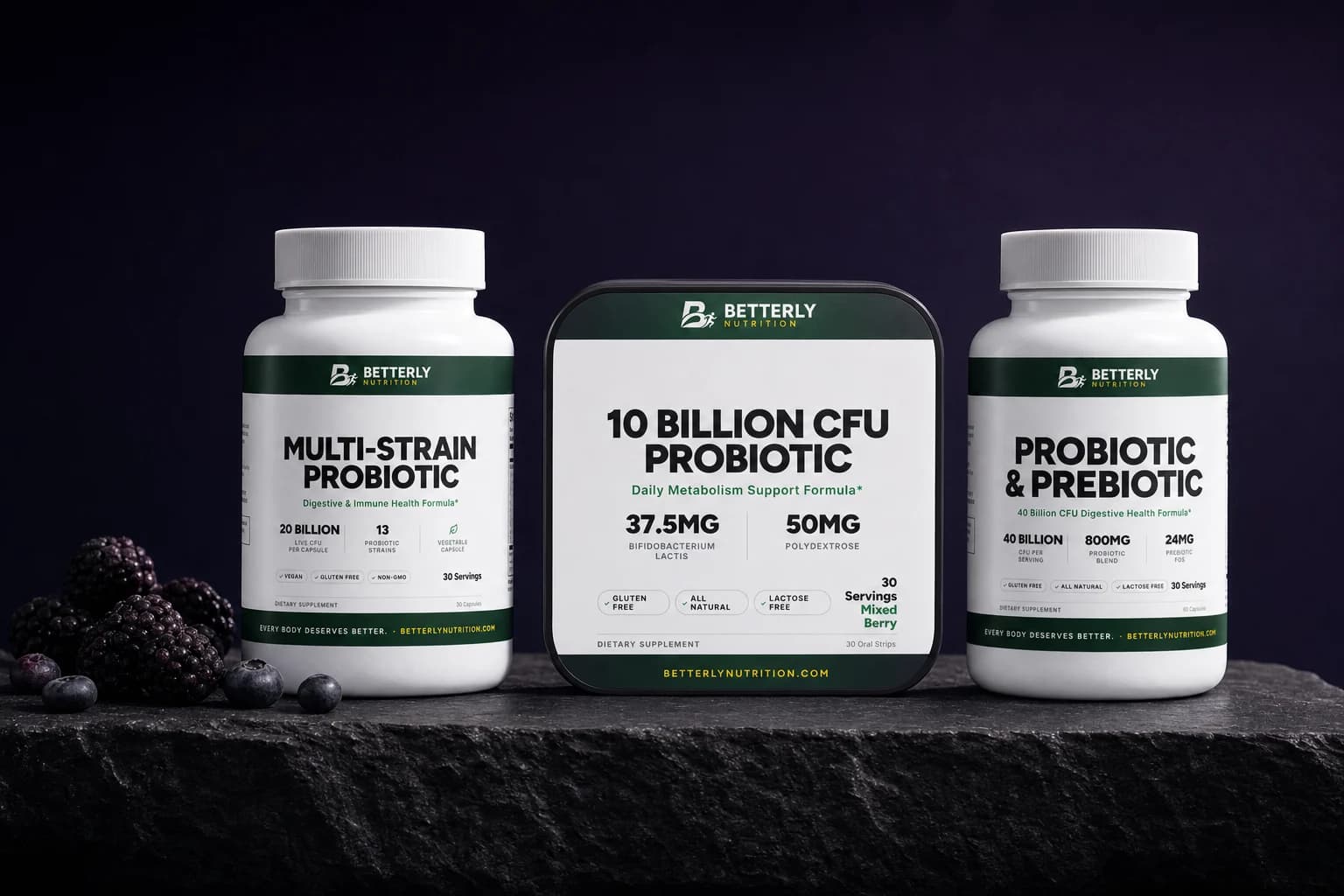
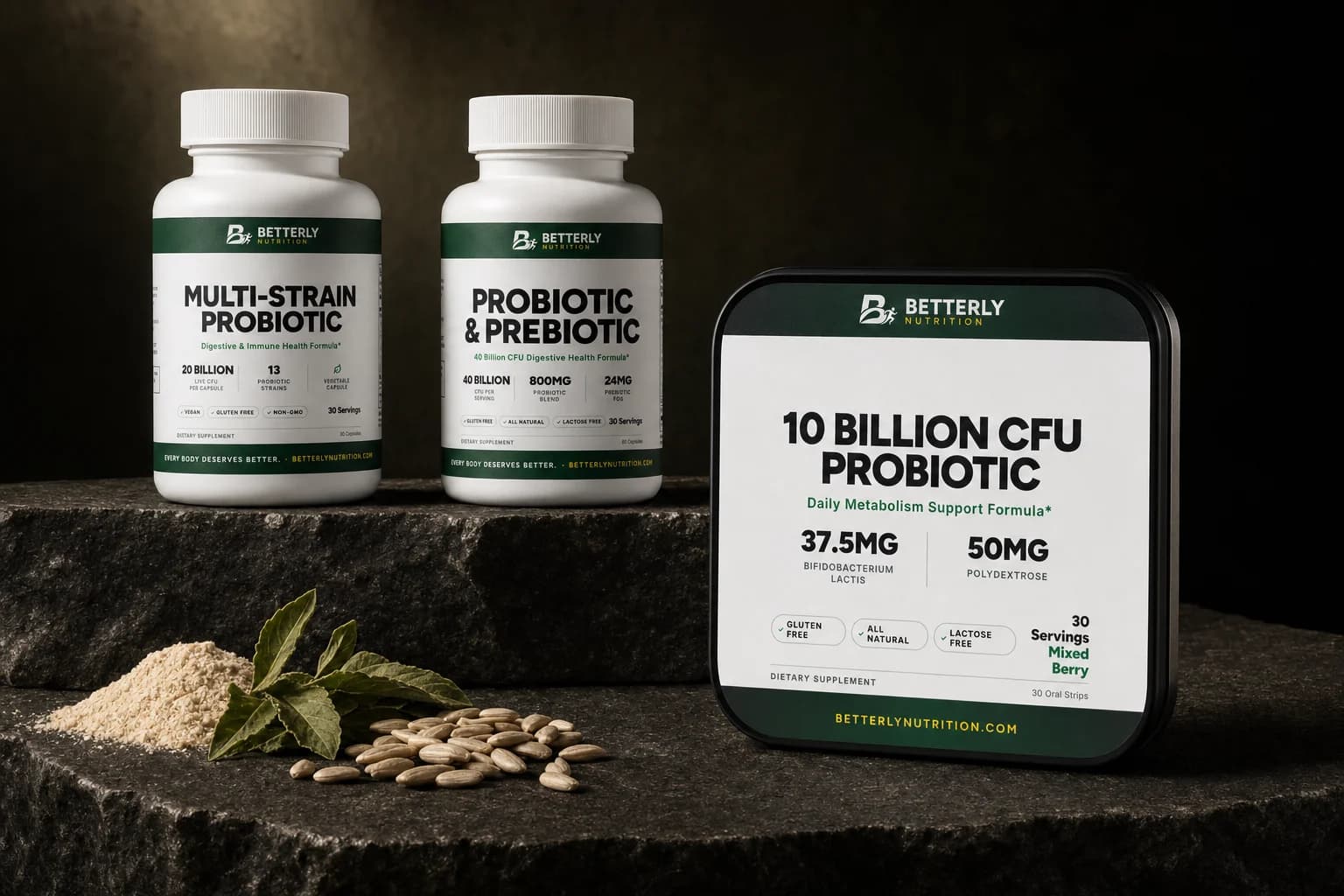
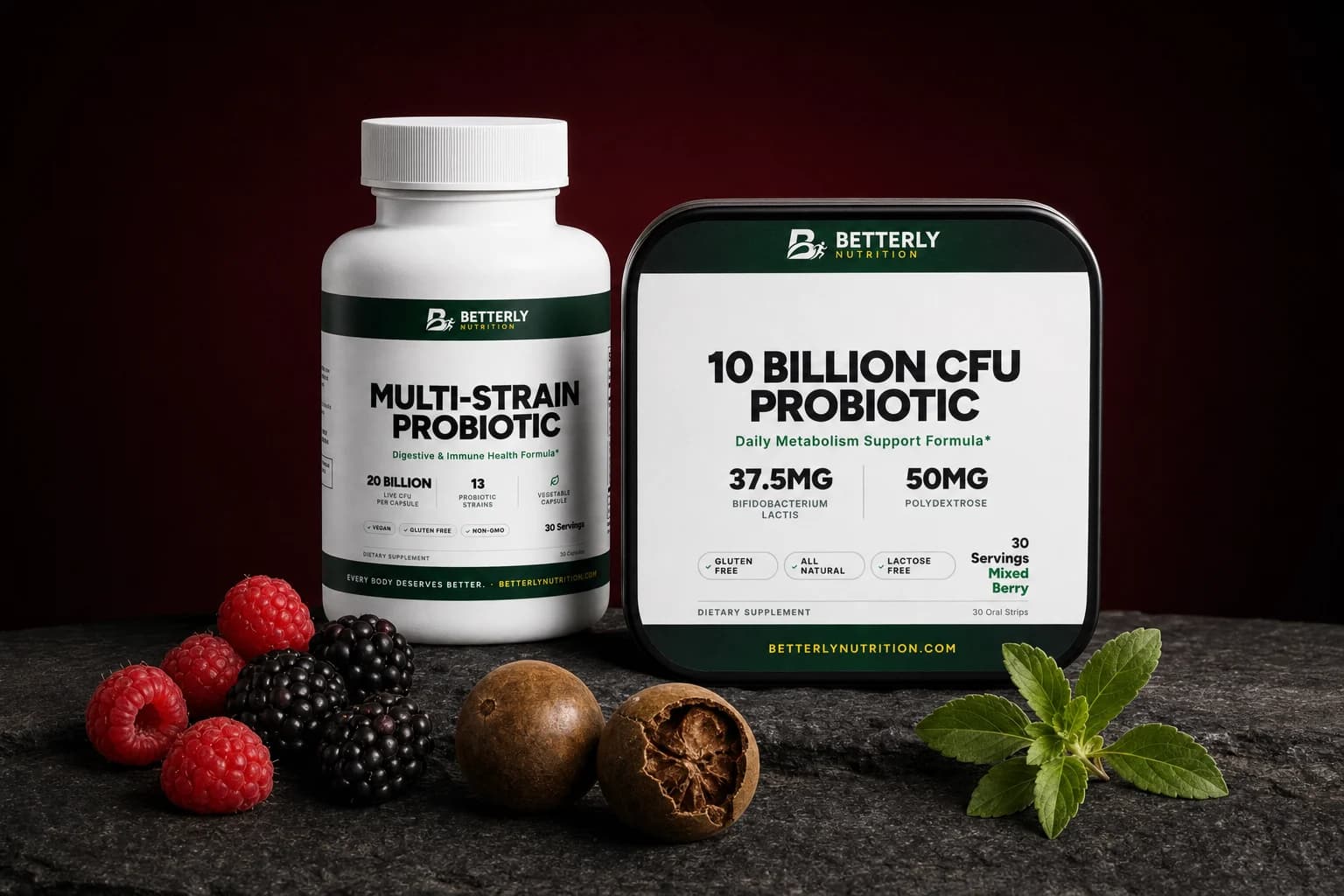
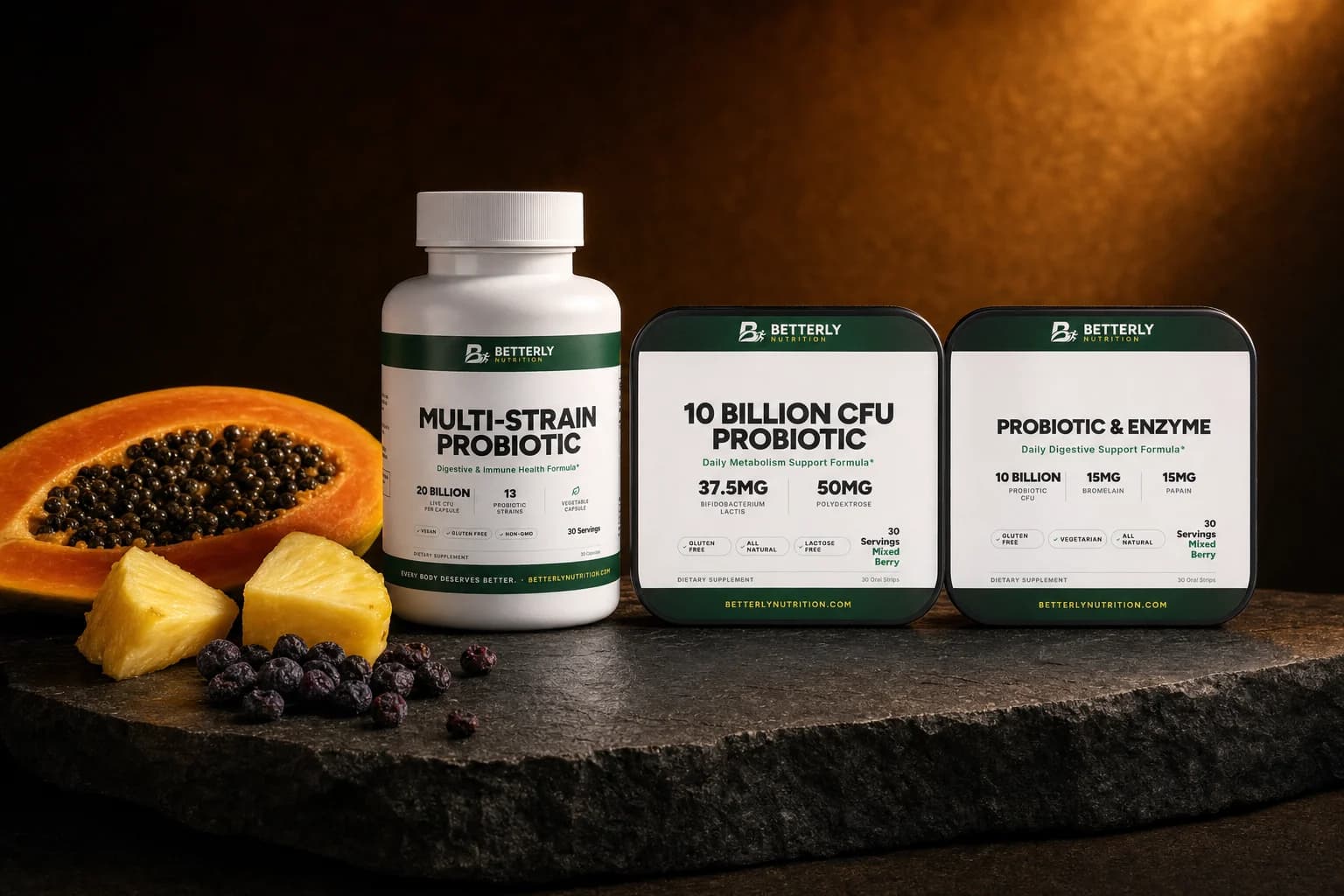
| 10 Billion CFU Probiotic Strips | 1 Oral Strip (180 mg) | Bifidobacterium | 50 mg polydextrose |
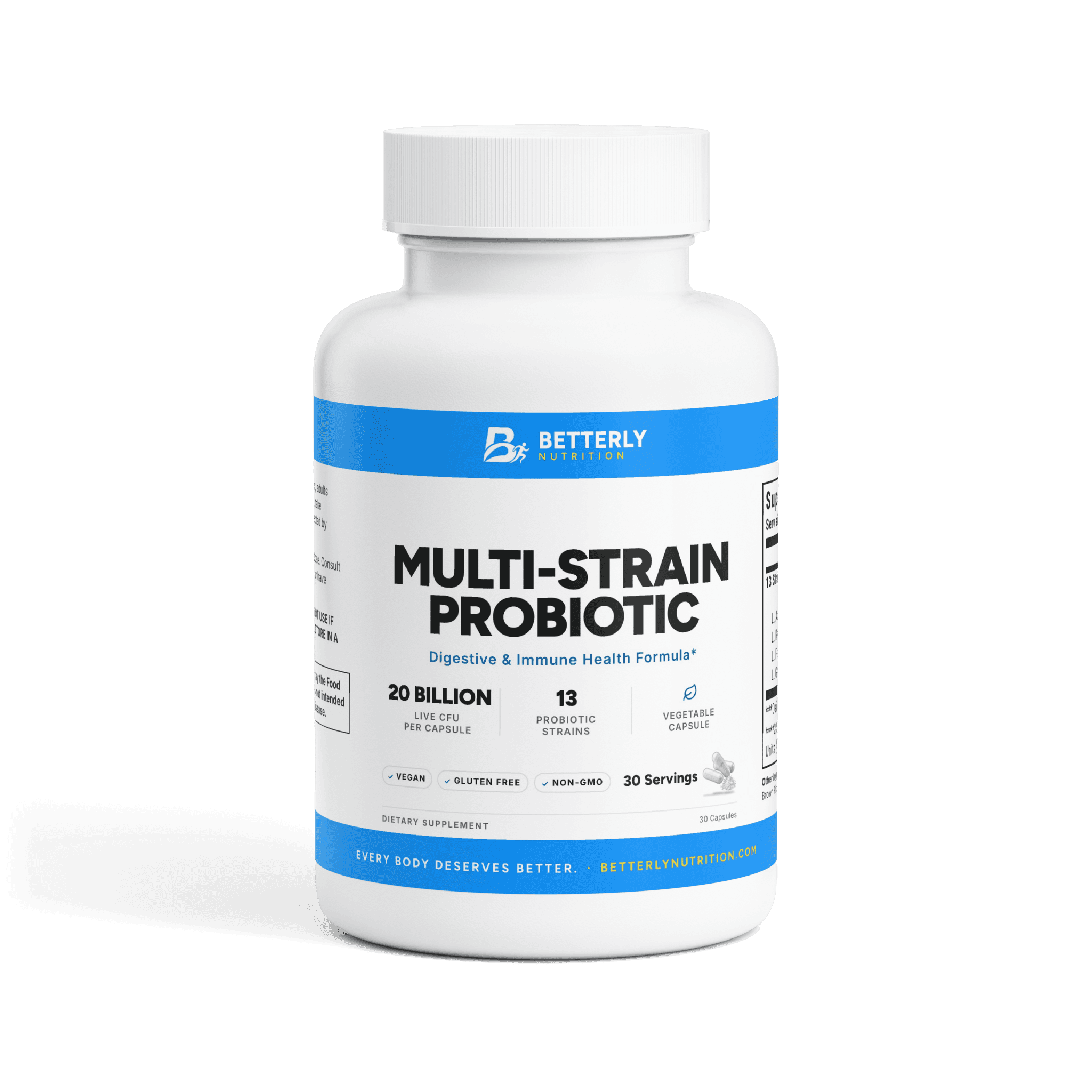
| Multi-Strain Probiotic Capsules | 1 Capsule | Lactobacillus, Bifidobacterium (13 Strain Probiotic) | No other active rows |
| Probiotic & Prebiotic Capsules | 2 Capsules | Lactobacillus, Bifidobacterium (4 coded strains) | 60 mg marine polysaccharide, 24 mg FOS |
Read down the last column: of these four, only the spore strip carries enzymes, so choosing our spore option also means choosing protease, papain and bromelain. Decide whether you want those, not just the spores.
Watch the initials when you read any panel. "B." can stand for Bacillus or Bifidobacterium, and the species name tells you which. On our Multi-Strain panel, every "B." is a Bifidobacterium: lactis, bifidum, longum, animalis and breve.
Counts differ as well. Both strips print 10 Billion CFU per 1-strip serving and the Multi-Strain label prints 20 Billion CFU per 1 Capsule serving, while the 40 Billion CFU on the Probiotic & Prebiotic Capsules is per 2-capsule serving. The ODS rule holds across all four, so the top count isn't the automatic winner. Our guide to what a probiotic's CFU figure really tells you works through those numbers label by label.
How do you choose between a spore probiotic and a regular one?
Choose between a spore probiotic and a regular one by the label details you care about most: named strains, count timing, format and extras.
- If you want strain codes you can look up, the Probiotic & Prebiotic Capsules print four: La-14, Bl-04, Lp-115 and Lpc-37, and the other three print none.
- If you want to know when the count was taken, the Multi-Strain Probiotic Capsules footnote says "at the time of manufacture." The other three labels don't say.
- If you'd rather skip capsules and water, both strips dissolve on the tongue, so pick by the microbe you want.
- Want enzymes in the same serving? Of these four, only the spore strip adds them.
- Vegan is printed on the Multi-Strain Probiotic Capsules, while the spore strip's pack says vegetarian.
Every one of these labels is in our Gut Health & Digestion collection.
From our shop: Probiotic & Digestive Enzyme Strips — our spore-based option, a mixed berry oral strip with 50 mg (10 Billion CFU) of Bacillus coagulans and three digestive enzymes per 1 Oral Strip (210 mg) serving.
How do you take a spore probiotic, per the label?
Our Probiotic & Digestive Enzyme Strips are a once-a-day spore probiotic: the label says to place 1 oral strip on the tongue daily and allow it to dissolve.
That one line is the whole direction. The pack says nothing about meals, water or a time of day, and none of the federal pages we used gives spore-formers a schedule of their own. So when to take spore probiotics has a plain answer for this product: whenever you're least likely to forget it.
The enzymes don't add a rule either. Some enzyme products are labeled for mealtimes, but this strip's directions leave food out. One strip is the whole serving, so there's nothing to measure or mix, and a pack's 30 Oral Strips cover 30 days at the label's pace.
Leaning toward a non-spore option instead? Our guide on when to take probiotics, morning or night walks through those labels' schedules, including a capsule that splits its serving between day and evening.
From our shop: Multi-Strain Probiotic Capsules — a non-spore pick with a 13-strain Lactobacillus and Bifidobacterium blend at 317 mg, 20 Billion CFU at the time of manufacture, per 1 Capsule serving.
When don't you need a spore probiotic?
Nobody needs a spore probiotic by default: ODS notes there are no official recommendations covering probiotic use by healthy people.
Other good reasons to pass:
- A regular probiotic already suits you. Switching for the word "spore" alone isn't a documented upgrade.
- You want a strain you can trace. Our spore strip prints the species, not a strain code.
- You avoid certain sweeteners. The spore strip's ingredient list names mannitol, monk fruit extract and steviol glycosides. The other strip lists them too, and neither capsule does.
Set on trying one of either kind? ODS points you to your health care provider for the choice of product, the dose and how long to stay on it.
Who should check with a healthcare provider first?
Anyone pregnant, nursing, under 18, managing a medical condition, taking medication or facing surgery should talk to a healthcare provider before starting either kind of probiotic.
- All four of these labels print the same caution: consult a physician if pregnant, nursing, under 18, or if you have a medical condition.
- ODS warns that people who are already seriously ill, or whose immune systems are weak, might develop problems such as bacterial infections from probiotics. The fact sheet makes no exception for spore-formers.
- ODS also notes FDA reports that probiotics could lead to infections, even life-threatening illness, in babies born preterm. A baby's probiotic questions belong with a pediatrician.
- The spore strip carries bromelain and papain as well as B. coagulans. If you take medication or another enzyme product, or have an operation coming up, show your provider the whole panel.
If your gut is giving you real trouble, see a provider rather than trying a new kind of probiotic.
FAQ: spore probiotics
Are spore probiotics safe?
Spore probiotics share the general safety picture ODS gives for probiotics as a group. In healthy people, gas is the one possible effect ODS names, and it calls infections and other health problems rare. The risk climbs for people who are very sick or have weakened immune defenses, and ODS makes no exception for spore-formers. Our spore strip's label also tells you to consult a physician if pregnant, nursing, under 18 or living with a medical condition.
Are spore probiotics soil-based?
Often, yes: "soil-based" is a common nickname for spore probiotics, because Bacillus strains are often traced back to soil. The B. subtilis strain in FDA's GRN 001131 letter was isolated from soil samples in Gallatin County, Montana. The ingredient itself was then made by fermenting a pure culture under controlled conditions. So "soil-based" describes where a strain came from, not dirt in your capsule.
Do spore probiotics need to be refrigerated?
Spore probiotics need refrigeration only if their label says so, and our spore strip's label doesn't. Its storage line reads cool and dry, word for word the same as on the three non-spore labels in this comparison, which is why "no fridge needed" isn't a spore-only advantage. Our guide to keeping probiotics in or out of the fridge compares the storage wording across our labels.
Can you take a spore probiotic and a regular probiotic together?
Maybe, with a healthcare provider's go-ahead, since none of these four labels covers pairing two products. Each one warns against going past its recommended dose. Using both of our strips would put 10 Billion CFU of Bacillus coagulans and 10 Billion CFU of Bifidobacterium lactis into your day, plus three enzymes. If you add both, start one first and the second later, so you can tell which one any change came from.
Is Bacillus coagulans a spore probiotic?
Yes, Bacillus coagulans is a spore probiotic, and FDA's GRN 000601 letter lists spore-forming among its traits. It's the microbe in our Probiotic & Digestive Enzyme Strips, at 50 mg (10 Billion CFU) per 1 Oral Strip (210 mg) serving. The label names the species but prints no strain code. For more on this one species, see our Bacillus coagulans guide.
Sources
- Probiotics: Fact Sheet for Consumers (NIH Office of Dietary Supplements)
- Probiotics: Usefulness and Safety (NCCIH)
- Agency Response Letter, GRAS Notice No. GRN 000601 (U.S. Food and Drug Administration)
- GRAS Notice GRN 1131 Agency Response Letter (U.S. Food and Drug Administration)
If this left you looking for somewhere to start, read spore probiotic strips with Bacillus coagulans — its amounts per serving are listed on the page. For the practical questions this raises, how dosing, sourcing and subscriptions work is answered in one place.