On this page
- Key takeaways
- Probiotic capsules vs gummies vs strips: which one should you pick?
- Are probiotic gummies as good as capsules?
- How much sugar is in a probiotic gummy?
- What sweetens a dissolvable probiotic strip?
- Do probiotic capsules need water?
- Which probiotic labels promise their CFU count until expiration?
- How do you take each probiotic format, per the label?
- When isn't switching probiotic formats worth it?
- Who should check with a healthcare provider first?
- FAQ: probiotic capsules, gummies and strips
- Sources
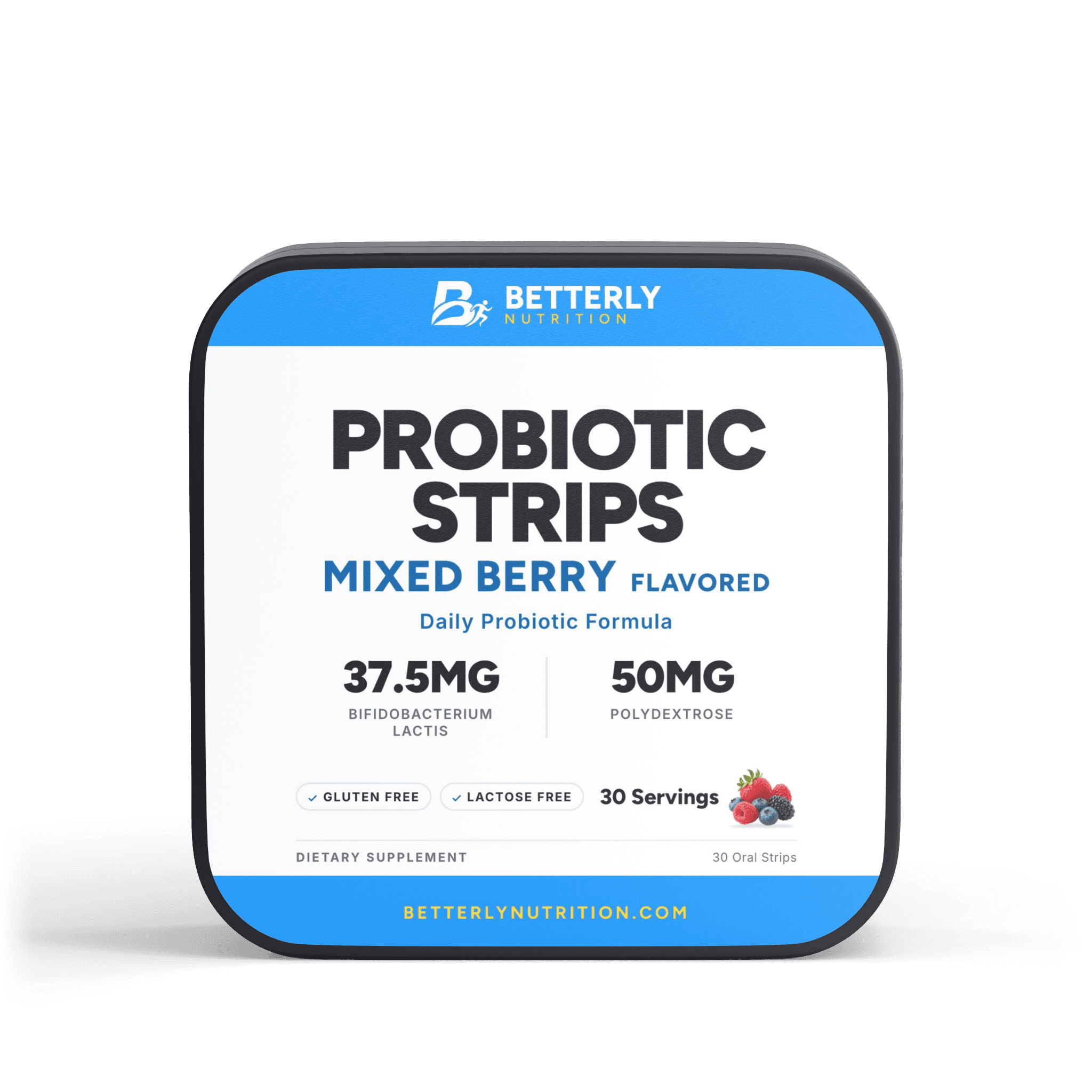
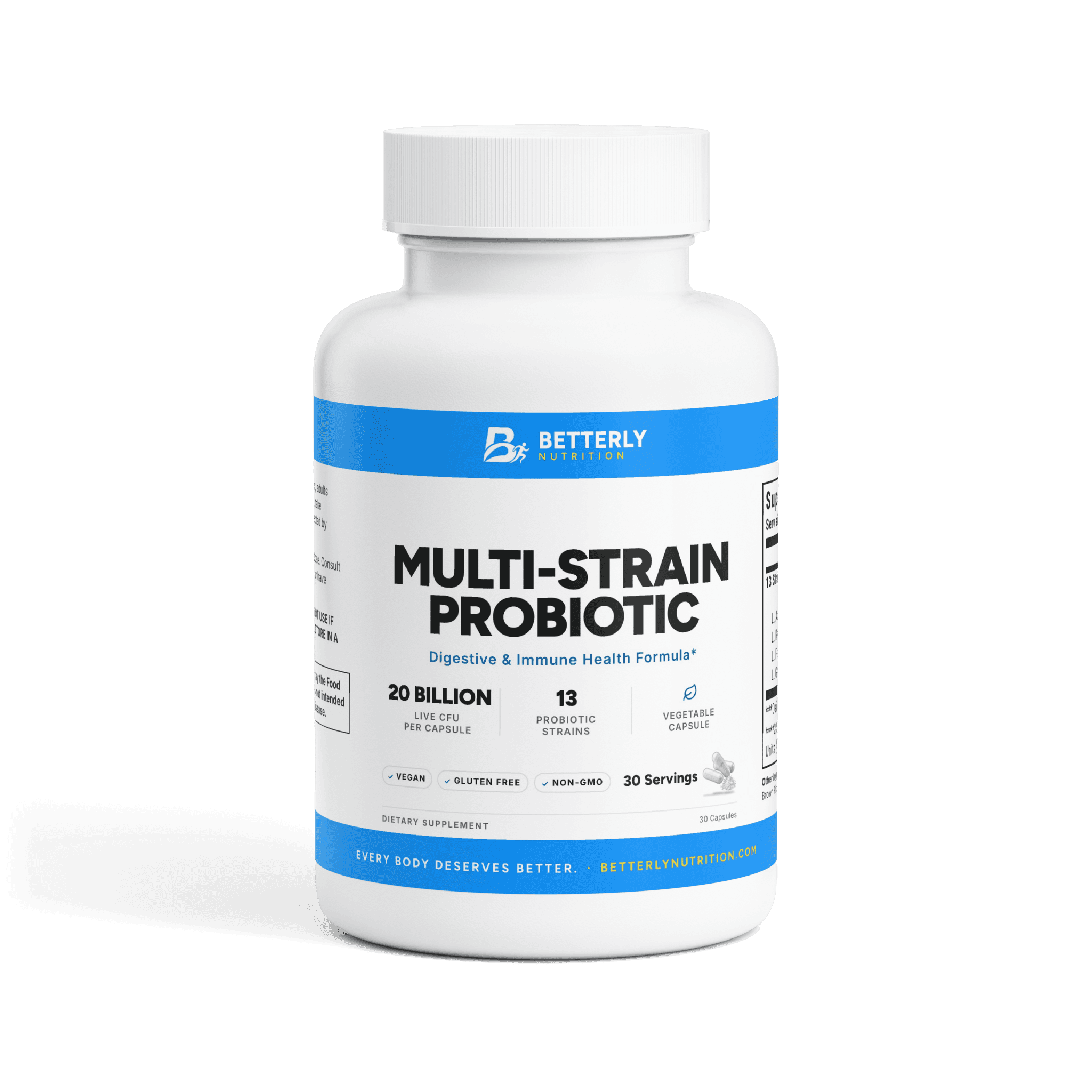
The short answer: Probiotic capsules vs gummies vs strips is a choice about your routine, because the microbe and its count matter more than the shape. Our 10 Billion CFU Probiotic Strips list 10 Billion CFU of Bifidobacterium lactis per strip, and our Multi-Strain Probiotic Capsules list 20 Billion CFU per capsule. Two probiotic gummy labels in the NIH's Dietary Supplement Label Database list 500 million and over 4 billion per 2 gummies, plus 2 g to 4 g of added sugars.
Key takeaways
- No federal source we used compares probiotic gummies, capsules and strips head to head, and the NIH links any benefit to the exact microbes plus their CFU count.
- The two probiotic gummy labels we checked list 2 g and 4 g of added sugars per 2-gummy serving, while our strip and capsule panels have no sugars line.
- Our 10 Billion CFU strip needs no water and lists sugar alcohols, monk fruit extract and steviol glycoside. Our Multi-Strain capsule label suggests taking it with 6-8 oz of water.
- One of the gummy labels guarantees its CFU count through the expiration date, which is more than either of our strip labels says.
We sell probiotic capsules and dissolvable strips, but not a probiotic gummy, so we have a stake in two of these three formats. Our numbers come from our own Supplement Facts panels, and the gummy numbers from two other brands' labels in the NIH's Dietary Supplement Label Database. You'll see where they beat ours.
Probiotic capsules vs gummies vs strips: which one should you pick?
Pick the probiotic format you'll take daily without fuss, then judge the product by its microbes and CFU count, which matter more than the shape.
The NIH Office of Dietary Supplements (ODS) never ranks capsules, gummies or strips in its consumer fact sheet on probiotics. Its point is narrower. The sheet reads the strain list and the CFU count as a pair, and neither one alone tells you what, if anything, a product will do.
So start with the panel. Here's how four labels line up, one per format plus a second gummy:
| Format and label | Serving | Count per serving | Sugars or sweeteners |
|---|---|---|---|
| Capsule: Multi-Strain Probiotic Capsules | 1 capsule | 20 Billion CFU | No sugars line |
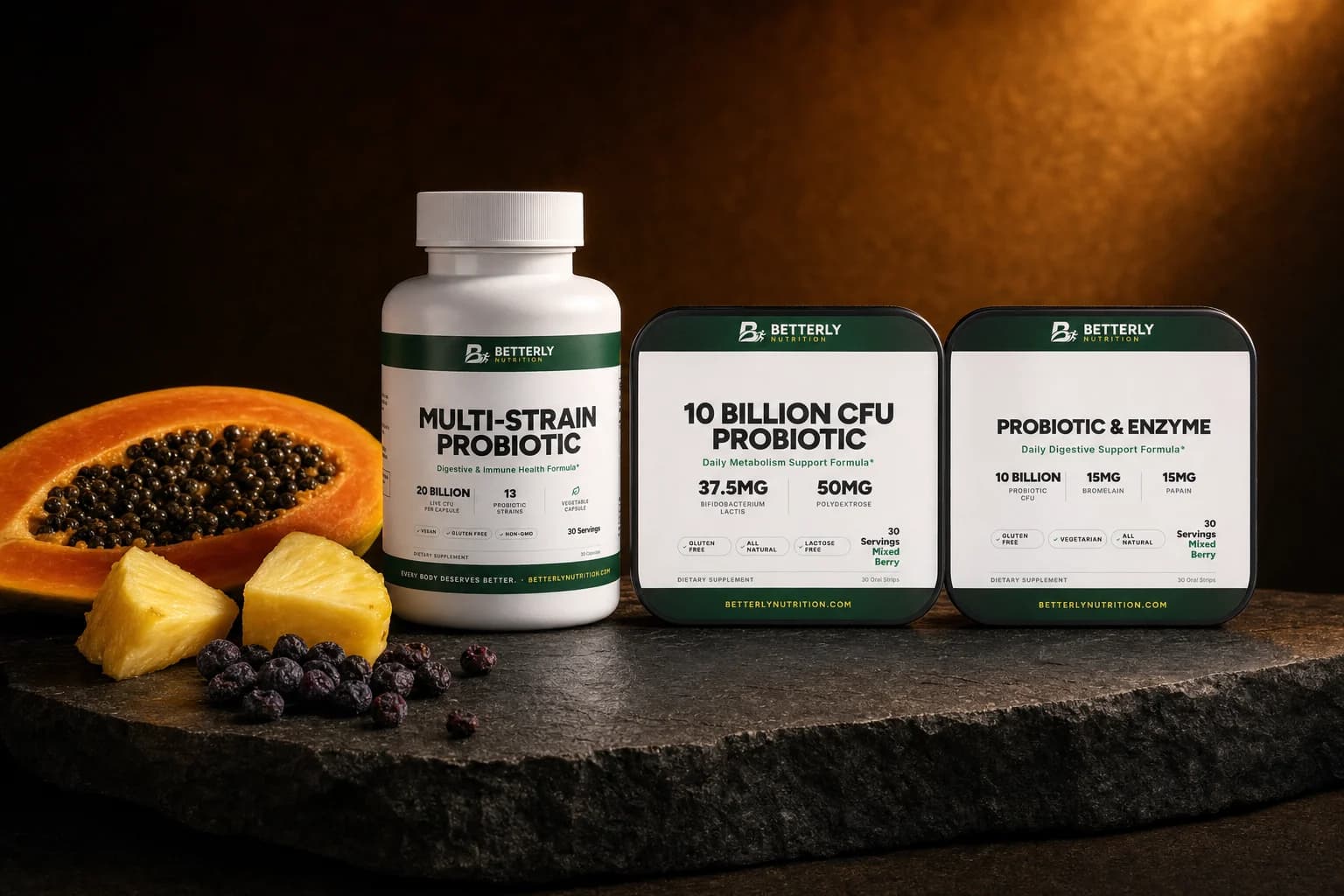
| Strip: 10 Billion CFU Probiotic Strips | 1 strip (180 mg) | 10 Billion CFU | Erythritol, mannitol, monk fruit, steviol glycoside |
| Gummy: Nature's Bounty Probiotic Gummies | 2 gummies | Over 4 billion CFU | 2 g added sugars |
| Gummy: Meijer Advanced Probiotic Gummies | 2 gummies | 500 million viable cells | 4 g added sugars |
Here, the one-piece formats print the bigger counts, and only the gummy panels list sugars (2 g and 4 g of added sugars). That's true of these products, not every brand. A larger number isn't better on its own, as our breakdown of probiotic CFU counts explains.
Once a label passes that check, let your day decide the shape:
| If this matters most | Format to look at | Label line to read |
|---|---|---|
| No water nearby | A strip | Suggested use |
| Nothing sweet | A capsule | Other ingredients |
| Pills are a chore | A strip or a gummy | Serving size and sugars |
| One piece a day | A strip or our Multi-Strain capsule | Serving size |
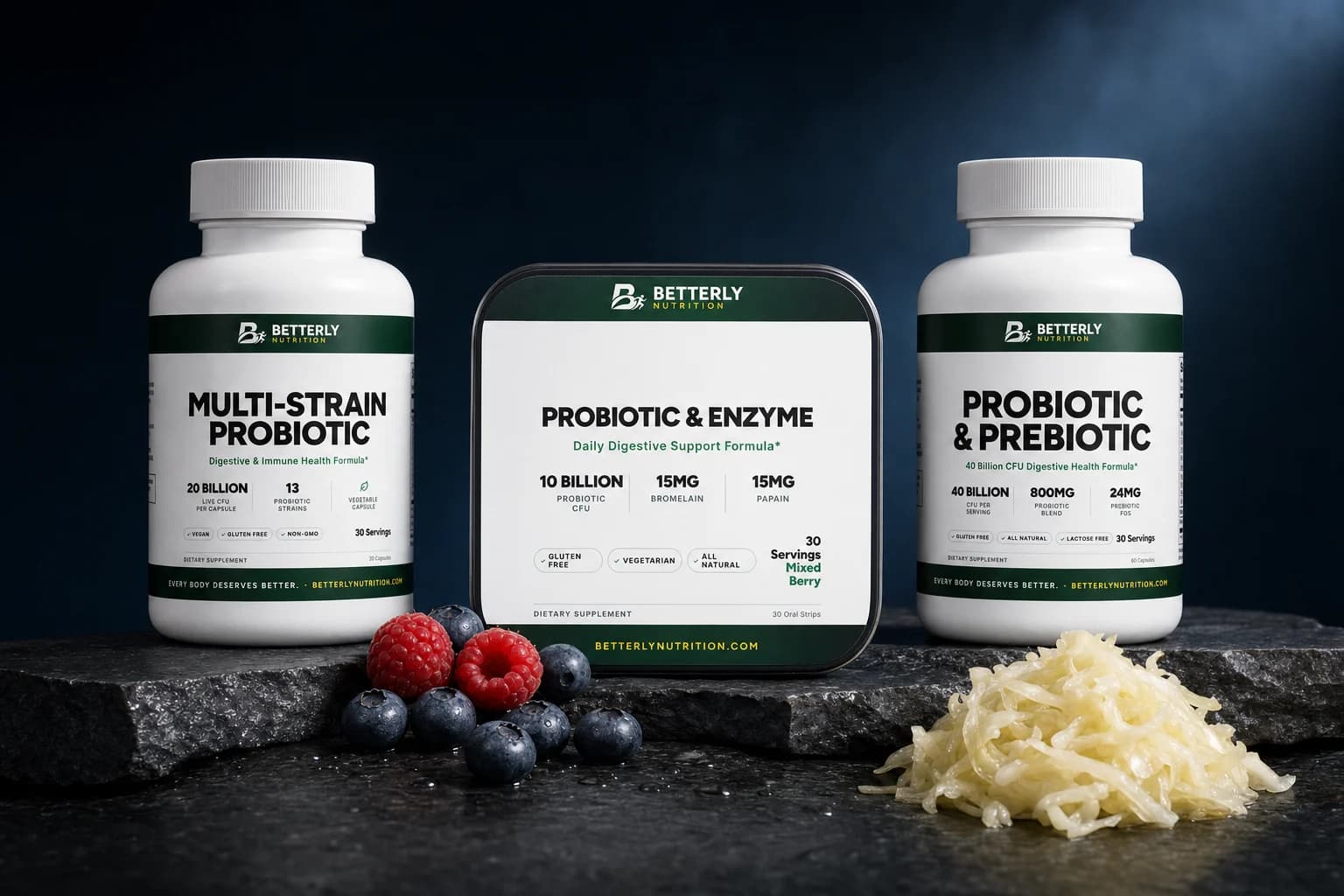
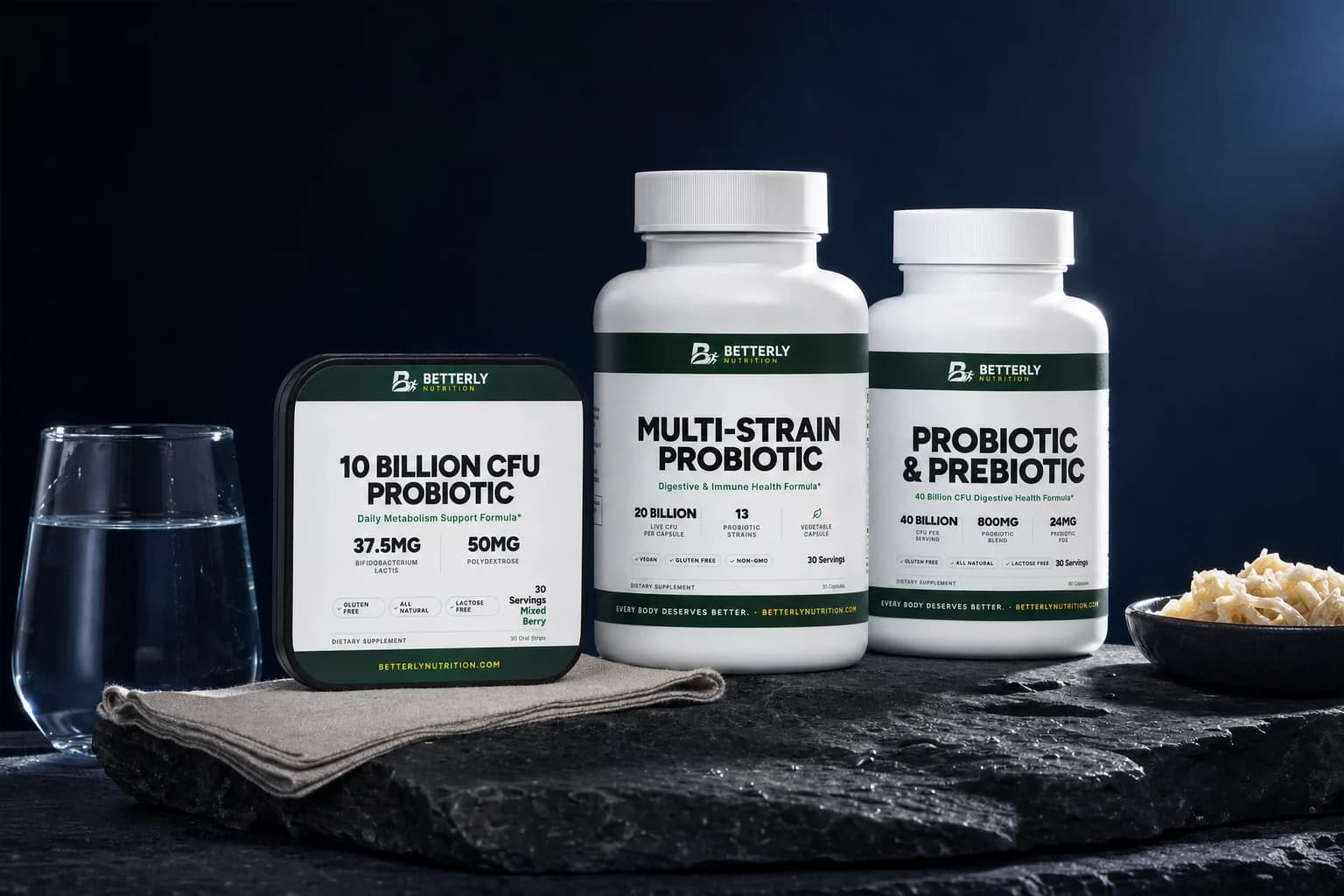
The four Betterly probiotics in this guide all sit on our gut health and digestion shelf if you'd like to compare their panels side by side.
Are probiotic gummies as good as capsules?
Probiotic gummies are as good as capsules only when the gummy's label lists the microbes and count you actually want, since being chewable doesn't change what's inside.
Both gummy labels we checked list a single microbe, Bacillus coagulans, the spore-forming species covered in our guide to spore probiotics. The Nature's Bounty label names a strain, Unique IS-2, at 10 mg with "over 4 billion live culture CFU" per 2 gummies. The Meijer label lists Bacillus coagulans at 500 million viable cells per 2-gummy serving and names no strain.
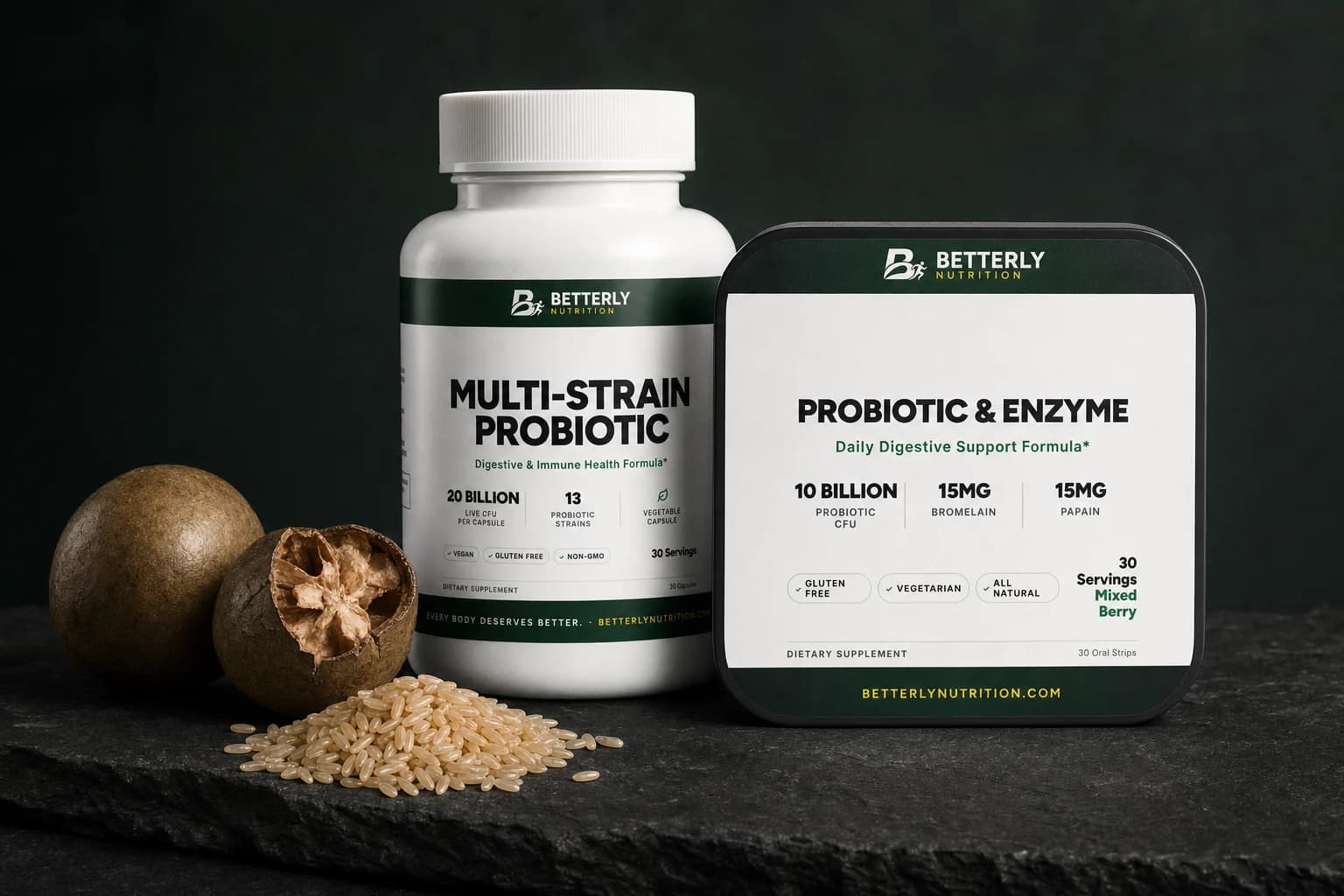
Capsules and strips vary just as much. Our Multi-Strain capsule names 13 microbes under one 20 Billion CFU total. Its label calls that a 13 Strain Probiotic, but it prints no strain codes.
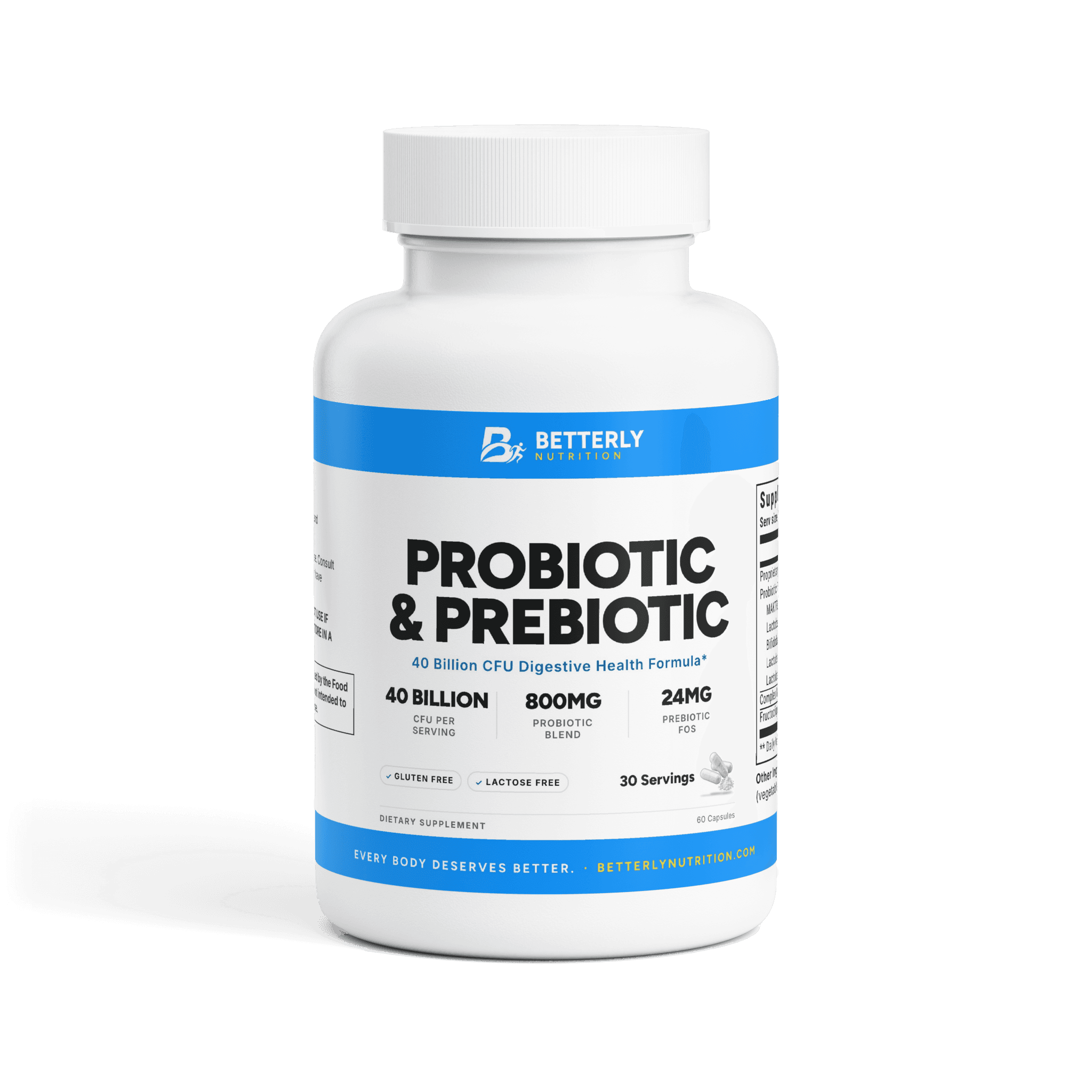
Our Probiotic & Prebiotic Capsules go further, naming four coded strains, including Bl-04 and Lp-115, in a blend listed at 40 Billion CFU per 2-capsule serving. Each of our two strips names one species with no strain code.
ODS explains that a probiotic is named by genus, species and strain, so a strain code is the most exact thing a label can tell you. Across these six labels, how much you're told depends on the brand, not the format.
How much sugar is in a probiotic gummy?
The two probiotic gummy labels we checked list 2 g and 4 g of added sugars per 2-gummy serving, and both start their ingredients with glucose syrup and sugar.
The Nature's Bounty panel, in its label record in the NIH database, shows 20 calories, 4 g of total carbohydrate and 2 g of total sugars. All 2 g are added sugars, 4% of the Daily Value. The Meijer panel, in its own database record, shows 20 calories, 5 g of carbohydrate and 4 g of added sugars, 8% of the Daily Value.
Set two rows of the Nature's Bounty panel side by side: Bacillus coagulans at 10 mg and total carbohydrate at 4 g. That works out to 400 mg of carbohydrate for every milligram of the probiotic.
Two other details are worth a look before you buy:
- Both labels list gelatin, an animal-derived gelling ingredient, so they won't suit you if you avoid animal products.
- The Nature's Bounty gummy adds vitamin D: 10 mcg (400 IU) per 2 gummies, 50% of the Daily Value. Count it if you already take vitamin D.
Both records were entered in 2022, and brands change formulas, so the package in your hand has the final word.
What sweetens a dissolvable probiotic strip?
Our 10 Billion CFU Probiotic Strips list two sugar alcohols, mannitol and erythritol, plus monk fruit extract and steviol glycoside, and their panel has no sugars line.
An FDA page, Aspartame and Other Sweeteners in Food, covers all four. It puts sugar alcohols such as mannitol and erythritol at 25% to 100% of sugar's sweetness, with slightly fewer calories than sugar. For steviol glycosides, from the leaves of the stevia plant, it gives a reported range of 200 to 400 times sugar's sweetness. Monk fruit extract comes in at 100 to 250 times.
Because some sweeteners are that intense, the FDA notes, a smaller amount gives the same sweetness. That suits probiotic oral strips, where every milligram counts. Ours lists 37.5mg (10 Billion CFU) of Bifidobacterium lactis per 1 Oral Strip (180 mg) serving. That 180 mg covers the whole strip, sweeteners included, and it's under a twentieth of the carbohydrate in one Nature's Bounty serving. The panel doesn't say what share the sweeteners take up.
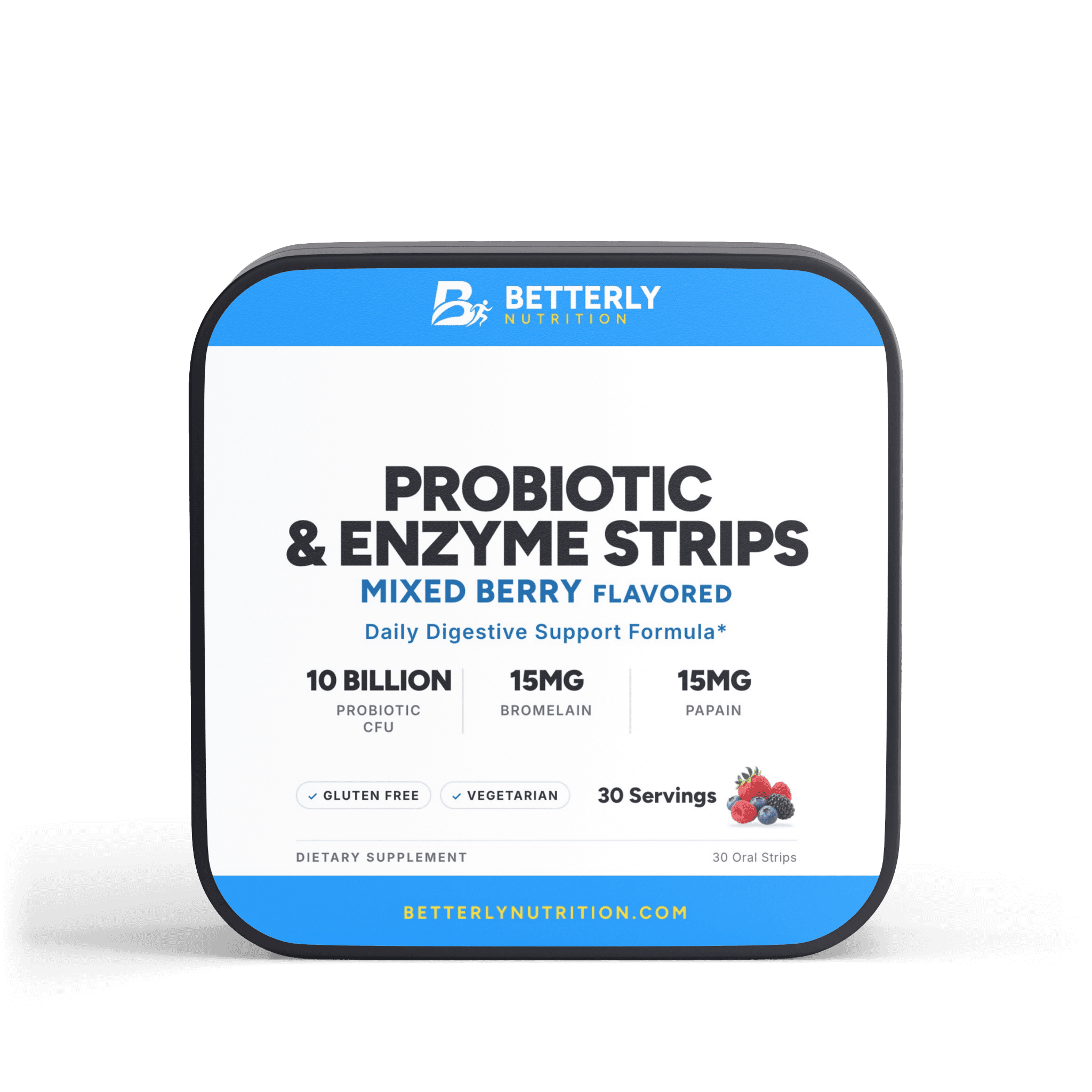
Our Probiotic & Digestive Enzyme Strips skip the erythritol and list mannitol, monk fruit extract and steviol glycosides. Each 1 Oral Strip (210 mg) serving lists 50 mg (10 Billion CFU) of Bacillus coagulans. Its Digestive Enzymatic Blend adds 10 mg of protease, 15 mg of papain and 15 mg of bromelain, and the label says gluten free and vegetarian.
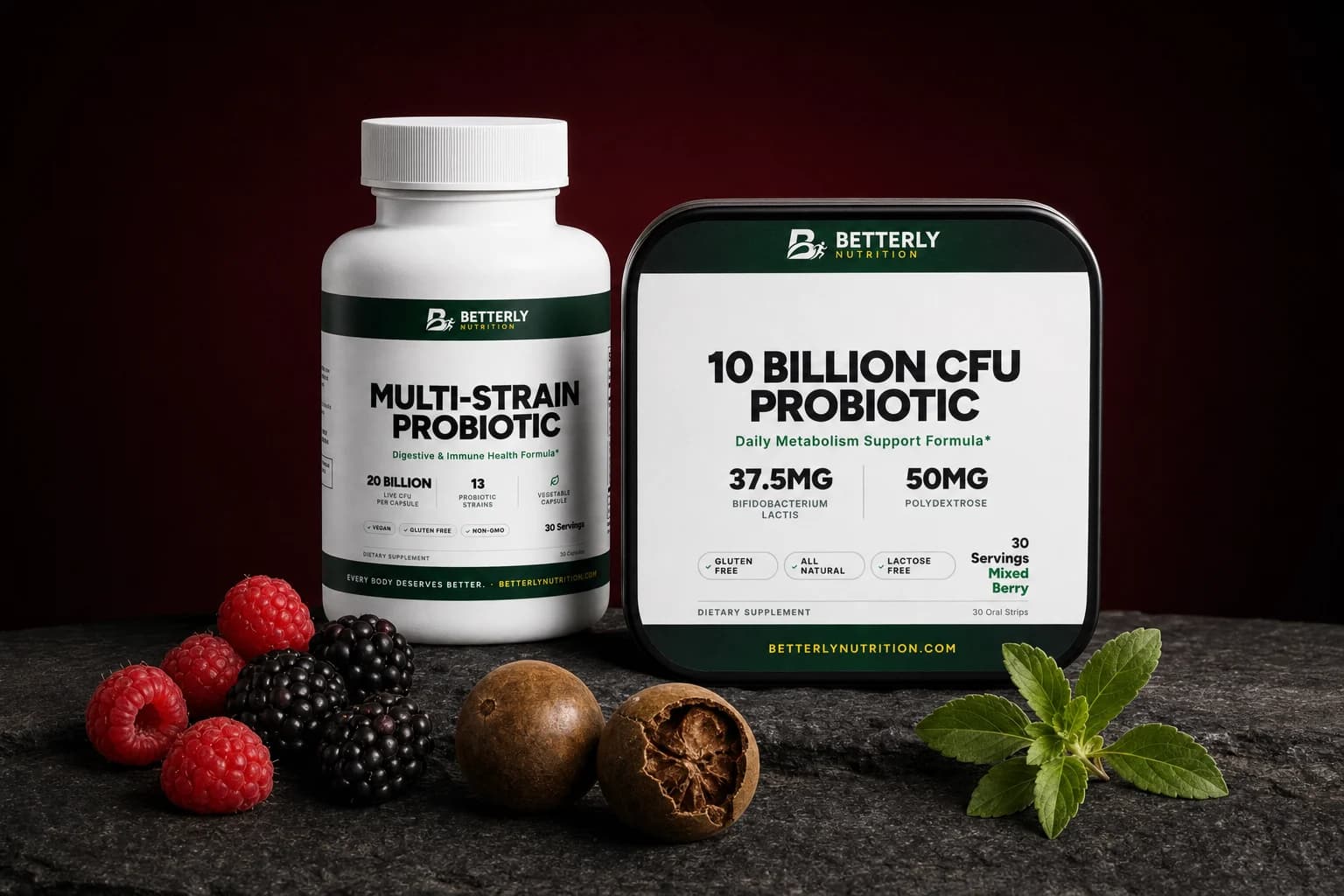
From our shop: 10 Billion CFU Probiotic Strips — 30 mixed berry strips that melt on the tongue, each listing 10 Billion CFU of Bifidobacterium lactis with no sugars line on the panel.
Do probiotic capsules need water?
Our Multi-Strain Probiotic Capsules label asks adults to take one capsule a day, best with 6-8 oz of water, while the strip and gummy labels never mention a drink.
Each 1 Capsule serving of the Multi-Strain capsules lists 317 mg (20 Billion CFU) of a 13 Strain Probiotic. The other ingredients are a cellulose vegetable capsule and brown rice flour, and its label adds three claims: vegan, gluten free and non-GMO. No sweetener appears in that list, so if you'd rather skip sweet tastes, it's the simplest fit on our shelf.
The Probiotic & Prebiotic Capsules serving is 2 capsules, which the label suggests splitting between day and evening. Hypromellose makes up the vegetable capsule, and rice maltodextrin and L-leucine round out the other ingredients. The panel also lists fructooligosaccharide (24 mg) and complex marine polysaccharide (60 mg) per 2-capsule serving.
Any capsule has to be swallowed, and the Multi-Strain label adds a glass of water to that. If neither bothers you, there's no reason to trade your capsule for a sweeter format.
Which probiotic labels promise their CFU count until expiration?
Among these labels, only the Nature's Bounty gummy guarantees its CFU count through expiration, while our Multi-Strain capsule and the Meijer gummy count theirs at the time of manufacture.
According to ODS, a label may count CFUs when the product was made, or it may promise a count that holds through the expiration or use-by date. Because the count can fall over time, the factory number may not match what you swallow. That's why, ODS notes, some experts favor labels that give the count at expiration.
Here's where each label stands:
- Nature's Bounty gummies: "Guaranteed quality and CFU through expiration when continuously stored in the original packaging as directed."
- Meijer gummies: a footnote reads "At time of manufacture."
- Our Multi-Strain capsules: "20 Billion Live Colony Forming Units (CFU) at the time of manufacture."
- Our two strips and our Probiotic & Prebiotic Capsules: a CFU figure with no word on when the count was taken.
On this one point, another brand's gummy label tells you more than three of the four Betterly labels in this guide do.
Storage lines are closer. All four of ours say "Store in a cool, dry place." Nature's Bounty adds "away from direct sunlight" to the same words, and Meijer says room temperature. None asks for a fridge.
How do you take each probiotic format, per the label?
Each probiotic label here sets one daily serving: one strip dissolved on the tongue, one or two capsules, or two chewed gummies, and none calls for more.
- 10 Billion CFU Probiotic Strips and Probiotic & Digestive Enzyme Strips: "Place 1 oral strip on the tongue daily and allow it to dissolve."
- Multi-Strain Probiotic Capsules: "adults take one (1) capsule daily." For best results, the label adds, take it with 6-8 oz (177-237ml) of water.
- Probiotic & Prebiotic Capsules: "take two (2) capsules once daily," ideally one during the day and one in the evening.
- Nature's Bounty gummies: two gummies daily for adults, with or without a meal.
- Meijer gummies: two gummies a day, chewed thoroughly before swallowing.
Only the Probiotic & Prebiotic label ties a capsule to a time of day, so for the others, choose a moment you'll repeat. Every Betterly probiotic label here carries the line "Do not exceed recommended dose." Stacking a strip on a capsule to raise the count just leaves you juggling two products and two sets of directions.
From our shop: Multi-Strain Probiotic Capsules — 30 vegetable capsules, each listing a 13-strain blend at 20 Billion CFU, with no sweetener in the ingredients and a vegan, gluten free, non-GMO label.
When isn't switching probiotic formats worth it?
Switching probiotic formats isn't worth it if you already take a probiotic without trouble, since a new shape changes your routine, not the microbes you chose.
ODS points out that nothing official tells healthy people to take a probiotic at all, so skipping one altogether is a reasonable choice too. You probably don't need a new format if:
- You swallow capsules easily and your current product lists microbes you picked on purpose.
- You'd be adding a second probiotic in a new shape instead of replacing the first.
- You're cutting back on added sugar and the only format you'd enjoy is a gummy.
- An ad told you a gummy or strip works faster. No label or federal source we used says so.
Who should check with a healthcare provider first?
Whatever the format, all four Betterly probiotic labels here tell you to consult a physician first if you're pregnant, nursing, under 18 or have a medical condition.
- Both gummy labels add medication to that list, and Nature's Bounty says to stop and see a doctor if any adverse reaction occurs.
- If you take prescription medicine or have an operation scheduled, mention any new probiotic to your care team first.
- ODS singles out two more groups: anyone already seriously ill, and anyone with a weakened immune system.
- If you've reacted to an ingredient before, read the whole panel as well as the other-ingredients line. Gelatin sits in both gummies' other ingredients, while papain (15 mg) and bromelain (15 mg) are rows in our enzyme strip's Digestive Enzymatic Blend.
FAQ: probiotic capsules, gummies and strips
Do dissolvable probiotics work in your mouth?
Not as far as our labels go: they only say to let the strip dissolve on your tongue, which describes how it's taken, not where it acts. Once it melts, you swallow it with your saliva. ODS places the main action of probiotics in the digestive tract. Products aimed at the mouth itself are a separate group, which our comparison of oral and regular probiotics sorts out.
Can you dissolve a probiotic in water?
Not with our probiotics: none of their labels says to dissolve one in water, so follow them as printed. Our probiotic oral strips are labeled to dissolve on your tongue, not in a glass. The Multi-Strain capsule label pairs one capsule with 6-8 oz of water and says nothing about opening it. If capsules are hard to get down, a strip skips swallowing a pill altogether.
Do probiotic gummies expire?
Yes, probiotic gummies expire, and the date matters most when a label ties its count to it. The Nature's Bounty gummy guarantees its CFU through expiration only while the gummies stay in their original packaging as directed. ODS adds that counts in any probiotic can drop as the product ages, so check the date and store the bottle the way its label says.
Can a probiotic cause gas no matter the format?
Yes, a probiotic can cause gas as a capsule, a gummy or a strip. The ODS fact sheet says healthy users may notice gas, while anything more serious seldom happens. Swapping shapes doesn't change the destination, since all three reach your digestive tract. If one leaves you uncomfortable, pause it and bring the label to a healthcare provider before starting a different product.
Sources
- Probiotics: Fact Sheet for Consumers, NIH Office of Dietary Supplements
- Aspartame and Other Sweeteners in Food, FDA
- Probiotic Gummies, Nature's Bounty (label record 277025), Dietary Supplement Label Database, NIH
- Advanced Probiotic Gummies, Meijer (label record 271704), Dietary Supplement Label Database, NIH
If this left you looking for somewhere to start, read dissolvable probiotic strips with 10 billion CFU — its amounts per serving are listed on the page. For the practical questions this raises, how dosing, sourcing and subscriptions work is answered in one place.