On this page
- Key takeaways
- Why does Bifidobacterium lactis have such a long name?
- What Bifidobacterium lactis benefits do federal sources describe?
- How many strains of Bifidobacterium lactis are there?
- How do you read a B. lactis entry on a Supplement Facts panel?
- Is Bifidobacterium lactis a good probiotic to look for on its own?
- Bifidobacterium lactis vs longum: how are they related?
- How do you take a Bifidobacterium lactis supplement?
- When is a B. lactis supplement not worth buying?
- Who should ask a healthcare provider before trying B. lactis?
- FAQ: Bifidobacterium lactis
- Sources
The short answer: Bifidobacterium lactis benefits are tracked strain by strain, and the NIH's taxonomy database lists 18 strain entries under this one subspecies, including HN019, BB-12 and Bl-04. B. lactis is the everyday name for Bifidobacterium animalis subsp. lactis, first described from fermented milk in 1997. Like other probiotics, it acts mainly in the digestive tract, where the NIH says probiotics may help things work better.
Key takeaways
- B. lactis is a subspecies, Bifidobacterium animalis subsp. lactis, so a fully labeled B. lactis product needs four name parts, ending in a strain code.
- A finding for one B. lactis strain, such as HN019, doesn't automatically apply to another strain or to a product with no code.
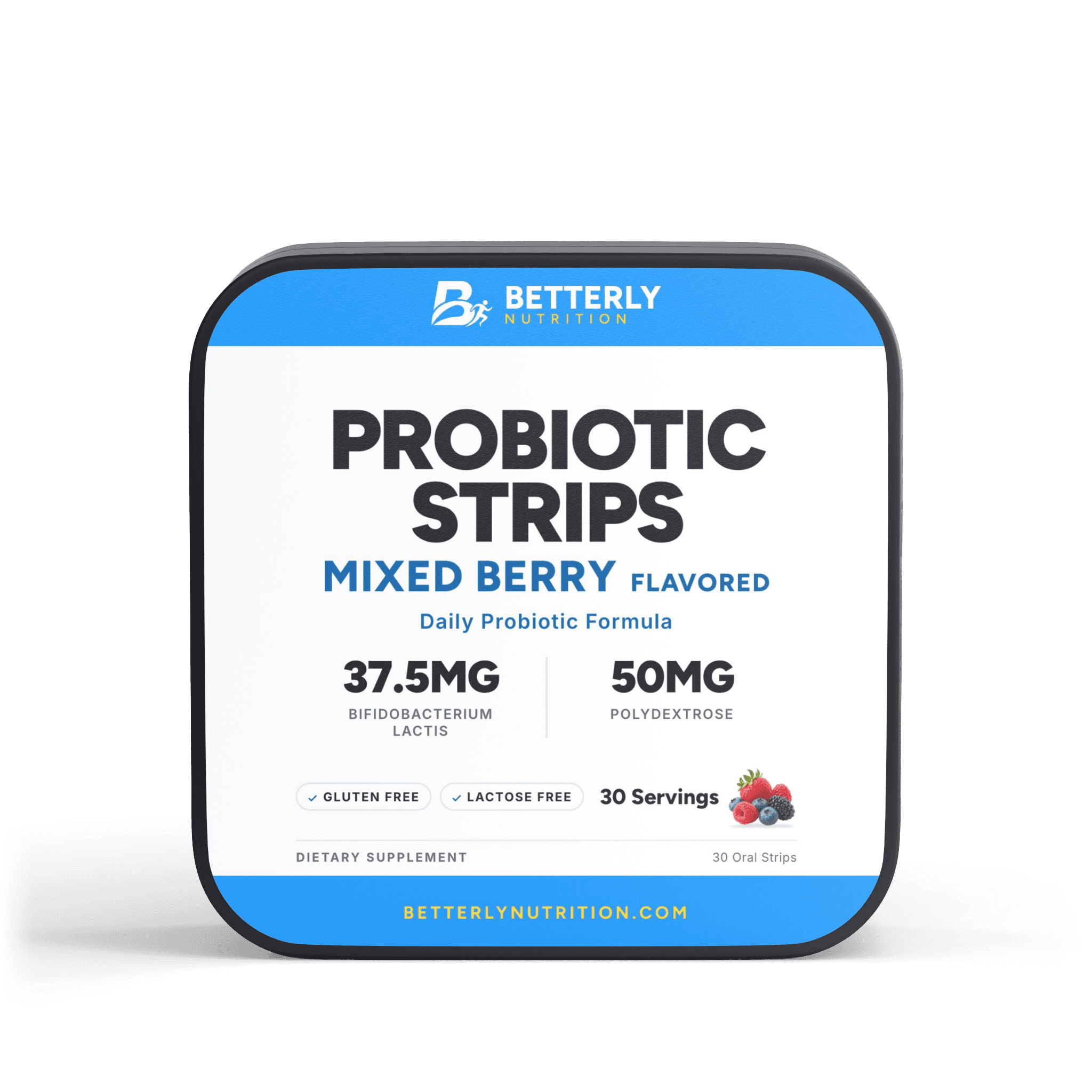
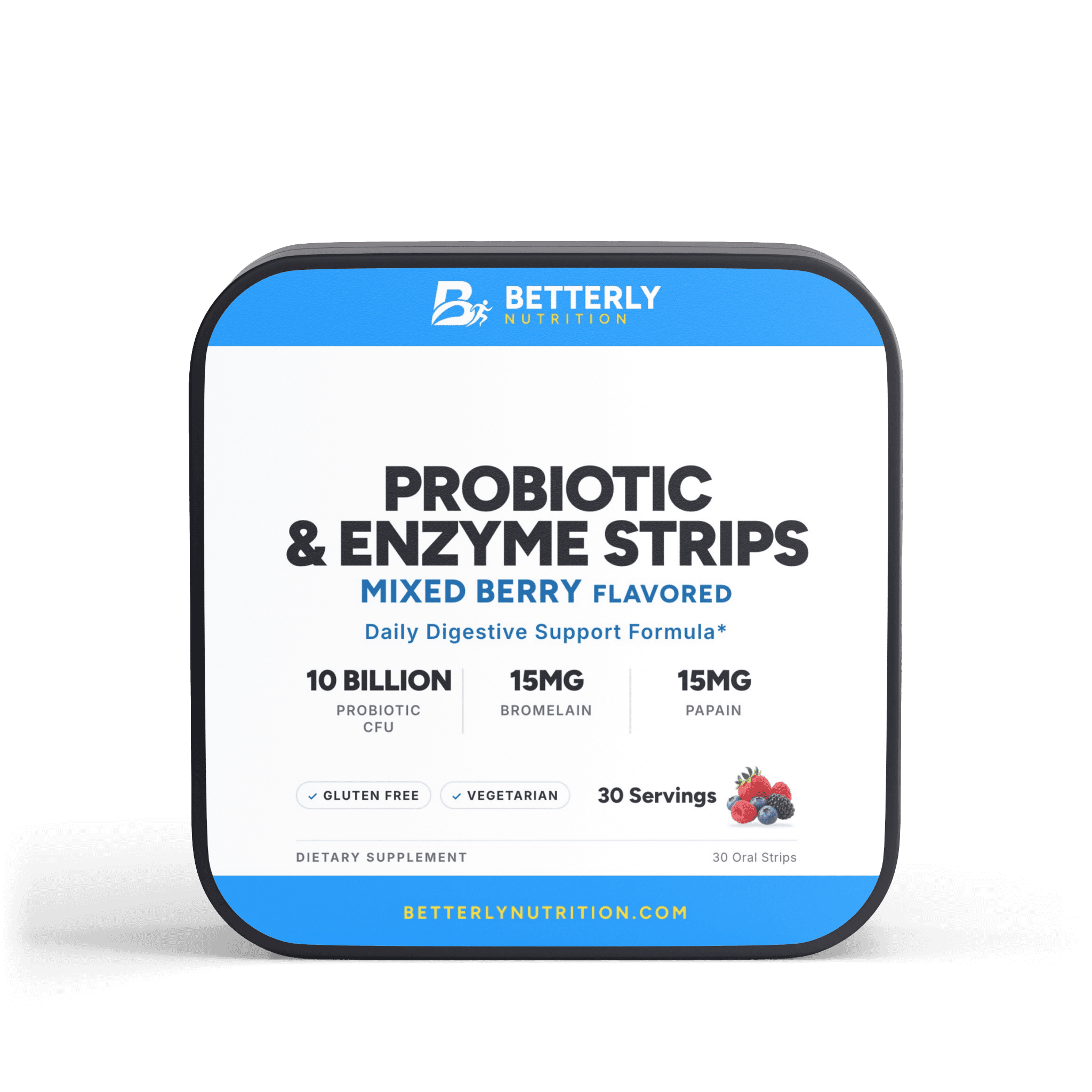
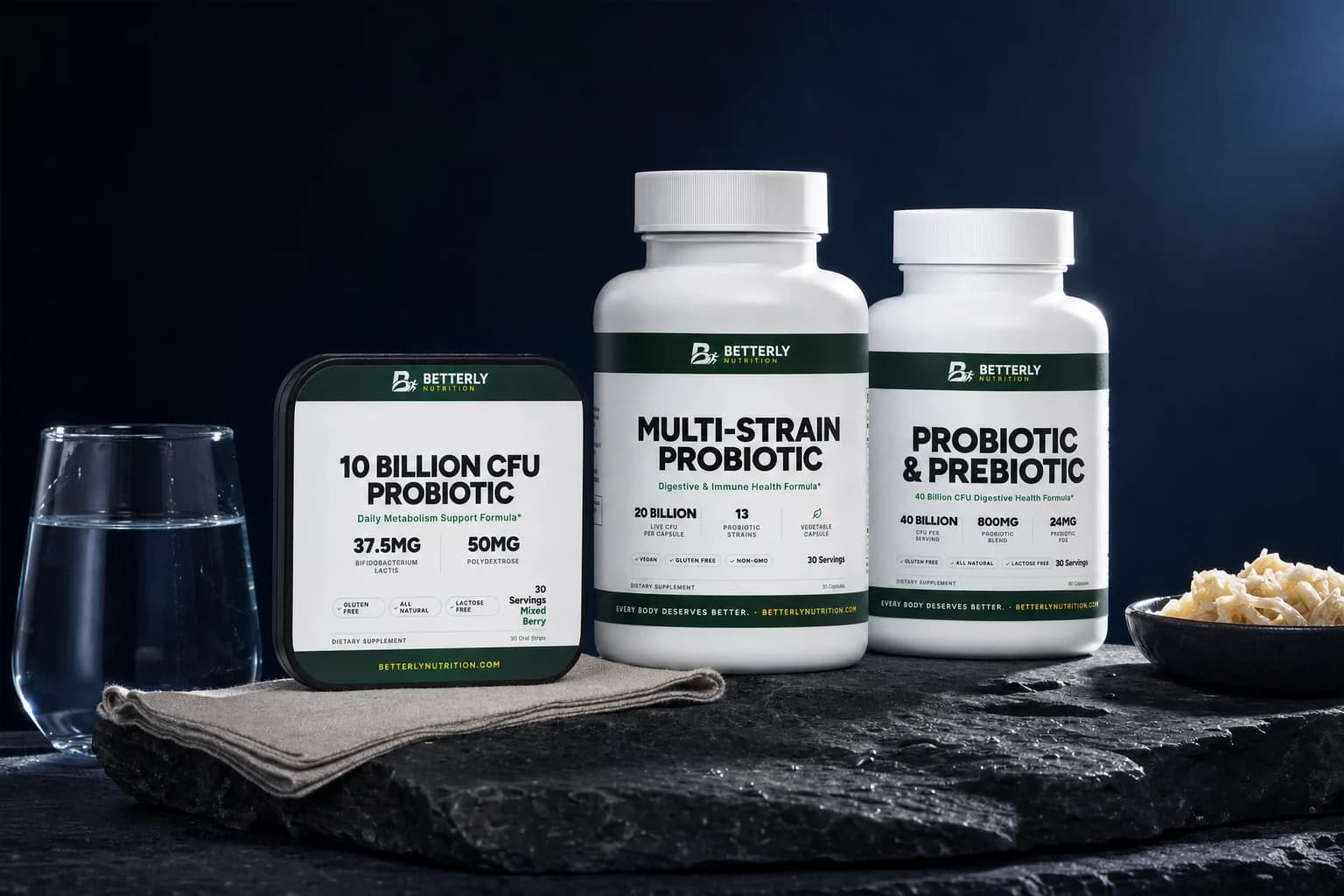
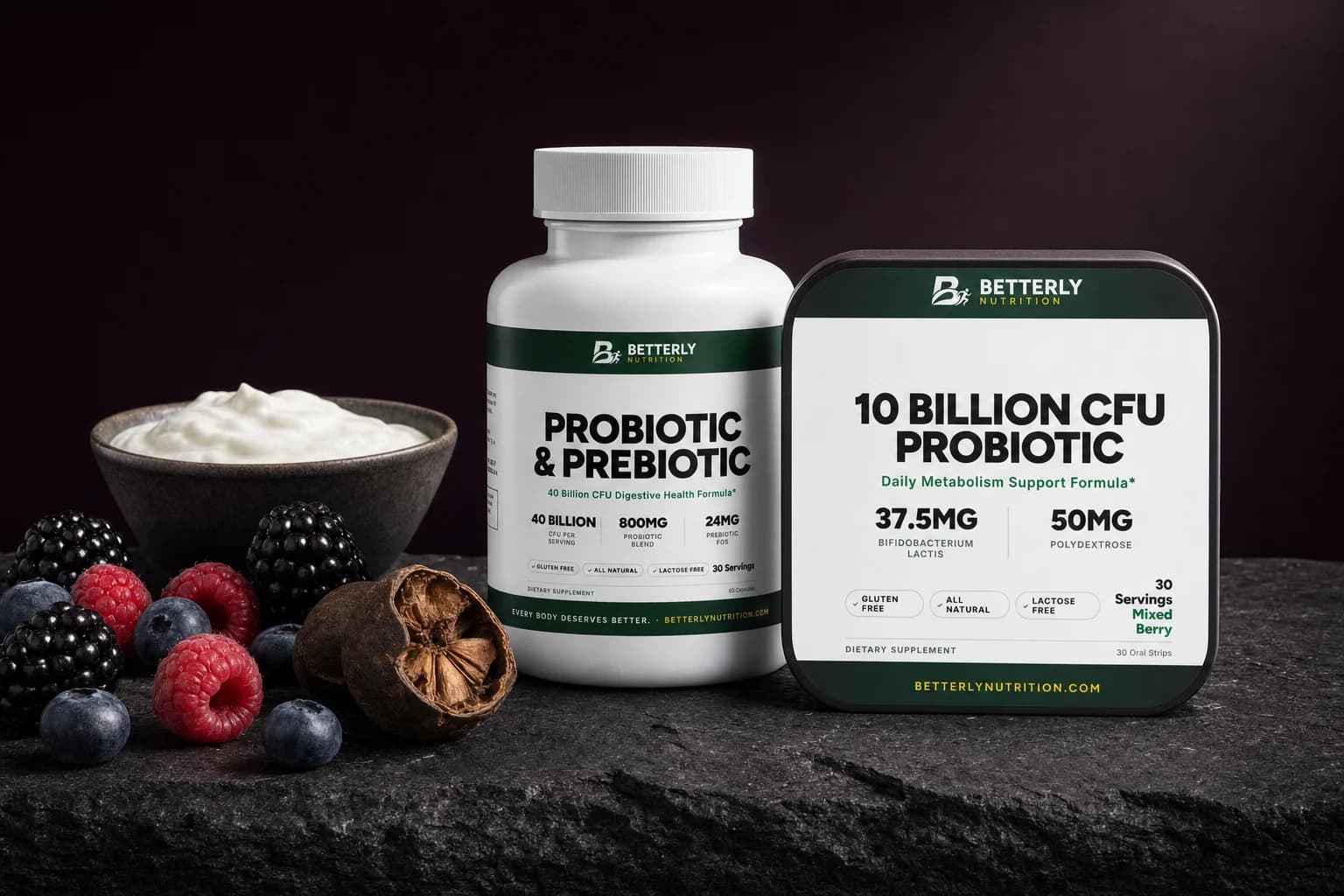
- Our 10 Billion CFU Probiotic Strips contain B. lactis as their only microbe, at 37.5mg (10 Billion CFU) per 1 Oral Strip (180 mg) serving, with no strain code on the label.
- Bl-04 is the only B. lactis strain code printed on any Betterly label, and it shares a four-strain blend and one CFU total.
- B. infantis isn't a type of B. lactis: it's a subspecies of B. longum, a separate species in the same genus.
Betterly sells the strip, both capsules and the reds powder discussed below. That's a conflict of interest, so every product number here comes straight from our Supplement Facts panels, gaps included.
Why does Bifidobacterium lactis have such a long name?
Bifidobacterium lactis has a long name because scientists reclassified it in 2004 as a subspecies of Bifidobacterium animalis, adding a rung most probiotic names don't have.
It began as a species of its own. A 1997 paper described Bifidobacterium lactis as a new species isolated from fermented milk, and lactis is Latin for "of milk." Seven years later, a 2004 paper moved it under B. animalis.
The NCBI Taxonomy Browser record, from the National Library of Medicine at NIH, shows both steps. It gives the current name as Bifidobacterium animalis subsp. lactis and keeps Bifidobacterium lactis as the original name.
In the naming system the NIH Office of Dietary Supplements (ODS) describes, a probiotic gets a genus, a species and a strain. B. lactis needs one extra step, so its ladder has four rungs:
- Genus, Bifidobacterium, the same first name B. longum and B. breve carry.
- Species, animalis. NCBI's B. animalis page lists just two subspecies under it: animalis and lactis.
- Subspecies, lactis. This is the part labels shorten to "B. lactis."
- Strain, a code such as Bl-04 or HN019 that marks one specific line of the bacterium.
What Bifidobacterium lactis benefits do federal sources describe?
Federal health sources describe B. lactis benefits mostly in general probiotic terms, plus one NCCIH line that names B. lactis in research on regularity in adults.
The general part comes from ODS, which places most probiotic activity in the digestive tract. Once there, it says, probiotics may improve how your digestive system functions.
The specific part is short. The National Center for Complementary and Integrative Health (NCCIH) summarizes a 2014 review of 14 studies on probiotics and regularity in adults. It says the review showed "some evidence of benefit, especially for Bifidobacterium lactis."
"Some evidence" is careful wording, not a promise. NCCIH doesn't say which strains, amounts or products those 14 studies used. So you can't tell which of the 18 NCBI strain entries it covers, or whether an unnamed B. lactis matches any of them.
ODS adds a caveat that fits here: when a probiotic supplement may not have been studied, its potential health effects may not be known.
Our strip sits in exactly that spot. Its panel names the subspecies with no strain, and its label makes no regularity claim, so we don't borrow the NCCIH line for it.
If the CFU figure is what you're weighing, see how to read a probiotic's CFU count.
How many strains of Bifidobacterium lactis are there?
The NCBI Taxonomy Browser lists 18 strain entries under Bifidobacterium animalis subsp. lactis, including HN019, BB-12, B420, Bi-07 and Bl-04.
The full list of B. lactis strain entries on NCBI mixes two kinds of names. Some are label-style codes, like BB-12 and HN019. Others are culture-collection numbers, such as DSM 10140. NCBI records that one as the type strain, the reference culture the 1997 name rests on.
NCBI's own disclaimer says its taxonomy isn't an authoritative source for naming, so read 18 as a count of entries, not an official census.
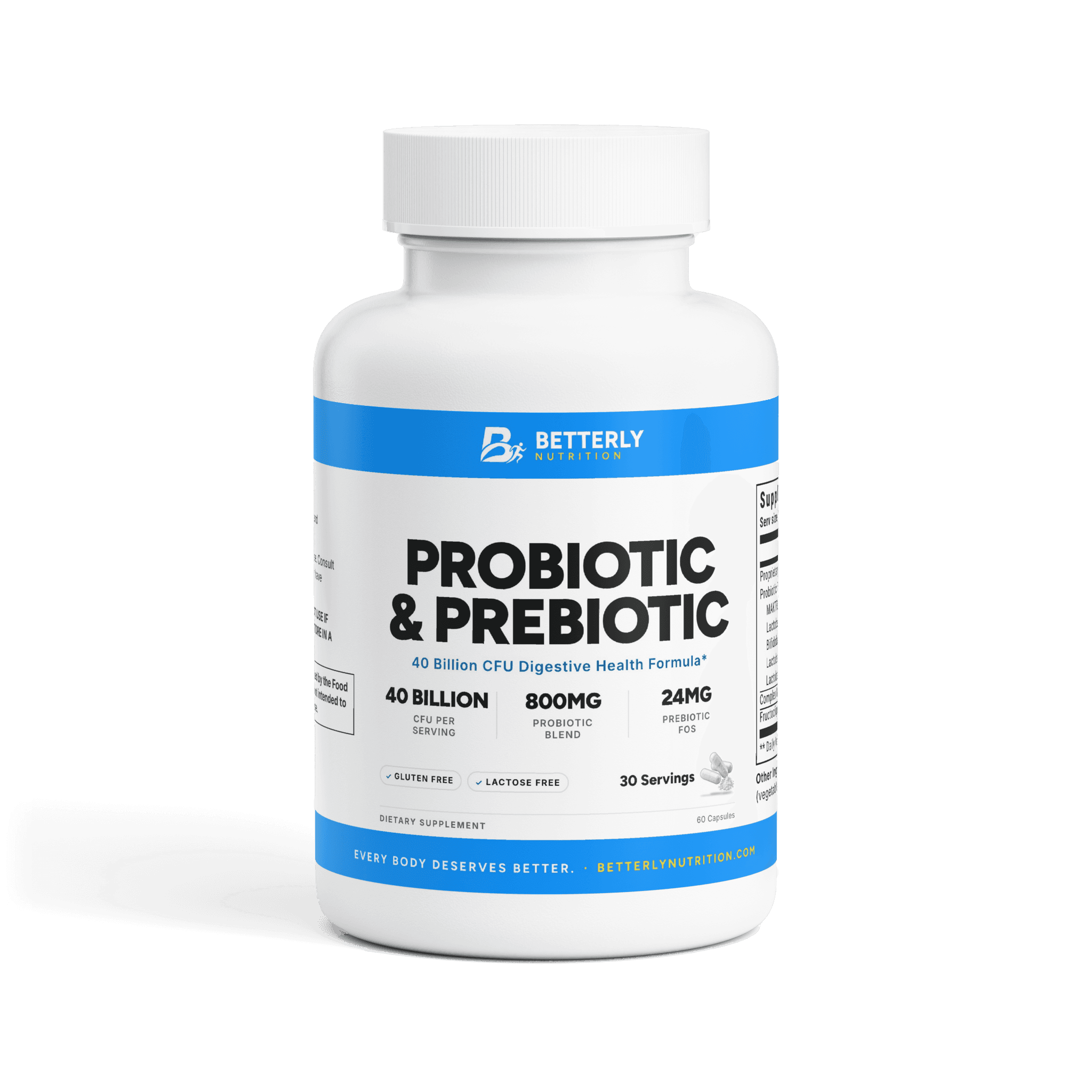
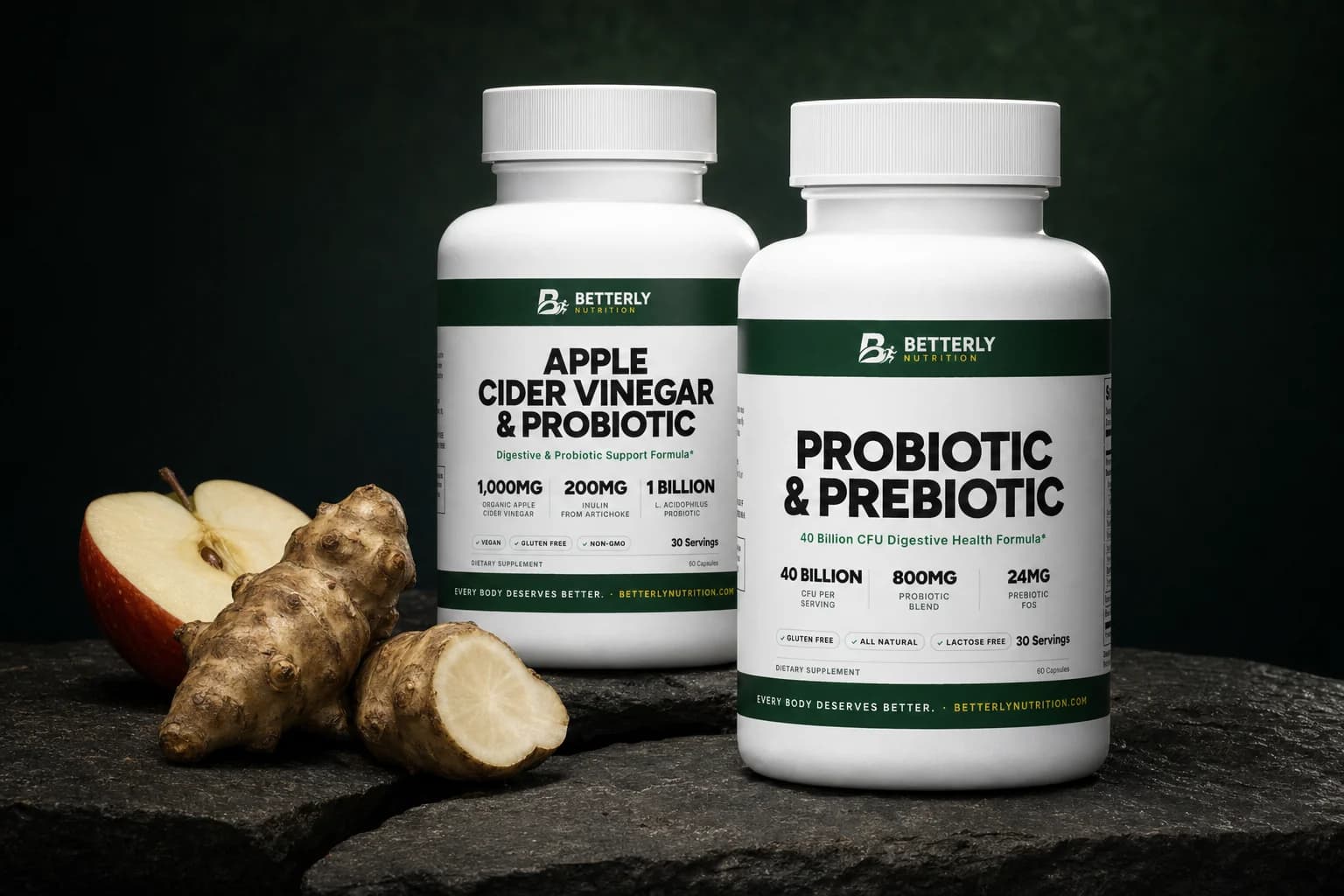
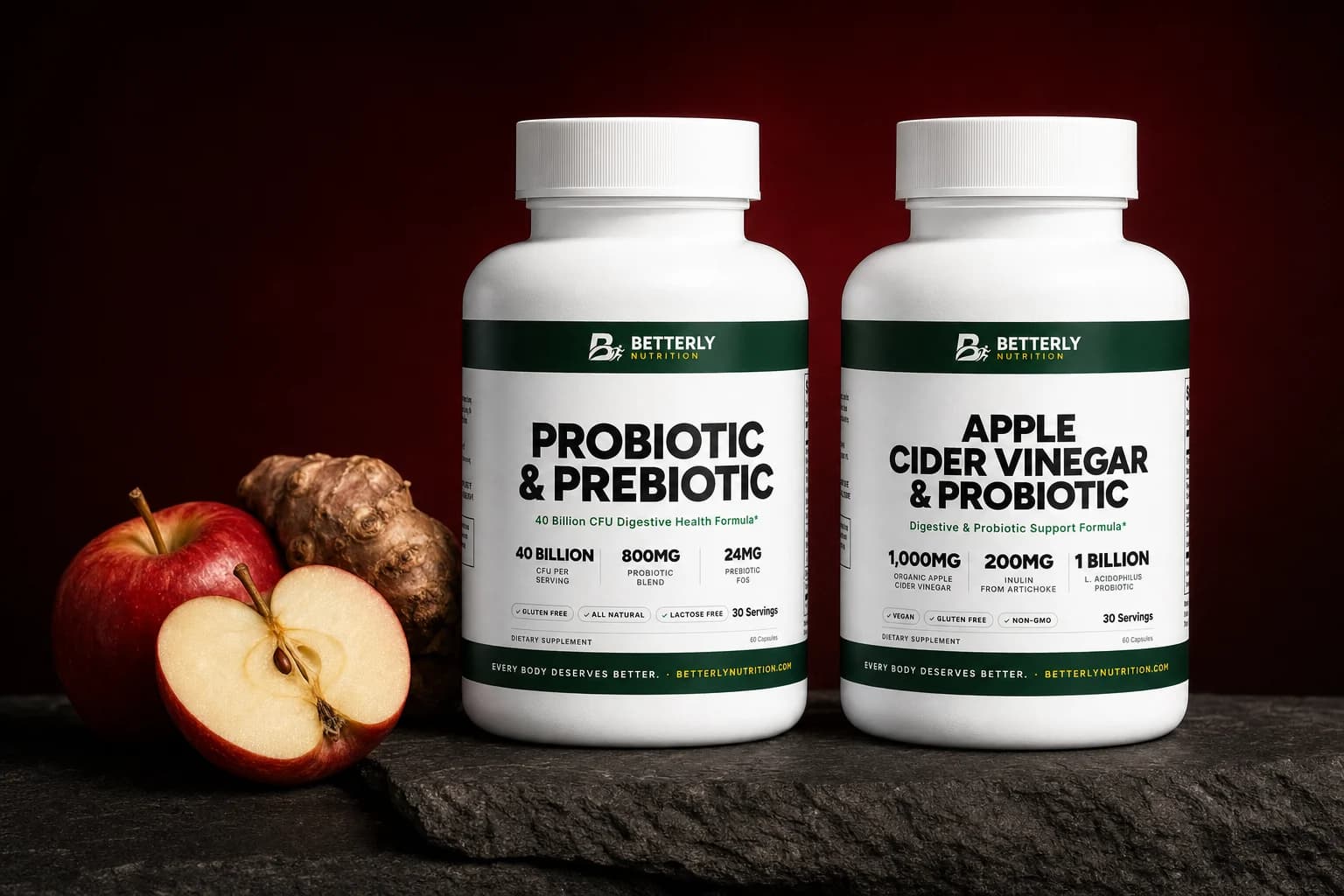
Of those 18, one shows up on a Betterly label. Our Probiotic & Prebiotic Capsules print Bifidobacterium Lactis (Bl-04) in a proprietary blend beside three Lactobacillus strains.
NCCIH notes that one type of probiotic can act differently from another. A result for one kind of Lactobacillus, it adds, doesn't necessarily hold for another kind or for any Bifidobacterium. With 18 entries sharing the name B. lactis, the printed code is the only part of a label that tells them apart.
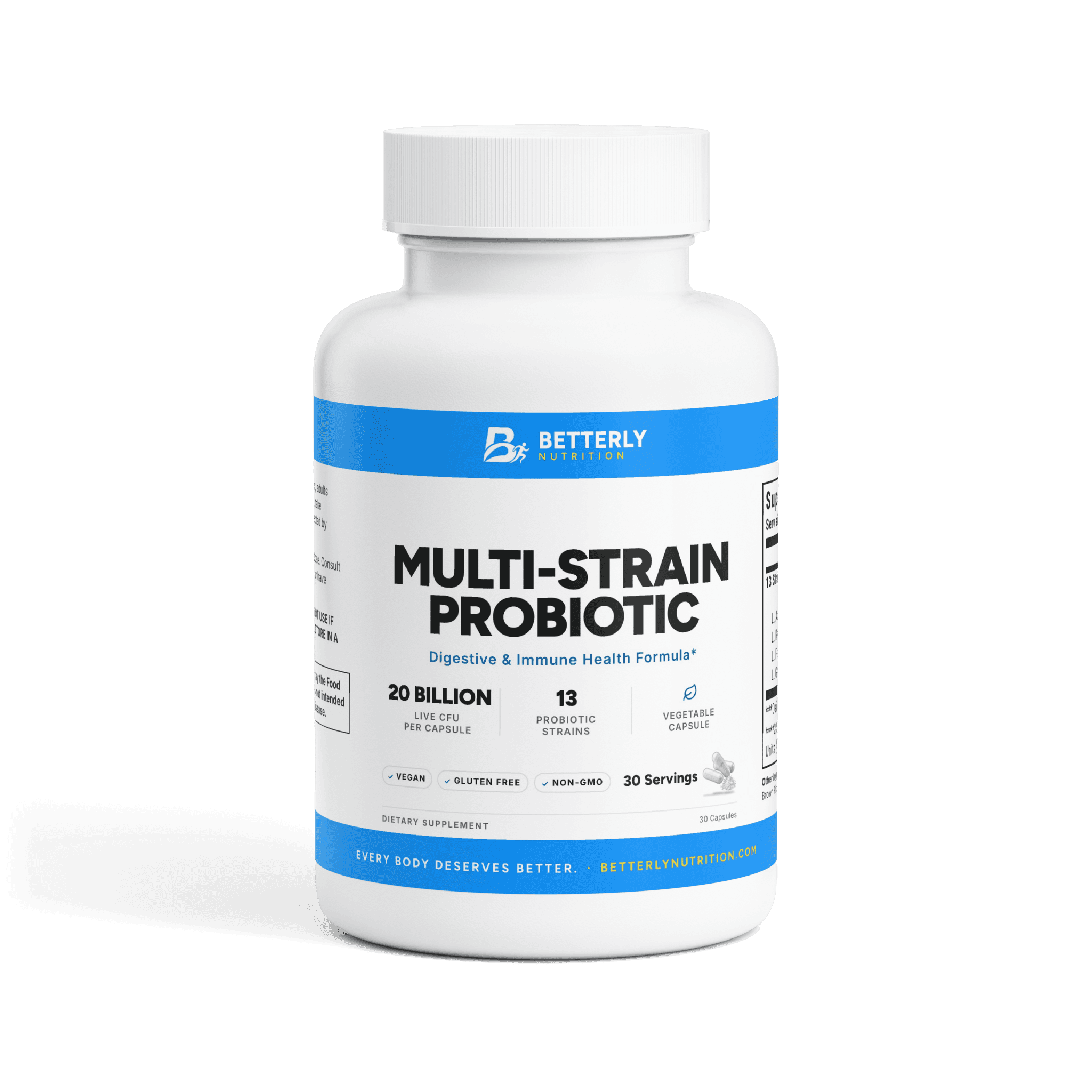
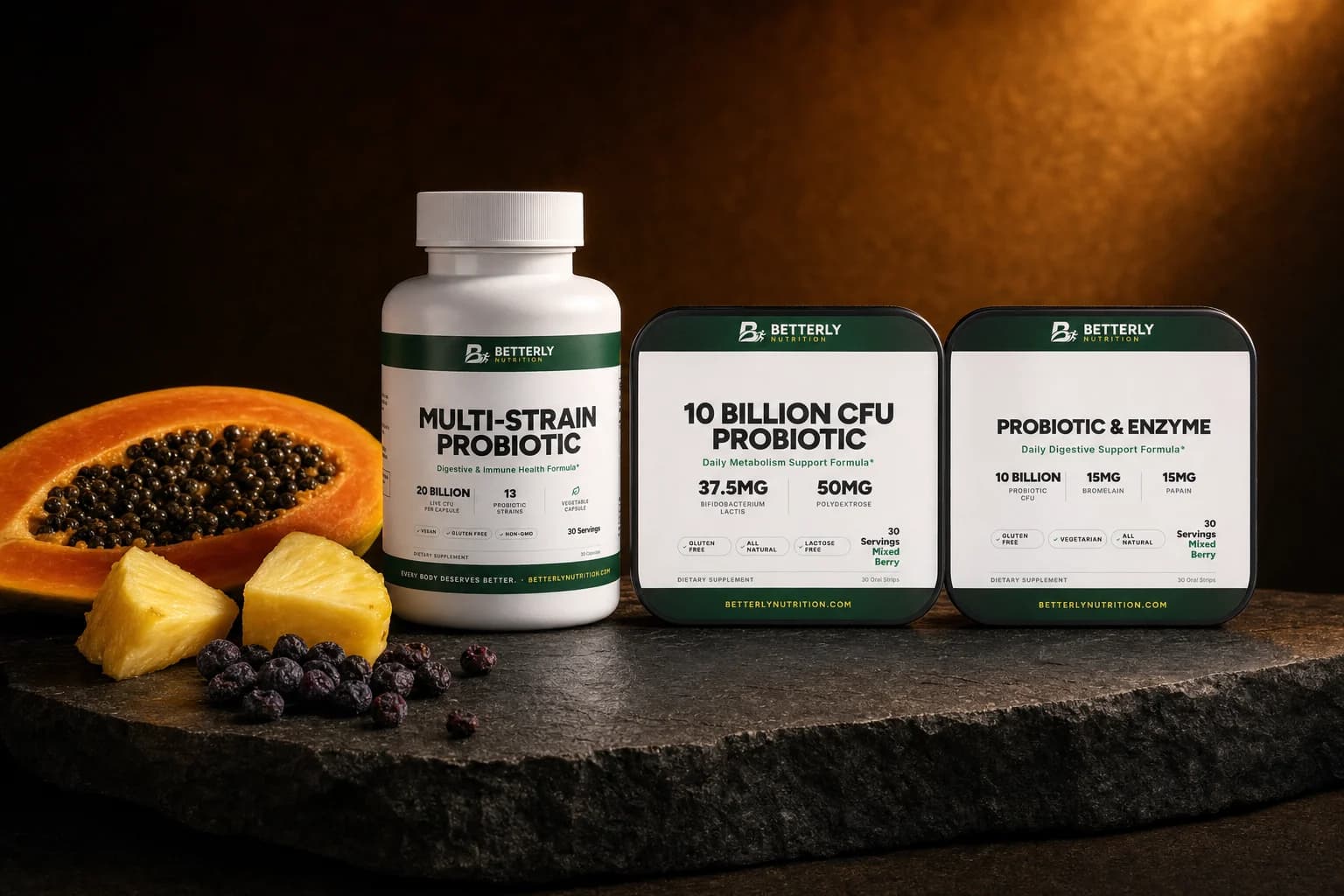
Our Multi-Strain Probiotic Capsules sit at the other end. Their panel lists B. Lactis as one of 13 names, with no strain codes for any of them.
How do you read a B. lactis entry on a Supplement Facts panel?
You read a B. lactis entry by checking how far down the name ladder it goes, because only a printed strain code ties a product to research on one strain.
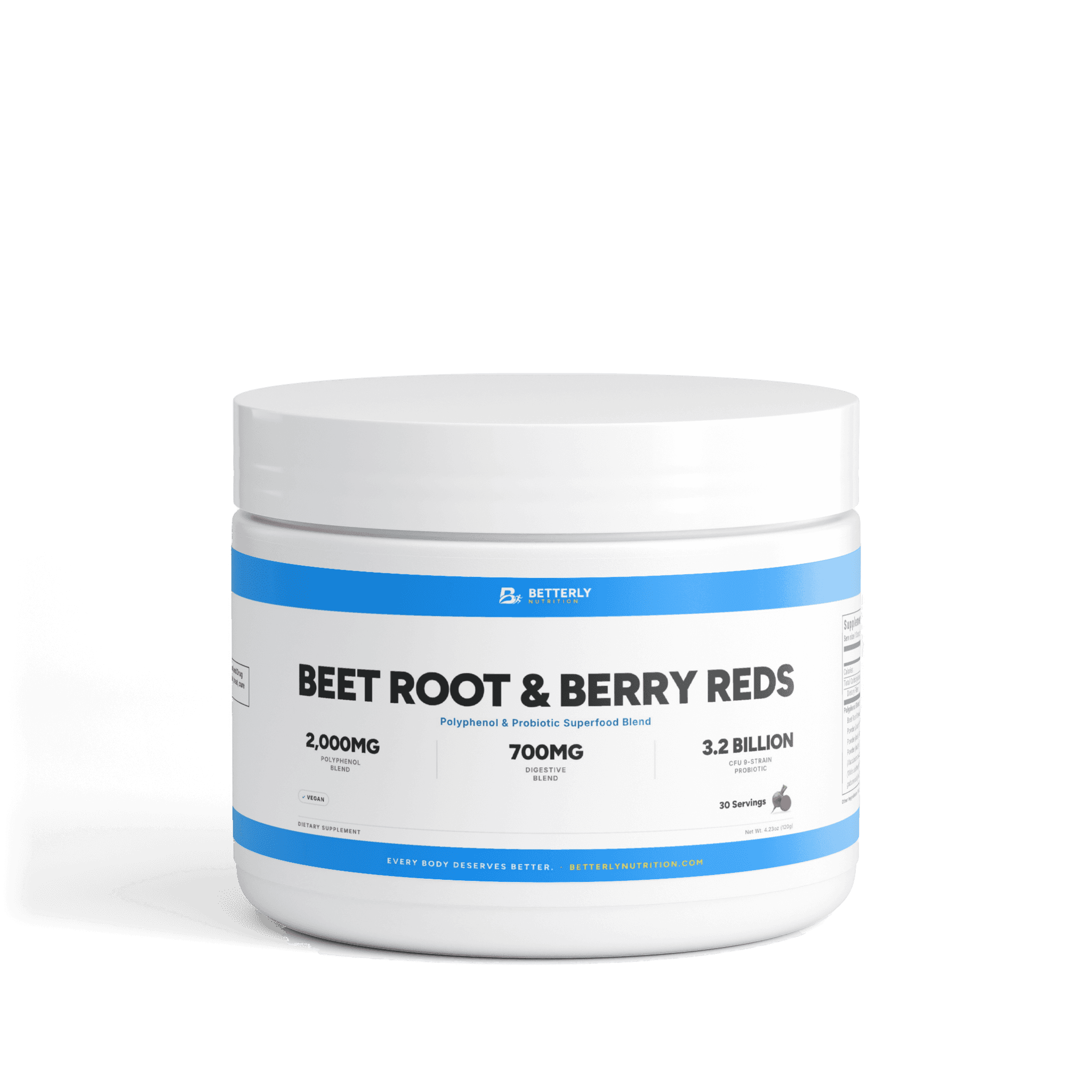
Four of our products list B. lactis in some form, including the nine-name probiotic blend in our Beet Root & Berry Reds Powder.
| What the panel prints | What you can pin down | What stays unknown | Our example |
|---|---|---|---|
| Name plus strain code | The exact strain to look up | Its share of any blend count | Probiotic & Prebiotic Capsules (Bl-04) |
| B. lactis name, no code | The subspecies | Which of the 18 strain entries | Strips, Multi-Strain capsules, reds powder |
| "B. Animalis," no subspecies | The species only | Subspecies lactis or animalis | Multi-Strain Probiotic Capsules |
| A CFU count on the B. lactis row alone | How much B. lactis a serving holds | The strain, unless coded | 10 Billion CFU Probiotic Strips |
The strongest B. lactis label would sit in the first and last rows at once: a code plus its own count. None of our four panels manages that. The capsule gets you the code, and the strip gets you the count.
From our shop: 10 Billion CFU Probiotic Strips — the panel's whole count belongs to Bifidobacterium lactis, 37.5mg (10 Billion CFU) per 1 Oral Strip (180 mg) serving, with no strain code printed.
Is Bifidobacterium lactis a good probiotic to look for on its own?
A Bifidobacterium lactis probiotic is a reasonable choice, but neither ODS nor NCCIH ranks B. lactis above other microbes, or a single-microbe product above a blend.
What a single-microbe format does change is the math. On our strip, B. lactis is the only organism on the panel, so all 10 Billion CFU belong to it. At 37.5mg in a 180 mg strip, it makes up about a fifth of the strip's weight. The only other ingredient with a listed amount is polydextrose, at 50 mg.
Our blends divide one count among several microbes, and their panels never show B. lactis's portion:
- Probiotic & Prebiotic Capsules: 800 mg (40 Billion CFU) per 2 Capsules, shared by four coded strains and MAKTREK®.
- Multi-Strain Probiotic Capsules: 317 mg (20 Billion CFU at the time of manufacture) per 1 Capsule, shared by 13 names.
- Beet Root & Berry Reds Powder: 100 mg (3.2 Billion CFU at the time of manufacture) per 1 Scoop (4 g), shared by nine names.
A blend isn't worse for that. It answers a different question: how much probiotic in total, not how much of one microbe. If B. lactis in particular is why you're shopping, look for a label that gives it a row and a count of its own.
Bifidobacterium lactis vs longum: how are they related?
Bifidobacterium lactis and B. longum share a genus but not a species, since B. lactis falls under B. animalis while B. longum is a separate species.
B. longum has a bigger family of its own. NCBI's B. longum record lists five subspecies: infantis, iuvenis, longum, suillum and suis. So if you've seen B. infantis on a label, it's B. longum subsp. infantis, a relative of B. lactis and not a kind of it.
The two names also turn up separately in NCCIH's research summary. B. lactis appears in the 2014 adult review above, while B. longum was the type most often tested in a 2017 evaluation of similar studies in older adults. Those were different groups, so neither finding ranks one microbe over the other.
On our shelf, the Multi-Strain capsule and the reds powder list both B. Lactis and B. Longum. The strip and the Probiotic & Prebiotic capsule list B. lactis without B. longum.
People also weigh B. lactis against Lactobacillus acidophilus, which belongs to a different genus altogether. Our acidophilus strain guide covers that side, including La-14, the strain that shares a blend with Bl-04.
How do you take a Bifidobacterium lactis supplement?
You take a Bifidobacterium lactis supplement as its own label directs, and our strip's suggested use is to place 1 oral strip on the tongue daily and let it dissolve.
The strip label mentions neither water nor a time of day, and it asks you to store the pack in a cool, dry place. Each strip tastes of Mixed Berry, with monk fruit extract, erythritol and steviol glycoside among its other ingredients.
Our two B. lactis capsules read differently. The Probiotic & Prebiotic label says to take two capsules once daily, and for best results, one during the day and one in the evening. Multi-Strain's directions are one capsule daily for adults, ideally with 6-8 oz (177-237ml) of water.
All of these labels carry the line "Do not exceed recommended dose," and each is written as if it's your only probiotic. Taking the strip on top of the Multi-Strain capsule or the reds powder would give you B. lactis from two places, so check with a healthcare provider before combining them.
Wondering whether morning or evening suits you better? Our morning-or-night probiotic guide compares our labels' directions.
From our shop: Probiotic & Prebiotic Capsules — the one Betterly label that prints a B. lactis strain code, Bl-04, inside an 800 mg (40 Billion CFU) blend per 2 Capsules serving, plus 24 mg of fructooligosaccharide.
When is a B. lactis supplement not worth buying?
A B. lactis supplement is optional, and ODS says there's no official probiotic advice written for healthy people.
We'd suggest skipping ours when:
- You're chasing one study's result. You'd need a label that prints that study's strain code, and our strip prints none.
- You already take a blend with B. lactis in it. Our Multi-Strain capsule and reds powder both list it, so a strip would add more of the same subspecies rather than a new microbe.
- You want it to replace a checkup. NCCIH warns against letting any probiotic push back a visit to your health care provider about a health problem.
If you'd still like to compare options, our gut health aisle lists the strip and both capsules together.
Who should ask a healthcare provider before trying B. lactis?
Ask a healthcare provider before trying B. lactis if you're pregnant or nursing, under 18, on prescription medicine, facing surgery or managing a medical condition.
Four of those come from our packaging, where the strip, both capsules and the reds powder share one caution: "Consult a physician if pregnant, nursing, under 18, or have a medical condition."
The federal sources add higher-risk groups. According to ODS, probiotics might cause problems such as bacterial infections in people who are already seriously ill or who have weak immune systems. Babies born early are the other group it singles out, citing FDA reports of infections and even life-threatening illness in them. Any question about B. lactis for a baby goes to a pediatrician.
NCCIH raises a quality point: there are reports of probiotic products holding microbes that weren't on the label. A printed strain code can't rule that out.
FAQ: Bifidobacterium lactis
Is B. lactis the same as Bifidobacterium animalis?
B. lactis is one of two subspecies of Bifidobacterium animalis, so every B. lactis is a B. animalis, but not every B. animalis is B. lactis. The other subspecies is B. animalis subsp. animalis. Our Multi-Strain Probiotic Capsules list "B. Lactis" and "B. Animalis" as separate names, and the panel doesn't say which subspecies the second one is. We won't guess, but if that detail matters to you, you can contact us.
Can you take B. lactis every day?
Yes, all four of our labels that list B. lactis are written for daily use, and the strip's suggested use is 1 oral strip daily. A pack holds 30 strips, so it lasts 30 days at that pace. No label sets an end date. How long to keep going is a question ODS sends to your health care provider, along with which probiotic to choose and what dose to take.
What are the side effects of B. lactis?
B. lactis side effects aren't well measured. NCCIH says few studies have examined probiotic safety closely, which leaves the frequency and severity of side effects unclear. ODS's list for healthy people is short: probiotics may cause gas, and they rarely cause infections or other health problems. People who are seriously ill or have weak immune systems face more risk.
Which foods contain Bifidobacterium lactis?
Bifidobacterium lactis has a food origin more than a food list: the 1997 paper that first named it describes a microbe isolated from fermented milk. Beyond that, whether a yogurt, kefir or other food contains it depends on the brand. Per ODS, a label on a probiotic food should name the genus, species and strain, so the culture list is where B. lactis, B. animalis subsp. lactis or a code like BB-12 would appear.
Sources
- Probiotics: Fact Sheet for Consumers (NIH Office of Dietary Supplements)
- Probiotics: Usefulness and Safety (NCCIH)
- Taxonomy Browser: Bifidobacterium animalis subsp. lactis, name and history (NCBI, National Library of Medicine)
- Taxonomy Browser: Bifidobacterium animalis subsp. lactis, strain entries (NCBI, National Library of Medicine)
- Taxonomy Browser: Bifidobacterium animalis (NCBI, National Library of Medicine)
- Taxonomy Browser: Bifidobacterium longum (NCBI, National Library of Medicine)
If this left you looking for somewhere to start, read 10 billion CFU bifidobacterium lactis strips — its amounts per serving are listed on the page. For the practical questions this raises, how dosing, sourcing and subscriptions work is answered in one place.