On this page
- Key takeaways
- What is Lactobacillus acidophilus?
- What are the benefits of L. acidophilus for gut health?
- Why do Lactobacillus acidophilus benefits depend on the strain?
- Which Betterly products contain L. acidophilus?
- Acidophilus pills, powder or yogurt: which form fits you?
- How should you take an acidophilus capsule?
- What are the side effects of Lactobacillus acidophilus?
- When don't you need an acidophilus supplement?
- Who should check with a healthcare provider first?
- FAQ: Lactobacillus acidophilus
- Sources
The short answer: Lactobacillus acidophilus benefits depend on the strain, not just the species name on the bottle. L. acidophilus is an acid-tolerant bacterium that turns sugars into lactic acid, and it lives naturally in the human gut and mouth. As a supplement, people mostly take it for digestive support. The NIH says any benefit a probiotic has depends on both its exact strain and its count, and it notes there's no official advice for healthy people to take one.
Key takeaways
- Lactobacillus acidophilus is one species of lactic acid bacteria, and a strain code printed after its name, such as La-14 or LA85, pins down the exact organism.
- A bigger CFU number on its own doesn't mean a bigger benefit, because the NIH ties any benefit to the strain and the count together.
- Our four acidophilus capsules disclose very different amounts of detail, and only one of them gives a count for acidophilus by itself.
- For healthy people, ODS names gas as the usual complaint and calls infections rare, while ODS and NCCIH both single out weak immune systems and serious illness as higher-risk.
We sell six products that list L. acidophilus on their Supplement Facts panels, so we aren't neutral here. The four capsules make a useful test, since their labels run from a strain code with its own count to no count at all.
What is Lactobacillus acidophilus?
Lactobacillus acidophilus is a rod-shaped bacterium that ferments sugars into lactic acid, and it's one of the best-known probiotic species. The National Center for Complementary and Integrative Health (NCCIH) says the most common probiotic bacteria come from the Lactobacillus and Bifidobacterium groups.
In people, acidophilus lives naturally in the digestive tract and the mouth, and food makers add it to some yogurts and fermented milks as a live culture.
One naming detail trips people up. In 2020, scientists split the old Lactobacillus group into smaller genera, so several species got new first names. The NIH Office of Dietary Supplements (ODS) already uses the newer name Limosilactobacillus reuteri for a species many labels still call Lactobacillus reuteri. Acidophilus kept its genus name, so it's a Lactobacillus either way.
What are the benefits of L. acidophilus for gut health?
L. acidophilus is mainly taken to support digestive function. ODS says probiotics act mostly in the digestive tract, where they may help it work better.
That "may" matters. ODS defines probiotics as live microbes that offer a health benefit when you take enough of them. The same fact sheet warns that some probiotic supplements haven't been studied, so any effects they have may simply be unknown.
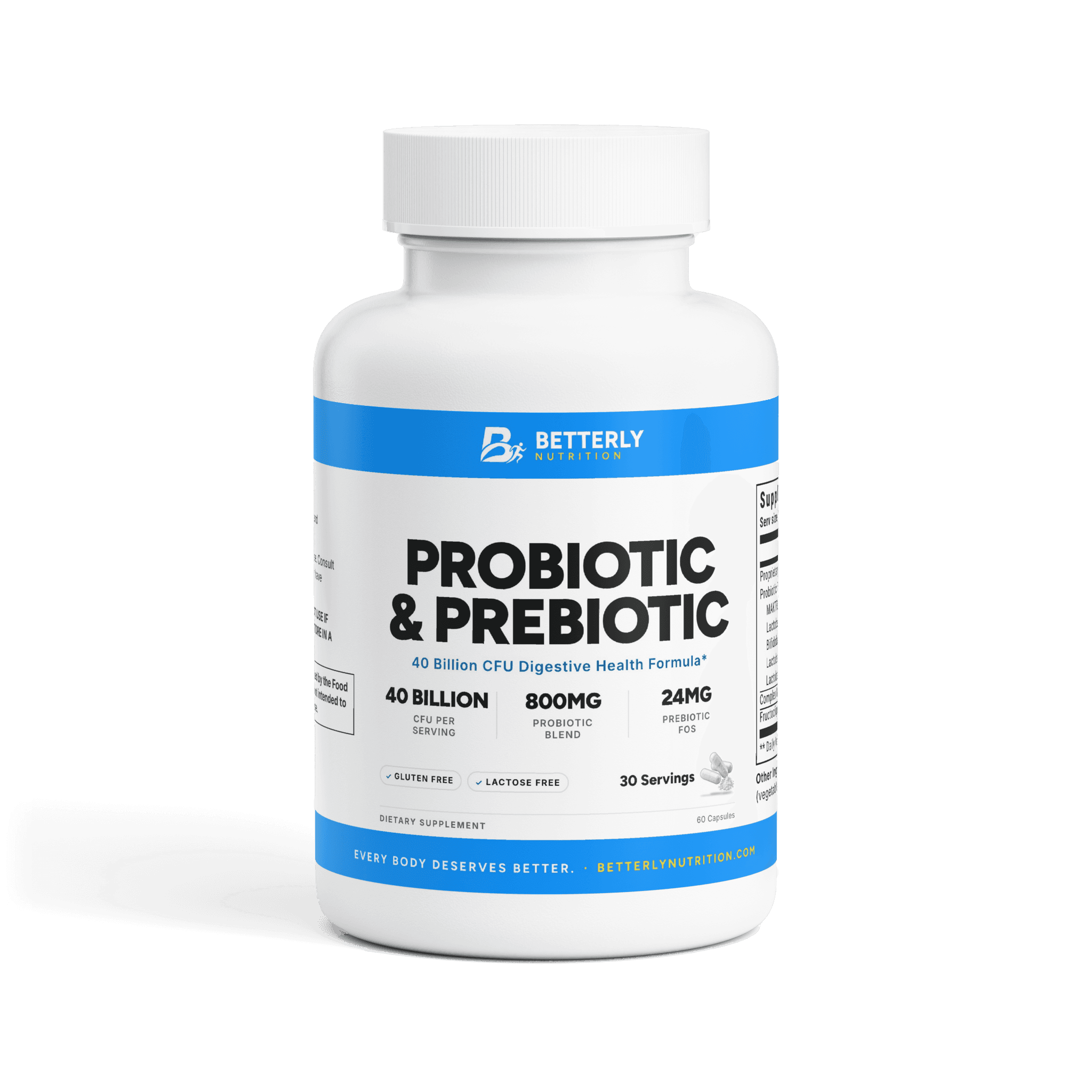
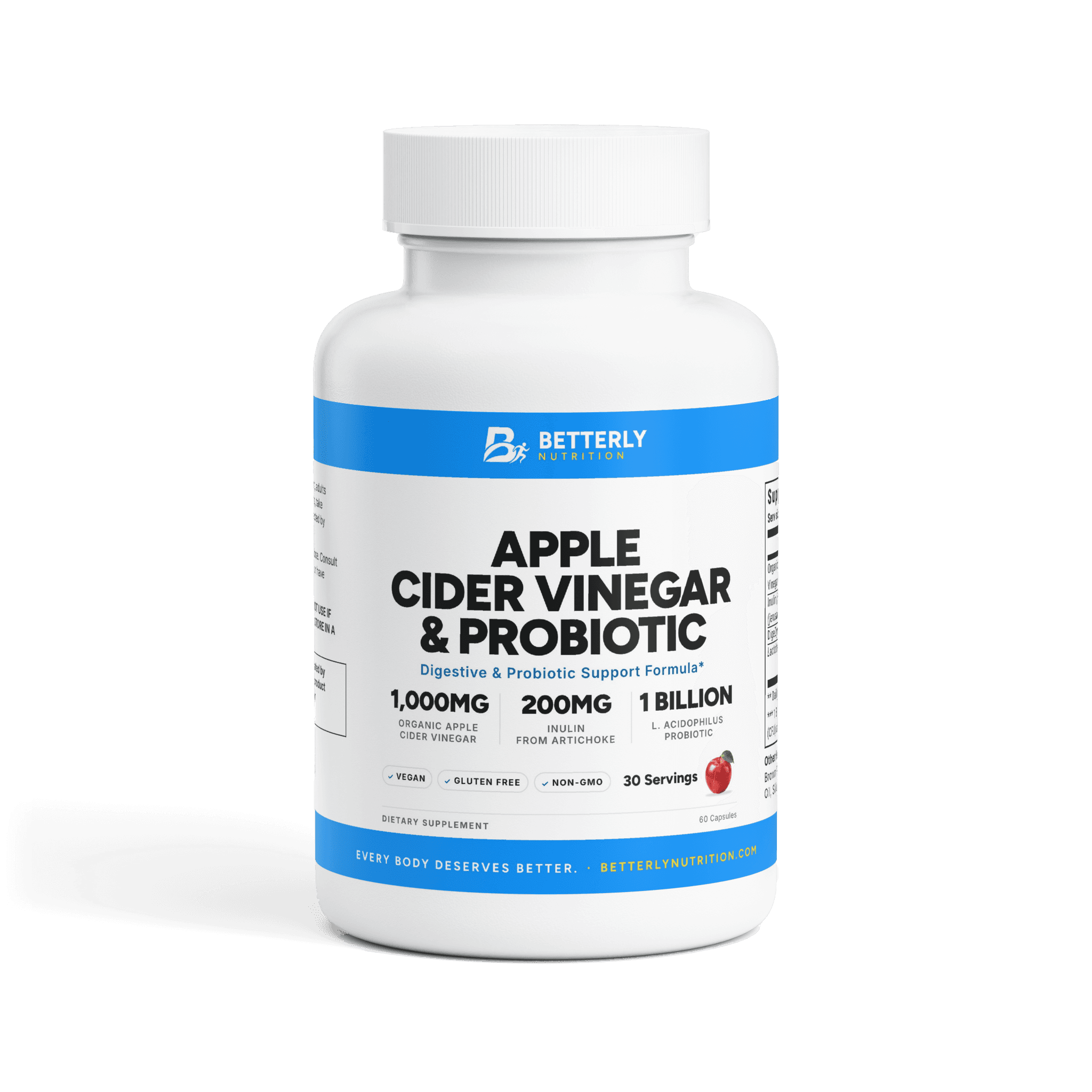
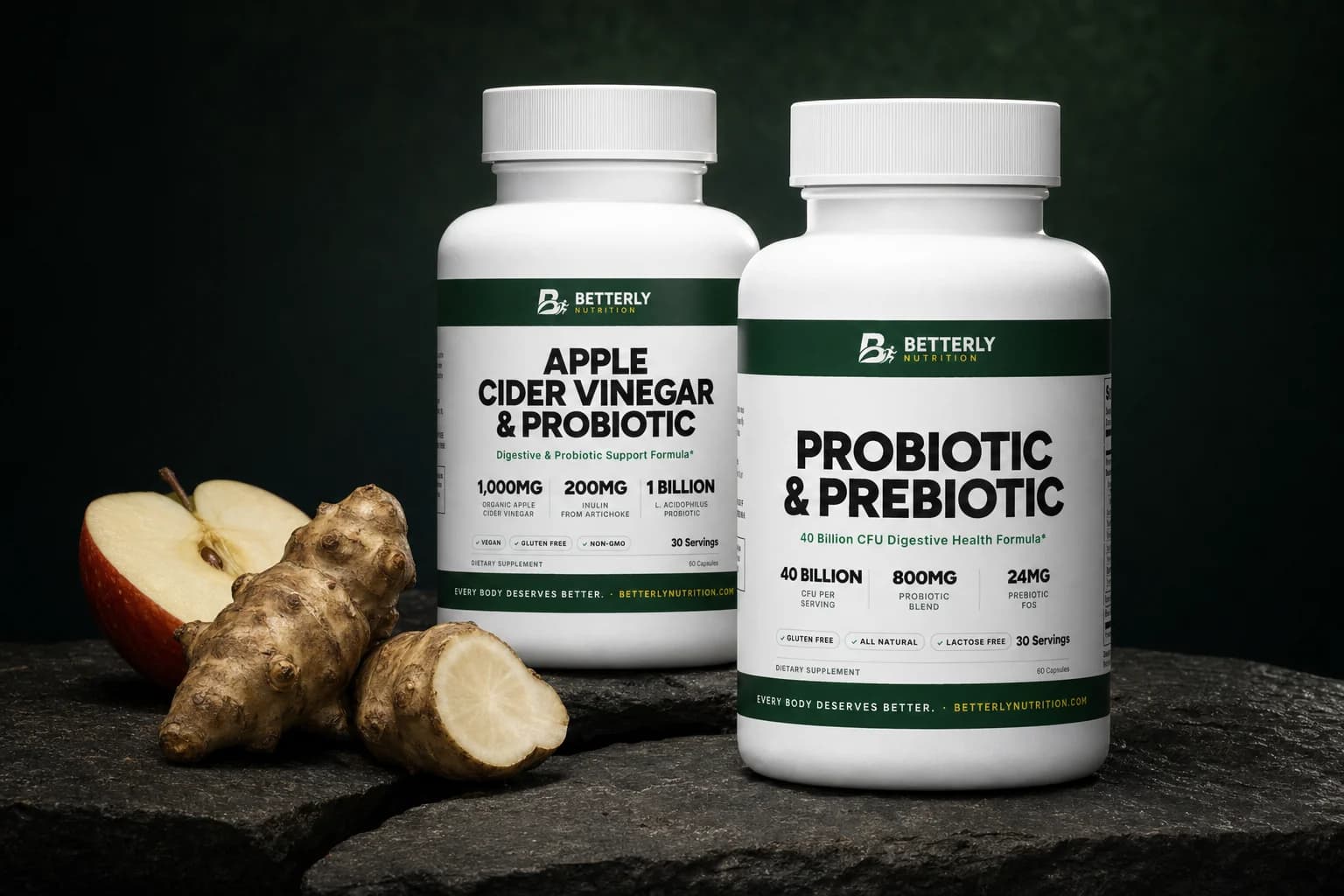
Our own labels keep the claim modest. The front of our Probiotic & Prebiotic Capsules calls it a "Digestive Health Formula." Our Apple Cider Vinegar & Probiotic Capsules say "Digestive & Probiotic Support Formula." Neither promises more than that.
Why do Lactobacillus acidophilus benefits depend on the strain?
Lactobacillus acidophilus benefits depend on the strain because each strain is a distinct line of bacteria, and a study's results belong to the strain it tested.
NCCIH makes the same point about the whole group. If one kind of Lactobacillus shows a benefit, NCCIH says, "that doesn't necessarily mean that another kind of Lactobacillus" would too. The same logic holds inside one species.
Our own shelf shows why this matters. The Probiotic & Prebiotic Capsules list Lactobacillus acidophilus (La-14). The Apple Cider Vinegar & Probiotic panel prints Lactobacillus acidophilus LA85 instead. Same species, two different strains. Research on La-14 tells you nothing certain about LA85, and the reverse holds too.
A strain code gives you something to look up. You, or a pharmacist, can search that exact code and see what's been studied. Without one, you're buying a species and hoping. For the other probiotic groups you'll meet on labels, see our broader guide to picking a probiotic.
Which Betterly products contain L. acidophilus?
Six Betterly products list L. acidophilus on their Supplement Facts panels: the four capsules compared below, one reds powder and one oral chewable tablet.
Here's what each capsule label prints, per its own serving size.
| Product (serving) | Acidophilus listed as | Count on the label | What's missing |
|---|---|---|---|
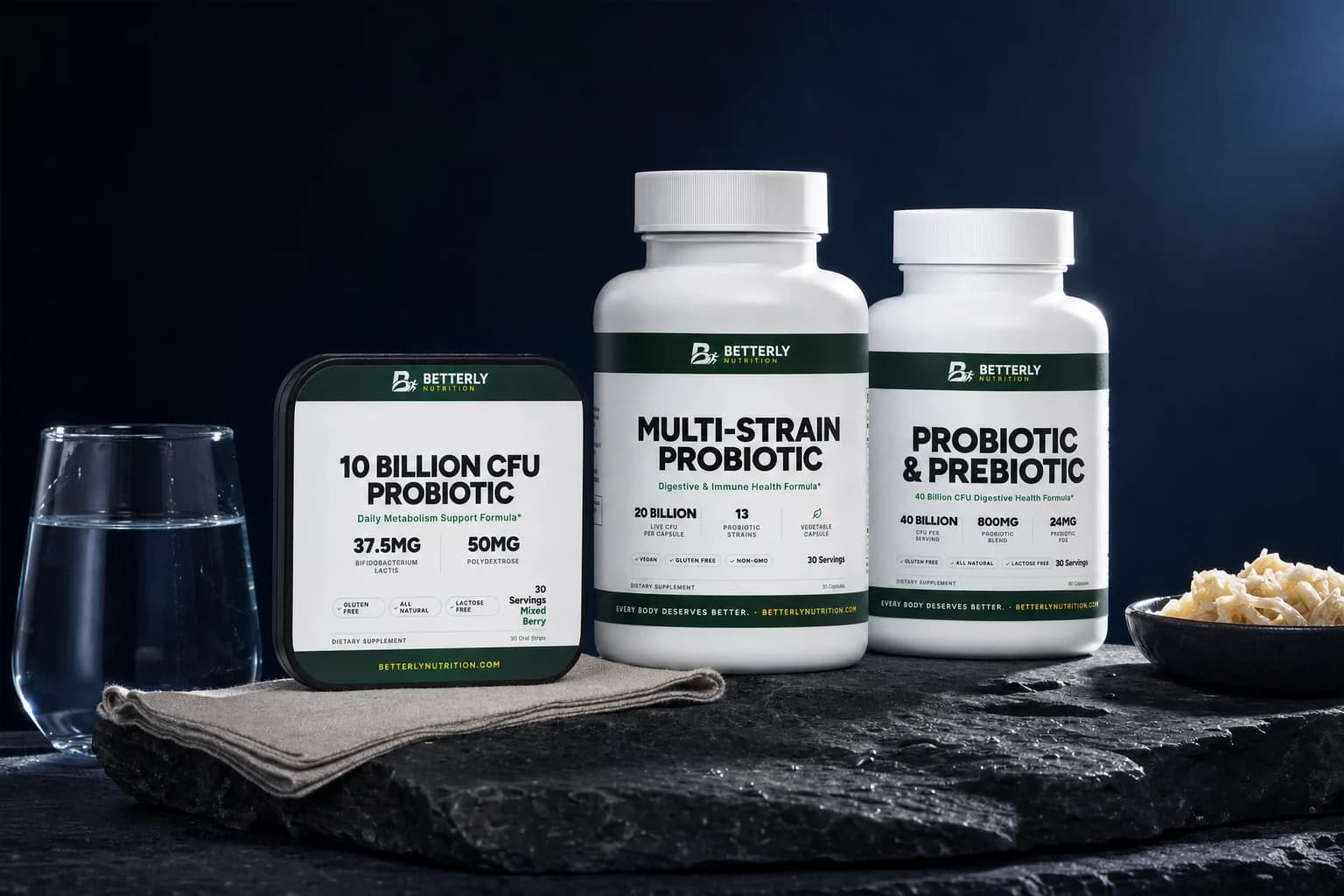
| Probiotic & Prebiotic Capsules (2 capsules) | La-14, one of 4 strains in an 800 mg blend | 40 Billion CFU for the whole blend | Acidophilus's share; when it was counted |
| Apple Cider Vinegar & Probiotic Capsules (2 capsules) | LA85, its own row at 10 mg | 1 Billion CFU at the time of manufacture | A count through expiry |
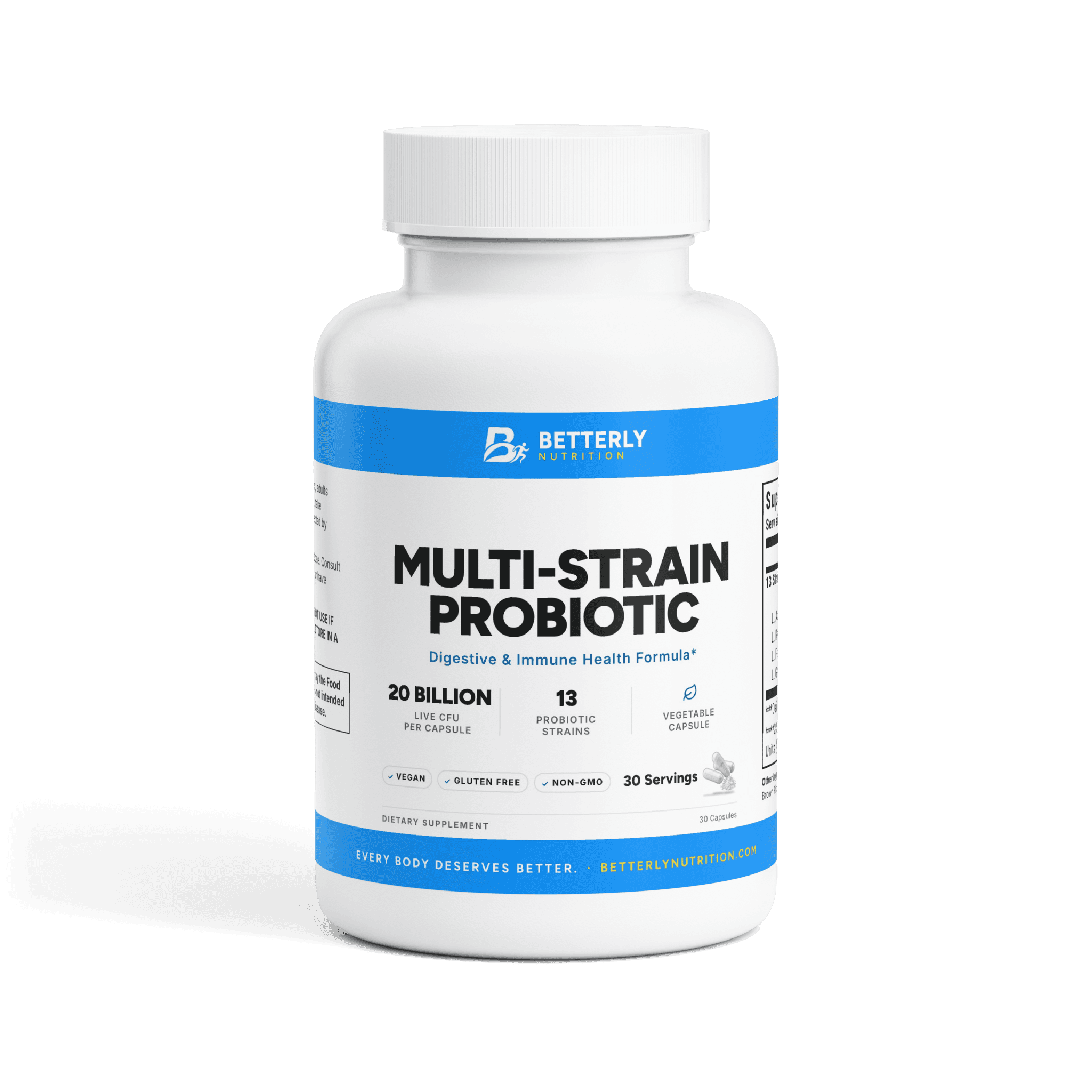
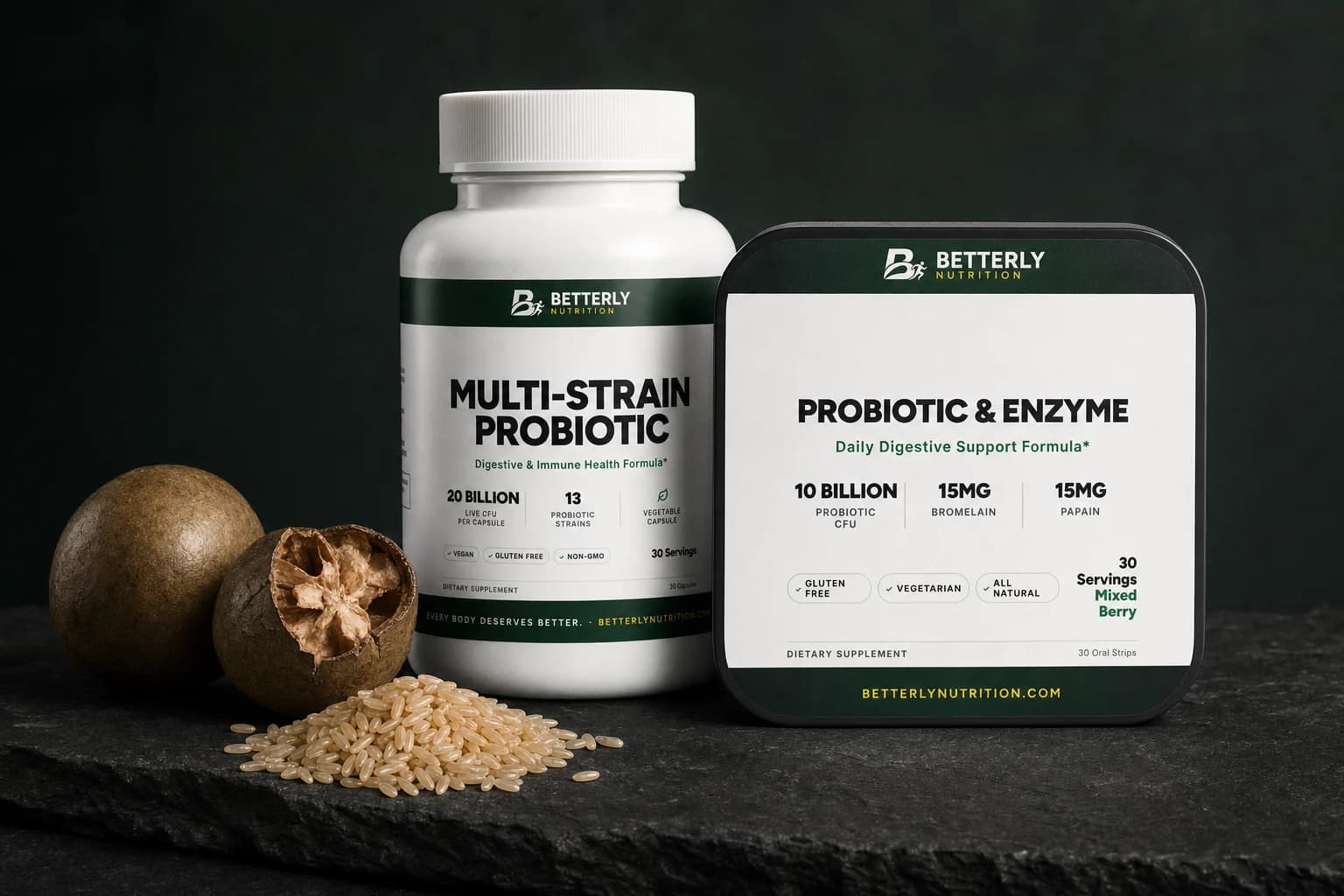
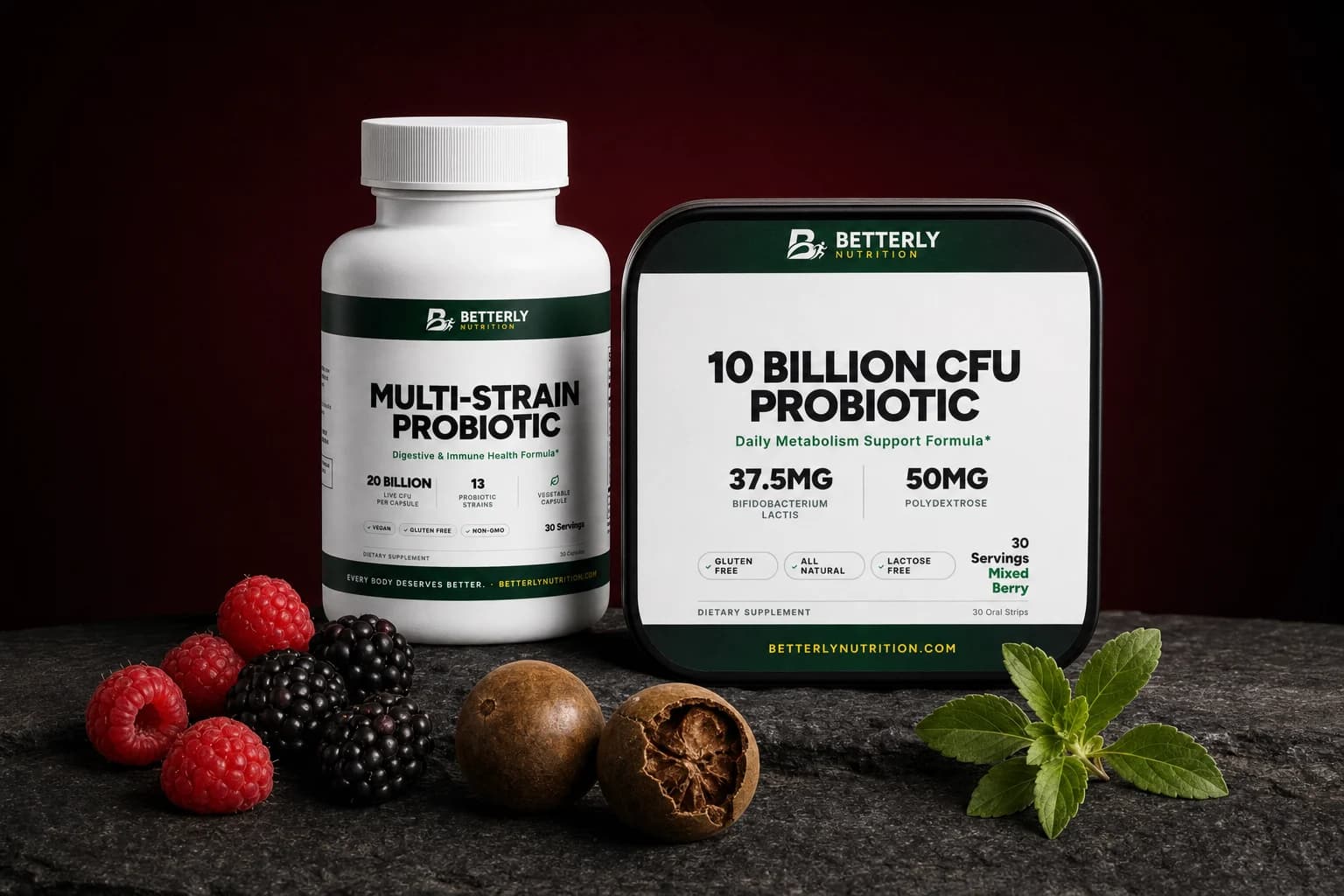
| Multi-Strain Probiotic Capsules (1 capsule) | Species only, 1 of 13 listed in a 317 mg blend | 20 Billion CFU for all 13, at the time of manufacture | Strain codes; acidophilus's share |
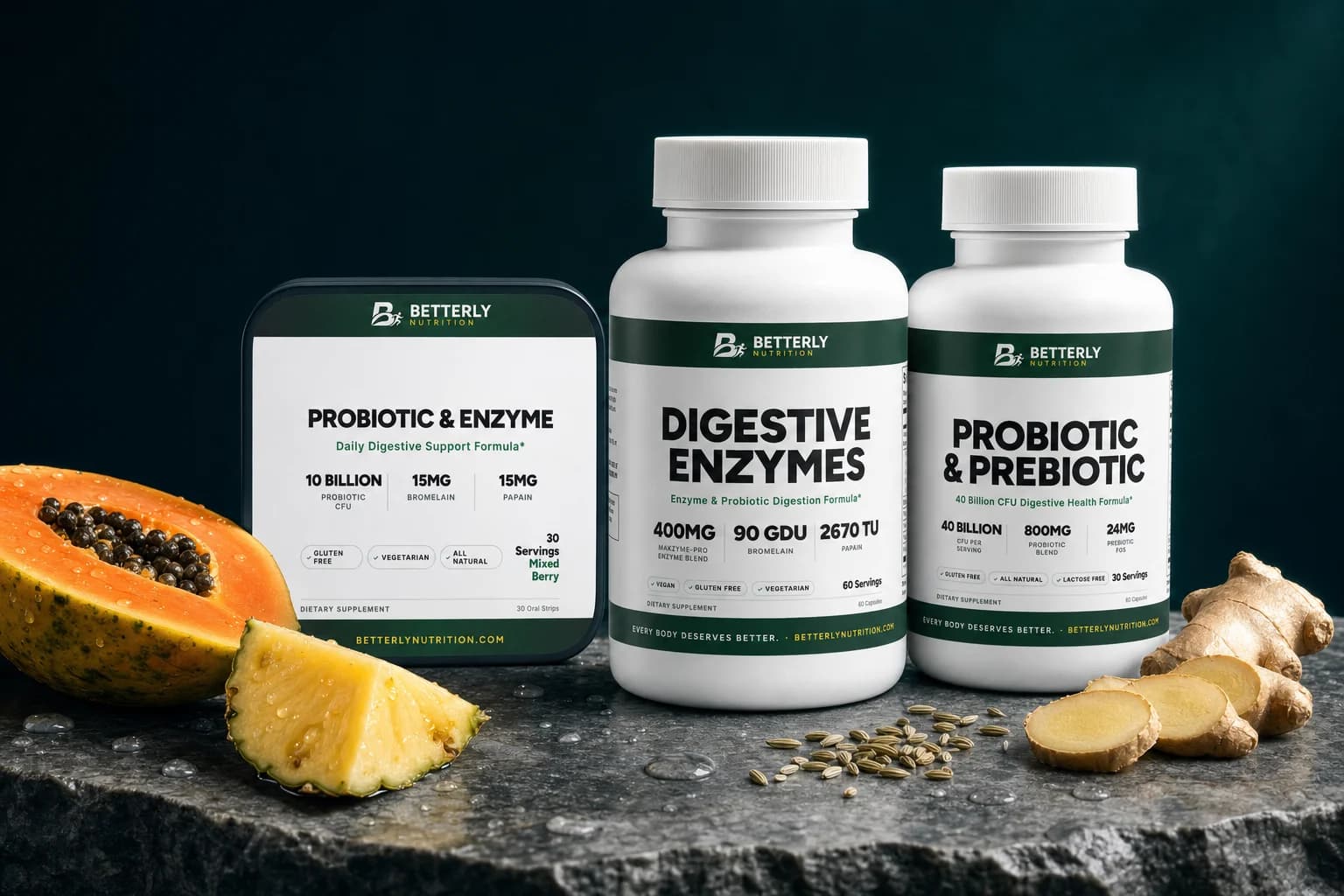
| Digestive Enzyme & Probiotic Capsules (1 veggie capsule) | Species only, inside an enzyme blend | None stated | Any count or strain code |
Among the four capsules, only the Apple Cider Vinegar & Probiotic label tells you how much acidophilus a serving holds. The other three give a total for a whole blend, or nothing, so acidophilus's share stays unknown.
The Multi-Strain and enzyme rows need a closer look. Multi-Strain Probiotic Capsules list 13 organisms by species name, from L. Acidophilus to B. Breve, with no strain codes. Digestive Enzyme & Probiotic Capsules list acidophilus with fungal protease, L. casei, L. plantarum and five more enzymes inside the Makzyme-Pro™ Enzyme Blend (2500 HUT/400mg). HUT is a unit of protease activity, not a weight. That product is enzyme-first, and its label gives no CFU at all.
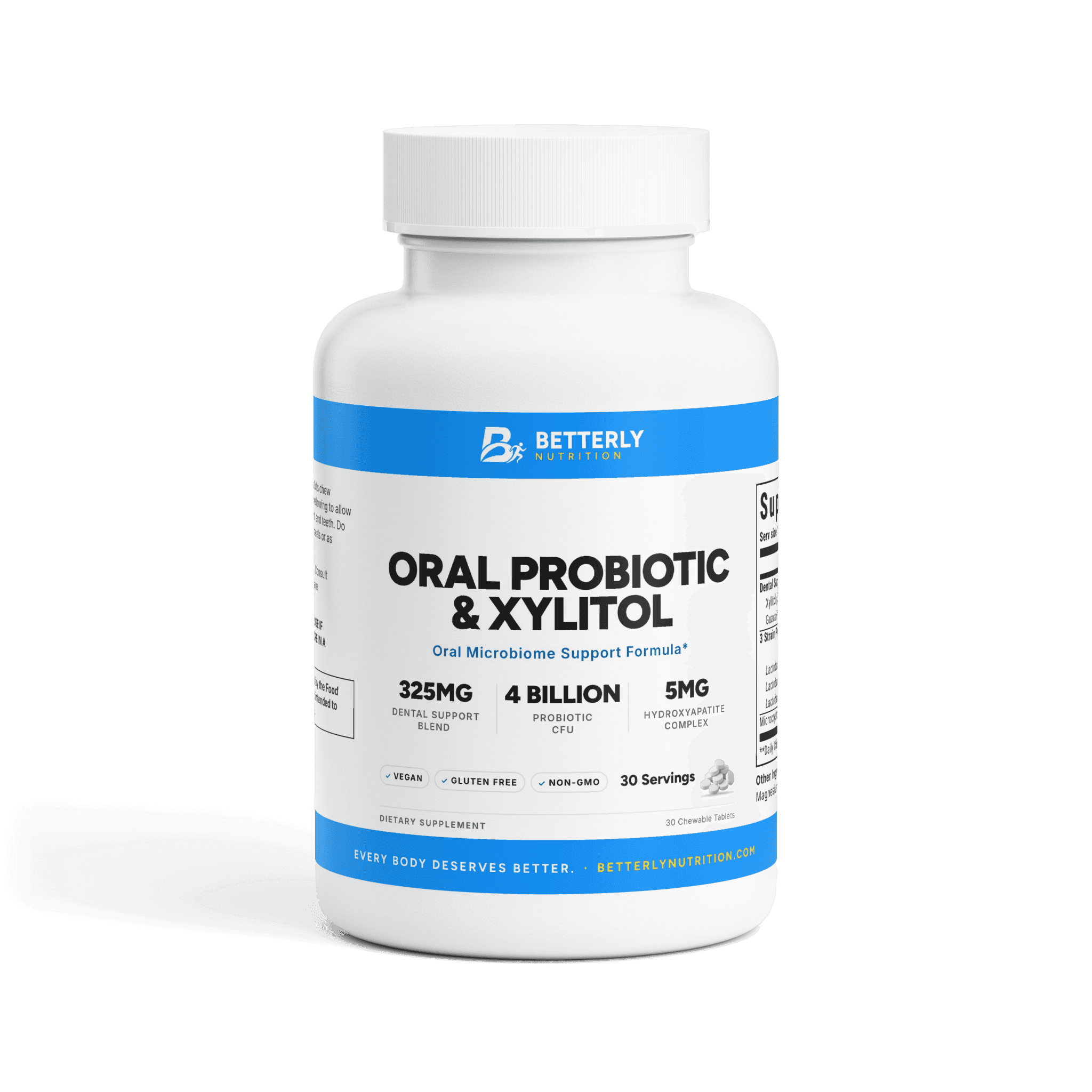
Our Oral Probiotic & Xylitol Chewables also list Lactobacillus acidophilus LA85, one of 3 strains in a 20 mg (4 Billion CFU) blend per 1 Chewable Tablet serving. Its label says to chew it thoroughly for the mouth and teeth, so we've left it out of the table.
How do you read an acidophilus row on a label?
You read an acidophilus row from left to right: the full name and strain code, then the weight, then the CFU count, then any footnote saying when that count was taken.
Take the row on our Apple Cider Vinegar & Probiotic panel. It reads Lactobacillus acidophilus LA85, then 10 mg (1 Billion CFU), and three asterisks after the count mark it as taken at the time of manufacture.
- The name. Genus, species and strain code, all in one line. LA85 is the part you'd search.
- The weight. The 10 mg is the weight, which federal rules require. A 2018 FDA draft guidance covers adding CFUs next to that weight, which FDA said would make products easier for shoppers to compare.
- The CFU count. Colony-forming units estimate the live microbes. ODS calls the CFU count a more accurate picture of active microbes than the weight.
- The footnote. Those asterisks lead to "at the time of manufacture." ODS notes that CFU counts can fall over time, and some experts prefer labels that count through the expiration date instead.
That fourth point is where storage comes in. Our guide on whether probiotics need the fridge walks through what each of our labels says about heat and moisture.
From our shop: Probiotic & Prebiotic Capsules — Lactobacillus acidophilus La-14 is one of four named strains in an 800 mg blend (40 Billion CFU) per 2-capsule serving, and the label adds 24 mg of fructooligosaccharide (FOS).
Acidophilus pills, powder or yogurt: which form fits you?
An acidophilus capsule can name its strain and print a count for a fixed serving, though only some labels do both, and foods vary even more.
The better form is the one whose label answers your questions.
Capsules. All four products in the table are capsules, each portioned into a set serving. Three of the four print a CFU count, and only two name a strain code.
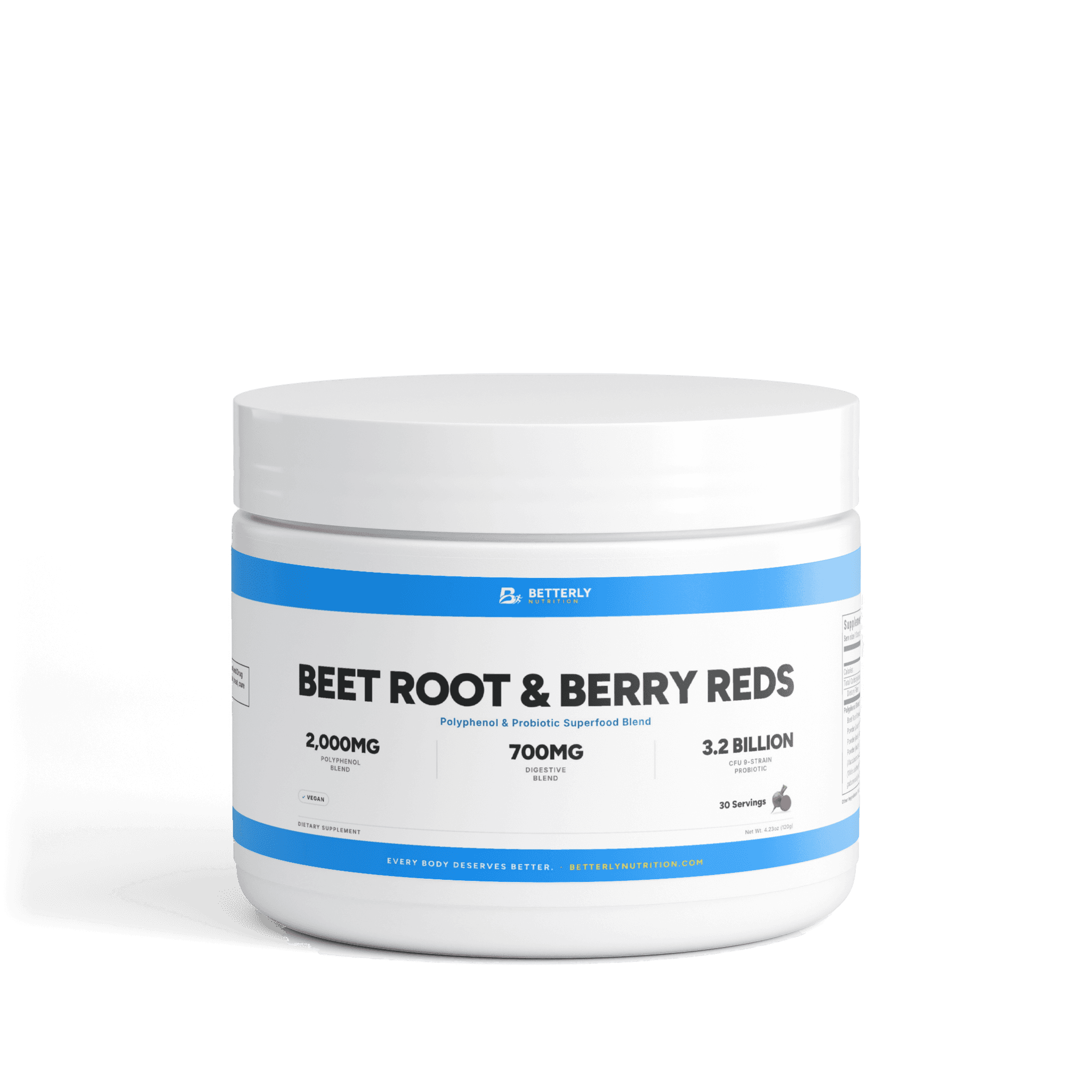
Powders. Acidophilus sometimes rides along in a drink mix. Our Beet Root & Berry Reds Powder lists L. Acidophilus among nine species in a 100 mg probiotic blend (3.2 Billion CFU at the time of manufacture) per 1 Scoop (4 g) serving. It's a fruit and root powder first, so we've kept it out of the capsule table.
Fermented foods. ODS lists yogurt, cheese, kimchi, sauerkraut, miso and more as foods made with microbes, but warns that not all of them contain probiotics with proven health benefits. Yogurt is made with microbes such as Lactobacillus bulgaricus and Streptococcus thermophilus, and some brands add acidophilus. ODS says a food with probiotics should list the genus, species and strain, so read the culture list.
How should you take an acidophilus capsule?
An acidophilus capsule's own label sets the dose, and our four call for one or two capsules a day, with different timing and water directions.
All four labels also say not to exceed the recommended dose.
The Apple Cider Vinegar & Probiotic label's suggested use is two capsules daily for adults. The Multi-Strain label's is one capsule daily for adults. Both add that "for best results" you take them with 6-8 oz (177-237ml) of water.
The Probiotic & Prebiotic label asks for two capsules once daily. It then adds a split: "For best results, take one (1) capsule during the day and one (1) capsule in the evening."
The Digestive Enzyme & Probiotic label is the only one tied to meals. Its suggested use is one capsule twice a day, and it adds that "for best results" you take it 20-30 min before a meal.
For morning-versus-night questions, our probiotic timing guide goes label by label.
From our shop: Apple Cider Vinegar & Probiotic Capsules — 10 mg of Lactobacillus acidophilus LA85 (1 Billion CFU at the time of manufacture) per 2-capsule serving, alongside 1,000 mg of organic apple cider vinegar powder.
What are the side effects of Lactobacillus acidophilus?
Side effects of Lactobacillus acidophilus products in healthy people are usually mild, and gas is the one ODS names for probiotics.
According to ODS, healthy people may notice gas from probiotics, while infections and other health problems are rare. ODS also points out that most probiotics have been used safely in foods and supplements for decades.
The picture changes for vulnerable people. ODS notes an FDA report that probiotics might cause infections, or even life-threatening illness, in preterm infants. The same fact sheet flags bacterial infections as a possible problem for anyone already seriously ill or with a weak immune system.
If a new acidophilus product doesn't agree with you, set it aside and mention it to your healthcare provider.
When don't you need an acidophilus supplement?
Most healthy people don't need an acidophilus supplement. ODS notes that no official recommendations cover probiotic use by people in good health.
Your breakfast may already include some. If you eat yogurt or fermented milk, check the culture list on the carton. When acidophilus is on it, you already get this species from food, so a capsule would add to that, not introduce it.
Maybe what you really want is a known amount. Among our capsules, only the Apple Cider Vinegar & Probiotic label gives one. The Probiotic & Prebiotic, Multi-Strain and enzyme labels don't, as the table shows.
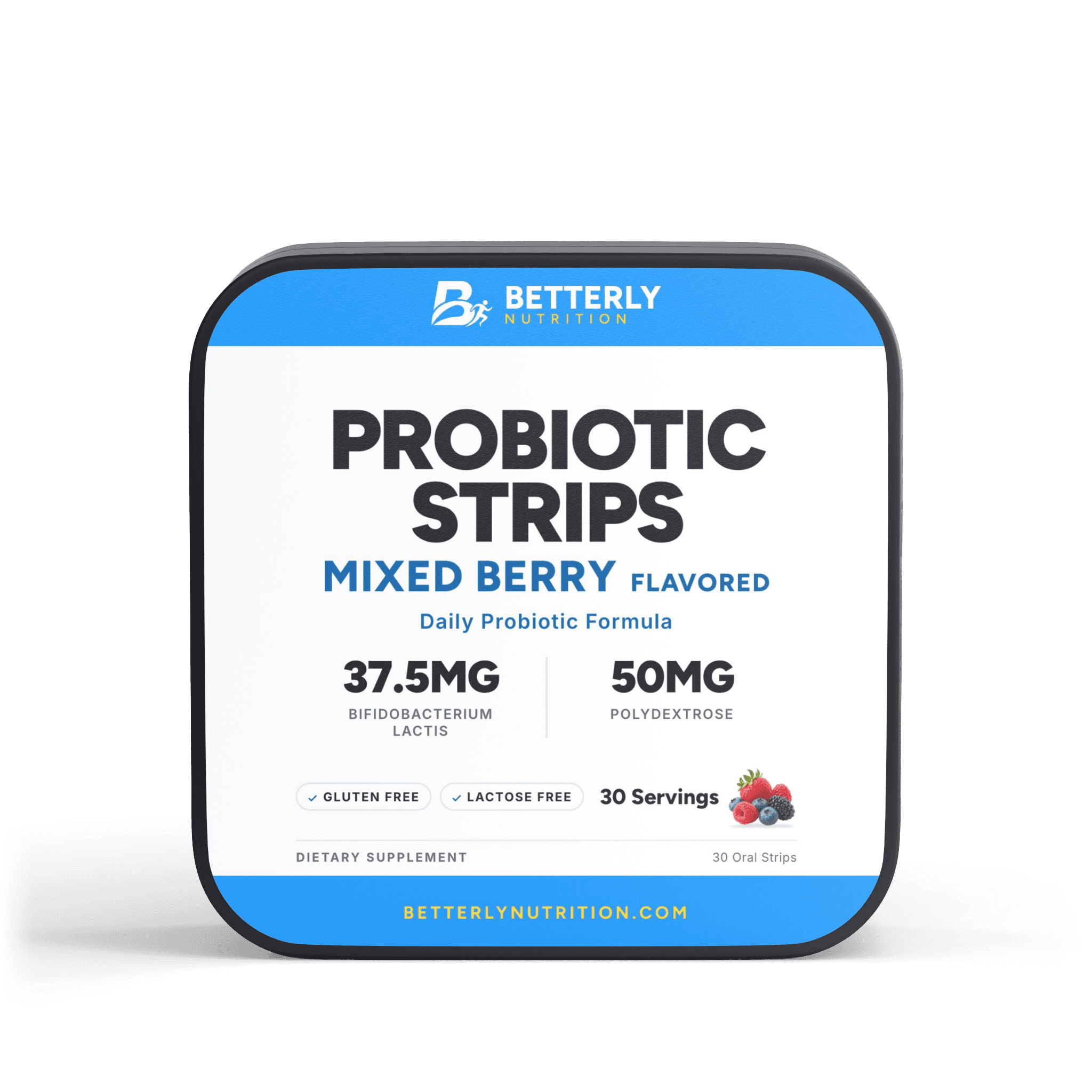
And if a specific symptom is what sent you searching, bring it to a healthcare provider. None of our labels makes a claim for it. All four capsules in the table, plus our probiotic strips, sit in our gut health shop if you'd like to compare them.
Who should check with a healthcare provider first?
Check with a healthcare provider before taking Lactobacillus acidophilus if you're pregnant, nursing, under 18, managing a medical condition, or taking prescription medicine.
The group with the most at stake is people who are seriously ill or whose immune systems are weakened. Both ODS and NCCIH describe probiotics as riskier for them, and ODS names infections among the possible problems. ODS also points to babies born early, so talk to a provider before giving any probiotic to a child.
Pregnancy, nursing, being under 18 and managing a medical condition come from our own packaging. Every one of the four acidophilus capsule labels asks those readers to consult a physician, in the same caution that warns against exceeding the recommended dose.
If you take a prescription medicine, a pharmacist can tell you whether a probiotic is a sensible addition. And if an operation is coming up, give your surgical team a full list of what you take, supplements included.
Sudden, severe or lasting digestive changes need a provider's look, not a new capsule.
FAQ: Lactobacillus acidophilus
Is Lactobacillus acidophilus the same as acidophilus?
Yes, "acidophilus" on a label means Lactobacillus acidophilus, with the genus name dropped. Lactobacillus is the larger group, and acidophilus is one species inside it. So acidophilus is a Lactobacillus, but not every Lactobacillus product contains acidophilus. Check the Supplement Facts panel for the full name and for a strain code after it, such as La-14 or LA85.
Is Lactobacillus acidophilus a good probiotic?
Lactobacillus acidophilus is one of the best-known probiotic species, but whether a given product suits you depends on its strain, its count and your reason for taking it. A label that names the strain and prints a CFU count gives you something to judge. No single acidophilus product is best for everyone.
Is Lactobacillus acidophilus dairy-free?
Whether an acidophilus product is dairy-free depends on the product, not the species. Three of our four acidophilus capsules carry a vegan claim. The Probiotic & Prebiotic label says lactose free, which isn't the same thing: a lactose-free product can still contain milk proteins, and that label makes no dairy-free or vegan claim. None of our four panels has an allergen line, so if you avoid all milk ingredients, check with us or a healthcare provider first.
When is the best time to take acidophilus?
There's no single best time to take acidophilus, because each of our four labels gives its own directions. The Probiotic & Prebiotic label suggests one capsule during the day and one in the evening. The Apple Cider Vinegar & Probiotic and Multi-Strain labels say to take them with 6-8 oz of water and name no time of day. The enzyme capsule's label ties it to meals instead, 20-30 min beforehand.
Can you take two products that contain acidophilus?
You can take two acidophilus products only after checking with a healthcare provider, because each label's serving was set for that product alone. Every one of our acidophilus labels says not to exceed the recommended dose. Pairing Multi-Strain Probiotic Capsules with Apple Cider Vinegar & Probiotic Capsules, for example, adds acidophilus from two sources, and neither label plans for that.
Sources
- Probiotics: Fact Sheet for Consumers (NIH Office of Dietary Supplements)
- Probiotics: Usefulness and Safety (NCCIH)
- FDA Issues Draft Guidance on the Labeling of Dietary Supplements Containing Live Microbials (U.S. Food and Drug Administration)
If this left you looking for somewhere to start, read lactobacillus acidophilus capsules with the La-14 strain — its amounts per serving are listed on the page. For the practical questions this raises, how dosing, sourcing and subscriptions work is answered in one place.