On this page
- Key takeaways
- Can you take prebiotics and probiotics together?
- What's the difference between a probiotic and a prebiotic?
- What is a synbiotic, and do our capsules count as one?
- Is 24 mg of FOS enough prebiotic to matter?
- Do prebiotics and probiotics work better together?
- How do you pair a probiotic with a real fiber source?
- When should you take prebiotics and probiotics?
- When don't you need a prebiotic or probiotic supplement?
- Who should check with a healthcare provider first?
- FAQ: Prebiotics and probiotics
- Sources
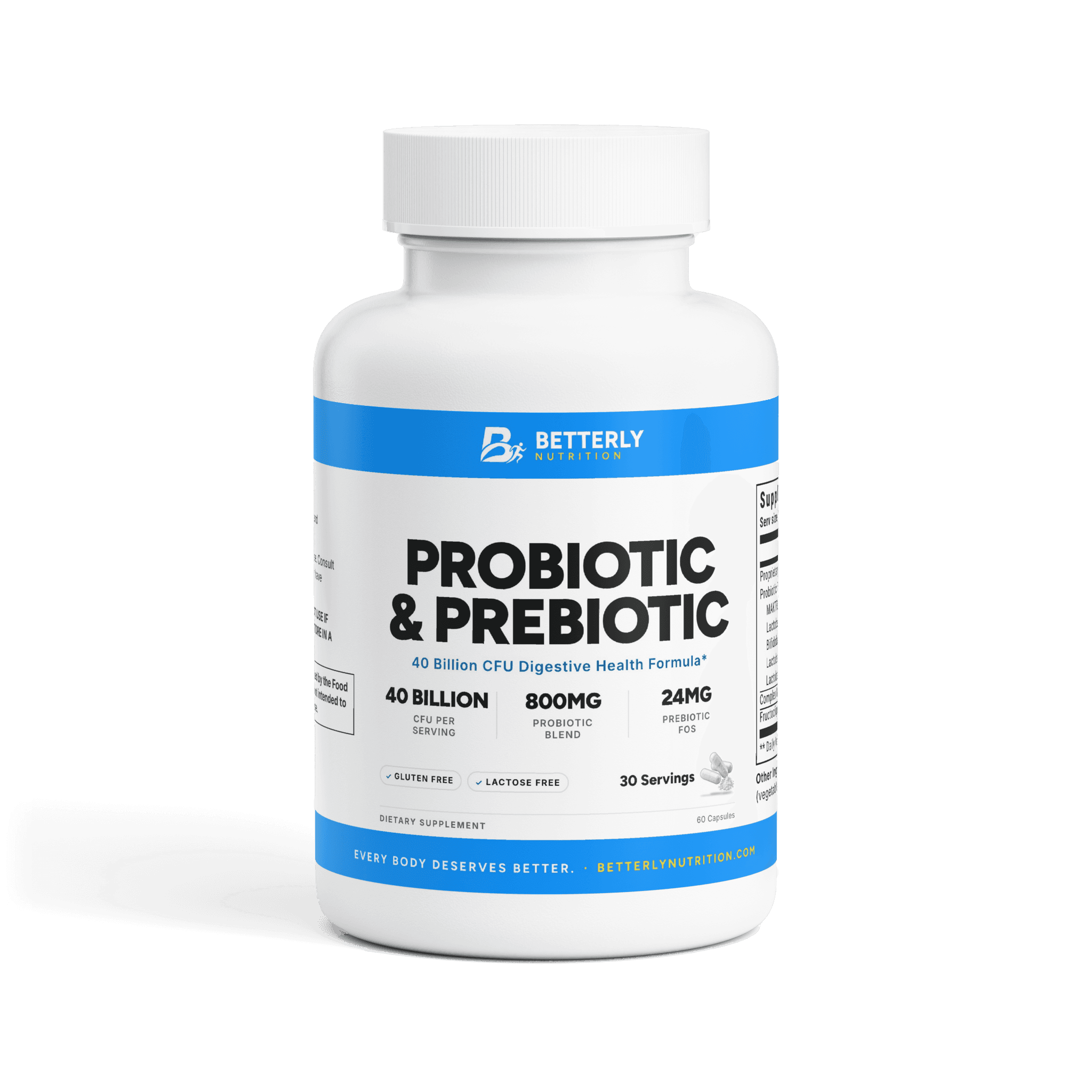
The short answer: Yes, you can take prebiotics and probiotics together, and a single product that holds both is called a synbiotic. The number worth checking is the prebiotic dose. Our Probiotic & Prebiotic Capsules list 40 Billion CFU plus 24 mg of FOS per 2-capsule serving. That 24 mg is tiny next to the 21 to 38 grams of fiber a day MedlinePlus recommends for adults.
Key takeaways
- Probiotics are live microorganisms, prebiotics are nondigestible food components that feed helpful microbes, and a synbiotic combines both in one product.
- No federal page we read warns against pairing a prebiotic with a probiotic, and none of the labels in this guide names probiotics in its spacing or timing directions.
- Betterly's Probiotic & Prebiotic Capsules are a synbiotic on paper, but their 24 mg of FOS per 2-capsule serving is a small prebiotic amount.
- For grams of fiber instead of milligrams, pair a probiotic with fiber-rich foods or a product whose panel prints a dietary fiber amount in grams.
We sell every product in this guide, so check our numbers against the panels. Each product figure below is copied from a printed Supplement Facts label, including the one that makes our own capsule look modest.
Can you take prebiotics and probiotics together?
Yes, most healthy adults can take prebiotics and probiotics together, since no federal source we read advises against it and synbiotic products combine them by design.
A probiotic adds microbes, and a prebiotic is there to feed the helpful ones. The National Center for Complementary and Integrative Health (NCCIH) defines prebiotics as "nondigestible food components that selectively stimulate the growth or activity of desirable microorganisms." It calls products that combine probiotics and prebiotics synbiotics.
Being allowed isn't the same as being needed. The NIH Office of Dietary Supplements (ODS) says in its probiotics fact sheet for consumers that healthy people have no official recommendations to follow on probiotics. So the choice comes down to your meals, how your stomach handles fiber, and what each label says.
What's the difference between a probiotic and a prebiotic?
A probiotic is a live microorganism counted in CFU, while a prebiotic is a nondigestible food component, weighed in milligrams or grams, that feeds helpful microbes.
ODS describes probiotics as live bacteria and yeasts that act mainly in your digestive tract, named by genus, species and strain. On our capsule label, Lactobacillus acidophilus (La-14) reads that way, with La-14 as the strain code.
Prebiotics aren't alive, so labels weigh them instead of counting them. Panel names include fructooligosaccharide (FOS), inulin and polydextrose. Psyllium husk already counts as dietary fiber under the FDA's definition, per the agency's questions and answers on dietary fiber. Inulin-type fructans and polydextrose sit on a second FDA list, of fibers it intends to propose for that definition.
So the unit is the fastest tell. CFU means live cultures, while a plain milligram or gram amount beside FOS or inulin means the food side.
What is a synbiotic, and do our capsules count as one?
A synbiotic is a product that combines probiotics and prebiotics, and Betterly's Probiotic & Prebiotic Capsules fit that description, with live cultures plus FOS in each serving.
On paper, one line makes the capsule a synbiotic: fructooligosaccharide, 24 mg per 2-capsule serving, at the foot of the panel. The live side sits at the top, an 800 mg blend rated at 40 Billion CFU across four strain codes. Between them is 60 mg of complex marine polysaccharide.
The bottle's front calls the 24 mg "Prebiotic FOS." It doesn't say what the marine polysaccharide is, so we leave it out of the prebiotic math. The label also doesn't say whether the FOS was chosen to suit these four strains or simply added beside them.
Here's how four of our probiotic labels compare:
| Product (serving) | Live cultures | Fiber-type add-in | Front says prebiotic? |
|---|---|---|---|
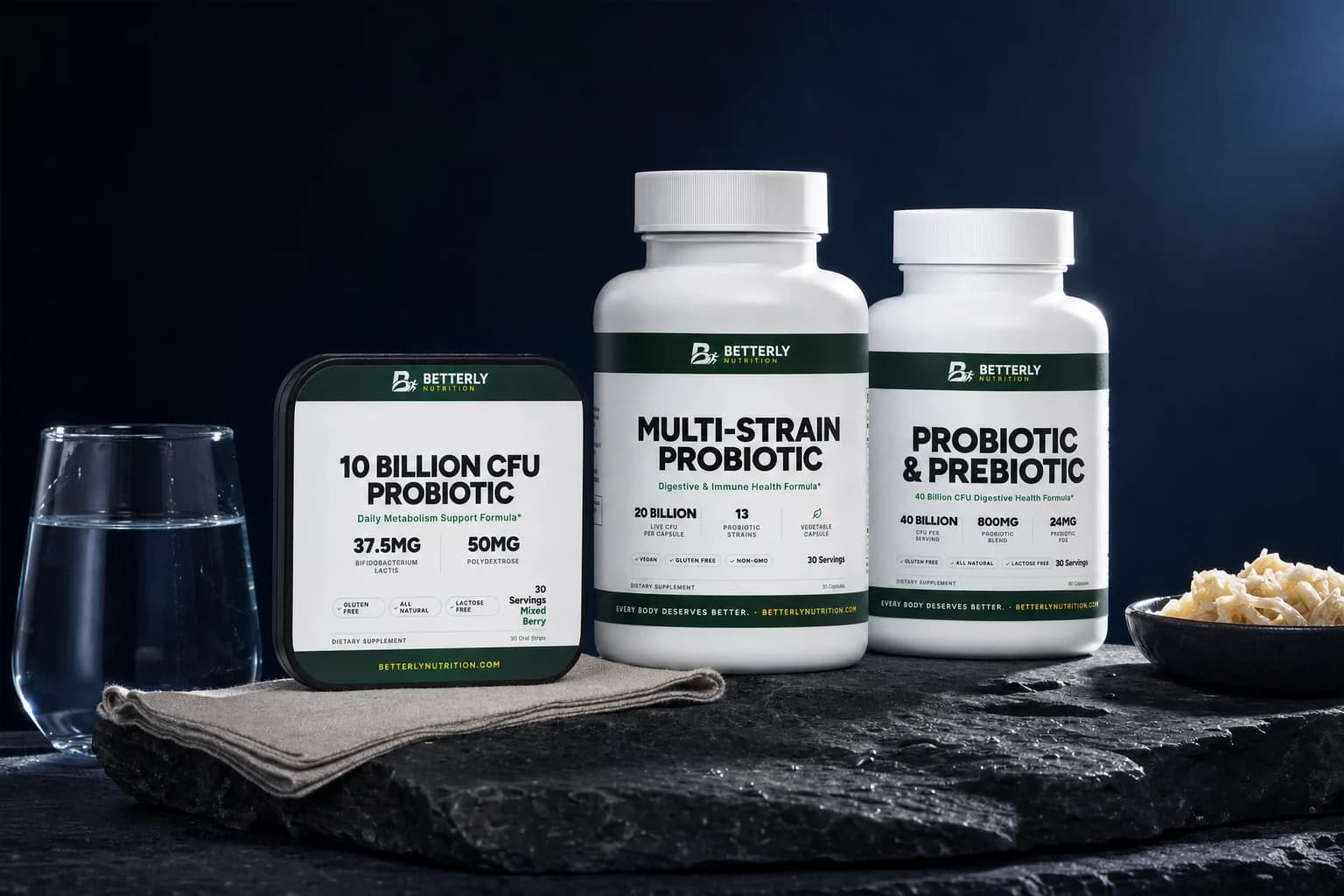
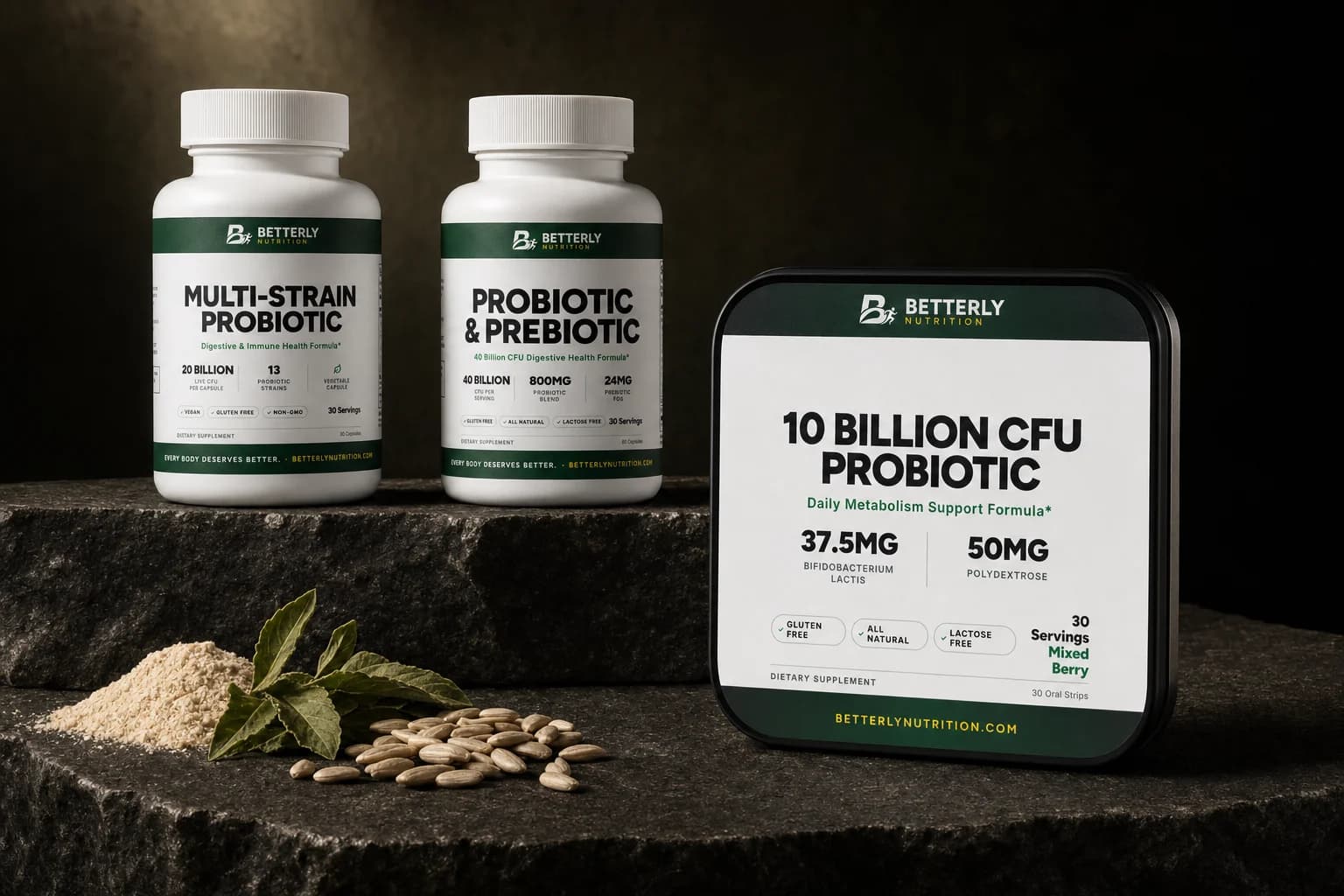
| Probiotic & Prebiotic Capsules (2 capsules) | 40 Billion CFU | 24 mg FOS | Yes |
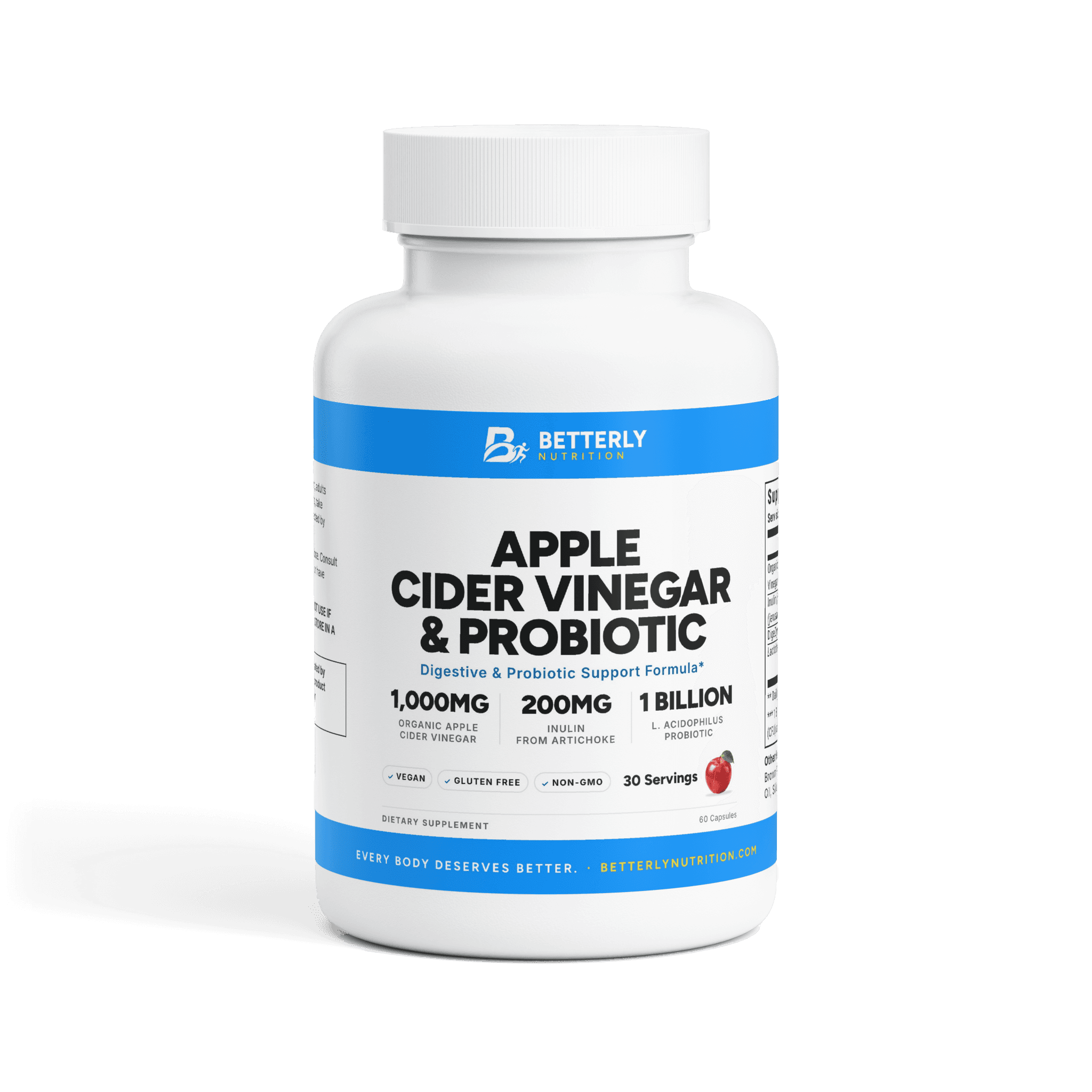
| Apple Cider Vinegar & Probiotic Capsules (2 capsules) | 1 Billion CFU at manufacture | 200 mg inulin | No |
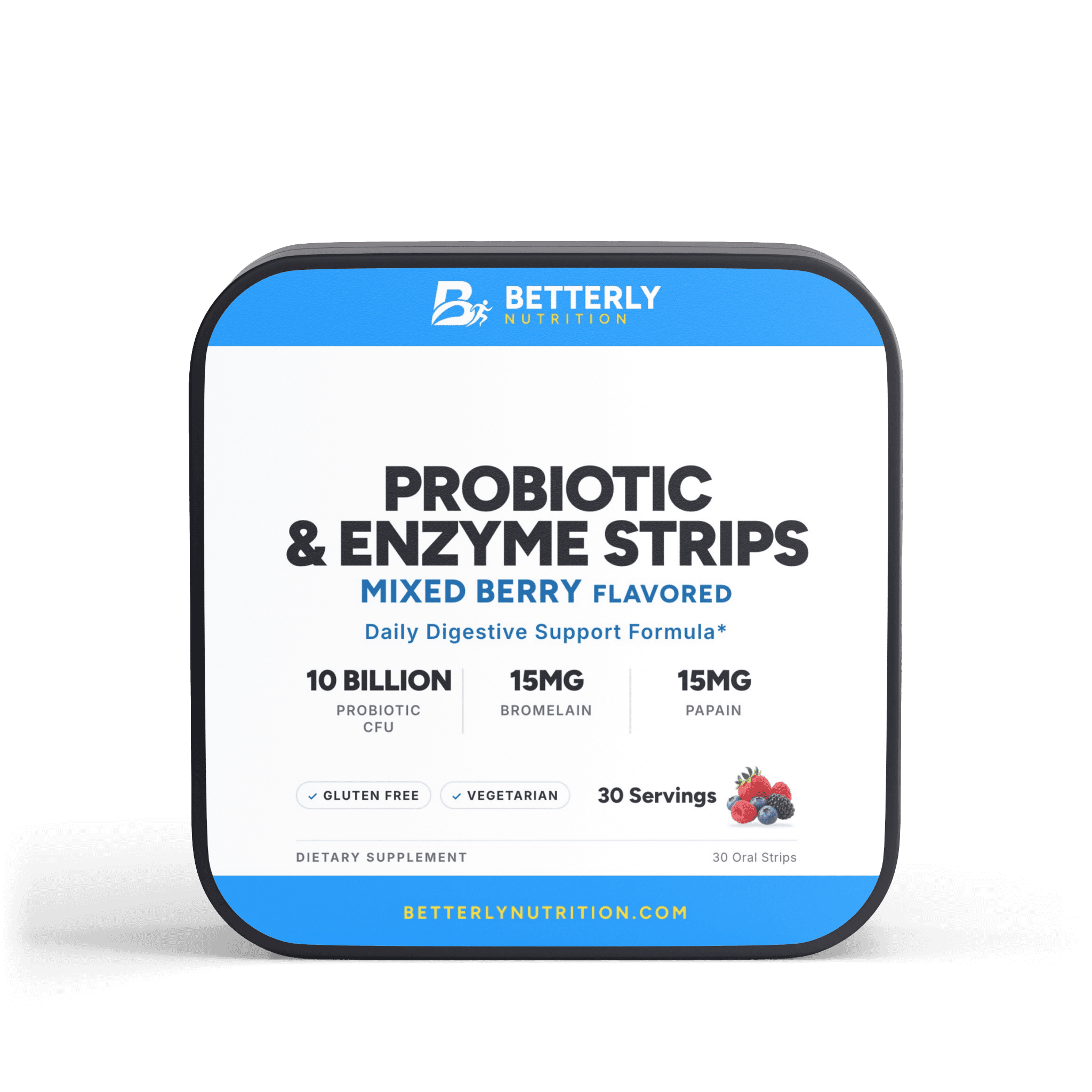
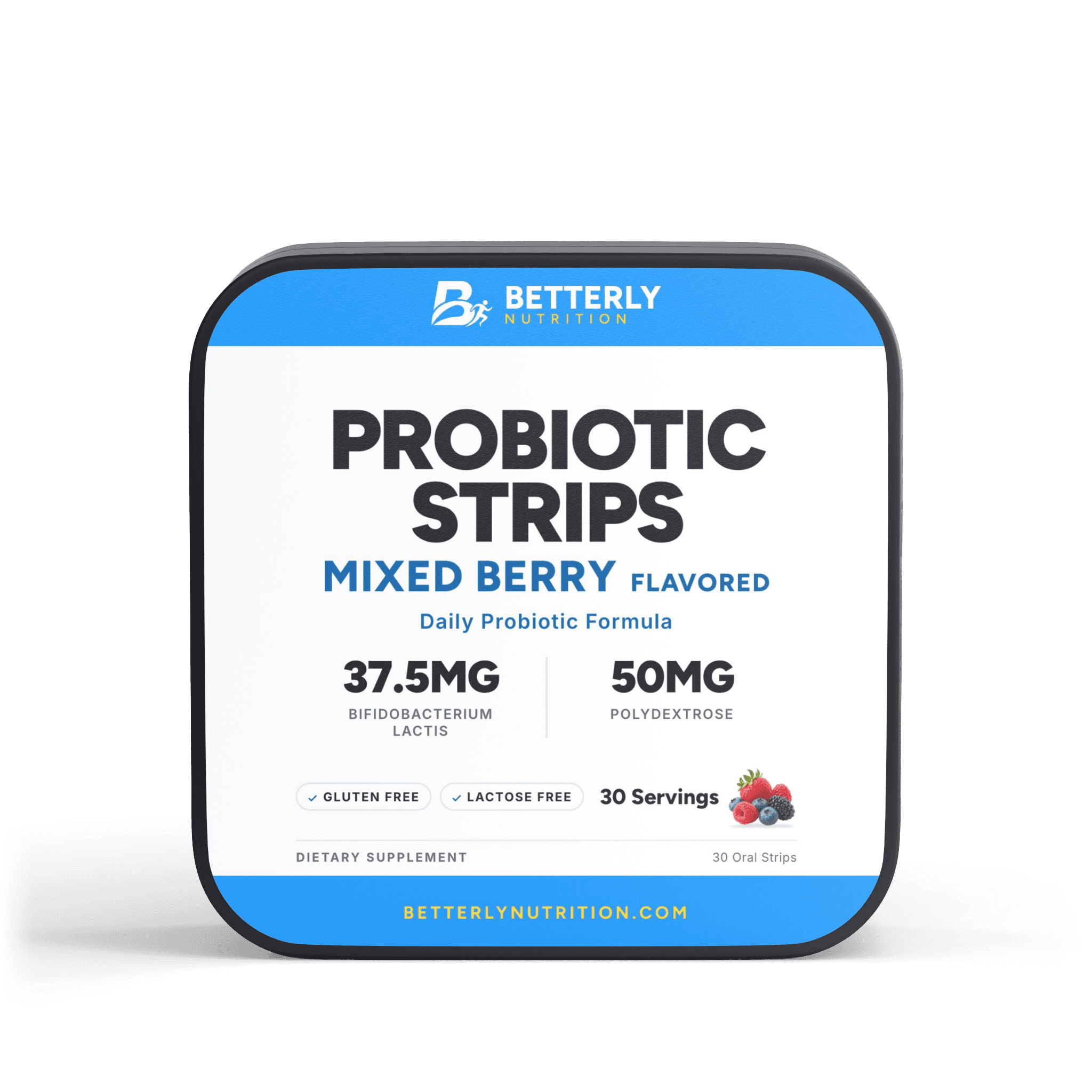
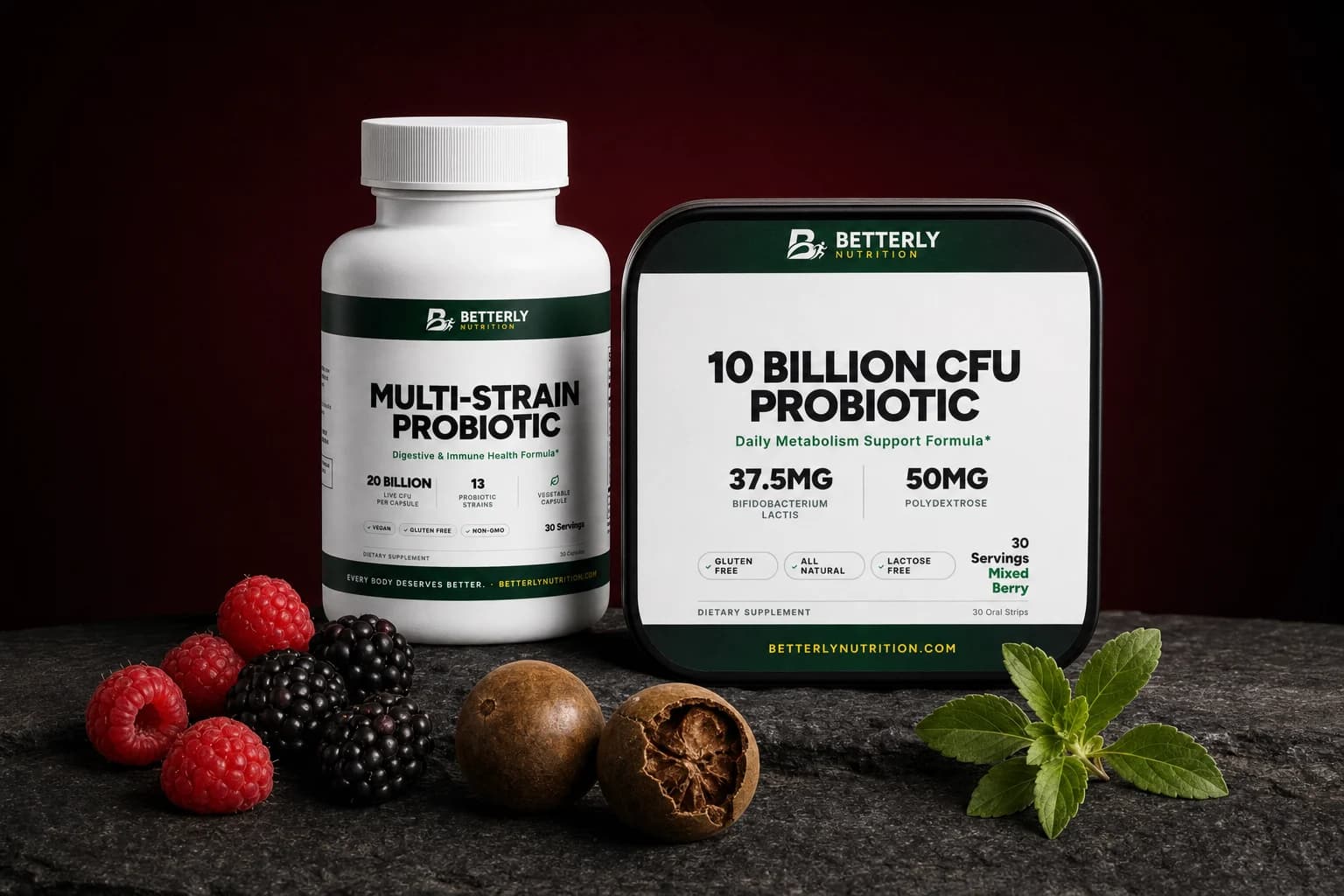
| 10 Billion CFU Probiotic Strips (1 strip) | 10 Billion CFU | 50 mg polydextrose | No |
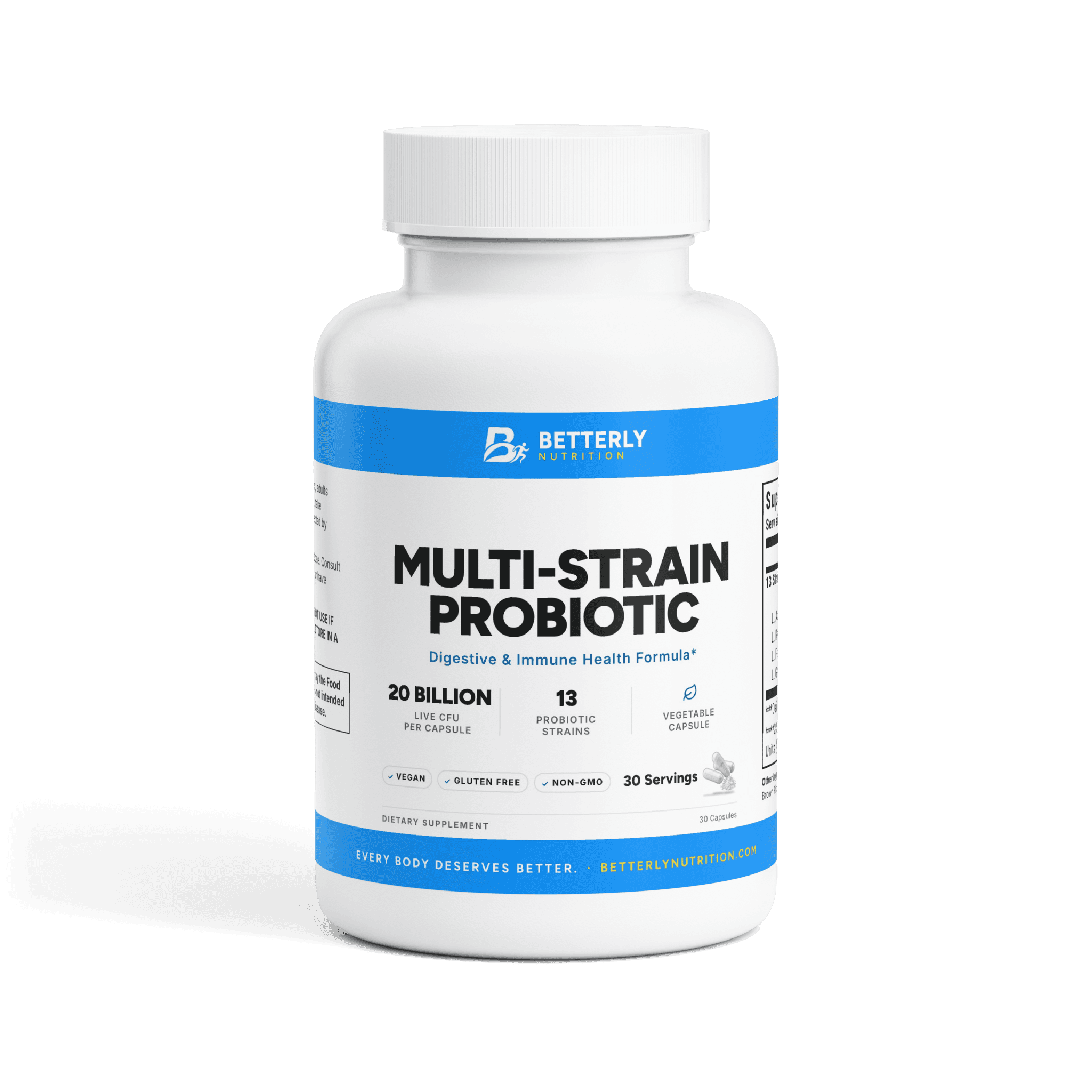
| Multi-Strain Probiotic Capsules (1 capsule) | 20 Billion CFU at manufacture | None | Not applicable |
Three of the four probiotic labels in this table pair live cultures with a fiber-type ingredient, but only one front uses the word prebiotic. The Apple Cider Vinegar & Probiotic Capsules take their inulin from Jerusalem artichoke root, and the strips add polydextrose. The Multi-Strain Probiotic Capsules hold live cultures only. None of the four carries more than 200 mg of its add-in.
Is 24 mg of FOS enough prebiotic to matter?
The 24 mg of FOS in Probiotic & Prebiotic Capsules is a small prebiotic amount, far below the grams of fiber you'd get from fiber foods or a fiber supplement.
Say every milligram of that FOS counted as fiber. You'd still need 875 servings, more than 29 bottles, to reach 21 grams. That's only the bottom of the daily range in the MedlinePlus article on fiber, which runs up to 38 grams and puts typical American intake near 16.
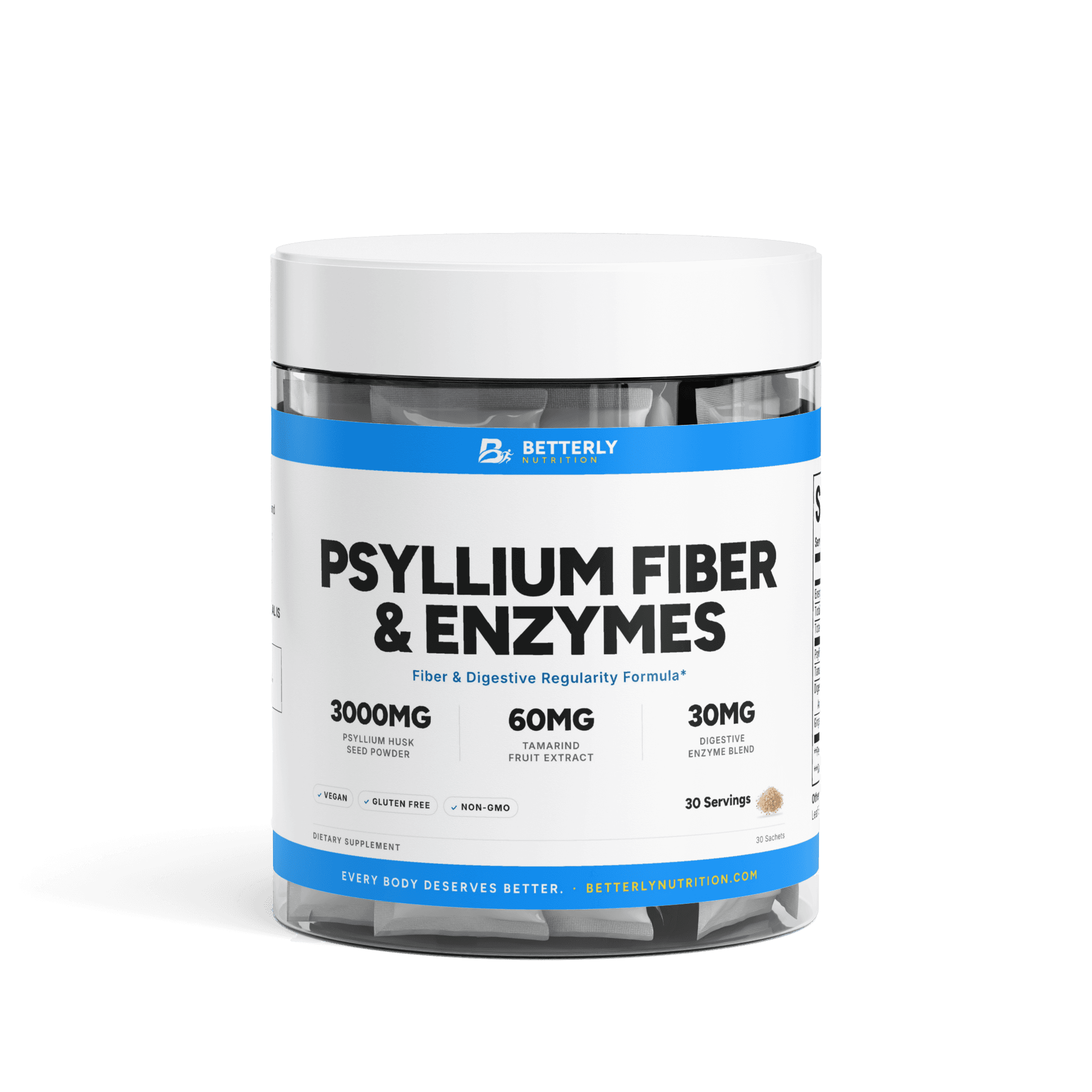
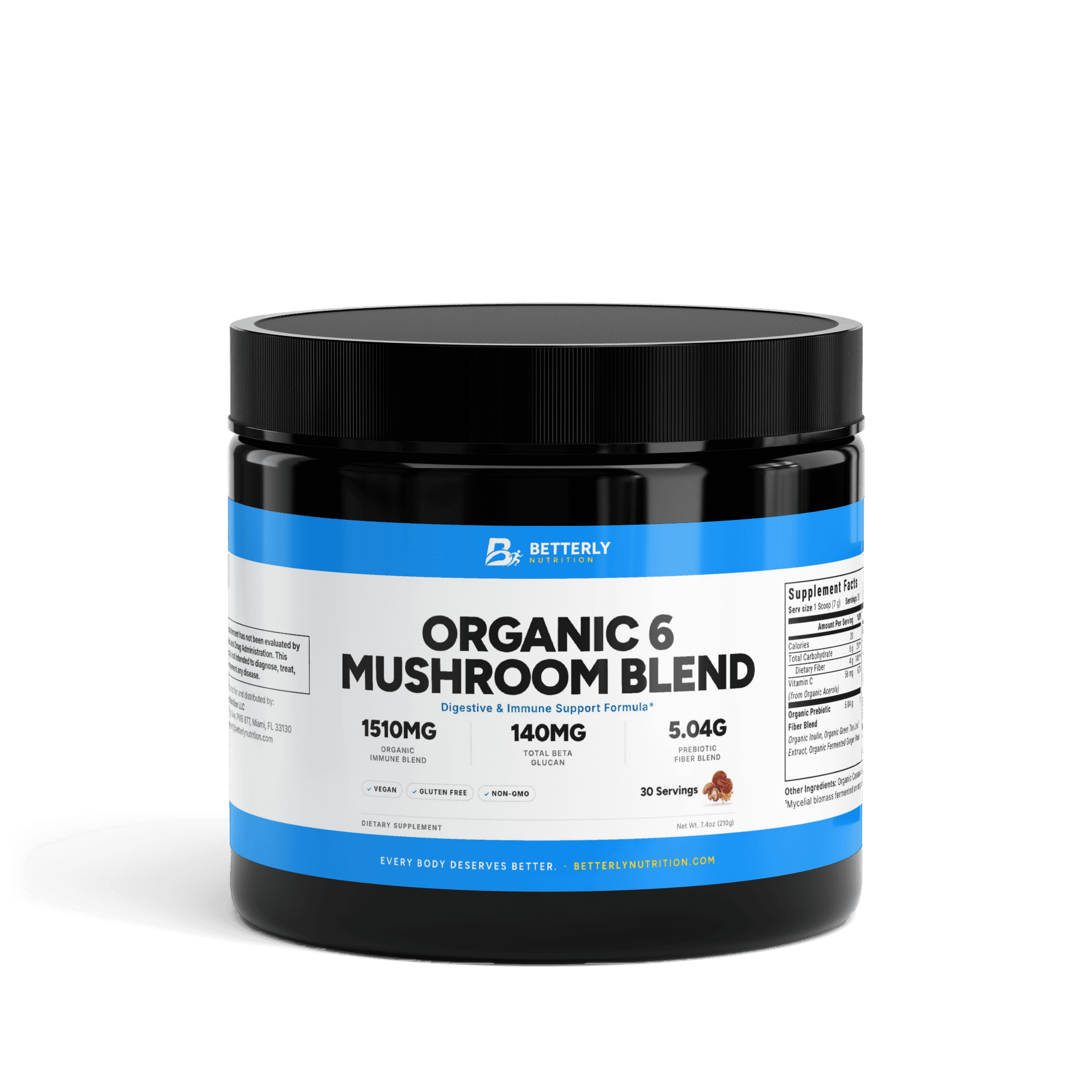
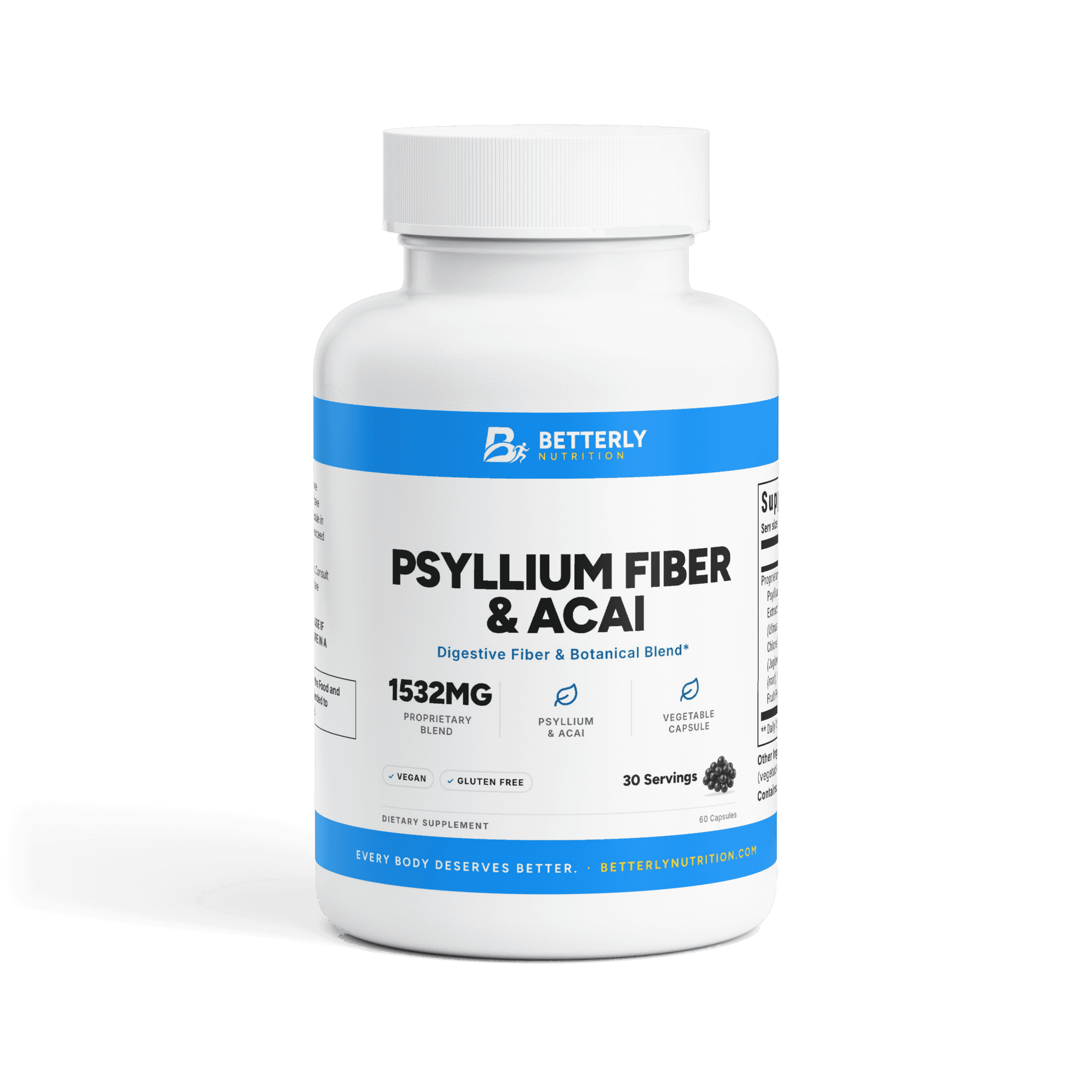
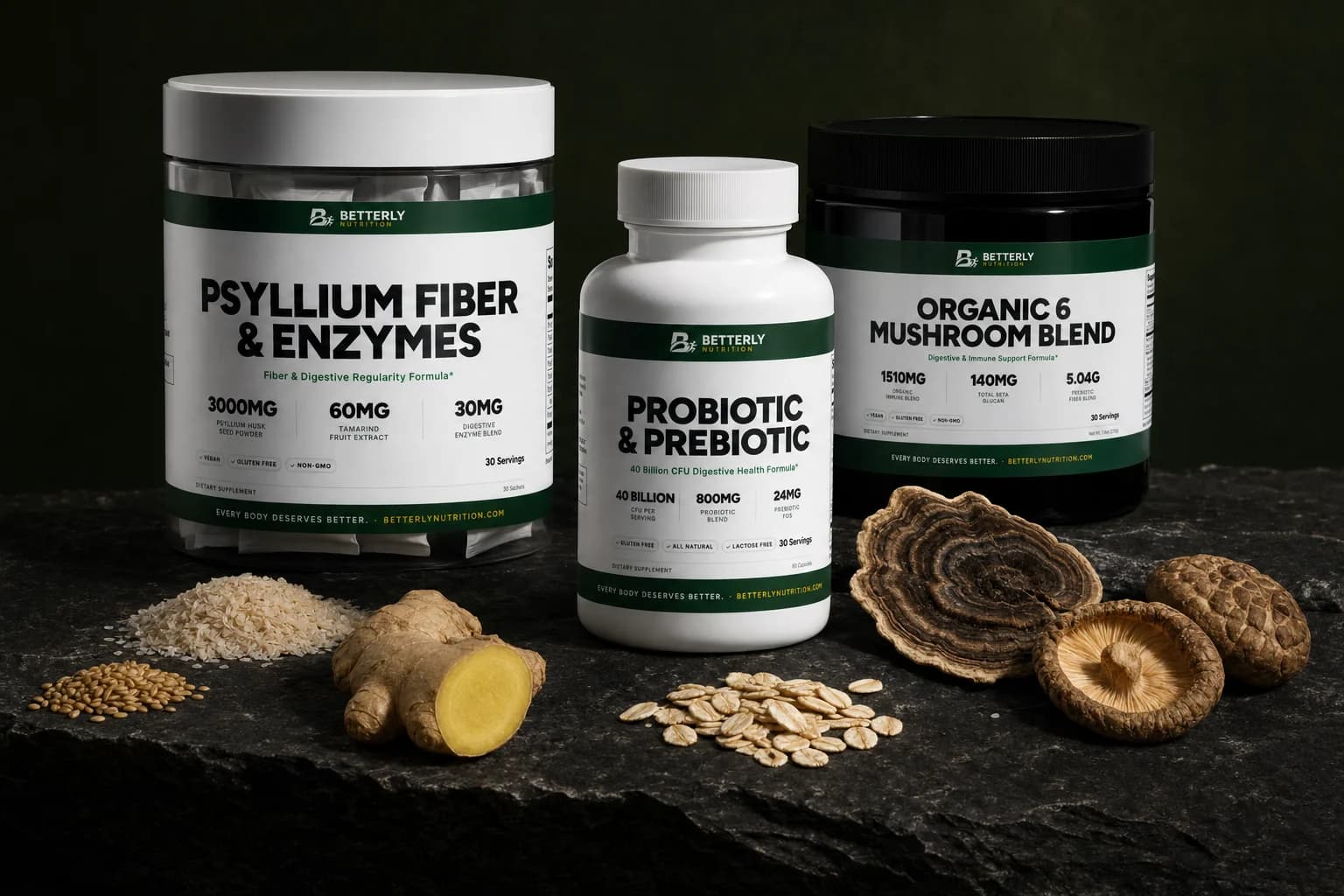
Of the six labels in this guide, only one prints a dietary fiber row. The Organic 6 Mushroom Blend Powder lists 4 g of dietary fiber (14% DV) per 1-scoop (7 g) serving, roughly 167 times the capsule's FOS. The Psyllium Fiber & Digestive Enzyme Powder lists 3000mg of psyllium husk seed powder per 1-sachet serving. Its panel shows Total Carbohydrates as <1g and has no dietary fiber line, so the label doesn't tell you its fiber grams.
We found no federal page that names a useful daily amount of FOS, so we won't guess one. In this capsule, the FOS is a small extra, not a stand-in for fiber.
Do prebiotics and probiotics work better together?
No federal page we read shows that prebiotics and probiotics work better together as a rule, so read any synbiotic "upgrade" claim with care.
Feeding the microbes you add is an appealing idea. But ODS says a probiotic's benefits, if any, depend on both its specific strains and its CFU count. NCCIH adds that one type of probiotic may not act like another. A finding for one strain doesn't necessarily carry over to the next, and the same goes for one strain-and-fiber pair versus another.
What a pairing reliably changes is the fiber side of your day, and only when that side comes in grams. Whether a given fiber favors the exact strains in your capsule is a question no Supplement Facts label can answer, ours included.
How do you pair a probiotic with a real fiber source?
Pair a probiotic with a fiber source by keeping each product at its own label serving and getting fiber from food first, then from a supplement if meals fall short.
Yogurt gets its live cultures when microorganisms are added to milk, ODS explains, though it cautions that a fermented food doesn't necessarily hold probiotics with proven health benefits. For fiber, MedlinePlus points to oat bran, barley, nuts, seeds, beans, lentils, peas, whole grains, vegetables and some fruits. Yogurt with oats and fruit puts both sides on one spoon.
For supplements, here's how the pairings in this guide compare:
| Pairing | Live cultures | Fiber side | Suits you if |
|---|---|---|---|
| Probiotic & Prebiotic Capsules alone | 40 Billion CFU (2 capsules) | 24 mg FOS | Your meals already bring the fiber |
| Those capsules plus the psyllium sachet | 40 Billion CFU | Adds 3000mg psyllium husk seed powder per sachet (no fiber grams printed) | You want a fiber drink between meals |
| Multi-Strain capsule plus the mushroom powder | 20 Billion CFU (1 capsule) | Adds 4 g dietary fiber per scoop | You'd rather stir fiber into food |
| Food only | Yogurt with live cultures | Beans, oats, fruit, vegetables | You'd rather skip supplements |
The capsule alone is the lightest fiber choice. The scoop is the only supplement here that prints real grams of fiber, and it sits just as well beside Probiotic & Prebiotic Capsules. The sachet adds psyllium, but its panel stops short of a fiber number.
The sachet label calls itself a "Fiber & Digestive Regularity Formula" and never uses the word prebiotic, so it's the fiber half of a pair. Our comparison of fiber supplements for regularity explains how psyllium differs from other fibers. The mushroom powder's 5.04 g Organic Prebiotic Fiber Blend names organic inulin, organic green tea leaf extract and organic fermented ginger root without splitting the weight.
From our shop: Probiotic & Prebiotic Capsules — four coded strains in an 800 mg blend (40 Billion CFU) plus 24 mg of FOS per 2-capsule serving, with 60 capsules to a bottle.
When should you take prebiotics and probiotics?
Take prebiotics and probiotics when each label says to: Probiotic & Prebiotic Capsules split their serving between day and evening, and the psyllium sachet goes away from meals.
The capsule label reads: "take two (2) capsules once daily. For best results, take one (1) capsule during the day and one (1) capsule in the evening." The sachet label says 1–2 times daily, away from meals.
Neither label asks you to separate the two. The psyllium caution ends with "take at least 2 hours apart," right after its line about medication, and never mentions probiotics. If you'd rather not guess, the capsule's split keeps them apart anyway:
- With breakfast: take 1 Probiotic & Prebiotic capsule. The label doesn't mention food, so breakfast is only a reminder.
- Mid-afternoon, well after lunch: stir 1 psyllium sachet into 6.8 fl oz (200 mL) of water and drink it right away.
- In the evening: take the second capsule.
- Hold at one sachet for now. The label allows a second, but MedlinePlus suggests building fiber up slowly over a few weeks.
For the mushroom pairing, the Multi-Strain label says "adults take one (1) capsule daily" with 6-8 oz (177-237ml) of water, and the powder's label says one scoop daily "mixed into food or drinks." A capsule with your morning water and a scoop stirred into oatmeal follows both.
Start one product at a time so you can tell which one your stomach is reacting to. For morning versus night on the probiotic alone, see our guide to probiotic timing.
From our shop: Organic 6 Mushroom Blend Powder — one 7 g scoop lists 4 g of dietary fiber (14% DV) and a 5.04 g prebiotic fiber blend that names organic inulin, for stirring into food or drinks.
When don't you need a prebiotic or probiotic supplement?
You may not need a prebiotic or probiotic supplement if your meals already include fiber-rich plants and fermented foods and your digestion feels comfortable.
Honest reasons to pass, even though we sell all of this:
- Your plate already lands in the 21 to 38 gram fiber range. A capsule's 24 mg of FOS won't change that total.
- You already take a fiber product. A second one raises the amount your gut has to adjust to at once.
- You want a fix for a specific health problem. NCCIH says a probiotic shouldn't be your reason to delay seeing a health care provider.
- You'd rather eat it than swallow it. Yogurt with live cultures and a daily serving of beans or oats cover the same two ideas.
If you do want a product, our gut health and digestion collection lists every option.
Who should check with a healthcare provider first?
Check with a healthcare provider before starting prebiotics and probiotics if you're pregnant, nursing, under 18, managing a medical condition or taking any medication.
That list comes from the labels. The Probiotic & Prebiotic, Multi-Strain and mushroom powder cautions each read: "Consult a physician if pregnant, nursing, under 18, or have a medical condition." The psyllium label says the sachets aren't intended for children under 12 and asks everyone to consult a physician before use or if taking medication.
A few more cases worth a conversation:
- Serious illness or a weakened immune system. ODS says probiotics might cause problems in people who are already seriously ill or have weak immune systems.
- Any prescription medicine. The psyllium label asks you to consult a physician if you take medication and to take it at least 2 hours apart, so ask your pharmacist how that fits your schedule.
- Upcoming surgery. Give your surgical team a full list of your supplements.
FAQ: Prebiotics and probiotics
Is it OK to take a prebiotic and probiotic at night?
Yes, taking a prebiotic and probiotic at night fits the labels in this guide, and the Probiotic & Prebiotic Capsules label asks for one of its two capsules in the evening. The psyllium sachet only says "away from meals." The mushroom powder names no time, but its blend includes green tea leaf extract with no caffeine amount listed, so caffeine-sensitive readers may prefer it earlier.
Can prebiotics cause gas or bloating?
Yes, prebiotics and other fibers can cause gas and bloating, mostly when you add a lot at once. MedlinePlus says a large amount of fiber in a short time can bring gas, bloating and cramps, and that this often goes away once your gut bacteria get used to the increase. ODS says probiotics may cause gas in healthy people too. Our rundown of probiotic side effects covers when to stop.
Can you take a probiotic and prebiotic every day?
Yes, every label in this guide is written for daily use, from two Probiotic & Prebiotic capsules to one or two psyllium sachets. None sets a number of weeks. ODS notes there are no official recommendations on probiotics for healthy people, and it suggests asking your health care provider how long to use one.
Is it safe to take prebiotics and probiotics while pregnant or breastfeeding?
Ask your healthcare provider before taking prebiotics and probiotics while pregnant or breastfeeding, because the Probiotic & Prebiotic, Multi-Strain and mushroom powder labels all name pregnancy and nursing in their caution. The psyllium label asks everyone to consult a physician before use. We can't give a safety verdict for this stage of life, so bring the bottles to your next appointment.
Is a pre, pro and postbiotic supplement the same as a synbiotic?
No, a 3-in-1 pre, pro and postbiotic supplement adds a third category that a synbiotic doesn't include. NCCIH defines a synbiotic as a product that combines probiotics and prebiotics. None of the labels in this guide lists postbiotics, and the federal pages we used don't define them, so we won't describe what they do. On any label, find the CFU count and the prebiotic amount first.
Sources
- NIH Office of Dietary Supplements: Probiotics, Fact Sheet for Consumers
- National Center for Complementary and Integrative Health: Probiotics: Usefulness and Safety
- MedlinePlus Medical Encyclopedia: Fiber
- U.S. Food and Drug Administration: Questions and Answers on Dietary Fiber
If this left you looking for somewhere to start, read synbiotic capsule with 40 billion CFU plus FOS — its amounts per serving are listed on the page. For the practical questions this raises, how dosing, sourcing and subscriptions work is answered in one place.