On this page
- Key takeaways
- Can you take two probiotics a day?
- Is it OK to take probiotics twice a day?
- Can you take two different probiotics at the same time?
- How do CFU totals add up when you stack two probiotics?
- Are you already taking two probiotics without knowing it?
- Is taking two probiotics better than one?
- How do you take two probiotics a day by the label?
- When don't you need a second probiotic?
- Who should check with a healthcare provider first?
- FAQ: taking two probiotics a day
- Sources
The short answer: Yes, you can take two probiotics a day. When one label splits its own serving, that's just the directions: our Probiotic & Prebiotic Capsules suggest one capsule during the day and one in the evening, for 40 Billion CFU per 2 Capsules serving. Two different products can share a day only if each stays at its own label serving, you add up the CFU from both labels, and a healthcare provider has okayed the pair.
Key takeaways
- Two capsules a day is simply following the Probiotic & Prebiotic label, which suggests one by day and one in the evening.
- Doubling a probiotic labeled for one serving a day goes past its directions, and every label here says "Do not exceed recommended dose."
- If you combine two probiotic products, add the CFU per serving from each label, and never take more of either than its label allows.
- Some products you might not count as your daily probiotic, like a reds powder or an oral chewable, carry live cultures too.
- One well-chosen probiotic is easier to judge than two.
We sell every product named here, so we're not neutral. We'll show you our own label numbers, including the ones that argue against a second purchase.
Can you take two probiotics a day?
You can take two probiotics a day when one label divides its serving into two doses, but adding a second product is a different decision with its own math.
Some people asking have a bottle whose directions mention two capsules, and the label settles that. Others want to add a strip or capsule to the one they take. That's harder, because none of our labels mentions pairing with another probiotic.
There's no target to hit, either. The NIH Office of Dietary Supplements (ODS) probiotics fact sheet gives healthy adults no official probiotic amount, one serving or two.
Is it OK to take probiotics twice a day?
Taking probiotics twice a day is fine when the label asks for it, and two of ours do: Probiotic & Prebiotic Capsules and Digestive Enzyme & Probiotic Capsules.
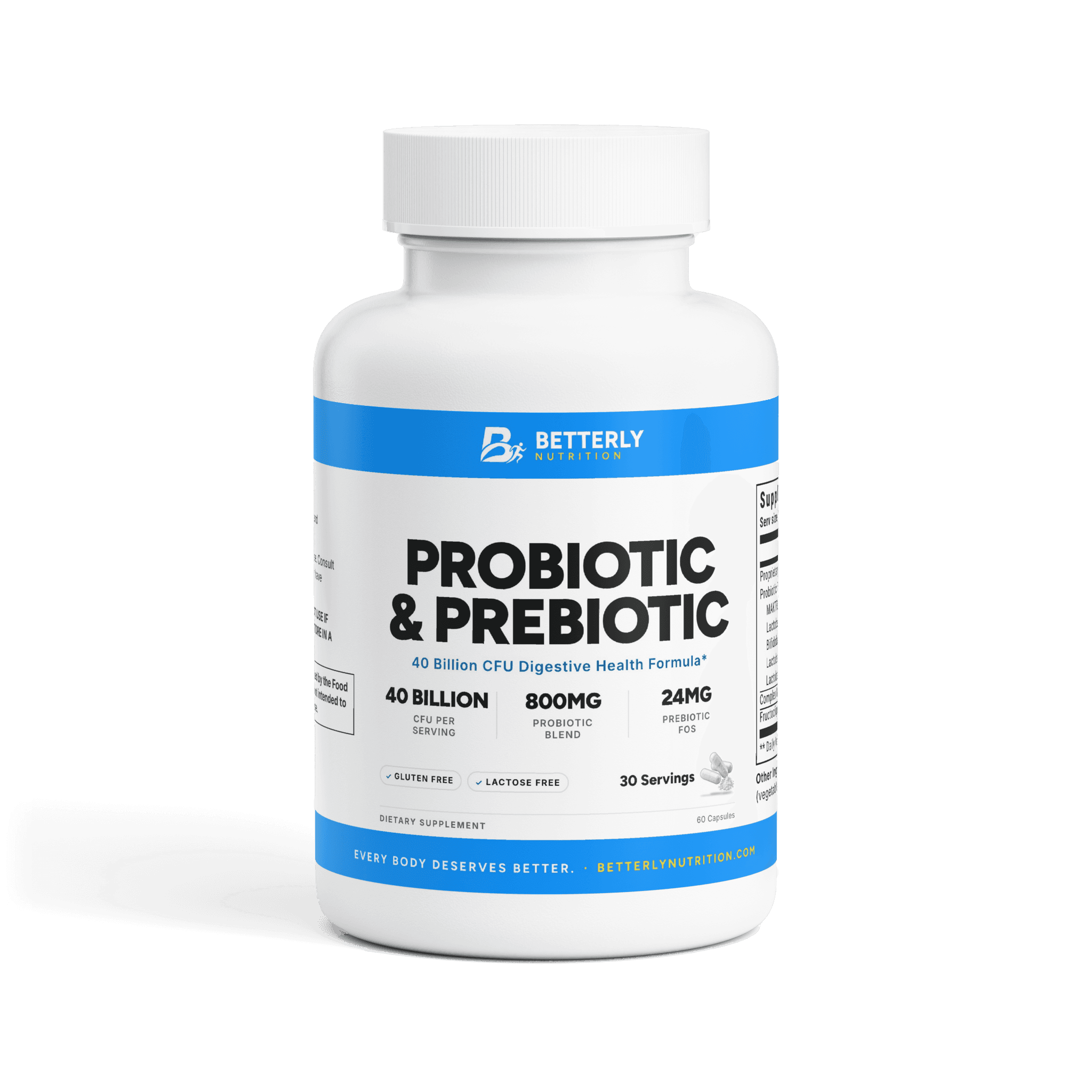
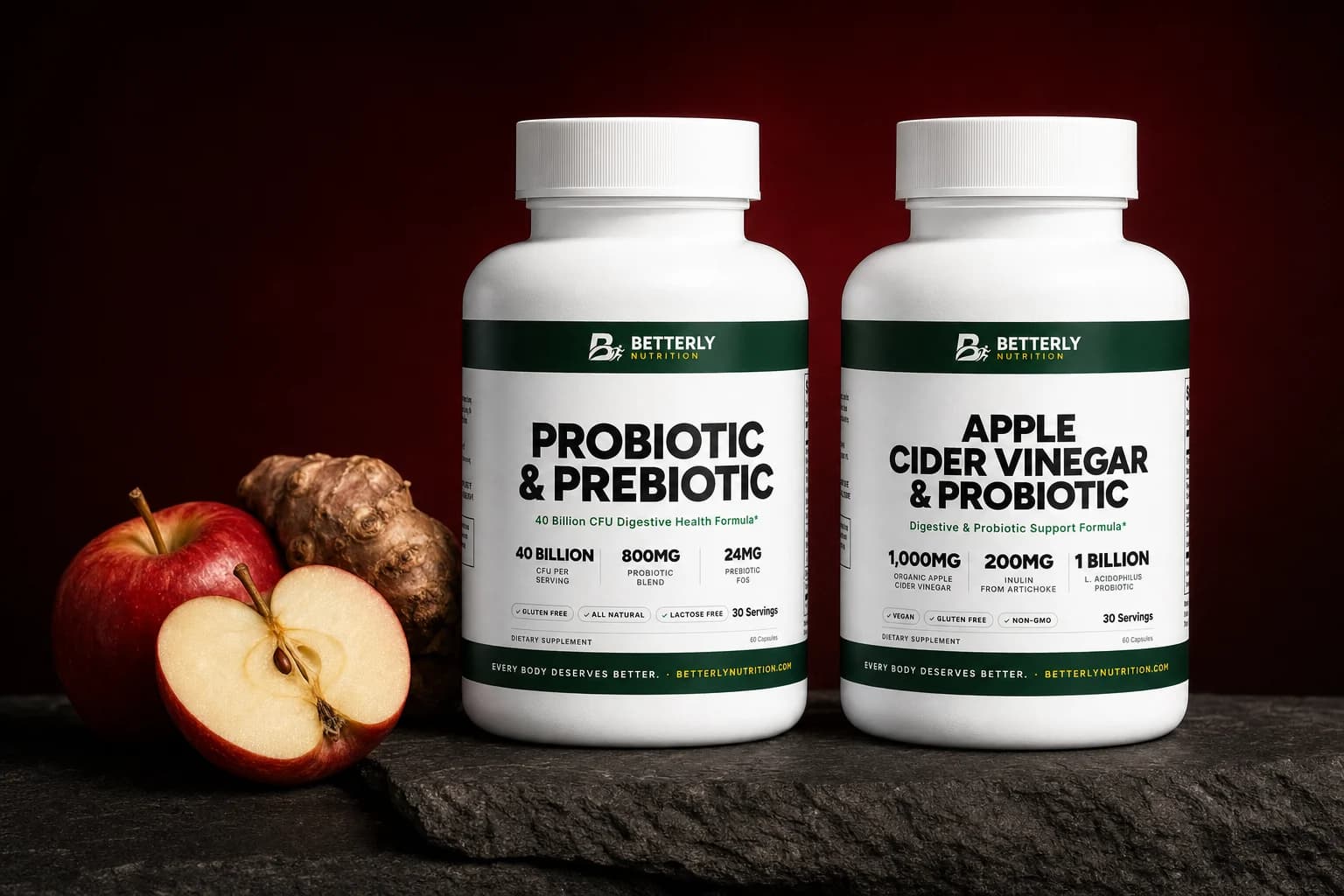
Here are the Probiotic & Prebiotic directions, word for word: "As a dietary supplement, take two (2) capsules once daily. For best results, take one (1) capsule during the day and one (1) capsule in the evening." The panel lists an 800 mg Proprietary Blend of Probiotic Bacteria (40 Billion CFU) and 24 mg of fructooligosaccharide (FOS) per 2 Capsules serving.
So a capsule with breakfast and another after dinner isn't two probiotics. It's one serving in two halves, and your day still totals 40 Billion CFU.
The enzyme capsule carries a twice-daily direction too: "take one (1) capsule twice a day," ideally 20-30 min ahead of a meal. Three Lactobacillus species sit inside the Makzyme-Pro™ Enzyme Blend on that panel, with no CFU count printed.
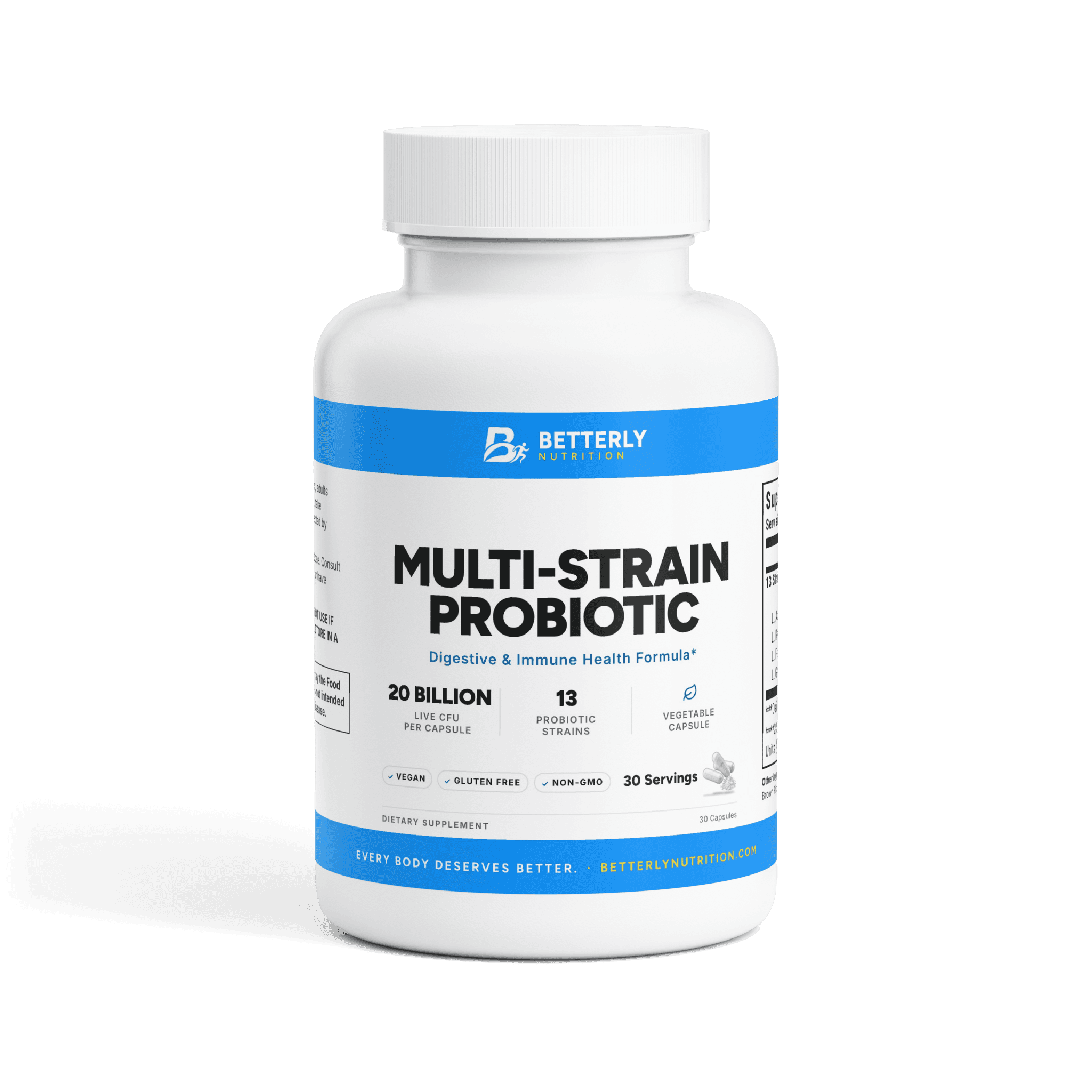
Twice a day goes wrong when you invent it. Multi-Strain Probiotic Capsules list 20 Billion CFU per 1 Capsule serving, and the label says adults take one (1) capsule daily. A second capsule at night wouldn't be a split. It would be a double serving the label never offers.
Can you take two different probiotics at the same time?
Two different probiotic products can share a day, but no label we sell was written with a second probiotic in mind, so get a provider's OK first.
The FDA's consumer primer, FDA 101: Dietary Supplements, puts combining supplements on its short list of situations where problems can happen. Its advice is short: "Take only as described on the label." A second probiotic is that kind of combining, and neither bottle's serving grows because the other one is in your cabinet.
The National Center for Complementary and Integrative Health (NCCIH) says different types of probiotics may have different effects, and it's candid that the amount people need is still unknown. So a second product doesn't "complete" a dose. It's a second formula.
Together or hours apart? None of our labels covers spacing two probiotics, nor do ODS or NCCIH. Where a label sets a time, as the enzyme capsule and Probiotic & Prebiotic do, that comes first. Within each label's own directions, pick the timing that helps you keep count. For morning versus evening on one product, see our guide to picking a time of day for your probiotic.
How do CFU totals add up when you stack two probiotics?
When you stack two probiotic products, you add each label's CFU per serving, and that sum describes your day rather than a better dose.
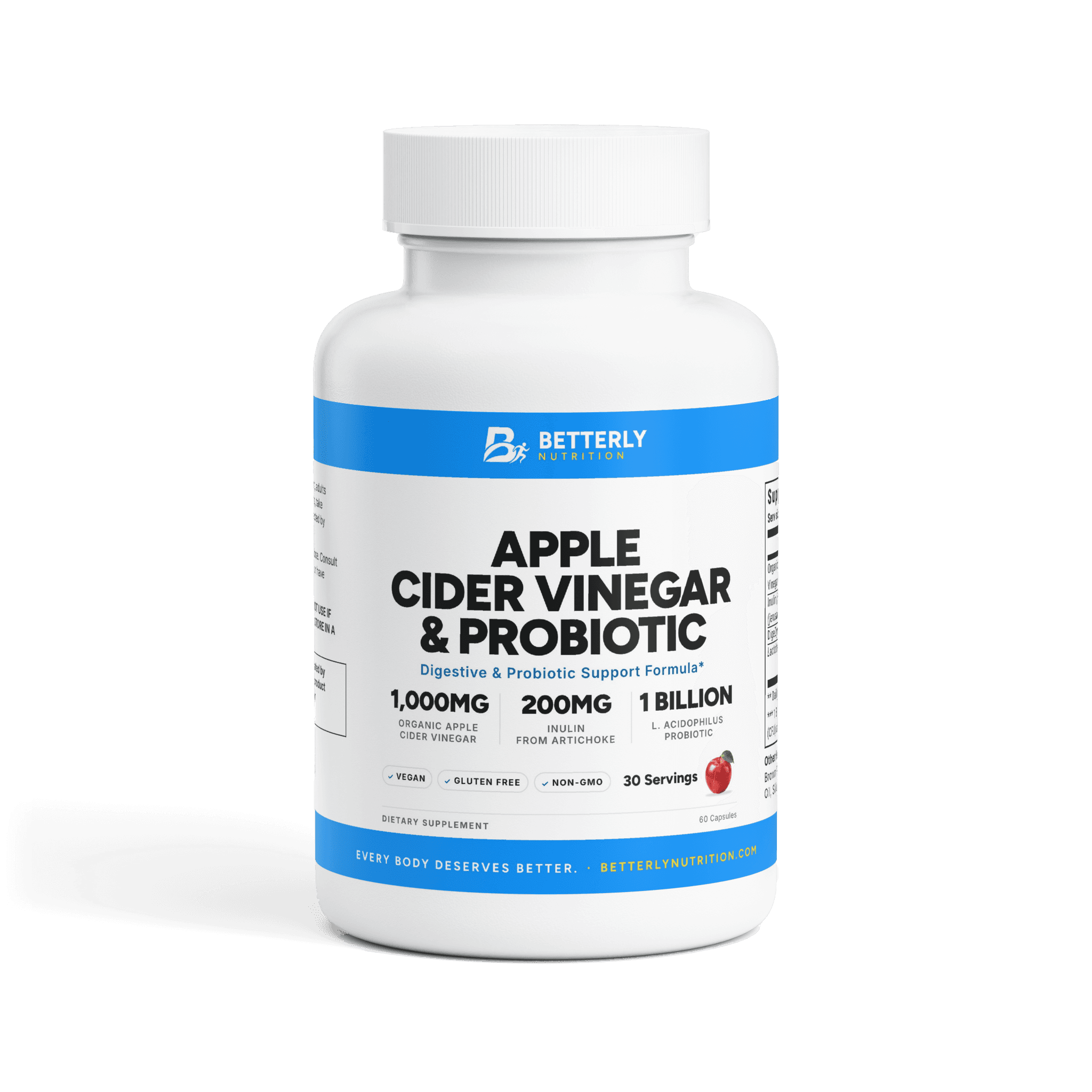
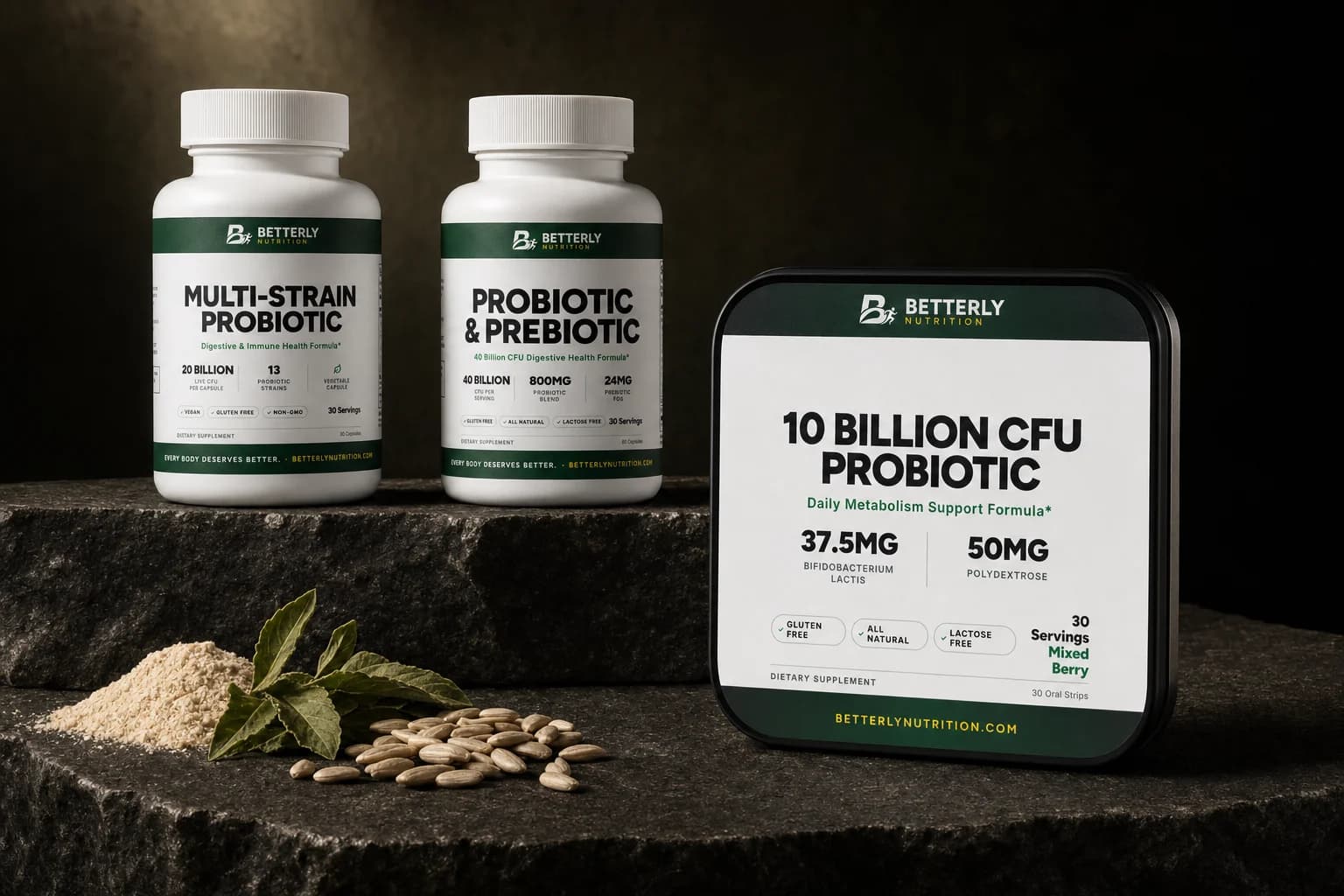
These pairings come from our own shelf, read off each Supplement Facts panel. Besides the two capsules above, they use Apple Cider Vinegar & Probiotic Capsules and 10 Billion CFU Probiotic Strips.
| Pairing, each at its label serving | CFU per serving, from each label | Daily total | Species on both labels |
|---|---|---|---|
| ACV & Probiotic + Multi-Strain | 1 Billion (2 capsules) + 20 Billion (1 capsule) | 21 billion | L. acidophilus |
| ACV & Probiotic + Probiotic & Prebiotic | 1 Billion (2 capsules) + 40 Billion (2 capsules) | 41 billion | L. acidophilus |
| 10 Billion CFU Strips + Multi-Strain | 10 Billion (1 strip) + 20 Billion (1 capsule) | 30 billion | B. lactis |
| Probiotic & Prebiotic + Multi-Strain | 40 Billion (2 capsules) + 20 Billion (1 capsule) | 60 billion | All 4 Probiotic & Prebiotic species |
Read the last column first. Every pairing repeats at least one species. The bottom row repeats all four in the Probiotic & Prebiotic blend (L. acidophilus, B. lactis, L. plantarum and L. paracasei), since each also appears on the Multi-Strain list. The Multi-Strain label prints no strain codes, though, so we can't say whether the strains themselves match.
The totals aren't a ranking. ODS says a higher CFU count alone doesn't necessarily bring greater benefit. They also mix counting methods: the Multi-Strain and vinegar capsule labels give counts as of manufacture, and the other two don't say when theirs applies. Our breakdown of what a CFU number can and can't tell you goes deeper.
Are you already taking two probiotics without knowing it?
You may already take two probiotics, because products bought for other goals, like a reds powder or an oral chewable, can list live cultures on their Supplement Facts panel.
Two more from our shelf, beyond the vinegar and enzyme capsules above:
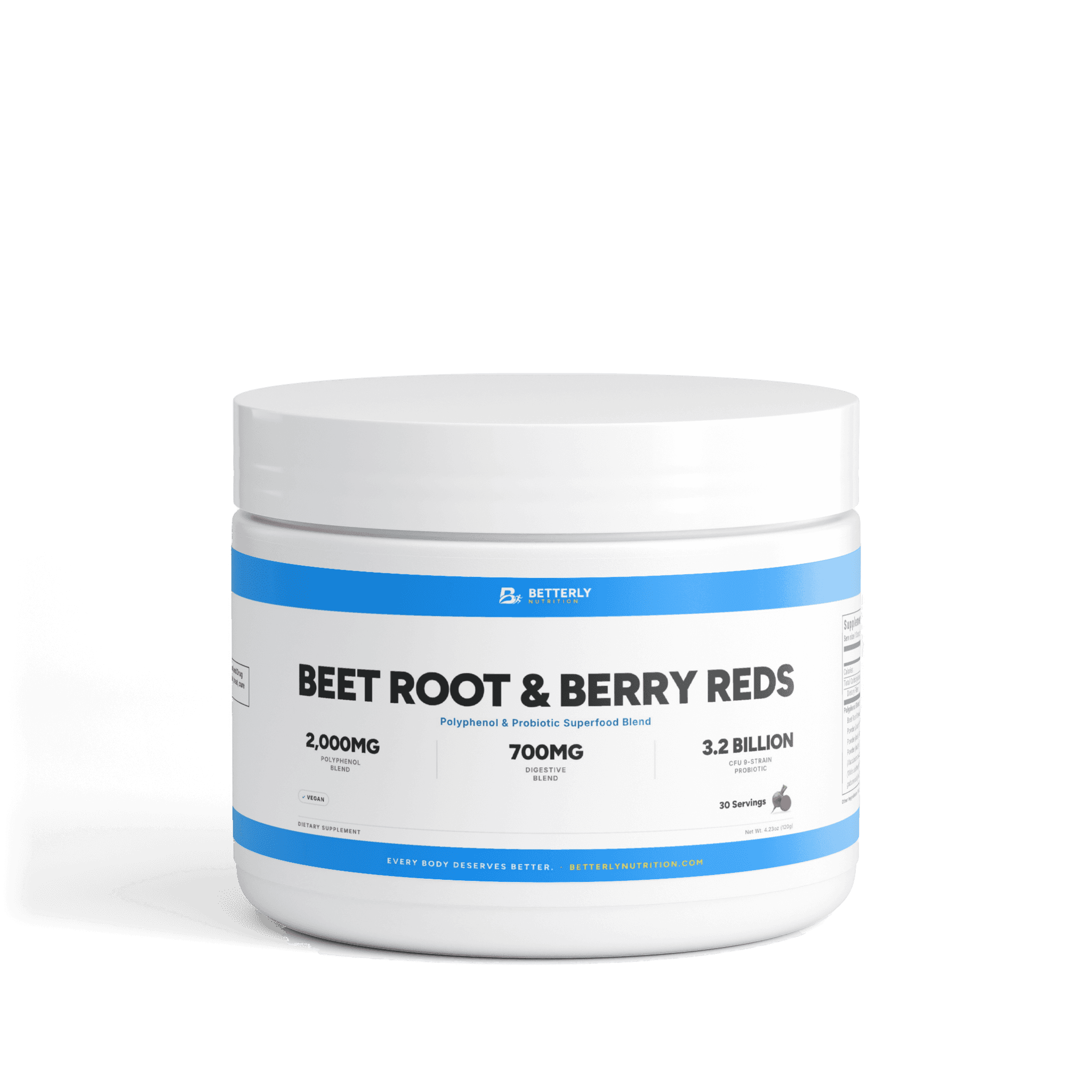
- Beet Root & Berry Reds Powder lists a 9 Strain Probiotic at 100 mg (3.2 Billion) per 1 Scoop (4 g) serving, counted at the time of manufacture.
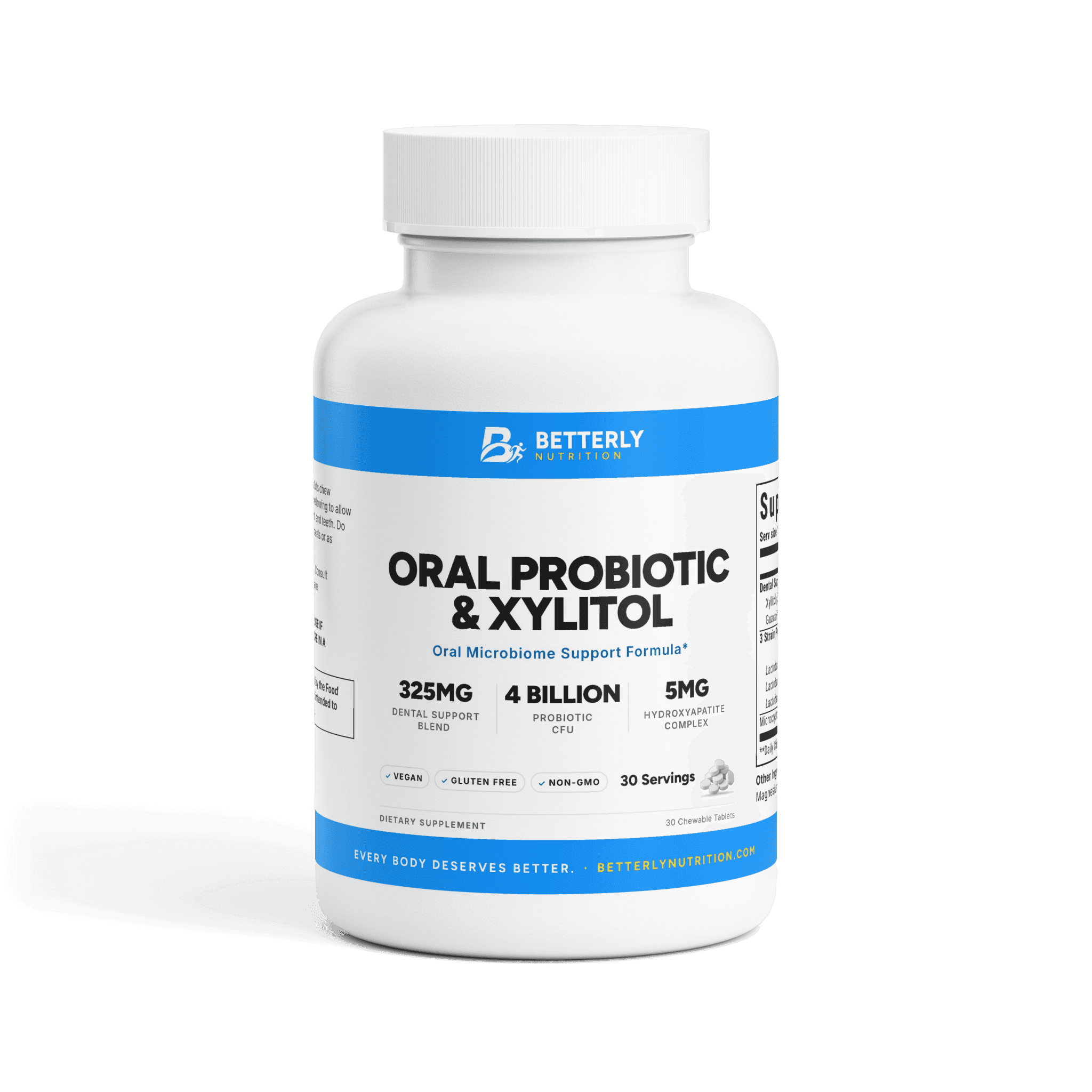
- Oral Probiotic & Xylitol Chewables list a 3 Strain Probiotic (Ari) at 20 mg (4 Billion CFU) per 1 Chewable Tablet serving.
One overlap goes right down to the strain code. The chewable and Apple Cider Vinegar & Probiotic Capsules both list Lactobacillus acidophilus LA85. The vinegar capsule has it at 10 mg (1 Billion CFU) per 2 Capsules serving, so taking both means one strain from two bottles.
ODS notes that probiotics sometimes turn up in unfermented foods, too, such as juices and nutrition bars. Its guide Dietary Supplements: What You Need to Know warns that added ingredients can mean you get more than you think, and that more might not be better.
To spot a hidden probiotic, scan each panel for:
- Genus names such as Lactobacillus, Bifidobacterium or Bacillus, often cut to L. or B.
- The letters CFU, or a "Billion" figure beside a row.
- Microbes tucked inside an enzyme or digestive blend, where no count may appear.
From our shop: Probiotic & Prebiotic Capsules — one bottle whose label splits 2 capsules between day and evening, listing 40 Billion CFU and 24 mg of FOS per 2 Capsules serving.
Is taking two probiotics better than one?
Taking two probiotics isn't shown to beat one, because ODS ties any benefit to both a product's specific strains and its CFU count, and says a higher count alone doesn't necessarily mean greater benefit. Neither ODS nor NCCIH says a second product adds to that benefit.
You may hear that a second probiotic adds diversity. NCCIH's page cuts against that with an example: if one kind of Lactobacillus helps with something, another kind, or a Bifidobacterium, won't necessarily do the same. More kinds don't add up to more of any one proven effect.
The overlap in our table also muddies your own read. If gas, which ODS lists as a possible probiotic side effect in healthy people, shows up after you add a second bottle, you can't tell whether the new formula caused it or you're simply getting more of a species both labels share. Our guide to probiotic side effects and who should skip them covers what's common.
NCCIH also reports that some probiotic products have contained microbes other than those on their labels. Each extra product is one more label you're trusting.
Our verdict: one probiotic whose label you've read, taken as written, is simpler to judge than two.
How do you take two probiotics a day by the label?
To take two probiotics a day by the label, follow each product's own suggested use exactly, and never take extra of either one to reach a bigger total.
- Read each serving size first. Probiotic & Prebiotic counts 2 capsules as one serving, while Multi-Strain counts 1 capsule and the strips count 1 strip.
- Take each product as written. The Apple Cider Vinegar & Probiotic label asks adults for two (2) capsules daily, best with 6-8 oz (177-237ml) of water. The strips go on the tongue, 1 a day, to dissolve.
- Get a provider's OK before adding a second product, and add it only once the first is a settled habit.
- Give each bottle its own fixed slot in your day, inside its label's directions. Separate slots make a repeated dose easy to catch.
- If you miss one, never take extra to catch up. Neither of our twice-a-day labels gives make-up directions, and every label here says "Do not exceed recommended dose." Ask your pharmacist how to handle a missed dose.
From our shop: Multi-Strain Probiotic Capsules — a once-daily capsule for adults, listing a 13 Strain Probiotic at 317 mg (20 Billion CFU at the time of manufacture) per 1 Capsule serving.
When don't you need a second probiotic?
You don't need a second probiotic if your first one's label already fits your day, or if the only pull is a bigger CFU number on the front.
Skip the second bottle when:
- Your current product already splits its serving, as Probiotic & Prebiotic does.
- The new product repeats species you already take, as every pairing in the table does.
- You're chasing a total, though no official daily probiotic amount exists.
- The only route to two doses is doubling a once-daily label.
- Two schedules feel like a chore you won't keep up.
If you're still choosing, compare panels across our full gut health lineup and pick the one label that fits your routine.
Who should check with a healthcare provider first?
Run a second probiotic past your doctor or pharmacist before starting it if you're expecting or breastfeeding, under 18, on medication, scheduled for surgery, or managing a health condition.
That list mirrors the caution printed on every label in this guide: "Consult a physician if pregnant, nursing, under 18, or have a medical condition." ODS and NCCIH add to it:
- A weakened immune system or a serious illness. Here even one probiotic needs a provider's view, since NCCIH says harmful effects are more likely in people with severe illnesses or compromised immune systems.
- Prescription medicine. The ODS supplements guide wants your provider's approval before any supplement joins a prescribed medicine.
- An upcoming procedure. ODS asks anyone scheduled for surgery to go over every supplement they take with their provider.
- Infants and children. Our labels already send under-18s to a physician first, and according to ODS, the FDA has flagged probiotics as a possible cause of life-threatening illness in preterm infants.
If you're asking about a pair, show your provider both Supplement Facts panels side by side. And if a digestive change is new or won't settle, NCCIH says not to let a probiotic delay seeing a provider.
FAQ: taking two probiotics a day
Can you take both Probiotic & Prebiotic capsules at the same time?
Yes. Together, the two Probiotic & Prebiotic capsules make one complete 2 Capsules serving, which the label says to take once daily, though its best-results direction is one capsule during the day and one in the evening. Paired or split, a bottle of 30 servings covers 30 days at the suggested use. The math breaks only if both capsules go down in the morning and two more follow at night. That doubles the label's serving, and the bottle would be gone by day 15.
What happens if you accidentally take two servings of a probiotic?
Every probiotic label in this guide says "Do not exceed recommended dose," and neither ODS nor NCCIH addresses a doubled serving. Speaking of probiotics in general, ODS says healthy people may get gas, while infections or other problems are rare. NCCIH points to "a lack of solid information on the frequency and severity of side effects." Return to your label's normal serving at the next dose. If you're seriously ill or have a weak immune system, call your healthcare provider.
Can you eat yogurt while taking a probiotic supplement?
Yes, you can eat yogurt while taking a probiotic supplement, since none of our probiotic labels says to avoid fermented foods. ODS lists yogurt among foods made with live microbes, but notes those foods don't all carry probiotics with proven benefits. So yogurt isn't a serving to subtract, and your supplement stays at its label amount.
Do probiotic strips count as a second probiotic?
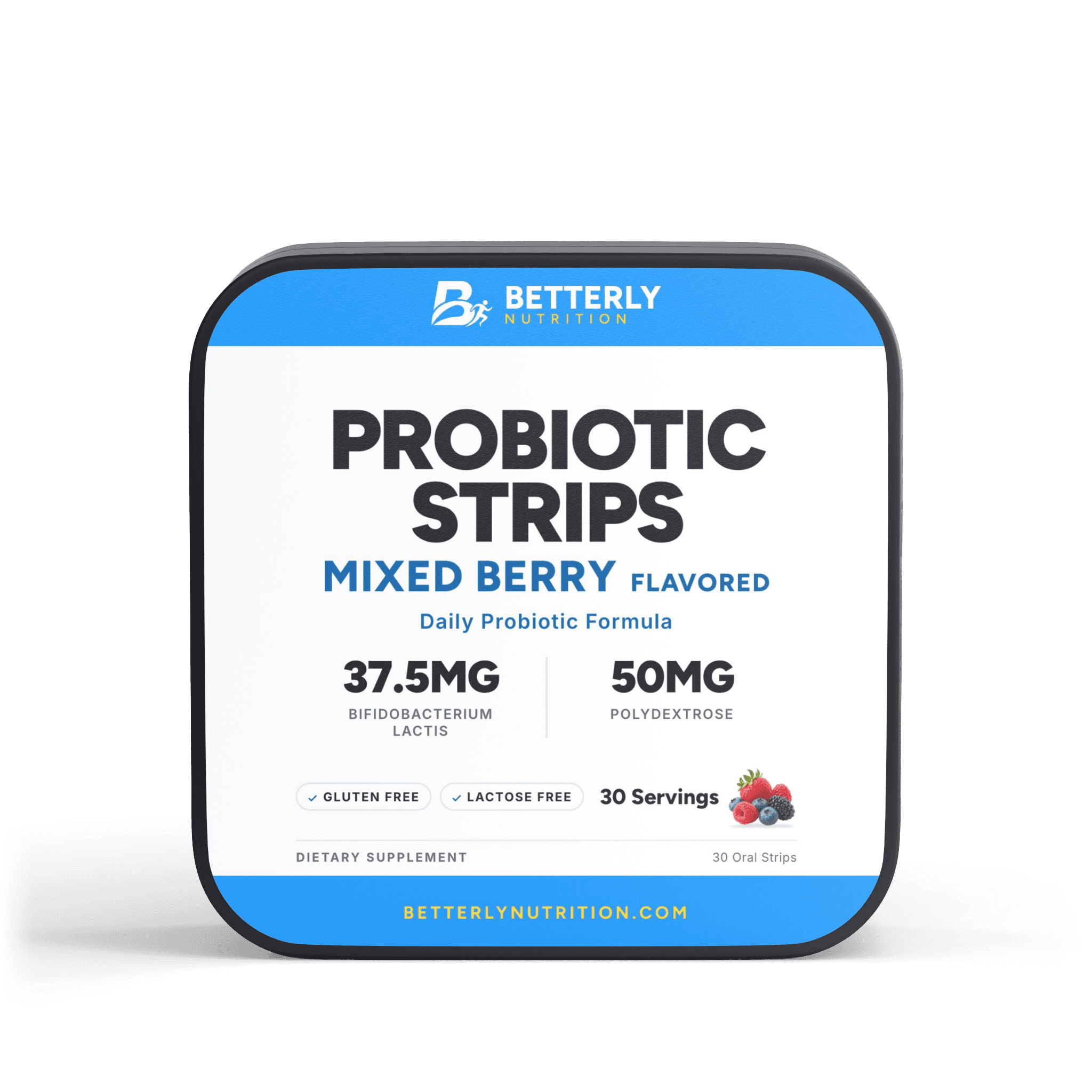
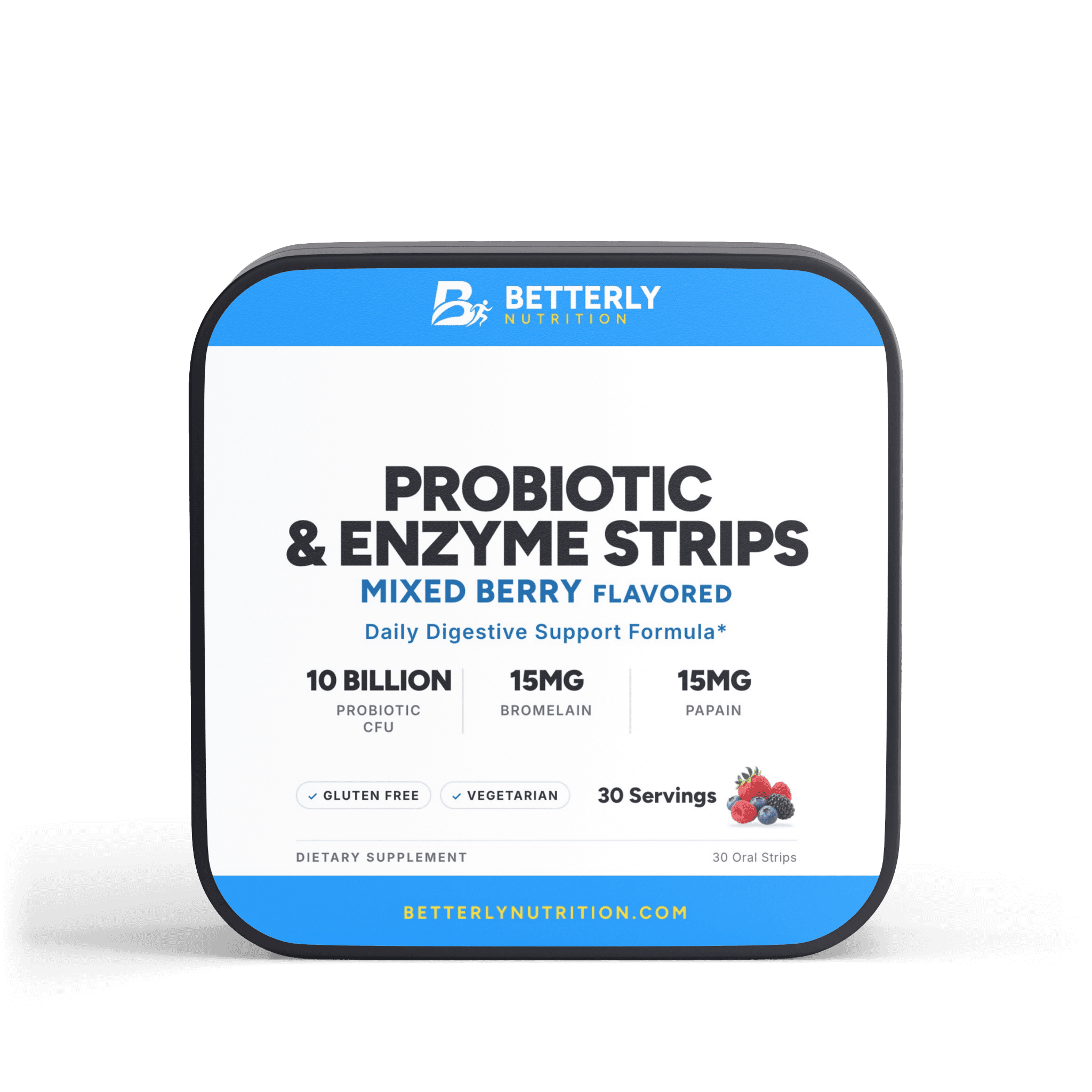
Yes, a probiotic strip counts as a second probiotic if you already take a capsule. Our 10 Billion CFU Probiotic Strips list Bifidobacterium lactis at 37.5mg (10 Billion CFU) per 1 Oral Strip (180 mg) serving. A strip plus a Multi-Strain capsule comes to 30 billion CFU on paper, with B. lactis on both labels. The format changes how you take it, not the math.
Is it safe to take two probiotics while pregnant or breastfeeding?
Your healthcare provider should weigh in first, since every probiotic label in this guide tells anyone pregnant or nursing to consult a physician. ODS's supplement guide urges care with anything beyond a standard prenatal at this stage, and it points out that many supplements haven't had solid safety testing in pregnant or nursing women. Ask about each product by name, rather than about probiotics in general.
Sources
- Probiotics: Fact Sheet for Consumers (NIH Office of Dietary Supplements)
- Dietary Supplements: What You Need to Know (NIH Office of Dietary Supplements)
- Probiotics: Usefulness and Safety (NCCIH)
- FDA 101: Dietary Supplements (U.S. Food and Drug Administration)
If this left you looking for somewhere to start, read probiotic capsules split into a day and evening dose — its amounts per serving are listed on the page. For the practical questions this raises, how dosing, sourcing and subscriptions work is answered in one place.