On this page
- Key takeaways
- Single strain vs multi strain probiotics: what's the difference?
- How do labels show single strain, single species or a blend?
- Are more probiotic strains better?
- Why is a single-strain probiotic easier to match to research?
- When does a multi-strain probiotic make sense?
- What's the best single-strain probiotic?
- How do you take a single- or multi-strain probiotic by the label?
- When don't you need a probiotic of either kind?
- Who should check with a healthcare provider first?
- FAQ: single vs multi-strain probiotics
- Sources
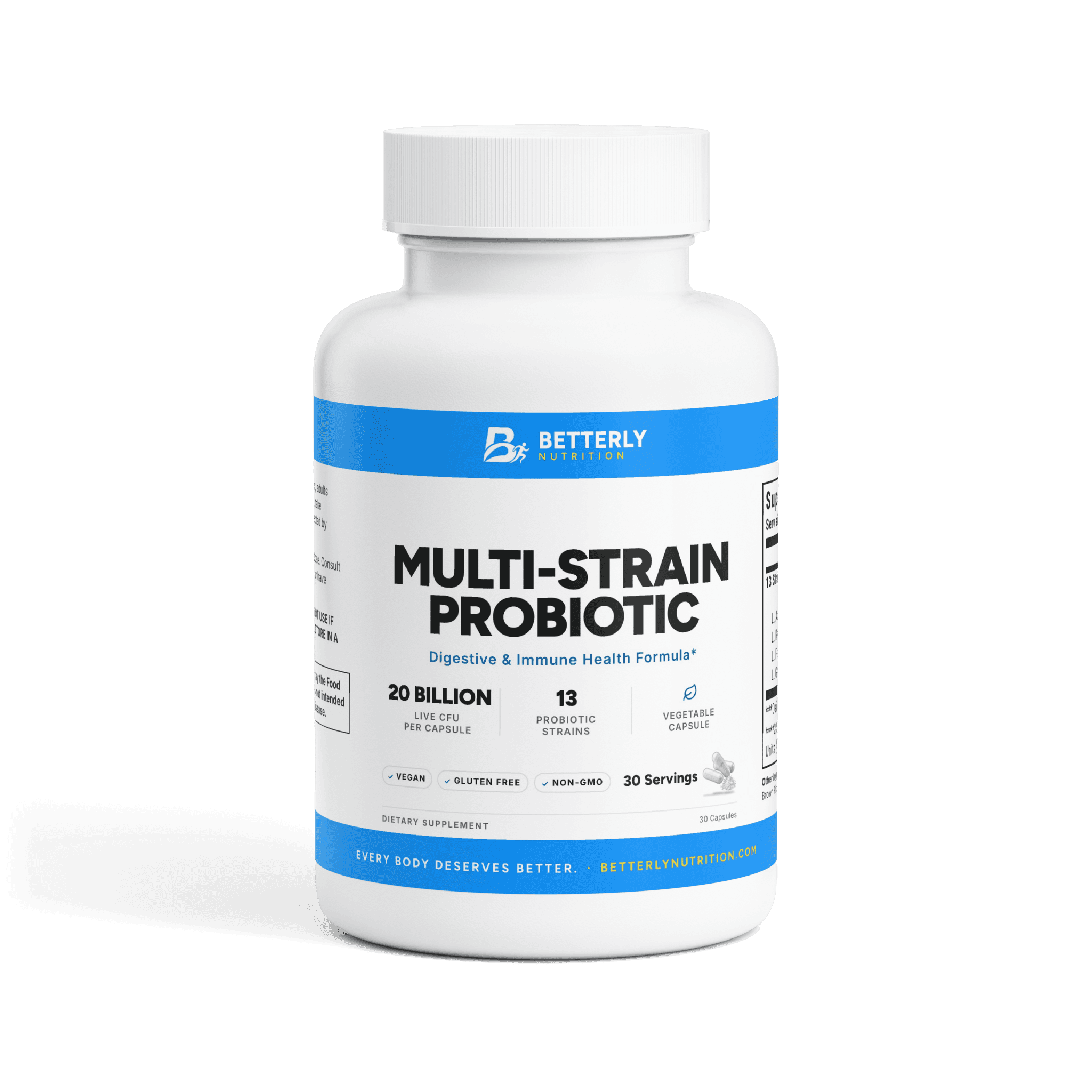
The short answer: Single strain vs multi strain probiotics come down to whether one CFU count belongs to one organism or is split among several. The NIH ties any benefit to the specific microorganisms and their CFUs, and strain count isn't on that list. A coded single strain is easiest to match to research. Our Multi-Strain Probiotic Capsules list 13 names with no strain codes, sharing 20 Billion CFU per 1 Capsule serving at the time of manufacture.
Key takeaways
- The number of strains on a bottle counts names on a list; it says nothing about how well the product works.
- A true single-strain label ends the name with a code, like LA85, while a name without a code only narrows things to the species.
- The 13 names on our Multi-Strain Probiotic Capsules cover 12 species at most, since B. Lactis is a subspecies of B. Animalis.
- Single-organism products show you the whole count, while blends trade that for several organisms in one serving.
- Whichever kind you pick, its label's suggested use is the limit.
Full disclosure: we sell both kinds, and they share a shelf in our Gut Health & Digestion collection. The numbers quoted here are copied off our real panels, including the spots where a panel stays quiet.
Single strain vs multi strain probiotics: what's the difference?
A single-strain probiotic contains one microorganism, while a multi-strain probiotic combines two or more in one serving, usually under one shared CFU count.
The NIH Office of Dietary Supplements (ODS) names every probiotic by genus, species and strain. One line from our own shelf shows all three: in Lactobacillus acidophilus La-14, Lactobacillus is the genus, acidophilus the species and La-14 the strain.
The strain code is what separates two products that share a species. B. lactis appears on four of our own panels, and only one of those four prints a code, Bl-04. The other three stop at B. lactis. So a label can say "multi-strain" and still leave off the most specific part of each name, as our 13-name capsule does.
How do labels show single strain, single species or a blend?
Single-strain, single-species and blend labels differ in how many probiotic names the Supplement Facts panel lists and whether each name ends in a strain code such as LA85.
Here's how five of our own panels sort out:
| Our label (serving) | Probiotic names listed | Strain codes printed | Category |
|---|---|---|---|
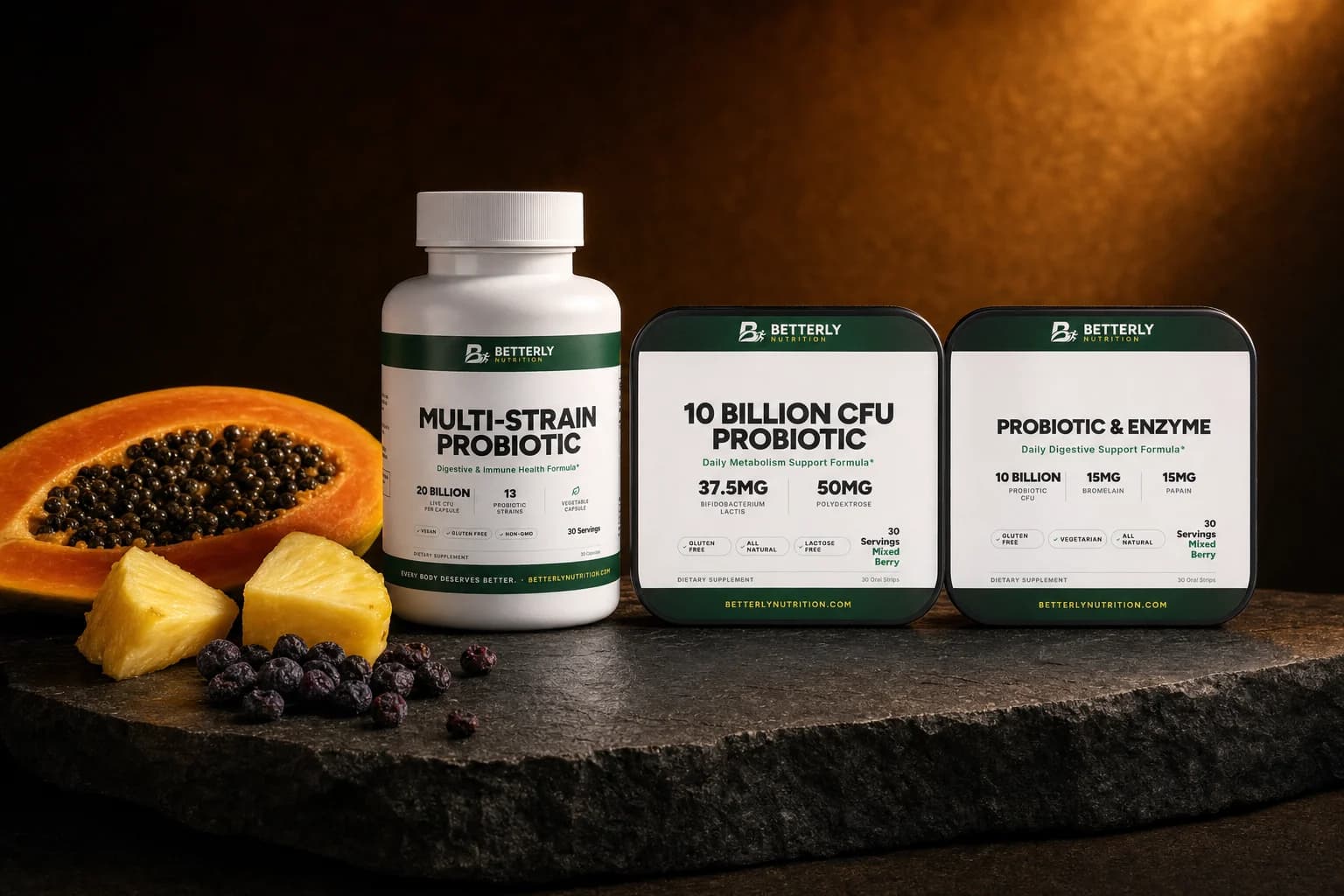
| Multi-Strain Probiotic Capsules (1 Capsule) | 13 | None | Uncoded blend |
| Probiotic & Prebiotic Capsules (2 Capsules) | 4, plus MAKTREK® | All 4 | Coded blend |
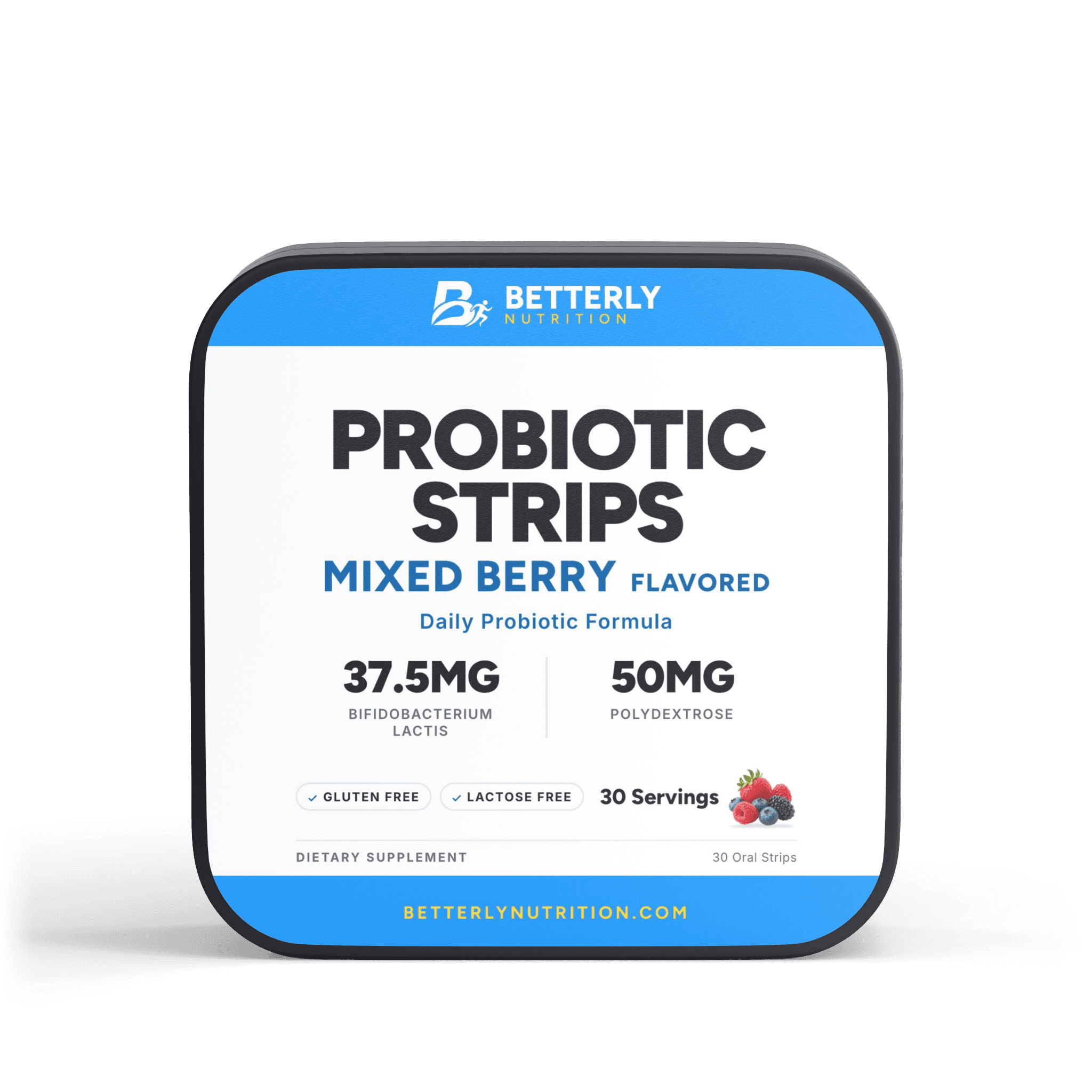
| 10 Billion CFU Probiotic Strips (1 Oral Strip) | 1 | None | Single organism, uncoded |
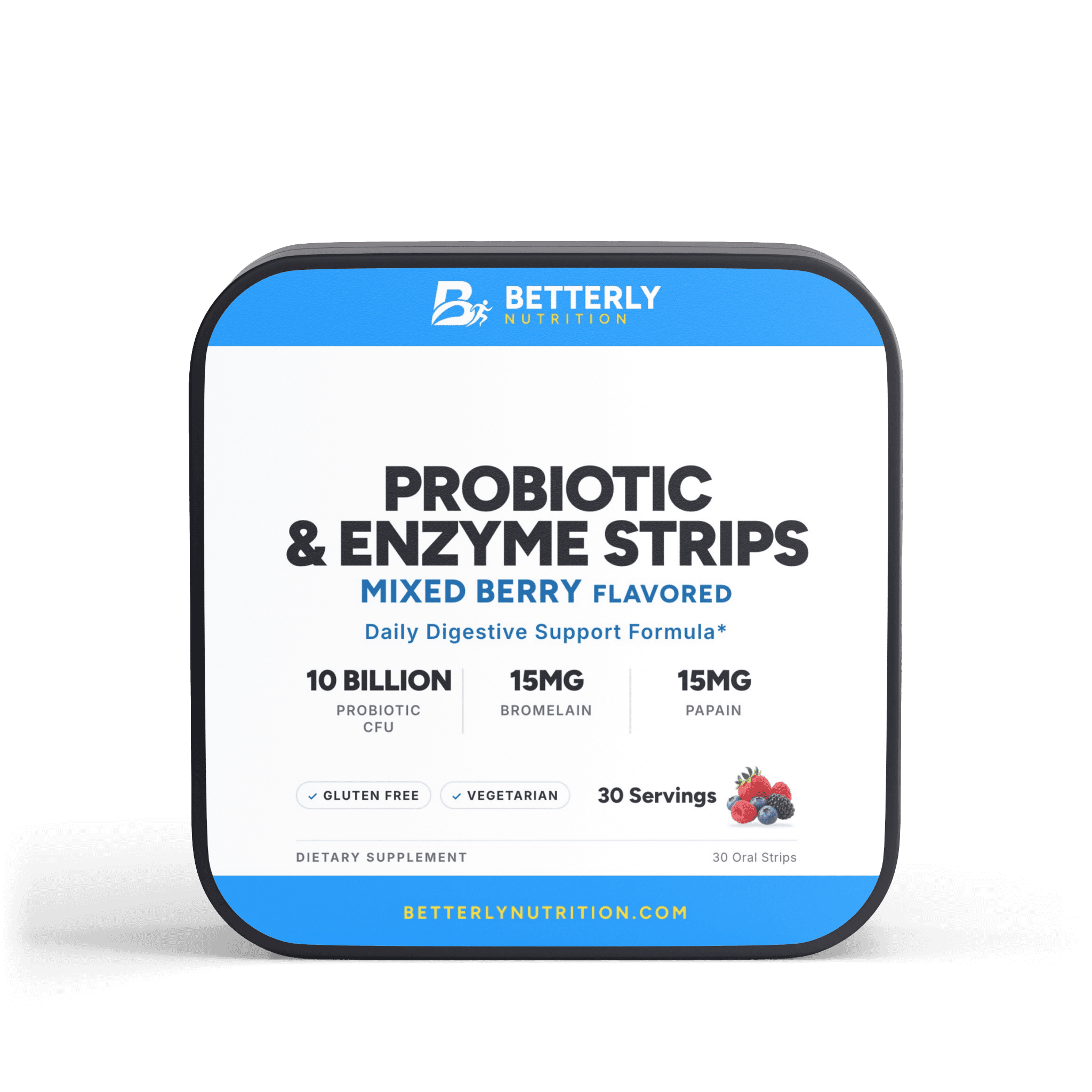
| Probiotic & Digestive Enzyme Strips (1 Oral Strip) | 1 | None | Single organism, uncoded |
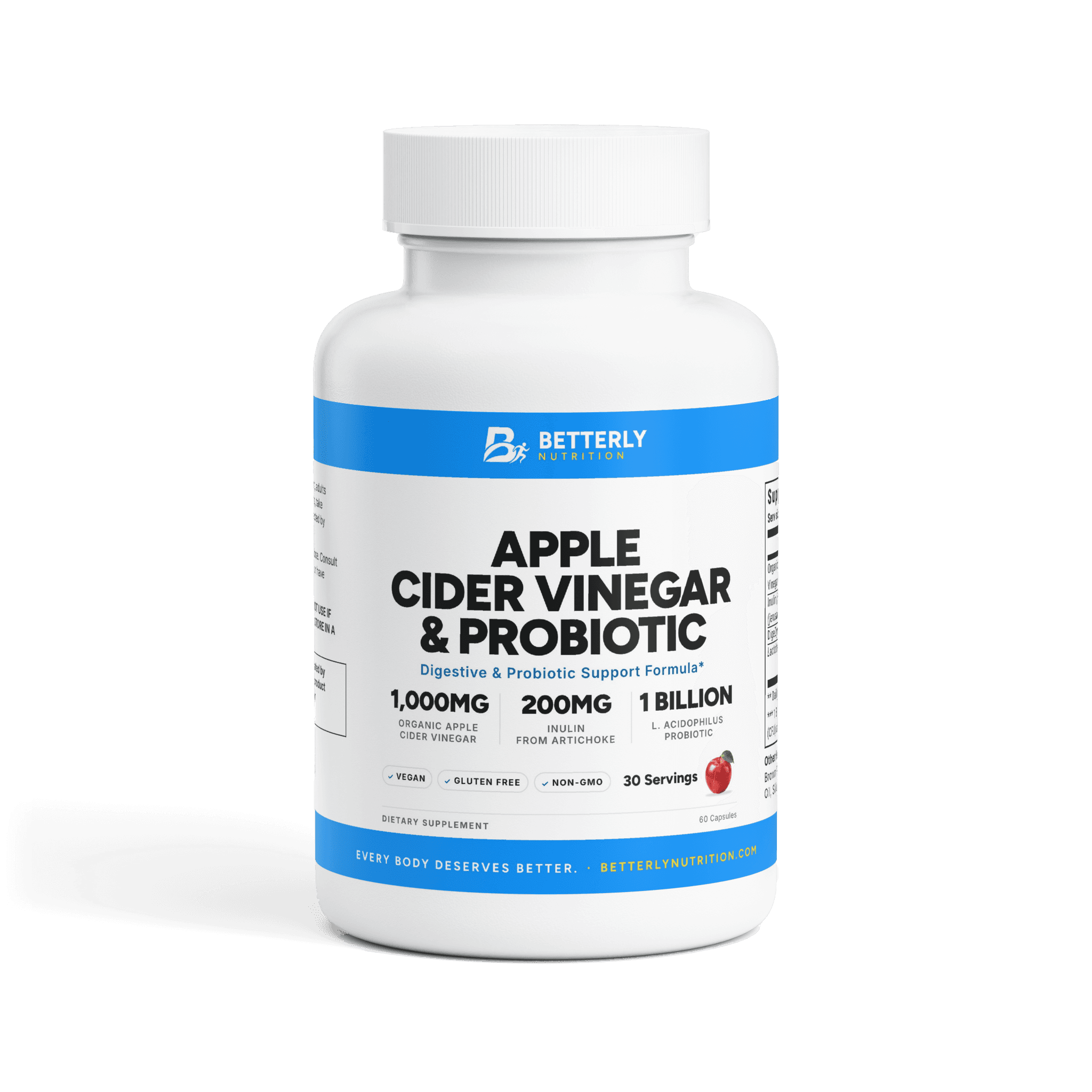
| Apple Cider Vinegar & Probiotic Capsules (2 Capsules) | 1 | LA85 | Single strain, coded |
Only the bottom row names a single strain all the way down to its code, the full naming ODS describes. The two strips each name one organism, so their whole count belongs to it, but neither prints a code.
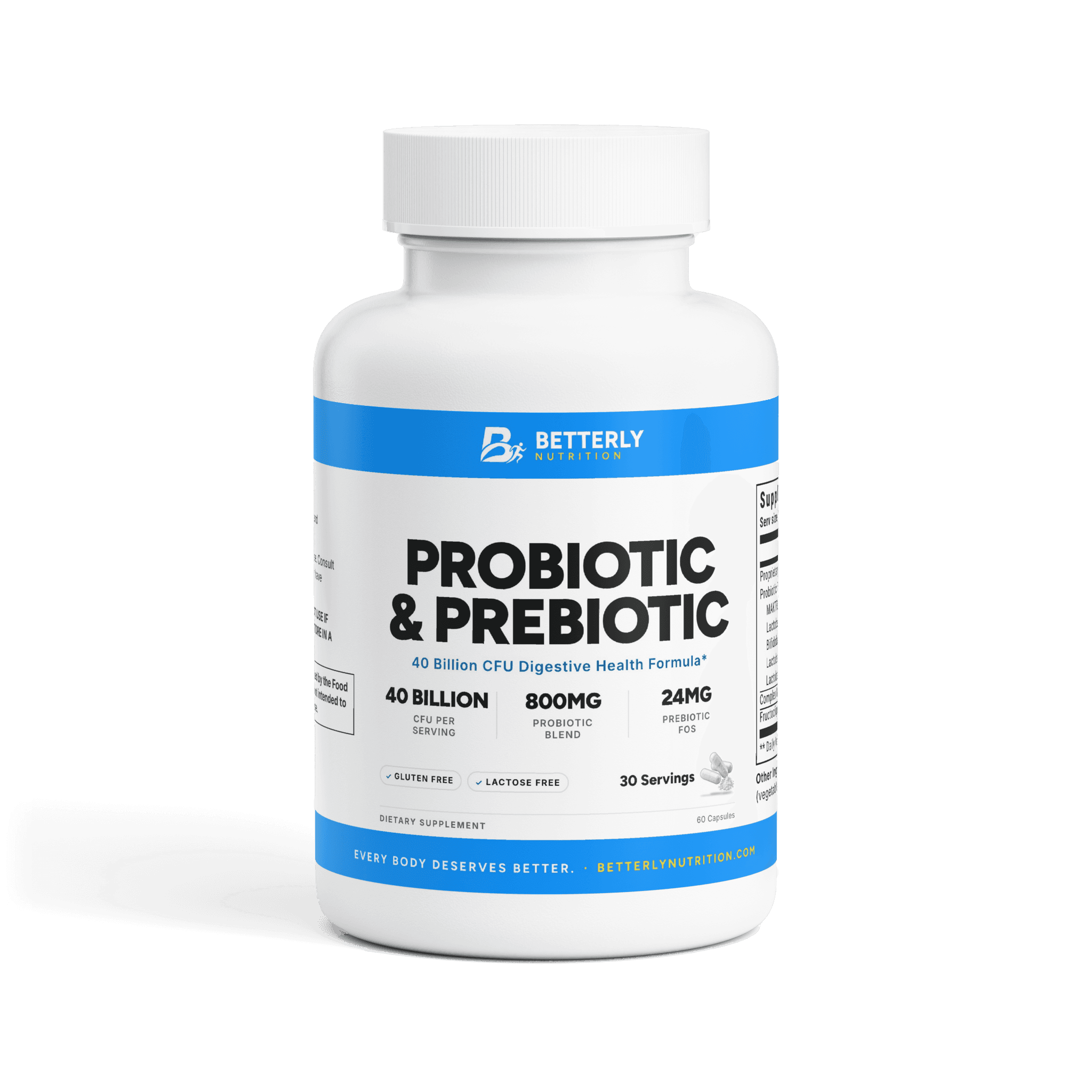
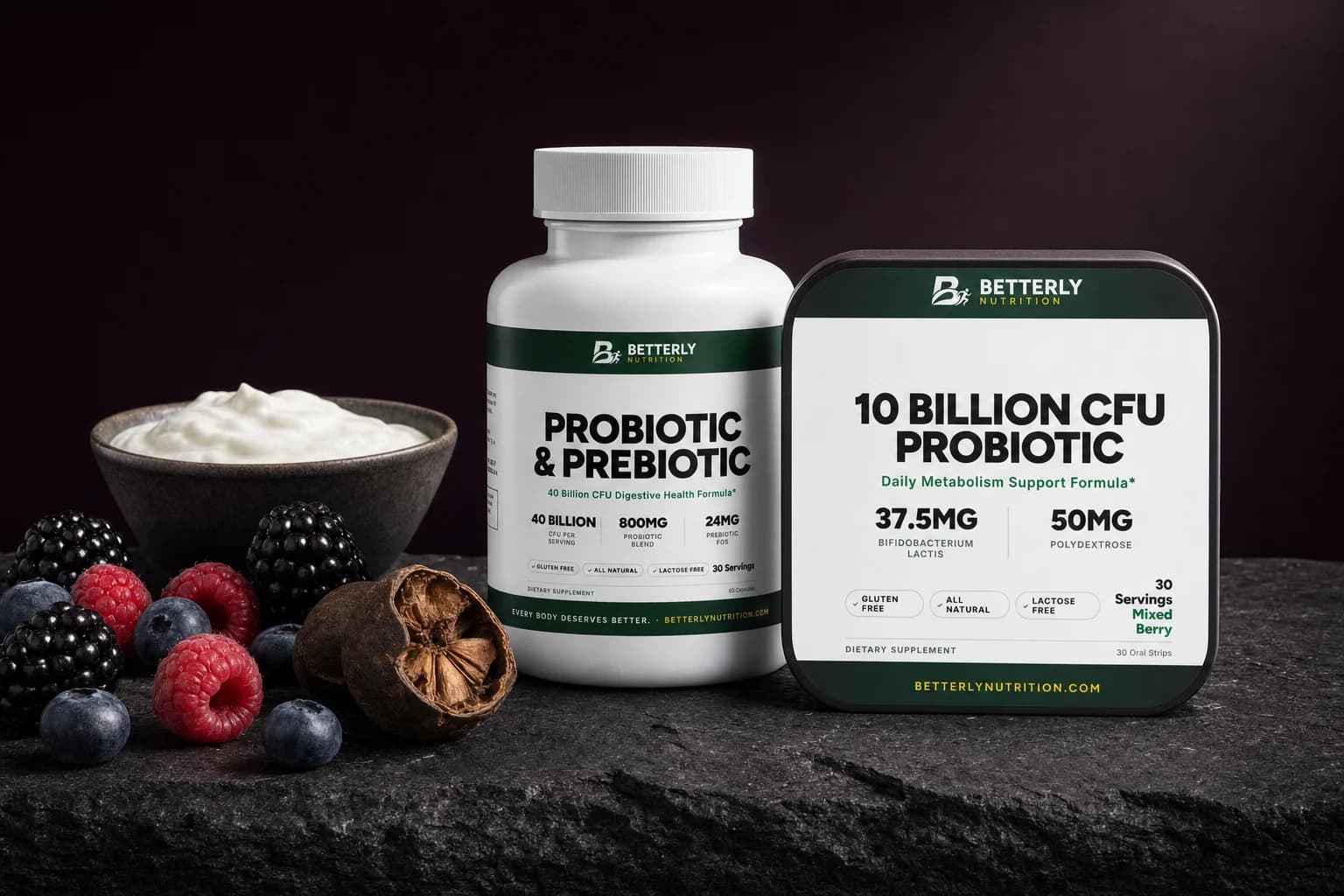
The two blends don't read alike, either. The 13-name capsule lists a 13 Strain Probiotic at 317 mg (20 Billion CFU at the time of manufacture) per 1 Capsule serving. Our Probiotic & Prebiotic Capsules print an 800 mg Proprietary Blend of Probiotic Bacteria (40 Billion CFU) per 2 Capsules serving.
That blend's codes, La-14, Bl-04, Lp-115 and Lpc-37, sit beside MAKTREK® (Bi-Pass Technology). Neither panel shows how its total divides. Our guide to proprietary blends digs into what a one-line total leaves out.
Thirteen names aren't 13 species, either. Two of them, B. Lactis and B. Animalis, sit on one branch: the National Library of Medicine's taxonomy browser files lactis as one of two subspecies of Bifidobacterium animalis. So our 13 names span 12 species at most. Our B. lactis strain guide traces that family tree.
Strain count isn't the only difference. Our 10 Billion CFU Probiotic Strips add 50 mg of polydextrose per 1 Oral Strip (180 mg) serving, and the other strip adds three enzymes. The Probiotic & Prebiotic capsules add 60 mg of complex marine polysaccharide and 24 mg of fructooligosaccharide per 2 Capsules serving. Compare any two by strain count alone and you're comparing add-ons too.
Are more probiotic strains better?
More probiotic strains aren't better by default. Each extra name is a separate organism with its own effects, if it has any, so a longer list doesn't guarantee a bigger benefit.
The National Center for Complementary and Integrative Health (NCCIH) explains why. It says different types of probiotics may have different effects: what's shown for one Lactobacillus needn't apply to another Lactobacillus or to any Bifidobacterium. So a blend's list isn't a sum of whatever each member has shown on its own.
More names don't hand any one organism a bigger share, either. Lactobacillus acidophilus shows how. Our Apple Cider Vinegar & Probiotic Capsules give its LA85 strain a row of its own, 10 mg (1 Billion CFU at the time of manufacture) per 2 Capsules serving.
Both blends list the species, too. The Probiotic & Prebiotic capsules put La-14 among four coded names sharing 40 Billion CFU per 2 Capsules serving. The Multi-Strain capsule lists plain L. acidophilus as 1 of 13 names sharing 20 Billion CFU per 1 Capsule serving at the time of manufacture. Neither prints acidophilus's share, so totals 40 and 20 times larger don't prove either holds more of it than the LA85 row.
We don't claim that 13 names do more than one. What a longer list gives you is several organisms in one daily capsule.
Why is a single-strain probiotic easier to match to research?
A coded single-strain probiotic is easier to match to research, since ODS says benefits depend on the specific strain and its CFU count, and that label prints both.
ODS repeats one caveat in more than one of its research summaries: the effects vary depending on the probiotic strain used. It adds that a supplement nobody has studied may have effects nobody knows.
A coded single strain lets you do the lookup yourself: search the full name and code, then compare the amount studied with what the label prints. A finding on a blend describes that exact combination at that total. Swap a member and it's a different product, since NCCIH says types can behave differently.
Here's our honest limit. Our two strips are single-organism, but without codes they deliver only half of that advantage. The Probiotic & Digestive Enzyme Strips, for example, list Bacillus coagulans at 50 mg (10 Billion CFU) per 1 Oral Strip (210 mg) serving. Every CFU belongs to that one organism, yet no strain is named to look up.
Neither strip, nor the Probiotic & Prebiotic panel, says whether its count holds at manufacture or through the expiration date. ODS notes that CFUs can decline over time, and our guide to reading probiotic CFU counts covers that footnote.
When does a multi-strain probiotic make sense?
A multi-strain probiotic makes sense when you want several named organisms in one daily serving and aren't trying to copy one study's strain.
Convenience is the plain case for it: one or two capsules a day instead of several separate labels to manage.
Within blends, codes still matter. The Probiotic & Prebiotic capsules sit in the middle. Each of their four names carries a code you can look up, and all four share one 800 mg blend (40 Billion CFU) per 2 Capsules serving. You give up per-strain amounts but keep strain identity. The 13-name capsule goes the other way, with more names and less detail on each.
Tolerance is the other trade-off. ODS says probiotics may cause gas in healthy people. If a new blend doesn't sit well with you, a 13-name panel can't point to the culprit. A one-organism strip leaves one probiotic to suspect, though its other ingredients count too.
From our shop: Multi-Strain Probiotic Capsules — a vegan 13 Strain Probiotic at 317 mg (20 Billion CFU at the time of manufacture) per 1 Capsule serving, with no strain codes.
What's the best single-strain probiotic?
The best single-strain probiotic is whichever coded strain has research that fits your reason for taking it, so there's no one pick for everybody.
ODS points you to a health care provider for the choice, the dose and how long to take it. Once you know your goal, this table matches it to a label type:
| If you want to... | Look for | Closest Betterly label |
|---|---|---|
| Look up one strain's research | One name, one code, its own count | Apple Cider Vinegar & Probiotic Capsules (LA85) |
| Know one organism's full count | A single probiotic row | Either oral strip |
| Get several traceable strains at once | A code on every name in the blend | Probiotic & Prebiotic Capsules |
| Get many named organisms in one capsule | A long list of species | Multi-Strain Probiotic Capsules |
| Trace a reaction to one organism | One organism at a time | Either oral strip |
Only one row rewards a long list, and that row is about convenience. The rest turn on a code, a full count or a single name, which is the real split between single and multi-strain labels.
The top row needs a caveat. The vinegar capsule's LA85 is a coded single strain, but it's the smallest of the panel's four rows. The largest is 1,000 mg of organic apple cider vinegar powder per 2 Capsules serving. It's a vinegar capsule first and a probiotic second.
How do you take a single- or multi-strain probiotic by the label?
Take a single- or multi-strain probiotic exactly as its label directs, since strain count doesn't set the serving: ours ask for one strip, one capsule or two capsules daily.
- Multi-Strain Probiotic Capsules: adults take one (1) capsule daily, with 6-8 oz (177-237ml) of water for best results.
- Probiotic & Prebiotic Capsules: two (2) capsules once daily, and for best results, one during the day and one in the evening.
- Both strips: place 1 oral strip on the tongue daily and allow it to dissolve. No water is called for, and no time of day is set.
"Do not exceed recommended dose" appears on all four, along with storage in a cool, dry place. Where a label names no time, pick one you'll remember.
From our shop: Probiotic & Prebiotic Capsules — four coded strains sharing an 800 mg blend (40 Billion CFU) per 2 Capsules serving, taken one by day and one in the evening.
When don't you need a probiotic of either kind?
You don't need a single- or multi-strain probiotic just because both exist, since ODS says no official recommendations cover probiotic use by healthy people.
Skip ours, or wait, if:
- A bigger number on the front is the whole appeal, whether it counts strains or CFU.
- You already take a coded product and have looked up its codes. Our 13-name capsule would add organisms but give you less to check.
- You want several kinds in one serving. Each of our strips holds a single organism, so it can't widen your list.
Who should check with a healthcare provider first?
Pregnancy, nursing, being under 18, prescription medicine, upcoming surgery and any medical condition are all reasons to talk to a healthcare provider before either kind of probiotic.
Each of the five labels above reads: "Consult a physician if pregnant, nursing, under 18, or have a medical condition." Surgery and medicines come from the ODS guide Dietary Supplements: What You Need to Know, which wants your provider's sign-off before you mix supplements with prescribed drugs.
NCCIH asks for close monitoring of anyone taking probiotics with a serious underlying health condition. ODS flags people who are already seriously ill or whose immune systems are weak, and it notes FDA reports that probiotics might cause life-threatening illness in preterm infants.
With a blend, bring the whole name list, not just the front of the bottle. A provider can't weigh 13 organisms from a tile that only says "13."
FAQ: single vs multi-strain probiotics
How many strains should a good probiotic have?
A good probiotic doesn't need a set number of strains, so look past the tally to three other details on its label. Check how many names end in a strain code, such as Bl-04. See whether any organism gets its own CFU count or they all share one. Then check whether that count applies at manufacture or through the expiration date. Of the five labels in this guide, only the Apple Cider Vinegar & Probiotic label answers all three.
Do the strains in a multi-strain probiotic compete with each other?
Whether the strains in a multi-strain probiotic compete isn't something the federal pages we read address, so we won't guess. ODS and NCCIH both say effects can differ from one probiotic type or strain to the next. What our two blend labels do show is which organisms they list and the total those organisms share, not how it divides.
Can you take a single-strain and a multi-strain probiotic together?
You can take a single-strain and a multi-strain probiotic together, but ask a healthcare provider before you do, since each label's directions cover that one product. Our 10 Billion CFU Probiotic Strips and Multi-Strain Probiotic Capsules both list B. lactis, so pairing them doubles up on that name. With no codes on either label, you can't tell whether it's the same strain. Keep each at its own suggested use, and see how stacking two probiotics adds up.
Does a multi-strain probiotic cause more side effects?
A multi-strain probiotic isn't tied to more side effects by ODS or NCCIH, since neither links them to strain count. ODS says probiotics may cause gas in healthy people and rarely cause other problems, while NCCIH notes a lack of solid information on how often side effects happen. A blend does make a reaction harder to trace. If a probiotic seems to disagree with you, stop it and talk to a provider.
How long should you take a single-strain probiotic before switching?
There's no set trial length for a single-strain probiotic before you switch. The five labels in this guide each give a daily serving with no end date and hold 30 servings. ODS leaves how long to use a probiotic to your health care provider, so plan any switch with them rather than by the calendar.
Sources
- Probiotics: Fact Sheet for Consumers (NIH Office of Dietary Supplements)
- Probiotics: Usefulness and Safety (NCCIH)
- Taxonomy Browser: Bifidobacterium animalis (NCBI, National Library of Medicine)
- Dietary Supplements: What You Need to Know (NIH Office of Dietary Supplements)
If this left you looking for somewhere to start, read 13-strain probiotic capsules — its amounts per serving are listed on the page. For the practical questions this raises, how dosing, sourcing and subscriptions work is answered in one place.