On this page
- Key takeaways
- What's the difference between Bifidobacterium and Lactobacillus?
- Which genus is in each of our three main probiotics?
- Where do bifidobacteria and lactobacilli tend to live?
- Why have many Lactobacillus species had new names since 2020?
- Is Bifidobacterium or Lactobacillus better?
- How do you tell the two genera apart on a probiotic label?
- How do you take a Bifidobacterium or Lactobacillus probiotic?
- When don't you need a Bifidobacterium or Lactobacillus supplement?
- Who should check with a healthcare provider first?
- FAQ: Bifidobacterium vs Lactobacillus
- Sources
The short answer: Bifidobacterium vs Lactobacillus compares two separate genera, not two strengths of one probiotic. The National Library of Medicine files them on different branches of the bacterial tree. It describes Bifidobacterium as living in the human intestines, and Lactobacillus in the mouth, gut and wider nature. Since 2020, many former Lactobacillus species carry new genus names. Neither genus outranks the other, because the NIH ties a probiotic's value to its exact strain and CFU count.
Key takeaways
- Bifidobacterium and Lactobacillus are separate genera: both are rod-shaped and gram-positive, but they sit on different branches of the bacterial tree.
- A 2020 reclassification moved many Lactobacillus species into new genera, so L. plantarum is now Lactiplantibacillus plantarum, though the L. shorthand still fits.
- Federal sources don't rank either genus higher, because a probiotic's effects belong to its specific strain and count.
- Our 10 Billion CFU Probiotic Strips hold Bifidobacterium only, while both probiotic capsules in this guide mix the two genera under one shared CFU total.
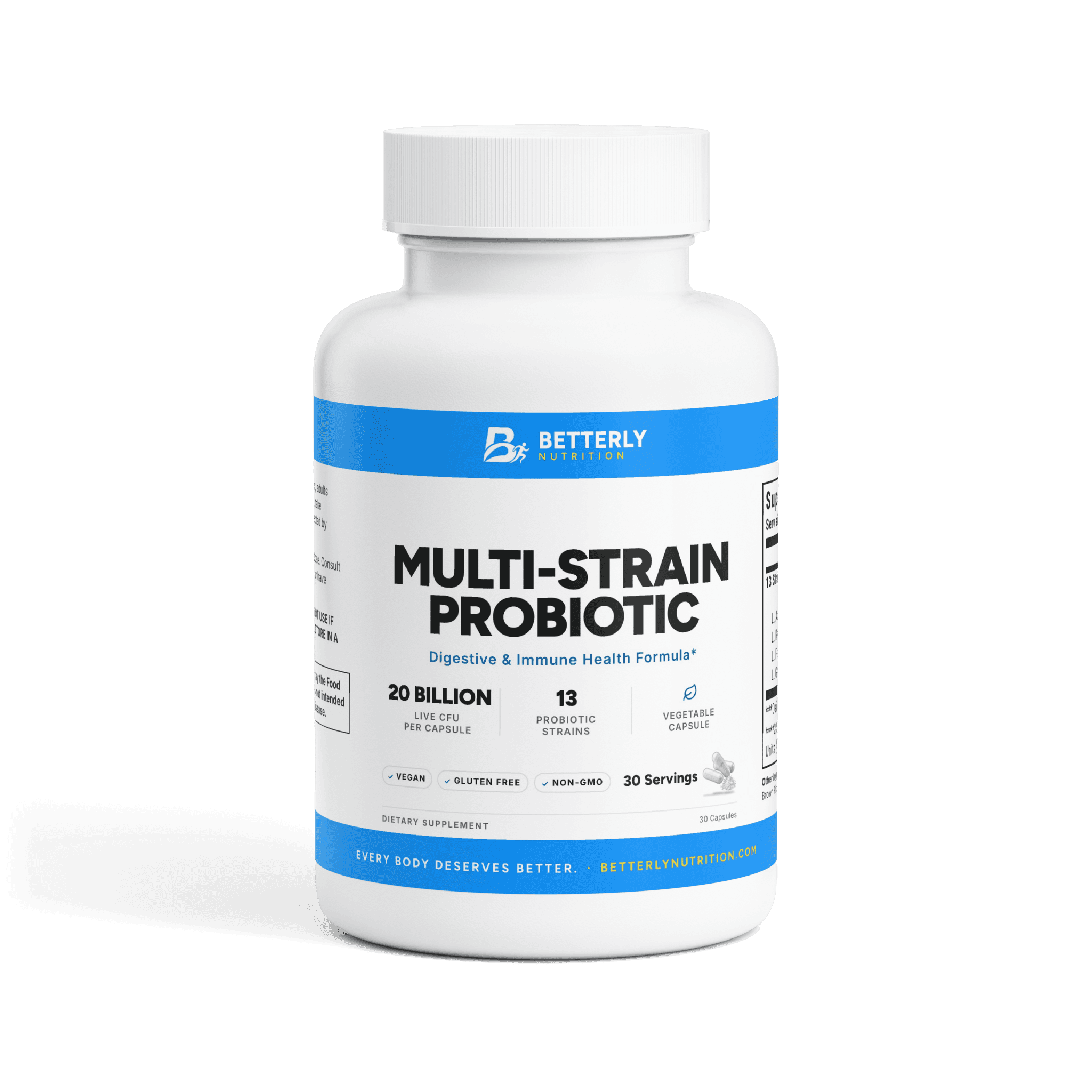
- Only 2 of the 8 L. names on the Multi-Strain Probiotic Capsules label, acidophilus and gasseri, are still in the genus Lactobacillus today.
We sell all three probiotics compared here, and our labels share the gaps this guide flags. Probiotic & Prebiotic Capsules still print the old genus for two renamed species, and neither capsule splits its CFU total by genus.
What's the difference between Bifidobacterium and Lactobacillus?
Bifidobacterium and Lactobacillus are two separate genera of rod-shaped, gram-positive bacteria that sit on different branches of the bacterial family tree.
A genus is the first word in a microbe's name. The NIH Office of Dietary Supplements (ODS) describes a three-part name for every probiotic: genus, then species, then strain. So when one label says Bifidobacterium longum and another says Lactobacillus acidophilus, they differ at the first word.
The National Library of Medicine's MeSH vocabulary shows how far apart they sit. Its Bifidobacterium record places the genus in the family Bifidobacteriaceae, order Bifidobacteriales, class Actinobacteria. Its Lactobacillus record files Lactobacillus under Bacillota, in the order Lactobacillales and the family Lactobacillaceae.
| Trait | Bifidobacterium | Lactobacillus |
|---|---|---|
| Order and family (MeSH) | Bifidobacteriales, Bifidobacteriaceae | Lactobacillales, Lactobacillaceae |
| Shape and stain | Rod-shaped, gram-positive | Rod-shaped, gram-positive |
| Where MeSH says it lives | Human intestines | Mouth, gut, widely in nature |
| Label shorthand | B. lactis, B. longum | L. acidophilus, L. plantarum |
| 2020 renaming | Not affected | Many species moved genus |
Beyond shape and stain, the two genera have little in common.
Which genus is in each of our three main probiotics?
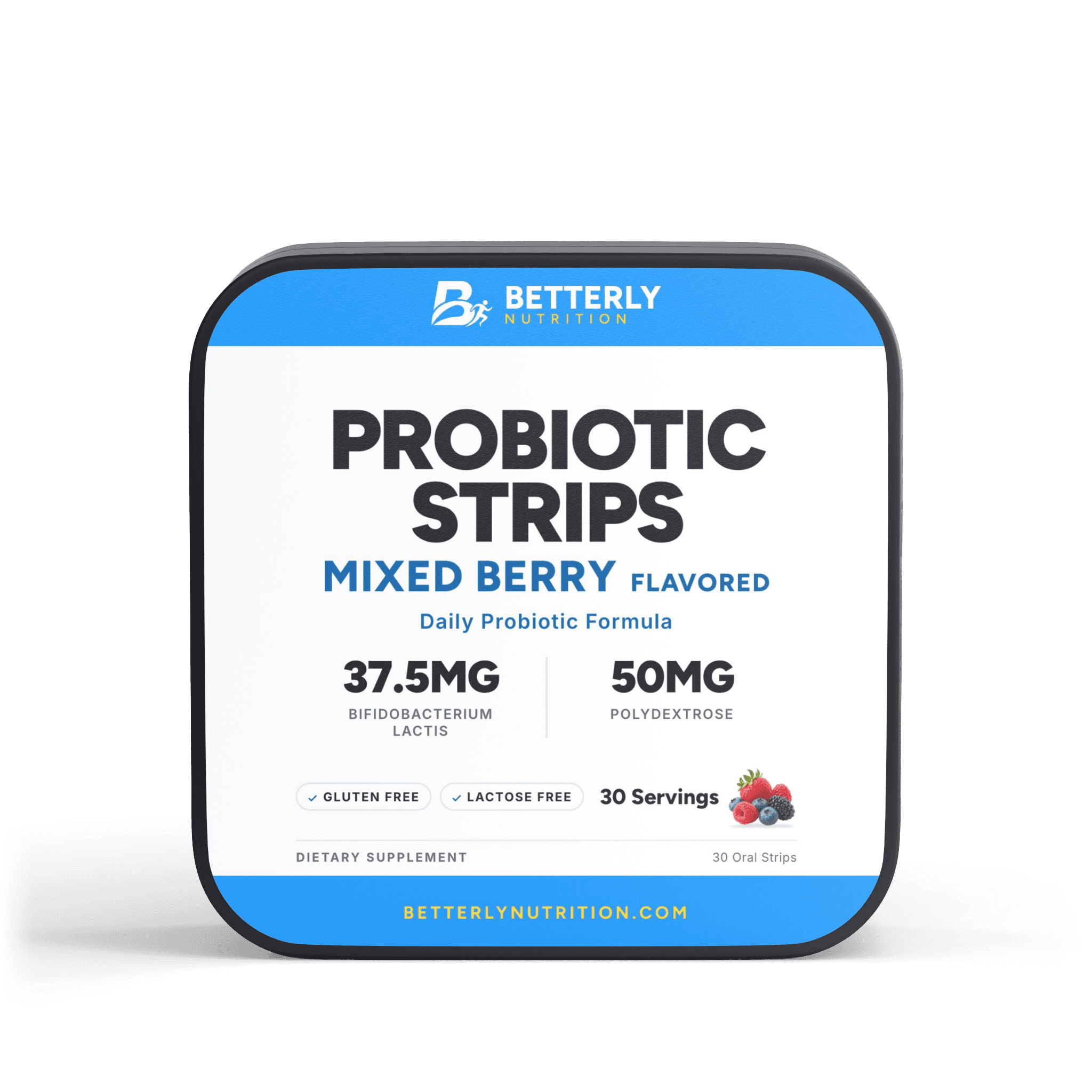
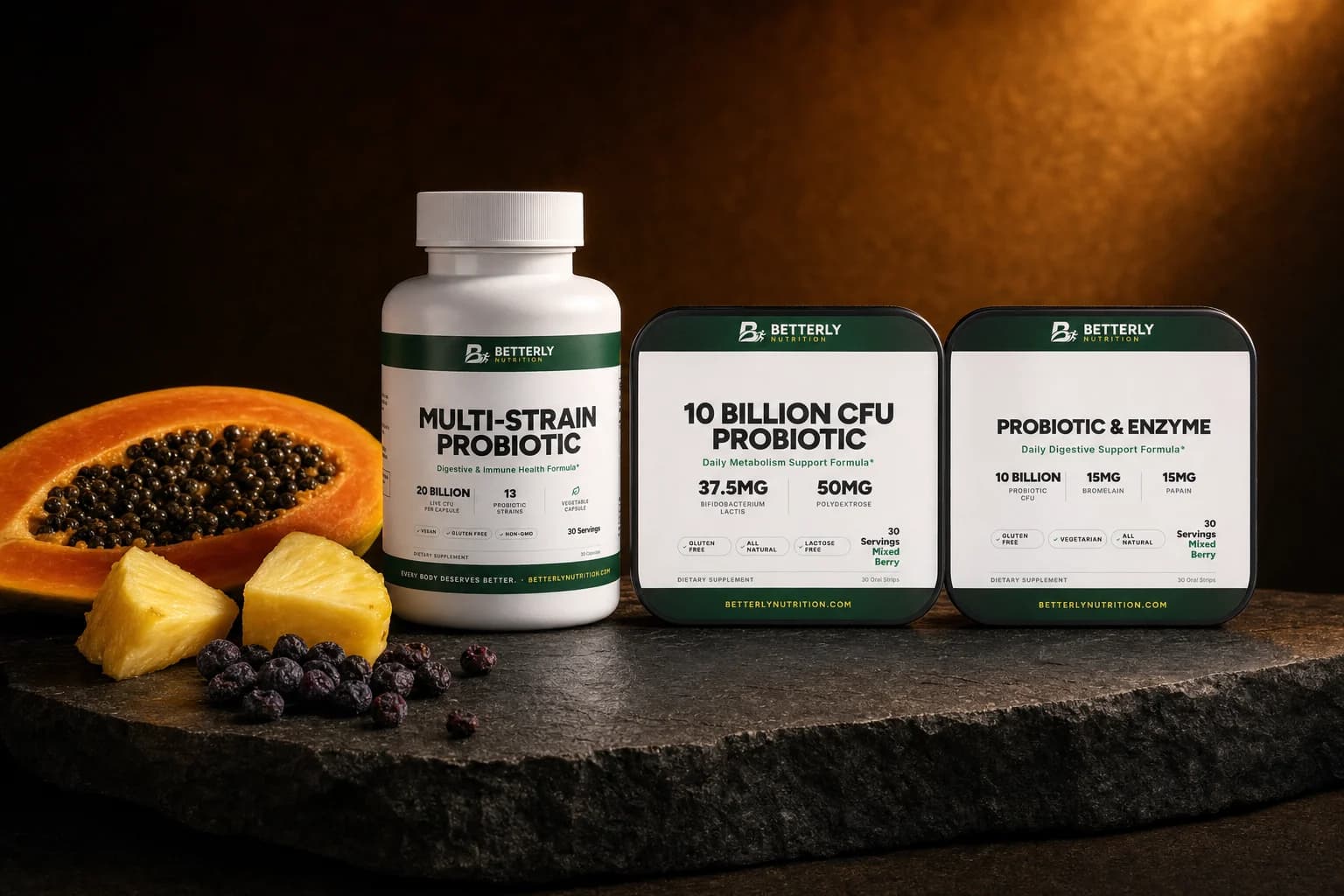
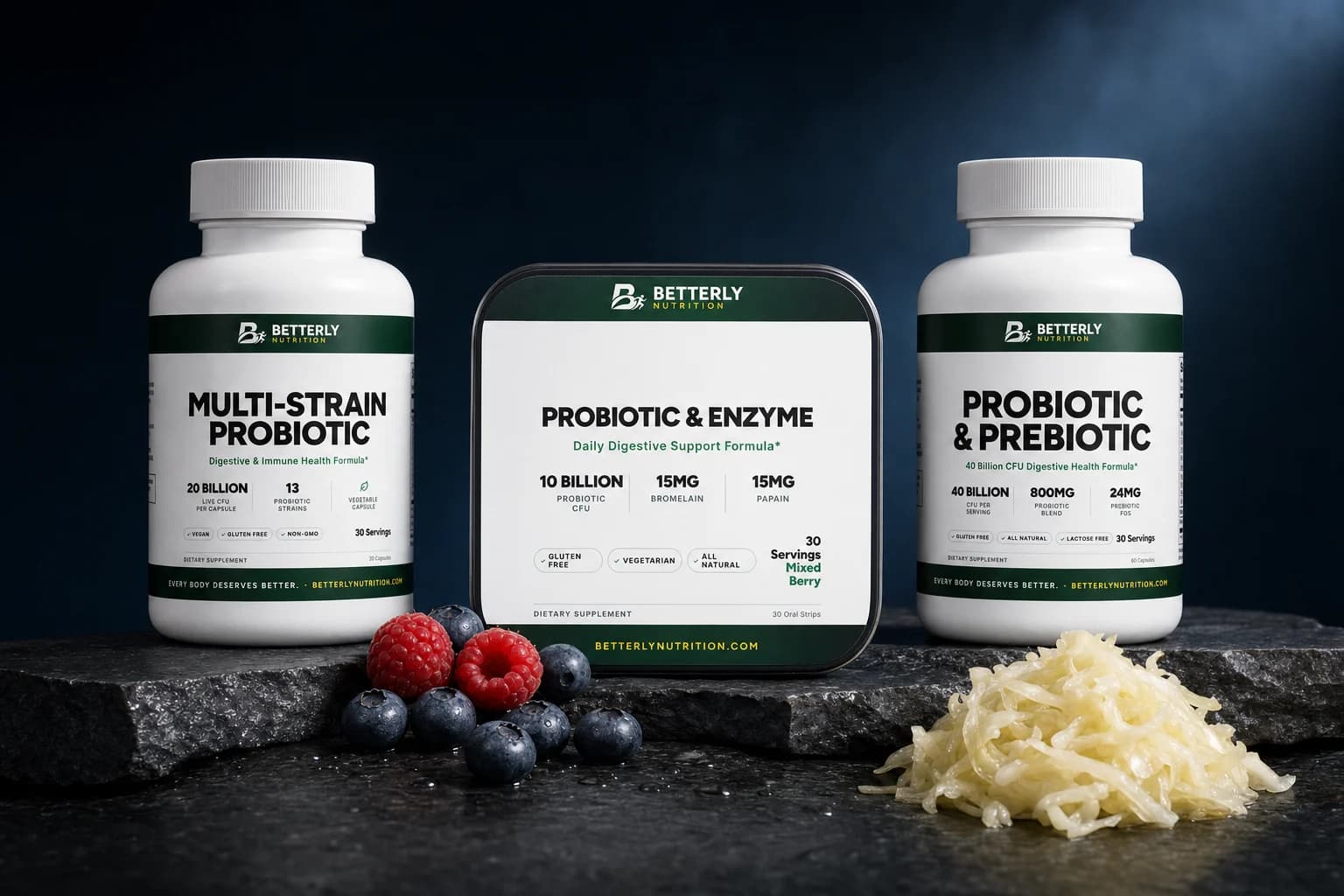
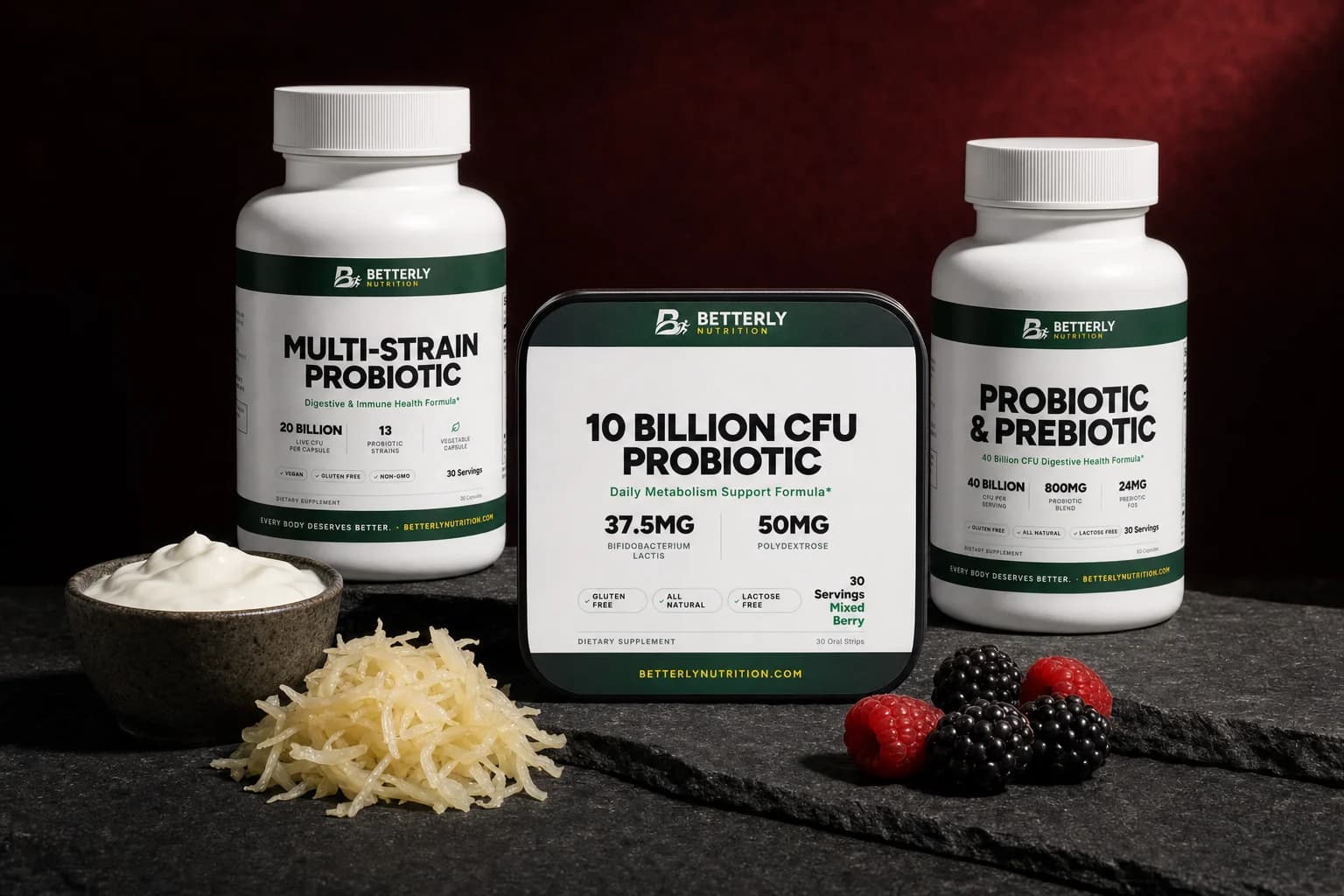
Betterly's 10 Billion CFU Probiotic Strips contain Bifidobacterium only, while the two probiotic capsules in this guide each list both genera inside a single blend.
| Product (serving) | Bifidobacterium names | Lactobacillus-group names | Count per serving |
|---|---|---|---|
| 10 Billion CFU Probiotic Strips (1 Oral Strip, 180 mg) | B. lactis, no strain code | None | 10 Billion CFU, all Bifidobacterium |
| Multi-Strain Probiotic Capsules (1 Capsule) | 5 names, no codes | 8 names, no codes | 20 Billion CFU for all 13, at manufacture |
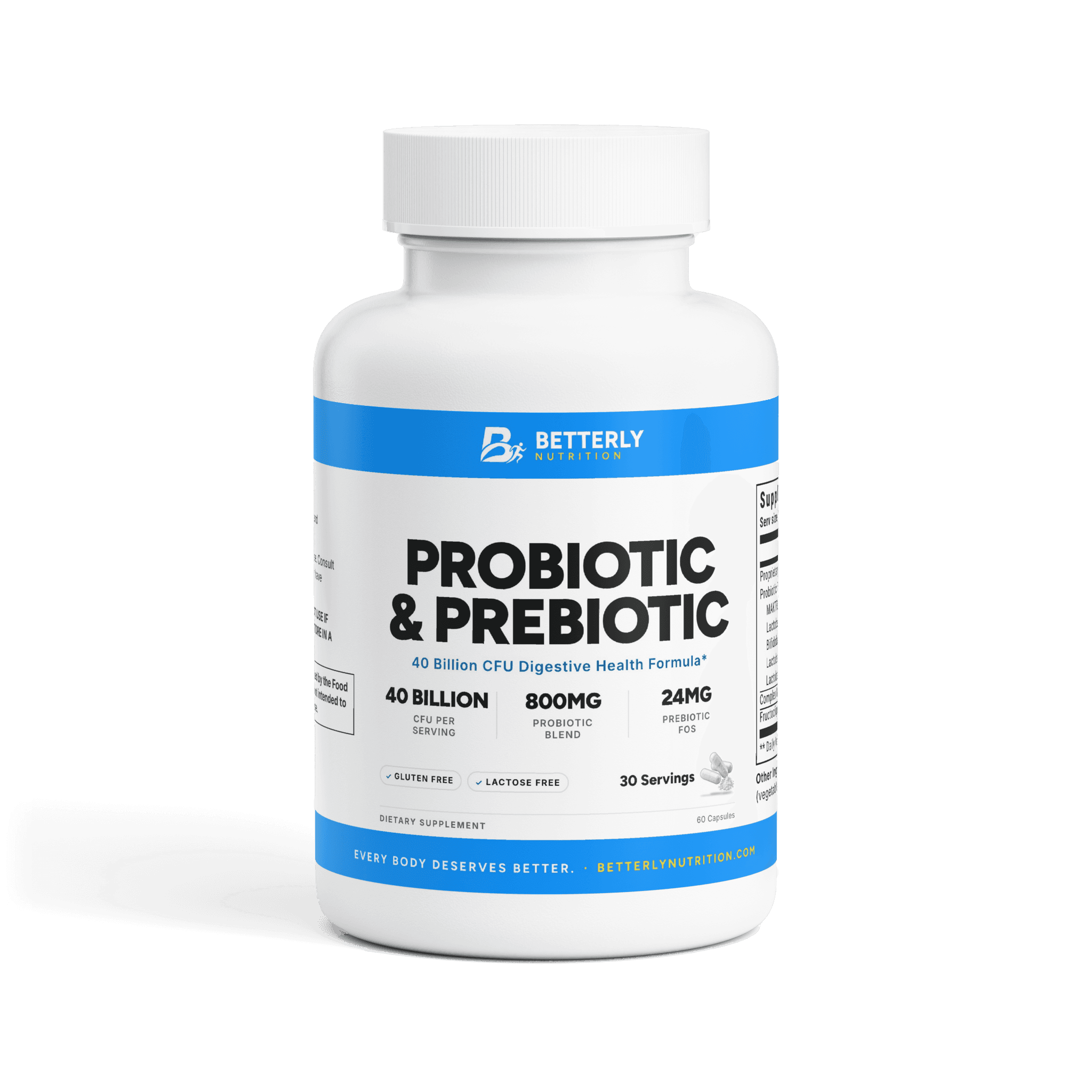
| Probiotic & Prebiotic Capsules (2 Capsules) | Bl-04 | La-14, Lp-115, Lpc-37 | 40 Billion CFU for the whole blend |
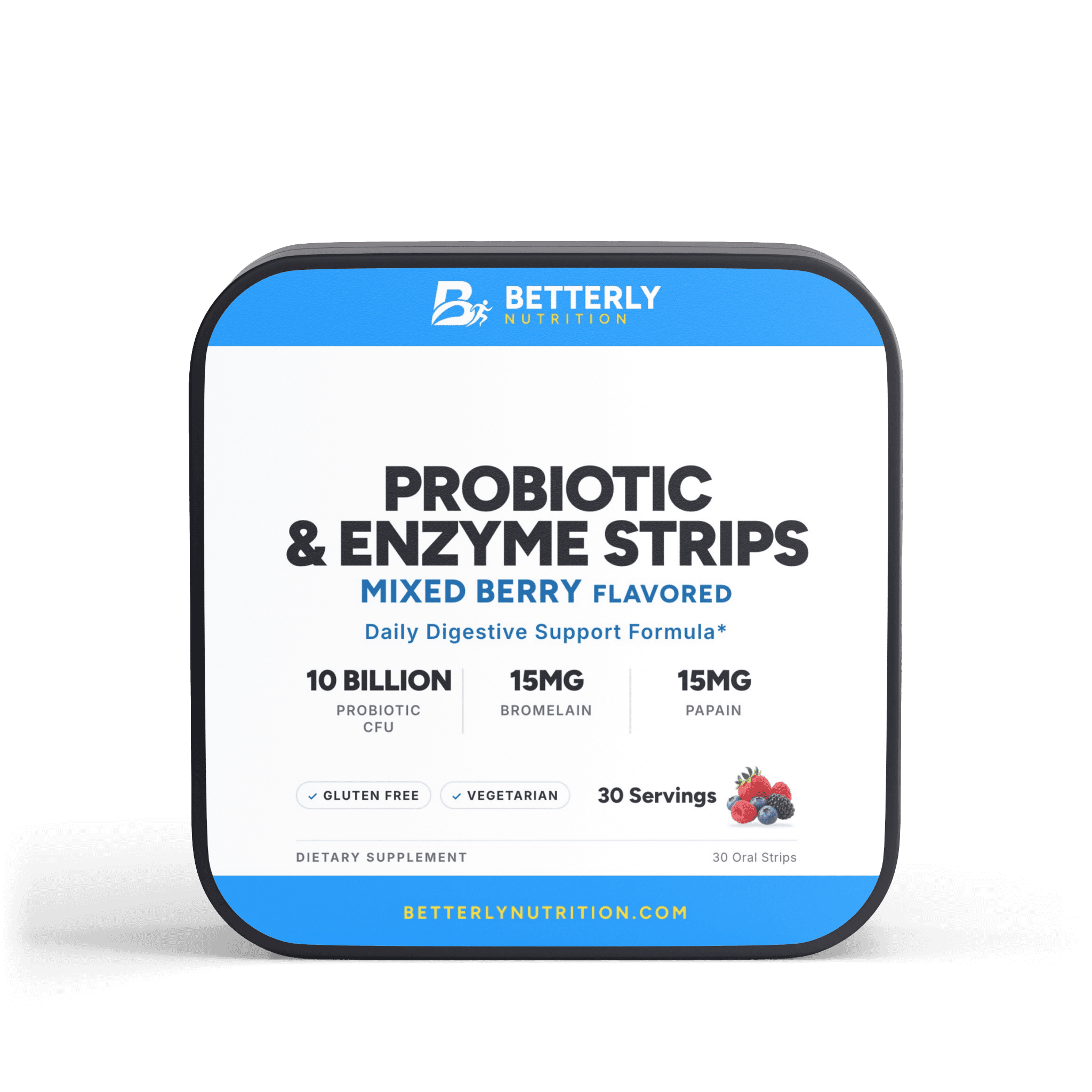
Of these three, only the strip tells you which genus owns the count. Its panel lists Bifidobacterium lactis at 37.5mg (10 Billion CFU) per 1 Oral Strip (180 mg) serving, plus 50 mg of polydextrose, and no other microbe.
Multi-Strain Probiotic Capsules print 13 microbe names in a 317 mg blend. Eight start with L. and five with B., but that's a count of names, not of CFUs. The label never says how the 20 Billion CFU splits between the two genera.
Probiotic & Prebiotic Capsules print strain codes for all four microbes in an 800 mg (40 Billion CFU) blend. The blend also lists MAKTREK® (Bi-Pass Technology), which carries no genus or species name, and our proprietary blend explainer covers why panels print one combined weight.
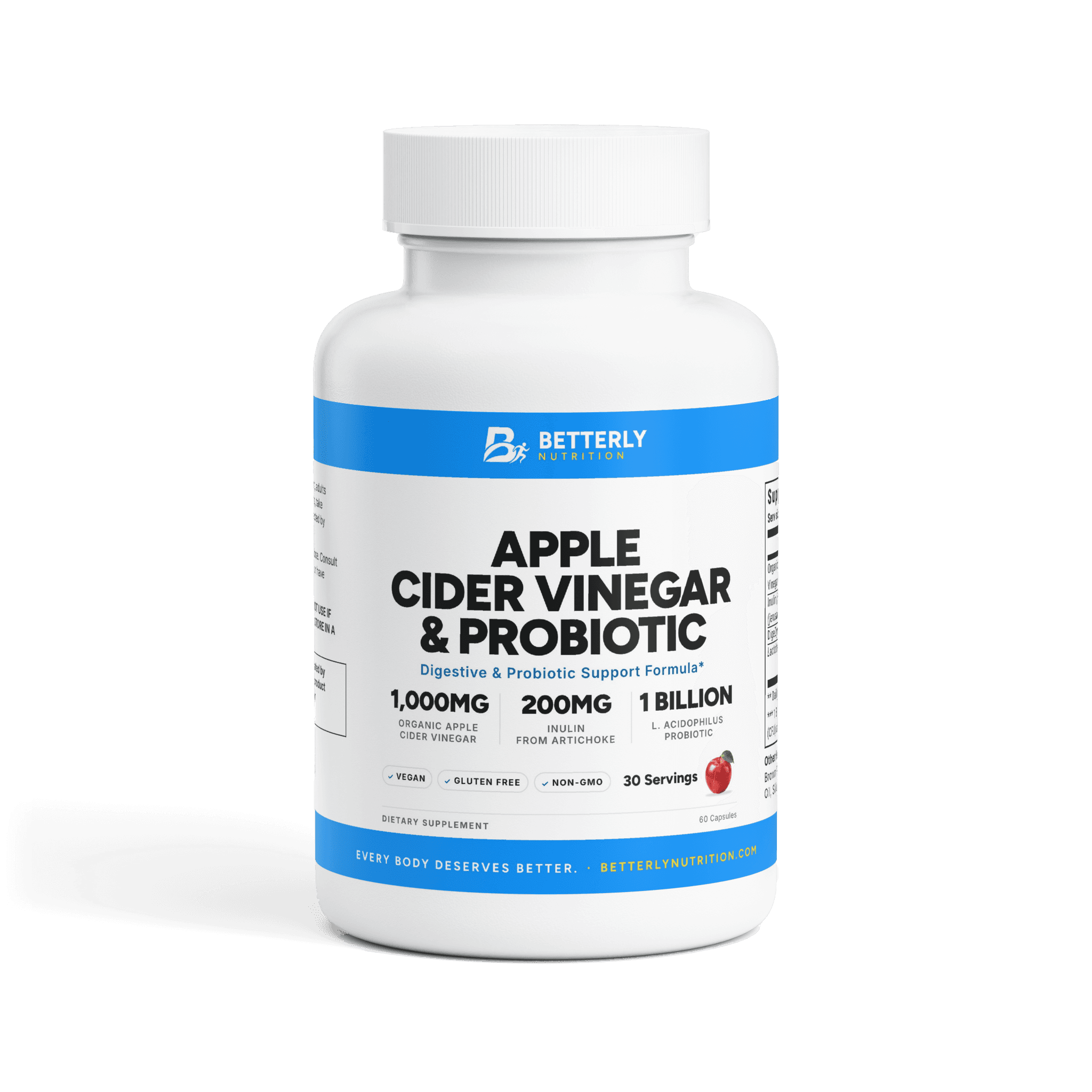
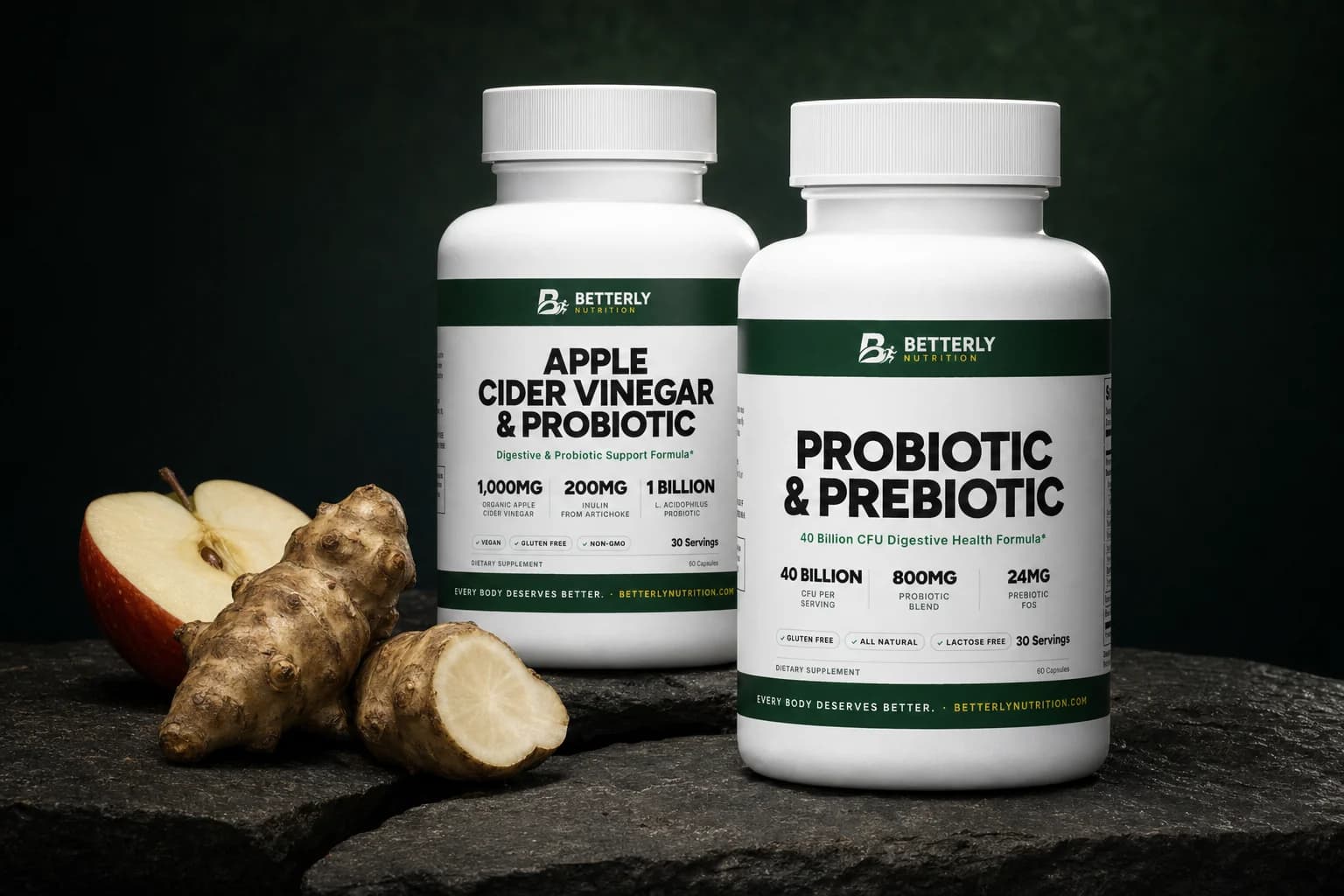
Shopping for the reverse, Lactobacillus with no Bifidobacterium? Our Apple Cider Vinegar & Probiotic Capsules list one microbe, Lactobacillus acidophilus LA85, at 10 mg (1 Billion CFU at the time of manufacture) per 2 Capsules serving. The biggest row on that panel is organic apple cider vinegar powder, at 1,000 mg.
Where do bifidobacteria and lactobacilli tend to live?
Bifidobacteria are described as residents of the human intestines, while lactobacilli turn up more widely, including the mouth, the intestinal tract and many places in nature.
Both descriptions come from the MeSH records above, and the Lactobacillus entry counts its species among the normal flora of many mammals, people included.
You may have read that one genus favors the small intestine and the other the large. None of the federal pages we used draws that line. ODS keeps it broad and just names the digestive tract as where probiotics mainly work.
Why have many Lactobacillus species had new names since 2020?
Many Lactobacillus species carry new names because a 2020 reclassification split the old, very broad Lactobacillus genus into smaller ones.
NCBI's Taxonomy Browser entry for Lactiplantibacillus plantarum lists Lactobacillus plantarum as the older name and credits the current one to a 2020 paper, whose title says it described 23 new genera and revised the definition of Lactobacillus.
ODS has already switched, using Lacticaseibacillus rhamnosus GG as its example name and mentioning Limosilactobacillus reuteri. Many labels, ours included, still print the older names.
Here's how the L. names on the two capsule labels in this guide read today. Every new genus below comes from that 2020 reclassification.
| Name on our labels | Current name | Printed on |
|---|---|---|
| L. Acidophilus (La-14 on one label) | Lactobacillus acidophilus, unchanged | Both capsules |
| L. Gasseri | Lactobacillus gasseri, unchanged | Multi-Strain |
| L. Plantarum (Lp-115 on one label) | Lactiplantibacillus plantarum | Both capsules |
| L. Paracasei (Lpc-37 on one label) | Lacticaseibacillus paracasei | Both capsules |
| L. Rhamnosus | Lacticaseibacillus rhamnosus | Multi-Strain |
| L. Salivarius | Ligilactobacillus salivarius | Multi-Strain |
| L. Fermentum, L. Reuteri | Limosilactobacillus fermentum, L. reuteri | Multi-Strain |
So only acidophilus and gasseri are still Lactobacillus in the strict sense. Every new genus in the table above still begins with L, though, so a shorthand like "L. plantarum" stays correct under either system.
Is Bifidobacterium or Lactobacillus better?
Neither Bifidobacterium nor Lactobacillus is better overall, because federal sources tie a probiotic's effects to its specific strain and CFU count rather than to its genus.
The National Center for Complementary and Integrative Health (NCCIH) names these two groups as the most common probiotic bacteria, then adds the catch: "Different types of probiotics may have different effects." A genus holds many species, and each species many strains, so a headline about either genus can't vouch for the strain in your bottle.
ODS makes the same point from the label side: any benefit hinges on the strains and the CFU count together, and a bigger count alone isn't proof of more benefit.
A better question than "which genus?" is "which strain, how many CFUs, and when was the count taken?"
Bifidobacterium lactis vs Lactobacillus acidophilus
Bifidobacterium lactis and Lactobacillus acidophilus differ at both genus and species, and only a strain code lets you match either one to research.
B. lactis is shorthand for Bifidobacterium animalis subsp. lactis, so it shares the Bifidobacterium branch and family described above. Acidophilus sits in Lactobacillaceae on the Bacillota side, and it kept the Lactobacillus genus name through the 2020 split.
On our shelf, Probiotic & Prebiotic Capsules pair them as Bl-04 and La-14 inside one shared 40 Billion CFU blend. Multi-Strain lists B. Lactis and L. Acidophilus by name only, among 13 names sharing 20 Billion CFU at manufacture. Neither label gives either microbe its own count. Our guide to B. lactis strains and acidophilus label comparison cover each one up close.
From our shop: 10 Billion CFU Probiotic Strips — a Bifidobacterium-only choice, with 37.5mg of Bifidobacterium lactis (10 Billion CFU) per 1 Oral Strip (180 mg) serving and no Lactobacillus on the panel.
How do you tell the two genera apart on a probiotic label?
You tell Bifidobacterium from Lactobacillus by the first word or initial of each microbe name, then check for a strain code and a count that covers it.
Work through any panel in this order:
- Sort the names by initial. L. usually means Lactobacillus or one of its 2020 offshoots. B. usually means Bifidobacterium, though spore formers such as Bacillus coagulans shorten to B. as well. Our spore probiotic comparison covers that group.
- Look past the species for a code. A code like Bl-04 names one exact line of the microbe. Multi-Strain prints none, and Probiotic & Prebiotic prints four.
- Ask whose CFUs they are. On a one-microbe panel, the whole count belongs to that genus. In a blend, one total covers everything.
- Check when the count was taken. Multi-Strain's footnote dates its 20 Billion CFU to the time of manufacture, and ODS notes that CFUs can fall over time.
- Don't read names as shares. Thirteen names in a blend doesn't mean 13 equal portions. Our guide to single-strain vs multi-strain probiotics looks at that question on its own.
How do you take a Bifidobacterium or Lactobacillus probiotic?
A Bifidobacterium or Lactobacillus probiotic is taken the way its own label says, and the three products in this guide each give different directions.
| Product | The label's suggested use | Water or timing note |
|---|---|---|
| 10 Billion CFU Probiotic Strips | 1 oral strip on the tongue each day, left to dissolve | No tip given |
| Multi-Strain Probiotic Capsules | 1 capsule each day (adults) | Label's tip: 6-8 oz (177-237ml) of water |
| Probiotic & Prebiotic Capsules | 2 capsules, once daily | Label's tip: split them, daytime and evening |
So the two capsules differ on timing and water, while the strip needs neither. Each pack holds 30 servings, and all three labels say to store it in a cool, dry place.
None of the three labels mentions adding a second probiotic, and each says not to exceed the recommended dose. If you'd stack the strip on a capsule to "cover both genera," note that both capsules already list B. lactis, so the strip adds no new genus. Ask a healthcare provider before doubling up.
From our shop: Probiotic & Prebiotic Capsules — both genera with printed strain codes, La-14, Lp-115 and Lpc-37 on the Lactobacillus side plus Bl-04, in an 800 mg (40 Billion CFU) blend per 2 Capsules serving.
When don't you need a Bifidobacterium or Lactobacillus supplement?
You can do without a Bifidobacterium or Lactobacillus supplement, and it's a weak fit for several goals people bring to a genus comparison.
- You want a set genus ratio. No federal source we used names an ideal mix, and neither two-genus capsule prints its split anyway.
- The panel stops at genus and species. Without strain codes or per-microbe counts, there's nothing to match against research. Our Multi-Strain capsule is one of those labels.
- You only want Lactobacillus. The vinegar capsule above, with LA85 as its lone microbe, fits that better than a two-genus blend.
- Your yogurt already lists these genera. Food cultures and supplement strains may be different organisms, so compare the names on both labels first.
And ODS notes that official recommendations on probiotics for healthy people don't exist. Our gut health collection carries all four products named above, side by side.
Who should check with a healthcare provider first?
Anyone managing a medical condition, taking prescription medicine, pregnant, nursing, under 18 or facing surgery should talk with a healthcare provider before starting Bifidobacterium or Lactobacillus.
Babies top the federal list. In the words of ODS, "The FDA has reported that probiotics might cause infections or even life-threatening illness in preterm infants." Any probiotic for an infant is a decision for the child's doctor.
Next come adults whose immune defenses are down or who are already very ill. ODS says probiotics might bring on problems such as bacterial infections for them. NCCIH goes further: with a serious underlying health condition, a probiotic should come with close monitoring.
Our packaging covers the rest, with the same line on all three labels: "Consult a physician if pregnant, nursing, under 18, or have a medical condition." On prescription medicine? Show your pharmacist the Supplement Facts panel. Before an operation, name the probiotic when your care team asks what you take.
Genus names also rest on trust. NCCIH says some probiotic products were reported to hold microorganisms their labels didn't list, so the B. and L. names you're comparing, ours included, are the maker's word.
FAQ: Bifidobacterium vs Lactobacillus
Can you take Bifidobacterium and Lactobacillus together?
Yes, Bifidobacterium and Lactobacillus are often combined in one product, and both capsules in this guide list the two genera in a single blend, so one serving as directed covers both. Pairing two separate probiotics is a different decision to make with a healthcare provider, since a second product may repeat microbes you already take.
Is Lactobacillus the same as Lacticaseibacillus?
No, Lacticaseibacillus is one of the new genera created when the old Lactobacillus group was split in 2020. Species such as L. rhamnosus, L. paracasei and L. casei moved into it, while L. acidophilus and L. gasseri stayed in Lactobacillus. The organisms didn't change, only their genus names. Because the new name also starts with L, a label reading "L. rhamnosus" is still accurate.
Is B. lactis a type of Lactobacillus?
No, B. lactis is a Bifidobacterium, and the B. stands for that genus. Both names borrow the Latin word for milk, which is why they sound alike, but the genus comes first and decides the branch. Our 10 Billion CFU Probiotic Strips carry B. lactis alone, 37.5mg (10 Billion CFU) per 1 Oral Strip (180 mg) serving.
Which foods have Bifidobacterium or Lactobacillus?
Yogurt is the food ODS ties to Lactobacillus by name, listing Lactobacillus bulgaricus among the live cultures added to milk to make it. ODS names no food as a Bifidobacterium source, and we won't invent one. Whether a particular yogurt includes Bifidobacterium is up to its maker, so read the carton. ODS also warns that a fermented food isn't automatically a source of probiotics with a proven benefit.
Are Bifidobacterium and Lactobacillus safe to take every day?
For most healthy adults, Bifidobacterium and Lactobacillus products are low-risk when taken daily as the label directs. ODS points to decades of safe use in foods and supplements, and MeSH calls illness from the Lactobacillus genus rare. Duration is on ODS's list of things to ask a health care provider about, and anyone who's very ill or immunocompromised should ask before the first dose.
Sources
- Probiotics: Fact Sheet for Consumers (NIH Office of Dietary Supplements)
- Probiotics: Usefulness and Safety (NCCIH)
- Bifidobacterium, MeSH record (National Library of Medicine)
- Lactobacillus, MeSH record (National Library of Medicine)
- Taxonomy Browser: Lactiplantibacillus plantarum (NCBI, National Library of Medicine)
If this left you looking for somewhere to start, read bifidobacterium lactis probiotic strips — its amounts per serving are listed on the page. For the practical questions this raises, how dosing, sourcing and subscriptions work is answered in one place.