On this page
Walk into any supplement aisle (or open any app) and the probiotic options can feel endless — dozens of strains, wildly different CFU counts, and label claims that all sound impressive. The truth is that "more" isn't always "better," and the right probiotic depends on what you're actually looking for. This guide breaks down how to choose a probiotic in plain English, so you can read a label with confidence instead of guessing.
First, what probiotics actually are
Probiotics are live microorganisms — mostly bacteria, sometimes yeasts — that are similar to the beneficial microbes already living in your gut. Your digestive tract is home to trillions of them, and this community (your microbiome) plays a role in digestion and normal immune function.
A probiotic supplement is meant to add specific, well-studied microbes to that mix. It's worth setting expectations early: a probiotic is one supporting player in a healthy routine, not a reset button. What you eat, how you sleep, how much you move, and how you manage stress all shape your gut environment far more than any single capsule. If you want the bigger picture first, our Gut Health Basics: What Actually Helps article is a good companion to this one.
Strains matter more than you'd think
Here's the part most labels bury: the benefits of a probiotic are tied to the specific strain, not just the general type. A probiotic name has three parts — genus, species, and strain. Take Lacticaseibacillus rhamnosus GG, which you may also see under its older name, Lactobacillus rhamnosus GG: Lacticaseibacillus is the genus, rhamnosus is the species, and GG is the strain.
That last part carries the weight. Two products can both contain Lacticaseibacillus rhamnosus but use different strains that have been studied for different things. So when a label lists only "Lactobacillus" with no species or strain code, you don't really know what you're getting.
Strains you'll see often
A few of the most-researched genera you'll encounter:
- Lactobacillus — a large, well-studied group commonly associated with digestive support and found naturally in fermented foods like yogurt.
- Bifidobacterium — another widely studied group that tends to live in the large intestine and is often included for general digestive support.
- Saccharomyces boulardii — a beneficial yeast (not a bacterium), and one of the common probiotics the NIH Office of Dietary Supplements names. The NIH also notes that antibiotic or antifungal medicines might make some probiotics less effective, so if you take either, mention your probiotic to your healthcare provider or pharmacist.
The takeaway isn't to memorize Latin. It's to look for a full strain designation on the label — genus, species, and a strain code or number — so you can actually tell what's inside.
Making sense of CFUs
CFU stands for "colony-forming units," which is simply a count of the live, active microbes in each serving. You'll see numbers like 5 billion, 20 billion, or 50 billion CFUs.
It's tempting to treat CFUs like horsepower — bigger must be better. But that's not quite how it works. A higher CFU count isn't automatically more effective, and megadose numbers aren't a shortcut to results. What matters more is that the count is appropriate for the strains involved and that those CFUs are still alive when you take them.
"At time of manufacture" vs. "through end of shelf life"
This is one of the most useful things to check. Probiotics are living things, and their numbers naturally decline over time. Some labels list the CFU count "at time of manufacture" — the number when it was bottled — which tells you little about how many are left months later. A more honest label lists CFUs guaranteed "through the end of shelf life" or "until expiration," so you know what you're actually getting when you take that last capsule.
What to look for on a probiotic label
When you're comparing two bottles, here's a simple, honest checklist:
- Named strains, fully. Look for genus, species, and a strain code (like B. lactis HN019), not just a vague "probiotic blend."
- CFUs guaranteed through expiration, not just at manufacture.
- A clear expiration date and any storage instructions (some need refrigeration; many are shelf-stable — the label should say).
- Sensible extras only. Prebiotics (fibers that feed your microbes) can be a reasonable addition, but you don't need a long list of unnecessary ingredients. Digestive enzymes are another common add-on, and they do a different job entirely; our guide to digestive enzymes vs probiotics explains the difference.
- Honest, structure/function language. Trustworthy brands describe support for digestion or normal immune function — not miracle cures. Big promises are a reason to be more skeptical, not less.
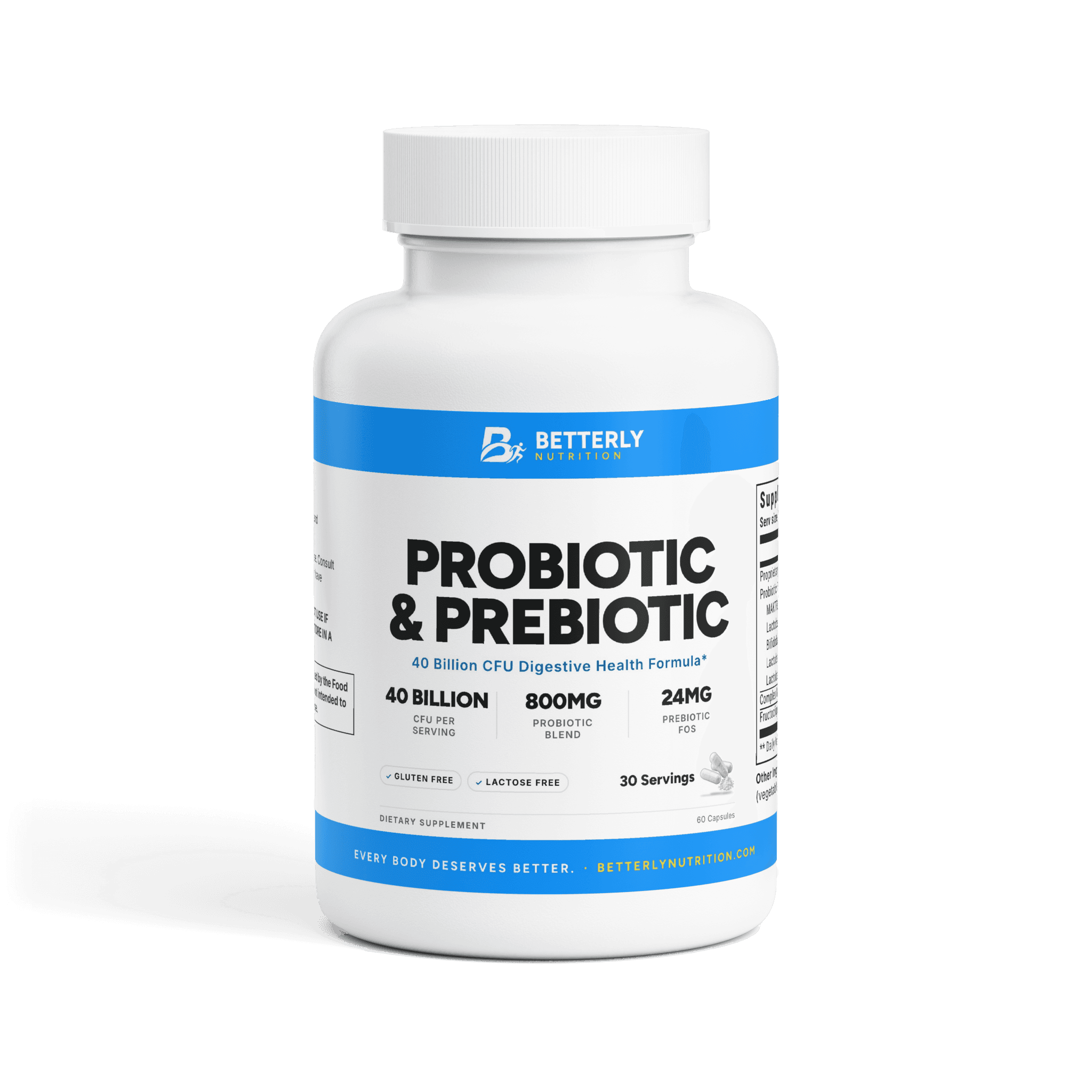
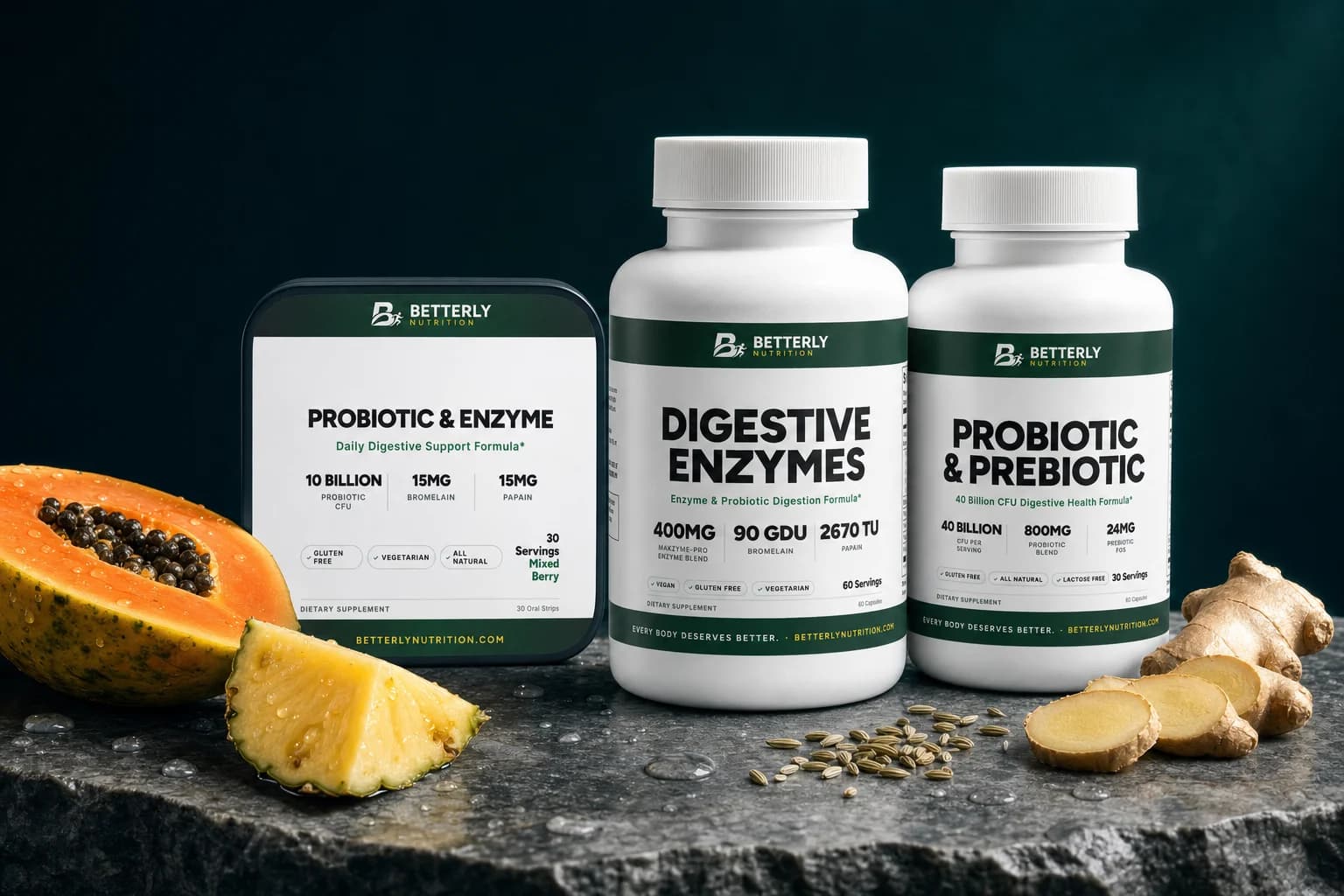
If you'd like to see a label that names its strains down to the strain code, our Probiotic & Prebiotic Capsules name four, including Lactobacillus acidophilus La-14 and Bifidobacterium lactis Bl-04, with 40 billion CFU per 2-capsule serving. The honest limits: the strains sit in an 800 mg proprietary blend, so you get the total count rather than a count per strain, and the label doesn't say whether that count is guaranteed through expiration.
Getting the most out of a probiotic
A probiotic works best when the rest of your routine gives those microbes something to work with:
- Feed them. Fiber-rich foods — vegetables, fruit, legumes, whole grains — are the fuel your gut microbes prefer. This tends to matter more than any supplement.
- Follow the label. Take a probiotic as its label directs. The NIH Office of Dietary Supplements notes there are no official probiotic recommendations for healthy people, and suggests asking your healthcare provider what dose to take and how long to use it.
- Keep expectations realistic. A probiotic is one small part of your routine, not a quick fix, and it's normal not to feel anything in particular.
- Mind the basics. Sleep, movement, and stress management all influence your gut environment, so they're part of the picture too.
Key takeaways
- Strains beat buzzwords. Look for the full genus, species, and strain code — that's where the research actually lives.
- CFUs are a count, not a score. A bigger number isn't automatically better; what counts is that the CFUs are appropriate and still alive at expiration.
- Read for honesty. Guaranteed-through-expiration counts, clear dates, and plain structure/function language are signs of a label you can trust.
- It's one piece of the puzzle. A probiotic supports a routine built on good food, sleep, movement, and stress management — it doesn't replace it.
A few common questions
Do I need a probiotic every day? Not necessarily. The NIH Office of Dietary Supplements notes there are no official recommendations for probiotic use by healthy people, and it suggests asking your healthcare provider how long to use one. If you do take one, follow its label: the suggested use on our Probiotic & Prebiotic Capsules is two capsules a day, one during the day and one in the evening. As always, it's a support to your routine, not a substitute for it.
Higher CFU — is that better? Not necessarily. The right count depends on the strains, and more isn't automatically more effective. Prioritize named strains and a count guaranteed through the end of shelf life.
Do probiotics need to be refrigerated? It depends on the product. Some are shelf-stable and some aren't, so follow the storage instructions on the label.
Should I talk to someone first? Yes, if you're pregnant or nursing, under 18, have a medical condition (especially a serious illness or a weakened immune system), or take any medication, check with your healthcare provider before starting a probiotic. The National Center for Complementary and Integrative Health notes that the risk of harmful effects from probiotics is greater in people with severe illnesses or compromised immune systems.
Choosing a probiotic doesn't have to be overwhelming — once you know to look for named strains and honest CFU counts, most of the noise falls away. If you're ready to explore, browse our Gut Health collection and pick what fits your routine. No miracles promised — just clear labels and a little support for the healthy habits you're already building.
If this left you looking for somewhere to start, read a probiotic that names its strain IDs on the label — its amounts per serving are listed on the page. For the practical questions this raises, how dosing, sourcing and subscriptions work is answered in one place.